Tag Archives: book reviews

Review 112: Ender’s Game

Ender’s Game by Orson Scott Card

A little while after I started teaching literature, I thought about what kinds of books I’d like to do with students in the years to come. The texts I did last year – Fahrenheit 451, Things Fall Apart and a collection of Edgar Allan Poe stories – are all well and good, but probably not what I would have chosen to teach. I wanted something that would speak to the students, that would engage with their lives, and which ideally was some good classic science fiction. So I went over to Ask Metafilter and asked them what science fiction they would recommend teaching to high school students studying English as a foreign language.

Child soldiers in science fiction are so cute....

Just about everyone mentioned Ender’s Game, and with good reason. It’s a good story, for one, and it addresses a lot of the issues that young people have to deal with that are often left out of the literature they have to read for English class. The adults in the book are like the adults in the students’ lives – slightly removed, seemingly omniscient, and not necessarily acting in their best interests, at least not as they see it. It deals with issues of bullying and isolation, of fitting in and standing out and accepting your place in the grander scheme of things. It’s about critical thinking and moral reflection, all wrapped up in the unending carnival that is youth.

In real life... not so much.

Ender Wiggin is, as our book begins, six years old, and he may be the last, best hope for humanity.

Ender comes from a strange place. In a near-totalitarian America, families are allowed to have only two children, in order to keep the population static. If a good reason exists, however, they might be allowed to have a third. That third is destined from the beginning to have a hard life, no matter what happens, especially if that third has been bred for a very specific reason.

Ender Wiggin is a Third. His parents had two children already – their son, Peter, and daughter, Valentine. Peter is a brilliant young sociopath, and Valentine is an equally brilliant pacifist. In ordinary times, either of them could have been an historical figure, but these were far from ordinary times. Earth is at war with an insectile alien race it has named the Formics (nicknamed “Buggers”), and has survived two invasions. Everyone knows there will be a third, and if they can’t fight it off then humanity will be scythed clean off the planet. The International Fleet needs a commander, one who has enough empathy to understand the enemy, but who also has the killer instinct to be able to wipe them out. Where Peter is too hard and Valentine is too soft, Ender Wiggin could be the one they’re looking for.
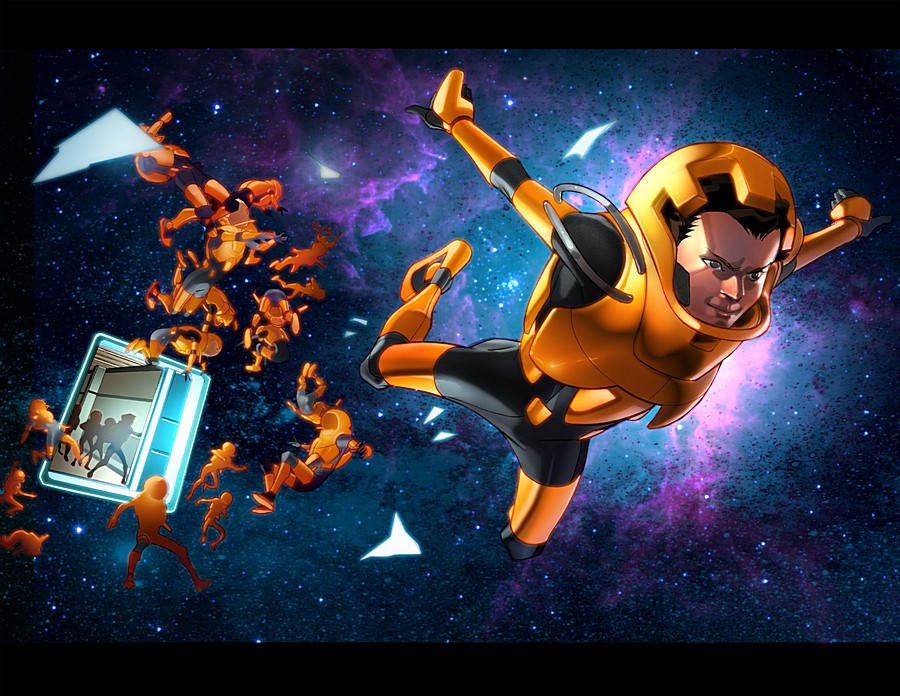
Almost makes me want to have my childhood stolen from me....

Young and frightened, Ender is taken off-planet to Battle School, where he and hundreds of other youths will take part in battle games to train them in how best to one day defeat the Buggers. While Ender knows that he’s been chosen, he doesn’t know why, and his experiences in the school lead him to wonder if being a Chosen One is really worth it. In game after game, Ender manages to prove his worth to the International Fleet by defying their expectations of what a battle commander should do. He is pushed to his limits and beyond by the International Fleet, whose motives and methods remain a mystery to him until he has accomplished their goal – one which he never even knew he was aiming for.

It’s a fun book, and a very quick read, and it’s one of those “I should have read this when I was a teenager” books. While I was never put in a position where my action could very possibly save the existence of all humanity, I – like every other teenager ever – had doubts about my place in the world. I saw the conflict between what I wanted for myself and what the adults in my life wanted for me. I was given responsibility that I didn’t want, and had to make a choice about whether or not I would live up to it. In other words, while the scale of Ender’s problems are much bigger than that of the average young person’s, they are essentially the same. I am fortunate in that Ender’s Game can work to explode a pervasive and not entirely accurate belief held by all teenagers everywhere, from the dawn of time until now: the belief that there is no one else in the world who understands what they are going through.

The big question then becomes, How do I teach this? What can I do to not only get my students to read it but to also understand its relationship to their own lives? However I manage to do it, that will hopefully reveal to them the whole point behind reading for pleasure: that you can look at a book or a story and say, “Yes – life is like this.” Not all of it, but you can find that moment, that point of any story that can connect what it is saying to your own life, and thereby learn something from it.

There are also a whole host of other issues that can be brought up with this novel, not the least of which is the systematic indoctrination of young people by their educational system. Perhaps a bit self-defeating, but the anti-authoritarian in me would be vastly entertained if I could somehow encourage these kids to look suspiciously upon the very foundation of the system in which they were currently residing. There is also the greater issues of how a society teaches its children, and the limited value of truth. We tell kids that “honesty is the best policy,” but this book blows that axiom away. If they had told Ender the truth about what he was doing and why, he would have refused, and Earth would likely have been wiped out. In the same way, how do we – adults, and especially teachers – lie to young people in order to achieve a greater goal? What value, then, do these lies have, and are they worth telling?

Even Peter would be helpless against the LOLCats.

We can explore redemption and atonement through Ender’s attempt to make up for the things he has done. Even more interestingly, we can look at Card’s prediction of how the internet would shape political discourse and how citizens can easily be manipulated. Peter and Valentine put on electronic personae through which they gain immense power despite their youth, using their own innate genius to spark debate on the topics that will achieve their own goals.

Outside the text, too, there is an excellent opportunity to discuss the relationship between a work and its author. While Ender’s Game is a brilliant story that is so well-written that it is recommended reading by both Quakers and the U.S. Marine Corps, its author holds some rather despicable views that don’t seem to mesh with the message he has put into his book. I speak here of Card’s public denouncement of gay marriage, including accepting a position on the board of directors of the National Organization for Marriage. This group has made many attempts to block the spread of queer civil rights in the U.S., and it disturbs me that an author whose work I respect is spearheading the effort.

FINE. I didn't want to marry you anyway....

What, then, is my responsibility as a reader? Should I never read his work again, lest it be seen as a show of support for his politics? Can I even read him fairly from now on, or will I always be looking for that anti-gay undercurrent, perhaps where there is none? Or should I simply ignore the author and enjoy the work? There are a great many authors and artists who are in the same position as Card, and it is a worthwhile discussion to have.

There are so many topics to mine from this book that I had to stop myself from time to time and remember to enjoy it, rather than make mental lesson plans.

In any case, if you haven’t read Ender’s Game, I recommend that you do. If you have a young person in your life, see to it that he or she has a chance to read it as well. If you’re really lucky, it’ll foster a lifelong love of reading. If not, at least they might walk away with the understanding that their problems are pretty universal, and that, on the whole, things could be a whole lot worse.

They could be Ender Wiggin.

————————————————————-
“It was just him and me. He fought with honor. If it weren’t for his honor, he and the others would have beaten me together. They might have killed me, then. His sense of honor saved my life. I didn’t fight with honor… I fought to win.”
– Ender Wiggin, Ender’s Game”

Ender’s Game on Wikipedia
Orson Scott Card on Wikipedia
Ender’s Game on Amazon.com

I couldn't NOT put it in....
1 Comment

Filed under brothers, childhood, children, coming of age, ethics, family, friendship, military, morality, Orson Scott Card, science fiction, sisters, teenagers, truth, war, young adult

Review 111 – Wolves of the Calla

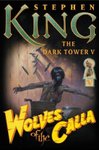
Wolves of the Calla by Stephen King

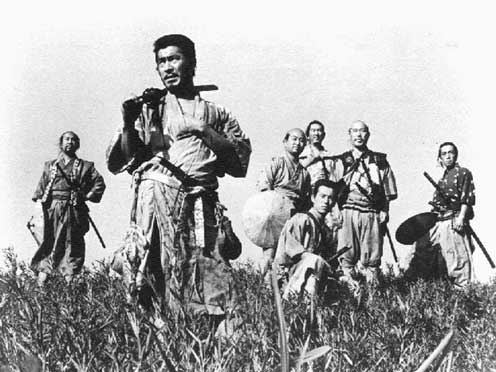
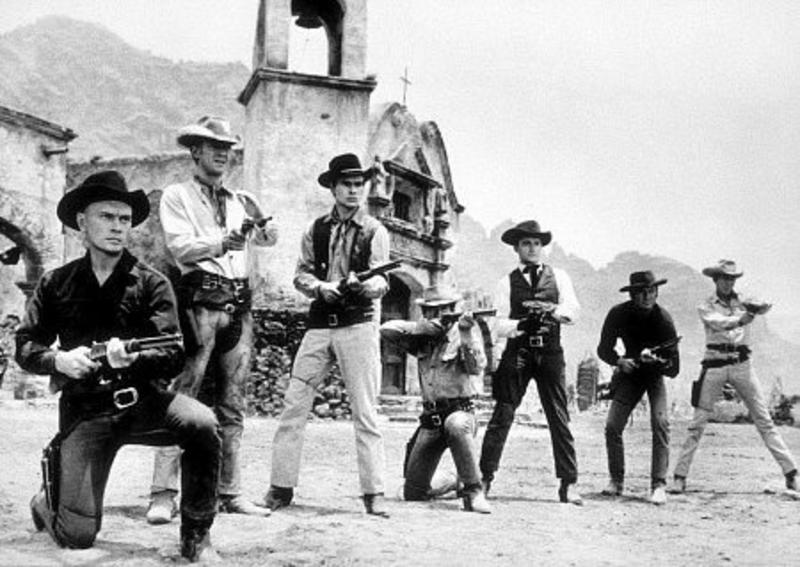
Okay, before we get into this book, let me take a little survey: Have you ever seen The Seven Samurai? How about The Magnificent Seven?

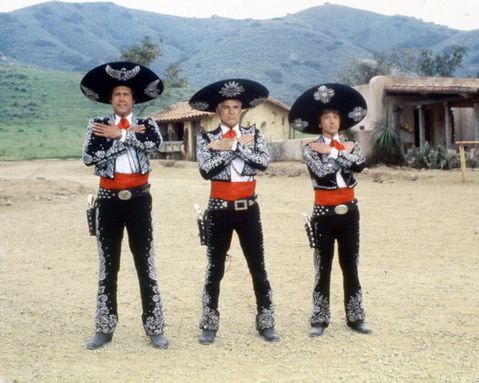
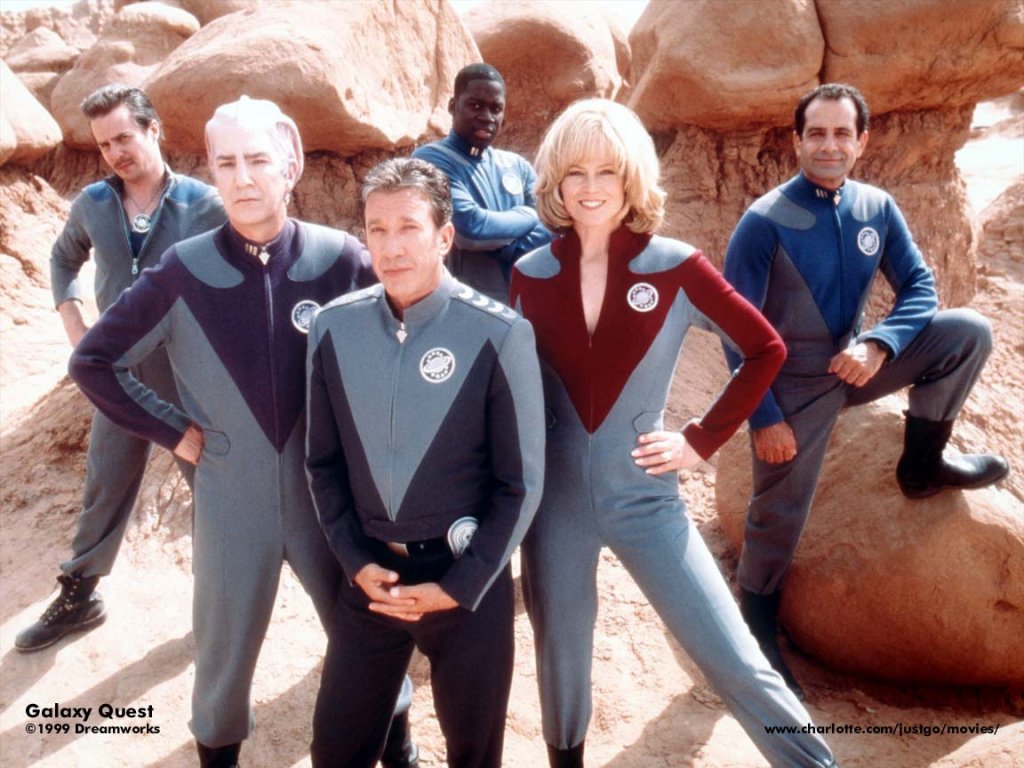
The Three Amigos? GalaxyQuest?

If you’ve seen these movies, and any number of stories like them, then you know the basic outline of this book. Say it along with me now….

'We deal in lead, friend.' - Vin

Calla Bryn Sturgis, a small farming village on the far end of the world, is notable for a few things. Its rice, its peaceful people, and its abundance of twins. The farmers of Calla Bryn Sturgis want nothing more than to live their lives in peace, but their idyllic existence is threatened by invaders from the east.

They come from the evil town of Thunderclap, once a generation – the Wolves. Armored and cloaked in green, riding identical deathless gray steeds and armed with terrible weapons, the Wolves come to Calla Bryn Strugis to steal one child from every set of twins. They take them to their dark city, and when the children come back, they come back as damaged goods. “Roont,” the Calla-folk call them, and it’s an apt word for they are ruined indeed. Over the years, these children, whose minds have lost all of their intelligence and humanity, grow into pain-wracked giants, and then die horrible deaths years before their time.

No one knows why the Wolves come, and no one has ever even considered trying to stop them. Until now.

Word has come that Roland and his ka-tet – Eddie, Susannah, Jake and Oy – are in the area, and if anyone can stop the Wolves, it would be Gunslingers. If the people of Calla Bryn Sturgis can convince them to help, and are willing to fight alongside them, then they have a chance to repel the Wolves once and for all.

If only it were that simple.

'Once more, we have survived.' - Kambei Shimada

Interlaced with this this pretty straightforward tale is, of course, the larger story of the quest for the Dark Tower and the fight against those for whom the Wolves are merely agents. A new warrior in this fight is Father Donald Callahan, whom we last met way back in ‘Salem’s Lot as a broken and ruined priest, damned by a vampire king and sent out into the world to live or die as he pleased. Through his damnation, Callahan has found himself able to see things he shouldn’t be able to see, including the various classes of vampires and the Low Men – agents of the Crimson King who serve His interests in the various levels of the Tower. Callahan discovers a knack for traveling through the Americas along secret highways. In his ramblings from coast to coast, looking for peace – or death – he slips from one version of America to another, never knowing how or why.

In the end, he brings himself to the attention of forces far greater than himself. It leads to his death and reappearance in Roland’s world, but more importantly it puts him in possession of an object of great power and even greater peril – Black Thirteen, an inky sphere that could be the black eye of the Crimson King himself, and which has the power to send its bearer through a door to any point in space or time.

Roland and the others are going to need that door, too. While they’re busy planning their battle against the Wolves in Calla Bryn Sturgis, they have another fight to win, in another world. In New York of 1977, there is a vacant lot, and in this lot is a rose. The rose must be protected at all costs, for it is the other end of the Tower – one axis upon which all the worlds turn. This lot is in great peril, and it is imperative that our heroes keep it safe. By whatever means necessary.

'Oh GREAT!!! REAL bullets!!!' - Lucky Day

It’s a really good tale, and one that is actually better than I remember it being. The first volume after King’s near-fatal accident, it’s all put together very neatly, while getting us set up for events to come, even if some of them aren’t entirely clear, or seem a little random at first glimpse. For example, Roland discovers that he’s beset by the Dread Foe Arthritis. As it is now, it’s making him kind of achy, but should it spread to his precious shooting hand, then it’s all over for him. Why King decided to afflict Roland with something as mundane as arthritis isn’t entirely clear (although to be fair, Roland is technically over a thousand years old and could be considered due for a few of the ravages of old age).

Perhaps it is a sign of Roland’s encroaching humanity. In The Gunslinger, mention is made of his ability to detach himself from his body somewhat so as not to feel thirst. In that book, he is largely mechanical, only showing any kind of real emotion when he finally faces the Man in Black. Over the course of the series, Roland has become more tuned into what it means to be a person and to feel, y’know, feelings and things. This gives him the bond with his ka-tet that he needs, but it also comes with a price. Perhaps the arthritis is the first price he must pay for allowing himself to feel.

Mention must also be made here of poor, beleaguered Susannah. I mean Detta. Odetta. No, wait – Mia.

'Never give up, never surrender!' - Jason Nesmith

Out of the seething cauldron that is this poor woman’s mind, a new personality has emerged. Mia, Daughter of None is still something of a mystery to us. As far as we know, she has only one ambition – to protect the child growing in her belly. This child was not fathered by Eddie Dean, Susannah’s beloved husband, but by the cold and unnatural demon that Susannah held at bay while the two men pulled Jake from his world to theirs. Growing within her now is something horrible, something that Mia was born to protect, even at the expense of the body she inhabits. Right now, that’s all that she is, and her greater purpose is yet to be revealed.

King does a pretty good job of juggling the various plot lines in this book, making sure that we aren’t left hanging for too long on any of them. Of course, they feed into each other as well – Father Callahan’s tale interweaves itself with the story of New York in ’77, and its ultimate conclusion allows the plot to progress through this book and into the next. I actually enjoyed Callahan’s story a great deal, and thought it would have made for a wonderful stand-alone short story. Not a novel, as there’s a whole lot of “I walked around for a few years and did manual labor” in there, but the story that he told to Roland and the others would have stood on its own quite nicely. He’s an interesting, complex character, and I look forward to seeing what awful thing happens to him next.

What’s more, there’s a wonderful meta-fictional element to this book as well, and it introduces that idea of a story that is aware of itself being a story. For example, in the beginning of the book, Eddie notices that time has started up again. While it is true that time, like everything else in this world, is unreliable, I found it interesting that he should make mention of it at that point, right when their story starts up again after a break (from our point of view) of six years. From the characters’ points of view, on the other hand, the time between books is indeterminate, but Eddie notices that they don’t seem to really do anything in that intervening time. It made me wonder about what happens to fictional characters when they’re not being written about, a train of thought for which I am not adequately medicated.

Think about it....

More importantly, the impact of real-world fiction becomes painfully obvious in this book. For one, Stephen King is established as an as-yet-unseen character, which comes right on the heels of a very serious existential crisis for Father Callahan. The Wolves themselves are explicitly noted to be rip-offs – er, homages to fictions ranging from Marvel Comics to Harry Potter. Whatever else Roland’s world is, it has a very close connection with the fiction of our world, and that connection may offer important clues as to the true nature of their quest.

So, what purpose does this book serve in the greater series? Well, there are many out there who see Roland’s quest as being not so much for the Dark Tower as for redemption. After the loss of his love, his friends, his family and his homeland, Roland made himself into something that was only technically human. Over these books, he has had to learn how to re-connect, first with individuals, then as a small group, and now with a community. In this book, Roland has to come to grips with Calla Bryn Sturgis not just as a hired gun but as their leader, if only temporarily. He has to see himself as part of a greater whole, thus becoming – as I mentioned above – more human. Each book forces him to be more and more connected with those around him. The only question is if he can hold on to this new humanity before his quest for the Tower destroys him.

All in all, a good read, which moves ever-so-smoothly into the next book….

————————————————————
“First come smiles, then comes lies. Last is gunfire.”
– Roland, Wolves of the Calla
————————————————————

Wizard and Glass on Wikipedia
The Dark Tower Portal on Wikipedia
Stephen King on Wikipedia
The Dark Tower homepage
Wizard and Glass on Amazon.com

Leave a comment

Filed under adventure, Dark Tower, death, fantasy, fathers, friendship, horror, meta-fiction, murder, quest, revenge, robots, sons, Stephen King, survival

Review 110: Johnny the Homicidal Manic & SQUEE!

Johnny the Homicidal Maniac and SQUEE’S Big Giant Book of Unspeakable Horrors by Jhonen Vasquez

I’m putting these two together, because they really do form one larger piece – the craft of an artistic mastermind. Although perhaps “mastermind” isn’t the best word to use here. What do you call the person that they lock up when they’re about fifteen because they keep saying things to their teachers like, “The human body has ten thousand miles of blood vessels in it and I can feel my hate for you coursing through every one?” Or the guy who buys a dog, takes care of it, feeds it, loves it, and then one day realizes that the dog has been spying on him for the CIA for years and buries it in his backyard? Or the angry hobo who lurches up to your car as you wait at the stop light, a bucket of dirty, grey water in one hand and a rotten squeegee in the other and proceeds to molest himself with it, afterwards demanding that you gave him change, quote, “For the show.”

You thought I was kidding about the dog....

That kind of guy. What would you call him?

Whatever it is, welcome to the world of Jhonen Vasquez. Strap yourself in.

Johnny the Homicidal Maniac is the story of Johnny C., known to his very few friends simply as Nny. Nny is rail-thin, yet something of a fashion plate, and lives in a broken-down house with two evil Styrofoam doughboys, a dead bunny nailed to a wall, and a gateway to a creature of infinite evil somewhere in one of the many basements of the house.

In his free time, Johnny kills people in horrible and graphically interesting ways.

Not because he’s a bad person, necessarily. He does have the wall to feed, after all – a wall that has to be continually painted with fresh blood, lest the Evil come out of it. But he is, by his own admission, “quite horrendously insane.” He murders for many reasons, the Evil Wall aside. He murders the people who feel superior to others (while at the same time feeling that he is superior to them). The kills the smug and the self-possessed, the materialistic and the bored, the lowbrows and the posers and the jerks who seem to infest every corner of his world. And while he does kill with great glee and abandon, he occasionally takes the time to wonder if what he’s doing is worth it. If murder is all that his life has become. If maybe it would be better off to just end it all and kill himself.

Fortunately – or not – he has The Doughboys to keep him company. Two Styrofoam figures, painted by Nny, which talk to him constantly. One urges him to live and kill to his heart’s content. The other presses him to commit suicide and leave this world behind. Whichever wins will be freed from his plastic prison and reunited with his evil master. As a balance to them is Nailbunny, which is pretty much just what it sounds like – a bunny rabbit that Johnny bought from the pet store and then one day nailed to the wall. Nailbunny (or at least its floating head) is the voice of reason in Johnny’s life, urging him to be suspicious of the Doughboys and all they want. Despite his nihilistic view of the world, Johnny discovers that he does indeed have a purpose in life. Just not a very good one.

Yes, Nny, show us "wacky"

Johnny is, naturally, hard to sympathize with. Part of that comes from his almost cavalier attitude towards killing, but more than that, he’s rather adolescent in his view of the world and how it works. Like so many teenagers, he has yet to grow a buffer between himself and the world, and cannot differentiate malicious acts from merely thoughtless ones. He feels every barb and every sting like hooks in his flesh, and the only way he is able to deal with it is through murderous rage. Reading it as an adult who remembers his teen years, I can certainly see where Johnny is coming from, but at the same time I wish he’d just grow up and learn to live in the world like the rest of us.

Which is a statement for which Johnny would no doubt gleefully murder me.

One of the major themes of these comics is conformity and humanity’s need to follow each other into the abyss. Hypocritical characters dressed in all the latest fashions snub people who are slaves to public opinion. One of the worst offenders, a recurring character named Anne Gwish, embodies the modern Goth poser who shuns everyone while despairing that no one talks to her. Johnny’s world is filled with these people and they all need killing. Even people who don’t deserve death might end up falling to Johnny. In one of my favorite stories, “Goblins,” a man who was chosen at random is strapped to a truly terrible machine, and faces his impending death with enviable conviction.

Johnny the Homicidal Maniac reads like an extended teenage revenge fantasy, if a highly philosophical and entertaining one. Eventually you figure out that, as Vasquez himself says, “He’s not a loser, he’s simply lost.”

No. Don't do it. Life is too... oh, go ahead.
Themes of identity and social connection continue in the book SQUEE’S Big Giant Book of Unspeakable Horrors. Young Squee (whose real name is Todd) is Johnny’s neighbor and is featured in the very first JtHM story. Squee is a pitiful child, with parents who resent his very existence and a school that is constantly trying to crush the spirit out of him. Squee lives a life of unending terror as he’s beset by nightmares, aliens, his cannibalistic grandfather, openly hateful parents, and a world that never seems to make sense. It is his young burden to have to live in a world created by Jhonen Vasquez.

Somehow, though, little Squee manages. Manages to get himself locked into an insane asylum, yes, but manages nonetheless.

The second half of the book features Vasquez’s filler strips – one or two-page stories of pain, heartbreak and horror. Poor Wobbly-Headed Bob tries to convince the rest of the world to accept that he’s smarter than they are, and can’t understand why they want to kill him. True Tales of Human Drama are just that – dramatic, probably human and god I hope they’re not true. Happy Noodle Boy is a free-form anarchistic story, allegedly drawn by Johnny himself, and I can never manage to finish one. My favorite filler strips are the Meanwhile…. strips, one of which features two elementary-school crossing guard children enacting the final battle between two entities of pure evil. Another depicts a first date gone horribly, horribly awry as a case of gastrointestinal distress engenders one of the best attempts to save face I’ve ever seen. A horrible, lying vampire, the revenge of the pinatas, and a case of childhood attachment issues gone horribly wrong, these are some of my favorite works in the whole series.

Good old Ludwig van B. Perfect for any occasion - even mass murder.

The work of Jhonen Vasquez certainly isn’t for everyone. Even his famous animated program, Invader Zim, is a little weirder than most people are willing to accept for a children’s show. It rewards patient reading and careful attention to the artwork. Which, I might add, is distinctive and disturbing and wonderful. Vasquez has created a style that’s cartoonish and yet horrible, in which childlike glee can be rendered next to heart-stopping horror, and we can perfectly believe that they exist in the same world.

It’s strange, horrible and funny all at the same time. If you’re interested in something out of the ordinary, I can definitely recommend this.

—————————————————
“I suggest you seek some alternate source of sympathy, Nny. You tried to kill that girl. She liked you, and you tried to kill her. That was impolite.”
– Nailbunny, Johnny the Homicidal Maniac

Johnny the Homicidal Maniac on Wikipedia
Squee! on Wikipedia
Jhonen Vasquez on Wikipedia
Jhonen Vasquez’s website
Johnny the Homicidal Maniac on Amazon.com
SQUEE’S Big Giant Book of Unspeakable Horrors on Amazon.com

2 Comments

Filed under afterlife, childhood, comic books, death, demons, existentialism, good and evil, graphic novel, horror, humor, Jhonen Vasquez, madness, morality, murder, philosophy, sins

Review 109: The Origin of Satan

The Origin of Satan: How Christians Demonized Jews, Pagans, and Heretics by Elaine Pagels

Let me get this out of the way right up front: I can’t think of the title of this book without the Church Lady from the heyday of Saturday Night Live popping into my brain. And now she’s in yours, too. You’re welcome.

Well, isn't that SPECIAL?

So. Who is Satan? A fallen angel? The great adversary of God? Saddam Hussein’s bitch? If nothing else, Satan is the great scapegoat, the one on whom we tend to pile all our troubles. Your church is running out of money? Satan. Your kid is doing drugs and listening to that awful hip-hop music? Satan. Queers getting married? Definitely Satan.

For some, Satan is an actual being, a true agent of evil whose purpose is to ruin all that God has made. For others, Satan is a symbolic representation of the evil inherent in the human condition, an abstract form made real in order to better understand it. In other words, there are as many versions of Satan as there are people who invoke him.

But how did the whole Satan thing get started? Where did he come from and how did we get to the Satan that we all know and loathe today? That’s what Elaine Pagels was determined to find out when she wrote this book.

While most of the book focuses on the New Testament and a history of the early Christian church, it was the ancient history of Satan that I found most interesting, mainly because it concurred with a pet theory that I’ve had for a long time: Satan was never an enemy of God. Satan was God’s quality control guy. It was his job to look for weaknesses in the system, to probe Humanity for its faults and flaws so that it could be made better. Thus the serpent in the garden (which, just as a note, was never actually revealed to be Satan), and especially the story of Job, where God allows Job’s life to be ruined on a bet. My guess was that he won a nice, crisp one-dollar bill.

Employee of the Millennium (photo by Nathan Rupert)

The Satan of Olde was an agent of God, there to make sure that things went the way they were supposed to. He caused trouble, he stirred things up, yes, but that was his job. Much like the office manager that you despise because he always harps on you for checking your Facebook account during company time, even though you both know there’s nothing better to do right now, but he just enjoys watching you suffer and enforcing his stupid little rules…. That guy is, at least in his own mind, working for the greater good of the company. He may be a dick, you may wish great misfortune heaped on him and his progeny, but he’s doing the job he was given to do.

Sounds great, but Satan’s downfall from “annoying but necessary agent of God” to “vile and demonic enemy of god” was planted a long time ago, before Christianity was even on the horizon.

The Jewish religion, from whence our concept of Satan arose, has always been one of Otherness. Israelites and Enemies. Us and Them. From its earliest days, God made sure the Israelites knew that they were a small force against the world, with only Him to protect them. He told Abraham straight out that He would bless him and curse his enemies. Therefore, the descendants of Abraham had to be on constant guard from enemies both from without and within. With a Satan already set in their theology as a tester and troublemaker for God, it was not a far leap to look to him as the cause of the multiple troubles that the Jews had over the years. Around the time of Christ, the Essenes were a distillation of that concept. They were a small Jewish sect – a minority within a minority – which believed that they were the only true Jews and that everyone else had gone soft. The Jewish majority was corrupt, led astray from the true path to God, probably by Satan.

When the Christians showed up, a minority with an even more tenuous existence than the Essenes, they found this concept very useful. Telling their story from the point of view of an embattled minority, they found Satan to be a very useful opponent against whom their Messiah could fight. He was an excellent symbol that stood not only for the earthly conflict that was taking place between the Christians, Romans and Jews, but a greater spiritual conflict that involved all humankind in a battle between good and evil.

Really he just likes to watch

Pagels’ basic thesis is that the concept of Satan, whatever else it may be, was used to not only encourage persecution of The Other – Jews and pagans, to be precise – but to also keep the Christians themselves in line. The book is actually a history of the early Christian movement and how that history was reflected in the writing of the Gospels. In fact, just like in the Bible, Satan doesn’t really appear much in this book. Rather Pagels looks at how the early Christian movement fought for its survival against enemies without and within, and then how Satan became a spiritual catch-all for those who disagreed with them.

It’s a great analysis of the early days of the Church, and just how chaotic and tumultuous it was. There were so many churches with so many different interpretations of Jesus’ life and death, so many Gospels being written and so many opinions on the very nature of God’s universe that it’s surprising the whole thing managed to come together to be the world’s largest religion.

What’s more, it shed some light on something that’s always annoyed me: the persecution complex that so many Christians have. The best time to catch this is in December, when pundits in the States start going off about the War on Christmas as though the last twelve Christians in the country were holed up inside the Topeka Christmas Shanty with shotguns and eggnog. Every time a judge tells a town that they can’t have the Ten Commandments on the lawn of their town hall, or a Wal-Mart tells employees to say “Happy Holidays” instead of “Merry Christmas” there is always a vocal group of Christians who claim that they’re being persecuted and that they’re on the edge of extinction. All this despite the fact that Christianity is the most popular religion in the world, that there are more Christians in Congress than any other religion, and that every single President in US history has been Christian. Despite all that, there seems to be a knee-jerk need to feel persecuted.

One of the Prince of Darkness

This book offered a very good reason why this is: because that was how the religion was founded, and it is the fundamental narrative of Jesus’ story. If Jesus had been part of the Jewish majority, his story would have ended very differently, no matter how radical his ideas. The early church was born of persecution, first from the Jews and Romans, and when they were no longer a danger, from pagans and heretics. And under all that, the hand that is always set against them, is Satan. As long as Satan is there, the Christians will always have someone there to persecute them. Without that cosmic, deathless opponent, Jesus becomes just another political rabblerouser executed by Rome. Certainly no Messiah would have allowed himself to die unless it was a gambit in a much greater game against a much more powerful opponent. Without Satan and the relentless threat attributed to him (and, by extension, those who are seen to ally with him), Jesus’s sacrifice becomes meaningless, and the whole religion follows with it.

It’s a fascinating book and a great look at the early days of the Church. If you’re into that kind of thing, go pick it up. Many thanks to my mom and stepdad, who pointed my attention towards it.

—————————————————–
“How, after all, could anyone claim that a man betrayed by one of his own followers, and brutally executed on charges of treason against Rome, not only was but still is God’s appointed Messiah, unless his capture and death were, as the gospels insist, not a final defeat but only a preliminary skirmish in a vast cosmic conflict now enveloping the universe?”
– Elaine Pagels, The Origin of Satan
—————————————————–

Elaine Pagels on Wikipedia
The Origin of Satan on Amazon.com

Leave a comment

Filed under Bible, Christianity, Elaine Pagels, good and evil, history, Jesus, Judaism, nonfiction, religion, Satan, theology

Review 108: Flim-Flam!

Flim-Flam! Psychics, ESP, Unicorns, and Other Delusions by James “The Amazing” Randi

((Now hold still while I read your aura. Yes, my spirit guide is telling me something, that you are experiencing some kind of pain or discomfort in your back, or perhaps your shoulders. And this is typical of someone born under your star sign, you know? Of course you do – your type is very insightful, even if you do sometimes let little things escape your notice from time to time. Here – I have a medicine that will help you, a special homeopathic formula that I mixed myself. It’s proof against all aches and pains. Yes, I have a spoon somewhere around – no, not that one, that one’s bent. I could tell you that I got the recipe from visiting aliens, but you would never believe me. Perhaps it was Atlanteans….

Ah, there is one other thing…. My spirit guide tells me that there is another spirit who would talk to you – someone you miss very much. I’m getting the letter P, or maybe G…. Does that mean something to you? Ah, good, good. My abilities have increased a hundredfold since I started transcendental meditation, and I credit the Master with my improved skills. Well, our time is almost up. I have to go charge my dowsing rod with the crystals that were given to me by my young daughters. They say that the fairies gave them to them, and who am I to say otherwise? But I will say this before we part – the numbers of your name, crossed against your biorhythms, tell me that you must not enter into any dealings of a financial nature this week.

You can leave your check on the table by the door.))

There is one truth that I have learned in my days, and that there is no idea so ridiculous, so implausible, so poorly-defined, that someone, somewhere won’t fall for it. Whether it’s psychic surgeons, aura readers, tellers of the future or viewers of past lives, UFO hunters, witch doctors, table-tippers, spoon-benders, mind-readers or water-dowsers, if you can figure out some simple slight of hand, the odds are good that you can convince someone you have supernatural powers. A few blurry photographs and some enthusiasm, and you can have aliens on our shores. Some clever guesses and a keen knowledge of human nature, and you’ll never have to work a day in your life.

If you’re like me, it’s enough to make you want to disavow humankind and just go live somewhere off in the woods. Thankfully, James Randi is not like me.

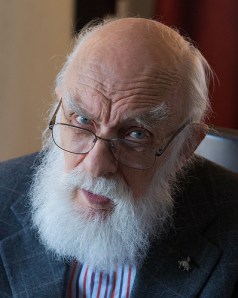
James "The Amazing" Randi (photo by Andy Ihnatko)

A longtime magician and skeptic, James Randi has been one of the driving forces of modern skepticism. Since his 1972 debunking of spoon-bender Uri Geller, he has been an authority on people who claim to have supernatural abilities. He has traveled the world in search of these people, revealing the methods by which they knowingly or unknowingly deceive people who want so desperately to believe. This book, written in 1982 and well in need of an updated and revised edition, documents many of Randi’s investigations in painstaking and unrelenting detail.

He tells us first of the hoax perpetrated by two young English girls, one which was good enough to capture not just a credulous nation of newspaper readers, but a man regarded as one of the greatest minds of his time – Sir Arthur Conan Doyle. In 1917, Elsie Wright and Frances Griffiths released several photographs which showed them surrounded by gossamer-winged fairies. The public went wild for their story. Experts were called in to examine the photographs, and they all pronounced them genuine. The girls were interviewed, their cameras and equipment checked out, and no evidence of trickery could be found. In any case, believers said, two young girls would have no incentive to lie to the entire nation like this, would they?

Well, they did. Perhaps it wasn’t their intention to deceive the world, but that’s how it turned out. As of Randi’s writing, they hadn’t admitted it outright, but a year after publication, they did. What started as simple fun with a camera and some paper cut-outs escalated into something uncontrollable by two young girls, and a legend was born.

Frances Griffiths with her "fairies"

Elsie and Frances may have been innocents overtaken by events, but there are far more people who are fully conscious of their deceptions. A Holy Man who promises everything up to and including the ability to fly if you just follow his word and his special meditation technique. Researchers so intent on discovering psychic powers that they disregard even the most basic of experimental controls. People who manufacture fake artifacts to support their belief in ancient alien astronauts. There are those who take money from the unwitting and those who don’t, some who treat the ability they believe they have with humility and those who don’t. The weird, the arrogant and the dangerous – Randi’s seen ’em all. And every time another one pops up, he knows what to look for.

Belief is a weird thing. Under careful examination, every claim that Randi has seen has fallen apart. He has listened to them carefully and asked a very simple question that seems to elude so many others: How else could this effect be achieved? As a lifetime magician (though he prefers the term “conjurer”), Randi is an expert at getting you to think you see something that really isn’t there, and he brings this expertise to bear when he investigates claims of the paranormal. What’s more, he has a very good grasp of experimental procedure and how to test for a specific effect, and he is ruthless in making sure they are adhered to.

Science Badges (photo by Ruth Ellison)

But – and this is important – Randi is fair. If you come up to him and say, “Randi, I can see auras which tell me who the all gay people are,” he won’t just laugh in your face and say that you’re crazy. He’ll listen to your story, how your power works and how you use it, and then propose a simple test to see if it really exists. The test is to be double-blind, so when the target people come in and check the “gay” or “straight” box, that information is kept from both the aura-reader and the person administering the test. What’s more, the psychic has to agree in advance on the conditions of the test, signing a promise (rarely kept) to accept the results. Tests are usually done multiple times, just to give the subject a chance. When the results come in as negative – as they always have thus far – Randi doesn’t gloat. He doesn’t laugh and say “I told you so.” In fact, in one chapter he mentions that he feels bad sometimes, telling people who honestly believe they have a unique gift that, in fact, they don’t.

I suspect that Randi really wants supernatural powers to exist. I think he wants to meet someone who can move objects with her mind, talk to the dead or find water just by concentrating hard. Why else, then, would he have his Million-Dollar Challenge? What is described in Flim-Flam as a $10,000 reward for proof of supernatural abilities has grown significantly. Not because Randi is richer, but because he feels that his money is absolutely safe. Yet I think he would be happy to be able to give it away one day.

This book should be required reading for everyone who has encountered what they believe to be the paranormal. It is detailed, it is harsh and it is unequivocal in its assertion that if you see someone doing something that logic demands cannot be done, chances are excellent that it’s a trick rather than super-powers.

Unfortunately, the True Believers will invariably be unaffected, and that is something else that Randi takes great pains to show. No matter how often someone was shown to be a liar, a fake or a fraud, there were always supporters ready to make excuses. The psychics themselves are also very good at inventing reasons why their powers cannot be tested – the wrong kind of weather, interference from the cameras that are recording the tests, or just bad energy from the skeptics in the room. All the logic and science in the world won’t convince those who don’t want to be convinced.

(photo by Thomas Hawk)

As much fun as it is to read about The Amazing Randi rushing about the globe to put hoaxers in their places, it’s also a little depressing. It was written in 1982, on the heels of Randi’s book The Truth About Uri Geller, which exposed the spoon-bending psychic as a fraud, so you would think the one-two punch of these books would be enough to put paid to ridiculous beliefs in ideas that were demonstrably false. Well, you’d be wrong. Newspapers still run horoscopes every day, you can get a biorhythm app for your iPhone, psychics and mediums still rake in tons of cash, and there still innumerable people who put their faith, money and lives in the hands of psychic healers – only to lose all three.

But Randi is undaunted. He started the James Randi Educational Foundation to support critical thinking and skepticism, he’s still active in the skeptical community, and he’s still accepting applications from people who want his million dollars. He may have hoped that this book would be a nail in the coffin of psuedoscience and woo, but even though that didn’t pan out, he never gave up. One by one, case by case, the Amazing Randi has stared down the wild-eyed stare of unreason, and he has never blinked.

For that, I will always be grateful.

——————————————–
The tinkling noises you will hear as these pages are turned are the scales falling from many eyes. The groans are from the charlatans who are here exposed to the light of reason and simple truth. It is a light that pains them greatly.
– James Randi, Flim-Flam!
——————————————–

James Randi on Wikipedia
Flim-Flam! on Wikipedia
Flim-Flam! on Amazon.com
James Randi Educational Foundation website

2 Comments

Filed under James Randi, nonfiction, pseudoscience, science, skepticism

Review 107: Wizard and Glass

Wizard and Glass by Stephen King

So. Now that we’ve put three books behind us, and sit at the pivot of the series, it is time that we settle down and have ourselves a little palaver about Roland, the Gunslinger.

We know little about this man, the protagonist of our epic series. We know he’s a hard man, the kind of man who can cross deserts, brave oceans, and kill entire towns if need be. We know he’s a dedicated man, who will follow his quarry wherever they may flee to. We know he is single-minded, the kind of person who would allow an eleven year-old boy to fall to his death if that meant getting another foot closer to his precious Dark Tower. He is a hard man, Roland Deschain is. He is the Gunslinger.

But who is he really? Who was he before he started on this mad quest for something that may or may not exist? How did he get set on this path that could determine the fate of worlds, this quest that led to the deaths of everyone he ever loved? Who is he?

Blaine the Mono (art by Revenant42)

Well settle down, boys and girls, because this is where we get to find out. In between destroying a sentient monorail at a rigged game of riddles and facing off against the darkest Dark Man there is in a mock-up of the Palace of the Emerald City, Roland tells his ka-tet the tale that shaped him and set him on his path. It is a tale that begins with his entry into manhood – a trial by violence where he bested his teacher, Cort, in a duel to the pain, and ends with Roland’s soul nearly destroyed.

Roland and his companions, Alain and Cuthbert, have been sent by their fathers to the most out-of-the-way place they know – a small village called Hambry in the Barony of Meijis. Their alleged purpose is to count things, more as a punishment than a mission. They seem to be three boys who got into trouble, and who now must pay by spending their summer doing menial work. They don’t want any trouble, and they hope that no one will give them any.

They say there is a monster in the Citgo fields. Green, mayhap.... (photo by Cogito Ergo Imago)

That’s the story, anyway. In reality, they’re looking for evidence of the workings of John Farson, also known as The Good Man, who is leading a popular revolution against the established order in Roland’s home country, In-World. Hambry has an oil field, the work of the Great Old Ones, which is known to locals simply as “Citgo” Should Farson get enough oil – and the means to refine it – he will be able to revive ancient war machines and bring death to all of In-World. With Roland, Alain and Cuthbert as spies for the Affiliation, the Gunslingers in Gilead hope that they can stall, if not stop, Farson’s rebellion.

That would have been great if only Roland Deschain hadn’t met Susan Delgado, the daughter of a deceased horse-breeder and soon to be the promised girl of the mayor of Hambry. As soon as they meet, their destiny is clear: it is true love. No more able to stand against their fate than a tree in a whirlwind, Roland and Susan do as all young lovers have done, and risk discovery and death in the process. In every corner there are those who would stand against them: Susan’s spinster aunt, Cordelia, who hopes to make some money selling her niece off to the mayor; the Big Coffin Hunters, three mercenaries who work for Farson and who mean to see every last drop of oil gets in his hands; and Rhea of the Cöos, a horrible witch who possesses a crystal orb that lets her see all the malicious things that people do. Against these arrayed forces, Roland and his friends must not only foil the plans of John Farson, but also escape Meijis with their lives.

With the first, they are successful. With the second, not so much.

Dark Tower fans that I have talked to generally agree that this is the best book of the seven, for many reasons. First, we get to see Roland before he became all tall, gritty and scary. We see him as a callow youth, a boy of fourteen who is in way over his head, tackling responsibilities that would be better handled by a grown man. They’re on the losing side of a terrible war as it is, as they’re up against the combined cunning and guile of some very bad people. In many cases it is luck as much as skill that leads them to their eventual victory.

Roland and Susan (art by Jae Lee)

What’s more, we get to see Roland in love, and this is really where King shines in this book. He says in the afterward that he was dreading writing this book, mainly because he knew that he would have to portray teenage love – first love – in a realistic fashion, which can be hard to do when you’re several decades removed from being a teenager. All the madness that comes with teen love – the longing, the furtive trysts, the absolute certainty in what you are doing and that no one can stop you. The way that the person you’re in love with is all you can think about, and the only thing you want is to be with them again, if only for a moment. The way you freely and willingly lose your mind for love.

It’s something which, thankfully, we grow out of as adults. Frankly, if I ever felt like that again, I’d probably throw myself under a train.

King has done a fantastic job with the relationship between Susan and Roland – it’s as realistic as he can make it, without being mawkish and overly romantic. We are never allowed to forget that, like so many doomed lovers before them, they are risking everything with their love – their mission, their friends, and their lives – and we know that even the slightest misstep can mean disaster. Mixed with the other, more adventure-driven elements of the plot, it’s incredibly tense, and it’s handled very well.

The romance aside, there are some wonderful characters in this book, and as is the case with so many Stephen King novels, the best ones are the bad ones. Susan’s aunt Cordelia is a bundle of jealous paranoia, and you can feel her mainspring winding up every time she shows up on the page. Eldred Jonas is a laid-back killer, an old man who has buried countless young men, and means to bury Roland and his friends. And Rhea is just palpably foul. You can almost smell her when she shows up, which is a great accomplishment – and you can’t wait to see her again.

Rhea of the Cöos (art by Jae Lee)

As an aside, Marvel Comics has been doing comic book stories of Roland’s youth, and the first one re-tells this tale. It’s called The Gunslinger Born, and while it’s not bad, there is a certain emptiness to it. It’s not easy to compress hundreds of pages of character and plot development into a seven-issue comic series. I don’t know how it would read to someone who hasn’t read this book, but to me it looked like it was missing a whole hell of a lot….

As I said, this book is the pivot on which the series turns, and it is essential to understanding Roland. We have to know who he was and how he became who he is. While there are still questions to be answered, and stories to be told, the big story is out. Now he and his ka-tet can continue in their quest for the tower, confident that they know a little more about this man who yanked them from their worlds into his. For us, the character and his world become richer, more full of meaning. Things that we might not have thought about in the first few books become more meaningful, and we can better appreciate the history of his dying world. Most importantly, we can begin to understand why it is so important that he find the Dark Tower, and we pray that he knows what to do when he gets there.

—————————————————–
“I’ll pay ye back. By all the gods that ever were, I’ll pay ye back. When ye least expect it, there Rhea will be, and your screams will break your throats. Do you hear me? Your screams will break your throats!
– Rhea Dubativo of the Cöos, Wizard and Glass

Wizard and Glass on Wikipedia
The Dark Tower Portal on Wikipedia
Stephen King on Wikipedia
The Dark Tower homepage
Wizard and Glass on Amazon.com

2 Comments

Filed under adventure, coming of age, Dark Tower, death, fantasy, friendship, murder, quest, romance, sexuality, Stephen King, teenagers, witches, wizardry, world-crossing

Review 106: Eats, Shoots & Leaves


Eats, Shoots & Leaves by Lynne Truss

This is how I know I’m a real English teacher – I have a shelf dedicated to books just about English. The history of English, the uses and misuses of English, and even the history of the alphabet we use. This is something I never expected to have in my personal library, that’s for sure.

So has my brain. (photo by Nathan Harrison)

But that’s all to be expected; I’m an English teacher, and people like me are supposed to read books like this. It’s professional development, or something. The weird thing about this book, a book dedicated to punctuation, of all things, is that it was popular with people who weren’t English teachers. Everyone was shocked by how well it sold, the author included. A book written as kind of a primal stickler scream somehow struck a chord with the general reading population. Perhaps there is some hope for our species after all….

The reason it sold well, of course, is that it’s well-written and entertaining to read. Far too many books about language are written by dusty intellectual Linguists who exude smugness with their impenetrable jargon and are completely inaccessible to the general public. I have those books on my shelves as well, and nothing this side of a double shot of NyQuil is as good at getting me off into slumberland. Ms. Truss, however, writes like one of us. She’s an ordinary person who loves her language and who just snaps every time she sees a sign like, “Apple’s – $1”. I share her pain.

Can't use white-out on neon, can you? (photo by James McNally)

The book is a well-mixed combination of history, usage and style. The tiny marks that make the written English word behave the way it does have come to us along a remarkable number of paths. In the last millennium or so, marks have been added, changed and removed over time as necessity dictated. One of her fears (and the impetus to write this book) is that we may be changing English to a new form that requires less of that rigid, form-fixing punctuation.

Or people just haven’t bothered to learn.

As she notes throughout the book, punctuation is one of those things that few people ever really get to learn. Our English teachers give it a once-over in elementary school, and then we never get a review of it, so we spend most of our lives just throwing around commas and apostrophes and hoping we get it right. More often than not, we don’t. And we’re afraid to ask anyone, lest we look like ignorant yobs.

But to master punctuation means more than just being a pedant and a nerd. Heavens, no. Mastering punctuation means controlling your language, which is controlling your thoughts. The vast difference between a sentence like, “The convict said the judge is mad” and “The convict, said the judge, is mad” should be enough by itself to illustrate how important proper punctuation is. In a language like English, so dependent on rhythm, timing and stress, punctuation is the substitute for our voice. It tells us when to speed up and slow down, which points need to be stressed and given special attention, and which points (like this one) can be safely disregarded, if one so chooses.

Only one member, mind you.... (photo by Lobstar28)

It would be very easy for Ms. Truss’ obvious frustration with the misuse of punctuation to overwhelm her and poison the book. Admittedly, she does at one point put together a kit for those who would be punctuation guerrillas and risk prison to set the world straight, but by and large she stops short at advocating actual lawlessness.

Ms. Truss understands that punctuation abuse isn’t something that people do intentionally – it’s largely a matter of ignorance, and she wants to help. What’s more, she’s funny. For example:

In the family of punctuation, where the full stop is daddy and the comma is mummy, and the semicolon quietly practises the piano with crossed hands, the exclamation mark is the big attention-deficit brother who gets over-excited and breaks things and laughs too loudly.

Every section in the book has sharp and clever humor, a description of something as simple as a comma made in such a way that you find yourself laughing out loud on the train.

Of course, whenever you get into this topic, you run the risk of finding yourself forced to one side or the other of the “proscriptive” versus “descriptive” debate. You know, the people who want to tell everyone else how to use language versus the people who want the speakers to decide for themselves how it is used. The latter smacks of classical democracy, and as both an English Professional and a person with a healthy distrust of The People, I’m hesitant to sign up for it. I like rules in language. I like having a common set of guidelines we can turn to in order to make sure we’re all getting the meaning that the speaker or writer is trying to convey.

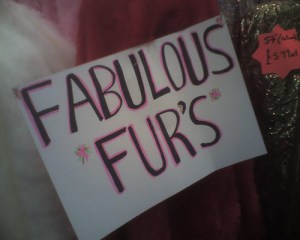
WHAT? The fabulous fur's WHAT?? (photo by Trevor Coultart)

Unfortunately, for people like Truss or myself, it’s all too easy to cross that line from being the person who appreciates a bit of order to that person who writes letters to the editor because some headline writer used a colon where a semicolon would do. And I’ve seen internet flame wars go wild over this pro- or de- divide. People who could politely disagree with each other about Sarah Palin’s international policy experience will find themselves screaming bloody murder over whether or not you should put two spaces after a period.

What has to be remembered is this: there are rules to language, like it or not. Those rules, however, change, and no single one of us has any power to impel or obstruct that change. The best we can do is to make sure we are writing with clarity and precision so that our intended audience understands our thoughts with the least amount of effort on their part. Regardless of what you think of the rules, if the reader has to stop and ask herself, “Wait, what did he say?” then you have failed. So learn the rules. Once you’ve learned them, you’re free to do what you wish, but make sure you have them down cold.

So, if you’ve always wanted to know about how to use a semicolon, or you’re not sure if your commas are in the right place, or if you’ve ever driven someone to madness by dropping an apostrophe into a possessive “its” – and you know who you are – then this book is the one you need. Enjoy.

——————————————
“Using the apostrophe correctly is a mere negative proof: it tells the world you are not a thicko.”
Lynne Truss, Eats, Shoots and Leaves

Lynne Truss on Wikipedia
Eats, Shoots & Leaves on Wikipedia
Eats, Shoots & Leaves on Amazon.com
Lynne Truss’ homepage

24 Comments

Filed under humor, language, Lynne Truss, nonfiction, punctuation

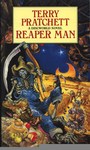
Review 105: Reaper Man

Reaper Man by Terry Pratchett

So. What are your thoughts on death?

Or rather, Death?

It’s a weird thing, death. I mean, you’re here one minute and then you’re… not. And while we all know intellectually that we’re going to die, there’s something in us that refuses to believe that the essential Person that we are could possibly cease to exist. We have personalities, unique aggregations of memory and experience and inborn preferences that all display themselves as a Person, as far as we know unique in all the world. Each human being is an entity that will never be seen again in this universe, and as far as we know, the cessation of life brings that entity to an end, reducing the person we knew to a mere insentiate object.

Is it any wonder we come up with stories for what happens… y’know, after?

Just about very culture that’s ever been has come up with some form of afterlife, be it an eternal feast for heroes, a paradise in which we can bask in God’s glory, a place of exquisite pain and torment, or a ticket back to Earth for another go ’round. There is no way of knowing if any of those are actually what happens to us when we die. At least not until we actually do it. So since we cannot know, we make stuff up, if only to make the whole thing easier to bear.

What often goes with that other world is someone to take us over. A ferryman or a guide, someone who knows the territory and knows where we need to go in what is very likely a rather confusing time. It’s another piece of comfort – knowing that there’s Someone out there who knows where we need to go and what we need to do.

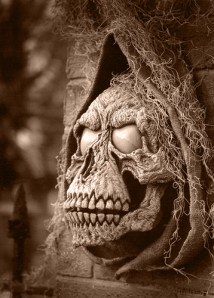
Grim indeed.... (photo by provia_17)

Which brings us to Death.


He’s been portrayed many ways over the years – my favorite is the Death from Neil Gaiman’s Sandman series – a sort of older sister who’s known you all your life and loves you anyway. If she shows up for me when I die, I think I’ll be okay.

I would be just as happy with Pratchett’s Death, even though he is the more traditional robes-scythe-and-skeleton type. Fans of Discworld love Death, which I imagine was somewhat baffling for Pratchett early on. In the first few books, Death was a bit character – he showed up a couple of times to collect the recently deceased, and that was it. But his scenes were so memorable and so good that they sometimes stuck out above the rest of the book. He speaks entirely in capital letters, which lends him a voice that is probably reminiscent of James Earl Jones. He’s aloof, but not uncaring, and seems to take a rather curious interest in humanity. He likes cats, has a house off on the edge of nowhere, and rides a great white steed named Binky. Death has become, in short, an interesting person.

And it seems that’s a problem.

The Universe, you see, is a finely tuned instrument, one which needs monitoring and, occasionally, adjusting. There are… let’s call them Auditors, who make sure that reality stays real – no odd deviations or anomolies such as, for example, anthropomorphic personifications of natural forces. In all honesty, they would eliminate all life if they could, but that is, as yet, beyond their capabilities. So they settle for telling Death that it’s time for him to retire. He gets a little hourglass all his own, and time to kill until the new Death comes into being.

Heya Tom, it's Bob - from the office down the hall... (photo by Scott Beale)

In the interim, this time between Deaths, a new problem arises: nothing is dying. Or, to be more specific, things are dying, but the vital energies that empowered everything, from cabbages to clergymen, aren’t being taken away. Without a Death to handle this very vital – so to speak – function, the life energy is looking for a place to go, an outlet. As a result, things that shouldn’t be alive are up and moving around. In some cases this means objects running along of their own accord, and in others it means that the dead simply have nowhere to go.

Such is the case with the wizard Windle Poons. After 130 years at the Unseen University, he was rather looking forward to a nice rest and then a bit of reincarnation as a woman in a far more liberal society. What he got instead was nothingness. Given that option, he went back to his body and became Undead, much to the consternation of the rest of the UU faculty. Unfortunately for them, they have bigger things to worry about – the buildup of life force is having a rather larger and more dangerous effect on the city of Ankh-Morpork itself. The lack of a Death may well doom the city in a manner that will be horribly familiar to many of Pratchett’s readers.

And where is Death in all this, or at least the person who used to be Death? He has found a small farm below the famous Ramtop Mountains. An old maid, Miss Flitworth, needs a hand and Death needs a way to spend his time – something he’s never had to worry about before. He takes the alias Bill Door and starts to learn what it means to be alive, despite the short time he has left.

"What can the harvest hope for if not the care of the reaper man?" (art by Andrew Mar)

The book, as you might imagine, is all about being alive. What makes life special and precious and ultimately worth living. Windle Poons let life go past while he grew old behind the university walls, and it is only in death that he finds out all that fun he’d missed. Bill Door learns that it is the fragility of life, and its most certain end, which ultimately gives it meaning. In the middle, we see that everything that can live yearns to do so, from the mayflies to the great Counting Pines to cities to ideas.


While the book gives no answers to what may happen after death (the Discworld books rarely do), it does give us another way to look at life. And that, ultimately, is the goal of any great story.

——————————————————
“Huh! Priests! They’re all the same. Always telling you that you’re going to live again after you’re dead, but you just try it and see the look on their faces!”
Reg Shoe, Reaper Man

Discworld on Wikipedia
Reaper Man on Wikipedia
Death on Wikipedia
Terry Pratchett on Wikipedia
Reaper Man on Amazon.com
Terry Pratchett’s official site

1 Comment

Filed under afterlife, death, Discworld, existentialism, fantasy, finitude, humor, Terry Pratchett, wizardry, zombies

Review 104: The Long Dark Tea-Time of the Soul

Remember – go and take the listener survey! The gods command you!)

The Long Dark Tea-Time of the Soul by Douglas Adams

This is the second of the Dirk Gently books – and the final one – and is no easier to explain than the first. But I’ll try.

Ah, just like college.... (photo by Gene Han)

In this story, Dirk is contracted to meet a client one morning at 6 AM, and play bodyguard. The time is vital. The client has made it a point that Dirk absolutely, positively has to be there by six, and he’s willing to pay handsomely for it. So when Dirk wakes up at 11 AM, he suspects that he’s screwed up royally.

His suspicions are confirmed when he arrives at the home of his client, who is sitting quite comfortably in an armchair while his head is rotating slowly on a nearby turntable. The only clues to his grisly demise are his ravings about a green, scythe-wielding monster and a mysterious packet of papers, written in a language that Dirk cannot begin to understand. But he does know their shape – they’re a bill. But for what services, and rendered by whom? So now Dirk has to figure out who, or what, did this to his client and why.

But there’s more to this story (isn’t there always?) An American woman, Kate Schechter, is one of the survivors of the explosion of an airline ticket counter, something that everyone who knows about explosions is calling an “act of god.” But which god would do such a thing, and why? Lucky for her, Kate is about to find out, and she’s also about to find out why gods aren’t quite all they’re cracked up to be.

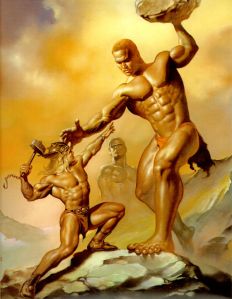
This, of course, does not happen in the book. I needed a picture of Thor that wasn't the super-hero.... (art by Boris Vallejo)

There aren’t a lot of greater themes in this book – it’s an adventure, of sorts, but as far as overarching messages go, it’s pretty thin other than watch out for eagles and be nice to homeless people. It’s entertainment as only Douglas Adams can deliver it. There is some thought given to gods, however, which is a topic I always enjoy. In Small Gods, Terry Pratchett asks where gods come from, and what sustains them. In American Gods, Neil Gaiman asked the question of what happened to gods who were brought to America by their believers. Adams asks what happens to gods once we don’t actually need them anymore.

We made them, after all, and most of the time we made them immortal. We needed gods to be bigger than we, stronger than we, and generally everything we weren’t. And then we went around infusing them with humanity – with jealousy, courage, rage and fear. When we were done with them, we let them go. But that didn’t mean they went away. An immortal is an immortal, and without work to do or followers to deal with, what is a god to do? In the case of Odin, the father of gods and the ruler of the Norse pantheon, the solution is very simple. What’s more, it keeps him pampered and cared for, which is all he ever really wanted.

While I love Hitchhiker’s Guide first and foremost among Adams’ works, I really wish he could have lived to write more Dirk Gently books. The character is a person of reprehensible ethics and somewhat tarnished morals, but you can’t help but love him. Lurking refrigerators, coffee-thievery and all, you find yourself wishing that you could hang out with Dirk, while at the same time knowing that he’d probably invite you out for lunch and somehow make you pay for the meal. He’s a bad person, but an excellent detective – and a great character.

So pick this one up and give it a read. It’s fast, it’s fun – you won’t regret it.

————————————————
“Nobleness was one word for making a fuss about the trivial inevitabilities of life, but there were others.”
Douglas Adams, The Long Dark Tea-Time of the Soul

The Long Dark Tea-Time of the Soul on Wikipedia
Douglas Adams on Wikipedia
The Long Dark Tea-Time of the Soul on Amazon.com
The Douglas Adams Homepage

1 Comment

Filed under detective fiction, Douglas Adams, fantasy, fiction, gods, humor

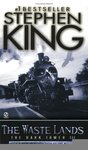
Review 103: The Waste Lands


The Waste Lands by Stephen King

Remember to go to the Listener Survey! If you don’t, you have clearly forgotten the face of your father….)

The way this book started really threw me when I first read it. It was too… alive.

The Gunslinger takes place entirely in a desert – featureless, dry, unchanging. The Drawing of the Three takes place on a beach – featureless, slightly less dry, unchanging. With this book, a few months have gone by and Our Heroes are in a rather lush forest, without the privation that they had gone through in the previous books. They weren’t desperately racing the clock to try and find food or medicine or water, but rather were going at their own pace, according to what they wanted to do.

It felt weird to me, honestly.

All it needs is the little radar dish on its head. And maggots. Lot of maggots. (photo by Eric Bégin)

In any event, that is how the book begins – Roland has taken Eddie and Suzannah (formerly Odetta/Detta) under his wing and is training them as apprentice gunslingers. They’re learning to shoot, to hunt, and to trust the instincts that they have so long let lie dormant. When they accidentally awaken a gargantuan insane robot bear named Shardik, they discover the path of the Beam, which finally sets them on their way to the Dark Tower.

But all is not well. There is a problem, you see, one having to do with the very nature of the events that have gone before us, and it has to do with young Jake Chambers.

In The Gunslinger, Roland meets Jake, who has been transported to Roland’s world after dying in his own. The last thing the boy remembers was being pushed in front of a speeding Cadillac while on his way to school, seeing a strange man in black who claimed to be a priest, and then waking up in the dusty way station in the middle of the desert. Roland befriended the boy, took him along on his journey, and then sacrificed him to gain an audience with his own Man in Black. Without Jake, and Jake’s double death, Roland could never have made it to the beach where he pulled Eddie and Suzannah out of their worlds.

But there was a third door, remember? Through that door, Roland learned the true identity of the person who killed Jake – a man named Jack Mort, whose hobby was making people die in accidents. By taking possession of, and eventually killing, Jack, Roland erased Jake’s first death. He was never pushed in front of a car, never died, and never came to Roland’s world.

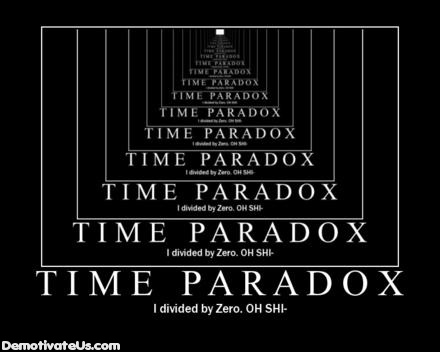
Something like this....

Except that he did.

Or rather, he didn’t.

But he did.

This paradox is driving both of them insane – Roland in his world and Jake in his. Their minds are trying to reconcile two irreconcilable histories, two versions of events that are both true, even though only one can be said to actually be true. In order to save them both, Roland and his ka-tet need to get Jake to their world, where he belongs. Doing so will take all of them risking their lives against agents of unspeakable power.

That’s the first half of the book, and this is another big difference between this book and the two that came before it. If he had wanted to, King probably could have split this book into two smaller ones, and they wouldn’t have lost much. Once Jake is rescued, we are granted a moment to breathe, a moment to appreciate the work and energy that went into making sure Jake and Roland came through the event with their sanity intact. Once we take that moment to breathe, which in the book consists of a wonderful dinner with the few residents of a dying town, the group finds themselves in terrible danger again as they enter the dying city of Lud.

Would you kill for him? Yeah, me too.... (photo by Kasra Ganjavi)

All through the series, it is said that “The world has moved on.” People talk about the civilization that has just collapsed (of which Roland is a final relic) and the one that came even before them – that of the Great Old Ones. The city of Lud is held up as a prime example of their prowess and their poisoned legacy. Within it dwells the tribal descendants of whose who fought over the ruins of Lud, sacrificing their neighbors at the sound of great drums that echo through the city (which are, oddly enough, the drum track from ZZ Top’s song, Velcro Fly), and living like rats in its crumbling walls.

The group is split at this point, with Roland and Oy (a doglike animal whom Jake befriends) trying to rescue Jake from the decaying clutches of a pack of murderers, and Eddie and Suzannah hunting through the city for Blaine the Mono, a monorail train that could be their only way across the horrible irradiated wastelands just outside the city.

It’s an exciting book, I’ll tell you that much, and let me tell you right now that you’re going to hate the ending. At least you would have if you were reading it when it first came out. You see, King admits that The Dark Tower is one long story which, for various practical and financial reasons, has to be split up into multiple books. This means that there isn’t always a practical and clean place to break off the story so the readers can wait for the next one. With this in mind, Kind decided to end The Waste Lands with one hell of a cliffhanger – Roland and his ka-tet aboard Blaine the Mono, an insane, sentient computer train that wants nothing more than to end its life. If they can defeat Blaine, they may live. If not, they’ll all die when Blaine slams into a wall at the Topeka terminal at 900 miles an hour.

Suck it, me in 1991! (photo by me)

This isn’t too troubling today, when you can just turn to your bookshelf after you finish, pick up Wizard and Glass, and keep reading. But put yourself in the shoes of the first readers of this book: they had already waited four years for this book to come out, and it would be another seven before Wizard and Glass was finally published. Even worse, I knew a guy here in Japan who was a huge Dark Tower fan, and he not only had to wait for King to finish writing the book, he also had to wait for it to be translated. My heart went out to him….

But I digress. This book finally sees our heroes on their way – walking on the path of the Beam, as it were. After two and a half books, the journey has finally begun, and if this book is any indication, it’s not going to be an easy one.

——————————————–
“Jesus Pumpkin-Pie Christ, don’t you get it? You’re killing each other over a piece of music that was never even released as a single!”
Eddie Dean, The Waste Lands

The Waste Lands on Wikipedia
The Dark Tower Portal on Wikipedia
Stephen King on Wikipedia
The Dark Tower homepage
The Waste Lands on Amazon.com

1 Comment

Filed under Dark Tower, fantasy, Stephen King, world-crossing