Review 200: I’d Like to Apologize to Every Teacher I Ever Had

I’d Like to Apologize to Every Teacher I Ever Had: My Year as a Rookie Teacher at Northeast High by Tony Danza

If you’re my age [1], the first thing you think about when you hear Tony Danza’s name is the show Who’s The Boss? Honestly, I remember nearly nothing about that show except that it was set in Connecticut (which I only remember because that’s where I was living when it was on) and that Danza played some kind of live-in… servant? Housekeeper? For a divorced career woman?

Hold on, let me check Wikipedia to see if I even got that much right.

I did? Oh, good.

I really have no memory of this show. That might not be a bad thing.

Anyway, Danza kind of slipped out of my cultural viewfinder for a long while, so I was surprised to hear that he had not only written a book, but had done a stint as a teacher in a Philadelphia high school. Being a teacher myself, I was interested to see what his impressions were. He was, after all, coming to it from a very different background than most teachers, and with a different set of perspectives. On top of that, he had been convinced to do it as part of an A&E reality show – something I certainly don’t approve of. Not just because the business of running a reality show would interfere with the class, or because they take work away from actors like my brother [2], but because I think reality shows are a scourge upon modern television.

After going through training and orientation, Danza was put in charge of a double-period English class in Northeast High School in Philadelphia. It’s a huge public school – about 3,600 students – and is made up of kids from radically diverse backgrounds. Some kids were motivated and hard-working, others saw school as an imposition on their lives. Some kids had stable, supportive families, some kids were being bounced from foster home to foster home. To say that Danza had his work cut out for him would be an understatement. He not only had to find ways to engage the students (a buzz-phrase that he – and every other teacher – would come to resent at some level) and make sure they were all committed to their education, but also handle the byzantine bureaucracy that comes with running a school, the politics of the teachers’ office, union issues, getting parents involved, and negotiating the complex moods and interrelationships of hundreds of teenagers. He very quickly learned that being a teacher not only involves a significant investment of time and energy, but also of emotion.
And this is all I remember about “Of Mice and Men.”

Reading through the book, there were a lot of moments where I nodded in complete understanding. Like Danza, I teach literature in a couple of my classes. He was working on making Of Mice and Men and To Kill a Mockingbird relatable to his students through constant activities and lecture sessions. I do the same with the books I teach. I might have the kids work on a timeline, or produce a short skit based on the story. They might make a poster or even a movie, if we have the time and the ideas for it.

He often runs afoul of the basic principles of being a teacher in such a large community. For example, there’s a section where he takes the students on a field trip to Washington D.C. It’s a wonderful excursion and the kids have a great time, but when he returns he gets a wrist-slapping because he hadn’t notified any of the kids’ other teachers that they would be gone. As far as the rest of the school was concerned, the kids had skipped class. Danza’s response was, “Well, I just assumed…” And that’s where I felt very close kinship with him. One of the things I learned very, very fast when I started this job was to assume nothing. And that’s hard to do, because the school assumes everything.

In another section, the school is practicing for the big achievement tests that will basically determine the school’s status as a failing or a successful school. During one of the tests he’s proctoring, Danza goes out to get more calculators, and is immediately ripped into by the teacher who’s running the test. This teacher says that if it had been the real test, Danza’s carelessness could have invalidated the whole thing, costing the school time and money, and running the risk of making it a “Renaissance School” (a nice euphemism for a school that’s failing so hard it has to be gutted and re-staffed from top to bottom.) My first thought when I read that was that the teacher in charge clearly didn’t communicate the testing protocols clearly enough – he just assumed every teacher would know what to do.

Oh. An apple. Thanks, that makes everything better.

I think a large reason for this is because of the incredible investment in mental and emotional energy that every teacher must make if they’re going to do their jobs properly. As human beings with puny human meat brains, there are only so many things we can keep track of at any given time, and for most teachers their students occupy the largest chunk of that attention. When you’re thinking about a hundred kids or more, invested in the success or failure of each and every one of them, remembering who does and who doesn’t know about some administrative detail is pretty far down on your list of things to care about. Near the end of the book, when Danza was asked if he would be interested in coming back the next year, he said, “At my age, I’m not sure I want to care this much about anything.” And the teacher he’s talking to just smiles and says, “That’s what it takes.”

And it’s true, that is what it takes. No one else would do it otherwise. Throughout the book, Danza looks at the reality of his colleagues’ lives and compares it to the public perception of teachers in the media of the day. The fact is that teachers are in incredible positions of responsibility, yet they don’t gain nearly as much respect and admiration (and money) as they deserve. When the students succeed, people praise their parents and their homes. When they fail, they blame the teachers, or call them “glorified babysitters.” Programs like No Child Left Behind added to the already unbearable burdens of teachers by creating the constant threat of unemployment should the schools not pass a set of standardized tests that may or may not have anything to do with what the kids are already learning.

You forgot your homework? I can’t work like this! I’ll be in my trailer!!

I could go on, but I won’t, since I have another blog where I bitch and moan about things that make me angry. What I will leave with is this – Danza did this as part of a reality show, one that was just as massaged, ordered, and manipulated as any other, though perhaps a little less than most. He was luckier than most at Northeast – only two classes a day instead of five, and he got the room with air conditioning, thanks to the influence of his network. His kids were chosen for the class, and he did the job without the threat of his career being brought to an ignominious end by some bureaucratic federal process. His experience was in no way representative of the other teachers at Northeast High or in fact many other teachers around the world.

All that said, however, it is clear on every page of this book that he cared deeply about the kids in his class and their progress. He cared about how the school worked, about how the other teachers viewed him, and about how the parents were – or were not – involved in their children’s lives. He almost immediately identifies and begins to struggle with one of the hardest problems in teaching – how to make the kids understand that they must be invested in their education. As easy as it is to tell a teacher that he or she must “engage the students,” it is just as important that the students engage themselves. Throughout the book, Danza looks for ways to do this, and it’s a constant theme.

I also don’t wear a tie – but I do wear a cardigan, so it balances out.

I finished the book with no doubt in my mind that Danza did the project in good faith and with full devotion to duty, just as any other first-year teacher would have done. He struggled and triumphed just as any teacher would do, and his sincerity comes across on every page. The title, too, resonated with me immediately, since that’s exactly what I thought when I started teaching. On top of all that, he cries almost constantly, something I’ve never done in my career, so he’s one up on me.

It’s a fast read, and very familiar to anyone who’s become a teacher or knows a teacher, no matter where you are. Plus, there are a ton of ideas to steal, which is a tradition amongst teachers around the world, so I’m grateful for that.

——
“Teachers and students need help, not accusations and pay cuts. They need to be a national priority, not an experiment stuck into a late time slot and then canceled for underperforming.”
– Tony Danza, I’d Like to Apologize to Every Teacher I Ever Had

—-
[1] ThirtyCOUGHCOUGHCOUGH
[2] What, me? Oversensitive? Never…

—-
Tony Danza on Wikipedia
I’d Like to Apologize to Every Teacher I Ever Had on Amazon.com
Tony Danza’s homepage
1 Comment

Filed under education, memoir, nonfiction, school, teaching, teenagers, television, Tony Danza

Review 199: The Killing Moon

The Killing Moon by N.K. Jemisin

I have two words for you: Ninja. Priests.

There you go, that should really be enough for you to go out and buy this book. I suppose if you need more, though, there is a whole “plot” and “world” and “characters” and stuff. But even Jemisin says that the initial idea that got her started writing was ninja priests, and everything else just kind of built up from there.

Welcome, then, to the great land of Gujaareh, a land not entirely unlike our own ancient Egypt. It rests alongside a great river that floods periodically and brings great wealth and prosperity to the land. The whole world lives in the shadow of their great, striated Dreaming Moon, the perpetual manifestation of their goddess, Hananja. In this city, people live healthy, productive lives, and it is all thanks to Hananja’s devoted priesthood and their arts of narcomancy.

Not this kind of ninja priest, though…

The Gatherers of Hananja are able to take dreamstuff from sleeping people, either willingly or otherwise, and their most honored task is to take from those whom their governing council have decided need to die. The terminally ill, perhaps, or the corrupt – these are the ones whom the Gatherers visit, giving them a final dream before sending their soul into the dreaming world embodied by their goddess.

Ehiru is the best of these Gatherers, a man with a deft touch and absolute devotion to his cause. He is told to gather and he gathers, bringing back the various dreamstuffs to the temple, where the Sharers can use it to heal the afflicted of Gujaareh. Indeed, until now, Ehiru has never questioned his place in the world. But he soon finds himself wrapped in a terrible conspiracy that threatens to upend everything he’s ever believed in, and may turn him into that which he has always despised.

It’s a really neat idea, with some very powerful characters and a well-built world. Clearly, Jemesin holds this world clearly in her mind when she writes, because the detail she gives, down to the smells and the surfaces, paint a wonderful picture. That said, though, this book didn’t really come together for me until about two hundred pages in.

Or a Magic Eye picture. I hate those things. Stupid sailboat…

I’m not sure why that was. Maybe I’m so deeply mired in the Alternate Europe mode of fantasy fiction that my brain had trouble adjusting to the deliberately different world that Jemesin built. Maybe she knows the world so well that she made certain assumptions about it that the reader – or at least this reader – couldn’t readily put together. All I know is that I spent a good portion of the book trying to keep everything in order in my head. It was like doing one of those sliding-piece puzzles: immensely frustrating until you finally get a good idea of how it all works.

Before you despair, however, note that number again: 200 pages. You would think that if a book baffled me for a while, I would probably put it down, but the fact that I was willing to keep going that far through my bafflement really does say a lot about the work that Jemesin did. The characters are interesting, and their relationships are intense – none more so than that between Ehiru and his apprentice Nijiri. While Jemesin states clearly that the people of her world aren’t really concerned with labeling and compartmentalizing sexuality, Nijiri is definitely gay, and he is madly in love with his mentor, to the point where he is willing to give up his life to save him.

The Prince is another good example of an interesting and complicated character. The Sunset Prince, avatar of Hananja, gives off Bad Guy Vibes from the moment we meet him. There’s something about him as soon as he appears on the page that says he’s going to be trouble by the end of the book. Despite that, you can kind of see where he’s coming from, and you see the logic he’s working from. It’s deranged, yes, but in a very specific sort of way it makes sense.

Another fascinating aspect of this book is that it presents contrasting and incompatible cultural values with a sense of honesty and truth. The formalized execution/euthanasia that the Gatherers of Gujaareh perform is considered by their own people to be the best way to handle things. After all, why suffer in agony when Ehiru can come along and drop you into a pleasant dream for all eternity?

Not unlike the Cola Wars, but with less moral ambiguity… (photo by caycowa on DeviantArt)

On the other hand, Sunandi Jeh Kalawe is of the Kisuati, and they view the Gatherer’s narcomancy as a horrible power and their “gifts” as nothing short of institutionalized murder. The characters argue over this repeatedly in the book, and the best that comes of it is a certain mutual understanding. Not an agreement, mind you – neither viewpoint is either affirmed or torn down, but they eventually get to a point where they can start to see through the other’s eyes.

So as I said, it took about 200 pages for things to really click for me, but it was worth it when they did. Also, there’s a very funny author interview at the end where Jemesin is given the rare opportunity to interview herself. Definitely not to be missed. This is a really interesting world built on unique and fantastic concepts. There are more, too, which I’ll be looking forward to reading at some point in the future.

—————–
“You kill, priest. You do it for mercy and a whole host of other reasons that you claim are good, but at the heart of it you sneak into people’s homes in the dead of night and kill them in their sleep. This is why we think you strange – you do this and you see nothing wrong with it.
– Sunandi, The Killing Moon

N.K. Jemesin on Wikipedia
The Killing Moon on Wikipedia
The Killing Moon on Amazon.com
N.K. Jemesin’s homepage

Leave a comment

Filed under fantasy, murder, N.K. Jemesin, religion, war

Review 198: The Path of Daggers (Wheel of Time 08)

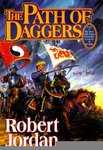
Wheel of Time 08: The Path of Daggers by Robert Jordan

Again, spoilers. Just putting that out there.

I knew I shouldn’t have left off reviewing this for a few days. I have almost forgotten what happened in this book.

Oh, I know the events that transpired – Borderland kings and queens assembling to deal with Rand in some mysterious way; the using of the Bowl of the Winds to finally change the weather – and the terrible bargain that it fulfills between the Sea Folk and the Aes Sedai; the second invasion of the Seanchan from across the sea, this time into Ebou Dar; Perrin building his army to bring the violent Dragonsworn who follow The Prophet back to Rand….

And that’s all just in the first ten chapters.

It’s not a matter of, as is so often complained about, “nothing happening” – plenty happens in this book. In fact, a lot of what happens in this book directly sets up the rest of the series, and marks some major changes not only in the plot but in the world of the story itself. The problem is that the format of the first half of the series – a reasonably self-contained book that has a clear story climax and some sense of closure by the end – has completely fallen by the wayside. At this point, Jordan is writing for the series as a whole, and has only divided it up into separate volumes because TOR can’t sell it any other way.

Yes, more on political machinations and formalwear. Please.

This does have its advantages, but the disadvantages are greater. So of all the books thus far, I’d have to say that The Path of Daggers is my least favorite. Again – and I want to keep stressing this – not because there’s nothing going on. There’s plenty going on. It’s just not all that easy to keep track of, nor is it necessarily interesting to read.

The worst example of this, I think, is the Seanchan invasion. To catch you up, the Seanchan are an empire that lives in the land across the sea. Descended from the greatest king in history, Artur Hawkwing, they have returned to reclaim their ancestral lands. To do it, they have brought an army that has been trained by a thousand years of battle, creatures that seem like monsters to do their bidding, and leashed women who can wield the One Power as a weapon. Even under normal circumstances, this would be a problem. For Rand, circumstances are far from normal. The Seanchan mark a serious complication in his quest to bring all the nations under his rule in time for the Last Battle, so he has to show them who’s boss.

Surprisingly, with a massive army and a corps of Asha’man – men who can wield the One Power to destructive ends – dealing with the Seanchan becomes a tedious chore to read. Perhaps in an attempt to capture “the fog of war,” Jordan has us jumping from place to place and time to time, from a variety of points of view. What could have been an awesome clash of armies, men and women really going all-out with the One Power in battle for the first time becomes a trial to read. Not least because Rand al’Thor has become a thoroughly unlikable character.

In the middle of the book, Sorilea, the most senior and powerful of the Aiel Wise Ones meets with Cadsuane, an Aes Sedai so formidable that she has become a legend in her own lifetime, and they agree that Rand has become too hard. “Strong endures,” Sorilea says. “Hard shatters.” They vow to teach Rand and the Asha’man to remember laughter and tears, and if you ask me they’re not doing it a minute too soon.

I’m ignoring you for your own good, baby.

Rand is doing his best to harden his heart by this point, and not without reason. He’s got armies at his fingertips, and his decisions will kill a lot of men. He’s got these Asha’man to deal with – men who will inevitably go mad from using the One Power – and he can only bring himself to think of them as weapons. There’s his issue with allowing women to come to harm. Instead of being an endearing (if somewhat chauvinistic) character trait, it just becomes tedious and repetitive. Thankfully, the Maidens of the Spear will later beat the hell out of him for trying to treat them so delicately. In this book, it is almost impossible for me to actually like Rand, and makes me wish that Mat hadn’t been given one book off to recover from having a building dropped on him.

Other than the complete mess that is Rand’s storyline, the rest of the book is actually quite interesting. Elayne has finally come home to Caemlyn and is preparing to take her mother’s place as Queen of Andor. We have the rebel Aes Sedai preparing for all-out war with the White Tower, and Egwene consolidating her hold on the rebels. In the White Tower itself, a hunt for the Black Ajah has begun as Elaida does what little she can to free herself of the influence of her Keeper, Alviarin.

Tell me Joan Crawford wouldn’t be a perfect Elaida.

A word about Elaida do Avriny a’Roihan, as an aside. No one likes her, and I can understand why. I don’t like her either, as a person. She’s arrogant to the bone, impatient, self-absorbed, power-hungry, and completely disregards anything that doesn’t conform to what she already believes is true. This mode of thinking leads the White Tower towards utter disaster, from the botched abduction of Rand to the loss of fifty sisters to the Black Tower. Elaida risks being stilled and deposed should the Hall of the Tower find out about her bungling, and she would deserve it, if not more. The only thing keeping her from that fate is the machinations of her Keeper of the Chronicles, who is more than happy to put Elaida under her thumb.

Having said that, it was this book that made her into one of my favorite characters. I still wouldn’t want to sit next to her on a long airplane ride, but what happens to her in this book made me utterly devoted to finding out her ultimate fate in this series.

That pretty much sums it up, actually – taken as a whole, this book is pretty tough to get through and probably the low point in the series, despite having some of the most interesting and pivotal events take place within its pages. How Jordan managed to do this, I’ll never know. All we can do is take the long view – all of this will benefit the series as a whole, if not necessarily the book that contains it.

——————————————-
“On the heights, all paths are paved with daggers.”
– Old Seanchan saying
——————————————-

Robert Jordan at Wikipedia
Robert Jordan at Tor.com
The Path of Daggers at Wikipedia
Wheel of Time at Wikipedia
The Path of Daggers at Amazon.com

Wheel of Time discussion and resources (spoilers galore):
Theoryland
Dragonmount
The Wheel of Time Re-read at Tor.com
The Wheel of Time FAQ
Wheel of Time at TVTropes.com

2 Comments

Filed under adventure, epic fantasy, fantasy, Robert Jordan, war, Wheel of Time

Review 197: The Long Earth

The Long Earth by Terry Pratchett and Stephen Baxter

It is said that the population of the whole world, if packed together into a city of the same density as New York City, would fit into the current boundaries of Texas. This Texan mega-city wouldn’t be a pleasant place to live, and there’s the challenge of infrastructure and living space and waste management, but the point is clear: there’s a lot more space on Earth than we think there is.

True, a lot of it is unfriendly to us – ocean, desert, ice, mountains, New Jersey – but still, despite our habit of packing ourselves into tightly-bound metropoli, there’s a lot of room on this earth to spread out.

Now imagine there was another Earth just a step away. A simple exertion of will, perhaps aided by a small device that anyone could make at home with a potato and some spare parts, and you’re in a new world, untouched by human hands. You’d be standing in the same place you left from, but on another Earth. And if you don’t like that one, well, there’s another Earth just a step away. And another. And another. An infinity of Earths, each one so very slightly different from the one you left, each with its own story to tell.

I’ll take the fifth Earth on the left. It’ll go well with my living room.

With the potential for an entire planet per person, what would that do to the world? Who would go and who would stay? What would happen to the “original” Earth, or Datum Earth as it’s called in this book? The ramifications of the Long Earth are far-reaching and unsettling indeed, as is the quest to map it.

Of the people on Datum Earth, most are able to step with the aid of a Stepper, a small box that they can build from freely available parts using plans that were posted to the internet by a mysterious engineer named Willis Linsay. As long as you follow the instructions properly and to the letter, you should be able to step from Earth to Earth with ease and only a minimum of discomfort.

The first wave of devices were built by kids, prompting an initial missing-children panic as kids popped out of this universe with hastily-built Steppers, completely unprepared for what they were getting into. Soon, though, more and more people were stepping out, eager to explore these strange new worlds.

At the forefront of this wave of colonization were the rare few who could step from world to world without a Stepper. One of these is Joshua Valienté, who was propelled to fame when he rescued children from their first journeys on Step Day. Joshua is hired by the Black Corporation to explore the Long Earth. With the support of Lobsang – formerly of Tibet and now an artificial intelligence – Joshua is going to step as far as he can go and see what there is to see at the distant ends of the Long Earth.

And for every one of you, there is another one with a goatee.

This is a genus of book that I really enjoy – one that takes a simple, straightforward idea and tries to find all the angles of it. To that end, Pratchett and Baxter look at how the people, governments, and businesses of Datum Earth adjust to this new reality. And some of the questions are decidedly thorny. Is America still America on all Earths? If someone commits a crime in an alternate New York, could they be prosecuted by the NYPD? What happens to the value of commodities such as wood or gold when you have a nigh-infinite supply of it? And what happens to a nation when its people start stepping out en masse?

There is a sub-plot in the book, following police Lieutenant Monica Jansson, who becomes the law’s expert on stepping, with all the challenges that come with it. For example, what can you do to stop someone from stepping one world over, taking a few steps to where a bank vault should be, and then stepping back? How do you make a space step-proof against intruders? And what do you do with the increasingly disgruntled percent of people who can’t step at all? That’s to say nothing of the scam artists, the escapees, and the people who just abandon their lives to walk the Long Earth. It’s a concept rife with possibilities.

Each Earth is slightly different, representing an Earth that could have been. Some are steaming jungle, others arid wasteland and still others are lush and perfect for agriculture. There are animals that claim descent from the megafauna of North America, from our own ape-like ancestors, and from dinosaurs, and others still that are unlike anything on the Earth we know. On none of them, however, are there humans – only the Datum Earth has those.

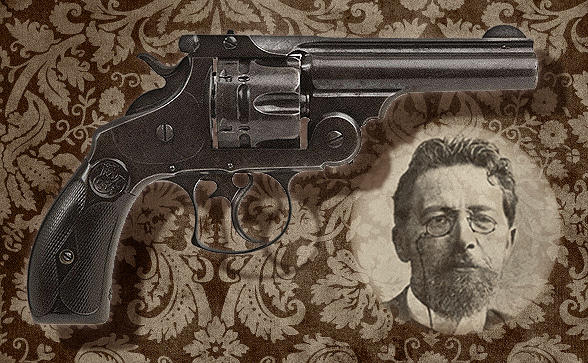
You can have my gun when you pry it from Anton Checkhov’s cold, dead hands!

As great as the concept is, though, I found myself disappointed by the end of it. It seemed like Pratchett and Baxter missed a lot of good opportunities for the story, failed to fire at least one of Chekhov’s guns, and let the Datum Earth plot line with Monica Jansson go woefully under-explored. Furthermore, while the Big Bad at the end was certainly big, it wasn’t that bad, and it was dealt with in a rather perfunctory and, in my opinion, unfulfilling manner. The ending was flat, with a bunch of loose ends that really should have been tied up, and there was even one question that came to mind that seemed so painfully obvious that I was shocked none of the characters thought of it: the Stepper boxes refer to the alternate Earths as being “west” or “east” of Datum Earth, and are built with a three-point toggle switch.

If there’s a west and an east, how about a north and south? What if you had four choices from any given Earth instead of two? I can understand leaving that option out for reasons of narrative simplicity, but it seems like such an obvious question that I’m surprised it wasn’t even raised.

Overall, I think the book fell under the same curse as so many of Neal Stephenson’s works: an amazing idea, done really well until the authors had to figure out how to end the book. There’s no real climax to it, no sense of fulfillment and achievement. Just a feeling like they had to stop somewhere, so they did.

That said, if they’re clever, they’ll make this a shared world project. I would love to see lots of different authors take a crack at some Tales of the Long Earth, precisely because it’s such a useful idea. There are so many stories that can be told, including the ones that got short shrift in this novel. Let’s hope we get to see that.

———-
[Jansson] opined, ‘Oh.’ This response seemed inadequate in itself. After some consideration, she added, ‘My.’ And she concluded, although in the process she was denying a lifelong belief system of agnosticism shading to outright atheism, ‘God.’
– from The Long Earth by Terry Pratchett and Stephen Baxter

Leave a comment

Filed under adventure, alternate earth, colonization, quest, revolution, science fiction, Stephen Baxter, Terry Pratchett, travel, world-crossing

Review 196: And Another Thing

And Another Thing… by Eoin Colfer

If you pay close attention, Colfer tells you exactly what you can expect from this book right at the beginning, using a well-chosen quote from Douglas Adams: “The storm had now definitely abated, and what thunder there was now grumbled over more distant hills, like a man saying ‘And another thing…’ twenty minutes after admitting he’d lost the argument.” (So Long and Thanks for All the Fish)

As Adams well knew, the phrase “And another thing…” is superfluous. It is said by the person who just can’t let things go. It’s a sullen, resentful phrase that doesn’t add anything to the discussion that came before. In other words, Colfer is telling us, this book didn’t need to happen and you probably don’t need to read it. Which is very kind of him, I think, warning us in advance that way. But still, after a long time where I refused to give in, I finally, well, gave in and read the book.

Vogon Sociology is considered a fallback major in most schools.

It’s not as bad as I expected it to be, certainly, but it lives up to its title. If you haven’t read it, you don’t really need to. It doesn’t add very much to the overall mythos of the Hitchhiker’s Guide universe, or to its characters, and while it has some entertaining moments in it, a few places where I genuinely laughed out loud, and some interesting explorations of Vogon sociology, if you give it a miss then you’re probably not missing a whole lot.

If you’ll recall, at the end of Mostly Harmless, the fifth book in the trilogy, the Earth – all of the Earths – were destroyed by the Vogons once and for all. The galactic conspiracy of psychiatrists had won, with the omnipresent Guide Mark Two as their weapon of choice, and the whole business about the Ultimate Question of Life, the Universe, and Everything was finally at an end. With the exception of Zaphod Beeblebrox, all of the main characters were vaporized, much to Arthur Dent’s own relief. If ever there was a conclusive ending to a series, that would be it, although allegedly Adams had a couple of ways in his back pocket to bring everyone back, should he need to do so.

Alas, Adams left us far too soon. In 2008, however, it was announced that there would indeed be a sixth book, penned by Eoin Colfer, of the hugely popular Artemis Fowl books. Fans across the world were both excited and apprehensive to see what would be done with the characters we had grown to love over so many years.

To his credit, Colfer wrote a very funny book. I was laughing by the first page, and he really did a fine job of capturing the tone and cadence of the Guide entries and the way that Adams would narrate the story. His depictions of some characters – especially Zaphod and Random – were spot-on, and you could see a lot of elements in the book that were nods to some of Adams’ favorite themes.

If this is how your book begins, you really need to live up to it…

In essence, what happens is this: Our Heroes are introduced to us in a stasis hallucination, held between ticks of the clock by the Guide Mark Two as the planet-destroying beams of the Grebulons descend towards Earth. They are rescued by the Heart of Gold and Zaphod Beeblebrox, who has detached his left head and is using it as the ship’s computer. Unfortunately, Ford causes Left Brain to freeze up, so they need to be rescued again – this time by one of the most popular bit players in the series, Wowbagger the Infinitely Prolonged, an immortal being who has decided to spend eternity insulting everyone in the universe in alphabetical order. Wowbagger reluctantly takes them aboard, and in doing so insults Zaphod to the point where Zaphod promises to find a way to kill him, a proposition that Wowbagger has no problem with. Zaphod’s weapon of choice? A down-on-his-luck thunder god who’s been slumming it around Asgard.

Meanwhile, there is a planet of human refugees that is undergoing some rather entertaining class warfare, and the solution to this is, apparently, to find just the right kind of god to run the place. And even more meanwhile, a young Vogon is having second thoughts about his Vogonity and whether or not it’s okay to destroy inhabited planets just because there is a work order on hand that says they should.

I want to criticize the book for being directionless and unfocused, but let’s be fair – that describes the first book as well. Given its genesis as a radio drama, Adams never really had a grand plan for what would happen in the beginning of the series, and wrote in an episodic fashion that had (as far as I could tell) no real end point in mind. The difference, however, is that while those books had no real direction to them, they were charged with a kind of chaotic energy that made you want to keep reading just to find out what happens next. Arthur Dent, our avatar in this universe, never got a chance to rest or even change out of his dressing-gown, and so we were dragged along with him. It was exciting and confusing and weird in all the right ways, and we didn’t mind not knowing where we were going because the trip to get there really was just that much fun.

To be fair, though, Arthur NEVER wanted to be involved…

In this book, however, Arthur really doesn’t want to be involved. He’s had an imaginary lifetime of living in peace and quiet, and seems to have outgrown the antics of Ford and Zaphod. He’s the reasonable adult in this book, and not all that much fun anymore. As I read, I was disappointed that Colfer didn’t seem to have captured Arthur’s character very well, but perhaps I was wrong – Arthur didn’t belong in this story, and he wanted nothing more than to not be in it anymore. And it showed.

Another telling moment comes near the end of the book. The narrative takes a moment to remind us that, “There is no such thing as a happy ending.” And a few lines later, it quotes a certain pole-sitting philosopher who says, “There is no such thing as an ending, or a beginning, for that matter, everything is middle.” That certainly is true of life, and you can imagine it being true of the lives of fictional characters. Louis and Rick will walk off the tarmac in Casablanca and go on to do other things, perhaps help the resistance fight the Nazis. The lives of Luke and Han and Leia have been extended far beyond their original showing on film, thanks to the Extended Universe of Star Wars. Scout Finch and her brother Jem will grow up and have children of their own; the rabbits at Watership Down will live and breed and die; Guy Montag will help rebuild the intellectual society that he was originally trying to destroy…

We know that these worlds have lives beyond the last page, no matter how thoroughly they’re destroyed at the end. There’s always going to be some thread hanging loose that can be picked up and used to continue the story beyond where it left off.

But that doesn’t mean that we should.

I applaud Colfer for taking on the project, knowing that it is better for the series to be continued by someone who knew it and loved it and who was influenced by it, rather than by someone who couldn’t show it all the love it deserves. As I said, I laughed while I read this book, a lot more than I expected to. But as the title implies, this feels like an attempt to continue a story that has been finished for a long time. Rather than breathe new life into the Hitchhiker’s franchise, it simply reminds us all the more sharply of what we once had and will never have again.

——————————–
“I do not hate myself. In many ways, I am not altogether too bad.”
– Constant Mown (Vogon)

Leave a comment

Filed under adventure, aliens, Douglas Adams, Eoin Colfer, gods, humor, robots, science fiction, UFOs, war

Review 195: Redshirts

Redshirts by John Scalzi

The philosopher Jean-Paul Sartre once said, on the meaning of life, “Man is nothing else but what he makes of himself.” Frederich Nietzche said, “If we possess a why of life, we can put up with almost any how.” And Stephen King wrote, “Life sucks, then you die.”

It’ll take a far better philosopher than I to really look at this book from an existentialist viewpoint, but I strongly suspect that it would be a lot of fun to do. After all, one of the major questions that philosophy – and existentialism in particular – tries to address is that of why we are here. What is our purpose in life? What, in the end, does it all mean? For us out here, that’s a question we can’t really know the answer to, and thus a whole branch of philosophy exists to tell us that it doesn’t really matter. That maybe we don’t have a purpose imposed upon us from outside, but that’s okay. We can create our own. We can contribute our own verses to the powerful play of life, as Whitman would have it, and in the end we are responsible for our own lives.

For this guy, going out of existence is probably more important…

But what if we weren’t? What if there was a being that orchestrated our lives, willing them into – and more importantly out of – existence? What would you do with the realization that your life is not entirely your own? And even worse, the realization that the person in control of it doesn’t really care all that much about you?

That is the problem faced by Ensign Andrew Dahl of the Universal Union flagship Intrepid. It is the 25th century, and things couldn’t be better. He has a chance to see new worlds and new civilizations, to boldly go… Well, you know the rest. Dahl is at the frontier of science and exploration, and is determined to make the most of it.

If he survives.

Alone among the ships of the UU, the Intrepid loses crew at an alarming rate. Dahl soon discovers a fact that has been known for years by those crew members who are bright enough to spot the pattern: people who go on away missions with the command staff will, almost inevitably, die. Toxic gasses, killer machines, Borgovian land worms – these are just a tiny sampling of dangers that have done in ensigns and miscellaneous crew for years, and no one seems to know why. All they can do is make sure they’re not in the room when the Captain comes in, looking for someone who’ll pop down to a planet’s surface to find out why that mining colony hasn’t reported in recently.

Nope, he’s going to die too.

Dahl, of course, just can’t let himself and his friends die, so he begins digging into the true nature of their lives on the starship Intrepid. What he discovers is a truth almost too mad to be believed: their lives are not their own. A greater power is directing events on the Intrepid, dictating who lives and who dies, and that greater power doesn’t seem to be very good at what it does. So Dahl and his friends have to bet everything on the power of the Narrative, meet their makers and try to find a way to secure their freedom. Or, failing that, a way to see to it that their lives have more meaning than they had before.

As always with John Scalzi, I recommend picking this up. It’s a very fast read – I finished it in under a day – and it has the tight combination of humor, thoughtfulness, and genuine emotion that I have come to expect from his work. From a premise that is incredibly simple – “The crew of a starship realize they’re doomed if they go on away missions and try to change their fate” – he’s built up a multi-layered exploration into the meaning of life and death. The universe he’s given to us is one where people are denied the ability to give meaning to their own lives, and have to rely on an unseen force to do it for them. The fight, then, is to acquire that ability to decide. To gain agency, as it were. They want to be able to control their own existence so badly that they risk their existence entirely.

The corollary, then, is very simple: what are you doing with your life? We, the readers, have that agency. We can make decisions for our own lives and our own purposes. If we succeed or fail, we can do so knowing that we made those successes or failures possible. [1] In a sense, we don’t know how good we have it, something that is brought up in the second of three codas to the main novel. We can choose. We can create meaning in our lives without hoping that some higher power will do it for us. So why don’t we?

For a book that presents itself as a quick, fun read, there are certainly layers upon layers of meaning in it that could be a lot of fun to explore. The only complaint, really, is that it wasn’t long enough. And I don’t mean that he skipped essential scenes, or that he should have opted for a Tolkien/Jordan/Martin-esque style of describing every goddamn thing that showed up on the page, but there were points where I just wanted him to slow down a bit and let us appreciate the moments for what they were. There’s a scene in chapter 21, for example, that should be really emotional and meaningful, but it’s almost entirely dialogue. Good dialogue, yes, but I wanted to linger over it a bit, and that’s true for a lot of scenes in the book. Scalzi writes wonderful banter, and makes his characters sound real, but I want to see things as well as hear them.

Also, to be honest, I expected the last page to just be a picture of Scalzi at his computer, turning to the camera and winking. It would have been hilariously meta, but I guess he’s not as gimmicky as that.
Buy the book and enjoy it. If you’re a fan of Star Trek – which was, given the title, a huge inspiration for the story – you’ll no doubt appreciate it more than most. Even if you haven’t watched every episode of the original series, though, the Red Shirt character is one that has permeated all levels of fiction, and has died many times in order to advance the plots that you love so well. He even has one poor guy who’s not only a Red Shirt, but nearly at the end of his tour and about to get married. There was no way he’d survive. Take some time out for these poor, expendable bastards and give them a chance to shine.

In conclusion, I’ll leave you with the song that Jonathan Coulton wrote for the book. Quiet, poignant, and touching. But also really funny.

—-
“The [Borgovian Land Worms] were in a frenzy. Somebody was now likely to die. It was likely to be ensign Davis.”
– from Redshirts by John Scalzi
—-
[1] There are plenty of external, uncontrollable factors, of course, which can all be lumped together under the term “luck,” but you know what I mean.

Leave a comment

Filed under existentialism, humor, John Scalzi, meta-fiction, quest, science fiction, space travel, story

Review 194: A Crown of Swords (Wheel of Time 07)

Wheel of Time 07: A Crown of Swords by Robert Jordan

This review is kinda spoiler-heavy. Just so you know.

With this book, we have reached the midpoint of the series and like you might expect of a series this size, this is where things get soft in the middle.

If you look at various online reviews of this book and others at this point in the series, you’ll see comments like, “It was so boring – nothing happened.” They’ll complain about having too many characters to follow and the story getting stretched out too thinly, which I addressed back in my review of The Fires of Heaven. And as I said in that review, the critics aren’t entirely unjustified in getting frustrated – the story has been divided into several major plot threads that don’t seem to have any chance of meeting up in the near future. It seems like about four different novels that all happen to inhabit the same world at the same time.

I’ll say this much for Illian – no one else thought to put bees on their flag.

Here’s what I think is happening: at about this point in the series, Jordan started thinking of this all in terms of a much larger mega-story, rather than a series of books, with the narrative structure that would entail. It does explain a great deal, especially the rather forced nature of the climax in which Rand finally confronts the Forsaken Sammael and wins the crown of Illian. Exhausted and wounded, Rand goes into pitched battle against a stronger, more prepared enemy for no other reason than because he thinks the timing is right. Whether it is or is not is questionable, but there’s no real reason for that climax to have appeared at the end of that book.

Especially since it occurs four days after the rather exciting opening events of the next book, The Path of Daggers, a fact which we don’t even learn about until roughly halfway through that book. I get the feeling that if it had been possible to publish a single 2,000 page book as volume seven in the series, Jordan would have done it, allowing him to place the attack on Sammael and the use of the Bowl of the Winds in their proper order. But the good people at TOR know such a thing to be impossible, so a Climactic Finale was jury-rigged into this text in the hopes that rabid fans would still buy the next one.
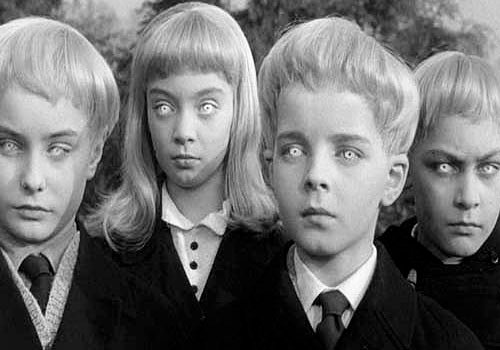
Which, of course, we did. It smooths out a bit if you’re reading the books in rapid succession, but let me tell you – the two year wait between book seven and book eight was a killer.

Oh, Vampire Willow – you’re so jaded.

As for the claim that “nothing happens,” well that’s just patent nonsense. Elaida, the Amyrlin of the White Tower, has found herself under the thumb of her Keeper, Alviarin, for the sin of being extremely short-sighted and overconfident. On the move with the rebel Aes Sedai, Egwene starts to build support for herself through means that no one ever expected – least of all her – and lays the groundwork to do the impossible: attack the White Tower itself.

The Shaido Aiel have been broken and dispersed, but their leader, Sevanna, still holds dreams of leashing Rand al’Thor and becoming the power behind the Chief of Chiefs. The Aes Sedai who tried to capture Rand have been put under the attentions of the Aiel Wise Ones, and all of the Aes Sedai – from the Tower and from Salidar – have taken an oath of fealty to him. What this will mean in the long run is unclear, but until they are released, they will serve him. Until Cadsuane Melaidhrin appears, with plans all her own for the Dragon Reborn. And with Min, Rand tries to settle the rebellious Lords and Ladies in Haddon Mirk, who refuse to acknowledge him as the ruler of Cairhien, Andor or Tear. What he finds, of course, is blood, pain and death – only some of it his.
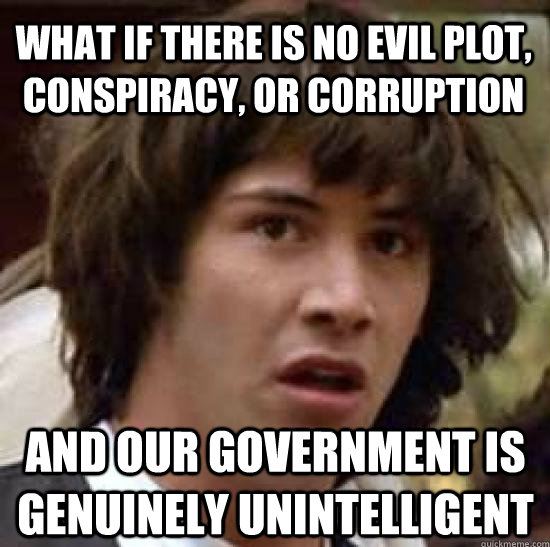
In the main plot line of the book, Mat, Elayne and Nynaeve are in Tanchico, searching for the Bowl of the Winds – an artifact which could, if they’re lucky, undo the Dark One’s touch on the weather and finally end the summer that has held the land in its grip for the last three books. What we get out of this plot line is significant in many, many ways – we learn about what happens to women who are turned out of the White Tower, and why being so very strict may have cost the Aes Sedai dearly over the last two millennia. We also get a hint as to what causes the famous “ageless” look that so many Aes Sedai have, and why the Three Oaths may do more harm than good in the long run.

No, not that kind of Green.

In fact, between the Ebou Dar Kin and the Sea Folk, it looks like the nature of female channelers in this world is going to be radically upended by the time the series ends. The White Tower, which has stood as the unchallenged symbol of One Power dominance, will no longer possess a monopoly on channelers, and this will force a great many changes not only on Aes Sedai, but on the public perception of women who can use the One Power. But all that is in the future. For me, one of the most touching moments of this part of the series is Reanne Corley’s simple line: “I can be Green.” You’ll know it when you get to it.

What’s more, there are some very significant character moments in this book, not the least of which is that Mat finally gets his thanks for saving Elayne and Nynaeve from the Black Ajah way back in The Great Hunt. Elayne asserting herself among the “real” Aes Sedai is a marvelous scene, as is Mat facing down an entire room of women who would make a king step lightly. The interplay between Mat – the rough-and-tumble rogue/general – and Elayne – the daughter-heir of a kingdom and newly-minted Aes Sedai – is highly entertaining, especially with the help of Nynaeve and her braid-tugging, and Birgitte’s ability to drink like the soldier she is.

As an aside, we also learn from Mat what must be one of the strongest – and strangest – curses in this world, given the conditions under which he utters it. I have to admit, with invectives in this series such as “Burn me,” “Flaming” and “Bloody” – words that draw glares from the more prim and proper segment of society (i.e. women), I don’t really feel the power that they should have. Made-up curse words, such as “Gorram” (Firefly), “Frak” (Battlestar Galactica) and “Sprocking” (Legion of Super-Heroes) feel more, well, curse-ish to me.

This would have been more effective.

“Sheep swallop and bloody buttered onions”? Not so much.

They have plenty to curse about, though. The Black Ajah are in Ebou Dar, too, searching just as hard for a cache of artifacts from the Age of Legends, under orders from Sammael, and a whole new danger arises in the form of the Gholam – a creature made to kill channelers. And once the Seanchan decide that it’s time to take Ebou Dar, that’s just icing on the cake.

So to say that “nothing happens” is to completely ignore everything that, well, happens. It just doesn’t follow the forms and narrative structures that we have expected up until this point, and there are a lot of threads left dangling between books. But this is the point where it becomes vividly clear that you are reading a much larger story, and you should count yourself lucky that you can go from one to the next without stopping.

This did make me worry slightly, of course, about the last books in the series. The book written by Sanderson was originally supposed to be one volume – A Memory of Light – but the narrative demands of the story led to it being split among three volumes. So my question, prior to reading them, was this: will we see the same thing in those books that we saw in this one? A hasty climax, put in the end of the book because that’s what’s supposed to be there? Or does Sanderson have a good, well-planned structure for the final three books that makes each one self-contained yet which makes the final three flow inexorably to the end?

So far so good, but there’s one more left. We shall see.

———————————————
“There are no clear paths. Only pitfalls and tripwires and darkness.”
– Lews Therin Telamon
———————————————

Robert Jordan at Wikipedia
Robert Jordan at Tor.com
A Crown of Swords at Wikipedia
Wheel of Time at Wikipedia
A Crown of Swords at Amazon.com

Wheel of Time discussion and resources (spoilers galore):
Theoryland
Dragonmount
The Wheel of Time Re-read at Tor.com
The Wheel of Time FAQ
Wheel of Time at TVTropes.com

1 Comment

Filed under adventure, epic fantasy, fantasy, good and evil, Robert Jordan, Wheel of Time

Review 193: Origins of the Specious

Origins of the Specious by Patricia T. O’Connor and Stewart Kellerman

I, for obvious reasons, have a great affection for the English Language. It’s a rich and exciting tongue, with a history as tangled and strange as they come. Over the last millennium or so, the language has gone through so many shifts and changes that people spend entire lifetimes trying to figure it out. Once they do, more often than not, they find that what once was true about their beloved mother tongue just doesn’t hold up today.

So there’s a choice to be made by lovers of language: deal with the ever-fluctuating nature of English, adapt yourself to its changes and go on with your life, or do your damnedest to hold back the tide of error that is slowly overtaking your beloved tongue.

For reasons that should be obvious, the former type of person is far less likely to write books like this. Their laid back, laissez faire attitude towards the world is less inclined to make them mad enough to sit down at a computer and pound out thousands of words on the state of the language today. The latter type of person – and I do occasionally count myself among them – are far more likely to sit up late at night and write scathing tracts about the utter and complete degeneration of today’s language – about split infinitives and buzzwords and the ungodly Frenchification of English. If you listen to the sticklers, you might be forgiven for thinking that the very fabric of the English Language is in a state of decay, rotten and putrescent, and ready to fall apart any moment.

Mind you, some mistakes are really entertaining…

Patricia O’Connor and Stewart Kellerman are here to give you some perspective, something in which language sticklers are usually lacking, and perhaps lessen the incandescent rage that overtakes you when you hear people use “infer” to mean “imply,” or “unique” to mean “special,” or say, “I could care less,” even though you know it’s supposed to be “I couldn’t care less,” because I mean my GOD, even a CHILD, even a half-trained, concussed MONKEY could see how that phrase works, what’s so hard about a simple word, you MORONS, you gibbering pack of….

****We are experiencing technical difficulties at the moment. Please stand by. We apologize for the inconvenience.****

And we’re back. Sorry about that.

This book is about errors in English, and not only the legitimate ones. It’s also about how some of those errors aren’t really errors, or how they used to be, but now they aren’t. O’Connor and Kellerman are looking to give us a historical sense of how the language has evolved and changed over the centuries, and let us know that the rules of language can’t be set by prim and stuffy grammarians from two hundred years ago.

Those Grammarians, for example, are often called The Latinists, and a great many of them come from the 18th century. In those days, Latin was held up as being some kind of “perfect tongue,” and there was a certain fetish for making English play under Latin rules. The authors wryly note that this would make “about as much sense as having the Chicago Cubs play by the same rules as the Green Bay Packers.” For those of you who are rusty on your linguistic history, Latin split off into what are called the Romance Languages, which includes Spanish, French and Italian. English, on the other hand, has its roots in the Germanic side of the great language tree, and so is more similar to German, Dutch and Frisian. The vast number of Latin-based words we have are, technically, imports, as English is merely a cousin to Latin, not its descendant.

TO GO BOLDLY, DAMMIT!! TO GO BOLDLY!!

But no, there were Those who wanted us to be more Latin-like, and so they imposed rules on English that made no sense whatsoever. Such as the Split Infinitive Rule (i.e. not putting a word between to and a verb – to boldly go would be considered an utter abomination to these people.) In Latin (and Spanish, and French, and Italian), the infinitive form of a verb is a single word – it is literally impossible to split. English, however, has two-word infinitives, and plenty of room to joyfully put in modifiers.

Another good example is using the word “none” as a plural – “None of the ninjas are dead.” The old grammarians would insist that the sentence be, “None of the ninjas is dead,” because “none” is a compressed form of “not one.” Even the venerable Stephen Fry can be caught pushing this one, in a rather hilarious outtake video from his wonderful quiz show QI. Fact is, people have been using “none” as a plural for centuries, and it was accepted language back then. The current fracas about it rose up in 1795 when a guy named Lindley Murray suggested that while “none” can be used as either a singular or plural, it is really best used as a singular. Which English sticklers all took as, “It really must be used as a singular.” A hundred years later, and it’s become an ironclad “RULE,” with no more foundation than one grammarian’s half-hearted opinion.

Ladies and gentlemen, Eugene the Jeep.

There’s also a great section on bad etymology – these are the stories about word origins that everybody knows, but which are most certainly wrong. For example, the origin of the word “Jeep” is usually attributed to a reading-aloud of “G.P.,” meaning “general purpose,” an appellation allegedly applied to these indestructible vehicles. Nope, sorry – it comes from Popeye comics. Or think about the Xmas season – whoops! I mean, Christmas season. Use “Xmas” today and you’ll get lambasted for taking the Christ out of Christmas. The abbreviated word is now looked upon as a Secular Humanist Plot to ruin Christmas for all the good god-fearing folks. Nope – the letter X has been representing Christ for more than a thousand years, and comes from the Greek letter X (chi), which is the first letter of Χριστός, which means, yes – Christ. The venerable Oxford English Dictionary can trace “Xmas” as far back as 1551, in fact.

One part of the book that really got my attention (other than Chapter 5 – the one on swearing) was the chapter on words that have fallen out of favor due to hyper-sensitive political correctness. Remember when Some People (they know who they are) started spelling the word for a female human as “womyn,” so as to remove it from the male-dominating “man”? Well, as it turns out, back in the good old Anglo-Saxon days, “man” referred to a person, regardless of their sex. Over time, distinctions began to emerge, giving us waepman for males (lit. “weapon-person”) and wifman for a married female. Change happens over time, and wifman became woman. Guys lost half their word and just ended up with “man.” Poor us.

The authors also touch on more charged language as well. For example, they recount the tale of a white city official who used the word “niggardly,” meaning “stingy” or “tight with money” in a conversation about expenses.

I’m in trouble, aren’t I?

This caused a massive media storm because the word “niggardly” sounds really close to “nigger,” a word that white people have to be really, really careful about using. For good reason, of course, but the fact is that “niggardly” and “nigger” are completely unrelated. The former goes back to old Scandinavian and the word “nygge,” which meant a miser. The latter is a corruption of the Latin niger, meaning “black,” which is turn gave us the Spanish and Portuguese “negro.” Long story short (too late), that city official used the right word in the right context, but it wasn’t a word that we let people use anymore. It’s a a Fallen Word, joining other words and phrases such as “Call a spade a spade,” “Rule of thumb,” and “shyster.” All of them have innocent origins, but have been inextricably linked with some of our worse human prejudices and practices.

I could go on. The point is that this book is a great pleasure to read, and will give you a fresh new perspective on the English language. It’s non-academic, so you have nothing to worry about there, well-organized and just plain entertaining. More importantly, while it may not be able to prevent you grinding your teeth when you see “Ten Items or Less” at the local supermarket, you may be less inclined to try and strangle the manager.

Maybe.

———————————————————————
“The truth is that English is all about change. It’s as absorbent as a sponge, as flexible as a rubber band, and it simply won’t stand still – no matter where it’s spoken.”
– Patricia T. O’Connor and Stewart Kellerman, Origins of the Specious
——————————————————————–

Patricia T. O’Connor on Wikipedia
Origins of the Specious on Amazon.com
Patricia T. O’Connor’s website

Leave a comment

Filed under history, language, nonfiction, Patricia T. O'Connor, Stewart Kellerman

Review 192: The Audacity of Hope

The Audacity of Hope by Barack Obama

I know, I was supposed to have read this, oh, back in 2007 or ’08 when everyone else was reading it. And I thought about it, really I did. But the cynic in me thought, “Come on – what do you think it’ll be? It’ll be a 400 page sales pitch about why he should be President.” I lost faith in our elected officials a long time ago, and if I wanted to learn about Obama, I would rather have done so from a third party, rather than reading a self-aggrandizing autobiography about how awesome he is.

In a way, my Cynical Self was right – this is a sales pitch for Barack Obama. I don’t know if he was giving the Presidency serious thought when he was writing it, but he could have re-titled the book “Why You Should Vote for Barack Obama” and it would have been perfectly appropriate. Given that he wrote the book after his exceptional keynote speech at the Democratic National Convention, however, it is very likely that he wrote it with higher office in mind.

What an unpleasant little man he is…

The table of contents reads like a campaign platform, with chapters titled simply, “Values” or “Faith” or “Family,” and each chapter deals not only with Obama’s views on the topic, but his personal experiences dealing with it. In “Republicans and Democrats,” for example, he talks about how the Gingrich Rules bled out from Washington to infect his own state of Illinois, and how hard it was to get anything done when Republicans and Democrats viewed each other as enemies, rather than as different actors in the same play. In “Opportunity,” he talks about meeting the guys over at Google who can’t find enough American software engineers and the auto workers who can’t see their jobs surviving in the new economy. In “Family,” he talks about the challenges he faces as a political husband and father, and the more serious challenges facing other families around the country.

Make no mistake – this book is, first and foremost, an answer to the question “Who Is Barack Obama?” And it’s a very comprehensive answer. We get not only his positions on the issues of the day, but also his personal history (and how it informs his opinions) and a good sense of how the man looks at the world. For an angry, post-Bush Liberal, however, it is immensely, frustratingly even-handed.

You should see me – I’m grinning like an idiot already.

I’ll admit – if I’m feeling a little low, I think about my favorite things: a good book, a thunderstorm on a summer afternoon, sunlight filtered through autumn leaves, and Dick Cheney in an orange jumpsuit and manacles, preferably tarred and feathered. With bells on.

It’s a natural human impulse, I think, the drive to give as good as you get, and after the last eight years of being on the side slandered every time it questioned authority; of being a supporter of elected officials who have been the target of right-wing vitriol since I was in college; of having to defend the idea that government can be a force for good against thirty years of the incessant, endless, Reaganite drumbeat of Government Is Bad, what I really, really want is to see some heads roll. I want shame and ignominy visited upon those who put their own twisted and medieval ideologies ahead of governing the country. I want to see talking heads and pundits begging on the streets for spare change while the rest of us soar into a utopia of rational understanding.

And Barack Obama won’t let me have that. Dammit.

There are a lot of people annoyed with President Obama right now, and not only from the opposition party. There are Democrats who are frustrated with his pace and what they perceive as his lack of action. All of those people really should have read this book before they got behind him. I’m sure they still would have thrown their support to him, but they would have known better what to expect – a centrist, deliberative politician who plays the long game in lieu of scoring empty political points by, just to pick an example out of thin air, sending Karl Rove to Gitmo.

Not a bad role model, if you ask me.

Throughout the book, he emphasizes that while he has indeed picked a side in our political system, he can also see the value in opposing opinions. He knows that there is merit to some GOP ideas, and that they have simply lost their way at this time. Rather than dismiss ideas that don’t match his own, he looks for where his ideas and those intersect, and tries to find some kind of common ground to work from, in the hopes that a synthesis can lead to good governance. He is constantly questioning his own assumptions and trying to examine his own biases, seeing the world in the manner of Atticus Finch. He admits that no real problem has a simple solution, no matter how much we wish it were otherwise. And above all, he knows that hope alone won’t make the world better. Only deliberate, consistent action will lead us to a better country. Hope merely points the way.

Reading this book is a glimpse not only into the mind of Barack Obama but, in some sense, into the mind of everyone who wants to occupy higher office. A great deal of the book focuses not only on his positions and how he has come by them, but what it’s like becoming and then being a lawmaker. He says near the beginning that it takes a certain kind of personality to make it this high in public office. “Few people end up being United States Senators by accident,” he writes. “At a minimum, it requires a certain megalomania, a belief that of all the gifted people in your state, you are somehow uniquely qualified to speak on their behalf….” Along with a burning ambition, he also admits to the other lodestone of campaigners: fear. “Not just fear of losing – although that is bad enough – but fear of total, complete humiliation.”

Describing not only the physical trials that are involved with becoming a Senator but also the emotional and interpersonal ones that come with it, my first thought was, “What sane person would choose this kind of life?”

Oh, the notes I’ve taken…

It’s an illuminating book in many ways. My Inner Cynic has asked me to remind you that this is a book about Barack Obama, written by Barack Obama, and is not necessarily trustworthy in that sense. But the things Obama said in here are very consistent with the things he’s saying now, as long as we control for new information gained between 2006 and now. If I learned anything from this book, it’s that I now have confidence that he’s dealing honestly with the American people (given a certain political value of “honest” of course).

While I still don’t know if he’s going to be able to pull the country up into greatness the way his advance press claimed he would, I am at least confident that he has the nation’s best interests at heart. I like a lot of his ideas, and I think he’s got a good vision for the kind of America that I would enjoy living in someday. He may not get us there, but he can at least get us started.

—————————————————————-
“I am convinced that whenever we exaggerate or demonize, oversimplify or overstate our case, we lose. Whenever we dumb down the political debate, we lose.”
– Barack Obama, The Audacity of Hope
—————————————————————-

Leave a comment

Filed under Barack Obama, memoir, politics, society

Review 191: The Great Derangement

The Great Derangement by Matt Taibbi

There is an essential flaw in human nature that makes us think we’re special. It used to make us think that we were literally the center of the universe, which it turns out we aren’t. It makes us think that we’re all going to grow up to be movie stars and astronauts, which we aren’t; our children are all brilliant and well-behaved, which they aren’t; and that God is on our side, which It isn’t.

Oddly enough, though, there is one place where this boundless optimism is flipped on its head. Every generation is absolutely convinced that this is the nadir of human accomplishment, that we are well and truly screwed and that there has never been a more messed-up, terrible time to live. The past was better, we think, and we look back on the days gone by as a golden age when things were simpler and no one had the kind of troubles that we have today.

When you join us, all will be perfect. Join us. Join us.

Of course, that’s not true. We are healthier, freer, and generally better off than generations before us, who were healthier, freer, and generally better off than the ones before them, and so on. While things certainly aren’t perfect, they’re not nearly as bad as we like to think that they are. If people were able to look at their world with an unjaundiced eye and a fair heart, we would realize that and maybe start living our lives accordingly.

Of course, if we were able to do that, then Matt Taibbi wouldn’t be able to sell his books.

To be fair, the first decade of this century was messed up on a grand scale. Not the same way the 60s were, or the 30s, or the 1860s, but truly twisted and burdensome in their own special way. We had been attacked, seemingly out of nowhere, by a shadowy cabal of extremists who managed to make a laughingstock of our supposed invulnerability. We reacted by flipping out and invading the wrong country and passing reams of knee-jerk legislation designed to chip away at civil liberties wherever they could. Our government, when it wasn’t handing us lies that were about as transparent as a window where the glass has been removed and replaced with nothing but pure, spring-fresh air, was telling us that there was nothing to see here and that the best way to get involved was to go shopping. And if you did have to get involved, you’d better be with us.

Because we know who’s against us. The tehrists.

Overseeing all of this was a simplistic frat boy idiot manchild of a President and the band of Washington technocrats who had been itching to bomb the hell out of the Middle East since the 70s. The media, for its part, was playing along, doing what it was told, and making sure that the people, with whom sovereign power resides in the United States, had no way of knowing what its government was actually doing at any given time.

This could probably be a campaign sign for whatever politician is running near you.

Americans had been lied to over and over again for decades, starting with the post-ironic age of advertising (which Taibbi pinpoints as the Joe Isuzu ads) up to the utterly unswallowable “They hate us for our freedoms” line that we were supposed to believe when it slid, wet, horrible and putrescent from the mouth of George W. Bush. And then, if you raised your hand and asked questions about the story you were expected to buy into, people turned around and accused you of being a faithless traitor. So what are people to do when they can’t trust the narrative that their leaders are giving them?

Why, they turn inward, of course, and build their own narrative. Their own bubble, as it were – a space within which everything makes sense. Everything can be explained, people can be trusted, and all the rules work. It is utterly incomprehensible to outsiders, but that’s okay because outsiders are the whole reason the bubble exists in the first place. As Taibbi discovers, there is far more in common between the far right hyper-Christians and the far left conspiracists than you might expect, and that there are far more of them than you really want to know.

This book is basically two interwoven parts, with a few interludes to keep the story on track. In one part, Taibbi goes down to Texas, uses a fake name and gets involved with a Megachurch in San Antonio. He joins the church to find out what brings these people together in a time when the government and the media can’t be relied upon, and what attracts people to a life of fundamentalist Christianity in the first place. He goes to meetings where demons are cast out, to small group discussions in beautiful Texan homes, and listens to people explain why it is that they’ve given their lives to Christ, something that Taibbi would never do himself, were he not researching a book.

Woah.

He also finds himself drawn into the shadowy world of the 9/11 Truth movement, a group that believes that – to varying degrees – the Bush administration bears some of the blame for the attacks on New York and Washington D.C. Some believe they knew about it but chose to do nothing, so that they would have a reason to launch their war against Iraq. Others believe that they directly caused the attacks, mining the collapsed buildings and aiming the aircraft. The more elaborate theories involve holograms, missiles and a conspiracy of silence that is continually upheld by thousands of otherwise loyal Americans.

Much like the fundamentalist Christianity, Taibbi immerses himself in Truther culture, trying to find out what it is that keeps them going, even when they – like the Christians – have no real evidence to support what they believe. Even moreso for the Truthers, there is actually a lot of logical, circumstantial and physical evidence that outright debunks their theories, but they soldier on anyway, utterly convinced that they are the only ones in America who haven’t surrendered to the lies of the political and media machines.

So what do these two groups have in common, and what do they say about America?

American politics are, generally, about Us versus Them. All politics, really, but we do it really well. The parties in power do their best to say that they stand for Us against Them, regardless of which party you vote with, but it’s become increasingly evident that the parties in power are not really for Us – they’re for Themselves. They push the same canned platitudes and wedge the same minor issues every election cycle with the sole purpose of keeping their jobs, and that is finally becoming evident to the public. Rather than governing, which is ostensibly their jobs, Our Representatives in Congress are doing what they can to help themselves, their parties and their friends, and this is more and more evident the closer you look. To have them then turn around and say, without a trace of irony, that they’re doing their best for the country they love, that they actually care about the concerns of the voter, is enough to make even the most optimistic Pollyanna turn into a Grade-A cynic.

“A riot is an ungly thing… undt, I tink, that it is chust about time zat ve had vun!!” – Inspector Kemp, Young Frankenstein

But rather than rising up as one and kicking the bastards out, the public turned inwards and went into their bubbles. If the game we’re playing is Us versus Them, then let’s do it right. Now we’re not just one group of people with a certain set of political views, we are the anointed of God or, depending on where you are, the only intelligent people in a world of sheep. And who are They? They are not just corrupt politicians. They are agents of Satan, sent to bring about the end of the world. They are power-hungry chessmasters, bent on ruling with an iron fist.

It’s a world view that makes sense to the people who have chosen to live in it, more sense than the “real” world does.

Now this book was written back in 2006 and a lot has happened since then, so it is very much a book of its time. Since then, we have seen our political theater change in many interesting ways, not the least of which is the Tea Party, which is kind of the coming-out party for a lot of the people who felt they had been left out of the discussion for so long. They’ve had their chance to incubate in the churches and on the internet, and now they’re out in force and ready to change the way politics works. A later addition to the party is the Occupy movement, bound together in its view of a nation run by plutocrats and their puppet government. They’re what happens when the Left sits in the echo chamber for a while.

Whether they will ultimately be successful is still up for argument, but so far, well… They’re all kind of freaking me out.

The take-home message from the book is this: There have been far worse times to be in the United States, and our nation has seen its way through far greater trials. But each one is different, born of different causes and with different effects, and we do not have the benefit of being able to look back and see how everything works out. It is much easier these days to find people you agree with and isolate yourself with them, and every time Congress or the President or the Media lets us down, it’s more and more tempting to do so.

HAVE YOU ACCEPTED JESUS CHRIST AS YOUR PERSONAL SAVIOR?!?!

But that way lies madness. The madness of an evangelical movement that is anticipating the end of days, the madness of a conspiracy of vast and perfect proportions. The answer is not to isolate ourselves with the like-minded but to seek out those with whom we disagree and make sure that we’re all living in the same world, no matter what it’s like. Rather than dividing ourselves into two giant camps of Us and Them, pointed and aimed by people whose only interest is in seeing us rip each other to shreds, maybe we can finally see what it is that unifies everyone.

Once we can do that, once we can fight the derangement, perhaps we can see our way to making our country into the one we want it to be.

——————————————-
“Washington politicians basically view the People as a capricious and dangerous enemy, a dumb mob whose only interesting quality happens to be their power to take away politicians’ jobs… When the government sees its people as the enemy, sooner or later that feeling gets to be mutual. And that’s when the real weirdness begins.”
– Matt Taibbi, The Great Derangement

Matt Taibbi on Wikipedia
The Great Derangement on Amazon.com
Matt Taibbi’s blog at Rolling Stone

Leave a comment

Filed under american history, analysis, Christianity, culture, economics, Matt Taibbi, memoir, nonfiction, politics, religion, society