Category Archives: science fiction

Lost in the Stacks 8: Guilty Pleasures

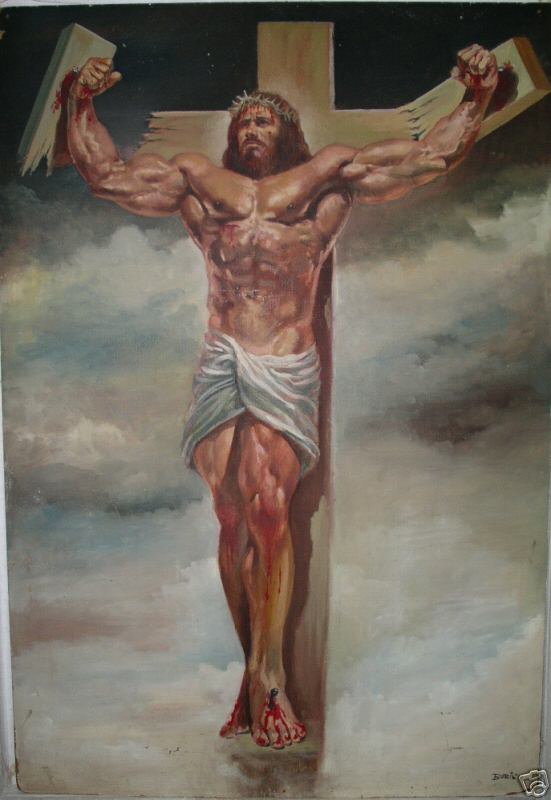
Everybody has a guilty pleasure book. It might be one author or a specific series or even a whole genre – that book you don’t want to be seen reading. The book you know your high school English teacher would scold you for wasting your time with. The book you feel stupid talking about at parties because you know they’re going to say, “Really? That’s an interesting choice. I enjoy reading James Joyce in my free time and have first editions of the collected works of Gabriel Garcia-Marquez in every room of my home,” after which they all laugh at you until you run out of the party in shame and swear never to read another word of anything fun as long as you live. For example.

You didn't know about Twain's little-known short story, "A Connecticut Yankee in a 30th Century Court?" It's fascinating, really....

But should it really be that way? Why do we let the bestseller lists and “Best Books of ALL TIME” lists or some knucklehead with a podcast tell us what we should read and what we should like? In this edition of Lost in the Stacks, we explore the idea of Guilty Pleasure Reading and whether or not the concept should even exist. Share your guilty pleasures with us and stand up for your tastes in reading!

Obama’s Book Club
NPR’s Top 100 Science Fiction and Fantasy
The Guardian’s Best Books
Time Magazine’s Top 100 Novels
The Telegraph: Top 100 Books
New York Times Bestseller List
The Comics Code Authority on Wikipedia

1 Comment

Filed under classics, comic books, criticism, culture, fantasy, fiction, Lost in the Stacks, reading, reviewing, science fiction, society

Review 135: Jennifer Government

Jennifer Government by Max Barry

Look around your house. Sneakers, computers, movies, household items. How many of those things are made by massive, multinational corporations? Probably all of them. And how many of these companies are from America? Lots, I’ll bet.

In her book No Logo, Naomi Klein takes a trip through the history of branding – the association of a particular company with a particular product. Given that most products with similar function – sneakers, for example – are fairly similar in their makeup and function, the companies that make them use brand marketing to distinguish themselves from their competitors.

The Nike people are a wee bit intense...

Thus, Nike, Reebok and Adidas, whose sneakers are, by and large, as good as each other, use brand marketing to make you believe that, if you buy their product, you are somehow superior to those who buy the product of the other guy. If you buy Nike, you’re part the the Nike family – the uber-atheletes, the people who Just Do It and don’t go in for all the fripperies of life. If you buy Reebok, you’re more down to earth, more involved in the gestalt of life, and not quite as intense as the Nike people. If you have Adidas, you’re probably more fun, a little irreverent, and you dream about sex all day. Or something like that.

We use brands to define ourselves. When my father worked for GE, we only had GE appliances in the house, even if that meant paying a little more for the new washer. I had a student who wore nothing but Jean-Paul Gaultier clothes. Hell, Generation X has been divided into the Pepsi Generation and the Coke kids, a terrible schism that may never be repaired in my lifetime, unless the Mountain Dew Freedom Fighters intervene. And we won’t even start in with the Windows-Mac Civil War.

Brand loyalty is more important to some of us than others....

I don’t pretend to be immune, either. I drink Diet Coke and used to smoke Marlboros, and would never have chosen another brand if those were available. Of course, this probably has something to do with scary chemical additives than anything else, but the point is the same. I was loyal to my brands, one way or another, without even thinking about why.

Like it or not, our brands define us, and we allow them to do so. Mainly because they use their commercials to terrify us – buy Preparation H or lose that valuable sale, wash your husband’s clothes in Wisk, or all the other wives will laugh at you, that sort of thing. And the moment you start to wonder if perhaps there isn’t any real difference between cars made by Honda and those made by Toyota, they hit you with a barrage of special offers, incentives and tie-ins to remind you that they love you. Really, they do.

Max Barry takes this kind of brand identification one step further.

This is a world where, economically speaking, most of the world is the United States. All of the Western Hemisphere (except Cuba), the UK, Southeast Asia and Australia, Russia, India and South Africa belong to the US, for all intents and purposes. The US government operates in all those places, if you have the money for it. Europe, Africa, China and the Middle East stand alone against the US economic juggernaut.

I pledge allegiance...

Corporations are king here. There are no taxes, as the US Government is simply another corporate organization, responsible for enforcing such laws as they have the budget to enforce. Every service – police, medical, fire – has been privatized. And while the concept of the political nation has pretty much vanished, there are economic nations emerging – the US Alliance and Team Advantage, both economic alliances that have their roots in airline mileage campaigns. Each of these groups controls dozens of markets, and cross-promotes all their goods. So if you wear Nike shoes, then you had better not eat at Burger King – that’s Team Advantage territory. And if you work for McDonald’s, then you’ll want the NRA to protect you, rather than the Police, because you get a membership discount. Schools are run by “kid-friendly” companies such as McDonald’s and Mattel, and are basically corporate propaganda mills. Not like now, of course. As if all that wasn’t bad enough, your surname is the name of whatever company you work for.

Thus, a young man named Hack Nike is given a pivotal role in the marketing of a new Nike sneaker, the Mercury. As part of their marketing strategy, they’ll limit production and distribution to five pairs per store. As Beanie Babies, among other products, have shown, the more limited the availability, the higher the demand, and the higher the price. Thus, charging $2,000 for a pair of shoes that an Indonesian laborer made for $0.85 is perfectly reasonable.

The second part of their marketing strategy is to increase the public’s awareness of the sneakers, as well as to give them some street credibility. That’s where Hack Nike comes in. His new marketing job is to shoot and kill ten purchasers of Nike Mercury sneakers.

Can Nike get away with this? They seem to think so, and they probably could have, were it not for Hack’s distaste for murder. Suffice to say, the plot becomes complicated, and the Government’s best and most dedicated officer, Jennifer, is on the case.

The "E" stands for "Egregious corporate malfeasance that makes a mockery out of our democracy!" Yay!

The story is a lot of fun, and well written. The world that Barry has created is a logical extension of our own, if hopefully improbable, and his characters are pretty easy to identify with, with only a few who don’t shine as brightly as the others. Being a native of Melbourne, Barry also takes a few nice stabs at Americans, but they’re good-natured and accurate, so I didn’t mind. It was a tale of massive corporate malfeasance based on the solid marketing and corporate ethics of today. And since 2003, when the book was published, we’ve seen plenty of examples of how much large corporations are able to get away with and how unethical they’re willing to be in order to make a quick buck.

Barry’s book is, fundamentally, about the problems that arise when you allow the free market absolute control. The adage about the corruptive influences of power does not only apply to individual people, it most definitely applies to corporate entities as well. The excesses of the early 2000s showed that not even the law – to say nothing of basic ethics – could make some of the biggest corporations in the world behave honestly. The recent housing/financial services collapse is another example – when pursuing the almighty dollar, considerations for what is right and wrong fall by the wayside, and the law might only be a temporary stumbling block.

Read this book. It’s a lot of fun, and then watch the papers and see how true it really could be….

—————————————————–
“There was no place for irony in marketing: it made people want to look for deeper meaning. There was no place in marketing for that, either.”
Max Barry, Jennifer Government
—————————————————–

1 Comment

Filed under consumerism, corporations, fiction, humor, Max Barry, politics, science fiction, society

Review 134: Perdido Street Station

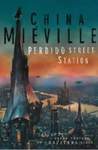
Perdido Street Station by China Miéville

The last time I read this, I wrote: “While this book is remarkably huge, it’s a swift read – well-paced, interesting, creative and clever, which are all good things to have in a book.” At the time, that was true, but this time? Not so much.

I don’t know what changed in the intervening years. The first time I read this book, it gripped me and wouldn’t let me go. I fell into it, into the vast and horrible city of New Crobozon and all the madness that was built into it, and when I came out I was filled with wonder, surprise, and regret that I hadn’t spent a lifetime perfecting my skills at fantasy art.

I would love to read this book, but these naps aren't going to take themselves....

This time was different, and I knew it pretty quickly. I found myself spending more time listening to podcasts while on the train, or playing games on my phone. I ate lunch at my desk and checked my RSS feeds instead of bringing my book up to the cafeteria with me. I actively avoided reading this book and I really wish I hadn’t because it deserves better.

It is the job of every fantasy writer to bring to life not only characters but an entire world. Whether you’re Jim Butcher, creating an alternate Chicago, or Robert Jordan, creating an entire planet, the writer has to know the world inside and out. Every country, every type of people, every custom and culture, climate and weather – everything.

This is because the characters that populate the tale will inevitably be shaped by their environment and its history. Would Tolkien’s fellowship have come together if it were not for the millennia of tensions that existed from having such diverse people living in such a small piece of the world? Probably not. Would the warring princes of Brandon Sanderson’s Stormlight books fight so hard if it were not for the terrifying storms and the power they bring? I doubt it.

Whether the world is built before the story is made or during the process of telling the tale, the author is responsible for it. In the case of Miéville’s New Crobuzon, you know from page one that he has put more time into thinking about his city than almost anything else.

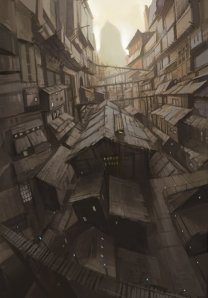
Steampunk. For when you really love brown. (art by gordillo on DeviantArt)

There is almost a palpable feeling of dereliction and disrepair that comes off the page when he describes the city. It’s a dirty place, a wet place, a place that has seen better days. It’s mayor is a tyrant, who uses a secret militia to keep the populace under control and horrifying thaumaturgical techniques to punish those who break the law. It is a great, sprawling metropolis at the confluence of two rivers – the Tar and the Canker – which should tell you a bit about the city they run through. In the tradition of modern urban fantasy, it’s a place of magic and technology, ruined by political greed and social apathy. There are desperate poets and mad scientists, gang bosses and petty criminals, whores and saints and madmen for every occasion.

Independent scientist Isaac der Grimnebulin is looking for the thaumo-physiological secret to flight in order to help a disgraced bird-man regain his wings, and to prove his theory of “crisis energy” that may well change the world. In the process, he accidentally unleashes an unstoppable horror that threatens to slowly destroy the city and everyone in it. He also manages to make enemies of both the city militia and the leader of organized crime in New Crobuzon. He and his friends have only days before the city is overrun, or they are killed, and if they hope to survive they must somehow get the help of two of the most powerful entities the city has ever known.

Miéville has created a new flavor of fantasy here – a kind of steampunk world of brass and wood and gears, analog computers and over-designed firearms that really appeals to all the reader’s senses. He describes the city in unrelenting detail, and if pressed he could probably give you a tour from memory. You get the feeling that New Crobuzon has been sitting in his head for a long time, and all he’s done is finally put it to paper.

For a change of pace, grayish-brown. (art by Trabbold on DeviantArt)

For me, that might have been what changed. The first time I read this, I was swept up by the city, but this time… this time I kept thinking, “Yes, yes, the city is a cesspit, I get it. What about the giant moths?” I wanted the story more than I wanted the setting, and my impatience (combined with a whole lot of backed-up Radiolab episodes) kept me from really settling down, slogging through the descriptions of decaying brickwork, overgrown rooftops and beggars wrapped in filthy rags who crawled through the pestilential streets. In a way, it was kind of like Tolkien, but slightly more restrained.

But perhaps, like Tolkien, that was the point. For all that we’re reading an adventure now about a scientist and the horrors he has unleashed upon the world, about a strange patchwork crime lord, a tyrannical mayor, a sentient clockwork intelligence, a dimension-hopping super-spider and moths that will swallow your soul, this book really isn’t about them. This is just one event in the long and bizarre history of New Crobuzon and the vast and strange world it inhabits, and we’re granted a glimpse into it. When you get to the end of it, whatever else you think of the story, you’ll be stunned by what Miéville has been able to come up with.

I know that a lot of the cognoscenti of science fiction and fantasy just adore Miéville, and I can certainly see why. He’s creative, he’s imaginative, and he’s built a wonderful world for the imagination to play in, populated with some of the most bizarre races and people you could think of. He’s grabbed the trend of Steampunk retro-futurism and made it his own in a way that few other writers can do. He deserves all the credit he can get.

For me, though… Perhaps it was the right book, but not the right time.

—————
“New Corbuzon was a city unconvinced by gravity. Aerostats oozed from cloud to cloud above it like slugs on cabbages. Militia-pods streaked through the heart of the city to its outlands, the cables that held them twanging and vibrating like guitar strings hundreds of feet in the air…”
– China Miéville, Perdido Street Station

Perdido Street Station on Wikipedia
China Miéville on Wikipedia
China Miéville’s blog
Perdido Street Station on Amazon

2 Comments

Filed under adventure, China Miéville, dystopia, engineering, fantasy, science fiction, steampunk, totalitarianism

Review 127: The God Engines

The God Engines by John Scalzi

There is not, to my knowledge, a whole lot of theological science fiction. Madeleine L’Engle’s books may qualify, but to be honest, it’s been years since I read them so I don’t know. The Golden Compass books, too, but they struck me more as fantasy, seeing as how there were no spaceships. My only successful foray into National Novel Writing Month produced some theological sci-fi, but it was questionable at best and is still fermenting on my hard drive somewhere.

In any case, that is what John Scalzi has given us, and if you’re a regular reader of his blog and his other books then you may find this one to be a little… off. You see, like many accomplished writers, Scalzi has a Voice, a way of writing that is immediately identifiable as his own, and which a lot of his fans have gotten used to. There’s no single thing I can point to that really illustrates what this is, but trust me – it’s there. A certain whip-quick sarcasm, a way of looking at old questions from a new angle and the ability to cut through the requisite fuzzy thinking that seems so endemic to the human race.

Not quite like this... but kind of.

In this book, he tries on a new voice, something that sounds kind of like his, but at the same time like he’s trying on something new. It’s as if Jonathan Coulton started doing Manowar cover songs. It’s not bad, it’s just something that takes a little getting used to.

Captain Ean Tephe is the commander of a great starship, the Righteous, one of the many ships in the fleet controlled by the Bishopry Militant. He and the other captains in the fleet are charged with carrying out missions for the Bishopry in the name of their God, a being of immense power who uses the faith of millions to rule them. Their Lord is a powerful and active god, one who brooks no dissent from His followers and who will suffer no challengers to His dominion. Long ago, the Lord battled countless other, smaller gods, and won, chaining them to his will and turning them into the engines of the great starships that carry His people out into the universe.

Some gods are less tractable than others. (art by Evolvana on DeviantArt)

The god that powers the Righteous, however, is not cooperating. Some ships’ gods are quiet and obedient, others chatty, some cowed into good behavior by fear. The god on this ship is defiant, despite the prayers of priests and acolytes, and the horrible whip that the captain wields to compel obedience. This god soon reveals itself to be part of a greater plan, one which enfolds both Tephe and his crew and reveals a truth about their God that is enough to drive men mad. It is a test of faith for the men aboard the Righteous, and if they should fail, their lives will end in short order.

It’s a very cool concept, really, one which I haven’t seen done before. Scalzi has powered a civilization by faith, quite literally, in a God that not only exists, but it quite active in the lives of His worshipers. His high priests exert complete control over a population that rightfully fears for their souls, and manage to channel the God’s power into various science-like applications. Through the use of amulets called Talents, the God facilitates communication over great distances, compels obedience, and opens gateways. He has a civilian population whose faith nourishes Him, and a military arm that travels the galaxy spreading His word and destroying His enemies. And it all makes sense.

As cool as the idea is, though, the book itself felt like a rough sketch rather than a fleshed-out novel. It’s quite short, as novels go, and we are introduced to a lot of concepts and characters in a fairly brief amount of time. The Bishopry Militant, for example, sounds like a great place to see intrigue and double-dealing, lies upon lies that somehow manage to get things done, and we do see a bit of that when Captain Tephe gets a secret mission to a new world. Scalzi showed us in The Last Colony that he can handle this kind of multi-layered politicking, and I think it would be even better in a place like this. Add to that the Rookery, a kind of church-sanctioned brothel/therapy center aboard the ships, where the women who work there have nearly as much power and influence as the Bishopry itself. What would happen if these two institutions came into conflict, and what weapons would they wield?

This god has some opinions he'd like to share.

The chained gods, too, are a wonderful chance to explore a lot of ethical questions. They are undoubtedly sentient beings of great power, enslaved by a God that is stronger than they. Is this kind of slavery justified? Would it be possible for a ship to work with its god-engine, rather than compelling it with whips and prayers. What do these gods know, and how reliable are they? The god powering the Righteous seems to know a lot about how this universe works, including some terrifying tales about the God that Tephe follows, but how much of what it says can be trusted?

And what are the powers and limitations of a faith-powered science? Much in the way that engineers and scientists in our world manipulate a few basic laws of nature to achieve amazing things, what could be done in a world where prayers have power and where a high priest’s whim can decide the outcome of an entire mission? How do you creatively solve problems in a reality like this one, where they deal in belief and faith, rather than wavelengths and mass?

So yeah, there was a lot that I wanted from this book once I figured out what Scalzi was doing with it. After a great opening line (and a third line that just left me confused), the learning curve was a little steep. Once you figure it out, though, the possibilities seem endless. Unfortunately, the book itself ends rather sooner than it should.

The less said about this album, the better.

It’s not my favorite book by Scalzi, not by a long run, but since he’s said he’s going to lay off the Old Man’s War universe for a while, I should be thankful that he is willing to experiment and try new things. As many music lovers know, it’s sometimes very hard to accept that an artist you love wants to try to do things that are new and different, rather than keep doing the things that made you love them in the first place. I remember when U2 put out Achtung Baby and my friends who fell in love with The Unforgettable Fire and The Joshua Tree and Rattle and Hum were almost personally offended. Zooropa, of course, was not to be mentioned aloud in their presence.

That kind of experimentation and risk-taking, however, is ultimately what helps an artist grow. You may not like what comes of such experimentation, but that’s tough – it’s not about you.

I don’t know if Scalzi will return to this universe or not, but I hope he does. If he does, I hope he lingers longer than he did in The God Engines, and brings forth another wonderful and complex universe.

————————————————————
“Faith is not for what comes after this life. Faith is for this life alone.”
– A God, The God Engines
————————————————————

John Scalzi on Wikipedia
The God Engines on Wikipedia
The God Engines on Amazon.com
John Scalzi’s Blog

Leave a comment

Filed under gods, good and evil, John Scalzi, morality, religion, science fiction, sins, space travel, theocracy, theology, totalitarianism, war

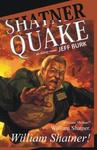
Review 121: Shatnerquake

Shatnerquake by Jeff Burk

In the introduction to this book, the author states that he truly admires William Shatner – he states that Shatner is a man who has made a career out of caricaturing himself, remaking himself over and over again with no looking back, no shame and – as far as we know – no regrets. He finishes by kindly asking William Shatner not to sue him.

I don’t think he has too much to worry about, really. This book is a quick, fun read that, while not necessarily painting William Shatner in the best of lights, certainly pays homage to his long and varied career.

Shatner

The story goes as follows: William Shatner is on his way to the very first ShatnerCon, a convention celebrating his life and works. It is a convention mobbed with fans, devotees who are there to see their idol, whether he caught their hearts as T.J. Hooker, Captain Kirk, or the host of Rescue 911. In the new Cathode-La convention center, tribute can be paid in full to William Shatner, a man who has changed so many lives.

But there are those who do not adore Shatner. They don’t like him or even tolerate him. They are the Campbellians, known by the bloody stumps where their right hands used to be and each known only as Bruce. They hate William Shatner with a passion that borders on madness, and seeing him dead is not nearly enough for them – they want his entire body of work to never have existed. Their weapon is a Fiction Bomb, a metaphysical WMD that can erase stories from existence. No one remembers them, no one knows they ever existed. Should the Fiction Bomb succeed, William Shatner’s entire body of work would cease to be. And so, in short order, would he.

Shatner!

But what if a Fiction Bomb should go wrong? What if that interface between fiction and reality should be breached, spilling its contents into what we commonly call the Real World? In that case, dozens of William Shatners – every character the man had played – would emerge in our world, with only one thought on their minds: Destroy the real William Shatner!

This book is a very quick read – only eighty-three pages – but it certainly packs in a lot of action, and as works of fan-fiction go, it isn’t too bad. Because that is most assuredly what this book is – fanfic. Burk has a very basic concept here – get all of Shatner’s characters out to kill him. Simple. Add lots of blood and gore and guts, because that’s always fun, and you have some entertaining reading. This is the very best kind of fanfic, really – you know it’s just a send-up, never intended to be a serious work of literature. Sit back and enjoy the ride.

It suffers from some serious editing problems, though, and Mr. Burk would have done well to have hired a good proofreader. There are some very basic grammatical mistakes, dropped plurals and a few sentences that just don’t make sense. To a regular reader, it might not be important, but to someone whose bread and butter is the proper use of English, it’s kind of glaring. But then my expectations weren’t all that high – I went into this expecting a rollicking adventure and that’s what I got. Complaining about the grammar in a book like this is like complaining about the quality of the vegetables in your Big Mac.

SHATNEERRRRR!!!!

Still, there are some redeeming points to it, above and beyond the weirdness of the whole thing. The beginning of the book does a very good job at setting up a real dreamlike atmosphere – a building that covers a hundred city blocks and has a parking lot that stretches out as far as the eye can see. Upon reaching the convention center, Shatner finds out that he is already late, and is led through a maze of hallways that result in almost instant disorientation. He has to sign hundreds of photographs for hours on end, and ultimately faces off with his own doppelgangers. Burk has reached into the bag of common nightmares and put together a scenario that is both familiar and disarming, which propels you through the rest of the book. After all, if you’re struggling to keep up with events, think about how Shatner must be feeling?

And of course, one can’t help but wonder if this is a commentary on the very nature of the actor/fan dynamic. Who is William Shatner, after all? Depending on who’s looking at him, he could be Kirk or T.J. Hooker, Denny Crane or Buck Murdock, the guy who saw gremlins on his plane or the guy trying to sell you cheap airplane tickets. On top of that, Shatner has another character to maintain – Shatner as a public figure, the guy who goes to conventions and book signings and does guest spots on TV shows.

Shatners?

Who is the real William Shatner? Who are any of us, really? In this age of online presences, there could be electronic doppelgangers of ourselves all over the internet. The person that your Twitter followers believe is you is not necessarily the same person that the people on your Mad Men slash fic forum know. You present a different face to your Facebook friends than the people you know in your World of Warcraft game, and like Shatner in this story, you ultimately have no control over the different renditions of you that other people see.

The good news, of course, is that those different Yous are unlikely to rise up and try to kill you.

Ultimately, this book has no over-arching message about the nature of identity in a world where different versions walk around without our knowledge or consent. I don’t think that it was ever Burk’s purpose to write a treatise on the modern concept of identity, but rather to write a quick, bloody thriller about William Shatner. So, it has no real lessons to teach us other than that if you see a deranged Captain Kirk approaching with a lightsaber (and how that got in there, I’ll never know – a little artistic license for the sake of awesomeness) you run away. Very fast.

————————————————–
“I’m a… professional. I can deal… with anything.”
– William Shatner, Shatnerquake

Jeff Burk on Wikipedia
Jeff Burk’s website
Shatnerquake on Amazon.com

1 Comment

Filed under adventure, doppelgangers, fans, horror, humor, identity, Jeff Burk, science fiction, William Shatner

Review 120: The Dark Tower

The Dark Tower by Stephen King

Well, here we are. After a long road – longer for some of us than for others – we have finally reached the end of The Dark Tower series. For some of us, it’s been twenty years in coming, so if you’ve only started reading this series recently, count yourself lucky. You don’t know how we waited for this book, the book wherein Roland would finally attain his goal, and we would see if all the sacrifices he made were worth it.

Were they? Kind of.
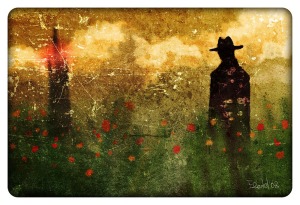
Art by Eredel on DeviantArt

I’ll get into more detail later, after I dutifully put up the “Here Be Spoilers” sign, but this is the book where everything gets resolved, and our heroes are given their reward for the hard work they have done. The bad guy is beaten, the world is saved, and all is well. Although “well” is a very relative term in this sense, and while the bad guy is beaten, it’s not very satisfying, and the reward that many of our heroes get isn’t necessarily the reward they would have chosen.

If I sound like I’m dancing around the story, that’s because I am. I have an aversion to spoiling books in these reviews, mainly because I know how satisfying it is to get into a good book and discover things. To see old characters appear from the past, and to witness the heroism of the characters we have come to love. To look at the journey they take and see their relentless pursuit rewarded. At the same time, I don’t want your experience poisoned by knowing the drawbacks to a book – the soft spots in the plot, the characterization problems, the disappointments and the heartbreaks. [1]

Art by lilbenji25 on DeviantArt

This book contains all of these, and if I avoid talking about them, then this review will be awfully short. So, Constant Reader, I tell you this: you can stop here. You can click away to another page, perhaps to Amazon to buy the book and read it yourself (I recommend the Kindle edition if you can – I have the hardcover and it is quite the doorstop), perhaps to put off the reading of the book for a while longer. You don’t have to learn things that will taint the journey of discovery that is reading , and you can live on with a vision in your head of how The Dark Towerseries should end, instead of how it actually does.

Would you stay, then? Very well. After this point, there is no turning back. What is learned, as they say, cannot be unlearned.

This is not the book I wanted. It is unbalanced, hard to get through, and disappointing in many ways. There are also some beautiful moments, and some interesting ideas which, upon post-reading reflection, make the whole story more meaningful. But my overall feeling was one of great disappointment. Let’s start from afar, shall we?

Art by DiosBoss on DeviantArt

The structure of this book is rather lopsided. The most climactic event in the book, the battle of Algul Siento, is quite exciting and fun in that it is what we readers expect from a climax – gunfire and death and the saving of worlds. By freeing the Breakers from their work on the Beams, Roland and his ka-tetdo indeed save the macroverse from complete dissolution. They have literally saved the world and, as we learn later, have completely thwarted the evil designs of the Crimson King. The story could end there, the characters could go on their separate ways, and all would be well.

The problem is that this occurs in the first half of the book. It’s followed soon after by a minor climax – Roland and Jake saving Stephen King from certain death by drunk driver – but even that is done a little more than halfway through the book. Stephen King is safe, the New York Rose is safe, and we find out later that not only are the last two Beams intact, they are regenerating and will probably regenerate the other four. Reality has been saved.

But the story goes on, because saving reality was never Roland’s goal. It was only, in the parlance of Dungeons and Dragons, a side quest. There’s a larger quest to be resolved.

This wouldn’t be so bad if there were an even bigger climax waiting for us at the end, but there isn’t, and this is where I feel kind of betrayed. When Roland gets to the Dark Tower, we know he will have to face the Crimson King, who has been held up as the incarnation of death, evil and chaos. He has been the main antagonist throughout this whole series. His reach is long, his power vast, and his hate for Roland of Gilead is as focused as a laser and as hot as the sun. He is as close to the Devil as we can get.

Art by morganagod on DeviantArt

So, when Roland finally makes it to Can’-Ka no Rey, the great field of roses within which the Dark Tower stands, who do we see? A “satanic Santa Claus” who throws explosives from the only balcony of the Tower he’s been able to reach. He’s generically ugly, screams like a madman, and talks in villain cliches – “GUNSLINGER! NOW YOU DIE!” or “YOU DON’T DARE MOCK ME! YOU DON’T DARE! EEEEEEEE!” or “EEEEEEEE! EEEEEE! STOP! IT BURNS!” On top of all that, the Crimson King is finally defeated not by Roland’s guns or some great battle on the physical, intellectual or spiritual plains, but by a guy with a sketchpad. He is simply erased from afar. And thus ends the reign of what was supposed to be the greatest horror of all worlds.

What’s more, their meeting at the Tower was not acually the defeat of the Crimson King – he conceded defeat way back during Wolves of the Calla. We find out that, with the defeat of the Wolves, the King foresaw the end of the Breakers and thus his plan to unmake creation. So, he broke his Wizard’s Glasses, killed nearly everyone in his castle. killed himself by – for reasons I still don’t understand – swallowing a sharpened spoon, and then, undead (which I also don’t understand), rode off for the Tower.

Even then, though, he couldn’t win. In order to enter the Tower he needed either Roland’s guns or Mordred’s birthmark, neither of which he had. So he climbed up into one of the Tower balconies with all the weapons he could carry and just waited. If Roland hadn’t come to the Tower, he would have waited there forever and never harmed anyone again. By bringing his guns, Roland raises the possibility that the Crimson King could still triumph. So, by continuing his quest, Roland endangers all existence.
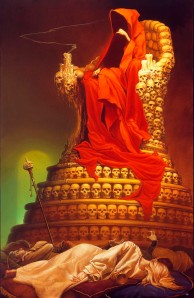
Art by Michael Whelan

As much as I hate to call out authors on what they “should have” done, I feel like I have to here. A hero is only as good as his villain, and the Crimson King, in the end, turns out to be a pretty crappy one. I wish King had made their meeting worthy of the image he had built up. The same goes for one of our favorite characters, Randall Flagg (or whatever name he chooses to use). He has floated through this series and others like a cancer, bringing nothing but death and pain with him. He’s a charismatic madman who revels in chaos and is probably one of the most enjoyable characters King has created. So how does he die? He gets killed by Mordred, the bastard son of Roland and the Crimson King, of Susannah and Mia. He gets killed and eaten without much of a fight. I think a lot of fans would agree that Flagg deserved better.

And while we’re on the topic – Mordred.

One of my measurements of good characterization is a question: If this character did not exist, could the story have ended the way it did? With Jake and Father Callahan, Susannah and Eddie, with Oy and Flagg and Cuthbert and Susan and Cort, the answer is, of course, No. Each of those characters contributed something vital to the story, something that no other character could have done. To reach the same end without one of those characters would have meant a vastly different story.

Art by Michael Whelan

The same cannot be said of Mordred. Of the people he kills, only two matter to us: Flagg and Oy. Flagg should have been the penultimate End Boss, the final challenge for Roland before reaching the Tower and the Crimson King. And there are many ways to kill a Billy-Bumbler – I think King could have thought of one that gave Oy the same honorable and heartbreaking death that he got trying to save Roland from Mordred. Other than that, Mordred had no impact on the story at all. He just followed Roland, Susannah and Oy, shivering and whining and feeling sorry for himself. He kept telling us that he was meant for great things, but never showed even the slightest hint of that potential. He follows Roland like Gollum follows Frodo, but at least Gollum turned out to be important.

The one thing we do get from Mordred is a frustrating bit of knowledge – that the Crimson King and Roland are both descended from the mythical king Arthur Eld. In that way, their battle is between cousins, and Mordred represents a unification of two bloodlines – demon and human. If their conflict had been framed in that context, it could have been so much more interesting when we finally got to the end.

Speaking of the end. We, like Roland, didn’t know what to expect when we finally got into the Dark Tower. And I don’t think anyone expected that the series would loop around to the beginning again, dumping Roland back in the Mohaine Desert to follow the Man in Black once more, unaware that he had already done so so many times before. It was an unsatisfying ending at first, but upon reflection, it does work, and there are two ways to look at it.
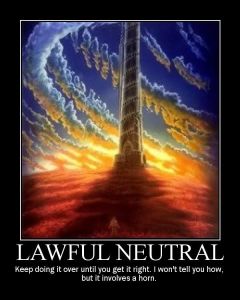
The first is that Roland is being taught a lesson, one which he still has not learned. He’s being taught to value life, to reset his priorities. From his youth, he was so focused on the Tower that he let all else fall aside – his friends, the girl he loved, and the sacred artifacts of his forefathers. He brought death with him, and passed it on to all whom he loved, and ended his quest as alone as he began it. And so, despite saving the multiverse, Roland failed his true quest – to learn how to love others and share who he was with them – and had to be sent back to start again. In appreciation of his effort, however, he was granted a change: the horn of Eld, which he had previously neglected on the field of the last battle of civilization. Perhaps it will make a difference.

The other way to look at this ending is a more metafictional one, something that Stephen King himself finds distasteful. Like it or not, though, one of the overriding themes of this series is the impact that fiction has on reality, and vice versa. To readers, a character might be more real than real people. We learn lessons from them, we have kind or unkind memories of them, and in many ways, our fictional characters possess a special reality. To a writer, this is even more true. Ask any writer and they will tell you about how their characters talk to them, sometimes appear in front of them, or even take over their bodies for a little while. A writer will discover things about a character that she never planned, as if the character himself were revealing them. The Dark Tower relies on this kind of ur-reality of fiction, up to and including fictional characters saving the life of their own writer.

So, by connecting the end of the last book with the beginning of the first, perhaps King is implicating us, the Constant Readers, in Roland’s suffering. Roland cannot rest as long as there are readers reading him, and we are all guilty of making him go through it again and again. While King may have created Roland and his quest, we propagate it, and every new reader ensures that it will never, ever end. [2]

Art by Chesheyre on DeviantArt

In the end, we have a series that started off strong, and then kind of careened to an unsatisfying end. Having been written intermittently over the course of thirty years, I suppose that shouldn’t be too surprising. Ideas which seemed like good ones at the time served only to cause trouble later down the road, and loose ends that needed to be tied up took up far more time than they should have. Perhaps with a clearer vision of the journey at the beginning, King could have held it together better. And perhaps without his brush with death in 1999, he wouldn’t have felt compelled to get the last three volumes out as soon as he could.

It does, however, gift us with some wonderful characters, a rich and brilliant world, and a fictional cosmology that holds together all the worlds that King has created thus far. It’s an examination of the importance of fiction in our lives, and the way that stories can reach out and touch so many more people than the storyteller ever intends. If you are a fan of Stephen King, and you haven’t read this series yet, then you should. For all that the last couple of books disappoint, there is still much good to be found in the whole series, and the first five are generally really well done.

Art by Deviata on DeviantArt

There is more to read, if you’re interested. King’s assistant, Robin Furth, has put together an excellent Concordance, detailing pretty much everything you want to know about the series – characters, places, history, language and concepts. She has also written a series of graphic novels for Marvel Comics which detail Roland’s youth, starting with the events told in Wizard and Glass and going up to the terrible battle of Jericho Hill. So if the original series leaves you wanting more, there’s certainly more to be had.

That’s it, then. Long days and pleasant nights to you all.

——————————————————–
“Even when you were in the shadow of death there were lessons to be learned.”
– Jake (narration), The Dark Tower
——————————————————–

——————–
[1] To be fair – this book was published back in 2004. If you haven’t read it by now, I doubt you’re really going to be chuffed by some spoilers, and you have no one to blame but yourself if you haven’t gotten around to reading it yet.

[2] A third option is suggested by his short story, “That Feeling, You Can Only Say What It Is In French” from Everything’s Eventual, wherein a woman riding with her husband in a car on vacation keeps re-living a terrible accident. It is implied that she is dead, and that hell is the eternal repetition of one’s mistakes. It is possible that Roland is dead, and that this series is his Hell.

The Dark Tower on Wikipedia
The Dark Tower Portal on Wikipedia
Stephen King on Wikipedia
The Dark Tower homepage
The Dark Tower on Amazon.com

2 Comments

Filed under adventure, apocalypse, Dark Tower, death, existentialism, fantasy, good and evil, meta-fiction, quest, Stephen King, time travel, world-crossing

Review 117: I Will Fear No Evil

I Will Fear No Evil by Robert Heinlein

One of the things I enjoy about Heinlein is that he likes to play with Big Ideas. While he did dip into the well of action and adventure, especially for his juvenile stories, he treated his readers like they were only slightly intellectually inferior to him, and so explored concepts that required a lot of heavy thinking. The need for war, the inevitability of messiahs, revolution, life, death, immortality – he’s not afraid to look at some of the greatest philosophical topics that reside in the human heart, and this book is no exception.

Johann Sebastian Bach Smith is a very old, very sick, very rich man. He built himself up from nothing and rose to financial prominence in what is a little more than a regular human lifetime. Smith had it all – a rich and exciting life, complete financial security, good friends and good memories in a world that had, frankly, gone to hell. He had very nearly everything a person would want to have.

Photo by openDemocracy

What he didn’t have was time. He lived in daily pain, kept alive by only two things: an ever-increasing number of machines and a plan to release himself from the geriatric horror his life had become. He knew that this plan would probably fail. He knew that he was facing death no matter what happened. He knew that it was crazy, and not necessarily crazy enough to work. But it was all that stood between him and suicide.

That plan was, in theory, very simple: transplant his healthy brain into the body of a healthy young person. By doing so, he would gain a whole extra lifetime to enjoy the fruits of his first lifetime’s labor. Not being a monster, he was prepared to do this in a legal and ethical fashion. With his legal, medical, and judicial contacts, he made arrangements with a medical advocacy group to get the body of a healthy young person who died due to some massive brain trauma. And – and this is important – who consented to having their body used for medical experimentation. Everything would be above-board, legally sound and ethically certain. All Smith had to do was stay alive until a body became available.

Now just put the two of them together... IF YOU DARE!

When it did, however, he was in for a double surprise. Not only was the healthy, youthful body that of a female, it was that of his healthy, youthful, beautiful secretary, Eunice Branca. Eunice had been murdered, but her body was in excellent condition. She had the right blood type, and had consented to have her body used for Smith’s experiment. The one doctor in the world who could perform the surgery was brought in to perform it, and against all odds, it worked. Johann Sebastian Bach Smith was reborn as Joan Eunice Smith, and her new life began.

But she was not alone.

By some means, Eunice’s mind survived to live with Joan, and tutor her in all the ways of being a woman. Joan dove happily into her new life, exploring her new femininity and sexuality as best she could.

In that sense, this whole book is an exploration of sexual identity. Here we have a man who is now a woman, even though that was never his intention. He soon finds himself thinking like a woman, though, bringing up the question of whether gender is determined by a person’s mind, or by the body it inhabits. If you put a male mind into a female body, with the vastly different hormones and sensory inputs, will that male mind start to act like a female? And even if it does, should it?

Smith makes a decision to, with Eunice’s help, be the best woman he can be, mostly because he feels that is what is expected of him. After a lifetime of conforming to male societal roles, Smith wholeheartedly embraces the female ones, up to and including seducing his best friend of many decades. Gender identity in this book is a tangled mess of biology and intention, and it looks at being female from a distinctly male point of view.

It was a different time....

Which brings me to my first problem with this book: the casual misogyny. I know it’s a pretty loaded word to throw around, and it’s not entirely accurate, but it was the one that kept coming to my mind. While Heinlein is certainly capable of creating strong and independent female characters, and emphasizes over and over again that both Eunice and Joan are actively choosing the lives they lead, those lives are almost entirely dependent on and revolve around men. One of Smith’s first actions when he goes from Johann to Joan is to latch on to a man – her old friend Jake Saloman. She views her identity as a woman as incomplete without a man to base it on, and spends most of the book trying to figure out who she is in relation to men – Jake, her security guards, Eunice’s widower, and more. She repeatedly mentions how helpless she is without a Big Strong Man in her life, and all of this culminates in what is possibly one of the most misogynist moments I have ever read in sci-fi: a spanking scene.

And not a sexy one, either. In a moment of adolescent pique that Jake won’t sleep with her when she wants him to, Joan throws a fit, disrupting their dinner plans. Jake proceeds to throw her over his knee and give her a spanking because, and I’m quoting here, “You were being difficult… and it is the only thing I know of which will do a woman any good when a man can’t do for her what she needs.” Joan accepts the spanking meekly, not only thanking Jake for his spanking, but also claiming that she had her first orgasm while he did it.

Wow. That’s nearly as bad as the other major female character, Winnie, who talks about a gang rape experience with what can almost be imagined as fondness.

Oddly enough, this is not my biggest problem with the book. I mean, it was written in the late ’60s, and it reflects the thinking of that era. For all his progressive beliefs, Heinlein was still a man of his time, and it really shows here. Legend [1] has it that he was really sick when he wrote this book, and that may have had something to do with the fact that no matter how many complex hot-button issues he touches (gender roles, homosexuality, same-sex marriage, overpopulation, government overreach), the fact remains that there is no story in this book.

This picture contains more conflict than this book

Let me explain. A story needs conflict. It needs not only a protagonist that is trying to achieve something, but obstacles that impede that achievement. There were so many potential goals and obstacles to be explored in this story – a man’s brain in a woman’s body – but Heinlein manages to artfully dodge all of them. The story of Smith’s inner struggle to resolve the gender he grew up with with the gender he now possesses would have been fascinating. But it didn’t happen. Smith pretty much accepts the change right away, with few if any reservations. Even so, he could have struggled with how to live as a woman – should he adopt the identity that a patriarchal society would confer upon him as a woman, or forge his own as a uniquely gendered person who has gone from the privileged to the unprivileged sex? Unfortunately, the conflict doesn’t even occur to Joan. She decided to be the best woman she can be, constantly asking others what that entails, rather than asking herself.

Or how about the concept of Identity itself? Smith is an old brain in a new body, so is he legally the same person he was before the surgery? That would be an amazing story as he tries to prove that Johann has become Joan, and that even though Eunice’s body is still walking around, she’s actually dead. But no – Smith has some powerful legal friends with ironclad arguments, and the legal proceedings are pretty much a foregone conclusion.

Or how about rejection by society? Regular transgendered people have a hard enough time getting society to accept the modification of the body they were born with – what about when someone takes on an entirely new body? Joan could have struggled to get her friends and family to accept who she has become, to stand before the world with her head held high. But no…. She has enough money that she doesn’t really need society’s approval, none of her friends have any trouble with what she’s become, and even Eunice’s widower has only a moment of uncontrollable emotion before accepting that his wife is dead, but still walking around. And he might get to sleep with her again.

Imagine this in your head ALL the TIME.

One last one – the soul. Joan hears Eunice’s voice in her head, but it’s unclear whether it is really Eunice or if it’s just Joan’s imagination. What’s more, they never fight. They never have a serious disagreement and have to resolve their differences so that they can continue to occupy the same skull. Eunice and Joan live together like wisecracking sisters and never have to deal with the problem of living with someone you can’t get rid of, even if you’re not sure if they’re real.

In other words, there’s no there there. It’s a long, talky, philosophical exploration of some fascinating topics, but as a novel, it’s incredibly dull. You keep waiting for the blow-up, for the accident, for the Big Problem that Joan and Jake have to struggle to overcome, and it never arrives. Everything works out either through money or force of will or Heinlein’s trademark Sheer Damn Reasonableness. Between that and the constant thought of, “He did not just say that,” I found this book rather stressful to plow through. It offers up a lot of big ideas to think on, raises some very important questions, and Heinlein’s gift for dialogue makes some fun conversations, but I think I would have liked it more if it had been completely different.

——————————————————
“Sir, if you want to give me a fat lip, I’ll hold still, smile happily, and take it. Oh, Jake darling, it’s going to be such fun to be married to you!”
“I think so too, you dizzy bitch.”
– Joan and Jake, I Will Fear No Evil by Robert Heinlein
——————————————————

[1] Wikipedia

Robert Heinlein on Wikipedia
I Will Fear No Evil on Wikipedia
I Will Fear No Evil on Amazon.com
The Heinlein Society

1 Comment

Filed under afterlife, bad, death, existentialism, friendship, gender, gender roles, ghosts, homosexuality, identity, Robert Heinlein, romance, science fiction, sexuality

Lost in the Stacks 3: Women in Fiction

This week, Scott Adams handed the internet a firebomb and then complained when it went off. In a blog post (deleted from his blog, but kindly reprinted here), he compared women asking for equal pay to children asking for candy. It roused the ire of the ‘net’s feminist population – rightly so – but his reaction of, “You’re just not smart enough to get it” was the icing on the cake.

Yes, ma'am....

But some good did come out of it – I started thinking about female characters in fiction. What difficulties do writers have in creating female characters, and why? How can we go about making sure that more writers do a better job at writing women?

It was an interesting topic to talk about, and I’m sure I made some mistakes or omitted some important details somewhere. After all, from my testiculated point of view, I’m bound to overlook something, so give the show a listen, drop me a comment and let me know!

Some links of interest:

Comics Alliance – ‘Dilbert’ Creator Scott Adams Compares Women Asking for Equal Pay to Children Demanding Candy
Feministe – Scott Adams’ alleged response to criticism
OverthinkingIt.com – The Female Character Flowchart
OverthinkingIt.com – Why Strong Female Characters are Bad for Women
Feminist Frequency – The Bechdel Test for Women in Movies
The Bechdel Test Movie List

2 Comments

Filed under analysis, fantasy, fiction, gender roles, Lost in the Stacks, science fiction, Scott Adams, women, writing

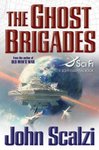
Review 114: The Ghost Brigades

The Ghost Brigades by John Scalzi

The book that preceded this one was Old Man’s War. It was Scalzi’s first novel and I loved it. It had everything – high-end science fiction, philosophy, cool battle scenes and a protagonist whose sense of humor reminded me a lot of many of my friends. The book’s premise was very simple – why do we use young people to fight in wars? Because they have the bodies that work best for the task – strong, fast and generally resilient. But young people can also be rash, impulsive and generally ignorant of a whole lot of life’s complexity. If their physical capabilities were not an issue, then who would we want? Why, old people, of course. They have the life experience, the patience and the perspective to be better soldiers.

No.

So, it’s The Future. Mankind has spread out among the stars, and the Colonial Union is the political organization that keeps them together. Any government needs a military, so the Colonial forces make sure they have the best recruits, all brought from Earth. With some pretty high-tech jiggery-pokery, the senior citizens from Earth’s richer nations are made into lean, green fighting machines, capable of performing in ways that make the Marines of our day look like palsey victims. Their minds are transferred from their old, decrepit bodies and put into new ones, grown from their own DNA, but altered to make them better soldiers. It’s all very exciting and cool, but at some point, I suppose Scalzi asked himself a question: what happens when someone signs up at age 65, but doesn’t make it to age 75 when they’re supposed to start their service?

NO!

Well, we have all this DNA just sitting there, right? We can’t let it go to waste, can we?

That brings us to the Ghost Brigades, the rather morbid nickname for the Colonial Union’s Special Forces. Their bodies are grown from DNA whose previous owners have expired, and are modded in more extreme ways than the regular defense force soldiers. Then, when the body is ready, they’re woken up. An amazing piece of biotechnology called, rather whimsically, a BrainPal prepares their brains for consciousness, acting as a kind of bootstrap for the emergent personality. It tells them what they’re supposed to know, so they don’t have to go through the tedious process of learning it all. And, of course, much more. The Special Forces do what the regular Defense Forces can’t, and act in ways that their more “ordinary” soldiers couldn’t understand. In Old Man’s War the Special Forces only came in at the end. In this book, as you might have guessed, they play a much more central role.

I'll show them! I'LL SHOW THEM ALL!!!

Charles Boutin is a traitor to humanity. For reasons known only to him, he has sold out the Colonial Union to its enemies, a troika of alien species that would be more than willing to wipe us off the map. The Defense Forces would love to find him, of course, but he’s hidden himself among the enemy. So they got the next best thing: a copy of his own mind that Boutin had made while researching the BrainPal.

In theory, it should work: put this mental backup copy into a “clean slate,” a body that has no mind of its own. A Special Forces body.

And so, Jared Dirac was born. Decanted. Whatever. It was hoped that when he opened his eyes, he would be Charles Boutin in a new body, and could promptly be interrogated. But it isn’t that easy. Jared Dirac is a normal Special Forces soldier, a blank slate who is ready to do the job he was, literally, born to do: keep humanity safe.

Art by Vincent Chong

He’s sent off to training, with the expectation that he would be just another Special Forces soldier. But he is, of course, much more than that. As his brain matures, the memories and personality of Charles Boutin come with them, and Dirac starts to understand more of what made the man turn traitor to his own species. This information could lead the Defense Forces to their ultimate goal, or to their destruction….

It’s a great book. Tons of fun, although the exposition is a bit heavy-handed in the beginning. There’s a whole lot of reminding about what you learned in Old Man’s War, and I didn’t really need it. That’s the thing about recap, though: if you avoid it altogether, you can confuse people who haven’t picked up the previous book in a while. Slather it on and you bore the people who have good enough memories.

Once you get past that, though, it’s straight on fun, with some pretty serious questions folded into it. One of the major questions raised in this book is that of identity – who is Jared Dirac? How can a being who is brought to full consciousness by an implanted computer be properly called “human?” It’s clear that he is, but a fuller look at the Special Forces – especially the squad known as the Gamerans – really does push the definition of “human” to its limits.

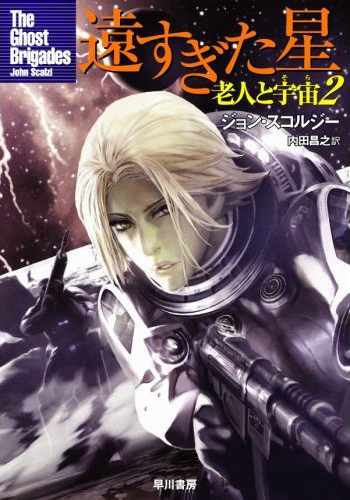
The Japanese cover to Ghost Brigades

It’s a very thoughtful book in many places, exploring the grey areas of not only humanity and “human-ness,” but also of the role of humanity among the stars. Explaining his reason for turning traitor, Boutin asks us to consider the entire purpose of government itself – how it operates, how much power it has and how much it should trust its citizenry. He fundamentally disagrees with how the Colonial Union goes about its business, and will do whatever he has to in order to set it on what he believes is the right path. And in the middle of all this is Jared Dirac, who has to actually start making choices in his life – something that Special Forces soldiers were never bred to do.

As with Old Man’s War, this is a great book to read, and I look forward to the other books set in that universe. You should too.

———————————————-
“We don’t mind when the other guy brings a gun to a knife fight. It just makes it easier for us to cut out his heart. Or whatever it is that he uses to pump blood.”
Lieutenant Jane Sagan, The Ghost Brigades

The Ghost Brigades on Wikipedia
John Scalzi on Wikipedia
The Ghost Brigades on Amazon.com
John Scalzi’s Blog

Leave a comment

Filed under adventure, aliens, ethics, existentialism, fiction, friendship, identity, John Scalzi, military, morality, philosophy, science fiction, technology, transhumanism, truth, war

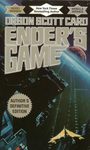
Review 112: Ender’s Game

Ender’s Game by Orson Scott Card

A little while after I started teaching literature, I thought about what kinds of books I’d like to do with students in the years to come. The texts I did last year – Fahrenheit 451, Things Fall Apart and a collection of Edgar Allan Poe stories – are all well and good, but probably not what I would have chosen to teach. I wanted something that would speak to the students, that would engage with their lives, and which ideally was some good classic science fiction. So I went over to Ask Metafilter and asked them what science fiction they would recommend teaching to high school students studying English as a foreign language.

Child soldiers in science fiction are so cute....

Just about everyone mentioned Ender’s Game, and with good reason. It’s a good story, for one, and it addresses a lot of the issues that young people have to deal with that are often left out of the literature they have to read for English class. The adults in the book are like the adults in the students’ lives – slightly removed, seemingly omniscient, and not necessarily acting in their best interests, at least not as they see it. It deals with issues of bullying and isolation, of fitting in and standing out and accepting your place in the grander scheme of things. It’s about critical thinking and moral reflection, all wrapped up in the unending carnival that is youth.

In real life... not so much.

Ender Wiggin is, as our book begins, six years old, and he may be the last, best hope for humanity.

Ender comes from a strange place. In a near-totalitarian America, families are allowed to have only two children, in order to keep the population static. If a good reason exists, however, they might be allowed to have a third. That third is destined from the beginning to have a hard life, no matter what happens, especially if that third has been bred for a very specific reason.

Ender Wiggin is a Third. His parents had two children already – their son, Peter, and daughter, Valentine. Peter is a brilliant young sociopath, and Valentine is an equally brilliant pacifist. In ordinary times, either of them could have been an historical figure, but these were far from ordinary times. Earth is at war with an insectile alien race it has named the Formics (nicknamed “Buggers”), and has survived two invasions. Everyone knows there will be a third, and if they can’t fight it off then humanity will be scythed clean off the planet. The International Fleet needs a commander, one who has enough empathy to understand the enemy, but who also has the killer instinct to be able to wipe them out. Where Peter is too hard and Valentine is too soft, Ender Wiggin could be the one they’re looking for.

Almost makes me want to have my childhood stolen from me....

Young and frightened, Ender is taken off-planet to Battle School, where he and hundreds of other youths will take part in battle games to train them in how best to one day defeat the Buggers. While Ender knows that he’s been chosen, he doesn’t know why, and his experiences in the school lead him to wonder if being a Chosen One is really worth it. In game after game, Ender manages to prove his worth to the International Fleet by defying their expectations of what a battle commander should do. He is pushed to his limits and beyond by the International Fleet, whose motives and methods remain a mystery to him until he has accomplished their goal – one which he never even knew he was aiming for.

It’s a fun book, and a very quick read, and it’s one of those “I should have read this when I was a teenager” books. While I was never put in a position where my action could very possibly save the existence of all humanity, I – like every other teenager ever – had doubts about my place in the world. I saw the conflict between what I wanted for myself and what the adults in my life wanted for me. I was given responsibility that I didn’t want, and had to make a choice about whether or not I would live up to it. In other words, while the scale of Ender’s problems are much bigger than that of the average young person’s, they are essentially the same. I am fortunate in that Ender’s Game can work to explode a pervasive and not entirely accurate belief held by all teenagers everywhere, from the dawn of time until now: the belief that there is no one else in the world who understands what they are going through.

The big question then becomes, How do I teach this? What can I do to not only get my students to read it but to also understand its relationship to their own lives? However I manage to do it, that will hopefully reveal to them the whole point behind reading for pleasure: that you can look at a book or a story and say, “Yes – life is like this.” Not all of it, but you can find that moment, that point of any story that can connect what it is saying to your own life, and thereby learn something from it.

There are also a whole host of other issues that can be brought up with this novel, not the least of which is the systematic indoctrination of young people by their educational system. Perhaps a bit self-defeating, but the anti-authoritarian in me would be vastly entertained if I could somehow encourage these kids to look suspiciously upon the very foundation of the system in which they were currently residing. There is also the greater issues of how a society teaches its children, and the limited value of truth. We tell kids that “honesty is the best policy,” but this book blows that axiom away. If they had told Ender the truth about what he was doing and why, he would have refused, and Earth would likely have been wiped out. In the same way, how do we – adults, and especially teachers – lie to young people in order to achieve a greater goal? What value, then, do these lies have, and are they worth telling?

Even Peter would be helpless against the LOLCats.

We can explore redemption and atonement through Ender’s attempt to make up for the things he has done. Even more interestingly, we can look at Card’s prediction of how the internet would shape political discourse and how citizens can easily be manipulated. Peter and Valentine put on electronic personae through which they gain immense power despite their youth, using their own innate genius to spark debate on the topics that will achieve their own goals.

Outside the text, too, there is an excellent opportunity to discuss the relationship between a work and its author. While Ender’s Game is a brilliant story that is so well-written that it is recommended reading by both Quakers and the U.S. Marine Corps, its author holds some rather despicable views that don’t seem to mesh with the message he has put into his book. I speak here of Card’s public denouncement of gay marriage, including accepting a position on the board of directors of the National Organization for Marriage. This group has made many attempts to block the spread of queer civil rights in the U.S., and it disturbs me that an author whose work I respect is spearheading the effort.

FINE. I didn't want to marry you anyway....

What, then, is my responsibility as a reader? Should I never read his work again, lest it be seen as a show of support for his politics? Can I even read him fairly from now on, or will I always be looking for that anti-gay undercurrent, perhaps where there is none? Or should I simply ignore the author and enjoy the work? There are a great many authors and artists who are in the same position as Card, and it is a worthwhile discussion to have.

There are so many topics to mine from this book that I had to stop myself from time to time and remember to enjoy it, rather than make mental lesson plans.

In any case, if you haven’t read Ender’s Game, I recommend that you do. If you have a young person in your life, see to it that he or she has a chance to read it as well. If you’re really lucky, it’ll foster a lifelong love of reading. If not, at least they might walk away with the understanding that their problems are pretty universal, and that, on the whole, things could be a whole lot worse.

They could be Ender Wiggin.

————————————————————-
“It was just him and me. He fought with honor. If it weren’t for his honor, he and the others would have beaten me together. They might have killed me, then. His sense of honor saved my life. I didn’t fight with honor… I fought to win.”
– Ender Wiggin, Ender’s Game”

Ender’s Game on Wikipedia
Orson Scott Card on Wikipedia
Ender’s Game on Amazon.com

I couldn't NOT put it in....

1 Comment

Filed under brothers, childhood, children, coming of age, ethics, family, friendship, military, morality, Orson Scott Card, science fiction, sisters, teenagers, truth, war, young adult