Category Archives: science fiction

Review 111 – Wolves of the Calla

Wolves of the Calla by Stephen King

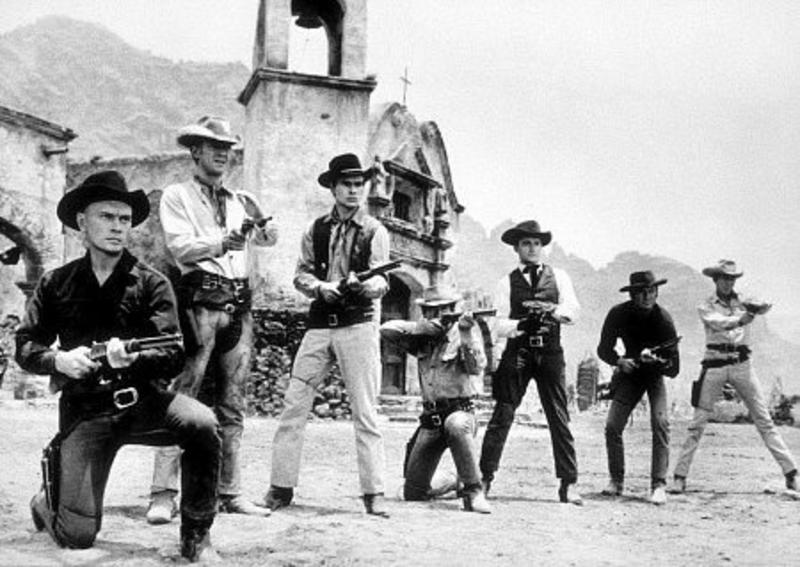
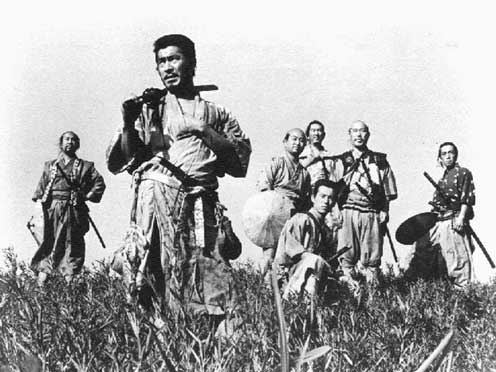
Okay, before we get into this book, let me take a little survey: Have you ever seen The Seven Samurai? How about The Magnificent Seven?

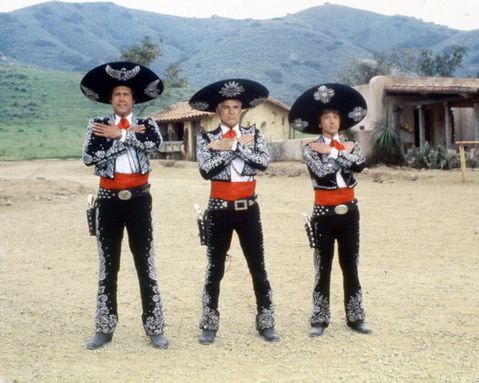
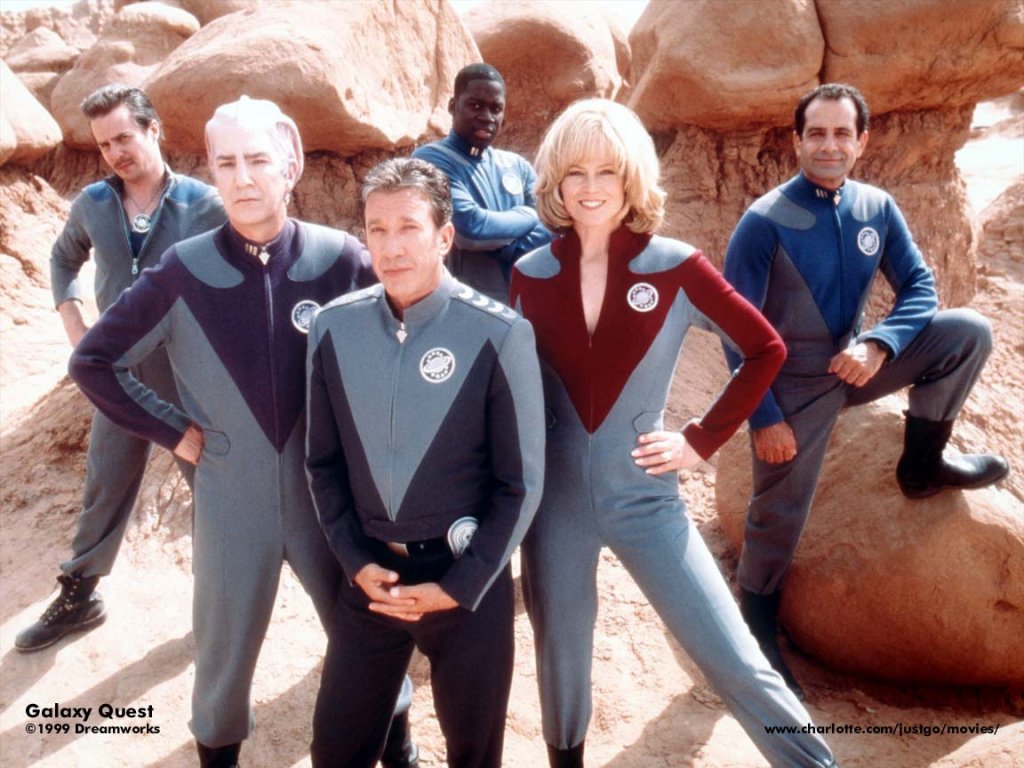
The Three Amigos? GalaxyQuest?

If you’ve seen these movies, and any number of stories like them, then you know the basic outline of this book. Say it along with me now….

'We deal in lead, friend.' - Vin

Calla Bryn Sturgis, a small farming village on the far end of the world, is notable for a few things. Its rice, its peaceful people, and its abundance of twins. The farmers of Calla Bryn Sturgis want nothing more than to live their lives in peace, but their idyllic existence is threatened by invaders from the east.

They come from the evil town of Thunderclap, once a generation – the Wolves. Armored and cloaked in green, riding identical deathless gray steeds and armed with terrible weapons, the Wolves come to Calla Bryn Strugis to steal one child from every set of twins. They take them to their dark city, and when the children come back, they come back as damaged goods. “Roont,” the Calla-folk call them, and it’s an apt word for they are ruined indeed. Over the years, these children, whose minds have lost all of their intelligence and humanity, grow into pain-wracked giants, and then die horrible deaths years before their time.

No one knows why the Wolves come, and no one has ever even considered trying to stop them. Until now.

Word has come that Roland and his ka-tet – Eddie, Susannah, Jake and Oy – are in the area, and if anyone can stop the Wolves, it would be Gunslingers. If the people of Calla Bryn Sturgis can convince them to help, and are willing to fight alongside them, then they have a chance to repel the Wolves once and for all.

If only it were that simple.

'Once more, we have survived.' - Kambei Shimada

Interlaced with this this pretty straightforward tale is, of course, the larger story of the quest for the Dark Tower and the fight against those for whom the Wolves are merely agents. A new warrior in this fight is Father Donald Callahan, whom we last met way back in ‘Salem’s Lot as a broken and ruined priest, damned by a vampire king and sent out into the world to live or die as he pleased. Through his damnation, Callahan has found himself able to see things he shouldn’t be able to see, including the various classes of vampires and the Low Men – agents of the Crimson King who serve His interests in the various levels of the Tower. Callahan discovers a knack for traveling through the Americas along secret highways. In his ramblings from coast to coast, looking for peace – or death – he slips from one version of America to another, never knowing how or why.

In the end, he brings himself to the attention of forces far greater than himself. It leads to his death and reappearance in Roland’s world, but more importantly it puts him in possession of an object of great power and even greater peril – Black Thirteen, an inky sphere that could be the black eye of the Crimson King himself, and which has the power to send its bearer through a door to any point in space or time.

Roland and the others are going to need that door, too. While they’re busy planning their battle against the Wolves in Calla Bryn Sturgis, they have another fight to win, in another world. In New York of 1977, there is a vacant lot, and in this lot is a rose. The rose must be protected at all costs, for it is the other end of the Tower – one axis upon which all the worlds turn. This lot is in great peril, and it is imperative that our heroes keep it safe. By whatever means necessary.

'Oh GREAT!!! REAL bullets!!!' - Lucky Day

It’s a really good tale, and one that is actually better than I remember it being. The first volume after King’s near-fatal accident, it’s all put together very neatly, while getting us set up for events to come, even if some of them aren’t entirely clear, or seem a little random at first glimpse. For example, Roland discovers that he’s beset by the Dread Foe Arthritis. As it is now, it’s making him kind of achy, but should it spread to his precious shooting hand, then it’s all over for him. Why King decided to afflict Roland with something as mundane as arthritis isn’t entirely clear (although to be fair, Roland is technically over a thousand years old and could be considered due for a few of the ravages of old age).

Perhaps it is a sign of Roland’s encroaching humanity. In The Gunslinger, mention is made of his ability to detach himself from his body somewhat so as not to feel thirst. In that book, he is largely mechanical, only showing any kind of real emotion when he finally faces the Man in Black. Over the course of the series, Roland has become more tuned into what it means to be a person and to feel, y’know, feelings and things. This gives him the bond with his ka-tet that he needs, but it also comes with a price. Perhaps the arthritis is the first price he must pay for allowing himself to feel.

Mention must also be made here of poor, beleaguered Susannah. I mean Detta. Odetta. No, wait – Mia.

'Never give up, never surrender!' - Jason Nesmith

Out of the seething cauldron that is this poor woman’s mind, a new personality has emerged. Mia, Daughter of None is still something of a mystery to us. As far as we know, she has only one ambition – to protect the child growing in her belly. This child was not fathered by Eddie Dean, Susannah’s beloved husband, but by the cold and unnatural demon that Susannah held at bay while the two men pulled Jake from his world to theirs. Growing within her now is something horrible, something that Mia was born to protect, even at the expense of the body she inhabits. Right now, that’s all that she is, and her greater purpose is yet to be revealed.

King does a pretty good job of juggling the various plot lines in this book, making sure that we aren’t left hanging for too long on any of them. Of course, they feed into each other as well – Father Callahan’s tale interweaves itself with the story of New York in ’77, and its ultimate conclusion allows the plot to progress through this book and into the next. I actually enjoyed Callahan’s story a great deal, and thought it would have made for a wonderful stand-alone short story. Not a novel, as there’s a whole lot of “I walked around for a few years and did manual labor” in there, but the story that he told to Roland and the others would have stood on its own quite nicely. He’s an interesting, complex character, and I look forward to seeing what awful thing happens to him next.

What’s more, there’s a wonderful meta-fictional element to this book as well, and it introduces that idea of a story that is aware of itself being a story. For example, in the beginning of the book, Eddie notices that time has started up again. While it is true that time, like everything else in this world, is unreliable, I found it interesting that he should make mention of it at that point, right when their story starts up again after a break (from our point of view) of six years. From the characters’ points of view, on the other hand, the time between books is indeterminate, but Eddie notices that they don’t seem to really do anything in that intervening time. It made me wonder about what happens to fictional characters when they’re not being written about, a train of thought for which I am not adequately medicated.

Think about it....

More importantly, the impact of real-world fiction becomes painfully obvious in this book. For one, Stephen King is established as an as-yet-unseen character, which comes right on the heels of a very serious existential crisis for Father Callahan. The Wolves themselves are explicitly noted to be rip-offs – er, homages to fictions ranging from Marvel Comics to Harry Potter. Whatever else Roland’s world is, it has a very close connection with the fiction of our world, and that connection may offer important clues as to the true nature of their quest.

So, what purpose does this book serve in the greater series? Well, there are many out there who see Roland’s quest as being not so much for the Dark Tower as for redemption. After the loss of his love, his friends, his family and his homeland, Roland made himself into something that was only technically human. Over these books, he has had to learn how to re-connect, first with individuals, then as a small group, and now with a community. In this book, Roland has to come to grips with Calla Bryn Sturgis not just as a hired gun but as their leader, if only temporarily. He has to see himself as part of a greater whole, thus becoming – as I mentioned above – more human. Each book forces him to be more and more connected with those around him. The only question is if he can hold on to this new humanity before his quest for the Tower destroys him.

All in all, a good read, which moves ever-so-smoothly into the next book….

————————————————————
“First come smiles, then comes lies. Last is gunfire.”
– Roland, Wolves of the Calla
————————————————————

Wizard and Glass on Wikipedia
The Dark Tower Portal on Wikipedia
Stephen King on Wikipedia
The Dark Tower homepage
Wizard and Glass on Amazon.com

Leave a comment

Filed under adventure, Dark Tower, death, fantasy, fathers, friendship, horror, meta-fiction, murder, quest, revenge, robots, sons, Stephen King, survival

Review 100: Machine of Death


Machine of Death, edited by Ryan North, Matthew Bennardo, and David Malki !

How would you live if you knew how you would die?

The premise for this collection of short stories was introduced back in 2005, in an installment of Ryan North’s popular Dinosaur Comics. In it, he presents the following premise: there is a machine which, with only a small sample of your blood, can tell you how you will die. But there are no dates, no details, no explanations. Just a few words, and that’s it. The Machine is never wrong, but it is annoyingly vague and has a decidedly un-machinelike love of irony. So you might get OLD AGE and think you were set, right? Not necessarily. You could be murdered by an octogenarian while trying to steal their TV. Or you might get PLANE CRASH and decide never to fly again. Fine, but that won’t stop the single-engine Cessna from plowing into your house one fine spring afternoon. Pulled GUILLOTINE, did you? Hope you know to stay away from heavy metal concerts.

But it doesn’t matter. The Machine, while perversely misleading at times, is never wrong, and like most prophets, its predictions often only make sense after the event has already happened.

With that premise, hundreds of writers across the internet set to work. How would this Machine affect people? How would it affect society or business or politics? Would we become slaves to its predictions, or simply shrug it off and live our lives as we did before, knowing that we were going to die someday anyway?

In “Flaming Marshmallow” by Camille Alexa, we see how the existence of the Machine has begun to shape youth culture. Carolyn is about to turn sixteen, the legal age at which one can be tested. A milestone equivalent with getting one’s driver’s license or being able to vote, kids monitor each other’s fates with scrupulous detail. Your eventual manner of death brings you together with those of similar fates, and new cliques begin to form. Kids who are going to die violent deaths sit together in the lunch room, far away from the ones who get OLD AGE. The kids with DRUG OVERDOSE and fates like it all mill about with each other, and nobody talks to the ones who get SUICIDE. By finding out one’s manner of death, a teenager gets what teenagers always want: a sense of belonging and inclusion. But will Carolyn’s fate bring her closer to her fellow students or just leave her an outsider?

“After Many Years, Stops Breathing, While Asleep, With Smile On Face,” by William Grallo, continues that idea out into the adult world. Ricky is dragged out on the town to a nightclub where people flaunt their deaths. They wear fake toe tags with MURDER or HEART ATTACK on them. Or, if they’re feeling impish, NEVER, or BOREDOM. But while everyone else is mocking their deaths, Ricky is in the odd position of knowing that he’s got a good end to his life. What he doesn’t know is what will happen between now and then, or with whom he will share it.

David Malki ! explores the darker side of society’s reactions in “Cancer.” James is a young man whose father is dying of cancer. It’s what the Machine had predicted, and it was all coming true. Despite the Machine’s infallibility, however, his father was seeking out a cure, a way out from the fate that had been given to him. And he’s not the only one – a new generation of hucksters and faith healers has sprung up, all claiming to be able to defy the predictions of The Machine. It gives James’ father hope, but whether that hope is worth the price or not is something James is unsure of.

“Nothing,” by Pelotard, is a touching tale of a young woman who discovers a family secret that never would have been revealed before the Machine was invented. “Despair,” by K.M. Lawrence, is an examination of how paralyzed people might become by the ambiguity of the predictions, unable to act lest they inadvertently fulfill them. “Improperly Prepared Blowfish” by Gord Sellar is an entertaining moment of secrets and betrayal among a group of yakuza in Japan, and Ben “Yahtzee” Croshaw has some fun with the politics of Machine predictions by giving us a politician whose fate is to die from EXHAUSTION FROM HAVING SEX WITH A MINOR.

Some stories are funny, others are touching, but they all center around that most existential of questions: how do we live, knowing that we will die?

Without The Machine, we still know we’re going to die. Every one of us has, somewhere in the back of our mind, that constant reminder that our lives are finite, that there is a limit to the amount of time we can spend on this earth. And, for the most part, we choose to ignore it. After all, if you spend your whole life obsessing over your own death, then you can’t have much of a life, now can you? But add to that fundamental knowledge of finitude the extra awareness of the manner of your death. If you get CAR CRASH, what can you do with that knowledge? You know it’s inevitable, that The Machine is never wrong, but you may still struggle with that fate. You may cut up your driver’s license, move out to Amish country and vow never to be within striking distance of a car again. The entire course of your life will shift drastically, based on the two words printed on that card, but the end result will be the same: CAR CRASH. Knowing that, is it better to act on the knowledge you have gained, or to ignore it?

Even worse, sometimes the very act of finding out your fate leads you right to it. In “Suicide” by David Michael Wharton, characters learn about their deaths only moments before experiencing it. Had they not gone to get tested on The Machine – had they not gone to that machine – would they have avoided their fate? The Machine would say no, but you’d have to ask it first. The best expression of this paradox is contained in the book’s shortest tale, “HIV Infection From Machine of Death Needle” by Brian Quinlan, wherein the very act of discovering your fate causes that fate to happen, whereas you would never have had it if you hadn’t gone looking for it. It’s kind of a mind trip, if you think about it.

What if you get something fairly straightforward, like CANCER, and you decide to, say, jump out of an airplane without a parachute? Will that even be possible, or will random events conspire to keep you safe until your proscribed end? And if you get SUICIDE, the one form of death you have absolute control over, do you fight against it or give in, knowing that nothing you do will change the outcome?

And what could this tell you about the future for everyone? In “Heat Death of the Universe,” by Ramon Perez, teenagers who reach the legal testing age start getting NUCLEAR BOMB as their means of death. The government springs into action, testing, re-testing, and vowing to corral all these kids into one place. But if their deaths are inevitably by NUCLEAR BOMB, what does that mean? It means that whether they’re all in one place or dispersed across the country, that is how they will die. Acting on the information doesn’t change its outcome, only what the manner of that outcome will be.

Conversely, it might be impossible to predict anything from the predictions The Machine gives out. As was pointed out in the same story, the 3,000 victims of 9/11 probably wouldn’t have all had TERRORISM printed on their little cards. They might have had FALLING or FIRE or PLANE CRASH – all true, but none of that would have helped anyone prevent that event. Even something as clear and unambiguous as GLOBAL THERMONUCLEAR WAR creates problems, as Cassandra finds out in the story of the same name by T. J. Radcliffe. If you tell people about this future, will they even believe you? Or will the actions they take to prevent it instead be what causes it to happen? There are no easy answers, at least not without electroshock.

It’s a fascinating group of stories, illustrated by some of the internet’s best artists – Adam Koford, Kevin McShane, Aaron Diaz, Kate Beaton, Christopher Hastings, and too many others to mention. It will do what all really good writing should do – make you think. As seductive as it sounds, knowing the means of your death is information that you really can do without. It is the end to your story, whether you know it or not, but everything until then is still up to you. While you may not have any choice over how you die, you still have plenty of control over how you live. You can live in fear or hope, make plans and take risks and hope for the best.

Just like we do now.

I’ll leave you with a joke from Steven Wright, one that was running through my head as I read the book: My girlfriend asked me if I could know how and when I was going to die, would I want to know? I said, “No, not really.” She said, “Okay, forget it, then.”

Thank you, he’ll be here all week.

——————————————————-
“What good is knowing the future if you can’t do anything with the knowledge?”
Dad, from “Friendly Fire” by Douglas J. Lane
——————————————————-

Machine of Death homepage
Machine of Death on Amazon.com

1 Comment

Filed under David Malki !, death, existentialism, humor, Matthew Bennardo, Ryan North, science fiction, short stories

Review 93: Do Androids Dream of Electric Sheep?


Do Androids Dream of Electric Sheep? by Philip K. Dick

I have kind of a weird confession to make. It’s not really a confession as such, since you only confess things that you’re ashamed of or that you feel you have done wrong. But this is something that I believe people may find a little odd, so I suppose it’s the best word under the circumstances.

I don’t kill cockroaches.

Fortunately, I live up on the tenth floor in a nice modern apartment building, so they’re not really a problem for me. But even in my old place, where they’d turn up from time to time, or walking about in the city, where you’re bound to see them, especially after dark, I feel no desire to do what everyone else seems to do – freak out and jump on them with both feet. After all, why should I? They’re just being what they are. They’re just doing what millions of years of evolution have programmed them to do. They don’t act out of malice or with the intention of trying to harm me, so I say live and let live.

Oh, don’t get me wrong – I don’t let roaches stay. I’ll capture them, take them out to the riverbank or somewhere and let them go. I’ll put down deterrents to roaches around the house. I may be kindly-disposed towards all living things [1], but I’m not an idiot. My point is, I feel a certain empathy towards those little guys, just trying to make their way in a hostile, anti-cockroach world.

And that’s how I know I’m not an android.

When we talk about things like computer intelligence, one of the questions that comes up is how we would tell an artificial intelligence apart from the real thing? For a computer-bound AI, there’s the Turing Test – a conversation with a human wherein the human cannot tell that she’s talking to a computer. And that’s good, as far as that goes. But what if we start putting them into physical bodies? What if we make these AIs in our image? Fleshy, sweaty, hairy robots that look and behave just like humans do? How, then, would we be able to tell the difference between a made being and a natural-born human?

Philip K. Dick’s answer is empathy, and it is at the core of this book.

Dick is kind of like science fiction’s mad mystic. He explores the hidden inner worlds of the people involved in the story, peeling apart issues of identity and psychology and reality itself, forcing the reader to ask him or herself what’s really going on.

In other words, reading his work can be something of a head trip.

This novel introduces us to a near-future America, one which is greatly different from the one we know today. After a devastating nuclear war that wiped out countless species of plants and animals, the planet is being slowly emptied out. Those who are young, healthy and fertile are allowed to emigrate to off-world colonies. With them go the androids as servants, workers and slaves. Some people stay on Earth for reasons of their own. J.R. Isadore, for example, is a “special,” one who doesn’t make the genetic grade to leave the planet. Rick Deckard, on the other hand, is a bounty hunter, a man whose duty is to hunt down and destroy androids that come to Earth. Deckard has been handed a special assignment – six androids of the latest model, Nexus-6, have landed nearby. They’re strong, intelligent, almost indistinguishable from humans, and Deckard has to “retire” them all before they get away.

Like many people, I first encountered this story in the movie Blade Runner, which followed much the same path. And, probably like a lot of people who saw the movie first, I was a bit thrown by the difference between the two. Rick Deckard in the book is not the morose lone wolf that he is in the movie. He has a wife here, and an electric sheep that he keeps on the roof (though he’d never admit to his neighbors that it was electric.) He has an interest in animals – the keeping of which is a mark of true status in a world where so many species have gone extinct. He’s a more interesting character, with more depth and inner conflict than we see in the film. On the other hand, Roy Baty, Deckard’s adversary, is far less interesting. He’s intelligent and cruel, yes, but with so much less visceral power than Rutger Hauer gave him.

The major themes are different as well. In the movie, one of the overriding themes is the desire to live, the instinctive need that humans have to keep surviving even for just one more second. It’s what keeps Deckard hanging on the edge of the roof when Roy’s already broken his fingers. It’s what sends Roy to Tyrell’s home in the middle of the night with murder on his mind. The replicants in the film, despite being made beings, want what we want: more life.

The book follows a different path, though. The book looks at the difference between human and android, the Born and the Made, especially where it comes to that elusive quality of empathy. It is a capacity that only humans are supposed to possess, and indeed there is a whole religion founded around it – Mercerism. By using “Empathy Boxes,” a person can become one with the iconic Wilbur Mercer, and share the joys and pains of everyone else connected to him at the same time. Life in all its forms becomes utterly sacred, and the destruction of a living thing is one of the greatest sins one can commit.

The androids, on the other hand, know nothing of empathy. They would gladly give up one of their own to die in their place. In one rather vivid scene, the android Pris starts snipping the legs off a spider, an act so monstrous that it drives J.R. Isadore to betray her and the other androids, people he believes are his only friends. The androids can pretend to feel empathy, but a simple test of involuntary physical responses show that they cannot truly feel it.

So, in a world where life has been scythed clean, respect for life is the highest virtue. The androids have no respect for life, and must therefore be kept off the planet, eliminated if they set foot on it. But what happens when they get more complex? What happens when the androids are so good, the humans begin to empathize with them? How can you destroy something when you can imagine its pain as your own? And if you can refrain from killing a lowly cockroach because you have empathy for it, how can you then turn around and kill thinking, self-aware android?

It’s the kind of logical and moral conundrum that Dick excels at. The capacity for empathy cannot be what makes one creature worthy of protection and another not. After all, cockroaches don’t feel empathy any more than androids do, yet they would be cherished in this world. It must then be the ability to generate empathy in others that is important, and in this book we see the androids cross that line. Deckard realizes that he’s beginning to feel for the things he has to kill, and cannot reconcile that feeling with his job.

The theme of Born versus Made is reflected all through the book, especially where animals show up. There are animals that are presented as real, which later turn out to be androids. Others which the characters think are androids, but turn out to be real. Some characters can’t even say with certainty whether they are not androids. All throughout the book, people find themselves in the position where they can’t tell the difference between biological life and constructed life, which then raises a whole new question – if you can’t tell the difference, then is there any difference at all?

It’s the kind of question best discussed over a cup of coffee at Denny’s with your friends in college.

Even today, people look down on science fiction as being less substantial than “real” fiction. Stories of androids and bounty hunters and off-world colonies, they think, can’t compete with tales of single mothers raising kids in the inner cities or soldiers fighting and dying in a pointless war. To those who think there’s nothing to grab on to in science fiction, I submit this book. It’ll stay in your head, keep you up at night, and make you ask the kinds of questions that you’ll never be able to answer.

If that’s not quality writing, then I don’t know what is.

—————————————————-
“You will be required to do wrong no matter where you go. It is the basic condition of life, to be required to violate your own identity. At some time, every creature which lives must do so. It is the ultimate shadow, the defeat of creation; this is the curse at work, the curse that feeds on all life. Everywhere in the universe.”
– Mercer, Do Androids Dream of Electric Sheep?
—————————————————

[1] Well, almost all living things. There’s still Ann Coulter….

Do Androids Dream of Electric Sheep? on Wikipedia
Philip K. Dick on Wikipedia
Philip K. Dick official site
Do Androids Dream of Electric Sheep? on Amazon.com

Leave a comment

Filed under empathy, made into movies, Philip K Dick, robots, science fiction

Review 92: The Door Into Summer


The Door into Summer by Robert Heinlein

Oh, 1950s science fiction – is there nothing you can’t do?

One of the downsides to our modern information age is that we have so much information available to us. If I see a reference on a blog or in a book that I don’t know, it’s a quick hop over to Google or Wikipedia to find out what it is, and if it’s really interesting I can find myself learning about something I never knew before. And so, if I want to know more about cold sleep, robotics or time travel, there’s a whole host of ways that I can not only learn about it, but learn why it’s just so hard to do. I mean, think about robotics – we’ve been looking forward to the perfect household robot for decades now. One that can cook and clean and do all those tiresome chores that we would rather not spend our time doing. The problem is that those tiresome chores are actually marvelously complex tasks, involving not only precise physical movements, but some very complicated judgment calls. Every time we figure out how to get a robot to do one of those things, we then have a hundred other things that need to be done to get it even close to human-like competence.

I know this because the internet knows this.

But back in 1957, this stuff was all new and fresh and unknown, so if Robert Heinlein wanted his main character to cobble together the perfect household robot with some off-the-shelf parts and a little bit of magic tech (the Thorsen Memory Tubes), then why not? Assuming we had the technology, what couldn’t we build?

Thus is the set-up for The Door into Summer, an adventure in engineering, patent law, and economics, with a little bit of time travel thrown into spice it up. Our hero, Daniel Boone Davis, is an engineer of the purest sort – he got into engineering to solve problems, and that’s what he does. He doesn’t want to be just one guy working on one cog for a huge corporation; he wants to make things himself that he knows will benefit everyone. He’s a real Populist Engineer, too – his creations are made with replaceable parts, specifically so that the owner can quickly deal with any mechanical problems themselves, rather than have to wait for a repair shop to do the work. The parts are all off-the-shelf, too, which not only makes the machines easier to produce, but makes the production cost lower. In other words, he’s making machines that will benefit as many people as possible, and the first one is the somewhat misogynistically-named Hired Girl.

This machine (which is a very close approximation of the Roomba, by the way) becomes an instant success, and the company that Dan forms to take care of it is looking to become fantastically wealthy. Unfortunately for Dan, his business partners – Miles and Belle – are far more interested in becoming filthy rich than helping mankind. So when it looks like Dan’s newest creation, an all-purpose household robot named Flexible Frank, is going to be a wild success, they manage to freeze him out of the company. Literally. They steal his inventions out from under him and force him to take the Long Sleep – to be frozen cryogenically for thirty years. He wakes up in the year 2000, without money, without a job or prospects, and without his beloved cat, Pete.

A word about the cat angle to this story – if you’re a cat person, like me, then the relationship between Dan and Pete will really resonate with you. Its clear that Heinlein himself was a cat person, as he shows a wonderful understanding of the human-cat relationship, including the absolute uncertainty as to which one is in charge at any given time. While the cat is not absolutely necessary to the plot, it’s a nice addition to the story. If you’re not a cat person, well… you should be.

Anyway, in the wild future of 2000, Dan discovers that something very strange was going on around the time he got frozen, and the more he uncovers, the more it looks like there can be only one explanation – time travel!

This is really classic science fiction at its best. The narrator is a brilliant man who never meets a problem he cannot solve, at least not eventually. He’s a certified genius, and were it not for his blind spot for pretty women and his trust in his business partner, he would have had a fantastic life as an inventor. But his love of making stuff gets in the way of how the real world works, and sets him up for a series of thefts and betrayals. But you never really worry about him, because he is a man with no uncertainties. He doesn’t wallow in self-loathing and moral dismay when he encounters a problem like being thirty years in the future with no means of supporting himself. No! When he sees a problem, his first thought is, “How do I solve this?”

In other words, he’s an engineer.

It’s a remarkably optimistic book, too. While the future of 2000 isn’t perfect, it’s still a whole lot better than 1970. And while 1970 certainly isn’t perfect, it’s a whole lot better than 1957. The book rests on that wonderful mid-century assumption that while human innovation can’t solve every problem (and indeed often succeeds in creating more problems), it is, in the long run, a force for good. For the modern reader this may seem terribly naive, but I found it refreshing.

So while the story is really pretty predictable, it’s a fun ride. Even the time travel element isn’t quite as risky as Heinlein tries to make it out to be, since the reason Dan opts for time travel is that he’s found evidence that he’s already done it. Therefore no matter how dangerous it might be, he knows for a fact that he’ll be successful. He doesn’t mention this, or even seem to notice it, but the sharp-eyed reader should pick it up pretty quickly.

While most of the driving force of the book is what I would normally consider pretty boring – patent law and engineering – there is one element to it that is distinctly Heinlein: the universality of love. Dan is done in by his belief that he loves Belle, who turns out to be a gold-digger of the lowest order. But in the end, Dan knows who he truly loves. The only problem is that she’s an eleven year-old girl. Whether in the publication year of 1957, the year Dan starts in, 1970, or the far-flung future of 2000, a grown man marrying a pre-teen is something that is generally frowned upon. They’re able to settle this problem with a little time travel/cryogenic jiggery-pokery, but when you stop to think about it, the situation can be somewhat… unconventional. If you stop to really think about their relationship, there’s some strange moral ambiguity going on there. Fortunately, the characters don’t really care and the book ends without going into the ramifications of what they’ve done.

The book isn’t about moral complexity, though. It’s about solving problems and finding happiness, no matter what you have to do to get it. It’s about overcoming adversity, betrayal and even time itself to get the life that you know you deserve. It’s about finding that door into summer, when all the other doors lead you only into the winter. While we may not be able to solve our problems quite as neatly as Dan Davis did, we can still follow his example.

Except, perhaps, with the romancing eleven year-olds. That’s still not cool.

—————————————————-
“Despite the crepehangers, romanticists, and anti-intellectuals, the world steadily grows better because the human mind, applying itself to environment, makes it better. With hands… with tools… with horse sense and science and engineering.”
Daniel Boone Davis, The Door into Summer

The Door Into Summer on Wikipedia
Robert Heinlein on Wikipedia
The Door Into Summer on Amazon.com
The Heinlein Society

Leave a comment

Filed under engineering, Robert Heinlein, science fiction, time travel

Review 91: Memories of the Future, vol. 1


Memories of the Future volume 1 by Wil Wheaton

There’s something inherently sad about child actors. They’re called upon to do what older actors have been doing their whole lives, often acting alongside people who know their craft so much better than they do. To match the level of their adult counterparts, they have to work just that much harder, and they still get pigeonholed into fairly flat characters. For a lot of directors, even a poor child actor is good enough to fill out the character that has been created for him or her, so expectations are usually pretty low. In the end, a lot of child actors either burn out or give up.

Wil Wheaton wasn’t a bad actor as a kid – anyone who watched Stand By Me can agree on that. He certainly wasn’t what he could have become, but as child actors went, he did okay. Perhaps if he had been given the right roles with the right people, he would still be acting today and impressing us with the depth of his talent. As it was, he was on Star Trek: The Next Generation, which sent him down, let us say, a different path.

Wheaton’s experience on TNG was one that a lot of the fans (and I count myself among them) seriously under-appreciate. From the age of fourteen, he was given the unenviable role of playing one of the most despised characters in modern science fiction, at least before Jar Jar showed up. In the early heyday of the internet, before liveblogging and Twitter and Facebook, there was Usenet – an early internet discussion group. And one of those early groups was the infamous alt.wesley.crusher.die.die.die. The fans would speak of “The Wesley Crusher Problem” and write horrible fanfiction that would put Ensign Crusher through some of the most depraved torments they could think of. A small, but very vocal segment of the TNG fan base actively hated Wesley and, by extension, Wheaton.

I think he could have easily been forgiven for dropping out of the public eye forever after being treated like that. Fortunately for us, he has chosen otherwise.

With the growth of the Internet, Wheaton has really found his place. He’s a tech evangelist and one of the most active bloggers out there, discussing tech, games, family, politics, and whatever else he feels like talking about. He’s carved out a space for himself that doesn’t rest on his Star Trek credentials, and even if he had never been on the show, he’d still be a fine and upstanding member of the online community.

Surprisingly enough, he does not reject his days as Wesley Crusher, but embraces them. As terrible as it could be sometimes as The Kid – overlooked by writers and directors, hated by fans – he still got to do what most fourteen year-old boys (including this one) can only dream of doing: playing a space explorer on TV. He got to work with a group of fine men and women, and helped to create a show that would be truly beloved around the world. On balance, the good vastly outweighed the bad, and Wheaton was able to fold that experience into his life, making him a better person for it.

Memories of the Future is Wheaton’s tribute to his days on Star Trek. As he describes it, the book isn’t a salacious tell-all, revealing all of Trek’s dirty secrets. It’s more like “you’re flipping through your high school yearbook with your friends.” It’s an honest look at the first half of the first season, described only as someone who truly loves it can do: with snark, sarcasm and admiration for the work, but no illusions about when it was… shall we say, less than up to snuff.

It starts with Encounter at Farpoint and goes up to Datalore, covering the first twelve episodes of Season 1 (the summaries of the remaining episodes are forthcoming in volume 2). Each episode is summarized, in a hilarious and sarcastic fashion. True to his geek roots, he manages to work in references to all of the sacred touchstones: Monty Python, collectible card gaming, Dungeons and Dragons, and of course, the other Star franchise which we shall not name. He isn’t afraid to call out the writers when they make stupid choices, such as Dr. Crusher asking to bring Wesley onto the bridge during a major diplomatic/security crisis (Code of Honor) or having him casually solve a major plot point that all the experts in the room have been breaking their brains over, and then leave with a snide, “Heh. Adults.” (The Battle).

There’s quotable dialogue included for each episode, (“Oh, your species is always suffering and dying” – Q, Hide and Q) and Obligatory Technobabble (“Come off the main lead, split off at the force activator, then reversing the power leads through the force activator, repulsor beam powers against Tsiolkovsky!” – Wesley, The Naked Now). There’s also a Behind the Scenes Memory, giving us a good look at what it was like for Wheaton to work on the show, often showcasing how little he really knew about what was going on, and a section called The Bottom Line, which looks at each episode in the context of the whole series.

The episode recaps are at once both sentimental and brutally honest. Where there are flaws in the creative process, Wheaton points them out with a kind of rabid glee. Where there are gems of creativity, he shows us where they are as well. It’s the kind of look at TNG that could only have been done by someone who was a part of the show and loved it. He writes with clarity and honesty and, just to be sure I point it out again, humor. Lots and lots of humor.

It’s a very quick read, and a very enjoyable one. For bonus points, go find the “Memories of the Futurecast” podcast, wherein Wheaton reads selections from the book. It’s even funnier than reading it, and is a good way to kill fifteen or twenty minutes. And we podcasters have to stick together, right Wil? You and me, right? Right?

I may be overestimating our camaraderie.

If you’re a Trek fan, this book will be a nice visit to a better time. What’s more, this will probably make you want to go watch the first season again, if only to see if some of those early episodes are nearly as bad as he’s making them out to be. I can’t wait for volume 2.

——————————————————
Riker looks at Troi and very seriously asks what’s wrong with his captain. Oh! Cool! We’re finally going to get to see Troi use her Betazoid abilities to tell us something more interesting than “Pain! Pain!” This will be the moment when Troi transitions from useless one dimensional plot device into a real character! What’s she going to say?!

The camera dramatically pushes in on her, as she looks at Riker and quietly says… “I wish I could say.”
From Battle, Memories of the Future, volume 1

Wil Wheaton on Wikipedia
Memories of the Future on lulu.com
Memories of the Future Podcast
Wil Wheaton’s blog

Leave a comment

Filed under humor, memoir, science fiction, Star Trek, television, Wil Wheaton

Review 86: The Illustrated Man


The Illustrated Man by Ray Bradbury

As a newly-minted high school reading teacher, my introductory book to spoon-feed to the young’ns was Ray Bradbury’s Fahrenheit 451. It was a really good one to start with, as it had a fairly simple and uncomplicated storyline, a small cast of characters, and fairly well-defined themes and literary techniques. Therefore, teaching it to students who weren’t native speakers (but whose English was really good nonetheless) was a good experience.

I hadn’t read a whole lot of Bradbury prior to that, and really fell in love with the book. F451 was a great read, and something I’ll review here once I’ve let it settle down a bit in my head. After all, I’ve spent the last couple of months teasing every shred of meaning I could out of it, and that’s not the kind of review I write here, now is it? Reading the book gave me a new interest in reading Bradbury, so I picked up a couple of short story collections and started to make my way through them. While I was talking to my department head about it, she recommended that I read The Illustrated Man, a copy of which she just so happened to have sitting around.

The Illustrated Man is a collection of eighteen short stories, more or less unrelated, but brought together under the larger, over-arching story of the Illustrated Man himself. Our narrator, you see, meets a large man on the road. The guy is covered with tattoos, of the highest quality. Their colors are vivid, their details are lifelike, and the man says that, at night, the tattoos come alive. They tell stories, if you watch them long enough. And if you watch them too long, you may see your own future as well….

Well, the narrator decides to watch as the Illustrated Man sleeps, and what he sees are the stories that are presented in this volume.

By and large, the stories are unconnected to each other, which means we can go from a strange future where one family’s house takes care of all their material needs to a poor farmer who manages to avoid the end of the world by being in one of his own. Still, there are a few thematic threads that run through the book that are interesting to look at.

One of these themes is the way we relate to technology. Nowhere is this more obvious than in the first tale of the book, “The Veldt.” In this story, we meet a family who are completely dependent on their house. It’s a technological miracle, where everything is completely automatic. The thought of actually cooking a meal is tantamount to barbarism, and their idea of taking a vacation means just shutting down the more obsequious functions of the house. One of these is the children’s nursery. Akin to the holodeck, this room can replicate any environment that the users want. The children’s fascination with the savagery of the African savanna worries their parents, though, and the threat of having the room shut down eventually becomes more than the children – or the house – can tolerate.

In “The Concrete Mixer,” a Martian invasion force finds themselves overcome by the technology of Earth. Not the military technology, mind you, but the mindless, brain-destroying technology of leisure. Faced with TV and radio, casinos and bars, drive-in movies and fast food, the Martians discover that Earth is far more dangerous than they had ever expected. In “Marionettes, Inc,” Bradbury weaves a tale worthy of Philip K. Dick, telling about a very special service that will create an exact android duplicate of yourself. This robot will do all the tedious things in your life, such as go to work, do chores and tolerate your spouse. But what if the perfect robot duplicates are too perfect, and decide that they don’t really want to do the drudgery anymore? In “The City,” a self-aware metropolis wakes up after twenty thousand years with the arrival of human astronauts – and immediately begins planning its revenge on those who left it so long ago.

Another recurring theme in this collection is that of seeking happiness, through one means or another, and only occasionally finding it. In these stories, characters are looking for something that will make their lives worthwhile, or at the very least a little bit better. In “The Long Rain,” a group of explorers on Venus want just one thing – to get out of the eternal, unceasing rain that pummels the planet. The Sun Domes are their only shelter, if they can find one before they die or go mad. In “No Particular Night or Morning,” an astronaut searches for the only thing he can be absolutely sure of in this universe – nothingness.

In “The Man,” a group of interstellar explorers are looking for a being, who may or may not be Jesus Christ, going from planet to planet and always finding themselves just a little bit too late. In “The Rocket,” a poor junkyard owner wants more than anything to fulfill his dream of showing his children outer space, and manages to do it in a slightly roundabout way. And in “Rocket Man,” a father tries to find what he really wants – to live among the stars or to stay with his family on Earth, and ultimately realizes that he wants – but cannot have – both.

The stories in here are all pretty good, and there were a few I want to touch on in more detail. The one that I took the most notes on was “The Other Foot,” a tale of Mars and the shocking reversal of racial discrimination. In this story, Mars has been colonized by Black exiles from the United States, sent off-planet in an ultimate act of segregation. After decades of eking out an existence on that harsh planet, they learn that a rocket from Earth – probably containing a white astronaut – is on its way. The community reacts in a knee-jerk fashion, preparing a new apartheid on Mars – re-creating the worst of Jim Crow, only in reverse. When the rocket touches down and announces that nuclear war has destroyed everything the colonists had known and loved about Earth, and that white Americans had come to Mars to beg for the help of its citizens, the mob has a change of heart and decides to let bygones be bygones.

As much as I hate post-modernism, I couldn’t shut off my critic’s voice while reading this story. I wondered if a story about Black oppression written by a white author must automatically be racist in nature, and I wondered if Bradbury’s suggestion that Black colonists on Mars would, as a first reaction, try to re-create the worst conditions they had endured on Earth might not be rooted in a fundamental misunderstanding of Black culture. Then the Intellectual Machine That Eats Itself (i.e. Postmodernism) began to ask if perhaps these thoughts were rooted in my own unacknowledged racism, at which point I had to just finish the damn story and move on. It’s a question that probably wasn’t asked fifty years ago, though, which makes the story an interesting one to revisit in our slightly more enlightened age.

Another story that I really enjoyed was “The Exiles,” which has also been titled “The Mad Wizards of Mars.” In this tale, the great writes of fiction – and their works – are living (where else?) on Mars. There you can find Edgar Allan Poe and Ambrose Bierce living with Charles Dickens and Shakespeare. They’re on Mars because Earth has been systematically destroying their works, and thus depriving them of immortality. When a rocket arrives from Earth carrying the last load of books to be destroyed, the fictionauts launch a last-ditch attempt to save themselves. With Poe leading their armies, they pour all of their power into stopping the rocket. Shakespeare’s witches fling curses at the astronauts, and Poe summons all the armies of fiction to defend their existence.

It’s a story that you can tell Bradbury had a lot of fun writing, and is full of wonderful references to the authors he loves. Just the image of Edgar Allan Poe screaming defiance at the air is one that I will treasure every time I read the tale.

What’s really wonderful about this collection is that it’s aged well. Published in 1951, it does suffer from some of the mid-century sci-fi tropes of the day, and modern writers would never be allowed to get away with something like a rainy Venus or humanity calmly accepting the end of the world. But they’re still great stories, and well worth the read. So go read ’em.

——————————————————
“I am a frightened and an angry man. I am a god, Mr. Dickens, even as you are a god, even as we all are gods, and our inventions – our people, if you wish – have not only been threatened, but banished and burned, torn up and censored, ruined and done away with. The worlds we created are falling into ruin. Even gods must fight!”
– Edgar Allan Poe, “The Exiles” (Ray Bradbury)
——————————————————

Ray Bradbury on Wikipedia
The Illustrated Man on Wikipedia
The Illustrated Man on Amazon.com
Ray Bradbury’s website

Leave a comment

Filed under anthology, Ray Bradbury, science fiction

Review 74: Starship Troopers


Starship Troopers by Robert Heinlein

This book is controversial. Says so right there on the cover – “The Controversial Classic of Military Adventure!” A quick look at its Wikipedia page seems to support this, claiming that the book has been criticized for its literary merit, its support of the military, up to and including fascism, racism, utopianism, and gods know what else. What is certainly true is that it’s a book that is guaranteed to make someone, somewhere very angry.

In the unspecified future, humanity has taken to the stars. In our efforts to colonize planets that are hospitable to us, we have spread as far and as wide as possible. Unfortunately, this has brought us into direct contact with alien races who are not entirely keen on sharing land with us, and, as we have always done, we are willing to fight, bleed and die for every inch of it.

Our main enemy is the Bugs, whose proper name we never actually learn, and they are a vicious enemy indeed. They possess a hive mind, made up of Soldiers, Workers and Brains. The Soldiers are, of course, the most dangerous, not least because they have no individual sense of self-preservation. Unlike the human soldiers, who value their comrades and brothers-in-arms highly, the Bugs will never go back for a fallen comrade and never consider the safety of their own when prosecuting a campaign against the humans. In other words, the Bugs truly are alien to us, and therefore need to be eliminated.

The story follows a young man, Juan Rico, in his journey from enlisted grunt in the Mobile Infantry to Officer in the Terran Federation. Through his eyes, we learn about the technological lengths that we have gone to in order to be able to fight the Bugs. First among these is the powered armor that the Mobile Infantry wears – an all-purpose exoskeletal suit that vastly increases its wearer’s speed and strength, in addition to providing him with instant contact with his squadmates and vital information that he needs to fight the enemy. Humanity in the future has made great strides in terms of warfare, all out of need to defeat the Bugs.

You might be forgiven, then, for thinking that this was a grand military adventure. That we would feel the thrill and terror of a young military recruit as he experiences a universe larger and wilder than he ever could have imagined. You would be wrong.

Not entirely wrong, of course. If you read it right, you can infer the newness and strangeness of the circumstances that Juan Rico finds himself in. But this book isn’t about Juan Rico, even though he is the narrator. In fact, we don’t even learn his proper name until nearly two-thirds of the book is finished. Before then he’s just “Johnnie,” which is one of the most generic soldier names out there. Juan Rico is so irrelevant to the story that we don’t even find out that English isn’t his native tongue until three pages before the end of the book. Juan Rico is nothing more than a cipher in this tale, about as important to the content of Starship Troopers as Glaucon is to The Republic.

In the classic tale of Socrates, the philosopher talks about justice and politics and society, with his wisdom inspired by a question-and-answer session with his students. Somehow, the students always manage to ask just the right questions to allow Socrates to expound on his theories, and they’re usually wrong in just the right ways to make Socrates look smart. So it is with Starship Troopers.

Juan Rico is the means by which Robert Heinlein is able to put forth his opinions on war and society, politics, citizenship, crime, child-rearing and, of course, military service. Instead of writing a series of straightforward essays, unfortunately, he decided to make his readers slog through Starship Troopers.

This book is a love letter to the military and all it stands for. Not just war and death and destruction, of course, but also loyalty, sacrifice and devotion to duty. It is an examination into why people become soldiers, why some succeed and others fail, and about the historical importance of the soldier class in human history. It’s about war as a tool of diplomacy, both in its startling effectiveness and its unfortunate inevitability, as well as the importance of the chain of command and proper military discipline. It’s about the comradeship of veterans and the lessons they learn during the service. There’s a good reason why this book is on the reading lists for both the Navy and the Marines.

What it is not about is any of the characters that are actually involved in the story. The only reason Juan Rico is who he is is because he is not someone else. He could have been Buddy St. Germaine or Phil Waxman or Marvin Crumplebottom and the story would have read exactly the same: son of a rich businessman who enlists in the armed forces just to tweak his father, learns a whole host of Valuable Lessons ™ and eventually discovers his calling. There is absolutely nothing about Juan Rico than makes him any more interesting than any other character except that he happens to be the narrator of the story.

If that were all, I might be able to let this book slide as just thinly-veiled military fetishism. But honestly, there’s no veil there at all. The story stops in several places while Heinlein uses his characters as mouthpieces to tell us how he thinks society should be run. Ancillary characters – students, subordinate soldiers – ask just the right questions or are wrong in just the right ways so that Heinlein, much like Plato speaking through Socrates, can make the points he wants to make.

Juan’s professor, retired Lt. Colonel Dubois, and the other lecturers repeatedly point to the 20th century as a model of how not to govern, happily cherry-picking some of the worst results of our system of government and holding them up as the inevitable result of a society that is not run by veterans. For that is how he sees the best of all possible states – one in which only veterans are full citizens and in which only veterans can run the country. The logic being that only someone who has voluntarily enlisted and served in the military is able to truly put the needs of society before his own, and is therefore the best person to run a country. Heinlein, through his fictional avatars, then goes on to show how much more superior the Terran Federation is to its more democratic predecessors and how stupid we were not to see the obvious truth.

The message, then, is that the reader is stupid if he or she does not agree with Heinlein. The ancillary characters who challenge Heinlein’s thesis are written as obvious idiots and are roundly insulted and abused by their superiors, which effectively becomes Heinlein abusing his readers.

In addition, Heinlein sets up so many straw men to knock down that it gets tiresome. Juan’s father, for example, is almost stereotypical as a foil to Dubois. Mr. Rico is rich and aloof and sees the military as nothing more than a bunch of violent thugs who have outlived their usefulness. The first time we see him, he is a snob and a jerk, and Juan’s decision to piss him off by joining is almost inevitable. The next time we see Mr. Rico, of course, he has joined the Mobile Infantry himself, and has seen the error of his ways.

Other members of the cast are overtly written to embody certain themes in Heinlein’s opinion of military rule, both positive and negative. Private Hendrick, for example, is a constant complainer, one who stands up for himself during boot camp and just barely escapes a hanging. He is not disciplined enough to be a soldier, and by extension a citizen, and therefore serves as a warning to others. Sergeant Zim [1], on the other hand, is the consummate soldier – hard on his charges in boot camp, yet as concerned about them as a father would be to his sons. Zim, along with an array of Lieutenants, Captains and other officers, serve as blatant father-substitutes for Juan Rico, with all of the qualities that one would want in a father and absolutely none of the drawbacks. If anything, their only flaws are that they are too concerned about their soldiers.

While reading, I wondered if maybe Heinlein was being sarcastic. If perhaps he was trying to demonstrate the true folly of military fetishism by taking it to its ultimate extreme. I have to admit, I didn’t disagree with all of his ideas. His thoughts on juvenile delinquency, for example, really struck a chord in me – he maintains that treating young offenders as rational adults who can learn from their crimes is foolishness since, like puppies, young people are not inherently rational and have not yet learned the difference between right and wrong. The term “juvenile delinquent,” he maintains, is an oxymoron, since a juvenile has not yet been able to learn of his duty to others, and therefore cannot be delinquent. To treat him as if he were is to fatally misunderstand human nature.

And I think there is a grain of truth to the idea that someone who willingly puts her or his life and body on the line for his or her fellow citizens might indeed have the perspective necessary to govern a country. I would point out, however, that this argument rests on a flawed assumption – that service automatically confers selflessness. There may be correlation, but causation is not yet proven.

But I don’t think he’s being sarcastic. The themes and ideas in this book resonate with those that permeate his other books. What’s more, Dubois sounds like Jubal Harshaw, Lazarus Long and Professor De la Paz – other characters from other books who all served as mouthpieces for the author’s political and social philosophies. And this is what makes Heinlein’s books so special – he is not afraid to stand up for his ideas and put them right there on the page for the reader to see.

It is not so much Heinlein’s ideas that I object to in this book, even if I do disagree with many of them. It is his presentation of those ideas that bothers me. Flawed logical methods presented as irrefutable discourse, transparent characters with no life beyond their purpose as object lessons, and a dissertation on military supremacy that is just barely disguised as a science fiction novel. It is written from the presumption that the writer is right and the reader is, from the first page, completely and utterly wrong.

I think the ideas that Heinlein presents in this book are important, and they are worthy of discussion. I just wish he had held his readers in a little higher esteem when he decided to discuss them.

—————————————————-
“My mother says that violence never settles anything.”
“So? I’m sure the city fathers of Carthage would be glad to know that.”
– Student to Mr. Dubois
—————————————————-

[1] As a side note, the entire boot camp sequence is much, much more entertaining if you read Sgt. Zim with the voice of Invader Zim. It exponentially improves the book.

Starship Troopers on Wikipedia
Robert Heinlein on Wikipedia
Starship Troopers on Amazon.com
The Heinlein Society

4 Comments

Filed under made into movies, military, philosophy, Robert Heinlein, science fiction, war

Review 73: Old Man’s War


Old Man’s War by John Scalzi

Somewhere in the unspecified future, humanity has reached out beyond the solar system, settling colonies wherever they can find a habitable planet. It’s the inevitable expansion of the Human Race, finally freed from its precarious position on Earth. With the new skip drive, capable of taking people vast distances in only a moment, a whole range of new and interesting worlds are open to hardy settlers willing to make new lives for themselves.

Unfortunately, there are many alien races out there with the same idea, who need worlds with similar climates and resources. And very few of them are keen on sharing with us. So, in order to protect the human race against its competitors, the Colonial Defense Force was set up – a space military whose basic mission is to deal with the alien menace by whatever means necessary.

No one on Earth has ever seen a CDF soldier. Nobody knows anything about them – how they fight, where they fight, or even whom they fight. People do know one thing, however – there’s always an opportunity to join. Protect and serve.

If you’re seventy-five years old, that is.

The CDF isn’t interested in hotheaded youths with no experience. While they have traditionally been the main component of the soldiering class, they are erratic at best, cannon fodder at worst. The CDF is looking for an entirely new type of cannon fodder, hopefully one with a better head on its shoulders. Therefore, the CDF recruits from the elderly. The theory is that once you get to be seventy-five years old, you’ve seen a bit of the world, you know how much you don’t know, and you’re less likely to be infected with the special brand of insanity that comes along with being in your late teens and early twenties.

So, on your sixty-fifth birthday, you go to the recruitment office for a routine physical and a basic description of what you’re in for. Ten years later, if you’re still around, you join up for real. There’s no turning back, though. Join the CDF and your life on Earth is over. You will be declared legally dead, and there will be no coming back to your home planet, ever.

For many people, this might be a somewhat intimidating proposition. After all, the Earth is the only home we have. But once you’re seventy-five and looking your mortality straight in the eyes, it might be a reasonable price to pay.

As for the myriad physical problems that come with being 75, well, there are ways of getting around that.

The book follows John Perry, a widower-turned-soldier as he fights for the safety of people he doesn’t know, in a universe he’s only beginning to understand. Once he begins his new career as a soldier, he discovers that, to paraphrase Sir Arthur Eddington, the universe is stranger than he can imagine. He is taken to new and interesting worlds to meet new and interesting species of intelligent life and, more often than not, to kill them. Along the way, he has to deal with new takes on the old questions that have plagued philosophers for centuries – what is identity, what is duty, and what is the function of war? Even the nature of reality itself pokes its head in to cause a little trouble. All through this, John Perry is just trying to keep his head down and get through his tour of duty – but you know it can never be that simple.

This was Scalzi’s first novel, and as first novels go it was just the kind you want to have. Exciting, funny, nominated for a Hugo and immensely popular. To say nothing of being reminiscent of Heinlein (if Heinlein had had more of a sense of humor). Not only do we have a cracking good military space adventure, but we’re introduced to a far wider universe that Scalzi will later expand upon. The “Old Man’s War Universe” is vast and exciting, and as of this writing, there have been three more books that take place in it.

With that in mind, this book is mostly exposition. While the adventure parts are adventurous, the vast majority of this book is laying down the important concepts that are necessary to understand the book and those that follow. And so we get a lot of explanation about what the CDF is and how it operates, why it needs its soldiers and how they’re prepared for battle. We’re introduced to the BrainPal ™ and SmartBlood ™ and the MP-35 Rifle, truly one of the most useful weapons ever made by man. We meet a variety of alien species – some disturbingly ugly but gentle, others utterly adorable baby-eaters, and still more who believe that murdering other life forms is an act of religious grace for which the murdered should be thankful.

Lucky for us, Scalzi chooses the most logical way to do all of this exposition – the main character is as clueless as we are. He also needs everything explained, sometimes in vivid and gruesome detail, in order to make sense of the universe in which he now works. By following John Perry through basic training and his first year in the CDF, we start to understand the basics. The rest will come in later books, and our learning curve will be somewhat accelerated.

The book manages to hit all the right notes – it’s exciting, it’s poignant and it’s funny. John Perry has been given a quick and sarcastic sense of humor, which reminds me of a lot of my friends, so I felt an immediate kinship with him. We like the people he likes, we care about the things he cares about, and we understand what it is that keeps him going, even when he’s risking his own humanity in the process. In short, John Perry is a character who is at once singularly interesting and at the same time easy to identify with. This, I must say, is a tough feat to pull off.

If you like funny, exciting, universe-scale science fiction, pick this up. If you’re interested in how our eventual coexistence with aliens might one day go, give this a read. And by all means, if you’re a fan of Robert Heinlein – and you know who you are – definitely get this book.

——————————————
“If the universe is bigger and stranger than I can imagine, it’s best to meet it with an empty bladder ”
– John Perry, Old Man’s War
——————————————

John Scalzi on Wikipedia
Old Man’s War on Wikipedia
Old Man’s War on Amazon.com
Whatever – John Scalzi’s blog

Leave a comment

Filed under adventure, John Scalzi, science fiction, war

Review 53: Crisis on Infinite Earths – DOUBLE FEATURE


Crisis on Infinite Earths: Absolute Edition by Marv Wolfman and George Perez

This, ladies and gentlemen, is one of the works that has affected me deeply. More importantly, it is something that has caused considerable harm to my wallet and bank account, as I have been collecting comic books for almost twenty-five years now, and it’s all because of Crisis. I can still remember going to the drugstore after church one Sunday and seeing the cover to Crisis #9 – a classic George Perez group shot of some of the most terrible villains ever seen in the DC Universe. You name the baddie, I guarantee he or she was in there somewhere. I was hooked. Of course, coming into a 12-part series in issue 9 meant that I was really lost as to what was going on, but some effort and visits to comics shops eventually got me up to speed. Unfortunately, once I understood Crisis, I realized that there was much more that I didn’t understand.

You can’t really understand this story without understanding something of the DC Comics Universe. In the late 1950s, they published a story called “Flash of Two Worlds” (Flash #123), in which the Flash, Barry Allen, managed to, using his prodigious super-speed, vibrate through some dimensional barrier or other, and meet the Flash, Jay Garrick, that he had read about as a child in – you guessed it – comic books.

The explanation for this was simple – the guy who wrote Flash comics in Barry Allen’s childhood had, somehow, “tuned in” to this Alternate Earth, watching Jay Garrick’s adventures and, thinking they were fiction, wrote them up as comic books which, in turn, inspired Barry Allen as a child. So when Barry was struck by lightning and chemicals, gaining super speed, he called himself The Flash, in homage to his childhood hero.

Anyway, in “Flash of Two Worlds,” Barry Allen finds out that the Flash he had read about actually existed, only on another Earth in another universe that vibrated at a different frequency from ours. Personally, I think this is a really cool idea, and my personal goal in life is to drink enough coffee in one sitting to accomplish the same thing myself.

Confused yet? Well, it did help if you were an avid comics reader for 25 years before Crisis came out. But to condense the whole thing, here you go:

In the Beginning, there was One. A Universe that grew and shaped and changed. Life was created, rose from the dust, and began to think. On the planet of Oa, located in the center of the universe, life grew with great swiftness, advancing at incredible speed. The beings of Oa embraced science and research. One Oan, a man by the name of Krona, sought to know the origin of the Universe they inhabited. Despite the warnings of his colleagues, he created a device that would allow him to do so. The result was a complete rupture of time and space, for the beginning of things must never be witnessed.

So…. In the Beginning, there were Many. Universe upon universe, each moving at its own speed and vibration, separated by a shadow’s thickness, but each unknown to the other.

That was the idea, anyway. The whole “multiple universe” thing, after Gardner Fox wrote his “Flash of Two Worlds” story, became one of the best plot devices the comics writers at DC ever had. Finally they could have silver age and golden age heroes meet and work together. At first, there was only Earth-1 (silver age) and Earth-2 (golden age), which was odd, because the golden age heroes of Earth-2 were older. But I guess since Barry Allen (the silver age Flash, remember) was the one who broke the barrier, he gets precedence.

Anyway, like I said – at first there were two Earths. That number grew swiftly, both for plot and copyright reasons. For example: At a certain point, DC was working on the rights to own characters from Charlton Comics (The Blue Beetle, Captain Atom, etc), and they inhabited Earth-4. Then they went to obtain characters from Fawcett (the whole Shazam line), who went onto Earth-S. As if the Hungry Beast That Was DC wasn’t finished, they put characters from Quality Comics (Uncle Sam, Phantom Lady, The Ray, etc), onto Earth-X.

Hang in there, I’ll get to the story eventually….

There was also Earth-3, where the doppelgangers of our favorite heroes were villains, and the only hero on the planet was Luthor. Then came Earth-D, Earth-Prime, Earth-Omega and, eventually, Earth-Sigma.

Suffice to say, by 1985, there was a huge mess…. Older readers had no problem following the continuity, but newcomers were baffled, and writers were no doubt also befuddling themselves. The decision was made to clean the whole thing up, make one Earth, one timeline, and one continuity. No more parallel Earths, no more vibrating through dimensional barriers.

Sounds simple, doesn’t it? Well, it took twelve issues and the appearance of almost every hero and villain ever seen in DC Comics’ fifty year history to pull it off. The research took over three years, with one guy tasked with studying every comic DC had printed since 1935 (my thought when I heard that: “What an awesome job!”). It also required the cooperation of dozens of writers and artists across all of DC’s titles, and a company-wide effort to make the Crisis a truly universal event.

Our story opens with the end of the world. Or the end of a world, more to the point. A vast white cloud encroaches upon the earth, vaporizing everything in its path, without pause or remorse. Panicking, people try to flee, but to no avail. Into this horror appears a man with dark eyes and a tortured face, who watches the world die, helpless and weeping, and vanishes again as the universe becomes nothing more than a mist of free-floating electrons.

Not a bad way to start a book, eh?

The man is Pariah, and he is condemned to appear wherever great tragedy strikes, unable to help, unable to die, only able to watch. He is there when the Crime Syndicate of Earth-3 put aside their evil to try and stop the wave of energy that devours their planet. Again, Pariah appears, and again the world is destroyed, but not before the planet’s only super-hero, Luthor, rockets his son through the dimensions, in the hope of freeing him from his world’s destruction.

Sound familiar? I thought so….

If you think you’re going to know what’s going on this quickly, you’re wrong. A mysterious figure sends his associate, a woman named Harbinger, who can split herself among many forms, to gather heroes from Earths that have not been destroyed and bring them to a satellite that hovers in orbit. While she searches them out, one of her is corrupted by a shadowy evil that tracks her through the ice of Atlantis. She gathers them, heroes, villains and otherwise, to the satellite, where we first meet a character that had been hovering around various DC titles for a few months, always in the shadows – The Monitor.

The Monitor informs them that there is great evil abroad, that universes are perishing at an astonishing rate, and are doing so at the hand of his adversary. Waves of anti-matter are consuming the universes, and with each one gone, the Monitor’s power decreases. He has a task for these heroes, spread out over millennia of Earth’s history. This is the first attempt to save the worlds….

The basic rundown of the story is that there is an anti-matter universe out there, created when Krona performed his experiment, controlled by the mirror version of The Monitor. This “Anti-Monitor” wants nothing more than to see his brother dead, and to see the positive Universes brought under his control. He’s a good, old-fashioned Evil Overlord, I must say…. So as each universe is destroyed by the great sweeping cloud of death, he grows ever stronger.

It has been pointed out to me that some people out there get all anal over this concept, thereby calling the whole damn plot into question. So, a bit of elementary physics. The above scenario cannot happen. When matter and antimatter collide, there is a huge burst of energy as the two forms of matter vaporize each other. Nothing is left – in “reality physics,” both the Monitor and the Anti-Monitor would be playing at a zero-sum game. Given that these people are willing to accept, however, the existence of thousands of metahumans who can perform feats that also fly in the face of real physics, I think their arguments about the properties of antimatter are so much hot air. As a very wise man once said, “Blow.”

Anyway, the Anti-Monitor’s release is tied with Pariah’s fate as well. Determined to do as Krona did, Pariah set up a chamber, of matter and anti-matter, so that he may see the beginning of all things. The result was the beginning of the end, and his world was the first consumed by the anti-matter wave. The Monitor, observing this, imbued him with his curse, using him as a “tracker” to see which universe might be the next to die.

So we have an unstoppable force tearing through the Multiverse, and it is up to The Monitor and Our Heroes to stop him. But the Monitor dies, and the worlds keep dying….

Of course you know that, in the end, the good guys win. But as with any good story, it is the telling of the tale, not the tale’s end, that is important. Wolfman and Perez did some very daring things with this story, not only in rearranging the whole order of the DC Universe, but also in killing off some pretty heavy hitters. The best cover in the series, so good that they came out with a statue based on it, was the cover of issue number seven: The Death of Supergirl.

The other major character to be killed off was Barry Allen, The Flash, who inadvertently started this whole mess a long time ago. But he died well, and, as Marv Woflman says in the forward to the collected edition of Crisis, there was a way left to bring him back if they needed to. Indeed, Barry Allen’s presence has not yet vanished. The current Flash, Wally West, has long held Barry to be the high ideal which he must match, but at the same time leave behind. In one version of the Legion of Super-Heroes books, the character of Xs, another super-speedster, is Barry Allen’s granddaughter, and the character of Impulse/Kid Flash, is Barry Allen’s nephew. So the Flash lives on, in his way. In fact, he’s recently been resurrected in DC continuity – though how long that will last is anyone’s guess.

On the other hand, no one remembers Supergirl. By the end of the Crisis, she had been wiped from existence, and was seen only once more, in a Christmas issue several years later, reminding the character of Deadman about what it means to work without reward. While several new Supergirls have appeared since then, unlike Barry Allen the pre-Crisis Supergirl is lost to history.

As you can probably guess, I really like this story. It has an immense cast of characters, without becoming unwieldy or dispersed. The storytelling, with its multi-universal scope, nevertheless allows you to feel for individuals, with their triumphs and tragedies. Ultimately we see that even the mightiest of mortals is, at heart, human. There is foreshadowing galore, mysteries abound, the plot twists and turns, and you get glimpses of what is yet to come – the hand in the swirling pool of stars, the image of the Flash appearing before Batman and vanishing with words of doom, the Green Lantern’s ring sputtering and failing…. It all intertwines together so very nicely and really satisfies my inner comics geek.

The Absolute Edition was aimed at people exactly like me. Someone who would say, “I’ve read this story a dozen times, I could probably recite it… but I need it to be bigger. Like, big enough to club a man to death with.” So yeah, they had me from the word go on this one, and as soon as the opportunity arose to buy it, I did so without hesitation. It really is very pretty – it’s been recolored and everything, AND it comes with a companion book about how the series came to be. Fascinating reading.

The big question, of course is this – after nearly twenty-five years and at least two other universe-wide reboots (Zero Hour and Infinite Crisis) that have changed the changes made by Crisis, why is this story still worth reading? Well, for one thing, the writing is solid – you can follow the story without having to buy a couple dozen other titles, and there are dramatic moments that have hung in my memory for years. In addition, there’s the art. George Perez has been one of my favorite artists for years. His attention to detail and his ability to draw dozens of characters to a page while keeping each of them dynamic, interesting and individual is, in my opinion, nothing short of superhuman. If I could choose to draw like anyone, it would be George Perez, and I will never get tired of looking at his artwork.

More importantly, however, this book is about the heroic ideal. On many scales, from the small-scale of characters like Hawk and Dove or the Losers, all the way up to the big guns of Superman, the Flash and Supergirl, the idea of what it means to be a good person is presented over and over again: you do good not because it’s easy, not because it will benefit yourself. You do good because it is what you must do, even when you know it could lead to tragic consequences for yourself. My model of heroism was formed in these books, and the model set by these characters has guided my moral choices ever since. Where other people take their moral guidance from Jesus or Marcus Aurelius or Oprah, I take mine from Barry Allen and Kara Zor-el and from so many others who put their lives and their interests aside for the greater good.

Can’t ask for much more than that.

Crisis on Infinite Earths: the Novelization by Marv Wolfman

Why yes, I own both the comic and the novelization. Is there something wrong with that?

Actually, here’s a Little Known Fact about me: when I was in, maybe, junior high school I tried to novelize Crisis. I sat down with the comics and went through them, panel-by-panel, trying to put them into a narrative form. I tried to fill in things like expressions, reactions, to bridge the gap between the kind of story you can tell in a comic and the kind you tell in a novel. To my memory, it was pretty good, though it’s no doubt lost to the ages by now. If I ever run across it, I’ll either marvel at my innocent youth or cringe at my fumbling attempt to do the unnecessary.

I am not the only one who gave that some thought, it seems. To his credit, though, since Marv Wolfman was the guy who wrote the comics, I think he has far more right to put it into novel form than I ever did. But whereas mine was a straight page-by-page translation of the comic to text, Wolfman decided to tell the story from a very different angle. He decided to let us see the Crisis on Infinite Earths through the eyes of Barry Allen, The Flash.

As I said in my review of the comic series, Barry Allen was (more or less) the beginning of the Multiverse in DC Comics, so it was fitting that he be the one to narrate the end in this book. After all, he didn’t get all that much page time in the comics – a few ghostly visitations, some taunting and then he was dead. Yes, his death saved billions of people, but still – for someone as important as he was, you would have thought he’d have gotten a few more pages.

The thing about The Flash, though, is that he’s hard to pin down. Literally. Even on an ordinary day, we’re talking about a man who can race laser beams – and win. He can alter his subjective view of time to the point where a hummingbird in flight becomes a still life. He can run fast enough to travel through time, and vibrate the very molecules of his body to a point where he can not only ghost through solid matter but pass between the dimensional barriers that separate the multiple Earths.

How any villain ever got the best of this man is beyond me. If the writers had ever taken his powers seriously, The Flash never would have had a challenge.

So who better to narrate our alternate view of the Crisis than he? The fact that he’s dead by the time the book begins doesn’t really make much of a difference. There’s too much for The Flash to do, and suddenly the fastest man alive doesn’t have enough time.

I don’t really need to re-iterate what the Crisis was about, why it happened and who the main players were. None of that has changed in this version of the story – we just have a different point of view. And from this point of view, we learn many interesting things that the comic held back from us. The relationship between The Monitor and his young ward, Lyla, for example – he knew even before he found her that she would kill him. In fact that she would have to kill him, if any of the Earths were to survive the coming apocalypse. We get a much better look at the Psycho-Pirate, the mad puppet of the Anti-Monitor whose ability to manipulate emotions becomes key to the control of worlds. And we get first-person views from so many other heroes and villains that took part in the Crisis – getting a much deeper look at the work.

Most of all, of course, we get to see Barry Allen. What drives him, even in this semi-dead state, to continue to play an active part in this Crisis? Incorporeal and largely unable to interact with – let alone avert – the catastrophe, The Flash remains a witness until the time comes that he is able to (with a little time-travel cheating) free himself from his bonds and go to a death that he knows he cannot avoid, and which he also knows is not the end. Honestly, how he survives beyond death the way he does isn’t very clear in this book. It has something to do with the Speed Force, a kind of semi-sentient energy field that grants speedsters their powers and provides them with a heaven when they die. His jaunts through time and space seem to be at the control of a higher power, but exactly who and what that power is we are never quite sure of.

As with any transition from one medium to another, there are changes. The villainous takeover of three Earths is gone, for example, as is the involvement of Superboy-Prime, and much of what occurs after the Anti-Monitor’s ultimate defeat is completely different (and is therefore, if you’ve been keeping up with the DC Universe over the past three years or so, decidedly non-canon). But Supergirl’s death is expanded upon, and we get to see the decisions that bring her to her doom. We know that, like Barry Allen, she did what needed to be done, knowing that it would be her end. Getting a quick look inside her head before she took on the Anti-Monitor makes her death just that much more poignant.

But also as with any transition from one medium to another, it is very hard to compare the new rendition to the original. While this novelized version of Crisis is a quick and enjoyable read, it doesn’t have nearly the scope and depth and visual punch that the comic did. Because comics are such a visual medium – a story told in mixed media – you’re going to lose something when you take one of those media away. While I enjoy reading this (and it’s a lot easier to carry around than the Rosetta-stone-sized Absolute Edition of the comic), it’s never going to take the place of the original. Wolfman is an excellent writer of comics, but he’s not a novelist.

If you are a fan of Crisis and you just want another look at the old story, pick this up. If you’ve never read Crisis before, get your hands on the comics and let this one come to you later.

———————————————————
“Worlds lived, worlds died. Nothing will ever be the same….”
– Psycho Pirate, Crisis on Infinite Earths #12
———————————————————
“Barry, I know people die. From the moment I understood what they meant, I was very aware of all the memorials around me. But my mother, God bless her, Barry, she said and kept saying until I believed her, that although we have to remember the dead, we can’t ever let ourselves act like we’re one of them.”
Supergirl (Kara Zor-El), Crisis on Infinite Earths: the Novelization by Marv Wolfman
———————————————

Crisis on Infinite Earths on Wikipedia
Marv Wolfman on Wikipedia
George Perez on Wikipedia

Crisis on Infinite Earths: Absolute Edition on Amazon.com
Crisis on Infinite Earths: The Novelization on Amazon.com
The Annotated Crisis on Infinite Earths
Crisis on Infinite Earths on the DC Wiki

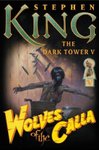
Leave a comment

Filed under apocalypse, comic books, DC Comics, death, George Perez, Marv Wolfman, super-heroes, Superman, supervillains, time travel, world-crossing

Review 48: The Green Futures of Tycho


The Green Futures of Tycho by William Sleator

It’s always dangerous to revisit a book that you loved when you were a kid. Everyone knows that. Some books are really just geared towards a certain age, a certain time in your life where that book can step in and say, “Here – someone knows what you’re thinking about.” And those books are amazing. You read them and your life changes. Maybe only in small ways, maybe in ways you don’t even realize until later, but it does.

Then you come back to it ten or twenty years later and think, “I remember this book. I loved this book. I think I’ll read it again.” So you do, and it’s a disappointment. Not because the book isn’t as good as you thought it was but rather because you aren’t the person you were when you first read it. There’s nothing wrong with that – it’s just life.

When I ordered this off Amazon, I did so with a certain amount of trepidation. This book occupies a very special place in my heart. I read it over and over again when I was a kid. It instilled a love of time travel that I keep to this day. I even adopted the name Tycho as a pseudonym for various parts of my own mind all the way through high school and beyond. I knew that re-reading it would put that entire past at risk of becoming foolish or stupid or childish, and I wasn’t sure my ever-vulnerable pride wanted to take that.

Fortunately, I discovered that the book was as good as I recalled it being. Shorter than I remember, of course, but still quite good.

The story is deceptively simple – Tycho Tithonus, the youngest of four siblings – the other three being very talented and thoroughly unpleasant – finds a small, silver, egg-like object while digging up a new vegetable garden. As innocuous as it seems, that object is about to change everything. It is, in fact, a time machine.

It’s not very difficult – it has a series of dials on one end, which you turn to set the time you want to go to. Press the other end and it’s done. And Tycho does what anyone would do when presented with such an amazing device: go back and re-work an unpleasant event in his past. And if by doing so he could maybe teach his nasty siblings to appreciate him more, well, so be it. Of course, the ramifications of this act don’t become clear until it’s much too late.

But the past doesn’t really hold that much allure for young Tycho. It’s over and done with, and was never very pleasant to begin with. So he decides to go to the future, to see what has become of himself and his family. A quick twenty-year jump to April 23,2001 shows him what’s in store for himself. A desperate, unhappy, bitter man, fronting for a lunar entertainment industry and reduced to begging sponsors for money.

Disappointed and upset, Tycho comes back. Later, he visits the future again – same day – only to find it has changed completely. He’s no longer a sad, shapeless man but a tough, ruthless one, a man who uses his ability to travel through time to make money and ruin his family. Terrified, Tycho returns to his own time. But his curiosity can’t be stopped. He needs to see a future where everything works out right. Unfortunately, every time he goes there it’s worse and worse. His future self becomes a monster and a murderer, a willing agent to bring beings of higher power onto this planet.

This is one of the things I’ve always liked about Sleator – his mind turns around corners. Everyone and his uncle can write about a time traveler going to the past and changing the present, but who writes about someone changing the future by messing about in the present? Not many, I’ll tell you that. Each time Tycho comes back from the future, the knowledge he has gained causes him to say something or do something that alters the course of his future in a new and terrible way. And seeing how much worse it gets just forces him to make even more terrible decisions, until you have the final, terrible paradox of an old Tycho trying to chase down and kill his younger self over the course of millennia.

Which does bring up the problem of paradox, unavoidable in any time travel book, known in fiction as “massive, gaping plot holes.”

For example – if Tycho time-travels twenty years into the future to see his older self, there shouldn’t be any older self there for him to meet. It’s impossible – as far as the rest of the world was concerned, Tycho vanished on April 23, 1981 and re-appeared twenty years later. Everyone else lived through that time, but he simply side-stepped it. Instead of finding a letter from his older self to his mother in their future house, he should have found perhaps a black-framed picture of 11 year-old Tycho with a note to the effect that they should have loved him more. The only way I can think of to resolve this problem is to assume that Tycho was absolutely and incontrovertibly determined to return to his own time after each future visit, thus ensuring that he would eventually live out those twenty years.

Fortunately, Sleator handles these paradoxes in a very simple and straightforward manner. During one of Tycho’s experimental first trips into the future, he meets his teenage self, who shows him how the dials work on the egg:

“But,” Tycho said. “But if you’re me… I mean, if we’re the same person, how can we both be here at the same time?” 

“No time to explain now,” said the other Tycho, bending over him. “I’ve got to show you how to work this thing, fast, so you can get back to your own time.”

“But that doesn’t make sense,” Tycho said, more confused than ever. “If you have to show me how it works, then who showed you how to -”

“Shut up and concentrate.”

There you go. That bit there is the author saying, “Yes, I know there are paradoxes involved, but that’s not the point of the book.” That pretty much sweeps aside all those little picky details, like older Tycho trying to kill his younger self, or the fact that, by the end of the book, the entire story didn’t, technically, happen. “Shut up and concentrate.”

He handles the alterations resulting from time travel very neatly as well. Rather than beat us over the head with “Things have CHANGED!” he just inserts a simple descriptive line in there. If you’re reading carefully, you’ll notice that Ludwig’s hair has gone from proto-emo long to a nice crew cut. Even Tycho doesn’t notice, which is interesting. When presented with the results of a change in time, he has a moment of jamais vu – the feeling of something familiar as totally new – and then the story moves on. The effects multiply and resonate, and even Tycho isn’t aware of how much he’s changed.

Going back to the plot hole problem for a moment, there is the small issue of the egg’s origin and purpose. We know it was planted on Earth by aliens, something like 150 million years ago. It seems they did so with the intention that it one day be found and used in order to prepare the way for their arrival and dominance of Earth – this is what can be gleaned by the ravings of older Tycho. But why would an alien race which has time travel sorted out need such a roundabout way of conquering the world? Why drop it into some Jurassic mud and leave it at the whims of plate tectonics? Why not just show up at Tycho’s house one day and drop it on his bedside table? This is never adequately explained in the book, probably because it’s not what the book’s about. But it nagged me when I was a kid, and it still does now.

All plot holes and paradoxes aside, it’s a really good book, and if you have a kid, I recommend it. It’s the kind of story that you really can pick apart and look from many angles. In one sense, it’s a story about destiny. Tycho and his siblings are all named after extraordinary famous people – Ludwig Beethoven,Tamara Karsavina, Leonardo DaVinci, and Tycho Brahe – in the hopes that they would grow up to emulate them. Tycho’s siblings fall into line very easily, adopting the roles that they’d been given from birth. Tycho doesn’t – he’s interested in a little bit of everything, and isn’t entire sure what he wants to do with his life. I knew that feeling when I was eleven years old. Hell, I know that feeling now.

And of course it’s about the futility of letting your future control your life. The future isn’t fixed. It’s an organic, growing thing that you can’t begin to control, and the tiniest change in the present could become a radical change in the future. Sure, it’s good to have goals and plans, but to try and wield unbending control over who you’re going to be is foolish at best.

And that brings me to the nagging question that occurred to me right around chapter 9, the first time Tycho sees his adult self and is terribly disappointed in him. Reading this again as an adult, I found myself wondering that if eleven year-old me suddenly appeared, what would he think? Would he be impressed at the path my life had taken? Would he be disappointed by my physical appearance? Would he be surprised at the relationship I have with my siblings? Would be be shocked that I have a boyfriend? What would his judgment be on his future?

Following right on the heels of that, of course, was the more important question of, “Who cares what eleven year-old me thinks of my life?” Not to disparage the eleven year-olds out there, but you don’t know nearly as much as you think you do, and becoming a teenager isn’t going to confer any more wisdom. Tycho doesn’t know the twenty years of history and context that led to him becoming a miserable bastard. Perhaps if he had learned a little, he might have made better decisions when he returned to his own time. And if eleven year-old me gave me any lip about what I’d become, I’d send him back to his own time with a whole host of new neuroses to deal with.

Anyway, my point is this: The Green Futures of Tycho is a damn fine book. It’s a good time travel adventure, and it’s a good allegory for the existential angst we all go through when we consider the future. While such feelings might be new and raw to a child of Tycho’s age, and old and familiar to us adults, it’s still something that we need to deal with. And perhaps that best way to do it is to simply appreciate what we have now.

————————————————–
“After all, he wasn’t doing anything dangerous, like interacting with the past, which might have unexpected effects on the present. What harm could a little peek at the future do? How could he change anything there?”
from The Green Futures of Tycho by William Sleator
————————————————–

The Green Futures of Tycho on Wikipedia
William Sleator on Wikipedia
The Green Futures of Tycho on Amazon.com
Green Futures fan site

Leave a comment

Filed under science fiction, time travel, William Sleator, young adult