Tag Archives: science fiction

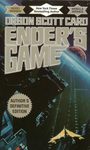
Review 112: Ender’s Game

Ender’s Game by Orson Scott Card

A little while after I started teaching literature, I thought about what kinds of books I’d like to do with students in the years to come. The texts I did last year – Fahrenheit 451, Things Fall Apart and a collection of Edgar Allan Poe stories – are all well and good, but probably not what I would have chosen to teach. I wanted something that would speak to the students, that would engage with their lives, and which ideally was some good classic science fiction. So I went over to Ask Metafilter and asked them what science fiction they would recommend teaching to high school students studying English as a foreign language.

Child soldiers in science fiction are so cute....

Just about everyone mentioned Ender’s Game, and with good reason. It’s a good story, for one, and it addresses a lot of the issues that young people have to deal with that are often left out of the literature they have to read for English class. The adults in the book are like the adults in the students’ lives – slightly removed, seemingly omniscient, and not necessarily acting in their best interests, at least not as they see it. It deals with issues of bullying and isolation, of fitting in and standing out and accepting your place in the grander scheme of things. It’s about critical thinking and moral reflection, all wrapped up in the unending carnival that is youth.

In real life... not so much.

Ender Wiggin is, as our book begins, six years old, and he may be the last, best hope for humanity.

Ender comes from a strange place. In a near-totalitarian America, families are allowed to have only two children, in order to keep the population static. If a good reason exists, however, they might be allowed to have a third. That third is destined from the beginning to have a hard life, no matter what happens, especially if that third has been bred for a very specific reason.

Ender Wiggin is a Third. His parents had two children already – their son, Peter, and daughter, Valentine. Peter is a brilliant young sociopath, and Valentine is an equally brilliant pacifist. In ordinary times, either of them could have been an historical figure, but these were far from ordinary times. Earth is at war with an insectile alien race it has named the Formics (nicknamed “Buggers”), and has survived two invasions. Everyone knows there will be a third, and if they can’t fight it off then humanity will be scythed clean off the planet. The International Fleet needs a commander, one who has enough empathy to understand the enemy, but who also has the killer instinct to be able to wipe them out. Where Peter is too hard and Valentine is too soft, Ender Wiggin could be the one they’re looking for.
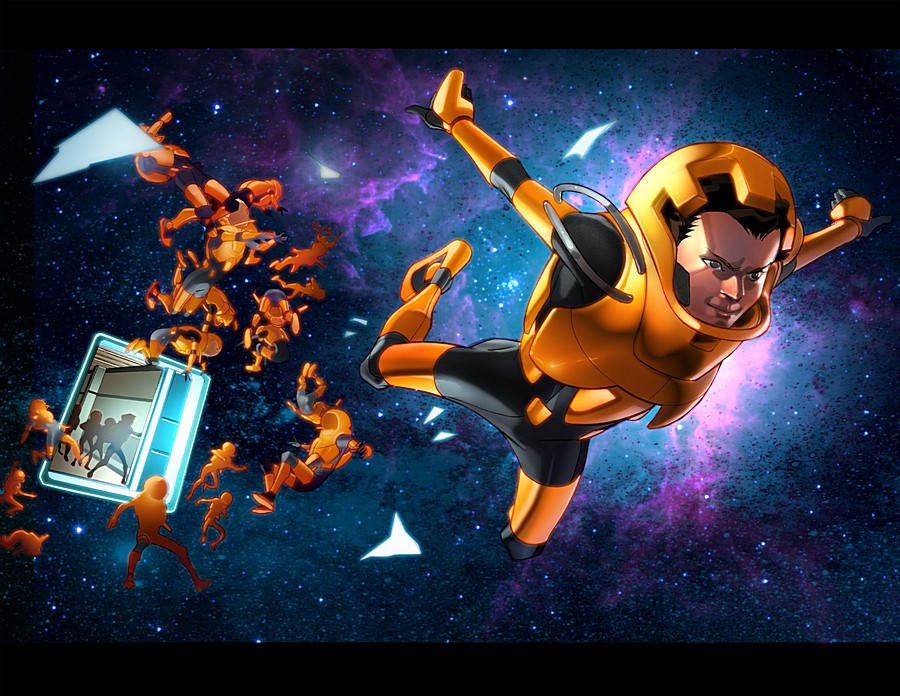
Almost makes me want to have my childhood stolen from me....

Young and frightened, Ender is taken off-planet to Battle School, where he and hundreds of other youths will take part in battle games to train them in how best to one day defeat the Buggers. While Ender knows that he’s been chosen, he doesn’t know why, and his experiences in the school lead him to wonder if being a Chosen One is really worth it. In game after game, Ender manages to prove his worth to the International Fleet by defying their expectations of what a battle commander should do. He is pushed to his limits and beyond by the International Fleet, whose motives and methods remain a mystery to him until he has accomplished their goal – one which he never even knew he was aiming for.

It’s a fun book, and a very quick read, and it’s one of those “I should have read this when I was a teenager” books. While I was never put in a position where my action could very possibly save the existence of all humanity, I – like every other teenager ever – had doubts about my place in the world. I saw the conflict between what I wanted for myself and what the adults in my life wanted for me. I was given responsibility that I didn’t want, and had to make a choice about whether or not I would live up to it. In other words, while the scale of Ender’s problems are much bigger than that of the average young person’s, they are essentially the same. I am fortunate in that Ender’s Game can work to explode a pervasive and not entirely accurate belief held by all teenagers everywhere, from the dawn of time until now: the belief that there is no one else in the world who understands what they are going through.

The big question then becomes, How do I teach this? What can I do to not only get my students to read it but to also understand its relationship to their own lives? However I manage to do it, that will hopefully reveal to them the whole point behind reading for pleasure: that you can look at a book or a story and say, “Yes – life is like this.” Not all of it, but you can find that moment, that point of any story that can connect what it is saying to your own life, and thereby learn something from it.

There are also a whole host of other issues that can be brought up with this novel, not the least of which is the systematic indoctrination of young people by their educational system. Perhaps a bit self-defeating, but the anti-authoritarian in me would be vastly entertained if I could somehow encourage these kids to look suspiciously upon the very foundation of the system in which they were currently residing. There is also the greater issues of how a society teaches its children, and the limited value of truth. We tell kids that “honesty is the best policy,” but this book blows that axiom away. If they had told Ender the truth about what he was doing and why, he would have refused, and Earth would likely have been wiped out. In the same way, how do we – adults, and especially teachers – lie to young people in order to achieve a greater goal? What value, then, do these lies have, and are they worth telling?

Even Peter would be helpless against the LOLCats.

We can explore redemption and atonement through Ender’s attempt to make up for the things he has done. Even more interestingly, we can look at Card’s prediction of how the internet would shape political discourse and how citizens can easily be manipulated. Peter and Valentine put on electronic personae through which they gain immense power despite their youth, using their own innate genius to spark debate on the topics that will achieve their own goals.

Outside the text, too, there is an excellent opportunity to discuss the relationship between a work and its author. While Ender’s Game is a brilliant story that is so well-written that it is recommended reading by both Quakers and the U.S. Marine Corps, its author holds some rather despicable views that don’t seem to mesh with the message he has put into his book. I speak here of Card’s public denouncement of gay marriage, including accepting a position on the board of directors of the National Organization for Marriage. This group has made many attempts to block the spread of queer civil rights in the U.S., and it disturbs me that an author whose work I respect is spearheading the effort.

FINE. I didn't want to marry you anyway....

What, then, is my responsibility as a reader? Should I never read his work again, lest it be seen as a show of support for his politics? Can I even read him fairly from now on, or will I always be looking for that anti-gay undercurrent, perhaps where there is none? Or should I simply ignore the author and enjoy the work? There are a great many authors and artists who are in the same position as Card, and it is a worthwhile discussion to have.

There are so many topics to mine from this book that I had to stop myself from time to time and remember to enjoy it, rather than make mental lesson plans.

In any case, if you haven’t read Ender’s Game, I recommend that you do. If you have a young person in your life, see to it that he or she has a chance to read it as well. If you’re really lucky, it’ll foster a lifelong love of reading. If not, at least they might walk away with the understanding that their problems are pretty universal, and that, on the whole, things could be a whole lot worse.

They could be Ender Wiggin.

————————————————————-
“It was just him and me. He fought with honor. If it weren’t for his honor, he and the others would have beaten me together. They might have killed me, then. His sense of honor saved my life. I didn’t fight with honor… I fought to win.”
– Ender Wiggin, Ender’s Game”

Ender’s Game on Wikipedia
Orson Scott Card on Wikipedia
Ender’s Game on Amazon.com

I couldn't NOT put it in....

1 Comment

Filed under brothers, childhood, children, coming of age, ethics, family, friendship, military, morality, Orson Scott Card, science fiction, sisters, teenagers, truth, war, young adult

Review 100: Machine of Death


Machine of Death, edited by Ryan North, Matthew Bennardo, and David Malki !

How would you live if you knew how you would die?

The premise for this collection of short stories was introduced back in 2005, in an installment of Ryan North’s popular Dinosaur Comics. In it, he presents the following premise: there is a machine which, with only a small sample of your blood, can tell you how you will die. But there are no dates, no details, no explanations. Just a few words, and that’s it. The Machine is never wrong, but it is annoyingly vague and has a decidedly un-machinelike love of irony. So you might get OLD AGE and think you were set, right? Not necessarily. You could be murdered by an octogenarian while trying to steal their TV. Or you might get PLANE CRASH and decide never to fly again. Fine, but that won’t stop the single-engine Cessna from plowing into your house one fine spring afternoon. Pulled GUILLOTINE, did you? Hope you know to stay away from heavy metal concerts.

But it doesn’t matter. The Machine, while perversely misleading at times, is never wrong, and like most prophets, its predictions often only make sense after the event has already happened.

With that premise, hundreds of writers across the internet set to work. How would this Machine affect people? How would it affect society or business or politics? Would we become slaves to its predictions, or simply shrug it off and live our lives as we did before, knowing that we were going to die someday anyway?

In “Flaming Marshmallow” by Camille Alexa, we see how the existence of the Machine has begun to shape youth culture. Carolyn is about to turn sixteen, the legal age at which one can be tested. A milestone equivalent with getting one’s driver’s license or being able to vote, kids monitor each other’s fates with scrupulous detail. Your eventual manner of death brings you together with those of similar fates, and new cliques begin to form. Kids who are going to die violent deaths sit together in the lunch room, far away from the ones who get OLD AGE. The kids with DRUG OVERDOSE and fates like it all mill about with each other, and nobody talks to the ones who get SUICIDE. By finding out one’s manner of death, a teenager gets what teenagers always want: a sense of belonging and inclusion. But will Carolyn’s fate bring her closer to her fellow students or just leave her an outsider?

“After Many Years, Stops Breathing, While Asleep, With Smile On Face,” by William Grallo, continues that idea out into the adult world. Ricky is dragged out on the town to a nightclub where people flaunt their deaths. They wear fake toe tags with MURDER or HEART ATTACK on them. Or, if they’re feeling impish, NEVER, or BOREDOM. But while everyone else is mocking their deaths, Ricky is in the odd position of knowing that he’s got a good end to his life. What he doesn’t know is what will happen between now and then, or with whom he will share it.

David Malki ! explores the darker side of society’s reactions in “Cancer.” James is a young man whose father is dying of cancer. It’s what the Machine had predicted, and it was all coming true. Despite the Machine’s infallibility, however, his father was seeking out a cure, a way out from the fate that had been given to him. And he’s not the only one – a new generation of hucksters and faith healers has sprung up, all claiming to be able to defy the predictions of The Machine. It gives James’ father hope, but whether that hope is worth the price or not is something James is unsure of.

“Nothing,” by Pelotard, is a touching tale of a young woman who discovers a family secret that never would have been revealed before the Machine was invented. “Despair,” by K.M. Lawrence, is an examination of how paralyzed people might become by the ambiguity of the predictions, unable to act lest they inadvertently fulfill them. “Improperly Prepared Blowfish” by Gord Sellar is an entertaining moment of secrets and betrayal among a group of yakuza in Japan, and Ben “Yahtzee” Croshaw has some fun with the politics of Machine predictions by giving us a politician whose fate is to die from EXHAUSTION FROM HAVING SEX WITH A MINOR.

Some stories are funny, others are touching, but they all center around that most existential of questions: how do we live, knowing that we will die?

Without The Machine, we still know we’re going to die. Every one of us has, somewhere in the back of our mind, that constant reminder that our lives are finite, that there is a limit to the amount of time we can spend on this earth. And, for the most part, we choose to ignore it. After all, if you spend your whole life obsessing over your own death, then you can’t have much of a life, now can you? But add to that fundamental knowledge of finitude the extra awareness of the manner of your death. If you get CAR CRASH, what can you do with that knowledge? You know it’s inevitable, that The Machine is never wrong, but you may still struggle with that fate. You may cut up your driver’s license, move out to Amish country and vow never to be within striking distance of a car again. The entire course of your life will shift drastically, based on the two words printed on that card, but the end result will be the same: CAR CRASH. Knowing that, is it better to act on the knowledge you have gained, or to ignore it?

Even worse, sometimes the very act of finding out your fate leads you right to it. In “Suicide” by David Michael Wharton, characters learn about their deaths only moments before experiencing it. Had they not gone to get tested on The Machine – had they not gone to that machine – would they have avoided their fate? The Machine would say no, but you’d have to ask it first. The best expression of this paradox is contained in the book’s shortest tale, “HIV Infection From Machine of Death Needle” by Brian Quinlan, wherein the very act of discovering your fate causes that fate to happen, whereas you would never have had it if you hadn’t gone looking for it. It’s kind of a mind trip, if you think about it.

What if you get something fairly straightforward, like CANCER, and you decide to, say, jump out of an airplane without a parachute? Will that even be possible, or will random events conspire to keep you safe until your proscribed end? And if you get SUICIDE, the one form of death you have absolute control over, do you fight against it or give in, knowing that nothing you do will change the outcome?

And what could this tell you about the future for everyone? In “Heat Death of the Universe,” by Ramon Perez, teenagers who reach the legal testing age start getting NUCLEAR BOMB as their means of death. The government springs into action, testing, re-testing, and vowing to corral all these kids into one place. But if their deaths are inevitably by NUCLEAR BOMB, what does that mean? It means that whether they’re all in one place or dispersed across the country, that is how they will die. Acting on the information doesn’t change its outcome, only what the manner of that outcome will be.

Conversely, it might be impossible to predict anything from the predictions The Machine gives out. As was pointed out in the same story, the 3,000 victims of 9/11 probably wouldn’t have all had TERRORISM printed on their little cards. They might have had FALLING or FIRE or PLANE CRASH – all true, but none of that would have helped anyone prevent that event. Even something as clear and unambiguous as GLOBAL THERMONUCLEAR WAR creates problems, as Cassandra finds out in the story of the same name by T. J. Radcliffe. If you tell people about this future, will they even believe you? Or will the actions they take to prevent it instead be what causes it to happen? There are no easy answers, at least not without electroshock.

It’s a fascinating group of stories, illustrated by some of the internet’s best artists – Adam Koford, Kevin McShane, Aaron Diaz, Kate Beaton, Christopher Hastings, and too many others to mention. It will do what all really good writing should do – make you think. As seductive as it sounds, knowing the means of your death is information that you really can do without. It is the end to your story, whether you know it or not, but everything until then is still up to you. While you may not have any choice over how you die, you still have plenty of control over how you live. You can live in fear or hope, make plans and take risks and hope for the best.

Just like we do now.

I’ll leave you with a joke from Steven Wright, one that was running through my head as I read the book: My girlfriend asked me if I could know how and when I was going to die, would I want to know? I said, “No, not really.” She said, “Okay, forget it, then.”

Thank you, he’ll be here all week.

——————————————————-
“What good is knowing the future if you can’t do anything with the knowledge?”
Dad, from “Friendly Fire” by Douglas J. Lane
——————————————————-

Machine of Death homepage
Machine of Death on Amazon.com

1 Comment

Filed under David Malki !, death, existentialism, humor, Matthew Bennardo, Ryan North, science fiction, short stories

Review 93: Do Androids Dream of Electric Sheep?


Do Androids Dream of Electric Sheep? by Philip K. Dick

I have kind of a weird confession to make. It’s not really a confession as such, since you only confess things that you’re ashamed of or that you feel you have done wrong. But this is something that I believe people may find a little odd, so I suppose it’s the best word under the circumstances.

I don’t kill cockroaches.

Fortunately, I live up on the tenth floor in a nice modern apartment building, so they’re not really a problem for me. But even in my old place, where they’d turn up from time to time, or walking about in the city, where you’re bound to see them, especially after dark, I feel no desire to do what everyone else seems to do – freak out and jump on them with both feet. After all, why should I? They’re just being what they are. They’re just doing what millions of years of evolution have programmed them to do. They don’t act out of malice or with the intention of trying to harm me, so I say live and let live.

Oh, don’t get me wrong – I don’t let roaches stay. I’ll capture them, take them out to the riverbank or somewhere and let them go. I’ll put down deterrents to roaches around the house. I may be kindly-disposed towards all living things [1], but I’m not an idiot. My point is, I feel a certain empathy towards those little guys, just trying to make their way in a hostile, anti-cockroach world.

And that’s how I know I’m not an android.

When we talk about things like computer intelligence, one of the questions that comes up is how we would tell an artificial intelligence apart from the real thing? For a computer-bound AI, there’s the Turing Test – a conversation with a human wherein the human cannot tell that she’s talking to a computer. And that’s good, as far as that goes. But what if we start putting them into physical bodies? What if we make these AIs in our image? Fleshy, sweaty, hairy robots that look and behave just like humans do? How, then, would we be able to tell the difference between a made being and a natural-born human?

Philip K. Dick’s answer is empathy, and it is at the core of this book.

Dick is kind of like science fiction’s mad mystic. He explores the hidden inner worlds of the people involved in the story, peeling apart issues of identity and psychology and reality itself, forcing the reader to ask him or herself what’s really going on.

In other words, reading his work can be something of a head trip.

This novel introduces us to a near-future America, one which is greatly different from the one we know today. After a devastating nuclear war that wiped out countless species of plants and animals, the planet is being slowly emptied out. Those who are young, healthy and fertile are allowed to emigrate to off-world colonies. With them go the androids as servants, workers and slaves. Some people stay on Earth for reasons of their own. J.R. Isadore, for example, is a “special,” one who doesn’t make the genetic grade to leave the planet. Rick Deckard, on the other hand, is a bounty hunter, a man whose duty is to hunt down and destroy androids that come to Earth. Deckard has been handed a special assignment – six androids of the latest model, Nexus-6, have landed nearby. They’re strong, intelligent, almost indistinguishable from humans, and Deckard has to “retire” them all before they get away.

Like many people, I first encountered this story in the movie Blade Runner, which followed much the same path. And, probably like a lot of people who saw the movie first, I was a bit thrown by the difference between the two. Rick Deckard in the book is not the morose lone wolf that he is in the movie. He has a wife here, and an electric sheep that he keeps on the roof (though he’d never admit to his neighbors that it was electric.) He has an interest in animals – the keeping of which is a mark of true status in a world where so many species have gone extinct. He’s a more interesting character, with more depth and inner conflict than we see in the film. On the other hand, Roy Baty, Deckard’s adversary, is far less interesting. He’s intelligent and cruel, yes, but with so much less visceral power than Rutger Hauer gave him.

The major themes are different as well. In the movie, one of the overriding themes is the desire to live, the instinctive need that humans have to keep surviving even for just one more second. It’s what keeps Deckard hanging on the edge of the roof when Roy’s already broken his fingers. It’s what sends Roy to Tyrell’s home in the middle of the night with murder on his mind. The replicants in the film, despite being made beings, want what we want: more life.

The book follows a different path, though. The book looks at the difference between human and android, the Born and the Made, especially where it comes to that elusive quality of empathy. It is a capacity that only humans are supposed to possess, and indeed there is a whole religion founded around it – Mercerism. By using “Empathy Boxes,” a person can become one with the iconic Wilbur Mercer, and share the joys and pains of everyone else connected to him at the same time. Life in all its forms becomes utterly sacred, and the destruction of a living thing is one of the greatest sins one can commit.

The androids, on the other hand, know nothing of empathy. They would gladly give up one of their own to die in their place. In one rather vivid scene, the android Pris starts snipping the legs off a spider, an act so monstrous that it drives J.R. Isadore to betray her and the other androids, people he believes are his only friends. The androids can pretend to feel empathy, but a simple test of involuntary physical responses show that they cannot truly feel it.

So, in a world where life has been scythed clean, respect for life is the highest virtue. The androids have no respect for life, and must therefore be kept off the planet, eliminated if they set foot on it. But what happens when they get more complex? What happens when the androids are so good, the humans begin to empathize with them? How can you destroy something when you can imagine its pain as your own? And if you can refrain from killing a lowly cockroach because you have empathy for it, how can you then turn around and kill thinking, self-aware android?

It’s the kind of logical and moral conundrum that Dick excels at. The capacity for empathy cannot be what makes one creature worthy of protection and another not. After all, cockroaches don’t feel empathy any more than androids do, yet they would be cherished in this world. It must then be the ability to generate empathy in others that is important, and in this book we see the androids cross that line. Deckard realizes that he’s beginning to feel for the things he has to kill, and cannot reconcile that feeling with his job.

The theme of Born versus Made is reflected all through the book, especially where animals show up. There are animals that are presented as real, which later turn out to be androids. Others which the characters think are androids, but turn out to be real. Some characters can’t even say with certainty whether they are not androids. All throughout the book, people find themselves in the position where they can’t tell the difference between biological life and constructed life, which then raises a whole new question – if you can’t tell the difference, then is there any difference at all?

It’s the kind of question best discussed over a cup of coffee at Denny’s with your friends in college.

Even today, people look down on science fiction as being less substantial than “real” fiction. Stories of androids and bounty hunters and off-world colonies, they think, can’t compete with tales of single mothers raising kids in the inner cities or soldiers fighting and dying in a pointless war. To those who think there’s nothing to grab on to in science fiction, I submit this book. It’ll stay in your head, keep you up at night, and make you ask the kinds of questions that you’ll never be able to answer.

If that’s not quality writing, then I don’t know what is.

—————————————————-
“You will be required to do wrong no matter where you go. It is the basic condition of life, to be required to violate your own identity. At some time, every creature which lives must do so. It is the ultimate shadow, the defeat of creation; this is the curse at work, the curse that feeds on all life. Everywhere in the universe.”
– Mercer, Do Androids Dream of Electric Sheep?
—————————————————

[1] Well, almost all living things. There’s still Ann Coulter….

Do Androids Dream of Electric Sheep? on Wikipedia
Philip K. Dick on Wikipedia
Philip K. Dick official site
Do Androids Dream of Electric Sheep? on Amazon.com

Leave a comment

Filed under empathy, made into movies, Philip K Dick, robots, science fiction

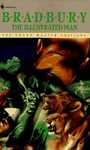
Review 86: The Illustrated Man


The Illustrated Man by Ray Bradbury

As a newly-minted high school reading teacher, my introductory book to spoon-feed to the young’ns was Ray Bradbury’s Fahrenheit 451. It was a really good one to start with, as it had a fairly simple and uncomplicated storyline, a small cast of characters, and fairly well-defined themes and literary techniques. Therefore, teaching it to students who weren’t native speakers (but whose English was really good nonetheless) was a good experience.

I hadn’t read a whole lot of Bradbury prior to that, and really fell in love with the book. F451 was a great read, and something I’ll review here once I’ve let it settle down a bit in my head. After all, I’ve spent the last couple of months teasing every shred of meaning I could out of it, and that’s not the kind of review I write here, now is it? Reading the book gave me a new interest in reading Bradbury, so I picked up a couple of short story collections and started to make my way through them. While I was talking to my department head about it, she recommended that I read The Illustrated Man, a copy of which she just so happened to have sitting around.

The Illustrated Man is a collection of eighteen short stories, more or less unrelated, but brought together under the larger, over-arching story of the Illustrated Man himself. Our narrator, you see, meets a large man on the road. The guy is covered with tattoos, of the highest quality. Their colors are vivid, their details are lifelike, and the man says that, at night, the tattoos come alive. They tell stories, if you watch them long enough. And if you watch them too long, you may see your own future as well….

Well, the narrator decides to watch as the Illustrated Man sleeps, and what he sees are the stories that are presented in this volume.

By and large, the stories are unconnected to each other, which means we can go from a strange future where one family’s house takes care of all their material needs to a poor farmer who manages to avoid the end of the world by being in one of his own. Still, there are a few thematic threads that run through the book that are interesting to look at.

One of these themes is the way we relate to technology. Nowhere is this more obvious than in the first tale of the book, “The Veldt.” In this story, we meet a family who are completely dependent on their house. It’s a technological miracle, where everything is completely automatic. The thought of actually cooking a meal is tantamount to barbarism, and their idea of taking a vacation means just shutting down the more obsequious functions of the house. One of these is the children’s nursery. Akin to the holodeck, this room can replicate any environment that the users want. The children’s fascination with the savagery of the African savanna worries their parents, though, and the threat of having the room shut down eventually becomes more than the children – or the house – can tolerate.

In “The Concrete Mixer,” a Martian invasion force finds themselves overcome by the technology of Earth. Not the military technology, mind you, but the mindless, brain-destroying technology of leisure. Faced with TV and radio, casinos and bars, drive-in movies and fast food, the Martians discover that Earth is far more dangerous than they had ever expected. In “Marionettes, Inc,” Bradbury weaves a tale worthy of Philip K. Dick, telling about a very special service that will create an exact android duplicate of yourself. This robot will do all the tedious things in your life, such as go to work, do chores and tolerate your spouse. But what if the perfect robot duplicates are too perfect, and decide that they don’t really want to do the drudgery anymore? In “The City,” a self-aware metropolis wakes up after twenty thousand years with the arrival of human astronauts – and immediately begins planning its revenge on those who left it so long ago.

Another recurring theme in this collection is that of seeking happiness, through one means or another, and only occasionally finding it. In these stories, characters are looking for something that will make their lives worthwhile, or at the very least a little bit better. In “The Long Rain,” a group of explorers on Venus want just one thing – to get out of the eternal, unceasing rain that pummels the planet. The Sun Domes are their only shelter, if they can find one before they die or go mad. In “No Particular Night or Morning,” an astronaut searches for the only thing he can be absolutely sure of in this universe – nothingness.

In “The Man,” a group of interstellar explorers are looking for a being, who may or may not be Jesus Christ, going from planet to planet and always finding themselves just a little bit too late. In “The Rocket,” a poor junkyard owner wants more than anything to fulfill his dream of showing his children outer space, and manages to do it in a slightly roundabout way. And in “Rocket Man,” a father tries to find what he really wants – to live among the stars or to stay with his family on Earth, and ultimately realizes that he wants – but cannot have – both.

The stories in here are all pretty good, and there were a few I want to touch on in more detail. The one that I took the most notes on was “The Other Foot,” a tale of Mars and the shocking reversal of racial discrimination. In this story, Mars has been colonized by Black exiles from the United States, sent off-planet in an ultimate act of segregation. After decades of eking out an existence on that harsh planet, they learn that a rocket from Earth – probably containing a white astronaut – is on its way. The community reacts in a knee-jerk fashion, preparing a new apartheid on Mars – re-creating the worst of Jim Crow, only in reverse. When the rocket touches down and announces that nuclear war has destroyed everything the colonists had known and loved about Earth, and that white Americans had come to Mars to beg for the help of its citizens, the mob has a change of heart and decides to let bygones be bygones.

As much as I hate post-modernism, I couldn’t shut off my critic’s voice while reading this story. I wondered if a story about Black oppression written by a white author must automatically be racist in nature, and I wondered if Bradbury’s suggestion that Black colonists on Mars would, as a first reaction, try to re-create the worst conditions they had endured on Earth might not be rooted in a fundamental misunderstanding of Black culture. Then the Intellectual Machine That Eats Itself (i.e. Postmodernism) began to ask if perhaps these thoughts were rooted in my own unacknowledged racism, at which point I had to just finish the damn story and move on. It’s a question that probably wasn’t asked fifty years ago, though, which makes the story an interesting one to revisit in our slightly more enlightened age.

Another story that I really enjoyed was “The Exiles,” which has also been titled “The Mad Wizards of Mars.” In this tale, the great writes of fiction – and their works – are living (where else?) on Mars. There you can find Edgar Allan Poe and Ambrose Bierce living with Charles Dickens and Shakespeare. They’re on Mars because Earth has been systematically destroying their works, and thus depriving them of immortality. When a rocket arrives from Earth carrying the last load of books to be destroyed, the fictionauts launch a last-ditch attempt to save themselves. With Poe leading their armies, they pour all of their power into stopping the rocket. Shakespeare’s witches fling curses at the astronauts, and Poe summons all the armies of fiction to defend their existence.

It’s a story that you can tell Bradbury had a lot of fun writing, and is full of wonderful references to the authors he loves. Just the image of Edgar Allan Poe screaming defiance at the air is one that I will treasure every time I read the tale.

What’s really wonderful about this collection is that it’s aged well. Published in 1951, it does suffer from some of the mid-century sci-fi tropes of the day, and modern writers would never be allowed to get away with something like a rainy Venus or humanity calmly accepting the end of the world. But they’re still great stories, and well worth the read. So go read ’em.

——————————————————
“I am a frightened and an angry man. I am a god, Mr. Dickens, even as you are a god, even as we all are gods, and our inventions – our people, if you wish – have not only been threatened, but banished and burned, torn up and censored, ruined and done away with. The worlds we created are falling into ruin. Even gods must fight!”
– Edgar Allan Poe, “The Exiles” (Ray Bradbury)
——————————————————

Ray Bradbury on Wikipedia
The Illustrated Man on Wikipedia
The Illustrated Man on Amazon.com
Ray Bradbury’s website

Leave a comment

Filed under anthology, Ray Bradbury, science fiction

Review 74: Starship Troopers


Starship Troopers by Robert Heinlein

This book is controversial. Says so right there on the cover – “The Controversial Classic of Military Adventure!” A quick look at its Wikipedia page seems to support this, claiming that the book has been criticized for its literary merit, its support of the military, up to and including fascism, racism, utopianism, and gods know what else. What is certainly true is that it’s a book that is guaranteed to make someone, somewhere very angry.

In the unspecified future, humanity has taken to the stars. In our efforts to colonize planets that are hospitable to us, we have spread as far and as wide as possible. Unfortunately, this has brought us into direct contact with alien races who are not entirely keen on sharing land with us, and, as we have always done, we are willing to fight, bleed and die for every inch of it.

Our main enemy is the Bugs, whose proper name we never actually learn, and they are a vicious enemy indeed. They possess a hive mind, made up of Soldiers, Workers and Brains. The Soldiers are, of course, the most dangerous, not least because they have no individual sense of self-preservation. Unlike the human soldiers, who value their comrades and brothers-in-arms highly, the Bugs will never go back for a fallen comrade and never consider the safety of their own when prosecuting a campaign against the humans. In other words, the Bugs truly are alien to us, and therefore need to be eliminated.

The story follows a young man, Juan Rico, in his journey from enlisted grunt in the Mobile Infantry to Officer in the Terran Federation. Through his eyes, we learn about the technological lengths that we have gone to in order to be able to fight the Bugs. First among these is the powered armor that the Mobile Infantry wears – an all-purpose exoskeletal suit that vastly increases its wearer’s speed and strength, in addition to providing him with instant contact with his squadmates and vital information that he needs to fight the enemy. Humanity in the future has made great strides in terms of warfare, all out of need to defeat the Bugs.

You might be forgiven, then, for thinking that this was a grand military adventure. That we would feel the thrill and terror of a young military recruit as he experiences a universe larger and wilder than he ever could have imagined. You would be wrong.

Not entirely wrong, of course. If you read it right, you can infer the newness and strangeness of the circumstances that Juan Rico finds himself in. But this book isn’t about Juan Rico, even though he is the narrator. In fact, we don’t even learn his proper name until nearly two-thirds of the book is finished. Before then he’s just “Johnnie,” which is one of the most generic soldier names out there. Juan Rico is so irrelevant to the story that we don’t even find out that English isn’t his native tongue until three pages before the end of the book. Juan Rico is nothing more than a cipher in this tale, about as important to the content of Starship Troopers as Glaucon is to The Republic.

In the classic tale of Socrates, the philosopher talks about justice and politics and society, with his wisdom inspired by a question-and-answer session with his students. Somehow, the students always manage to ask just the right questions to allow Socrates to expound on his theories, and they’re usually wrong in just the right ways to make Socrates look smart. So it is with Starship Troopers.

Juan Rico is the means by which Robert Heinlein is able to put forth his opinions on war and society, politics, citizenship, crime, child-rearing and, of course, military service. Instead of writing a series of straightforward essays, unfortunately, he decided to make his readers slog through Starship Troopers.

This book is a love letter to the military and all it stands for. Not just war and death and destruction, of course, but also loyalty, sacrifice and devotion to duty. It is an examination into why people become soldiers, why some succeed and others fail, and about the historical importance of the soldier class in human history. It’s about war as a tool of diplomacy, both in its startling effectiveness and its unfortunate inevitability, as well as the importance of the chain of command and proper military discipline. It’s about the comradeship of veterans and the lessons they learn during the service. There’s a good reason why this book is on the reading lists for both the Navy and the Marines.

What it is not about is any of the characters that are actually involved in the story. The only reason Juan Rico is who he is is because he is not someone else. He could have been Buddy St. Germaine or Phil Waxman or Marvin Crumplebottom and the story would have read exactly the same: son of a rich businessman who enlists in the armed forces just to tweak his father, learns a whole host of Valuable Lessons ™ and eventually discovers his calling. There is absolutely nothing about Juan Rico than makes him any more interesting than any other character except that he happens to be the narrator of the story.

If that were all, I might be able to let this book slide as just thinly-veiled military fetishism. But honestly, there’s no veil there at all. The story stops in several places while Heinlein uses his characters as mouthpieces to tell us how he thinks society should be run. Ancillary characters – students, subordinate soldiers – ask just the right questions or are wrong in just the right ways so that Heinlein, much like Plato speaking through Socrates, can make the points he wants to make.

Juan’s professor, retired Lt. Colonel Dubois, and the other lecturers repeatedly point to the 20th century as a model of how not to govern, happily cherry-picking some of the worst results of our system of government and holding them up as the inevitable result of a society that is not run by veterans. For that is how he sees the best of all possible states – one in which only veterans are full citizens and in which only veterans can run the country. The logic being that only someone who has voluntarily enlisted and served in the military is able to truly put the needs of society before his own, and is therefore the best person to run a country. Heinlein, through his fictional avatars, then goes on to show how much more superior the Terran Federation is to its more democratic predecessors and how stupid we were not to see the obvious truth.

The message, then, is that the reader is stupid if he or she does not agree with Heinlein. The ancillary characters who challenge Heinlein’s thesis are written as obvious idiots and are roundly insulted and abused by their superiors, which effectively becomes Heinlein abusing his readers.

In addition, Heinlein sets up so many straw men to knock down that it gets tiresome. Juan’s father, for example, is almost stereotypical as a foil to Dubois. Mr. Rico is rich and aloof and sees the military as nothing more than a bunch of violent thugs who have outlived their usefulness. The first time we see him, he is a snob and a jerk, and Juan’s decision to piss him off by joining is almost inevitable. The next time we see Mr. Rico, of course, he has joined the Mobile Infantry himself, and has seen the error of his ways.

Other members of the cast are overtly written to embody certain themes in Heinlein’s opinion of military rule, both positive and negative. Private Hendrick, for example, is a constant complainer, one who stands up for himself during boot camp and just barely escapes a hanging. He is not disciplined enough to be a soldier, and by extension a citizen, and therefore serves as a warning to others. Sergeant Zim [1], on the other hand, is the consummate soldier – hard on his charges in boot camp, yet as concerned about them as a father would be to his sons. Zim, along with an array of Lieutenants, Captains and other officers, serve as blatant father-substitutes for Juan Rico, with all of the qualities that one would want in a father and absolutely none of the drawbacks. If anything, their only flaws are that they are too concerned about their soldiers.

While reading, I wondered if maybe Heinlein was being sarcastic. If perhaps he was trying to demonstrate the true folly of military fetishism by taking it to its ultimate extreme. I have to admit, I didn’t disagree with all of his ideas. His thoughts on juvenile delinquency, for example, really struck a chord in me – he maintains that treating young offenders as rational adults who can learn from their crimes is foolishness since, like puppies, young people are not inherently rational and have not yet learned the difference between right and wrong. The term “juvenile delinquent,” he maintains, is an oxymoron, since a juvenile has not yet been able to learn of his duty to others, and therefore cannot be delinquent. To treat him as if he were is to fatally misunderstand human nature.

And I think there is a grain of truth to the idea that someone who willingly puts her or his life and body on the line for his or her fellow citizens might indeed have the perspective necessary to govern a country. I would point out, however, that this argument rests on a flawed assumption – that service automatically confers selflessness. There may be correlation, but causation is not yet proven.

But I don’t think he’s being sarcastic. The themes and ideas in this book resonate with those that permeate his other books. What’s more, Dubois sounds like Jubal Harshaw, Lazarus Long and Professor De la Paz – other characters from other books who all served as mouthpieces for the author’s political and social philosophies. And this is what makes Heinlein’s books so special – he is not afraid to stand up for his ideas and put them right there on the page for the reader to see.

It is not so much Heinlein’s ideas that I object to in this book, even if I do disagree with many of them. It is his presentation of those ideas that bothers me. Flawed logical methods presented as irrefutable discourse, transparent characters with no life beyond their purpose as object lessons, and a dissertation on military supremacy that is just barely disguised as a science fiction novel. It is written from the presumption that the writer is right and the reader is, from the first page, completely and utterly wrong.

I think the ideas that Heinlein presents in this book are important, and they are worthy of discussion. I just wish he had held his readers in a little higher esteem when he decided to discuss them.

—————————————————-
“My mother says that violence never settles anything.”
“So? I’m sure the city fathers of Carthage would be glad to know that.”
– Student to Mr. Dubois
—————————————————-

[1] As a side note, the entire boot camp sequence is much, much more entertaining if you read Sgt. Zim with the voice of Invader Zim. It exponentially improves the book.

Starship Troopers on Wikipedia
Robert Heinlein on Wikipedia
Starship Troopers on Amazon.com
The Heinlein Society

4 Comments

Filed under made into movies, military, philosophy, Robert Heinlein, science fiction, war

Review 73: Old Man’s War


Old Man’s War by John Scalzi

Somewhere in the unspecified future, humanity has reached out beyond the solar system, settling colonies wherever they can find a habitable planet. It’s the inevitable expansion of the Human Race, finally freed from its precarious position on Earth. With the new skip drive, capable of taking people vast distances in only a moment, a whole range of new and interesting worlds are open to hardy settlers willing to make new lives for themselves.

Unfortunately, there are many alien races out there with the same idea, who need worlds with similar climates and resources. And very few of them are keen on sharing with us. So, in order to protect the human race against its competitors, the Colonial Defense Force was set up – a space military whose basic mission is to deal with the alien menace by whatever means necessary.

No one on Earth has ever seen a CDF soldier. Nobody knows anything about them – how they fight, where they fight, or even whom they fight. People do know one thing, however – there’s always an opportunity to join. Protect and serve.

If you’re seventy-five years old, that is.

The CDF isn’t interested in hotheaded youths with no experience. While they have traditionally been the main component of the soldiering class, they are erratic at best, cannon fodder at worst. The CDF is looking for an entirely new type of cannon fodder, hopefully one with a better head on its shoulders. Therefore, the CDF recruits from the elderly. The theory is that once you get to be seventy-five years old, you’ve seen a bit of the world, you know how much you don’t know, and you’re less likely to be infected with the special brand of insanity that comes along with being in your late teens and early twenties.

So, on your sixty-fifth birthday, you go to the recruitment office for a routine physical and a basic description of what you’re in for. Ten years later, if you’re still around, you join up for real. There’s no turning back, though. Join the CDF and your life on Earth is over. You will be declared legally dead, and there will be no coming back to your home planet, ever.

For many people, this might be a somewhat intimidating proposition. After all, the Earth is the only home we have. But once you’re seventy-five and looking your mortality straight in the eyes, it might be a reasonable price to pay.

As for the myriad physical problems that come with being 75, well, there are ways of getting around that.

The book follows John Perry, a widower-turned-soldier as he fights for the safety of people he doesn’t know, in a universe he’s only beginning to understand. Once he begins his new career as a soldier, he discovers that, to paraphrase Sir Arthur Eddington, the universe is stranger than he can imagine. He is taken to new and interesting worlds to meet new and interesting species of intelligent life and, more often than not, to kill them. Along the way, he has to deal with new takes on the old questions that have plagued philosophers for centuries – what is identity, what is duty, and what is the function of war? Even the nature of reality itself pokes its head in to cause a little trouble. All through this, John Perry is just trying to keep his head down and get through his tour of duty – but you know it can never be that simple.

This was Scalzi’s first novel, and as first novels go it was just the kind you want to have. Exciting, funny, nominated for a Hugo and immensely popular. To say nothing of being reminiscent of Heinlein (if Heinlein had had more of a sense of humor). Not only do we have a cracking good military space adventure, but we’re introduced to a far wider universe that Scalzi will later expand upon. The “Old Man’s War Universe” is vast and exciting, and as of this writing, there have been three more books that take place in it.

With that in mind, this book is mostly exposition. While the adventure parts are adventurous, the vast majority of this book is laying down the important concepts that are necessary to understand the book and those that follow. And so we get a lot of explanation about what the CDF is and how it operates, why it needs its soldiers and how they’re prepared for battle. We’re introduced to the BrainPal ™ and SmartBlood ™ and the MP-35 Rifle, truly one of the most useful weapons ever made by man. We meet a variety of alien species – some disturbingly ugly but gentle, others utterly adorable baby-eaters, and still more who believe that murdering other life forms is an act of religious grace for which the murdered should be thankful.

Lucky for us, Scalzi chooses the most logical way to do all of this exposition – the main character is as clueless as we are. He also needs everything explained, sometimes in vivid and gruesome detail, in order to make sense of the universe in which he now works. By following John Perry through basic training and his first year in the CDF, we start to understand the basics. The rest will come in later books, and our learning curve will be somewhat accelerated.

The book manages to hit all the right notes – it’s exciting, it’s poignant and it’s funny. John Perry has been given a quick and sarcastic sense of humor, which reminds me of a lot of my friends, so I felt an immediate kinship with him. We like the people he likes, we care about the things he cares about, and we understand what it is that keeps him going, even when he’s risking his own humanity in the process. In short, John Perry is a character who is at once singularly interesting and at the same time easy to identify with. This, I must say, is a tough feat to pull off.

If you like funny, exciting, universe-scale science fiction, pick this up. If you’re interested in how our eventual coexistence with aliens might one day go, give this a read. And by all means, if you’re a fan of Robert Heinlein – and you know who you are – definitely get this book.

——————————————
“If the universe is bigger and stranger than I can imagine, it’s best to meet it with an empty bladder ”
– John Perry, Old Man’s War
——————————————

John Scalzi on Wikipedia
Old Man’s War on Wikipedia
Old Man’s War on Amazon.com
Whatever – John Scalzi’s blog

Leave a comment

Filed under adventure, John Scalzi, science fiction, war

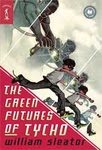
Review 48: The Green Futures of Tycho


The Green Futures of Tycho by William Sleator

It’s always dangerous to revisit a book that you loved when you were a kid. Everyone knows that. Some books are really just geared towards a certain age, a certain time in your life where that book can step in and say, “Here – someone knows what you’re thinking about.” And those books are amazing. You read them and your life changes. Maybe only in small ways, maybe in ways you don’t even realize until later, but it does.

Then you come back to it ten or twenty years later and think, “I remember this book. I loved this book. I think I’ll read it again.” So you do, and it’s a disappointment. Not because the book isn’t as good as you thought it was but rather because you aren’t the person you were when you first read it. There’s nothing wrong with that – it’s just life.

When I ordered this off Amazon, I did so with a certain amount of trepidation. This book occupies a very special place in my heart. I read it over and over again when I was a kid. It instilled a love of time travel that I keep to this day. I even adopted the name Tycho as a pseudonym for various parts of my own mind all the way through high school and beyond. I knew that re-reading it would put that entire past at risk of becoming foolish or stupid or childish, and I wasn’t sure my ever-vulnerable pride wanted to take that.

Fortunately, I discovered that the book was as good as I recalled it being. Shorter than I remember, of course, but still quite good.

The story is deceptively simple – Tycho Tithonus, the youngest of four siblings – the other three being very talented and thoroughly unpleasant – finds a small, silver, egg-like object while digging up a new vegetable garden. As innocuous as it seems, that object is about to change everything. It is, in fact, a time machine.

It’s not very difficult – it has a series of dials on one end, which you turn to set the time you want to go to. Press the other end and it’s done. And Tycho does what anyone would do when presented with such an amazing device: go back and re-work an unpleasant event in his past. And if by doing so he could maybe teach his nasty siblings to appreciate him more, well, so be it. Of course, the ramifications of this act don’t become clear until it’s much too late.

But the past doesn’t really hold that much allure for young Tycho. It’s over and done with, and was never very pleasant to begin with. So he decides to go to the future, to see what has become of himself and his family. A quick twenty-year jump to April 23,2001 shows him what’s in store for himself. A desperate, unhappy, bitter man, fronting for a lunar entertainment industry and reduced to begging sponsors for money.

Disappointed and upset, Tycho comes back. Later, he visits the future again – same day – only to find it has changed completely. He’s no longer a sad, shapeless man but a tough, ruthless one, a man who uses his ability to travel through time to make money and ruin his family. Terrified, Tycho returns to his own time. But his curiosity can’t be stopped. He needs to see a future where everything works out right. Unfortunately, every time he goes there it’s worse and worse. His future self becomes a monster and a murderer, a willing agent to bring beings of higher power onto this planet.

This is one of the things I’ve always liked about Sleator – his mind turns around corners. Everyone and his uncle can write about a time traveler going to the past and changing the present, but who writes about someone changing the future by messing about in the present? Not many, I’ll tell you that. Each time Tycho comes back from the future, the knowledge he has gained causes him to say something or do something that alters the course of his future in a new and terrible way. And seeing how much worse it gets just forces him to make even more terrible decisions, until you have the final, terrible paradox of an old Tycho trying to chase down and kill his younger self over the course of millennia.

Which does bring up the problem of paradox, unavoidable in any time travel book, known in fiction as “massive, gaping plot holes.”

For example – if Tycho time-travels twenty years into the future to see his older self, there shouldn’t be any older self there for him to meet. It’s impossible – as far as the rest of the world was concerned, Tycho vanished on April 23, 1981 and re-appeared twenty years later. Everyone else lived through that time, but he simply side-stepped it. Instead of finding a letter from his older self to his mother in their future house, he should have found perhaps a black-framed picture of 11 year-old Tycho with a note to the effect that they should have loved him more. The only way I can think of to resolve this problem is to assume that Tycho was absolutely and incontrovertibly determined to return to his own time after each future visit, thus ensuring that he would eventually live out those twenty years.

Fortunately, Sleator handles these paradoxes in a very simple and straightforward manner. During one of Tycho’s experimental first trips into the future, he meets his teenage self, who shows him how the dials work on the egg:

“But,” Tycho said. “But if you’re me… I mean, if we’re the same person, how can we both be here at the same time?” 

“No time to explain now,” said the other Tycho, bending over him. “I’ve got to show you how to work this thing, fast, so you can get back to your own time.”

“But that doesn’t make sense,” Tycho said, more confused than ever. “If you have to show me how it works, then who showed you how to -”

“Shut up and concentrate.”

There you go. That bit there is the author saying, “Yes, I know there are paradoxes involved, but that’s not the point of the book.” That pretty much sweeps aside all those little picky details, like older Tycho trying to kill his younger self, or the fact that, by the end of the book, the entire story didn’t, technically, happen. “Shut up and concentrate.”

He handles the alterations resulting from time travel very neatly as well. Rather than beat us over the head with “Things have CHANGED!” he just inserts a simple descriptive line in there. If you’re reading carefully, you’ll notice that Ludwig’s hair has gone from proto-emo long to a nice crew cut. Even Tycho doesn’t notice, which is interesting. When presented with the results of a change in time, he has a moment of jamais vu – the feeling of something familiar as totally new – and then the story moves on. The effects multiply and resonate, and even Tycho isn’t aware of how much he’s changed.

Going back to the plot hole problem for a moment, there is the small issue of the egg’s origin and purpose. We know it was planted on Earth by aliens, something like 150 million years ago. It seems they did so with the intention that it one day be found and used in order to prepare the way for their arrival and dominance of Earth – this is what can be gleaned by the ravings of older Tycho. But why would an alien race which has time travel sorted out need such a roundabout way of conquering the world? Why drop it into some Jurassic mud and leave it at the whims of plate tectonics? Why not just show up at Tycho’s house one day and drop it on his bedside table? This is never adequately explained in the book, probably because it’s not what the book’s about. But it nagged me when I was a kid, and it still does now.

All plot holes and paradoxes aside, it’s a really good book, and if you have a kid, I recommend it. It’s the kind of story that you really can pick apart and look from many angles. In one sense, it’s a story about destiny. Tycho and his siblings are all named after extraordinary famous people – Ludwig Beethoven,Tamara Karsavina, Leonardo DaVinci, and Tycho Brahe – in the hopes that they would grow up to emulate them. Tycho’s siblings fall into line very easily, adopting the roles that they’d been given from birth. Tycho doesn’t – he’s interested in a little bit of everything, and isn’t entire sure what he wants to do with his life. I knew that feeling when I was eleven years old. Hell, I know that feeling now.

And of course it’s about the futility of letting your future control your life. The future isn’t fixed. It’s an organic, growing thing that you can’t begin to control, and the tiniest change in the present could become a radical change in the future. Sure, it’s good to have goals and plans, but to try and wield unbending control over who you’re going to be is foolish at best.

And that brings me to the nagging question that occurred to me right around chapter 9, the first time Tycho sees his adult self and is terribly disappointed in him. Reading this again as an adult, I found myself wondering that if eleven year-old me suddenly appeared, what would he think? Would he be impressed at the path my life had taken? Would he be disappointed by my physical appearance? Would he be surprised at the relationship I have with my siblings? Would be be shocked that I have a boyfriend? What would his judgment be on his future?

Following right on the heels of that, of course, was the more important question of, “Who cares what eleven year-old me thinks of my life?” Not to disparage the eleven year-olds out there, but you don’t know nearly as much as you think you do, and becoming a teenager isn’t going to confer any more wisdom. Tycho doesn’t know the twenty years of history and context that led to him becoming a miserable bastard. Perhaps if he had learned a little, he might have made better decisions when he returned to his own time. And if eleven year-old me gave me any lip about what I’d become, I’d send him back to his own time with a whole host of new neuroses to deal with.

Anyway, my point is this: The Green Futures of Tycho is a damn fine book. It’s a good time travel adventure, and it’s a good allegory for the existential angst we all go through when we consider the future. While such feelings might be new and raw to a child of Tycho’s age, and old and familiar to us adults, it’s still something that we need to deal with. And perhaps that best way to do it is to simply appreciate what we have now.

————————————————–
“After all, he wasn’t doing anything dangerous, like interacting with the past, which might have unexpected effects on the present. What harm could a little peek at the future do? How could he change anything there?”
from The Green Futures of Tycho by William Sleator
————————————————–

The Green Futures of Tycho on Wikipedia
William Sleator on Wikipedia
The Green Futures of Tycho on Amazon.com
Green Futures fan site

Leave a comment

Filed under science fiction, time travel, William Sleator, young adult

Review 47: Dirk Gently’s Holistic Detective Agency


Dirk Gently’s Holistic Detective Agency by Douglas Adams

I want an electric monk.

As Douglas Adams tells us in this book, every civilization creates mechanical devices designed to save us from our labor. We have dishwashers to wash our tedious dishes for us, VCRs to watch those tedious television programs so we don’t have to, and finally the Electric Monk to believe in those things we can’t be bothered to believe in.

Is that cool, or what?

As strange as it sounds, the Electric Monk is actually integral to the plot. But this plot is complex enough to deserve it. The main character, more or less, is Richard MacDuff, an up-and-coming young computer programmer who has several unique problems. The first problem is that of his couch – it’s stuck in the stairwell and, by all logic as affirmed by the best computer modeling systems, should never have gotten where it was in the first place.

The second problem is that he’s wanted for the murder of his boss. He didn’t do it, of course, but that kind of thing doesn’t really impress the police. And, of course, there’s the problem with the woman he loves, Susan, who just so happens to be the sister of the boss whom Richard is accused of murdering.

Add into all that the titular Dirk Gently, if that is his real name. Dirk is a man who, since college, has unswayingly, constantly denied having any kind of psychic powers whatsoever – which caused him some problems during his university days when he managed to correctly predict, down the the comma, the contents of a major exam.

Now older and weirder, Dirk runs his Holistic Detective Agency. His work rests on one simple principle: the Fundamental Interconnectedness of All Things. Based on a common misunderstanding of quantum theory, Dirk believes that all things are fundamentally connected to all other things, no matter how tenuous those connections might appear to the unaided eye. So during the course of, say, looking for a lost cat, it is entirely possible that he may have to go down to the beach in Bermuda. Because, fundamentally, all things are connected. And billable.

Then there’s the matter of a time machine hidden in Cambridge and the temptation that can arise from having one. With what amounts to a TARDIS, one could go to any point in time and space. You could visit ancient lands, pet extinct animals or, if necessary, fix something that had gone terribly, terribly wrong. It’s tricky, but it can be done. And if you’re the ghost of an alien whose simple mistake – putting his trust in an Electric Monk, for example – consigned it to billions of years of insubstantial solitude, a time machine might be very tempting indeed.

There’s really no good way to summarize this book. As Douglas Adams is fond of doing, there seem to be several plotlines and events which, at first, seem to have no relation to each other. But as you read, you find out that the Electric Monk isn’t as funny as we thought he was, that putting a salt shaker into a piece of pottery can cause more problems than you think, and that you should always be afraid of people with nothing to lose.

As Dirk claims, all things in this book are fundamentally interconnected, even if it’s not obvious at the moment.

Yes, even the couch.

———————
“My mind is my center and everything that happens there is my responsibility. Other people may believe what it pleases them to believe, but I will do nothing without I know the reason why and know it clearly.”
– Dirk Gently, Dirk Gently’s Holistic Detective Agency
———————

Dirk Gently’s Holistic Detective Agency on Wikipedia
Douglas Adams on Wikipedia
Dirk Gently’s Holistic Detective Agency at Amazon.com

Leave a comment

Filed under Douglas Adams, ghosts, humor, made into movies, mystery, time travel

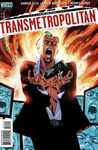
Review 38: Transmetropolitan


Transmetropolitan by Warren Ellis and Darick Robertson

There are times I look around me and think, “I love living in the future.” I mean think about all that we have – even the simplest phones can call anywhere in the world, and the higher end ones are basically backup brains. Surgery that used to require horrible invasion can now be done with a fraction of the time and the pain. We can cure diseases that a century ago would have been thought of as afflictions by God. Our transportation networks have grown to a point where there is practically nowhere on Earth that cannot be reached in twenty-four hours, and advances in communication have provided us with more information than our ancestors could have hoped to see in their (briefer) lifetimes.

We live in an age of wonders, when you really think about it.

Leave it to Warren Ellis and Darick Robertson, then, to show us what living in the future really means.

Transmetropolitan is set in the far, far future – so far ahead that even they don’t know what year it is. It’s set a in future that can do anything – cure any disease, bring people back from the dead, synthesize consumer goods from blocks of inert matter…. You can turn yourself into a dolphin for a day or into a sentient dust cloud for the rest of eternity. It’s a future that defies imagination.

And yet, it is very similar to now. The same problems, the same mistakes and the same short-sightedness that plague us will be around in the future, no matter how good the technology is. Despite being able to have anything you want, there is still greed. Despite being able to reassemble matter on an atomic level, there is still hunger and homelessness. Despite the human form becoming malleable in a thousand different ways, there is still discrimination. This perfect future has a flaw, and like so many perfect things, its flaw is its people.

Our guide to this future is Spider Jerusalem, a celebrated journalist whose love of the truth eclipses his hate of the world he lives in, and he’s determined to set the City straight, even if it kills him. He’s an analogue of Hunter S. Thompson, with a little H.L. Mencken thrown in for balance, and he’s the most awesome character to grace comics in a long time.

Spider is angry because he has to come back to The City, the nameless hypertropolis that both sustains him and drives him mad. He looks around and sees the ugliness under the shiny plastic shell of society and is instantly furious that no one has done anything about it yet. What’s more, it’s time to vote for President again, and this time it looks like it’s a race between an incumbent so horrible that he was nicknamed The Beast and an utterly amoral snake called The Smiler, who wants to be President just because that’s what he wants. Spider Jerusalem, whether he wants it or not, holds the keys to power for both of these men, and even his high moral sense isn’t able to tell him which of the two villains should get it.

Keen observers of 20th century history will see a lot reflected in this series, deliberately and clearly, and Spider is Ellis’ avatar His word is beyond dispute and his decisions are beyond question, which is why Warren Ellis is a kind of internet cult figure these days. He created a character that was a brash loudmouth who could scream the things that we’re all thinking, but someone with whom we feel an almost immediate and unshakable sympathy. He’s enough to make me want to be a journalist.

The future of Transmetropolitan is a place where Ellis was able to tell us everything that had been bugging him, from the hyper-escalation of technology to corrupt government to social apathy. The first few issues, before the real meat of the story kicks in, are “soapbox” issues, where Ellis rails against everything that’s going wrong in our time by making it so much worse in the future. My favorite of these, of course, is the religion issue (#6, God Riding Shotgun) where Spider crashes – and trashes – a convention for new religions. Alien Love Gardeners, the Church of Cobain, and the Church of Release, where trepanation can be practiced as an act of evangelism are excellent examples.

Eventually the story settles down with the arrival of the Presidential Election and Spider’s determination to bring down The Smiler no matter what it costs him.

The writing in this story is fantastic, of course, as we would expect nothing less from Warren Ellis. Spider is utterly, completely foul-mouthed, so don’t let your children read it unless you want them to shock sailors. But there are touching moments and angry tirades and passionate speeches that dig right into your heart, and whether you love Spider or hate him, you know he’s speaking from the core of his soul.

The art, too, is outstanding. It takes great skill to make such ugliness look beautiful, but Darick Robertson certainly has it. The City is a living, breathing place, and it has all of the beauty and horror of a living organism, if you look closely enough. Robertson can render gleaming cityscapes alongside the hollow eyes of child prostitutes with equal care and detail. While you read, be sure to look, because every panel is worth looking at.

Transmetropolitan is a story about truth, really. Or if we want to be specific, The Truth. Spider believes in The Truth, no matter who it hurts, and his mission as a journalist is to discover and promulgate the truth. Whether it’s the truth about the alien-human hybrid prostitutes delivered to the presidential suite or the truth about a level of poverty in the City that would shame a third-world nation, Spider’s aim is to show people what their world looks like and force them to take action. Unfortunately, he’s fighting an uphill battle.

You see, much like in our world, people don’t actually like truth. It’s uncomfortable and unpleasant, especially because there’s a very good chance that the truth could implicate us in some pretty horrible situations. What’s worse, there are countless situations where you can have contradictory situations and explanations, and yet both can be considered “true.” That’s the unfortunate difference between fiction and real life.

Still, I would appreciate Spider Jerusalem today. In this world of instant news, where something that’s an hour old is “old news” and where opinion is put side-by-side with fact as if there were some kind of controversy, we need someone to stand for the truth. Someone who doesn’t care about what people think of him or the consequences of her quest for herself. Someone fearless enough to push as far as he can and then push farther. Someone to stand up and say, “This is what is true.”

We may not listen to this person. In fact, given the way things are going right now, we may even come to hate the one who tells us how we are responsible for the world in which we live. But we need him nonetheless, and if Spider Jerusalem can inspire even a few of us to look at our societies and ourselves with a critical, unblinking, bloodshot eye, then perhaps his spirit lives, even if he doesn’t.

—————————————–
These are the new streets of this city. Where the New Scum try to live. You and me. And here in these streets are the things that we want: sex and birth, votes and traits, money and guilt. Television and teddy bears. But all we’ve actually got is each other. You decide what that means.
– Spider Jerusalem, Transmetropolitan
—————————————–

Transmetropolitan on Wikipedia
Warren Ellis on Wikipedia
Darick Robertson on Wikipedia
Warren Ellis’ homepage
Darick Robertson’s homepage
Transmetropolitan on Wikiquote
Transmetropolitan on Amazon.com

Leave a comment

Filed under Darick Robertson, DC Comics, futurism, graphic novel, humor, media, politics, science fiction, technology, totalitarianism, Warren Ellis

Review 36: Little Brother


Little Brother by Cory Doctorow

Probably the biggest hurdle to overcome when reading young adult fiction is the fact that I’m not a young adult. As most adults know, things look very different from this part of the timeline, and it’s often very difficult to remember not only how you thought when you were younger, but why you thought the way you did. And it’s not a matter of just denying the feelings and emotions of youth – it’s that we literally cannot reset our minds to that state. We know too much, we’ve experienced too much. The best we can do is an approximation of how we think we remember how things were when we were still young enough not to know better.

It was with this in mind that I started to read Little Brother, and while I thought the book was a lot of fun to read, it probably wasn’t nearly as cool as it would have been if I were fourteen years old.

Young Marcus Yallow, AKA w1n5t0n, AKA m1k3y, is a senior at Cesar Chavez high school in San Francisco, and he’s what we used to call a “computer whiz” back when I was a kid. Marcus has an excellent grasp of how systems work, and finds great pleasure and thrill in either strengthening or outwitting those systems. Thus, he is able to fool the various security measures in place in his school building so that he can do the things his teachers don’t want him to do – send IMs in class, sneak out whenever he wants, steal library books, that kind of thing. He’s a hacker supreme, a trickster, and a very big fish in his little pond. He’s so confident and cocky, in fact, that within twenty pages I wanted nothing more than to see him get his comeuppance.

Which is pretty much what happens. A series of bombs go off, destroying the Bay Bridge and killing thousands of people in an attack that dwarfs 9/11. In the chaos that ensues, Marcus and his friends get picked up by Homeland Security, taken to an undisclosed location (which turns out to be Treasure Island) and interrogated within an inch of their lives. They quickly break Marcus’ smug self-confidence and assure him that there is no way he can win against them if they decide he’s a threat to national security. When he is sufficiently cowed, Marcus is released back into the city, which has become a zone of hyper-security.

In this post-attack San Francisco, the police and Homeland Security have unprecedented powers to search and seize, access to every trace of electronic records of citizens’ movements and transactions. In other words, everyone is a suspect until proven otherwise, and DHS is confident that the security they provide is worth the loss of liberty.

Malcolm, of course, disagrees. His natural tendency to buck authority meets his desire to get back at DHS for what they did to him and his friends, and comes together in a plan to not only subvert the Department of Homeland Security, but to actively drive them out of his city. To that end, he creates a youth movement, powered by a secret internet known as the XNet and kept safe by means of complex cryptography. The youth of the city come together to cause chaos, to show Homeland Security that they are not all-powerful and that if anyone is terrifying American citizens, it’s not al-Qaeda.

In the end, of course, the good guys win, though not without some losses and some disappointment. Freedom triumphs over security, but how long that triumph will last is unknown. All we do know is that the right of the citizens to tell their government what to do – as enumerated in the Declaration of Independence – is maintained. So in that sense, all is well.

It’s a fun book to read, and I’ll admit, there were times where I could feel anger building and my heart racing as the story moved along. Perhaps that’s because, like Marcus, I have a solid distrust of authority. I don’t automatically assume that governments act in their citizens’ best interests, so in that sense, this book is targeted at people just like me. Or, if it’s a younger reader, at creating more people like me. The narration is well done, a believable 17-year-old voice, and it’s a pleasure to read. Moreover, it all holds together very well.

In some ways, this book reminded me a lot of Neal Stephenson. Doctorow has clearly done a lot of research on security, both electronic and otherwise, cryptography, politics and history, and found a lot of cool stuff that he’s incorporated into the novel. Unlike Stephenson, however, Doctorow makes sure the story is more important than the trivia. All the cool stuff serves to support the plot, rather than having a plot built up around all the cool stuff the author’s found, which is what Stephenson seems to do a lot. So there are some asides where Malcolm takes a few pages to explain, say, how to fool gait-recognition software or how public and private keys work in electronic cryptography, but he does it in an interesting way and you can be sure that what he’s telling you will feed into the story sooner or later.

With a couple of caveats, and a pretty major plot hole, I’d be glad to hand this off to a nearby teenager and say, “Read this.” But the caveats are kind of big. So let’s get to them.

First, the plot hole, which bugged me from the moment I saw it. And as with all plot holes, I may have missed something, so let me know if I did.

After the bombing of the Bay Bridge, Malcolm and his friends are picked up by DHS and given the Full Guantanamo Treatment. While it looks like they were picked up randomly, the Homeland Security agent who puts them through the wringer implies that they were specifically looking for Malcolm and his buddies, seeing them as a very real and imminent threat to national security. My question is: Why? It’s never explained why DHS picks them up, nor why they treat them as severely as they do. If DHS knew something about Malcolm’s activities as a hacker, why weren’t we told what they knew? It looked like DHS was just picking up random citizens and trying to scare the piss out of them. Which, given the characterization problem that I will discuss later, is entirely possible.

Before that, though – this is a book of its time, and is ultimately less about Malcolm than it is about the time in which Malcolm lives, i.e. about ten minutes in our future. It was published in 2008, which means it was being written during a period in American history where the debate over privacy versus security hit its peak. After September 11th, after the creation of Homeland Security and the Iraq War, Americans had to answer a lot of questions about how safe they wanted to be. It was possible, they said, to be very safe, but only if we sacrificed some of our freedoms. Thus the no-fly list, warrantless wiretaps, and waterboarding. It’s a dilemma that mankind has faced since we started organizing into societies, and it seemed, in the opening years of the 21st century, that America was willing to give up a good deal of its personal liberty in exchange for not having thousands of citizens die.

Doctorow believes this is a very bad exchange to make, and has been publicly vocal in saying so. On Boing Boing, a webzine that is decidedly in favor of intellectual and informational freedom, Doctorow has repeatedly railed against ever-intrusive technology measures by both governments and corporations. He, and the other editors of Boing Boing, champion the personal liberty of people, both as citizens and consumers, and I tend to agree with them.

But that makes Little Brother less a book about the issues that affect young people than a book about what it’s like to live in a hyper-security culture. And that’s not a bad thing, mind you – like I said, it makes for a very exciting book. I just don’t know how long it will last once we stop having the liberty/security argument as vocally as we are now.

Which brings me to my other caveat, and one that bothers me more than the book being period fiction – bad characterization. Malcolm is great, as are his close friends and his eventual girlfriend, Ange. They’re real, they’re complex and they’re interesting. In fact, most of the “good guys” in this book are well-drawn. Depending on your definition of “good,” of course – after all, Malcolm is technically a terrorist, so long as you define “terrorist” as “someone who actively operates to subvert, disturb or otherwise challenge the government by illegal means.”

If Malcolm and his subversive friends are the good guys, then that makes the Government the bad guys, and this is where Doctorow falls flat on his face. The characters who operate in support of security culture, whether they’re agents of Homeland Security or just in favor of the new security measures (Malcolm’s father being a prime example), are cardboard cut-outs that just have “Insert Bad Guy Here” written on them in crayon. There is no depth to their conviction, no complexity to their decisions. Doctorow makes it clear that anyone who collaborates with DHS is either a willful idiot or outright malevolent, without considering any other options. He gives a little in the case of Malcolm’s father, but not enough to make me do more than roll my eyes when he came out with the hackneyed, “Innocent people have nothing to fear” line.

Any character who acts against Malcolm in this book (and, it is implied, disagrees with Doctorow) is a straw man, a villain or a collaborator straight from central casting with all the depth of a sheet of tinfoil. They are all easy to hate and make Malcolm look all the better, even though he’s acting as, let’s face it, an agent of chaos.

While this may make the story easier to tell (and, from my readings of Boing Boing, turning those who disagree with you into objects of ridicule is a popular method of dealing with criticism – see disemvowleing), it cheapens it. As much as I – and Doctorow – may hate the idea of security infringing on liberty, as much as we hate the reversals in personal freedoms that we’ve seen over the last eight years, and as much as we may want Malcolm to come out on top, it has to be acknowledged that sometimes people who want to restrain liberty aren’t doing it out of malice.

There are those whose desire to see a safe, orderly nation is so strong and so honest that they’re able to make the decision to curtail those liberties that make order harder to attain. And they’re not doing it because they hate young people, or because they’re some cinema villain out for power or just to see people suffer. They’re doing it because they truly, honestly believe it is the right thing to do. To write them off as “Bad Guys,” as this book does, is to ignore the reality of the situation and boil it down to an “Us vs Them” scenario, which is not how the world works.

Now it could be argued that this was a reasonable artistic decision – after all, Malcolm is the narrator of this tale, therefore we’re seeing things through his eyes and his perceptions. But that doesn’t wash. Malcolm is obviously an intelligent person who understands complexity, and if Doctorow had given him the opportunity to see shades of gray, he could have been able to handle it. More importantly, though, that argument is a cheat. A book like this is meant to open eyes and minds, and that can’t be done by reducing the issue to us versus them. Doctorow does his readers a disservice by not allowing them the opportunity to question their own attitudes towards the issue.

I really think the book would have been better, and had a deeper meaning, if Doctorow had made an honest attempt to show the other side in a more honest light. I still would have rooted for Malcolm, and hated the DHS, but his ultimate victory would have been more meaningful if it had been a fairer fight.

Of course, I say this as an adult, who understands things in a different light than a teenager. Perhaps if I had had this book when I was thirteen it would have changed my life. And despite my misgivings about the characters and the universality of the story, I still think it’s a great book and well worth reading – probably one of those books that will be a model of early 21st century fiction. Indeed, the core lesson of Little Brother – that citizens have the responsibility to police their government – is a lesson whose time has come. The G20 protests in London this year are a great example – many incidents of police abuse were clearly and unambiguously recorded by citizens armed with cell phones. The ability for information to be quickly and reliably distributed is the modern countermeasure against government abuse, though I doubt it’ll end as cleanly as it did in this book. Reading this book in the context of the last ten years or so gave me some hope for the power of the populace.

But it also served to remind me that I’m not that young anymore. The rallying cry of the youth in this book is “Don’t trust anyone over 25,” and I’m well past that stage in my temporal existence. The rebels of the day are young. They’re tech-savvy and unafraid, with nothing to lose but their lives. In this age of rapidly evolving technology, in a time where youth is everything, is there a place in the revolution for people who have advanced in age to their *shudder* mid-thirties?

Other people pull muscles trying to play sports like they did in high school, I have existential dilemmas reading young adult fiction. I never claimed to be normal.

————————————————————
“They’d taken everything from me. First my privacy, then my dignity. I’d been ready to sign anything. I would have signed a confession that said I’d assassinated Abraham Lincoln.”
– Malcolm, Little Brother
————————————————————

Little Brother on Wikipedia
Cory Doctorow on Wikipedia
BoingBoing
Download Little Brother for free
Little Brother on Amazon.com

Leave a comment

Filed under children, Cory Doctorow, ethics, fiction, internet, politics, security, society, technology, young adult