Review 40: Lords and Ladies


Lords and Ladies by Terry Pratchett

Elves.

When you think of elves, what do you think of? The tall, fair-skinned beings of Tolkien’s Middle Earth? The ebony warriors from Dungeons & Dragons? Delicious cookies?

Not on Discworld. On Discworld, the Elves are folk of legend, and dark legend at that. People there remember the elves, although not very well. They remember through old wives’ tales, about leaving milk for the fairies and not going near the standing stones. Ask someone in the kingdom of Lancre, and they’ll think of elves as you and I think of elves – pretty, wonderful, magical…

Ask Granny Weatherwax and she’ll tell you the truth – that the Elves are not of this world, and don’t belong here either. She’ll tell you that when the barriers of the worlds grow thin, when the crop circles start to show up, the elves will be waiting, readying themselves to come back. For theirs is a parasite universe, a land of ice, and they desire ours for their… entertainment.

Such is the setup for Lords and Ladies, another one of Pratchett’s darker Discworld books. There is still his customary humor, of course, which would be sorely missed were it absent. But it’s also got a philosophical edge to it, as many of his books of this period do. It’s about faith in stories, and knowing the difference between what is true and what you wish were true.

It’s circle time again, where crop circles are appearing everywhere, and the parallel and parasite universes are coming into closer contact, and Granny Weatherwax knows that she is going to die.

Or is she? She can’t be sure….

Esme Weatherwax is the consummate witch. Tall, thin and bony, she’s the kind of woman who can wear the pointy black hat of a witch and dare you to think she’s anything else. She’s strong of mind, never afraid to speak the truth, the best witch in Lancre and not slow in admitting it. But many years ago, she was a headstrong young girl who was offered power by a mysterious woman in red who stood in the center of a stone circle. The woman promised power and freedom, but could not leave the circle. Rather than take the easy way to witchcraft, Granny worked, learned, and grew old. Which is always for the best.

As is the case with many Pratchett books, there are multiple plots that all center around the Elves and their newest attempt to gain the Discworld as their own world. Magrat Garlick, the third witch (because there must always be three) is going to marry Verence, the king of Lancre and a former Fool. Mustrum Ridcully, the Archchancellor of the Unseen University in Ankh-Morpork, is attending the wedding and at the same time remembering his days in Lancre chasing after the headstrong young girl who grew up to become Esme Weatherwax. And Granny herself is remembering things that happened to all possible Esme Weatherwaxes, and for someone as sure of herself as she is, is having a serious identity problem.

Something needs to be said here about the three witches of Lancre, recurring characters as they are in all of the Witches books of the series. Normally this would be done chronologically, upon reviewing the first book in which they appeared, but I want to do it now. Besides, I haven’t read Equal Rites in a long time, but it’s on my list.

Granny is as I have said – the unofficial chief witch of the region, who has attained the status of being almost mythical in the village of Bad Ass. She is feared and revered, but only because she is always who she is.

Nanny (Gytha) Ogg is Esme’s polar opposite. She has a face like an apple left in the sun too long, her youth is filled with enough tawdry encounters to make a fraternity lose its breath, and her fondness for bawdy tunes (such as the ever-immortal Hedgehog song) has made her a figure of legend. But like any witch, Gytha is not to be underestimated. She can think faster than most anyone, and do so around corners. She’s the grounding influence for Esme when Esme gets too high on herself, and while being fearsome in her own right, she is one of the more approachable witches Lancre has to offer.

And then there is Magrat Garlick, the third witch. She is the soppy one, the romantic one, the one with the collection of occult jewelry and a library in her cottage. She’s the youngest, the least experienced, but not without potential. And while the other two witches may treat her like an ignorant stripling, they only do so because that’s how you become a witch – by learning things, not by being told things.

But now Magrat is going to be Queen, and there are only the two witches. And the elves are coming….

This is, as I have said, a darker book. We get an interesting look into Granny Weatherwax’s psyche – who she is, what she fears – and it’s a little chilling. The reader is used to the utterly unflappable Granny Weatherwax, so to see her, well, flapped is kind of disturbing. At the same time, though, it makes her more human than before, which she needs to be if she is to defeat the elves.

This book also offers a good look into the human need for fantasy. The elves anchor themselves to the Discworld by belief – if enough people want the elves to come, then they will. But the longer they stay away, the more time we get without them, the more they become what we think they are. Stories. Myths. Cute magical critters who are to be watched, but not necessarily feared.

We need our stories to get us through the “iron times.” Yes, we need elves, to help us escape from our lives from time to time, just as we need witches and wizards and gods. But we don’t need them here. Here, in the real world, we have only ourselves to count on, and we need to be strong enough to do that. Stories are good, in their place. But never mistake a story for the real thing.

—————————————————
‘But all them things exist,’ said Nanny Ogg.
‘That’s no call to go around believing in them. It only encourages ’em.’
– from Lords and Ladies
—————————————————

Lords and Ladies at Wikipedia
Terry Pratchett at Wikipedia
Terry Pratchett’s page at HarperCollins
Lords and Ladies at Amazon.com
Discworld at Wikipedia
Lords and Ladies annotations
Lords and Ladies at Wikiquote

1 Comment

Filed under Discworld, elves, fantasy, humor, satire, Terry Pratchett, witches

Review 39: It’s Not News, It’s FARK

It’s Not News, It’s FARK: How Mass Media Tries to Pass Off Crap as News by Drew Curtis

You all know FARK.com, right? What? You’ve never heard of it? I’m honestly and truly shocked – unless, of course, you’ve been away from the internet for the last ten years, in which case you may be forgiven. For the rest of you – SHAME!

FARK is a news aggregator website, though it differs from others in that it’s entirely moderated. People submit stories that they think are interesting, add what they hope is a funny tag line or title, and see if it’ll be green-lit to make the front page. Over the years, as FARK’s audience has grown to make it one of the most influential websites out there, FARK has become a kind of go-to site for news and commentary, though probably not the erudite, level-headed commentary we all might want.

Whether site creator Drew Curtis intended it or not, FARK has become a de facto source of news for many people on the internet who are looking not so much for the top stories of the day, but for all the strange, cool, heroic and Florida-centered news that CNN claims to have too much dignity to run. Over its decade-long history, Curtis has seen thousands upon thousands of articles, moderated countless threads about the day’s news and, therefore, believes he has a pretty good idea of how the mass media works.

In this book, Curtis uses his experience as a professional newshound to look at the trends in mass media, attempting to identify the reasons why there’s so much irrelevant crap out there. We all know what he’s talking about – the helicopter shots of motorcades, the Missing White Women, the shark attacks, internet predators and the top ten lists of household products that could kill you and your family. We’ve all seen this and asked, “Why are they bothering with this crap?”

According to this book, there’s two big reasons: the endless, 24-hour news cycle and sheer human laziness.

There is only so much Real News in any given day, Curtis believes, and I agree with him. The question, of course, is “What is ‘real news,'” and rather than try to determine what real news is, Curtis decides to explain what real news isn’t. As for the rest, we’ll know it when we see it.

Of the many ways that the mass media tries to fill time and space, Curtis points out seven major ones, my favorite being Media Fearmongering. I suppose I like this because it’s just so obvious and so easy. Examples include the current hype over where to relocate the world-devouring supervillains from Guantanamo, the perennial articles about how hidden earthquake faults could kill us all, and the airplane crash stories. The recent crash of Air France 447 is an excellent example.

While it is certainly a terrible thing that the plane went down, and important to the families and friends of those who died on the plane, is it really a topic the needs a week of international coverage? 228 people died in that crash, and while it’s not really fair to weigh one death against another, it is estimated that that many people die in car accidents every two and a half days in the United States. The same goes for suicides in Japan. So why does the media go nuts for a plane crash, but not for unsafe driving or suicide? My guess is that a plane crash is more spectacular, more mysterious and more likely to get people’s attention. Reporting on the actual number of auto-related fatalities would hit too close to home. What’s more, a plane crash story probably writes itself. Change a few names and numbers, and the reporting on one crash looks pretty much like every other. That combination of spectacle and sloth makes plane crashes a godsend for reporters and editors with time to fill.

Fearmongering in the media isn’t harmless either. Last year, in the run-up to the activation of the Large Hadron Collider in Switzerland, there were a lot of articles about whether or not the LHC would destroy the world. Rather than do some investigating, ask some experts and report back that it wouldn’t, the media decided to teach the controversy. Matching another of Curtis’ bad news categories, they gave Equal Time to Nutjobs who claimed that the work at the LHC would destroy the world. Rather than debunk the nutjobs, they played it for all it was worth, claiming that there actually was a controversy over the LHC, when in fact no such controversy existed.

One of the effects of this was the suicide of a girl in India, who believed in the end-of-the-world scenarios. She was sixteen years old, and the news convinced her that she and everyone she loved was going to die. Can we hold the mass media directly responsible for this girl’s death? Only if we can hold them responsible for the other deaths their fearmongering has caused – and here I’m thinking of the “controversy” over whether vaccines cause autism. They don’t, but it’s more fun for people like Oprah Winfrey to pretend they do. And so kids die.

My other favorite Not News is Media Fatigue – what happens when the media eats itself. With twenty-four hours a day to fill, but without twenty-four hours of news to fill it, the competition for breaking news is incredibly fierce. The first network to report on a big story will basically own that story, and the other networks have to scramble to catch up. In that writhing, twisting nest of vipers, it’s sometimes very hard for anyone to stop reporting on a story that has basically run its course – thus, media fatigue. Curtis has broken it down into five simple steps:

1. News breaks
2. Issue retractions
3. Talk it to death
4. Can’t… stop… talking
5. Has The Media Gone Too Far?

By the time they stop focusing on the story and start talking about themselves, you can be pretty sure that you’re seeing the end of it. Examples of Media Fatigue abound, and Curtis uses Dick Cheney’s shooting spree and Janet Jackson’s wardrobe malfunction as examples. Really, neither of these events were news of any import. Hunting accidents happen all the time, and Jackson’s boob-flash was so quick and so low-def that most viewers didn’t know they had seen it until they were told they had (and probably didn’t know they should be outraged until there were told they should be). But both stories generated media storms that didn’t blow out until way past their expiration dates.

The point is that while the concept of news on demand is good, the execution of it has been terrible. With networks talking about health care reform in the same breath as whether or not David Letterman made an inappropriate joke, it’s hard for the audience to know what they should read and what they should ignore. While the news providers’ position has always been ‘We leave it up to the readers to judge what’s important and what isn’t,” that flies in the face of what we all know about human nature: people can be really, really dumb. People don’t have the time or the inclination to read every story, judge it on its merits and sort the wheat from the chaff, and to pretend otherwise reveals either a profound misunderstanding of human nature or a level of cynicism that makes me look like Pollyanna.

While it may seem all patriarchal, I think we do need someone to draw the line and say what is news and what isn’t. I don’t know who, or how, but someone should do it if only so that we can have a news source that we can trust to give us what we need to know. Put the Britney and Elvis stories in the tabloids – if we buy those, we know what we’re getting – and leave the real news alone.

The book is a good, quick read, and while it’s clear that Curtis may not have the academic or professional qualifications to be a media analyst, he has whatever the internet equivalent of “street smarts” is. He’s snarky and cynical, in the mold of so many people whose job it is to sit back and observe society. You can only run a news-based site for so long without noticing some patterns. He also includes some of the stories featured on FARK and select comments from users, which are usually entertaining.

While Curtis believes that there may be a way to fix the media, he doesn’t believe it’ll ever be done. As a fellow cynic, I have to agree – it would be far too much work and cost far too many advertising dollars to whip things into shape. The current system, from the point of view of the media outlets, works, and there’s no point in tinkering with it. Perhaps the much-prophesied Death of the Newspapers will help some – the local news outlet can be resurrected by a kind of local bloggers’ co-op or somesuch. I’m sure there are people out there who follow the journalistic tradition of wanting to tell people what’s going on. Unfortunately, those aren’t the people that the media wants right now.

So give it a read, and keep your eyes open. When you see a story about something like “sexting” or whether Tom Cruise drinks puppy blood for breakfast, ask yourself – is this news, or is it just FARK?

——————————————
“The real answer to Has The Media Gone Too Far? is yes, it goddamn very well has.”
– Drew Curtis, It’s Not News, it’s FARK
——————————————

FARK.com
It’s Not News, It’s FARK on Wikipedia
Drew Curtis on Wikipedia
It’s Not News, It’s FARK on Amazon.com
FARK on Wikipedia

Leave a comment

Filed under analysis, Drew Curtis, internet, media, news

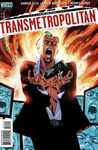
Review 38: Transmetropolitan


Transmetropolitan by Warren Ellis and Darick Robertson

There are times I look around me and think, “I love living in the future.” I mean think about all that we have – even the simplest phones can call anywhere in the world, and the higher end ones are basically backup brains. Surgery that used to require horrible invasion can now be done with a fraction of the time and the pain. We can cure diseases that a century ago would have been thought of as afflictions by God. Our transportation networks have grown to a point where there is practically nowhere on Earth that cannot be reached in twenty-four hours, and advances in communication have provided us with more information than our ancestors could have hoped to see in their (briefer) lifetimes.

We live in an age of wonders, when you really think about it.

Leave it to Warren Ellis and Darick Robertson, then, to show us what living in the future really means.

Transmetropolitan is set in the far, far future – so far ahead that even they don’t know what year it is. It’s set a in future that can do anything – cure any disease, bring people back from the dead, synthesize consumer goods from blocks of inert matter…. You can turn yourself into a dolphin for a day or into a sentient dust cloud for the rest of eternity. It’s a future that defies imagination.

And yet, it is very similar to now. The same problems, the same mistakes and the same short-sightedness that plague us will be around in the future, no matter how good the technology is. Despite being able to have anything you want, there is still greed. Despite being able to reassemble matter on an atomic level, there is still hunger and homelessness. Despite the human form becoming malleable in a thousand different ways, there is still discrimination. This perfect future has a flaw, and like so many perfect things, its flaw is its people.

Our guide to this future is Spider Jerusalem, a celebrated journalist whose love of the truth eclipses his hate of the world he lives in, and he’s determined to set the City straight, even if it kills him. He’s an analogue of Hunter S. Thompson, with a little H.L. Mencken thrown in for balance, and he’s the most awesome character to grace comics in a long time.

Spider is angry because he has to come back to The City, the nameless hypertropolis that both sustains him and drives him mad. He looks around and sees the ugliness under the shiny plastic shell of society and is instantly furious that no one has done anything about it yet. What’s more, it’s time to vote for President again, and this time it looks like it’s a race between an incumbent so horrible that he was nicknamed The Beast and an utterly amoral snake called The Smiler, who wants to be President just because that’s what he wants. Spider Jerusalem, whether he wants it or not, holds the keys to power for both of these men, and even his high moral sense isn’t able to tell him which of the two villains should get it.

Keen observers of 20th century history will see a lot reflected in this series, deliberately and clearly, and Spider is Ellis’ avatar His word is beyond dispute and his decisions are beyond question, which is why Warren Ellis is a kind of internet cult figure these days. He created a character that was a brash loudmouth who could scream the things that we’re all thinking, but someone with whom we feel an almost immediate and unshakable sympathy. He’s enough to make me want to be a journalist.

The future of Transmetropolitan is a place where Ellis was able to tell us everything that had been bugging him, from the hyper-escalation of technology to corrupt government to social apathy. The first few issues, before the real meat of the story kicks in, are “soapbox” issues, where Ellis rails against everything that’s going wrong in our time by making it so much worse in the future. My favorite of these, of course, is the religion issue (#6, God Riding Shotgun) where Spider crashes – and trashes – a convention for new religions. Alien Love Gardeners, the Church of Cobain, and the Church of Release, where trepanation can be practiced as an act of evangelism are excellent examples.

Eventually the story settles down with the arrival of the Presidential Election and Spider’s determination to bring down The Smiler no matter what it costs him.

The writing in this story is fantastic, of course, as we would expect nothing less from Warren Ellis. Spider is utterly, completely foul-mouthed, so don’t let your children read it unless you want them to shock sailors. But there are touching moments and angry tirades and passionate speeches that dig right into your heart, and whether you love Spider or hate him, you know he’s speaking from the core of his soul.

The art, too, is outstanding. It takes great skill to make such ugliness look beautiful, but Darick Robertson certainly has it. The City is a living, breathing place, and it has all of the beauty and horror of a living organism, if you look closely enough. Robertson can render gleaming cityscapes alongside the hollow eyes of child prostitutes with equal care and detail. While you read, be sure to look, because every panel is worth looking at.

Transmetropolitan is a story about truth, really. Or if we want to be specific, The Truth. Spider believes in The Truth, no matter who it hurts, and his mission as a journalist is to discover and promulgate the truth. Whether it’s the truth about the alien-human hybrid prostitutes delivered to the presidential suite or the truth about a level of poverty in the City that would shame a third-world nation, Spider’s aim is to show people what their world looks like and force them to take action. Unfortunately, he’s fighting an uphill battle.

You see, much like in our world, people don’t actually like truth. It’s uncomfortable and unpleasant, especially because there’s a very good chance that the truth could implicate us in some pretty horrible situations. What’s worse, there are countless situations where you can have contradictory situations and explanations, and yet both can be considered “true.” That’s the unfortunate difference between fiction and real life.

Still, I would appreciate Spider Jerusalem today. In this world of instant news, where something that’s an hour old is “old news” and where opinion is put side-by-side with fact as if there were some kind of controversy, we need someone to stand for the truth. Someone who doesn’t care about what people think of him or the consequences of her quest for herself. Someone fearless enough to push as far as he can and then push farther. Someone to stand up and say, “This is what is true.”

We may not listen to this person. In fact, given the way things are going right now, we may even come to hate the one who tells us how we are responsible for the world in which we live. But we need him nonetheless, and if Spider Jerusalem can inspire even a few of us to look at our societies and ourselves with a critical, unblinking, bloodshot eye, then perhaps his spirit lives, even if he doesn’t.

—————————————–
These are the new streets of this city. Where the New Scum try to live. You and me. And here in these streets are the things that we want: sex and birth, votes and traits, money and guilt. Television and teddy bears. But all we’ve actually got is each other. You decide what that means.
– Spider Jerusalem, Transmetropolitan
—————————————–

Transmetropolitan on Wikipedia
Warren Ellis on Wikipedia
Darick Robertson on Wikipedia
Warren Ellis’ homepage
Darick Robertson’s homepage
Transmetropolitan on Wikiquote
Transmetropolitan on Amazon.com

Leave a comment

Filed under Darick Robertson, DC Comics, futurism, graphic novel, humor, media, politics, science fiction, technology, totalitarianism, Warren Ellis

Review 37: Dresden Files 03 – Grave Peril

Grave Peril by Jim Butcher

“Hell’s Bells” count: 26

If you’re reading this series in sequence (which you absolutely should be, or things will stop making sense very quickly), you’ve got a good handle on how the world of Harry Dresden operates. He’s a lone wolf, so to speak, standing up to the Occult Forces of Chicago with only the support of his contact in the Chicago PD, Lt. Karrin Murphy. There’s also intrepid investigative reporter Susan Rodriguez, for whom Harry’s feelings are slightly more than professional.

There’s also the mysterious White Council of Wizards. While you may think that belonging to a worldwide magical fraternity might be a good thing, Harry Dresden would most certainly disagree. To be fair, he has a history – he did kill his mentor using black magic, which is something so bad that it’s number one on their list of Things a Wizard Must Not Do, which comes with one free beheading. His associates in the White Council barely tolerate him, and make it very clear that he’s worth more to them dead than alive. But more about this in other books….

The point is that Harry so far has been a fairly small-time operator. Yes, he takes down evil sorcerers and vicious werewolves, but mostly on his own. In this book, the camera pulls back a little and we learn more about his world and his connections, and a broader story starts to emerge.

The most interesting of these additions is Michael Carpenter, an associate of Harry’s whose view of the world comes from a very different place. Michael is a religious man, a committed Christian who sees Harry’s use of magic as impure and sullied, but associates with him anyway because they have a shared goal: the elimination of evil. Michael Carpenter is the Fist of God, one of the three Knights of the Cross. As such, he wields a faith powerful enough that even Harry can feel it. Oh, and he also wields a giant sword. With one of the nails from the True Cross worked into it. Amoracchius is a powerful weapon against evil, and a prize that anyone would be glad to have.

In this book (as in all his books), Harry is given more trouble than he can handle. It begins with ghosts, as so many things do. The ghosts of Chicago are being stirred up by something – they’re acting out in ways they would never act, causing an above-average amount of chaos and disorder in the city. And when there’s ghosts around, tearing up the pediatrics ward of your local hospital, who is it you’re going to contact telephonically? That’s right – Harry Dresden.

The ghosts are the least of his worries, however. The force behind them, the malicious entity that is driving the ghosts mad, is of far more concern to him. There’s something out there, a Nightmare, that is out for blood. It’s attacking Harry and his friends, and doing it through their dreams. Not just Harry’s friends who are in good with the supernatural, but some of his Muggle buddies as well. This thing is angry, evil, and can tear a person’s soul apart, leaving an empty husk that does nothing but try to scream.

As if that weren’t enough, the Red Court of Vampires is having a party, and they want Harry to come. Sounds lovely, right? A costume party with the vampires, a promise of protection to all invited guests – how can you have a better night? Myself, I’d start by not hanging around a house full of vampires and their allies. Especially when the hostess, a high-ranking member of the Court, has a serious personal grudge against me. The vampire Bianca wants Harry deader than dead, and she manages to set off a complex series of events to make sure it happens.

This book, as I said, expands the Dresden universe a bit. It assumes that the readers are fairly comfortable with what we know, and gives us a lot more to think about. The world-wide spread of vampires, the hide-bound White Council, and the ramifications of having a Faerie Godmother. In the previous books, we saw Harry come out on top against small-scale foes – now the camera pulls back to show us how he goes up against larger institutions.

In this book, Dresden is almost always out of his league – although I can’t imagine who would be in their league while facing a hoarde of really pissed off vampires while being on the brink of death already. Buffy, probably. Or River Tam. Anyone written by Joss Whedon, I guess. But Dresden makes it through. Not in the “Finding reserves of strength you never knew were there” style found in the Whedon Supergirls, but more in the “This just might be crazy enough to work, unless I kill myself doing it in which case it might not go so well after all” style.

Plus, it has my favorite trope of modern fantasy fiction – even if the hero wins, he doesn’t actually save the day. In fact, things get a whole lot worse. Which is all gravy for Jim Butcher, because it means he has all the more material to work with for the rest of the series.

—————————————–
“There should be some kind of rule against needing to kill anything more than once.”
– Harry Dresden, Grave Peril
—————————————–

The Dresden Files on Wikipedia
Grave Peril on Wikipedia
Grave Peril on Amazon.com
Jim Butcher on Wikipedia
Harry Dresden on Wikipedia
Jim Butcher’s homepage

Leave a comment

Filed under detective fiction, Dresden Files, fantasy, Jim Butcher, vampires, wizardry

Review 36: Little Brother


Little Brother by Cory Doctorow

Probably the biggest hurdle to overcome when reading young adult fiction is the fact that I’m not a young adult. As most adults know, things look very different from this part of the timeline, and it’s often very difficult to remember not only how you thought when you were younger, but why you thought the way you did. And it’s not a matter of just denying the feelings and emotions of youth – it’s that we literally cannot reset our minds to that state. We know too much, we’ve experienced too much. The best we can do is an approximation of how we think we remember how things were when we were still young enough not to know better.

It was with this in mind that I started to read Little Brother, and while I thought the book was a lot of fun to read, it probably wasn’t nearly as cool as it would have been if I were fourteen years old.

Young Marcus Yallow, AKA w1n5t0n, AKA m1k3y, is a senior at Cesar Chavez high school in San Francisco, and he’s what we used to call a “computer whiz” back when I was a kid. Marcus has an excellent grasp of how systems work, and finds great pleasure and thrill in either strengthening or outwitting those systems. Thus, he is able to fool the various security measures in place in his school building so that he can do the things his teachers don’t want him to do – send IMs in class, sneak out whenever he wants, steal library books, that kind of thing. He’s a hacker supreme, a trickster, and a very big fish in his little pond. He’s so confident and cocky, in fact, that within twenty pages I wanted nothing more than to see him get his comeuppance.

Which is pretty much what happens. A series of bombs go off, destroying the Bay Bridge and killing thousands of people in an attack that dwarfs 9/11. In the chaos that ensues, Marcus and his friends get picked up by Homeland Security, taken to an undisclosed location (which turns out to be Treasure Island) and interrogated within an inch of their lives. They quickly break Marcus’ smug self-confidence and assure him that there is no way he can win against them if they decide he’s a threat to national security. When he is sufficiently cowed, Marcus is released back into the city, which has become a zone of hyper-security.

In this post-attack San Francisco, the police and Homeland Security have unprecedented powers to search and seize, access to every trace of electronic records of citizens’ movements and transactions. In other words, everyone is a suspect until proven otherwise, and DHS is confident that the security they provide is worth the loss of liberty.

Malcolm, of course, disagrees. His natural tendency to buck authority meets his desire to get back at DHS for what they did to him and his friends, and comes together in a plan to not only subvert the Department of Homeland Security, but to actively drive them out of his city. To that end, he creates a youth movement, powered by a secret internet known as the XNet and kept safe by means of complex cryptography. The youth of the city come together to cause chaos, to show Homeland Security that they are not all-powerful and that if anyone is terrifying American citizens, it’s not al-Qaeda.

In the end, of course, the good guys win, though not without some losses and some disappointment. Freedom triumphs over security, but how long that triumph will last is unknown. All we do know is that the right of the citizens to tell their government what to do – as enumerated in the Declaration of Independence – is maintained. So in that sense, all is well.

It’s a fun book to read, and I’ll admit, there were times where I could feel anger building and my heart racing as the story moved along. Perhaps that’s because, like Marcus, I have a solid distrust of authority. I don’t automatically assume that governments act in their citizens’ best interests, so in that sense, this book is targeted at people just like me. Or, if it’s a younger reader, at creating more people like me. The narration is well done, a believable 17-year-old voice, and it’s a pleasure to read. Moreover, it all holds together very well.

In some ways, this book reminded me a lot of Neal Stephenson. Doctorow has clearly done a lot of research on security, both electronic and otherwise, cryptography, politics and history, and found a lot of cool stuff that he’s incorporated into the novel. Unlike Stephenson, however, Doctorow makes sure the story is more important than the trivia. All the cool stuff serves to support the plot, rather than having a plot built up around all the cool stuff the author’s found, which is what Stephenson seems to do a lot. So there are some asides where Malcolm takes a few pages to explain, say, how to fool gait-recognition software or how public and private keys work in electronic cryptography, but he does it in an interesting way and you can be sure that what he’s telling you will feed into the story sooner or later.

With a couple of caveats, and a pretty major plot hole, I’d be glad to hand this off to a nearby teenager and say, “Read this.” But the caveats are kind of big. So let’s get to them.

First, the plot hole, which bugged me from the moment I saw it. And as with all plot holes, I may have missed something, so let me know if I did.

After the bombing of the Bay Bridge, Malcolm and his friends are picked up by DHS and given the Full Guantanamo Treatment. While it looks like they were picked up randomly, the Homeland Security agent who puts them through the wringer implies that they were specifically looking for Malcolm and his buddies, seeing them as a very real and imminent threat to national security. My question is: Why? It’s never explained why DHS picks them up, nor why they treat them as severely as they do. If DHS knew something about Malcolm’s activities as a hacker, why weren’t we told what they knew? It looked like DHS was just picking up random citizens and trying to scare the piss out of them. Which, given the characterization problem that I will discuss later, is entirely possible.

Before that, though – this is a book of its time, and is ultimately less about Malcolm than it is about the time in which Malcolm lives, i.e. about ten minutes in our future. It was published in 2008, which means it was being written during a period in American history where the debate over privacy versus security hit its peak. After September 11th, after the creation of Homeland Security and the Iraq War, Americans had to answer a lot of questions about how safe they wanted to be. It was possible, they said, to be very safe, but only if we sacrificed some of our freedoms. Thus the no-fly list, warrantless wiretaps, and waterboarding. It’s a dilemma that mankind has faced since we started organizing into societies, and it seemed, in the opening years of the 21st century, that America was willing to give up a good deal of its personal liberty in exchange for not having thousands of citizens die.

Doctorow believes this is a very bad exchange to make, and has been publicly vocal in saying so. On Boing Boing, a webzine that is decidedly in favor of intellectual and informational freedom, Doctorow has repeatedly railed against ever-intrusive technology measures by both governments and corporations. He, and the other editors of Boing Boing, champion the personal liberty of people, both as citizens and consumers, and I tend to agree with them.

But that makes Little Brother less a book about the issues that affect young people than a book about what it’s like to live in a hyper-security culture. And that’s not a bad thing, mind you – like I said, it makes for a very exciting book. I just don’t know how long it will last once we stop having the liberty/security argument as vocally as we are now.

Which brings me to my other caveat, and one that bothers me more than the book being period fiction – bad characterization. Malcolm is great, as are his close friends and his eventual girlfriend, Ange. They’re real, they’re complex and they’re interesting. In fact, most of the “good guys” in this book are well-drawn. Depending on your definition of “good,” of course – after all, Malcolm is technically a terrorist, so long as you define “terrorist” as “someone who actively operates to subvert, disturb or otherwise challenge the government by illegal means.”

If Malcolm and his subversive friends are the good guys, then that makes the Government the bad guys, and this is where Doctorow falls flat on his face. The characters who operate in support of security culture, whether they’re agents of Homeland Security or just in favor of the new security measures (Malcolm’s father being a prime example), are cardboard cut-outs that just have “Insert Bad Guy Here” written on them in crayon. There is no depth to their conviction, no complexity to their decisions. Doctorow makes it clear that anyone who collaborates with DHS is either a willful idiot or outright malevolent, without considering any other options. He gives a little in the case of Malcolm’s father, but not enough to make me do more than roll my eyes when he came out with the hackneyed, “Innocent people have nothing to fear” line.

Any character who acts against Malcolm in this book (and, it is implied, disagrees with Doctorow) is a straw man, a villain or a collaborator straight from central casting with all the depth of a sheet of tinfoil. They are all easy to hate and make Malcolm look all the better, even though he’s acting as, let’s face it, an agent of chaos.

While this may make the story easier to tell (and, from my readings of Boing Boing, turning those who disagree with you into objects of ridicule is a popular method of dealing with criticism – see disemvowleing), it cheapens it. As much as I – and Doctorow – may hate the idea of security infringing on liberty, as much as we hate the reversals in personal freedoms that we’ve seen over the last eight years, and as much as we may want Malcolm to come out on top, it has to be acknowledged that sometimes people who want to restrain liberty aren’t doing it out of malice.

There are those whose desire to see a safe, orderly nation is so strong and so honest that they’re able to make the decision to curtail those liberties that make order harder to attain. And they’re not doing it because they hate young people, or because they’re some cinema villain out for power or just to see people suffer. They’re doing it because they truly, honestly believe it is the right thing to do. To write them off as “Bad Guys,” as this book does, is to ignore the reality of the situation and boil it down to an “Us vs Them” scenario, which is not how the world works.

Now it could be argued that this was a reasonable artistic decision – after all, Malcolm is the narrator of this tale, therefore we’re seeing things through his eyes and his perceptions. But that doesn’t wash. Malcolm is obviously an intelligent person who understands complexity, and if Doctorow had given him the opportunity to see shades of gray, he could have been able to handle it. More importantly, though, that argument is a cheat. A book like this is meant to open eyes and minds, and that can’t be done by reducing the issue to us versus them. Doctorow does his readers a disservice by not allowing them the opportunity to question their own attitudes towards the issue.

I really think the book would have been better, and had a deeper meaning, if Doctorow had made an honest attempt to show the other side in a more honest light. I still would have rooted for Malcolm, and hated the DHS, but his ultimate victory would have been more meaningful if it had been a fairer fight.

Of course, I say this as an adult, who understands things in a different light than a teenager. Perhaps if I had had this book when I was thirteen it would have changed my life. And despite my misgivings about the characters and the universality of the story, I still think it’s a great book and well worth reading – probably one of those books that will be a model of early 21st century fiction. Indeed, the core lesson of Little Brother – that citizens have the responsibility to police their government – is a lesson whose time has come. The G20 protests in London this year are a great example – many incidents of police abuse were clearly and unambiguously recorded by citizens armed with cell phones. The ability for information to be quickly and reliably distributed is the modern countermeasure against government abuse, though I doubt it’ll end as cleanly as it did in this book. Reading this book in the context of the last ten years or so gave me some hope for the power of the populace.

But it also served to remind me that I’m not that young anymore. The rallying cry of the youth in this book is “Don’t trust anyone over 25,” and I’m well past that stage in my temporal existence. The rebels of the day are young. They’re tech-savvy and unafraid, with nothing to lose but their lives. In this age of rapidly evolving technology, in a time where youth is everything, is there a place in the revolution for people who have advanced in age to their *shudder* mid-thirties?

Other people pull muscles trying to play sports like they did in high school, I have existential dilemmas reading young adult fiction. I never claimed to be normal.

————————————————————
“They’d taken everything from me. First my privacy, then my dignity. I’d been ready to sign anything. I would have signed a confession that said I’d assassinated Abraham Lincoln.”
– Malcolm, Little Brother
————————————————————

Little Brother on Wikipedia
Cory Doctorow on Wikipedia
BoingBoing
Download Little Brother for free
Little Brother on Amazon.com

Leave a comment

Filed under children, Cory Doctorow, ethics, fiction, internet, politics, security, society, technology, young adult

Review 35: The Andromeda Strain


The Andromeda Strain by Michael Crichton

Michael Crichton passed away recently, so I thought he would be a good choice to read. I know there are people who have problems with Crichton – his later books revealed some distinct political leanings and display very clear biases, the most obvious of these being State of Fear, in which he attacks the environmentalist movement’s support of global warming. His attacks are blatant, and even though the novel is said to be a good read, it’s burdened by the obvious slant of the author.

It’s tough to know what to do with authors who inject their own personal morality into their works. Some of them, like Heinlein, do it in such a way that it’s not a distraction – it’s Heinlein. Others, such as Orson Scott Card, are so vocal in their political opinions that they risk losing a large portion of their readership. In this situation, you have to make a decision: read the book for the story or read the book for the author’s politics? Or don’t?

I take the same route here that I do with actors, musicians and other artists who make their political and social views known. I disregard those views and just judge their work on its own merits. It’s not that hard to do, really….

Anyway, I remember seeing this movie for the first time, and it scared the hell out of me. Not in the same way that my childhood slasher films scared me, of course. In those, there was always someone – Jason, Freddie, Michael – who was lurking behind curtains, waiting to turn you into steak tartar if you were foolish enough to have sex in the camp counsellor’s cabin. But at least they were human (sort of), and they had motivations, however insane these motivations were.

In this book, we are not facing a psychopath with a chainsaw. It’s something more terrible and more impossible to deal with.

The premise – The US space program, in an attempt to figure out exactly what is lurking in the upper atmosphere, has been sending up special satellites – the Scoop satellites – to sample the air up there and then return so that scientists can do what they do best. The theory was that if we were to encounter extraterrestrial life, the odds are that it would be some sort of simple organism rather than a four-foot grey humanoid.

People like Carl Sagan seemed to support this theory, and Crichton makes a very good case for it through his characters. Radio waves attenuate, even light pulses can’t last forever – but build an organism that can survive indefinitely in space? That is an excellent way of telling the rest of the universe that you’re out there. A microbe needs a lot less to keep it going than your average movie E.T., so it would be reasonable to assume that it would make an excellent message in a bottle in a vast and harsh cosmos.

Back to the book – most of these satellites went up and came down without incident, but one – Scoop VII – had some unexpected problems and crashed in the American southwest, just outside a small town called Piedmont. The good citizens of Piedmont, wanting to know what it was, brought it home to have a look.

Within eighteen hours, nearly everyone in Piedmont was dead. The lesson? Never go near something that comes screaming out of the sky. Yes, it might give you super-powers, but odds are that it’ll kill you.

The government, always looking for the worst case scenario, had planned for this, and put Project Wildfire in action. Wildfire called for a team of scientists with varied backgrounds to be brought to an isolated lab in Nevada. Scoop would be brought there, and they would attempt to unravel the mystery of what killed the people of Piedmont.

The story sounds pretty simple, and Crichton makes a point of saying that, ideally, there should be no story to tell. Wildfire facilities are insanely well-guarded, and the design of the complex itself is nearly foolproof against something escaping – to the point that, if the facility becomes insecure, it will be vaporized in a nuclear explosion.

As usual, Crichton is meticulous in his science. The book has a bibliography in the back with 58 references to justify his use of x-ray crystallography, culture growth, electron microscopes, and other theories. The point is, he is saying that the incident in The Andromeda Strain could happen. Maybe. And it is possible that, despite our best planning and efforts, we might not be able to stop it.

This brings up the question: is this really science fiction? Well, yes, because A) it’s fiction and B) the story is dependent on the science. But it’s not science fiction in the way that we’re familiar, since very little of it is actually fictional. Most of the technology is extant, and the tech that is a little more outlandish is certainly within our ability to create. The only thing that is really speculative is the Andromeda organism itself. And even given that, the story is not so much about the organism as it is about the race to figure out what the organism is – it’s about the scientists, not the science.

Where the actual story comes in is with the introduction of Mistakes. A simple malfunction in a piece of communications equipment. A medical problem that is hidden until it is too late. Miscommunication and assumption abound, which is what makes this book interesting. Otherwise, it would just be a matter of the scientists trying to figure out what this wee beastie that hitched a ride on Scoop can do, and why. Perhaps it’s not so much science fiction as it is scientific fiction. If that makes any sense….

Indeed, the silly humans are saved from worldwide extermination by virtue of the microorganism’s own nature, oddly enough. This isn’t The Stand – Crichton didn’t set out to write an End of the World story. He wanted to talk about science and what might happen if an unknown pathogen should appear from the darkest regions of space.

As I said before, this is what makes it so terrifying. The villain of this story is a bacteria. We don’t know where it comes from, how it works, or why. It has no ambition, no plan. It is not hostile, malicious, or vindictive. It can’t be bargained with or tricked.

Perhaps that is why disease stories are so interesting. On the one hand, they point out how vulnerable we really are to something we have never encountered. On the other hand, they show how sometimes, just sometimes, we can avert disaster with the ingenuity that keeps popping up in humanity.

So – it’s well-written and well-researched, not to mention a sci-fi classic. The movie’s pretty good as well, and sticks relatively close to the book. Either are recommended.

—————————————————
“He [Stone] often argued that human intelligence was more trouble than it was worth. It was more destructive than creative, more confusing than revealing, more discouraging than satisfying, more spiteful than charitable.”
– Michael Crichton, The Andromeda Strain
—————————————————

Michael Crichton on Wikipedia
The Andromeda Strain on Wikipedia
The Andromeda Strain on Amazon.com
NASA’s Exobiology Branch

2 Comments

Filed under disease, made into movies, Michael Crichton, science fiction

Review 34: Death by Black Hole


Death by Black Hole by Neil deGrasse Tyson

I have often lamented the passing of my favorite popular scientist, Carl Sagan, by talking about how necessary he is right now. We are at a point in our history where scientific illiteracy is growing, where people are not only ignorant of how science works, but are proud of their ignorance. What we need is someone who can reach the majority of Americans who are not especially scientifically literate – the people whose automatic reaction to science is to think, “That’s just too hard for me to deal with.”

Enter Neil deGrasse Tyson, an astrophysicist and the director of the Hayden Planetarium at the American Museum of Natural History in New York City. He’s appeared on countless television programs, including The Daily Show and The Colbert Report, to talk about the current state of astronomy and astrophysics. He’s an engaging and entertaining man, who claims that Pluto was “asking for” its demotion, who seems to take perverse pleasure in describing all the terrible ways the universe could take us out. He knows that we’re in a precarious position, here on Earth, and he revels in it rather than worrying about it.

Whereas Sagan seemed to come from the point of view that the universe was a place of infinite wonder, where one could look anywhere and be awed and humbled, Tyson’s attitude is more of the universe as an infinite theme park – a place where you could see your electrons stripped from your body, watch gas clouds larger than our own solar system collide and ignite, or see planets crumple under cosmic bombardment. Tyson’s universe is an adventure, as big as it gets.

This book is a collection of essays that Tyson wrote for Natural History magazine over a ten year period, on a variety of subjects related to science and scientific inquiry. In many ways, it’s similar to every other pop science book out there – and there are so very many of them – but it is his perspective and his voice that makes this one stand out from the crowd.

He’s grouped his essays into seven sections, on topics ranging from the difficulties inherent in actually knowing anything about the universe to the understanding of how life went from little mindless bacteria to we clever Homo sapiens to the intersection of science and religion. Most of it is accessible to the average non-scientist, though he does get a little technical at points. But he understands that, and he tries to compensate for for the fact that, by and large, the public is intimidated by “real science.” In the essay entitled, “Over the Rainbow,” he discusses this particular challenge by using spectroscopy as an example.

In spectroscopy, astrophysicists look at the spectrum of a star, hunting for telltale dark lines that indicate the physical properties of stars. It’s like looking at a rainbow with bits blackened out of it, as though the CIA had somehow gotten to it first. Those black lines contain all the vital information about the star’s composition and, more importantly, speed. Very little can be gleaned by just looking at the star, as it turns out. He notes five levels of abstraction, starting from the star itself:

Level 0: A star
Level 1: Picture of a star
Level 2: Light from the picture of a star
Level 3: Spectrum from the light from the picture of a star.
Level 4: Patterns of lines lacing the spectrum from the light from the picture of a star.
Level 5: Shifts in the patterns of lines in the spectrum from the light from the picture of a star.

These descending levels of abstraction can apply to any branch of science, not just astrophysics. The challenge, as he notes, is getting people past level 1, which is easy to understand but is not the level at which true science is done. It is up to educators, he says, to help make people comfortable with looking at real science, and not just pretty pictures.

Indeed, there are several sections of the book dedicated to the intersection between science and the public. He talks about how easily we are baffled by numbers (why are below-ground floors not labeled -1, -2, -3 etc?) and how casually we disregard actual scientific facts. He brings up some of his favorite moments in bad movie science, and how he single-handedly saved Titanic from ignominious astronomical shame. At least, on its DVD re-release. He addresses the historically shifting centers of science in human history, how things like NASA are truly a global endeavor. Without the discoveries made through history by people all over the planet – from England to Greece to Baghdad – there would be no NASA, nor any science that we recognize. And to assume that the United States will always be the center of scientific discovery is to willfully ignore history.

And, of course, there’s a section dedicated to the conflict between religion and science, a never-ending battle that has existed since science began. Tyson believes that there can be no common ground between the two – science relies on facts, religion relies on faith. This is not to say that one is better than the other, any more than, say, a hammer is better than a screwdriver. It’s just that you can’t use them interchangeably. And he points out that becoming a scientist doesn’t require you to give up your faith. There have been, and still are, countless scientists who are believers in the Divine. It’s just that most of them know enough not to confuse science and spirituality.

The place where they meet, historically, is on the boundary of ignorance. Isaac Newton, having figured out gravity, couldn’t quite work out how you could have a multiple-body system like our solar system without the whole thing falling into chaos. His conclusion – God must, from time to time, step in to keep things on the right path. Having done that, Newton went on to do other things, and it wasn’t until the next century that Pierre-Simon laPlace decided that he wasn’t satisfied with Newton’s “Insert God Here” argument, and did the math for himself.

In other words, God is a marker on the boundaries of ignorance, and the best of us are tempted to let Him answer the questions that we can’t. To do so, however, impedes the path of science and stops progress in its tracks. What if Newton had said, “No, I’m going to figure this damn thing out.” Would we be a century ahead in our technology by now? Maybe, maybe not. What if the Catholic Church had listened when Galileo said, “The Bible tells you how to go to heaven, not how the heavens go.” Might more progress have been made? So many great thinkers have come up to the boundaries of their knowledge and, humbled by what they do not know, chose to allow The God of the Gaps reassure them.

But that’s the whole point of science, and it’s what this book, and others like it, are trying to instill in people. The unknown is not horrible, it is not terrifying, and it’s not a place to just stop. It’s a place of awe and wonder and bafflement and opportunity. To say, “I don’t understand it – it must be God” is short-changing ourselves and our heirs out of even greater knowledge of the universe.

—————————————————-
“Scientists cannot claim to be on the research frontier unless something baffles them. Bafflement drives discovery.”
– Neil deGrasse Tyson, Death by Black Hole
—————————————————-

Neil deGrasse Tyson on Wikipedia
Death by Black Hole on Wikipedia
Death by Black Hole on Amazon.com
The Hayden Planetarium

Leave a comment

Filed under astronomy, astrophysics, Neil deGrasse Tyson, nonfiction, science

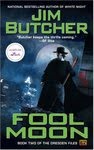
Review 33: Dresden Files 02 – Fool Moon

Fool Moon by Jim Butcher

“Hell’s Bells” count: 9

When a book about werewolves has a joke taken directly from Young Frankenstein (“Werewolf? There! There wolf! There castle!”), you know you’re in very good hands. That’s the kind of joke that a very small percentage of readers is going to get, but it’s guaranteed that those readers who do get it will be very appreciative.

Once again, consulting magician Harry Dresden has gotten himself into trouble. A few months ago, he nearly got himself killed taking down a drug-pushing warlock who wielded disturbingly strong levels of dark magic. Now, he has a different… hairier problem to deal with.

People are being ripped apart in Chicago. Not normal gangland killings, or even comfortable, familiar drug shootings, no. People are being literally torn apart, limb from limb, guts for garters, that sort of thing. The killings are violent and frightening, and both the Chicago police and the FBI would really like to know who’s behind them all. Unfortunately for Harry Dresden, all avenues point towards the supernatural.

If that weren’t bad enough, his talent for being in the wrong place at the wrong time has made Harry an object of suspicion almost any time something weird goes down. He’s used to that, though. What with just being relieved of the Doom of Damocles (a rather pretentious-sounding magical probation), and still being in the bad books of the White Council of Wizards, to say nothing of the powerful mobsters, Harry has more enemies than he can really keep up with. He doesn’t need any more, and he most certainly doesn’t need enemies that are red in tooth and claw.

For that matter, it would probably be simpler if it were just one werewolf. But it isn’t. Of even if it were just one kind of werewolf. Which it isn’t. Or even if all the werewolves in question were relentless, evil killing machines. Which, of course, they aren’t. Not all of them.

So now Harry has to throw himself into the fray again – to the wolves, as it were – and risk life and limb for people who don’t quite appreciate all the hard work he does. At least, not until a ravaging loup-garou nearly kills them all. But that would help anyone through a crisis of faith, I think.

As with the first volume in this series, I really enjoyed this book. Jim Butcher has an excellent sense of humor, and it really shines through in Harry’s narration. Dresden often breaks the fourth wall in his narrative, acknowledging to both himself and the reader that he’s about to do something that most people would consider to be insane.

One of the things I really enjoy about reading these books is the multi-sensory experience of reading them. Butcher knows that we have many senses, and also knows that a great number of writers only engage a couple of them. So he throws as much sensory information as he can at us, engaging our senses of touch and taste and smell to make the scene that much more convincing. What’s more, he has a gift for an economy of description – what’s the most important sensory input for each scene? He knows it, and focuses our attention on that.

Plus, he’s put together a very well-ordered magical universe. The rules are clear and binding, letting us know exactly what Harry can and cannot do in order to get out of his troubles. The work that Butcher has done in preparing the world of Harry Dresden shows up very clearly.

Of course, werewolves are fun monsters to play with, mainly because of their symbolic significance. Man and beast in one body, a loss of control and a joy in doing so – the werewolf is the beast we all fear to become. And this is important to Harry as well – as he tells us in this book and most of the others, he has a dark side to him. He knows what it’s like to reach into the bleak recesses of his soul and to use magic towards evil ends. He’s done it before, and the understanding that he could do it again is a shadow that constantly follows him. When he sees the various werewolves that are terrorizing the city, he sees himself in them. He sees the monster he could become, and he rejects it. Or at least holds it at bay for as long as he can.

It’s great to watch Harry, because he’s such an underdog. He gets beaten up, outsmarted, outclassed again and again, but he keeps coming back. He keeps finding that one little way through his problems that allows him to come through victorious. As far as he’s able to, anyway.

And in the end, isn’t that true for all of us?

—————————————–
“Well, we’ll just have to hope that this wasn’t a loup-garou, I guess.”
“If it was a louper, you’d know. In the middle of this town, you’d have a dozen people dead every time the full moon came around. What’s going on?”
“A dozen people are dying every time the full moon comes around.”
– Harry Dresden and Bob, Fool Moon
——————————————

The Dresden Files on Wikipedia
Fool Moon on Wikipedia
Fool Moon on Amazon.com
Jim Butcher on Wikipedia
Harry Dresden on Wikipedia
Jim Butcher’s homepage

Leave a comment

Filed under detective fiction, Dresden Files, fantasy, Jim Butcher, mystery, werewolves, wizardry

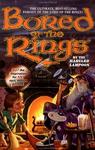
Review 32: Bored of the Rings


Bored of the Rings by Harvard Lampoon

In a small corner of the world, tucked away from the great nations, there lives an isolated community full of colorful, down-to-earth people. One of those, considered a hero by some and an oddball by others, is getting ready to face the greatest challenge of his life – delivering a Ring of Power into the fires that made it, thereby saving not only his soul, but the world along with it.

Yes, you know the story. Just not like this.

The young Frito Bugger, a Boggie of the Sty and nephew to the famed Dildo Bugger, has been tapped by Goodgulf the Magician to return the Ring of Power to the Zazu Pits in the center of the deadly kingdom of Fordor. It is only then that Sorhed, maker of the Ring and the greatest threat to Lower Middle Earth, can be defeated.

The first time I read this book, I nearly soiled myself laughing. And I wasn’t even a real fan of the originals at this point, either. I knew enough, though, to see how well the venerable trilogy was being skewered, and I loved every minute of it. Since then, I’ve read this book more times than I’ve read Lord of the Rings. Partly because it’s much funnier, but mostly because this volume only clocks in at 150 pages.

As with all comedy, repetition kind of diminishes the effect, but there are still laughs to be had. Just from the beginning, when Dildo Bugger throws a party for the gluttonous freeloaders of the Sty, and then foists his Magic Ring off on his hapless nephew Frito, you know things can only go wacky.

Much like in the original, this Fellowship travels across a land fraught with peril, and despite the funny names, their journey is recognizable to anyone who knows the story. The folks at Harvard Lampoon did a brilliant job here, warping the characters of the original story (with the utmost love and respect, of course, for the money they’re making from sales of the book) into funhouse mirror-images.

Thus brave Aragorn, son of Arathorn becomes Arrowroot, son of Arrowshirt, wielder of Krona, Conqueror of Dozens, whose foolproof strategy for dealing with overwhelming odds is to play dead. Or wise and resourceful Gandalf becomes Goodgulf, the shifty con artist and 32nd degree Mason who is all too willing to let the Shadow win if it means he can escape with his hide and the majority of someone else’s gold. Legolas and Gimli become Legolam and Gimlet, sniping at each other with the kind of accuracy we could have only wished for in the films, and Merry and Pippin twist into Moxie and Pepsi, the blundering brothers who wish they were dead. And so does everybody else.

What really differentiates this book from a lot of other parody books is that the Harvard Lampoon writers have allowed these warped characters to evolve in their own right. Instead of forcing them along the path of the original story, the writers have broadened the guidelines a bit. We see new relationships evolve, and old ones twist into new shapes. Some parts of the story vanish entirely, while others take on whole new significance.

In other words, if you’re looking for a one-to-one event correlation with the original books, you’ll be disappointed. But the major events and characters are all there. A lot of the themes have been inverted, of course, for comic effect. The great friendship and loyalty that defined the original Fellowship are sorely lacking in this volume, but they were never meant to be there in the first place. Probably the reason I found it so funny was that the twisted versions of these characters resemble a lot of my attitude towards them when I first read Lord of the Rings – Merry and Pippin as an obnoxious pair of bumblers, Gandalf as a manipulative old coot, Boromir as utterly disposable and, of course, Tom Bombadil as, well, himself.

I never could stand Bombadil in the original books, but Tom Benzedrino? Him I could read over and over again without hesitation….

As I think about this, I wonder how many people read this and actually got offended. People talk about LotR and J.R.R. Tolkien as though they are perfect in every form, untouchable and Not To Be Criticized. I remember watching the DVD special features, and the son of Tolkein’s editor said, “You simply did not edit Tolkien.” That kind of reverence must certainly feel good for a writer, but it doesn’t produce good writing. Every writer, whether it’s Tolkien or Rowling or King or anyone else who’s really made it big, needs people willing to take them down a peg.

Look at the Harry Potter books for example. When they were relatively unknown, they were slim, tight little volumes that moved at a good pace and could be devoured on a long bus ride. As soon as Rowling made it big, however, they became massive tomes that required ten minutes of warm-up time just to pick up, and an occasional shot of caffeine to get through. Don’t get me wrong – I like Harry Potter. I like it more than I like Lord of the Rings, in fact. I just don’t think that fame or literary pretensions should make an author exempt from vicious editing. Or vicious parody.

A book like Bored of the Rings is not a criticism of the story, or of the dream that Tolkien had – it’s a vindication of it. It’s a testament to the book’s strength that it can be ripped apart with such wild abandon, yet still maintain its popularity. Every author should be so lucky as to have a book like this written in their honor.

So just sit back and enjoy it. Whether you’ve read the books or just seen the movies, as long as you’re not one of those who worship at the altar of the Unassailable Tolkien, you should be able to get a lot of good laughs out of this.

————————————————
“Observing this near impossible escape from certain death, Frito wondered how much longer the authors were going to get away with such tripe. He wasn’t the only one.”
– from Bored of the Rings
————————————————

Bored of the Rings on Wikipedia
Harvard Lampoon on Wikipedia
Bored of the Rings on Amazon.com

2 Comments

Filed under fantasy, Harvard Lampoon, humor, Lord of the Rings, parody

Review 31: The Iliad

The Iliad by Homer, translated by Robert Fagles

Sing to me, O Muse, of a long damn poem,
which saddled the backs of many a Freshman English Major before me
and brought the mist of term papers down around our eyes

Can you tell me, O Muse, of the deeds done in this book
in less time than it takes to fight the actual war
in which the blood of many a legendary, some say mythical, figure
was spilt and lost, fed into the hungry earth of Troy?
Sing to me of feasting and fighting and the filching of treasure
of Dawn and her Rosy Fingers as they greet the tenth year
of the War of the Acheans (which are also known as Greeks,
but only by the terribly uneducated)
against the great city-state of Troy.
Tell me of ten years’ warfare, the great hollow ships
ranged against the shining walls of Ilium!

Of all the Acheans, only one could be the Hero of this war
a man spawned of a Goddess, a son of the oceans and a scourge
on all who oppose him, who would flee and crap their singlets
at the very sight of his blazing armor.
As a three year-old child sits in his room and sulks
upon not receiving a bicycle for his birthday,
ignoring all the treasure heaped upon him by otherwise doting parents,
crying to the walls and his toys in the closet
and raging against the injustices of those older than he,
so does Achilles, the greatest of Egos in the Achean army
sit in his tent and whine about Briseis,
the woman he won in warfare, only to have her taken by Agamemnon.

“Help me Mother, goddess of the ocean’s foam,” he cried.
“Agamemnon’s pissing me off and I want him to suffer for it!”
And so did his doting mother appeal to Zeus,
he of the Thunderbolt Libido with a Thing For The Ladies
and the King of Gods did make it so,
giving the troops of Troy and their leader, Hector, advantage
only to crush them in the end so as to increase
the glory of Achilles.

Who can sing the insanity of this plan, this war?
Should I live a thousand lifetimes, I would wither of age
before I could recount the acts of treachery and pettiness
brought about by gods and men on the blood-soaked plains of Troy.
Would that I had the time to list the dead and dying
the blood and the viciousness of unholy war,
balanced by rare acts of humanity and kindness.
If only I possessed that rarest of gifts, the patience
to list the atrocities of the Gods wrought upon men.
Such was the gift of Homer, to do so long ago
what we cannot, weak as men are now.

Great Agamemnon, whose pride and stubbornness rival Father Zeus
Himself. Achilles, the mighty, the hero who becomes human
only when all that he truly loves is taken from him.
Hector, breaker of horses, the father and defender of a city
doomed from the outset.
Priam, Aged King of Troy, watching his sons die one by one.
The libidinous Paris, whose inability to think
with the right head started all of this,
and Helen, would that she drowned before reaching Troy,
watching the terrible battle from her rooms.
And her rightful husband, the red-haired Menelaus
whose rage brought a thousand ships across the wine-dark seas.
Patrolcus, incapable of following one simple little instruction.
Godlike Telamonian Ajax, clever Odysseus, and aged Nestor
always with a long-winded, vaguely relevant story at hand.
These are the heroes of this play, O Muse.

And there are certainly villains –
those immortal Gods whose every whim costs the lives
of noble mortal men.

White-armed Hera, scheming against her husband
Zeus, who grants the ascendancy of Achilles at the cost
of uncountable Trojan and Achean lives.
Aphrodite and Ares, fighting for Troy,
grey-eyed Athena and Poseidon with his blue hair, urging on the Argives.
All playing their games, and in the end, the same as they began.
For, being deathless Gods, they cannot change
and what cannot change cannot learn.
And so the Gods, whose machinations set this tragedy in motion
escape unscathed during the passage of many a mortal soul
into the dark arms of Hades.
And the mortals, playing parts in Zeus’ puppet show
dying to bring greater glory to Achilles.

Would that I had the time to underscore the glory of this tale
and how centuries of the written word have been built upon it.
Give me the strength, O Gods, to tell of this cornerstone!
As a single oak tree, growing tall and splendid towards the sky,
reaching for the sun and spreading its roots into Demeter’s
fertile earth, put forth leaves whose numbers are unknown to man
so has this epic poem inspired more works than can be counted
by a writer as simple and humble as myself.
So reach out, dear Reader, reach out and find this tale,
and as a vast tank holds enough rainwater to replenish
fields and fields of fecund earth, bringing forth
crops to feed people by the thousands,
so will you become a repository of literature and history
and be able to show the world just how utterly
utterly
cool you really are.

Come with me, O Muse. I need a drink.

———————————————-
“And now as the armies clashed at one strategic point,
they slammed their shields together, pike scraped pike
with the grappling strength of fighters armed in bronze
and their round shields’ bosses pounded hide-to-hide
and the thunder of struggle roared and rocked the earth.
Screams of men and cries of triumph breaking in one breath,
fighters killing, fighters killed, and the ground streamed blood.”
Homer, The Iliad (8:71-77)
———————————————-

Homer on Wikipedia
The Iliad on Wikipedia
The Trojan War on Wikipedia
The Iliad on Amazon.com

1 Comment

Filed under classics, history, Homer, made into movies, poetry, war