Review 80: Common Sense


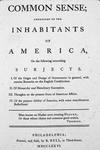
Common Sense by Thomas Paine

This being an election year, there are a lot of people telling us what we should think about our country and its purpose in the world. Newspapers, magazines and books are churned out at a dizzying pace, each one designed to bend our wills to the writers’ opinions. It’s easy to be overwhelmed by them, honestly, especially the hardback tomes that – more often than not – turn out to be 300 pages of poorly disguised propaganda and party talking points.

From out vantage point, with a myriad of news sources at our fingertips – print, internet, and, of course, the insatiable maw that is 24-hour TV news – it’s difficult to truly appreciate the impact that Common Sense had when it was released as an anonymously penned pamphlet back in 1776.

No matter what your history teachers told you, the American colonists back then were not unanimously crying out for independence and liberation. Tensions were high between the Colonies and Britain, what with the various tax schemes and the conflicts in Boston, Lexington and Concord, but for everyone calling for independence, there were just as many who were looking for reconciliation between the Colonies and the Crown. They were British subjects, after all, and the thought of breaking from their God-given sovereign caused them great distress.

“We are his subjects,” the argument ran. “Who are we to disagree with his decisions? This may not be so great right now, but surely if we acquiesce, if we bow our heads, then we’ll receive all the benefits due his loyal subjects.”

Thomas Paine thought that this line of thinking was, in modern terms, bullshit, and he set out to explain precisely why.

Common Sense was written as a call for independence, aimed at convincing those hoping for reconciliation that their hopes were in vain. He believed that there could be no benefit to reconciling with the Crown, and that the only hope for Americans to have a decent future lay in the severing of bonds with Britain.

Without resorting to personal attacks, without naming names or pointing fingers, Paine systematically lays out a logical and clear rationale for independence. He begins by arguing against the legitimacy of Kings in general, and the King of England specifically, and puts forth the benefits that could only arise from representative government. He puts forth the practical economic and political reasons for independence in a calm and clear manner, and he does so in a way that makes it all sound like, well, common sense. It’s easy to imagine him standing there, saying, “Come on people! It’s friggin’ obvious!”

Political writers in the 21st century don’t really appreciate the things that they can get away with these days. If Ann Coulter wants to write a book about how Barack Obama is the vanguard of a Liberal Muslim Homosexual Revolution, she can. If Michael Moore wants to do a movie claiming that George W. Bush is the demon love child of Margaret Thatcher and Adolph Hitler, he can. The worst that’ll happen to them is a libel suit and a humbling public apology.

The worst that could have happened to Thomas Paine was a public hanging – if he was lucky.

Common Sense is such a pivotal document in American history – its influence cannot be overstated. It was so widely read, so acclaimed, that it is reasonable to say that the United States as we know it might not have come into being without it. It’s writing that I wish we could see these days. Not a call for independence per se, but rather clear, level-headed writing that treats its readers with respect. I’ve read a lot of political books in the last few years, and none of them were as straightforward and to the point as this book was.

What’s more, reading it is a reminder of the hopes and dreams that the founders of this country had for it. When they finally risked their lives and signed the Declaration of Independence in July of 1776, when they fought and suffered and died in the years following, when they argued and compromised to create a Constitution, they did so in the hopes that the country they were forging would be a good one. They did so in the knowledge that they would never see the era of the United States’ true greatness, but in the hopes that it would one day come.

It is the responsibility of all Americans to live up to those hopes.

—————————————————
“I offer nothing more than simple facts, plain arguments, and common sense . . .”
-Thomas Paine, Common Sense
—————————————————

Thomas Paine on Wikipedia
Common Sense on Wikipedia
Common Sense on Wikisource
Common Sense on Amazon.com
Cracked.com – 8 Historic Symbols That Mean The Opposite of What You Think

Leave a comment

Filed under american history, politics, Thomas Paine

Review 79: Guards! Guards!


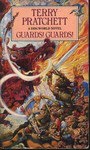
Guards! Guards! by Terry Pratchett

One of the dangers of reading Discworld books, of course, is that you may never stop. Much like potato chips, it’s hard to just have one and then move on to something else, especially – and this may strike some of you as a bit odd – when you’ve already read them.

There are people who never re-read books, and don’t see the point in doing so. “You already know the ending,” they might say, “and you know how the story goes. What’s the point in reading it again?” I never, ever understood that. I mean, if you have a good story, well-told, why wouldn’t you want to read it again? If it had meaning for you and struck a chord deep within whatever it is you might call a “soul,” then reading it again is almost mandatory.

I can certainly see our Straw Man’s point if the book is bad, or even just mediocre. There are plenty of books that I’ve read that I’ll probably never pick up again. But the Discworld series doesn’t contain any of them.

This one is the first in the Guards track – one of four major story tracks within the series – and it quickly made the adventures of the Ankh-Morpork city guard some of my favorite stories.

The book opens in darkness and mystery, a kind of film noir feeling that permeates the whole story (although I am challenged to think of any noir film that featured a dragon as the main antagonist – but more on that later). Captain Samuel Vimes of the Night Watch is about as low as he can go. He’s drunk, it’s raining, and he has finally seen himself for what he’s always believed himself to be. A wreck. A bum. A loose end in the city, respected by no one and nothing, with the exception of the two other poor souls in the Watch with him. If we were to cast Vimes in the movie, we’d have to cast Bogart at his drunkest.

Vimes is a mirror of his city, really. Ankh-Morpork is the biggest city on the Disc, and it embodies all the worst elements of cities everywhere. It’s crowded and dirty, a place where people would sell their own mothers for a chance to get ahead. It’s ruled by a system of guilds and merchants, an ever-fluctuating oligarchy all directed by a Patrician who wields his power with pinpoint precision. Crime not only flourishes in Ankh-Morpork, it positively thrives, regulated and controlled by its own guild.

In short, there’s no place in the city for the Watch, and no place in it for Vimes. Maybe long ago he harbored thoughts of saving his city from itself, but no longer. Now all he wants is his next drink.

He’s not the only one thinking of a better city, though. In the dark recesses of Ankh-Morpork, a secret society meets. They are a shadowy group of bretheren who believe that the only thing keeping their city from being a good place to live is the lack of a king. Ankh-Morpork had kings once, and is so often the case, the dimly-remembered past looks a lot better than the immediately visible future. And so the Unique and Supreme Lodge of the Elucidated Bretheren gather with a singular goal in mind – to create a king.

It’s not that easy, though. You can’t just pull some schmoe out of a crowd and say, “Here – start kinging.” There needs to be no doubt in people’s minds that this person has been tapped by destiny to become their king. Like if he, say, slew a dragon or something….

Into all of this strides Carrot Ironfoundersson, a young dwarf-by-adoption who has been sent by his foster father to learn how to be a human being. And what better way to do that, they suppose, then to volunteer for the Ankh-Morpork Night Watch? Within moments of his arrival he begins to upend the very structure of the city itself. Carrot is everything that Vimes – or anyone else – wishes they could be: honest, forthright, idealistic, the kind of man who would arrest the head of the Thieves’ Guild for stealing. He knows the law and believes in it, which makes him just the wrong person for the Watch. Or, as things turn out, just the right one.

What begins as a magical conspiracy ends up being a murder-mystery, with a giant, fire-breathing dragon as the main murder weapon. Faced with this threat to both himself and his city, Vimes and Carrot, Nobby and Sergeant Colon are the only people who are willing to put themselves between the city and the dragon. Not, all things considered, the place they most want to be, but they’re all there is.

It’s a really good book, and an excellent introduction to the Guards track of the Discworld series. It is, of course, very funny – that goes without saying in this series – but also very meaningful. It has a lot to do with dreams and ideals, and the manner in which we are willing to achieve those dreams. Some by trickery and subterfuge, like the dragon-summoners, others by sheer honesty and idealism, like Carrot. And even those who have given up on their dreams, like Captain Vimes, can be persuaded to pick them up again, dust them off and give them another go.

It’s a story of redemption, not only for Vimes, but for the city of Ankh-Morpork. Much like Vimes, the city looks hopelessly lost at the beginning of the book – all rain and darkness and death – but by the end we have a glimmer of hope that it can become a better place. A place where the law can win out over corruption and decay, and where good people, standing up against million-to-one odds, can sometimes come out on top.

And if that’s not a story that deserves to be re-read, then I don’t know what is.

—————————————————
You have the effrontery to be squeamish. But we were dragons. We were supposed to be cruel, cunning, heartless, and terrible. But this much I can tell you, you ape – we never burned and tortured and ripped one another apart and called it morality.
– The Dragon, Guards! Guards!
—————————————————

Terry Pratchett on Wikipedia
Guards! Guards! on Wikipedia
Discworld on Wikipedia
Guards! Guards! at Amazon.com
Guards! Guards! on Wikiquote
Terry Pratchett’s website

Leave a comment

Filed under Discworld, dragons, fantasy, humor, police, Terry Pratchett

Review 78: Bridge of Birds


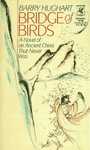
Bridge of Birds by Barry Hughart

It’s not often that you read a book and it immediately jumps up into your “Best Books Ever” list. Usually it takes some time and reflection, careful thought about the book’s characters, themes and message. Perhaps a re-read would be in order, and then, after some consideration, you might say, “Yeah. I think this is a really, really good book that I want everyone else to read.”

I think I hit that somewhere around page 182.

This is, as the cover tells us, a novel of “An ancient China that never was.” It’s set in the long-ago, indeterminate past (of which China has so very much), and starts off in a small village with an unusual history. The village of Ku-Fu, the story goes, was home to a section of the Great Wall, commissioned by the Emperor of China many centuries ago. This would not in itself be notable, except that it was built 122 miles south of the rest of the wall, thus serving no real purpose whatsoever. The general in charge was, he maintains, given the orders by the Emperor of Heaven himself, a story which held no sway with the more earthly Emperor who was ready to execute him. A more believable story was produced – that a great dragon had rested itself on that part of the wall, thus moving it, and it shouldn’t be tampered with.

And so the village of Ku-Fu became home to what was known as The Dragon’s Pillow, a place that would one day loom large in the history of not only the village, but all of China.

It is a peaceful village with the usual colorful characters that you get in such a place, such as the terrible partners Pawnbroker Fang and Ma the Grub, two greedy and unscrupulous men who hold the economic life of the village in their hands. When their misdeeds go too far, resulting in the horrible poisoning of many of the village’s children, the story’s narrator, Number Ten Ox (whose given name is Lu Yu, but he would not want to be confused with the famous author of The Classic of Tea) is tasked to bring a wise man from the city to diagnose the problem and find a solution. Out of the many wise men, Ox finds Li Kao, a cynical, world-weary curmudgeon with, as he so often tells us, a slight flaw in his character.

Together, Ox and Li Kao must travel the length and breadth of China to find the Great Root – a ginseng root that was kept by the mythical Princess of Birds, and whose healing properties are all that stand between the children of Ku-Fu and certain death. Along the way, they must travel terrible labyrinths, fight unimaginable monsters, battle against an immortal evil, bring peace to restless ghosts and solve the greatest mystery in the history of China – what happened to the Princess of Birds, beloved of the Star Shepherd, Prince of Heaven.

There is just so much to recommend this book, I don’t even know where to start. For one, it’s a lot of fun to read. The person who recommended it to me did so on the reasonable assumption that, since I like Terry Pratchett so much, I would probably like this book as well. And that was a very good assumption – there is a certain similarity between the two. Hughart uses humor very deftly, keeping the characters alive and interesting through even the most dangerous of times. Where Pratchett’s humor often feels like literary slapstick, however, Hughart’s is a bit more subtle. The characters are funny, yes, but the book was not written to make you laugh. It was written so that the reader would have a good time reading a story well-told.

And what a story it was. It begins with a fairly straightforward quest – a search for the Great Ginseng Root to cure the children of Ku-Fu – and turns into something so much larger than that. As the evil Duke of Ch’in says, they’re on the right quest, but for all the wrong reasons, a cryptic statement that takes a while to make sense. The scope of the story gets bigger and bigger as it goes on, and you realize that the pieces for this quest were put into place hundreds, if not thousands of years before the story actually started.

The history of China is on display here, if somewhat distorted for the purposes of entertainment. Hughart spent time living in the Far East and gained a healthy respect for its long and often unbelievable history and culture. The book includes elements of China’s history of inventiveness and ingenuity, as well as cultural myths that extend beyond its borders.

The characters themselves are wonderful, too. Number Ten Ox is an earnest, strong, well-meaning young man who has one goal in mind- save the children of his village. Li Kao is a devious old man who tends to use his wisdom and quick thinking for more nefarious purposes – thus the slight flaw in his character. There are a lot of notable minor characters as well, including Pawnbroker Fang and Ma the Grub, who somehow manage to turn up all through the story, always being chased by the people they’ve cheated. The Duke of Ch’in is a terrifying figure, Henpecked Ho is comically dark, and Miser Shen starts off utterly unlikable, but if there’s one character in the story that forces you to put down the book for a few minutes and gather your thoughts, it is he.

It’s a moving tale of hope and perseverance and the power of myth. It’s a story about the need for humanity to temper desire and what happens when we let our lives be governed by fear and greed. It’s about love and justice, revenge and history. It’s a book that almost immediately earned my respect and admiration, and that’s pretty hard to do.

So go get it. Block out some time when you can sit and fall into the story and really get absorbed in it, because let me promise you – it will be well worth it.

————————————————–
“Take a large bowl. Fill it with equal measures of fact, fantasy, history, mythology, science, superstition, logic, and lunacy. Darken the mixture with bitter tears, brighten it with howls of laughter, toss in three thousand years of civilization, bellow kan pei – which means ‘dry cup’ – and drink to the dregs.”
“And I will be wise?”
“Better. You will be Chinese.”
– Li Kao to Procipius, on attaining wisdom, Bridge of Birds
————————————————–

Barry Hughart
Bridge of Birds on Wikipedia
Bridge of Birds at Amazon.com
BarryHughart.com

Qixi Festival on Wikipedia

1 Comment

Filed under Barry Hughart, China, fantasy, humor, quest

Review 77: Identity Crisis


Identity Crisis by Brad Meltzer and Rags Morales

There are, traditionally, two modes of thought when it comes to comic book super-heroes. The first is that just as these people are stronger, faster and more powerful than we, so must they also be better than we.

This is the philosophy behind the immortal words penned by Stan Lee in the first Spider-Man story – “With great power comes great responsibility.” It’s not enough to be able to see through walls, teleport, manipulate eldrich energies or talk to gods if you do not live up to the incredible burden that comes with such powers. Even if you’re a self-made hero, with nothing more than your wits, a jaunty cap and a quiver full of trick arrows, there is still the expectation that you will always do the right thing. Or at least try to.

There is a nobility to this kind of super-hero. He is not motivated by fear – he surpasses it. She does not fall prey to baser human nature – she provides a model for us all to be better. These heroes don’t do what is easy – they do what is right. They don’t ever do the wrong thing, even if it is for the right reasons. They are, in a word, heroic.

This story is not about those kinds of heroes. This story is about the other kind – the heroes who are, when you strip away the Batarangs and magic rings and masks and tights, just as human as we are. Just as fallible, just as vulnerable to anger, fear and weakness as we. Much like the traditional hero, they are us writ large – in every way, unfortunately.

Being a super-hero – either kind – has never been easy. Balancing your hero life and your private life is something that even the best heroes have trouble with, and the decision to involve someone else in your life is one that carries great danger with it. If you marry someone, if you have a father or mother or lover, they all become potential targets for those who would want to hurt you. At some point, you have to decide which one is more important to you, and the special people in your life need to be included in that.

For Ralph Dibney – The Elongated Man – the choice was simple. He loved his wife, Sue, and his heroism, so he decided to have them both and became one of the very few heroes to make his identity public. Together, they were a true celebrity couple, touring the world, solving mysteries and showing everyone what a truly happy marriage looked like. And they were so very happy. Sue became an honorary member of the Justice League (an honor that not even Lois Lane has been granted) and their love inspired everyone who knew them. The heroes’ love for Sue Dibney led them to one of their greatest mistakes – albeit one that would not come back to haunt them until the worst had already happened. Not until Sue Dibney was murdered.

The heroes of the DC Universe went into overdrive, searching every corner of the world for Sue’s killer. Whoever it was had bested the technology of four worlds and eluded the greatest detectives in history. And what’s more, this new villain was targeting others that heroes loved. It was only a matter of time before someone else died, and if they could not find the killer then the very fabric of the hero community would be torn apart.

While this is, with a few caveats, a good story, it’s not a pretty one by any means. It shows the darker side of the heroes we love. They act in morally questionable ways – something that the traditional super-hero would never do – in order to serve the greater good. By using their powers to adjust the personality of Dr. Light, turning him from a menacing villain to a laughable punching bag, they set in motion a chain of events that would have universe-wide repercussions.

All told, I liked this story. For one thing, the writing was really solid, with great care paid to pacing and visual impact. The story is not really about the heroes, at least not by themselves. It’s about the relationships they have with other people, and how those relationships affect their decisions. That’s why characters are constantly introduced in terms of their relationships to each other. You can see it on the very first page – “Lorraine Reilly and Ralph Dibney. Co-workers.” The fact that they’re both super-heroes is self-evident. The fact that they’re people, with a relationship to each other, is often taken for granted in comics.

Ray Palmer and Jean Loring go from “Divorcees” to “Lovers” in the span of two pages, while Firestorm goes from hero to atomic bomb. “Father and son,” “Husband and Wife,” “Partners” – characters are constantly being introduced by their relationships, and usually by their given names, rather than their superhero sobriquets. In fact, Green Arrow, who is one of the driving forces in this story, rarely refers to anyone by their code name. When he does, it’s an immediate signal that this is a person he doesn’t know well. To Ollie, and thus to us, these are people under those masks, and it’s important to remember that.

My favorite example of the heroes’ humanity is the scene in the issue “Father’s Day,” wherein Robin and Batman are racing to save the life of Robin’s father. Set up by the mysterious killer who murdered Sue Dibney, Jack Drake tries desperately to tell his son not to blame himself while Tim tries just as desperately to save him. In the end, even the incredible Batman is unable to save this one life, and the reader is forced to feel every moment of it. It’s a painful, beautiful sequence, both in terms of the writing and the artwork.

I would be amiss if I didn’t mention the villains as well. All too often they have been portrayed as madmen and megalomaniacs, driven by nothing more than nefarious purposes and misanthropy. The villains in this book are also humanized. They tell stories, have trouble making ends meet, even have hobbies outside of villainy. And, like the heroes, they have relationships with each other. They are fathers and sons, friends, employers and employees, and the tragedy being visited upon the heroes spills into their world as well. While we may not root for the bad guys, we can at least sympathize with them a little more.

There certainly are flaws to the story, though. For one, it’s been described as “tragedy porn,” and I can’t disagree. Much as regular pornography takes the sexual act and distorts it into a pleasurable fantasy, so does tragedy porn take an unfortunate event, such as rape or murder, and make it into something even more horrible than it normally would be. Whether this is entirely a bad thing, I can’t really say. Writers have always used pain and death for our entertainment – hell, look at Titus Andronicus. Not only was Lavinia raped, she was mutilated on top of it. Was Shakespeare just trying to get a rise out of the masses? Maybe. Is Meltzer doing the same here? Probably. Does it work? Hell, yes.

There have been a lot of objections raised to the use of rape as a plot device in this book – whether it was appropriate for a super-hero comic book, for one, and whether it was nothing more than a gut-punch. A story choice that’s effective, but ultimately unimaginative. All this may be true, but my take on it is this: That’s not what the story is about.

The story isn’t about rape or murder. It’s not about mind-wipes and magic. It’s about the relationships between these people, heroes and villains all. It’s about their identities, as the title implies – how they see themselves and how others see them. It’s about people, with all the flaws and defects that make them human. It’s a book of revelations, illumination and truth, none of which are ever easy to confront.

While this wasn’t the first comic book story to feature its characters as humans rather than heroes, it could be the most influential. At least in recent years. The events of this book started a chain reaction that has followed through to every universe-wide event that DC has published in the last six years, from Infinite Crisis all the way to Blackest Night. Meltzer built a story that provided a solid foundation for a new DC Universe. It’s a universe that gives us heroes more realistic than before, more human and fallible. While it may not be the kind of story that you like, you cannot deny the impact that it’s had.

————————————————————
“Think about your own life, Wally – everything you’ve done to keep your secrets safe. You don’t just wear the mask for yourself. It’s for your wife, your parents, even for – one day – your children. There are animals out there, Wally. And when it comes to family, we can’t always be there to defend them. But the mask will.”
– Oliver Queen (Green Arrow) to Wally West (Flash), Identity Crisis
————————————————————

Identity Crisis on Wikipedia
Brad Meltzer on Wikipedia
Rags Morales on Wikipedia
Brad Meltzer’s homepage
Rags Morales’ blog (last entry2006)
Identity Crisis at Amazon.com

2 Comments

Filed under Batman, Brad Meltzer, comic books, DC Comics, death, detective fiction, ethics, identity, morality, murder, Rags Morales, rape, super-heroes, Superman

Review 76: Changes


Changes by Jim Butcher

“Hell’s Bells” count: 20

Well, the title promises changes, and that is certainly what you get in this book. And the first of these comes right on page one: Harry Dresden has a daughter. Surprised? Yeah, well so was he.

The mother is Harry’s old lover, Susan Rodriguez, whom he hasn’t seen in many years. The reason for their separation is pretty simple, the kind of story you’ve heard over and over again – boy and girl meet, avoid their obvious attraction to each other for a while, and finally hook up. Boy tells girl all about the world of supernatural horrors in which he lives, girl finds it more intriguing than horrible, and manages to get herself bitten by vampires. Girl is able to resist turning all the way, but knows that she can’t be around boy lest her emotions overwhelm her and she devours him whole. Boy and girl have one last night of fun together, girl vanishes into South America to join an underground cabal of vampire hunters.

Boilerplate, really.

No sooner does Harry discover that he has a daughter that she finds out she’s been kidnapped, taken as a hostage by the Red Court of vampires for some purpose that is no doubt terrible and nefarious. As much as Susan knows it will hurt Harry to find out she’d been hiding their daughter from him, she also knows that he is the only one with the power and the resources available to get her back.

After all, Harry is a Wizard, a member of the White Council, if not one of their favorite members. He has contacts within the council that could prove useful, as well as resources that reach from Heaven to Hell. A far cry from the lone wolf that we met way back in Storm Front, Harry now has connections and resources that will allow him to take on some of the most powerful beings in the world as they attempt to use his daughter for their own evil ends.

As the title implies, of course, Harry does have to make some very serious choices in this quest; choices about how far he’s willing to go in order to save his daughter, to say nothing of whether saving his daughter is even the right choice to make in itself. After all, the Red Court has been at war with the White Council for some time now, and the slightest mistake one way or the other could just make the whole thing worse. The last thing the White Council wants is their least favorite loose cannon (and, not for nothing, the guy who got the whole war started in the first place) complicating matters unnecessarily. The supernatural world is pretty much ready to fly apart as it is, and one mis-step could mean death and destruction on a scale greater than anyone has ever known.

In the end, the choices that Harry has to make in this book will haunt him for the rest of his life, if not longer. I would probably not be wrong in saying that this book marks a major turning point for the series.

If you’ve been reading this from the beginning, which you really should have, then this is going to be a rough book. I’ve made mention before of how Butcher likes to play hardball with his characters sometimes, but this book is so much more than that. This book is an all-out attack on everything that Harry holds dear to him, a scouring of his life that puts him into an entirely new situation. What this is in preparation for is anybody’s guess, but I can tell you this much without really spoiling anything – Butcher had better damn well have the next book on a fast track or he’ll find me sitting on his front porch with a torch and a pitchfork and a haunted look in my eyes. [1]

Given that, as of this writing, the book has just come out, there’s not a lot I can say about it in detail. If you’ve been following the series, you’re going to read it no matter what I have to say, and I don’t want to ruin anything for you. All I can really say is that this isn’t my favorite of the series, at least not upon first reading. It’s a little rushed in parts, and has one too many deus ex machina moments for my liking. The only thing that mitigates that is the knowledge that Butcher wastes nothing in his storytelling, and even the biggest miracles come with a price that will have to be paid. And I expect that the payoff will be something to see. Having said that, though, Changes will probably hold up as one of the most significant of the Dresden Files books once the series is done. In terms of what happens to the characters in this book, it’s really like nothing else that’s come before it.

So brace yourselves, kids. This one’s a bumpy ride. As with all the Dresden Files books, though, it’s well worth it.

—————————————————–
“Harry… I’ve got a bad feeling that…. I’ve got a bad feeling that the wheels are about to come off.”
– Karrin Murphy, Changes
—————————————————–

[1] Yes, yes, I know that, to paraphrase Neil Gaiman, the author is not my bitch. Still and all, waiting for the next book to come out will be like trying not to fart in church – interminable, impossible not to think about, and oh so relieving when the opportunity finally arrives.

The Dresden Files on Wikipedia
Changes on Wikipedia
Changes on Amazon.com
Jim Butcher on Wikipedia
Harry Dresden on Wikipedia
Jim Butcher’s homepage

Leave a comment

Filed under children, detective fiction, Dresden Files, fantasy, Jim Butcher, vampires, war, wizardry

Review 75: The Eyes of the Dragon


The Eyes of the Dragon by Stephen King

Sometimes you are surprised.

Stephen King has long been associated with horror, and deservedly so. His career began with works like Carrie, Christine, Firestarter, The Shining and so on, all designed to scare the everlovin’ out of any poor soul who picked up the book – and usually succeeding. What’s more, the books often became movies, thereby allowing that segment of the population who doesn’t read much to be terrified.

So for years, King has been called one of the scariest authors alive. I’ve seen cartoons attempting to portray Halloween at his house, bedtime stories for his children, and the horrible, dark confines of his imagination. The mind of King is where the terrors dwell, most think – the monsters, demons and vampires.

And Flagg.

But this book is where King really strayed from the image that had been built for him in popular culture. This story isn’t a horror story, no matter what the quotes on the back of the book imply. This is a fantasy story. It has some tense and scary moments, yes, but it’s a fantasy through and through, built with some of the most well-worn elements of fantasy storytelling. We have all of the necessary elements before us:

The King – King Roland (no relation to the Roland of the Dark Tower Series, as far as we know), the fairly capable and mostly well-liked king of Delain. He has served his kingdom well, and grown old and, if not wise, then at least experienced. He’s not the best king, nor is he the worst. The most that can be said of him is that he tried his best and hoped that his son would do a better job than he had. Of course there is also….

The Queen – Queen Sasha, beloved of Roland. She was the light of his life, and the guiding hand on his shoulder. Many in Delain agree that Roland could have been a despot were it not for his beautiful and kindly wife whose compassion and good sense would eventually save the kingdom. She bore two sons, the first of whom was…

The Prince – Prince Peter, the shining star of the family. Wise beyond his years, strong and fair, everyone loved Peter. He won awards and friends, and was all in all a good son, one that any father would be proud to have. Most people, knowing that Peter would be the next king, felt that the future of Delain was safe. Peter had a brother….

The Second Son – Prince Thomas, forever standing in his brother’s shadow. Not only was Peter older and more capable than Thomas in every way, there was an additional burden on his young mind. With the birth of Thomas, his mother, Queen Sasha, had died. And so it was that Thomas grew up the guilty one. He sought the love of his father, who thought the sun rose and set on Peter. And while Peter made every effort to extend the hand of brotherly love, Thomas felt only resentment and jealousy. Little did he know that his destiny had been guided from the beginning by….

The Evil Wizard – Flagg, that undying demon whose black and poisonous presence had been in Delain every time the country fell into ruin, and who intended to do it once again. A master of spells, potions and poisons, to speak his name was to invite horror, pain and death. He stood in Roland’s shadow, quietly twisting his mind over the years. His ultimate goal was a millennium of darkness for Delain, and he knew just how to bring it about. The only thing standing in his way is the possibility that Peter could be king.

I’m not sure whose story this is, which makes it all the more interesting. On one hand, it’s Flagg’s story. In his dark desire to see Delain in chaos, he manipulates the King and his family to bring the kingdom to the brink. A little patient planning, some good preparation, and Flagg manages to frame Peter for the vicious murder of his father, the King.

Suddenly the Golden Boy is a despised murderer, patricide and regicide, and sentenced to spend the rest of his natural life imprisoned at the top of Delain’s tallest tower, the Needle.

But, then, maybe it’s Peter’s story. He is caught, an innocent victim in this web spun by Flagg. But he was well-taught by his father and mother. His father taught him to be strong and kingly, his mother to be kind and human. The combination made him into something that Flagg could not stand – a good person and potentially a good leader.

Even in his lofty prison, Peter isn’t willing to give up. With some clear thinking and a lot of patience, he manages to work out a plan to escape. Because he is a good man, he has friends willing to help him, to do favors, who will perhaps help clear his name and end the less-than-spectacular reign of his brother, Thomas.

Then again, maybe it really is Thomas’ story. The narrator (the presence of whom gives this story a wonderful fairy tale feeling) takes pains to show us that, while Thomas is a sad, confused, and sometimes cruel man, he’s not really bad.

Full of fear and self-loathing, Thomas is the perfect tool for Flagg. Under his dominion, the kingdom starts to slide towards the chaos that Flagg so richly desires. Thomas is a good example of what happens when a weak person, guided by circumstance and cruel greed, takes power. But even Thomas is not irredeemable – despite the mess of his life, he possesses a secret that could ruin everything Flagg has tried so hard to create.

As with so many of King’s really good books, we are presented with not only an excellent cast of characters, but also excellent storytelling. In many of his author’s notes, he refers to us as Steadfast Reader. He never forgets who has given him his fame and his reputation – the readers. By using a storyteller to present this tale, he acknowledges and speaks to us as though he were telling us the story directly.

Much like it can be a story about many people, it’s a story of many messages. It’s about hubris and the belief that one cannot possibly fail in one’s Evil Plans (happens to me all the time). It’s about honor and loyalty and standing by what’s right, even when the whole world is against you. It’s about being able to redeem yourself, no matter what horrible things you might have done in the past. It’s a story about love and hope and faith, one that never gets old no matter how many times you read it.

I’m not sure how many times I’ve read this book by now, and I fully expect I’ll read it again in the future. If you’re not a King fan and you’re not too keen on reading about family dogs that turn into killing machines, insane telekinetic teenage girls, or possessed Plymouths that steal the souls of their owners, then this is the book you want to read.

——————————————–
“In those years, Thomas discovered two things: guilt and secrets, like murdered bones, never rest easy; but the knowledge of all three can be lived with.”
– Stephen King, The Eyes of the Dragon
——————————————–

Stephen King on Wikipedia
The Eyes of the Dragon on Wikipedia
The Eyes of the Dragon on Amazon.com
Stephen King’s homepage

Leave a comment

Filed under adventure, brothers, dragons, family, fantasy, fathers, friendship, murder, revenge, sons, Stephen King, wizardry

Review 74: Starship Troopers


Starship Troopers by Robert Heinlein

This book is controversial. Says so right there on the cover – “The Controversial Classic of Military Adventure!” A quick look at its Wikipedia page seems to support this, claiming that the book has been criticized for its literary merit, its support of the military, up to and including fascism, racism, utopianism, and gods know what else. What is certainly true is that it’s a book that is guaranteed to make someone, somewhere very angry.

In the unspecified future, humanity has taken to the stars. In our efforts to colonize planets that are hospitable to us, we have spread as far and as wide as possible. Unfortunately, this has brought us into direct contact with alien races who are not entirely keen on sharing land with us, and, as we have always done, we are willing to fight, bleed and die for every inch of it.

Our main enemy is the Bugs, whose proper name we never actually learn, and they are a vicious enemy indeed. They possess a hive mind, made up of Soldiers, Workers and Brains. The Soldiers are, of course, the most dangerous, not least because they have no individual sense of self-preservation. Unlike the human soldiers, who value their comrades and brothers-in-arms highly, the Bugs will never go back for a fallen comrade and never consider the safety of their own when prosecuting a campaign against the humans. In other words, the Bugs truly are alien to us, and therefore need to be eliminated.

The story follows a young man, Juan Rico, in his journey from enlisted grunt in the Mobile Infantry to Officer in the Terran Federation. Through his eyes, we learn about the technological lengths that we have gone to in order to be able to fight the Bugs. First among these is the powered armor that the Mobile Infantry wears – an all-purpose exoskeletal suit that vastly increases its wearer’s speed and strength, in addition to providing him with instant contact with his squadmates and vital information that he needs to fight the enemy. Humanity in the future has made great strides in terms of warfare, all out of need to defeat the Bugs.

You might be forgiven, then, for thinking that this was a grand military adventure. That we would feel the thrill and terror of a young military recruit as he experiences a universe larger and wilder than he ever could have imagined. You would be wrong.

Not entirely wrong, of course. If you read it right, you can infer the newness and strangeness of the circumstances that Juan Rico finds himself in. But this book isn’t about Juan Rico, even though he is the narrator. In fact, we don’t even learn his proper name until nearly two-thirds of the book is finished. Before then he’s just “Johnnie,” which is one of the most generic soldier names out there. Juan Rico is so irrelevant to the story that we don’t even find out that English isn’t his native tongue until three pages before the end of the book. Juan Rico is nothing more than a cipher in this tale, about as important to the content of Starship Troopers as Glaucon is to The Republic.

In the classic tale of Socrates, the philosopher talks about justice and politics and society, with his wisdom inspired by a question-and-answer session with his students. Somehow, the students always manage to ask just the right questions to allow Socrates to expound on his theories, and they’re usually wrong in just the right ways to make Socrates look smart. So it is with Starship Troopers.

Juan Rico is the means by which Robert Heinlein is able to put forth his opinions on war and society, politics, citizenship, crime, child-rearing and, of course, military service. Instead of writing a series of straightforward essays, unfortunately, he decided to make his readers slog through Starship Troopers.

This book is a love letter to the military and all it stands for. Not just war and death and destruction, of course, but also loyalty, sacrifice and devotion to duty. It is an examination into why people become soldiers, why some succeed and others fail, and about the historical importance of the soldier class in human history. It’s about war as a tool of diplomacy, both in its startling effectiveness and its unfortunate inevitability, as well as the importance of the chain of command and proper military discipline. It’s about the comradeship of veterans and the lessons they learn during the service. There’s a good reason why this book is on the reading lists for both the Navy and the Marines.

What it is not about is any of the characters that are actually involved in the story. The only reason Juan Rico is who he is is because he is not someone else. He could have been Buddy St. Germaine or Phil Waxman or Marvin Crumplebottom and the story would have read exactly the same: son of a rich businessman who enlists in the armed forces just to tweak his father, learns a whole host of Valuable Lessons ™ and eventually discovers his calling. There is absolutely nothing about Juan Rico than makes him any more interesting than any other character except that he happens to be the narrator of the story.

If that were all, I might be able to let this book slide as just thinly-veiled military fetishism. But honestly, there’s no veil there at all. The story stops in several places while Heinlein uses his characters as mouthpieces to tell us how he thinks society should be run. Ancillary characters – students, subordinate soldiers – ask just the right questions or are wrong in just the right ways so that Heinlein, much like Plato speaking through Socrates, can make the points he wants to make.

Juan’s professor, retired Lt. Colonel Dubois, and the other lecturers repeatedly point to the 20th century as a model of how not to govern, happily cherry-picking some of the worst results of our system of government and holding them up as the inevitable result of a society that is not run by veterans. For that is how he sees the best of all possible states – one in which only veterans are full citizens and in which only veterans can run the country. The logic being that only someone who has voluntarily enlisted and served in the military is able to truly put the needs of society before his own, and is therefore the best person to run a country. Heinlein, through his fictional avatars, then goes on to show how much more superior the Terran Federation is to its more democratic predecessors and how stupid we were not to see the obvious truth.

The message, then, is that the reader is stupid if he or she does not agree with Heinlein. The ancillary characters who challenge Heinlein’s thesis are written as obvious idiots and are roundly insulted and abused by their superiors, which effectively becomes Heinlein abusing his readers.

In addition, Heinlein sets up so many straw men to knock down that it gets tiresome. Juan’s father, for example, is almost stereotypical as a foil to Dubois. Mr. Rico is rich and aloof and sees the military as nothing more than a bunch of violent thugs who have outlived their usefulness. The first time we see him, he is a snob and a jerk, and Juan’s decision to piss him off by joining is almost inevitable. The next time we see Mr. Rico, of course, he has joined the Mobile Infantry himself, and has seen the error of his ways.

Other members of the cast are overtly written to embody certain themes in Heinlein’s opinion of military rule, both positive and negative. Private Hendrick, for example, is a constant complainer, one who stands up for himself during boot camp and just barely escapes a hanging. He is not disciplined enough to be a soldier, and by extension a citizen, and therefore serves as a warning to others. Sergeant Zim [1], on the other hand, is the consummate soldier – hard on his charges in boot camp, yet as concerned about them as a father would be to his sons. Zim, along with an array of Lieutenants, Captains and other officers, serve as blatant father-substitutes for Juan Rico, with all of the qualities that one would want in a father and absolutely none of the drawbacks. If anything, their only flaws are that they are too concerned about their soldiers.

While reading, I wondered if maybe Heinlein was being sarcastic. If perhaps he was trying to demonstrate the true folly of military fetishism by taking it to its ultimate extreme. I have to admit, I didn’t disagree with all of his ideas. His thoughts on juvenile delinquency, for example, really struck a chord in me – he maintains that treating young offenders as rational adults who can learn from their crimes is foolishness since, like puppies, young people are not inherently rational and have not yet learned the difference between right and wrong. The term “juvenile delinquent,” he maintains, is an oxymoron, since a juvenile has not yet been able to learn of his duty to others, and therefore cannot be delinquent. To treat him as if he were is to fatally misunderstand human nature.

And I think there is a grain of truth to the idea that someone who willingly puts her or his life and body on the line for his or her fellow citizens might indeed have the perspective necessary to govern a country. I would point out, however, that this argument rests on a flawed assumption – that service automatically confers selflessness. There may be correlation, but causation is not yet proven.

But I don’t think he’s being sarcastic. The themes and ideas in this book resonate with those that permeate his other books. What’s more, Dubois sounds like Jubal Harshaw, Lazarus Long and Professor De la Paz – other characters from other books who all served as mouthpieces for the author’s political and social philosophies. And this is what makes Heinlein’s books so special – he is not afraid to stand up for his ideas and put them right there on the page for the reader to see.

It is not so much Heinlein’s ideas that I object to in this book, even if I do disagree with many of them. It is his presentation of those ideas that bothers me. Flawed logical methods presented as irrefutable discourse, transparent characters with no life beyond their purpose as object lessons, and a dissertation on military supremacy that is just barely disguised as a science fiction novel. It is written from the presumption that the writer is right and the reader is, from the first page, completely and utterly wrong.

I think the ideas that Heinlein presents in this book are important, and they are worthy of discussion. I just wish he had held his readers in a little higher esteem when he decided to discuss them.

—————————————————-
“My mother says that violence never settles anything.”
“So? I’m sure the city fathers of Carthage would be glad to know that.”
– Student to Mr. Dubois
—————————————————-

[1] As a side note, the entire boot camp sequence is much, much more entertaining if you read Sgt. Zim with the voice of Invader Zim. It exponentially improves the book.

Starship Troopers on Wikipedia
Robert Heinlein on Wikipedia
Starship Troopers on Amazon.com
The Heinlein Society

4 Comments

Filed under made into movies, military, philosophy, Robert Heinlein, science fiction, war

Review 73: Old Man’s War


Old Man’s War by John Scalzi

Somewhere in the unspecified future, humanity has reached out beyond the solar system, settling colonies wherever they can find a habitable planet. It’s the inevitable expansion of the Human Race, finally freed from its precarious position on Earth. With the new skip drive, capable of taking people vast distances in only a moment, a whole range of new and interesting worlds are open to hardy settlers willing to make new lives for themselves.

Unfortunately, there are many alien races out there with the same idea, who need worlds with similar climates and resources. And very few of them are keen on sharing with us. So, in order to protect the human race against its competitors, the Colonial Defense Force was set up – a space military whose basic mission is to deal with the alien menace by whatever means necessary.

No one on Earth has ever seen a CDF soldier. Nobody knows anything about them – how they fight, where they fight, or even whom they fight. People do know one thing, however – there’s always an opportunity to join. Protect and serve.

If you’re seventy-five years old, that is.

The CDF isn’t interested in hotheaded youths with no experience. While they have traditionally been the main component of the soldiering class, they are erratic at best, cannon fodder at worst. The CDF is looking for an entirely new type of cannon fodder, hopefully one with a better head on its shoulders. Therefore, the CDF recruits from the elderly. The theory is that once you get to be seventy-five years old, you’ve seen a bit of the world, you know how much you don’t know, and you’re less likely to be infected with the special brand of insanity that comes along with being in your late teens and early twenties.

So, on your sixty-fifth birthday, you go to the recruitment office for a routine physical and a basic description of what you’re in for. Ten years later, if you’re still around, you join up for real. There’s no turning back, though. Join the CDF and your life on Earth is over. You will be declared legally dead, and there will be no coming back to your home planet, ever.

For many people, this might be a somewhat intimidating proposition. After all, the Earth is the only home we have. But once you’re seventy-five and looking your mortality straight in the eyes, it might be a reasonable price to pay.

As for the myriad physical problems that come with being 75, well, there are ways of getting around that.

The book follows John Perry, a widower-turned-soldier as he fights for the safety of people he doesn’t know, in a universe he’s only beginning to understand. Once he begins his new career as a soldier, he discovers that, to paraphrase Sir Arthur Eddington, the universe is stranger than he can imagine. He is taken to new and interesting worlds to meet new and interesting species of intelligent life and, more often than not, to kill them. Along the way, he has to deal with new takes on the old questions that have plagued philosophers for centuries – what is identity, what is duty, and what is the function of war? Even the nature of reality itself pokes its head in to cause a little trouble. All through this, John Perry is just trying to keep his head down and get through his tour of duty – but you know it can never be that simple.

This was Scalzi’s first novel, and as first novels go it was just the kind you want to have. Exciting, funny, nominated for a Hugo and immensely popular. To say nothing of being reminiscent of Heinlein (if Heinlein had had more of a sense of humor). Not only do we have a cracking good military space adventure, but we’re introduced to a far wider universe that Scalzi will later expand upon. The “Old Man’s War Universe” is vast and exciting, and as of this writing, there have been three more books that take place in it.

With that in mind, this book is mostly exposition. While the adventure parts are adventurous, the vast majority of this book is laying down the important concepts that are necessary to understand the book and those that follow. And so we get a lot of explanation about what the CDF is and how it operates, why it needs its soldiers and how they’re prepared for battle. We’re introduced to the BrainPal ™ and SmartBlood ™ and the MP-35 Rifle, truly one of the most useful weapons ever made by man. We meet a variety of alien species – some disturbingly ugly but gentle, others utterly adorable baby-eaters, and still more who believe that murdering other life forms is an act of religious grace for which the murdered should be thankful.

Lucky for us, Scalzi chooses the most logical way to do all of this exposition – the main character is as clueless as we are. He also needs everything explained, sometimes in vivid and gruesome detail, in order to make sense of the universe in which he now works. By following John Perry through basic training and his first year in the CDF, we start to understand the basics. The rest will come in later books, and our learning curve will be somewhat accelerated.

The book manages to hit all the right notes – it’s exciting, it’s poignant and it’s funny. John Perry has been given a quick and sarcastic sense of humor, which reminds me of a lot of my friends, so I felt an immediate kinship with him. We like the people he likes, we care about the things he cares about, and we understand what it is that keeps him going, even when he’s risking his own humanity in the process. In short, John Perry is a character who is at once singularly interesting and at the same time easy to identify with. This, I must say, is a tough feat to pull off.

If you like funny, exciting, universe-scale science fiction, pick this up. If you’re interested in how our eventual coexistence with aliens might one day go, give this a read. And by all means, if you’re a fan of Robert Heinlein – and you know who you are – definitely get this book.

——————————————
“If the universe is bigger and stranger than I can imagine, it’s best to meet it with an empty bladder ”
– John Perry, Old Man’s War
——————————————

John Scalzi on Wikipedia
Old Man’s War on Wikipedia
Old Man’s War on Amazon.com
Whatever – John Scalzi’s blog

Leave a comment

Filed under adventure, John Scalzi, science fiction, war

Review 72: Turn Coat


Turn Coat by Jim Butcher

“Hell’s Bells” count: 25

One of the problems involved in writing an ongoing series (or so I imagine) is the problem of escalation. The new stories have to be better than the old ones, or your readers will get bored and wander off to see what else is going on. Even with the hard core fans, the writer has to consistently challenge the character in order to make each story more interesting than the last. So if your hero is fighting some fairly minor-league bad guys in one book, his foes in the next book have to be greater than or equal to the previous ones.

Harry Dresden’s story started off with a pretty heavy-hitting minor leaguer: a black magician who was using thunderstorms to power magical murders. From there, we saw Harry go up against werewolves, necromancers, the Faerie, and fallen angels. He’s come out on top every time, though sometimes just barely, managing to triumph over foes that are very much out of his league. So where to go from here?

In order to avoid – or at least slow down – the escalation problem, Butcher appears to be refocusing the series story arc. Whereas before we had individual catastrophes that threatened people, cities, or worlds, we’re now looking at something more complex. Something that cannot easily be killed by a silver bullet or a well-placed ray of sunshine, or even a zombie Tyrannosaurus Rex. We’re looking at a Conspiracy now, which changes the overall shape of the story dramatically.

Of course, this is a Harry Dresden novel, not the mad ravings of some Moon Landing deniers or 9/11 Truthers or those guys who believe that the leaders of the world are actually alien reptiles. As intellectually challenging as a good conspiracy can be, it just wouldn’t be right if there wasn’t blood and fear and terror – it wouldn’t really be a Dresden Files book if the very first page didn’t make you say, “Woah!”

Which this one does, when Morgan – a Warden of the White Council and the man who probably hates Harry Dresden more than anyone else in the world – shows up on Harry’s doorstep, wounded and hounded and asking for sanctuary. From the other Wardens, no less.

A murder has been committed, deep in the heart of the White Council’s sanctum in Edinburgh, Scotland, and one of the most powerful members of the Senior Council is now dead. To all appearances, Morgan was the murderer, and the evidence is damning – bank records, for one, connecting him to the Red Court of the Vampires. What really made him look bad, though, was being found standing over the still-warm body, sword in hand. That’ll usually set off the Guilty alarm every time.

So, pursued by the entire White Council, Morgan turns to the one man he knows would be willing to help him. The fact that it’s the man he’s dedicated his life to destroying must have made it that much more of a bitter pill to swallow. All he can do is hope that Harry will be able to protect him not only from the Wardens, but from the bounty hunters and reward-seekers who are looking to profit off his return to the magical authorities – alive or dead, of course.

There’s a secondary plot as well, and as with Blood Rites, it’s one that will no doubt pay off heavily in future books. Part of what has made Harry become more connected to the world over the last eleven books was the discovery that he had a half-brother – Thomas, of the White Court of Vampires. They share a late mother, the ever-enigmatic Margaret LeFay. Having never met his mother, and having lost his father at a young age, Harry has latched onto this one family member he has. Indeed, he and Thomas get closer in every book. They look after each other and keep each other honest, as brothers are supposed to do. Thomas is one of the things that keeps Harry grounded.

When Thomas gets caught up in the hunt for Morgan and abducted by a creature of horrifying power – the Naagloshii – as a bargaining chip, Harry stands to lose the only family he has. The terms are simple: give Morgan to the Monster, or see Thomas destroyed. Harry Dresden being who he is, refuses to accept either one of these outcomes, and does his best to keep both men safe. But even this may just be a holding action, a delay against the inevitable, and what ultimately becomes of Thomas will no doubt fuel a great number of storylines to come.

Of course, the Conspiracy is at the heart of this, run by a shadowy organization that Harry has dubbed The Black Council. It is they who have been sowing discord over the last few years – giving powerful magical items to mortals, aiding minor-league sorcerers to become heavy-hitting murderers. They have infiltrated the White Council completely, and the extent of their influence is unknown. It’s up to Harry and his allies to not only prove Morgan’s innocence but to prove the existence of this dark cabal.

The principles of escalation are still in play here, but Butcher has chosen to go with an increase in scale, rather than power. Sure, the naagloshii is pretty damn powerful, a creature that Harry would have no chance of defeating on his own, but it is simply a pawn of the Black Council’s machinations. From here on out, Harry won’t just be fighting monsters – he’ll be fighting institutions. He’ll be battling secrecy, tradition, prejudice and denial, simple human traits that can be more destructive than any disgusting shape-shifting abomination.

I don’t think I really have to say, “Read this book” anymore. If you’ve gotten this far in the series, you’re going to read it whether I tell you to or not. If you haven’t been convinced to read the series by now, I don’t think I am able to convince you. All I can say is that a lot happens in this book, even aside from the action and interesting plot twists. There’s a mystery that pays homage to both the American tradition of hard-boiled realism and English intellectual investigation. There’s loss, both great and small, and a fundamental re-alignment of an entire magical community. The more I think about it, the denser the book becomes, which is a fantastic thing.

If Butcher can keep this up, I’ll gladly follow where he leads.

—————————————————-
“Sometimes irony is a lot like a big old kick in the balls.”
– Harry Dresden, Turn Coat
—————————————————-

The Dresden Files on Wikipedia
Turn Coat on Wikipedia
Turn Coat on Amazon.com
Jim Butcher on Wikipedia
Harry Dresden on Wikipedia
Jim Butcher’s homepage

Leave a comment

Filed under detective fiction, Dresden Files, fantasy, Jim Butcher, wizardry

Review 71: The Pluto Files


The Pluto Files by Neil deGrasse Tyson

What was the biggest story of 2006? The arrest of the shampoo bombers in England? Small fries. The first World Baseball Classic? YAWN! The death of Don Knotts? Nothin’.

No, as interesting as they were, none of these generated nearly as much public interest and argument as the much ballyhooed “demotion” of Pluto by the International Astronomical Union in August of 2006. Poor little Pluto, hanging out there on the edge of the solar system, got bumped down to “Dwarf Planet,” rousing much ire from people all across the United States. And, in a way, Neil deGrasse Tyson bears some responsibility for it.

To be fair, stripping Pluto of its designation as a planet was never on his agenda. No matter what angry elementary school students may have thought, Tyson had no beef against Pluto. It was just that Pluto had the bad fortune to be an oddball planet, and Tyson was working on the redesign of the Rose Center for Earth and Space in the American Museum of Natural History in New York. Whether he wanted to or not – and I’m pretty sure he didn’t – he became the public face of this issue, one which gripped the country.

That in itself is weird. Americans are not the most scientifically literate of people. Sure, we like to use the fruits of science, but most people don’t really pay attention to things like astronomy unless it’s a shuttle launch or a pretty Hubble picture. What’s more, the public in general has never really gotten involved in matters of taxonomy. If you went up to someone and said, “Hey, the scientific community is thinking about revising the nomenclature regarding the classification of anaerobic bacteria,” they’d probably just walk away swiftly, looking back a few times to make sure the crazy person isn’t following them. But tell them that the IAU is planning to demote Pluto, and what you have is a firestorm.

This book is not so much about Pluto itself, but our relationship with that weird little ball of ice and rock. Tyson takes us through our history with Pluto, from its discovery back in 1930 to its demotion in 2006, and tries to figure out just what it is that has endeared it so to the American public.

One possibility, of course, is the fact that Pluto was an American discovery. Percival Lowell was the one to start the hunt, and Clyde Tombaugh finally found it. While the name was suggested by a teenage British girl, everything else about the discovery of Pluto was American, and that was a point of pride. There were only three non-Classical planets in the heavens, and we had claim to one of them. So even if the average American doesn’t know the history of Pluto’s discovery, we still have a certain love for it.

Despite its diminutive size, Pluto has loomed large in the American imagination. Perhaps there’s something of the underdog love in there, too. Americans love to see the little guy win, and if you look at a lot of the pro-Pluto artwork from 2006, the theme of big planets ganging up on a little one was very popular. As odd as this perception might seem from a scientific standpoint, I think a lot of Americans were supporting Pluto because it was being pushed down by The Man, as it were.

And so the country went a little nuts. Newspapers, blogs, websites – even sports reporting got in their digs on the Pluto controversy. There was something for everyone in this story, and everyone who could manage a Pluto reference did so with gusto. It was a mixed blessing, to be sure – the American public was finally excited about astronomy, but it was the excitement of a bar fight, rather than the highbrow intellectualism that many astronomers might have preferred.

What was also interesting about this book was the look at the professional arguments that went on as well. Dispelling the dispassionate image of the astronomer, professionals got really worked up about this, on both sides of the issue. Grown men and women, many of whom were well-versed in many aspects of astronomy, spoke passionately about Pluto. Some called on our sense of tradition and cultural memory, acknowledging that while Pluto may be an oddball, he’s our oddball. Others were more than happy to throw Pluto into the Kuiper Belt with the other icy mudballs.

So often, Science is assumed to be some monolithic entity that describes the world with a unanimity of voice. It is supposed to be dispassionate and rational, and we don’t really think about the reality of scientific progress. To use the analogy often given to marriage, science is like a duck – stately and sure on the surface, but with a whole lot of work going on down below. The history of science is full of more passion, debate and anger than you might suspect. In order to decide the issue, symposia were convened, meetings were held, and finally the International Astronomical Union was forced to do something that had never occurred to anyone before: precisely define what is and is not a planet.

In case you’re wondering, the definition is quite simple: It has to orbit the sun, be big enough to have attained a spherical shape, and it has to have cleared out its orbit. Pluto fulfills the first two requirements, but badly fails the third. Therefore, it is not a planet. They created a new designation: dwarf planet, including Ceres in the asteroid belt and Haumea, Makemake and Eris out past Pluto. The public may not like it, but that’s how it is.

Tyson points out that this is not the first time we have done such a reclassification. With the discovery in the mid-19th century of objects orbiting between Mars and Jupiter, a new class had to be invented in order to keep the number of planets from rocketing into the thousands – and so asteroids were born. The Pluto case is quite similar. Long after Pluto was discovered, more objects, similar in nature, were discovered nearby – some even bigger than Pluto was. The region of rock and ice was named the Kupier Belt, and if Pluto were discovered today, it would most certainly be named as part of it. As much as it pains me to say it, the decision to reclassify Pluto was the right one. At least Tyson and I have revised the Planet Mnemonic the same way: My Very Educated Mother Just Sent Us Nachos.

The rise and fall of Pluto is an interesting story, and a lesson for science educators. No matter how bad it may seem for science in the United States, people can still be surprisingly passionate about scientific topics. It’s also a warning against resistance to change. With all that we are learning about the Solar System, to just rattle off a list of planets and be done with it is insufficient. There are so many other ways to look at it now, so many ways to group the hundreds of bodies out there, that perhaps Pluto is more comfortable out with the other Trans-Neptunian objects. With its own kind, as it were, instead of being shoehorned in with eight other guys that it doesn’t really have anything in common with.

Ultimately, of course, Pluto doesn’t care what we call it. That point was often made on both sides of the argument, and they’re right. We could call it Lord Snuggypants the Fourth and it would keep doing what it does out there in the cold and the dark. But it’s important for us, and not just because science needs things to be organized so we know what we’re talking about. Being able to reclassify Pluto is an indication of the breadth of our knowledge – had we not made such progress, Pluto’s classification would never have been in doubt.

The “demotion” of Pluto is a sign of our amazing achievements over the last eighty years. We have not lost a planet – we have gained understanding. So in the end, the Great Pluto Debate is one that we should look back upon fondly.

—————————————————–
“It’s always a little scary when the person who hired you calls you up and asks, “What have you done?!”
– Neil deGrasse Tyson, The Pluto Files
—————————————————–

Neil deGrasse Tyson at Wikipedia
The Pluto Files at Wikipedia
Pluto on Wikipedia
The Pluto Files on Amazon.com
Neil deGrasse Tyson’s homepage

Laurel’s Pluto Blog

1 Comment

Filed under astronomy, history, Neil deGrasse Tyson, Pluto, science