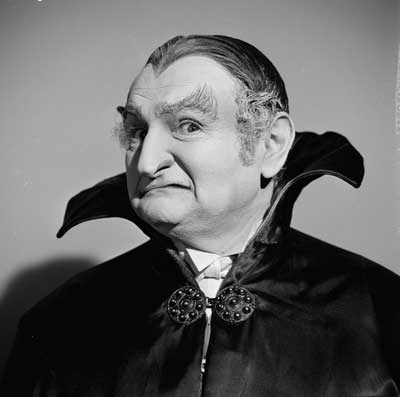
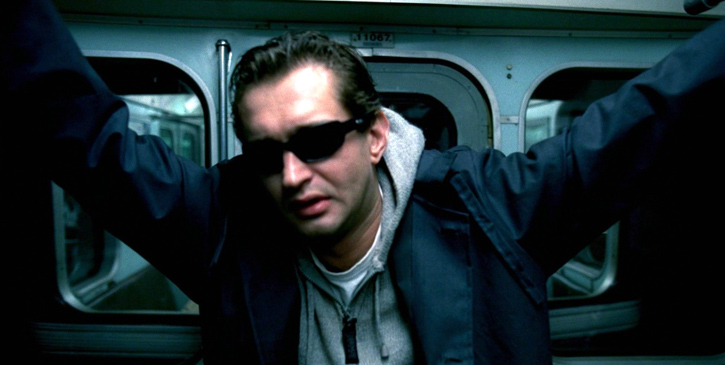
Review 129: The Day Watch

The Day Watch by Sergei Lukyanenko

The distribution of this review has been banned as injurious to the cause of the Light. – The Night Watch

The distribution of this review has been banned as injurious to the cause of the Dark. – The Day Watch

The previous book left us with an unbalanced Moscow. The forces of Light gained a powerful ally in the form of Svetlana Nazarova, a potential Great Sorceress. Even before she knew she was an Other – one of that mysterious class of beings who can work magic, who can curse, bless and change their shapes – she was able to create a curse that very nearly destroyed Moscow. She, and the city, were saved through the bravery of Anton Gorodetsky and the Night Watch, who guard against the excesses of the forces of Darkness. In the end, the Light prevailed.

But this battle between Light and Dark is far from over….

Summer camp is different when Others are around

As with The Night Watch, this volume contains three books. In the first, a young witch named Alisa Donnikova has overreached herself. In a fight with the Night Watch, Alisa poured every last drop of her magical energy into supporting her fellow Day Watch members, an act of selflessness that nearly cost her her life. Burned out, she’s directed to take a break at a children’s summer camp in the Crimea. Posing as a camp counselor, she would be in a prime position to feed off the nightmares of impressionable young girls.

A word about Others and their powers. The foundation of an Other’s power comes from humans. While any Other has her own reserves to call on, she may… feed on the normal people around her. The Light Others take happiness and joy – literally. Have you ever been feeling really good, and then somehow the feeling just drains away? That’s what the Light Others do, and it powers them to no end. Much like a flowering shrub, pruning someone’s happiness doesn’t make it go away forever, and it may even come back greater, but still – in order to become stronger, the Light Others have to weaken people.

Those on the side of the Dark, on the other hand, feed off of fear and anger, but when they do, that fear and anger remain. It’s like warming yourself by the fire – as long as you keep feeding it, it’ll keep you warm. A Dark Other at the height of his power could probably super-charge himself just by going to a snowed-in airport for a day. Believe me. This stew of rage and frustration is a little too much for Alisa, however – she must subsist on the “thin broth” that is children’s nightmares.

He's a real catch, ladies!

While she’s there, however, her plan hits a snag in the form of a handsome, solid, beautiful man named Igor. Despite herself, she falls in love with him, and she falls hard.

The fact that he’s a Light Other doesn’t come up until it’s much too late.

The second story brings a mysterious figure to Moscow. Vitaly Rogoza has no memory of who he is or where he came from. All he knows is that he has to go to Moscow, and that he has power – the power of a Dark Other. Despite his personal amnesia, he has no trouble ingratiating himself with the Moscow Day Watch, and soon discovers that his power appears to have no upper limits. Why this should be, no one knows. Is he some Dark magician, beyond classification? Or is he something else entirely – something new and terrible? Whatever he is, what is his goal, and what is his link to the theft of Fafnir’s Talon, a Dark artifact of unspeakable power?

The third story brings it all together – the sad fate of Alisa Dinnokova, the theft of the Talon, and the rise and fall of the Great Sorceress Svetlana Nazarova. What’s more, the greater plans of the Light and the Dark are laid bare – and changed forever.

As before this book is heavily laden with the philosophy of Good versus Evil, Light and Dark. More importantly, it addresses the issues of freedom, a central tenet to the forces of Darkness. How free, they ask, can we really be?

The Light wants to make humanity better. They believe that, given the right influences and incentives, humanity can be great. But they need to be guided. Molded. Shaped. Consequently, the Light occasionally embarks on grand, world-changing plans, few of which actually work out the way they intend.

No one ever said freedom was nice....

The Dark, on the other hand, worships freedom. Every person, they say, should be free to choose his or her own path. If that path means doing good, then so be it. If it means doing evil, well, that’s cool too. The point is that every person is capable of deciding how their lives should be led, and no one – human or Other – should be able to take that freedom away from them.

It’s one of the oldest questions there is – how much freedom do we really deserve? And it’s a question that can never be definitively answered. But in these books, it’s fun to watch it play out.

————————————————
“There are some who think that we Dark Ones are evil. But that’s not true at all. We’re simply just. Proud, independent and just. And we decide things for ourselves.”
– Alisa, of the Day Watch, The Day Watch
————————————————

The Day Watch on Wikipedia
Sergei Lukyanenko on Wikipedia
Sergei Lukyanenko’s website (in English)
The Day Watch at Amazon.com

Leave a comment

Filed under death, ethics, fantasy, made into movies, mystery, politics, Sergei Lukyanenko, vampires, werewolves, witches, wizardry

Lost in the Stacks 6: You Keep Jesus, I’ll Take Hal Jordan

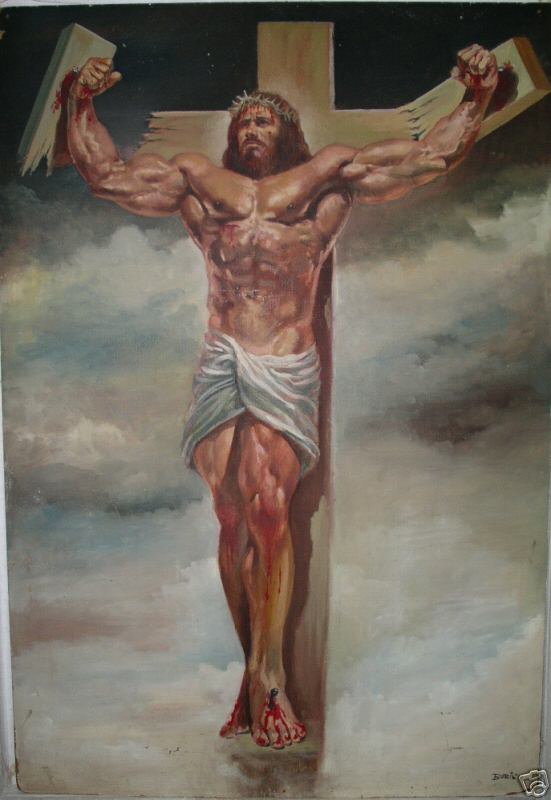
You know who else sacrificed himself saving the world? And then rose again?

Everyone needs role models growing up, and in a time of crisis everyone needs to turn to someone who is better than themselves. Some folks turn to religion, others turn to fiction. [1] As much as we use the real people in our lives – our parents, teachers, community leaders, I’ve found that fictional characters have imparted great lessons to me which have shaped the kind of person I’ve become.

How do fictional characters shape us, and why? What makes them so different from real people in terms of being a role model? Listen along with me and find out!

And of course, I’d be interested to hear from you – what fictional characters have made you who you are? What lessons did you learn from books, from TV or movies that have helped you become the person you want to be? Leave your story in the comments and join the conversation.

[1] Assuming, of course, that there’s a difference.

Leave a comment

Filed under comic books, DC Comics, Green Lantern, identity, Lost in the Stacks, personality, role models

Review 128: Soul Music

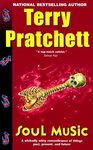
Soul Music by Terry Pratchett

“Music is my life.”

How many times have you heard that? From bona fide rock stars to teenage wannabes, there’s something about music that occupies us, that possesses us and just won’t let go. Even if you’re not a big music lover, there are probably songs which can ease your mind, pull you out of a dark mood, or set your heart to racing. There’s music that’ll lift your heart and make you think the world is a better place than it really is, and songs that will convince you that the dark heart of the world is just as decayed and corrupt as you always thought it was. Music has a kind of magic in it that can reach to the very core of who we are as thinking – and more importantly, feeling – beings.

That magic is dangerous enough on our world, where magic doesn’t actually exist. Imagine how powerful it would be on one where magic really was real. Like, say, to pick one out of thin air, the Discworld.

Sometimes, even more horrible things would emerge....

Of course, the Discworld has had its share of trouble with popular entertainment before. Acting troupes brought about an Elf invasion in Lords and Ladies and the Horrible Betentacled Things of the Dungeon Dimension nearly escaped thanks to the Disc’s proto-cinema in Moving Pictures. There’s just something about the arts in Discworld that leads to trouble – usually the world-ending kind.

In this case, though, the introduction of rock and roll – better known in Ankh-Morpork as “Music with Rocks In” – is only really dangerous to one person, the young Imp y Celyn. Just eighteen years old and already one of the best bards of Llamados, he wants to make something of his life. He wants to be more than just another bard, and in a mysterious shop that has only recently always been where it was, he finds his chance. Or rather, his chance finds him. A guitar-like instrument that does what no guitar should do – it whines, it growls, it sends out noises that run straight down your spine and make your nerves run with fire. It’s clearly not of this world, and it wants nothing more than to live. For that, it needs to change Imp’s fate, and by extension the fate of hundreds in Ankh-Morpork.

Soon, Imp and his band – The Band With Rocks In – are the most famous thing in the city, and the strange magic of this music is being felt everywhere. Even the wizards are helpless against it. Normally this would result in the aforementioned Horrible Betentacled Things, but in this case it’s more of a reversion to teenage years that never were. Still, Archchancellor Ridcully knows that there’s some force acting on people that shouldn’t be there, and nothing good ever comes of that.

Keith Death (art by Soulstripper on DeviantArt)

As if that weren’t enough, Death has decided to get existential and tries to figure out how he can make himself forget for a while. Why he decides to do this is not clearly explored, but it results in him leaving his duty. In his place comes his young Granddaughter, Susan, who would be great for the job if she didn’t think the whole idea of personifying a force of nature was just romantic woolly thinking. And it would be even better if she knew what her connection was to the doomed musician Imp y Celyn.

This book can be seen as a companion to the earlier Moving Pictures as an examination of and homage to popular culture. By transplanting it to the Discworld, Pratchett is able to look at rock music from the point of view of people who’ve never even thought about such a thing before, and who can more easily see the magic of it. And of course, it’s his big chance to make as many music jokes, puns and references as humanly possible, from the translation of Imp’s name (“Imp” meaning “small bud” and “Celyn” meaning ‘of the holly”) to some proto-heavy metal musicians trying to make leopard skin pants from a cat that has some severe hearing difficulties.

It’s a sort of love letter to rock and roll and all that it has brought us. From teenyboppers to punk to the horrible misuses of leather and spandex, it holds a mirror up to the way that rock music has influenced our modern culture. But it does not mock, oh no. It shows great attention to and reverence for this young art form that has done so much to change the world. To list all the references made in this book would be nearly impossible, but the amount of work and thought that went into making it is quite clear.

We're not here to judge.

More importantly, though, the book addresses some questions that are a little deeper than the simple rock and roll jokes. Like Death’s question: “WHAT’S IT ALL ABOUT? SERIOUSLY? WHEN YOU GET RIGHT DOWN TO IT?” Probably since the beginning of music, people have tried to find meaning in it. People have connected to music and to musicians in ways that they could never connect to other people, even family and friends. People find meaning in music, which then gives meaning to their lives, and the more you give your life to something, the harder the crash when that thing goes away. Imp discovers this in a very literal sense, but out here in the real world that is just as true.

People mourned for Michael Jackson, Elvis Presley, Kurt Cobain and other superstars as if they knew them. And in a way, I’m sure they thought they did. Like so much else in the world, though, music doesn’t have any meaning but what we give to it. The truly great musicians, the ones we always lose too soon, give everything they have. They manage to say to us what we’ve been saying to ourselves, but could never really figure out how to put into words. Music is the voice our emotions could use if our brains didn’t get in the way so often, and the best people lucky enough to be able to create it gain a kind of immortality.

Not the literal kind, unfortunately.

If you love music – especially rock music – then this is a book you should pick up and read. Even if you’re not a Discworld fan, you’ll probably enjoy it.

————————————————————–
This was music that had not only escaped, but had robbed a bank on the way out. It was music with its sleeves rolled up and its top button undone, raising its hat and grinning and stealing the silver…. It made you want to kick down walls and ascend the sky on steps of fire. It made you want to pull all the switches and throw all the levers and stick your fingers in the electric socket of the Universe to see what happened next. It made you want to paint your bedroom wall black and cover it with posters.
– from Soul Music by Terry Pratchett
————————————————————–

Soul Music on Wikipedia
Terry Pratchett on Wikipedia
Soul Music on Amazon.com
Terry Pratchett’s Homepage
L-Space Annotations on Soul Music

Leave a comment

Filed under death, Discworld, fantasy, humor, identity, music, rock and roll, satire, Terry Pratchett, wizardry

Review 127: The God Engines

The God Engines by John Scalzi

There is not, to my knowledge, a whole lot of theological science fiction. Madeleine L’Engle’s books may qualify, but to be honest, it’s been years since I read them so I don’t know. The Golden Compass books, too, but they struck me more as fantasy, seeing as how there were no spaceships. My only successful foray into National Novel Writing Month produced some theological sci-fi, but it was questionable at best and is still fermenting on my hard drive somewhere.

In any case, that is what John Scalzi has given us, and if you’re a regular reader of his blog and his other books then you may find this one to be a little… off. You see, like many accomplished writers, Scalzi has a Voice, a way of writing that is immediately identifiable as his own, and which a lot of his fans have gotten used to. There’s no single thing I can point to that really illustrates what this is, but trust me – it’s there. A certain whip-quick sarcasm, a way of looking at old questions from a new angle and the ability to cut through the requisite fuzzy thinking that seems so endemic to the human race.

Not quite like this... but kind of.

In this book, he tries on a new voice, something that sounds kind of like his, but at the same time like he’s trying on something new. It’s as if Jonathan Coulton started doing Manowar cover songs. It’s not bad, it’s just something that takes a little getting used to.

Captain Ean Tephe is the commander of a great starship, the Righteous, one of the many ships in the fleet controlled by the Bishopry Militant. He and the other captains in the fleet are charged with carrying out missions for the Bishopry in the name of their God, a being of immense power who uses the faith of millions to rule them. Their Lord is a powerful and active god, one who brooks no dissent from His followers and who will suffer no challengers to His dominion. Long ago, the Lord battled countless other, smaller gods, and won, chaining them to his will and turning them into the engines of the great starships that carry His people out into the universe.

Some gods are less tractable than others. (art by Evolvana on DeviantArt)

The god that powers the Righteous, however, is not cooperating. Some ships’ gods are quiet and obedient, others chatty, some cowed into good behavior by fear. The god on this ship is defiant, despite the prayers of priests and acolytes, and the horrible whip that the captain wields to compel obedience. This god soon reveals itself to be part of a greater plan, one which enfolds both Tephe and his crew and reveals a truth about their God that is enough to drive men mad. It is a test of faith for the men aboard the Righteous, and if they should fail, their lives will end in short order.

It’s a very cool concept, really, one which I haven’t seen done before. Scalzi has powered a civilization by faith, quite literally, in a God that not only exists, but it quite active in the lives of His worshipers. His high priests exert complete control over a population that rightfully fears for their souls, and manage to channel the God’s power into various science-like applications. Through the use of amulets called Talents, the God facilitates communication over great distances, compels obedience, and opens gateways. He has a civilian population whose faith nourishes Him, and a military arm that travels the galaxy spreading His word and destroying His enemies. And it all makes sense.

As cool as the idea is, though, the book itself felt like a rough sketch rather than a fleshed-out novel. It’s quite short, as novels go, and we are introduced to a lot of concepts and characters in a fairly brief amount of time. The Bishopry Militant, for example, sounds like a great place to see intrigue and double-dealing, lies upon lies that somehow manage to get things done, and we do see a bit of that when Captain Tephe gets a secret mission to a new world. Scalzi showed us in The Last Colony that he can handle this kind of multi-layered politicking, and I think it would be even better in a place like this. Add to that the Rookery, a kind of church-sanctioned brothel/therapy center aboard the ships, where the women who work there have nearly as much power and influence as the Bishopry itself. What would happen if these two institutions came into conflict, and what weapons would they wield?

This god has some opinions he'd like to share.

The chained gods, too, are a wonderful chance to explore a lot of ethical questions. They are undoubtedly sentient beings of great power, enslaved by a God that is stronger than they. Is this kind of slavery justified? Would it be possible for a ship to work with its god-engine, rather than compelling it with whips and prayers. What do these gods know, and how reliable are they? The god powering the Righteous seems to know a lot about how this universe works, including some terrifying tales about the God that Tephe follows, but how much of what it says can be trusted?

And what are the powers and limitations of a faith-powered science? Much in the way that engineers and scientists in our world manipulate a few basic laws of nature to achieve amazing things, what could be done in a world where prayers have power and where a high priest’s whim can decide the outcome of an entire mission? How do you creatively solve problems in a reality like this one, where they deal in belief and faith, rather than wavelengths and mass?

So yeah, there was a lot that I wanted from this book once I figured out what Scalzi was doing with it. After a great opening line (and a third line that just left me confused), the learning curve was a little steep. Once you figure it out, though, the possibilities seem endless. Unfortunately, the book itself ends rather sooner than it should.

The less said about this album, the better.

It’s not my favorite book by Scalzi, not by a long run, but since he’s said he’s going to lay off the Old Man’s War universe for a while, I should be thankful that he is willing to experiment and try new things. As many music lovers know, it’s sometimes very hard to accept that an artist you love wants to try to do things that are new and different, rather than keep doing the things that made you love them in the first place. I remember when U2 put out Achtung Baby and my friends who fell in love with The Unforgettable Fire and The Joshua Tree and Rattle and Hum were almost personally offended. Zooropa, of course, was not to be mentioned aloud in their presence.

That kind of experimentation and risk-taking, however, is ultimately what helps an artist grow. You may not like what comes of such experimentation, but that’s tough – it’s not about you.

I don’t know if Scalzi will return to this universe or not, but I hope he does. If he does, I hope he lingers longer than he did in The God Engines, and brings forth another wonderful and complex universe.

————————————————————
“Faith is not for what comes after this life. Faith is for this life alone.”
– A God, The God Engines
————————————————————

John Scalzi on Wikipedia
The God Engines on Wikipedia
The God Engines on Amazon.com
John Scalzi’s Blog

Leave a comment

Filed under gods, good and evil, John Scalzi, morality, religion, science fiction, sins, space travel, theocracy, theology, totalitarianism, war

Review 126: Supersense

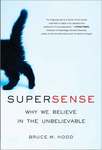
Supersense by Bruce Hood

Like many of you who are reading this, I can’t throw books away. Even thinking about it makes me uncomfortable, so there is no way I could possibly hold a book over a garbage can and just let it drop. Ugh.

I don’t know why this should be, to be honest. I mean, they’re just books, right? Paper and ink that anyone can buy. And not even special books – first edition, author-signed, sold to me by my beloved grandmother on her deathbed.

NOOO!! Take it down, Jimmy, take it down!!

I would be hard-pressed to throw away even bad books. Mein Kampf, Dianetics, A Series of Unfortunate Events – I would save even these from the trashpile. Not because they’re worth reading, but because they’re books.

I’m not a squishy, sentimental man, either. I can tell dead baby jokes without flinching. I’ve participated in the burning of an American Flag. I’ve flipped off the White House (it was the Bush era – I couldn’t NOT flip it off), and if you give me a photo of the Pope, I’m pretty sure I can tear it up on live TV.

So what is it about these mass-produced blocks of paper that instills in me such reverence? This question is part of what Bruce Hood discusses in his book Supersense, appropriately subtitled, “Why we believe in the unbelievable.”

Hood is a psychologist by trade, and this book is an investigation into why we persistently believe in things for which we have no evidence. This can range from religious adherence and the firm belief in things like “holiness” and “sinfulness” all the way to haunted houses, superstitious behavior, and the belief that evil acts can somehow “taint” a physical object. In one demonstration that he refers to throughout the book, Hood offers a cardigan to his audience. It’s a nice enough sweater, perhaps a little out of date, but clean and it looks comfortable. It’s the kind of cardigan you might wear on a chilly autumn evening and think nothing of it.

The Wests? Naw, they're fine people. Perfectly normal.

Then Hood tells the audience that the sweater belonged to Fred West. For those of us who are not from England, Fred West is one of the most notorious serial killers of the last century. Over a span of twenty years, he and his wife tortured, raped and murdered at least twelve girls, two of whom were their own daughters. They’re very well-known in England, and as soon as people found out that the nice comfortable cardigan had belonged to Fred West, no one wanted to touch it, much less put it on. Even though there’s no rational basis to believe so, many people believed that there was some kind of contamination linked to the sweater, and feared that Fred West’s evil would somehow transfer to them.

As someone who tries to be rational as much as possible, I have found myself wondering why I hold on to beliefs that I know are fundamentally irrational. I wonder it even more when I watch the news or surf the internet and see how many people believe in things like “healing energy,” homeopathy, guardian angels, magic spells and the like. “What century are we living in?” I ask myself as I curl up into a ball and weep. The Enlightenment was only two hundred years ago – why are we backsliding?

Thinkers and scientists such as Richard Dawkins believe that this kind of fundamental irrationality is a learned trait. Parents pass it on to children, who then pass it on to theirs. Dawkins even goes so far as to consider bringing your child to church to be “child abuse,” and believes that if only we can break the chain of superstition, a new Age of Reason will emerge.

Waiting 200 years and counting....

Hood disagrees, and he makes a pretty compelling case. He doesn’t argue for the existence of the supernatural at all in this book, but rather the sense of the supernatural – the Supersense, as he calls it. This is the feeling that someone is watching us, the belief that one object is somehow more “special” than another, identical object. It is the reason we plead with our computers when they don’t work, why we anthropomorphise so many things is our world, and why we revere the remains of saints and shun the sweaters of murderers. It is a sense that there should be a supernatural world out there, even if we can’t prove it.

Hood believes that the origin of this supersense is in the way our early minds develop as infants. In that very early stage of life, we try to make sense of the world as best we can. Babies are little scientists, testing reality against their observations again and again, and coming up with hypotheses about how the world should work. This need to understand the world is hard-wired into our brains as part of our “mind design,” and not only can we never get rid of it, it may be essential to our development into fully-formed human beings.

A smiling sun is not always a good thing.

By testing children and how they observe the world, Hood tries to see how the mind develops from birth onwards, without the years of cultural indoctrination that Dawkins and those of similar opinion decry. These tests show how children expect reality to behave, and what happens when their expectations don’t match their observations. He looks at how children imbue the world with life and purpose – the Sun, always smiling in children’s drawings, exists to give us light, trees to shade us and the grass is there for us to play on. This endowment of purpose, or telos, if we’re going to be philosophical and pompous, is something we continue to do even into adulthood.

The more we learn about the world, the more we find out that it doesn’t follow the common-sense rules that we laid down in our infancy. It’s hard to accept, for example, that we aren’t the end product of evolution – even worse, evolution has no end product in mind. What’s more, after our brains went through years and years of classifying the world into neat little categories such as “living/non-living; intelligent/non-intelligent; plant/animal,” it’s jarring to know that we’re only 5% of the way off from chimpanzees and 50% off from being bananas!

Children intuit the world as they grow, and that is part of the mind-building process. This is the architecture of our minds. More often than not, it produces a rational picture of the world and how it works, but not always – the trade-off is that some supernatural ideas come along for the ride. While the mind-building process does prepare us to exist in the greater world, it also makes us fundamentally irrational beings. Some people are more able to overcome this irrationality than others, but even the hard-core skeptics may find it difficult to put on the sweater of Fred West, or have trouble not smiling when they’re in the presence of the sweater of Fred Rogers.

Ahhh... I feel better.

In a way, this book was both a disappointment and a relief. I have always hoped that one day humanity would rise above its irrationality and start appreciating the world for what it is, instead of wasting time looking for things that just aren’t there. But if Hood’s hypothesis is correct, that’s never going to happen. As long as we are human, there will always be a streak of the irrational in us. Try as we might, we will always have superstitions, strange beliefs, and we will always be looking for things that we cannot see.

And of course, perhaps this is a good thing. This irrationality is what gives us passion, it’s what connects us together as a species and as societies. This belief in the sacred, for example, is what gives rise to shared values in a community and a shared sense of what is important and what is forbidden. Without it, we’d be a species of Lex Luthors – fundamentally selfish, sociopathic and without the ability to connect to others.

NO.

On a personal note, it means that maybe I don’t have to be so hard on myself. I mean, being rational is great and all, but when you get to the point where you find yourself thinking something like, “Yeah, what is the big deal about incest?” then you know that it’s time to give the prefrontal cortex a break. And instead of beating myself up for not being able to completely disavow all the goofy little supernatural things that I cling to, perhaps I can just accept them as part of what makes me who I am. I know there’s nothing truly special about my books, but the supersense tells me otherwise. It may not be right, but at least it gives my life a little more color.

————————————————-
“If it’s true that our beliefs can be supernatural but unconnected to religion, then it must also be true that humans will not necessarily evolve into a rational species, because a mind designed for generating natural explanations also generates supernatural ones.”
– Bruce Hood, Supersense
————————————————-

Bruce Hood on Wikipedia
Supersense on Amazon.com
Bruce Hood’s blog

Leave a comment

Filed under Bruce Hood, children, nonfiction, pseudoscience, psychology, science

Review 125: Logicomix

Logicomix: An Epic Search for Truth by Apostolos Doxiadis and Christos Papadimitriou

I have a question for you. It’s a simple-sounding question, but hard to answer, so I really want you to put a good amount of thought into it before you do. Okay? Yes, I’m still in Teacher-mode, but that’s not important right now. My question is this:

What is truth?

Good luck with that whole "free will" thing.

It’s one of those unanswerable questions that has bugged us ever since we started being able to ask unanswerable questions. Along with “Why is there evil in the world?” and “Do we have free will or are our lives pre-determined from the beginning?” or “What’s the deal with that Justin Bieber kid? I mean really?” this question is one that people either ignore or obsess over.

Didn’t think I could do a pop-culture reference like that, did you? Shows how much you know….

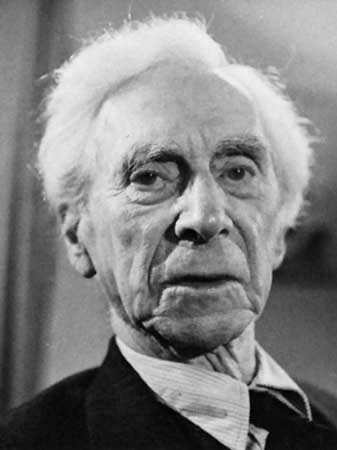
This graphic novel is about one man’s pursuit of this question, and the ways in which it nearly destroyed his life. The man was Bertrand Russell, and we follow his life from his childhood to late adulthood as he searches for an unshakable foundation to mathematics and logic, and thus an absolute truth that he could rely on.

Bertrand Russell does not find the truth. He teaches it to come when it is called.

As a child, Russell lived with the question of why things are the way they are, and got no good answers from his domineering grandmother. It wasn’t until his introduction to geometry and the wonder of mathematical proofs that he could finally say there was something about which he could be absolutely sure in the universe. Mathematics, he thought, would be the answer to everything. Pure, unsullied and utterly, utterly reliable.

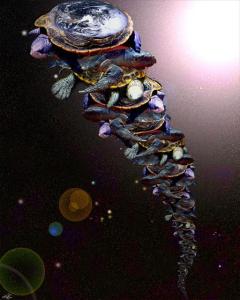
But there was a flaw in math – the Axioms. Mathematics in the 19th century was a direct descendant of Euclid’s work, and rested on a series of axioms in order to function. An axiom, then, is something that is assumed to be true so that you can go on to prove other things. For example, if you have a line, and a point not on that line, there can be only one line drawn through that point that is parallel to the first. Why is this true? Well… it just is. If you have to prove that, then you have to prove a thousand other things first, and you never end up being able to prove the thing you were trying to prove in the first place. It was like, he thought, the cosmological model of the world on the back of a turtle. Which stood on another turtle. Which stood on another, and another – turtles, all the way down.

The bottom turtle's name is "Jeff." (art courtesy of Kenneth Rougeau)

That didn’t satisfy young Russell, and he went off in search of the floor upon which the last turtle stood, as it were – new mathematics that would be able to define the foundations of math, and thereby give a concrete understanding of the universe. Along the way, his desire to apply the certainty of math to human thought and interaction led him to the discipline of logic, a strange chimera of mathematics and philosophy. By becoming a logician, he thought he might finally be able to pin down some absolute truths about not only abstract math but human nature itself.

Of course, he failed. Spectacularly. Broken marriages, broken friendships, ill health – his obsession with an absolute truth to the universe nearly destroyed everything he had. Fortunately for him, Russell pulled back from the abyss before it could swallow him whole, and became one of the early 20th century’s greatest philosophers in the process. His failure to find an ultimate foundation for logic and math was not entirely without fruit – thanks to work by Russell and others, these disciplines were pushed forward in ways that made our modern lives possible. New ways of understanding the universe, from the unfathomable depths of infinity to the simplicity of 1+1=2, everything was open to examination in those days. Because of men like Bertrand Russell, humanity advanced in great leaps and bounds.

1+1=2. Seriously. No more arguments.

In the end, it’s a compelling book. I read and re-read it, convinced each time that there was something else I had missed. I was very often right. Doxiadis and Papadimitriou have put together a compelling tale of a man often overlooked by the general public, and they did so in a medium that’s close to my heart – the graphic novel. The art, done by Alecos Papadatos and Annie Di Donna, is wonderful. It has a simplicity that belies the complexity of its topic, and shows an excellent sense of storytelling. Hats off to the two of them, without a doubt.

This book, it should be noted, is not a primer on logic. If you’re looking to know how logic works, or you want to know a bit more about higher mathematics and how to do them, then you’d best look for another book. As the authors tell us right in the beginning, this book is a story, a great tragedy that owes its inspiration to the ancient productions of the Greeks. It’s the story of a man who pitted himself against the universe and lost, but who did so in such a way that he – and the world – came out better for it. The book ends with a scene from The Oresteia, a classic Greek drama about another man who found himself in a no-win situation with no absolutes to rest upon.

"Stop asking me to prove beauty, dammit!"

Much like Orestes, when faced with two choices that could lead to his destruction, the only way forward for Russell was to compromise and to move forward. By doing so, he not only became a happier man, but became involved with humanity again, as a philosopher, a teacher, and an anti-war activist.

In the end, this book is about the compromises we all have to make as human beings. The world may be a logical place, but we are not. There is a limit to our logical understanding of ourselves, and sooner or later we have to accept that and deal with people as people, rather than as problems to be solved and equations to be balanced. Bertrand Russell’s quest, as interpreted by this novel, is an example of how far we can push the need to know exactly what’s at the bottom of it all. The fact that the foundations of our world appear to be unprovable and unknowable is, ultimately, unimportant. What is important is that we are here, now, and we need to make sense of our own lives.

—————————————————————
“The demand for certainty is one which is natural to man, but is nevertheless an intellectual vice. So long as men are not trained to withhold judgment in the absence of evidence, they will be led astray by cocksure prophets, and it is likely that their leaders will be either ignorant fanatics or dishonest charlatans. To endure uncertainty is difficult, but so are most of the other virtues.”
– Bertrand Russell, Unpopular Essays – Philosophy for Laymen
—————————————————————

Logicomix on Wikipedia
Apostolos Doxiadis on Wikipedia
Christos Papadimitriou on Wikipedia
Bertrand Russell on Wikipedia
Logicomix on Amazon.com

2 Comments

Filed under Apostolos Doxiadis, Bertrand Russell, biography, Christos Papadimitriou, graphic novel, logic, mathematics, nonfiction, quest

Lost in the Stacks 5: Art versus Artist

Scott Adams says some really dickish things, but the Pointy-Haired Boss is still funny to laugh at.

Mel Gibson shows his anti-Semitic side, but Lethal Weapon is still one of the best buddy cop movies of all time.

Dave Sim writes a compelling political drama in his comic book series Cerebus, but then shows himself to be a homophobic misogynist of the highest order.

Once you’ve learned something about your favorite writer or artist, it may poison your view of the art you used to love. How can you reconcile these feelings and still be able to look at yourself in the mirror? The answer [1] is in this month’s edition of Lost in the Stacks: Art versus the Artist! We look at whether art can be considered separately from the person who made it, and what it means to deal with a moral problem that has plagued us since art began. Take a listen and join in the conversation in the comments!

————————————-

[1] Disclaimer: answer may not actually be an “answer”

Leave a comment

Filed under art, criticism, ethics, fans, fiction, Lost in the Stacks, morality, reading

Review 124: The Night Watch

The Night Watch by Sergei Lukyanenko

This review has been approved for distribution as conducive to the cause of the Light. – The Night Watch

This review has been approved for distribution as conducive to the cause of the Dark. – The Day Watch

Imagine a world where magic is real. A place where people known as Others are born with powers they don’t understand. Their destinies are unwritten until that fateful day when they first become an Other – when they discover the strange, shadowy and powerful world known as the Twilight – and have to make a choice: will they stand with the Light or with the Dark. Will they dedicate their lives to Good or Evil?

Maybe it ain't what it used to be, but it's still dramatic.... (art by mirerror on DeviantArt)

It’s not an easy decision to make, by any means. Joining either side has its limitations and its rules, for the battle between Good and Evil isn’t what it used to be.

Long ago, it was simple – Good fought Evil, Dark fought Light, and blood was shed on both sides. It was a vicious, unending war that threatened to decimate the world. Finally, the two sides reached an agreement. A Treaty, well deserving of the capital letter. There would be a truce between the two sides, a balance that would be maintained at all costs. Any act of evil would be balanced by an act of goodness, and vice versa. Neither side is to have an advantage.

Part of the Day Watch Auxiliary Brigade

Making sure the peace is kept is the job of the Watches – the Night Watch, staffed by elites of the Light to guard against advances by the Dark, and a Day Watch, staffed by the elites of the Dark to guard against excesses of the Light. We begin our look at the Others of Moscow with a young adept named Anton Sergeeivich Gorodetsky, a wielder of magic and an analyst forced into the more exciting realm of field work. His job is to find out who a pair of vampires are illegally attempting to seduce and stop them. In the process of doing that, and saving the soul of a young Other named Egor, he stumbles upon something that threatens the entire city of Moscow, if not all of Russia. A young woman has a curse upon her head, so horrible and so powerful that the forces of the Light may have no chance to disperse it. If she dies, the city will die with her. If she lives, even worse may befall the world.

There are three stories in this book, somewhat independent but entirely connected. The first details the discovery of Egor and the cursed Svetlana. In the second, an Other of the Light, a maverick who doesn’t know about the rest of the Others, or the Treaty between Light and Dark, is murdering Dark adepts. Somewhat alarmingly, Anton is being framed for the murders. In the third book, Moscow is gripped in a heat wave. In the midst of this, the leaders of the Light are attempting to change the world. Whether it ends up being for the better or the worse, no one can know. But Anton is convinced that it must not come to pass….

Team ANTON!!!!!

It’s a gripping fantasy, in a very complex world. It’s compared to Rowling’s work, and justly so (although I don’t think there’s much of a case to be made for an attempt to ride on Rowling’s coattails – Night Watch was originally published in 1998, only a year after the release of Harry Potter and the Sorcerer’s Stone). There are substantial differences, of course, making Night Watch a much more adult book than the Potter series. There are very few children, and the few that are there are not in very substantial roles. There’s far more drinking, smoking and sex in this, of course. But the world that Lukyanenko has created is every bit as deep and complex as the one Rowling has made. There are any number of roles that could be played, and an almost infinite number of situations that could be built on the fairly simple rules that are set up by the Light-Dark Treaty.

The biggest difference, of course, is in the complexity of the world. Rowling’s world is fairly definitive in its divisions between good and evil – there is good, there is evil, and there is no question of which is which. The evil characters are definitively evil, and the good characters are definitively good, and the reader doesn’t have to worry too much about who’s on which side, Snape notwithstanding.

The Others of Moscow, however, are not nearly so clear-cut. Yes, the Light is trying to do the work of the Good, to make the world a better place. But their machinations and their plots don’t always go as planned. See the Russian Revolution and World War II for examples why. They ignore the Law of Unintended Consequences and the horrors it can unleash. By trying to do Good, they unleash great evil upon the world.

He's just a big softie, really....

And how about the Dark? Yes, they’re populated by werewolves, witches and vampires, but they are advocates of utter and total freedom. They do not destroy for the sheer joy of destruction, but because they want to increase the personal freedom of the world. They’re not interested in making humanity “better,” or making a better world. They simply want to live in the world as it is, free from restraints – both internal and external.

While it may be pretty clear who is on the Light and Dark side, it’s not entirely clear who is doing Good or Evil at any given time. And, more importantly, it is almost impossible to know who is actually right.

It’s a great read – full of anguish and self-doubt and torture, like any good Russian novel should be. Anton knows that the Light doesn’t live up to the standards that it preaches, but he knows that he needs to be on the right side. He picks apart the intricate, decades-long plot of the Night Watch and very nearly figures out how to foil it. But even in revealing the truth, he does not manage to save the world from the doom of the Light.

Or does he?

We’ll have to read the next book and find out….

————————————————
“You accuse us of cruelty, and not entirely without reason, but what’s one child killed in a black mass compared with any fascist children’s concentration camp?”
– Zabulon, of the Day Watch, The Night Watch
————————————————

The Night Watch on Wikipedia
Sergei Lukyanenko on Wikipedia
Sergei Lukyanenko’s website (in English)
The Night Watch at Amazon.com

2 Comments

Filed under ethics, fantasy, good and evil, horror, identity, made into movies, morality, philosophy, politics, Russia, Sergei Lukyanenko, short stories, society, USSR, vampires, werewolves, witches, wizardry

Review 123: Nineteen Eighty-Four

Nineteen Eighty-four by George Orwell

Gods, where do I even start with this?

As with To Kill a Mockingbird, I read this during Banned Books Week for two reasons. First, it’s on the ALA’s list of top banned or challenged books, and second because it’s really, really good.

As with all the books I read, there’s always a little part of me thinking about what I’m going to say about the book once I finally decide to write about it. Sometimes I start composing in my mind, coming up with the pithy words and phrases that have made me into the international book reviewing superstar that I am.

This time, however, I could barely concentrate for the cacophony in my head. There’s just so much going on in this novel that doing it any sort of justice would probably require writing a book that was longer than the book that it was analyzing. And as much as I love you guys, I’m not about to write a whole book about this. Probably because I reckon better minds than mine already have.

Art by Party9999999 on DeviantArt

Regardless, it’s hard to choose where exactly to go on this one. There are so many political, sociological, psychological and philosophical threads to pick up here that no matter what I write about, I’m pretty sure I’ll get responses about how I didn’t mention the solipistic nature of Ingsoc and its relationship to the philosophy behind modern cable news network reporting strategies. Don’t worry, guys – I got that one.

I suppose two big things came to mind while I was reading it this time, and the first of them was inspired by the previous book I read, To Kill a Mockingbird. In that book, Atticus Finch talks a lot about bravery. To teach his son about what it truly means to be brave, he gets him to take part in an old woman’s struggle to free herself of a morphine addiction before she dies – an excruciating process that is more likely to fail than to succeed. But she does it anyway. Atticus says to his son about bravery, “It’s when you’re licked before you begin but you begin anyway and you see it through no matter what. You rarely win, but sometimes you do.”

The question in my mind, then, was “Is Winston Smith brave?”
I really want to put this on a t-shirt....

It’s a hard question to answer, really. By Atticus’ definition, you could say that he is. A member of the Outer Party that rules the superstate of Oceania, Winston Smith is a part of a greater machine. He works in the records department of the Ministry of Truth, diligently altering and “rectifying” the data of the past to bring it into alignment with what the Party wants to be true. His is a world where there is no such thing as objective truth – the truth is what the Party says it is.

A good member of the Party sublimates his will to that of the Party. What Big Brother wants, she wants. She has no love but love for the Party and no dreams but to do what the Party wants of her. A good Party member doesn’t have plans or hopes or dreams. He doesn’t ask questions or idly wonder if things could be different from what they are. A good Party member doesn’t think. He is born, lives, consumes, and dies.

Winston, however, cannot be a good Party member. He wonders why the world is the way it is, and begins down a road to assert his own identity as a human being. He knows full well that he will fail, that in the end he and the woman he loves will be delivered into the hands of the Thought Police, and he is appropriately terrified. But he goes through with it anyway. He keeps a diary of his thoughts and actively tries to join an underground movement that is determined to overthrow the Party and Big Brother. He declares himself willing to undertake acts of heinous treason, all in the name of resistance against the Party.

The new faces of the Party. DOUBLEPLUSGOOD!!

And in the end, he fails, just as he knew he would. So does this make Winston, a man who is so far in character from Atticus Finch, a brave person? Well, yes and no.

He does meet Atticus’ definition of bravery – persisting in what you believe to be right, even in the knowledge that you will probably fail. Winston puts his own life on the line multiple times, committing Thoughtcrime of the highest order. But is he doing it for some higher ideal, or is he doing it for more selfish reasons? Flashbacks to his younger days suggest that Winston Smith was an unrepentantly selfish child, who was willing to disregard the dire straits of his own mother and baby sister in order to get what he wanted. Could we not say that the adult Winston does the same? That he is more interested in freedom for himself than for others? Is his rebellion against Big Brother political or personal? He claims that he wants to see the world changed and freedom brought to all people, but how far can we trust a mind that’s been well-trained in Doublethink?

This, of course, gets right back to the Big Question of why people do the right thing, when it might be so much easier and profitable to do otherwise. Atticus Finch could have let Tom Robinson swing, thus saving himself and his family a whole lot of trouble, just as Winston could have just given up and emulated his neighbor, Parsons, becoming as good a Party member as possible. Neither man could do that, though, because is was not in their nature to do so. It was impossible for Winston to continue to live the way the Party wanted to and, given time, he may have been able to reach beyond meeting his own personal needs and seen to the needs of his greater community.

Unfortunately, we never get the chance to find out, as the Thought Police eventually get tired of watching him and take him in. To his credit, he does hold out to the last extreme before he betrays Julia in his heart, so perhaps he is brave after all.

How adorable....

The other thing that came to mind while I read was the modern use of the word “Orwellian,” and how it falls vastly short of what is depicted in this book. It gets thrown about any time a city puts up a few CCTV cameras downtown, or a business decides to put surveillance cameras in their store. It comes up when we put RFID chips in passports and credit cards, or when we think about how much data Google can hold about us. The word brings to mind a sense of constant surveillance, never being able to move or act without some government or corporation knowing what we’re doing.

While the concept of the two-way telescreens in this book certainly are a logical extension of surveillance culture, to call a customer database or red light cameras “Orwellian” is like calling a Bronze-age chariot a Ferrari. It betrays an incredible lack of understanding of what exactly is going on in the world that Orwell has built. We may be watched by these people, but in comparison to the average citizen of Oceanea – prole or Party member – we are still remarkably free.
Freedoms available to us. Not these people.

There are still freedoms available to us that people like Winston never had, and couldn’t understand even if they were offered. We can protest, we can voice our disagreements, we can channel our energies into whatever pursuit we choose, or not channel them at all. We have the freedom to decide who we want to be and how we want to live, at least within the limits of a well-ordered society. We do not live in daily terror that we might be abducted from our beds, our lives ended and our very existence erased from record and memory. Honestly, I think a few security cameras pale in comparison to the horror that is Oceanea and the world of Big Brother.

There is so much more to talk about with this book. I find Newspeak fascinating, and its foundations both amazing and terrifying. The idea that a concept can only truly exist if there’s a word for it brings to mind those “untranslatable” words you find in every language. For example, there’s no equivalent to the English “miss” in Japanese, as in “I miss my mother.” Does that mean that people in Japan are incapable of missing people? Of course not, but the underlying theory of Newspeak suggests otherwise. Once the party reduces the English language to a series of simple words with no nuance or subtlety of meaning, the idea goes, Thoughtcrime will be literally impossible. After all, how can one wish for freedom if the concept itself is impossible to articulate?

Then there’s the idea of the mutability of the past. The way the Party exerts its unbreakable control over the population is by virtue of the fact that they control all media – newspapers, radio, television, publishing of all sorts. If the Party wants to, say, claim that Big Brother invented the airplane, all they have to do is revise all relevant media to reflect their desired past, and then replace and destroy anything that disagrees with them. With no evidence that Big Brother didn’t invent the airplane, all that’s left is fallible human memory, and those who do think they remember the “right” version of the past will eventually die anyway. Whoever controls the present, the Party says, controls the future. And whoever controls the past controls the present. By remaking the past, the Party guarantees that they can never be gainsaid or proven to have erred in any way.

Even Big Brother would crumble before 4chan....

Fortunately for us, Big Brother never had the internet to contend with. As anyone who’s been online for a while knows, nothing on the internet ever goes away. Ever. The words of any leader or influential person are all there, in multiple copies, all of which can themselves be copied and distributed in mere seconds. While it is possible to fake a photograph, the awareness of that possibility, as well as the technology to suss out the fakes, are just as available to anyone who wants them. Even in cases where there are disputes about the past, or re-interpretations of past events, it is impossible for one version to systematically replace all others. While this sometimes results in competing versions of the past, the one with the most evidence tends to prevail.

Continuing in that vein, the understanding that the Party controls all information about itself leads to a very interesting question that’s not addressed in the book – is anything that is not directly witnessed by Winston Smith true? We are led to believe, for example, that there are three world powers – Oceanea, Eastasia and Eurasia – which are locked in a state of perpetual war. The nature of this war and how it serves the interests of these three nations is laid out in Goldstein’s Book, which is the text of the Revolution that Winston and Julia want to join. But here’s the thing – Goldstein’s Book is an admitted fiction, written by the Party as a kind of honeypot to bring suspects through the last stages of their Thoughtcrime. So we have no proof that the world of Nineteen Eighty-four actually is laid out the way it appears.

Is this the real world? GO TO ROOM 101, CITIZEN!

The Party could in fact dominate the world, using the pretext of war to keep the world’s citizens terrified, needy and compliant. On the other extreme, Oceanea could just be Britain, turned in on itself like some super-accelerated North Korea, its borders sealed and its citizens kept in utter ignorance of the world outside. We don’t know. We have no way of knowing, and neither do any of the characters in the book. Even the Inner Party members might not know the truth of their world, and wouldn’t care if they did.

One more thing, and I’ll keep this one short – Doublethink. The ability to hold two contradictory ideas in your mind, believing in both of them simultaneously and yet being unaware that there’s any conflict at all. Knowing, for example, that last week chocolate rations were at thirty grams, and at the same time knowing that this week they had been raised to twenty. All I can say here is to look at the health care debate in the United States. Here’s a fun game: see how often someone says, “We have the best health care in the world,” and then see how long it takes before they tell us that health care in the United States is irrevocably broken. Your average politician and pundit does this kind of thing all the time and, in accordance with the basic principles of Doublethink (also known as Reality Control), they immediately forget that they had done it.

No! Not Obamacare! Do it to Julia! DO IT TO JULIA!!! (Art by Scott Sullivan on Flickr)

This game is much easier if you watch Glenn Beck for half an hour. You’ll be missed, Glenn.

There is just so much to be gleaned from this book. Probably the most important is this – the world depicted in Nineteen Eighty-four is certainly not an impossible one, but it is unlikely. The people of that world allowed the Party to take over for them in a time of crisis, and in that sense this book is a warning to us all. It is a warning to keep the power that we have, and to resist the temptation to let a government decide who we should be.

——————————————-
“I understand HOW: I do not understand WHY.
Winston Smith, Nineteen Eighty-four

George Orwell on Wikipedia
Nineteen Eighty-Four on Wikipedia
Online comic adaptation
Nineteen Eighty-Four on Amazon.com

2 Comments

Filed under classics, dystopia, ethics, existentialism, fiction, futurism, George Orwell, language, made into movies, morality, philosophy, politics, psychology, totalitarianism, truth

Review 122: Anansi Boys

Anansi Boys by Neil Gaiman

When I started in on this book, I knew there were certain things I could expect from Neil Gaiman – insight, clever twists on literary assumptions, a good perspective on the nature of our reality. And, I must say, he delivered in full. This story draws from some of the most ancient of human tales and reflects on the most ancient of human needs – the need to have a story of one’s own. It’s a book about purpose and destiny, and other very deep subjects.

Yes - this man is hilarious.

What I didn’t expect was to spend most of the book laughing out loud and disturbing the people around me.

Seriously, there were some times when the other teachers in the staff room would stop whatever conversation they were having because they’d been interrupted by my cackling. Or the staff would come over and ask what was so funny, and I’d try to explain – which doesn’t really work when you’re trying to cross languages and literary traditions. People in Japan don’t really laugh out loud at their books, and can’t quite understand why I do. But I laugh. I snicker, I giggle, I cackle, and I never expected that from Neil Gaiman.

The book was, needless to say, wonderful. While by no means a sequel to Gaiman’s previous bestseller American Gods, it inhabits the same universe. This is a world where the gods exist – they’ve been called into existence by us and, in turn, shape our lives.

The book follows the unfortunately nicknamed Fat Charlie, whose life has been ruined by his father’s death across the Atlantic. This wasn’t the first time his father had ruined his life – it had happened many times before in many terrible ways. For Fat Charlie, however, dying in the middle of a karaoke hall just seems to be a final slap in Fat Charlie’s face.

Fat Charlie isn’t his real name, of course – his real name is Charlie Nancy, which isn’t much better. Fat Charlie is only a nickname given to him by his father. He tried to shake it in his life, asking people to call him Charlie or Charles or Chaz, and he wasn’t even fat – just a little soft around the edges. But his father gave names that stuck like gum to the underside of a school desk, and no matter where he went, Charlie Nancy inevitably became Fat Charlie.

You would think this would raise eyebrows in the delivery room....

The reason for this phenomenon, of course, is that Fat Charlie’s father is a god. He is Anansi, the Spider, a trickster god who managed to steal all the stories from Tiger back when humanity was young, and who managed to trick, deceive, swindle and humiliate nearly every other god and spirit there ever was. He was good at it, and there was nothing he wanted that he couldn’t get.

Fat Charlie was, in very many ways, a disappointment. Where his father was debonair, Fat Charlie was a klutz. Where his father could command the respect of men and women, Fat Charlie was a doormat. Where his father was the embodiment of confidence, Fat Charlie was a crumbly mess. I suppose it’s normal, really, being the child of a god, and not really his fault, even if he didn’t know it until his father was dead.

He didn’t know about his brother, either. His brother is Spider, a young man who is so cool that he can convince an entire L.A. party that they can walk on water. He can do real magic, step in and out of the world with ease, and carries his own bedroom with him. When Spider comes into the picture, everything goes horribly, horribly wrong. Think The Odd Couple, except that Oscar Madison has divine powers and absolutely no sense of consequence.

The story is a lot more than two brothers who don’t know how to get along. It’s a story – about stories. In the stories of Anansi and Tiger that are laced throughout the book, we learn that once, long ago, all stories were Tiger’s stories, and they were stories of fear and blood and hunger. When Anansi took them, the stories became about cleverness and trickery and resourcefulness. So in a way, the victory of Anansi over Tiger is the story of humankind’s emergence from barbarism.

Speaking of someone whose story has been re-written over and over. Anansi would like Spidey, though....

It’s about personal stories as well, and that’s a theme that’s far more important to us as individuals. We are the stories we tell about ourselves. Fat Charlie didn’t need to be the tightly-wrapped ball of embarrassment that he was. But that’s who he told himself he was, and, so, that’s who he became. Once he starts to accept his heritage and his responsibility to his family, once he starts to re-tell his own story, he changes himself. The same is true for Spider – he’s written his own story as a rake and a charmer, but he finds that that story is lacking. It’s a story that needs some editing, and he’s better off for it.

This is a funny, funny book that reminds me in places of Dave Barry, though that might be a side effect of the Florida settings. There’s also a few footnote jokes, so I suspect that Neil has been hanging out with Terry Pratchett recently. Despite the laugh-out-loud general tone of the book, there’s a lot of Meaning to be found as well – the meaning of story and song, of family, and why you should always be nice to spiders. And birds. Definitely be nice to birds.

The ultimate message of the book, though, is that you can always re-write your story. The weak little spider can become a conquering hero, and the fearsome tiger can be a timid coward. No story is set forever. So if you don’t like the way your story is turning out, get out your red pen and start editing. Anansi would approve.

————————————————
“People respond to the stories. They tell them themselves. The stories spread, and as people tell them, the stories change the tellers.”
Anansi, Anansi Boys

Neil Gaiman on Wikipedia
Anansi Boys on Wikipedia
Anansi Boys on Amazon.com
Neil Gaiman’s homepage

2 Comments

Filed under brothers, childhood, coming of age, death, family, fantasy, fathers, gods, humor, identity, Neil Gaiman, quest, sons, spiders, story