Review 145: Griftopia

Griftopia by Matt Taibbi

This book made me want to get rip-roaring drunk, set a banker on fire, and kick a member of Congress square in the nuts, preferably from a running start. It put me one step closer to finally realizing my dream of living somewhere in the wilderness like the Unibomber (although without all the Unibombing). It took all of my already cynical ideas about how America works, patted them on the head and said, “You’re just adorable,” and then proceeded to tell me that Santa Claus is not only dead, but that his body was stuffed, covered in rhinestones and sold to the CEO of Goldman-Sachs to use as a towel rack in his guest bathroom.

Much like The Great Derangement, wherein Taibbi explains how Americans have built new realities for themselves based on their politics, this book really seems to be aimed right at me. My natural distrust of the government and especially of business makes me a natural reader for this kind of thing, and that sets off my bias alarms. So keep that in mind – I’m probably having a hard time evaluating Taibbi and his claims fairly, in that I think they’re all absolutely correct. They may not be, but that’s how they felt as I read the book.

"I'm sorry, but this diamond-encrusted nut-scratcher is clearly made of 14-karat gold, NOT 24-karat as I specified. I wouldn't give this to my stableboy's cheapest whore. Throw it away!"

Taibbi’s premise is disturbingly simple: the American political and economic system is set up to reward lying, cheating and grift. From the fraudsters who convinced poor families to take out loans on McMansions to the Great Greenspan himself, our economic engine has been running for years on an unstable fuel of high-octane mendacity. Every now and then, there is a hitch – the tech bubble of the late 90s, the housing crash, the oil price spike of 2008, the Great Financial Meltdown – but the engine keeps going. What’s more, the people who caused the bubbles and crashes manage to skate clear of damage and punishment, rewarded by lawmakers who are beholden to them. It’s a self-corrupting system that values short-term profit over long-term stability, and it’s probably going to be the ruin of us all.

The mortgage fiasco is well-described here. Taibbi takes us from the bottom of the financial food chain – a low-income homeowner who thought he was getting a great chance for a home of his own, and follows the chain of deceit up and up and up, from the mortgage broker who sold the deal (and, incidentally both lied about his client’s credit score and got him an adjustable mortgage in order to garner a higher finder’s fee) to the banks that put all these rotten mortgages together, to the insurance companies and financial institutions that bought them, sold them and traded them. All across the board, they lied about what they had and made sure that they passed their rotten goods off to some other poor sucker before the whole thing went wrong. And when it did, it was like some horrible chain of dominoes that started with people who discovered they couldn’t pay $1,500 a month for their home, and ended with the failure of banks that had ruled the financial sector for decades.

"Well, Congressman, I'm just going to put this down over here - it's heavy, you see - so just put it out of your mind. Don't worry about it at all."

What’s more, the US government let this happen. Under the guise of being “pro-business,” politicians have been loosening restrictions and adjusting interest rates for decades under the willful delusion that the free market can manage itself just fine. Under the direction of Ayn Rand disciples such as Alan Greenspan, the power of the government to manage corrupt banks and insurance companies is about as impressive as an elementary school crossing guard. They wanted business free of its regulatory fetters, and that’s what they got. What everyone else got, of course, was screwed.

Another example: during 2008, Taibbi noticed something weird. Gas prices were skyrocketing, but supply was keeping pace with demand. There were no lines at gas stations like there had been in the 70s, when OPEC refused to sell us oil. If you wanted to fill up, you could, as long as you were willing to pay a price that went up moments before you pulled into the station. Even people with the barest understanding of economics understands supply and demand – if the supply is lower than the demand, the price goes up, and vice versa. But here, neither the supply of gasoline nor the overall demand for it changed, yet prices were shooting up past $4 a gallon. What, as they say, the HELL was going on?

Our politicians – especially the ones battling for the White House – had pat answers ready for the cameras. Obama blamed the Evil Oil Companies and wasteful SUV drivers. McCain blamed anti-drilling legislation and environmental regulation. Everybody blamed China for its accelerating growth. All of that, as it turns out, was misleading at best, bullshit at worst.

Well how else are we going to get the bathroom redone? I mean look at it, the place is a sty!

The answer: oil speculation, the use of commodities futures to make a ton of money by driving the price of oil ever higher. Futures were originally intended to provide a safety net for buyers and sellers of commodities, so that neither one would lose too badly if supply or demand shifted unexpectedly. But a way was found to exploit this system, for profiteers to buy and sell massive amounts of stuff to each other, raising their profits to obscene levels.

While a few clever people on Wall Street were getting rich through oil money, thousands of regular people were getting boned. The higher price of gas meant people with long commutes had to quit jobs and leave schools, which put them in ever-deepening financial straits. The price of oil has a very real effect on lives, but that was all ignored so that some high rollers could get rich. The close ties between the banking sector and the US government were what allowed this to happen, after decades of “pro-business” deregulation.

The health care overhaul, the sale of American cities to foreign investors, the collapse of the stock market and the erasure of untold billions of dollars of savings and investments are all given a close, angry look in this book, and Taibbi does a good job at making it understandable to those of us who aren’t really good with the intricacies of the financial sector. He takes his time, breaking down each scam into its component parts, and makes sure you can see every piece of the puzzle as he puts it together.

But what he also does – and I don’t think this is necessarily intentional – is paint a picture of hopelessness. At least, that’s how I saw it. The “great vampire squid” of the financial sector (a metaphor he used specifically with Goldman-Sachs) is inextricably attached to our government and the people who run it, sucking the blood out of the country that we thought we had. The more you see the connections, the more it seems like that squid simply cannot be removed and will never be sated.
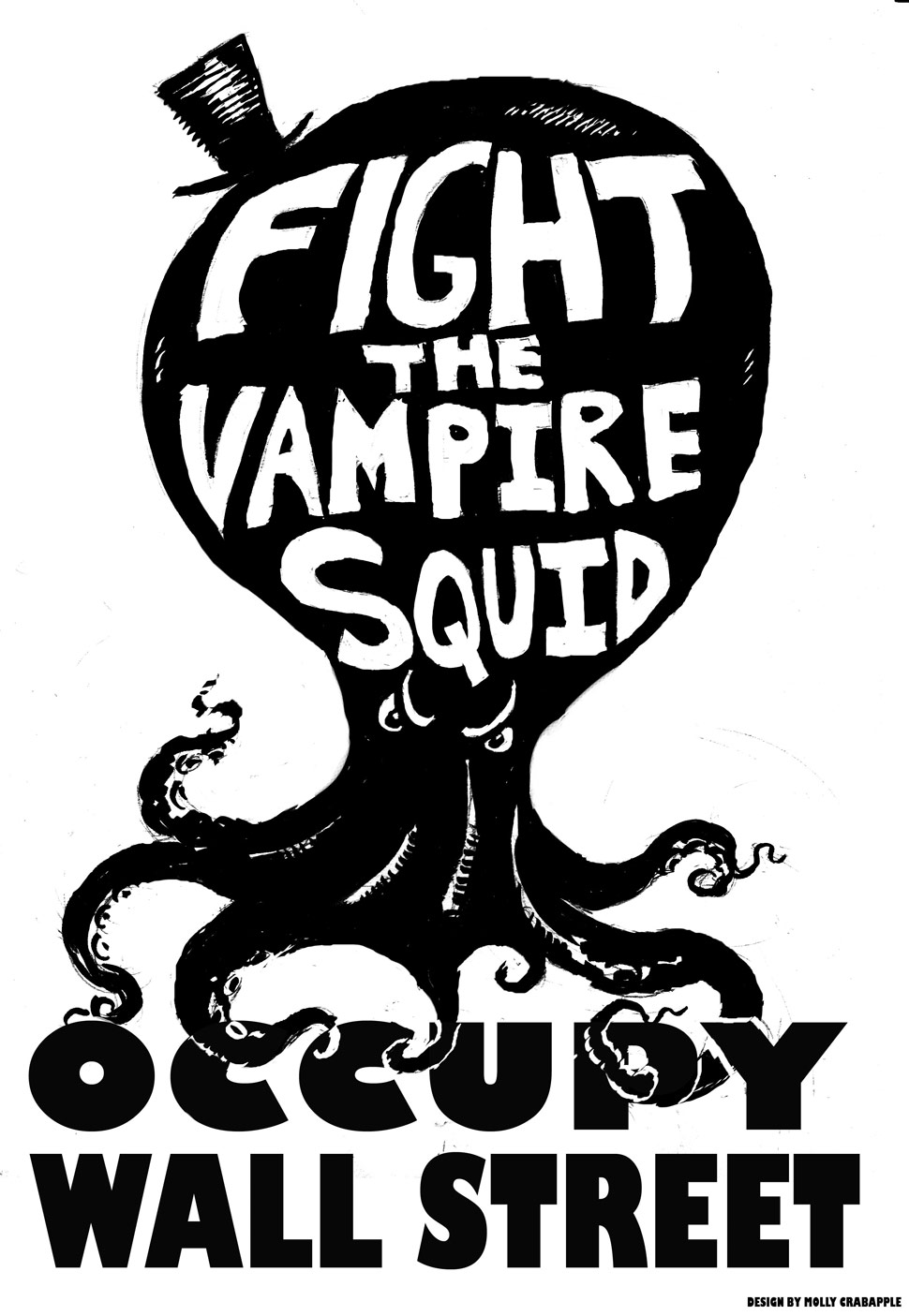
Such a vivid image, isn't it?

What’s more, our elected officials are doing a brilliant job at convincing the American people that removing the squid is not necessary. The Tea Party chants its simplistic message that the Constitution is all the law we need, and our leaders smile and nod and watch the money come in. Lawmakers rail against the evil of “earmarks” right up until the day they get elected, and then make sure they reward the people who got them into office. Every time someone tries to loosen the tentacles a bit, they’re attacked as anti-business or anti-capitalist or just out and out socialist, and they’re either shamed or threatened into submission. They tell us that it’s all really complicated, and we shouldn’t worry our pretty little heads about it – here’s another season of Jersey Shore.

And the American people? We are, after all, the holders of sovereignty for the country – what about us? We’re idiots. We don’t want to spend the time necessary to understand a problem as ridiculously complex as the fraud that’s being perpetrated in our names, and the leaders we elected aren’t at all interested in making sure we’re educated. We’re instantly distracted by the new shiny thing and forget what happened only a few months ago thanks to smooth talking fraudsters who want us upset about gay marriage and Mexicans in our schools. We trust a media that needs us to be angry, but only just angry enough to keep watching. We’re tied up with businesses that see us as nothing more than a resource to be exploited.

Contrary to popular belief, money does not always make it easier to get your message across.

As of this writing, the “Occupy Everything” movement is still going strong, and I think that’s great. If nothing else, it will cause people to ask questions about how the government is run and why, but I fear it will have little effect in the long run. Why? Because the Occupiers are going after the wrong people.

Corporations make money. That’s what they do. And they’ll do it good and hard if they can. Much like a tiger, they’re just obeying their nature. Chris Rock put it best when he was talking about the Sigfried and Roy incident where one of their show tigers nearly bit off Roy’s head. Everyone said that the tiger had gone crazy, but Rock disagreed – “That tiger didn’t go crazy! That tiger went tiger!”
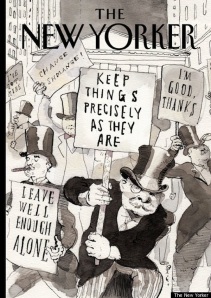
"I said GOOD DAY, sir!"

Well, Wall Street is the tiger. Chant and occupy and wave your signs all you want, you’re not going to change the fundamental nature of corporate America and how it works. Where all this energy should be going is into Washington, to the people who let the tiger run loose through our villages and happily picked up whatever it left behind. The lawmakers are the ones who can stop this, but right now it’s not in their interest to do so. The status quo has kept them safely employed and empowered, and until they see a real threat from the voters, there’s no way they’re going to turn their backs on their plutocrat supporters.

When the whole thing finally becomes unsustainable, when that final bill becomes due, they will slip away in the night with the wealth of nations in their pockets, leaving the rest of us to kill each other over refrigerator boxes and dogmeat.

See? Told you this book made me angry…

—————————————–
“This story is the ultimate example of America’s biggest political problem. We no longer have the attention span to deal with any twenty-first century crisis. We live in an economy that is immensely complex and we are completely at the mercy of the small group of people who understand it – who incidentally often happen to be the same people who built these wildly complex economic systems. We have to trust these people to do the right thing, but we can’t, because, well, they’re scum. Which is kind of a big problem, when you think about it.”
– Matt Taibbi, Griftopia

Matt Taibbi on Wikipedia
Griftopia on Wikipedia
The Taibblog at Rolling Stone
Griftopia at Amazon.com
1 Comment

Filed under consumerism, corporations, culture, economics, Matt Taibbi, nonfiction, politics

Review 144: Soon I Will Be Invincible

Soon I Will Be Invincible by Austin Grossman

It ain’t easy being Super.

You might be a hero, like Fatale. She is the latest in cyborg technology – a woman who was nearly destroyed in a freak accident, rebuilt by a mysterious corporation and made into the perfect living weapon. She is fast, she’s strong, and for a while she was one of the U.S. government’s best operatives. But now she’s on her own, and life is tough as a cyborg. You have parts to deal with, the need to keep your power source going, and of course it’s hard to enjoy a night out when everyone keeps staring at the half-metal woman in the booth near the window. Fatale wants to be a hero, though, and the re-formation of the Champions is just what she needs. If she can prove herself to this team, she can find a new purpose to her life.

A different, though equally self-aware, Evil Doctor.

If not a hero, you could be a villain. Doctor Impossible has certainly lived up to his name. In his many years of villainy he has come up with just about every nefarious scheme an evil, quasi-invulnerable genius can cook up in his twisted, malevolent brain. He’s been to the past and the future, he’s swapped brains with the greatest heroes of his age, he’s escaped from inescapable prisons more than once. Of all the would-be conquerors on Earth, Impossible is the one who would be voted most likely to succeed. And yet he isn’t happy. His life isn’t what he thought it would be, and it doesn’t take a genius to see that Doctor Impossible has a few problems that even his great genius cannot solve.

When Impossible breaks out of prison – again – the Champions re-form to hunt him down. With old and new members joining together to keep the flame of heroism alive in their world, the Champions are determined to find Impossible and shut him down for good. The only problem is that the person who has always succeeded against Impossible, a hero who calls himself CoreFire, is missing. Without him, their chances are greatly diminished. Against an evil genius like Impossible, who can defeat the team armed with little more than his wits and a false tooth, you want to throw everything you can at him. What’s more, the internal tensions pulling at the Champions may defeat them before Doctor Impossible even gets the chance to try.

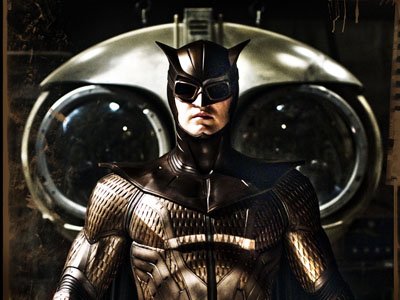
This book, like so many other modern renditions of super-heroes, has its roots in Alan Moore’s Watchmen. While he was not the first to make his superheroes less than super, he was certainly the best, and his work is well-remembered for that. After Moore was done, it was hard to think of superheroes as entirely pure, good and noble. We could see the tensions between them, the neuroses that drive them to do what they do, and we began to understand that our heroes were just like us, only moreso. Ever since then, writers have been trying to de-super the superheroes and make them into regular people who just happen to be able to shoot lasers out of their eyes, break the laws of thermodynamics, or bend steel in their bare hands.

Not pictured: Impotence

Grossman has taken full advantage of the work that has gone before him in this novel. The story is told from the alternating perspectives of Doctor Impossible and Fatale, and proceeds to deconstruct both the heroes and the villains in visceral, raw detail. What is it like to be a cyborg, something halfway between human and superhuman? And how can you join a team like the Champions, a team of legends among legends, and feel up to the task? What happens when you realize that the heroes you looked up to are just as human as you are? Or at least, as you used to be. On the other side, what makes a villain what he is? What happened to Doctor Impossible that put him on the ever-unfulfilled path to world domination? Was he destined for it, or was it a series of choices, insignificant at the time, that led him to where he was? How did his genius get turned to evil, and what, if anything, keeps him going?

The problem with deconstructing superheroes is that once you’ve deconstructed them, there’s really nothing left. Being a superhero is a fundamentally irrational career choice. Watchmen hinted pretty heavily at this, since all the heroes in the story had been pretty well messed up by their days in tights. There are so many problems that crop up once the spandex and mask are put on that you may find it’s not worth the effort. Legal issues, financial problems, time constraints and unstable relationships aside, what does this choice say about your state of mind? What kind of person can take up the job of costumed hero and stay sane? When you come right down to it, even if you have superpowers there are so many other ways you can use them that are less risky and more beneficial to humanity than getting into fistfights that destroy city blocks.

Lex, we... we think you may have a problem.

The same goes for villainy. So often you see bad guys with technology that is honestly amazing in its scope – Captain Cold’s freeze ray, for example, would make him rich if he patented it and licensed derivative technologies. Much richer than if he ever succeeded at using it to rob jewelry stores. Doctor Doom builds machines that are so far beyond current science that he could rule his own country – oh wait, he does – instead of single-mindedly trying to destroy Reed Richards. Lex Luthor would be grinding his teeth in envy over the power that Steve Jobs or Mark Zuckerberg or even Rush Limbaugh have. And none of them have a would-be Kryptonian conqueror to spur them on, either.

That’s the secret heart of superhero stories – they rest on fundamentally irrational choices. Take away those urges to help or harm and you are left with simple absurdity. And that’s kind of where this book falls down.

There’s plenty of navel-gazing and deconstruction going on in this story, from all angles. Between Fatale and Doctor Impossible, they pretty much reason away any good reasons for getting into the game as a hero or villain, and yet – there they are. Impossible is the worse of the two, really. His narration shows him to be an insightful, intelligent, and fairly well-grounded man who probably could become one of the most powerful men on earth through conventional means. And yet, even knowing that it’s probably a waste of time, he continues with his grand scheme – in this case, gravitationally manipulating the distance between the moon and the Earth so as to hold the Earth hostage. He knows he’s going to lose. He knows there are better ways to be effectively evil that don’t involve a metahuman punch to the face. He knows when he’s acting in a stereotypically villainous way. And yet he persists, usually in the most cliched way possible. He spouts comic-book-villain monologues and even has an island fortress from which he operates.

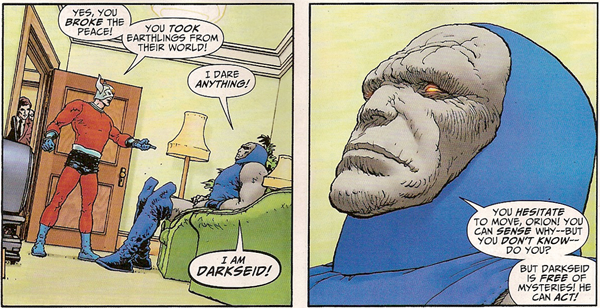
"But right now Darkseid's stories are on."


Neither Fatale nor Impossible – nor any of the other good or bad guys we meet – seem especially happy doing what they’re doing. And what’s more, they know they’re not happy. Doctor Impossible even goes so far as to state it explicitly during his moment of triumph – “For a second, I find myself at the fulcrum point of creation. God I’m so unhappy.”

Well, if you’re such a genius, perhaps you would be able to make better choices than this.

Therein lies the paradox of this book. The more human you try to make these characters, the less believable their story becomes. You can’t be both human and superhuman at the same time – it takes a very skilled writer to pull that trick off, and I don’t think Grossman is there yet. He tells an entertaining story, full of pretty much every comic book trope you can think of, which entertained me to no end. The problem is that by the time you get to the finale the unstable foundation of the story starts to show. How much you’ll enjoy the story depends on how good you are at filtering out the deconstruction that’s going on, which means missing the point of the whole book – that the only way to really enjoy superheroes is to accept them at face value and avoid deconstructing them.

So yeah, good luck with that.

—————————————————-
“When you get your powers, you learn a lot about yourself. My professors called me mad. It was time for me to stop punishing myself, and start punishing everybody else.”
– Dr. Impossible, Soon I Will Be Invincible
—————————————————-

Austin Grossman on Wikipedia
Soon I Will Be Invincible on Wikipedia
Soon I Will Be Invincible homepage
Soon I Will Be Invincible on Amazon.com

Leave a comment

Filed under adventure, Austin Grossman, comic books, futurism, good and evil, science fiction, super-heroes, supervillains

Review 143: Mad Men and Philosophy

Mad Men and Philosophy edited by Rod Carveth and James B. South

If you had asked me a few years ago which television show you should absolutely make time to watch, I would have immediately told you to start watching Mad Men. Deep, complicated, and made with great attention to detail, it is a show that rewards viewers. The characters reveal themselves over time, minor plot elements emerge as major turning points, and they give us 21st-century viewers a chance to look at the ’60s in a whole new light. The show had had three outstanding seasons, and up until that point, I would have recommended it unreservedly.

What were they THINKING??

Until they dropped my brother from the cast.

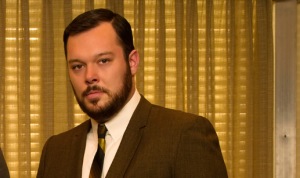
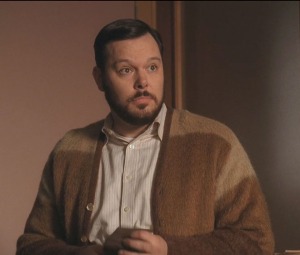
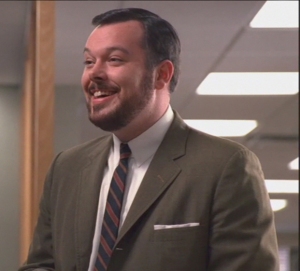
I understand that I did not really default to my rational soul in this instance. The third season was one giant setup for the surprise ending in which Sterling Cooper is bought out (again) and Don and Lane hatch a plan to break away with all the staff and clients they could carry. In this situation, they needed their strongest people, and when it came down to choosing writers, there was no question that Peggy Olsen was a better writer than Paul Kinsey. It had been shown again and again during the season, so that when Kinsey was left twisting in the wind at the end, it made sense – from a writing perspective.

That didn’t mean I had to like it.

So when season four rolled around, I started to download the episodes, but I resisted watching them. I just sulked. Was I being childish? Immature? Petty? We may never know the answers to those questions, but I can tell you this – the reason I finally gave in and started watching it again was this book.

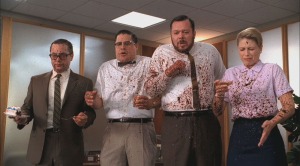
Oddly enough, this book does not discuss the ethics of office bloodbaths.

Part of the Pop Culture and Philosophy genre of books, this volume takes a deep, intellectual look at the series, examining its characters, its ethics and its messages, to see what kind of lessons we can learn from it. From Aristotle to Ayn Rand, thousands of years of human thinking are illustrated in this tv show, and the authors who have contributed to the book are able to tease fascinating concepts from whiskey and smoke. How do Betty, Joan and Peggy represent second-wave feminism? What are the responsibilities of advertisers to their target audience? How might be Peggy a Nietzschean Superwoman, and why does Pete fail so hard? Is Don Draper a good man, and would Ayn Rand have salivated over him, as Bert Cooper claimed she would? The book is full of interesting ideas, and I’ll share a few of my favorites with you.

In “Pete, Peggy, Don, and the Dialectic of Remembering and Forgetting,” John Fritz examines the Nietzschean virtue of willing forgetfulness and how it applies to these three characters. The way it goes is this: Nietzsche believed that the past should serve the present, that you should be able to use your memories to push yourself forward. Not all memories do this, as we all know, and to hold on to memories that simply hold us back – to live in the past – is detrimental to leading a good life. Pete Campbell, for example, perpetually lives in the past. He can’t forget anything, especially if it is something he perceives as a slight against him. When Ken Cosgrove gets a story published, Pete stews over it, bitter that Ken did something worthwhile and he did not. Rather than do the adult thing – congratulate Ken and move on – Pete cannot let go. He ends up nearly forcing his wife into the arms of another man just to try and match Ken’s accomplishment. Pete’s inability to forget causes him almost constant distress.

Not that I'm holding on to any memories myself, mind you. Perish the thought.

Don is a little better. Don knows that you need to forget things, and tries to live that way. When his estranged brother shows up, Don tells him, “My life moves in only one direction – forward.” He chooses to forget the things he has done if they will interfere with the way his life is going now. When he gets into a car accident, and Peggy has to bail him out, he doesn’t remember to pay her back until she very pointedly reminds him. It’s probable that he used this willing forgetfulness as part of his strategy to cheat on Betty. The only way to live both lives at once is to forget the one that will cause you trouble, and then recall it when it’s time to get some nookie again.

But Don’s not perfect. His memories are triggered again and again – sights and smells bring him back to his childhood, to his abusive father, and to the traumatic day in Korea when he became someone else. Don’s past follows him, like a loyal dog, occasionally nipping at his heels and reminding him where he came from, no matter how much Don would like to forget it.

Peggy, on the other hand, is the champion of willing forgetfulness. The birth of the child she had with Pete is a fantastic example of this, and my favorite moment is when she finally tells Pete what had happened. She sits him down, and very calmly explains that she had his baby and then gave it away, and the tone of her voice is less exciting than someone talking about the new shoes she has bought. Peggy forgot about the baby – she chose to forget about the baby, no matter how much her family and Father Whatawaste tried to remind her. But for this one moment, she unpacked it, held it out at arm’s length just long enough to tell Pete, and then she wrapped it up again and buried it in her mind. Peggy knows that there are things in her past that will hold her back if she clings to them, so she doesn’t. In this way, she is the model of Nietzsche’s virtue of willing forgetfulness.

I mean, I suppose I could still be a little annoyed about the whole thing, but who wouldn't be?

In “‘In on It’: Honesty, Respect, and the Ethics of Advertising,” Andrea Novakovic and Tyler Whitney ask about what ethical rules bind advertising, if any, and how advertisers relate to consumers. The essay centers around the season 2 episode, “A Night to Remember,” wherein Don uses his wife as a demographic model for Heineken beer. During her meticulously-planned dinner party, full of international cuisine, Betty reveals that they are drinking Heineken, from Holland, which comes as a welcome surprise to Don and Duck Phillips. Betty is upset by this, and after the party accuses Don of purposefully embarrassing and humiliating her, and Don doesn’t quite get what the problem is. No surprise there.

But does Betty have a legitimate beef with Don and Sterling Cooper? Well, that depends on why she bought the Heineken. If she bought it because she likes it, or because she had heard good things about it, then no. But she suspects that Don had done his research too well, and that the only reason she picked up those nice green bottles was because he knew her so well that he could make her think she wanted to buy it. From her point of view, he manipulated her, (which in fancy-pants philosophical terms might be called depriving someone of agency) and then laughed about it. Don has shown no respect for his wife and her ability to make choices on her own, and this reflects the larger issue of respect between advertisers and the consumers they target.

You bring back Paul Kinsey and I give you the antidote. For the poison YOU JUST DRANK! AAHH-HAHAHAHAA!!

It is, of course, a challenging topic, even within the show. In the pilot episode, “Smoke Gets In Your Eyes,” Don actively rejects psychological profiling in coming up with an ad for Lucky Strike, yet in that season’s finale, “The Wheel,” he is quite clearly using psychological manipulation to sell his idea for Kodak’s Carousel. So what is the difference between profiling Betty to sell beer and using nostalgia to sell a slide projector? It’s a matter of respect. It is easy for people watching the Kodak ad to understand what is going on in an ad that uses their memories to evoke an emotional response. The advertiser respects the consumer’s intelligence and agency, and uses that to sell their product. In Betty’s case, however, the manipulation was more subtle. Display techniques, signage, subtle and professional methods which start from the assumption that the consumer doesn’t know her own mind.

Finally, in “What Fools We Were: Mad Men, Hindsight, and Justification,” Landon W. Schurtz asks the question we all asked about the people in this show: how could they be so dumb? I mean, when Betty’s daughter shows up with a dry-cleaning bag over her head, Betty is angrier about the possible state of her clothes than the chance her daughter could suffocate. When we first meet Sal Romano, he is so ridiculously gay that we can’t believe no one notices. And Sterling-Cooper gleefully take on Richard Nixon as a candidate when we all know what the man is clearly a crook. From our perspective, these things seem completely obvious, yet the characters on Mad Men just don’t seem to know any better. So why is that?

Tell you what I know - "Paul Kinsey: Two-Fisted Copywriter!" I'm telling you, it's Emmy GOLD!

Well, it depends on what you mean by the word “know,” and that’s what Schurtz tries to figure out in this essay. We can know things through direct experience, for example, but Betty has probably never had a daughter asphyxiate on plastic, Don and the others have probably never met an openly gay man, and, well, historians still don’t know how Nixon convinced America that he wasn’t a weasel in an ill-fitting suit. We can know things through the testimony of others, but again – those bits of knowledge hadn’t quite permeated the culture yet. Even if they had, whom could you trust for accurate testimony? Don rejects Doctor Guttman’s suggestions for the Lucky Strike campaign because he rejects the significance of psychological research. The elders of Sterling Cooper continued to reject Pete’s ideas because they didn’t believe young people could know anything worth knowing.

In short, no – the people in the ’60s weren’t stupid. They just didn’t know any better.

Kinsey laughs. He's in a better place now, I'm sure.

This book got me to give up my sulk and start watching Mad Men again. Even though it is clearly diminished with the absence of Paul Kinsey, I was reminded that the show is immensely complex and worth the time to watch. So I am recommending it to all – watch the show. And read the book. Together, they defy the common wisdom that modern entertainment has nothing to offer us. Indeed, they give us a new perspective not only on the show, but on our own lives. Pretty impressive for an hour a week.

—————————————————————-
“The basic desire to feel okay is deeply human, but if Don Draper can take this generic human longing and create a desire for a particular product, are we genuinely free?”
– Kevin Guilfoy, “Capitalism and Freedom in the Affluent Society”
—————————————————————-

Mad Men and Philosophy on Amazon.com
Mad Men Homepage

Leave a comment

Filed under analysis, consumerism, essays, ethics, James B. South, Mad Men, morality, philosophy, psychology, Rod Carveth, television

Well, now, this is awkward….

Due to bodily dysfunction the likes of which can only be explained by my stealing that little Tiki last time I was in Hawaii, there’s no way I can record tonight. Really, it would be awful for everyone.

So, my apologies, I feel terrible – literally and figuratively. Keep an eye on the blog/Twitter/Facebook for the next episode, which should be up in a day or two.

Thanks,

Chris

1 Comment

Filed under FYI

Lost in the Stacks 09: Banned Books Week

Harry Potter
The adventures of Huckleberry Finn
A Diary of a Young Girl
Fahrenheit 451
To Kill a Mockingbird
Catcher in the Rye
The Jungle
Lord of the Rings

These are just a few books that the American Library Association has reported as being banned or challenged in American libraries, and the list grows longer every year. Sometimes it’s because it offends someone’s religious sensibilities – like Harry Potter – and other times because it offends their moral sensibilities – And Tango Makes Three for example. And then there are those that make you think banning books isn’t so bad after all – Twilight is on the list – before you shake it off and think about how it does no good for anyone.

Ban a book and its sales will surely rise in the resulting media firestorm. Tell kids that a certain book is forbidden, and the first thing they’ll do is go get it. And even if you somehow manage to keep them cloistered from all the Bad Books out there, sooner or later they’ll find out what you were trying to hold back from them. When that happens, they will not think fondly of you.

Last week was Banned Books Week – but really it should be every week. Give the episode a listen and come join the conversation!

The American Library Association’s Banned Books Week page

1 Comment

Filed under censorship, culture, Lost in the Stacks, reading, society

Review 142: Otherland 1 – City of Golden Shadow

Otherland 1: City of Golden Shadow by Tad Williams

Let me just start by saying this: the first time I finished this series, I immediately went back and started reading it again. I can’t think of any other series that I’ve done that with.

This is one of Tad Williams’ “economy-sized manuscripts,” similar to his fantasy classic Memory, Sorrow and Thorn. Similar in size and scope, anyway – four giant tomes chock full of all things awesome. It’s a series of grand scope, amazing scale and great imagination, well worthy of your time. It’s a complex, interweaving of tales, full of vibrant characters, implacable enemies, and important questions about destiny, identity, consciousness and the very nature of reality itself.

Seriously, top-shelf stuff here, people.

Mind you, Second Life's dreams aren't all that big.

It begins in a near-future world, and it begins with the children. Renie Sulaweyo, a teacher in South Africa, has a brother in the hospital. He, like many other children around the world, has gone into an inexplicable coma, the causes of which defy medical science. The only clue she has is that the outbreaks of these comas coincide with the availability of access to the Net – a virtual reality internet that is what Second Life dreams of becoming. Here, depending on your equipment, you can live in a virtual world that is more vibrant and exciting than anything the real world can offer. And you can do it in full sense-surround 3D.

Renie’s brother, Stephen, engaged in the usual mischief that any kid with access to his own virtual universe might do, and finally got caught. Something shut him down, and Renie was determined to find out what did it. With the assistance of her student, a Bushman named !Xabbu, Renie uncovers an amazing virtual world, something that puts the best virtual reality to shame. It is the Otherland, a playground for the obscenely wealthy. And it may hold the secret to what has afflicted her brother.

And if you think WoW is nuts now? Imagine it fully immersive. Okay, nerds, get back to gold farming...

That’s the short version, and since Renie is the one we’re introduced to first, it would be easy to think of her as the protagonist of the story. That would be highly inaccurate, though. There’s a lot of other storylines going on in there as well. There’s young Orlando Gardiner, who compensates for a crippling illness by being the baddest barbarian on the net. His best friend, Sam Fredericks, has stood by him for many years in an online game that makes World of Warcraft look like pen and paper D&D. They and others are lured into a deadly quest by a vision of a great golden city, more realistic and magical than they ever thought they could find.

Out in the real world, there’s little Christabel Sorenson, upon whose earnest desire to help the funny-looking Mister Sellars the entire future of the Otherland rests. There’s the aptly-named Dread, an assassin extraordinare whose strange “twist” gives him an edge in all things electronic. And, of course, there is Paul Jonas, a man trapped in an imaginary world, whose escape threatens the greatest dreams of the richest men the world has ever known.

All of this, as the series title suggests, centers on the Otherland project, a virtual reality of monumental proportions. It’s a digital world that is more real than the real world is, a world of computer-created, but very deadly, dangers. The slightest misstep could spell disaster and death – die in the Otherland and you die in real life.

This doesn't happen in Otherland, by the way. Lucky them.

And just FYI, Otherland predates The Matrix by three years and, kung-fu aside, is a much better story. So if you’re thinking, “Man, this is just a Matrix rip-off, you’re very, very wrong.

It’s a daunting series to begin. After all, it’s four books, each one clocking in around 800 to 900 pages. There are at least fifteen major characters, and the Otherland itself shows us seven different “worlds” in this book alone. There’s a lot to take in, and on top of all that, there’s a whole world happening outside the story – each chapter is preceded with a small news blurb that tells us about things that are going on in the world. Cops rounding up homeless kids in lethal “snipe hunts,” homicidal artists, legislative representation for the industrial sector of America – this world is both familiar and alien at the same time.

Then again, neither does this. Tad Williams does have his limits.

The good news is that it is a lot of fun to read. The pacing is very good, so you never get too bored watching any one character for a while. What’s more, Williams pays homage to some of the greatest fantasy and science fiction the English-speaking world has to offer. At one point, even the characters admit that they seem to be caught up in a very familiar story. So my advice is to just dive right into it. Once you get going, things clip along at a good pace and you’ll find yourself on page 943 in no time flat.

The really fun part is re-discovering things in this series. There are some things I remember very clearly, but other little details that pop up and make me think, “Oh yeah, I forgot all about that.” I enjoy seeing Williams’ prescience – after all, he wrote this just as the internet was really becoming popular, and a good ten years before things like online gaming and social media took over our lives. His vision of an immersive, VR world may have seemed a little wild and out there back in the mid-nineties, but not anymore.

So, make a sandwich and find a comfortable place to sit. This’ll take a while, but I guarantee – it’ll be worth it.

———————————————-
“If you have found this, then you have escaped. Know this – you were a prisoner. You are not in the world in which you were born. Nothing around you is true, and yet the things you see can hurt you or kill you. You are free, but you will be pursued….”
– Sellars to Paul Jonas, Otherland: City of Golden Shadow
———————————————

Tad Williams on Wikipedia
Otherland on Wikipedia
City of Golden Shadow on Amazon.com
Tad Williams’ Website

Leave a comment

Filed under adventure, brothers, fantasy, fathers, friendship, gender, gender roles, internet, quest, science fiction, sisters, survival, Tad Williams, transhumanism, virtual reality, world-crossing

Review 141: One Flew Over the Cuckoo’s Nest

One Flew Over the Cuckoo’s Nest by Ken Kesey

As all dedicated readers out there know, there is a rule when it comes to books that are made into movies: the book is always better. [1] With a book, you have more time to really savor the story, to think and consider the plot and the characters and the motivations. You can go back and re-read, stop and give the story some thought and, most importantly, let the characters come to life in your own mind. This is key, and part of what makes reading so much fun. The author gives you a basic outline of who each character is, but the details of that character will vary from reader to reader, and I guarantee – my Randle Patrick McMurphy is different from your Randle Patrick McMurphy.

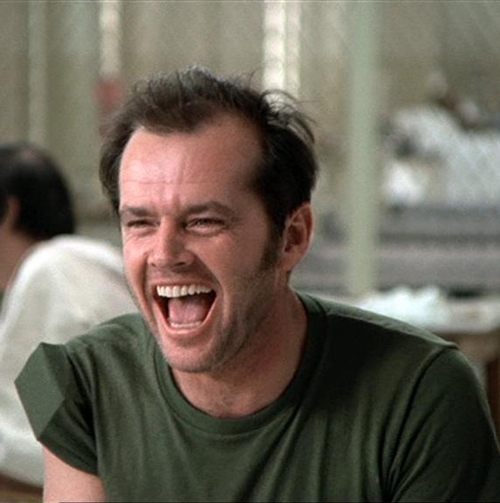
And my Randle Patrick McMurphy is most certainly not Jack Nicholson. I know there’s a lot of love out there for Jack, but let’s face it – Jack Nicholson was the non-comedy equivalent of Jim Carrey in his day. The same way Carrey is the default choice for “Wacky” these days, I’m pretty sure producers back in the 70s and 80s said, “We need someone who can play nuts – get Nicholson!” And he’d come out and give That Nicholson Look which made you think that he was liable to tear your throat out at any second and that’s it. I’m not saying he’s bad at what he does – he plays one note, but he plays it well.

This is a face you can trust.

The problem is that McMurphy isn’t actually nuts. He’s brash, temperamental, insolent, contrary, but not crazy. And, to borrow from the perspective of the narrator, Chief Bromden, I don’t think that Nicholson was big enough to be McMurphy. I’m not sure if I know who would have been.

So after all this about who McMurphy isn’t, let’s take a look at who he is.

There is a mental institution up in Oregon, which caters to all kinds of mentally ill patients. They care for them as best they can, keeping a close eye on the men in their care and making sure they stay in a rehabilitative state. Through the use of regular counseling sessions and the occasional narcotic therapy, they are trying to make these men back into functioning members of society, if that is at all possible. Not all of the patients can be helped – some suffer so badly that they will live out their remaining years in the institution. But there are others who have a chance, some self-admitted, even, who are looking to move towards the path to wellness. The hospital, and especially the Head Nurse of the ward, Nurse Ratched, are devoted to their tasks and do whatever they can. This being the middle of the twentieth century, their methods are, by our standards, barbaric at times – the liberal use of electroshock, for example, or even occasionally resorting to lobotomies. But mostly Nurse Ratched uses her own innate ability to cajole, nudge, scare and shame these men into line so that her ward operates as a smoothly-running machine.

No, THIS is a face you can trust...

Until the appearance of McMurphy, a man who is not ill but is rather facing madness to get out of working on a prison farm. As soon as he appears on the ward, he becomes a threat to the Big Nurse’s clockwork kingdom. He has no patience for her rules, and indeed sees her as a challenge – how soon can he get that perfect, porcelain facade to crack and show what’s really underneath? He’s sure he can, and he’s willing to sacrifice his own freedom to do it. In doing so, he shows the other patients on the ward that they don’t have to be afraid – of her or of the world.

The book is a cracking good read, and well worth your time, just as a story of a perfectly ordered world tipped upside-down. As an allegory, of course (and a very clear one, at that) it’s even better. This is a story about order and chaos, about freedom and security. Nurse Ratched has a very well-ordered world over which she exerts perfect control. The men in her ward are taken care of, if not exactly helped, by her and her crew. There is no freedom for them, but no danger either, and for many of the men, that’s a life they can live with, if not enjoy.

McMurphy, then, is chaos. He’s the sand in the gears, the hair that won’t go where you want it to go no matter what kind of salon goop you put in it. He’s the rebel who will break the rules just because they’re rules and who prizes freedom above all else. This isn’t to say that he’s a saint – McMurphy spreads his own brand of freedom mainly by manipulating the other patients. In that way, he’s very much like Nurse Ratched, though I think he’d strangle anyone who said that to his face. But whereas the Big Nurse gets her pleasure from watching men get cut down and made docile, McMurphy gets pleasure from men finding their strength. And if he manages to make some money or have some fun of his own while he’s doing it, then all the better.

Or "freedom"

It’s a novel of freedom, naturally. It’s about people choosing their own destinies (even if the people in this book are mostly men – with the exception of Nurse Ratched, women don’t come off so well in this book.) It’s also about freedom as a society. The Nurse and her minions represent a culture that insists on conformity, that finds comfort in rules, regulations and regularity. Called “The Combine” by the book’s narrator, it would rather cut people down to size, because that’s the only way it can exert control. McMurphy shows us that we are the ones who should be in control of our lives. It’s hard, it requires risk, but the rewards are far, far greater than blind, sheeplike obedience.

The book is narrated to us by one of the more far-gone patients, a half-Native American man named Chief Bromden. He has been in the hospital for many years, and as far as the others are concerned, he’s a deaf-mute. McMurphy catches on that he’s faking pretty quickly, though, and manages to make Bromden feel like the big man he used to be. But as a narrator, it must be remembered that Bromden is unreliable – he occasionally drifts off into hallucinatory visions, and his interpretation of events is filtered through the strange, paranoid reality he’s constructed where the world is run by an Illuminati-esque “Combine” that replaces people with machines. In fact there’s a line in the very first chapter that made me wonder about the whole story: “It’s still hard for me to have a clear mind thinking on it. And it’s the truth, even if it didn’t happen.”

Two guys playing chess under an oddly-shaped chandelier. What?

So how much of the story is real? We have no idea. The Chief tells us everything he can in the best detail he can, and is an excellent relater of the tale. But knowing that he’s rather biased, we have to wonder if the heroism of McMurphy and the wickedness of Ratched are as bad as they’re made out to be, or if Bromden’s mind has changed them, made them into the avatars of freedom and control that he feels represent the way the world works. We can never know, and if you assume that he is reliable, the story is excellent.

A small confession, though: I feel kind of sorry for Nurse Ratched. I know, I know, it’s like saying, “Yeah, Hitler was bad, but I see where he was coming from.” She is undoubtedly one of the best villains in modern American fiction – frankly, between her and Darth Vader, I think she’d have him sobbing like a little baby within ten minutes (“Mister Skywalker, do you really think that this habit of choking people is beneficial to you? Would it not be more mature to discuss your feelings of disappointment? What would your mother say if she could see you like this?”) But I am a fan of order in general. I know how it feels to have a well-ordered routine get screwed up, and I think it sucks. So, putting myself in her shoes, I can see how she’d view McMurphy as a threat, and try to beat him in the only manner she knew how.

And she does beat him. But she has to cheat to do it, so I can’t really say that she wins.

—————————————
“All I know is this: nobody’s very big in the first place, and it looks to me like everybody spends their whole life tearing everybody else down.”
– R. P. McMurphy, One Flew Over the Cuckoo’s Nest
—————————————

[1] The exceptions are Lord of the Rings, where I like the movies better, and Watership Down and The Princess Bride, both of which I hold equal to the books.

Ken Kesey on Wikipedia
One Flew Over the Cuckoo’s Nest on Wikipedia
One Flew Over the Cuckoo’s Nest on Amazon.com
Leave a comment

Filed under fiction, humor, Ken Kesey, made into movies, psychology, therapy

Review 140: The Shining

The Shining by Stephen King

I’m going to have pick on Jack Nicholson here, but I’m pretty sure he can take it. If I get an angry email from him, I’ll let you know. I’m also going to take a couple of shots at Staley Kubrick, who is dead and can’t defend himself, although I can probably count on some of his loyal followers doing so in his stead. Basically my goal in writing this review is to encourage you to completely ignore the film version of The Shining and appreciate the book.

Thankfully, the original line - "DY-NO-MITE!" - was cut.

To be fair, though, the film and the book really are two different beasts. They share a basic story line, yes, and some characters, but they’re looking at the story from different points of view. The film did create some iconic moments – Danny running his bigwheel down the hallway, the elevator vomiting blood, and “Heeeeere’s JOHNNY!” which isn’t outdated at all, of course. Note to filmmakers, no matter how brilliant you think you are: pop culture references have a short shelf life. Avoid them. But I think that Kubrick’s film kind of misses the point, which disappointed me greatly.

Anyway, this isn’t a movie review. So let’s shut up about that for a while, shall we?

The book is one of King’s earliest, written in 1977, and like so many of his early works it’s one of his best. It’s a tale of a hotel that’s more than just haunted – it’s possessed. It’s a place that has been a witness to all kinds of evil, inhumanity, and malice, and the spirits that inhabit it are always looking for company. So allow me to present Jack Torrance. A once-promising writer, former teacher, and an alcoholic, Jack is man whose life is on the edge of collapsing. After being fired for beating the daylights out of one of his students, the job as caretaker for the Overlook Hotel is, as far as he’s concerned, the only thing keeping him and his family from complete destitution and shame.

And let’s be clear about this right up front – Jack loves his family. He loves his wife, Wendy, even if she does get under his skin from time to time, and he is utterly devoted to their son, Danny. He knows that his own upbringing, with an abusive, alcoholic father, didn’t prepare him to be a good head of household. He knows that his own drinking problems led to the breaking of his son’s arm, an incident which very nearly destroyed his marriage. He also knows – or at least believes – that he can change. That’s why he took the job at the Overlook, in order to have some time to reset. Spend sober time with the family, finish the play he’s been working on – take a breather and get ready to rebuild their lives.

See? A cozy, family-friendly place.

The Overlook is one of the premiere hotels in Colorado. It’s a place that just exudes luxury, with a history stretching back to the early 1900s and everything a person vacationing in the Rockies could want. But because it’s perched in the mountains, it has to close down for the winter. No sane person would drive up there when the snow really got started, and so the need arose for a live-in caretaker to make sure the place doesn’t succumb to the elements. It’s a lonely and perilous job, miles away from help and civilization, but the right kind of person can probably do it.

Jack might have been able to manage, if the hotel weren’t the vessel for some evil, malevolent entity that thrived on the horrible things that men do to each other. For lack of a better phrase, the hotel is psychically charged – memories permeate it, making it haunted on nearly every level. Normal people can’t perceive this – they might feel uneasy in a certain room, or hear some strange sounds at night, but if you’re a garden-variety person, you won’t notice a thing.

Any kid who talks to his own finger has gotta be watched.

Five year-old Danny Torrance is not a normal person. He has the Shine, as it is called – a psychic ability of great and wondrous strength. He can read his parents’ emotions, he can predict the future and see the past. While his power isn’t fully under his control, he knows that he’s not like other children. His is a unique mind, and it is this power, this shine, that both dooms and saves him. (As a note to Dark Tower fans – don’t you think Danny would have made a great Breaker? I wish King had hit on that….)

The hotel knows it too. It wants to use Danny to power itself, to perpetuate its evil. But it can’t get to Danny – so it gets to Jack. It preys on his weaknesses (and Jack Torrance has oh so many weaknesses) and uses him as a tool to destroy his own family.

Truly this is a creepy book. The descriptions are careful and evocative, and when King wants you to be scared, you can be damn sure that you’ll be scared. It’s cabin fever in book form, and the longer you read it, the more you can feel the hotel pressing in on you from the pages. It’s a terrible, terrible tragedy, the slow destruction of what could have been a good and happy family, had they not come to this place. To be fair, Jack Torrance was not a very good human being to begin with, and the odds are good that he would have ruined his family eventually. Under the roof of the Overlook, though, he never even had a chance. As you read, you realize that while it’s hard to like Jack, you can certainly understand him.

Ladies and Gentlemen - Shelley Duvall!

And that’s why I like the book better than the movie. The film makes Jack the villain. It makes him into a guy who snaps under the pressure of not drinking, not being able to write and having a wife played by Shelley Duvall, who could have been replaced with Munch’s “The Scream” on a stick to as much effect. In the end, it’s Jack who betrays his family, Jack who tries to murder his wife and son, and Jack who dies frozen in the hedge maze.

The thing is, that’s not how King wrote it. While Jack certainly isn’t redeemed by the end of the book, it is clear that the person who was chasing Danny through the halls with a roque mallet, the person who nearly bludgeoned Wendy and Hallorann to death was not Jack Torrance. He may have looked like him, but what was doing all the evil was the thing that had defeated Jack – it was the thing that had killed him. And I think that story, about a man who was just not strong enough to resist a far greater power, is more interesting than a story about a guy who just goes nuts. Jack’s character in the book is far more nuanced and deep than I thought he was in the film, and it saddened me to see him pressed into two dimensions. And again, I think Jack Nicholson – while perhaps adequate for the role as Kubrick saw it, was not the Jack Torrance that I saw in this book.

As an aside, I thought the TV miniseries was much closer to the book and, thusly, better. True, it lacked a lot of Kubrick’s more famous directorial panache, but since a) Kubrick ruined the movie and b) I’m not a big fan of his anyway, I didn’t hold that against ABC.

Jack is not that far from Homer Simpson, really....

The book wasn’t written, I think, with a lot of Deeper Meaning in mind. I’m sure King would be the first to admit that. It’s a kind of psychological study of how to turn a weak person into a bad person, and how much pushing it would require to make a man turn to evil. It looks at the bad choices we make, and how we fool ourselves into making them. Jack Torrance is a cautionary tale against self-pity and self-delusion. Jack views himself as a perpetual victim, held back by his upbringing, his wife, his alcoholism – nothing that goes wrong in his life is actually his fault (according to Jack). Had he taken responsibility for his actions and his errors, he might have withstood the Overlook’s attacks.

The big question for this book is this: was any other outcome possible? Did the Torrance family have any choice in what happened to them, or were they doomed from the moment they set foot in the hotel? I vote for the latter. While they certainly had their chances – many chances – to get out and escape the horrible future that was bearing down on them, it was clear that was never going to happen. Jack was a man who was far too weak, too selfish and too self-absorbed to let himself leave the Overlook. And so they were doomed. The fact that anyone got out of there at all was a miracle.

This is part of the Stephen King Required Reading set – if you’re going to read any King at all, you need to read this one. It’s a horror book that’ll stay with you for a long, long time.

———————————————
“The boiler’s okay and I haven’t even gotten around to murdering my wife yet. I’m saving that until after the holidays, when things get dull.”
– Jack Torrance, The Shining
———————————————

Stephen King on Wikipedia
The Shining on Wikipedia
The Shining on Amazon.com
Stephen King’s homepage

2 Comments

Filed under children, death, family, fathers, fear, horror, made into movies, madness, murder, sons, Stephen King, wives

Review 139: The Science of Fear

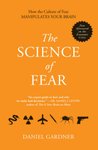
The Science of Fear by Daniel Gardner

Imagine, for a moment, one of our early human ancestors. A first-generation Homo sapiens, exploring his world with an amazing brain that would be the envy of the animal kingdom. If they understood envy. He, and his children, and their children and grandchildren will spread across the Earth as hunter-gatherers, the first beings (so far as we know) who can look at the world and attempt to pass on what it knows and learns. Their threats were simple: survive or don’t. Find food or starve. Hunt or be hunted. And those fantastic brains did such a bang-up job that their descendants are still walking around, thousands of generations later.

Now, take that Paleolithic man – swift of foot, sharp of eye, strong of hand – and drop him in the middle of modern-day Times Square. And, as his minder, give him a bored, easily distracted teenager – one who knows the world, but can’t be bothered to do the work to make decisions.

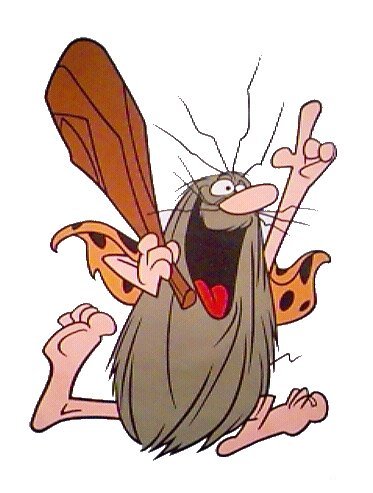
We are all of us Captain Caveman.

Congratulations. According to Daniel Gardner, we have just constructed a fine metaphor for how the human brain works. Part of it is very old, able to make decisions in an instant based on the slimmest of clues. The other is newer, more rational and savvy, able to put together reasoned, logical arguments, but doesn’t have the sheer speed and force that is prehistoric partner has. And as much as we want it to be true that the rational, modern part of our mind is in charge,the sad fact is that out inner caveman has far more influence over us than we care to admit.

Gardner begins the book with an interesting story about the most terrifying thing to happen in the last decade – the attacks of September 11th in the United States. By the time the towers fell, people around the world were watching, and anyone who didn’t see it live would surely see it soon enough as it was replayed over and over again. It was truly terrifying to watch, unlike anything Americans had seen before in their country, and it scared the ever-loving hell out of people. Many people, as a result, chose to forgo air travel in favor of driving.

Now, as Superman famously told Lois Lane, flying is statistically the safest way to travel. In fact, the most dangerous part of any trip that involves flying is usually the drive to the airport. But, in those days and months after the attacks, people were scared to fly. So they drove instead. And, according to a five year study of traffic fatalities in the U. S. after 9/11 by German psychologist Gerd Gigerenzer, 1,595 people died on the roads who otherwise would not have.

They were afraid, and that’s understandable. But they were afraid of the wrong thing. So they died.

Gardner sets out in this book to figure out why it is that people in the healthiest, safest, most prosperous nations on Earth – in the healthiest, safest, most prosperous era of human history – live in a state of near-constant fear.

As long as he doesn't insist on eating children halal, I don't care...

A lot of it, as the intro implies, comes down to the fact that our brains, which evolved over millions of years to be very good at judging risks that might be found on the savannah, are simply not prepared to do the same in a modern technological world. Our brains can’t tell the difference between risk in fiction and reality, between something that happened to us and something we saw on the news. When it comes to risk, our brains play it very safe, which is great out in nature. Is that shadow in the bushes a tiger? Maybe, maybe not, but either way it’s probably a good idea to get the hell away from it. We can’t say the same thing of that guy sitting on the bus who looks like maybe he might be a Muslim.

We also tend to assume that if we’ve heard of something recently, then it must be more common. Again if you’re out in nature and you saw a bear yesterday, there’s a decent chance that the bear is still around today and you might want to be wary of that. But what if you see constant news coverage of a high-profile child abduction? It’s on every show, being talked about on every blog – does that mean that the chance of your child being abducted has increased? Of course not, but your brain doesn’t see it that way. Your brain thinks that your child will be taken from you the moment you look away, and all the reasoning in the world won’t change its mind.

One more thing: we don’t get numbers. The news tells us that the rate of certain risks is up by 10%, but they don’t tell us what the original figure was. We hear about millions of starving children in Africa, but don’t do anything unless we get a personal story of one. We don’t understand probability at all, we can’t deal with randomness, and this lack of innate numeracy (compounded by an educational culture that makes it hard to teach kids to become numerate) costs us billions. Or more, as the recent economic Clusterthing has shown, when you have people who are good with numbers deliberately exploiting this flaw in order to profit.

Numeracy is also useful for getting certain kinds of jokes.

We think that correlation equals causation. We believe stories over facts. We think we don’t have biases that we clearly possess. We assign high risk to things we don’t like and low risk to things we do, regardless of how risky they actually are. And on top of all that, we know how to exploit others’ fears in order to gain money and power for ourselves. It’s easy to do, and it works like a charm.

Reading this book won’t make you into a magically unflappable person, mainly because all of this stuff is pretty well hard-wired in our brains. Even Gardner, who should have known better, tells a story about hunting through the slums of Lagos in the middle of the night to retrieve a photo of his children from the wallet that had been stolen from him. He had plenty more, but at that moment, his brain was convinced that losing the photo meant losing his children. Irrational, yes, and it nearly got him killed, but that’s just one example of what a powerful force this primitive brain is.

Never overlook an opportunity for a Green Lantern reference.

The good news, though, is that you can strengthen the newer, more recent brain – the lazy teenager from the initial example. By knowing how you make mistakes, how you can be fooled into fearing things that you don’t need to fear, you can better understand your own reactions to events and make better decisions. You can educate yourself about the things that are actually dangerous, and stop losing sleep over the things that are not a threat. Being afraid is not your fault – it’s an ingrained biological feature. Staying afraid, on the other hand, is something over which you have control. With enough will power, even you can overcome great fear.

Sorry. Nerd moment there.

Are there terrorists who want to destroy the United States? Sure. But they won’t, because doing so is indescribably harder than certain politicians would have you believe. Are there creepy child molesters who want to abduct and defile your children? Yup. But the chances of that actually happening are so low that the odds of any specific child becoming such a victim are nil. Are there angry teens who want to come to their school and kill everyone they see? Of course. But when you look at the incidence of school shooting compared to how many kids go to school every day, you can see that the odds of your children being caught in a school shooting are slim to none. In fact, there are many parts of the country where your children are probably safer in school than out of it.

There are real risks in our modern world, but they’re not spectacular and they’re not viscerally terrifying. A car accident, a heart attack, a diabetic death – these things don’t make the news. Imagine a 9/11-style attack happening every three days, 3,000 dead each time. It would be an outrage, a national disgrace, and people would be scared to their bones. But it would take just about 233 attacks to equal the number of deaths in 2001 that occurred from cardiovascular disease in the United States.

The nearly nonexistent chance of being killed by terrorists is enough to get people to submit to any number of indignities and intrusions on their persons and liberties when they travel, but the very real risk of death from a heart attack isn’t enough to get people to go take a walk once in a while or stop eating junk food. So enjoy that delicious moment of irony the next time you go through the TSA molest-a-thon and get a seriously overweight screener taking liberties with your person.

The fact is that we have it damn good compared to our ancestors. We live longer, we live better, even in parts of the world that are still developing, and it looks like the future will progress that way. But we still insist on needing to be afraid, even as we have less and less to actually fear. So put down the newspaper, turn off the 24-hour news, and take some time to figure out what is actually a threat. Give that bored teenager something to do with his time and let the caveman go back to his cave.

————————————————–

You don't see a lot of these anymore. There's a reason for that. (photo by Steve Cornelius on Flickr)

“Anyone who has spent time in a Victorian cemetery knows that gratitude, not fear, should be the defining feeling of our age. And yet it is fear that defines us. We worry. We cringe. It seems the less we have to fear, the more we fear.”
– Daniel Gardner, The Science of Fear

1 Comment

Filed under culture, Daniel Gardner, fear, media, nonfiction, psychology, science, security, society, terrorism, The United States

Review 138: JLA/Avengers

JLA/Avengers by Kurt Busiek and George Pérez

Everybody loves a good team-up. No matter who your favorite hero is, whether in the realm of sports, music, science, writing, art – you get a secret thrill from the idea of what they could achieve if they worked together. Sometimes it’s brilliant, like when Neil Gaiman and Terry Pratchett teamed up to do Good Omens. Sometimes it’s inspiring, like the pop music wonder that was “We Are the World.” Sometimes it’s overwhelming, like the 1992 Olympic basketball Dream Team. Sometimes it’s Damn Yankees, and the less said about that, the better.

Regardless, we all love to play that game of “What if,” pairing together not only the greatest talents we know, but sometimes the greatest talents in history. What if Albert Einstein and Isaac Newton could have studied the universe together? What if we could get Abraham Lincoln, Franklin Roosevelt and John F. Kennedy together to work on the problems facing the nation? What if Kurt Kobain and Jimi Hendrix were able to cut an album together? The team-ups are endless, and most of the time they’re impossible.

Some team-ups, however, are best left unimagined.

Fortunately, that’s where fiction steps in. The Justice League was created by Gardner Fox and Mike Sekowsky over at DC Comics back in 1960. The idea was to take the greatest heroes the company had in their library and team them up to fight battles that no one hero could face alone – Starro the Conquerer being the first among them, and thereafter many more. Aliens, mad scientists, evil kings, vengeful gods, all those who attempted to conquer, destroy, or devour the Earth were stopped by the League. Though the membership roster has changed many times over the years, as has the style of the books, the League has been a fixture in the DC Comics universe for more than forty years.

As Stan Lee tells the story, the publisher of DC Comics, Jack Liebowitz, bragged over a round of golf to the owner of Marvel, Martin Goodman, about how well his new Justice League title was selling. After the game, Goodman called Lee and told him to create a hero team to compete. Stan’s imagination provided him with the Fantastic Four, and a comic book arms race had begun. Lee produced hero after hero for Marvel, conveniently housing most of them in New York City. From there, it made sense to have them get together to fight even greater menaces. With the pencils of comic book legend Jack Kirby, Lee created The Avengers, the mightiest hero team of the Marvel universe. They too have undergone a lot of changes in the last four decades, but they remain the elite team of heroes to which every costumed adventurer aspires.

Damn, they're cool.

Superman, Batman, Aquaman, Wonder Woman, Green Lantern, Flash, Martian Manhunter….

Captain America, Thor, Iron Man, Ant-Man, Hulk [1], the Wasp, Hawkeye….

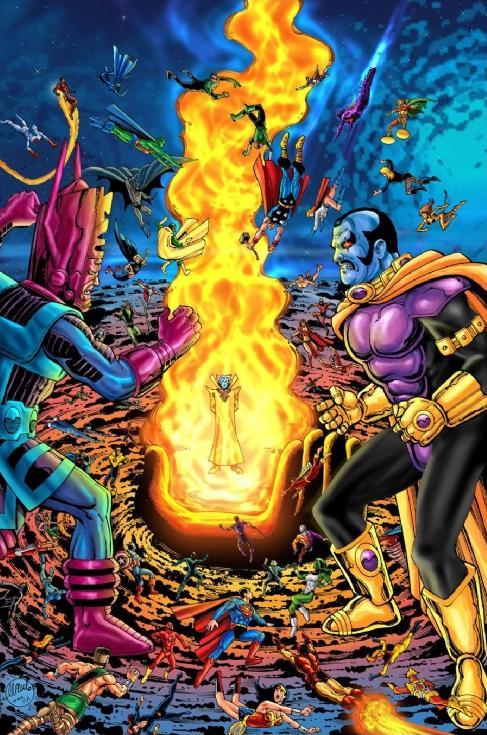
These are names that every comic book fan should know, and deep down inside we all wonder: what would it be like if they could get together? What’s more, what kind of foe would require the combined might of two of the greatest hero teams in comic book history? It could only be something on a monumental scale, something that endangers the existences of both universes. Something like… Krona.

If you’re a long-time reader, you might remember that name. Krona was the reason for the Crisis on Infinite Earths – his obsession with seeing the beginning of the universe led to the fissioning of that universe into a nigh-infinite number of parallel ones. It was only after a titanic series of battles that the singular universe was put right, and Krona was transformed into pure energy and banished for his crimes. Or so we thought.

Obsessive to the core, Krona figured out how to escape his universe and started again on his quest to understand the beginning of all things, even if it meant destroying every single universe that defied him. Eventually he came to meet the Grandmaster, an immortal on the Marvel side whose limitless existence drove him to play cosmic games of chance with whatever other great powers he encountered. He knew someone who could possibly answer Krona’s questions – the planet-devourer Galactus – and challenged him to a contest: the greatest heroes of each universe would compete to gather items of power. If the DC team won, Krona would leave and search elsewhere. If Marvel’s team won, it would bring ultimate destruction to both cosmoses.

I dunno. I was hoping for something... well, cosmic.

And so the teams met, and like all good superhero team-ups, it started with a fight. Something about the two worlds put the visitors on edge, and both Superman and Captain America were willing to pound their opposite numbers into the dirt if need be. Fortunately, as in all good hero team-ups, their differences were put aside in favor of battling Krona and saving both of their universes from utter annihilation.

It’s a vast story, both in time and space, and manages to bring together pretty much everyone who has ever been part of the two teams, both in terms of the heroes that made them up and the villains they fought. Yet it feels fairly intimate – these aren’t two whole universes that are battling for survival, but two teams, who manage to mesh together surprisingly well. A lot of the credit for this, of course, has to go to the writer, Kurt Busiek, who had the unenviable task of penning a story that made the best – and fairest – use of both teams. After all, never underestimate the partisan fans, the ones who would be utterly incensed by Superman beating Thor, or the idea that Captain America could possibly be Batman’s equal in hand-to-hand combat. I’m sure there were people on both sides of the publishing divide who were keeping very careful account of which team came off “better” in this fight, but that’s not the way this book was meant to be read. Busiek’s mission was to create a threat that could only be contained by both teams together, which means that neither team by itself was enough to win, which means that you should shut up already about whether or not Superman should have been able to use Thor’s hammer, dammit.

Only - ONLY - George Perez could pull this off....

Even for all the care that went into writing this story, it never would have worked without an artist capable of handling that many characters and making sure they all looked their best. When you have a universe-spanning epic with a cast of far-too-many, there’s only one person you can call: George Pérez. Not only can he handle a chaotic battle scene, making every hero look… well… heroic, hes just as good at the casualness of a Christmas party, or the masks-off teamwork that is involved in trying to build a reality-piercing spaceship. Whether facing off against great cosmic powers or chatting next to the coffee urn, Pérez knows how to make these people look damn good. There’s just no one else like him. With outstanding colors by Tom Smith, I could just read this book for the artwork alone.

What I also found interesting was a look at how the two worlds are fundamentally different in not only their stories but their very makeup. The Flash can’t run in the Marvel Universe because the Speed Force doesn’t exist, while the Scarlet Witch’s powers are multiplied to dangerous levels in the DC Universe thanks to the strength of the Lords of Chaos. The differences in the geography and the sizes of the Earths, the type of energy they receive from their suns, the fundamental forces that hold their universes together are a huge obstacle to getting the teams to work together, and as far as I know it is the first attempt to “scientifically” delineate how they are different.

This is the part where you lose. Hard.

There is also a bit of sociological analysis, too. Each team first notices how differently heroes are treated in their opposite worlds. The heroes of the Marvel Universe are tolerated, but not entirely trusted. The non-powered citizenry tend to be more afraid of superheroes, especially the mutants, and so the ability of groups like the Avengers to effect positive change on their world is limited. To Superman, this looks like Marvel’s heroes aren’t bothering to make their world better, but only remaining satisfied to hold the status quo.

On the DC side, heroes are beloved. Superman is a planet-wide hero, Wonder Woman is an ambassador of peace, and the people of Central City have built an entire museum to honor the Flash. These people revere their heroes as both celebrities and saviors, something that Captain America views as a step towards fascism – costumed gods with their pet people ready to do what they say.

Neither viewpoint is entirely right, but they do reflect a fundamental difference in the way each company approaches its storytelling. To put that editorial decision in front of the characters was an interesting choice, and allowing them to come to their own judgments was fun – if a little unnerving – to read.

All in all, JLA/Avengers is a truly great team-up story, one that should make the fans on both sides happy for a while.

——————————————————
“Neural chaff. Hypnotic lights. Pre-programmed skills. Try fighting the Wehrmacht, mister – it teaches you focus!”
Captain America to Prometheus, JLA/Avengers

[1] Hulk gets almost no screen time in the story, which is very disappointing. I’m sure there are reasons for this….

Leave a comment

Filed under apocalypse, Avengers, comic books, DC Comics, disaster, George Perez, JLA, Kurt Busiek, Marvel Comics, quest, super-heroes, supervillains, world-crossing