Category Archives: science fiction

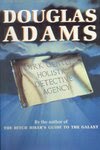
Review 47: Dirk Gently’s Holistic Detective Agency


Dirk Gently’s Holistic Detective Agency by Douglas Adams

I want an electric monk.

As Douglas Adams tells us in this book, every civilization creates mechanical devices designed to save us from our labor. We have dishwashers to wash our tedious dishes for us, VCRs to watch those tedious television programs so we don’t have to, and finally the Electric Monk to believe in those things we can’t be bothered to believe in.

Is that cool, or what?

As strange as it sounds, the Electric Monk is actually integral to the plot. But this plot is complex enough to deserve it. The main character, more or less, is Richard MacDuff, an up-and-coming young computer programmer who has several unique problems. The first problem is that of his couch – it’s stuck in the stairwell and, by all logic as affirmed by the best computer modeling systems, should never have gotten where it was in the first place.

The second problem is that he’s wanted for the murder of his boss. He didn’t do it, of course, but that kind of thing doesn’t really impress the police. And, of course, there’s the problem with the woman he loves, Susan, who just so happens to be the sister of the boss whom Richard is accused of murdering.

Add into all that the titular Dirk Gently, if that is his real name. Dirk is a man who, since college, has unswayingly, constantly denied having any kind of psychic powers whatsoever – which caused him some problems during his university days when he managed to correctly predict, down the the comma, the contents of a major exam.

Now older and weirder, Dirk runs his Holistic Detective Agency. His work rests on one simple principle: the Fundamental Interconnectedness of All Things. Based on a common misunderstanding of quantum theory, Dirk believes that all things are fundamentally connected to all other things, no matter how tenuous those connections might appear to the unaided eye. So during the course of, say, looking for a lost cat, it is entirely possible that he may have to go down to the beach in Bermuda. Because, fundamentally, all things are connected. And billable.

Then there’s the matter of a time machine hidden in Cambridge and the temptation that can arise from having one. With what amounts to a TARDIS, one could go to any point in time and space. You could visit ancient lands, pet extinct animals or, if necessary, fix something that had gone terribly, terribly wrong. It’s tricky, but it can be done. And if you’re the ghost of an alien whose simple mistake – putting his trust in an Electric Monk, for example – consigned it to billions of years of insubstantial solitude, a time machine might be very tempting indeed.

There’s really no good way to summarize this book. As Douglas Adams is fond of doing, there seem to be several plotlines and events which, at first, seem to have no relation to each other. But as you read, you find out that the Electric Monk isn’t as funny as we thought he was, that putting a salt shaker into a piece of pottery can cause more problems than you think, and that you should always be afraid of people with nothing to lose.

As Dirk claims, all things in this book are fundamentally interconnected, even if it’s not obvious at the moment.

Yes, even the couch.

———————
“My mind is my center and everything that happens there is my responsibility. Other people may believe what it pleases them to believe, but I will do nothing without I know the reason why and know it clearly.”
– Dirk Gently, Dirk Gently’s Holistic Detective Agency
———————

Dirk Gently’s Holistic Detective Agency on Wikipedia
Douglas Adams on Wikipedia
Dirk Gently’s Holistic Detective Agency at Amazon.com
Leave a comment

Filed under Douglas Adams, ghosts, humor, made into movies, mystery, time travel

Review 38: Transmetropolitan


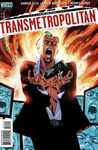
Transmetropolitan by Warren Ellis and Darick Robertson

There are times I look around me and think, “I love living in the future.” I mean think about all that we have – even the simplest phones can call anywhere in the world, and the higher end ones are basically backup brains. Surgery that used to require horrible invasion can now be done with a fraction of the time and the pain. We can cure diseases that a century ago would have been thought of as afflictions by God. Our transportation networks have grown to a point where there is practically nowhere on Earth that cannot be reached in twenty-four hours, and advances in communication have provided us with more information than our ancestors could have hoped to see in their (briefer) lifetimes.

We live in an age of wonders, when you really think about it.

Leave it to Warren Ellis and Darick Robertson, then, to show us what living in the future really means.

Transmetropolitan is set in the far, far future – so far ahead that even they don’t know what year it is. It’s set a in future that can do anything – cure any disease, bring people back from the dead, synthesize consumer goods from blocks of inert matter…. You can turn yourself into a dolphin for a day or into a sentient dust cloud for the rest of eternity. It’s a future that defies imagination.

And yet, it is very similar to now. The same problems, the same mistakes and the same short-sightedness that plague us will be around in the future, no matter how good the technology is. Despite being able to have anything you want, there is still greed. Despite being able to reassemble matter on an atomic level, there is still hunger and homelessness. Despite the human form becoming malleable in a thousand different ways, there is still discrimination. This perfect future has a flaw, and like so many perfect things, its flaw is its people.

Our guide to this future is Spider Jerusalem, a celebrated journalist whose love of the truth eclipses his hate of the world he lives in, and he’s determined to set the City straight, even if it kills him. He’s an analogue of Hunter S. Thompson, with a little H.L. Mencken thrown in for balance, and he’s the most awesome character to grace comics in a long time.

Spider is angry because he has to come back to The City, the nameless hypertropolis that both sustains him and drives him mad. He looks around and sees the ugliness under the shiny plastic shell of society and is instantly furious that no one has done anything about it yet. What’s more, it’s time to vote for President again, and this time it looks like it’s a race between an incumbent so horrible that he was nicknamed The Beast and an utterly amoral snake called The Smiler, who wants to be President just because that’s what he wants. Spider Jerusalem, whether he wants it or not, holds the keys to power for both of these men, and even his high moral sense isn’t able to tell him which of the two villains should get it.

Keen observers of 20th century history will see a lot reflected in this series, deliberately and clearly, and Spider is Ellis’ avatar His word is beyond dispute and his decisions are beyond question, which is why Warren Ellis is a kind of internet cult figure these days. He created a character that was a brash loudmouth who could scream the things that we’re all thinking, but someone with whom we feel an almost immediate and unshakable sympathy. He’s enough to make me want to be a journalist.

The future of Transmetropolitan is a place where Ellis was able to tell us everything that had been bugging him, from the hyper-escalation of technology to corrupt government to social apathy. The first few issues, before the real meat of the story kicks in, are “soapbox” issues, where Ellis rails against everything that’s going wrong in our time by making it so much worse in the future. My favorite of these, of course, is the religion issue (#6, God Riding Shotgun) where Spider crashes – and trashes – a convention for new religions. Alien Love Gardeners, the Church of Cobain, and the Church of Release, where trepanation can be practiced as an act of evangelism are excellent examples.

Eventually the story settles down with the arrival of the Presidential Election and Spider’s determination to bring down The Smiler no matter what it costs him.

The writing in this story is fantastic, of course, as we would expect nothing less from Warren Ellis. Spider is utterly, completely foul-mouthed, so don’t let your children read it unless you want them to shock sailors. But there are touching moments and angry tirades and passionate speeches that dig right into your heart, and whether you love Spider or hate him, you know he’s speaking from the core of his soul.

The art, too, is outstanding. It takes great skill to make such ugliness look beautiful, but Darick Robertson certainly has it. The City is a living, breathing place, and it has all of the beauty and horror of a living organism, if you look closely enough. Robertson can render gleaming cityscapes alongside the hollow eyes of child prostitutes with equal care and detail. While you read, be sure to look, because every panel is worth looking at.

Transmetropolitan is a story about truth, really. Or if we want to be specific, The Truth. Spider believes in The Truth, no matter who it hurts, and his mission as a journalist is to discover and promulgate the truth. Whether it’s the truth about the alien-human hybrid prostitutes delivered to the presidential suite or the truth about a level of poverty in the City that would shame a third-world nation, Spider’s aim is to show people what their world looks like and force them to take action. Unfortunately, he’s fighting an uphill battle.

You see, much like in our world, people don’t actually like truth. It’s uncomfortable and unpleasant, especially because there’s a very good chance that the truth could implicate us in some pretty horrible situations. What’s worse, there are countless situations where you can have contradictory situations and explanations, and yet both can be considered “true.” That’s the unfortunate difference between fiction and real life.

Still, I would appreciate Spider Jerusalem today. In this world of instant news, where something that’s an hour old is “old news” and where opinion is put side-by-side with fact as if there were some kind of controversy, we need someone to stand for the truth. Someone who doesn’t care about what people think of him or the consequences of her quest for herself. Someone fearless enough to push as far as he can and then push farther. Someone to stand up and say, “This is what is true.”

We may not listen to this person. In fact, given the way things are going right now, we may even come to hate the one who tells us how we are responsible for the world in which we live. But we need him nonetheless, and if Spider Jerusalem can inspire even a few of us to look at our societies and ourselves with a critical, unblinking, bloodshot eye, then perhaps his spirit lives, even if he doesn’t.

—————————————–
These are the new streets of this city. Where the New Scum try to live. You and me. And here in these streets are the things that we want: sex and birth, votes and traits, money and guilt. Television and teddy bears. But all we’ve actually got is each other. You decide what that means.
– Spider Jerusalem, Transmetropolitan
—————————————–

Transmetropolitan on Wikipedia
Warren Ellis on Wikipedia
Darick Robertson on Wikipedia
Warren Ellis’ homepage
Darick Robertson’s homepage
Transmetropolitan on Wikiquote
Transmetropolitan on Amazon.com

Leave a comment

Filed under Darick Robertson, DC Comics, futurism, graphic novel, humor, media, politics, science fiction, technology, totalitarianism, Warren Ellis

Review 35: The Andromeda Strain


The Andromeda Strain by Michael Crichton

Michael Crichton passed away recently, so I thought he would be a good choice to read. I know there are people who have problems with Crichton – his later books revealed some distinct political leanings and display very clear biases, the most obvious of these being State of Fear, in which he attacks the environmentalist movement’s support of global warming. His attacks are blatant, and even though the novel is said to be a good read, it’s burdened by the obvious slant of the author.

It’s tough to know what to do with authors who inject their own personal morality into their works. Some of them, like Heinlein, do it in such a way that it’s not a distraction – it’s Heinlein. Others, such as Orson Scott Card, are so vocal in their political opinions that they risk losing a large portion of their readership. In this situation, you have to make a decision: read the book for the story or read the book for the author’s politics? Or don’t?

I take the same route here that I do with actors, musicians and other artists who make their political and social views known. I disregard those views and just judge their work on its own merits. It’s not that hard to do, really….

Anyway, I remember seeing this movie for the first time, and it scared the hell out of me. Not in the same way that my childhood slasher films scared me, of course. In those, there was always someone – Jason, Freddie, Michael – who was lurking behind curtains, waiting to turn you into steak tartar if you were foolish enough to have sex in the camp counsellor’s cabin. But at least they were human (sort of), and they had motivations, however insane these motivations were.

In this book, we are not facing a psychopath with a chainsaw. It’s something more terrible and more impossible to deal with.

The premise – The US space program, in an attempt to figure out exactly what is lurking in the upper atmosphere, has been sending up special satellites – the Scoop satellites – to sample the air up there and then return so that scientists can do what they do best. The theory was that if we were to encounter extraterrestrial life, the odds are that it would be some sort of simple organism rather than a four-foot grey humanoid.

People like Carl Sagan seemed to support this theory, and Crichton makes a very good case for it through his characters. Radio waves attenuate, even light pulses can’t last forever – but build an organism that can survive indefinitely in space? That is an excellent way of telling the rest of the universe that you’re out there. A microbe needs a lot less to keep it going than your average movie E.T., so it would be reasonable to assume that it would make an excellent message in a bottle in a vast and harsh cosmos.

Back to the book – most of these satellites went up and came down without incident, but one – Scoop VII – had some unexpected problems and crashed in the American southwest, just outside a small town called Piedmont. The good citizens of Piedmont, wanting to know what it was, brought it home to have a look.

Within eighteen hours, nearly everyone in Piedmont was dead. The lesson? Never go near something that comes screaming out of the sky. Yes, it might give you super-powers, but odds are that it’ll kill you.

The government, always looking for the worst case scenario, had planned for this, and put Project Wildfire in action. Wildfire called for a team of scientists with varied backgrounds to be brought to an isolated lab in Nevada. Scoop would be brought there, and they would attempt to unravel the mystery of what killed the people of Piedmont.

The story sounds pretty simple, and Crichton makes a point of saying that, ideally, there should be no story to tell. Wildfire facilities are insanely well-guarded, and the design of the complex itself is nearly foolproof against something escaping – to the point that, if the facility becomes insecure, it will be vaporized in a nuclear explosion.

As usual, Crichton is meticulous in his science. The book has a bibliography in the back with 58 references to justify his use of x-ray crystallography, culture growth, electron microscopes, and other theories. The point is, he is saying that the incident in The Andromeda Strain could happen. Maybe. And it is possible that, despite our best planning and efforts, we might not be able to stop it.

This brings up the question: is this really science fiction? Well, yes, because A) it’s fiction and B) the story is dependent on the science. But it’s not science fiction in the way that we’re familiar, since very little of it is actually fictional. Most of the technology is extant, and the tech that is a little more outlandish is certainly within our ability to create. The only thing that is really speculative is the Andromeda organism itself. And even given that, the story is not so much about the organism as it is about the race to figure out what the organism is – it’s about the scientists, not the science.

Where the actual story comes in is with the introduction of Mistakes. A simple malfunction in a piece of communications equipment. A medical problem that is hidden until it is too late. Miscommunication and assumption abound, which is what makes this book interesting. Otherwise, it would just be a matter of the scientists trying to figure out what this wee beastie that hitched a ride on Scoop can do, and why. Perhaps it’s not so much science fiction as it is scientific fiction. If that makes any sense….

Indeed, the silly humans are saved from worldwide extermination by virtue of the microorganism’s own nature, oddly enough. This isn’t The Stand – Crichton didn’t set out to write an End of the World story. He wanted to talk about science and what might happen if an unknown pathogen should appear from the darkest regions of space.

As I said before, this is what makes it so terrifying. The villain of this story is a bacteria. We don’t know where it comes from, how it works, or why. It has no ambition, no plan. It is not hostile, malicious, or vindictive. It can’t be bargained with or tricked.

Perhaps that is why disease stories are so interesting. On the one hand, they point out how vulnerable we really are to something we have never encountered. On the other hand, they show how sometimes, just sometimes, we can avert disaster with the ingenuity that keeps popping up in humanity.

So – it’s well-written and well-researched, not to mention a sci-fi classic. The movie’s pretty good as well, and sticks relatively close to the book. Either are recommended.

—————————————————
“He [Stone] often argued that human intelligence was more trouble than it was worth. It was more destructive than creative, more confusing than revealing, more discouraging than satisfying, more spiteful than charitable.”
– Michael Crichton, The Andromeda Strain
—————————————————

Michael Crichton on Wikipedia
The Andromeda Strain on Wikipedia
The Andromeda Strain on Amazon.com
NASA’s Exobiology Branch

2 Comments

Filed under disease, made into movies, Michael Crichton, science fiction

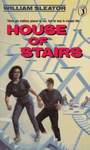
Review 22: House of Stairs


House of Stairs by William Sleator

Young adult fiction must be a really tough genre to wrap your head around, for a writer. You have a story that you want to tell, and you have to tell it in such a way that it is simple enough for your target audience to read, yet engaging enough to keep them reading. The themes have to be familiar enough for them to understand and relate to, yet unusual enough to be interesting for them. Go too far in the wrong direction and you have a failure. So how does a YA writer do it, balancing all those issues, while still writing a good book?

Damned if I know. I’ve never managed to write a decent book for adults, much less young ones.

Fortunately, there are plenty of talented writers who can write for young people, and one of those is William Sleator.

A YA writer who specializes in science fiction, Sleator has written his fair share of strange, fantastic and sometimes disturbing books. Of all the ones I’ve read, this book is probably the one that creeped me out the most.

The setup for this story is simple. Five sixteen year-old orphans – two boys, three girls – are put into a giant room, with no visible walls, ceiling or floor. The only structures in this room are stairs and landings. Nothing else except for a small machine with flashing lights and odd sounds that dispenses food.

That’s it.

The five characters are very different and very interesting. First we have Peter, a scared boy, uncertain of his surroundings in the best of times, and utterly overwhelmed by being dropped into this bizarre place. He’s afraid of everything and everybody, and finds solace only his the strange trances he drops into, in which he is with an old orphanage roommate, Jasper, feeling safe and protected. As an interesting aside, it wasn’t until I was much older that I figured out Peter’s sexuality. It wasn’t that thinly veiled, either. I really don’t handle subtlety well, I think….

Lola is not a showgirl. Sorry, had to put that in. Lola is a tough, street-smart girl who has no tolerance for stupidity or cruelty. She’s had to learn a lot in her time, and doesn’t look to others to decide what she should or should not do.

Blossom is a fat little girl who is the first to figure out how to use the food dispenser (in a rage at it, she sticks out her tongue, and out pops a food pellet – but more on this later). She is cunning and devious, much sharper than people would give her credit for being. If anyone is truly dangerous in this crowd, it is her.

Abagail is a mousy girl, pretty in her own way, but with very little in the way of self-confidence. She tends to latch on to other people and question her own thoughts and actions. She does have compassion, however, though not the means to make her compassion a reality.

Finally, Oliver is the other boy of the group, and he is all that Peter is not. He is strong and confident and good-looking. For a while, Peter thinks that Oliver is his old friend, Jasper, and subsequently Peter is devoted to Oliver. A certain power structure evolves when it is discovered that of all the people, only Oliver can bring Peter out of his trances. Oliver has power, and he is not afraid to use it.

These five kids are trapped in this house of stairs. None of them know why they’re there, they only know that they are. They soon discover that the food-dispensing machine will only give them food under certain conditions. In the beginning , they are forced to repeat a series of actions and movements, that evolve into a kind of dance, hoping to get food from the machine.

From there it gets only worse. They soon discover that the dance isn’t enough. The infighting that comes naturally becomes essential to their survival, for only when they are cruel or greedy will the machine start flashing its lights and entice them to dance. The question then becomes whether or not the kids will do as the machine wishes, and how long they can hold out against it. Or if they will.

This book is disturbing to say the least. It levels some pretty harsh accusations about human nature, not just regarding the kids in the house of stairs, but also regarding the people who put them there. The kids are there for a reason, and not a good one. The whole setup (which is thoroughly, if somewhat clunkily, explained at the end) is about conditioning, and changing people’s personality through stimuli and reinforcement to make them behave as desired. Because it demonstrates people, young people in particular, behaving in a manner that displays the truth of their nature, this book has often been compared to Lord of the Flies, and rightly so.

In its way, it’s even more disturbing than Lord of the Flies – at least the kids in that book had been left to their own devices, as terrible as they were. In this book, the horrors that these five teens go through are part of a deliberate state-sanctioned experiment in human conditioning – a kind of horrible, Pavlovian Breakfast Club. Such is the nature of that experiment that the two children who resisted the conditioning were actually regarded as failures. Upon reflection, the people pulling the strings are far more frightening and disturbing than these poor, manipulated children.

If nothing else, the lesson to be learned from this story is simple – be a human being. There are some things that are too important to sacrifice for something as simple and petty as food and acceptance. We must never allow ourselves to be beasts. We have to be human. This has relevance today, when we are debating the ethics of torture – is it a necessary evil that we must tolerate if our society is to survive, or is it an offense against our humanity? If we allow ourselves to be fooled into thinking that an evil act is somehow the right thing to do, then we have lost a very important part of ourselves.

Of course, it’s also about science, but the message here is less dire – we must not allow science to lose its humanity. In this book, a strange future with a monolithic state government, science is entirely utilitarian, with no moral qualms about putting minors through psychological torture. The good news is that, at least as of this writing, science errs on the side of ethics. Modern science certainly has its moral gray areas, but the majority of scientists out there would never consent to run an experiment such as this. I hope.

The last line in the book is one of the more frightening ones in literature, right up there with the last line in 1984. It’s a blunt reminder of everything that has happened in the book, and a pointed summation of everything that Sleator has been trying to say – that humans have a base nature, that we can be manipulated, and we will, given the right circumstances, allow others to shape who we are. His message to his readers – teenagers like the ones in this book – is to refuse to submit to such control. Good advice for them, and for us.

—————————————-
“You… you’re not going to… to go along with it, are you?”
– Peter, House of Stairs
—————————————-

William Sleator at Wikipedia
House of Stairs at Wikipedia
House of Stairs at Amazon.com
Operant conditioning at Wikipedia

Leave a comment

Filed under behavioral conditioning, children, morality, science fiction, survival, teenagers, William Sleator, young adult

Review 21: The Thief of Always


The Thief of Always by Clive Barker

This book has one of the best opening lines I have ever read:

“The great, gray beast February had eaten Harvey Swick alive.”

Having grown up in New England, where February is the punishment that God metes out for all sinners, I have decided that you can’t beat that.

Harvey Swick is ten years old, and like so many ten year-old boys, he is bored with his life. The interminable grayness of February, the drudgery of life – going to school, coming home, going to school again – and believes that, if his life became the tiniest bit more boring, he would most certainly perish.

Then he met a strange, smiling man named Rictus, who told Harvey of a wonderful place where boredom could not enter, and there was nothing to be had but fun and adventure. There is no better place for children, Rictus said, than Mister Hood’s Holiday House.

Thinking about it, given that Harvey was willing to follow a strange man to a mysterious house without much consideration for his safety, suggests either that Harvey is not very bright, or Rictus is extremely persuasive. Given the rest of the book, I’d bet on the latter.

The Holiday House is truly a place of miracles. The food is better than you’ve ever eaten and there are enough toys and games and costumes and masks to keep any child happy for the rest of their lives. And in every day there are four seasons – a perfect green spring in the morning, a blazing wonderful summer in the afternoon, an evening full of woodsmoke, pumpkins and fallen leaves, and every night is a white Christmas with a present for each boy and girl.

It is the best place Harvey has ever been, and it takes him about a month to realize that something is not… quite right. Why would the mysterious Mister Hood do this for children? And what happened to the children who had come before? And what’s the deal with that cold, deep pond full of big, creepy fish?

It’s a coming-of-age book, the kind that chronicles the transition from childhood to young adulthood. Ten isn’t exactly young adult territory, but it is a time when kids start maturing in the way they think about themselves and the world. Not for nothing that so many young adult novels feature a protagonist that is somewhere between ten and twelve years old – they’re still young enough to have an air of innocence (which inevitably gets torn away) but old enough to think for themselves when there are no adults around to think for them.

There is no end to this kind of book – Neil Gaiman’s Coraline, Stephen King and Richard Bachman’s Peter Straub’s The Talisman, John Gilstrap’s Nathan’s Run, and just about anything written by William Sleator are among my favorites in this genre. They represent a growing-up that we feel we ought to have had, but are happy to have missed. They deal with the concepts that kids have to deal with as they age, and do so in a manner that young people can understand – analogy.

The Thief of Always is a book about getting what you want. Anyone who’s spent time around children knows that they’re greedy little beggars. They are dominated by their id and don’t understand that there are concerns out there that might supersede their own. Harvey Swick is just such a boy. He is concerned with his own excitement, his own happiness, and, having a child’s limited view of time, believes that the boredom he feels in the grip of February is permanent. He wants adventure. He wants change and variety, a life that never slows down and never gets old.

As the old saying suggests, however, one must be careful what one wishes for.

In the end, Harvey learns a Valuable Lesson ™ – to let the future happen in its own time, and appreciate what you have now. Because once time is gone, you can never – or at least very, very rarely – get it back again.

It’s a very quick read, but a very good book. I pull it out every February, if only for that opening line. For those who think of Clive Barker as being a master of the gory, pin-headed horror genre, this book may come as a pleasant surprise for you. And if you have kids around Harvey’s age, leave this one lying around for them to find. I’m sure they’ll appreciate it….

————————————-
“I only took the days you didn’t want,” Hood protested. “The rainy days. The gray days. The days you wished away. Where’s the crime in that?”
“I didn’t know what I was losing,” Harvey protested.
“Ah,” said Hood softly, “but isn’t that always the way of it?”
– from The Thief of Always
————————————-

Clive Barker at Wikipedia
The Thief of Always at Wikipedia
“The Beautiful Moment” – a Clive Barker website for all ages
The Thief of Always at Amazon.com

3 Comments

Filed under children, Clive Barker, fantasy, time travel, world-crossing, young adult

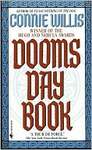
Review 20: The Doomsday Book

The Doomsday Book by Connie Willis

I honestly can’t count the number of times I’ve read this book. I think this is the fifth time. Or maybe the sixth, I don’t know. It doesn’t really matter, because it’s just as enjoyable, touching and heartbreaking as it was the first time I read it, and that’s a hell of an accomplishment.

It is the middle of the 21st century and time travel has finally been worked out. A reliable there-and-back-again way to go into the past and come back to the present. Unfortunately, there are limitations. The computer that makes time travel happen, through means I’m not sure even Ms. Willis understands, will not allow for a paradox. This means if you try to go to the past with anachronistic technology, or carrying a disease that could wreak havoc on the population, the interface simply won’t open. If you try to place a traveler somewhere where their appearance could cause a paradox, the machine will put them in another place or time – a factor called “slippage” which can put you anywhere from five minutes and a few feet off your mark to years and miles. The machine won’t allow you to get anywhere near events of importance.

Secondly, the machine won’t allow you to take anything through the net. So if you travel to, say, Napoleon’s palace and try to rob him blind, the interface won’t open until you’ve got rid of all your booty.

Those two factors alone made the time machine economically useless. If you can’t profit off it – or change it – what good must it be?

A lot of good, as it turns out, if you’re an historian. While the machine may not allow you to get anywhere near Hitler, it will allow you to see what life was like in the ghetto in the 30s. The whole of history suddenly became open to real discovery, and places like Oxford were at the forefront of the research.

One student, a young lady named Kivrin, has a dream to see the Middle Ages. Despite all the warnings that it was full of filth, disease, superstition, danger and death, she still wants to see it more than anything in the world. The sheer force of her will finds her in the machine, ready to go to the year 1320 to see firsthand what life was like for the average English citizen. She has prepared herself as best she could, but nothing could possibly prepare her for the time and place she ends up in….

And in the present, a new plague has spread around Oxford. It’s a new type of flu that seems to have come from nowhere, and it’s started to kill. Kivrin’s teachers and friends have to race the disease, time and sheer bloody-minded bureaucracy to try and find her and bring her back safely.

What is remarkable about the book is the detail. Willis has obviously done a lot of research into not only Medieval Oxford but modern Oxford as well. Since one of the themes of the book is that we don’t know nearly as much about the past as we think we do, Willis has gone to great lengths to make sure that we – through the eyes of Kivrin – never know what to expect because our expectations are all totally wrong. And as is so often true about history, the more we know about it, the more interesting it becomes.

The Oxford of the future, by contrast, isn’t all that futuristic. It looks a lot like the modern world, probably because it’s only a couple of decades removed from us. Sure, there have been advances in technology, but the lives of the people aren’t much different from ours.

Interesting note: the book was published in 1992, well before the age of cell phones, instant messaging and the internet. Because of this, one of the greatest hindrances to getting anything done in this far-future Oxford is that no one can get anyone on the phone. It’s a videophone, yes, but most of the characters spend time waiting for phone calls to come through or trying to place calls to people who aren’t near a terminal. It’s a bit strange, from my modern perspective, to see a world that has pretty much conquered disease and mastered time yet never figured out a means of personal communication better than a land-line.

That’s just a small thing, though, and as long as you accept that particular bit of alternate-future, you’ll be okay. It’s a fantastic book, one which I recommend without reservation. The characters are deep and interesting, and the writing really puts you in their world. Seriously. Go get it.

———————————————-
“Mr. Dunworthy, ad adjuvandum me festina.”
(“Mr. Dunworthy, make haste to help me.”)
– Kivrin, The Doomsday Book
———————————————-

The Doomsday Book on Wikipedia
Connie Willis on Wikipedia
The Doomsday Book on Amazon.com
The 11th-Century Domesday Book at Wikipedia
The Domesday Book online

1 Comment

Filed under Christmas, Connie Willis, death, disease, England, science fiction, survival, time travel

Review 19: Day of the Triffids


The Day of the Triffids by John Wyndham

I have a long fondness for Apocalyptic novels. The Stand was one of my early favorites from junior high school, and I really enjoyed its cousin by Robert McCammon, Swan Song. There’s something about the End Of The World that just grabs me and won’t let go. Maybe it’s the thought that, should the world end, I would be one of the survivors. The rule of law would break down, all shackles of modern life would be loosed, and I would finally be free to choose my own destiny. Which, knowing me, would probably be very short and end up with me getting shot by some kind of Mad Max pirate tribe.

I can say with some certainty, however, that in this book’s scenario I would not be coming out on top. Because I love astronomy.

Let me explain. This end of the world came in two parts, at least one of which was definitely of our own doing.

It started with a comet. Or a meteor shower. Or something, but whatever it was, it lit up the sky. Green streaks of light brightened the night skies around the world, and everyone who could go and watch them did so. I’m a sucker for a natural light show, so I probably would have spent the night watching the skies and enjoying myself. And I would have woken up stone blind the next day.

That in itself – the vast, vast majority of the human population on Earth being blind – would have been a pretty good apocalypse. Wyndham describes rashes of suicides, accidental deaths and, of course, murder in just the first few days. Without vision, the carefully crafted world we’ve made kind of falls apart. But it would have been survivable. Co-operation groups spring up pretty quickly, both voluntary and otherwise, where sighted people assist the blind in surviving. It would have been tough, yes, but not impossible, for the world to go on. If not for the Triffids.

While we don’t know what caused the green comet, the Triffids were definitely our fault. The product of bioengineering gone haywire, the Triffids are ambulatory carnivorous plants with a poison sting that can kill a grown man from ten feet away. And while they’re not intelligent, they are remarkably… aware. They follow sound, they learn and co-operate in hunting, and are very difficult to eradicate.

But by themselves, they’re manageable. Their stingers can be removed, even though they grow back eventually, and they make interesting garden plants. And they’re immensely profitable – the oil derived from a Triffid outdoes every other kind of vegetable oil available. In normal times, the Triffids are under human control and benefit humanity greatly.

The two problems, when put together, make for a truly terrifying end – an unstoppable, unthinking army of carnivorous plants, finally freed from their shackles. A world in chaos, half-blind and not sure if they have to save themselves, or if someone else will do it for them. And an exciting story.

The message of this book is pretty clear, and Wyndham wastes no time in making sure we get it, lest the adventure part of the book get bogged down. Don’t mess with nature. That’s pretty much it. Don’t mess with nature, because nature will inevitably come ’round and mess right back with you.

Wyndham has created a brave new world for us, with a wide variety of characters who all react to their new situation in different – and realistic – ways. Starting in London, we meet a diverse cast – from the girl who believes that the Americans will save her to the man who believes that polygamy is the way to a brighter future, everyone has an idea on how to survive. The narrator, Bill Masen, knows just enough to get the reader up to speed, but not nearly enough to know if he’s even going to make it out of this alive. With the help of other sighted survivors, he is determined to make a stand, not only for England, but for the human race as a whole.

But first they have to deal with the Triffids….

———————————-
“When a day that you happen to know is Wednesday starts off sounding like Sunday, there is something seriously wrong somewhere. ”
– John Wyndham, Day of the Triffids
———————————-

Day of the Triffids at Wikipedia
John Wyndham at Wikipedia
Day of the Triffids at Amazon.com

1 Comment

Filed under adventure, anarchy, apocalypse, England, John Wyndham, made into movies, science fiction, society, survival

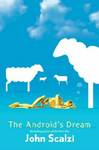
Review 03: The Android’s Dream


The Android’s Dream by John Scalzi

What do you get when you combine aliens, diplomacy, artificial intelligences, religion and sheep together? Well, for most people, the answer would be a horrible mess. For John Scalzi, however, it’s a fantastic read. Nothing too complex, no greater statements about the nature of humanity and the necessity of war that holds together the stories in his Old Man’s War universe, just a good old-fashioned espionage romp. With sheep. Or at least a sheep. Kind of.

The story begins with, as so many stories do, a murder. Not an intentional murder, really, but one that was born of shame and revenge, as so many murders are. Under normal circumstances, this wouldn’t rate much, except that the death of an alien trade ambassador is never a convenient thing. When said diplomat may just possibly have been killed by his human counterpart, that’s even more difficult to deal with. Instead of a nice, tidy trade agreement cementing the relations between the United Nations of Earth and the Nidu, an alien race with an extraordinary sense of smell and hair-trigger tempers, we have what the State Department might just call “a challenge.”

The only thing that can heal this little rift between the two planets is a sheep. But not just any sheep – a special breed, created just for the Nidu called the Android’s Dream. Without this sheep, the ruling family cannot hold on to power, and the Nidu will be plunged into a catastrophic civil war that will, in all likelihood, take Earth with it. In order to find the sheep, avert catastrophe and, most importantly, avoid calling shame down upon the government, State Department employee – and veteran of the Earth’s greatest military failure – Harry Creek will have to use every skill at his disposal. And then some.

It’s a great read, this book. Telling any more about the plot would ruin it, so I’ll just exhort you to pick up the book and get reading. In all honesty, you could probably finish it pretty quickly. But I can’t just stop here, so let me tell you more about why I liked it as much as I did.

What made it so good, what always makes good sci-fi good, is the reality of the world the author creates. It’s great to come up with high-concept scientific ideas, or intricately-planned space battles, but for the reader to really immerse him-or-herself in the book, it has to have a world in which the reader can easily imagine her-or-himself existing.

I thought of this during one scene early in the book. A character was riding the Washington, D.C. Metro and the narrator was describing the various aliens who were riding with him. There was an explanation of how various species had integrated themselves into the city, overcoming prejudice and discrimination, but what really got me was the description of a young woman reading the paper, the only other human in the car. Amidst all the different bodies, tongues, smells, and appearances, she didn’t even notice.

“If her great-great-grandmother were on the train,” Scalzi writes, “she would have thought she was on commuter train heading toward the fifth circle of Hell. This woman didn’t even look up. The human capacity for being jaded was a remarkable thing.”

It was at that point that I really accepted the reality of the book. It wasn’t a perfect world, it wasn’t one that had been ripped apart or perfected by alien contact. What had happened was what happens here any time cultures interact – after a brief period of unpleasantness, cultures start to mingle until it gets to a point where no one can remember when things were at all different. This book has all those little details that help sell the world, things that blend our world with theirs. Bored mall employees, amoral hit men, political jockeying, all of those things are familiar. Actual ghosts in machines, planet-cracking bombs, aliens that are almost entirely mouth and digestive systems, those are not. But they’re believable, because Scalzi is one hell of a writer.

I do have one little nit to pick, however. It’s not a big nit, but a nit nonetheless.

The book is an adventure, plain and simple. It’s a plot-driven story that pulls you along from one event to the other with nary a chance to catch your breath, and I never complain about that. It has some great characters… who remain almost entirely static throughout the story. I can’t say there’s no character development in the book, because the big hairy guy who eats people does have a change of heart about it, but other than that…. Harry Creek begins the book as a reluctant hero who is hiding his super-hacker, ass-kicker light under a bushel, and he’s happy to continue to be that at the close of the book. Robin Baker is a sassy, independent young woman who holds up under pressure – though not necessarily happy about it – throughout the book, and the Nidu ambassador Narf-win-Getag is untrustable the moment he walks on the page, and he remains so up through his sudden and inevitable betrayal near the end.

Like I said, this isn’t a huge complaint, because the book that Scalzi has written isn’t a character book. It’s an adventure, and adventure books usually don’t require a whole lot of character development. That doesn’t mean the characters aren’t believable – they certainly are – and it doesn’t mean they’re not interesting – they absolutely are. They just don’t grow. Fortunately I know from having read Old Man’s War and its related books that Scalzi has no problem with character development, and so I can assume that keeping his characters reasonably static in this book was a deliberate choice.

As a tangential comment on characters in the book, there was one character that drove me nuts. This character is not central to the story, and only appears a few times. What makes this person interesting are the following two things: first that the character is named Sam, and second that Sam’s gender is never established. Maybe it’s me and I missed something, but I have no idea if Sam was a man or a woman.

I caught it mainly because Tad Williams used the same name to pull a similar trick in his Otherland series, but in that story he was hiding Sam’s gender from another character, not the reader, so we eventually found out what was what. In this story, Sam’s gender remains a mystery for no other reason than I figure it amused Scalzi. It has no bearing on the story, and it doesn’t make the fate of Sam’s lover any less tragic, but I found it fascinating.

In any case, it’s a great read and – as a bonus – very funny. The opening line alone lets you know that, no matter what you think you’ve read before, you haven’t read anything quite like this. But I’m not telling you what that line is – I can’t give away everything….

——————————————————-
“If there’s one thing that distinguishes the human species, it is a pathological need to stay connected.”
-John Scalzi, The Android’s Dream
——————————————————

John Scalzi’s homepage
John Scalzi at Wikipedia
John Scalzi at AMC.com
The Android’s Dream on Amazon.com

1 Comment

Filed under adventure, aliens, John Scalzi, science fiction