Category Archives: fantasy

Review 111 – Wolves of the Calla

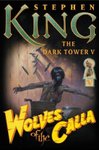
Wolves of the Calla by Stephen King

Okay, before we get into this book, let me take a little survey: Have you ever seen The Seven Samurai? How about The Magnificent Seven?

The Three Amigos? GalaxyQuest?

If you’ve seen these movies, and any number of stories like them, then you know the basic outline of this book. Say it along with me now….
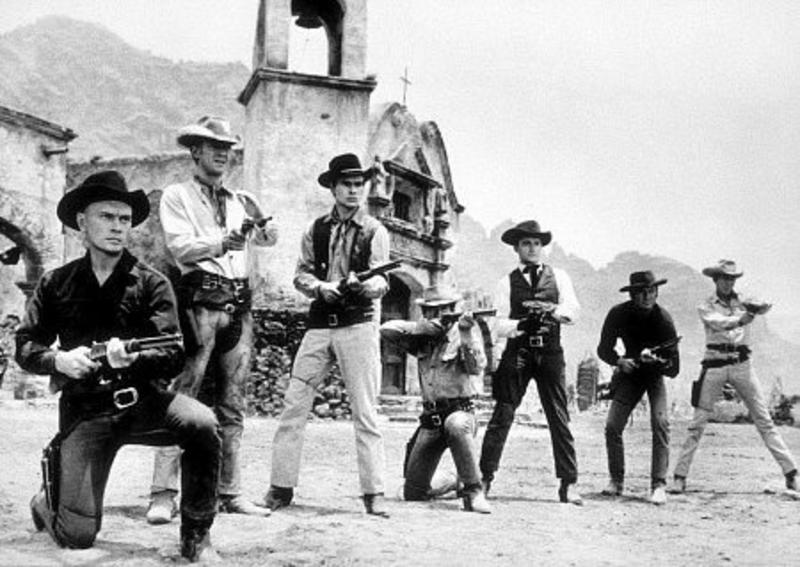
'We deal in lead, friend.' - Vin

Calla Bryn Sturgis, a small farming village on the far end of the world, is notable for a few things. Its rice, its peaceful people, and its abundance of twins. The farmers of Calla Bryn Sturgis want nothing more than to live their lives in peace, but their idyllic existence is threatened by invaders from the east.

They come from the evil town of Thunderclap, once a generation – the Wolves. Armored and cloaked in green, riding identical deathless gray steeds and armed with terrible weapons, the Wolves come to Calla Bryn Strugis to steal one child from every set of twins. They take them to their dark city, and when the children come back, they come back as damaged goods. “Roont,” the Calla-folk call them, and it’s an apt word for they are ruined indeed. Over the years, these children, whose minds have lost all of their intelligence and humanity, grow into pain-wracked giants, and then die horrible deaths years before their time.

No one knows why the Wolves come, and no one has ever even considered trying to stop them. Until now.

Word has come that Roland and his ka-tet – Eddie, Susannah, Jake and Oy – are in the area, and if anyone can stop the Wolves, it would be Gunslingers. If the people of Calla Bryn Sturgis can convince them to help, and are willing to fight alongside them, then they have a chance to repel the Wolves once and for all.

If only it were that simple.
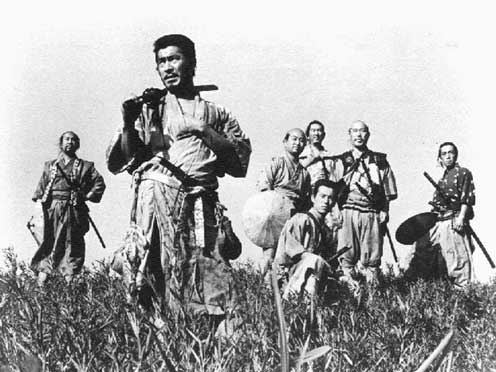
'Once more, we have survived.' - Kambei Shimada

Interlaced with this this pretty straightforward tale is, of course, the larger story of the quest for the Dark Tower and the fight against those for whom the Wolves are merely agents. A new warrior in this fight is Father Donald Callahan, whom we last met way back in ‘Salem’s Lot as a broken and ruined priest, damned by a vampire king and sent out into the world to live or die as he pleased. Through his damnation, Callahan has found himself able to see things he shouldn’t be able to see, including the various classes of vampires and the Low Men – agents of the Crimson King who serve His interests in the various levels of the Tower. Callahan discovers a knack for traveling through the Americas along secret highways. In his ramblings from coast to coast, looking for peace – or death – he slips from one version of America to another, never knowing how or why.

In the end, he brings himself to the attention of forces far greater than himself. It leads to his death and reappearance in Roland’s world, but more importantly it puts him in possession of an object of great power and even greater peril – Black Thirteen, an inky sphere that could be the black eye of the Crimson King himself, and which has the power to send its bearer through a door to any point in space or time.

Roland and the others are going to need that door, too. While they’re busy planning their battle against the Wolves in Calla Bryn Sturgis, they have another fight to win, in another world. In New York of 1977, there is a vacant lot, and in this lot is a rose. The rose must be protected at all costs, for it is the other end of the Tower – one axis upon which all the worlds turn. This lot is in great peril, and it is imperative that our heroes keep it safe. By whatever means necessary.
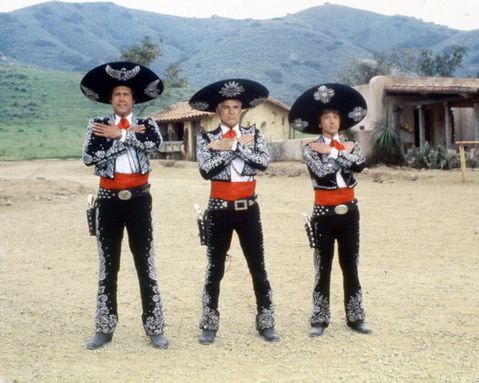
'Oh GREAT!!! REAL bullets!!!' - Lucky Day

It’s a really good tale, and one that is actually better than I remember it being. The first volume after King’s near-fatal accident, it’s all put together very neatly, while getting us set up for events to come, even if some of them aren’t entirely clear, or seem a little random at first glimpse. For example, Roland discovers that he’s beset by the Dread Foe Arthritis. As it is now, it’s making him kind of achy, but should it spread to his precious shooting hand, then it’s all over for him. Why King decided to afflict Roland with something as mundane as arthritis isn’t entirely clear (although to be fair, Roland is technically over a thousand years old and could be considered due for a few of the ravages of old age).

Perhaps it is a sign of Roland’s encroaching humanity. In The Gunslinger, mention is made of his ability to detach himself from his body somewhat so as not to feel thirst. In that book, he is largely mechanical, only showing any kind of real emotion when he finally faces the Man in Black. Over the course of the series, Roland has become more tuned into what it means to be a person and to feel, y’know, feelings and things. This gives him the bond with his ka-tet that he needs, but it also comes with a price. Perhaps the arthritis is the first price he must pay for allowing himself to feel.

Mention must also be made here of poor, beleaguered Susannah. I mean Detta. Odetta. No, wait – Mia.
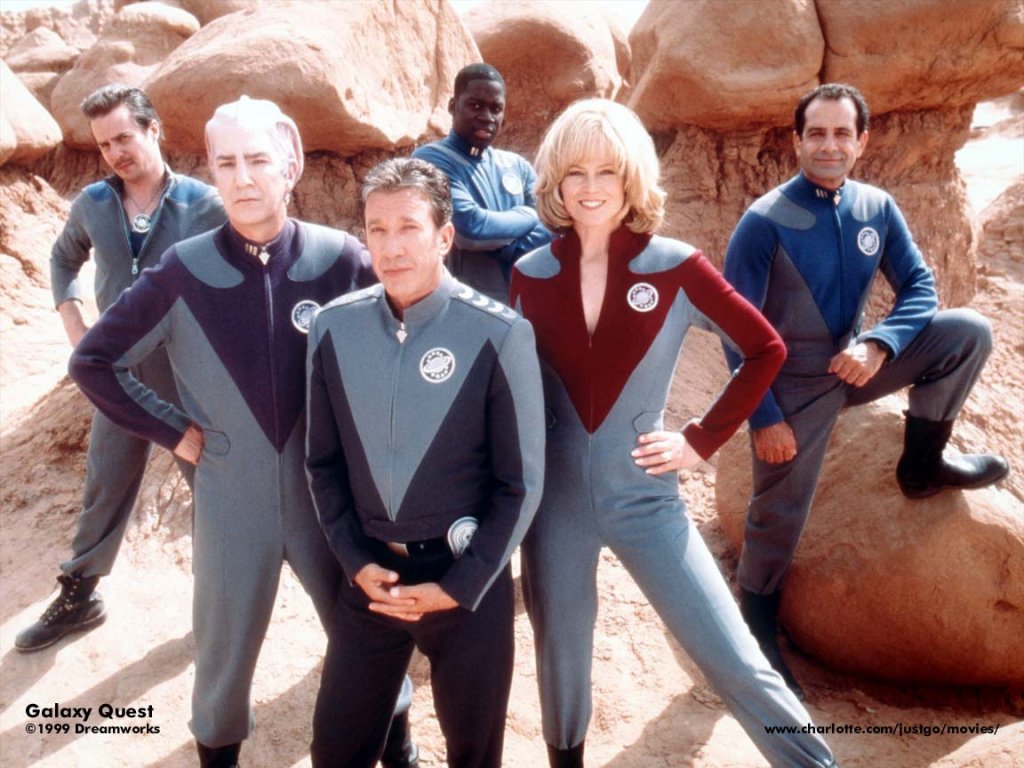
'Never give up, never surrender!' - Jason Nesmith

Out of the seething cauldron that is this poor woman’s mind, a new personality has emerged. Mia, Daughter of None is still something of a mystery to us. As far as we know, she has only one ambition – to protect the child growing in her belly. This child was not fathered by Eddie Dean, Susannah’s beloved husband, but by the cold and unnatural demon that Susannah held at bay while the two men pulled Jake from his world to theirs. Growing within her now is something horrible, something that Mia was born to protect, even at the expense of the body she inhabits. Right now, that’s all that she is, and her greater purpose is yet to be revealed.

King does a pretty good job of juggling the various plot lines in this book, making sure that we aren’t left hanging for too long on any of them. Of course, they feed into each other as well – Father Callahan’s tale interweaves itself with the story of New York in ’77, and its ultimate conclusion allows the plot to progress through this book and into the next. I actually enjoyed Callahan’s story a great deal, and thought it would have made for a wonderful stand-alone short story. Not a novel, as there’s a whole lot of “I walked around for a few years and did manual labor” in there, but the story that he told to Roland and the others would have stood on its own quite nicely. He’s an interesting, complex character, and I look forward to seeing what awful thing happens to him next.

What’s more, there’s a wonderful meta-fictional element to this book as well, and it introduces that idea of a story that is aware of itself being a story. For example, in the beginning of the book, Eddie notices that time has started up again. While it is true that time, like everything else in this world, is unreliable, I found it interesting that he should make mention of it at that point, right when their story starts up again after a break (from our point of view) of six years. From the characters’ points of view, on the other hand, the time between books is indeterminate, but Eddie notices that they don’t seem to really do anything in that intervening time. It made me wonder about what happens to fictional characters when they’re not being written about, a train of thought for which I am not adequately medicated.
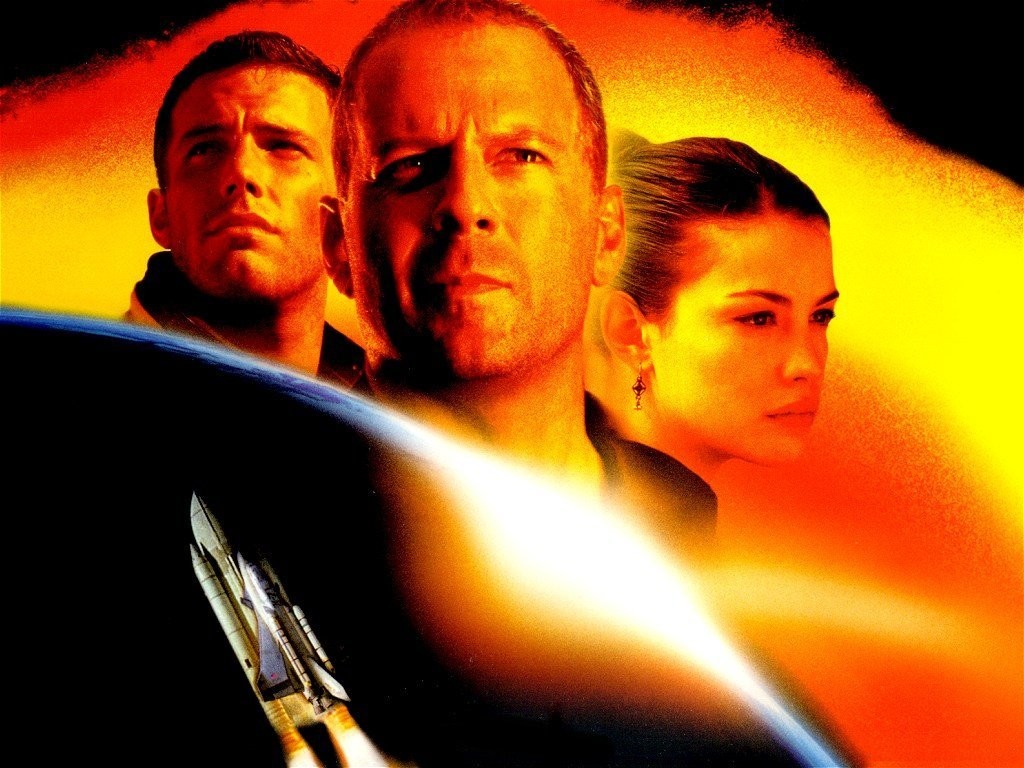
Think about it....

More importantly, the impact of real-world fiction becomes painfully obvious in this book. For one, Stephen King is established as an as-yet-unseen character, which comes right on the heels of a very serious existential crisis for Father Callahan. The Wolves themselves are explicitly noted to be rip-offs – er, homages to fictions ranging from Marvel Comics to Harry Potter. Whatever else Roland’s world is, it has a very close connection with the fiction of our world, and that connection may offer important clues as to the true nature of their quest.

So, what purpose does this book serve in the greater series? Well, there are many out there who see Roland’s quest as being not so much for the Dark Tower as for redemption. After the loss of his love, his friends, his family and his homeland, Roland made himself into something that was only technically human. Over these books, he has had to learn how to re-connect, first with individuals, then as a small group, and now with a community. In this book, Roland has to come to grips with Calla Bryn Sturgis not just as a hired gun but as their leader, if only temporarily. He has to see himself as part of a greater whole, thus becoming – as I mentioned above – more human. Each book forces him to be more and more connected with those around him. The only question is if he can hold on to this new humanity before his quest for the Tower destroys him.

All in all, a good read, which moves ever-so-smoothly into the next book….

————————————————————
“First come smiles, then comes lies. Last is gunfire.”
– Roland, Wolves of the Calla
————————————————————

Wizard and Glass on Wikipedia
The Dark Tower Portal on Wikipedia
Stephen King on Wikipedia
The Dark Tower homepage
Wizard and Glass on Amazon.com

Leave a comment

Filed under adventure, Dark Tower, death, fantasy, fathers, friendship, horror, meta-fiction, murder, quest, revenge, robots, sons, Stephen King, survival

Review 107: Wizard and Glass

Wizard and Glass by Stephen King

So. Now that we’ve put three books behind us, and sit at the pivot of the series, it is time that we settle down and have ourselves a little palaver about Roland, the Gunslinger.

We know little about this man, the protagonist of our epic series. We know he’s a hard man, the kind of man who can cross deserts, brave oceans, and kill entire towns if need be. We know he’s a dedicated man, who will follow his quarry wherever they may flee to. We know he is single-minded, the kind of person who would allow an eleven year-old boy to fall to his death if that meant getting another foot closer to his precious Dark Tower. He is a hard man, Roland Deschain is. He is the Gunslinger.

But who is he really? Who was he before he started on this mad quest for something that may or may not exist? How did he get set on this path that could determine the fate of worlds, this quest that led to the deaths of everyone he ever loved? Who is he?

Blaine the Mono (art by Revenant42)

Well settle down, boys and girls, because this is where we get to find out. In between destroying a sentient monorail at a rigged game of riddles and facing off against the darkest Dark Man there is in a mock-up of the Palace of the Emerald City, Roland tells his ka-tet the tale that shaped him and set him on his path. It is a tale that begins with his entry into manhood – a trial by violence where he bested his teacher, Cort, in a duel to the pain, and ends with Roland’s soul nearly destroyed.

Roland and his companions, Alain and Cuthbert, have been sent by their fathers to the most out-of-the-way place they know – a small village called Hambry in the Barony of Meijis. Their alleged purpose is to count things, more as a punishment than a mission. They seem to be three boys who got into trouble, and who now must pay by spending their summer doing menial work. They don’t want any trouble, and they hope that no one will give them any.

They say there is a monster in the Citgo fields. Green, mayhap.... (photo by Cogito Ergo Imago)

That’s the story, anyway. In reality, they’re looking for evidence of the workings of John Farson, also known as The Good Man, who is leading a popular revolution against the established order in Roland’s home country, In-World. Hambry has an oil field, the work of the Great Old Ones, which is known to locals simply as “Citgo” Should Farson get enough oil – and the means to refine it – he will be able to revive ancient war machines and bring death to all of In-World. With Roland, Alain and Cuthbert as spies for the Affiliation, the Gunslingers in Gilead hope that they can stall, if not stop, Farson’s rebellion.

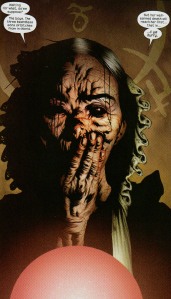
That would have been great if only Roland Deschain hadn’t met Susan Delgado, the daughter of a deceased horse-breeder and soon to be the promised girl of the mayor of Hambry. As soon as they meet, their destiny is clear: it is true love. No more able to stand against their fate than a tree in a whirlwind, Roland and Susan do as all young lovers have done, and risk discovery and death in the process. In every corner there are those who would stand against them: Susan’s spinster aunt, Cordelia, who hopes to make some money selling her niece off to the mayor; the Big Coffin Hunters, three mercenaries who work for Farson and who mean to see every last drop of oil gets in his hands; and Rhea of the Cöos, a horrible witch who possesses a crystal orb that lets her see all the malicious things that people do. Against these arrayed forces, Roland and his friends must not only foil the plans of John Farson, but also escape Meijis with their lives.

With the first, they are successful. With the second, not so much.

Dark Tower fans that I have talked to generally agree that this is the best book of the seven, for many reasons. First, we get to see Roland before he became all tall, gritty and scary. We see him as a callow youth, a boy of fourteen who is in way over his head, tackling responsibilities that would be better handled by a grown man. They’re on the losing side of a terrible war as it is, as they’re up against the combined cunning and guile of some very bad people. In many cases it is luck as much as skill that leads them to their eventual victory.

Roland and Susan (art by Jae Lee)

What’s more, we get to see Roland in love, and this is really where King shines in this book. He says in the afterward that he was dreading writing this book, mainly because he knew that he would have to portray teenage love – first love – in a realistic fashion, which can be hard to do when you’re several decades removed from being a teenager. All the madness that comes with teen love – the longing, the furtive trysts, the absolute certainty in what you are doing and that no one can stop you. The way that the person you’re in love with is all you can think about, and the only thing you want is to be with them again, if only for a moment. The way you freely and willingly lose your mind for love.

It’s something which, thankfully, we grow out of as adults. Frankly, if I ever felt like that again, I’d probably throw myself under a train.

King has done a fantastic job with the relationship between Susan and Roland – it’s as realistic as he can make it, without being mawkish and overly romantic. We are never allowed to forget that, like so many doomed lovers before them, they are risking everything with their love – their mission, their friends, and their lives – and we know that even the slightest misstep can mean disaster. Mixed with the other, more adventure-driven elements of the plot, it’s incredibly tense, and it’s handled very well.

The romance aside, there are some wonderful characters in this book, and as is the case with so many Stephen King novels, the best ones are the bad ones. Susan’s aunt Cordelia is a bundle of jealous paranoia, and you can feel her mainspring winding up every time she shows up on the page. Eldred Jonas is a laid-back killer, an old man who has buried countless young men, and means to bury Roland and his friends. And Rhea is just palpably foul. You can almost smell her when she shows up, which is a great accomplishment – and you can’t wait to see her again.

Rhea of the Cöos (art by Jae Lee)

As an aside, Marvel Comics has been doing comic book stories of Roland’s youth, and the first one re-tells this tale. It’s called The Gunslinger Born, and while it’s not bad, there is a certain emptiness to it. It’s not easy to compress hundreds of pages of character and plot development into a seven-issue comic series. I don’t know how it would read to someone who hasn’t read this book, but to me it looked like it was missing a whole hell of a lot….

As I said, this book is the pivot on which the series turns, and it is essential to understanding Roland. We have to know who he was and how he became who he is. While there are still questions to be answered, and stories to be told, the big story is out. Now he and his ka-tet can continue in their quest for the tower, confident that they know a little more about this man who yanked them from their worlds into his. For us, the character and his world become richer, more full of meaning. Things that we might not have thought about in the first few books become more meaningful, and we can better appreciate the history of his dying world. Most importantly, we can begin to understand why it is so important that he find the Dark Tower, and we pray that he knows what to do when he gets there.

—————————————————–
“I’ll pay ye back. By all the gods that ever were, I’ll pay ye back. When ye least expect it, there Rhea will be, and your screams will break your throats. Do you hear me? Your screams will break your throats!
– Rhea Dubativo of the Cöos, Wizard and Glass

Wizard and Glass on Wikipedia
The Dark Tower Portal on Wikipedia
Stephen King on Wikipedia
The Dark Tower homepage
Wizard and Glass on Amazon.com

2 Comments

Filed under adventure, coming of age, Dark Tower, death, fantasy, friendship, murder, quest, romance, sexuality, Stephen King, teenagers, witches, wizardry, world-crossing

Review 105: Reaper Man

Reaper Man by Terry Pratchett

So. What are your thoughts on death?

Or rather, Death?

It’s a weird thing, death. I mean, you’re here one minute and then you’re… not. And while we all know intellectually that we’re going to die, there’s something in us that refuses to believe that the essential Person that we are could possibly cease to exist. We have personalities, unique aggregations of memory and experience and inborn preferences that all display themselves as a Person, as far as we know unique in all the world. Each human being is an entity that will never be seen again in this universe, and as far as we know, the cessation of life brings that entity to an end, reducing the person we knew to a mere insentiate object.

Is it any wonder we come up with stories for what happens… y’know, after?

Just about very culture that’s ever been has come up with some form of afterlife, be it an eternal feast for heroes, a paradise in which we can bask in God’s glory, a place of exquisite pain and torment, or a ticket back to Earth for another go ’round. There is no way of knowing if any of those are actually what happens to us when we die. At least not until we actually do it. So since we cannot know, we make stuff up, if only to make the whole thing easier to bear.

What often goes with that other world is someone to take us over. A ferryman or a guide, someone who knows the territory and knows where we need to go in what is very likely a rather confusing time. It’s another piece of comfort – knowing that there’s Someone out there who knows where we need to go and what we need to do.

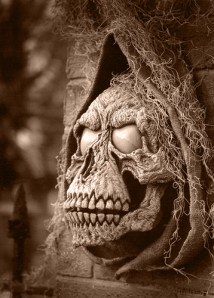
Grim indeed.... (photo by provia_17)

Which brings us to Death.


He’s been portrayed many ways over the years – my favorite is the Death from Neil Gaiman’s Sandman series – a sort of older sister who’s known you all your life and loves you anyway. If she shows up for me when I die, I think I’ll be okay.

I would be just as happy with Pratchett’s Death, even though he is the more traditional robes-scythe-and-skeleton type. Fans of Discworld love Death, which I imagine was somewhat baffling for Pratchett early on. In the first few books, Death was a bit character – he showed up a couple of times to collect the recently deceased, and that was it. But his scenes were so memorable and so good that they sometimes stuck out above the rest of the book. He speaks entirely in capital letters, which lends him a voice that is probably reminiscent of James Earl Jones. He’s aloof, but not uncaring, and seems to take a rather curious interest in humanity. He likes cats, has a house off on the edge of nowhere, and rides a great white steed named Binky. Death has become, in short, an interesting person.

And it seems that’s a problem.

The Universe, you see, is a finely tuned instrument, one which needs monitoring and, occasionally, adjusting. There are… let’s call them Auditors, who make sure that reality stays real – no odd deviations or anomolies such as, for example, anthropomorphic personifications of natural forces. In all honesty, they would eliminate all life if they could, but that is, as yet, beyond their capabilities. So they settle for telling Death that it’s time for him to retire. He gets a little hourglass all his own, and time to kill until the new Death comes into being.

Heya Tom, it's Bob - from the office down the hall... (photo by Scott Beale)

In the interim, this time between Deaths, a new problem arises: nothing is dying. Or, to be more specific, things are dying, but the vital energies that empowered everything, from cabbages to clergymen, aren’t being taken away. Without a Death to handle this very vital – so to speak – function, the life energy is looking for a place to go, an outlet. As a result, things that shouldn’t be alive are up and moving around. In some cases this means objects running along of their own accord, and in others it means that the dead simply have nowhere to go.

Such is the case with the wizard Windle Poons. After 130 years at the Unseen University, he was rather looking forward to a nice rest and then a bit of reincarnation as a woman in a far more liberal society. What he got instead was nothingness. Given that option, he went back to his body and became Undead, much to the consternation of the rest of the UU faculty. Unfortunately for them, they have bigger things to worry about – the buildup of life force is having a rather larger and more dangerous effect on the city of Ankh-Morpork itself. The lack of a Death may well doom the city in a manner that will be horribly familiar to many of Pratchett’s readers.

And where is Death in all this, or at least the person who used to be Death? He has found a small farm below the famous Ramtop Mountains. An old maid, Miss Flitworth, needs a hand and Death needs a way to spend his time – something he’s never had to worry about before. He takes the alias Bill Door and starts to learn what it means to be alive, despite the short time he has left.

"What can the harvest hope for if not the care of the reaper man?" (art by Andrew Mar)

The book, as you might imagine, is all about being alive. What makes life special and precious and ultimately worth living. Windle Poons let life go past while he grew old behind the university walls, and it is only in death that he finds out all that fun he’d missed. Bill Door learns that it is the fragility of life, and its most certain end, which ultimately gives it meaning. In the middle, we see that everything that can live yearns to do so, from the mayflies to the great Counting Pines to cities to ideas.


While the book gives no answers to what may happen after death (the Discworld books rarely do), it does give us another way to look at life. And that, ultimately, is the goal of any great story.

——————————————————
“Huh! Priests! They’re all the same. Always telling you that you’re going to live again after you’re dead, but you just try it and see the look on their faces!”
Reg Shoe, Reaper Man

Discworld on Wikipedia
Reaper Man on Wikipedia
Death on Wikipedia
Terry Pratchett on Wikipedia
Reaper Man on Amazon.com
Terry Pratchett’s official site

1 Comment

Filed under afterlife, death, Discworld, existentialism, fantasy, finitude, humor, Terry Pratchett, wizardry, zombies

Review 104: The Long Dark Tea-Time of the Soul

Remember – go and take the listener survey! The gods command you!)

The Long Dark Tea-Time of the Soul by Douglas Adams

This is the second of the Dirk Gently books – and the final one – and is no easier to explain than the first. But I’ll try.

Ah, just like college.... (photo by Gene Han)

In this story, Dirk is contracted to meet a client one morning at 6 AM, and play bodyguard. The time is vital. The client has made it a point that Dirk absolutely, positively has to be there by six, and he’s willing to pay handsomely for it. So when Dirk wakes up at 11 AM, he suspects that he’s screwed up royally.

His suspicions are confirmed when he arrives at the home of his client, who is sitting quite comfortably in an armchair while his head is rotating slowly on a nearby turntable. The only clues to his grisly demise are his ravings about a green, scythe-wielding monster and a mysterious packet of papers, written in a language that Dirk cannot begin to understand. But he does know their shape – they’re a bill. But for what services, and rendered by whom? So now Dirk has to figure out who, or what, did this to his client and why.

But there’s more to this story (isn’t there always?) An American woman, Kate Schechter, is one of the survivors of the explosion of an airline ticket counter, something that everyone who knows about explosions is calling an “act of god.” But which god would do such a thing, and why? Lucky for her, Kate is about to find out, and she’s also about to find out why gods aren’t quite all they’re cracked up to be.

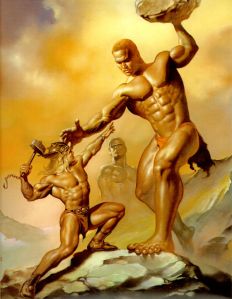
This, of course, does not happen in the book. I needed a picture of Thor that wasn't the super-hero.... (art by Boris Vallejo)

There aren’t a lot of greater themes in this book – it’s an adventure, of sorts, but as far as overarching messages go, it’s pretty thin other than watch out for eagles and be nice to homeless people. It’s entertainment as only Douglas Adams can deliver it. There is some thought given to gods, however, which is a topic I always enjoy. In Small Gods, Terry Pratchett asks where gods come from, and what sustains them. In American Gods, Neil Gaiman asked the question of what happened to gods who were brought to America by their believers. Adams asks what happens to gods once we don’t actually need them anymore.

We made them, after all, and most of the time we made them immortal. We needed gods to be bigger than we, stronger than we, and generally everything we weren’t. And then we went around infusing them with humanity – with jealousy, courage, rage and fear. When we were done with them, we let them go. But that didn’t mean they went away. An immortal is an immortal, and without work to do or followers to deal with, what is a god to do? In the case of Odin, the father of gods and the ruler of the Norse pantheon, the solution is very simple. What’s more, it keeps him pampered and cared for, which is all he ever really wanted.

While I love Hitchhiker’s Guide first and foremost among Adams’ works, I really wish he could have lived to write more Dirk Gently books. The character is a person of reprehensible ethics and somewhat tarnished morals, but you can’t help but love him. Lurking refrigerators, coffee-thievery and all, you find yourself wishing that you could hang out with Dirk, while at the same time knowing that he’d probably invite you out for lunch and somehow make you pay for the meal. He’s a bad person, but an excellent detective – and a great character.

So pick this one up and give it a read. It’s fast, it’s fun – you won’t regret it.

————————————————
“Nobleness was one word for making a fuss about the trivial inevitabilities of life, but there were others.”
Douglas Adams, The Long Dark Tea-Time of the Soul

The Long Dark Tea-Time of the Soul on Wikipedia
Douglas Adams on Wikipedia
The Long Dark Tea-Time of the Soul on Amazon.com
The Douglas Adams Homepage

1 Comment

Filed under detective fiction, Douglas Adams, fantasy, fiction, gods, humor

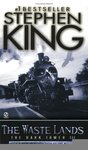
Review 103: The Waste Lands


The Waste Lands by Stephen King

Remember to go to the Listener Survey! If you don’t, you have clearly forgotten the face of your father….)

The way this book started really threw me when I first read it. It was too… alive.

The Gunslinger takes place entirely in a desert – featureless, dry, unchanging. The Drawing of the Three takes place on a beach – featureless, slightly less dry, unchanging. With this book, a few months have gone by and Our Heroes are in a rather lush forest, without the privation that they had gone through in the previous books. They weren’t desperately racing the clock to try and find food or medicine or water, but rather were going at their own pace, according to what they wanted to do.

It felt weird to me, honestly.

All it needs is the little radar dish on its head. And maggots. Lot of maggots. (photo by Eric Bégin)

In any event, that is how the book begins – Roland has taken Eddie and Suzannah (formerly Odetta/Detta) under his wing and is training them as apprentice gunslingers. They’re learning to shoot, to hunt, and to trust the instincts that they have so long let lie dormant. When they accidentally awaken a gargantuan insane robot bear named Shardik, they discover the path of the Beam, which finally sets them on their way to the Dark Tower.

But all is not well. There is a problem, you see, one having to do with the very nature of the events that have gone before us, and it has to do with young Jake Chambers.

In The Gunslinger, Roland meets Jake, who has been transported to Roland’s world after dying in his own. The last thing the boy remembers was being pushed in front of a speeding Cadillac while on his way to school, seeing a strange man in black who claimed to be a priest, and then waking up in the dusty way station in the middle of the desert. Roland befriended the boy, took him along on his journey, and then sacrificed him to gain an audience with his own Man in Black. Without Jake, and Jake’s double death, Roland could never have made it to the beach where he pulled Eddie and Suzannah out of their worlds.

But there was a third door, remember? Through that door, Roland learned the true identity of the person who killed Jake – a man named Jack Mort, whose hobby was making people die in accidents. By taking possession of, and eventually killing, Jack, Roland erased Jake’s first death. He was never pushed in front of a car, never died, and never came to Roland’s world.

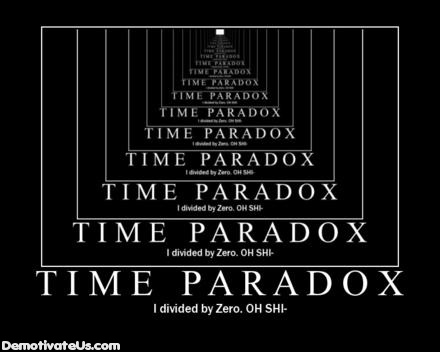
Something like this....

Except that he did.

Or rather, he didn’t.

But he did.

This paradox is driving both of them insane – Roland in his world and Jake in his. Their minds are trying to reconcile two irreconcilable histories, two versions of events that are both true, even though only one can be said to actually be true. In order to save them both, Roland and his ka-tet need to get Jake to their world, where he belongs. Doing so will take all of them risking their lives against agents of unspeakable power.

That’s the first half of the book, and this is another big difference between this book and the two that came before it. If he had wanted to, King probably could have split this book into two smaller ones, and they wouldn’t have lost much. Once Jake is rescued, we are granted a moment to breathe, a moment to appreciate the work and energy that went into making sure Jake and Roland came through the event with their sanity intact. Once we take that moment to breathe, which in the book consists of a wonderful dinner with the few residents of a dying town, the group finds themselves in terrible danger again as they enter the dying city of Lud.

Would you kill for him? Yeah, me too.... (photo by Kasra Ganjavi)

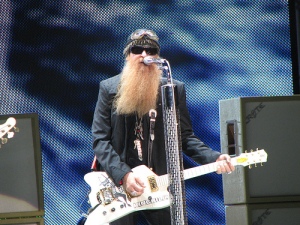
All through the series, it is said that “The world has moved on.” People talk about the civilization that has just collapsed (of which Roland is a final relic) and the one that came even before them – that of the Great Old Ones. The city of Lud is held up as a prime example of their prowess and their poisoned legacy. Within it dwells the tribal descendants of whose who fought over the ruins of Lud, sacrificing their neighbors at the sound of great drums that echo through the city (which are, oddly enough, the drum track from ZZ Top’s song, Velcro Fly), and living like rats in its crumbling walls.

The group is split at this point, with Roland and Oy (a doglike animal whom Jake befriends) trying to rescue Jake from the decaying clutches of a pack of murderers, and Eddie and Suzannah hunting through the city for Blaine the Mono, a monorail train that could be their only way across the horrible irradiated wastelands just outside the city.

It’s an exciting book, I’ll tell you that much, and let me tell you right now that you’re going to hate the ending. At least you would have if you were reading it when it first came out. You see, King admits that The Dark Tower is one long story which, for various practical and financial reasons, has to be split up into multiple books. This means that there isn’t always a practical and clean place to break off the story so the readers can wait for the next one. With this in mind, Kind decided to end The Waste Lands with one hell of a cliffhanger – Roland and his ka-tet aboard Blaine the Mono, an insane, sentient computer train that wants nothing more than to end its life. If they can defeat Blaine, they may live. If not, they’ll all die when Blaine slams into a wall at the Topeka terminal at 900 miles an hour.

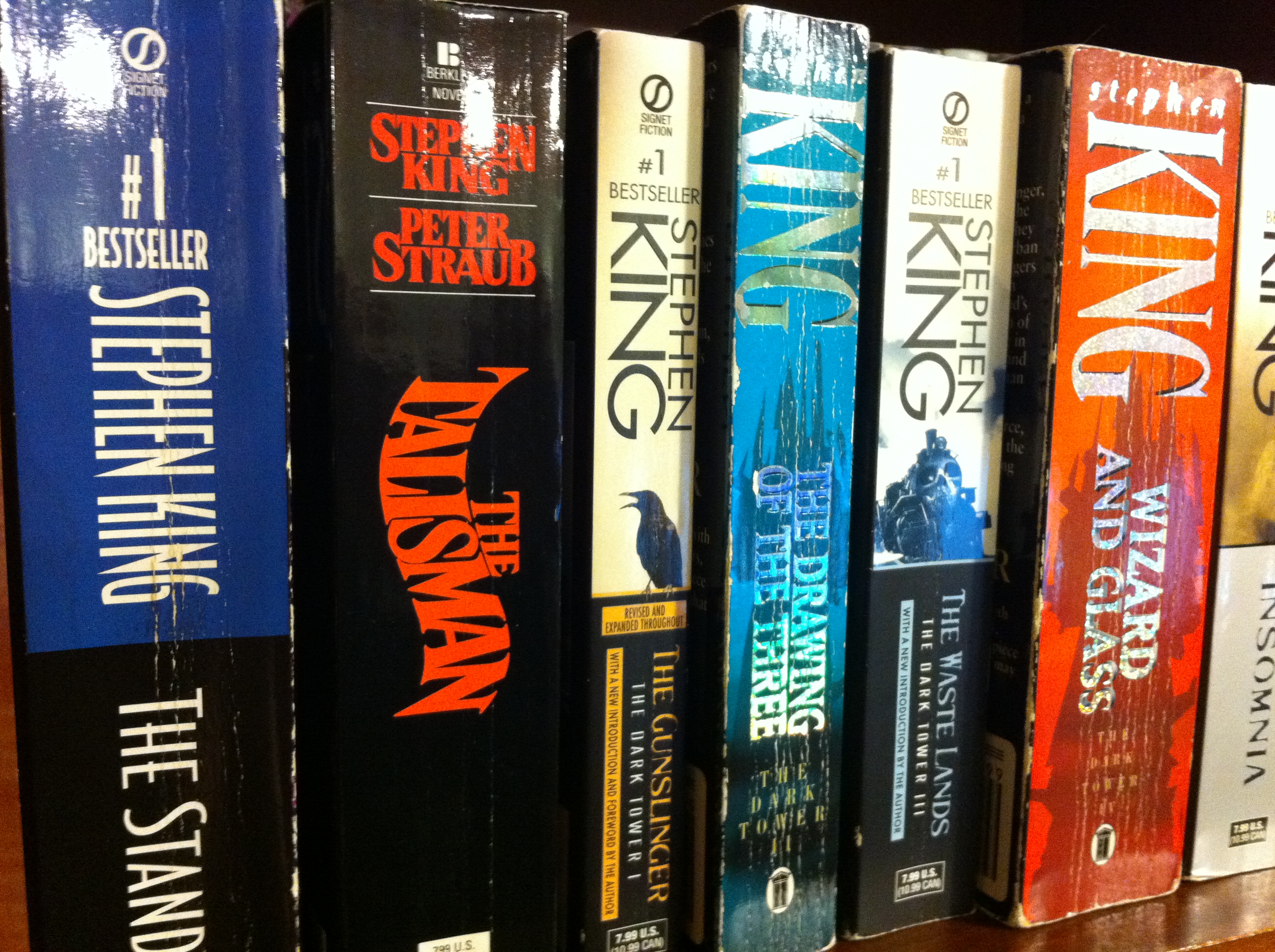
Suck it, me in 1991! (photo by me)

This isn’t too troubling today, when you can just turn to your bookshelf after you finish, pick up Wizard and Glass, and keep reading. But put yourself in the shoes of the first readers of this book: they had already waited four years for this book to come out, and it would be another seven before Wizard and Glass was finally published. Even worse, I knew a guy here in Japan who was a huge Dark Tower fan, and he not only had to wait for King to finish writing the book, he also had to wait for it to be translated. My heart went out to him….

But I digress. This book finally sees our heroes on their way – walking on the path of the Beam, as it were. After two and a half books, the journey has finally begun, and if this book is any indication, it’s not going to be an easy one.

——————————————–
“Jesus Pumpkin-Pie Christ, don’t you get it? You’re killing each other over a piece of music that was never even released as a single!”
Eddie Dean, The Waste Lands

The Waste Lands on Wikipedia
The Dark Tower Portal on Wikipedia
Stephen King on Wikipedia
The Dark Tower homepage
The Waste Lands on Amazon.com

1 Comment

Filed under Dark Tower, fantasy, Stephen King, world-crossing

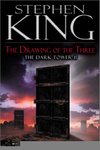
Review 98: The Drawing of the Three


The Drawing of the Three by Stephen King

I have a soft spot in my heart for world-crossing stories. Perhaps it’s the remnant of the same childhood fantasy that everyone has – you know the one, “My family is not my family, my hometown is not my hometown – I’m really a lost prince of a strange magical kingdom and one day my true identity will be revealed and I’ll be able to go do something more fun than this….”

Escapist fiction of this sort usually does really well, mostly because so many of us are unsatisfied with the way our lives are going right now. Harry Potter blew everyone away for the same reason that, say, Star Wars did – they spoke to that desire that we all have for a destiny, a reason for being in this benighted universe other than to consume, procreate, and die. It’s a very powerful dream, that dream that we can lead a life better than the one we’re living now, and it’s one that very few of us get to realize. So we turn to fiction to realize that dream for us.

Of course, nothing comes without a price. In hopping from world to world, you may have to resist the temptations of a Snow Queen or fight off the forces of Xur and the Ko-Dan Armada. You may discover that your father is the greatest force for evil in the universe, or that you’ve been born into a genetic cohort that scares the hell out of everyone. Crossing from one world to another – whether literally or figuratively – always comes with a price.

For Eddie Dean, Detta Walker, and Odetta Holmes, that price could very well be their lives.

When last we left the Gunslinger, Roland was sitting by a vast and gray sea at the end of the world. He had already sacrificed young Jake Chambers for his quest, and had been shown a vision of the universe that would have blasted the mind of a lesser man. Without any other direction, Roland continues on his journey – but not without some difficulty.

Wounded and ill, Roland has to go through three strange doors and draw out new companions to replace the ones he lost so long ago. If he is successful, he will draw out a new ka-tet – a group bound by the forces of destiny – that will stand with him on the way to the Dark Tower. If he fails, he will face total obliteration, to say nothing of being devoured alive by huge mutant lobsters.

Through door number one, Roland meets The Prisoner – young Eddie Dean, a junkie who has to bring a couple of pounds of cocaine through customs at JFK airport in New York. If he can do that, then the men holding his beloved big brother will let them both go, well-paid and well-loaded with the drugs that they so desperately want. Eddie can’t do it without Roland’s help, however – help that turns out to make the whole endeavor much more complicated and lethal than it might have been before.

Through door number two, Roland must bring the Lady of Shadows, a woman who is two minds in one body. One of these minds is Odetta Holmes, an upper-class African-American woman (though in her era of the early sixties she would probably prefer to be called a Negro) who has thrown her efforts and her fortune behind the growing civil rights movement. She is cultured and civilized, a little bit snobbish and prudish, but far, far better than her alter ego, Detta Walker.

Detta is the dark half, the evil twin who relishes in her misdeeds and embodies the worst qualities that can be found in a person. She likes to hurt people, to break things – partly out of the sheer enjoyment of hurting and breaking, but also out of a cruel sense of revenge for the ills the world has done to her. For the brick that was dropped on her head when she was a child, for the train that robbed her of her legs when she was an adult. Of all the people Roland has met so far, Detta Walker is the one who poses the most danger to him and his quest. Only by bringing the two women together can he have any chance of making it to the Tower.

Through door number three, Roland must meet death – but not for him – in the form of The Pusher. The aptly-named Jack Mort has a hobby – anonymous murder. Planning and executing the suffering of others is what brings joy to his heart and a stain to his jeans, and he has intersected with Roland’s quest even before Roland reached the beach. He was the one who pushed Odetta Holmes under a subway train. He was the one who pushed Jack Chambers in front of a speeding Cadillac. Now, Roland has control of this man’s body and will use it to get what he needs from our world so that he can carry on in his. A little poetic justice along the way is just icing on the cake.

If Roland succeeds, he and his new group will push on to find the Dark Tower and do… whatever it is that Roland needs to do there. If he fails, they will all die, and the hopes of Roland’s world will die with them.

Like I said, I enjoy tales of crossing worlds, and so this book felt good to me. I liked seeing not only how Roland dealt with the unfamiliar reality of New York in three different decades, but how the stories of Eddie, Odetta/Detta and Jack intersected with each other. At one point in his section, Jack thinks, “Who was to say he had not sculpted the cosmos today, or might not at some future time? God, no wonder he creamed his jeans!” Crude though it may be, Jack is more right than he knows – a few simple pushes altered the destinies of not only the people he pushed, but those of entire worlds. So if you think small actions can’t have big consequences, well, look to Jack Mort.

Actually, his section of the book was my favorite. While Roland vs. Eddie was an action-packed shoot-em-up, and Roland vs. Detta was a hostage drama, Roland vs. Jack was almost a dark comedy. Taking over Jack’s body and keeping the man’s mind at metaphorical gunpoint, Roland carves a swath of confusion through New York City. The mental disconnect people have between Jack Mort’s appearance as a well-off CPA and his behavior as a seasoned gunslinger is enough for some moments of gold.

By the end of the book, we’re not much closer to the Dark Tower than we were at the beginning, but we are very nearly ready to get started on the journey. Not quite there yet, but Roland now has people he can count on when things turn bad. And they will turn bad, you can set your watch and warrant on it.

—————————————
“Well, what was behind Door Number One wasn’t so hot, and what was behind Door Number Two was even worse, so now, instead of quitting like sane people, we’re going to go right ahead and check out Door Number Three. The way things have been going, I think it’s likely to be something like Godzilla or Ghidra the Three-Headed Monster, but I’m an optimist. I’m still hoping for the stainless steel cookware.”
– Eddie Dean, The Drawing of the Three
—————————————

The Drawing of the Three on Wikipedia
The Dark Tower Portal on Wikipedia
Stephen King on Wikipedia
The Dark Tower homepage
The Drawing of the Three on Amazon.com

Leave a comment

Filed under Dark Tower, fantasy, Stephen King, world-crossing

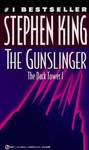
Review 94: The Gunslinger


Dark Tower 1: The Gunslinger by Stephen King

“The man in black fled across the desert, and the gunslinger followed.”

There’s really not much more you need to know about this story except what’s right up there. That’s the essence of the whole thing – a chase. A man in black, who has obviously done something terrible, and a gunslinger, who is obviously going to set things right.

If, by “set right,” you mean “kill a whole lot of people,” then you’re pretty much on target.

This is the beginning of Stephen King’s Dark Tower series, a story told in seven volumes that manages to be the lynchpin for all the worlds that he has created. It’s a story that was 22 years in the writing, and almost never got finished. It’s an epic story, all about the endless quest for the Dark Tower, the center of all reality, the axle upon which the wheels of creation move.

Roland, the gunslinger, is hunting for this tower. He wants it more than anything in the world. He has lost everything in pursuit of this tower – his friends, his family, his world – and yet he pressed on. The man in black has information for him, can set his path towards his goal. If only Roland can catch him.

On his way to the man in black, Roland finds a small town taken over by a mad preacher woman, a sympathetic hermit, and a boy who doesn’t look like he’s terribly local to this world. All of them help point the way to the man in black, and none of them make it to the end with Roland. Even he is unprepared for the terrifying reality that awaits him when he and the man in black finally have their palaver….

There truly is something magical about this book. Even if there were no other Dark Tower books, it would stand out as a good story, well told. Part of this is its deceptive simplicity – moving from point A to point B, with only a few flashbacks to fill in the backstory. Well, quite a lot of flashbacks, actually, seeing as how King did set this story in a featureless desert with a singular protagonist, and there’s only so much you can work with without dipping into the well of the past from time to time.

The glimpses of Roland’s past that we get to see are tantalizing – they tell of a rich and cultured world that is nonetheless hard and merciless. The gunslingers are all that stand between civilization and chaos, and there are precious few of them left. Roland and his friends know they may be the last of their kind, but that doesn’t deter them from pursuing their guns and growing up to honor their fathers.

The fact that we know from the beginning that they all fail just makes it all the more poignant to watch them try.

It’s hard to talk about this book without trying to talk about the rest of the series, and it’s even harder to convey the feeling of reading it when the series was still ongoing. My father, a huge Stephen King fan, had these books when I was a kid, and I eventually got into them, and was – like so many others – immeasurably frustrated by the pace at which King was writing them. I finished this book, which does not necessarily have a happy – or easy-to-understand – ending, and I wanted more. I wanted to know what Roland was going to do now that he’d had his palaver with the man in black, and I wanted to know if he would ever find the Dark Tower. Whom would he enlist in his quest, as the oracle had suggested? Whom else would he sacrifice, as he did young Jake?

Speaking of which, the relationship between Roland and Jake is an interesting one, especially as I got older and re-read it. When I first read the book, I was probably around Jake’s age – eleven years old [1]. Reading Jake’s story of how he came to Roland’s world was horrifying enough, but to see how their relationship would eventually end was even worse. The idea that there might be something more important to, say, my parents [2] than I was – well, that was horrifying. To think that a purpose might exist for which they would let me fall to my death…. That’s not the kind of thing an eleven year-old boy wants to think about.

From the point of view of an older person, a grown man, I found something uncomfortable about their relationship. The bond that formed between man and boy was instant, and intense, and having grown up in a culture where a strange man being that friendly to a young boy would be automatically colored with the taint of pedophilia, well, I had to work a little harder to stay in Roland’s head. The fact that I know that wasn’t where King was going with the relationship helps a little, but every reader brings his or her hang-ups along when they read and some of mine are a little more persistent than others. I’m sure any psychologist who needs to put a down payment on a yacht would be happy to help me work on it.

All in all, it’s an excellent beginning. What follows is a massive tale, a great quest that spans time and space and reality, culminating in Roland’s final understanding of who he is and why he exists. Not all of it is as good as this book, but it’s still worth reading, I say ya true.

So put on your good boots, don’t forget your hat and horn and donkey. It’s a long trip to the end….

——————————————-
“This is not the beginning but the beginning’s end. You’d do well to remember that… but you never do.”
– The Man in Black
——————————————-

[1] This is another example of the Eleven Year-Old Boy Rule: if you have a major character in your book who is not an adult, chances are that it will be an eleven year-old boy. King is a master of this.

[2] Because if Roland isn’t a father-substitute then I don’t know who is.

The Gunslinger on Wikipedia
The Dark Tower Portal on Wikipedia
Stephen King on Wikipedia
The Dark Tower homepage
The Gunslinger on Amazon.com

1 Comment

Filed under Dark Tower, fantasy, Stephen King

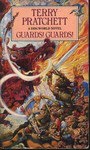
Review 79: Guards! Guards!


Guards! Guards! by Terry Pratchett

One of the dangers of reading Discworld books, of course, is that you may never stop. Much like potato chips, it’s hard to just have one and then move on to something else, especially – and this may strike some of you as a bit odd – when you’ve already read them.

There are people who never re-read books, and don’t see the point in doing so. “You already know the ending,” they might say, “and you know how the story goes. What’s the point in reading it again?” I never, ever understood that. I mean, if you have a good story, well-told, why wouldn’t you want to read it again? If it had meaning for you and struck a chord deep within whatever it is you might call a “soul,” then reading it again is almost mandatory.

I can certainly see our Straw Man’s point if the book is bad, or even just mediocre. There are plenty of books that I’ve read that I’ll probably never pick up again. But the Discworld series doesn’t contain any of them.

This one is the first in the Guards track – one of four major story tracks within the series – and it quickly made the adventures of the Ankh-Morpork city guard some of my favorite stories.

The book opens in darkness and mystery, a kind of film noir feeling that permeates the whole story (although I am challenged to think of any noir film that featured a dragon as the main antagonist – but more on that later). Captain Samuel Vimes of the Night Watch is about as low as he can go. He’s drunk, it’s raining, and he has finally seen himself for what he’s always believed himself to be. A wreck. A bum. A loose end in the city, respected by no one and nothing, with the exception of the two other poor souls in the Watch with him. If we were to cast Vimes in the movie, we’d have to cast Bogart at his drunkest.

Vimes is a mirror of his city, really. Ankh-Morpork is the biggest city on the Disc, and it embodies all the worst elements of cities everywhere. It’s crowded and dirty, a place where people would sell their own mothers for a chance to get ahead. It’s ruled by a system of guilds and merchants, an ever-fluctuating oligarchy all directed by a Patrician who wields his power with pinpoint precision. Crime not only flourishes in Ankh-Morpork, it positively thrives, regulated and controlled by its own guild.

In short, there’s no place in the city for the Watch, and no place in it for Vimes. Maybe long ago he harbored thoughts of saving his city from itself, but no longer. Now all he wants is his next drink.

He’s not the only one thinking of a better city, though. In the dark recesses of Ankh-Morpork, a secret society meets. They are a shadowy group of bretheren who believe that the only thing keeping their city from being a good place to live is the lack of a king. Ankh-Morpork had kings once, and is so often the case, the dimly-remembered past looks a lot better than the immediately visible future. And so the Unique and Supreme Lodge of the Elucidated Bretheren gather with a singular goal in mind – to create a king.

It’s not that easy, though. You can’t just pull some schmoe out of a crowd and say, “Here – start kinging.” There needs to be no doubt in people’s minds that this person has been tapped by destiny to become their king. Like if he, say, slew a dragon or something….

Into all of this strides Carrot Ironfoundersson, a young dwarf-by-adoption who has been sent by his foster father to learn how to be a human being. And what better way to do that, they suppose, then to volunteer for the Ankh-Morpork Night Watch? Within moments of his arrival he begins to upend the very structure of the city itself. Carrot is everything that Vimes – or anyone else – wishes they could be: honest, forthright, idealistic, the kind of man who would arrest the head of the Thieves’ Guild for stealing. He knows the law and believes in it, which makes him just the wrong person for the Watch. Or, as things turn out, just the right one.

What begins as a magical conspiracy ends up being a murder-mystery, with a giant, fire-breathing dragon as the main murder weapon. Faced with this threat to both himself and his city, Vimes and Carrot, Nobby and Sergeant Colon are the only people who are willing to put themselves between the city and the dragon. Not, all things considered, the place they most want to be, but they’re all there is.

It’s a really good book, and an excellent introduction to the Guards track of the Discworld series. It is, of course, very funny – that goes without saying in this series – but also very meaningful. It has a lot to do with dreams and ideals, and the manner in which we are willing to achieve those dreams. Some by trickery and subterfuge, like the dragon-summoners, others by sheer honesty and idealism, like Carrot. And even those who have given up on their dreams, like Captain Vimes, can be persuaded to pick them up again, dust them off and give them another go.

It’s a story of redemption, not only for Vimes, but for the city of Ankh-Morpork. Much like Vimes, the city looks hopelessly lost at the beginning of the book – all rain and darkness and death – but by the end we have a glimmer of hope that it can become a better place. A place where the law can win out over corruption and decay, and where good people, standing up against million-to-one odds, can sometimes come out on top.

And if that’s not a story that deserves to be re-read, then I don’t know what is.

—————————————————
You have the effrontery to be squeamish. But we were dragons. We were supposed to be cruel, cunning, heartless, and terrible. But this much I can tell you, you ape – we never burned and tortured and ripped one another apart and called it morality.
– The Dragon, Guards! Guards!
—————————————————

Terry Pratchett on Wikipedia
Guards! Guards! on Wikipedia
Discworld on Wikipedia
Guards! Guards! at Amazon.com
Guards! Guards! on Wikiquote
Terry Pratchett’s website

Leave a comment

Filed under Discworld, dragons, fantasy, humor, police, Terry Pratchett

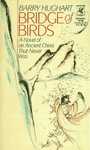
Review 78: Bridge of Birds


Bridge of Birds by Barry Hughart

It’s not often that you read a book and it immediately jumps up into your “Best Books Ever” list. Usually it takes some time and reflection, careful thought about the book’s characters, themes and message. Perhaps a re-read would be in order, and then, after some consideration, you might say, “Yeah. I think this is a really, really good book that I want everyone else to read.”

I think I hit that somewhere around page 182.

This is, as the cover tells us, a novel of “An ancient China that never was.” It’s set in the long-ago, indeterminate past (of which China has so very much), and starts off in a small village with an unusual history. The village of Ku-Fu, the story goes, was home to a section of the Great Wall, commissioned by the Emperor of China many centuries ago. This would not in itself be notable, except that it was built 122 miles south of the rest of the wall, thus serving no real purpose whatsoever. The general in charge was, he maintains, given the orders by the Emperor of Heaven himself, a story which held no sway with the more earthly Emperor who was ready to execute him. A more believable story was produced – that a great dragon had rested itself on that part of the wall, thus moving it, and it shouldn’t be tampered with.

And so the village of Ku-Fu became home to what was known as The Dragon’s Pillow, a place that would one day loom large in the history of not only the village, but all of China.

It is a peaceful village with the usual colorful characters that you get in such a place, such as the terrible partners Pawnbroker Fang and Ma the Grub, two greedy and unscrupulous men who hold the economic life of the village in their hands. When their misdeeds go too far, resulting in the horrible poisoning of many of the village’s children, the story’s narrator, Number Ten Ox (whose given name is Lu Yu, but he would not want to be confused with the famous author of The Classic of Tea) is tasked to bring a wise man from the city to diagnose the problem and find a solution. Out of the many wise men, Ox finds Li Kao, a cynical, world-weary curmudgeon with, as he so often tells us, a slight flaw in his character.

Together, Ox and Li Kao must travel the length and breadth of China to find the Great Root – a ginseng root that was kept by the mythical Princess of Birds, and whose healing properties are all that stand between the children of Ku-Fu and certain death. Along the way, they must travel terrible labyrinths, fight unimaginable monsters, battle against an immortal evil, bring peace to restless ghosts and solve the greatest mystery in the history of China – what happened to the Princess of Birds, beloved of the Star Shepherd, Prince of Heaven.

There is just so much to recommend this book, I don’t even know where to start. For one, it’s a lot of fun to read. The person who recommended it to me did so on the reasonable assumption that, since I like Terry Pratchett so much, I would probably like this book as well. And that was a very good assumption – there is a certain similarity between the two. Hughart uses humor very deftly, keeping the characters alive and interesting through even the most dangerous of times. Where Pratchett’s humor often feels like literary slapstick, however, Hughart’s is a bit more subtle. The characters are funny, yes, but the book was not written to make you laugh. It was written so that the reader would have a good time reading a story well-told.

And what a story it was. It begins with a fairly straightforward quest – a search for the Great Ginseng Root to cure the children of Ku-Fu – and turns into something so much larger than that. As the evil Duke of Ch’in says, they’re on the right quest, but for all the wrong reasons, a cryptic statement that takes a while to make sense. The scope of the story gets bigger and bigger as it goes on, and you realize that the pieces for this quest were put into place hundreds, if not thousands of years before the story actually started.

The history of China is on display here, if somewhat distorted for the purposes of entertainment. Hughart spent time living in the Far East and gained a healthy respect for its long and often unbelievable history and culture. The book includes elements of China’s history of inventiveness and ingenuity, as well as cultural myths that extend beyond its borders.

The characters themselves are wonderful, too. Number Ten Ox is an earnest, strong, well-meaning young man who has one goal in mind- save the children of his village. Li Kao is a devious old man who tends to use his wisdom and quick thinking for more nefarious purposes – thus the slight flaw in his character. There are a lot of notable minor characters as well, including Pawnbroker Fang and Ma the Grub, who somehow manage to turn up all through the story, always being chased by the people they’ve cheated. The Duke of Ch’in is a terrifying figure, Henpecked Ho is comically dark, and Miser Shen starts off utterly unlikable, but if there’s one character in the story that forces you to put down the book for a few minutes and gather your thoughts, it is he.

It’s a moving tale of hope and perseverance and the power of myth. It’s a story about the need for humanity to temper desire and what happens when we let our lives be governed by fear and greed. It’s about love and justice, revenge and history. It’s a book that almost immediately earned my respect and admiration, and that’s pretty hard to do.

So go get it. Block out some time when you can sit and fall into the story and really get absorbed in it, because let me promise you – it will be well worth it.

————————————————–
“Take a large bowl. Fill it with equal measures of fact, fantasy, history, mythology, science, superstition, logic, and lunacy. Darken the mixture with bitter tears, brighten it with howls of laughter, toss in three thousand years of civilization, bellow kan pei – which means ‘dry cup’ – and drink to the dregs.”
“And I will be wise?”
“Better. You will be Chinese.”
– Li Kao to Procipius, on attaining wisdom, Bridge of Birds
————————————————–

Barry Hughart
Bridge of Birds on Wikipedia
Bridge of Birds at Amazon.com
BarryHughart.com

Qixi Festival on Wikipedia

1 Comment

Filed under Barry Hughart, China, fantasy, humor, quest

Review 76: Changes


Changes by Jim Butcher

“Hell’s Bells” count: 20

Well, the title promises changes, and that is certainly what you get in this book. And the first of these comes right on page one: Harry Dresden has a daughter. Surprised? Yeah, well so was he.

The mother is Harry’s old lover, Susan Rodriguez, whom he hasn’t seen in many years. The reason for their separation is pretty simple, the kind of story you’ve heard over and over again – boy and girl meet, avoid their obvious attraction to each other for a while, and finally hook up. Boy tells girl all about the world of supernatural horrors in which he lives, girl finds it more intriguing than horrible, and manages to get herself bitten by vampires. Girl is able to resist turning all the way, but knows that she can’t be around boy lest her emotions overwhelm her and she devours him whole. Boy and girl have one last night of fun together, girl vanishes into South America to join an underground cabal of vampire hunters.

Boilerplate, really.

No sooner does Harry discover that he has a daughter that she finds out she’s been kidnapped, taken as a hostage by the Red Court of vampires for some purpose that is no doubt terrible and nefarious. As much as Susan knows it will hurt Harry to find out she’d been hiding their daughter from him, she also knows that he is the only one with the power and the resources available to get her back.

After all, Harry is a Wizard, a member of the White Council, if not one of their favorite members. He has contacts within the council that could prove useful, as well as resources that reach from Heaven to Hell. A far cry from the lone wolf that we met way back in Storm Front, Harry now has connections and resources that will allow him to take on some of the most powerful beings in the world as they attempt to use his daughter for their own evil ends.

As the title implies, of course, Harry does have to make some very serious choices in this quest; choices about how far he’s willing to go in order to save his daughter, to say nothing of whether saving his daughter is even the right choice to make in itself. After all, the Red Court has been at war with the White Council for some time now, and the slightest mistake one way or the other could just make the whole thing worse. The last thing the White Council wants is their least favorite loose cannon (and, not for nothing, the guy who got the whole war started in the first place) complicating matters unnecessarily. The supernatural world is pretty much ready to fly apart as it is, and one mis-step could mean death and destruction on a scale greater than anyone has ever known.

In the end, the choices that Harry has to make in this book will haunt him for the rest of his life, if not longer. I would probably not be wrong in saying that this book marks a major turning point for the series.

If you’ve been reading this from the beginning, which you really should have, then this is going to be a rough book. I’ve made mention before of how Butcher likes to play hardball with his characters sometimes, but this book is so much more than that. This book is an all-out attack on everything that Harry holds dear to him, a scouring of his life that puts him into an entirely new situation. What this is in preparation for is anybody’s guess, but I can tell you this much without really spoiling anything – Butcher had better damn well have the next book on a fast track or he’ll find me sitting on his front porch with a torch and a pitchfork and a haunted look in my eyes. [1]

Given that, as of this writing, the book has just come out, there’s not a lot I can say about it in detail. If you’ve been following the series, you’re going to read it no matter what I have to say, and I don’t want to ruin anything for you. All I can really say is that this isn’t my favorite of the series, at least not upon first reading. It’s a little rushed in parts, and has one too many deus ex machina moments for my liking. The only thing that mitigates that is the knowledge that Butcher wastes nothing in his storytelling, and even the biggest miracles come with a price that will have to be paid. And I expect that the payoff will be something to see. Having said that, though, Changes will probably hold up as one of the most significant of the Dresden Files books once the series is done. In terms of what happens to the characters in this book, it’s really like nothing else that’s come before it.

So brace yourselves, kids. This one’s a bumpy ride. As with all the Dresden Files books, though, it’s well worth it.

—————————————————–
“Harry… I’ve got a bad feeling that…. I’ve got a bad feeling that the wheels are about to come off.”
– Karrin Murphy, Changes
—————————————————–

[1] Yes, yes, I know that, to paraphrase Neil Gaiman, the author is not my bitch. Still and all, waiting for the next book to come out will be like trying not to fart in church – interminable, impossible not to think about, and oh so relieving when the opportunity finally arrives.

The Dresden Files on Wikipedia
Changes on Wikipedia
Changes on Amazon.com
Jim Butcher on Wikipedia
Harry Dresden on Wikipedia
Jim Butcher’s homepage

Leave a comment

Filed under children, detective fiction, Dresden Files, fantasy, Jim Butcher, vampires, war, wizardry