Tag Archives: book reviews

Review 179: John Dies at the End

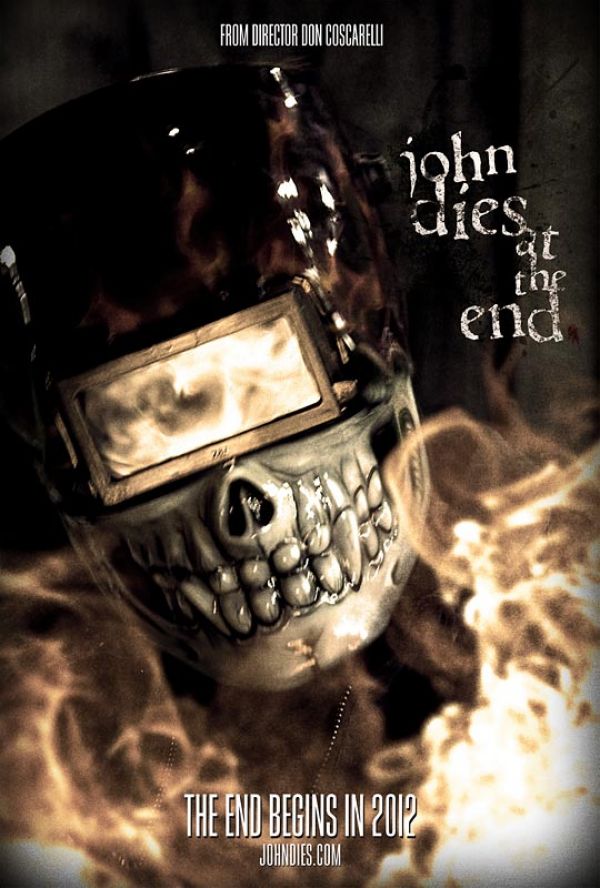
John Dies at the End by David Wong

There are really only so many things you can do with horror these days. I think we’ve all been somewhat desensitized by the ever-increasing variety and imaginativeness that has come with the horror genre in recent years, and so you know that sooner or later you’re going to find yourself yawning theatrically at someone being forced to devour their own brains with a spoon made from their still-living child’s hollowed-out sternum and say, “Seen it.”

There are always new avenues for horror…

As that moment approaches, the aspiring horror writer will need to start worrying less about the mechanics of the whole thing – the inventiveness of their devices and the goriness of characters’ ends – and more about how their story will stand out among an ever-broadening field. David Wong has chosen to use two interesting techniques in the writing of his book: comedy and wondrous incomprehensibility.

Wong (not his real name, for reasons he makes clear in the book) is a writer over at Cracked.com, a humor site on which I have spent many a good commute. Wong’s work there tends towards video games and social issues, generating columns such as, “9 Types of Job That Will Destroy Your Soul,” “5 Ways to Tell You’re Getting Too Old for Video Games,” and one of my favorites, “How Karate Kid Ruined the Modern World.” He and Cracked are part of one of my favorite archipelagoes of the internet, where pop culture is analyzed with more seriousness than it deserves, and where many of the ideas that we take for granted are put under the microscope. Yes, it tends to reduce issues and oversimplify things from time to time, but they’re fun reading.

His years of writing humor have allowed him to create a very distinctive voice for the narrator of this book, also named David Wong, who is telling his story to a reporter – the story of how David and his friend John came to be able to peel the lid off the universe and peer into its dark, black, pestilent heart. Through the use of a bizarre drug that they call Soy Sauce, they are able to see through time, to communicate over great distances through unconventional means, and to observe phenomena that no one else can see.

This is not nearly as much fun as it sounds. It turns out that there is a whole lot of stuff out there that we can’t see, and most of it is truly terrifying. Forget simple things like ghosts and other spookiness. We’re talking seven-legged spiders with bad blonde wigs, tiny corkscrew insects that scream as they infect their victims, red-eyed shadowmen that remove you from having ever existed, and, watching all of this from his own adjacent universe, Korrock. And the less you know about him, the better.

The dark god Khi’kho-Ma’an is a harsh and unforgiving master.

Where you and I, having seen what cannot be unseen, might just do the rational thing and kill ourselves, David and John go along for the ride, trying to figure out where the monsters are coming from and doing their best not to become them. This universe, you see, is a fundamentally bad place, in more ways than we can really understand. But it’s only bad from our very restricted point of view, as if that really made any difference. David and John are afforded a bit of a better perspective, thanks to the Soy Sauce, but it doesn’t help much. They fight against the darkness, all with a certain rough, adolescent wit that will keep you moving forward even through the rough patches in the book.

And there are certainly rough patches. This is Wong’s first novel, and he’s chosen to make a very ambitious start of it, telling a story that is not only one of embedded, non-linear narratives and vast, hyper-real situations, but with an unreliable narrator to boot. The story straddles vast levels, from the interpersonal to the interdimensional, and it’s being filtered through someone who isn’t entirely sure that he can explain what happened. The reporter he talks to is the avatar of the reader, a hard-boiled, heard-it-all-before type who has to be dragged and convinced every step of the way before he starts believing these tales of wig monsters and doppelgangers. And through it all, Wong drops hints of the horrors to come, the fact that his story isn’t finished yet and that it almost certainly will not end well.

That kind of structure would be tough for any writer to pull off, and Wong does a reasonably good job at it. The dialogue between David and John is quick and funny, tending towards penis jokes, pop-culture references and the occasional bad pun. They play off each other in the way that only old friends can, and they help keep the reader grounded in a story that is fundamentally about being completely uprooted. And even with all the heavy-handed foreshadowing, Wong makes sure that all his promises to the reader are kept.

Well, all but one. But I won’t tell you which one that is.

This is probably one of the more normal parts of the story.

So long as you don’t take too long in getting through the book, you should be fine. I read about a hundred pages and then, for a variety of reasons, had to put it down for a week or so. When I came back to it, I realized that I had no idea what had happened before and had to start again. Much like David and John, your only good option is to barrel ahead without reservation and just hope that everything will turn out okay in the end.

And does everything turn out okay? Well, considering that Wong is hoping to write more books in this particular line, and that JDatE has been picked up as a movie, I would say that “okay” is a fair assessment. The world is still a weird, messed-up place which, if we truly understood it, would crush our fragile psyches like a peanut under a tractor tire, but it does seem a little bit more manageable.

——————————–
“Son, the greatest trick the devil ever pulled was convincing the world there was only one of him.”
– Marconi, John Dies at the End

Leave a comment

Filed under adventure, apocalypse, David Wong, demons, disaster, doppelgangers, good and evil, horror, humor, madness, mystery, quest, world-crossing

Review 177: The Dragon Reborn (Wheel of Time 03)

Wheel of Time 03: The Dragon Reborn

Think about this for a moment: imagine there was someone in history who was truly terrible. The stories about him tell that he was personally responsible for destroying civilization as they knew it at the time. Thanks to him, men who could wield immense power went mad and broke the world. He brought down an Age of Legends in a catastrophe from which, three thousand years later, humanity has still not fully recovered. Mothers tell their children stories about him to make them grow up right. He is known as the Dragon, the Kinslayer, and the world fears the day on which, the Prophecies say, he will return. For that will signal the End of the World and the final battle with the Shadow.

Next to this guy, Hitler is a minor-league bully.

HE WILL END US!!!

How would you feel if you found out that you were, in fact, him? In a world where reincarnation is a certainty, it’s possible to find out that you are an ancient hero reborn. Or perhaps a king, or a queen. Or maybe just Joe Peasant, who gets another ride on the Wheel. However it works out, you’ve discovered that you’ve pulled the unluckiest card in the reincarnation deck, and your future is to be hated and feared, and eventually to die in battle against the greatest evil humankind has ever known.

You might go a bit nuts. Rand al’Thor certainly does.

Not the inevitable madness of being a man who can channel, thank the Light, just the understandable mental breakdown that comes with knowing that you’re the doomed reincarnation of one of history’s greatest monsters. Rand is off to the great city of Tear, on the southern coast. In the great, power-wrought fortress that sits at its center, there is Callandor, the Sword That Is Not A Sword, and an object of great power for any male channeler who holds it. What’s more, only the Dragon Reborn can remove it from its suspension inside the Stone of Tear. By taking Callandor, Rand will finally prove to himself and the world that he is the Dragon Reborn.

His friends, in the meantime, think this is a mad plan. No army has ever broken the Stone of Tear, and the city itself hates and despises channelers. Moiraine knows that Rand could get himself killed in Tear, thus dooming the world. So, with Lan, Loial and Perrin, she chases after Rand to try and ensure that he fulfills his true destiny.

These guys will Mess. You. Up.

So it’s not for nothing that we don’t see a lot of Rand al’Thor in this book, despite him being the title character. In fact, except for occasional brief interludes, we don’t get a chapter from Rand’s point of view until chapter 55, just in time for the climactic final battle. I’m of two minds on this decision by Jordan. On the one hand, it frees up a lot of pages for the other characters in the book – Perrin gets a lot of time to shine, and Mat’s healing in the White Tower lets us get to know him a little better and get a better view of the White Tower and Tar Valon. We spend much more time with Egwene, Nynaeve and Elayne as they head down to Tear to chase down the Black Ajah, and get a good look at the Aiel, who will become much more important in the subsequent books.

On the other hand, however, we lose sight of Rand during what is a very important point in his character development – coming to terms with and accepting not only his identity as the Dragon Reborn but the horrible destiny that comes with it. In those brief interludes, we see that he’s being hunted by the Shadow, and has to remain on guard against its agents at all times. If we had followed him on this journey, much of what comes after would have made more sense. As it is, by letting him off on his own, Rand’s character suffers a great deal, and the reader’s ability to empathize with him is irrevocably harmed.

But on the third hand, maybe that was the whole point. No one can understand the Dragon Reborn – not Moiraine, not his best friends, not even the reader. From this book on, Rand will always be harder to understand than the other characters in the series, which may have been Jordan’s goal all along.

Another option, of course, is that Jordan wrote several thousand words of Rand’s journey to Tear and realized that just following this one guy all by himself as he tries to keep from going nuts wasn’t as interesting as we might have thought.

So there’s that.

Google Image Search can be a tough place to search for pictures of women in fantasy….

A word, then, on a topic that is central to this series, and I figure it’s better to look at it earlier rather than later – women.

As a genre, fantasy doesn’t have a very good reputation when it comes to female characters. More often than not, women are either objects of the male protagonist’s quest, or they are hindrances to him. Fantasy remains a very male-dominated genre, and for female readers there are slim pickings when it comes to whom you can imagine yourself being. While Wheel of Time is still an andro-centric story, the roles and responsibilities given to female characters are enormous, and Jordan has created a world in which the status of women is far higher than in most fantasy worlds. It is a world where men and women are different, but equal, and neither is presumed to be superior to the other. This is neatly illustrated in the nature of the True Source, the energy that turns the Wheel of Time and thus is the engine of all creation.

The Source is divided into female and male, saidar and saidin. While saidin was horribly corrupted by the Dark One, it is repeatedly made clear that neither is stronger than the other, and that the greatest works of the Age of Legends always came when men and women worked together. Even on a non-magical scale, it is shown that the roles of men and women in this world are distinctly different, but occupying a certain stable balance that allows the world to work. In personal relationships too, there is no relationship I can recall where either the man or the woman can be said to be “in charge” (except in cases like Lan and Moiraine, where one has specifically sworn to obey the other). One of my favorite examples: Egwene, Elayne and Nynaeve have gone to Tear to hunt the Black Ajah. Far away, in Caemlyn, Mat learns that their lives are in danger from the Shadow’s assassins, and promises right there that he’s going to save them. Classic male reaction to a Damsel in Distress.

The women of WoT will have none of this nonsense.

Once he finds them, however, they have pretty much saved themselves – another five minutes or so and they would have done it. Mat’s entire involvement in their rescue from the unbreakable Stone of Tear and the horrifying Black Ajah was to unlock a door. He risked life and limb on a quest to rescue these women, only to discover that they don’t need rescuing. And in classic male fashion, he spends the next few books sulking about how they didn’t thank him for unlocking that pesky door. Well, not all the time, of course, but it certainly comes up again.

It’s not feminist lit by any means – Jordan tends to resort to behavioral cliches more with his female characters then male; women glare or sniff or tug their braids as a kind of neon sign that says, “THIS CHARACTER IS ANGRY NOW.” But I imagine that female readers of this series will have less trouble finding a character to identify with than they would with, say, Lord of the Rings, which has only one female character of any note (Eowyn – Arwen is barely in the books at all). And there’s a lot of “I guess I’ll just never understand women” talk from a lot of the male characters, while the female characters tend to hold themselves in slightly higher esteem. But for all that, I imagine there were plenty of female readers who saw themselves in these books, and who spent more than a little time wondering which Ajah they would choose, if only they could be Aes Sedai.

Of course, I am a man, so I could be completely wrong.

—————————————————-
“Men fight when they should run, and fools fight when they should run. But I had no need to say it twice.”
– Zarine, The Dragon Reborn
—————————————————-

Robert Jordan at Wikipedia
Robert Jordan at Tor.com
The Dragon Reborn at Wikipedia
Wheel of Time at Wikipedia
The Dragon Reborn at Amazon.com

Wheel of Time discussion and resources (spoilers galore):
Theoryland
Dragonmount
The Wheel of Time Re-read at Tor.com
The Wheel of Time FAQ
Wheel of Time at TVTropes.com

3 Comments

Filed under adventure, epic fantasy, fantasy, good and evil, madness, quest, Robert Jordan, Wheel of Time, wizardry

Review 176: Adventures Among Ants

Adventures Among Ants by Mark W. Moffett

Moffett knew from a young age that he wanted to be a field biologist – traveling the world in search of the most interesting animals he could find. And ever since his childhood, he’s had an abiding interest in ants.

And who could blame him? There are thousands of species of ants, found all around the world, and once you get down and really look at them, they display some amazing behaviors. They communicate through a series of smells, functioning almost as a group organism to take care of the nest, forage for food, and move from place to place. Some species of ants live their whole lives without touching the ground, while others ravage the ground they walk on, devouring everything in their paths. Ants are nature’s workhorses, utterly communistic in their behavior and presenting a model of order that humans should envy.

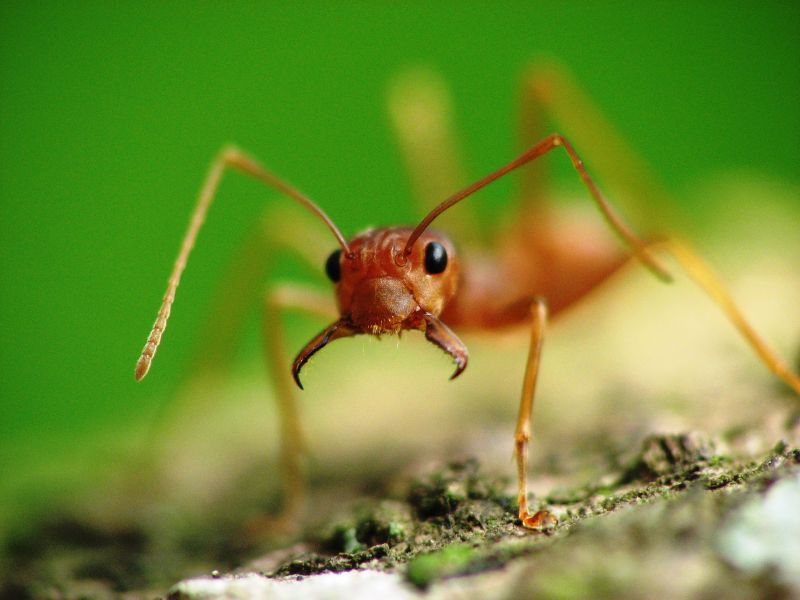
WHERE IS YOUR GOD NOW?!

We follow Moffett as he travels around the world to find the most interesting representatives of ant-dom. In India, he found the marauder ant, a vicious species of ant that goes on raids to find food near its nest. Connected by a complex system of trails, the marauder sends out every able-bodied ant it can muster, from the tiny workers to the (comparatively) giant soldier ants. They find, subdue, and dismember their prey with frightening efficiency, and carry it back to the nest, all without a leader to give them instructions or make sure they’re going the right way. Each ant just knows what her job is, and just does it. In that way, the ant super-organism takes care of itself.

In Africa, he hunts the famous African army ant, a species that is famous for its terrifying raids and voracious appetites. They swarm out around their nest, devouring anything in their path, sometimes raiding other nests for food and larvae. When army ants come, the lucky prey gets out of the way.

Ants are not confined to the ground, of course. The weaver ant is a tree-borne species that has mastered its domain with harshness and efficiency. The Amazon ant kidnaps pupae from neighboring nests and raises the young ants as their slaves. The leafcutter ant invented agriculture fifty million years before humanity even walked the earth, and the Argentine ant lives in supercolonies that cover hundreds of square kilometers and engage in violent, no-quarters war with each other.

Hey. So. How’s that picnic?

The sheer variety of ants on this planet is astounding, and Moffett shows an unstoppable enthusiasm for the little critters. What’s more, he’s an outstanding photographer, who has developed his technique and equipment to be able to get some remarkable shots of these tiny, tiny creatures in action. The hardcover edition that I have is printed on nice, glossy paper, pretty much in order to showcase Moffett’s photographic work, which he has regularly done for National Geographic Magazine.

What’s more, he continually seeks to find connections between ants and humans, who have more similarities than one might expect. We both live in large, complex societies, where individuals take on specific roles that often last that individual’s lifetimes. We engage in wars, slavery, and varied communal activities that benefit both the individual and the society at the same time. Like us, the ants build highways and infrastructure, communicate over distances, tend gardens, hold territory, plan for the future and learn from the past. And they started doing all this thousands of millennia before we even thought about standing upright. We are not the same as ants, of course – ants are unmoved by things such as status, greed, or ambition, but their instinctual dedication to the greater good of their colony is probably something that we could use a good dose of.

For all that, however, I don’t think this was the right ant book for me. Written by a person who truly loves ants, I think that would be the best kind of person to read it. I don’t have a particular fondness for the little buggers, and there were a lot of times where I had to stop and start over, or where I found myself looking for anything else to do rather than continue reading, which is never a good sign. It isn’t Moffett’s fault, I think. He put a lot of work and detail into this book, assuming that the reader would find ants just as fascinating as he does.

I mean I do, I DO! I’m so sorry don’t kill me!! (photo from Myrmecos.net)

And I don’t.

Oh sure – I find them fascinating in abstract, but not quite fascinating enough to get into the down-and-dirty details about how they construct trunk trails out of their nests, or the exact division of labor that exists between one class of ant and another. I’m not sure what I thought the book would be when I saw Moffett on The Colbert Report, but it wasn’t quite enough for me to sit down and devour the way I hoped it would be.

If you like ants – or you know someone who does – this is a great book, and it gives an excellent insight into what it means to be a field biologist (lots of staying in one place, apparently). For anyone who really loves insects in general, and ants in particular, this book will be a welcome addition to their bookshelf.

—————————————

“Is [an ant] intelligent? To my way of thinking, yes. We know a worker can evaluate the living space, ceiling height, entry dimensions, cleanliness, and illumination of a potential new home for her colony – a masterly feat, considering that she’s a roving speck with no pen, paper, or calculator.”
– Mark Moffett, Adventures Among Ants

Mark Moffett on Wikipedia
Adventures Among Ants on Amazon.com
Adventures Among Ants website

Leave a comment

Filed under animals, ants, biology, Mark Moffett, science

Review 175: The Last Continent

The Last Continent by Terry Pratchett

Quick – what do you know about Australia?

I reckon if you live in Australia, you probably know quite a lot. If you’ve known someone from Australia or perhaps have visited there, you might know a few things. If your experience is limited to a few “Crocodile Dundee” movies and the Crocodile Hunter, then you could probably stand to know a little more. No matter what your level of Australiana is, though, you probably know at least enough to get a lot of enjoyment out of this book, Terry Pratchett’s homage to the strangest continent on Earth.

Now keep in mind, Pratchett does state quite clearly that this is not a book about Australia. “It’s about somewhere entirely different which happens to be, here and there, a bit… Australian.” So that’s okay then.

This adorable little thing? IT WILL END YOU.

Really, this is Pratchett’s homage to Australia, a country that he clearly likes a lot. In reality, Australia is a pretty strange place. It’s a giant island, most of which is barren desert. It’s been disconnected from the other continents for so long that evolution has given us species unlike any others on Earth. Pretty much anything that you come across, from the lowliest spider to the cutest jellyfish to the weirdest platypus, is deadly. The country is a tribute to Nature, both in its beauty and its danger, and really deserves more attention than it gets.

In one memorable scene, Death asks his Library for a complete list of dangerous animals on the continent known as XXXX, aka Fourecks. He is immediately buried under books, including Dangerous Mammals, Reptiles, Amphibians, Birds, Fish, Jellyfish, Insects, Spiders, Crustaceans, Grasses, Trees, Mosses and Lichens of Terror Incognita, volume 29c, part three. A slight exaggeration? Perhaps. He then asks for a complete list of species that are not deadly, and gets a small leaflet on which is written, “Some of the sheep.”

This book isn’t about Death, though, as much fun as that may be. This is about the worst wizard on the Disc. The classic inadvertent hero, who had seen so much of the world but only as a blur while he ran from danger. The hero who truly just wants to be left alone, perhaps with a potato – Rincewind.

What you most need to know about Rincewind is that he absolutely does not want to be a hero. He craves a boring life, one in which the most he has to worry about is whether to have his potatoes baked, mashed, or deep fried. He does not want to be chased by mad highwaymen, put in prison for sheep theft, or required to completely change the climate of an entire continent. He doesn’t want to time travel, be guided by strange, otherworldly kangaroos or fall in with a troupe of suspiciously masculine female performers. He just wants peace and quiet.

This? This is an Australian rain forest.

The universe, of course, has other ideas. And so it is up to Rincewind to once again save the day. The continent of Fourecks has never seen rain – in fact, they think the very idea of water that falls from the sky is ludicrous. But there are legends of what they call The Wet – the day when water will be found on the surface of the ground, rather than hundreds of feet below it. And while they don’t know how it will happen exactly, they do know it will happen. Lucky for Rincewind, the universe has chosen him to make sure that it does.

I really can’t list all of the Australia references because there are just too many. From drop bears to Vegemite, Mad Max to Priscilla, Queen of the Desert, they’re pretty much all there.

This book is, like so many other Discworld, books, a lot of fun to read. One of the more interesting sections in the book is one that’s not strictly necessary. Exploring a strange window in the University which, for some reason, leads to a beach, the Wizards of the Unseen University find themselves marooned thousands of miles away and thousands of years back in time. On this weird little island, they meet one of the most unusual gods on the Disc – the god of evolution.

And sometimes even gods get bored.

This god isn’t interested in the normal godly things – lolling about and being worshiped, occasionally smiting a few followers here and there. As Pratchett puts it, “It is a general test of the omnipotence of a god that they can see the fall of a tiny bird. But only one god makes notes, and a few adjustments, so that next time it can fall further and faster.” This god of evolution is devoted to making life forms better, often one at a time, and lives on a strange little island where there’s only one of everything, but everything yearns to be useful. With him, the wizards are able to explore evolution and natural selection and figure out why sex is just so darn useful.

I say that this section isn’t strictly necessary because it just isn’t. It’s certainly interesting, and I suppose the god’s island is a nice echo of the real Australia, where evolution has had a long time to tinker and come up with some really weird stuff, but in terms of the story, it’s not all that important a plot point. In fact, the wizards in general don’t contribute much to the story other than to make it longer and funnier. Their exploration of evolution and Rincewind’s unwilling quest to bring rain to the barren land of Fourecks are almost wholly unrelated to each other, up until the very end.

I can’t see how a group like this would ever cause trouble.

This isn’t to say that they’re unwelcome – I love watching the wizards explore the world. The combination of personalities whenever all the wizards get together is one that offers endless hours of reading fun, and I think that without them, the book would have been less enjoyable. They’re just not essential to the plot, is all, and if that kind of thing is important to you, then you might not enjoy this book so much.

Me, I love science and I love Discworld. While the actual Science of Discworld series was kind of dry and boring in the end, I love it when Pratchett explores real-world science through the eyes of his Discworld characters. By looking at science from another perspective, he is able to make it perhaps a little more understandable to people who otherwise might write science off as “too hard.”

This book is a trip through time and space and Australia. It’s a long, strange trip, to be sure, but an entertaining one.

—————————————————-
“It’s not many times in your life you get the chance to die of hunger on some bleak continent some thousands of years before you’re born. We should make the most of it.”
– The Dean
—————————————————–

Terry Pratchett on Wikipedia
The Last Continent on Wikipedia
The Last Continent on Amazon.com
Terry Pratchett’s homepage

2 Comments

Filed under Discworld, evolution, fantasy, gods, humor, science, Terry Pratchett, wizardry

Review 174: Dark Lord – The Rise of Darth Vader

Dark Lord: The Rise of Darth Vader by James Luceno

When you think about Darth Vader, many things come to mind. Dark Lord of the Sith. Bane of the Jedi. Throat-Crusher Supreme.

Emo?

No. Or rather, “NNNNNOOOOOOOOOOOOO!!!!”

Of all my complaints about the new trilogy – and there are many – the biggest one has to do with how Anakin Skywalker was handled. I grew up loving Darth Vader. He was a vicious bastard, but by gods he was awesome about it. He was a hard-ass who inspired terror wherever he went, and he was a man who overcame insurmountable evils to ultimately redeem himself. From the moment we see him emerge from the smoke in A New Hope, we know that this is a man to be feared and reckoned with.

He never said, “Yippee,” and he most certainly was never a mopey little emoboi. I despised the choice to make Anakin a whiny little brat who was turned to the Dark Side. And please note the passive voice there – “was turned.” He was manipulated and pushed and pulled, and finally when Palpatine said, “Go murder children,” Anakin just said, “Okay,” and did it. I never got the feeling that Anakin was making his own choices in these movies, or doing terrible things because he truly thought they were the right thing to do.

The title of Darth Vader fit very, very poorly on this wet noodle of a Sith-wannabe, and that, more than anything else, made me very angry about the new trilogy.

So, in comes James Luceno to clean things up.

Set about a month after the events in Episode 3, this book starts Vader’s transformation from mopey to malicious.

“Yoda? Know this ‘Yoda’ I do not.” (from @bonniegrrl)

Despite the best efforts of the Clone Army, some Jedi survived the initial massacre of Order 66. One of those, a Jedi named Roan Shyne, is trying to lead his dead comrade’s padawan to safety, wherever safety may be found. He’s questioning his purpose now, in a world where evil has emerged victorious, and where the Jedi are no more. Should he make a stand and die defending the Idea, or should he obey Yoda’s last orders and go to ground?

Sadly, he’s a principle character in a Star Wars novel, so the Force takes the choice out of his hands. He finds himself drawn ever closer into the mystery of the Empire and the Emperor. And Vader.

Who, I might add, is having issues of his own. The first three pages of his first POV scene are about how uncomfortable the Suit is (Luceno talked to the folks at LucasArts to find out what it was like), and how miserable he is being a nubby lump of burned flesh inside a mobile life-support system. He can’t see properly, can’t hear normally, can’t move like he used to – hell, he can barely walk steady, much less wield a lightsaber like he used to.

Palpatine, being the good mentor that he is, knows exactly how to cure Vader’s blues: give him a project, something to keep his mind off things. Like hunting people down and killing them.

Luceno handles the transition from brat to demon very delicately and very smoothly. By the time the book is over, Vader still isn’t the avatar of evil that he will one day become, but he’s certainly over the hump. In addition, the advantage of writing a prequel story is that you can boost the power of events that happen later on, giving them much more significance. When Vader finally kills Palpatine at the end of Return of the Jedi, for example, the moment is a little richer and more powerful for having seen what Palpatine put Vader through in his early days.

Dammit. Just… Dammit.

In this book, we get a good look at the Master-Disciple relationship of the Sith, and the precarious balance that it requires. The Master works his hardest to break and subjugate his disciple in order to make him strong enough so that he will one day exceed his master. The problem is that, traditionally, the disciple usually kills the master at that point, finds a new disciple of his own, and the cycle begins anew. Palpatine is looking to avoid that, if at all possible, and Vader is just itching for a chance. The key is that power is an end unto itself, and the cycle of murder is just a part of that.

But at the end of Jedi, Vader kills his master for the benefit of another, something that is antithetical to the core philosophy of the Sith. Vader gained no power by killing Palpatine, at least not in the sense that he understood “power” up to that point.

Star Wars purists might stay away from the novels, and that’s certainly their right. I think this one is worth reading, though. It’s an excellent move away from the horrorshow that was the new trilogy, and does a very good job at helping us rediscover the Darth Vader that we all came to know and love.

——————————-
“The old system is dead, senator. You would be wise to subscribe to the new one.”
– Darth Vader

Dark Lord: The Rise of Darth Vader on Wikipedia
James Luceno on Wikipedia
Dark Lord: The Rise of Darth Vader on Amazon.com

Leave a comment

Filed under coming of age, good and evil, James Luceno, science fiction, Star Wars

Review 173: Still Life With Woodpecker

Still Life with Woodpecker by Tom Robbins

When my brother gave me this book for Christmas, he told me to “drink in the writing.” Or something to that effect. Whatever it was, he heaped praise on Robbins’ use of language. Several people in my family had read this, or some other Tom Robbins book, and they all enthusiastically agreed that reading him was a pleasure unto itself, above and beyond the enjoyment one gets from reading the actual story. I was promised an actual Reading Experience, and that promise was fulfilled in spades.

Reading Robbins is like sitting through a storm. His words flow down the page like the acid dreams of a long-reformed hippie. They dance and spin, curling into strange and exotic shapes that you can’t quite take in on the first read, so you look at the page again, convinced that there must have been something there that you missed. You find yourself at the end of a section, convinced that you’ve read it, but not entirely sure what you’ve read. Or you go back and read it again just because reading it the first time was just such fun.

Just pretend I'm not here. (photo by DeathandDisinfectant on DeviantArt)

Most modern writers do their best to keep you involved in the story, to keep the writing from drawing attention to itself. Much in the same way that many filmmakers try to keep you from thinking, “Oh, I’m looking through a camera,” so do writers try to keep you from thinking about the words – their lens through which they transmit their message and images. Robbins completely eschews this principle – not only does he make sure you notice his words, he goes out of the way to make the words themselves more interesting than the story.

This is not to say that the story isn’t interesting, of course. It is a romance, albeit a strange and brambly one. A young princess, the only child of an exiled king and queen, has vowed to devote her life to the betterment of the Earth, to use her royal station to help the world and to absolutely never fall in love – or even have sex – again. For very good reasons, of course. Nothing like having a miscarriage while cheerleading for your college football team to dampen your reproductive urges. This plan works up until she gets to a ecology conference in Maui, where she meets the man of her nightmares – a notorious terrorist who is nicknamed the Woodpecker.

The Woodpecker (his real name is Bernard) is a self-professed outlaw, a man who takes joy in subverting order, thumbing his nose at authority and living with a complete disregard for legal niceties such as not blowing things up. He’s been in prison and escaped, and has only a short time until the statute of limitations finally runs out. This doesn’t stop Bernie from bringing dynamite with him to Maui, and under the influence of alcohol and lust and rage, he tips his hand too soon. The only thing standing between him and prison is the beautiful red-headed princess – Leigh-Cherie – who hates him at first sight and swears that there is absolutely nothing about him that she finds redeeming.

Yes, yes, you hate each other. GET A ROOM!

We all know where that kind of thinking leads.

They fall in love, of course, a whirlwind outlaw romance that is only put to rest when Bernie finally lands back in prison. As a show of solitude to her lover, Leigh-Cherie locks herself in her room, turning it into a cell to mirror that of her beloved, and swears not to leave it until he leaves his. The only things in the room are a bed, a chamber pot, and a pack of Camel cigarettes.

That’s where things start to get weird.

The nice thing about this book is that you don’t really have to ponder what the themes were – Robbins points them out quite clearly by the end of the book, so if you didn’t get it the first time, you’ll be able to get it the next time ’round. It’s a story about love, of course, and the irrational, weird turns it can take. It’s about history, about the great, never-ending “why” that drives us from one act to the next. And, interestingly enough, it’s about our relationship with the physical world, from the greatest of the Egyptian pyramids to the most mundane pack of Camels.

During her self-inflicted time in solitary, Leigh-Cherie constructs a vast universe inside the label of her cigarettes (which she never actually smokes) and it leads her to truths and realizations that would confound the greatest philosopher or the most devoted mystic. By contemplating the mundane, she finds the key to the universe.

Speaking of relating to objects, the story itself is a kind of romance between Robbins and his typewriter – a Remington SL3 – which doesn’t, insofar as I have been able to tell, exist. Theirs is a tumultuous love. It begins with a tentative love, a hope that the machine is The One for this book. It passes through admiration and infatuation, only to end with rejection as Robbins finishes the book in longhand.

Oh my god, I can see forever!! And a naked man, BUT MOSTLY FOREVER!!!

As Robbins relates to his Remington, and Leigh-Cherie to her pack of Camels, so do we have relationships with objects. We become familiar with our possessions, imbuing them with character and personality. Not only that, but once we give consideration to the history of that object – its design and manufacturing, where the idea and the materials came from – we find that we can read the history of the universe in something as simple as a paper clip.

It’s a weird and wonderful book. The characters are vibrant and real, in a kind of hyper-real way. It’s funny and bright, changing pace and rhythm from page to page and really is a delight to sit and read. Even more fun to read aloud, actually, so if you have a chance to do that, jump and take it.

—————————————————-
“Plato did claim that the unexamined life is not worth living. Oedipus Rex was not so sure.”
– Tom Robbins, Still Life with Woodpecker
—————————————————-

Tom Robbins on Wikipedia
Still Life With Woodpecker on Wikipedia
Still Life With Woodpecker on Amazon.com

Leave a comment

Filed under anarchy, fiction, humor, romance, terrorism, Tom Robbins, writing

Review 172: The Great Hunt (Wheel of Time 02)

Wheel of Time 02: The Great Hunt by Robert Jordan

Excerpted from the White Tower Guide to Channeling, Section Four: So You’re a Man who can Channel:

There comes a time in every young man’s life where he begins to notice some changes – maybe you have new feelings about the Girl Next Door, or you may want to spend more time away from your parents. And there will of course be changes in your body, that’s for sure. Yes, it’s all part of a young man’s journey into becoming an adult!

Some of these changes might be a little embarrassing – acne, wet dreams, or, in some cases, channeling the One Power.

Yes, some unlucky boys may find themselves able to move objects without touching them, light fires with their minds, or make the very earth under their feet shake and crack. If you have experienced unusual happenings, followed by feelings of sickness, euphoria or general unease, you may be able to channel the tainted saidin that drove Lews Therin and every male Aes Sedai of the Age of Legends horribly insane. If left alone, your future does not look good.

This is Jimmy. He started channeling when he was eighteen years old. He didn’t want to, and he tried to stop, but the Wheel Weaves as the Wheel Wills, and in one night he killed everyone in his village with a raging firestorm. Unfortunately, the Aes Sedai couldn’t get to him in time, and he hanged himself before his twenty-first birthday.

This is Freddie. He started to channel when he was twenty, and managed to hold it off for five years. Then the wasting disease set in. We would show you the other side of his face, but trust us – it’s not a pretty sight. If Freddie had gone to Tar Valon earlier, he might have avoided this terrible fate.

Billy here was one of the lucky ones. When he started to channel, he was quickly found by the diligent sisters of the Red Ajah. He was rushed to Tar Valon where he was gentled, making him a threat to society – and himself – no longer! Put on a happy face, Billy! You’re a productive member of society again!

So if you’re a young man experiencing the dangerous thrill of channeling saidin, rush to the White Tower today! Your life – and the lives of those you love – may depend on it!

Unless, of course, your name is Rand al’Thor and you happen to be the Dragon Reborn. In that case, you have a lot more to worry about.

Rand is caught in a bind. After the events in The Eye of the World, he has discovered that he’s able to channel saidin, the male half of the One Power that drives the Wheel of Time and thus underpins the universe. Unfortunately for him, saidin was tainted many years ago by the Dark One, as a final revenge against those who trapped him in his prison. The result is that any man who channels saidin is doomed to go mad, waste away, and die.

This thing is no end of trouble...

But Rand is not just any man. He is the Dragon Reborn, the man who is fated to face down and defeat the Dark One during the Final Battle. He is the reincarnation of one of the most powerful Aes Sedai of the Age of Legends, Lews Therin Telamon, the man who led the mission against the Dark One that ended in the Breaking of the World. If he were to go mad, it would be a Very Bad Thing, thus all the Capital Letters.

He loves his friends, but fears for their safety. He wants to leave the keep at Fal Dara along the border of the Blight, but he can’t. He wants to be free of Aes Sedai, but he soon finds himself before the Amyrlin Seat, the woman who leads all Aes Sedai. He cannot stay and he cannot go, and the pressure is starting to get to him, to the point where he tries the classic trick of trying to distance himself from his friends by making them think he doesn’t like them anymore. Mat and Perrin know something is up with their friend, but they don’t know what. As for as they know, Rand is just putting on airs and letting the fame of finding the fabled Horn of Valere go to his head. If their disdain is enough to protect them, of course, then Rand is willing to encourage it.

All of this is put on hold, however, when Padan Fain, one of the darkest Darkfriends in the world, escapes from his cell in Fal Dara’s dungeon and steals both the Horn and a cursed dagger that is linked to Mat’s soul. Without it, Mat could die within weeks. So, they go off on a great hunt for Fain and his co-conspirators, hoping to find the Horn before it is blown and the spirits of the greatest heroes in history are forced to serve the Shadow.
Though not quite as much trouble as this.

Elsewhere, Egwene and Nynaeve, two women from Rand’s village, are on their way to Tar Valon to start their training to become Aes Sedai. There they meet Elayne, the daughter-heir of Andor, and become entangled in a plot by the Black Ajah – a fervently denied secret group of Aes Sedai that serve the Dark One. The women find themselves in the coastal city of Falme, where they face an army of nightmares. The Seanchan have come from across the sea to reclaim the rights of their ancestors, and any woman who can channel the One Power is forced into horrible slavery.

It’s a dense book.

There were several times during the book where I looked at the diminishing pages in the back and thought, “Wait, isn’t there more that happens here?” The answer, of course, is yes, but what takes up comparatively little space in the book looms much larger in my mind. The events at Falme, for example, with Egwene’s captivity and the plot to set her free, to say nothing of the Seanchan occupation itself and Rand’s rematch with the horrible Ba’alzamon, only take about 120 pages. The ramifications of those events, and their importance to not only this book but the series as a whole, seems to overshadow the brevity with which they’re told. And so I found myself surprised that so much happens in so little space, without it feeling horribly rushed.

And not nearly as much as this.

That’s a common feature of these books, which usually – but not always – comes off without a hitch. Jordan jumps between character groups, spending a few chapters here and there so that we never forget who’s doing what, and with whom. There are the occasional interludes to show the wider world – in this case, the activities of the Children of the Light, a fanatical, quasi-religious group that are a classic example of how people can do evil in the name of goodness. But the information is laid out very carefully, so that once you get to the climax of the book, you know everything you need to know so that the action can move as quickly as possible.

Of course, our world starts to expand as well. We not only get to see a few new places – Cairhien and Falme in particular – but we get a look inside the way the White Tower works, with Nynaeve’s test to become Accepted and Egwene’s new life as a novice. We get to see more of the Whitecloaks, who will do anything to preserve what they believe to be The Light. And we get a new view of history, especially with regards to Artur Hawkwing, one of the greatest rulers of the world after the Breaking, who is a constant presence throughout the book, even if he only shows up at the end.

The overarching theme of this book, at least as pertains to Rand, is leadership. As the Dragon Reborn, Rand is going to have to lead the nations of the world in the last battle against the Dark One, something he doesn’t feel particularly confident about. But that’s destiny for you, and what he wants doesn’t really have anything to do with how he’s going to end up. So this book is about Rand coming to terms not only with his identity as a leader of men, but also as the man the world has hoped for and feared for so long – the Dragon Reborn.
And the less said about this, the better. Even the Dark One pauses...

If you’re reading the series, then you don’t need my encouragement to go pick this up. If you’re still unsure if you want to commit yourself, however, be assured that this book does exactly what it should do – it propels the story forward, keeping the energy of the first book and giving us more questions than answers. It ends with what turns out to be a surprisingly emotional sequence. As many times as I’ve read it, I’m still moved by Egwene’s rage, Rand’s determination and Ingtar’s redemption.

For as much as this is Epic Fantasy, which isn’t so much about the characters as it is about the world in which they live, Jordan has created great characters here. People you want to know better and feel for as you read. You fear for their safety, not just physically but the safety of their very souls. When they triumph, you share their joy, and when they fail, you share that too. As big a story as this is, it’s all about the characters at this point, which makes for excellent reading.

Enjoy.

———————————————-
“Rand al’Thor. It does not sound like a name to inspire fear and set the world on fire.”
– Siuan Sanche, The Amyrlin Seat, The Great Hunt
———————————————-

Robert Jordan at Wikipedia
Robert Jordan at Tor.com
The Great Hunt at Wikipedia
Wheel of Time at Wikipedia
The Great Hunt at Amazon.com

Wheel of Time discussion and resources (spoilers galore):
Theoryland
Dragonmount
The Wheel of Time Re-read at Tor.com
The Wheel of Time FAQ
Wheel of Time at TVTropes.com

Leave a comment

Filed under adventure, epic fantasy, fantasy, good and evil, madness, quest, Robert Jordan, Wheel of Time, wizardry

Review 171: Blood Meridian

Blood Meridian or the Evening Redness in the West by Cormac McCarthy

As I was reading this book, a student saw me reading it and asked what it was about, I had to think for a few moments before answering.

“It’s about terrible people in a terrible place, doing terrible things to each other,” I said. And that really does just about sum it up.

The story that McCarthy tells is a complete destruction of the mythology of the Old West that Americans had come to know and love over the years. Some of the more modern Western films had begun to explore this territory when the book was published in 1985 – many of Clint Eastwood’s films spring to mind – creating a West where the “hero” is just the least bad person in the film. Even then, though, there are still undercurrents of the nobility of the cowboy, out to tame a savage land for the good of a civilization that will no longer need him when it’s done.

Next to these bounty hunters, Boba Fett is practically Gandhi.

This book features characters who are violent and vicious, thieves and murderers who will stop at nothing to get what they want. It starts with the nameless Kid, a young man who joins a group of bounty hunters riding the US-Mexico border in the years before the Civil War. They’re ostensibly looking for Apaches, bringing back scalps for gold, but they’re not especially picky. Any black head of hair ripped from the head of its owner will do, and if that means ravaging some small Mexican villages, then so be it.

The bounty hunters are led by Judge Holden, a man who gladly takes his place as the antithesis of everything that was supposed to be right and good about the old west. In both form and philosophy, Holden is barely human, and he only becomes less human as the book goes on. Insofar as the book has an antagonist, it is he.

He contrasts greatly to our ostensible protagonist, The Kid, in many ways. For one, the Judge has a name. For another, the Kid routinely disappears from the story for pages at a time, only to reappear to get to the next stage of the story. It’s actually very easy to forget that the Kid is in the book, until you see him again and think, “Oh yeah. Him.”

The Judge, on the other hand, is impossible to miss. He holds court out in the wilderness and expounds upon his philosophy of the world. He is huge and pale and clean, standing out amongst the filthy and starving band of killers that he’s assembled. Whenever he’s off-stage, you find yourself wondering when he’s going to show up again, and how much worse things will get when he does.

Kind of like this, only worse. Much, much worse.

Another image that McCarthy decides to destroy is that of the Native Americans as being honorable heroes, out to save their land from white invaders. Just as the cowboys of old were not all knights on horseback, the natives of old were not all noble savages who resorted to violence only as a last resort. The Apaches – and other native Americans in this book – are just as violent and bloodthirsty as their American and Mexican counterparts. Everyone, regardless of background, ultimately resorts to violence and savagery, throwing aside all morality in the name of either profit or survival, or simply the demonic glee of seeing things destroyed. No one comes out of this book looking good or ultimately redeemed. All are villains.

All of this made it something of a tough read for me. Not because of the scenes of horrifying violence – I can deal just fine with those – but because there was no one I wanted to like. I mean, I was fascinated by The Judge, but with that same kind of fascination that made me watch tsunami videos or that made people visit Ground Zero in New York City. It’s horror on a scale that we hope never to experience in our own lives, but we can’t look away.

Without someone to like, it was hard to care, and when it’s hard to care about a book, I find reasons not to read it. The writing was amazing, don’t get me wrong. McCarthy’s use of language was a joy to read, even if his refusal to use quotation marks got me a little annoyed from time to time, and I sometimes found myself reading passages out loud in the voice of Sam Elliott. In describing the landscapes of the West, McCarthy turns nature itself into a character, one that is every bit as violent, dangerous and hateful as the humans traversing it.

In addition, he does a very good job with the pacing of the book. The narration tends to grow as the book goes on, with sentences becoming longer and more elaborate as they unspool across the page, some taking a page or two to themselves, only to be stopped short by a single line or a rapid exchange. It’s hypnotic in places, and something I wish I knew how to do half as well.

All that aside, though, the only thing that really kept me going – other than the writing – was morbid curiosity. That, and the hope that I would figure out what McCarthy was trying to say in the book. What it all means.

So true, so true...

And that, friends and neighbors, is one of the pitfalls of being an English teacher. Always looking for meaning in things, for the bigger picture, the author’s Big Message to his readers. And as far as I can tell, McCarthy’s message is that man is a savage, terrifying animal, capable of cruelties that the average book-buying person cannot even begin to contemplate. The horrors that are depicted here are so brutally displayed and so viscerally described that we eventually become numb to them – which is a new horror by itself. There are things depicted in this story which should evoke nothing less than absolute moral condemnation, a rejection that such things should be possible to contemplate, much less carry out.

So when you find yourself glossing over these horrors as though they were mundane, it’s jarring. As you read, you want to keep a distance from the monsters populating the book, but isn’t ignoring their evils a kind of acceptance? And do you really want to be the kind of person who accepts these things? At the same time you’re trying to convince yourself that real people shouldn’t be capable of the acts you’re reading about, you end up accepting them.

Maybe that was what McCarthy wanted all along – for the readers to look at how we view violence and what our understanding of it really is. To force us to re-assess the limits of what we will tolerate and why. To make us look again at our heroes and villains and try to figure out exactly what the differences are, and whether we are really that far removed from them.
Or maybe McCarthy just really likes writing this kind of thing.

Either way, it’s a fascinating read, one that will linger with you long after you’ve finished the book.

————————–
“In the days to come the frail black rebuses of blood in those sands would crack and break and drift away so that in the circuit of a few suns all trace of the destruction of these people would be erased. The desert wind would salt their ruins and there would be nothing, neither ghost nor scribe, to tell any pilgrim in his passing how it was that people had lived in this place and in this place died.”

Cormac McCarthy on Wikipedia
Blood Meridian on Wikipedia
The Cormac McCarthy Society
Blood Meridian on Amazon.com

1 Comment

Filed under Cormac McCarthy, death, dystopia, fiction, good and evil, morality, murder, survival

Review 170: Naked Pictures of Famous People

Naked Pictures of Famous People by Jon Stewart

If that doesn’t drive visitors to this site, nothing will.

Jon Stewart is, as of this writing, one of the most well-known TV personalities in the country. In the last decade, he seems to have become an authority to an entire generation of people who distrust the media and the government, shining the bright light of comedy on the dark, unholy crevasses of our society. He’s interviewed heads of state, famous actors and actresses, and been a constant – if somewhat reluctant – model for people who haven’t yet drunk the Kool-Aid.

It’s hard to believe, then, that just over ten years ago he was a stand-up comic whose only foray into television had been a quickly-canceled MTV program. Our little Jonny has grown up so fast…. *sniff*

But really, do any of us look as young as we did fourteen years ago? I think not...

This book comes on the cusp of those two times in Stewart’s life – back in 1998, a year before he took over the hosting duties on The Daily Show. It’s a different style of humor for what we’re used to watching his show. It’s less self-effacing, more surreal and, in my honest opinion, not as funny.

It pains me to say, yes, but I didn’t laugh out loud a whole lot reading this book. Some authors can do it – Terry Pratchett, of course, and Dave Barry seem to be able to poke their fingers right into my funny fuse. I’ve had John Scalzi do it, Neil Gaiman from time to time, Sarah Vowell and Connie Willis are able to pull it off. But Jon Stewart? Not so much.

Don’t get me wrong – I think Stewart is a blindingly funny man. I can listen to his stand-up album, “Unleavened,” over and over again and laugh every time. And I’m surprised that I haven’t gotten any angry messages from my neighbors about my resonant cackling when I watch The Daily Show. When he talks, I laugh. He’s fantastic with inflection and timing, which unfortunately doesn’t translate so well onto the page.

Still and all, there are some chuckles to be had in this collection of short stories and mini essays. They’re certainly weird and interesting, and I think that many of them could make the transition to stage or screen with little difficulty. If I had more friends and resources, I could do some mean copyright infringement on YouTube. Let’s take a look at a few of the gems in this collection….

So if Gates worked with the Devil, then logically... Hey, has anyone checked Jobs' tomb recently?

“The Devil and William Gates” is a chilling tale of what we all suspected to be true about the rise of Bill Gates – a deal with the devil, and the kind of lawyerly acumen that would make Gates into the richest man in the world. It’s a tale of desperation and deception – exactly what you might expect of Microsoft, right?

In “The Cult,” Jon takes a look at what might befall him if he should form a cult around his savior, Cap’n Crunch. It’s plain that he’s formed this cult for the same reason most cults get formed – for the power, the prestige and, of course, the limitless sex with your followers. I mean, I can’t say I’ve never thought of it…. The problem, of course, lies in keeping your followers under your thrall. At some point, you’re going to have to produce a savior, or there’s going to be problems. As Jon soon finds out….

“Adolph Hitler: The Larry King Interview” is good fun, and one that I’d love to see made into a video. Adolph Hitler – yes, the Adolph Hitler – reveals that he’s been alive all this time, doing some thinking and getting his priorities in order. And now he’s ready to come back to the world, with a book to push. Who better to help him publicly atone than Larry King?

In “The New Judaism,” Jon outlines a more modern approach for the more modern Jew. Why pray to a distant and unresponsive God when you can pray to a far more genial Uncle Pete? With a new God, a new mascot and greatly simplified rules (“Ass, gas or grass, nobody rides for free; and Be cool.”), the New Judaism is what the world has been waiting for. At least the Jewish world. A very small, extremely non-traditional part of it, anyway.

Finally, there’s “Revenge is a Dish Best Served Cold,” the secret dream of every kid who was ever picked on, put down and pushed around in high school. Imagine a lifetime of bitterness, anger and Evil Scientist urges coming to bear on those who had been such a bane to your existence! Imagine what havok you could wreak with a horrible, unimaginably awful Creature at your beck and call. Yes, you would get your revenge and those who taunted you would pay – PAY!!

Just don’t count out the competition.

It’s an amusing book, and good in short bites. It makes me wish that Stewart were a funnier writer than he is. I suppose I’ll just have to be happy with loving him on television.

————————————————–
The history of the Jewish people has been described in many scholarly manuscripts as, “The shit end of the stick.”
-Jon Stewart, “The New Judaism,” Naked Pictures of Famous People
—————————————————

Jon Stewart on Wikipedia
Naked Pictures of Famous People on Wikipedia
Naked Pictures of Famous People on Amazon.com

Leave a comment

Filed under essays, humor, Jon Stewart, satire

Review 169: The Disappearing Spoon

The Disappearing Spoon by Sam Kean

One of the prettiest books I have on my shelves right now is Theodore Gray’s The Elements, a visual collection of all the elements that make up the physical universe. “Everything you can drop on your foot,” as he says. In it, he provides wonderful pictures and descriptions of the elements that we know, arranged as they would be in the periodic table. It’s a gorgeous book, one that everyone should have – especially if you have children. If you want your kids to become interested in science and investigating the world around them, you could do far worse than to have this book on your shelves.

Eventually, though, they’ll be old enough and canny enough to ask, “Well, how do we know all this? Where did we find these things, and how? And why are they in this order?” That’s the point where you hand them The Disappearing Spoon, sit back, and let Sam Kean take over.

Ytterby. By all accounts, a lovely place. Photo by Bertil Nelson on Flickr.

The story of the elements, and our understanding of them, is governed just as much by personality as by p-shells, as much by competition as by charge, as much by ego as by electrons. While the elements themselves don’t pay any attention to human affairs, the quest to understand the building blocks of matter have sent us to the hearts of stars, the depths of the earth and, for various reasons, Ytterby, Sweden. [1]

Kean starts with how he got into the elements, with a story that would horrify modern-day parents: mercury. When he was a kid, his mother would collect the mercury from broken thermometers and keep it in a little bottle on a high shelf. If they were lucky, she would let her children play with it for a while, swirling it around and watching while this shiny liquid metal split apart and fused back together perfectly, never leaving a bit of itself behind. It was a metal that flowed like water, and it was fascinating. If he had known at that age that ancient alchemists thought there were spirits living in mercury, he would not have been surprised.

Oh, mercury, How can anything so pretty be so dangerous? Photo by Len Gatey on Flickr.

Keeping an eye out for mercury, he learned that modern scientists are able to follow the expedition of Lewis and Clark using mercury. The explorers carried with them a good quantity of Dr. Benjamin Rush’s Bilious Pills, a “cure” for any illness that mainly contained mercury chloride. It was vile stuff, poisoning everyone who took it, but without an FDA around to stop this kind of nonsense, Rush made plenty of money. It probably didn’t hurt his credibility that he was one of the signers of the Declaration of Independence. In any case, he gave samples to the Lewis and Clark expedition, and their latrine sites can still be found today by the unusually high levels of mercury that were deposited there as the men’s bodies tried to get rid of the heavy metal as quickly as possible.

Mercury also taught Kean about mythology – the Roman god of communication, modeled on the Greek message-bearer. It taught him etymology – the chemical symbol for mercury is Hg, which is derived from the Latin hydragyrum, which means “silver water.” It informed him on literature, especially the Mad Hatter of Alice in Wonderland, who was based on the poor crazies who used to breathe in the fumes of mercury while setting felt for their hats.

This one weird, eerie element was a door into so many other topics that he figured there must be others. And so he started work on this book, a collection of histories and tales, gossip and hearsay, all centered around the 118 physical elements that make up our universe. “As we know,” he writes, “90 percent of particles in the universe are hydrogen, and the other 10 percent are helium. Everything else, including six million billion billion kilos of earth, is a cosmic rounding error.” Within that rounding error, though, some amazing things have been found.

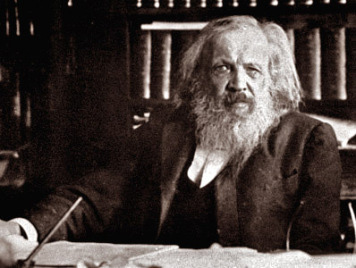
One look from this bearded madman and the elements fell into place right quick.

In the 19th century, the Russian Dimitri Mendeleev examined the common properties of different elements and was able to sort the elements in such a way that took advantage of their similarities. The violent alkalies along the far left, which will explode if given half a chance, and their cousins, the halogens on the far right, some of the most reactive elements in nature. Separating them are the noble gasses, which don’t react with anything unless pushed to extremes. Without knowing about electron shells and the weird quantum things that happen on the atomic level, Mendeleev managed to put together a table so good that he was able to leave gaps in it that corresponded to elements that hadn’t yet been found. And by telling the world that these gaps existed, the race to isolate and discover the elements was on.

Kean’s book is a great look at the way science works on a human level. How the search for high-quality porcelain led to the discovery of an entire class of elements, how Marie Curie would get into trouble by dragging her (male) colleagues into dark closets to show them how radium glowed, how nitrogen kills with kindness and lithium quiets an unsettled mind. The competition to not only find these elements but to name them and find uses for them has driven science forward in all fields, from geology to neurology, for the last two hundred years. Those 118 squares on the periodic table have driven men to travel the world, to create economic and political empires, to love, to hate, and to murder.

If this kind of thing were taught in high school chemistry class, there would probably be a lot more kids interested in science as a career.

A quantum jump is exactly like this, except in that it's nothing like this. Not even remotely. But otherwise, yes.

The book is very readable, even if it does drift from time to time into more technical areas. One of my colleagues, who doesn’t have an extensive background in science, said she was a little slowed down by talk of electron shells and quantum jumps, which I guess were not aided by Kean’s elevator similes. But it did get her asking the right questions – how do we know atoms exist if we can’t see them? How can we be sure that what is in this book is true?

Those are the questions that Kean tries to answer in the book, but it’s also the kind of book that may bring up more questions. It’s “gateway science,” one of those books that pulls away the cold, rational veneer of the scientist and his or her endeavors, and shows what an exciting, weird, messy and dramatic place science can be. What’s more, it shows how science is deeply ingrained not only into our technology, but our language, history and politics. An understanding of science, even at an amateur level, is a wonderful way to open your eyes to the great, complex and bizarre world in which we live.

———————————————————–
“We eat and breathe the periodic table; people bet and lose huge sums on it; philosophers use it to probe the meaning of science; it poisons people; it spawns wars. Between hydrogen at the top left and the man-made impossibilities lurking along the bottom, you can find bubbles, bombs, money, alchemy, petty politics, history, poison, crime, and love. Even some science.”
– Sam Kean, The Disappearing Spoon
————————————————————

[1] The town has the distinct honor of having four elements named after it: yttrium (Y), ytterbium (Yb), terbium (Tb), and erbium (Er). What has your hometown got?

Leave a comment

Filed under chemistry, history, nonfiction, Sam Kean, science, technology