Review 160: The Day After and Other Stories

The Day After and Other Stories by Wil Wheaton

If you had asked me, back in 1988 or so, – when I was a Trek fan who hadn’t quite figured out the real reason I liked seeing Wesley Crusher on screen – what Wil Wheaton was doing at any given time, it would have sounded like a completely irrational question. How should I know? He’s probably doing whatever it is actors do in their free time, which my mind generally rendered as some sort of eternal cocktail party where all the famous people knew each other and none of them would be caught dead with a prole such as myself.

And this isn’t just Wheaton – the idea that I could know what any of my favorite creative people were up to at any given moment was just impossible back then. It was just a fact of life. I am over here, and they are over there, and the chances of our two spheres of reality intersecting were precisely nil. They were members of America’s elect, and I was, well, me.
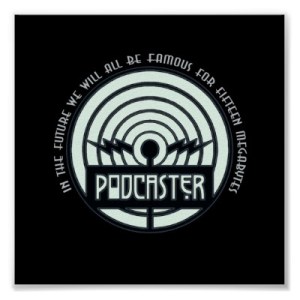
Absolutely true. (image from Zazzle.com)

Now it’s the future, and we have connected our lives online to an extent that would have been almost unfathomable twenty years ago. Wheaton has greatly expanded his creative repertoire, and I am an Internationally Famous Podcaster and Book Reviewer. [1] For those who have access to it, the internet has democratized creativity in many ways. People who otherwise might have gone unnoticed in the world now have a chance to shine, and the daily workings of the famous are laid bare to everyone with a Twitter account.

Suddenly we can see that these people aren’t as special as we thought they were – they’re not living the eternal cocktail party of the gods. They’re working and juggling their careers and their families. They’re getting upset about politics and worrying about paying the bills. They’re having great ideas that never quite work out and massaging small ideas until they bloom. The creative process is now open to everyone, and the potential for your work to be noticed is that much greater.

Of course, the caveat is that your creative work has to be that much better. If you’re a short fiction writer, for example, you no longer have to shop around for agents and wait for the big publishing companies to take on your book. You can publish it by yourself and see what happens. But if that’s the route you’ve chosen to take, then you’d better be damn good. There are a whole lot of fish in that pond, and you’re only going to end up on the internet’s dinner table if you are big, juicy and succulent.

And then this fish is me... (photo by Corey Johnson)

Okay, I don’t know where that particular metaphor came from. Nothing to see here. Move along.

Wil Wheaton is definitely one of those big, succulent fish. He’s got his years of work in film and TV to support him, and he has become one of the stars of the 21st-century internet. As of this writing, he has over 1.9 million Twitter followers and runs a very successful blog. He’s a darling of the summer convention season and probably the TV guest star that I most look forward to seeing. He makes a living writing and blogging and acting, has a gorgeous wife and two sons that have turned out to be fine young men.

So, with all that, why should he be scared to publish this book, his first collection of short fiction? After all, it’s a limited print run, and if it fails then so what? It’s not like this will be the end of the Vast Wheaton Empire, right? Why should this be so important to him?

There are also things he wishes the world never saw, but that clown left the clown car years ago...

It’s because he understands the new dynamic between the creator and the consumer. He understands that his creative work must live or die on its own merits, and not just because it’s Wil Wheaton putting his name on the cover. He knows that he’s no better than anyone else who loves his craft and puts it out for the world to see.

The Day After and Other Stories is a very short collection of four stories that Wheaton has written – his first published collection of fiction. The title story takes its name from the movie of the same title, and is an exploration into what it might be like to be a survivor of the end of the world. Tim, a young man just out of high school, is living among the dead. The walking dead, that is. Zombies have taken over everything, and he and a few people from his town are holed up in a high school gym in the hopes that things might someday get better soon. Of course, they won’t. Tim knows that, the girl he loves, Erica, knows that – everybody knows that. But they have to try and hold on anyway, because there’s nothing else they can do.

“Room 302” is a bit of flash fiction, inspired by a photograph. Most of it is a pretty straightforward analysis of a mediocre photo, and an explanation of why it can’t be used in a news paper. Fine, a nice scene and some good dialogue – with a creepy twist at the end that, much like “The Day After,” makes me wish there was more story to read.

Wheaton tells us that “The Language Barrier” was inspired by a real event – overhearing a couple of ladies having a heated conversation in a mixture of Russian and English. In the story, the conversation is exactly that, but the eavesdropper, Mike, does what we wish we all might be able to do – he steps in and says what most needs to be said. It’s one of those moments where l’esprit d’escalier is beaten to the punch.

It turns out that Wil is actually the monkey's lucky charm.

Finally, “Poor Places” rose from Wheaton’s love of poker. I never was able to get into poker, probably because I am really risk-averse when it comes to money, but there was a time in the mid-Aughts where poker was the trendiest game to be had. In this story, a couple of players in their local Hollywood bar proceed to fleece some tourists in a back-room poker parlor. It’s probably the weakest of the four stories, but I grant that not knowing poker lingo really doesn’t help.

All in all, they’re four good stories. Wheaton has a good ear for dialogue and a way of making characters sound believable, even if the plot structure is a little weak in points, or the narration tries to carry more weight than it can bear.

Probably because it is the longest of the stories, “The Day After” is the most guilty of this – Tim is described by other characters as “kind of an asshole,” but his actions don’t really match that so much. He complains a lot, sure, but who wouldn’t be a bit bitchy after human civilization has gone to the zombies? When he’s told it’s his time to fill the generator, he goes. When the girl he’s crushing on offers a bit of apocalypse-sex, he considers turning it down, the way he did when they were in high school to protect her reputation. We don’t see the guy that the other characters do, which makes me wonder what else we’re not seeing. Internal conflict is a great hook upon which to hang a story, but the conflict between others’ view of him and his view of himself isn’t developed nearly as well as it should be.

In addition, his internal narrative tells us things that would be better shown, and overall the whole thing could stand to be tightened up. I also have some questions regarding the gas can (a full one left next to the generator? Who would have left that there?) and their discovery of Alvin (the guy camped out only about twenty feet from the school gym and never noticed that there were survivors living in there?) While interesting, adding a mini-quest to the story – get gas, then fill the generator – would have been fun, and the dead guy just served to heighten the sense of loneliness that was already there. A sense that was about to be mitigated once they got back into the gym with the other survivors. It’s nitpicking, but sometimes that just has to be done….

Maybe the lives of the Famous really are different after all...

All that said, it looks like the beginning of a much longer story, albeit a bleak one, which I hope he works on more. [2]

If you haven’t bought this, you’re probably out of luck – the print run lasted for a very brief window of time, but I reckon an electronic version of it will be up at some point. If it is, scrape a few bucks together and pick it up. It’s a quick read, and I feel like it’ll be something to hold on to if Wheaton decides to pursue more fiction. If he does, I’m sure he will approach it with the same honesty and humility that he had when he released this book, which means that I’ll certainly be willing to pick it up.

—————————————————————
“I’m terrified that nobody’s going to like it, but the goal isn’t to be perfect; the goal is to be creative. I’m going to keep saying that until I don’t feel like I’m going to throw up.”
– Wil Wheaton, from his blog
—————————————————————

[1] Source: Me

[2] When I was in college, my creative writing teacher told me exactly that – the short story I had written was actually the beginning of a novel. The whole thing immediately dried up under my fingers and turned to dust, and the novel he thought I was writing never came to be. I hope Mr. Wheaton is made of sterner stuff than I was.

Wil Wheaton on Wikipedia
The Day After on Amazon.com (Kindle only)
Wil Wheaton’s blog
Wil Wheaton on Twitter

Leave a comment

Filed under anthology, fiction, short stories, Wil Wheaton, zombies

Review 159: Alphabet Juice

Alphabet Juice by Roy Blount Jr.

When I was last home for Christmas, my mother pretty much shoved this book into my hands and said, “You have to read this.” And far be it from me to ignore my mother’s advice, except possibly that little tidbit about being trapped in a Vogon airlock with a man from Betelgeuse and about to die of asphyxiation in deep space. I kinda spaced out on that one. Probably wasn’t important….

Anyway, Mom was right. Like nearly everyone else in my family, I am a lover of language. I read voraciously (as you well know), I’ve dabbled in writing – songs, stories and poems – and I make a living teaching non-speakers the joys of being English speakers. I grew up in a literate household, with a mother who used to teach me Latin roots whenever I asked “What does this mean?” My words are the way I express my thoughts and the way I understand the world, and as such they are as precious jewels – to be cherished and admired, used with elegance and style, and not wasted on fripperies and tacky indulgence.

He's much funnier than he looks. Really.

Roy Blount Jr is a kindred spirit indeed. He’s a humorist, the author of about two dozen books and a regular panelist on one of my favorite radio shows – Wait, Wait, Don’t Tell Me…. He talks with a slow southern drawl and never seems to hurry. This is the kind of person who savors his language and treasures his words. He’s not only interested in the meanings of words, or the sounds, but in the very feel of them. And if you’re the kind of person who never thought about how words feel when you say them, this book might do you some good.

Think of a word. Any word. How about doldrums? It’s a great word, a “sonicky” word, to use the term that Blount coins in this book to mean “a word whose sound doesn’t imitate the concept it represents (like boom or poof), but rather evokes the essence of the word.” Say that word out loud – doldrums. Doldrummmmsss…. If you were asked to come up with a word that describes a seemingly endless, unchanging environment, you could do worse than this one. It’s got flat vowels, heavy and pendulous, that practically sit in the bottom of your mouth, defying your tongue’s attempt to shift them. Then it ends in a flat hum that becomes a thin and lifeless hiss. Doldrums.

It is clear that Blount takes great pleasure in the sounds of words and the feelings of words as phonemes slide, crash and bump together, but he’s also interested in the etymology of words. He looks into the origins of some of the most innocuous words in the language – and some of the most useful – and looks at how they descend from the same ancient Proto-Indo-European roots. Take the P.I.E. room pag- which has given us such a diverse crop of words as pagan, compact, pole, pace and pageant. All this from a little word that meant, roughly, “to fasten.” The words that we speak have taken a long and wild journey to get into our minds and our mouths. Some were ported directly from Latin, others took a longer route. But every word that you speak has great history behind it.

There is no other name that this man could have. Not a coincidence, I'm sure.

Finally, of course, there is meaning. Without meaning, words are just sounds and aggregations of letters. One of the big questions that Blount hits over and over again is whether words mean something for a reason or if they’ve just been arbitrarily assigned to ideas and things. There are those who hold to that idea – that a word like “go” is no better or worse suited to its job than iku or jít or aller (Japanese, Czech and French, respectively). There’s something to that, I suppose – after all, if one sound really were perfectly suited to a concept, why would other languages bother to use so many variations? Or, y’know, exist? You would think that eventually the speakers of other languages would hear “Go” and think, “That’s IT! That’s the word!” If that were the case, it would probably have put me out of a job.

So there probably is some element of arbitrariness in language, but Blount isn’t very convinced by that idea. He says that there are so many words – such as doldrums or go, which fit their ideas so very, very well – how could such an appropriate set of sounds have just been arbitrarily given to these ideas? Words like scribble, itch, wrest, pool – words whose sounds and meanings match so very well, how could they be arbitrary?

The most likely answer, of course, is that language defines how you understand the world. As an English speaker Blount has inextricably connected these words and ideas in his head, and to suggest that, say, berceuse is perfectly suited to describe a soft song sung to children to get them to sleep would be asking an English speaker to put aside a whole lot of the associations he or she had made about lullaby.

This isn’t an academic book, though, so don’t worry about that. Blount has made a career out of entertaining with his words, and he doesn’t put that aside just because he’s doing language analysis. He brings up common words, unusual words, thought-provoking and laugh-inducing topics, all arranged – of course – alphabetically. You can jump backwards and forwards through the book, following the cross-references, and still enjoy it to its fullest. In fact, Blount recommends that you do so.

Genius!

Language is our way of making the world make sense, no matter what language it is. For those of us who are native English speakers, we look at the world through a complex and sometimes baffling language. It’s hard to learn (and hard to teach), sometimes frustrating to deal with and occasionally incapable of doing what we need it to do. But it’s part of our cultural heritage – our cultural DNA, if you will – and deserves appreciation. So take a gander at this book – read it, savor it, enjoy it, and then look at your language afresh. You’ll be glad you did.

—————————————————
“English is an outrageous tangle of those derivations and other multifarious linguistic influences, from Yiddish to Shoshone, which has grown up around a gnarly core of chewy, clangorous yawps derived from ancestors who painted themselves blue to frighten their enemies.”
– Roy Blount, Jr., Alphabet Juice
—————————————————

Roy Blount, Jr. on Wikipedia
Roy Blount, Jr.’s website
Alphabet Juice on Amazon.com

Leave a comment

Filed under humor, language, nonfiction, Roy Blount Jr

Good News, Everyone!

My new recording space is almost complete. Just have to put up the baby seal-fur sound baffles. Gold is awful echoey...

As I mentioned on last week’s podcast – and as you will no doubt notice in this week’s – I’ve entered into a partnership with Audible.com to promote the use of their services!

The benefit to you is that they have a ridiculous amount of audiobooks, which are great if you’re driving, shopping, commuting, gardening, exercising, holding up convenience stores – whatever makes your heart sing.

The benefit to me, of course, is the mad money – the Romney-level money, no doubt – that will almost assuredly be pouring in as soon as the new episode is uploaded. You know how sometimes someone like Neil Gaiman will plug a website and then the resulting rush of viewers knocks the whole thing offline for a little while? Yeah, that’s what I figure will happen. And once they get their site reinforced against the onslaught of my listening army, I’ll be eating diamonds for breakfast and bathing in liquid gold…

No. Wait. That doesn’t work. But you get my point.

Anyway, the only change to the podcast itself will be a very short spot right before the drums in the beginning, and I’ll plug a book after the quote from the review. Odds are it’ll be the book I’m reviewing, but if I can’t find that in their vast library, then I’ll point you towards something else you’ll enjoy. I’ll also be putting up a banner here on the site so you can get to it that way and support the podcast. Other than that, everything stays the same.

Except, of course, for the four-color tattoo across my forehead that was part of the partnership agreement, but you probably won’t notice that from where you are.

3 Comments

Filed under FYI

Review 158: Secret Lives of the U.S. Presidents AND Hail to the Chiefs

Secret Lives of the U.S. Presidents by Cormac O’Brien

Yes, a double-header today, mainly because it’s what makes the most sense with these books.

As we come up to another Presidential election, we’re being asked to make a very important choice. We’re electing someone to join a very powerful and elite group of men who have shaped the history of the world in the last 200-odd years. It’s an important decision, to be sure, and not one to be taken lightly. Will our next President be a political powerhouse, a man who is able to take the reins of the country and lead it into a better and more just future? Will he be inept or corrupt, allowing his cronies and his pals to use the nation for their own personal gain? Or perhaps he’ll simply be a cipher, one of those Presidents who is forgotten by everyone except for over-achieving elementary school kids who think that everyone will be impressed that they know who Zachary Taylor was.

We don’t know, and we can’t know, and that’s one of the most interesting lessons of this book. Every President, from Washington to Obama, was elected by the people in the hopes that he was the right man to lead the country. Every President was praised and damned. Every President was, before the election, sold as the one man who could save the nation from ruin and despair. If not all of those Presidents lived up to their hype, well, therein lies the lesson….

This is the kind of history I like... (image by SharpWriter on DeviantArt)

For people who like their history to be amusing and bite-sized, this is the book for you. It’s a “gateway book” for Presidential history – you read this and then go on to read more serious treatments of the Presidents, hopefully becoming more appreciative of the vast spectrum of personalities that have guided our nation. And what an interesting group it’s been.

There are, of course, the heavy-hitters that everyone knows. Washington, Jefferson, Lincoln, both Roosevelts, Johnson (Lyndon, not Andrew), all men who made their marks on America. Washington, of course, set the entire tone of the Presidency. He demanded formality, and the acknowledgment that the office of President was one that should be treated with respect. At the same time, he didn’t want to be revered, or treated like American royalty. His decision to serve only two terms of office became unbreakable tradition, at least until FDR, and then law with the adoption of the 22nd Amendment. While the stories that are attributed to him are mostly apocryphal – chopping down the cherry tree, throwing a dollar across the Rappahannock, wooden teeth – the real stories are even better. He spent vast sums of money on alcohol, had a terrible temper, and probably wouldn’t even have been the President if he hadn’t married Martha Custis. In short, Washington was human, just like the other forty-two who followed him.

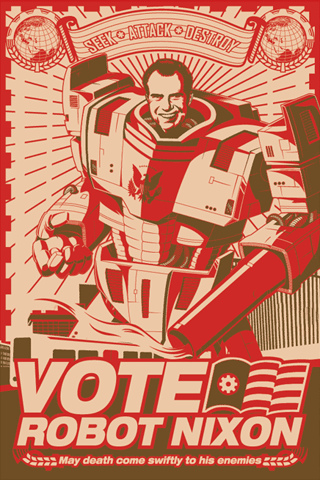
Then there are the infamous – the Presidents who are excoriated for their misdeeds and who are the ones we all wish never actually happened. Nixon, Hoover, Buchannan, Harding, Pierce…. These are the ones you tell your children about when they turn 18 and they’re wondering who to vote for. Warren G. Harding, for example, was only President for two years before his death, but manages to make the bottom of the “Best Presidents” list nearly every time. For one thing, he never wanted to be the President – it was all his wife’s idea. But Warren didn’t like to say no, didn’t like to stand up to people, so he let her railroad him into running for and winning the office. Once he was in the White House, he was perfectly happy to let Congress govern while he had sex with his mistresses and lost vast sums of money – and the occasional priceless White House tea set – to his poker buddies. It’s said that his father told him he was lucky not to have been born a girl, “because you’d be in the family way all the time. You can’t say no.” While he amused himself, his cabinet and his friends did their best to rob the government blind. He was lucky that his ineptitude wasn’t discovered until after his death in 1923.

There are, of course, the ciphers. These are the Presidents that no one really remembers much about. The middle-of-the-pack Presidents, neither good enough nor bad enough to be really memorable. James Polk, for example. Ever dress up as him for a history class skit? No, I didn’t think so. This is because he was a boring, humorless workaholic who had about as much personality as a table lamp. Still, he did get us into a war with Mexico, which resulted in the annexation of what we now know as the American Southwest, so there is that. How about Chester Arthur? He became President when Garfield was shot, and was most renowned for the fact that he was a very snappy dresser. He restricted Chinese immigration, so there’s a point against, but supported the Pendleton Act, which made it harder to appoint unqualified drinking buddies to important civil service posts. Other than that, he had parties, drank a lot and was kicked out after finishing his term.

Forty-three different men, forty-three different stories. It’s very easy to forget that these were Real People, complex human beings with incredible merits and flaws. Franklin Pierce was so despised that his own party came up with the slogan, “Anybody But Pierce.” John Tyler was so hated that he was burned in effigy and was the first President to receive a full-time bodyguard. On the other hand, Lincoln had a soft spot for pardoning soldiers who were to be shot for unmeritorious conduct, and Theodore Roosevelt once opened a speech with: “Friends, I shall ask you to be as quiet as possible. I don’t know whether you fully understand that I have just been shot.” Now THAT is hard-core….

It’s also hard to remember that, for all the mistakes made by Presidents in our lifetimes, they’re hardly new ones. Clinton was not the first guy to be unfaithful to his wife while President – in fact, compared to what some others got up to, a little hummer under the desk is practically innocent. And Bush is not the first dim bulb with delusions of grandeur either.

Bush has said, many times, that history will be the final judge of his administration, and I think he’s right about that. Very few people in President Monroe’s time would have known the horrors that would eventually emerge from the Missouri Compromise, and there were countless people who thought that FDR’s New Deal would spell the end of American capitalism. It’s hard to objectively judge the Presidents we still remember so vividly, but we can compare them to the ones who have gone before them.

I'm sure this really happened. It must have. (art by SharpWriter on DeviantArt)

If you’re new to Presidential history, or if you want an easily accessible refresher, this is an excellent text to have. Mind you, it’s slightly incomplete – it was published prior to Bush’s second term, so there’s a little bit missing at the end, but I think we can all remember four years back. And maybe, just maybe, our next President will be so special that Mr. O’Brien will be moved to update and re-publish in, say, four to eight years.

————————————————
“As to the presidency, the two happiest days of my life were those of my entrance upon the office and my surrender of it.”
– Martin Van Buren
————————————————

Hail to the Chiefs by Barbara Holland

What was true for Secret Lives of the U.S. Presidents is just as true for this one: we’ve had 43 incredibly interesting and varied men in the White House in our 221 years as a nation. We’ve had men of passion and energy, men who were weak-willed and lazy, men who preferred golf to governance and men who worked themselves to death. Good men, bad men, tall men, short men – this book reminds us of something we need to recall from time to time:

The President is a human being, with all that goes with being one.

Being the President inevitably means becoming a larger-than-life figure. People despised Bush, people adore Obama, venerate Reagan, abhor Clinton, all for what they see as virtues or flaws that only they possess. As if being the President not only means you have to be better than everyone else, but that your failings must be that much deeper.

The point of this book, and of any book on the Presidents, is that they were human beings just like the rest of us. Being President doesn’t make you immune to the fundamental flaws of being human – greed, apathy, short-sightedness – nor does it bless you with any trans-human virtues. Learning about and humanizing these 43 men is a grounding and humbling experience, and can keep you from both setting your expectations too high and allowing your disappointments to overwhelm you when your President doesn’t live up to your expectations.

Having said all that – if you want to read a book on the Presidents, this is a very funny one to read. The style is more narrative than O’Brien’s, and exceptionally snarky. Holland wields her pen like a dagger, stabbing and poking as she goes. She’s not really mean, but she has no problem making fun of these men when it can get a good laugh. And I certainly laughed a lot while reading this, much to the dismay of my co-workers. They come in short shots: “[Clinton] was a big affable fellow who hugged total strangers and felt their pain, like some ancient Norse bear-god, probably named Potus, good-natured but with a weakness for milkmaids.” And they come in longer passages, i.e. the Spanish-American War and the rather clever means by which we got the Panama Canal.

"The Great Communicator" indeed...

It’s a hilarious, irreverent read… until she gets to Reagan, which is where either she’s being so sarcastic that it’s impossible to be sure what’s serious and what isn’t, or she’s absolutely gushing over the Great Communicator. She imbues him with the same invulnerability that he seemed to have while he was President – showing the complaints of his critics, but then deftly removing the sting. George W. Bush gets much the same treatment, which disturbs me a bit, although since the book was published in 2004, I might be willing to chalk that up to post 9/11 fervor. But it does seem that, from 1981 to the present, she’s not being quite as fair and balanced as she was to the other Commanders in Chief. Perhaps it’s harder to be objective when you actually had to decide whether to vote for the guy in office….

Anyway, the final four Presidents aside, it’s a fun book to read and another way to bone up on your Presidential history. They really all were interesting people, in their own ways. Even William Henry Harrison, who may have been too sick to be in interesting President, but still made for a fascinating person.

————————————————
“Many people consider James Buchanan the very worst President ever. I suppose they think they would have done better. I suppose they wouldn’t have let Dred Scott happen, or John Brown, or secession, and there wouldn’t have been any Civil War and everyone would have lived happily ever after. Too many Monday-morning quarterbacks, that’s what we’ve got.”
– Barbara Holland, Hail to the Chiefs
————————————————

Leave a comment

Filed under american history, Barbara Holland, biography, Cormac O'Brien, history, nonfiction, politics, presidential history

Review 157: The Elements

The Elements by Theodore Gray

When I was a kid, my father had the entire Time/Life science series. For you young whippersnappers, Time/Life books were educational series that covered all kinds of topics – history, science, literature, you name it. The idea was that you sign up and they send you books, once a month, until the series was finished or you decided you no longer wanted to receive it.

The Science series focused on, of course, science, with books devoted to every facet of physics, medicine, chemistry, biology…. It was a fantastic compendium of human knowledge in those pre-internet days, and I just loved it. I learned about how traveling at lightspeed squashes things by reading a story about spies chasing each other on the Lightspeed Express. I learned about how different drugs affect the mind and body. I learned about how important the wheel was, what water could do, and how the food we eat determines almost everything about our lives.

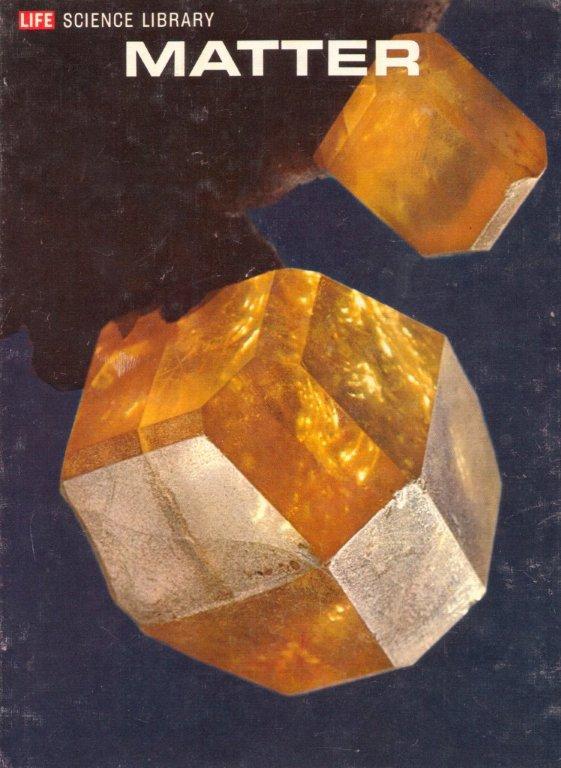
My favorite volume of all of them was titled Matter, and it was about all the stuff there is. At the center of it was a pictorial representation of all the elements known to science in 1968. Everything from Hydrogen to Uranium and beyond. I could pore over those pages for hours, amazed by the idea that these things were all there was, made up everything around me. Learning that just six of them (Oxygen, Carbon, Hydrogen, Nitrogen, Calcium and Phosphorus) made up most of, well, me was just mind-bending.

I don’t know where that book is now – probably in a box at my mother’s house – but the effect that it had on me has lasted ever since my childhood. In fact, as I was researching this review, I found the place that sells coins stamped from elemental metals and got completely distracted by the struggle to not buy any of them. So that’s how Time/Life made me into a science nerd. Nevertheless, I was thrilled when I saw this book, and had to snap it up as soon as I could. It cost a whole lot less than a 1/10 troy ounce Rhodium coin

Theodore Gray is an element hunter – something I didn’t even know existed when I was a kid. He has made a hobby of trying to collect samples of every element that is is possible to (legally) own, and he’s even built a special table to hold them all. A periodic table, as it were, which won him the IgNobel Prize in Chemistry in 2002. He and Nick Mann went through the collection to make outstanding, high-quality photographs and compile them into a fantastic book about “everything you can drop on your foot.”

My old chemistry teacher would have had these all over the classroom, I'm sure...

It starts, of course, with a basic rundown of what an element is – a substance made of only one type of atom – and what the Periodic Table is – an organization of the elements by their common properties. There’s also a page explaining the physics behind the shape of the table, what an “electron filling order” is, and why the atomic emission spectrum is so important. Fortunately for us non-professionals, he does this is a way that is amusing and understandable. Gray knows that his audience isn’t professional chemists or grad students – it’s people like me. People who are fans of science, but who, for one reason or another, never got into the real nitty-gritty of it. All of this means that it’s a book you can enjoy even if you remember nothing from high school chemistry other than “BIFF=WANG.” [1]

The book starts, of course, at hydrogen, the element that makes the sun burn (“Even at night,” alleges the author, but I’ll believe that when I see it) and ends with Ununoctium, which will no doubt get a proper name once those crazy kids in the high-energy physics lab get around to assembling it. It includes the spectre of the modern age, Uranium, and its evil twin Plutonium. There’s Carbon, without which none of us would be here, and Arsenic, which does a fine job of seeing to it that we cease to be. There’s Iron, which we use in abundance, and Dysprosium, which has almost no uses that you’ve ever heard of. Cesium tells us what time it is, and Krypton, which used to tell us how long things were (before we figured out the speed of light.) Strontium and Calcium, Sodium and Americium, Gold, Silver, Copper and Lead – every element is in here, waiting for you.

All the kids in the playground called me mad - MAD!!!

They’re accompanied by wonderful photographs that illustrate the applications of each element, as well as diagrams showing its emission spectrum, crystal structure, and other information that you may or may not be interested in. Regardless of how much you know about chemistry, you should find this to be a fascinating and enjoyable book. Moreover, if you have kids and you want them to be exposed to science in a way that engages their fascination and imagination, then this is the book for you. Just be ready to raise a science nerd, and if they ask for an elemental coin for their birthday, remember – Lead isn’t just for toys anymore!

—————————————————–
“When you throw a large enough lump of sodium into a lake, the result is a huge explosion a few seconds later. Depending on whether you took the right precautions, this is either a thrilling and beautiful experience or the end of your life as you have known it when molten sodium sprays into your eyes, permanently blinding you. Chemistry is a bit like that: powerful enough to do great things in the world, but also dangerous enough to do terrible things just as easily. If you don’t respect it, chemistry bites.”
– Theodore Gray, The Elements
—————————————————–

[1] Thanks, Mr. Hiza!

Theodore Gray on Wikipedia
Theodore Gray’s homepage
The Elements on Amazon.com

1 Comment

Filed under chemistry, nonfiction, science, Theodore Gray

Review 156: Dave Barry’s Complete Guide to Guys

Dave Barry’s Complete Guide to Guys by Dave Barry

If you’re reading this, and there’s a good chance that you are, you probably know a guy. You may even be a guy, though the way Barry talks about them, you wouldn’t think that guys would be into book reviews. If you know a guy, then this book is for you – it will illuminate some classic guy behaviors and shine some lights into the dark corners that your rational mind has been unable to penetrate. If you are a guy, then this book is also for you. Guys aren’t famous for their introspection, but perhaps it will allow you to understand why it is your wife and/or girlfriend get so frustrated with you from time to time (hint: it’s not her, it’s you).

This book is a tribute to guys (not men – those people have enough advocates as it is) and the ways in which they live. It’s like a documentary in print, really, giving us a rare glimpse into the lifestyle and habits of the modern guy.

So, what exactly is a guy, then? Well, you’re lucky – Barry has included a self-analysis quiz in the first chapter. For example:

As you grow older, what lost quality of your youthful life do you miss the most?
a. Innocence
b. Idealism
c. Cherry bombs

Complete this sentence: A funeral is a good time to…
a. … remember the deceased and console his loved ones
b. … reflect upon the fleeting transience of earthly life
c. … tell the joke about the guy who has Alzheimer’s disease and cancer.

What is the human race’s single greatest achievement?
a. Democracy
b. Religion
c. Remote control

I think you can guess which answers reveal your guyness.

Being a guy means more than just being a man, and in fact there is a very definite difference between men and guys. Men are people we of the male persuasion wish we could be – Superman, Edward R. Murrow, George Clooney. Guys are who most of us turn out to be – Homer Simpson, Bill O’Reilly, Tom Arnold. And there’s nothing inherently wrong with this. It’s just that as long as we assume that guys will act like men, we’re bound to be disappointed. Guys are terribly misunderstood in modern society despite the very important role they play.

Definitely a guy. (photo by John B. Carnett)

For example: without guys, we wouldn’t have a space program. Don’t believe it? What other type of person would deliberately design a rocket, watch it shoot up and then say, “I wonder if we can make a bigger one?” Guys, that’s who. The Saturn V is a tribute to guyness, as is the space shuttle – an endlessly tinkerable machine that almost never blows up.

Without guys, there would be no professional sports, to say nothing of the parasitic fan industry that has sprung up around sports like a remora. Guys have an undying and unyielding attachment to sports teams – you might see a guy leave his wife of twenty years and the children they raised together, but I’d be willing to bet that he would sooner die than switch his team allegiance from, say, Red Sox to Yankees. The unshakable, irrational dedication of these guys is what keeps modern sports afloat despite scandal and disappointment. Now I’m not a sports fan, I’ll admit, but I can certainly relate – I’ll support NASA until the last breath leaves my body, and no force on earth will ever get me to switch from DC Comics to Marvel, no matter how badly DC messes with the characters that I’ve always loved, the bastards.

I also don’t get to play a part in the endlessly frustrating relationship that exists between guys and women, seeing as how I’m, well, into guys. As a side note, The Boyfriend is also a guy, but less than I am – he cleans, for example. And I don’t mean that he cleans the way a real guy cleans – spray a little, wipe a bit and say, “Good enough.” He actually cleans. Like, every day. I know – weird, isn’t it?

Her: "I wonder what he's thinking about right now...?" Him: "Juuuuust sit right back and you'll hear a tale / a tale of a fateful ship..."

Women and guys will always frustrate each other, you see. Women love to read meaning into every nuance of conversation, every raised eyebrow or dropped word. Women want to know what the guy in their life is thinking. The answer is that he probably isn’t thinking. At least, not about what she would want him to think about – her and the relationship they share. In fact, as Barry takes pains to point out, he may not, technically, be aware that he’s in a relationship at all. You ladies have a lot of work to do if you’re hooked up with a guy.

But before you go thinking that the life of a guy is sweet ignorant bliss, think again. You ladies will never know the pain of the Urinal Dilemma, or the feeling of knowing that, no matter how hard you try, you’ll never be able to fix anything in your own home – your wife will have to call a man (probably named Steve) for that. Guys’ minds aren’t terribly complex, but they do run on certain rules. Know these, and your relationship with the guy in your life will go much more smoothly.

It is true that the man/woman divide is an old one, and it’s a place that nearly every comedian has gone to once or twice. Or three times. Or they’ve just staked a claim right there on the joke and built an entire career out of it. But here, Barry isn’t so much talking about the difference between men and women as much as he’s talking about men and guys, which is a fascinating idea.

He's just so disappointed in you...

As I said before, those of us with XY chromosomes and little dangly bits generally want to be Men (with the exception, of course, of those who don’t), and what’s more are expected to be Men. We’re told as youths to “be a man” or be the man of the house. Our role models are Men, our cultural icons are Men. Even in our commercials, we have the Old Spice Man and the Most Interesting Man in the World.

But most of us are fated to be Guys. And deep down, we know that we’ve somehow missed the mark.

Fortunately, we don’t do introspection really well, so it doesn’t bother us all that much.

This is really one of Barry’s classics, a book that everyone can easily enjoy. Whether you are a guy or just know a guy, there are laughs to be had here.

—————————————————-
“To understand guys, it’s essential to remember that, deep down inside, they are biological creature, like jellyfish or trees, only less likely to clean the bathroom.”
– Dave Barry, Dave Barry’s Complete Guide to Guys
—————————————————-

Dave Barry on Wikipedia
Dave Barry’s website
Dave Barry’s Complete Guide to Guys on Amazon.com

1 Comment

Filed under Dave Barry, gender, gender roles, humor, jokes, parody, society

Ooo, I’m gonna be on Technorati. Maybe.

T3BBTZPCZ37P

They’re having a devil of a time seeing that little code there. Disregard this post if you’re not one of their bots…

Leave a comment

Filed under Uncategorized

Lost in the Stacks 12: The Year In Review

A very small sample from this year...

Well, 2011 was an interesting year. I got an iPad, with all that that implies, I started writing again, I completed NaNoWriMo, work got a bit more difficult and challenging, and DC Comics rebooted their universe again. All of that had an impact on how I read and what I read, and not all of it was good.

In this year in review podcast, I’ll talk about what went well in 2011 and what could have gone better. What I enjoyed and what I struggled with, just like everyone else in the world. On balance, I think 2011 went well for me – I hope it did well for you too. And if it didn’t, well… there’s always 2012.

At least, assuming the Mayans were wrong.

Happy New Year!

(Technorati claim – T3BBTZPCZ37P )

2 Comments

Filed under analysis, comic books, Lost in the Stacks, reading

Review 155: Otherland 4 – Sea of Silver Light

Otherland 4: Sea of Silver Light by Tad Williams

At last we have come to the end of our journey, when all will be explained and all will be resolved.

As the book opens, the Other – the operating system for the Grail Brotherhood’s mysterious plan for immortality – has been defeated, overcome and overpowered by the truly evil assassin Dread. With his mutant ability to manipulate electronics, Dread has taught the Other how to feel true pain, and now has nearly complete control over the Otherland network. With a nearly limitless number of worlds to choose from, Dread allows his sadistic madness to run wild. But no matter how many worlds he rapes and plunders, there are still those he truly wants to destroy – the Otherland explorers sent by the mysterious half-human Sellars.

While they are successful, none of them look this cool.

But those explorers themselves face greater dangers than Dread. Half of them have been thrust back into the twisted realms of Otherland, where the horrors and dangers that had been built into it have mutated into unrecognizable terrors. The other half… they ended up in the heart of the Other’s secret dreams. There they must face the eventual death of the network and survive it, if they can.

Offline, Sellars has brought all of his players into position. Lawyers, children and old women are his army, and together they will uncover the horrible and heartbreaking truth about the nature of the Other and the evil that has been done to it.

I really love this series. As it moves towards its ending, which does involve a lot more explaining than most other books do, it’s easy to get swept up in the sheer scale of the narrative. There’s a lot to take in by the end of the series, a lot of loose ends to tie up, but it all wraps up rather nicely. More or less. There is a rather major revelation that comes near the end that just kind of… gets written off. I have a sneaking suspicion that Williams might have been able to stretch this series into a fifth book, but it probably would have suffered from Rowling Syndrome – a lot of unnecessary padding in between the important bits.

The important thing is that, by the end of the book you really do feel invested in the world that Williams has created. You care about the characters, and you want everything to turn out all right for them. For the good ones, at least. For the bad ones, you want them to get their just desserts, to see them suffer as they have made others suffer. You even find yourself feeling for the Other, which we – and the protagonists – have always believed to be the main villain of the story. It is not, as we find out, and the scope of the villainy that has been done to it is truly astonishing.

Good news, honey! The new Tad Williams book is out!

In his forward to the second book, Williams apologized to his readers about the cliffhanger ending to the first. This isn’t really four books, he said – it’s one giant book that had to, for various reason, be split into four. The main reason, of course, being that no one would print or buy a 3,500 page hardcover, even if the fine folks at DAW Books were willing to try it. He is right, though – it is one very long story, and thus you can extract a great many things from it, if you want to.

There’s no one thing that I can say this book is about. In one sense, it is an exploration of the future of the digital world and what it might mean to people. The virtual net of this story would be as alien to us as the internet would be to our grandparents. It has become the sea in which our characters swim, and their main way of interacting with the world. It is only when their ability to go offline is taken away from them that they truly begin to value the world and the identity they’ve left behind. What’s more, it explores how we connect with each other – looking at both the relationships we build in virtual space and the ones we build in the real world, and finding complete validity in them both.

There are issues of identity, best shown by Orlando, whose towering Thargor the Barbarian character hides a young teenager with a crippling illness that will kill him long before he’s old enough to vote. His best friend has a slightly less unfortunate secret to share – that behind those big, muscular sim bodies, Sam Fredericks is actually a girl.

The story explores issues of family – how Renie deals with her father, Long Joseph Sulaweyo, or how little Christabel Sorenson’s family react when they find out that their young daughter has been drawn deep into Sellars’ conspiracy. And the bonds between mother and child that can never truly be broken.

Not only am I still human - I'm SEXY.

And there are even issues of the very definition of the word “life.” If your mind is perfectly copied into a computer, with all its memories and personality intact, is it still you? Are you still human? Are you even alive, in any real sense? The Grail Brotherhood certainly believed so, or they would never have started this project in the first place. But in a system as broad and complicated as the Otherland network, who knows what else might arise to test our definition?

The story is about heroism and history, about love and hate, about the unshakable bonds of friendship and the tenuous reliance on people you despise. It’s about the lengths to which fear will drive you and the extremes you will encounter when you test that fear. It’s about science and faith and looking at the world in ways you never imagined. It’s about good, it’s about evil.

It’s about life, really, and what it is about life that makes us want more of it.

Now I’m just waxing philosophical. To sum up: this is probably one of my favorite stories in my library. I highly recommend you pick it up, set some time aside, and enjoy it.

———————————————-
Christabel was beginning to learn a scary thing about grown-ups. Sometimes they said things would be all right, but they didn’t know they’d be all right. They just said it. Bad things could happen, even to little kids. Especially to little kids.
– From Sea of Silver Light by Tad Williams
———————————————-

Tad Williams on Wikipedia
Otherland on Wikipedia
Sea of Silver Light on Amazon.com
Tad Williams’ Website

Leave a comment

Filed under adventure, apocalypse, existentialism, family, fantasy, friendship, internet, philosophy, quest, science fiction, Tad Williams, technology, transhumanism, virtual reality

Review 154: :59 Seconds

:59 Seconds by Richard Wiseman

(If you want, I’ll give you one marshmallow now. If you read through the whole review, however, I’ll give you two. Ready? Let’s go!)

Do you have problems? Of course you have problems. We all have problems. Maybe you want to land a new job, or lose weight or finish a project you’re working on. Maybe you find that you procrastinate too much, or you don’t get along with people, or you can’t be creative. Maybe you just want to be happy, you poor, sad little person.

These are the kinds of problems that have spawned an entire industry of books – the Self Help genre. Go to your local bookstore and look around. There are countless books that tell you how you can make yourself better through positive thinking, creative visualization, listening to Mozart or joining up with groups. They’ll tell you that if you want to find romance, you should look for an opposite, you should play hard to get, or you should plan a perfectly romantic evening. They’ll cite ancient wisdom or have countless testimonials from people who have tried their methods, and almost all of them have one thing in common: they don’t work.

The self-help genre rests on a foundation of common sense ideas, things that sound like they should work, rather than an understanding of how the human mind actually does work. Often, much to our chagrin, our minds don’t follow the rules, and we fail. Take positive thinking, for example. The general gist of positive thinking is that you should never allow a negative thought to enter your mind. If one pops up, just push it away and focus on the positive.

Quick experiment: I want you, for the next minute, to not – I repeat not – think of a pink hippopotamus. Ready? GO!

(Waiting… waiting… waiting…)

How’d you do? I don’t know about you, but my pink hippo is rather contentedly sitting on my sofa right now. The fact is, the more we try not to think of something, the harder it is to not think about it. You then end up obsessing over the thing you’re trying not to think of, which is what you were trying to avoid in the first place!

It’s an idea that sounds like it should work, but it doesn’t, and that’s what Wiseman has collected in this book. Wiseman is a psychologist from the UK, and he has a particular interest not only in the science of self-help, but also magic, optical illusions and the paranormal. In other words, he’s very good at knowing how we humans fool ourselves. And boy, do we know how to fool ourselves.

We want to believe that humans are rational creatures, intelligently designed evolved to make the best decisions. We spent years studying the world around us, trying to figure out how to motivate ourselves and others, and operating under the assumption that we know what our brains are doing at any given time. Problem is, we don’t. We have no idea what our brains are doing while we’re trying to get things done. The good news is that there’s are entire branches of psychology that are doing their damndest to figure it out. Wiseman combed through the literature, looking at scientific studies on human psychology and behavior to try and find simple, clear and effective ways of making your life better. The bonus is that many of these things can be done in under a minute.

Some of the things he presents are so simple that you don’t want to believe they’d work. For example, do you want to be a little more cheerful, to have a brighter outlook on life and be generally more pleasant to be around? Go get a pencil and hold it with your teeth, making sure your lips don’t touch the pencil. Your mouth will basically be making a grin, which will have a positive impact on your mood. Seriously. While you’re at it, sit up straight, use more expressive gestures when you talk, and try to use a wider range of pitch in your speech. Your body and mind are hooked up in such a way that your body can tell your mind what it’s feeling. So if you have a grin on your face, and you’re talking in an animated and upbeat way, your brain will think, “Well, these are all physical conditions that are associated with happiness, so… I guess I must be happy.”

You can use the same trick on a first date. Instead of a nice, placid picnic in the park or a boat ride on the river, go to an amusement park and hit the roller coaster together. The fear and excitement will make your date’s heart beat faster, breathe harder, and generally be more excited. These are also physical reactions to being attracted to someone, and your brain really can’t tell the difference very well. It feels your heart pounding, your blood rushing, your adrenaline flowing, and it thinks, “Huh. I guess I must really like this person.” So, once you get off that ride, you have a little window of opportunity to increase the attraction you have for each other.

Now let’s say you’re angry about something. I mean, you’re hitting George Constanza levels here, and all you want to do is just hit something. There is a way of thinking that says you should go hit your pillow. Or go to the gym and do some work on the heavy bag, punching your anger away. If you live far enough away from others, maybe you could do some primal screaming or something. It makes sense, right? You have to let your anger out somewhere, right?

Wrong. Studies have shown that kicking and screaming and beating up your pillow will make you more aggressive and irritable, not less. It’s like trying to put out a fire with a bucket of gasoline. What you should do, then, is to look for the benefits to your experience. Researchers asked subjects to think about a painful and unpleasant incident in their lives and to focus on their anger. Another group was asked to instead focus on the benefits – they had learned an important lesson, had become an emotionally stronger person, or had otherwise changed for the better. When questioned later, the second group turned out to be much less angry than the first, and to be more likely to forgive the person who had hurt them.

Okay, one more – you want to be creative, right? We all want that. So, should you brainstorm with your colleagues? Focus on the creative task at hand? Listen to Mozart? No, no and no, although there’s really never any reason not to listen to Mozart. Again, research has shown that people tend to work less hard in groups than they do on their own. Being in a group makes you lazier, so if you want to get good ideas from a whole bunch of people, have them work alone first. You’ll get more and better ideas that way. As for focusing on the problem at hand, other studies have shown that the best thing to do is to distract yourself with something totally unrelated so that your unconscious mind can get some work done. Work on a puzzle, draw a picture, think of a hundred ways to use a brick – anything but the problem you’re trying to solve. Then, when you come back to the problem, you’re more likely to generate better ideas.

As for the Mozart, it turns out that listening to Mozart does make you slightly more creative and intelligent…. for about fifteen minutes. Neither you nor your baby will become a genius if you listen to Wolfie’s music every day. What’s actually more effective is modern art – especially art that breaks our expectations. In one study, two groups were given a creativity task. One was seated in a room with a large print that featured twelve dark green crosses on a light green background. The other had almost an identical picture, except that one of the crosses was yellow, and they came up with the more creative ideas. Why should this be? The idea is that the impression of unconventionality, of a pattern being broken, may be enough to stimulate our own creativity. Now it won’t turn you into DaVinci or anything like that, but it should help at least a little.

And that’s what this book is – lots of little ideas that are designed to help you out. Put a mirror in your kitchen, put a baby photograph in your wallet, buy small gifts for no reason. Put a plant on your desk, start keeping a journal, and don’t praise your kids for how clever they are – praise them for the work they’ve done. Everything Wiseman puts in this book is a small thing, a little effort, but when put together they add up.

Even if you don’t really need a lot of alteration to your life – maybe you’re as happy as happy can be – it’s still a fascinating look into how our minds work, and the different ways that they can be hacked.

(Good work! Here are your marshmallows!)

————————————————————————-
“Now if you take part in a study and the researchers explain that they need your telephone number in case of a hard-disk failure, they are up to something.”
– Richard Wiseman, :59 Seconds

All images in this post come from Despair.com – go and give them money. They’ve earned it.
Richard Wiseman on Wikipedia
59 Seconds on Amazon.com
Richard Wiseman’s homepage

Leave a comment

Filed under nonfiction, psychology, Richard Wiseman, science, self-help