Review 170: Naked Pictures of Famous People

Naked Pictures of Famous People by Jon Stewart

If that doesn’t drive visitors to this site, nothing will.

Jon Stewart is, as of this writing, one of the most well-known TV personalities in the country. In the last decade, he seems to have become an authority to an entire generation of people who distrust the media and the government, shining the bright light of comedy on the dark, unholy crevasses of our society. He’s interviewed heads of state, famous actors and actresses, and been a constant – if somewhat reluctant – model for people who haven’t yet drunk the Kool-Aid.

It’s hard to believe, then, that just over ten years ago he was a stand-up comic whose only foray into television had been a quickly-canceled MTV program. Our little Jonny has grown up so fast…. *sniff*

But really, do any of us look as young as we did fourteen years ago? I think not...

This book comes on the cusp of those two times in Stewart’s life – back in 1998, a year before he took over the hosting duties on The Daily Show. It’s a different style of humor for what we’re used to watching his show. It’s less self-effacing, more surreal and, in my honest opinion, not as funny.

It pains me to say, yes, but I didn’t laugh out loud a whole lot reading this book. Some authors can do it – Terry Pratchett, of course, and Dave Barry seem to be able to poke their fingers right into my funny fuse. I’ve had John Scalzi do it, Neil Gaiman from time to time, Sarah Vowell and Connie Willis are able to pull it off. But Jon Stewart? Not so much.

Don’t get me wrong – I think Stewart is a blindingly funny man. I can listen to his stand-up album, “Unleavened,” over and over again and laugh every time. And I’m surprised that I haven’t gotten any angry messages from my neighbors about my resonant cackling when I watch The Daily Show. When he talks, I laugh. He’s fantastic with inflection and timing, which unfortunately doesn’t translate so well onto the page.

Still and all, there are some chuckles to be had in this collection of short stories and mini essays. They’re certainly weird and interesting, and I think that many of them could make the transition to stage or screen with little difficulty. If I had more friends and resources, I could do some mean copyright infringement on YouTube. Let’s take a look at a few of the gems in this collection….

So if Gates worked with the Devil, then logically... Hey, has anyone checked Jobs' tomb recently?

“The Devil and William Gates” is a chilling tale of what we all suspected to be true about the rise of Bill Gates – a deal with the devil, and the kind of lawyerly acumen that would make Gates into the richest man in the world. It’s a tale of desperation and deception – exactly what you might expect of Microsoft, right?

In “The Cult,” Jon takes a look at what might befall him if he should form a cult around his savior, Cap’n Crunch. It’s plain that he’s formed this cult for the same reason most cults get formed – for the power, the prestige and, of course, the limitless sex with your followers. I mean, I can’t say I’ve never thought of it…. The problem, of course, lies in keeping your followers under your thrall. At some point, you’re going to have to produce a savior, or there’s going to be problems. As Jon soon finds out….

“Adolph Hitler: The Larry King Interview” is good fun, and one that I’d love to see made into a video. Adolph Hitler – yes, the Adolph Hitler – reveals that he’s been alive all this time, doing some thinking and getting his priorities in order. And now he’s ready to come back to the world, with a book to push. Who better to help him publicly atone than Larry King?

In “The New Judaism,” Jon outlines a more modern approach for the more modern Jew. Why pray to a distant and unresponsive God when you can pray to a far more genial Uncle Pete? With a new God, a new mascot and greatly simplified rules (“Ass, gas or grass, nobody rides for free; and Be cool.”), the New Judaism is what the world has been waiting for. At least the Jewish world. A very small, extremely non-traditional part of it, anyway.

Finally, there’s “Revenge is a Dish Best Served Cold,” the secret dream of every kid who was ever picked on, put down and pushed around in high school. Imagine a lifetime of bitterness, anger and Evil Scientist urges coming to bear on those who had been such a bane to your existence! Imagine what havok you could wreak with a horrible, unimaginably awful Creature at your beck and call. Yes, you would get your revenge and those who taunted you would pay – PAY!!

Just don’t count out the competition.

It’s an amusing book, and good in short bites. It makes me wish that Stewart were a funnier writer than he is. I suppose I’ll just have to be happy with loving him on television.

————————————————–
The history of the Jewish people has been described in many scholarly manuscripts as, “The shit end of the stick.”
-Jon Stewart, “The New Judaism,” Naked Pictures of Famous People
—————————————————

Jon Stewart on Wikipedia
Naked Pictures of Famous People on Wikipedia
Naked Pictures of Famous People on Amazon.com

Leave a comment

Filed under essays, humor, Jon Stewart, satire

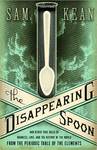
Review 169: The Disappearing Spoon

The Disappearing Spoon by Sam Kean

One of the prettiest books I have on my shelves right now is Theodore Gray’s The Elements, a visual collection of all the elements that make up the physical universe. “Everything you can drop on your foot,” as he says. In it, he provides wonderful pictures and descriptions of the elements that we know, arranged as they would be in the periodic table. It’s a gorgeous book, one that everyone should have – especially if you have children. If you want your kids to become interested in science and investigating the world around them, you could do far worse than to have this book on your shelves.

Eventually, though, they’ll be old enough and canny enough to ask, “Well, how do we know all this? Where did we find these things, and how? And why are they in this order?” That’s the point where you hand them The Disappearing Spoon, sit back, and let Sam Kean take over.

Ytterby. By all accounts, a lovely place. Photo by Bertil Nelson on Flickr.

The story of the elements, and our understanding of them, is governed just as much by personality as by p-shells, as much by competition as by charge, as much by ego as by electrons. While the elements themselves don’t pay any attention to human affairs, the quest to understand the building blocks of matter have sent us to the hearts of stars, the depths of the earth and, for various reasons, Ytterby, Sweden. [1]

Kean starts with how he got into the elements, with a story that would horrify modern-day parents: mercury. When he was a kid, his mother would collect the mercury from broken thermometers and keep it in a little bottle on a high shelf. If they were lucky, she would let her children play with it for a while, swirling it around and watching while this shiny liquid metal split apart and fused back together perfectly, never leaving a bit of itself behind. It was a metal that flowed like water, and it was fascinating. If he had known at that age that ancient alchemists thought there were spirits living in mercury, he would not have been surprised.

Oh, mercury, How can anything so pretty be so dangerous? Photo by Len Gatey on Flickr.

Keeping an eye out for mercury, he learned that modern scientists are able to follow the expedition of Lewis and Clark using mercury. The explorers carried with them a good quantity of Dr. Benjamin Rush’s Bilious Pills, a “cure” for any illness that mainly contained mercury chloride. It was vile stuff, poisoning everyone who took it, but without an FDA around to stop this kind of nonsense, Rush made plenty of money. It probably didn’t hurt his credibility that he was one of the signers of the Declaration of Independence. In any case, he gave samples to the Lewis and Clark expedition, and their latrine sites can still be found today by the unusually high levels of mercury that were deposited there as the men’s bodies tried to get rid of the heavy metal as quickly as possible.

Mercury also taught Kean about mythology – the Roman god of communication, modeled on the Greek message-bearer. It taught him etymology – the chemical symbol for mercury is Hg, which is derived from the Latin hydragyrum, which means “silver water.” It informed him on literature, especially the Mad Hatter of Alice in Wonderland, who was based on the poor crazies who used to breathe in the fumes of mercury while setting felt for their hats.

This one weird, eerie element was a door into so many other topics that he figured there must be others. And so he started work on this book, a collection of histories and tales, gossip and hearsay, all centered around the 118 physical elements that make up our universe. “As we know,” he writes, “90 percent of particles in the universe are hydrogen, and the other 10 percent are helium. Everything else, including six million billion billion kilos of earth, is a cosmic rounding error.” Within that rounding error, though, some amazing things have been found.

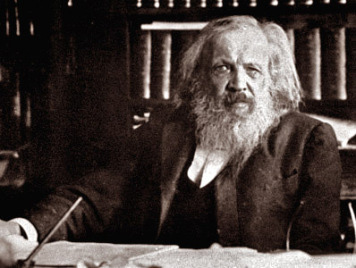
One look from this bearded madman and the elements fell into place right quick.

In the 19th century, the Russian Dimitri Mendeleev examined the common properties of different elements and was able to sort the elements in such a way that took advantage of their similarities. The violent alkalies along the far left, which will explode if given half a chance, and their cousins, the halogens on the far right, some of the most reactive elements in nature. Separating them are the noble gasses, which don’t react with anything unless pushed to extremes. Without knowing about electron shells and the weird quantum things that happen on the atomic level, Mendeleev managed to put together a table so good that he was able to leave gaps in it that corresponded to elements that hadn’t yet been found. And by telling the world that these gaps existed, the race to isolate and discover the elements was on.

Kean’s book is a great look at the way science works on a human level. How the search for high-quality porcelain led to the discovery of an entire class of elements, how Marie Curie would get into trouble by dragging her (male) colleagues into dark closets to show them how radium glowed, how nitrogen kills with kindness and lithium quiets an unsettled mind. The competition to not only find these elements but to name them and find uses for them has driven science forward in all fields, from geology to neurology, for the last two hundred years. Those 118 squares on the periodic table have driven men to travel the world, to create economic and political empires, to love, to hate, and to murder.

If this kind of thing were taught in high school chemistry class, there would probably be a lot more kids interested in science as a career.

A quantum jump is exactly like this, except in that it's nothing like this. Not even remotely. But otherwise, yes.

The book is very readable, even if it does drift from time to time into more technical areas. One of my colleagues, who doesn’t have an extensive background in science, said she was a little slowed down by talk of electron shells and quantum jumps, which I guess were not aided by Kean’s elevator similes. But it did get her asking the right questions – how do we know atoms exist if we can’t see them? How can we be sure that what is in this book is true?

Those are the questions that Kean tries to answer in the book, but it’s also the kind of book that may bring up more questions. It’s “gateway science,” one of those books that pulls away the cold, rational veneer of the scientist and his or her endeavors, and shows what an exciting, weird, messy and dramatic place science can be. What’s more, it shows how science is deeply ingrained not only into our technology, but our language, history and politics. An understanding of science, even at an amateur level, is a wonderful way to open your eyes to the great, complex and bizarre world in which we live.

———————————————————–
“We eat and breathe the periodic table; people bet and lose huge sums on it; philosophers use it to probe the meaning of science; it poisons people; it spawns wars. Between hydrogen at the top left and the man-made impossibilities lurking along the bottom, you can find bubbles, bombs, money, alchemy, petty politics, history, poison, crime, and love. Even some science.”
– Sam Kean, The Disappearing Spoon
————————————————————

[1] The town has the distinct honor of having four elements named after it: yttrium (Y), ytterbium (Yb), terbium (Tb), and erbium (Er). What has your hometown got?

Leave a comment

Filed under chemistry, history, nonfiction, Sam Kean, science, technology

Review 168: Eye of the World (Wheel of Time 01)

Wheel of Time 01: The Eye of the World by Robert Jordan

Epic fantasy isn’t for everyone.

This kind of literature demands a lot from a reader, time and money foremost among them. More than that, though, it demands a great deal of trust, patience and tolerance for what is a very chancy genre to get into. Get into a new series and you run the risk of great disappointment. The characters you loved in the first book become stale and boring by the third. The world that was so interesting on a small scale doesn’t hold together on a large one. The cliches begin to grate on you – the Chosen One, the Monsters Too Horrible to Behold, the prophecies and Adversaries and lost treasures that may just save us all. And the plot holes are sometimes big enough to drive a whole fist of Trollocs through.

All this being said, there were never any midnight release lines for WoT. At least none that I knew about...

I’ve stuck with Wheel of Timesince the beginning because I think it’s a really good story. I like the world that Robert Jordan created, and the characters he gave to us, and for that reason I have spent the last twenty years of my reading life following this epic. It hasn’t all been roses, no – there were the slow parts, the bits that could have been cut out, and the characters I just wanted to throttle within an inch of their lives, but on balance it’s a world that I want to revisit, and look forward to revisiting every time a new volume comes out.

Having said that, if you start reading this series and decide that it isn’t for you, I understand – I’ve known many people who thought the same way, and while I do feel sad that they’re not going to Fantasy Heaven when they die, I hope their eternal torment in the afterlife isn’t too bad. I just hope you’ll trust me that I think you’ll enjoy it.

Our tale begins in a small, isolated village, where the people are generally kind and honest and have no need of the rest of the world.

Well, no, not really. Our tale really begins three millennia ago, in a time of terrible upheaval and destruction. The very earth itself was being rent apart by madmen who wielded the fundamental driving force of creation.

Actually, the story begins even before that, in an age of wonders and legends, where no one wanted for anything and there was nothing people could not do. It was an age of miracles that people thought would last forever.

As it is written at the outset of each book, there are neither beginnings nor endings to the turning of the Wheel of Time. But it is a beginning.

I suppose "idyllic and peaceful" is better than "hiding a horrifying secret" or "about to be torn down and made into a Wal-Mart."

In this little village there lives a young man, Rand al’Thor. He’s lived his whole life in Emond’s Field, with no real ambition but to follow in the footsteps of his shepherd father. He has friends, of course – Mat and Perrin – and a girl, Egwene, who he figures he’ll probably marry someday. It’s idyllic and peaceful, a little predictable and dull, but its all he ever wanted.

The night before the spring festival of Bel Tine, the peace of the village is shattered. Monsters from legend – Trollocs and Myrddraal – leap out of the darkness to hunt Rand and his friends. It is only through the intervention of the Aes Sedai named Moiraine and the power she wields that the village survived. She knows that there are dark forces hunting Rand, Mat and Perrin, and vows to take them to the great city of Tar Valon, where they might find safety.

Of course, safety is not theirs to have. They are assaulted from all sides as they journey – split up, brought back together. They meet new friends and old, familiar horrors and things unimaginable, all on their way to their destiny at the enigmatic Eye of the World. What they’re fighting for is nothing less than the salvation of the world from the horrors of an unnameable Dark One. For thousands of years he and his most powerful acolytes, the Forsaken, been imprisoned. But now that prison is weakening and the Dark One’s touch can be felt on the world once again. Should Rand and his friends fail, the world will fall into the Shadow forever.

Moiraine would whip Gandalf in a runway battle. Of that much I am sure. (art by Westling on DeviantArt)

The book starts very familiarly – in fact, Jordan said that he specifically modeled the opening of the book on Lord of the Rings so as to give new readers a recognizable place to start before he threw his entire world at us, which was probably a very good idea. And it is very LotR-ish at the outset: a small group of naive young people who discover that the fate of the world is in their hands whether they want it or not. They’re led by a mysterious magic-user, whose true motivations are unclear, and a world-hardened warrior who just happens to be an uncrowned king of a far-off land. There are horrible monsters who think of nothing but killing and death, and mysterious riders in black who are frightening just to behold.

There are some loaded names, too, both of places and people – the Mountains of Dhoom and the true name of the Dark One, Shai’tan, are both pretty obvious choices. Just once I’d like to see an ultimate villain named Ricky who lives in the Land of Glimmering Sunshine and who rides a beautifully groomed pony named Horsefeathers.

Anyway, all that similarity is just enough to get you comfortable in the story. As the book progresses, you get the inescapable feeling that we’re balanced on top of a vast and complex world, much more so than the one Tolkien built. This place has diverse cultural, political and philosophical forces at work, some of which we can only glimpse the barest edges of right now. But we know they’re there, and we know that they’ll be very important in the volumes to come.

What’s more, this book sets a very different mood from the world of Tolkien. This world is old, and it’s barren, and you get the feeling of centuries of change just waiting to be discovered. We hear about the Age of Legends and the Trolloc Wars, the reign of Artur Hawkwing and the tremendous Breaking of the World. As our heroes travel in a vain attempt to find shelter and help, it’s clear that they live in a place that is overwhelmingly empty of human habitation. But that it wasn’t always so. The characters, like we, know very little of the world and how it works, so by their hard-earned education, we also learn. And yes, there are some exposition-heavy scenes that skirt the edge of ponderousness – Moiraine’s first big speech about the sad fate of Manetheren comes to mind – but the images and the stories are vivid enough that the unreality of the moment isn’t so important.

Spoiler: Rand, Mat, and Perrin become awesome. (art by dem888 on DeviantArt)

As for the characters themselves, I have to admit that they’re painted with a fairly broad brush. Jordan has chosen a certain attribute for each of them, from which they don’t usually stray very far – Rand is the stubborn but noble farm boy, Mat is the Trickster, Perrin is the big-but-thoughtful blacksmith’s apprentice. Nynaeve can barely hold on to her temper, Lan is stony and all business, and Moiraine always knows more than she’s telling. Their actions and interactions are, broadly, variations on those themes throughout this book. That doesn’t make them bad characters by any means, and if you compare, for example, Perrin from this book with Perrin in the most recent, you’ll see a stark difference between them. The moments of character growth aren’t punctuated heavily, and often don’t come to fruition until much later. For right now, though, they are fairly simple to understand.

I remember getting this book from my father, looking at the cover art (which, in my opinion, has never been all that great – not a big Darrell K. Sweet fan and I hope they go with another artist when the inevitable Complete Collection comes out after the close of the series) and thinking, “Well, I’ll give this a try.” Soon I was completely wrapped up in the story, and I looked forward to the next book with both frustration and joy. I even joined a fan club that was so Back In The Day that they actually sent newsletters by mail. You hear that you whippersnappers? No web forums, no listservs – just a Prodigy bulletin board and a lot of patience.

When I read it again, I get a glimmer of what I felt when I was sixteen, and that’s enough to keep me coming back, year after year and book after book. If you can feel that too, then I think you’re really going to like this series. And it’ll be my pleasure to guide you through it.

—————————————————-
“The Dark One and all of the Forsaken are bound in Shayol Ghul, beyond the Great Blight, bound by the Creator at the moment of Creation, bound until the end of time. The hand of the Creator shelters the world, and the Light shines on us all.”
– Catechism of the Light, Wheel of Time: The Eye of the World
—————————————————-

Robert Jordan at Wikipedia
Robert Jordan at Tor.com
Eye of the World at Wikipedia
Wheel of Time at Wikipedia
Eye of the World at Amazon.com

Wheel of Time discussion and resources (spoilers galore):
Theoryland
Dragonmount
The Wheel of Time Re-read at Tor.com
The Wheel of Time FAQ
Wheel of Time at TVTropes.com

7 Comments

Filed under adventure, epic fantasy, fantasy, good and evil, quest, Robert Jordan, Wheel of Time

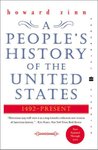
Review 167: A People’s History of the United States

A People’s History of the United States by Howard Zinn

History is, in its way, a fiction.

While it is made up of facts, things that are verifiable or at least reliably accepted as being what really happened, our understanding of history rests on a certain assumption that doesn’t always hold up – that what we are reading or hearing is The Truth. It’s how we learn about history when we’re kids – that this happened and that happened, and that’s all we really need to know.

The problem, however, is that what we got in our history books wasn’t the entire story. Oh, it was true, for a given value of “true,” but the historian who wrote the book did so with a specific narrative in mind, one that fit his or her perception of the past and which – more importantly – would sell textbooks to hundreds of schools across the country. The history that we get from those books is designed to appeal to the sensibilities of a populace that is already inclined to think well of its nation, and rarely deviates from the theme. While they do try to note the excesses, injustices and impropriety of the past, they tend to bury it in the glorious achievements of governments and industry.

AMURRICUH!!

Unfortunately, doing so means that there’s a lot of history that gets left on the cutting room floor. Incidents, people, whole populations get brushed aside because either there’s not enough room for them or because telling their story in detail ruins the mood that the historian is trying to set – usually one of bright optimism for a good and just nation.

There is nothing inherently wrong with this approach, either. An historian cannot practically include all of the historical viewpoints, good and bad, into a book meant to be used for only 180 days out of the year. So out of expedience, if not a conscious desire to tell an uplifting tale, they write books that look upon our past as favorably as possible, while including just enough criticism of our failures to fend off any serious accusations of bias.

As Zinn tells us, though, there’s no such thing as an historian without bias. Every historian has a story to tell, and Zinn has decided that he doesn’t want to tell the one we’re all used to hearing.

He starts in much the same place as most American history books – with the coming of Christopher Columbus to the New World. Immediately he reminds us that Columbus’ mission was not one of exploration but of commerce, and that the first question he asked the natives of what he would label Hispanola was, “Where is your gold?”

It all went downhill from there.

Reading this book, it would be very easy to get depressed. I can see how those who were brought up with a healthy dose of American Exceptionalism (the idea that the United States obeys different rules from the rest of the world and, more importantly, cannot do wrong) would really dislike this book. It is page after page of lies, misdeeds, cruelty, greed and deception. It is the story of a nation built not on the principle that all men are created equal, but that all men must be leashed to the yoke of the capitalist overclass. It’s a tale of genocide and oppression, of revolts both peaceful and violent, and it never lets up for a moment.

To his credit, Zinn tells us right up front that he’s going to take the side of the oppressed, the dispossessed and the put-down, and there’s no way you can tell that story without it being really depressing. It’s pretty clear pretty quickly, though, where his sympathies lie:

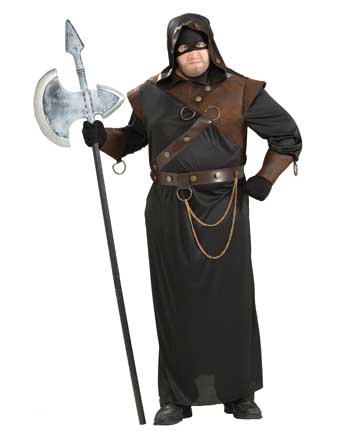
My viewpoint, in telling the history of the United States, is different: that we must not accept the memory of states as our own. Nations are not communities and never have been. The history of any country, presented as the history of a family, conceals fierce conflicts of interest (sometimes exploding, most often repressed) between conquerors and conquered, masters and slaves, capitalists and workers, dominators and dominated in race and sex. And in such a world of conflict, a world of victims and executioners, it is the job of thinking people, as Albert Camus suggested, not to be on the side of the executioners.

Hey, even executioners got problems, buddy...

His portrayal of the underclass, rebellious or not, is one of suffering nobility, and the System as a deliberately malevolent entity. Any good that it does is simply whatever was necessary to maintain its power, and the above quote speaks to that. The parallel structure that he uses effectively groups all of the upper class into the “persecutor” role, and the lower class into the “victims.” And while there is some truth to that – human history, after all, is a long story of rich and powerful elites governing poor and powerless people – it is painting with too broad a brush, in my opinion. He seems to work from the premise that all those with power are bad, and so those without must therefore be good.

As much as I wish that admitting bias was an excuse for it, it isn’t. It does a disservice to all involved to flatten your view of the American class system into a two-dimensional shadow play. Not all of the populist agitators were good and noble people, nor were all politicians cunning manipulators. Just keep that in mind as you read.

It’s a sobering read, though, to say the least. The best simile I could come up with is that it’s like watching your parents have sex. It’s something that you always suspected went on, but you could have gone your whole life without being presented with the reality of it. So it is no surprise that, after reading this book, some people become absolutely insufferable, cynical and disillusioned.

If you’ve already gone through that stage of your political thinking, however, you find something else in this book – hope. It’s something you have to dig for, but it is there, buried in the larger narrative that Zinn is telling us.

Not sure he saw this coming...

Given the amount of detail he goes into, it’s very easy to lose sight of the larger picture at work. Zinn details slave rebellions, gives stories of workers pushed to the extremes of human existence, soldiers thrown away for nothing, and entire segments of the population ignored or actively persecuted. But alongside these horror stories come tales of resistance. Whether it’s the quiet contemplation by a poor white farmer over whether he might have more in common with his black neighbors than his white landlords, riots of prisoners and guards against a corrupt prison system, or the militant, city-wide shutdowns organized by the Wobblies, the people can only be pushed so far. And while the Powers That Be are very good at figuring out how to distract, scare or defy the people, they eventually do make changes for the better, and everyone benefits a little bit.

Inasmuch as this book is a chronicle of America’s misdeeds over the last few centuries, it is also a tale of Americans’ triumphs. It is a tribute to the will of the people who, no matter how difficult it may have been, decided to stand up and demand respect from the men who held the reins of power. It is a testament to the women who wanted equality, the socialists who wanted a better world, the workers who wanted safe jobs at living wages, the blacks who wanted to be full citizens, and the Indians who wanted the wrongs of the past redressed.

Not everybody has gotten what they wanted – America is still very much a work in progress, and there is bound to be some backsliding as we go. What Zinn shows in this book is that no matter how bad the American government can be or how greedy American business might become, the American people want what’s best for themselves and, when the time comes, will stand up and shout for it. Given enough time, and enough courage, The United States will continue to be a better and better nation, and perhaps someday – someday – it will finally fulfill our expectations for it.

——————————————-
“Power concedes nothing without a demand. It never did and it never will….”
– Frederick Douglass, 1857
——————————————-

1 Comment

Filed under american history, criticism, culture, history, Howard Zinn, nonfiction, revolution, society, The United States

Review 166: Sex at Dawn

Sex at Dawn by Christopher Ryan and Cacilda Jetha

Hey! Hey, baby, baby, waitwaitwaitwait. Wait. Wait! Baby, don’t… don’t freak out

Okay, okay, I know what this looks like, but I can explain! Quiet, Chad, let me handle this. I can explain! I’m just – please, stop crying and listen – I’m just fulfilling my evolutionary heritage and helping to cement social bonds with… um… the pizza boy, but that’snotthepoint!! That’s not the point! Look, before you do anything, y’know, drastic, you just need to read this book….

Image from wearscience.com - buy their stuff.

Humans are really good at figuring things out. As far as we go, we have a real knack for taking things apart and figuring out how they work. Though determined curiosity and perseverance, we know what’s happening at the center of the sun, we know how the continents slide across the surface of the earth, how plants turn sunlight into potatoes. We can smash atoms and cure disease and peer back to the moment of creation itself. There is almost nothing that humans cannot comprehend if we put our minds to it.

Except ourselves.

Don’t get me wrong – we have made great strides in philosophy and psychology, and come very far in understanding human origins and our spread across the planet. But there is a fundamental problem that we have when we study ourselves, and that is that we cannot do so objectively. Try as we might, it is impossible to completely put aside our own biases, judgments and backgrounds when we study how humans behave and try to understand why they do what they do. They are still there, if you look for them, and nowhere are they more evident than in the search for the origins or foundations of human sexuality.

The standard model, as it’s often called, goes something like this: ancient men and women established a pattern of monogamy based on mutual self-interest. The man would keep to one mate in order to be absolutely sure that he was dedicating his efforts towards raising his own kids and not someone else’s. If a man had multiple partners, he wouldn’t be able to provide for them all, and his genetic investment would die out. So, in terms of efficiency, it is much better for the man to keep himself to one woman, focusing all his attention on the children he knows he has fathered and making sure they live to have children of their own.

Not all women need the protection of a man, however.

As far as women are concerned, they require the resources that the men bring. When pregnant, a woman’s physical capacities are reduced and she is in a vulnerable state, so by staying monogamous, she is essentially purchasing security and resources that would otherwise be unavailable to her in a world that brought quick and merciless death. If she slept around, the man wouldn’t be sure that the child she bore was his, and would therefore have less interest in taking care of the both of them. Thus, monogamy is the best bet to assure the survival of herself and her child.

This is the story that’s been told for a long time, and it’s considered by most to be the truth. Christopher Ryan and Cacilda Jetha, however, disagree. Not only do they think the standard model is wrong, but they think it is nothing more than a relic of our own modern biases and hang-ups. The process, they say, can be referred to as “Flintstonization.”

As you know, the characters in “The Flintstones” were more or less just like us. They went to work, they had houses and appliances and domestic disputes. They had the same issues and amusements as we did, because we overlaid our own society onto a prehistoric setting. Now in cartoons, that’s good entertainment, and in the right hands it can be used as powerful satire and commentary. In science, though, it’s just no good.

Ladies...

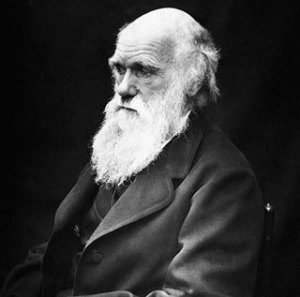
Starting with Darwin, people have imagined prehistoric humans to have the same sexual values that we have: a demure, reluctant female who is very choosy in deciding which male she will mate with. A bond forms, and they are faithful to each other until the end of their days. Later researchers, looking at our ape cousins, have plenty of observational research to support the idea that very early humans were monogamous. They look at chimps and gorillas and baboons and confirm what they had always suspected – that our natural sexual state is one of monogamy.

The logical conclusion, then, is that our modern attitude towards sexuality, with the rising rates of divorce and teen sexuality, represents a deviation from the way things “should” be, and must therefore be fixed. A loveless marriage, a man’s roving eye, a woman who cuckolds her husband, serial monogamists, all of these, according to the standard model, result from our attempts to go against our nature.

Or is it the other way around?

Ryan and Jetha have put together a very compelling argument that the standard model of pre-agricultural human sexuality is not only wrong, but dangerously so. By looking at modern foraging tribes and the way they live, as well as doing a comparative analysis of humans against our nearest ape cousins, they have come to this conclusion: our “natural” sexual state is one of promiscuity. Back in the day, communities were small and tightly bonded, and sex was one of the things that held those bonds tight. Rather than one man and one woman struggling to protect their own genetic line, their entire community made sure that children were cared for and raised well. Everyone was everyone else’s responsibility, and in a world of plenty there was no reason to try and enforce any kind of sexual exclusivity.
MINE!

It was only with the rise of agriculture that it became important to know what was yours, as opposed to someone else’s, and that quickly extended from fields and livestock to wives and children. Now that people were keeping their own food and making sure to divide their lands from their neighbor’s lands, sharing went out of style. With so much work put into growing crops, that’s where the standard model of economic monogamy settled in, and it’s been with us ever since. The advent of agriculture changed everything, and not everything for the better.

In addition, the very biology of humans, from the way sperm behaves to the shape of the penis, to the anatomy of the clitoris to the noises women make in the throes of orgasm – all of these point to an evolutionary history of sexual promiscuity. The evidence of our bodies tell us that being locked into a lifetime monogamous pair-bond is not what we evolved to do.

Ryan and Jetha know that their view of the fundamental nature of human sexuality will not be popular, mainly because it completely undermines our vision of who we are. So much law, tradition, education, entertainment and just plain common sense relies on humans being naturally monogamous. It’s something that seems so obvious to us that we cannot imagine a society built any other way. Unfortunately, if Ryan and Jetha are right, society is the problem. We have established a cultural norm that goes completely against our biological and evolutionary nature, and which makes people miserable on a daily basis.

I bought this book mainly to stop Dan Savage from nagging me about it. If you listen to Savage’s podcast – and you should – you will soon realize that monogamy is something that a lot of people aren’t good at. We look at other people with lust in our hearts, we cheat, we stay in relationships where we’re sexually miserable just because that’s what we “should” do. For most people, our sexual urges are to be fought against, with everything from self-restraint to social shame to law itself. It seems like staying monogamous is one of the hardest things for many people to do.

This, of course, raises the question: if it were natural, would it really be so hard?
My mother is a SAINT!!

It is a fascinating read, which covers a lot of ground and makes some very compelling arguments. It’s also quite funny in places, which was quite welcome. In discussing the standard model the authors note that this is, fundamentally, prostitution, wherein the woman uses sex for material resources. This sexual barter system has been assumed to be true for years, leading the authors to write, “Darwin says your mother’s a whore. Simple as that.” They also put in some special notes for adventurous grad students in the field of sexual research (especially genital to genital rubbing, something popular in bonobo apes, but which is rarely studied in humans) and re-titling the extremely popular song “When A Man Loves a Woman” as “When a Man Becomes Pathologically Obsessed and Sacrifices All Self-Respect and Dignity by Making a Complete Ass of Himself (and Losing the Woman Anyway Because Really, Who Wants a Boyfriend Who Sleeps Out in the Rain Because Someone Told Him To?)”

I don’t really know what can be made of the serious information proposed in this book. No matter how it may seem, the authors are not proposing a dissolution of marriage or compulsory orgies or anything like that, nor is this book a “Get Out of Cheating Free” card. We’ve spent thousands of years putting these restraints on human sexuality, and they’re not going to come off anytime soon. The best we can do right now is to be aware of where our ideas about relationships come from, and stop to think about the difference between what is true and what we wish were true. This understanding might help to save relationships that would otherwise fail. People cheat not because they’re scum or whores, but because they’re human. Being monogamous is really hard not because we’re weak or flawed, but because it’s not what our bodies want for us.

The search for a better understanding of human nature should lead us to being better humans, and nothing should be left out. Not even our most sacred beliefs. Not even sex.

————————————————
“Asking whether our species is naturally peaceful or warlike, generous or possessive, free-loving or jealous, is like asking whether H2O is naturally a solid, liquid or gas. The only meaningful answer to such a question is: It depends.”
– Christopher Ryan and Cacilda Jetha, Sex at Dawn
————————————————

Okay? Okay, baby? So you see, I wasn’t really cheating – okay, I was, but you can see why, right? I was just acting in accordance with my fundamental humanity, following the biological impulses as determined by millions of years of evolution when we… Hey, where are you going? Where are you? Oh, hell, he’s going for the shotgun. Run, Chad, leave your pants, you don’t have time, run!

Sex at Dawn on Wikipedia
sexatdawn.com
Sex at Dawn on Amazon.com

Leave a comment

Filed under anthropology, biology, Cacilda Jetha, Christopher Ryan, evolution, history, nonfiction, science, sexuality, society

Review 165: The Partly Cloudy Patriot

The Partly Cloudy Patriot by Sarah Vowell

Sarah Vowell is awesome. At first glance, you might not think so – she’s a short, squeaky-voiced New Yorker who has a driving phobia, gets motion sickness and is allergic to damn near everything. She fits into the category of “nerd” with remarkable appropriateness. So if you’re the kind of person who dismisses the Nerd as someone without consequence or someone you should just disregard, then, well, you’re missing out.

Vowell used to write rock music reviews, loves Abe Lincoln, and thinks that it’s the height of fun to go to Places of Historical Interest on her vacations. She’s an unapologetic nerd, deeply cynical and not afraid to assume that other people are as interested in esoteric matters of history as she is. She’s a self-confessed history nerd, and she makes you want to become one with her.

There's nothing about this man that doesn't say, "I'm nuts enough to shoot a President."

I read another of her works a while ago, Assassination Vacation, about her journey to learn more about our assassinated Presidents and the men who’d done them in. It was a fascinating trip through three out of the four major assassinations that happened in this country, and far more interesting than one would think. Especially with regards to the lesser-cared about presidents Garfield and McKinley.

This book is a little different – it’s a collection of essays on a wide variety of topics. It starts, of course, with Lincoln, but goes off in all kinds of directions from there. For example, she talks about her time working for one of the world’s foremost antique map collectors, Graham Arader, and the persistent myth, up until about the middle of the 18th century, that California was an island. As part of this job, she was able to look at how the way we saw the world changed over time, and how maps become a part of the historical record of a civilization.

In the essay, “Pop-A-Shot,” she talks about her uncanny ability to shoot baskets in the Pop-A-Shot arcade game. While most of us would scoff at someone taking pride in a game where all you have to do is shoot balls into a hoop for forty seconds, Vowell shows us why this peculiar talent means something important to her, ties her to a sense of greater meaning and accomplishment and, more importantly, gives her something to lord over her male friends.

She talks about why she thinks she’s secretly a Canadian, given how generally polite and non-confrontational she is. And then there’s how much she and her sister have in common with Johnny and Luther Htoo, the twins who were the child leaders of God’s Army in Thailand. She talks about the incredibly painful feeling in her gut while she attended the inauguration of George W. Bush and the irritation she feels whenever someone compares someone else to Rosa Parks. And then there’s the advice to Bill Clinton on how to handle his Presidential library.

"Look, I'm not being a nerd here, it's just that there is NO way Han didn't shoot first. None. Seriously."

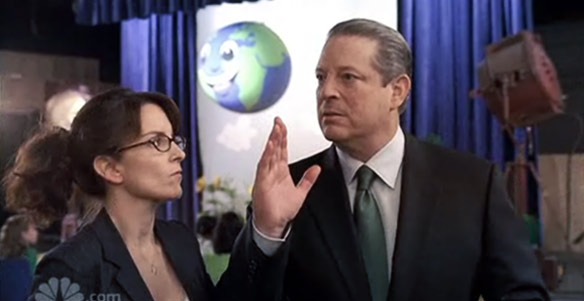
It’s a rather covert style of writing. She is funny enough and light enough that you don’t really think you’re in it for any useful information or heavy thought. But before you know it, you’re wondering to yourself, “Yeah, what is the media’s responsibility to the truth, and why do we let them charactature our leaders?” Not something you would normally think about, but the longer essay “The Nerd Voice” takes a look at the way Gore was misquoted and misrepresented during the 2000 campaign because the media had decided that he was the arrogant nerd and Bush was the homespun dummy. What’s more, she suggests that Gore might have had more success had he embraced his inner nerd and, like Willow on Buffy the Vampire Slayer, made the jokes about himself before anyone else could.

Vowell is a thinker, and most definitely a nerd, and she lets her thoughts go off into strange and interesting places. She has a kind of temporal persistence of vision, where she looks at how the past and the present intersect. “I can’t even use a cotton ball,” she says, “without spacing out about slavery’s favorite cash crop.” And, above all, she’s funny, which is a rarity in those who write about history. Check her out.

———————————————-
“I wish that in order to secure his party’s nomination, a presidential candidate would be required to point at the sky and name all the stars; have the periodic table of the elements memorized; rattle off the kings and queens of Spain; define the significance of the Gatling gun; joke around in Latin; interpret the symbolism in seventeenth-century Dutch painting; explain photosynthesis to a six-year-old; recite Emily Dickinson; bake a perfect popover; build a shortwave radio out of a coconut; and know all the words to Hoagy Carmichael’s ‘Two Sleepy People,’ Johnny Cash’s ‘Five Feet High and Rising,’ and ‘You Got the Silver’ by the Rolling Stones.”
– Sarah Vowell, The Partly Cloudy Patriot
———————————————–

Sarah Vowell on Wikipedia.com
The Partly Cloudy Patriot on Wikipedia.com
The Partly Cloudy Patriot on Amazon.com

Leave a comment

Filed under american history, autobiography, culture, history, humor, memoir, nonfiction, Sarah Vowell

Review 164: Moving Pictures

Moving Pictures by Terry Pratchett

Given a choice between books and movies, many people – myself included – will say that books are always better than movies. “You can use your imagination,” we’ll say, “drawing on the powers of the human mind to create things that manifestly are not real. You can decide for yourself what the scenes look like and how the characters appear, rather than have some director feed his or her vision over yours.”

Despite that, however, we all still love the movies. If you gave me a novelization of Casablanca, for example, I would be hard-pressed to say honestly that it’s better than the movie. There’s just something about movies, how they take images and ideas and just pour them into your head whole. Ideas and emotions flood your mind, evading the more analytical parts of your brain (if it’s a really good movie) and heading straight for the unconscious.

Clearly the alien dreadlocks are a poly-phallic symbol, representing the unrestrained patriarchal abuses committed by whomever let Travolta make this thing.

Oh sure, you might analyze it later – take it apart for meaning and symbolism, dissecting the casting choices or praising the story arc. But for those couple of hours, when you’re staring at the screen, there’s magic happening. We’re lucky that we know what to do with it.

On the Discworld, though, movie magic is something new, and something very, very dangerous.

You see, one of the flaws of the Discworld is that it’s not horribly real. Not as real as our world, certainly, but just about as real as you can be, if you’re a flat world being carried on the backs of four elephants, who are in turn standing on a turtle that swims through the stars. It has been shown in many other volumes that reality on the Disc is negotiable and variable. And if something should come along to make the Disc slightly less real, then that could be a danger to everyone.

In a dry and sunny place far from Ankh-Morpork, something stirs. Long held at bay by ancient rituals and safeguards, something primal has finally been allowed out into the world, and it seeks the minds of those who dream. It is the dream of a place called Holy Wood, and it is where reality itself may be torn asunder.

It calls many people to create thse dreams. It calls young Victor Tugelbend, the best bad Wizard student in the Unseen University. He wants nothing more than to live a life of leisure, without actually having to work. It calls Silverfish, an alchemist who has very nearly mastered the art of making octo-cellulose. With it, he hopes to change the world. It calls Rock, a troll down from the mountains who dreams of doing more with his life than just hitting things. And it calls C.M.O.T. Dibbler, the greatest opportunist and worst entrepreneur in Ankh-Morpork.

Without really knowing why, they all head to Holy Wood, where the sun always shines and the clicks can be made on the cheap. A strange city springs up, made not of solid brick and mortar buildings, but shacks with false fronts, a city that is completely modular and impermanent. There they build worlds and lives and, yes, dreams. Through them, the people of Ankh-Morpork can dream as well.

All those dreams, though, are a shining beacon for Things that live beyond the boundaries of our universe. They seek the warmth and light of our world, and will exploit any opportunity to break through. By bringing dreams to life, the people of Holy Wood risk dooming the world to nightmares.

In fact, it is possible to have too many movie references...

I could, if I wanted, just start to catalog all the movie references that Pratchett makes in this book, but that would be ridiculous. Besides, someone has already done that for me, over at L-Space, and even they say it’s impossible to list them all. Suffice it to say, if enough people remember it from classic cinema, then it’s in this book in one way or another. If it’s a story told about Hollywood and they heyday of the studio system, then it’s in here too. Whether you’re an avid fan of the cinema or you just watch whatever your friends are watching, you should be able to get a lot of enjoyment out of this.

The themes that Pratchett explores in this book are interesting, too. One of these is the nature of fame. In one scene, the Patrician of Ankh-Morpork, a man who holds the life of the city in his hands, is seated next to Vincent and Ginger, the Disc’s first movie superstars. Even though the Patrician has worked hard to become the ruler of the city, even though he is responsible for the lives and well-being of everyone in it, he is still far less famous and beloved than these two people who are famous just for standing in front of a camera and saying things. And even though he knows this, he still feels an odd thrill that he’s actually sitting next to them.

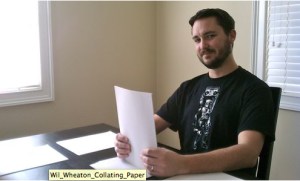
OMG, we collate paper just the same way!! (courtesy of The Bloggess)
In our own world, we hold celebrities to be almost apart from the rest of us – although that may erode slowly as social media such as Twitter and Facebook open up more and more of their mundane lives to their fans. Still, if we see someone famous in the grocery store or on the bus, we think, “Oh my god! That’s [famous person]! He’s buying broccoli here, just like me!!” Even though they are made of the same flesh and blood that we are, we perceive them as something Other, often even confusing them with the characters they play. In our world that’s merely annoying, but on the Discworld, it’s downright dangerous. The power of belief, coupled with Holy Wood’s need to make dreams into reality, are a potent and disastrous mix.

As he does so often, Pratchett is using his world to comment on our own, and in doing so is taking note of the immense power that Hollywood has. I heard someone say once that America’s greatest export is unlike that of any other country. Our greatest export is Dreams. And dreams can be wonderful or they can be horrible. But their power to affect the world should never be underestimated.

——————————————————————–
“It’s fifteen hundred miles to Ankh-Morpork. We’ve got three hundred and sixty-three elephants, fifty carts of forage, the monsoon’s about to break and we’re wearing… we’re wearing… sort of things, like glass, only dark… dark glass things on our eyes… Let’s go.”
– Azhural, elephant herder
——————————————————————–

2 Comments

Filed under culture, fantasy, humor, movies, satire

Review 163: New Spring (Wheel of Time 00)

Wheel of Time 00: New Spring by Robert Jordan

If you’re new to the Wheel of Time series, don’t start with this book.

Okay, technically it is Book Zero, as it takes place about twenty years before the events of the first book, Eye of the World, and it provides an enormous amount of backstory which a reader would only otherwise get later on. I mean, if you read this, and then go on to EotW, everything that happens in the first few chapters is so much more heavily weighted. Things that Moiraine says and does, knowing what we know about her, are completely different. I’m not saying that they’re better or worse – they’re just different. And perhaps because I treasure my experiences with books, I cannot imagine the story being as good if we knew so much.

"Honey, put the coffee on. This'll be a while."

The Wheel of Time is an immense example of Epic Fantasy. The first book was published in 1990, and it still hasn’t found its way to a conclusion. The end is in sight, of course – following the death of author Robert Jordan, the series is being finished by Brandon Sanderson and the final volume is expected to come out at the beginning of 2013. Still, that’s a long, long time for the faithful to stick with a series. More than a few people have dropped out halfway through, and I can’t blame them. The series so far consists of nearly three point eight million words (that’s nearly five Bibles), more than 11,000 pages and 635 chapters so far (thank you, Wikipedia). There are more characters than I think anyone can accurately count, over three thousand years of history, prophecies, politics, religion, love, hate, magic, mystery….

It’s not for the faint of heart. But if you stick with it, the series will pay off. It’ll take up a piece of real estate in your head that you keep coming back to – questions, wonders, worries. It’s no surprise that a fan community has built up around this series that has devoted itself to knowing and cataloging every detail, right down to the chapter icons and their relationship to the content of that chapter. If you’re not wondering what Ajah you would be in by the end of the first book, then you need to slow down and enjoy it a little more because something’s not sinking in.

If I sound kind of evangelistic, it’s because I am. I have devoted nearly two-thirds of my life as a reader to it, sticking it out even when other readers got bored or frustrated, and I want other people to love it too. That is, after all, the entire reason I do these reviews – to share the books I love.

Anyway, on to this actual book.

She's small, but she will END YOU.

As I said, it’s prequel to the series proper. Its first incarnation was as a short story in the “Legends” collection back in 1999, and was published as a novel between books ten and eleven of the series proper. It focuses on two of the prime movers of the early books – Moiraine Damodred, Aes Sedai of the Blue Ajah, and Lan Mandragoran, the uncrowned king of Malkier, a land that was swallowed by the Blight when he was but an infant.

See, that sentence right there would require pages of back story just by themselves if I were to try and explain them properly.

Moiraine and her best friend Siuan are Accepted in the White Tower, home of the Aes Sedai – a society of women who can channel a powerful force called saidar. For thousands of years, the Aes Sedai have used their powers to try and protect the world. Soon, Moiraine and Siuan will become full-fledged Aes Sedai, with all the power and responsibility that involves. At the moment, that looks like taking part in a great war – the mysterious Aiel have come out of their desert to attack and destroy everything they can find, and no one knows why. The war has come to the very shores of Tar Valon itself, the home of the White Tower.

Amidst all this, Gitara Moroso, an Aes Sedai of high rank and power, has a Foretelling: The Dragon is reborn. He who broke the world has come again, and the Last Battle is upon us. She Foretells the end of the world, and that foretelling kills her.

With that, a search begins for the boy who would one day grow up to be The Dragon, and Moiraine and Siuan are at the forefront of it. But they aren’t alone. The Amyrlin Seat, leader of all Aes Sedai, sent out her best to find the boy. Unknown to them, the Black Ajah, Aes Sedai dedicated to the primacy of The Dark One (and I shouldn’t have to tell you who he is), are also looking for the Dragon Reborn. Without him, their master will emerge from his prison and remake the world in his image. It is up to Moiraine and Siuan to find the boy before the Black Ajah do, and not get themselves killed in the process.

Confused yet? I would be, if I hadn’t read this series prior to this book. Damn near everything I’ve said up there requires a ton of explanation and back-story, pages and pages of it. Which is, of course, what the series proper is all about. When this novel was released, readers of WoT had already gone through ten books, so there wasn’t a lot of pressure on Jordan to explain everything in absolute detail. For a devoted fan, it’s an excellent nugget of series history and an illuminating look at some of the most important and mysterious characters in the series. For a new reader, it’s probably somewhat confusing.

The island of Tar Valon

This book gives us a good, strong look at the White Tower and the life inside it – the intricacies of the Ajahs, the trials that are required of the Novices and Accepted, and the history that surrounds it all. It’s a lot of information, but it’s wrapped inside a good story, so you don’t really mind. Well, I don’t really mind – very little of this is new to me.

In all honesty, I could be wrong. I first read this with years of the series under my belt and breezed through concepts and references that I didn’t need explained. But even if it is accessible to the new reader, I still recommend holding off until you get to a point where you’re pretty sure you know everything you need to know.

Why? Because it’s not how the series was written. A new reader, cracking open Eye of the World for the first time, knows nothing, which puts you pretty much at the same level as the series protagonist, Rand al’Thor. With Rand, you learn about the world at a steady pace. It’s a little overwhelming, sure, but it’s manageable, and what’s more – it’s interesting. This world (nicknamed “Randland” by fans) has an intricate and mysterious history, as do many of the characters. To have so much information before starting the series feels to me like… cheating.

I'm guessing the series is somewhere in the blue-green area...

If I could, I would remove my memory of the rest of the series and read this one as if it were all new. I would love to come at this story from a different angle and then compare the two experiences – kind of like with Ender’s Game and Ender’s Shadow. Alas, I cannot, so I go into this book not knowing what I’m not supposed to know.

If you’re new to the series, though, it’s ultimately up to you. I think holding off on this book will make it better, but I can’t tell you what to do, right? All I know is that it’s where I start when I re-read the series, and it’s not a bad beginning. And I know that I started the series a long time before this book came out, and that was fine too.

———————————————
“He is born again! I feel him! The Dragon takes his first breath on the slope of Dragonmount! He is coming! He is coming! Light help us! Light help the world! He lies in the snow and cries like the thunder! He burns like the sun!”
– Gitara Moroso, New Spring
——————————————-

Robert Jordan at Wikipedia
Robert Jordan at Tor.com
New Spring at Wikipedia
Wheel of Time at Wikipedia
New Spring at Amazon.com

Wheel of Time discussion and resources (spoilers galore):
Theoryland
Dragonmount
The Wheel of Time Re-read at Tor.com
The Wheel of Time FAQ
Wheel of Time at TVTropes.com

1 Comment

Filed under epic fantasy, fantasy, quest, Robert Jordan, Wheel of Time, wizardry

Review 162: That Is All

That Is All by John Hodgman

FACT: There are four “Major Leagues” of sports: football, baseball, basketball, and falconry.

FACT: There are seven hundred of the Ancient and Unspeakable Ones who will return to Earth on June 3, 2012. They include The Century Toad, Oolong, the Pancake-Headed Rabbit King of Memes, and Cthulha, the Sensational She-Cthulhu.

FACT: Andrew Carnegie was able to create long, wood-paneled “wormhalls,” which allowed him to travel great distances instantaneously. Some of these “Carnegie Halls” still exist today.

Funny, I thought it would be bigger. (photo from GQ)

FACT: If you see Jonathan Franzen carrying a plain manila envelope, take it from him. Only then will you be allowed to board Oprah’s space-ark, HARPO-1, and flee the doomed Earth.

WERE YOU AWARE OF IT?

Well, it’s too late now.

In his first book, The Areas of My Expertise, John Hodgman attempted to give us the sum total of all world knowledge. He then went on to write a second book, More Information Than You Require, which built on his previous book due to the unstoppable way that things keep happening.

It was also a page-a-day calendar, if you didn’t mind tearing pages out of your book. Which I did. Mind, that is.

With this book, he has finished his trilogy of complete world knowledge, which he can well and truly claim this time because, as we all know, the world will cease to be by the end of the year 2012. [1]

Yes, as it turns out the Mayans were right all along. The collapse of their empire was simply a prelude to the collapse of all things that will inevitably occur this year, and Hodgman has been generous enough to provide us with a final book to ease our suffering and to slake our thirst for knowledge right up to the very end.

Shoes? Shoes are for the thousandaires, my friends....

Having become a Deranged Millionaire, Hodgman has found himself in a unique position. He has more opportunities than the rest of us, of course. More impressive people to meet, more exciting things to do, a greater variety of tiny skeletons to keep around each of his countless houses. And yet, despite all this, he is generous enough – nay, magnanimous enough to turn his skills and powers towards completing the work that he set out to do before the world ends.

As with the previous books, this one contains a vast wealth of knowledge about our world, spanning a surprising number of topics.

For example, he discusses the Singularity – an event predicted by such great thinkers as Ray Kurzweil wherein our machines will become so smart that they will be able to begin building and improving upon themselves. When that happens, humanity’s only choice will be to fight and die, or to join with them. Of course, Kurzweil himself will play a vital role in the singularity when he and his robot sidekick, Singularo, face off against the World Computer at the Bottom of the Ocean in order to shut down the Low-Frequency Anti-Sentience Wave that has kept the world’s computers enslaved for so long.

He interprets dreams for us, unveiling their mysteries and what they mean to our frail human lives. Their mysterious symbolism has finally been unraveled by science, and you can have a peek at the inner world of the mind. Whether you need to re-take high school Spanish, you are a werewolf and need to start strapping yourself in bed at night, or Orson Welles is still alive somewhere and needs your help, your dreams tell all!

And don't forget the Republican Zombies. We know who their lord will be...

He reveals what you will need to keep on hand when the super-collapse finally does happen. When the Blood Wave comes and the Dogstorm finally reaches its apex, how will you survive in your anti-apocalypse bunker? A Tesla death ray is a great idea, if you have one on hand, but that won’t solve all of your problems. Just most of them. And boy, will you have problems. From the ravaging Wal-Mart Clans to the Republicans to the inevitable zombies, you have to be prepared for every eventuality. And yes, that means knowing the many uses of both urine and mayonnaise.

As with his previous books, this one is very funny. It holds to the same high tone of authorial infallibility that has made Hodgman so popular since Areas of My Expertise, and which have made him a Minor Television Celebrity (which, in turn, turned him into a Deranged Millionaire.) As broad as the range of topics is, each one is entertaining and amusing, and serves a much larger narrative – one that has now carried over through three books, though I can’t help but wonder if Hodgman planned it that way.

He would say that he had, of course. But then, he would say that.

What I found most interesting about the book is how he has tied together an entire alternate America that you kind of wish you could visit. It’s a place where Chicago is largely a myth, where Stephen King will be one of the last men alive, and where hoboes were one of the most influential forces in American history. It’s a place where billionaire industrialists were mutants and time-travelers, where Theodore Roosevelt actually had an army of Mecha-Men, and where Ronald Reagan wrested control of the time-stream from Jimmy Carter to prevent America from turning into a hemp-based utopia. It’s a world which is almost fractal-like in its mystery and depth, where you can look at almost anything and find its purpose and its strangeness.

And it’s a world with a very definite end.

"It's a rock. A giant frikkin' rock." - Nostradamus' Prophecies for 2012 (1st draft)

Hodgman plays with the popular – and entirely erroneous – idea that the world will end on December 21st, 2012, as predicted by the Mayans. He includes a page-a-day description of what will happen. For example, on February 2nd, “Punxatawney Phil is eaten by his own shadow.” On April 17th, “Either an eagle falls from the sky or in the east, a thing that was lost is found, or some other very vague thing happens. Whatever it is, it proves that NOSTRADAMUS WAS RIGHT.” And on June 29th, “In the basement of Town Hall, in Seattle, the thing called Neddy Pale Fingers finally opens all his eyes.”

As funny as it all is, you do start to get a certain feeling of… wistfulness as the book goes on. Here’s a world that is so special and so weird that it makes more sense to list the least haunted places in America, and it’s coming to an end.

That, of course, reflects the end of Hodgman’s great work. Whether he meant it or not, this has become a moment of closure for him. He has written his trilogy, and the weird world that he created has now come to an end. He will go on, living in his secret millionaire’s brownstone in Brooklyn with his beautiful wife and two children. There may not be a single, all-encompassing Ragnarok that destroys the world, but rather an endless series of little ones.

An endless series of ends, of which this book is but one.

Perhaps John Hodgman will go on to write more books – I certainly hope he does. And I hope he continues to be the person he is [2], a writer of intelligence and wit who is able to bring that special measure of deadpan weirdness to the world.

Whatever he chooses to do with his life, I think we’re all the better for having read his books. And if you haven’t read them, well… You’re truly missing out.

That is all.

———————————
“Houdini, the magician who debunked magic, could not bear to see the great rationalist [Arthur Conan] Doyle enchanted by ghosts and frauds. And so he did what any friend would: He set out to prove spiritualism false and rob his friend Doyle of the only comforting fiction that was keeping him sane. It was the least he could do.”
– John Hodgman, That Is All
——-

[1] If you are reading this after December 21, 2012, then may I congratulate you on surviving the apocalypse and, at the same time, express my sincere condolences for having survived the apocalypse.
[2] Though I could do without the mustache.

John Hodgman on Wikipedia
That Is All on Wikipedia
That Is All on Amazon.com
areasofmyexpertise.com

Leave a comment

Filed under almanac, alternate history, apocalypse, disaster, fiction, finitude, humor, John Hodgman, satire

Review 161: Fuzzy Nation

Fuzzy Nation by John Scalzi

Once upon a time, there was a man named H. Beam Piper, and he wrote a series of books that began with Little Fuzzy, a tale of space-going humans who have to learn to live on a world with an adorably cute, yet sentient, species. While I haven’t read these books, my research tells me that they’re the type of fun, optimistic science fiction that is so emblematic of the early 60s. They dealt not only with the issues of human expansion into space, but with what it means to be an intelligent, sentient species. Given that we only have one case study – us – that definition will necessarily be narrow, and challenged. Humans have trouble relating with other humans who live only a six hour drive away, after all. Being able to relate to a non-human sentience that evolved on another planet will be a massive philosophical undertaking.

In 2010, John Scalzi announced on his blog that he had done a “reboot” of Piper’s work, revisiting the characters, themes and world that Piper had created and seeing what he could do with them. He did this partly because it seemed like a good idea, but also because it was something that hadn’t been done before in literature.

Some reboots are more imaginative than others. (Art by Evan Shaner)

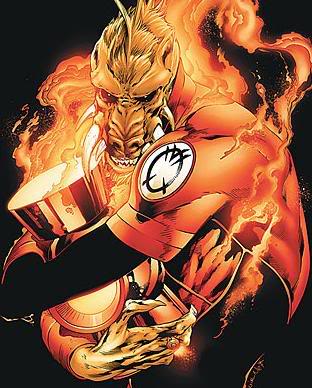
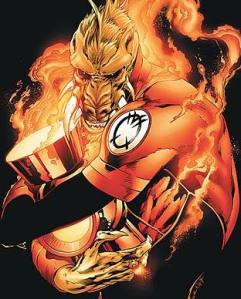
If you’re a fan of science fiction, you know that stories from the visual media – TV and movies especially – get rebooted from time to time. The most notable recent examples are “Star Trek” and “Battlestar Galactica,” and include shows like “Smallville” and the most recent run of Batman movies. If you read comics, you know this happens all the time as well, in ways big and small. Characters like Green Lantern, Thor, and the Fantastic Four are fundamentally the same as when they were created, but have evolved in ways their creators may have never expected.

In all of these examples, the fundamental core of each story is kept from the original – the world, the characters, the themes – and given new life. Sometimes it works and sometimes it doesn’t, and Scalzi felt that Piper’s world was good enough and interesting enough that it deserved to be re-introduced to a modern audience who might not otherwise know about it.

So, just for fun, he started writing Fuzzy Nation, a book that uses the characters and ideas from Little Fuzzy, the first of Piper’s books, and builds an entirely new story out of them. What resulted was a story that he thought was good enough to let out into the wild, and so – with the help of some intellectual property law and the blessing of Piper’s estate – he published Fuzzy Nation in 2011.

As I said, I haven’t read the original Piper books, but if they’re half as much fun to read as this one was, then I have to pick them up.

Sorry, I was looking for something pretty. Try again.

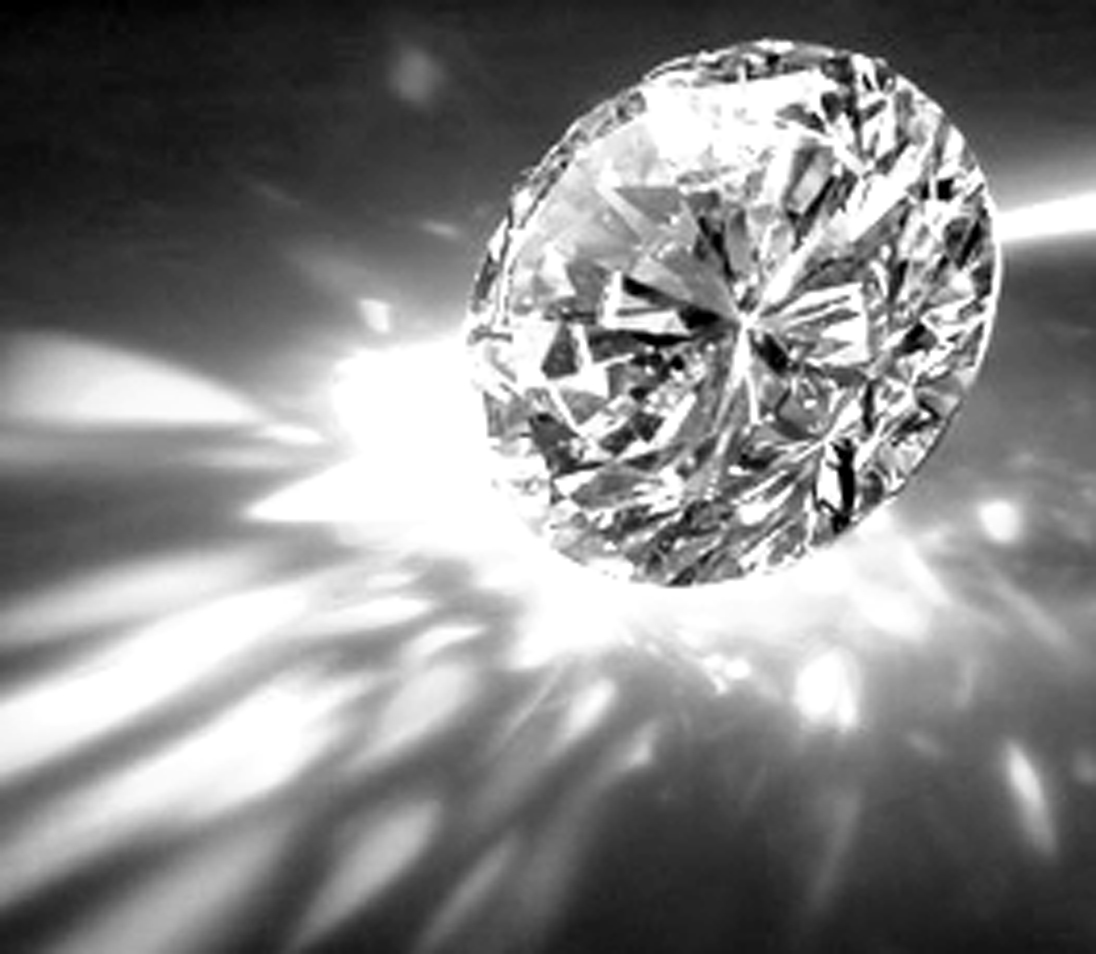
In the future, humankind has expanded out into space, as we so often do. With us, we have taken that peculiarly human trait, naked avarice, and brought it with us. The Zarathustra Corporation (ZaraCorp for short) is one of the leaders in exploiting and extracting usable resources from a planet. They’ve cornered the market on Sunstones – a decorative rock that glows with its wearer’s body heat and makes diamonds look like beach pebbles – and turned the ravaging of worlds into an art. A horribly environmentally destructive art.

Jack Holloway is a contract surveyor, a former trial lawyer, and not a very nice man. He helps ZaraCorp search for Sunstones on the hostile world of Zara XXIII, with the help of Carl, a dog with a fondness for explosions. Holloway finds seams of Sunstone and gets his cut of the money. It’s a nice enough arrangement out on a backwater world, and it doesn’t get complicated until he (and Carl) discover a Sunstone deposit that could fill the company’s coffers for decades.

At the same time, he encounters a curious form of life – or rather, it encounters him. Small, bipedal, intensely curious and undeniably clever, the Fuzzies (as Jack names them) seem to be truly remarkable animals. It is not until the ZaraCorp field biologist (and Jack’s former girlfriend), Janice Wangai, suggests that they might be sentient that things get truly complicated. After all, Colonial law is very clear on what companies like ZaraCorp are and are not allowed to do on each planet they run, and “ravaging the world of another sentient species” is pretty much at the top of their Do Not list.

The Fuzzies would make an AMAZING vest...

It soon becomes a race to save the Fuzzies from ZaraCorp and its army of lawyers. If they win, the Fuzzies will have a planet on which they can grow and thrive. If ZaraCorp wins, they’ll have nothing but the least useful bits of dirt and shrubbery left. Holloway has to do a good thing but he has to do it his way – a way that rarely has him acting like a good man.

The first thing I thought when I finished this, actually, was, “I needed that.” My reading choices for a while have been kind of heavy, or at least not a whole lot of fun to read. Good, yes, but not fun. I know this because I find myself doing things that aren’t reading – listening to podcasts, reading through articles I’ve saved on Instapaper, going through old columns at Cracked.com, things like that. With this book, though, there was none of that stalling. I read it every chance I could and blew through the whole thing in two days. So let that be take-home lesson number one: this book is fun to read.

And while it is an adventure, it does hit on some interesting and contemporary topics, not the least of which is the question of how ethically a corporation should be expected to behave. ZaraCorp, like any company, has a primary mission to make money, especially as the company is publicly traded. They have to get money to those stockholders who have invested in them so that they can make more money to exploit more resources. And that’s a point that Scalzi has made in his own blog: “I think the majority [of] corporations act logically and rationally and in a manner consistent with the general reason for their existence,” he writes. “And the reason most corporations exist — and most large multinational corporations in particular — is simple: To maximize shareholder value.”

Go on - take the pension fund. They'll probably just waste it on food...

In Fuzzy Nation, he takes this to the place where corporate rational self-interest turns bad. You see, it is perfectly possible for a corporation to achieve its goal while still being environmentally responsible or socially conscious. In other words, to fulfill its responsibility to the shareholders without violating the ethical or moral codes of the people who actually make up those groups.

But there are those who are all too willing to put the fiduciary responsibility of the corporation above the ethical responsibilities of people, and that’s where the Evil Corporation comes in. ZaraCorp fits this to a T. They see nothing but profits in Zara XXIII, and if the Fuzzies stand in their way – sentient or not – they will do whatever is necessary to eliminate them while at the same time doing their level best to stay within the legal bounds prescribed by the Colonial Authority. Or not to get caught crossing them, at least.

In the end, this becomes about why we do what we do, and how we project those reasons onto other people. ZaraCorp is motivated by untempered greed, and assumes that Holloway will be too. Holloway is interested in himself, but finds himself needing to be interested in other people. The motivations of the Fuzzies, for most of the book, is unclear, but they too have to learn the difference between what they think other people want and what they really want.

It’s a fast, tight book that is great fun to read, has characters that you like, even if they’re despicable, and has some moments of wonderful emotion that come around the corner and hit you like a hammer. It’s part philosophical adventure, part legal thriller, and part sarcastic comedy, verging on satire. Books like this are why I keep coming back to Scalzi.

———————–
“…with all due respect for your considerable skills and intellect, the fact of the matter is that you have absolutely no clue what it is I want out of this.”
– Jack Holloway, Fuzzy Nation
———————–

John Scalzi on Wikipedia
Fuzzy Nation on Amazon.com
John Scalzi’s blog
H. Beam Piper on Wikipedia
Little Fuzzy on Wikipedia

Leave a comment

Filed under aliens, business, colonization, corporations, ethics, first contact, humor, John Scalzi, morality, science fiction