Review 10: Meditations


Meditations by Marcus Aurelius

I don’t read a lot of philosophy. I’m not sure why, since philosophy is really the province of the Liberal Arts graduate, and that’s what I am. Even worse, I was a political science major, and pol-sci is really just applied philosophy. You ask yourself questions like, “What is man’s obligation to man?” and “How can a society best benefit everyone involved in it?” and the next thing you know it’s three in the morning and you’re on your twelfth cup of Denny’s coffee.

Arguing the meaning of life in a diner, however, isn’t considered to be “real” philosophy. Philosophy these says means making up your own lexicon, creating words to describe concepts that you have spun out of the rhetorical ether – or, in philosophical terminology, “just made up.” So you get phrases in modern philosophy that go on for pages and pages, and have so many recursive clauses that you wind up having to go back to the beginning just to figure out where you left off.

So, if you’re like me – and it’s not impossible that you are – and you don’t feel like delving into the murkiest depths of intellectual waters, I can solidly recommend Marcus Aurelius’ immortal Meditations. There is no beginning, there is no end – you can open up the book anywhere, read for a while, and then put it down.

Written back in the 2nd century, Meditations is a collection of Marcus’ thoughts on life, existence, and how to be a good and moral man. Some of those observations are long, a page or two, but most of them are just a few lines. It’s kind of as though Marcus was hanging out at his camp in Carnuntum and he had a Thought. “Pen!” he would yell, “and paper!” He’d scribble his idea down and put it away to be filed away later. Whether he had any great plans for this collection of ideas, we’ll never know. He was an Emperor, of course, and it’s pretty normal for Emperors to want to make themselves look brilliant in history. But, as you read the book, you realize that Marcus’ mind wasn’t on history. Why bother, he’d say. It’ll all be the same in a thousand years anyway.

Death is ever-present in this text. When you start to worry about whether you’re living up to the example set by your ancestors, don’t bother – they’re dead and gone, and they couldn’t care less about who you have become. Are you always concerned with what people will think of you after you die? Why worry about it? You’ll be dead, for one thing, and beyond caring, and in any case whatever you have accomplished will be gone when the last person who remembers you is himself dead.

Marcus is very clear in his views on death: it’s part of nature, part of the ceaseless change which controls everything in this world. We came into this world, built from the atoms and essences of the dead who had gone before us, and one day we will return to that ceaselessly changing sea of Nature. Our lives are mere moments when measured against the vastness of eternity, and our powers are meaningless against those of the gods and the world that gave birth to us. “Remember that Man lives only in the present, in this fleeting instant,’ he said. “All the rest of his life’s either past and gone, or not yet revealed.”

In this way, there are some definite parallels between Marcus’ Stoic philosophy and Zen philosophy, though they’re centuries apart. Both Zen and Stoicism emphasize living in the present moment – not dwelling on the past or worrying about the future. The only time in which you really exist is right now, and so it should be your only concern. Don’t let other people’s opinions of you govern your feelings – you can’t control them, you shouldn’t expect to be able to. You can, however, control yourself. “Will anyone sneer at me?” he asks. “That will be his concern; mine will be to ensure that nothing I do or say shall deserve the sneer.”

Yes, this book is very quotable.

Where Stoicism and Zen would probably part ways is on Marcus’ reliance on Reason as a supreme governing power. He maintains that a man’s reason is the only thing that he can truly claim as his own, and that it should be ready at hand at all times. In any situation, presented with any person or object, the first thing that a person should do is turn his reason upon it. Figure out what it is, at its root, and once you know that, everything else will become clear.

I’m a big fan of Reason. We’re humans, and we’re bound to believe stupid things from time to time, but we’re also possessed of some very clever brains, and an excellent ability to turn those brains on to solving problems. But far too few people actually use those brains. We allow our passions to override our reason and end up doing stupid things to ourselves and each other. As hard as it may be, I’m with Marcus on this one – without reason, we’re not really humans. At best, we’re children, at worst we’re beasts. It is our duty to the world to understand it, without illusion or self-deception.

Frankly, I think Marcus would be very disappointed at how little progress we’ve made on this regard. I mean, it’s been nearly two thousand years, after all, plenty of time to deal with our superstitions and our illusions. On the other hand, I think he’d be flattered that his words had lasted so long and had influenced so many people.

It’s a great text, one that calls from the past to remind us of some very important truths – that we are here, now, and we are each in control of our own lives. We are possessed with a limitless ability to understand our universe, and to not use that reason is to waste the best part of ourselves.

——————————————–
“Waste no more time arguing what a good man should be. Be one.”
-Marcus Aurelius, Meditations
——————————————–

Marcus Aurelius at Wikipedia
Meditations at Wikipedia
Meditations at Wikiquote
Meditations at Project Gutenberg
Meditations at Librivox
Meditations at Amazon.com

Leave a comment

Filed under Marcus Aurelius, philosophy, stoicism

Review 09: The Man Who was Thursday


The Man Who was Thursday by G.K. Chesterton

I lost my backpack thanks to this book.

It was years and years ago, probably my first winter in Japan, and I’d picked up this book at Maruzen. I had heard about Chesterton, mainly from the dedication page of Pratchett and Gaiman’s Good Omens (“The authors would like to join the demon Crowley in dedicating this book to the memory of G.K. Chesterton. A man who knew what was going on.”) and the title looked weird enough to be entertaining. So, I was reading the book on the train, as I often do, and I had my backpack on the floor between my feet. When the train got to my station, I stood up, still reading, and walked off.

It wasn’t until I had to put the book down again to eat that I realized I no longer had my backpack.

This was no small problem, either – the bag had a lot of important stuff in it, not the least of which was my Palm Pilot with all my friends’ addresses on it. There were also about two dozen Christmas cards in there, along with other various and sundry things. And it was a good bag, too.

Long story short (too late), I never got the bag back. The staff at my school, and even one of the students, were kind enough to call the Keihan lost & found a few times to see if anyone had turned it in, but with no luck. And whoever got it didn’t do the obvious thing and look at the return address on every single one of those Christmas cards, nooo….

Ahem. I’m over it. Really.

My point is this: beware the seductive power of this book. Beware the enchantments laid upon it, and the dreamlike web that it weaves. For if you let it, this book will enrapture you, and gods help you if that happens.

The story is one that sucks you in almost from the first page, when two passionate poets argue the worth and detriment of society. Should it be torn down, and let chaos reign in the world? Is order the true glory of humanity, the crowning jewel of mankind? Should the existing paradigm be praised or destroyed, and is he who advocates the path of anarchy true to that path?

From that moment, that confrontation of poet-philosophers, we are drawn into a dark heart of true anarchy, where no one can be trusted to be who he appears to be. And not even the protagonist himself can be absolutely sure where his path will end.

Needless to say, I think this book was awesome on many levels. The whole thing reads like a dream, moving in and out of locales with odd fluidity, and it’s honestly hard to put it down. It has a great cast of characters, each one distinct and interesting and worth your attention, and a great ending that, while not making a whole lot of sense, is entirely fitting.

What’s really interesting is the modern applicability of this story. Its major theme is that of law versus anarchy, and when Chesterton wrote this back one hundred years ago in 1908 the anarchist movement was seen as a real threat. These people were not the angry kids, spray-painting Anarchy signs all over the place and listening to punk rock. The fringe radicals of the Anarchist movement advocated violence. They liked dynamite and struck terror in the hearts of the citizenry, much in the way that terrorists still do today. And like modern terrorists, they were driven by a twisted and dark ideology which placed their own motivations above society. In the world that Chesterton has made, the Law is in a perpetual battle with the forces of chaos, the dark and shadowy enemies who are always out to destroy us.

Sound familiar?

The hunt for terrorists is a great plot for any writer, and hundreds of them – good and bad – have used this trope as a way of telling a story. Chesterton, however, reached into the heart of that idea and found the uneasy twist that we are not always willing to deal with. He found the Nietzschean paradox about what happens when you battle monsters, and saw that it could very well be true. He has shown us that it is dangerous to act without knowing the truth, even if the truth isn’t what you want it to be.

Neil and Terry were right – Chesterton knew what was going on. This book is just as relevant today as it was a century ago, even if Chesterton never meant it to be. No matter what the subtitle to the book may be, and no matter how he may have meant it, the book is still valuable to us. Well worth reading.

——————————————-
“Blessed are they who did not see,
But, being blind, believed.”
– from the Dedication, The Man Who was Thursday
——————————————-

G.K. Chesterton at Wikipedia
The Man Who was Thursday full text at Wikisource
The Man Who was Thursday at Wikipedia
The Man Who was Thursday at Wikiquote
Mercury Radio dramatization of The Man Who was Thursday (direct mp3 link)
The Man Who was Thursday at Librivox
The Man Who was Thursday at Amazon.com

Leave a comment

Filed under anarchy, classics, fantasy, fiction, G.K. Chesterton

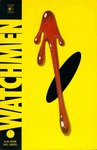
Review 08: Watchmen

Watchmen by Alan Moore and Dave Gibbons

What with the movie on its way, I thought it’d be time to go through the book again. And, as always, it was a great pleasure to read.

This is a graphic novel that has an immense impact on comics history. It’s considered to be one of the most important works in the genre in, well, ever. Read any analysis of Watchmen and you’ll read that it revolutionized comics. It changed everything, they say.

They’re right.

Before I get to the actual story – and it’s a formidable story – I want to address the immense technical achievement that is evident in this book. Look at any panel, any page and you can spend a long time just admiring the artistry that has emerged from the Moore-Gibbons partnership. The words and the images fit together like the finest puzzle pieces, each one reinforcing and supporting the others. There are no unnecessary words, and there are no unnecessary pictures.

Goddamn it’s good. It’s a fantastic piece of work.

Just as much as the technical aspects of the book are a marvel, so is the story. It was written in – and set in – the mid-80s. It took the core genre of the comics industry, superheroes, and bent them to reality’s will. These were not the iconic, ageless figures of Batman and Superman, people whose hearts and intentions were pure and who never aged. The superheroes – or “costumed adventurers,” more appropriately – were very, very human. Not only did they age, but they made mistakes. They lied, they failed, they gave up. They were, with one notable exception, human, and their reasons for doing what they did were also very human.

It’s tempting to say, “These characters are us,” because they’re not, but they’re still a lot closer to us than traditional superheroes are. And this was especially true in the mid-80s. The Darkening of comics hadn’t begun yet, and it was probably Watchmen that kicked it off. Suddenly, after decades of two-dimensional storytelling and Manichean moral codes, the idea of heroes with ethical failings, personality problems and a faulty moral compass flooded the market. Unfortunately, they were inferior copies of an exceptional original.

Anyway, the story. The world in 1985 is a different place. The rise of the costumed adventurer had a big impact on the social fabric of the United States, and the Cold War has reached levels of tension that nearly break the world in two. America owns a superweapon in the person of Jonathan Osterman, also known as the nearly godlike Doctor Manhattan, but even he can’t stop the political super-powers from the intractable mess they have created. Everyone can feel it, the great burning and the end of the world. Everyone knows it’s coming.

And then someone kills The Comedian.

The death of this adventurer-turned-mercenary sets off a chain reaction that leads to the discovery of a horrific plan to save the world. People who believe themselves to be heroes have to decide what it means to do good when there are no good choices left to make.

It starts off as a murder mystery with hints of conspiracy and ends with a bang, as well as a deep moral quandary – do the ends justify the means, and if so, how far can we take that argument?

There are points to criticize the book, if you want to. One that my friend Joe mentioned is that, for all that the main characters are supposed to be heroes, they’re utterly un-heroic. They’re the antithesis of what a comic-book hero is supposed to be: morally sure and above reproach. Any mistakes that they make, even the ones that result in tragic consequences, should make them more heroic in the end. That’s what makes characters like Spider-Man and Superman such a pleasure to read. We know that, even if they screw up, they’ll ultimately do the right thing.

The same can’t be said for the people in this book. Rorschach is a homicidal existentialist, Ozymandias is a megalomaniac, Doctor Manhattan is a detached nihilist, sort of, and Nite Owl is a pudgy guy in an owl costume. These people are not, by and large, people that you can cheer for. They’re not people you can look up to, mainly because they’re just like us. They’re flawed, very deeply flawed, and we expect our heroes to be better than that.

So, it is possible that you will dislike each and every character in the book, and I can’t blame you for that. Still, it’s worth your time to read, even if it’s just to admire the technical ability of Moore and Gibbons. As for the movie, I can only pray that they do it right. I have a high tolerance for adaptation – and I know there’s no way the entire comic can be fit into a movie – so I will give the filmmakers some leeway. But I pray that they do it right….

—————————————–
“Somebody has to do it, don’t you see? Somebody has to save the world…”
– Captain Metropolis, Watchmen
—————————————–

Watchmen at Wikipedia
Watchmen at Wikiquote
Watchmen annotations
Watchmen movie website
Watchmen at Amazon.com

1 Comment

Filed under Alan Moore, apocalypse, comic books, Dave Gibbons, DC Comics, ethics, graphic novel, made into movies, morality, murder, mystery, super-heroes, terrorism

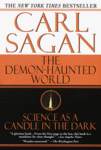
Review 07: The Demon-Haunted World

The Demon-Haunted World: Science as a Candle in the Dark by Carl Sagan

I miss Carl Sagan.

Ever since I was a kid, Carl Sagan has been the face of science for me. I would watch Cosmos and feel a sense of amazement that the universe was as wonderful as it was. He’d be there in his turtleneck and his blazer, smiling as though he’d just heard the coolest secret and he wanted to share it with you. And he did, except that it wasn’t his secret. Hell, it wasn’t a secret at all – it was the combined results of thousands of years of thoughts, deductions, mistakes, missteps, experiments, accidents and achievements. Whether he was talking about the orbits of the planets or the genetics of peas, or measuring the Earth with shadows, you could feel an almost palpable sense of wonder coming from him. You’d listen to him and think, “Y’know, maybe we humans aren’t too bad after all….”

Then the smile would fade, his eyes would get serious, and he would explain how, for all our achievements as a species, humans were still terribly fallible creatures. Our knowledge has, perhaps, outpaced our morals, and we are only a few simple steps away from losing everything that we’ve gained. Our mastery of nuclear technology could wipe out civilization in a day. Our carelessness with industry could do the same in a century. His earnestness was clear, as was his disappointment.

It was in this latter mood, perhaps, that he wrote this book. Simply by looking at the title, one can glean his attitude not only towards science, but towards the world around it. When he looks at the world, he sees a place filled with demons – not literally, of course – the demons of irrationality, superstition and an unfortunate willingness on the part of people to believe in things that just aren’t so.

This book is about the advocacy of skepticism and critical thinking. In a world where people are obsessed with celebrity, where people trust their feelings over their observations, where rulers make decisions based on the predictions of astrologers, Sagan feels rather threatened.

I can certainly understand why.

It still angers me that now, in the 21st century, we are still arguing about evolution over creationism. It amazes me that newspapers even print horoscopes, to say nothing of the fact that there are people who take them seriously. It horrifies me that evil men are still able to use fear and superstition to convince people that they should kill in the name of God. And it saddens me that so many people have given control of their lives over to their concept of a deity rather than taking responsibility for it themselves.

Sagan’s premise in this book is simple: knowledge is better than ignorance. Full stop. Whether it’s witches, “intelligent design,” UFO abduction or anything else, it is always better to find the truth rather than to rest comfortably in a lie. The truth is hard, yes, and it may feel better to stay wrapped up in our illusions, but no matter how comfortable they are, they’re still illusions. Still lies.

He spends a lot of time on UFOs and abductees, actually, and uses that as a bridge into other areas of skeptical inquiry. This is because UFO abductees (and the legions of enablers who encourage them – psychologists, writers, newspapers, and conspiracy nuts) exhibit the same behavior that allows unreason to flourish: an unwillingness or inability to consider other options. Yes, you see some lights in the sky that you can’t quite explain – the alien explanation would be a romantic and weird one, but wanting something doesn’t make it so. There is probably a reason why you saw things out your window, and that explanation is probably perfectly terrestrial.

Whether you’re talking about UFOs, reiki, power crystals, witchcraft, tarot cards, channeling, telepathy, past lives, Indigo Children, psychic surgery, miracles, visitations by angels, demonic possession, the hollow Earth theory… The evidence just isn’t there. As interesting and entertaining as a world containing such things would be, they’re just not so.

Wouldn’t it be better, Sagan asks, if we could all dismiss such things? If everyone could think critically about them, dismiss them, and turn their vast amount of energy and resources towards actually making the world better? If, instead of putting together high budget shows about ghosts and Bigfoot, networks made programs about scientific inquiry and achievement? Or perhaps a show about mysteries that science has solved? Instead of portraying scientists as either nerds or maniacs, why not show the scientists who are looking for ways to make safer materials, better medicines and more efficient cars? I suppose that the Discovery Channel has done a very nice job of trying to realize this dream, with shows like Mythbusters, and Penn & Teller strongly advocate critical thinking in their Showtime program Bullshit! But I reckon Sagan would want more.

This is where he does come across as something of a curmudgeon in this book. You get the feeling that if Old Man Sagan had his way, there’d be no X-Files or Buffy the Vampire Slayer or Flintstones. Science fiction would all be something like Contact – nothing that isn’t reasonably explainable by our current understanding of science. No evil robots or planet-busting Death Stars would survive such skeptical scrutiny. Indeed, you get the feeling that he would not only disapprove of those shows, he would definitely look down on those of us who do.

This is an attitude I’ve noticed a lot of in modern skeptics – a certain annoyance with fantasy and a rather condescending attitude towards those who haven’t signed on to the skeptical view of the world. I am a regular listener of the Skeptics’ Guide to the Universe podcast, and I enjoy it – except when they turn on the arrogance when talking about people who believe in things like religious revelation, alien visitation and the like. I can understand the attitude towards scammers – they deserve nothing but contempt – but there are people who take real comfort in their world view, regardless of how irrational it might be. Sagan addresses this as well in his book:

“All of us cherish our beliefs. They are, to a degree, self-defining. When someone comes along who challenges our belief system as insufficiently well-based – or who, like Socrates, merely asks embarrassing questions that we haven’t thought of, or demonstrates that we’ve swept key underlying assumptions under the rug – it becomes much more than a search for knowledge. It feels like a personal assault.” 

He goes on later to say:

“In the way that skepticism is sometimes applied to issues of public concern, there is a tendency to belittle, to condescend, to ignore the fact that, deluded or not, supporters of superstition and pseudoscience are human beings with real feelings, who, like the skeptics, are trying to figure out how the world works and what our role in it might be. Their motives are in many ways consonant with science. If their culture has not given them all the tools they need to pursue this great quest, let us temper our criticism with kindness. None of us comes fully equipped.” 

So in other words, even if you know a lot, don’t be a know-it-all.

Sagan had a lifelong love of science and the wonders that scientists have performed. The world today, every part and parcel of it from that computer that you’re reading this on to the fact that you didn’t die before you were five years old, is attributable to the work of dedicated scientists trying to better understand the world. And that is the key message of this book: knowledge makes the world better. Science has performed wonders that aliens, witches and apparitions of the Virgin Mary have never been able to do.

A well-educated, rational populace is the greatest protection we have against tyranny, and it behooves every citizen to acquaint him or herself with the methods and principles that science uses. It is the greatest tool available to us if we want a better world. Yes, there will be missteps along the way, but the errors of science can – if we act out of clarity and reason – be repaired. Science is self-correcting.

Teach your children, encourage them to think critically about the world and no one will ever gain mastery over them. For an educated person is a free one. And if you can spread this kind of freedom, then perhaps Sagan can rest well.

————————————————–
“We can pray over the cholera victim, or we can give her 500 milligrams of tetracycline every 12 hours.”
-Carl Sagan, The Demon-Haunted World
————————————————–

The Carl Sagan Portal
Carl Sagan at Wikipedia
The Demon-Haunted World at Wikiquote
The Demon-Haunted World at Amazon.com
Skeptics’ Guide to the Universe
The James Randi Educational Foundation

1 Comment

Filed under Carl Sagan, pseudoscience, religion, science, skepticism

Review 06: Small Gods

Small Gods by Terry Pratchett

This was the first Pratchett book I read, and I’m glad of it. While it has the humor and satire that is inherent in all of the Discworld books, it also has something else – something to say. It was evident, even from the first time I read this book, that Pratchett had put some real heavy thinking into it.

This book is, as the title suggests, about gods. Where do they come from? Where do they go? What keeps them moving? Ordinarily, gods don’t like this sort of question. People who think are not what gods look for in followers. Gods want people who believe. That’s where their power comes from. Gods with many believers are strong, great gods. Armies of priests and worshipers attend to their every needs, the sacrifices are plentiful and their dominion is vast. A great God wants for nothing.

A god with no believers, however, is a small god, a mindless thought blistering through the firmament, searching with single-minded fervor for one thing: a believer.

What happens, then, when a Great God finds out that, while he wasn’t looking, he lost all of his believers? That’s the thrust of this tale, the story of the Great God Om and how he became a tortoise for three years. It’s about the difference between what is real and what is believed in, and how much difference that can make at times. It’s about fundamental and trivial truths, and how to tell them apart. It’s about eagles and tortoises and how much they need each other.

Above all, it’s something of, in my opinion, a statement of faith. Many people ask me if I am religious, and I tell them no. That’s partly due to this book and the thinking that it made me do. Spiritual? Sure. Religious? No.

This is, as I said, the story of the Great God Om, who discovered, about 300 feet above the ground, that he had been a tortoise for the last three years. Before this mid-air revelation he had been just chewing at melons and wondering where the next lettuce patch was. Suddenly, all the self-awareness of a Great God was put into his head, as well as the knowledge that he was probably about to die. Om had intended to manifest as a bull or a pillar of fire – something much more majestic and Godly – but for some reason, that hadn’t worked. He had become a tortoise.

Now, in the presence of Brutha, a novice in the Church of the Great God Om, the god remembers who he was, and discovers that he’s in a lot of trouble.

The Church of the Great God Om. There’s something to talk about. Many people believe, upon reading it, that it’s an allegory for the Catholic Church in the Middle Ages. The Omnian Church permits no heresy. It permits no sin, no disbelief. Violating the precepts of Om and His Prophets can lead to death, in a lingering and painful manner. The Quisition cannot be wrong, for was it not Om Himself who put suspicion into their minds? It’s a tactic that has been used by many religions over the years, often to justify acts that they know their god would not approve of.

I don’t believe that Pratchett was trying to take a stab at the Catholics in this book. It’s just an unfortunate coincidence that the Omnians and the Catholics bear a few points of similarity. A rigid hierarchy, for example. A penchant at one point or another for extracting confessions by any means necessary is another. It’s all very efficient and effective.

There’s a problem, though, as is pointed out by Brutha late in the book: if you beat a donkey with a stick long enough, the stick becomes all that the donkey believes in. At that point, neither gods nor believers benefit. The only people benefiting are those wielding the stick. Instead of becoming a tool for inspiration, the church becomes a tool for terror. People do not obey their god out of love – they obey their church out of fear.

This is the kind of church that could produce the Deacon Vorbis, head of the Exquisitors. He is one of those men who would turn the world on its back, just to see what would happen. He is everything that is wrong with the Church and, unfortunately, it seems that he is in line to be the Eighth Prophet.

In other words, Omnia is not a nice place to live. Its church is vast, its god is small, and neighboring nations want to take it down a few pegs. It’s up to Brutha and his God to change the course of history.

As I said, there was a lot of thought put into this novel, as well as Pratchett’s usual hidden research. For example, Brutha is called a “Great dumb ox” by his classmates, due to his size and apparent lack of intellect. The same epithet was thrown at Thomas Aquinas by his classmates, and he was canonized less than a century after his death. Like Aquinas, Brutha is not dumb. He is simply slow and careful in how he thinks, and his measured pace leads him far more surely to the truth than the hot-headed and passionate men who march with him.

Some people read this book as an attack on religion. Others see it as a defense of personal faith. I think Terry had a story to tell, and perhaps a point to make. The beauty of books such as these is that they can be whatever you want them to be. For me, it came as a kind of defense of gods. Humans, the book suggests, need gods. Now there is a growing atheist community out there who disagree with that idea, and I can definitely see where they’re coming from. As I’ve said many times, I’m not entirely sold on the god idea yet. But the gods that are rampant in the Discworld aren’t the kinds of gods that the atheists and the true believers fight over – the omnipotent creator of Everything. They are gods who are controlled by humans, who exist with humans in a kind of co-dependent relationship. Humans need gods, and gods need humans. In its way, this kind of theology makes gods more… realistic to me. I can’t say for sure whether a god or gods exist, but if they did, I think I could live with this kind of arrangement.

What this book definitely is, in any case, is good. Very good. If you haven’t read it, do so. If you have read it, do yourself a favor and read it again.

—————————————————
“Around the Godde there forms a Shelle of prayers and Ceremonies and Buildings and Priestes and Authority, until at Laste the Godde Dies.
Ande this maye notte be noticed.”
– from the writings of the philosopher Abraxis, Small Gods
—————————————————

Annotations for Small Gods
Small Gods at Wikipedia
Terry Pratchett’s page at HarperCollins
Terry Pratchett at Wikipedia
Small Gods at Wikiquote
Small Gods at Amazon.com

2 Comments

Filed under Discworld, fantasy, gods, humor, morality, religion, sins, Terry Pratchett, theology

Review 05: The Princess Bride


The Princess Bride by William Goldman

If you haven’t read this book, then all I can tell you is to go out, get it, and read it. Now. Don’t bother with the rest of this review, you’ll thank me later. It has:

Fencing.
Fighting.
Torture.
Poison.
True Love.
Hate.
Revenge.
Giants.
Hunters.
Good men.
Bad men.
Beautifulest ladies.
Snakes.
Spiders.
Beasts of all natures and descriptions.
Pain.
Death.
Brave men.
Coward men.
Strongest men.
Chases.
Escapes.
Lies.
Truths.
Passion.
Miracles.

For a start.

It’s one of the greatest love/action/revenge stories ever abridged by a modern author. Well, it seems that Mr. Goldman felt that the original story, as written by the immortal S. Morganstern, was a little too dry for public consumption, as well as damaging to treasured childhood memories, so he went through it and put together this “good parts” version, and the world is a better place for it. [1]

Of course, the big gag is that there never was an original version of the book. There never was an S. Morganstern, the greatest of the Florinese writers. Goldman’s father may have read books to him as a child, but he never read this book to him. The entire thing is a fiction, beginning to end, but Goldman sells it really well. He tells the tale of how he blossomed as a boy – going from being a sports-obsessed disappointment to a ravenous bookworm, all thanks to this book. He talks about trying to give the same gift to his son, who manages to make it through one chapter before giving up in exhaustion. He talks about the great shock of discovering that his father had done something utterly brilliant – he had skipped the dull bits and left the exciting parts intact.

Knowing that all of this is false certainly doesn’t detract from the story. It’s a story about a story, and the effect that a story can have on a young mind. Or any mind, for that matter. It’s about how stories can teach us lessons that only later we understand – such as how life is not fair – and how stories can change us in ways that we never expected. It’s about our relationship with fiction, and with the world around us. In his fictional childhood, Goldman learned more about the world from the process of watching the story unfold than he did from the story itself. And so this book is a story about stories. The actual story is just bonus.

Which brings me, of course, to the film. Let me say that this is one of the very, very few instances where I will put the movie up on par with the book. 99.9999 repeating percent of the time, the book is better than the movie. This is one instance where they are equal in nearly every measure. I’m sure a lot of this has to do with the fact that Goldman wrote the screenplay for the film, so not only is the story intact, but a great deal of the dialogue is almost verbatim from the book. It was gold in print and gold on the screen. The hardest part about reading the book is trying not to hear Andre the Giant, Christopher Guest, Robin Wright and all the other fine actors and actresses in your head as you read.

So, whether you read the book or see the movie, you’re in for a treat. And as you read, just remember the books that molded you into who you are today. Think about the stories that taught you life’s lessons before life got around to doing it. Think about them and appreciate them, and remember that every book is a lesson, one way or another….

————————————————
“I’m so stupid. Inigo has not lost to the man in black, he has defeated him. And to prove it he has put on all the man in black’s clothes and masks and hoods and boots and gained eighty pounds.”
– Fezzik, The Princess Bride
————————————————

[1] This is a fun type of meta-fiction, writers writing autobiographically about writing about books that never existed. I find it interesting that The Princess Bride can sit comfortably shoulder-to-shoulder with House of Leaves.

The Princess Bride at Wikipedia
William Goldman at Wikipedia
The Princess Bride at Wikiquote
The Princess Bride at Amazon.com

Leave a comment

Filed under adventure, fantasy, humor, made into movies, meta-fiction, romance, William Goldman

Review 04: Superman: Red Son


Superman: Red Son by Mark Millar, Dave Johnson, Kilian Plunkett, Andrew Robinson and Walden Wong

Every culture has its icons. Characters or figures that are recognizable by anybody who lives there, figures that are almost impossible not to know. And America is very good at producing those icons and spreading them worldwide. I remember reading somewhere – I don’t remember where at the moment – that the United States’ chief export is dreams, and I think there’s definitely something to that.

Of all the dreams to emerge from the American subconscious over the last century, Superman is one of the most enduring. Show that “S” shield to almost anyone on the planet and they’ll probably know what it is. For most of his lifetime, he has stood for Truth, Justice and the American Way, with the third element to that tag line slowly vanishing as writers with a more global perspective take over the character.

Regardless of his jingoistic past, Superman still remains a popular American figure. He represents what we would like to be, as a country. Powerful and just, upright and honest, but at the same time kind and generous and, at heart, good. Superman has the power to control the world, but he doesn’t – he chooses not to – and we like to believe that it was his small-town, American upbringing that instilled such humility in him.

This book examines how things might have gone.

In the late ’80s, DC Comics introduced their “Elseworlds” imprint, with a pretty simple mandate: take canon DC characters and place them in new situations or environments. This way you could see how Batman might have turned out in an America that had never gained its independence, or what would have happened to the JLA without Superman, or if The Flash had taken the bullet meant for JFK. It opened creative doors, allowing writers to tell new stories about familiar characters without disrupting the regular continuity of the DC Comics line.

Of these, Superman: Red Son is one of the best. Mark Millar poses a simple question with a very complex answer: What if young Kal-L’s rocket had landed in Soviet Ukraine instead of Kansas?

What emerges is a fascinating tale of a Superman brought up under Stalinist philosophy. Still the good man that we know him to be, Superman nonetheless chooses a very different means of interacting with the world. We see from the first few pages that the man cannot stand still – he is constantly in motion trying to save people, not just in the Soviet Union, but anywhere in the world. It is his responsibility, he believes, to keep people safe, much in the manner of Soviet philosophy where the government controls nearly every aspect of its citizens’ lives.

Taken in by Stalin, Superman eventually rises to lead the Soviet Union to nearly world-wide dominance. Under his rule there are no accidents, no wars and no conflicts. Crime is nearly non-existent, and those who do not mesh well in this well ordered world are mentally reprogrammed until they do. There are dissidents, of course, like the mysterious Batman, a singular force of chaos in Superman’s perfectly ordered world, but in the end, even he falls. The only true challenge to Superman’s worldwide reign is the brilliant American scientist Lex Luthor, who has devoted his life to freeing mankind from alien tyranny.

It’s a brilliant take on the myth, with a lot of very familiar characters worked in. The art is gorgeous, with a style and a color palette that evokes thoughts of Soviet-era propaganda posters, yet never fails to be dynamic and fascinating.

More important, however, is the message of the story. The idea that comics can have a message is something that a lot of people seem to ignore, fueling the idea that comics are just for kids. The message in Red Son is very important and very, very timely.

The story was published in 2003, a time when America was in great pain. We had been badly hurt and wanted to set things right. By doing so, however, we caused far more damage to the world than we had ourselves endured. By trying to fix other people’s problems, we created even more, and the harder we pushed, the more the world pushed back. And this was not a new trend – one of the negative labels often affixed to the United States is that of “world policeman.” We have a long, long habit of trying to help everyone, whether that is the right thing to do or not.

In that vein, the Superman of Red Son, despite being a Soviet, is a reflection of ourselves. He is a man of immense power, who decides to help everybody. His intentions are good, but good intentions are not always rewarded with good results. His world is orderly, yes – crime and violence are nearly unheard-of – but it comes at the price of individual freedom. People are no longer in control of their own destinies with Superman in charge, and while that may be a safe life, it is not one that I would like to live.

The political message of this book is subtle, but it’s there. More interestingly, it’s a message that can be enjoyed by a broad spectrum of political views. If you’re a liberal, then it’s taking a stance against imperialism, against the imposition of one country’s values and politics over others’, all in the name of making the world a better place. If you’re a conservative, it’s a call for individual liberty. A government that provides everything for its people is just another form of oppression – without the freedom to make their own choices, for good or for ill, people are not truly free.

In the end it’s a complex tale, with no real good guys and no real bad guys. Except for Brainiac, who will probably never be anything but a bad guy. It’s a story about the choices we make, both as citizens and as societies, and the understanding that we must have the freedom to make those choices. They may sometimes be the wrong ones, but making mistakes is part of the package. In the end, there can be no Superman to save us. We must save ourselves.

————————————————
“I care about everybody.
– Superman, Superman: Red Son
————————————————

DC Comics.com
Mark Millar on Wikipedia
Superman: Red Son on Wikipedia
Superman: Red Son on Amazon.com
Soviet Posters: Revolution by Design

Leave a comment

Filed under Batman, comic books, Dave Johnson, DC Comics, Elseworlds, ethics, fantasy, graphic novel, Mark Millar, morality, peace, super-heroes, Superman, totalitarianism, USSR

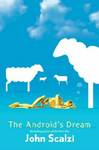
Review 03: The Android’s Dream


The Android’s Dream by John Scalzi

What do you get when you combine aliens, diplomacy, artificial intelligences, religion and sheep together? Well, for most people, the answer would be a horrible mess. For John Scalzi, however, it’s a fantastic read. Nothing too complex, no greater statements about the nature of humanity and the necessity of war that holds together the stories in his Old Man’s War universe, just a good old-fashioned espionage romp. With sheep. Or at least a sheep. Kind of.

The story begins with, as so many stories do, a murder. Not an intentional murder, really, but one that was born of shame and revenge, as so many murders are. Under normal circumstances, this wouldn’t rate much, except that the death of an alien trade ambassador is never a convenient thing. When said diplomat may just possibly have been killed by his human counterpart, that’s even more difficult to deal with. Instead of a nice, tidy trade agreement cementing the relations between the United Nations of Earth and the Nidu, an alien race with an extraordinary sense of smell and hair-trigger tempers, we have what the State Department might just call “a challenge.”

The only thing that can heal this little rift between the two planets is a sheep. But not just any sheep – a special breed, created just for the Nidu called the Android’s Dream. Without this sheep, the ruling family cannot hold on to power, and the Nidu will be plunged into a catastrophic civil war that will, in all likelihood, take Earth with it. In order to find the sheep, avert catastrophe and, most importantly, avoid calling shame down upon the government, State Department employee – and veteran of the Earth’s greatest military failure – Harry Creek will have to use every skill at his disposal. And then some.

It’s a great read, this book. Telling any more about the plot would ruin it, so I’ll just exhort you to pick up the book and get reading. In all honesty, you could probably finish it pretty quickly. But I can’t just stop here, so let me tell you more about why I liked it as much as I did.

What made it so good, what always makes good sci-fi good, is the reality of the world the author creates. It’s great to come up with high-concept scientific ideas, or intricately-planned space battles, but for the reader to really immerse him-or-herself in the book, it has to have a world in which the reader can easily imagine her-or-himself existing.

I thought of this during one scene early in the book. A character was riding the Washington, D.C. Metro and the narrator was describing the various aliens who were riding with him. There was an explanation of how various species had integrated themselves into the city, overcoming prejudice and discrimination, but what really got me was the description of a young woman reading the paper, the only other human in the car. Amidst all the different bodies, tongues, smells, and appearances, she didn’t even notice.

“If her great-great-grandmother were on the train,” Scalzi writes, “she would have thought she was on commuter train heading toward the fifth circle of Hell. This woman didn’t even look up. The human capacity for being jaded was a remarkable thing.”

It was at that point that I really accepted the reality of the book. It wasn’t a perfect world, it wasn’t one that had been ripped apart or perfected by alien contact. What had happened was what happens here any time cultures interact – after a brief period of unpleasantness, cultures start to mingle until it gets to a point where no one can remember when things were at all different. This book has all those little details that help sell the world, things that blend our world with theirs. Bored mall employees, amoral hit men, political jockeying, all of those things are familiar. Actual ghosts in machines, planet-cracking bombs, aliens that are almost entirely mouth and digestive systems, those are not. But they’re believable, because Scalzi is one hell of a writer.

I do have one little nit to pick, however. It’s not a big nit, but a nit nonetheless.

The book is an adventure, plain and simple. It’s a plot-driven story that pulls you along from one event to the other with nary a chance to catch your breath, and I never complain about that. It has some great characters… who remain almost entirely static throughout the story. I can’t say there’s no character development in the book, because the big hairy guy who eats people does have a change of heart about it, but other than that…. Harry Creek begins the book as a reluctant hero who is hiding his super-hacker, ass-kicker light under a bushel, and he’s happy to continue to be that at the close of the book. Robin Baker is a sassy, independent young woman who holds up under pressure – though not necessarily happy about it – throughout the book, and the Nidu ambassador Narf-win-Getag is untrustable the moment he walks on the page, and he remains so up through his sudden and inevitable betrayal near the end.

Like I said, this isn’t a huge complaint, because the book that Scalzi has written isn’t a character book. It’s an adventure, and adventure books usually don’t require a whole lot of character development. That doesn’t mean the characters aren’t believable – they certainly are – and it doesn’t mean they’re not interesting – they absolutely are. They just don’t grow. Fortunately I know from having read Old Man’s War and its related books that Scalzi has no problem with character development, and so I can assume that keeping his characters reasonably static in this book was a deliberate choice.

As a tangential comment on characters in the book, there was one character that drove me nuts. This character is not central to the story, and only appears a few times. What makes this person interesting are the following two things: first that the character is named Sam, and second that Sam’s gender is never established. Maybe it’s me and I missed something, but I have no idea if Sam was a man or a woman.

I caught it mainly because Tad Williams used the same name to pull a similar trick in his Otherland series, but in that story he was hiding Sam’s gender from another character, not the reader, so we eventually found out what was what. In this story, Sam’s gender remains a mystery for no other reason than I figure it amused Scalzi. It has no bearing on the story, and it doesn’t make the fate of Sam’s lover any less tragic, but I found it fascinating.

In any case, it’s a great read and – as a bonus – very funny. The opening line alone lets you know that, no matter what you think you’ve read before, you haven’t read anything quite like this. But I’m not telling you what that line is – I can’t give away everything….

——————————————————-
“If there’s one thing that distinguishes the human species, it is a pathological need to stay connected.”
-John Scalzi, The Android’s Dream
——————————————————

John Scalzi’s homepage
John Scalzi at Wikipedia
John Scalzi at AMC.com
The Android’s Dream on Amazon.com

1 Comment

Filed under adventure, aliens, John Scalzi, science fiction

Review 02: A Series of Unfortunate Events 1 – The Bad Beginning


A Series of Unfortunate Events 1: The Bad Beginning by Lemony Snicket

I am not a violent man. In my lifetime, I have never been in a fight. I’ve never seriously threatened anyone with violence, never made anyone feel afraid by my physical presence, never even really seriously considered doing violence to another person.

Having said that, the feelings this book evoked in me were… violent.

Not because Lemony Snicket has written a book where terribly unfortunate things happen to small children – I have no problems with that and in fact encourage it; it builds character. I want to do violence towards Lemony Snicket because he’s a terrible writer who should never have been allowed to have his words put to paper. His pens should be broken, his notes burned, his hard drive wiped and, if possible, his writings should banned by an Act of Congress. The First Amendment can only go so far.

You may be wondering what has roused this level of bibliorage in me. By all accounts, this series is extremely popular, loved by many. On various book review websites, this book routinely gets at least four stars and high praise. It was even made into a movie starring Jim Carry, and if that’s not the Seal of Public Approval then I don’t know what is. It would seem that one of two things is true: Either I’m seriously overreacting to a tiny aspect of Snicket’s (AKA Daniel Handler’s) writing style or the rest of the world is full of blind ignoramuses who wouldn’t know decent writing if they woke up in bed with it after a bender in Vegas.

As a reviewer, I, of course, choose to believe the latter.

Snicket has taken what should be an entertaining story, filled with untimely death, physical violence, extortion, deception, and pedophilic overtones, and corrupted it by treating its audience like a bunch of drooling idiots.

I am, of course, referring to his habit of defining “difficult” words within the text, with no regard for the flow of the story or the necessity of the definition. For example:

Page 2: “…occasionally their parents gave them permission to take a rickety trolley – the word ‘rickety,’ you probably know, here means ‘unsteady’ or ‘likely to collapse’ – alone to the seashore….”

Page 13: “…over a dull dinner of boiled chicken, boiled potatoes and blanched – the word ‘blanched’ here means ‘boiled’ – string beans.”

Page 18: “‘Please get out of bed and get dressed,’ he said briskly. The word ‘briskly’ here means ‘quickly, so as to get the Baudelaire children to leave the house.'”

Page 44: “…the kitchen grew cozy as the sauce simmered, a culinary term which means ‘cooked over a low heat.'”

And so on.

There are a few occasions where a word is defined well, in context and occasionally in character, and I don’t mind those. But the constant shoehorning in of definitions made me want to take a sharpened number two pencil and work it under Mr. Snicket’s fingernails until he apologized sufficiently for being a hack.

I’ve gotten feedback from people who like this style, especially parents, who say that it saves them from having to put down the book and explain to the child what “blanched” means. Full disclosure: I am not a parent, nor am I likely to ever be one, but I think that teaching a child to figure things out for him or herself – or, god forbid, learn to use a dictionary – is part of what will make her or him grow up to be an inquisitive, intelligent adult. In my real job, teaching English as a foreign language, I find that my students are more likely to remember a word if I make them work for it, rather than if I just tell them what it means.

Let’s face it – if this book is written for adults, then the author should treat his readers like adults. If the book is written for children, which this ostensibly is, then the author has to choose whether to talk up or down to them. In a book where the main characters’ parents die before the first page and where the eldest daughter nearly becomes a child bride to her blood uncle, one would think the author has judged his audience mature enough to deal with these themes. If that’s so, then overtly defining “difficult” words is an insult to his readers, and that is unacceptable to me.

I am reminded of a passage in Terry Pratchett’s book, Wee Free Men, where the main character, a nine year old girl named Tiffany, asks an itinerant teacher about zoology:

“Zoology, eh? That’s a big word, isn’t it.”

“No, actually it isn’t,” said Tiffany. “Patronizing is a big word. Zoology is really quite short.”

I think Mr. Pratchett may have read Mr. Snicket’s book as well.

———————————————————-
“If you enjoy books with happy endings than you are better off reading some other book.”
– Lemony Snicket
———————————————————-

Lemony Snicket homepage
Lemony Snicket on Wikipedia
The Bad Beginning on Amazon.com

4 Comments

Filed under bad, children, death, fantasy, Lemony Snicket, made into movies, murder

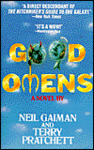
Review 01: Good Omens


Good Omens by Terry Pratchett and Neil Gaiman

For lovers of modern fantasy, there are two names that are on most people’s must-read lists: Terry Pratchett and Neil Gaiman.

At first glance, there doesn’t seem to be much in common with this pair. Terry Pratchett writes the world-renowned Discworld series, a fantasy epic set on a flat world, which is supported by four elephants, who in turn are standing on a great turtle which swims through the emptiness of space. What started as a parody of the “sword and sandals” genre of fantasy, Discworld has become a mirror for our world, taking familiar ideas and giving them a sharp twist.

Neil Gaiman, on the other hand, gained fame with his groundbreaking comic book – sorry, graphic novel – series, Sandman. Over seventy-five issues, packed with mythological retellings, Shakespearian inspiration, love, Death, family, heartbreak and redemption, Sandman is still considered to be one of the most literary comics of the modern age.

Despite these superficial differences, however, their shared love of a good story makes them perfect for each other. Like chocolate and peanut butter, steak and eggs, hydrogen and oxygen, when you put two great things together, you get something that’s even better.

This book is about the End of the World. It begins with a birth, that of the Adversary, Destroyer of Kings, Angel of the Bottomless Pit, Great Beast that is called Dragon, Prince of This World, Father of Lies, Spawn of Satan and Lord of Darkness.

Also known as Adam Young.

With his birth, the inexorable wheels of Revelation begin to turn, the Horsemen start their long ride, and two immortals – a demon named Crowley and an angel named Aziraphael – find themselves in the unenviable position of having to make sure everything works out the way their respective sides want. Rivers of blood, skies of fire and the scything clean of all life in the world, that kind of thing.

Crowley and Aziraphael, for their parts, really don’t want the world to end. They’ve been walking it since it began about 6,000 years ago, and found that they quite like it, for all its flaws and problems. And despite their innate loyalty to their masters, they’ll do their best to try and stop its end.

It’s an outstanding book, one of my top five of all time. Not only is it roaringly funny, with outstanding characters and witty dialogue, but it has the kind of razor-sharp insight into human nature that can only come from Gaiman and Pratchett. Ostensibly good people act like utter bastards, and people we know to be bad by their very natures end up doing the right thing. There’s no clear-cut line between good and evil here, which is perhaps a lot more realistic than most end-of-the-world stories go. Also, very few end-of-the-world stories are quite as funny as this one.

Humor can be used for many purposes, but the most noble use of humor is to illuminate truths that we routinely ignore. When you read this book, you think about God and the Devil and everything in between – namely, us. What is the purpose of humanity in this benighted world, and what is our responsibility towards it? These are all questions that the characters have to deal with, and, of course, so do we.

While neither Gaiman nor Pratchett would claim to have an answer to that, they have a great ability to point us towards the question.

As I said, this is one of my top five of all time. I think I own three copies by now – one that’s been read to death, a hardcover edition with that weird M-25 illustration on the front, and a softcover signed by both Neil and Terry. This is my Precious, and I hope it’s buried with me someday.

So, as you may have guessed, I can’t recommend this book enough.

And now, a quote from the book:

———————————————————-
“It may help to understand human affairs to be clear that most of the great triumphs and tragedies of history are caused, not by people being fundamentally good or fundamentally bad, but by people being fundamentally people. ”
– Terry Pratchett and Neil Gaiman, Good Omens
———————————————————-

Neil Gaiman’s homepage
Terry Pratchett’s page at HarperCollins
Terry Pratchett at Wikipedia
Neil Gaiman at Wikipedia
Good Omens at WikiQuote
Good Omens at Amazon.com

3 Comments

Filed under angels, antichrist, apocalypse, Christianity, demons, fantasy, humor, Neil Gaiman, Terry Pratchett