Monthly Archives: February 2013

Review 216: The Gathering Storm (Wheel of Time 12)

LL 216 - WoT 12 - The Gathering StormWheel of Time 12: The Gathering Storm by Robert Jordan and Brandon Sanderson

Yes, of course there are some spoilers. Fewer than usual, perhaps, but still – do you want to take that chance?

Imagine you have a favorite band, and for one reason or another – accident, death, Yoko Ono – they break up. There will be no more music from them.

But it is decided that, regardless of what fate wants for the band, their music is too well-loved and too important to be allowed to stop. So a new band is formed, and they spend years poring over the original music. They get every recording, every bootleg, every interview about how and why these musical giants did what they did. They collect the original instruments and reproduce how the songs were recorded. They do everything in their power to understand that music as best they can. And then they start to make new music.
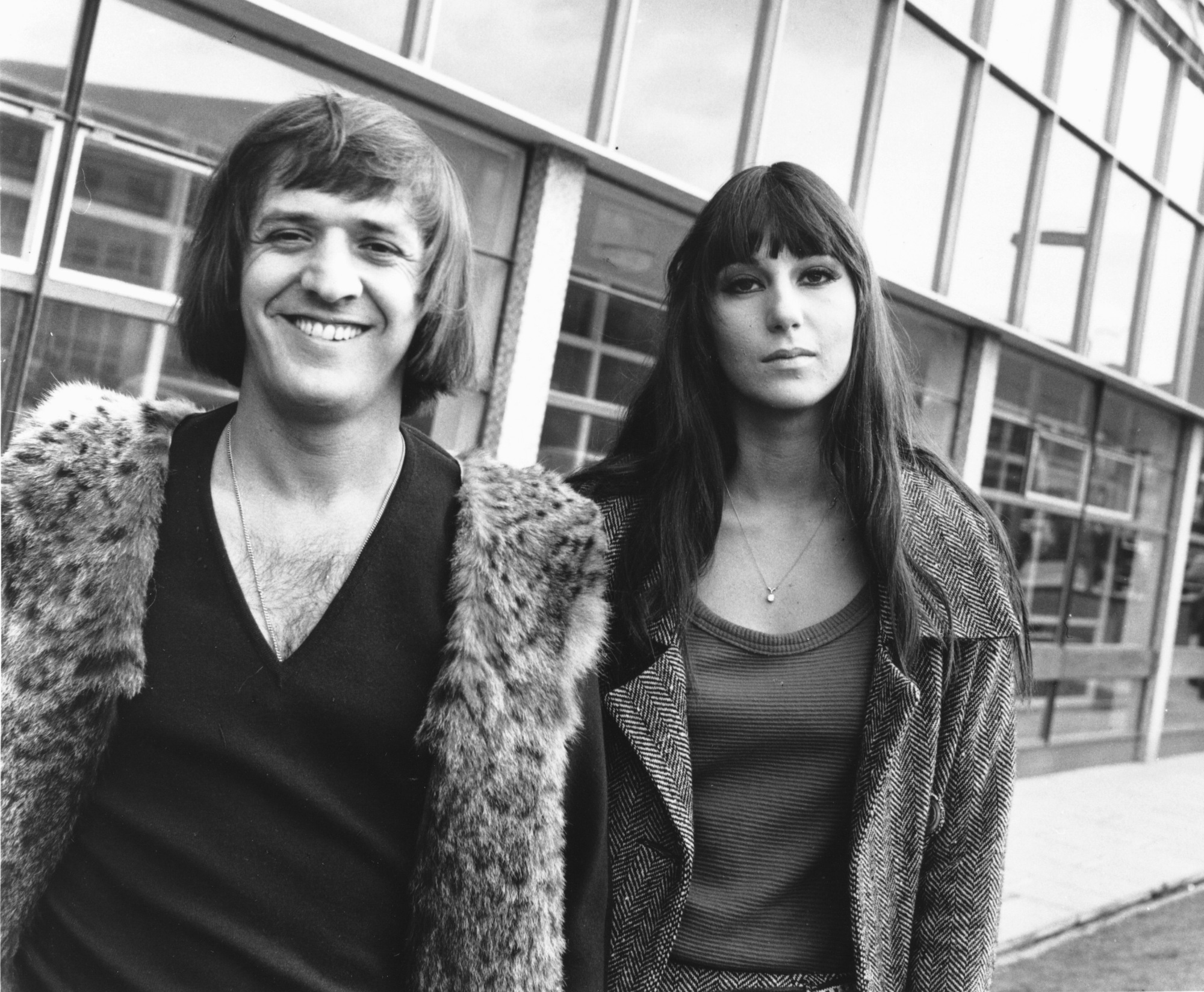
No one can ever replace you, Sonny...

No one can ever replace you, Sonny…

When you hear it, you can tell that it’s not the original group – maybe there’s a lyrical choice that the old band wouldn’t have used, or perhaps a certain favoring of chords that’s different – but if you sit back and relax, and let yourself just enjoy the music, you can almost believe that it’s your favorite band, come back together to make new and wonderful music again.

That’s kind of what it was like to read this book.

In his introduction, Sanderson says that he’s not trying to replace Robert Jordan – he’s not going to try and copy Jordan’s style or techniques. “Instead, I’ve adapted my style to be appropriate to the Wheel of Time. My main goal was to stay true to the souls of the characters.” This is certainly evident as you read the book – there are techniques that Sanderson uses that Jordan never did – especially in terms of narrative style, dialogue and thematic unity.

Sanderson is a generation younger than Robert Jordan, and this difference in age is reflected in the style of the book. While he certainly does his best to make it look as much like its predecessors as possible, for Sanderson to simply try to ape Jordan’s style would have been a disaster. The narration seems to have a lot more rhetorical commentary than in previous books – the introductory paragraphs of chapter one are a good example, where the narration itself is commenting on the fallen state of Tar Valon, asking “Where was the White Tower, the law?” This technique of the narrative asking questions of the characters is peppered throughout the book.

Having Mat end every chapter with "YOLO!" was perhaps a little TOO contemporary...

Having Mat end every chapter with “YOLO!” was perhaps a little TOO contemporary…

The narration seems a little tighter, more concise than Jordan’s style, which was long criticized for being somewhat superfluous in its verbosity. Again, this is probably a reflection of the generational difference between writers – Jordan probably grew up reading Tolkien, and Sanderson grew up reading Jordan. Each generation seeks to take the good from the previous one, while simultaneously trying to improve upon it. So by and large, the storytelling itself feels more contemporary than other books.

This is also true for the dialogue. There are more rapid-fire exchanges than usual, a sure sign of a younger author, and most of the time this works very well – he actually uses it in a few places to drop significant revelations about characters, so it seems he’s aware of what the quick back-and-forth can do. Each character has retained his or her original voice – with the possible exception of Mat Cauthon.

It became pretty clear as I read this book that Mat must be Sanderson’s favorite character, because he gets all the best lines. One thing that Jordan never did (and I don’t think he really cared to try) was make me laugh. On the other hand, nearly every chapter with Mat in it elicited at the very least an audible chuckle if not an outright laugh. Of all the characters in the book, Mat’s dialogue has become the most unique and, at the same time, the most contemporary, including, but not limited to, verbing a noun:

[Verin] reached into a pocket of her dress, pulling out several pieces of paper. One was the picture of Mat. “You didn’t ask where I got this.”
“You’re Aes Sedai,” Mat said, shrugging. “I figured you… you know, saidared it.”
Saidared it?” she asked flatly.
He shrugged.

Now for some readers, I have no doubt that this will be an intolerable change in a character’s voice. They’re going to go into paroxysms of rage that their favorite character has been turned into a Buffy guest star. And that’s a valid criticism, I suppose. I loved the change. Mat has always been the most rogueish of the characters, dicing and drinking and flirting, and you would expect that kind of person to be of a sharper form of wit. Sanderson’s decided to let Mat meet that potential, and I applaud him for it.

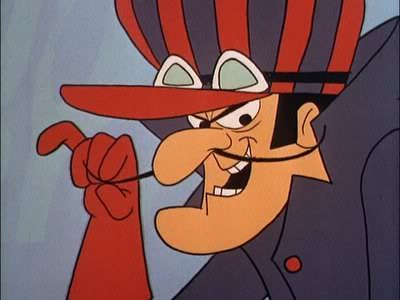
Even Liam Neeson called to tell Rand to lighten up  a little.

Even Liam Neeson called to tell Rand to lighten up a little.

By and large, though, the characters mostly sound like themselves. In some cases, more so, if that makes any sense. Rand, for example, is a lot more thoughtful than we’ve seen him before. For a long time, Rand was really a difficult character to get into. We were not often presented with those moments of sympathy that allow you to imagine yourself in that character’s skin, and perhaps that was a conscious choice of Jordan’s. Sanderson’s done a good job at letting us see what being the Dragon Reborn has done to Rand since he left Emond’s Field, and the path to disaster that he’s on. Rand has decided to become hard, as hard as he has to be so that he can live until the Last Battle, and we finally get a good look at why he thinks this is necessary. What’s more, we fear for him – there was one moment near the end of the book where, reading what Rand was about to do, I found myself saying, out loud, “No. No! Nonononono!” You’ll know it when you see it.

One other aspect of the work that Sanderson has focused on is thematic unity. Different characters experience similar situations that serve to reflect a certain theme of the work. Egwene’s trials, refusing to submit to the will of Elaida, are reflected in Aviendha’s increasingly ridiculous “punishments” by the Wise Ones, and bolstered by the appearance of Shemerin, an Aes Sedai who was, against all tradition, demoted to Accepted. They all serve to support the theme that you are who you say you are, and once you submit to another’s opinion of you, you lose. Egwene already knows it, Aviendha has to learn it, and Shemerin learned it too late.

The difference between being hard and being strong is another theme, this time balanced between Rand and Egwene. Rand, who has to unify the world under him before he fights the Dark One, has chosen to become hard. Not just steel-hard or rock-hard, but cuendillar-hard (a substance from the Age of Legends that is unbreakable by any known means). It is only by crushing his emotions, severing himself from others, and by doing whatever has to be done – up to and including mass murder – that he believes he can prepare for the inevitable confrontation.

Egwene - Keep up the good work! - HC

Egwene – Keep up the good work! – HC

Egwene, on the other hand, has to unify the White Tower before it’s too late. To do so, she must endure immense physical and emotional punishment at the hands of the very people she’s trying to save. She knows she’s right, of course, and the refusal of others to take her seriously would make it easy for her to just give up on the White Tower Aes Sedai. Leave them to their inevitable doom and build a new society of Aes Sedai loyal to her. But she doesn’t do that. She endures the pain, she controls her anger and her impulses, and constantly reminds herself why she is doing what she’s doing. In the end, this makes Egwene stronger, whereas Rand nearly shatters.

Overall, I was very happy with this book. Like many Wheel of Time fans, Jordan’s death worried me greatly. I worried that the whole story would just never be finished, that Rand would never find peace, the Tower would never be united, that Perrin would never have a quiet place just to be himself or that Mat would never be able to live a life with the responsibilities that he chooses. When Sanderson was announced as the author who would finish the series, I worried again, having never read his work. Would he be able to handle the task of finishing this series? Would he be able to pull together all the plot threads that were flying around and bring us to the conclusion that Jordan had known from the start? Would I, in other words, be utterly heartbroken?

I am very happy to say that I’m not worried anymore.

This was pretty much how I spent most of the book.

This was pretty much how I spent most of the book.

—————————————————-
“We can’t go back, Mat. The Wheel has turned, for better or worse. And it will keep turning, as lights die and forests dim, storms call and skies break. Turn it will. The Wheel is not hope, and the Wheel does not care, the Wheel simply is. But so long as it turns, folk may hope, folk may care. For with light that fades, another will eventually grow, and each storm that rages must eventually die. As long as the Wheel turns. As long is it turns….”
– Thom Merrilin, The Gathering Storm
—————————————————-

Robert Jordan at Wikipedia
Robert Jordan at Tor.com
The Gathering Storm at Wikipedia
Wheel of Time at Wikipedia
The Gathering Storm at Amazon.com

Wheel of Time discussion and resources (spoilers galore):
Theoryland
Dragonmount
The Wheel of Time Re-read at Tor.com
The Wheel of Time FAQ
Wheel of Time at TVTropes.com
Leave a comment

Filed under adventure, Brandon Sanderson, epic fantasy, fantasy, Robert Jordan, war, Wheel of Time

Review 215: THUD!

LL 215 - THUDTHUD! by Terry Pratchett

I love Discworld. I knew that already, but I thought I’d put that back out there. This book didn’t diminish my love of the Discworld by a single whit, though it didn’t inflame it either. It merely reinforced my feelings. Shored it up, say, like timbers in a mine shaft….

Sorry – there’s a lot about Dwarfs in this book, and it kind of gets to you.

In fact, Dwarfs play a pretty huge role in a lot of the stories that take place in Ankh-Morpork, the great cosmopolitan city of the Disc, mainly because they’re a race that, to humans, seems mysterious and difficult to really understand. The dwarfs have their ways, which they don’t share with outsiders, and find it difficult to reconcile living in a socially diverse city while still retaining their essential Dwarfishness. Through the Dwarfs, Pratchett is able to deal with an issue that most modern countries are struggling with in the 21st century – immigration.

But why, Colonel - WHY?!

But why, Colonel – WHY?!

Take it from me, it’s tough to live in a foreign country. You grew up with a whole set of rules that worked for you and made sense to you, but you now find yourself in a place where those rules no longer apply. And the new rules you have to play by make no sense and, in some situations, may actually seem downright wrong. The difference between the culture in your head and the one in your life is what we call “culture shock,” and there are several ways of dealing with it.

The first is to simply accept it. You’re in another country – they do things differently here. Accept that you’re going to have to play by the house rules, no matter what things were like where you came from. It may feel strange or uncomfortable, but it’s your job to adjust – the world will not change to make you happy, therefore you must change to be happy in the world.

Obviously, this is the option that I believe to be the best one.

Your second choice is to simply leave. If you can’t cope with the new culture, there’s no shame in that. Not everyone is flexible enough to do it. So you gave it a try and it didn’t work. Go somewhere more familiar, someplace where you won’t have to give up so much of what you hold dear.

Obviously this is not an easy option, especially if family or work are involved, but it is an option.

And then you can take your country back!!

And then you can take your country back!!

Third, you can pretend that the host culture is inferior to your own and totally disregard it. Band together with your countrymen and form enclaves, miniaturized versions of your home culture where your rules still apply. Isolate yourselves from the surrounding culture, and do whatever is necessary to keep it from wearing yours down.

This is popular among the more isolationist cultures – in this book, certain segments of Dwarf society. The problem is that sooner or later, the host culture and yours are going to come into conflict. And odds are, you’re going to lose.

There has been a murder in Ankh-Morpork. A Dwarf has been killed, and they’re ready to blame their ancient enemies, the Trolls. It’s coming up on Koom Valley day, you see, the day in which trolls and dwarfs remember the only battle in the multiverse where, according to the stories, both sides ambushed each other. Trolls hate Dwarfs and Dwarfs hate trolls – that’s how it’s always been, so the logical murderer must have been a Troll.

The problem is that the Commander of the City Watch, Sam Vimes, isn’t so sure. I mean, yes – it’s obvious, but it’s a little too obvious. The Deep Dwarfs, the ones who never come above ground, believe that the murder is beyond Vimes’ jurisdiction, and therein lies the conflict. By trying to keep him out of it, they pretty much ensure that the Watch will investigate this murder, and in the course of doing so, help to uncover a secret that the Deep Dwarfs would do anything to keep from getting out.

I can't help but imagine Vimes played by Bogart...

I can’t help but imagine Vimes played by Bogart…

This one, THUD! is one of the Vimes Books, which puts it very high in my estimation. Of all the characters he’s written, I like Vimes the best. Granny Weatherwax comes a close second. Basically I really like the old, cynical, take-no-shit characters that take the world into their own hands to do the Right Thing, no matter the cost to themselves. The reason why Vimes tops Weatherwax is that, of all the characters on the Disc, Vimes has had the most growth. In his first book, Guards! Guards!, he was a drunk and a failure, the nominal chief of the shadow of a night watch. Enter Carrot Ironfoundersson and a dragon, and Vimes’ path was set.

Now he’s a Duke, Commander of the Guard, married to one of the richest women in the city and the proud father of a toddler. He has everything. In fiction, this is never a good place to be….

The themes of this book are varied. There is, of course, the theme of culture clash – how much should one be allowed to keep the culture one grew up in? How many concessions must you and society make in order to keep everyone happy? The answer, in case you were curious, is hard to pin down, but it is most certainly not “none.”

Where's My CowIt’s also about fatherhood, though that’s more of a character-building theme for Vimes. He has a son now, and he has dedicated himself to his boy. Every night at 6:00, he reads their favorite book, Where’s My Cow to his son (a book that you can also buy, coincidentally enough). He cannot – must not be late for this. Not even by a minute, and certainly not for a good reason. Because if you’re willing to break a promise for a good reason, pretty soon you’ll be breaking it for a bad one. And it is this kind of personal, rock-solid integrity that keeps me coming back to Vimes.

If you’re already a Discworld fan, you don’t need my urging to pick this one up. It’s not the best of them, but it’s certainly a good read.

——————————–
“For the enemy is not Troll, nor is it Dwarf, but it is the baleful, the malign the cowardly, the vessels of hatred, those who do a bad thing and call it good.”
– The Diamond King, THUD!
——————————–

Leave a comment

Filed under Discworld, fantasy, peace, Terry Pratchett, war

Review 214: Harry Potter and Philosophy

LL 214 - Harry Potter and PhilosophyHarry Potter and Philosophy, edited by Gregory Bassham

When a co-worker of mine noticed the title of this book, his response was distinct and dismissive, something along the lines of, “Huh. I don’t think she went in putting anything philosophical in those books.” The air of disdain was palpable, and while I didn’t have a chance to continue the conversation, I got the distinct feeling that he was not one of J.K. Rowling’s biggest fans.

However, he may have had a point, one which mildly threatens this whole series of popular culture and philosophy books that I enjoy so much: how much of what these pop culture philosophers talk about is really there in the text, and how much are they just spinning from thin air? When Rowling wrote these books, was she consciously thinking of Aristotle and Plato, of the reasons why Harry Potter’s decision to embrace death was so similar to that of Socrates? Was she asking herself questions about the difference between the Greater Good and the Common Good, about whether her writing was more aligned to radical feminism or liberal feminism or feminism at all? Did she set out to create a world where the concept of a soul made sense, to determine the true nature of love, or to decide what makes for a great leader?

What is the teleological importance of Hagrid's beard vis a vis the function of the Good in wizarding world?

What is the teleological importance of Hagrid’s beard vis a vis the function of the Good in wizarding world?

Probably not. Like many writers who are not philosophers, Rowling probably just set out to write a rollicking good tale. That tale, however, is necessarily supported by some of the most important issues in western philosophy, so whether she wanted to address them or not, they showed up in her work.

One interesting question that was raised in this book – and there are plenty – is the question of identity and agency. By looking at Sirius Black as a case study, Eric Saidel explores what it is that makes us who we are – is it that thing we call a “mind,” or is it something else? Sirius black is a man, who sometimes looks like a dog, and when he’s a dog he sometimes acts like a man. When he’s not doing that, he’s acting like a dog. Is there any reason why this should be so, why a man should be a man sometimes and a dog others? Who – or what – is making those distinctions for him? It seems like a trivial question, one that can probably be chalked up to Rowling’s dire need for an editor as the series went along, but for Saidel it poses an interesting thought experiment. Is there an “essential Sirius Black”, regardless of the shape he’s in, and what influence does that shape have on him?

And as long as we’re talking about matters ephemeral, what of love? Throughout the series, Harry is told that his mother’s love is what protected him from death at the hands of Voldemort. Indeed, the love that Harry feels for his friends is actually a potent protection against the Dark Lord’s evil. What is it about love that makes it so powerful, and what has Voldy done to himself that makes it so dangerous to him? Catherine Jack Deavel and David Paul Deavel explore the topic of love and its mysteries by looking at three characters that are far more similar than they might appear – Voldemort, Harry, and Snape. Three “lost boys” who grew up very differently and whose lives were drastically shaped by love in one way or another.

Really, I can't imagine how no one took her seriously...

Really, I can’t imagine how no one took her seriously…

Moving on to matters that are bigger than the human heart, Jeremy Pierce explores issues of destiny and prophecy in his chapter, “Destiny in the Wizarding World.” We all know that prophecies exist in the world of Harry Potter, rare though they may be, but what does it actually mean for an event to be prophesied? The slightly batty Professor Trelawney has had only two accurate foretellings in her otherwise fraudulent career – the first being the one that put Voldemort on the trail of Harry, and the other about Voldemort’s return. But how do we judge a prophecy for its accuracy, especially once we’ve heard it? Is there any way to stop it, or does the very nature of causality mean that hearing the prophecy necessarily forces it to happen? Pierce goes back to Aristotle on this one, and tries to untangle all the different ways that a brief glimpse at the future could be revealed without ruining everything.

There’s something for the political types as well. Andrew Mills looks at the issue of patriotism – what is it, and is it actually a good thing? How is the loyalty of a Hogwarts student to her House morally different from the loyalty of a Death Eater to their Dark Lord? Is patriotism morally acceptable in any way, and if so, how? And what about Dumbledore? His “hands-off” approach to dealing with the school has caused some people to hold him up as a model of Libertarian governance. He doesn’t meddle in others’ affairs, allows Harry and his friends all the freedom they need, and generally tries to govern as little as possible. But is he really a Libertarian? Beth Admiraal and Regan Lance try to figure that out. And what makes him worthy of the power and influence he has, anyway? Is this the sort of man who should be a leader? David Lay Williams and Alan J. Kellner hark back to the story of the Ring of Gyges and Plato’s assertion that the one best suited to lead is the one who wants it least.

Yes, he is. (art from Hijinks Ensue)

Yes, he is. (art from Hijinks Ensue)

Things even get a little meta-fictional, too, if you like that kind of thing. In 2007, after the series was finished and in the hands of the fans, Rowling announced that she’d always thought of Dumbledore as gay. Some fans loved the idea, and others utterly hated it. But there were some fans who refused to grant her the right to make that declaration ex libris. As she hadn’t put it in the books, the argument goes, it’s not really true. So, Tamar Szabo Gendler undertakes the very challenging task of trying to figure out how we can determine what is “true” in a work of fiction.

Rowling probably didn’t write this series with the intention of scoring philosophical points, but the fact that these philosophers can do it is a testament to the care and thought she did put into her writing. She not only took from hundreds of years of fantasy literature, but also drew on some of the most fundamental aspects of being human – the need for love, the desire for power, the fear of death – and made them the centerpieces of her books. And, as luck would have it, those are just the kinds of things that philosophers love to talk about.

So, if you’re a fan of the books and a fan of philosophy, give this one a read. Then go back and read the books again, and see what else you can get from them.

——-

“Doing what we want to do may be necessary for freedom, but it’s not sufficient; we must also have the freedom to do otherwise.”
– Gregory Bassham, “Love Potion No. 9 3/4”

Leave a comment

Filed under fantasy, Harry Potter, J.K. Rowling, philosophy

Review 213: Furies of Calderon (Codex Alera 1)

LL 213 - Alera 1 - Furies of CalderonCodex Alera 1: Furies of Calderon by Jim Butcher

As you probably have noticed by now, I am a huge fan of Jim Butcher’s Dresden Files series. The books are fun reads – fast-paced, gritty and realistic, while still maintaining that tarnished patina of fantasy about them. They have a great narrative voice and I could read them the same way I eat a bag of Doritos – all in one sitting, unsure of how it happened, but with less orange Cheez ™ on my fingers. I know for a fact that as long as Jim Butcher continues to write The Dresden Files, I will continue reading them.

At a certain point, I became aware of his Codex Alera series, mainly because he talked about them in author’s notes in the backs of the latest few Dresden paperbacks. I didn’t really read through the notes, usually because I was far too impatient to get into the next book, but I knew they were out there and that I would, sooner or later, have to read them. I also knew that they would be a different beast from what I was used to.

Not every story can be as inspiring as others...

Not every story can be as inspiring as others…

This series is Butcher’s real baby, as he tells us. From his childhood, Butcher was fascinated with high fantasy, the kinds of epic journeys that were made famous by people like Tolkien and Eddings, Zelazny, Brooks, and Weis and Hickman, to name a few. So, when he decided that he wanted to be a writer, it was on that kind of world-spanning, epic fantasy that he set his sights. He found what a lot of young writers find – that this kind of fiction is viciously hard to do well, and is really suitable only for writers who have either mutant-level innate talent or who have spent many, many years honing their skills.

Out of the process of working on his craft, of course, Butcher gave birth to Harry Dresden, which has certainly made the world a better place, but he never forgot his dream of writing an epic fantasy series. After much hard work, and what was no doubt a series of terrifying decisions to let it go public, Butcher published The Codex Alera, his contribution to the Sword-and-Sorcery genre.

It introduces us to the nation of Alera, an old and massive country build on swords, intrigue, and the strange talent possessed by most people to shape and control the very elements themselves. Within the very earth itself, in water and air and fire, trees and metal and stone, there are furies – spirit beings that can bend these elements to their will. The furies, in turn, link to a human, who gives them direction and purpose. A human in control of a fury is a force to be reckoned with, whether they are just bending a water fury to tell if someone is telling the truth, or compelling an earth fury to raise great walls in defense of a population. Most everyone has one or two furies at their command, and some of them have more. Young Tavi, living in the frontier region of Calderon, has none.

"We don't owe nobody nothin'..."

“We don’t owe nobody nothin’…”

Despite his disadvantage, however, Tavi is surrounded by good people. He’s been raised by his uncle, Bernard, who is the leader of their community at Bernardholt, and Bernard’s sister, Isana. Like all people on the edges of empire, the people of Bernardholt have learned to be tough and live without the security of armies or the support of central government. They take care of their own matters, thankyouverymuch, and don’t need a lot of interference from the rest of Aleran political society.

Unfortunately, of course, what they want doesn’t really matter. They soon find themselves at the heart of a violent coup, a plan to overrun the empire and topple its leaders. With the help of the inhuman Marat, the traitors to the First Lord are willing to sacrifice everything in order to save what they believe are the best parts of their nation.

Of all the themes that kind of got lost in this book, that last one is the one I wish had gotten more play – that sometimes people do horrible things for reasons that they believe are not only defensible, but actually good. The main antagonist, a man with the hilariously ironic name of Fidelias, starts out as a wonderfully conflicted character. He tricks his apprentice, the Cursor Amara, into traveling with him to the rebel camp. He makes an attempt to convert her to his way of thinking, and when she rejects a place in his coup, he reverts to Villain Pastiche – the former teacher who is very, very disappointed with his student, to the point where he just has to kill her so she won’t give away the plan. Fidelias travels with a sword-happy knight, Aldrick, who is almost invincibly good at what he does, and the knight’s lady-friend, a semi-psychotic water-crafter named Odiana.

He's an archetype we just can't quit.

He’s an archetype we just can’t quit.

It’s kind of unfortunate, really – I really wanted to be uncertain as to whether Fidelias and his crew were actually good guys, but I was pretty much convinced of their alignment within a few chapters. If I had one wish for this book, it would be that Butcher had kept me wondering throughout the book. I mean, it’s not impossible that the First Lord was deserving of being toppled, and that Amara had given her loyalties to the wrong man, but I stopped questioning that pretty quickly once Fidelias reached mustache-twirling levels.

In general, there were some parts of the story that I really liked, some that left me cold, and a lot that had me playing “Spot The Fantasy Trope” drinking game. Some of the best scenes were fast-paced and full of action, scenes that Butcher has always been good at. Whether it’s Tavi being chased by giant, heat-seeking spiders, or an all-out assault on a semi-impregnable fortress, Butcher does a very good job at controlling the action and making sure the reader knows what is going on where.

On the other hand, a lot of the narration itself, especially in the beginning, is way too talky. Probably one of the hardest things for any epic fantasy writer to do is to introduce his or her world to the reader in a way that is not only clear, but that also makes sense from within the story. Often characters spell out details of history and culture that they already know, and really don’t need to recap.

"As you know, the daily rotation of the Earth - the planet on which we live - makes it look like the firey ball of gas in the sky is rising."

“As you know, the daily rotation of the Earth – the planet on which we live – makes it look like the firey ball of gas in the sky is rising. In the east, no less.”

It would be as though I called my friend back in the United States and said, “As you know, President Obama, who was democratically elected by the people -” “Yes,” my friend says, “in a process that was established over two hundred years ago!” “Indeed,” I say. “President Obama – who is African-American – is thought by some to be Muslim!” “But he isn’t! He is a Christian!” “That’s right, a follower of that ancient religion founded on the teachings of Jesus Christ….”

It would be weird. But writers do this all the time, especially in Fantasy and Science Fiction. And you have to feel a little sorry for them – they have all this information to give us, and no natural way to do it, because the residents of that world already know it. That’s why so many epic fantasies (this one included) tend to start in backwater, isolated regions, where people haven’t seen a tax collector in generations, and why the protagonists tend to be young, working-class people. They are the only ones who would need this kind of history recap. It’s one of the most common ways of filling the audience in, from Lord of the Rings to The Wheel of Time to Star Wars, and Butcher is not an exception.

There is a lot of potential here, though, shining through all the weight that the first book of a fantasy series always has to bear. There’s a complicated political system that we have barely begun to explore, and the way that people and furies interact is shown to be very flexible and creative. As we follow Tavi through the rest of the books, we’ll get to see how someone without the ability to call on a fury might make his way in the world.

Also, I look forward to seeing Tavi grow out of his awkward mongoose stage...

Also, I look forward to seeing Tavi grow out of his awkward mongoose stage…

Incidentally, that is a place where I have to give Butcher credit. I seriously expected Tavi to finally gain his furycrafting powers in a big way at some point in the book, but he never did. For all intents and purposes, Tavi is a cripple in this world, and that is going to be a serious obstacle in his future endeavors. It looks like Butcher’s going to allow the boy to stay disabled, which makes for a far more interesting character in the end.

Anyway, out of loyalty to an author I really like, and in the hopes that he will be able to break the shackles of the Fantasy Formula, I will continue with this series. Don’t disappoint me, Jim….

—————————————————————–
“Two days ago, I had a lot more sense….”
– Tavi, Furies of Calderon, by Jim Butcher
—————————————————————–

1 Comment

Filed under epic fantasy, fantasy, Jim Butcher, politics, war, wizardry