Monthly Archives: May 2012

Review 177: The Dragon Reborn (Wheel of Time 03)

Wheel of Time 03: The Dragon Reborn

Think about this for a moment: imagine there was someone in history who was truly terrible. The stories about him tell that he was personally responsible for destroying civilization as they knew it at the time. Thanks to him, men who could wield immense power went mad and broke the world. He brought down an Age of Legends in a catastrophe from which, three thousand years later, humanity has still not fully recovered. Mothers tell their children stories about him to make them grow up right. He is known as the Dragon, the Kinslayer, and the world fears the day on which, the Prophecies say, he will return. For that will signal the End of the World and the final battle with the Shadow.

Next to this guy, Hitler is a minor-league bully.
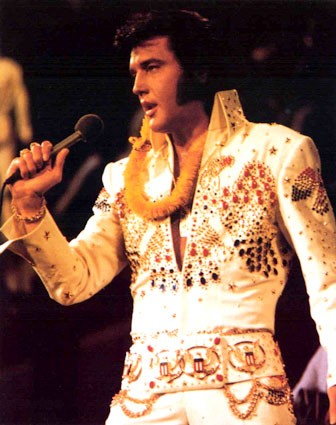
HE WILL END US!!!

How would you feel if you found out that you were, in fact, him? In a world where reincarnation is a certainty, it’s possible to find out that you are an ancient hero reborn. Or perhaps a king, or a queen. Or maybe just Joe Peasant, who gets another ride on the Wheel. However it works out, you’ve discovered that you’ve pulled the unluckiest card in the reincarnation deck, and your future is to be hated and feared, and eventually to die in battle against the greatest evil humankind has ever known.

You might go a bit nuts. Rand al’Thor certainly does.

Not the inevitable madness of being a man who can channel, thank the Light, just the understandable mental breakdown that comes with knowing that you’re the doomed reincarnation of one of history’s greatest monsters. Rand is off to the great city of Tear, on the southern coast. In the great, power-wrought fortress that sits at its center, there is Callandor, the Sword That Is Not A Sword, and an object of great power for any male channeler who holds it. What’s more, only the Dragon Reborn can remove it from its suspension inside the Stone of Tear. By taking Callandor, Rand will finally prove to himself and the world that he is the Dragon Reborn.

His friends, in the meantime, think this is a mad plan. No army has ever broken the Stone of Tear, and the city itself hates and despises channelers. Moiraine knows that Rand could get himself killed in Tear, thus dooming the world. So, with Lan, Loial and Perrin, she chases after Rand to try and ensure that he fulfills his true destiny.

These guys will Mess. You. Up.

So it’s not for nothing that we don’t see a lot of Rand al’Thor in this book, despite him being the title character. In fact, except for occasional brief interludes, we don’t get a chapter from Rand’s point of view until chapter 55, just in time for the climactic final battle. I’m of two minds on this decision by Jordan. On the one hand, it frees up a lot of pages for the other characters in the book – Perrin gets a lot of time to shine, and Mat’s healing in the White Tower lets us get to know him a little better and get a better view of the White Tower and Tar Valon. We spend much more time with Egwene, Nynaeve and Elayne as they head down to Tear to chase down the Black Ajah, and get a good look at the Aiel, who will become much more important in the subsequent books.

On the other hand, however, we lose sight of Rand during what is a very important point in his character development – coming to terms with and accepting not only his identity as the Dragon Reborn but the horrible destiny that comes with it. In those brief interludes, we see that he’s being hunted by the Shadow, and has to remain on guard against its agents at all times. If we had followed him on this journey, much of what comes after would have made more sense. As it is, by letting him off on his own, Rand’s character suffers a great deal, and the reader’s ability to empathize with him is irrevocably harmed.

But on the third hand, maybe that was the whole point. No one can understand the Dragon Reborn – not Moiraine, not his best friends, not even the reader. From this book on, Rand will always be harder to understand than the other characters in the series, which may have been Jordan’s goal all along.

Another option, of course, is that Jordan wrote several thousand words of Rand’s journey to Tear and realized that just following this one guy all by himself as he tries to keep from going nuts wasn’t as interesting as we might have thought.

So there’s that.

Google Image Search can be a tough place to search for pictures of women in fantasy….

A word, then, on a topic that is central to this series, and I figure it’s better to look at it earlier rather than later – women.

As a genre, fantasy doesn’t have a very good reputation when it comes to female characters. More often than not, women are either objects of the male protagonist’s quest, or they are hindrances to him. Fantasy remains a very male-dominated genre, and for female readers there are slim pickings when it comes to whom you can imagine yourself being. While Wheel of Time is still an andro-centric story, the roles and responsibilities given to female characters are enormous, and Jordan has created a world in which the status of women is far higher than in most fantasy worlds. It is a world where men and women are different, but equal, and neither is presumed to be superior to the other. This is neatly illustrated in the nature of the True Source, the energy that turns the Wheel of Time and thus is the engine of all creation.

The Source is divided into female and male, saidar and saidin. While saidin was horribly corrupted by the Dark One, it is repeatedly made clear that neither is stronger than the other, and that the greatest works of the Age of Legends always came when men and women worked together. Even on a non-magical scale, it is shown that the roles of men and women in this world are distinctly different, but occupying a certain stable balance that allows the world to work. In personal relationships too, there is no relationship I can recall where either the man or the woman can be said to be “in charge” (except in cases like Lan and Moiraine, where one has specifically sworn to obey the other). One of my favorite examples: Egwene, Elayne and Nynaeve have gone to Tear to hunt the Black Ajah. Far away, in Caemlyn, Mat learns that their lives are in danger from the Shadow’s assassins, and promises right there that he’s going to save them. Classic male reaction to a Damsel in Distress.

The women of WoT will have none of this nonsense.

Once he finds them, however, they have pretty much saved themselves – another five minutes or so and they would have done it. Mat’s entire involvement in their rescue from the unbreakable Stone of Tear and the horrifying Black Ajah was to unlock a door. He risked life and limb on a quest to rescue these women, only to discover that they don’t need rescuing. And in classic male fashion, he spends the next few books sulking about how they didn’t thank him for unlocking that pesky door. Well, not all the time, of course, but it certainly comes up again.

It’s not feminist lit by any means – Jordan tends to resort to behavioral cliches more with his female characters then male; women glare or sniff or tug their braids as a kind of neon sign that says, “THIS CHARACTER IS ANGRY NOW.” But I imagine that female readers of this series will have less trouble finding a character to identify with than they would with, say, Lord of the Rings, which has only one female character of any note (Eowyn – Arwen is barely in the books at all). And there’s a lot of “I guess I’ll just never understand women” talk from a lot of the male characters, while the female characters tend to hold themselves in slightly higher esteem. But for all that, I imagine there were plenty of female readers who saw themselves in these books, and who spent more than a little time wondering which Ajah they would choose, if only they could be Aes Sedai.

Of course, I am a man, so I could be completely wrong.

—————————————————-
“Men fight when they should run, and fools fight when they should run. But I had no need to say it twice.”
– Zarine, The Dragon Reborn
—————————————————-

Robert Jordan at Wikipedia
Robert Jordan at Tor.com
The Dragon Reborn at Wikipedia
Wheel of Time at Wikipedia
The Dragon Reborn at Amazon.com

Wheel of Time discussion and resources (spoilers galore):
Theoryland
Dragonmount
The Wheel of Time Re-read at Tor.com
The Wheel of Time FAQ
Wheel of Time at TVTropes.com

3 Comments

Filed under adventure, epic fantasy, fantasy, good and evil, madness, quest, Robert Jordan, Wheel of Time, wizardry

Review 176: Adventures Among Ants

Adventures Among Ants by Mark W. Moffett

Moffett knew from a young age that he wanted to be a field biologist – traveling the world in search of the most interesting animals he could find. And ever since his childhood, he’s had an abiding interest in ants.

And who could blame him? There are thousands of species of ants, found all around the world, and once you get down and really look at them, they display some amazing behaviors. They communicate through a series of smells, functioning almost as a group organism to take care of the nest, forage for food, and move from place to place. Some species of ants live their whole lives without touching the ground, while others ravage the ground they walk on, devouring everything in their paths. Ants are nature’s workhorses, utterly communistic in their behavior and presenting a model of order that humans should envy.

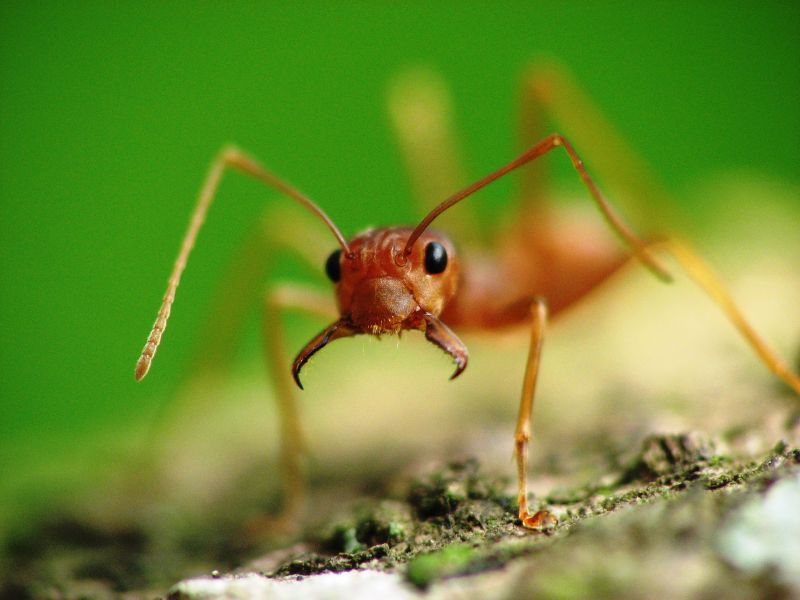
WHERE IS YOUR GOD NOW?!

We follow Moffett as he travels around the world to find the most interesting representatives of ant-dom. In India, he found the marauder ant, a vicious species of ant that goes on raids to find food near its nest. Connected by a complex system of trails, the marauder sends out every able-bodied ant it can muster, from the tiny workers to the (comparatively) giant soldier ants. They find, subdue, and dismember their prey with frightening efficiency, and carry it back to the nest, all without a leader to give them instructions or make sure they’re going the right way. Each ant just knows what her job is, and just does it. In that way, the ant super-organism takes care of itself.

In Africa, he hunts the famous African army ant, a species that is famous for its terrifying raids and voracious appetites. They swarm out around their nest, devouring anything in their path, sometimes raiding other nests for food and larvae. When army ants come, the lucky prey gets out of the way.

Ants are not confined to the ground, of course. The weaver ant is a tree-borne species that has mastered its domain with harshness and efficiency. The Amazon ant kidnaps pupae from neighboring nests and raises the young ants as their slaves. The leafcutter ant invented agriculture fifty million years before humanity even walked the earth, and the Argentine ant lives in supercolonies that cover hundreds of square kilometers and engage in violent, no-quarters war with each other.

Hey. So. How’s that picnic?

The sheer variety of ants on this planet is astounding, and Moffett shows an unstoppable enthusiasm for the little critters. What’s more, he’s an outstanding photographer, who has developed his technique and equipment to be able to get some remarkable shots of these tiny, tiny creatures in action. The hardcover edition that I have is printed on nice, glossy paper, pretty much in order to showcase Moffett’s photographic work, which he has regularly done for National Geographic Magazine.

What’s more, he continually seeks to find connections between ants and humans, who have more similarities than one might expect. We both live in large, complex societies, where individuals take on specific roles that often last that individual’s lifetimes. We engage in wars, slavery, and varied communal activities that benefit both the individual and the society at the same time. Like us, the ants build highways and infrastructure, communicate over distances, tend gardens, hold territory, plan for the future and learn from the past. And they started doing all this thousands of millennia before we even thought about standing upright. We are not the same as ants, of course – ants are unmoved by things such as status, greed, or ambition, but their instinctual dedication to the greater good of their colony is probably something that we could use a good dose of.

For all that, however, I don’t think this was the right ant book for me. Written by a person who truly loves ants, I think that would be the best kind of person to read it. I don’t have a particular fondness for the little buggers, and there were a lot of times where I had to stop and start over, or where I found myself looking for anything else to do rather than continue reading, which is never a good sign. It isn’t Moffett’s fault, I think. He put a lot of work and detail into this book, assuming that the reader would find ants just as fascinating as he does.

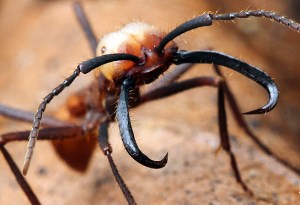
I mean I do, I DO! I’m so sorry don’t kill me!! (photo from Myrmecos.net)

And I don’t.

Oh sure – I find them fascinating in abstract, but not quite fascinating enough to get into the down-and-dirty details about how they construct trunk trails out of their nests, or the exact division of labor that exists between one class of ant and another. I’m not sure what I thought the book would be when I saw Moffett on The Colbert Report, but it wasn’t quite enough for me to sit down and devour the way I hoped it would be.

If you like ants – or you know someone who does – this is a great book, and it gives an excellent insight into what it means to be a field biologist (lots of staying in one place, apparently). For anyone who really loves insects in general, and ants in particular, this book will be a welcome addition to their bookshelf.

—————————————

“Is [an ant] intelligent? To my way of thinking, yes. We know a worker can evaluate the living space, ceiling height, entry dimensions, cleanliness, and illumination of a potential new home for her colony – a masterly feat, considering that she’s a roving speck with no pen, paper, or calculator.”
– Mark Moffett, Adventures Among Ants

Mark Moffett on Wikipedia
Adventures Among Ants on Amazon.com
Adventures Among Ants website

Leave a comment

Filed under animals, ants, biology, Mark Moffett, science

Review 175: The Last Continent

The Last Continent by Terry Pratchett

Quick – what do you know about Australia?

I reckon if you live in Australia, you probably know quite a lot. If you’ve known someone from Australia or perhaps have visited there, you might know a few things. If your experience is limited to a few “Crocodile Dundee” movies and the Crocodile Hunter, then you could probably stand to know a little more. No matter what your level of Australiana is, though, you probably know at least enough to get a lot of enjoyment out of this book, Terry Pratchett’s homage to the strangest continent on Earth.

Now keep in mind, Pratchett does state quite clearly that this is not a book about Australia. “It’s about somewhere entirely different which happens to be, here and there, a bit… Australian.” So that’s okay then.

This adorable little thing? IT WILL END YOU.

Really, this is Pratchett’s homage to Australia, a country that he clearly likes a lot. In reality, Australia is a pretty strange place. It’s a giant island, most of which is barren desert. It’s been disconnected from the other continents for so long that evolution has given us species unlike any others on Earth. Pretty much anything that you come across, from the lowliest spider to the cutest jellyfish to the weirdest platypus, is deadly. The country is a tribute to Nature, both in its beauty and its danger, and really deserves more attention than it gets.

In one memorable scene, Death asks his Library for a complete list of dangerous animals on the continent known as XXXX, aka Fourecks. He is immediately buried under books, including Dangerous Mammals, Reptiles, Amphibians, Birds, Fish, Jellyfish, Insects, Spiders, Crustaceans, Grasses, Trees, Mosses and Lichens of Terror Incognita, volume 29c, part three. A slight exaggeration? Perhaps. He then asks for a complete list of species that are not deadly, and gets a small leaflet on which is written, “Some of the sheep.”

This book isn’t about Death, though, as much fun as that may be. This is about the worst wizard on the Disc. The classic inadvertent hero, who had seen so much of the world but only as a blur while he ran from danger. The hero who truly just wants to be left alone, perhaps with a potato – Rincewind.

What you most need to know about Rincewind is that he absolutely does not want to be a hero. He craves a boring life, one in which the most he has to worry about is whether to have his potatoes baked, mashed, or deep fried. He does not want to be chased by mad highwaymen, put in prison for sheep theft, or required to completely change the climate of an entire continent. He doesn’t want to time travel, be guided by strange, otherworldly kangaroos or fall in with a troupe of suspiciously masculine female performers. He just wants peace and quiet.

This? This is an Australian rain forest.

The universe, of course, has other ideas. And so it is up to Rincewind to once again save the day. The continent of Fourecks has never seen rain – in fact, they think the very idea of water that falls from the sky is ludicrous. But there are legends of what they call The Wet – the day when water will be found on the surface of the ground, rather than hundreds of feet below it. And while they don’t know how it will happen exactly, they do know it will happen. Lucky for Rincewind, the universe has chosen him to make sure that it does.

I really can’t list all of the Australia references because there are just too many. From drop bears to Vegemite, Mad Max to Priscilla, Queen of the Desert, they’re pretty much all there.

This book is, like so many other Discworld, books, a lot of fun to read. One of the more interesting sections in the book is one that’s not strictly necessary. Exploring a strange window in the University which, for some reason, leads to a beach, the Wizards of the Unseen University find themselves marooned thousands of miles away and thousands of years back in time. On this weird little island, they meet one of the most unusual gods on the Disc – the god of evolution.

And sometimes even gods get bored.

This god isn’t interested in the normal godly things – lolling about and being worshiped, occasionally smiting a few followers here and there. As Pratchett puts it, “It is a general test of the omnipotence of a god that they can see the fall of a tiny bird. But only one god makes notes, and a few adjustments, so that next time it can fall further and faster.” This god of evolution is devoted to making life forms better, often one at a time, and lives on a strange little island where there’s only one of everything, but everything yearns to be useful. With him, the wizards are able to explore evolution and natural selection and figure out why sex is just so darn useful.

I say that this section isn’t strictly necessary because it just isn’t. It’s certainly interesting, and I suppose the god’s island is a nice echo of the real Australia, where evolution has had a long time to tinker and come up with some really weird stuff, but in terms of the story, it’s not all that important a plot point. In fact, the wizards in general don’t contribute much to the story other than to make it longer and funnier. Their exploration of evolution and Rincewind’s unwilling quest to bring rain to the barren land of Fourecks are almost wholly unrelated to each other, up until the very end.

I can’t see how a group like this would ever cause trouble.

This isn’t to say that they’re unwelcome – I love watching the wizards explore the world. The combination of personalities whenever all the wizards get together is one that offers endless hours of reading fun, and I think that without them, the book would have been less enjoyable. They’re just not essential to the plot, is all, and if that kind of thing is important to you, then you might not enjoy this book so much.

Me, I love science and I love Discworld. While the actual Science of Discworld series was kind of dry and boring in the end, I love it when Pratchett explores real-world science through the eyes of his Discworld characters. By looking at science from another perspective, he is able to make it perhaps a little more understandable to people who otherwise might write science off as “too hard.”

This book is a trip through time and space and Australia. It’s a long, strange trip, to be sure, but an entertaining one.

—————————————————-
“It’s not many times in your life you get the chance to die of hunger on some bleak continent some thousands of years before you’re born. We should make the most of it.”
– The Dean
—————————————————–

Terry Pratchett on Wikipedia
The Last Continent on Wikipedia
The Last Continent on Amazon.com
Terry Pratchett’s homepage

2 Comments

Filed under Discworld, evolution, fantasy, gods, humor, science, Terry Pratchett, wizardry

Review 174: Dark Lord – The Rise of Darth Vader

Dark Lord: The Rise of Darth Vader by James Luceno

When you think about Darth Vader, many things come to mind. Dark Lord of the Sith. Bane of the Jedi. Throat-Crusher Supreme.

Emo?

No. Or rather, “NNNNNOOOOOOOOOOOOO!!!!”

Of all my complaints about the new trilogy – and there are many – the biggest one has to do with how Anakin Skywalker was handled. I grew up loving Darth Vader. He was a vicious bastard, but by gods he was awesome about it. He was a hard-ass who inspired terror wherever he went, and he was a man who overcame insurmountable evils to ultimately redeem himself. From the moment we see him emerge from the smoke in A New Hope, we know that this is a man to be feared and reckoned with.

He never said, “Yippee,” and he most certainly was never a mopey little emoboi. I despised the choice to make Anakin a whiny little brat who was turned to the Dark Side. And please note the passive voice there – “was turned.” He was manipulated and pushed and pulled, and finally when Palpatine said, “Go murder children,” Anakin just said, “Okay,” and did it. I never got the feeling that Anakin was making his own choices in these movies, or doing terrible things because he truly thought they were the right thing to do.

The title of Darth Vader fit very, very poorly on this wet noodle of a Sith-wannabe, and that, more than anything else, made me very angry about the new trilogy.

So, in comes James Luceno to clean things up.

Set about a month after the events in Episode 3, this book starts Vader’s transformation from mopey to malicious.

“Yoda? Know this ‘Yoda’ I do not.” (from @bonniegrrl)

Despite the best efforts of the Clone Army, some Jedi survived the initial massacre of Order 66. One of those, a Jedi named Roan Shyne, is trying to lead his dead comrade’s padawan to safety, wherever safety may be found. He’s questioning his purpose now, in a world where evil has emerged victorious, and where the Jedi are no more. Should he make a stand and die defending the Idea, or should he obey Yoda’s last orders and go to ground?

Sadly, he’s a principle character in a Star Wars novel, so the Force takes the choice out of his hands. He finds himself drawn ever closer into the mystery of the Empire and the Emperor. And Vader.

Who, I might add, is having issues of his own. The first three pages of his first POV scene are about how uncomfortable the Suit is (Luceno talked to the folks at LucasArts to find out what it was like), and how miserable he is being a nubby lump of burned flesh inside a mobile life-support system. He can’t see properly, can’t hear normally, can’t move like he used to – hell, he can barely walk steady, much less wield a lightsaber like he used to.

Palpatine, being the good mentor that he is, knows exactly how to cure Vader’s blues: give him a project, something to keep his mind off things. Like hunting people down and killing them.

Luceno handles the transition from brat to demon very delicately and very smoothly. By the time the book is over, Vader still isn’t the avatar of evil that he will one day become, but he’s certainly over the hump. In addition, the advantage of writing a prequel story is that you can boost the power of events that happen later on, giving them much more significance. When Vader finally kills Palpatine at the end of Return of the Jedi, for example, the moment is a little richer and more powerful for having seen what Palpatine put Vader through in his early days.

Dammit. Just… Dammit.

In this book, we get a good look at the Master-Disciple relationship of the Sith, and the precarious balance that it requires. The Master works his hardest to break and subjugate his disciple in order to make him strong enough so that he will one day exceed his master. The problem is that, traditionally, the disciple usually kills the master at that point, finds a new disciple of his own, and the cycle begins anew. Palpatine is looking to avoid that, if at all possible, and Vader is just itching for a chance. The key is that power is an end unto itself, and the cycle of murder is just a part of that.

But at the end of Jedi, Vader kills his master for the benefit of another, something that is antithetical to the core philosophy of the Sith. Vader gained no power by killing Palpatine, at least not in the sense that he understood “power” up to that point.

Star Wars purists might stay away from the novels, and that’s certainly their right. I think this one is worth reading, though. It’s an excellent move away from the horrorshow that was the new trilogy, and does a very good job at helping us rediscover the Darth Vader that we all came to know and love.

——————————-
“The old system is dead, senator. You would be wise to subscribe to the new one.”
– Darth Vader

Dark Lord: The Rise of Darth Vader on Wikipedia
James Luceno on Wikipedia
Dark Lord: The Rise of Darth Vader on Amazon.com

Leave a comment

Filed under coming of age, good and evil, James Luceno, science fiction, Star Wars

Review 173: Still Life With Woodpecker

Still Life with Woodpecker by Tom Robbins

When my brother gave me this book for Christmas, he told me to “drink in the writing.” Or something to that effect. Whatever it was, he heaped praise on Robbins’ use of language. Several people in my family had read this, or some other Tom Robbins book, and they all enthusiastically agreed that reading him was a pleasure unto itself, above and beyond the enjoyment one gets from reading the actual story. I was promised an actual Reading Experience, and that promise was fulfilled in spades.

Reading Robbins is like sitting through a storm. His words flow down the page like the acid dreams of a long-reformed hippie. They dance and spin, curling into strange and exotic shapes that you can’t quite take in on the first read, so you look at the page again, convinced that there must have been something there that you missed. You find yourself at the end of a section, convinced that you’ve read it, but not entirely sure what you’ve read. Or you go back and read it again just because reading it the first time was just such fun.

Just pretend I'm not here. (photo by DeathandDisinfectant on DeviantArt)

Most modern writers do their best to keep you involved in the story, to keep the writing from drawing attention to itself. Much in the same way that many filmmakers try to keep you from thinking, “Oh, I’m looking through a camera,” so do writers try to keep you from thinking about the words – their lens through which they transmit their message and images. Robbins completely eschews this principle – not only does he make sure you notice his words, he goes out of the way to make the words themselves more interesting than the story.

This is not to say that the story isn’t interesting, of course. It is a romance, albeit a strange and brambly one. A young princess, the only child of an exiled king and queen, has vowed to devote her life to the betterment of the Earth, to use her royal station to help the world and to absolutely never fall in love – or even have sex – again. For very good reasons, of course. Nothing like having a miscarriage while cheerleading for your college football team to dampen your reproductive urges. This plan works up until she gets to a ecology conference in Maui, where she meets the man of her nightmares – a notorious terrorist who is nicknamed the Woodpecker.

The Woodpecker (his real name is Bernard) is a self-professed outlaw, a man who takes joy in subverting order, thumbing his nose at authority and living with a complete disregard for legal niceties such as not blowing things up. He’s been in prison and escaped, and has only a short time until the statute of limitations finally runs out. This doesn’t stop Bernie from bringing dynamite with him to Maui, and under the influence of alcohol and lust and rage, he tips his hand too soon. The only thing standing between him and prison is the beautiful red-headed princess – Leigh-Cherie – who hates him at first sight and swears that there is absolutely nothing about him that she finds redeeming.

Yes, yes, you hate each other. GET A ROOM!

We all know where that kind of thinking leads.

They fall in love, of course, a whirlwind outlaw romance that is only put to rest when Bernie finally lands back in prison. As a show of solitude to her lover, Leigh-Cherie locks herself in her room, turning it into a cell to mirror that of her beloved, and swears not to leave it until he leaves his. The only things in the room are a bed, a chamber pot, and a pack of Camel cigarettes.

That’s where things start to get weird.

The nice thing about this book is that you don’t really have to ponder what the themes were – Robbins points them out quite clearly by the end of the book, so if you didn’t get it the first time, you’ll be able to get it the next time ’round. It’s a story about love, of course, and the irrational, weird turns it can take. It’s about history, about the great, never-ending “why” that drives us from one act to the next. And, interestingly enough, it’s about our relationship with the physical world, from the greatest of the Egyptian pyramids to the most mundane pack of Camels.

During her self-inflicted time in solitary, Leigh-Cherie constructs a vast universe inside the label of her cigarettes (which she never actually smokes) and it leads her to truths and realizations that would confound the greatest philosopher or the most devoted mystic. By contemplating the mundane, she finds the key to the universe.

Speaking of relating to objects, the story itself is a kind of romance between Robbins and his typewriter – a Remington SL3 – which doesn’t, insofar as I have been able to tell, exist. Theirs is a tumultuous love. It begins with a tentative love, a hope that the machine is The One for this book. It passes through admiration and infatuation, only to end with rejection as Robbins finishes the book in longhand.

Oh my god, I can see forever!! And a naked man, BUT MOSTLY FOREVER!!!

As Robbins relates to his Remington, and Leigh-Cherie to her pack of Camels, so do we have relationships with objects. We become familiar with our possessions, imbuing them with character and personality. Not only that, but once we give consideration to the history of that object – its design and manufacturing, where the idea and the materials came from – we find that we can read the history of the universe in something as simple as a paper clip.

It’s a weird and wonderful book. The characters are vibrant and real, in a kind of hyper-real way. It’s funny and bright, changing pace and rhythm from page to page and really is a delight to sit and read. Even more fun to read aloud, actually, so if you have a chance to do that, jump and take it.

—————————————————-
“Plato did claim that the unexamined life is not worth living. Oedipus Rex was not so sure.”
– Tom Robbins, Still Life with Woodpecker
—————————————————-

Tom Robbins on Wikipedia
Still Life With Woodpecker on Wikipedia
Still Life With Woodpecker on Amazon.com

Leave a comment

Filed under anarchy, fiction, humor, romance, terrorism, Tom Robbins, writing