Tag Archives: humor

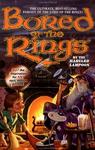
Review 32: Bored of the Rings


Bored of the Rings by Harvard Lampoon

In a small corner of the world, tucked away from the great nations, there lives an isolated community full of colorful, down-to-earth people. One of those, considered a hero by some and an oddball by others, is getting ready to face the greatest challenge of his life – delivering a Ring of Power into the fires that made it, thereby saving not only his soul, but the world along with it.

Yes, you know the story. Just not like this.

The young Frito Bugger, a Boggie of the Sty and nephew to the famed Dildo Bugger, has been tapped by Goodgulf the Magician to return the Ring of Power to the Zazu Pits in the center of the deadly kingdom of Fordor. It is only then that Sorhed, maker of the Ring and the greatest threat to Lower Middle Earth, can be defeated.

The first time I read this book, I nearly soiled myself laughing. And I wasn’t even a real fan of the originals at this point, either. I knew enough, though, to see how well the venerable trilogy was being skewered, and I loved every minute of it. Since then, I’ve read this book more times than I’ve read Lord of the Rings. Partly because it’s much funnier, but mostly because this volume only clocks in at 150 pages.

As with all comedy, repetition kind of diminishes the effect, but there are still laughs to be had. Just from the beginning, when Dildo Bugger throws a party for the gluttonous freeloaders of the Sty, and then foists his Magic Ring off on his hapless nephew Frito, you know things can only go wacky.

Much like in the original, this Fellowship travels across a land fraught with peril, and despite the funny names, their journey is recognizable to anyone who knows the story. The folks at Harvard Lampoon did a brilliant job here, warping the characters of the original story (with the utmost love and respect, of course, for the money they’re making from sales of the book) into funhouse mirror-images.

Thus brave Aragorn, son of Arathorn becomes Arrowroot, son of Arrowshirt, wielder of Krona, Conqueror of Dozens, whose foolproof strategy for dealing with overwhelming odds is to play dead. Or wise and resourceful Gandalf becomes Goodgulf, the shifty con artist and 32nd degree Mason who is all too willing to let the Shadow win if it means he can escape with his hide and the majority of someone else’s gold. Legolas and Gimli become Legolam and Gimlet, sniping at each other with the kind of accuracy we could have only wished for in the films, and Merry and Pippin twist into Moxie and Pepsi, the blundering brothers who wish they were dead. And so does everybody else.

What really differentiates this book from a lot of other parody books is that the Harvard Lampoon writers have allowed these warped characters to evolve in their own right. Instead of forcing them along the path of the original story, the writers have broadened the guidelines a bit. We see new relationships evolve, and old ones twist into new shapes. Some parts of the story vanish entirely, while others take on whole new significance.

In other words, if you’re looking for a one-to-one event correlation with the original books, you’ll be disappointed. But the major events and characters are all there. A lot of the themes have been inverted, of course, for comic effect. The great friendship and loyalty that defined the original Fellowship are sorely lacking in this volume, but they were never meant to be there in the first place. Probably the reason I found it so funny was that the twisted versions of these characters resemble a lot of my attitude towards them when I first read Lord of the Rings – Merry and Pippin as an obnoxious pair of bumblers, Gandalf as a manipulative old coot, Boromir as utterly disposable and, of course, Tom Bombadil as, well, himself.

I never could stand Bombadil in the original books, but Tom Benzedrino? Him I could read over and over again without hesitation….

As I think about this, I wonder how many people read this and actually got offended. People talk about LotR and J.R.R. Tolkien as though they are perfect in every form, untouchable and Not To Be Criticized. I remember watching the DVD special features, and the son of Tolkein’s editor said, “You simply did not edit Tolkien.” That kind of reverence must certainly feel good for a writer, but it doesn’t produce good writing. Every writer, whether it’s Tolkien or Rowling or King or anyone else who’s really made it big, needs people willing to take them down a peg.

Look at the Harry Potter books for example. When they were relatively unknown, they were slim, tight little volumes that moved at a good pace and could be devoured on a long bus ride. As soon as Rowling made it big, however, they became massive tomes that required ten minutes of warm-up time just to pick up, and an occasional shot of caffeine to get through. Don’t get me wrong – I like Harry Potter. I like it more than I like Lord of the Rings, in fact. I just don’t think that fame or literary pretensions should make an author exempt from vicious editing. Or vicious parody.

A book like Bored of the Rings is not a criticism of the story, or of the dream that Tolkien had – it’s a vindication of it. It’s a testament to the book’s strength that it can be ripped apart with such wild abandon, yet still maintain its popularity. Every author should be so lucky as to have a book like this written in their honor.

So just sit back and enjoy it. Whether you’ve read the books or just seen the movies, as long as you’re not one of those who worship at the altar of the Unassailable Tolkien, you should be able to get a lot of good laughs out of this.

————————————————
“Observing this near impossible escape from certain death, Frito wondered how much longer the authors were going to get away with such tripe. He wasn’t the only one.”
– from Bored of the Rings
————————————————

Bored of the Rings on Wikipedia
Harvard Lampoon on Wikipedia
Bored of the Rings on Amazon.com

2 Comments

Filed under fantasy, Harvard Lampoon, humor, Lord of the Rings, parody

Review 25: Three Men in a Boat

Three Men in a Boat (To Say Nothing of the Dog) by Jerome K. Jerome

This book puts me in mind of the time my friends and I decided it would be a great idea to go to my mother’s house in the Poconos during spring break.

It was back in the late nineteen-hundreds, and we were a college cadre of Dungeons & Dragons players who had a great campaign going. “Spontaneous Combustion” we called ourselves, because of our habit of blowing things up at any opportunity. Not a weekend would go by that we didn’t burn, destroy, incinerate or otherwise defile something in our imaginary world. But we were exhausted from the rigors of trying to balance our school life with our raping and pillaging. I say “raping” because it really belongs there with “pillaging,” though to my knowledge there was no raping of anyone. Dismemberment, yes, and I believe my character managed to give a lot of people syphilis, but in a rather unconventional way.

The plan was simple: we’d all go down to the house in the mountains for a few days, have marathon D&D sessions, and generally enjoy each others’ company in quiet isolation from the world. The house was an idyllic place – all trees and silence and snow, with the occasional deer or wild turkey. It would be a truly beautiful and serene place for us to rest our wearied bodies and stretch our wild imaginations.

So, much like Jerome K. Jerome and his companions, Harris, George and, of course, Montmorency, who decide in this book that the best tonic for their youthful ennui would be a boating trip up the Thames, we all headed to the mountains of Pennsylvania to soothe our troubled souls and to bond as friends and boon companions.

Also like Jerome, Harris and George (to say nothing of Montmorency), we had no idea what we were really getting ourselves into.

The three men (and the dog) of Jerome K. Jerome’s story are like most travelers throughout time since the idea of traveling for leisure was invented: they have a Plan. The Plan, of course, is to have a good time with one’s friends while avoiding anything resembling work. Unfortunately, the world will often have other plans. In the case of this book, those plans involved angry swans, annoying lovers, unusually busy inns, bad weather and general vehicular mishaps.

Now that I think on it, though, the trouble they had with their boat – and there was trouble – wasn’t quite as bad as the trouble I had with my car on our way to the role-playing retreat. Thanks to a strategically placed pothole, I managed to blow out both passenger side tires on my car. Not all at once, though. The rear one went flat right away, causing the small caravan to stop on the side of a New Scotland road while I panicked and my friend Jon fixed the tire. I would have done it myself, of course, but this was the first Misfortune to befall my beloved car – whose name, for reasons too complicated to go into here, was Phoenix – so it fell to Jon to do it. The rest of our crew were milling about patiently, except for Jim, who was lighting road flares so that anyone who happened to be driving down the sunlit, arrow-straight, bone-dry stretch of road might not kill us all.

The second flat tire occurred in a small town, the name of which I have forgotten. Or blocked out. There had been a slow leak, and I was on my way out of the liquor store (we had to buy liquor, there was no question of that, though whose idea it was to buy the Jeroboam of red wine escapes me) and Jon says, “Don’t get angry.”

“Why would I get angry, Jon?” I replied, doing a passable imitation of HAL from 2001.

It turned out that the other passenger side tire had gone flat while we were shopping. This left us in a small town on the outskirts of Nowhere, at 8 PM on a Friday night in need of a tire. By some miracle, the AAA man we called knew someone who could sell us a tire so we could get on our way. The man, who turned out to bear a remarkable resemblance to Gene Wilder from Young Frankenstein, was happy to sell it to us, though he wouldn’t actually put it on the car. Possibly because he wanted to save us money by not charging us for the labor, or possibly because my car – adorned with a variety of bumper-stickers and interesting rear-view amulets – looked like it belonged to an angry gay druid. Whatever his reasons, we got a new tire on the car and were grateful for his help.

In discussing any trip, of course, one must eventually come to the weather. For Jerome and his friends it was the rain that defied their best efforts to stay dry and forced them to find lodgings in towns where places to sleep were already scarce. For us, it was snow.

Snow is common in the mountains through early spring, but we were prepared for that. Mom had called the plow service and assured us that the driveway would be clear when we got there. When we arrived (having first worked out the Problem of the Mismarked Map), we found that the driveway had not, in fact, been plowed and the snow came up to mid-thigh. We parked on the street, slogged through the snow and went to open the door. When the key wouldn’t turn on the second lock, I pretty much gave up and just wandered around the snow saying, “She only gave me one key,” over and over again until someone managed to get the door open. After about twelve hours of cataclysmic travel, we were There. We had arrived! Our objective was obtained and our journey was done! We could finally unwind and relax.

One of the difficulties that we shared with Jerome and company was with food. They packed well enough, of course, with all kinds of comestibles, but like all people who are not used to preparing and procuring their own food, the comedy that resulted was plentiful. Beef without mustard, infinitely peelable potatoes, strange and unfathomable stews – any traveler who goes on a journey without having some kind of food misadventure has missed half the fun.

For us, it was steak. Get a group of men together and their appetites will turn to meat. Oh sure, there might be a few green, hippie, godless Commie men out there who lean towards tofu, but they’re really thinking of meat, no matter what they say.

We had bought some steaks – the best our college-student budgets could handle. But how to cook them? For in every group of meat-loving men, everyone is a meat expert. It’s a mark of True Masculinity, the ability to cook a steak, and the insinuation that one cannot cook a steak is tantamount to calling the man a queer sissy fairy-boy.

What resulted from this battle of culinary wills was a dinner that consisted, mainly, of shoe leather, with everyone holding grudges against everyone else for Not Doing It Right. This was about the same time I learned firsthand why one should never chug blackberry brandy.

The myriad of problems that people have when traveling are, unfortunately, universal. Poor planning, bad luck, nasty locals, bad weather, pigheadedness and the unfortunate tendency of the world not to live up to our expectations of it – all of these conspire to make travel an endurance trial. What surprised me the most about this book was how similar Jerome K. Jerome’s troubles had been to my own.

As bad as things can be at the time, though, there comes a time, afterward, when you can look back and laugh. Safe at home, Jerome took his eventful, awful trip up the Thames and made it into an incredibly funny classic of English literature. The fact that the book is over a hundred years old doesn’t take away at all from its comedy value because the humor comes from the universal nature of travelers and traveling. We all go on our journeys hoping for a relaxed, congenial time, but we tell stories about the mishaps, misadventures and difficulties. They are, paradoxically, the most fun part of the trip.

So I laughed along with Jerome and his friends, remembering all the while the infighting, bad food, bad moods, burnt countertops, spiked spaghetti sauce and everything else that made that one Spring Break trip so terribly, terribly memorable.

Although, all things being equal, I would have been just as happy if we’d had… y’know, a good time.

—————————————————
“They cursed us – not with a common cursory curse, but with long, carefully thought-out, comprehensive curses, that embraced the whole of our career and went away into the distant future, and included all our relations and covered everything connected with us – good, substantial curses.”
– Jerome K. Jerome, Three Men in a Boat
—————————————————-

Three Men in a Boat at Wikipedia
Jerome K. Jerome at Wikipedia
Three Men in a Boat at Amazon.com
Three Men in a Boat at Wikisource

Leave a comment

Filed under classics, England, friendship, humor, Jerome K. Jerome, memoir, travel

Review 12: The Areas of My Expertise


The Areas of my Expertise by John Hodgman

FACT: Yale University enforces its will on the world via a capella singing groups.

FACT: There as been only one murder on the space shuttle, and Sally Ride used her deductive prowess to determine that only the Indian fakir could have performed the deed.

FACT: President Herbert Hoover built a pneumatic army, designed by Nikolas Tesla. to defeat the Hobo Uprising of 1932

FACT: Oregon seethes in its confinement, inflicted on it by President Polk’s geographimancers after it threatened to take over land as far east as Illinois.

WERE YOU AWARE OF IT?

Probably not.

You should feel grateful that we have John Hodgman and his compendium of World Knowledge to shed some light on the secret history of the United States, the habits of werewolves, the hidden horrors of the Mall of America and many other educational and illuminating topics.

The book is set up in the manner of an almanac of old, but whereas books such as “Poor Richard’s Almanacs” dealt mostly with mundane things such as harvest times and moon cycles, this book addresses so much more. There is Information You Will Find Useful in the Present, such as the best places to find crabs, how to build a snow fort, and the fifty-five dramatic situations. There is Information Concerning the Future, with a full chart of Omens and Portents so that you may be prepared for the inevitable merman attacks, roving cocktail gangs, and, of course, Ragnarok.

If you’re fond of United States trivia, there’s a section in there for you, and if you’ve ever wondered about the secret societies of actuaries, you will be illuminated by this book. You can learn how to win a fight, short words used on submarines to preserve oxygen and, of course, which presidents had hooks for hands (hint: it’s not who you think.)

Of course, the most famous and important section of this book is the section entitled “What You Did Not Know About Hoboes,” and I can guarantee that the information in this section will come as a surprise to most people not versed in Hobo history. There you will find out how the Hobo kings and queens come to power, what the secret agenda of these rail-riding, lint-collecting itinerants is, and learn the all-important 700 Hobo Names – invaluable for Hobo hunting or, should you be seduced into a life of riding the rails, choosing a proper name for yourself.

I first saw John Hodgman on The Daily Show, where he was promoting this book, and nearly soiled myself laughing. He has a completely guileless face, and delivers his words with a tone that conveys the innocent delivery of common sense wisdom, like he cannot conceive of anyone disbelieving what he’s telling us.

As with any writing, it’s far easier to show than to tell. Here’s the clip from The Daily Show archives:

.cc_box a:hover .cc_home{background:url(‘http://www.comedycentral.com/comedycentral/video/assets/syndicated-logo-over.png’) !important;}.cc_links a{color:#b9b9b9;text-decoration:none;}.cc_show a{color:#707070;text-decoration:none;}.cc_title a{color:#868686;text-decoration:none;}.cc_links a:hover{color:#67bee2;text-decoration:underline;}

Hodgman soon went on to become the show’s Resident Expert, where he brings his prodigious intellect to matters concerning net neutrality, elections, army recruiting and many other diverse subjects.

It really is a terribly funny book. It’s the kind of book that will make you laugh out loud and then wait for someone to ask, “What’s so funny?” so you can start reading the really good bits aloud to them. It’s a strange and wonderful history of the United States that actually ties itself together very well. While the information may not actually be useful, it it probably more entertaining than actually useful information would be. In this way, Hodgman says, it “allows each entry to contain many more truths than if it were merely factual.”

Very true.

————————————————
“Truth may be stranger than fiction, goes the old saw, but it is never as strange as lies. (Or, for that matter, as true.)”
– John Hodgman
————————————————

John Hodgman on Wikipedia
The Areas of My Expertise on Wikipedia
The Areas of My Expertise on Amazon.com
The 700 Hoboes Project

Leave a comment

Filed under almanac, humor, John Hodgman

Review 11: Plato and a Platypus Walk Into a Bar

Plato and a Platypus Walk into a Bar – Understanding Philosophy through Jokes by Thomas Cathcart and Daniel Klein

Like most Liberal Arts undergrads, I took a few philosophy courses while I was in college. In fact, my sophomore philosophy final has the distinction of being the only one I have ever actually slept through. My roommate woke me up at 11:30 and said, “Didn’t you have a final this morning?” I don’t remember anything between that moment and arriving in the professor’s office, apologizing profusely.

The point is, philosophy never really made an impact on me. I mean, I get it – Philosophy is supposed to be the essence of what makes us human, the ability to think about the way we think about the world. Dolphins and monkeys may be clever, but do they sit around and ponder whether there’s actually a real world out there or if it is only a product of our senses? I doubt it, as it seem like they’re more preoccupied with frolicking around and having sex, which means that Douglas Adams really was on to something.

I don’t quite get the kick out of philosophy that I feel like I’m “supposed” to, being an educated, intelligent, un-American Elitist and all that, so I’m glad that someone has boiled down four millennia of human thought into a 200-page joke book. Definitely more my speed.

The book begins with Aristotle and his belief in a telos, an ultimate purpose for everything, and continues on through ethics, political philosophy, and religious philosophy, as well as existentialism, logic, epistemology and much, much more. Be warned – if you already know a lot about philosophy, then there’s really nothing new in this book for you except the gags. It’s written as a kind of Philo 101, for people who’ve always wanted to know about the different branches of philosophy, but always fell asleep fifteen minutes into the lecture.

By using jokes, the authors make complex philosophical and logical ideas much more immediate and understandable. Take post hoc ergo propter hoc, for example. I know what the Latin means – “After this, therefore because of this,” which is a definition that never struck me as being any clearer than the original Latin. As a logical fallacy, I never really convinced myself that I understood what it meant, until I read this joke. (warning: high bawdiness content follows):

An older man marries a younger lady, and they’re truly in love. However, no matter what the old man does, he is unable to satisfy his young bride sexually. He tries everything, but cannot finish the deed, so to speak. 

So, they go to a sexual therapist, who makes a rather unusual suggestion. “Hire a handsome young man,” the therapist says, “and have him stand over the bed and wave a towel over you while you make love. This will help your wife fantasize, and should help her have an orgasm.” So they follow the therapist’s advice, hire a handsome young man, and try it out. But still, no success.

They return to the therapist, who thinks for a moment and says, “Okay, why not reverse it? Have the young man make love to your wife while you wave a towel over them?” They return home, and the young man climbs into bed with the young wife, while her husband waves a towel vigorously. Within minutes, the wife has an amazing, ear-splitting orgasm.

The husband smiles, looks at the young man and says, “There, you idiot – that’s how you wave a towel!

See? Now I get it! Post hoc is where you assume that because event B happened after event A, event A caused event B. No amount of hypotheticals or dull as dirt lectures have ever explained that to me quite as well as this one ribald joke.

I think these guys are on to something, too. Philosophy has always been the pursuit of the super-intellectual, and anyone who tells you, “I’m a philosopher” is assumed to say next, “And would you like fries with that?” Being an intellectual in America is hard enough as it is, but once you start trying to deconstruct the very essence of what “good” means, much less whether it is actually worth being good, people start to look at you funny.

But tell folks a joke, and all that erudite navel-gazing becomes crystal clear. Of course the GOP is run by Utilitarians – this joke makes perfect sense:

A young widow belongs to a country club, where she enjoys sunning herself by the pool. One day, she sees a handsome stranger poolside, so she sits next to him and says, “I don’t think I’ve seen you here before.” 

“You wouldn’t have,” he said. “I’ve been in prison for the last twenty years.”

“Good heavens,” she said. “What did you do?”

“I murdered my wife,” he replies.

“Ah,” she says. “So you’re single!”

Just replace the young widow with Dick Cheney and the handsome man with, say, Halliburton and you have yourself the GOP in a nutshell!

If you’re an old hand at philosophy, check it out for the jokes – there are plenty of good ones in there. If you’re new to philosophy, or you were put off by the classes you took in college, check it out. You’re not as dumb as your philo teacher made you feel. All you needed was the right sort of explanation.

————————————————
“A blind man, a lesbian and a frog walk into a bar. The barkeep looks at them and says, “What is this – some kind of joke?”
– from Plato and a Platypus Walk into a Bar
————————————————

Plato and a Platypus Walk Into a Bar at Wikipedia
Plato and a Platypus Walk Into a Bar at Amazon.com
The Internet Encyclopedia of Philosophy
Philosophical Humor compiled by David Chalmers

4 Comments

Filed under Daniel Klein, humor, jokes, philosophy, Thomas Cathcart

Review 06: Small Gods

Small Gods by Terry Pratchett

This was the first Pratchett book I read, and I’m glad of it. While it has the humor and satire that is inherent in all of the Discworld books, it also has something else – something to say. It was evident, even from the first time I read this book, that Pratchett had put some real heavy thinking into it.

This book is, as the title suggests, about gods. Where do they come from? Where do they go? What keeps them moving? Ordinarily, gods don’t like this sort of question. People who think are not what gods look for in followers. Gods want people who believe. That’s where their power comes from. Gods with many believers are strong, great gods. Armies of priests and worshipers attend to their every needs, the sacrifices are plentiful and their dominion is vast. A great God wants for nothing.

A god with no believers, however, is a small god, a mindless thought blistering through the firmament, searching with single-minded fervor for one thing: a believer.

What happens, then, when a Great God finds out that, while he wasn’t looking, he lost all of his believers? That’s the thrust of this tale, the story of the Great God Om and how he became a tortoise for three years. It’s about the difference between what is real and what is believed in, and how much difference that can make at times. It’s about fundamental and trivial truths, and how to tell them apart. It’s about eagles and tortoises and how much they need each other.

Above all, it’s something of, in my opinion, a statement of faith. Many people ask me if I am religious, and I tell them no. That’s partly due to this book and the thinking that it made me do. Spiritual? Sure. Religious? No.

This is, as I said, the story of the Great God Om, who discovered, about 300 feet above the ground, that he had been a tortoise for the last three years. Before this mid-air revelation he had been just chewing at melons and wondering where the next lettuce patch was. Suddenly, all the self-awareness of a Great God was put into his head, as well as the knowledge that he was probably about to die. Om had intended to manifest as a bull or a pillar of fire – something much more majestic and Godly – but for some reason, that hadn’t worked. He had become a tortoise.

Now, in the presence of Brutha, a novice in the Church of the Great God Om, the god remembers who he was, and discovers that he’s in a lot of trouble.

The Church of the Great God Om. There’s something to talk about. Many people believe, upon reading it, that it’s an allegory for the Catholic Church in the Middle Ages. The Omnian Church permits no heresy. It permits no sin, no disbelief. Violating the precepts of Om and His Prophets can lead to death, in a lingering and painful manner. The Quisition cannot be wrong, for was it not Om Himself who put suspicion into their minds? It’s a tactic that has been used by many religions over the years, often to justify acts that they know their god would not approve of.

I don’t believe that Pratchett was trying to take a stab at the Catholics in this book. It’s just an unfortunate coincidence that the Omnians and the Catholics bear a few points of similarity. A rigid hierarchy, for example. A penchant at one point or another for extracting confessions by any means necessary is another. It’s all very efficient and effective.

There’s a problem, though, as is pointed out by Brutha late in the book: if you beat a donkey with a stick long enough, the stick becomes all that the donkey believes in. At that point, neither gods nor believers benefit. The only people benefiting are those wielding the stick. Instead of becoming a tool for inspiration, the church becomes a tool for terror. People do not obey their god out of love – they obey their church out of fear.

This is the kind of church that could produce the Deacon Vorbis, head of the Exquisitors. He is one of those men who would turn the world on its back, just to see what would happen. He is everything that is wrong with the Church and, unfortunately, it seems that he is in line to be the Eighth Prophet.

In other words, Omnia is not a nice place to live. Its church is vast, its god is small, and neighboring nations want to take it down a few pegs. It’s up to Brutha and his God to change the course of history.

As I said, there was a lot of thought put into this novel, as well as Pratchett’s usual hidden research. For example, Brutha is called a “Great dumb ox” by his classmates, due to his size and apparent lack of intellect. The same epithet was thrown at Thomas Aquinas by his classmates, and he was canonized less than a century after his death. Like Aquinas, Brutha is not dumb. He is simply slow and careful in how he thinks, and his measured pace leads him far more surely to the truth than the hot-headed and passionate men who march with him.

Some people read this book as an attack on religion. Others see it as a defense of personal faith. I think Terry had a story to tell, and perhaps a point to make. The beauty of books such as these is that they can be whatever you want them to be. For me, it came as a kind of defense of gods. Humans, the book suggests, need gods. Now there is a growing atheist community out there who disagree with that idea, and I can definitely see where they’re coming from. As I’ve said many times, I’m not entirely sold on the god idea yet. But the gods that are rampant in the Discworld aren’t the kinds of gods that the atheists and the true believers fight over – the omnipotent creator of Everything. They are gods who are controlled by humans, who exist with humans in a kind of co-dependent relationship. Humans need gods, and gods need humans. In its way, this kind of theology makes gods more… realistic to me. I can’t say for sure whether a god or gods exist, but if they did, I think I could live with this kind of arrangement.

What this book definitely is, in any case, is good. Very good. If you haven’t read it, do so. If you have read it, do yourself a favor and read it again.

—————————————————
“Around the Godde there forms a Shelle of prayers and Ceremonies and Buildings and Priestes and Authority, until at Laste the Godde Dies.
Ande this maye notte be noticed.”
– from the writings of the philosopher Abraxis, Small Gods
—————————————————

Annotations for Small Gods
Small Gods at Wikipedia
Terry Pratchett’s page at HarperCollins
Terry Pratchett at Wikipedia
Small Gods at Wikiquote
Small Gods at Amazon.com

2 Comments

Filed under Discworld, fantasy, gods, humor, morality, religion, sins, Terry Pratchett, theology

Review 05: The Princess Bride


The Princess Bride by William Goldman

If you haven’t read this book, then all I can tell you is to go out, get it, and read it. Now. Don’t bother with the rest of this review, you’ll thank me later. It has:

Fencing.
Fighting.
Torture.
Poison.
True Love.
Hate.
Revenge.
Giants.
Hunters.
Good men.
Bad men.
Beautifulest ladies.
Snakes.
Spiders.
Beasts of all natures and descriptions.
Pain.
Death.
Brave men.
Coward men.
Strongest men.
Chases.
Escapes.
Lies.
Truths.
Passion.
Miracles.

For a start.

It’s one of the greatest love/action/revenge stories ever abridged by a modern author. Well, it seems that Mr. Goldman felt that the original story, as written by the immortal S. Morganstern, was a little too dry for public consumption, as well as damaging to treasured childhood memories, so he went through it and put together this “good parts” version, and the world is a better place for it. [1]

Of course, the big gag is that there never was an original version of the book. There never was an S. Morganstern, the greatest of the Florinese writers. Goldman’s father may have read books to him as a child, but he never read this book to him. The entire thing is a fiction, beginning to end, but Goldman sells it really well. He tells the tale of how he blossomed as a boy – going from being a sports-obsessed disappointment to a ravenous bookworm, all thanks to this book. He talks about trying to give the same gift to his son, who manages to make it through one chapter before giving up in exhaustion. He talks about the great shock of discovering that his father had done something utterly brilliant – he had skipped the dull bits and left the exciting parts intact.

Knowing that all of this is false certainly doesn’t detract from the story. It’s a story about a story, and the effect that a story can have on a young mind. Or any mind, for that matter. It’s about how stories can teach us lessons that only later we understand – such as how life is not fair – and how stories can change us in ways that we never expected. It’s about our relationship with fiction, and with the world around us. In his fictional childhood, Goldman learned more about the world from the process of watching the story unfold than he did from the story itself. And so this book is a story about stories. The actual story is just bonus.

Which brings me, of course, to the film. Let me say that this is one of the very, very few instances where I will put the movie up on par with the book. 99.9999 repeating percent of the time, the book is better than the movie. This is one instance where they are equal in nearly every measure. I’m sure a lot of this has to do with the fact that Goldman wrote the screenplay for the film, so not only is the story intact, but a great deal of the dialogue is almost verbatim from the book. It was gold in print and gold on the screen. The hardest part about reading the book is trying not to hear Andre the Giant, Christopher Guest, Robin Wright and all the other fine actors and actresses in your head as you read.

So, whether you read the book or see the movie, you’re in for a treat. And as you read, just remember the books that molded you into who you are today. Think about the stories that taught you life’s lessons before life got around to doing it. Think about them and appreciate them, and remember that every book is a lesson, one way or another….

————————————————
“I’m so stupid. Inigo has not lost to the man in black, he has defeated him. And to prove it he has put on all the man in black’s clothes and masks and hoods and boots and gained eighty pounds.”
– Fezzik, The Princess Bride
————————————————

[1] This is a fun type of meta-fiction, writers writing autobiographically about writing about books that never existed. I find it interesting that The Princess Bride can sit comfortably shoulder-to-shoulder with House of Leaves.

The Princess Bride at Wikipedia
William Goldman at Wikipedia
The Princess Bride at Wikiquote
The Princess Bride at Amazon.com

Leave a comment

Filed under adventure, fantasy, humor, made into movies, meta-fiction, romance, William Goldman

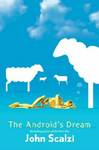
Review 03: The Android’s Dream


The Android’s Dream by John Scalzi

What do you get when you combine aliens, diplomacy, artificial intelligences, religion and sheep together? Well, for most people, the answer would be a horrible mess. For John Scalzi, however, it’s a fantastic read. Nothing too complex, no greater statements about the nature of humanity and the necessity of war that holds together the stories in his Old Man’s War universe, just a good old-fashioned espionage romp. With sheep. Or at least a sheep. Kind of.

The story begins with, as so many stories do, a murder. Not an intentional murder, really, but one that was born of shame and revenge, as so many murders are. Under normal circumstances, this wouldn’t rate much, except that the death of an alien trade ambassador is never a convenient thing. When said diplomat may just possibly have been killed by his human counterpart, that’s even more difficult to deal with. Instead of a nice, tidy trade agreement cementing the relations between the United Nations of Earth and the Nidu, an alien race with an extraordinary sense of smell and hair-trigger tempers, we have what the State Department might just call “a challenge.”

The only thing that can heal this little rift between the two planets is a sheep. But not just any sheep – a special breed, created just for the Nidu called the Android’s Dream. Without this sheep, the ruling family cannot hold on to power, and the Nidu will be plunged into a catastrophic civil war that will, in all likelihood, take Earth with it. In order to find the sheep, avert catastrophe and, most importantly, avoid calling shame down upon the government, State Department employee – and veteran of the Earth’s greatest military failure – Harry Creek will have to use every skill at his disposal. And then some.

It’s a great read, this book. Telling any more about the plot would ruin it, so I’ll just exhort you to pick up the book and get reading. In all honesty, you could probably finish it pretty quickly. But I can’t just stop here, so let me tell you more about why I liked it as much as I did.

What made it so good, what always makes good sci-fi good, is the reality of the world the author creates. It’s great to come up with high-concept scientific ideas, or intricately-planned space battles, but for the reader to really immerse him-or-herself in the book, it has to have a world in which the reader can easily imagine her-or-himself existing.

I thought of this during one scene early in the book. A character was riding the Washington, D.C. Metro and the narrator was describing the various aliens who were riding with him. There was an explanation of how various species had integrated themselves into the city, overcoming prejudice and discrimination, but what really got me was the description of a young woman reading the paper, the only other human in the car. Amidst all the different bodies, tongues, smells, and appearances, she didn’t even notice.

“If her great-great-grandmother were on the train,” Scalzi writes, “she would have thought she was on commuter train heading toward the fifth circle of Hell. This woman didn’t even look up. The human capacity for being jaded was a remarkable thing.”

It was at that point that I really accepted the reality of the book. It wasn’t a perfect world, it wasn’t one that had been ripped apart or perfected by alien contact. What had happened was what happens here any time cultures interact – after a brief period of unpleasantness, cultures start to mingle until it gets to a point where no one can remember when things were at all different. This book has all those little details that help sell the world, things that blend our world with theirs. Bored mall employees, amoral hit men, political jockeying, all of those things are familiar. Actual ghosts in machines, planet-cracking bombs, aliens that are almost entirely mouth and digestive systems, those are not. But they’re believable, because Scalzi is one hell of a writer.

I do have one little nit to pick, however. It’s not a big nit, but a nit nonetheless.

The book is an adventure, plain and simple. It’s a plot-driven story that pulls you along from one event to the other with nary a chance to catch your breath, and I never complain about that. It has some great characters… who remain almost entirely static throughout the story. I can’t say there’s no character development in the book, because the big hairy guy who eats people does have a change of heart about it, but other than that…. Harry Creek begins the book as a reluctant hero who is hiding his super-hacker, ass-kicker light under a bushel, and he’s happy to continue to be that at the close of the book. Robin Baker is a sassy, independent young woman who holds up under pressure – though not necessarily happy about it – throughout the book, and the Nidu ambassador Narf-win-Getag is untrustable the moment he walks on the page, and he remains so up through his sudden and inevitable betrayal near the end.

Like I said, this isn’t a huge complaint, because the book that Scalzi has written isn’t a character book. It’s an adventure, and adventure books usually don’t require a whole lot of character development. That doesn’t mean the characters aren’t believable – they certainly are – and it doesn’t mean they’re not interesting – they absolutely are. They just don’t grow. Fortunately I know from having read Old Man’s War and its related books that Scalzi has no problem with character development, and so I can assume that keeping his characters reasonably static in this book was a deliberate choice.

As a tangential comment on characters in the book, there was one character that drove me nuts. This character is not central to the story, and only appears a few times. What makes this person interesting are the following two things: first that the character is named Sam, and second that Sam’s gender is never established. Maybe it’s me and I missed something, but I have no idea if Sam was a man or a woman.

I caught it mainly because Tad Williams used the same name to pull a similar trick in his Otherland series, but in that story he was hiding Sam’s gender from another character, not the reader, so we eventually found out what was what. In this story, Sam’s gender remains a mystery for no other reason than I figure it amused Scalzi. It has no bearing on the story, and it doesn’t make the fate of Sam’s lover any less tragic, but I found it fascinating.

In any case, it’s a great read and – as a bonus – very funny. The opening line alone lets you know that, no matter what you think you’ve read before, you haven’t read anything quite like this. But I’m not telling you what that line is – I can’t give away everything….

——————————————————-
“If there’s one thing that distinguishes the human species, it is a pathological need to stay connected.”
-John Scalzi, The Android’s Dream
——————————————————

John Scalzi’s homepage
John Scalzi at Wikipedia
John Scalzi at AMC.com
The Android’s Dream on Amazon.com

1 Comment

Filed under adventure, aliens, John Scalzi, science fiction