Tag Archives: fantasy

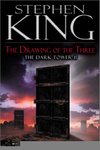
Review 98: The Drawing of the Three


The Drawing of the Three by Stephen King

I have a soft spot in my heart for world-crossing stories. Perhaps it’s the remnant of the same childhood fantasy that everyone has – you know the one, “My family is not my family, my hometown is not my hometown – I’m really a lost prince of a strange magical kingdom and one day my true identity will be revealed and I’ll be able to go do something more fun than this….”

Escapist fiction of this sort usually does really well, mostly because so many of us are unsatisfied with the way our lives are going right now. Harry Potter blew everyone away for the same reason that, say, Star Wars did – they spoke to that desire that we all have for a destiny, a reason for being in this benighted universe other than to consume, procreate, and die. It’s a very powerful dream, that dream that we can lead a life better than the one we’re living now, and it’s one that very few of us get to realize. So we turn to fiction to realize that dream for us.

Of course, nothing comes without a price. In hopping from world to world, you may have to resist the temptations of a Snow Queen or fight off the forces of Xur and the Ko-Dan Armada. You may discover that your father is the greatest force for evil in the universe, or that you’ve been born into a genetic cohort that scares the hell out of everyone. Crossing from one world to another – whether literally or figuratively – always comes with a price.

For Eddie Dean, Detta Walker, and Odetta Holmes, that price could very well be their lives.

When last we left the Gunslinger, Roland was sitting by a vast and gray sea at the end of the world. He had already sacrificed young Jake Chambers for his quest, and had been shown a vision of the universe that would have blasted the mind of a lesser man. Without any other direction, Roland continues on his journey – but not without some difficulty.

Wounded and ill, Roland has to go through three strange doors and draw out new companions to replace the ones he lost so long ago. If he is successful, he will draw out a new ka-tet – a group bound by the forces of destiny – that will stand with him on the way to the Dark Tower. If he fails, he will face total obliteration, to say nothing of being devoured alive by huge mutant lobsters.

Through door number one, Roland meets The Prisoner – young Eddie Dean, a junkie who has to bring a couple of pounds of cocaine through customs at JFK airport in New York. If he can do that, then the men holding his beloved big brother will let them both go, well-paid and well-loaded with the drugs that they so desperately want. Eddie can’t do it without Roland’s help, however – help that turns out to make the whole endeavor much more complicated and lethal than it might have been before.

Through door number two, Roland must bring the Lady of Shadows, a woman who is two minds in one body. One of these minds is Odetta Holmes, an upper-class African-American woman (though in her era of the early sixties she would probably prefer to be called a Negro) who has thrown her efforts and her fortune behind the growing civil rights movement. She is cultured and civilized, a little bit snobbish and prudish, but far, far better than her alter ego, Detta Walker.

Detta is the dark half, the evil twin who relishes in her misdeeds and embodies the worst qualities that can be found in a person. She likes to hurt people, to break things – partly out of the sheer enjoyment of hurting and breaking, but also out of a cruel sense of revenge for the ills the world has done to her. For the brick that was dropped on her head when she was a child, for the train that robbed her of her legs when she was an adult. Of all the people Roland has met so far, Detta Walker is the one who poses the most danger to him and his quest. Only by bringing the two women together can he have any chance of making it to the Tower.

Through door number three, Roland must meet death – but not for him – in the form of The Pusher. The aptly-named Jack Mort has a hobby – anonymous murder. Planning and executing the suffering of others is what brings joy to his heart and a stain to his jeans, and he has intersected with Roland’s quest even before Roland reached the beach. He was the one who pushed Odetta Holmes under a subway train. He was the one who pushed Jack Chambers in front of a speeding Cadillac. Now, Roland has control of this man’s body and will use it to get what he needs from our world so that he can carry on in his. A little poetic justice along the way is just icing on the cake.

If Roland succeeds, he and his new group will push on to find the Dark Tower and do… whatever it is that Roland needs to do there. If he fails, they will all die, and the hopes of Roland’s world will die with them.

Like I said, I enjoy tales of crossing worlds, and so this book felt good to me. I liked seeing not only how Roland dealt with the unfamiliar reality of New York in three different decades, but how the stories of Eddie, Odetta/Detta and Jack intersected with each other. At one point in his section, Jack thinks, “Who was to say he had not sculpted the cosmos today, or might not at some future time? God, no wonder he creamed his jeans!” Crude though it may be, Jack is more right than he knows – a few simple pushes altered the destinies of not only the people he pushed, but those of entire worlds. So if you think small actions can’t have big consequences, well, look to Jack Mort.

Actually, his section of the book was my favorite. While Roland vs. Eddie was an action-packed shoot-em-up, and Roland vs. Detta was a hostage drama, Roland vs. Jack was almost a dark comedy. Taking over Jack’s body and keeping the man’s mind at metaphorical gunpoint, Roland carves a swath of confusion through New York City. The mental disconnect people have between Jack Mort’s appearance as a well-off CPA and his behavior as a seasoned gunslinger is enough for some moments of gold.

By the end of the book, we’re not much closer to the Dark Tower than we were at the beginning, but we are very nearly ready to get started on the journey. Not quite there yet, but Roland now has people he can count on when things turn bad. And they will turn bad, you can set your watch and warrant on it.

—————————————
“Well, what was behind Door Number One wasn’t so hot, and what was behind Door Number Two was even worse, so now, instead of quitting like sane people, we’re going to go right ahead and check out Door Number Three. The way things have been going, I think it’s likely to be something like Godzilla or Ghidra the Three-Headed Monster, but I’m an optimist. I’m still hoping for the stainless steel cookware.”
– Eddie Dean, The Drawing of the Three
—————————————

The Drawing of the Three on Wikipedia
The Dark Tower Portal on Wikipedia
Stephen King on Wikipedia
The Dark Tower homepage
The Drawing of the Three on Amazon.com
Leave a comment

Filed under Dark Tower, fantasy, Stephen King, world-crossing

Review 94: The Gunslinger


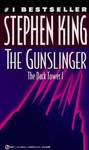
Dark Tower 1: The Gunslinger by Stephen King

“The man in black fled across the desert, and the gunslinger followed.”

There’s really not much more you need to know about this story except what’s right up there. That’s the essence of the whole thing – a chase. A man in black, who has obviously done something terrible, and a gunslinger, who is obviously going to set things right.

If, by “set right,” you mean “kill a whole lot of people,” then you’re pretty much on target.

This is the beginning of Stephen King’s Dark Tower series, a story told in seven volumes that manages to be the lynchpin for all the worlds that he has created. It’s a story that was 22 years in the writing, and almost never got finished. It’s an epic story, all about the endless quest for the Dark Tower, the center of all reality, the axle upon which the wheels of creation move.

Roland, the gunslinger, is hunting for this tower. He wants it more than anything in the world. He has lost everything in pursuit of this tower – his friends, his family, his world – and yet he pressed on. The man in black has information for him, can set his path towards his goal. If only Roland can catch him.

On his way to the man in black, Roland finds a small town taken over by a mad preacher woman, a sympathetic hermit, and a boy who doesn’t look like he’s terribly local to this world. All of them help point the way to the man in black, and none of them make it to the end with Roland. Even he is unprepared for the terrifying reality that awaits him when he and the man in black finally have their palaver….

There truly is something magical about this book. Even if there were no other Dark Tower books, it would stand out as a good story, well told. Part of this is its deceptive simplicity – moving from point A to point B, with only a few flashbacks to fill in the backstory. Well, quite a lot of flashbacks, actually, seeing as how King did set this story in a featureless desert with a singular protagonist, and there’s only so much you can work with without dipping into the well of the past from time to time.

The glimpses of Roland’s past that we get to see are tantalizing – they tell of a rich and cultured world that is nonetheless hard and merciless. The gunslingers are all that stand between civilization and chaos, and there are precious few of them left. Roland and his friends know they may be the last of their kind, but that doesn’t deter them from pursuing their guns and growing up to honor their fathers.

The fact that we know from the beginning that they all fail just makes it all the more poignant to watch them try.

It’s hard to talk about this book without trying to talk about the rest of the series, and it’s even harder to convey the feeling of reading it when the series was still ongoing. My father, a huge Stephen King fan, had these books when I was a kid, and I eventually got into them, and was – like so many others – immeasurably frustrated by the pace at which King was writing them. I finished this book, which does not necessarily have a happy – or easy-to-understand – ending, and I wanted more. I wanted to know what Roland was going to do now that he’d had his palaver with the man in black, and I wanted to know if he would ever find the Dark Tower. Whom would he enlist in his quest, as the oracle had suggested? Whom else would he sacrifice, as he did young Jake?

Speaking of which, the relationship between Roland and Jake is an interesting one, especially as I got older and re-read it. When I first read the book, I was probably around Jake’s age – eleven years old [1]. Reading Jake’s story of how he came to Roland’s world was horrifying enough, but to see how their relationship would eventually end was even worse. The idea that there might be something more important to, say, my parents [2] than I was – well, that was horrifying. To think that a purpose might exist for which they would let me fall to my death…. That’s not the kind of thing an eleven year-old boy wants to think about.

From the point of view of an older person, a grown man, I found something uncomfortable about their relationship. The bond that formed between man and boy was instant, and intense, and having grown up in a culture where a strange man being that friendly to a young boy would be automatically colored with the taint of pedophilia, well, I had to work a little harder to stay in Roland’s head. The fact that I know that wasn’t where King was going with the relationship helps a little, but every reader brings his or her hang-ups along when they read and some of mine are a little more persistent than others. I’m sure any psychologist who needs to put a down payment on a yacht would be happy to help me work on it.

All in all, it’s an excellent beginning. What follows is a massive tale, a great quest that spans time and space and reality, culminating in Roland’s final understanding of who he is and why he exists. Not all of it is as good as this book, but it’s still worth reading, I say ya true.

So put on your good boots, don’t forget your hat and horn and donkey. It’s a long trip to the end….

——————————————-
“This is not the beginning but the beginning’s end. You’d do well to remember that… but you never do.”
– The Man in Black
——————————————-

[1] This is another example of the Eleven Year-Old Boy Rule: if you have a major character in your book who is not an adult, chances are that it will be an eleven year-old boy. King is a master of this.

[2] Because if Roland isn’t a father-substitute then I don’t know who is.

The Gunslinger on Wikipedia
The Dark Tower Portal on Wikipedia
Stephen King on Wikipedia
The Dark Tower homepage
The Gunslinger on Amazon.com

1 Comment

Filed under Dark Tower, fantasy, Stephen King

Review 79: Guards! Guards!


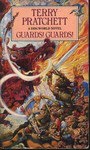
Guards! Guards! by Terry Pratchett

One of the dangers of reading Discworld books, of course, is that you may never stop. Much like potato chips, it’s hard to just have one and then move on to something else, especially – and this may strike some of you as a bit odd – when you’ve already read them.

There are people who never re-read books, and don’t see the point in doing so. “You already know the ending,” they might say, “and you know how the story goes. What’s the point in reading it again?” I never, ever understood that. I mean, if you have a good story, well-told, why wouldn’t you want to read it again? If it had meaning for you and struck a chord deep within whatever it is you might call a “soul,” then reading it again is almost mandatory.

I can certainly see our Straw Man’s point if the book is bad, or even just mediocre. There are plenty of books that I’ve read that I’ll probably never pick up again. But the Discworld series doesn’t contain any of them.

This one is the first in the Guards track – one of four major story tracks within the series – and it quickly made the adventures of the Ankh-Morpork city guard some of my favorite stories.

The book opens in darkness and mystery, a kind of film noir feeling that permeates the whole story (although I am challenged to think of any noir film that featured a dragon as the main antagonist – but more on that later). Captain Samuel Vimes of the Night Watch is about as low as he can go. He’s drunk, it’s raining, and he has finally seen himself for what he’s always believed himself to be. A wreck. A bum. A loose end in the city, respected by no one and nothing, with the exception of the two other poor souls in the Watch with him. If we were to cast Vimes in the movie, we’d have to cast Bogart at his drunkest.

Vimes is a mirror of his city, really. Ankh-Morpork is the biggest city on the Disc, and it embodies all the worst elements of cities everywhere. It’s crowded and dirty, a place where people would sell their own mothers for a chance to get ahead. It’s ruled by a system of guilds and merchants, an ever-fluctuating oligarchy all directed by a Patrician who wields his power with pinpoint precision. Crime not only flourishes in Ankh-Morpork, it positively thrives, regulated and controlled by its own guild.

In short, there’s no place in the city for the Watch, and no place in it for Vimes. Maybe long ago he harbored thoughts of saving his city from itself, but no longer. Now all he wants is his next drink.

He’s not the only one thinking of a better city, though. In the dark recesses of Ankh-Morpork, a secret society meets. They are a shadowy group of bretheren who believe that the only thing keeping their city from being a good place to live is the lack of a king. Ankh-Morpork had kings once, and is so often the case, the dimly-remembered past looks a lot better than the immediately visible future. And so the Unique and Supreme Lodge of the Elucidated Bretheren gather with a singular goal in mind – to create a king.

It’s not that easy, though. You can’t just pull some schmoe out of a crowd and say, “Here – start kinging.” There needs to be no doubt in people’s minds that this person has been tapped by destiny to become their king. Like if he, say, slew a dragon or something….

Into all of this strides Carrot Ironfoundersson, a young dwarf-by-adoption who has been sent by his foster father to learn how to be a human being. And what better way to do that, they suppose, then to volunteer for the Ankh-Morpork Night Watch? Within moments of his arrival he begins to upend the very structure of the city itself. Carrot is everything that Vimes – or anyone else – wishes they could be: honest, forthright, idealistic, the kind of man who would arrest the head of the Thieves’ Guild for stealing. He knows the law and believes in it, which makes him just the wrong person for the Watch. Or, as things turn out, just the right one.

What begins as a magical conspiracy ends up being a murder-mystery, with a giant, fire-breathing dragon as the main murder weapon. Faced with this threat to both himself and his city, Vimes and Carrot, Nobby and Sergeant Colon are the only people who are willing to put themselves between the city and the dragon. Not, all things considered, the place they most want to be, but they’re all there is.

It’s a really good book, and an excellent introduction to the Guards track of the Discworld series. It is, of course, very funny – that goes without saying in this series – but also very meaningful. It has a lot to do with dreams and ideals, and the manner in which we are willing to achieve those dreams. Some by trickery and subterfuge, like the dragon-summoners, others by sheer honesty and idealism, like Carrot. And even those who have given up on their dreams, like Captain Vimes, can be persuaded to pick them up again, dust them off and give them another go.

It’s a story of redemption, not only for Vimes, but for the city of Ankh-Morpork. Much like Vimes, the city looks hopelessly lost at the beginning of the book – all rain and darkness and death – but by the end we have a glimmer of hope that it can become a better place. A place where the law can win out over corruption and decay, and where good people, standing up against million-to-one odds, can sometimes come out on top.

And if that’s not a story that deserves to be re-read, then I don’t know what is.

—————————————————
You have the effrontery to be squeamish. But we were dragons. We were supposed to be cruel, cunning, heartless, and terrible. But this much I can tell you, you ape – we never burned and tortured and ripped one another apart and called it morality.
– The Dragon, Guards! Guards!
—————————————————

Terry Pratchett on Wikipedia
Guards! Guards! on Wikipedia
Discworld on Wikipedia
Guards! Guards! at Amazon.com
Guards! Guards! on Wikiquote
Terry Pratchett’s website

Leave a comment

Filed under Discworld, dragons, fantasy, humor, police, Terry Pratchett

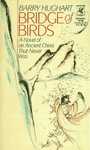
Review 78: Bridge of Birds


Bridge of Birds by Barry Hughart

It’s not often that you read a book and it immediately jumps up into your “Best Books Ever” list. Usually it takes some time and reflection, careful thought about the book’s characters, themes and message. Perhaps a re-read would be in order, and then, after some consideration, you might say, “Yeah. I think this is a really, really good book that I want everyone else to read.”

I think I hit that somewhere around page 182.

This is, as the cover tells us, a novel of “An ancient China that never was.” It’s set in the long-ago, indeterminate past (of which China has so very much), and starts off in a small village with an unusual history. The village of Ku-Fu, the story goes, was home to a section of the Great Wall, commissioned by the Emperor of China many centuries ago. This would not in itself be notable, except that it was built 122 miles south of the rest of the wall, thus serving no real purpose whatsoever. The general in charge was, he maintains, given the orders by the Emperor of Heaven himself, a story which held no sway with the more earthly Emperor who was ready to execute him. A more believable story was produced – that a great dragon had rested itself on that part of the wall, thus moving it, and it shouldn’t be tampered with.

And so the village of Ku-Fu became home to what was known as The Dragon’s Pillow, a place that would one day loom large in the history of not only the village, but all of China.

It is a peaceful village with the usual colorful characters that you get in such a place, such as the terrible partners Pawnbroker Fang and Ma the Grub, two greedy and unscrupulous men who hold the economic life of the village in their hands. When their misdeeds go too far, resulting in the horrible poisoning of many of the village’s children, the story’s narrator, Number Ten Ox (whose given name is Lu Yu, but he would not want to be confused with the famous author of The Classic of Tea) is tasked to bring a wise man from the city to diagnose the problem and find a solution. Out of the many wise men, Ox finds Li Kao, a cynical, world-weary curmudgeon with, as he so often tells us, a slight flaw in his character.

Together, Ox and Li Kao must travel the length and breadth of China to find the Great Root – a ginseng root that was kept by the mythical Princess of Birds, and whose healing properties are all that stand between the children of Ku-Fu and certain death. Along the way, they must travel terrible labyrinths, fight unimaginable monsters, battle against an immortal evil, bring peace to restless ghosts and solve the greatest mystery in the history of China – what happened to the Princess of Birds, beloved of the Star Shepherd, Prince of Heaven.

There is just so much to recommend this book, I don’t even know where to start. For one, it’s a lot of fun to read. The person who recommended it to me did so on the reasonable assumption that, since I like Terry Pratchett so much, I would probably like this book as well. And that was a very good assumption – there is a certain similarity between the two. Hughart uses humor very deftly, keeping the characters alive and interesting through even the most dangerous of times. Where Pratchett’s humor often feels like literary slapstick, however, Hughart’s is a bit more subtle. The characters are funny, yes, but the book was not written to make you laugh. It was written so that the reader would have a good time reading a story well-told.

And what a story it was. It begins with a fairly straightforward quest – a search for the Great Ginseng Root to cure the children of Ku-Fu – and turns into something so much larger than that. As the evil Duke of Ch’in says, they’re on the right quest, but for all the wrong reasons, a cryptic statement that takes a while to make sense. The scope of the story gets bigger and bigger as it goes on, and you realize that the pieces for this quest were put into place hundreds, if not thousands of years before the story actually started.

The history of China is on display here, if somewhat distorted for the purposes of entertainment. Hughart spent time living in the Far East and gained a healthy respect for its long and often unbelievable history and culture. The book includes elements of China’s history of inventiveness and ingenuity, as well as cultural myths that extend beyond its borders.

The characters themselves are wonderful, too. Number Ten Ox is an earnest, strong, well-meaning young man who has one goal in mind- save the children of his village. Li Kao is a devious old man who tends to use his wisdom and quick thinking for more nefarious purposes – thus the slight flaw in his character. There are a lot of notable minor characters as well, including Pawnbroker Fang and Ma the Grub, who somehow manage to turn up all through the story, always being chased by the people they’ve cheated. The Duke of Ch’in is a terrifying figure, Henpecked Ho is comically dark, and Miser Shen starts off utterly unlikable, but if there’s one character in the story that forces you to put down the book for a few minutes and gather your thoughts, it is he.

It’s a moving tale of hope and perseverance and the power of myth. It’s a story about the need for humanity to temper desire and what happens when we let our lives be governed by fear and greed. It’s about love and justice, revenge and history. It’s a book that almost immediately earned my respect and admiration, and that’s pretty hard to do.

So go get it. Block out some time when you can sit and fall into the story and really get absorbed in it, because let me promise you – it will be well worth it.

————————————————–
“Take a large bowl. Fill it with equal measures of fact, fantasy, history, mythology, science, superstition, logic, and lunacy. Darken the mixture with bitter tears, brighten it with howls of laughter, toss in three thousand years of civilization, bellow kan pei – which means ‘dry cup’ – and drink to the dregs.”
“And I will be wise?”
“Better. You will be Chinese.”
– Li Kao to Procipius, on attaining wisdom, Bridge of Birds
————————————————–

Barry Hughart
Bridge of Birds on Wikipedia
Bridge of Birds at Amazon.com
BarryHughart.com

Qixi Festival on Wikipedia

1 Comment

Filed under Barry Hughart, China, fantasy, humor, quest

Review 76: Changes


Changes by Jim Butcher

“Hell’s Bells” count: 20

Well, the title promises changes, and that is certainly what you get in this book. And the first of these comes right on page one: Harry Dresden has a daughter. Surprised? Yeah, well so was he.

The mother is Harry’s old lover, Susan Rodriguez, whom he hasn’t seen in many years. The reason for their separation is pretty simple, the kind of story you’ve heard over and over again – boy and girl meet, avoid their obvious attraction to each other for a while, and finally hook up. Boy tells girl all about the world of supernatural horrors in which he lives, girl finds it more intriguing than horrible, and manages to get herself bitten by vampires. Girl is able to resist turning all the way, but knows that she can’t be around boy lest her emotions overwhelm her and she devours him whole. Boy and girl have one last night of fun together, girl vanishes into South America to join an underground cabal of vampire hunters.

Boilerplate, really.

No sooner does Harry discover that he has a daughter that she finds out she’s been kidnapped, taken as a hostage by the Red Court of vampires for some purpose that is no doubt terrible and nefarious. As much as Susan knows it will hurt Harry to find out she’d been hiding their daughter from him, she also knows that he is the only one with the power and the resources available to get her back.

After all, Harry is a Wizard, a member of the White Council, if not one of their favorite members. He has contacts within the council that could prove useful, as well as resources that reach from Heaven to Hell. A far cry from the lone wolf that we met way back in Storm Front, Harry now has connections and resources that will allow him to take on some of the most powerful beings in the world as they attempt to use his daughter for their own evil ends.

As the title implies, of course, Harry does have to make some very serious choices in this quest; choices about how far he’s willing to go in order to save his daughter, to say nothing of whether saving his daughter is even the right choice to make in itself. After all, the Red Court has been at war with the White Council for some time now, and the slightest mistake one way or the other could just make the whole thing worse. The last thing the White Council wants is their least favorite loose cannon (and, not for nothing, the guy who got the whole war started in the first place) complicating matters unnecessarily. The supernatural world is pretty much ready to fly apart as it is, and one mis-step could mean death and destruction on a scale greater than anyone has ever known.

In the end, the choices that Harry has to make in this book will haunt him for the rest of his life, if not longer. I would probably not be wrong in saying that this book marks a major turning point for the series.

If you’ve been reading this from the beginning, which you really should have, then this is going to be a rough book. I’ve made mention before of how Butcher likes to play hardball with his characters sometimes, but this book is so much more than that. This book is an all-out attack on everything that Harry holds dear to him, a scouring of his life that puts him into an entirely new situation. What this is in preparation for is anybody’s guess, but I can tell you this much without really spoiling anything – Butcher had better damn well have the next book on a fast track or he’ll find me sitting on his front porch with a torch and a pitchfork and a haunted look in my eyes. [1]

Given that, as of this writing, the book has just come out, there’s not a lot I can say about it in detail. If you’ve been following the series, you’re going to read it no matter what I have to say, and I don’t want to ruin anything for you. All I can really say is that this isn’t my favorite of the series, at least not upon first reading. It’s a little rushed in parts, and has one too many deus ex machina moments for my liking. The only thing that mitigates that is the knowledge that Butcher wastes nothing in his storytelling, and even the biggest miracles come with a price that will have to be paid. And I expect that the payoff will be something to see. Having said that, though, Changes will probably hold up as one of the most significant of the Dresden Files books once the series is done. In terms of what happens to the characters in this book, it’s really like nothing else that’s come before it.

So brace yourselves, kids. This one’s a bumpy ride. As with all the Dresden Files books, though, it’s well worth it.

—————————————————–
“Harry… I’ve got a bad feeling that…. I’ve got a bad feeling that the wheels are about to come off.”
– Karrin Murphy, Changes
—————————————————–

[1] Yes, yes, I know that, to paraphrase Neil Gaiman, the author is not my bitch. Still and all, waiting for the next book to come out will be like trying not to fart in church – interminable, impossible not to think about, and oh so relieving when the opportunity finally arrives.

The Dresden Files on Wikipedia
Changes on Wikipedia
Changes on Amazon.com
Jim Butcher on Wikipedia
Harry Dresden on Wikipedia
Jim Butcher’s homepage

Leave a comment

Filed under children, detective fiction, Dresden Files, fantasy, Jim Butcher, vampires, war, wizardry

Review 75: The Eyes of the Dragon


The Eyes of the Dragon by Stephen King

Sometimes you are surprised.

Stephen King has long been associated with horror, and deservedly so. His career began with works like Carrie, Christine, Firestarter, The Shining and so on, all designed to scare the everlovin’ out of any poor soul who picked up the book – and usually succeeding. What’s more, the books often became movies, thereby allowing that segment of the population who doesn’t read much to be terrified.

So for years, King has been called one of the scariest authors alive. I’ve seen cartoons attempting to portray Halloween at his house, bedtime stories for his children, and the horrible, dark confines of his imagination. The mind of King is where the terrors dwell, most think – the monsters, demons and vampires.

And Flagg.

But this book is where King really strayed from the image that had been built for him in popular culture. This story isn’t a horror story, no matter what the quotes on the back of the book imply. This is a fantasy story. It has some tense and scary moments, yes, but it’s a fantasy through and through, built with some of the most well-worn elements of fantasy storytelling. We have all of the necessary elements before us:

The King – King Roland (no relation to the Roland of the Dark Tower Series, as far as we know), the fairly capable and mostly well-liked king of Delain. He has served his kingdom well, and grown old and, if not wise, then at least experienced. He’s not the best king, nor is he the worst. The most that can be said of him is that he tried his best and hoped that his son would do a better job than he had. Of course there is also….

The Queen – Queen Sasha, beloved of Roland. She was the light of his life, and the guiding hand on his shoulder. Many in Delain agree that Roland could have been a despot were it not for his beautiful and kindly wife whose compassion and good sense would eventually save the kingdom. She bore two sons, the first of whom was…

The Prince – Prince Peter, the shining star of the family. Wise beyond his years, strong and fair, everyone loved Peter. He won awards and friends, and was all in all a good son, one that any father would be proud to have. Most people, knowing that Peter would be the next king, felt that the future of Delain was safe. Peter had a brother….

The Second Son – Prince Thomas, forever standing in his brother’s shadow. Not only was Peter older and more capable than Thomas in every way, there was an additional burden on his young mind. With the birth of Thomas, his mother, Queen Sasha, had died. And so it was that Thomas grew up the guilty one. He sought the love of his father, who thought the sun rose and set on Peter. And while Peter made every effort to extend the hand of brotherly love, Thomas felt only resentment and jealousy. Little did he know that his destiny had been guided from the beginning by….

The Evil Wizard – Flagg, that undying demon whose black and poisonous presence had been in Delain every time the country fell into ruin, and who intended to do it once again. A master of spells, potions and poisons, to speak his name was to invite horror, pain and death. He stood in Roland’s shadow, quietly twisting his mind over the years. His ultimate goal was a millennium of darkness for Delain, and he knew just how to bring it about. The only thing standing in his way is the possibility that Peter could be king.

I’m not sure whose story this is, which makes it all the more interesting. On one hand, it’s Flagg’s story. In his dark desire to see Delain in chaos, he manipulates the King and his family to bring the kingdom to the brink. A little patient planning, some good preparation, and Flagg manages to frame Peter for the vicious murder of his father, the King.

Suddenly the Golden Boy is a despised murderer, patricide and regicide, and sentenced to spend the rest of his natural life imprisoned at the top of Delain’s tallest tower, the Needle.

But, then, maybe it’s Peter’s story. He is caught, an innocent victim in this web spun by Flagg. But he was well-taught by his father and mother. His father taught him to be strong and kingly, his mother to be kind and human. The combination made him into something that Flagg could not stand – a good person and potentially a good leader.

Even in his lofty prison, Peter isn’t willing to give up. With some clear thinking and a lot of patience, he manages to work out a plan to escape. Because he is a good man, he has friends willing to help him, to do favors, who will perhaps help clear his name and end the less-than-spectacular reign of his brother, Thomas.

Then again, maybe it really is Thomas’ story. The narrator (the presence of whom gives this story a wonderful fairy tale feeling) takes pains to show us that, while Thomas is a sad, confused, and sometimes cruel man, he’s not really bad.

Full of fear and self-loathing, Thomas is the perfect tool for Flagg. Under his dominion, the kingdom starts to slide towards the chaos that Flagg so richly desires. Thomas is a good example of what happens when a weak person, guided by circumstance and cruel greed, takes power. But even Thomas is not irredeemable – despite the mess of his life, he possesses a secret that could ruin everything Flagg has tried so hard to create.

As with so many of King’s really good books, we are presented with not only an excellent cast of characters, but also excellent storytelling. In many of his author’s notes, he refers to us as Steadfast Reader. He never forgets who has given him his fame and his reputation – the readers. By using a storyteller to present this tale, he acknowledges and speaks to us as though he were telling us the story directly.

Much like it can be a story about many people, it’s a story of many messages. It’s about hubris and the belief that one cannot possibly fail in one’s Evil Plans (happens to me all the time). It’s about honor and loyalty and standing by what’s right, even when the whole world is against you. It’s about being able to redeem yourself, no matter what horrible things you might have done in the past. It’s a story about love and hope and faith, one that never gets old no matter how many times you read it.

I’m not sure how many times I’ve read this book by now, and I fully expect I’ll read it again in the future. If you’re not a King fan and you’re not too keen on reading about family dogs that turn into killing machines, insane telekinetic teenage girls, or possessed Plymouths that steal the souls of their owners, then this is the book you want to read.

——————————————–
“In those years, Thomas discovered two things: guilt and secrets, like murdered bones, never rest easy; but the knowledge of all three can be lived with.”
– Stephen King, The Eyes of the Dragon
——————————————–

Stephen King on Wikipedia
The Eyes of the Dragon on Wikipedia
The Eyes of the Dragon on Amazon.com
Stephen King’s homepage

Leave a comment

Filed under adventure, brothers, dragons, family, fantasy, fathers, friendship, murder, revenge, sons, Stephen King, wizardry

Review 72: Turn Coat


Turn Coat by Jim Butcher

“Hell’s Bells” count: 25

One of the problems involved in writing an ongoing series (or so I imagine) is the problem of escalation. The new stories have to be better than the old ones, or your readers will get bored and wander off to see what else is going on. Even with the hard core fans, the writer has to consistently challenge the character in order to make each story more interesting than the last. So if your hero is fighting some fairly minor-league bad guys in one book, his foes in the next book have to be greater than or equal to the previous ones.

Harry Dresden’s story started off with a pretty heavy-hitting minor leaguer: a black magician who was using thunderstorms to power magical murders. From there, we saw Harry go up against werewolves, necromancers, the Faerie, and fallen angels. He’s come out on top every time, though sometimes just barely, managing to triumph over foes that are very much out of his league. So where to go from here?

In order to avoid – or at least slow down – the escalation problem, Butcher appears to be refocusing the series story arc. Whereas before we had individual catastrophes that threatened people, cities, or worlds, we’re now looking at something more complex. Something that cannot easily be killed by a silver bullet or a well-placed ray of sunshine, or even a zombie Tyrannosaurus Rex. We’re looking at a Conspiracy now, which changes the overall shape of the story dramatically.

Of course, this is a Harry Dresden novel, not the mad ravings of some Moon Landing deniers or 9/11 Truthers or those guys who believe that the leaders of the world are actually alien reptiles. As intellectually challenging as a good conspiracy can be, it just wouldn’t be right if there wasn’t blood and fear and terror – it wouldn’t really be a Dresden Files book if the very first page didn’t make you say, “Woah!”

Which this one does, when Morgan – a Warden of the White Council and the man who probably hates Harry Dresden more than anyone else in the world – shows up on Harry’s doorstep, wounded and hounded and asking for sanctuary. From the other Wardens, no less.

A murder has been committed, deep in the heart of the White Council’s sanctum in Edinburgh, Scotland, and one of the most powerful members of the Senior Council is now dead. To all appearances, Morgan was the murderer, and the evidence is damning – bank records, for one, connecting him to the Red Court of the Vampires. What really made him look bad, though, was being found standing over the still-warm body, sword in hand. That’ll usually set off the Guilty alarm every time.

So, pursued by the entire White Council, Morgan turns to the one man he knows would be willing to help him. The fact that it’s the man he’s dedicated his life to destroying must have made it that much more of a bitter pill to swallow. All he can do is hope that Harry will be able to protect him not only from the Wardens, but from the bounty hunters and reward-seekers who are looking to profit off his return to the magical authorities – alive or dead, of course.

There’s a secondary plot as well, and as with Blood Rites, it’s one that will no doubt pay off heavily in future books. Part of what has made Harry become more connected to the world over the last eleven books was the discovery that he had a half-brother – Thomas, of the White Court of Vampires. They share a late mother, the ever-enigmatic Margaret LeFay. Having never met his mother, and having lost his father at a young age, Harry has latched onto this one family member he has. Indeed, he and Thomas get closer in every book. They look after each other and keep each other honest, as brothers are supposed to do. Thomas is one of the things that keeps Harry grounded.

When Thomas gets caught up in the hunt for Morgan and abducted by a creature of horrifying power – the Naagloshii – as a bargaining chip, Harry stands to lose the only family he has. The terms are simple: give Morgan to the Monster, or see Thomas destroyed. Harry Dresden being who he is, refuses to accept either one of these outcomes, and does his best to keep both men safe. But even this may just be a holding action, a delay against the inevitable, and what ultimately becomes of Thomas will no doubt fuel a great number of storylines to come.

Of course, the Conspiracy is at the heart of this, run by a shadowy organization that Harry has dubbed The Black Council. It is they who have been sowing discord over the last few years – giving powerful magical items to mortals, aiding minor-league sorcerers to become heavy-hitting murderers. They have infiltrated the White Council completely, and the extent of their influence is unknown. It’s up to Harry and his allies to not only prove Morgan’s innocence but to prove the existence of this dark cabal.

The principles of escalation are still in play here, but Butcher has chosen to go with an increase in scale, rather than power. Sure, the naagloshii is pretty damn powerful, a creature that Harry would have no chance of defeating on his own, but it is simply a pawn of the Black Council’s machinations. From here on out, Harry won’t just be fighting monsters – he’ll be fighting institutions. He’ll be battling secrecy, tradition, prejudice and denial, simple human traits that can be more destructive than any disgusting shape-shifting abomination.

I don’t think I really have to say, “Read this book” anymore. If you’ve gotten this far in the series, you’re going to read it whether I tell you to or not. If you haven’t been convinced to read the series by now, I don’t think I am able to convince you. All I can say is that a lot happens in this book, even aside from the action and interesting plot twists. There’s a mystery that pays homage to both the American tradition of hard-boiled realism and English intellectual investigation. There’s loss, both great and small, and a fundamental re-alignment of an entire magical community. The more I think about it, the denser the book becomes, which is a fantastic thing.

If Butcher can keep this up, I’ll gladly follow where he leads.

—————————————————-
“Sometimes irony is a lot like a big old kick in the balls.”
– Harry Dresden, Turn Coat
—————————————————-

The Dresden Files on Wikipedia
Turn Coat on Wikipedia
Turn Coat on Amazon.com
Jim Butcher on Wikipedia
Harry Dresden on Wikipedia
Jim Butcher’s homepage

Leave a comment

Filed under detective fiction, Dresden Files, fantasy, Jim Butcher, wizardry

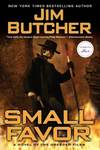
Review 68: Small Favor


Small Favor by Jim Butcher

“Hell’s Bells” count: 21

This is the tenth book in the series, and if Butcher’s own plan can be trusted, it marks about the halfway point for the series as a whole. Having made it this far with the series is a remarkable achievement, and if he can keep it up all the way to its projected end, I will be a very happy and impressed reader. So, a few words about the book itself, and then some thoughts on the series.

Honestly, if you’ve been following my reviews of this series, you can be pretty sure what I’m going to say about it – I devoured the book and enjoyed every minute of it. In this edition, Our Hero Harry is faced with death and danger on all sides, as usual. The everlasting Queen of the Winter Sidhe, Mab, wants Harry to rescue John Marcone, the boss of the biggest organized crime racket in the city, from the clutches of fallen angels who have immeasurable power and millennia of experience. What they want with Marcone – and other, more innocent and tragic characters – isn’t clear, but what we can be sure of is that the full extent of their plans will far exceed simple kidnapping.

Meanwhile, he’s being attacked by agents of Queen Titania, the queen of the Summer Sidhe, for reasons that are not all that clear to anyone, especially Harry. His attackers are beasts of legend – the Gruffs. You may have heard of them when you were a child – goatlike creatures with a talent for eliminating trolls. They are brothers, and if you manage to defeat one of them, you can be sure that his big brother will be along soon to take care of you. And you most certainly don’t want to get on the bad side of the eldest of the Gruffs, let me tell you that. Nice guy, but he’s clean your clock no matter who you are.

So, things aren’t so good for Harry Dresden. But, then, when are they ever? Going up against forces way over his head is pretty much a theme for Harry’s life, and while we can be reasonably certain that he will prevail (after all, there are about ten more books to go, and they’d be hard to write without him), we don’t know how much damage he will take in the doing so. Although if you guessed “a lot,” you’d be pretty well on the mark.

That goes for pretty much every book in the series. Harry is an underdog, or at least he starts out as one. By the time you get to this book, he has some measure of authority, responsibility and respect, as well as a serious reputation amongst people in this world and others. So, this makes it rather harder for him to be an underdog. Instead of simple vampires, werewolves and the occasional necromancer, we now have to deal with the Big Guns like Mab, Titania and The Fallen. Which brings me to my first prediction for the rest of the series.

Harry Laid Low. At some point, I figure all that he’s built up will have to come crashing down. Gross physical harm aside, he’s put himself in a much better position than the one he was in way back in Storm Front, and if he continues the way he has, he will cease to be the underdog and become the overdog, if there is such a thing. While it’ll be interesting to see how he handles being higher up on the food chain, I don’t think it’ll sit well with his character.

That would be unfortunate, because it’s Harry’s character that really make this book. I’ve talked to those who aren’t too keen on investing in this series because it’s not quite different enough from the other modern, urban fantasy out there. And in a way, they’re right. A lone wolf investigator with a mysterious past and unknowable potential who has a talent for making big enemies? That could either be this series or the Nightside books by Simon Green, and I’m sure there’s a few more that follow a similar pattern. Butcher isn’t breaking open new ground with this series, at least not as far as I can tell. And a main character who is a wizard named Harry with a mysterious destiny and a tragic past? Yeah, like I’m sure you haven’t thought of it already. I don’t think that’s Butcher’s fault, though. Harry seems to be the kind of character who shows up in a writer’s head long before the book gets published, and Gary Dresden or Fred Dresden doesn’t sound as good.

Though Christopher Dresden has a nice ring to it, I must say. Why aren’t there more fictional heroes named Chris, anyway? Weird.

Back on topic – what Butcher has done, and what makes me enjoy this series so much, is take the genre and populate it with really interesting people. One of the things I enjoy so much about Harry is that he seems to be someone I’d like to hang out with – he has a sense of humor that I enjoy, and seeing how many of my friends tend towards wise-assery, I think we’d get along well. Other characters, like Murphy, Michael, Molly (lots of M names), Thomas, Bob, Mouse…. They’re complex, they’re interesting and occasionally surprising. You really come to care about them, because Harry cares about them and you care about Harry.

Which reminds me: Predictions 2 and 3 – The Death of Karrin Murphy and The Corruption of Molly Carpenter. These are two people who are extremely close to Harry, and invoke his much-debated sense of male chauvinism. A few people seem to take issue with Harry’s desire to protect women, which appears hopelessly old-fashioned. Maybe it is, but Harry (and by extension Butcher) seems to be okay with that. Murphy is Harry’s best friend, the one character who’s stood by him since the first book, and has grown to be his closest ally. She has gained his trust and his faith through fire and trial, and in this book is actually able to assert her authority (in a wonderful, wonderful scene) to save Harry’s skin.

So, she has to die. It’s one of those Hero’s Journey things – the hero has to lose those things closest to him in order to come out the other side as a True Hero. He needs Murphy, he really does, and he needs to be able to stand without her. If that means that she’s taken out, well…. I don’t know if or when it’ll happen – I’d bet somewhere in the climactic final books.

As for Molly, she’s an interesting person. A young person who, after a very rocky start to her life as a magic-user, has been given a second chance by Harry. For his part, Harry’s job is to make sure she turns out right, to make sure she learns how to use her powers responsibly and wisely, for the betterment of others. As of this book, she’s doing very well – her powers are becoming more refined, and she’s got a good handle on what it means to be a responsible wizard.

But first, she has to see her dark side, look it in the eye, and face it down. So, at some point, Molly is going to slip. Whether through impatience, arrogance or circumstance, she’s going to risk both her and Harry’s lives by using her powers for Evil.

There you go, then. It’s a great series, very enjoyable, and I’ll be following it to the end. I highly recommend you do the same.

———————————————
“Let’s sum up: an unknown number of enemies with unknown capabilities, supported by a gang of madmen, packs of attack animals, and superhumanly intelligent pocket change.”
– Murphy, Small Favor
——————————————–

The Dresden Files on Wikipedia
Small Favor on Wikipedia
Small Favor on Amazon.com
Jim Butcher on Wikipedia
Harry Dresden on Wikipedia
Jim Butcher’s homepage

3 Comments

Filed under detective fiction, Dresden Files, fantasy, Jim Butcher, wizardry

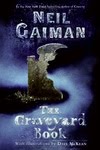
Review 67: The Graveyard Book


The Graveyard Book by Neil Gaiman

As I’ve said before, Neil Gaiman is one of the very few authors whose books I’ll pick up without reservation. I can always be sure that I’ll enjoy what he does, so I always look forward to new work. I am happy to say that this book is no exception. It’s even made news recently – it won the Newberry Medal for Children’s Literature, a very prestigious American literary prize. So good for you, Neil….

It’s a well-deserved medal for a book that follows in the footsteps of Kipling’s The Jungle Book. It’s a book that can appeal to young readers and adults alike, without being condescending or patronizing, something that many writers for young readers have trouble with. As can usually be expected from books aimed at young readers, it’s heavy on the themes of growing up, learning your place in the world, and eventually deciding who you want to be. The means by which this book does it, however, are slightly different.

The first line was enough to get me hooked: “There was a hand in the darkness, and it held a knife.”

Ooo. Shivers.

The story begins with a gruesome triple murder, as all good childrens’ books do. But the intended fourth victim, a young toddler, manages to escape the bloodbath and wander, quite innocently, up to the graveyard on the hill. There, amidst tombs and graves that had lain there for centuries, he is saved from certain death and given protection by a most unusual new family: ghosts.

The boy, rechristened as Nobody Owens, or Bod for short, is raised by the spirits of this tiny world through the intercession of Silas, a mysterious individual who straddles the boundary between the living and the dead. As far as places to grow up go, it’s not a bad one. He does end up learning some rather old-fashioned English from those who died half a millennium ago, and wanders around in a grey winding sheet instead of proper clothing, but he is safe there. He has the Freedom of the Graveyard, a gift from the ghosts that allows him the protection that only the dead can offer.

As Bod grows up, he learns the tricks that ghosts can do – how to fade from sight, or to rouse fear and terror, how to walk through walls. But he also learns that he’s very different from his adopted community. Their lives are ended, their stories are done. He is alive, and as he gets older, that difference becomes more and more vivid. While he may live among the ghosts, he is not one himself. Not yet, anyway.

But there are those who would like to make him one. The mysterious murderer who destroyed Bod’s family, a man named Jack, is one of many wicked men who would see Bod dead. He may have lost the boy once, but he and his confederates are determined to find him again. There is a prophecy, you see, and they mean to see that it’s stopped. And once Bod learns about his family’s fate, he becomes equally determined to see justice done.

The book is really good. It’s a bit simple for an adult audience, and there were a few plot points that I was able to predict pretty quickly. But the book isn’t really aimed at us – it’s aimed at the younger reader, around eleven or twelve years old. Such readers don’t quite have the experience to know that, say, when a new character is introduced two-thirds of the way through the book, that’s a character to be wary of. It’s the kind of book that’s best read to people,and that’s how Gaiman promoted the release of the book, by doing public readings of it.

As I said before, it dwells on the theme that most books of this genre do: growing up. As Bod gets older, as he starts to feel the pull of the outside world, he understands that he can’t stay with his family forever. The dead don’t grow, they don’t change, but young people do – often very radically in a very short span of time. While it is perhaps a stretch to compare parents to dead people, there is certainly a vague parallel to be drawn here. As adults, we don’t change very much, at least not unless we have to. We’re set in our ways and our beliefs. They’ve served us well, and if there’s no reason to go mucking about with them, then they’re better off left alone. Kids, however, are malleable and ever-changing. They go through phases and changes and switch from adorable little tyke to abominable little teenager with alacrity. Eventually, they have to discover who they are, and the only way to do that is to leave.

The nice thing about Bod is that, while he does get into trouble and disobey his guardians, he is, on the whole, obedient and self-aware. He understands that his freedom – indeed his very life – is a gift to him from the graveyard. The ghosts there taught him what he knows, and made sure that he lived through the traumas of childhood and the machinations of men who wanted him dead. He appreciates what his guardians have done for him, even as he prepares to leave them. It’s a good message, slipped in with the general motif of the challenges of growing up, and one that I hope young readers absorb.

It’s easy for a young person to look at the adults in his or her life and think of them like the ghosts in this book. Yes, their lives aren’t very exciting anymore, and yes they tend to be overprotective and kind of a pain in the ass. But it’s for a good reason, most of the time. Thanks to them, you have all the possibilities of life laid before you. And it won’t be easy, living. But you should do it while you have the chance….

————————————————
“You’re always you, and that don’t change, and you’re always changing, and there’s nothing you can do about it.”
– Mother Slaughter, The Graveyard Book
————————————————

Leave a comment

Filed under children, coming of age, death, family, fantasy, friendship, ghosts, identity, murder, Neil Gaiman, young adult

Review 65: Mercury Falls


Mercury Falls by Robert Kroese

You all know I love apocalypses, if that is indeed the correct pluralization. There’s just something about the end of the world that really gets me going, and if it can be done with some sense of humor and insight, that’s even better.

Mercury Falls has the distinction of being the first full-length book I’ve read on my Kindle, and let me say that it was a good christening. While I’m not writing a Kindle review, I have to admit that the device works very well. It’s easy to read, easy to make notes and mark interesting passages, and it fits in my bag a lot better than a 352 page paperback would. So, score one for the Kindle.

This being the ADD Age of Twitter, I don’t exactly remember how I first ran across Robert Kroese. He may have been re-tweeted by someone, or popped up on a Facebook update, or implanted into my mind while I slept (thank you, Dreamr.com!) I don’t know. What I do know is that the man is relentless in promoting his work. He keeps up an excellent level of interactivity with his Twitter and Facebook followers and finds ways to increase the word-of-mouth marketing that he needs, since this book was self-published and can use all the marketing help it can get. Under his incessant barrage, I bought the book for the Kindle, and it turned out to be fortuitous. Divinely inspired, perhaps, as though it were part of a larger plan. Hmmm….

One of the central themes of the End of the World, whether it’s the Biblical Apocalypse or any other, is that it has to happen. There’s just no way around it – sooner or later the forces of Good and the forces of Evil will duke it out on the Earth to see who’s the baddest bunch around. When asked why they would bother, the usual answer is that it’s part of God’s Plan, and that’s all we need to know. So we imagine that while we miserable humans must be kept in the dark, there must be someone who knows what’s going on. A prophet, perhaps the angels who are doing the fighting – God, definitely, right?

Not really, Kroese suggests.

He presents the reader with a celestial bureaucracy that makes the U.S. Government look like a small-town McDonald’s on a slow day. There are levels within levels, rank upon rank of angelic bureaucrats and agents and paper-pushers, all working towards what they believe the Divine Plan involves. The problem is that no one is entirely sure what that plan actually is. But like all good bureaucrats everywhere, they don’t care. There are rules, there are regulations, and they must be followed. What happens, however, when the Plan breaks down? Well, that’s when things get messy.

The human woman Christine Temetri, a reporter on the apocalypse beat at a nationally-read newspaper, The Banner, is about to find out just how awry things can go when the Divine Plan gets all cocked up. On an assignment to cover the latest skirmish between Israel and Syria, Christine is entrusted with a Very Important MacGuffin Briefcase, which brings her to the enigmatic cult leader Galileo Mercury.

Only he’s not a cult leader, really. He’s an angel. A fallen one, yes, but an angel nonetheless, and he’s the only angel who plans to sit out the end of the world. He’s happy to do card tricks and play ping-pong, at least until Christine shows up and drags him back into the fray. Together, they have to not only figure out how to stop the apocalypse, but how to make sure they stop the right apocalypse, and see to it that it’s done with as little damage as possible. They don’t really succeed on that last part, but they certainly make a valiant effort.

The entertainment in this book is not so much in the plot, which is in the political thriller mode with twists and turns and reveals a-plenty, to say nothing of shootings, explosions and pillars of fire. There are two major things that make the book entertaining.

First is the cosmology that Kroese has built up. The idea of a Heavenly Bureaucracy is not a new one, but he takes it rather a step further. In one scene, a couple of angels are taking pity on humanity because we pitiful humans are running around, making decisions without knowing for sure whether they’re right or wrong. The angels believe they are superior in that they have a Plan to follow – but they freely admit that they aren’t entirely sure if the Plan they’re following is the right one. “We assume that we’re part of a system that ultimately makes sense to [the Archangel] Michael, or God, or someone. All the little details may not make sense to us, but we go along with it anyway.” In other words, the angels are just like us, except that they can fly, do miracles, and are immortal. The bastards. In a later section, the characters are given a look at how the whole celestial bureaucracy is set up, and discover that even the angels don’t know for sure who’s actually in charge of anything. They just do what the Plan tells them to do and hope for the best.

So what we have here is a bureaucratic cosmology. It works, but no one is entirely sure how it works. And as Christine discovers, the benefit to not knowing the actual plan is that you are then free to do what you think is right. While the book is obviously centered around the Judeo-Christian framework, it’s not a religious book. It doesn’t address whether there is or is not a God, or whether religion is a fundamental necessity to humanity or a primitive hang-up, or neither, or both. What it’s about is the idea of choice, a topic covered pretty explicitly in chapter thirteen. The boiled-down version is that we may or may not have free will, and we can never really know, so it’s best to just pretend that we do. What this means, then, is maintaining a healthy dose of skepticism about what you are told is the right or necessary thing to do.

This does lead to some editorializing at times, which is pretty obvious when you hit it. As soon as you get to a section where two characters are engaged in a Socratic dialogue with each other, you definitely get the feeling that it’s Kroese putting his two cents in. This would be annoying if I disagreed with him, or if it was written with less wit. As it stands, I read it with the kind of patience I reserve for my really funny friends when they hit a topic they actually care about – I’ll listen along, because I know it’ll be good, but at the same time I’ll feel a little uncomfortable that they’ve decided to be serious for once.

Which brings me to the second reason I enjoyed the book – it’s damned funny. It reminded me in various places of Douglas Adams’ Dirk Gently books, as well as the fine work of Christopher Moore. There was plenty of narrative commentary, which was sarcastic and biting, and the characters often matched wits with each other at lightning speed. There were many parts that I re-read because I was sure I had missed something in the exchange, and it turned out I was right – and what I had missed was worth going back for. I put my Kindle’s highlighting function to good use, let me just say that. While I have trained myself to hold in my guffaws, in accordance with social norms here in Japan, there were a few points where I just couldn’t help but draw the stares of my fellow train passengers.

On a tangent: there was a moment in the book that made me think of the infamous LJ RaceFail of ’09, something I had hoped to not have to think of again for a while. When Christine meets Mercury for the first time, we’re introduced to two people. One is a short, dumpy man of Chinese ancestry, and the other is a tall, handsome white guy, and they’re playing ping-pong. When Christine asks for Galileo Mercury, the tall, handsome white guy leads her to believe that his opponent is the one she wants. He then reveals, of course, that he’s just messing with her. “Is there some law,” he says, “that a Chinese dude can’t be named Galileo?” And then, “But you have to admit, it would be pretty funny if Galileo Mercury was a Chinese dude.” He then sends the Chinese dude out to get some sodas.

This made me ask myself, “Well… why not? Why couldn’t Galileo Mercury have been a dumpy Chinese guy?” It’s not really apropos of anything – the presumed ethnicity of the character (who is an angel, after all) is utterly irrelevant to the rest of the story – but I would have been very impressed if Kroese had made his celestial action hero a less obvious action hero. Just a thought. Tangent over.

So, a fine first novel from a clever new author. You really can’t ask for much more than that, in my opinion, and I look forward to seeing more of Kroese’s work in the future. As he improves his craft, he may become a force to be reckoned with in the fantasy/comedy genre, so keep your eyes on him.

——————————————-
“My philosophy is that if you can make one person laugh, you’re already doing better than John Calvin.”
– Mercury, Mercury Falls
——————————————-

Robert Kroese’s homepage
Mercury Falls on Amazon.com
Mattress Police – Robert Kroese’s blog

Leave a comment

Filed under angels, apocalypse, fantasy, humor, Robert Kroese