Review 60: Assassination Vacation


Assassination Vacation by Sarah Vowell

I first saw Sarah Vowell on The Daily Show and I was intrigued by her. This slight, dry, kind of sleepy-looking woman was not who you might expect when you run the words “presidential historian” through your mind (in my mind, “presidential historian” is usually an older man of leisure who’s managed to be lucky enough to turn a passion into a job), but there she was. The fact that she was also really funny impressed me even further. And so, since I have a long-running fascination with presidential history myself, I set out to Mooch this book. And it was well worth it.

Being interested in Presidents means a lot of things. For some, it’s the semi-regular top/bottom ten Presidents lists, or comparing one to another in terms of their accomplishments and scandals. Some people develop a fascination with the more obscure Presidents, hoping to rescue their names and deeds from the dustbin of history. Others look to see what kind of social or cultural changes they made in their times. In short, if you want to learn about the Presidents, there are a lot of ways you can go about it.

Ms. Vowell here explores the more morbid side of Presidential history, especially the inevitable morbidness of being in history-love with Abraham Lincoln. In the special features section of The Incredibles DVD (she played Violet), you can see that she compares Lincoln to a superhero, and has multiple instances of Lincoln idolatry around her home. She admires Lincoln’s steadfastness and resolve, his determination to hold the Union together, and the humanity that connected him to the rest of the common people. Lincoln, in life, has a great deal to appreciate.

Study Lincoln long enough, however, and you eventually get to the sad part – his assassination by John Wilkes Booth in 1865.

Sitting in Ford’s Theatre in Washington DC, she was struck by the same thought many people have when they go there – “Wow. This was the place.” She sat in the Chinese restaurant that was built on the site of the boarding house where Booth and his co-conspirators made their plans and thought the same thing. And before she knew it, she was on a pilgrimage, a holy quest to visit all the places involved in the death of Abraham Lincoln. And there are a lot of places to visit, in New York, Illinois, and even off the Florida Keys, to say nothing of the area immediately around DC. Lincoln’s assassination echoed from that box seat in Ford’s Theatre and shook the nation.

Of the four Presidents that have been assassinated, most people only really know about two: Lincoln and Kennedy. But there were two others brought down by the assassin’s gun – Garfield and McKinley. So Vowell expanded her pilgrimage to include them as well, giving them the same treatment and respect that she gives to her hero, Mr. Lincoln. Why she decided not to do Kennedy is not explained. Perhaps because it hasn’t been long enough since the event, or because there’s so much controversy surrounding it already….

The book is a nice tour through the lives of one President we all know, and two that we don’t. And it’s all fun to read, which is usually hard to do with history, much less the history of James Garfield. She reveals that each assassination came about by a complex series of events, and was triggered by many things – frustration, anger, despair, madness – and that each one was a tragedy, even if we don’t appreciate them all that much.

Along the way, we get a refresher on American history, and a little contemporary comparison as well. For example, the Spanish-American war, over which McKinley presided, bears a shocking resemblance to the current war in Iraq. Both were wars of choice, fought for material gain, and initiated by dubious claims of aggression, just for starters. “Then, as now,” she says, “optional wars are fought because there are people in the government who really, really want to fight them.”

One of Vowell’s great talents in this field is being able to link things together, so that the decision made by, say, John Wilkes Booth has effects that can be traced to Emma Goldman, and then to Leon Czolgosz. Or how the utopian free love community of Oneida, New York accidentally spawned the bizarre madman Charles Guiteau, and then went on to make rather nice teapots.

This is a technique that history teachers need to learn if they’re going to give the world more people like Sarah Vowell – an understanding that history is not a series of isolated events, where you can look at a name, a place and a date and say, “Well, that’s that.” History is an ongoing process, with cause and effect coming one after another, often in strange and unexpected ways. Perhaps if people could see how a single event in the past directly influences the way they live in the present, they’d take more interest.

It’s a fun read. If you weren’t interested in history before you read this book, you’ll at least be a little warmer to it afterwards. Also, she won my heart right in the beginning by saying that part of the impetus to write this book was watching Stephen Sondheim’s musical Assassins, which I know nearly by heart even now, so many years after it was put on stage back at Siena. Every now and then she’d sprinkle a bit from the musical into the book – Charles Guiteau was a hoot – and I’d smile knowingly. Must listen to that again….

—————————————–
“There are people who look forward to spending their sunset years in the sunshine; it is my own retirement dream to await my death indoors, dragging strangers up dusty staircases while coughing up one of the most thrilling phrases in the English language: ‘It was on this spot…'”
– Sarah Vowell, Assassination Vacation
—————————————–

Sarah Vowell on Wikipedia
Assassination Vacation on Wikipedia
Assassination Vacation on Amazon.com
Sarah Vowell at the Barclay Agency

Leave a comment

Filed under Abraham Lincoln, assassinations, history, James Garfield, presidential history, Sarah Vowell, travel, William McKinley

Review 59: Proven Guilty


Proven Guilty by Jim Butcher

“Hell’s Bells” count – 14

It’s one year later….

Many things have changed for Harry Dresden, some of it good and much of it not so much. He has family now, in the form of his half-brother Thomas (who happens to be a vampire of the White Court) and a giant dog named Mouse. His relationship with Karrin Murphy of the Chicago Police Department is as solid as it’s ever been, and making very tentative exploratory steps into becoming a different type of relationship altogether.

He has a job – a real one, as a Warden – and all the responsibility that goes with it. The job of Wardens is to be the police and foot soldiers of the White Council of Wizards. When a Wizard breaks one of the seven Laws of Magic, the Wardens can act as investigators, judges and, all too often, executioners. The irony, of course, is that the same Wardens used to watch Harry like a hawk, as he had been accused of using magic to kill, thus breaking the first law. He got off light, under a “One strike and you’re out” form of probation with the melodramatic name of The Doom of Damocles. The Council needs Wardens, though, and Harry got tapped. Like it or not, he’s part of the Establishment now.

As if all that weren’t enough, he also has the shadow of a fallen angel in his head and an ongoing war with the vampiric Red Court to contend with. And in the midst of all this, he’s given two small, seemingly unconnected jobs to do: find who’s been dabbling in black magic in Chicago and find out why the Red Court vampires have been allowed to use the lands of the Faerie to attack the White Council of Wizardry.

They should be simple, or reasonably so. But they’re not. They never are.

Someone is using black magic to create fear. That fear is allowing terrible, terrible Things into the world, creatures that feed on fear and take the forms of some of the most terrible movie monsters we know (all of whom are, of course, based upon real characters, with only the names changed to protect Butcher from Lawyers). These creatures have already killed, attacking at a crowded horror movie convention, and Harry is determined to see that the person who called them forth pays for doing so. With blood and pain, if possible.

The discovery of the Black Magician, however, puts Harry in an impossible situation where he has to test his loyalties to both his friends and the Council. Fortunately, Harry being Harry, he puts his friends first and is determined to do the right thing, whatever it takes.

Oddly enough, “whatever it takes” happens to involve storming Arctis Tor, the stronghold of the Winter Faerie Queen, to chase down the creatures that stole off Molly Carpenter – the daughter of Michael, the Knight of the Cross. With his friends by his side, Harry goes off into what is almost certainly Certain Death, knowing that even if he saves Molly, she may ultimately be doomed.

When all is said and done, we get another glimmer of insight into how Dresden’s world works. It’s not a very nice place, and although the history of Wizarding is something that Butcher has avoided thus far, we get the impression that it was, until recently, a tumultuous profession. Easy to understand, really – you get someone with Phenomenal Cosmic Power, and odds are that he’s going to abuse it. Perhaps bend someone to his will, or try to turn some hapless victim into a frog. Even such things as time travel and contacting the Things that live beyond the Outer Gates would be possible, were it not for the swift and draconian execution of the Laws of Magic.

Harry represents an institutional change here – he’s someone who’s suffered under the Laws, who has seen how the merciless application of a rigid law can do more harm than good. Now, as a Warden, an authority figure, he has a chance to change all that. But it won’t be easy for him – wizards are a conservative bunch, by and large, and many of the more powerful ones are not well inclined to the idea of changing with the times. But they will have to change – their numbers are depleted, the war is going badly, and it seems that there is a Black Council out there, well-equipped to fight and destroy their White counterpart.

And of course there’s his relationship to the world beyond the Council. As was noted in the last book, Harry has changed. He’s become famous, not so much for saving the day and foiling the plots of evil masterminds, but for bringing death and destruction wherever he goes. As much fun as that sounds, it seems that watching people flinch when you raise your voice is not something that stays fun for very long.

And still in his mind is the shadow of Lasciel, a Fallen Angel, the merest fraction of whose consciousness is enough to tempt Harry into greater and greater levels of power – for a price.

It is, as with the rest of the books, a very good read. The tone has changed somewhat – it’s more tired, more cynical than the early books, which reflects the internal struggles that Harry is going through. But it’s fast-paced and exciting, with more than a few very interesting surprises along the way.

Also, because of the movie convention setting, there are plenty of good movie references peppered throughout the book. It makes me feel closer to Harry, since quoting movies was a major form of communication with my friends and me back in college. People here in Japan just don’t do it, and I feel the loss.

—————————————
“When everything goes to hell, the people who stand by you without flinching – they are your family.”
– Harry Dresden, Proven Guilty
—————————————

The Dresden Files on Wikipedia
Proven Guilty on Wikipedia
Proven Guilty on Amazon.com
Jim Butcher on Wikipedia
Harry Dresden on Wikipedia
Jim Butcher’s homepage

2 Comments

Filed under detective fiction, Dresden Files, fantasy, Jim Butcher, wizardry

Review 58: Sum – Forty Tales from the Afterlives


Sum: Forty Tales from the Afterlives by David Eagleman

So. What happens after we die?

I’ll wait.

Is it a Heaven of clouds and harps and angels? A Hell full of fire and brimstone and horrible torture? Do you get to come back again and live a new life, perhaps building on the mistakes of your previous one? Yeah, I guess that’s all well and good. I mean, the classics never go out of style, right? Perhaps some pearly gates with Morgan Freeman hanging out nearby, or an place of endless torment where David Warner is ready to turn you into a cockroach. Variations on an old and well-worn theme.

But how about an afterlife where you get to live with every possible version of yourself? You know the “many worlds” theory of the universe, right? For every choice you make, a new universe is born, and in that universe there lives a different you. Perhaps one who made better choices, perhaps worse. Well, after you die, you get to hang out with them all! Including, unfortunately, all the yous who made much, much better decisions than you did.

Or perhaps you get the afterlife where you re-live your entire life, but with all moments of the same quality grouped together. So that means you get to spend thirty years sleeping, or two hundred days taking a shower. Doesn’t sound too bad, except for the eighteen months you spend waiting in line, or the five months you spend on the toilet, or the 27 hours of intense pain.

Maybe you discover that there is no afterlife for us, just as there is no afterlife for a computer chip. We’ve all been components in a great computer, wherein every nod of your head, every word, every blink is merely a signal sent to other processing units (AKA people). Of course, the programmers don’t know why we’ve thrived as we have – they didn’t make us to be sentient, and still don’t realize it’s happened. But our world is the greatest of the computer worlds they’ve built.

There are forty other afterlives in this book, all described in two or three pages. Each one is an attempt to break free of the traditional sense of what the afterlife “should” be, and shows a great deal of creativity.

What’s fun is reading this and understanding that any one of them could be true. Just as true as the traditional heavens and hells we’ve been building for the last few millennia. After all, why couldn’t we have an afterlife where we’re given the opportunity to come back – but with one change of our own choosing? Or another where we get to choose the form of our next life, but are betrayed by our inability then to remember why we had chosen it? Just because they don’t have the weight of a Church’s doctrine or thousands of years of philosophy doesn’t make them wrong.

Because, after all, we don’t know. We can’t know. We may think we know, or believe we know, but that really doesn’t mean anything. Hell, I came up with my own afterlife scheme that sounded pretty good to me, but does that make it true? Nope. The one big constraint that seems to apply to all afterlives is that no one ever gets to tell the living how it worked out. Why this should be is unknown to me, but that just puts me in league with every philosopher who ever lived. Not bad company.

But since all afterlives could be true, it can be argued that none of them are. And if you can’t know what will happen to your soul after death, and how to ensure that your eternity is a pleasant one, then perhaps you should stop worrying about it. The nature and requirements of your afterlife are totally out of your control.

The same cannot be said for your life. That is something that you have knowledge of and control over. So appreciate that little fact and go do something with it.

Go ahead and entertain speculation about life after death. Let your imagination go wild. But don’t for a moment think that you know what will come when you breathe your last. Because it probably won’t be anything you ever expected.

Or maybe it will. Who am I to say?

In any case, this is a fun little (and I do mean little) book, suitable for reading in one sitting or in forty tiny bites of time. And who knows, maybe it’ll spur you on to thoughts of your own afterlife. If you have one, I’d love to hear it.

————————————————
“Among all the creatures of creation, the gods favor us: we are the only ones who can empathize with their problems.”
– David Eagleman, Sum
————————————————

David Eagleman on Wikipedia
Sum on Wikipedia
Sum on Amazon.com
David Eagleman’s homepage

Leave a comment

Filed under afterlife, David Eagleman, death, essays, philosophy, theology

Review 57: When Will Jesus Bring the Pork Chops?


When Will Jesus Bring the Pork Chops? by George Carlin

This is pretty much what you expect from Carlin – acerbic, abrasive, disrespectful, challenging language that doesn’t give a good goddamn what anyone else thinks. Which means there’ll definitely be something in there that you disagree with, and probably something that pisses you off. Not me, of course. When I watched the South Park movie, at the abortion joke from The Mole, the entire theater was dead silent except for me in the back row, cackling. I have a very broad sense of humor.

Anyway, if you’ve read his previous works, Braindroppings and Napalm and Silly Putty, you pretty much know what’s going to be in here – a lot of essays on current events, social customs and traditions, and the general weak character of Americans today. Plus, there are lots of short bits that are really funny:

“I wanted to be a Boy Scout, but I had all the wrong traits. Apparently, they were looking for kids who were trustworthy, loyal, helpful, friendly, courteous, kind, obedient, cheerful, thrifty, brave, clean and reverent. Unfortunately, at that time I was devious, fickle, obstructive, hostile, rude, mean, defiant, glum, extravagant, cowardly, dirty and sacrilegious. So I waited a few years and joined the army.”

One of Carlin’s hot points is his love of language, as the above points out. He loves language and he loves to watch how people use language to bend the truth of their meaning – in other words, he takes particular notice of euphemism. As an English teacher, and a lover of language myself, I also find this topic fascinating and have cannibalized some of Carlin’s material for use in lessons on the topic. Included in this book is his “Shell Shock to PTSD” speech, chronicling the renaming of the same condition from World War I (“Shell shock. Almost sounds like the guns themselves. Shell shock!”) through to the present day (“…at last, the pain had been completely buried under psycho-jargon. Post-traumatic stress disorder.”).

This is one area in which I have great respect for Carlin. Overall, I prefer his old material – the Hippy Dippy Weatherman, Congolia Breckenridge and all that – to his newer, rougher stuff. But on the subject of language, I find him to be an insightful and clever scholar of communication. Words exist to describe things. At the same time, however, words conceal the true nature of things, and no one word can completely encompass the thing it describes. Knowing that, we use words to change things according to comfort and custom. We soften the things that make us uncomfortable – going from “cripple” to “physically challenged” might make us feel better about it, but it doesn’t change the condition itself. No matter what we call it, Stephen Hawking isn’t going to engage in a round of beach volleyball anytime soon.

Even in simpler, less controversial matters, he rails against the use of language as a means of manipulation (no doubt fully aware of the irony of his profession). He remembers when bathroom tissue was toilet paper, when customer service was the complaint department and when direct marketing was junk mail. He tells us to beware of “systems” and “centers” and “programs,” and longs for the days when things were simpler, while never really believing they were that simple to begin with.

What Carlin believes, and what he explains in this book and his others, is that, given the choice, we should opt for the word that is clearest, simplest and truest over the one that just makes us feel better….

In between the jokes about sex, death and old people, that is.

For anyone who loves language, Carlin is someone to pay attention to.

I was upset when Carlin died, as were a whole lot of other people. I know he denied it, but I think he grew angry in his old age. His comedy, his points of view shifted less from observational humor and word humor to meditations on death and the baser nature of humanity. He would open his show with a reminder to everyone that they were, basically, meat with an expiration date. He talked about how much fun it would be to see plane crashes and train derailments and chaos reign across the world. It never resonated with me as much as his early stuff did, and that’s fine. No artist who works as long as Carlin did can continually please the same people throughout his entire career.

Still, nestled within the anger and chaotic glee was a certain… dare I say it? Love. I think he really expected a lot out of humanity, and knew our potential to do a lot of great things. If he became angry or bitter, perhaps it’s just because we weren’t living up to his expectations.

—————————————————
“A children’s museum sounds like a great idea, but I would imagine it’s not easy to breathe inside those little glass cases.”
– George Carlin, When Will Jesus Bring the Pork Chops?
—————————————————

George Carlin’s home page
George Carlin on Wikipedia
When Will Jesus Bring the Pork Chops? on Wikipedia
When Will Jesus Bring the Pork Chops? on Amazon.com

Leave a comment

Filed under essays, George Carlin, humor, language

Review 56: Tales of a Wounded Healer


Tales of a Wounded Healer by Mariah Fenton Gladis

It’s not often I get to review a book written by someone I actually know. The last time was back in aught-six, when I reviewed my uncle Ron’s book, Faster, Smarter Digital Photography, which he co-wrote with M. David Stone (and which all you photo buffs should run out and buy right now). This book is by his wife, my aunt Mariah and is, needless to say, a little different.

The book wasn’t what I thought it would be. What I thought it would be was an account of Mariah’s life, especially her struggles with ALS, also known as Lou Gehrig’s Disease. You see, nearly thirty years ago, she was given two years to live. Even now, most of those with ALS only survive three to five years, so to come this far is an extraordinary feat. Indeed, she does go into detail about how she discovered that she had the disease, and what course it put her life on. (As a note, there’s one passage where she describes my uncle Ron’s reaction to hearing the diagnosis – “Pack your bags, we’re leaving. You’re not dying and we have a life to live.” My overriding thought at that point – “Damn, my family rocks.”)

But this book isn’t about my aunt, or her own personal struggles. In fact, once she gets through giving us her CV of Trauma, as it were, we don’t really hear that much more about it unless it’s germane to the topic she’s addressing. Which, as you read on, makes a lot of sense.

Mariah is a therapist, specializing in Gestalt Therapy – a kind of active, experiential therapy method that postulates that the mind and the body are inextricably interconnected. Healing cannot take place simply by talking about it – there must be thought and feeling and emotion and movement involved. As near as I can tell, which is why I put the Wiki link down there, in case I screwed it up. This woman, who has been dealt a hand that, let’s face it, has the potential to be utterly crushing, has spent her life making sure that other people are able to be healed. In learning to face the Bad Shit in her life, she’s been able to help others face the Bad Shit in theirs through what she calls “Exact Moments of Healing.”

“Bad Shit,” by the way, is my term. It saves space.

Before I go on, let me come clean on this much: I have never been to therapy, counseling, or anything of that nature. So anything I think I know about what goes on there is purely speculation.

One of the biggest views of people going into therapy is that there is something Wrong with them. Something that must be, somehow, fixed. In this book, Mariah takes the opposite position – the people who come to her are not people who have problems that must be eliminated. They are people who are trying to be better, but can’t. Because, and this is a kicker, your problems can’t be eliminated. Not ever.

We’re all, in some way, broken. We’ve all been hurt, blocked, abused, kicked, pushed and shoved to one degree or another. Some of us more, some of us less, and usually not in ways that we entirely understand. And as much as these life experiences suck ass, they’re part of who we are. They’ve made us who we are, for good or for ill. The problem comes when we cannot fully understand these traumas for what they were. We don’t know how to deal with them, so they block us up and mess with our heads.

What I got from reading this book is that the way to become free of these psychological millstones is to confront them, understand them and accept them. Fold them into your life, give them their due, and then – and this is important – don’t let them keep you from being who you want to be.

Now, this is really, really, really hard. Gods know it’s hard. Most of us never get that chance to look our demons right in the eye and say, “I know you. And I accept you. Now sit down and shut up.” The idea of Perfect Moments of Healing is that, through counseling, these opportunities can be created. In her workshops, Mariah has re-created the people and situations that generated the traumas that held her subjects down. She goes into great detail about a variety of different cases, and they’re all powerful. With the help of her groups and her students, she’s allowed people to confront the horrors of war, abusive adults, indifferent parents and crumbling marriages, and given them a chance to unburden themselves of the shadowy terrors that had been keeping them from enjoying their lives.

An interesting facet of her therapy is the focus on self-love. No, not that kind, you gutter-brains. The other kind. The really, really hard kind, where you look at yourself, bumps, love handles and all, and say, “I love who you are.”

Damn, I got finger cramps just typing that.

But it’s important to her therapeutic method that her subjects understand that they are indeed worthy of being loved by others, as that is probably one of the most basic needs a human being has. People who’ve been abused or traumatized or just plain on the pokey end of the Stick of Life have a hard time understanding that, so she reinforces the idea again and again through the book. Maybe, if you’re really lucky, it’ll sink in. I still have some work to do….

For those of us who aren’t so fortunate as to be able to have Mariah figure out how to stitch us back together, she does offer good news – a Perfect Moment of Healing is available to you outside of the therapist’s office. By remaining aware of how you’re feeling, what you’re thinking and what you want to become, you can find moments in life to come face-to-face with your personal traumas and accept them for what they were – something bad that happened to you a long time ago. Something that does not need to define who you are now.

These moments aren’t easy to come by, I reckon, and if you have some real hard-core Issues in your past, a professional is still the best way to go. But there are always chances out there. I’ve taken a few myself, from time to time.

One time, inside Chris’ brain….
“Okay, here’s the situation. Now what do we want to do?”
“Run like hell.”
“And we’re not going to do it because…?”
“….”
“Right. Now let’s get in there.”
“But I-”
“Shut up, trust me. Get in there.” 

So to speak.

Anyway, enough of my babbling. I’m probably mangling what is a very interesting, insightful and thought-provoking book. And I’m not just saying that because the author is Family. I’m saying it because it did make me think, and it’ll continue to do so. I saw myself in there a couple of times, and I reckon you will too….

———————————————–
“You get to travel through this lifetime once. Although the way can unfold, and the terrain can change dramatically, by chance or by choice, to me what matters most is that the road you choose be one where your heart and soul feel a belonging, and the freedom to reach and breathe.”
– Mariah Fenton-Gladis, Tales of a Wounded Healer
———————————————–

Tales of a Wounded Healer on Amazon.com
The Pennsylvania Gestalt Center for Psychotherapy and Training
ALS/Lou Gehrig’s Disease
Gestalt therapy

Leave a comment

Filed under Gestalt therapy, Mariah Fenton-Gladis, psychology, therapy

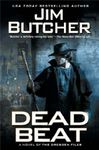
Review 55: Dead Beat


Dead Beat by Jim Butcher

“Hell’s Bells” count – 13

While I was on my long commute to work (not so bad, as it affords me more reading time), I wondered what the Harry Dresden from Storm Front would have made of the Harry Dresden from this book. I imagine he probably would have been scared. And to be honest, I don’t think I would be able to blame him.

There’s necromancy afoot in Chicago, and as much as he doesn’t want to be, Harry is in the middle of all of it. He’s been charged by one of the most dangerous vampires in the world, Mavra of the Black Court, to find the missing volume of a series written by one of the most notorious necromancers in human history. When the necromancer Kemmler was alive, it took nearly the entire fighting force of the White Council of Wizards to stop him. Now his disciples are all hunting for the book, trying to be the first one to kill everyone in Chicago and become a god.

It’s a mission he can’t refuse. If he should do so, Mavra has evidence in her possession that would destroy the career of one of the people closest to Harry – Lt. Karrin Murphy of the Chicago Police Department. In the previous book, Murphy helped Harry take out a nest of Black Court vampires, killing several humans who had been enthralled to the vamps. These Renfields were human only by technicality, but a photograph of Murphy blowing one’s head off would still be damning evidence. Should Harry not do what Mavra wants, the pictures would be released, and the one thing that Murphy truly loves would be gone.

The point of this book, broadly, is Harry discovering that past actions still have present consequences, and that the choices he has to make are not always good ones. While Harry does save the day, he does so at a cost.

Harry has become legitimately scary by this book. His friends and his allies aren’t sure about him anymore, either his motives or his sanity. The people who have stood steadfastly by him now find themselves afraid of him, and what he might do. And for good reason, really. Harry’s been through a lot in the last few books. He’s lost the woman he loves to the Red Court vampires, he very nearly lost his hand fighting Mavra and he’s now absolutely terrified of using fire magic as a result. On top of all that, he’s discovered that being someone’s brother doesn’t automatically mean you get to understand them. Or like them. Or be able to live with them.

So yeah, Harry’s had it rough. With most humans, it’s hard to see change from the inside, and I’m sure Harry doesn’t think he’s changed all that much. He knows he’s gotten a little angrier, maybe a little more solitary, but from his point of view it’s a logical progression. For people who aren’t with him all the time – Billy the Werewolf, Mac the World’s Best Tavern Owner, for example, the changes are drastic. And truly frightening. Harry’s still a good guy, don’t worry about that.

He’s just not a nice guy.

This book is awash in general awesomeness, and introduces a lot of good new characters, both on the good and bad sides. My favorite is Waldo Butters, the Medical Examiner for the Chicago PD. He goes from being a slightly quirky ME who kind of believes in the weird and unusual (he spent 90 days under psychiatric evaluation when he refused to classify vampire remains as human). By the end of the book, he becomes positively heroic, and is a very good avatar for The Reader. We all like to believe that we would take the world of the supernatural, if it existed, in stride, but we probably would have reacted just like Butters did when he first saw things he was not prepared for – denial, disbelief and then abject terror. He comes around, though, as I’m sure all of us would.

We also get to meet a few of the remaining Wardens of the White Council. The war has gone very hard on their numbers, and there are very, very few available to fight a group of mad necromancers in Chicago. The Red Court has dealt them such heavy blows that it’s not unreasonable to think that there’s a mole in the White Council somewhere. Who it is, though, will have to wait for another book. Their numbers have been slashed, and they need every able-bodied magic user they can get. The deal they offer Harry for their assistance is a surprising one, but makes perfect sense. And it will play heavily into the books that follow.

There’s also one genuine “Holy Shit” moment in this book. I won’t tell you what it is, because that would just spoil the whole thing. All I can say is that it’s at the end of chapter 38. You can’t miss it.

From here on out, this is going to be a very different series. Bigger, darker, as if that were possible, building on the foundation of the previous books to make something far more elaborate and interesting. I can’t wait to see what it ends up being.

—————————————-
“Polka will never die!”
– Waldo Butters, Dead Beat
—————————————-

The Dresden Files on Wikipedia
Dead Beat on Wikipedia
Dead Beat on Amazon.com
Jim Butcher on Wikipedia
Harry Dresden on Wikipedia
Jim Butcher’s homepage

Leave a comment

Filed under detective fiction, Dresden Files, fantasy, Jim Butcher, wizardry

Review 54: Superheroes and Philosophy


Superheroes and Philosophy by Tom Morris and Matt Morris

So there you are. You’ve been bitten by a radioactive, alien wolverine that’s been cursed by a gypsy and struck by lightning and you have finally, after years and years of waiting, been blessed with super powers. You can do things no one else can do, and you can do them faster, stronger, better and in more spandex than you ever dreamed possible. Now there’s only one thing to do: pick a name, put together a costume and go fight crime!

But… why?

Ever stop and think about it? I mean, I know I would want to go out there and fight the good fight, emulating my four-color heroes, but… why? What is it about getting super-powers that makes so many men and women do what they normally wouldn’t do – fight crime? Why risk their lives (or the lives of those they love) in the never-ending battle against the forces of human (and super-human) wickedness?

For that matter, why should anyone, super-powered or not, bother to do good? It’s hard, thankless work, after all, and despite the old cliche, crime can sometimes pay very, very well indeed.

The fundamental question about why super-heroes do what they do is a reflection of one of the oldest questions in human philosophy: why be good? And the fact that it’s the most popular theme in this book of essays suggests that there really is no single, simple answer to that.

Mark Waid, in “The Real Truth About Superman,” looks at the greatest do-gooder of them all, the Big Blue Boy Scout, Superman, and talks about the philosophical journey he took when he re-invented the character’s history in Superman: Birthright. To sum up, he believes that the primary drive that puts Kal-El out in the skies is not so much a desire to help the world, but to help himself, for only by being a hero can he embrace his true nature. The use of his powers to his fullest is a demonstration of his Kryptonian legacy. To hide that under the bushel that is Clark Kent would be to completely deny that part of who he is.

And what of Batman, the poor, paranoid loner? When you think of the Bat, do you think of his friends? Probably not, but of all the best-known heroes, he’s probably got the biggest cast of confidantes – from his ever-present assistant, Alfred, to the unstable love of his rival, Catwoman, Batman has a tangle of friendships that normal people could not sustain – but that’s Batman for you. Always has to be better than the rest of us. In Matt Morris’ essay, “Batman and Friends: Aristotle and The Dark Knight’s Inner Circle,” we get a look at the traditional Aristotelian levels of friendship (those of utility, pleasure, and virtue”) and how the people with whom Batman surrounds himself fit into these categories.

The First Family of Marvel get their due as well, when Chris Ryall and Scott Tipton look at “The Fantastic Four as a Family.” In this essay, they look at the bonds of family, and what exactly that means. What is it to be “family,” and how is that bond so different from others? They see the Fantastic Four as an excellent example of how the bond of family (by blood, marriage, or other means) can transcend nearly any difficulty. But in the case of the FF, what is it that’s held them together for so long, despite numerous break-ups and substitutions? Is it Reed’s guilt over how he nearly killed the people he loved, disfiguring one of them horribly? Is it Ben’s loyalty to his friends that keeps the whole thing together, acting as a reminder of the price of failure? Or is it something else?

The book, much like the science books I’ve read, aims to accomplish something very important – to show that there are lessons to be learned from comic books, that they aren’t just mindless entertainment for empty-headed children. Questions of good versus evil aside, I enjoyed some of the more unexpected philosophical questions – what is identity, and how can we morally hold Bruce Banner responsible for the crimes of The Hulk? How does Barbara Gordon exemplify moral perfectionism, and of the female X-Men, what do they tell us about women and heroics? And is it ethically permissible for a hero to have a secret identity, the maintenance of which requires lying to the people she loves the most?

These aren’t questions that occur to the average comic book reader, I’m sure, but the average comic book reader should be able to instantly understand them. More importantly, he (statistically speaking) should be able to understand why they need to be asked. Super-heroes are us, writ larger. Their problems are our problems, only bigger, faster, and looking much better in form-fitting clothes. We must all struggle with the questions of doing good in this world, and how far our responsibility to the world extends. We all try to balance different parts of our lives, our “secret identities” that divide the different people we are from day to day. We ask ourselves about who we are, and what it is about ourselves today that makes us different from who we were yesterday, or ten years ago.

Classical philosophy suggests that humans all tend towards wanting to do the right thing, and I agree (with some reservations). The thing is, doing the right thing is often hard, and doing the wrong thing often is so much easier. In order to be good humans, we must ask ourselves these questions about right and wrong, good and evil, responsibility and plain old selfishness. And if Daredevil or Spider-Man, Wonder Woman or Barbara Gordon are able to serve as models for the best decisions we can make, then I see no reason why we should not follow their examples.

——————————————————-
“The more power we get, the more avidly we tend to serve ourselves, and our own interests. But this is where the superheroes stand apart. They realize that there is no real self-fulfillment without self-giving. They understand that we have our talents and our powers in order to use them, and that to use them for the good of others as well as ourselves is the highest use we can make of them.”
– Jeph Loeb and Tom Morris, “Heroes and Superheroes”
——————————————————-

Thomas Morris on Wikipedia
Superheroes and Philosophy on Amazon.com
The Morris Institute homepage

Leave a comment

Filed under ethics, Matt Morris, morality, philosophy, super-heroes, Tom Morris

Review 53: Crisis on Infinite Earths – DOUBLE FEATURE


Crisis on Infinite Earths: Absolute Edition by Marv Wolfman and George Perez

This, ladies and gentlemen, is one of the works that has affected me deeply. More importantly, it is something that has caused considerable harm to my wallet and bank account, as I have been collecting comic books for almost twenty-five years now, and it’s all because of Crisis. I can still remember going to the drugstore after church one Sunday and seeing the cover to Crisis #9 – a classic George Perez group shot of some of the most terrible villains ever seen in the DC Universe. You name the baddie, I guarantee he or she was in there somewhere. I was hooked. Of course, coming into a 12-part series in issue 9 meant that I was really lost as to what was going on, but some effort and visits to comics shops eventually got me up to speed. Unfortunately, once I understood Crisis, I realized that there was much more that I didn’t understand.

You can’t really understand this story without understanding something of the DC Comics Universe. In the late 1950s, they published a story called “Flash of Two Worlds” (Flash #123), in which the Flash, Barry Allen, managed to, using his prodigious super-speed, vibrate through some dimensional barrier or other, and meet the Flash, Jay Garrick, that he had read about as a child in – you guessed it – comic books.

The explanation for this was simple – the guy who wrote Flash comics in Barry Allen’s childhood had, somehow, “tuned in” to this Alternate Earth, watching Jay Garrick’s adventures and, thinking they were fiction, wrote them up as comic books which, in turn, inspired Barry Allen as a child. So when Barry was struck by lightning and chemicals, gaining super speed, he called himself The Flash, in homage to his childhood hero.

Anyway, in “Flash of Two Worlds,” Barry Allen finds out that the Flash he had read about actually existed, only on another Earth in another universe that vibrated at a different frequency from ours. Personally, I think this is a really cool idea, and my personal goal in life is to drink enough coffee in one sitting to accomplish the same thing myself.

Confused yet? Well, it did help if you were an avid comics reader for 25 years before Crisis came out. But to condense the whole thing, here you go:

In the Beginning, there was One. A Universe that grew and shaped and changed. Life was created, rose from the dust, and began to think. On the planet of Oa, located in the center of the universe, life grew with great swiftness, advancing at incredible speed. The beings of Oa embraced science and research. One Oan, a man by the name of Krona, sought to know the origin of the Universe they inhabited. Despite the warnings of his colleagues, he created a device that would allow him to do so. The result was a complete rupture of time and space, for the beginning of things must never be witnessed.

So…. In the Beginning, there were Many. Universe upon universe, each moving at its own speed and vibration, separated by a shadow’s thickness, but each unknown to the other.

That was the idea, anyway. The whole “multiple universe” thing, after Gardner Fox wrote his “Flash of Two Worlds” story, became one of the best plot devices the comics writers at DC ever had. Finally they could have silver age and golden age heroes meet and work together. At first, there was only Earth-1 (silver age) and Earth-2 (golden age), which was odd, because the golden age heroes of Earth-2 were older. But I guess since Barry Allen (the silver age Flash, remember) was the one who broke the barrier, he gets precedence.

Anyway, like I said – at first there were two Earths. That number grew swiftly, both for plot and copyright reasons. For example: At a certain point, DC was working on the rights to own characters from Charlton Comics (The Blue Beetle, Captain Atom, etc), and they inhabited Earth-4. Then they went to obtain characters from Fawcett (the whole Shazam line), who went onto Earth-S. As if the Hungry Beast That Was DC wasn’t finished, they put characters from Quality Comics (Uncle Sam, Phantom Lady, The Ray, etc), onto Earth-X.

Hang in there, I’ll get to the story eventually….

There was also Earth-3, where the doppelgangers of our favorite heroes were villains, and the only hero on the planet was Luthor. Then came Earth-D, Earth-Prime, Earth-Omega and, eventually, Earth-Sigma.

Suffice to say, by 1985, there was a huge mess…. Older readers had no problem following the continuity, but newcomers were baffled, and writers were no doubt also befuddling themselves. The decision was made to clean the whole thing up, make one Earth, one timeline, and one continuity. No more parallel Earths, no more vibrating through dimensional barriers.

Sounds simple, doesn’t it? Well, it took twelve issues and the appearance of almost every hero and villain ever seen in DC Comics’ fifty year history to pull it off. The research took over three years, with one guy tasked with studying every comic DC had printed since 1935 (my thought when I heard that: “What an awesome job!”). It also required the cooperation of dozens of writers and artists across all of DC’s titles, and a company-wide effort to make the Crisis a truly universal event.

Our story opens with the end of the world. Or the end of a world, more to the point. A vast white cloud encroaches upon the earth, vaporizing everything in its path, without pause or remorse. Panicking, people try to flee, but to no avail. Into this horror appears a man with dark eyes and a tortured face, who watches the world die, helpless and weeping, and vanishes again as the universe becomes nothing more than a mist of free-floating electrons.

Not a bad way to start a book, eh?

The man is Pariah, and he is condemned to appear wherever great tragedy strikes, unable to help, unable to die, only able to watch. He is there when the Crime Syndicate of Earth-3 put aside their evil to try and stop the wave of energy that devours their planet. Again, Pariah appears, and again the world is destroyed, but not before the planet’s only super-hero, Luthor, rockets his son through the dimensions, in the hope of freeing him from his world’s destruction.

Sound familiar? I thought so….

If you think you’re going to know what’s going on this quickly, you’re wrong. A mysterious figure sends his associate, a woman named Harbinger, who can split herself among many forms, to gather heroes from Earths that have not been destroyed and bring them to a satellite that hovers in orbit. While she searches them out, one of her is corrupted by a shadowy evil that tracks her through the ice of Atlantis. She gathers them, heroes, villains and otherwise, to the satellite, where we first meet a character that had been hovering around various DC titles for a few months, always in the shadows – The Monitor.

The Monitor informs them that there is great evil abroad, that universes are perishing at an astonishing rate, and are doing so at the hand of his adversary. Waves of anti-matter are consuming the universes, and with each one gone, the Monitor’s power decreases. He has a task for these heroes, spread out over millennia of Earth’s history. This is the first attempt to save the worlds….

The basic rundown of the story is that there is an anti-matter universe out there, created when Krona performed his experiment, controlled by the mirror version of The Monitor. This “Anti-Monitor” wants nothing more than to see his brother dead, and to see the positive Universes brought under his control. He’s a good, old-fashioned Evil Overlord, I must say…. So as each universe is destroyed by the great sweeping cloud of death, he grows ever stronger.

It has been pointed out to me that some people out there get all anal over this concept, thereby calling the whole damn plot into question. So, a bit of elementary physics. The above scenario cannot happen. When matter and antimatter collide, there is a huge burst of energy as the two forms of matter vaporize each other. Nothing is left – in “reality physics,” both the Monitor and the Anti-Monitor would be playing at a zero-sum game. Given that these people are willing to accept, however, the existence of thousands of metahumans who can perform feats that also fly in the face of real physics, I think their arguments about the properties of antimatter are so much hot air. As a very wise man once said, “Blow.”

Anyway, the Anti-Monitor’s release is tied with Pariah’s fate as well. Determined to do as Krona did, Pariah set up a chamber, of matter and anti-matter, so that he may see the beginning of all things. The result was the beginning of the end, and his world was the first consumed by the anti-matter wave. The Monitor, observing this, imbued him with his curse, using him as a “tracker” to see which universe might be the next to die.

So we have an unstoppable force tearing through the Multiverse, and it is up to The Monitor and Our Heroes to stop him. But the Monitor dies, and the worlds keep dying….

Of course you know that, in the end, the good guys win. But as with any good story, it is the telling of the tale, not the tale’s end, that is important. Wolfman and Perez did some very daring things with this story, not only in rearranging the whole order of the DC Universe, but also in killing off some pretty heavy hitters. The best cover in the series, so good that they came out with a statue based on it, was the cover of issue number seven: The Death of Supergirl.

The other major character to be killed off was Barry Allen, The Flash, who inadvertently started this whole mess a long time ago. But he died well, and, as Marv Woflman says in the forward to the collected edition of Crisis, there was a way left to bring him back if they needed to. Indeed, Barry Allen’s presence has not yet vanished. The current Flash, Wally West, has long held Barry to be the high ideal which he must match, but at the same time leave behind. In one version of the Legion of Super-Heroes books, the character of Xs, another super-speedster, is Barry Allen’s granddaughter, and the character of Impulse/Kid Flash, is Barry Allen’s nephew. So the Flash lives on, in his way. In fact, he’s recently been resurrected in DC continuity – though how long that will last is anyone’s guess.

On the other hand, no one remembers Supergirl. By the end of the Crisis, she had been wiped from existence, and was seen only once more, in a Christmas issue several years later, reminding the character of Deadman about what it means to work without reward. While several new Supergirls have appeared since then, unlike Barry Allen the pre-Crisis Supergirl is lost to history.

As you can probably guess, I really like this story. It has an immense cast of characters, without becoming unwieldy or dispersed. The storytelling, with its multi-universal scope, nevertheless allows you to feel for individuals, with their triumphs and tragedies. Ultimately we see that even the mightiest of mortals is, at heart, human. There is foreshadowing galore, mysteries abound, the plot twists and turns, and you get glimpses of what is yet to come – the hand in the swirling pool of stars, the image of the Flash appearing before Batman and vanishing with words of doom, the Green Lantern’s ring sputtering and failing…. It all intertwines together so very nicely and really satisfies my inner comics geek.

The Absolute Edition was aimed at people exactly like me. Someone who would say, “I’ve read this story a dozen times, I could probably recite it… but I need it to be bigger. Like, big enough to club a man to death with.” So yeah, they had me from the word go on this one, and as soon as the opportunity arose to buy it, I did so without hesitation. It really is very pretty – it’s been recolored and everything, AND it comes with a companion book about how the series came to be. Fascinating reading.

The big question, of course is this – after nearly twenty-five years and at least two other universe-wide reboots (Zero Hour and Infinite Crisis) that have changed the changes made by Crisis, why is this story still worth reading? Well, for one thing, the writing is solid – you can follow the story without having to buy a couple dozen other titles, and there are dramatic moments that have hung in my memory for years. In addition, there’s the art. George Perez has been one of my favorite artists for years. His attention to detail and his ability to draw dozens of characters to a page while keeping each of them dynamic, interesting and individual is, in my opinion, nothing short of superhuman. If I could choose to draw like anyone, it would be George Perez, and I will never get tired of looking at his artwork.

More importantly, however, this book is about the heroic ideal. On many scales, from the small-scale of characters like Hawk and Dove or the Losers, all the way up to the big guns of Superman, the Flash and Supergirl, the idea of what it means to be a good person is presented over and over again: you do good not because it’s easy, not because it will benefit yourself. You do good because it is what you must do, even when you know it could lead to tragic consequences for yourself. My model of heroism was formed in these books, and the model set by these characters has guided my moral choices ever since. Where other people take their moral guidance from Jesus or Marcus Aurelius or Oprah, I take mine from Barry Allen and Kara Zor-el and from so many others who put their lives and their interests aside for the greater good.

Can’t ask for much more than that.

Crisis on Infinite Earths: the Novelization by Marv Wolfman

Why yes, I own both the comic and the novelization. Is there something wrong with that?

Actually, here’s a Little Known Fact about me: when I was in, maybe, junior high school I tried to novelize Crisis. I sat down with the comics and went through them, panel-by-panel, trying to put them into a narrative form. I tried to fill in things like expressions, reactions, to bridge the gap between the kind of story you can tell in a comic and the kind you tell in a novel. To my memory, it was pretty good, though it’s no doubt lost to the ages by now. If I ever run across it, I’ll either marvel at my innocent youth or cringe at my fumbling attempt to do the unnecessary.

I am not the only one who gave that some thought, it seems. To his credit, though, since Marv Wolfman was the guy who wrote the comics, I think he has far more right to put it into novel form than I ever did. But whereas mine was a straight page-by-page translation of the comic to text, Wolfman decided to tell the story from a very different angle. He decided to let us see the Crisis on Infinite Earths through the eyes of Barry Allen, The Flash.

As I said in my review of the comic series, Barry Allen was (more or less) the beginning of the Multiverse in DC Comics, so it was fitting that he be the one to narrate the end in this book. After all, he didn’t get all that much page time in the comics – a few ghostly visitations, some taunting and then he was dead. Yes, his death saved billions of people, but still – for someone as important as he was, you would have thought he’d have gotten a few more pages.

The thing about The Flash, though, is that he’s hard to pin down. Literally. Even on an ordinary day, we’re talking about a man who can race laser beams – and win. He can alter his subjective view of time to the point where a hummingbird in flight becomes a still life. He can run fast enough to travel through time, and vibrate the very molecules of his body to a point where he can not only ghost through solid matter but pass between the dimensional barriers that separate the multiple Earths.

How any villain ever got the best of this man is beyond me. If the writers had ever taken his powers seriously, The Flash never would have had a challenge.

So who better to narrate our alternate view of the Crisis than he? The fact that he’s dead by the time the book begins doesn’t really make much of a difference. There’s too much for The Flash to do, and suddenly the fastest man alive doesn’t have enough time.

I don’t really need to re-iterate what the Crisis was about, why it happened and who the main players were. None of that has changed in this version of the story – we just have a different point of view. And from this point of view, we learn many interesting things that the comic held back from us. The relationship between The Monitor and his young ward, Lyla, for example – he knew even before he found her that she would kill him. In fact that she would have to kill him, if any of the Earths were to survive the coming apocalypse. We get a much better look at the Psycho-Pirate, the mad puppet of the Anti-Monitor whose ability to manipulate emotions becomes key to the control of worlds. And we get first-person views from so many other heroes and villains that took part in the Crisis – getting a much deeper look at the work.

Most of all, of course, we get to see Barry Allen. What drives him, even in this semi-dead state, to continue to play an active part in this Crisis? Incorporeal and largely unable to interact with – let alone avert – the catastrophe, The Flash remains a witness until the time comes that he is able to (with a little time-travel cheating) free himself from his bonds and go to a death that he knows he cannot avoid, and which he also knows is not the end. Honestly, how he survives beyond death the way he does isn’t very clear in this book. It has something to do with the Speed Force, a kind of semi-sentient energy field that grants speedsters their powers and provides them with a heaven when they die. His jaunts through time and space seem to be at the control of a higher power, but exactly who and what that power is we are never quite sure of.

As with any transition from one medium to another, there are changes. The villainous takeover of three Earths is gone, for example, as is the involvement of Superboy-Prime, and much of what occurs after the Anti-Monitor’s ultimate defeat is completely different (and is therefore, if you’ve been keeping up with the DC Universe over the past three years or so, decidedly non-canon). But Supergirl’s death is expanded upon, and we get to see the decisions that bring her to her doom. We know that, like Barry Allen, she did what needed to be done, knowing that it would be her end. Getting a quick look inside her head before she took on the Anti-Monitor makes her death just that much more poignant.

But also as with any transition from one medium to another, it is very hard to compare the new rendition to the original. While this novelized version of Crisis is a quick and enjoyable read, it doesn’t have nearly the scope and depth and visual punch that the comic did. Because comics are such a visual medium – a story told in mixed media – you’re going to lose something when you take one of those media away. While I enjoy reading this (and it’s a lot easier to carry around than the Rosetta-stone-sized Absolute Edition of the comic), it’s never going to take the place of the original. Wolfman is an excellent writer of comics, but he’s not a novelist.

If you are a fan of Crisis and you just want another look at the old story, pick this up. If you’ve never read Crisis before, get your hands on the comics and let this one come to you later.

———————————————————
“Worlds lived, worlds died. Nothing will ever be the same….”
– Psycho Pirate, Crisis on Infinite Earths #12
———————————————————
“Barry, I know people die. From the moment I understood what they meant, I was very aware of all the memorials around me. But my mother, God bless her, Barry, she said and kept saying until I believed her, that although we have to remember the dead, we can’t ever let ourselves act like we’re one of them.”
Supergirl (Kara Zor-El), Crisis on Infinite Earths: the Novelization by Marv Wolfman
———————————————

Crisis on Infinite Earths on Wikipedia
Marv Wolfman on Wikipedia
George Perez on Wikipedia

Crisis on Infinite Earths: Absolute Edition on Amazon.com
Crisis on Infinite Earths: The Novelization on Amazon.com
The Annotated Crisis on Infinite Earths
Crisis on Infinite Earths on the DC Wiki

Leave a comment

Filed under apocalypse, comic books, DC Comics, death, George Perez, Marv Wolfman, super-heroes, Superman, supervillains, time travel, world-crossing

Review 52: Maps and Legends


Maps and Legends by Michael Chabon

In this book, Michael Chabon has done something very interesting – he has uplifted me and humbled me at the same time. It’s a weird feeling, that combination, probably because I’m reviewing a book about literary criticism and the telling of stories, which put me in a kind of meta-reviewer mindset. Reading this book not only forced me to think about myself as a reader, but as a reviewer of and writer about books.

Let’s do the first part and then I’ll get to the second.

The beginning and ending of this collection of essays focuses on something very important regard the telling of stories: the idea that reading is entertainment. Reading a book or a short story, Chabon maintains, should be, first and foremost, fun. It should be a good way to rest your mind and give it a break from the rigors and stresses of daily life. Movies, music, juggling – those are all labeled entertainment and are generally accepted as being fun, so why not books?

With me as a reader, Chabon was certainly preaching to the choir. I’ve always regarded reading as fun, and if I have time to spend with a book, then it’s time well spent. But even I, the reader looking for a good time, have fallen prey to the idea that reading a book should Mean Something. I mean, look back on these reviews for a moment. How many times have I dug deep to find some kind of moral or philosophical “lesson” in a book that was probably written with nothing more in mind than to pass a few pleasant hours on an airplane? Far too often, and more often than not it was born of a desire to make the review a little longer than, “I liked this book and you will too.”

Many readers have this secret shame that we’re reading for fun. This drives us to pick up books that we wouldn’t normally read – and in my case here I’m thinking about pretty much anything written by a Russian in the 19th and 20th centuries – in order to pick up some kind of intellectual cachet. We wander around the bookstore, dawdling before the “literature” section in the hopes that someone will see us there instead of in the science fiction/fantasy ghetto, which is where we really want to be. Chabon suggests that it is this ghettoization of books that contributes to such book snobbery and, if he had his way, he would see it gone. Every bookshop would be one section – Books.

The title of his book, Maps and Legends evokes this feeling. Maps, you see, serve two purposes. They chronicle where you have already been, showing you the roads you took and the things you saw. But, and possibly more importantly, they show you where you haven’t been yet. Who among you has never sat down and looked at a map and thought, I wonder what’s there? Even a map of the town in which you live can be oddly alluring. I lived in Kyoto for nearly nine years, and yet I could still look at a map and wonder where I should go next.

Books, Chabon maintains, should have the same quality. When I go into a modern bookstore, I head straight for the ports I know. I don’t explore distant shores or unknown islands. I’m provincial, a homebody of the literary sort. Perhaps if there were a store where the map was different, the layout unfamiliar, I might discover new worlds that would have otherwise gone unnoticed.

So this is where the uplift comes – Chabon inspires me to be a better reader. To not only read more, but to read better. To not gloss over the details in order to enjoy the book, but to actively search for them. To stare at some part of a story and wonder, What is that? Have I been there before?

Where he humbles me is simply in his writing. For the purposes of this book, he and I are in the same field – talking about books and writing and how they affect us. And Chabon is much, much better at it than I am. His writing is a pleasure to read – not in that frenetic, sensory overload Tom Wolfe kind of way, but more in the same way one would enjoy a really good meal. You want to pause and roll the words around in your head for a moment before you move on. He digresses and wanders and then comes back again, just when you were wondering where he was going with all this.

In the essays to be found in this book, he looks at the immortal allure of Sherlock Holmes, the bleak horror of The Road, and the unfortunate lack of anything worthwhile for children to read. He talks of golems and death and imaginary homelands for speakers of dying languages, and makes it all compelling and enthralling. I want to write like Chabon when I grow up.

If there’s higher praise, I don’t know it.

————————————————–
“The brain is an organ of entertainment, sensitive at any depth, and over a wide spectrum. But we have learned to mistrust and despise our human aptitude for being entertained, and in that sense we get the entertainment we deserve.”
– Michael Chabon, Maps and Legends
————————————————–

Michael Chabon on Wikipedia
Maps and Legends on Wikipedia
Maps and Legends at Amazon.com

1 Comment

Filed under criticism, Michael Chabon, reading, reviewing, writing

Review 51: Blood Rites


Blood Rites by Jim Butcher

“Hell’s Bells” count: 19 [1]

As far as I know, The Dresden Files is an open-ended series that Butcher will continue to write until he decides to end it, which is fine with me. He’s set up a universe that has endless possibilities to it, from simple mysteries to humorous romps to soul-searing betrayal and heartache. Can’t go wrong with all that, and if Butcher wants to just keep putting out Dresden books every eighteen months or so, I’ll happily keep buying them.

One of the dangers of such a plan, however, is stagnation – you end up rehashing similar plot points, perhaps throwing in a few twists and turns, but never really advancing the plot because, well, you don’t know where the plot is going. I can imagine Butcher would get to a point where he thinks, “Ummm… Okay, Harry Dresden fights vampire werewolves…. from the future!” At which point, the shark has been well and truly jumped. As I’ve said before, I would much rather see a series end well than see it go on beyond its useful life and leave me with sad, sad memories. I’m looking at you, X-Files.

While I don’t know if Butcher knows exactly where the series will finally end (though he probably does), he does manage to avoid stagnation very nicely, mainly by putting Harry in mortal danger. Okay, that’s nothing new, but this time it’s Mortal Danger with bonus Crippling Injury! And a side order of Serious Disillusion to boot. This book really stirs things up for the world of Harry Dresden and lets the readers know that there is far, far more in store for us than we knew. So bravo to you, Jim.

In this volume, Dresden is asked by his kind-of-sort-of friend Thomas to do a favor for him. Despite being a vampire of the White Court and a soul-sucking incubus, Thomas is an okay kind of guy and has helped Harry out of a few tight spots in their time. He can’t say he trusts Thomas, but he likes him. And therefore we like him as well. The job sounds simple: a movie producer has been having weird accidents happen to people linked with his movie, and two women have already died mysterious deaths. Harry’s job would be to figure out who’s putting the bad mojo on the movie studio and stop it.

The fact that it’s an adult movie studio is not brought up until later.

In the process of trying to help out with an astoundingly powerful (and regular) Evil Eye curse, Harry runs afoul of the Black Court vampires in a side plot that really has nothing to do with the main one. This seems unusual, since most of the Dresden books that have featured multiple cases do so in the spirit of Raymond Chandler, where we find out that they were all part of the same case after all.

The B plot in this book is an attempt to put down Mavra, a truly terrifying member of the Black Court of vampires. The Black Court is the type of vampire we all think of when the word comes up – the Nosferatu, the Dracula, all black and dry and horrible. They’re also the toughest, most resilient and most vicious of the vampire clans. What’s more, Mavra is an accomplished sorceress, whose power makes even Harry Dresden think twice about crossing her. Which is why he has a Plan this time. And we all know about Harry and his Plans….

All of this, though is incidental to the things he learns in this book, both about himself and the people he trusts. Those are the things that truly shake up his world and which will shape the books that are to follow. This book is a turning point for Dresden, and not a good one. While the Black Court plot, for example, didn’t have much to do with the main plot, it sets up very important elements and concepts that are deftly exploited in later books. And Harry’s always-fragile relationship with the White Council endures what could be a crippling blow.

All this is setting up the next few books and laying the groundwork for the rest of the series. One of the things I’ve come to admire about Butcher’s writing is that nothing is wasted. I once heard that the process of writing a story is like packing for someone else’s hiking trip – you only want to put into the bag what you think that person will absolutely need. After all, if they get to the end of their hiking trip and they haven’t used that ten-pound bag of rice you thought might come in handy, they’re going to be very pissed off at you.

Butcher doesn’t do that. You can be sure that the elements he lays out in his stories will be used, sooner or later., and you’ll never be left wondering, “But what was that scene with the baseball player and the chicken farm about?” If Butcher puts a baseball player and a chicken farm into his book, there’s a very good reason for it, and you’ll find out eventually.

As with the other books in The Dresden Files series, this is great fun to read. Which makes it no surprise that the series had some measure of success outside its original format – a TV series and a comic, at last count. I look forward to following it as it goes on.

———————————————
“No matter how screwed up things are, they can get a whole lot worse.”
– Harry Dresden, Blood Rites
———————————————

[1] One of these was the maxi-expletive “Hell’s holy stars and freaking stones shit bells,” which I must commit to memory

The Dresden Files on Wikipedia
Blood Rites on Wikipedia
Blood Rites on Amazon.com
Jim Butcher on Wikipedia
Harry Dresden on Wikipedia
Jim Butcher’s homepage

Leave a comment

Filed under detective fiction, Dresden Files, fantasy, Jim Butcher, vampires, wizardry