Category Archives: society

Lost in the Stacks 09: Banned Books Week

Harry Potter
The adventures of Huckleberry Finn
A Diary of a Young Girl
Fahrenheit 451
To Kill a Mockingbird
Catcher in the Rye
The Jungle
Lord of the Rings

These are just a few books that the American Library Association has reported as being banned or challenged in American libraries, and the list grows longer every year. Sometimes it’s because it offends someone’s religious sensibilities – like Harry Potter – and other times because it offends their moral sensibilities – And Tango Makes Three for example. And then there are those that make you think banning books isn’t so bad after all – Twilight is on the list – before you shake it off and think about how it does no good for anyone.

Ban a book and its sales will surely rise in the resulting media firestorm. Tell kids that a certain book is forbidden, and the first thing they’ll do is go get it. And even if you somehow manage to keep them cloistered from all the Bad Books out there, sooner or later they’ll find out what you were trying to hold back from them. When that happens, they will not think fondly of you.

Last week was Banned Books Week – but really it should be every week. Give the episode a listen and come join the conversation!

The American Library Association’s Banned Books Week page

1 Comment

Filed under censorship, culture, Lost in the Stacks, reading, society

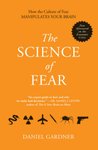
Review 139: The Science of Fear

The Science of Fear by Daniel Gardner

Imagine, for a moment, one of our early human ancestors. A first-generation Homo sapiens, exploring his world with an amazing brain that would be the envy of the animal kingdom. If they understood envy. He, and his children, and their children and grandchildren will spread across the Earth as hunter-gatherers, the first beings (so far as we know) who can look at the world and attempt to pass on what it knows and learns. Their threats were simple: survive or don’t. Find food or starve. Hunt or be hunted. And those fantastic brains did such a bang-up job that their descendants are still walking around, thousands of generations later.

Now, take that Paleolithic man – swift of foot, sharp of eye, strong of hand – and drop him in the middle of modern-day Times Square. And, as his minder, give him a bored, easily distracted teenager – one who knows the world, but can’t be bothered to do the work to make decisions.

We are all of us Captain Caveman.

Congratulations. According to Daniel Gardner, we have just constructed a fine metaphor for how the human brain works. Part of it is very old, able to make decisions in an instant based on the slimmest of clues. The other is newer, more rational and savvy, able to put together reasoned, logical arguments, but doesn’t have the sheer speed and force that is prehistoric partner has. And as much as we want it to be true that the rational, modern part of our mind is in charge,the sad fact is that out inner caveman has far more influence over us than we care to admit.

Gardner begins the book with an interesting story about the most terrifying thing to happen in the last decade – the attacks of September 11th in the United States. By the time the towers fell, people around the world were watching, and anyone who didn’t see it live would surely see it soon enough as it was replayed over and over again. It was truly terrifying to watch, unlike anything Americans had seen before in their country, and it scared the ever-loving hell out of people. Many people, as a result, chose to forgo air travel in favor of driving.

Now, as Superman famously told Lois Lane, flying is statistically the safest way to travel. In fact, the most dangerous part of any trip that involves flying is usually the drive to the airport. But, in those days and months after the attacks, people were scared to fly. So they drove instead. And, according to a five year study of traffic fatalities in the U. S. after 9/11 by German psychologist Gerd Gigerenzer, 1,595 people died on the roads who otherwise would not have.

They were afraid, and that’s understandable. But they were afraid of the wrong thing. So they died.

Gardner sets out in this book to figure out why it is that people in the healthiest, safest, most prosperous nations on Earth – in the healthiest, safest, most prosperous era of human history – live in a state of near-constant fear.

As long as he doesn't insist on eating children halal, I don't care...

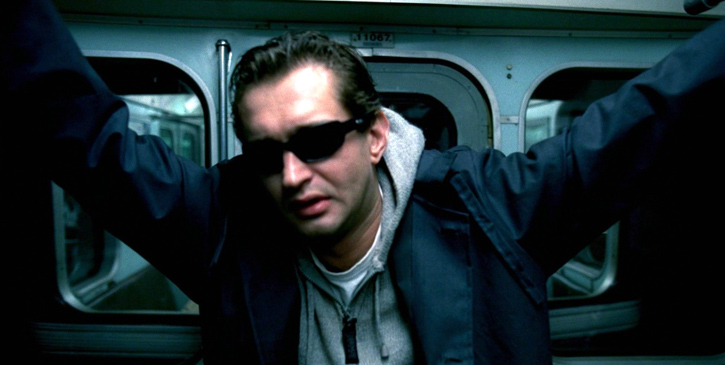
A lot of it, as the intro implies, comes down to the fact that our brains, which evolved over millions of years to be very good at judging risks that might be found on the savannah, are simply not prepared to do the same in a modern technological world. Our brains can’t tell the difference between risk in fiction and reality, between something that happened to us and something we saw on the news. When it comes to risk, our brains play it very safe, which is great out in nature. Is that shadow in the bushes a tiger? Maybe, maybe not, but either way it’s probably a good idea to get the hell away from it. We can’t say the same thing of that guy sitting on the bus who looks like maybe he might be a Muslim.

We also tend to assume that if we’ve heard of something recently, then it must be more common. Again if you’re out in nature and you saw a bear yesterday, there’s a decent chance that the bear is still around today and you might want to be wary of that. But what if you see constant news coverage of a high-profile child abduction? It’s on every show, being talked about on every blog – does that mean that the chance of your child being abducted has increased? Of course not, but your brain doesn’t see it that way. Your brain thinks that your child will be taken from you the moment you look away, and all the reasoning in the world won’t change its mind.

One more thing: we don’t get numbers. The news tells us that the rate of certain risks is up by 10%, but they don’t tell us what the original figure was. We hear about millions of starving children in Africa, but don’t do anything unless we get a personal story of one. We don’t understand probability at all, we can’t deal with randomness, and this lack of innate numeracy (compounded by an educational culture that makes it hard to teach kids to become numerate) costs us billions. Or more, as the recent economic Clusterthing has shown, when you have people who are good with numbers deliberately exploiting this flaw in order to profit.

Numeracy is also useful for getting certain kinds of jokes.

We think that correlation equals causation. We believe stories over facts. We think we don’t have biases that we clearly possess. We assign high risk to things we don’t like and low risk to things we do, regardless of how risky they actually are. And on top of all that, we know how to exploit others’ fears in order to gain money and power for ourselves. It’s easy to do, and it works like a charm.

Reading this book won’t make you into a magically unflappable person, mainly because all of this stuff is pretty well hard-wired in our brains. Even Gardner, who should have known better, tells a story about hunting through the slums of Lagos in the middle of the night to retrieve a photo of his children from the wallet that had been stolen from him. He had plenty more, but at that moment, his brain was convinced that losing the photo meant losing his children. Irrational, yes, and it nearly got him killed, but that’s just one example of what a powerful force this primitive brain is.

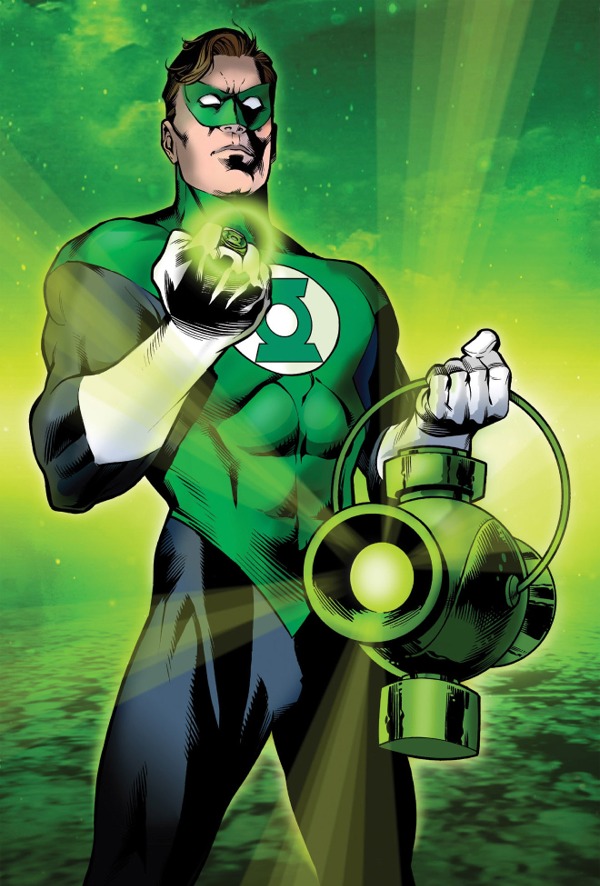
Never overlook an opportunity for a Green Lantern reference.

The good news, though, is that you can strengthen the newer, more recent brain – the lazy teenager from the initial example. By knowing how you make mistakes, how you can be fooled into fearing things that you don’t need to fear, you can better understand your own reactions to events and make better decisions. You can educate yourself about the things that are actually dangerous, and stop losing sleep over the things that are not a threat. Being afraid is not your fault – it’s an ingrained biological feature. Staying afraid, on the other hand, is something over which you have control. With enough will power, even you can overcome great fear.

Sorry. Nerd moment there.

Are there terrorists who want to destroy the United States? Sure. But they won’t, because doing so is indescribably harder than certain politicians would have you believe. Are there creepy child molesters who want to abduct and defile your children? Yup. But the chances of that actually happening are so low that the odds of any specific child becoming such a victim are nil. Are there angry teens who want to come to their school and kill everyone they see? Of course. But when you look at the incidence of school shooting compared to how many kids go to school every day, you can see that the odds of your children being caught in a school shooting are slim to none. In fact, there are many parts of the country where your children are probably safer in school than out of it.

There are real risks in our modern world, but they’re not spectacular and they’re not viscerally terrifying. A car accident, a heart attack, a diabetic death – these things don’t make the news. Imagine a 9/11-style attack happening every three days, 3,000 dead each time. It would be an outrage, a national disgrace, and people would be scared to their bones. But it would take just about 233 attacks to equal the number of deaths in 2001 that occurred from cardiovascular disease in the United States.

The nearly nonexistent chance of being killed by terrorists is enough to get people to submit to any number of indignities and intrusions on their persons and liberties when they travel, but the very real risk of death from a heart attack isn’t enough to get people to go take a walk once in a while or stop eating junk food. So enjoy that delicious moment of irony the next time you go through the TSA molest-a-thon and get a seriously overweight screener taking liberties with your person.

The fact is that we have it damn good compared to our ancestors. We live longer, we live better, even in parts of the world that are still developing, and it looks like the future will progress that way. But we still insist on needing to be afraid, even as we have less and less to actually fear. So put down the newspaper, turn off the 24-hour news, and take some time to figure out what is actually a threat. Give that bored teenager something to do with his time and let the caveman go back to his cave.

————————————————–

You don't see a lot of these anymore. There's a reason for that. (photo by Steve Cornelius on Flickr)

“Anyone who has spent time in a Victorian cemetery knows that gratitude, not fear, should be the defining feeling of our age. And yet it is fear that defines us. We worry. We cringe. It seems the less we have to fear, the more we fear.”
– Daniel Gardner, The Science of Fear

1 Comment

Filed under culture, Daniel Gardner, fear, media, nonfiction, psychology, science, security, society, terrorism, The United States

Lost in the Stacks 8: Guilty Pleasures

Everybody has a guilty pleasure book. It might be one author or a specific series or even a whole genre – that book you don’t want to be seen reading. The book you know your high school English teacher would scold you for wasting your time with. The book you feel stupid talking about at parties because you know they’re going to say, “Really? That’s an interesting choice. I enjoy reading James Joyce in my free time and have first editions of the collected works of Gabriel Garcia-Marquez in every room of my home,” after which they all laugh at you until you run out of the party in shame and swear never to read another word of anything fun as long as you live. For example.

You didn't know about Twain's little-known short story, "A Connecticut Yankee in a 30th Century Court?" It's fascinating, really....

But should it really be that way? Why do we let the bestseller lists and “Best Books of ALL TIME” lists or some knucklehead with a podcast tell us what we should read and what we should like? In this edition of Lost in the Stacks, we explore the idea of Guilty Pleasure Reading and whether or not the concept should even exist. Share your guilty pleasures with us and stand up for your tastes in reading!

Obama’s Book Club
NPR’s Top 100 Science Fiction and Fantasy
The Guardian’s Best Books
Time Magazine’s Top 100 Novels
The Telegraph: Top 100 Books
New York Times Bestseller List
The Comics Code Authority on Wikipedia

1 Comment

Filed under classics, comic books, criticism, culture, fantasy, fiction, Lost in the Stacks, reading, reviewing, science fiction, society

Review 135: Jennifer Government

Jennifer Government by Max Barry

Look around your house. Sneakers, computers, movies, household items. How many of those things are made by massive, multinational corporations? Probably all of them. And how many of these companies are from America? Lots, I’ll bet.

In her book No Logo, Naomi Klein takes a trip through the history of branding – the association of a particular company with a particular product. Given that most products with similar function – sneakers, for example – are fairly similar in their makeup and function, the companies that make them use brand marketing to distinguish themselves from their competitors.

The Nike people are a wee bit intense...

Thus, Nike, Reebok and Adidas, whose sneakers are, by and large, as good as each other, use brand marketing to make you believe that, if you buy their product, you are somehow superior to those who buy the product of the other guy. If you buy Nike, you’re part the the Nike family – the uber-atheletes, the people who Just Do It and don’t go in for all the fripperies of life. If you buy Reebok, you’re more down to earth, more involved in the gestalt of life, and not quite as intense as the Nike people. If you have Adidas, you’re probably more fun, a little irreverent, and you dream about sex all day. Or something like that.

We use brands to define ourselves. When my father worked for GE, we only had GE appliances in the house, even if that meant paying a little more for the new washer. I had a student who wore nothing but Jean-Paul Gaultier clothes. Hell, Generation X has been divided into the Pepsi Generation and the Coke kids, a terrible schism that may never be repaired in my lifetime, unless the Mountain Dew Freedom Fighters intervene. And we won’t even start in with the Windows-Mac Civil War.

Brand loyalty is more important to some of us than others....

I don’t pretend to be immune, either. I drink Diet Coke and used to smoke Marlboros, and would never have chosen another brand if those were available. Of course, this probably has something to do with scary chemical additives than anything else, but the point is the same. I was loyal to my brands, one way or another, without even thinking about why.

Like it or not, our brands define us, and we allow them to do so. Mainly because they use their commercials to terrify us – buy Preparation H or lose that valuable sale, wash your husband’s clothes in Wisk, or all the other wives will laugh at you, that sort of thing. And the moment you start to wonder if perhaps there isn’t any real difference between cars made by Honda and those made by Toyota, they hit you with a barrage of special offers, incentives and tie-ins to remind you that they love you. Really, they do.

Max Barry takes this kind of brand identification one step further.

This is a world where, economically speaking, most of the world is the United States. All of the Western Hemisphere (except Cuba), the UK, Southeast Asia and Australia, Russia, India and South Africa belong to the US, for all intents and purposes. The US government operates in all those places, if you have the money for it. Europe, Africa, China and the Middle East stand alone against the US economic juggernaut.

I pledge allegiance...

Corporations are king here. There are no taxes, as the US Government is simply another corporate organization, responsible for enforcing such laws as they have the budget to enforce. Every service – police, medical, fire – has been privatized. And while the concept of the political nation has pretty much vanished, there are economic nations emerging – the US Alliance and Team Advantage, both economic alliances that have their roots in airline mileage campaigns. Each of these groups controls dozens of markets, and cross-promotes all their goods. So if you wear Nike shoes, then you had better not eat at Burger King – that’s Team Advantage territory. And if you work for McDonald’s, then you’ll want the NRA to protect you, rather than the Police, because you get a membership discount. Schools are run by “kid-friendly” companies such as McDonald’s and Mattel, and are basically corporate propaganda mills. Not like now, of course. As if all that wasn’t bad enough, your surname is the name of whatever company you work for.

Thus, a young man named Hack Nike is given a pivotal role in the marketing of a new Nike sneaker, the Mercury. As part of their marketing strategy, they’ll limit production and distribution to five pairs per store. As Beanie Babies, among other products, have shown, the more limited the availability, the higher the demand, and the higher the price. Thus, charging $2,000 for a pair of shoes that an Indonesian laborer made for $0.85 is perfectly reasonable.

The second part of their marketing strategy is to increase the public’s awareness of the sneakers, as well as to give them some street credibility. That’s where Hack Nike comes in. His new marketing job is to shoot and kill ten purchasers of Nike Mercury sneakers.

Can Nike get away with this? They seem to think so, and they probably could have, were it not for Hack’s distaste for murder. Suffice to say, the plot becomes complicated, and the Government’s best and most dedicated officer, Jennifer, is on the case.

The "E" stands for "Egregious corporate malfeasance that makes a mockery out of our democracy!" Yay!

The story is a lot of fun, and well written. The world that Barry has created is a logical extension of our own, if hopefully improbable, and his characters are pretty easy to identify with, with only a few who don’t shine as brightly as the others. Being a native of Melbourne, Barry also takes a few nice stabs at Americans, but they’re good-natured and accurate, so I didn’t mind. It was a tale of massive corporate malfeasance based on the solid marketing and corporate ethics of today. And since 2003, when the book was published, we’ve seen plenty of examples of how much large corporations are able to get away with and how unethical they’re willing to be in order to make a quick buck.

Barry’s book is, fundamentally, about the problems that arise when you allow the free market absolute control. The adage about the corruptive influences of power does not only apply to individual people, it most definitely applies to corporate entities as well. The excesses of the early 2000s showed that not even the law – to say nothing of basic ethics – could make some of the biggest corporations in the world behave honestly. The recent housing/financial services collapse is another example – when pursuing the almighty dollar, considerations for what is right and wrong fall by the wayside, and the law might only be a temporary stumbling block.

Read this book. It’s a lot of fun, and then watch the papers and see how true it really could be….

—————————————————–
“There was no place for irony in marketing: it made people want to look for deeper meaning. There was no place in marketing for that, either.”
Max Barry, Jennifer Government
—————————————————–

1 Comment

Filed under consumerism, corporations, fiction, humor, Max Barry, politics, science fiction, society

Review 124: The Night Watch

The Night Watch by Sergei Lukyanenko

This review has been approved for distribution as conducive to the cause of the Light. – The Night Watch

This review has been approved for distribution as conducive to the cause of the Dark. – The Day Watch

Imagine a world where magic is real. A place where people known as Others are born with powers they don’t understand. Their destinies are unwritten until that fateful day when they first become an Other – when they discover the strange, shadowy and powerful world known as the Twilight – and have to make a choice: will they stand with the Light or with the Dark. Will they dedicate their lives to Good or Evil?

Maybe it ain't what it used to be, but it's still dramatic.... (art by mirerror on DeviantArt)

It’s not an easy decision to make, by any means. Joining either side has its limitations and its rules, for the battle between Good and Evil isn’t what it used to be.

Long ago, it was simple – Good fought Evil, Dark fought Light, and blood was shed on both sides. It was a vicious, unending war that threatened to decimate the world. Finally, the two sides reached an agreement. A Treaty, well deserving of the capital letter. There would be a truce between the two sides, a balance that would be maintained at all costs. Any act of evil would be balanced by an act of goodness, and vice versa. Neither side is to have an advantage.

Part of the Day Watch Auxiliary Brigade

Making sure the peace is kept is the job of the Watches – the Night Watch, staffed by elites of the Light to guard against advances by the Dark, and a Day Watch, staffed by the elites of the Dark to guard against excesses of the Light. We begin our look at the Others of Moscow with a young adept named Anton Sergeeivich Gorodetsky, a wielder of magic and an analyst forced into the more exciting realm of field work. His job is to find out who a pair of vampires are illegally attempting to seduce and stop them. In the process of doing that, and saving the soul of a young Other named Egor, he stumbles upon something that threatens the entire city of Moscow, if not all of Russia. A young woman has a curse upon her head, so horrible and so powerful that the forces of the Light may have no chance to disperse it. If she dies, the city will die with her. If she lives, even worse may befall the world.

There are three stories in this book, somewhat independent but entirely connected. The first details the discovery of Egor and the cursed Svetlana. In the second, an Other of the Light, a maverick who doesn’t know about the rest of the Others, or the Treaty between Light and Dark, is murdering Dark adepts. Somewhat alarmingly, Anton is being framed for the murders. In the third book, Moscow is gripped in a heat wave. In the midst of this, the leaders of the Light are attempting to change the world. Whether it ends up being for the better or the worse, no one can know. But Anton is convinced that it must not come to pass….

Team ANTON!!!!!

It’s a gripping fantasy, in a very complex world. It’s compared to Rowling’s work, and justly so (although I don’t think there’s much of a case to be made for an attempt to ride on Rowling’s coattails – Night Watch was originally published in 1998, only a year after the release of Harry Potter and the Sorcerer’s Stone). There are substantial differences, of course, making Night Watch a much more adult book than the Potter series. There are very few children, and the few that are there are not in very substantial roles. There’s far more drinking, smoking and sex in this, of course. But the world that Lukyanenko has created is every bit as deep and complex as the one Rowling has made. There are any number of roles that could be played, and an almost infinite number of situations that could be built on the fairly simple rules that are set up by the Light-Dark Treaty.

The biggest difference, of course, is in the complexity of the world. Rowling’s world is fairly definitive in its divisions between good and evil – there is good, there is evil, and there is no question of which is which. The evil characters are definitively evil, and the good characters are definitively good, and the reader doesn’t have to worry too much about who’s on which side, Snape notwithstanding.

The Others of Moscow, however, are not nearly so clear-cut. Yes, the Light is trying to do the work of the Good, to make the world a better place. But their machinations and their plots don’t always go as planned. See the Russian Revolution and World War II for examples why. They ignore the Law of Unintended Consequences and the horrors it can unleash. By trying to do Good, they unleash great evil upon the world.

He's just a big softie, really....

And how about the Dark? Yes, they’re populated by werewolves, witches and vampires, but they are advocates of utter and total freedom. They do not destroy for the sheer joy of destruction, but because they want to increase the personal freedom of the world. They’re not interested in making humanity “better,” or making a better world. They simply want to live in the world as it is, free from restraints – both internal and external.

While it may be pretty clear who is on the Light and Dark side, it’s not entirely clear who is doing Good or Evil at any given time. And, more importantly, it is almost impossible to know who is actually right.

It’s a great read – full of anguish and self-doubt and torture, like any good Russian novel should be. Anton knows that the Light doesn’t live up to the standards that it preaches, but he knows that he needs to be on the right side. He picks apart the intricate, decades-long plot of the Night Watch and very nearly figures out how to foil it. But even in revealing the truth, he does not manage to save the world from the doom of the Light.

Or does he?

We’ll have to read the next book and find out….

————————————————
“You accuse us of cruelty, and not entirely without reason, but what’s one child killed in a black mass compared with any fascist children’s concentration camp?”
– Zabulon, of the Day Watch, The Night Watch
————————————————

The Night Watch on Wikipedia
Sergei Lukyanenko on Wikipedia
Sergei Lukyanenko’s website (in English)
The Night Watch at Amazon.com

2 Comments

Filed under ethics, fantasy, good and evil, horror, identity, made into movies, morality, philosophy, politics, Russia, Sergei Lukyanenko, short stories, society, USSR, vampires, werewolves, witches, wizardry

Review 113: The Plague Dogs

The Plague Dogs by Richard Adams

I really enjoy Richard Adams. Part of it is his writing – he has an excellent style and a definite gift for description. When he talks about a place, it is immediately obvious that he’s actually been there. He uses multiple senses to tell you what a place looks, sounds and smells like, the feeling of the damp earth and the rolling mists, the tastes that seep through the air…. Not surprising when one is writing a book where a pair of dogs are the primary characters.

And that’s another reason I like Adams. Lots of people write books about animals, personifying them and making them into almost-humans. But most of these writers tend to idealize the animals, put them into the sort of “noble savage” category which places humanity immediately in the wrong.

The fox is almost unintelligible. Enjoy that.

Not Adams. His animals are animals. In Watership Down, which was ostensibly a book for children, the animals live through fear, terror, despair and war. There is blood and death and pain, mostly because there is blood and death and pain in the natural world. He does acknowledge that he over-humanizes his characters, but without that, there would be no story.

This book is about the intersection of animals and man, and asks a very important question: what is humanity’s responsibility towards the animals? While he may not know what the true answer is, Adams definitely knows which answers are wrong. The book begins in a scientific research lab, in the quiet hills of northern England, where any number of experiments are performed on any number of animals. Some of them are paid for by outside interests – cosmetics corporations, for example – while others are performed to, in the mind of the lab’s directors, further the scope of scientific knowledge. Adams’ utter contempt for this kind of activity is immediately evident when you read it, and he spares no detail in describing what happens in these experiments. Animals mutilated, burned, shocked, frozen, exposed to poisons in their air, water and food. Kept awake, asleep, isolated…. all just to see what would happen. And when they die, they are disposed of with no more thought than one might dispose of a burned-out light bulb.

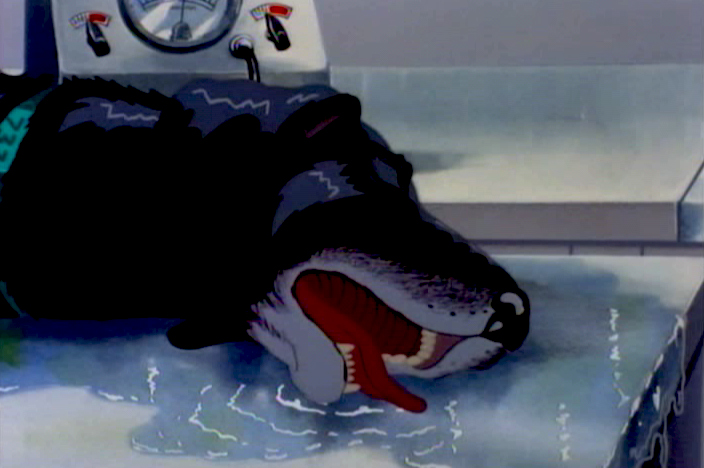
Like this, only worse.

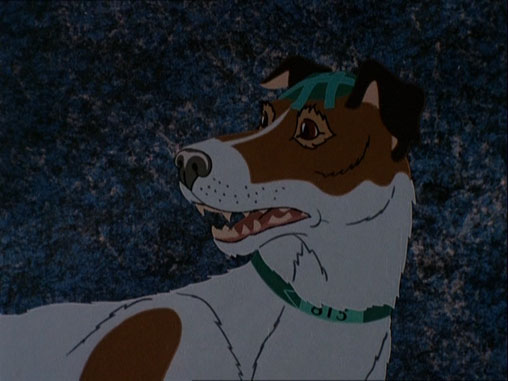
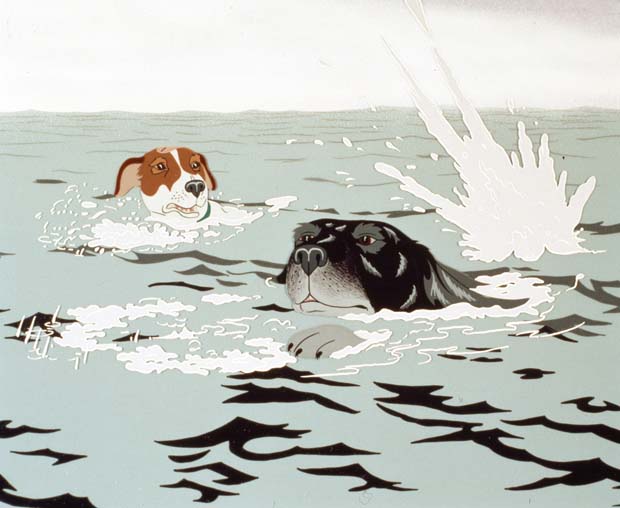
One of the subjects is a large black mongrel dog which is being used to answer the great burning scientific question of, “What would happen if we kept trying to drown a dog but never actually let it die?” Rowf (having never had a master, his name is just the sound he makes) has a single companion in the lab, in the cage next to him – a small terrier who, having had a master before, has a name – Snitter. Snitter has been the subject of a far stranger experiment, and the brain surgery has left a deep scar across his skull and a deeper rift in his mind.

The two dogs manage to escape from the lab into the outside world, where they manage to survive, if only barely.

Poor, crazy Snitter....

And normally, that would be the end of the story. But then Adams reveals his antipathy for bureaucracy and the modern media, for where both of these intersect, terrible phantoms and ghouls can arise. Worried farmers, whose sheep are targets of the two hungry dogs, call their representatives to get answers from the recalcitrant lab. The ministers talk and talk about it, and when word leaks out to a well-known London tabloid, the story explodes.

WAS the lab not working with many kinds of animals the night the dogs escaped, it asked. Among those animals, were there not RATS? And were those rats not the subjects of tests involving the horrible BLACK PLAGUE? CAN the laboratory ASSURE the taxpaying public that there is ABSOLUTELY NO CHANCE, none at all that the dogs are not infected with the virulent PLAGUE?

The newspaper’s answer, the one that will sell more copies, of course, is NO. And so, the two dogs, who were lucky enough to escape and canny enough to survive, become known nationwide as the Plague Dogs, subjects of a hunt which escalates beyond reasonable proportions.

Poor, miserable Rowf....

As much as this is an animal adventure story, a kind of twisted version of Homeward Bound, it is also commentary. There’s a lot of dog philosophy in here, for one of Adams’ gifts is being to get into the heads of the animals he’s writing. The two dogs agree on one thing – it is a dog’s place in the world to serve humanity. But how? Snitter, who’d had a good master once, believes that they are there to make humans happy, to bring love to a home. Rowf, however, having known nothing other than the laboratory, believes that dogs are there to be abused by humans for their unknowable purposes, and that by running away from the lab and the water tank, he has become a Bad Dog.

Also, looking at the world from a dog’s perspective is interesting. Snitter, for example, believes that the newspaper-boy delivers a paper to the Master’s house solely so the Master and Snitter can play a fun game. Isn’t that boy nice? And having known only suburbia, he is shocked that humans have ripped up the world and replaced it with all these green things and mountains and deep holes filled with water – which, of course, Rowf believes are used to drown unthinkably huge animals much as he was drowned. Adams asked himself the question, “How would a dog interpret the world?” and got a lot of great ideas from it.

And, as I mentioned before, there’s a lot of talk about humanity’s responsibility towards the animals. Should we use them for whatever purposes we wish? Of course not. Are we necessarily “better” than the other animals? More skilled, yes, more clever, certainly, but better? No. We are animals, and as such we cannot allow ourselves to place ourselves above the great interconnected web of life. We may never know what our purpose in Nature is, but we can know what our purpose is not.

Not quite the end....

One really interesting part of the book is a wonderful section near the end where the Writer and the Reader argue about the fate of the dogs. It’s a little meta-fictional, but it’s an acknowledgment by Adams that he knows how the story should end, and he knows how his readers want it to end. Reading it, it appears that Adams clearly thinks the dogs should die – not because they were Bad Dogs or anything like that, but because the vision of humanity that he constructed for the book demanded their deaths. Most of the humans in the story want the dogs dead, and letting that inevitable ending take place would be his way of saying, “See? I told you so.”

If I had to guess, though, he showed the original, “Dead Dogs” version to someone – his wife, his editor, his agent – and that person said, “No. Uh-uh, no. No no no. No.” And so Adams grudgingly breaks the fourth wall with a short narrative poem which is essentially him saying, “Fine, have your happy ending….” It’s a wonderful part, and I admit to getting a little choked up every time I read it.

Just a little, mind you.

—————————————————-
“It’s a bad world for the helpless.”
Mr. Ephraim, The Plague Dogs

The Plague Dogs on Wikipedia
Richard Adams on Wikipedia
The Plague Dogs on Amazon.com

1 Comment

Filed under adventure, animals, dogs, England, ethics, fantasy, friendship, media, morality, Richard Adams, society

Review 69: Skipping Towards Gomorrah


Skipping Towards Gomorrah by Dan Savage

America. Here and now, in the first decade of the 21st century, there are those who say that America is on the decline. It’s a nation awash in sin and degradation, vice and immorality. Pot smokers, gamblers, homosexuals, feminists, Liberals – oh, those damned Liberals – they’re all conspiring to destroy everything that is good and moral about the United States of America, and you – yes, you are letting them do it! Soon this nation that we all love and cherish will be nothing but an opium orgy den for a bunch of homosexual atheist abortion doctors.

This is what they believe, those whom Dan Savage refers to as the Scolds, the Virtuecrats and the Naysayers. We know who they are – usually Republican conservatives, often of the evangelical Christian variety. They are men (and occasionally women) such as Robert Bork, Bill O’Reilly, Ann Coulter, Pat Buchanan, and of all the things they have in common, the most glaring is that they believe that The United States is in a state of utter moral decay. Americans who choose sex for any function other than making babies, who choose to put drugs into their bodies, who allow themselves to be fat and indolent – SHAME on you! It is your sinning that is destroying America! Jerry Falwell himself said as much after the attacks on 9/11:

I really believe that the pagans, and the abortionists, and the feminists, and the gays and the lesbians who are actively trying to make that an alternative lifestyle, the ACLU, People For the American Way — all of them who have tried to secularize America — I point the finger in their face and say “you helped this happen.” 

And, it would seem – given the naysayers’ ubiquity and volume – they are right.

Or maybe not.

Dan Savage is an acclaimed advice columnist, specializing in relationship and sex advice. He started with a newspaper column nearly twenty years ago, and he’s gained international attention, mainly by being very good at his job. He doesn’t sugar-coat his advice, often telling people instead to DTMFA (Dump the mother-f*cker already!) if it’s clear they’re in a bad relationship. He helped coin a new meaning for the word santorum as well as pegging (Google them – I’m trying to keep this clean). He’s abrasive, contrarian, direct – and an outspoken advocate of the pursuit of happiness. Most of his advice can be boiled down to a simple question: Are you happy?

What Savage is exploring in this book is all the ways people try to make themselves happy, and why those are all the things that the Virtuecrats believe are sinful, immoral and conducive to America’s decline in the world. In order to understand the sins, he has to meet the sinners and, as much as possible, indulge.

The book is set up around the classic Seven Deadly Sins – greed, lust, sloth, gluttony, envy, pride and anger. In each chapter, Savage tries to understand what it is about these sins that make them so irresistible, and if they’re actually deadly at all. For Greed, he indulges in gambling, learning how to play blackjack and win – except when he loses. For Gluttony he visits a convention for the NAAFA (National Association for the Advancement of Fat Acceptance) to find out how fat people feel about being fat. He learns to channel his Anger in a shooting range in Texas, studies Lust in swingers’ clubs in Las Vegas, and realizes that maybe we all need a little more Sloth in our lives. He takes great pains to Envy the rich and to determine whether gays really need to bother with Pride anymore. And then he tops it all off with a great attempt to commit all seven deadly sins within a forty-eight hour period in New York City.

As provocative as it all sounds, the book isn’t really about sinning. It’s about human nature and freedom, and how those two things clash and merge. It’s about how some humans want to enjoy themselves, while other humans would rather they didn’t. They tell us about the horrors of drugs, the terrors of infidelity and the inherent corrosive nature of the very existence of gay people, much less married ones. They tell us that by pursuing our happiness, we are destroying the country.

Dan Savage says otherwise, mainly by pointing out what the conservative naysayers don’t want to hear: human beings are complex, irreducible characters who are not very good at not doing what they’re not supposed to do. We all want to enjoy ourselves. We want to feel pleasure, one way or the other, and we will do everything in our power to make this happen. Whether it’s sex or reading, drugs or travel, food or art, going to the gym or gambling, we want to feel good. And for some reason, there are people who have a problem with this.

Savage believes that the first principle we should follow is that of freedom: if one isn’t harming others, then one should be free to do whatever one wants. In this book, he makes an excellent case for the legalization of marijuana, talks to productive, religious, moral swingers, and meets with sex workers in New York City. He examines the hypocrisy of the moralist movement and the general weakness of their arguments.

For example, with gambling long having been one of the most deadly of sins in the Christian catalog, why don’t modern conservatives rail against it? Is it because it’s an economic boon to so many places? Is it because it makes money for the country? On gambling the conservatives are quiet, though surely cards and dice have broken far more families than gays and lesbians?

And if the concept of “personal responsibility” is so sacred that any mention of gun control is considered an immediate attack on our freedoms, why can’t that same love of responsibility extend to marijuana use – an activity far, far less deadly than gunplay.

Savage’s understanding of human nature tells him that while we all want happiness, the happiness of one person is the immorality of another. In America, however, there is room to disagree, room to argue and to grow. American culture evolves and changes whether you like it or not, and it is better to learn to live in that culture than to try and bend it to your will. While you may disagree with how your fellow American leads his or her life, it is not your job to try and change it, just as they have no business trying to change yours.

So take heart, sinners! Dan Savage is on your side.

—————————————
Take me to the driest county in the most conservative state, and in two hours this determined hedonist will find you all the drugs, whores, and booze you’ll need to pass an eventful weekend.
– Dan Savage, Skipping Towards Gomorrah
—————————————

Dan Savage on Wikipedia
Skipping Towards Gomorrah on Wikipedia
Skipping Towards Gomorrah on Amazon.com
Savage Love column
Savage Love podcast

Leave a comment

Filed under Dan Savage, morality, sins, society

Review 44: Shutting Out the Sun


Shutting out the Sun – How Japan Created its own Lost Generation by Michael Zielenziger

One of the things you learn about Japan when you get here – and you learn it pretty quickly – is that there can be a vast difference between the appearance of Japan and the reality of it. The faces that people show you, or even that the city shows you, is not necessarily their true face.

Take Kyoto as an example: it prides itself on being a city of traditional culture, the touchstone of all that is Truly Japanese. When you first see it, though, you think, “Really? Because it looks like a big ol’ jumbled-up city to me.” And it does – aside from the temples, which remain more or less relegated to the edges of the city, the vestiges of Old Japan have been swept away in favor of concrete and glass. Kyoto Station is a glimmering lump in the middle of the city, and Kyoto Tower, as many have said, is a stake through its heart. But ask anyone and we’ll say, “Kyoto is a beautiful city.” Because that’s the way it’s supposed to be.

This is how it is to live in Japan. There is a gulf between the true nature of things and the way we want them to be. For someone born and raised here, this kind of thinking is taught from birth, and without the ability to divide oneself in twain, life in Japanese society can be very difficult. These two states have names, too – tatemae is the face that you present to the world, the one that everyone expects of you. Honne is your “true self,” the feelings and thoughts that you hold in reserve so as not to cause conflict with the greater society around you.

The origins of this dichotomy are unclear, although there are those who attribute it to a culture with roots in collective agriculture. If your life and the lives of everyone in your village depends on getting the rice crop in, you have to learn to hold back certain feelings or desires for the good of the group. You sublimate yourself into the group structure, because that’s what has to be done. So, tatemae isn’t a lie, or a deliberate performance designed to deceive people. It’s a bargain between oneself and society – “This is what society needs me to be? Fine. I can be that.” What remains is honne, the inner self that society cannot touch, but can never see.

So what happens when someone can’t hold up their end of this social contract? What happens when the modern world makes demands of people that this ancient compact can’t handle? Well, that’s when things start to go wrong….

For many years, this bargain between the individual and society worked, mainly because society kept up its end of the deal. People were protected, employed, and given a place in the world, whether it was the feudal culture of the Edo era, the wartime mobilization of the 30s and 40s, or the indomitable Japan Inc. of the post-war years. As the world progressed, however, it soon became evident that the old ways weren’t enough. Japan needed to change, or face stagnation and irrelevance.

In this book, Zielenziger tries to figure out how Japan got into the state it’s in – a decade and a half of stagnation, with no end in sight, and the very real possibility of a slide into graying irrelevance by the middle of the century. To do so, he looks first on the human scale, at the people who have given up on Japan’s social contract – the hikkikomori.

Like so many other things Japanese, the hikkikomori phenomenon is said to be unique to Japan. Not quite agoraphobics, not quite dropouts or depressives, the hikkikomori are people – usually men – who have given up on the world. They usually live in a single room, often in the homes of parents who enable their hermit lifestyle, and refuse to come out. They sit in there and read, or watch TV, or think. They see no place for themselves in the outside world, and so they give up on it. The men that Zielenziger interviewed suggested that the outside world was too much for them. In many cases they were bullied by others – a pattern of social control that is unfortunately ingrained here – or they simply looked at their parents and thought, “Is this what I will become?”

An American child, faced with the knowledge that he doesn’t fit with the rest of the world, will probably see it as an opportunity to shape his own identity. A hikkikomori sees it as a personal failure. He knows how Japanese society works, and rather than blame the world for not accepting him, he blames himself for not being able to fit in. Thus, retiring from the world is seen as the only option available, other than suicide. Some hikkikomori spend years in their rooms, refusing to speak even with their parents, who – often out of a sense of shame or the nurturing love known as amae – support their boys’ choice of lifestyle.

At the other end are the people who give their identity over to an outside source. In more dangerous cases, this outside source might be a cult, like the Aum Shinrinkyo group who carried out the deadly sarin attack against the Tokyo subway in 1995. A more benign manifestation, however, is brand mania. Zielenziger talks to women who identify themselves through the brands they buy. These people will spend money they don’t have in order to get a bag from Louis Vuitton or Gucci or Chanel. They distinguish themselves with their brand identity, willingly giving up their own in the process. In a country where one can no longer trust the government to look after your best interests, or the media to tell you the truth, or business to give you a job, putting all your faith in Louis Vuitton – with its worldwide reputation for quality – seems to be a good idea.

It’s a nation in crisis, according to Zielenziger. It’s a country that’s gone from feudalism to full modernity in only a century and a half, but the culture hasn’t changed nearly as much as the country has. It’s a bustling, 21st-century nation built on a foundation that was laid in the 17th century, and things are starting to fall apart. It’s a country that puts society before the individual, but that premise is cracking under the weight of a world that values individuality. It’s a place where responsibility is distributed and accountability doesn’t exist, where mistakes go unexamined lest they bring shame upon those who made them, and where the past is a thing that can be easily ignored if it troubles you. Zielenziger believes that the underlying social structure of Japan is holding it back, leading the entire country to another withdrawal from the world. Much like the hikkikomori that no one likes to talk about, Japan may one day find itself alone and isolated, not knowing its place in the world and not knowing how it can get back to what it used to be.

The book is quite a read, going from small one-on-one interviews to historical and sociological analyses, but it is overwhelmingly negative in tone. Zielenziger isn’t wrong, necessarily, but he is of the mind-set that Japan is irrevocably screwed and that only Western cultural intervention can save it.

He lays the hikkikomori problem – and the problem of parasite singles, NEETs, and all the other dysfunctional youth – at the foot of Japan’s collectivist culture, as well as the intense bond of amae that exists between the parent and child. While he doesn’t say it in so many words, he does imply that the traditional social structure of Japan is simply incapable of keeping Japan competitive in the modern era. He believes that Western values, especially those stemming from Christianity, are what Japan needs to survive.

The bit about Christianity seemed to come from left field, but he does make a case for it. Christianity, he believes, places the onus of salvation on the individual. It is a person’s works (or faith) that ensure his place in the afterlife. This focus on one’s personal responsibility, and ultimate judgment, fosters a Self that is harder to suppress. From that strong sense of individuality, a culture can foster more competition, thereby preventing stagnation.

There’s a long, not entirely interesting chapter on Korea that he uses to illustrate this point. Unlike Japan, Korea – once called “The Hermit Kingdom” – found itself facing economic turmoil and got themselves out of it. Not because Korean ways were better, but because they knew that if they stuck to their traditions they’d be screwed. Korea is a nation strongly influenced by Christianity, and the individuality that Christianity fosters, suggests Zielenziger, is what gave Korea the courage to risk social turmoil for the betterment of their nation.

There may be something to this, but I doubt that adopting Christianity en masse will save Japan from Zielenziger’s dire future. Honestly, it was tough to stay objective while reading this, mainly because of the gulf between what I see, having lived here for the better part of a decade, and how Zielenziger describes the place. If I didn’t know better, I would have read this and thought that Japan was a zombie nation, populated either by hermits or soulless consumers. From what I’ve seen, I know that this is not the case.

Granted, I haven’t completely immersed myself in the culture, mainly because that’s an extremely difficult thing for a non-Japanese to do. Most of the people I talk to are my students, and people with the desire and the resources to study English are probably not an accurate cross-section of the country. So I don’t claim to have any more insight into the Japanese mind than Mr. Zielenziger does, but from my experience it seems that all hope is not lost. Yes, the government is a faceless bureaucracy, the media is completely complacent and the corporate community that once offered jobs for life has vanished. But Japan has proved resilient in the past, adapting to great changes that were thrust upon it from the outside. And a quick look at Japanese history shows that, when the times need it, people emerge to challenge the established order.

That’s what Japan needs now. Someone – or, more effectively, a group of someones – to stand up, stick out and risk themselves for the betterment of their country. It won’t be easy – revolution never is – but it needs to be done. Perhaps one day, instead of shutting themselves in their rooms, there might be young men and women who take to the streets and show Japan that there is value in the individual. I hope I get to see it.

————————————–
“To survive in Japan, you have to kill off your own original voice.”
Kaz Ueyama, Shutting Out the Sun
————————————–

Michael Zielenziger on Wikipedia
Michael Zielenziger’s Homepage
Shutting Out the Sun on Amazon.com
Hikkikomori at Wikipedia
Amae at Wikipedia

Leave a comment

Filed under identity, Japan, Michael Zielenziger, nonfiction, psychology, society

Review 43: Underground

Underground – The Tokyo Gas Attack & the Japanese Psyche by Haruki Murakami

On March 20, 1995, in the middle of the morning rush hour, the Aum Shinrikyo cult unleashed a terrorist attack on the subways of Tokyo. Five men on five different trains unleashed sarin gas in the subway system, which shut down most of the city, injured at least 5,000 people, and left 12 dead. It was the single worst attack on Japan since the end of World War Two, and it gripped the nation.

I remember hearing about this, but I don’t remember giving it too much attention – I mean, when was I ever going to have to know much about Japan, right? In the light of our own terrorist woes in the US, I wish I had.

Haruki Murakami is best known for being a fiction writer. I’ve read a few of his books, and they’re all really interesting. He has a very strange mind, and he’s a good enough writer that he can often successfully avoid giving his characters names, something that still surprises me. This time, however, he decided to turn his hand to non-fiction, chronicling the events of what was a shocking blow to his home country.

In his introduction to this book, he explains why he decided to write it. Like many people, he heard about the attacks while he was living abroad, and thought, “Oh, that’s terrible.” And then he tried to put it out of his mind. But it wouldn’t stay there. A woman had written a letter to a magazine about her husband. He had been on the subway that morning, and had been injured by the sarin. His injuries had impaired him to the point where he had been forced to quit his job. Not only because of the physical effects of being gassed, but also because he had become an outcast at work. People would look at him and whisper about the “weirdo” who had been on the subway that day. He was, probably, a reminder of what people wanted to forget. He had, by no will of his own, become an outsider, and that pressure led him to quit his job – what Murakami calls a “double violence.” First by the sarin, then by Japan.

From that point, Murakami took to wondering what really happened to people that morning. Not what the newspapers and TV said, but the stories of the people who had actually been on the trains.

So he began taking interviews. Of the hundreds he contacted, he got a total of 60 people to agree to talk to him. This is definitely a huge difference between Japanese and Americans. After September 11th, I’m sure people were falling all over themselves to tell their stories, or to talk about their dead friends and relatives.

In Japan, people were eager to forget. They didn’t want this nosy journalist stirring things up again. It’s easier to put things in the past, to say, “It can’t be helped” and go on with one’s life.

Fortunately for us, Murakami got some people to talk, and for that we have this book.

He divides the stories into subway lines and stations, and it’s interesting to see how peoples’ stories are slightly different at times, where one interviewee and another interacted. He gives the histories of people, and provides a narrative of what was happening to people on that morning – where they were going, what they were doing and thinking, and how they felt. Some people thought they were sick, others thought that some kind of cleaning fluid had splashed. A few guessed that it was an attack.

Some of the best stories come from the station personnel. So far, my experience with the guys in the uniforms who run the stations is that they all say “Arigatou gozaimas” whenever you put your ticket through the gate. These guys, though, had to take charge of a subway system that was under attack by an odorless, invisible weapon, without knowing who had done it or why. Unlike firemen or policemen, these guys had to deal with a situation for which they had likely never been trained.

The civilian stories are also fascinating, as they tell how they tried to help, and they vented their frustration with the lack of help. They talked about what they were thinking as the symptoms set in – dimming of vision, nausea, lack of coordination…. One interesting commonality is how many people kept trying to go to work. They put down their symptoms to any number of garden-variety maladies – anemia, lack of a proper breakfast, general stress. Half-blind, unable to walk straight, many of them still made it to their workplaces, not knowing the danger they were in until they heard about sarin on the news.

Sarin is a nerve gas, originally designed by Nazis, it is one of the most powerful gasses out there. Iraq used it to great effect against Iran in the 80s, and could well still have some floating around. According to the translator’s notes, a drop of sarin the size of a pinhead is enough to kill a person.

The cult members who set this thing off had liters of the stuff. Fortunately, they cut it with another liquid (and even pure sarin doesn’t evaporate well) which cut its lethality. Somewhat.

Perhaps the tiny number of fatalities – 12 – were due to the lower potency of the gas. It certainly wasn’t because the Tokyo or Japanese governments were any good at dealing with disasters. Interviews with doctors at local hospitals talked about the utter confusion that ensued after the attacks. None of them were briefed on the situation, they didn’t know what kind of gas had been used, and therefore couldn’t treat it properly. Worse yet, in some cases, they didn’t even know it was a gas. In some hospitals, sarin victims were admitted to the emergency rooms, where the sarin in their clothes began affecting the ER nurses and doctors.

They figured it was probably cyanide. One doctor, who had happened to have been at a seminar on a previous sarin attack in Japan, recognized the symptoms of sarin poisoning and faxed the information around the city’s hospitals, apparently a very unusual act by a doctor in Japan. Like many organizations in Japan, hospitals are loathe to share information without going through the proper channels, even in an event such as this. But this fits into the Japanese mind-set as well: to take such initiative is to invite criticism. Should the decision be the wrong one, it would bring shame down on everyone involved. Thankfully there were some people whose minds were more concerned with saving lives than saving face. Not enough, though. The Tokyo Bureau of Health didn’t chime in until 5:00 PM, nearly eight hours after the attack.

One doctor claims that the only reason so few people died was because of the efforts of individual doctors and paramedics. The official organizations were more or less useless, much like they were after the Kobe earthquake in 1992.

However it happened, the death toll was kept low, but the effects lingered on. Sarin has long-lasting physical effects, weakening the victim for years to come. Even more, there were the psychological effects that come with any event of mass terrorism.

I saw an article in an Australian magazine which interviewed some people who had been photographed during the burning and destruction of the World Trade Center. None of them were happy, none of them were leading good lives. Months later, the attack still lingered in their minds and their lives, effectively continued on. The same was, and probably is, true in Japan after the Tokyo subway attack.

After the publication of the first edition, Murkami decided that he had a few more interviews to do. It’s one thing to know what happened to the victims, but one also has to wonder: Why would anyone do such a thing?

So he went to interview current and former members of the Aum cult, and find out why they joined, what attraction the cult held for them, and what they knew of the cult’s plans. After the attacks, most of the Japanese media were treating Aum simply as “The Enemy,” a faceless group whose members were, in the grand Japanese tradition, not individuals but simply facets of the whole.

Aum, under its leader, Asahara, worked like most cults do: They recruited people with doubts, misgivings and unreconciled views of the world. Many of the people Murakami interviewed were highly intelligent people who felt, from childhood, that the world they lived in made no sense to them. Others were lost, confused, who felt unhinged and disconnected. Such people are classic candidates for cults, and Aum took them in.

In Aum, they tell Murakami, there was no fear of responsibility, no worries about their choices for the future, because their future was preordained. If anything bad happened, it was just bad karma falling away. For some, Aum was just a new way to look at life, a new way to go through life that offered less uncertainty and pain than conventional life.

For others, though, it was a political movement. It was a group whose goals could be achieved by murder, both individual and mass. The interviews are interesting, because you can understand why the lifestyle of Aum might be attractive to people, if not very practical.

Murakami wanted to point out, by interviewing the Aum members, that this cult didn’t appear out of nowhere. It arose in Japan, made up of Japanese men and women. It was a reaction to Japanese society, a signal of the illnesses that permeate it. It was not, and should never have been treated as, something separate.

There’s not a lot of judgment in this book, as that was not Murakami’s goal. He did what he set out to do – tell the stories of people who had been there, who had experienced the terrors of the sarin attack. It’s always interesting to hear real stories, and always good.

One has to wonder, though…. Terrorism is not all bombs and airplanes and Arabs. These terrorists – and they do fit the bill – were people who looked like everyone else, men in suits, carrying briefcases and a newspaper-wrapped bundle each. No one would have given them a second thought.

Could this happen in America? Probably. We still haven’t found whoever was mailing the anthrax around, at least not at the writing of this review. It would be very possible for a group of men to board the subways in New York at rush hour, gather their resolve, and unleash an attack at least as destructive as the World Trade Center attack was. And the answer isn’t “More Security” – that’s closing the barn doors after the horses have not only left, but they’ve started their own fertilizer reprocessing plant and planned to blow up the Kentucky Derby. The interviews in this book suggest that terrorism is a societal issue, not a security one. If we want to stop people from doing violence to us, we need to find out what drives them to do so. Remember: the majority of terrorist acts carried out in the United States were not done by al-Qaeda. They were done by Americans, just as the Tokyo attacks were done by Japanese.

No matter what our politicians and police tell us, we’re never completely safe. Japan learned that in ’95. We need to learn it as well.

——————————————-
“We need to realize that most of the people who join cults are not abnormal; they’re not disadvantaged; they’re not eccentrics. They are the people who live average lives (and maybe, from the outside, more than average lives) who live in my neighborhood. And in yours.

“Maybe they think about things a little too seriously. Perhaps there’s some pain they’re carrying around inside. They’re not good at making their feelings known to others and are somewhat troubled. They can’t find a suitable means to express themselves, and bounce back and forth between feelings of pride and inadequacy. That might very well be me. It might be you.”
– Haruki Murakami, Underground
——————————————-

Haruki Murakami at Wikipedia
Underground at Wikipedia
Tokyo sarin gas attack on Wikipedia
Aum Shinrikyo on Wikipedia
Haruki Murakami’s website
Underground at Amazon.com

Leave a comment

Filed under cults, Haruki Murakami, history, Japan, nonfiction, society, terrorism, Tokyo

Review 36: Little Brother


Little Brother by Cory Doctorow

Probably the biggest hurdle to overcome when reading young adult fiction is the fact that I’m not a young adult. As most adults know, things look very different from this part of the timeline, and it’s often very difficult to remember not only how you thought when you were younger, but why you thought the way you did. And it’s not a matter of just denying the feelings and emotions of youth – it’s that we literally cannot reset our minds to that state. We know too much, we’ve experienced too much. The best we can do is an approximation of how we think we remember how things were when we were still young enough not to know better.

It was with this in mind that I started to read Little Brother, and while I thought the book was a lot of fun to read, it probably wasn’t nearly as cool as it would have been if I were fourteen years old.

Young Marcus Yallow, AKA w1n5t0n, AKA m1k3y, is a senior at Cesar Chavez high school in San Francisco, and he’s what we used to call a “computer whiz” back when I was a kid. Marcus has an excellent grasp of how systems work, and finds great pleasure and thrill in either strengthening or outwitting those systems. Thus, he is able to fool the various security measures in place in his school building so that he can do the things his teachers don’t want him to do – send IMs in class, sneak out whenever he wants, steal library books, that kind of thing. He’s a hacker supreme, a trickster, and a very big fish in his little pond. He’s so confident and cocky, in fact, that within twenty pages I wanted nothing more than to see him get his comeuppance.

Which is pretty much what happens. A series of bombs go off, destroying the Bay Bridge and killing thousands of people in an attack that dwarfs 9/11. In the chaos that ensues, Marcus and his friends get picked up by Homeland Security, taken to an undisclosed location (which turns out to be Treasure Island) and interrogated within an inch of their lives. They quickly break Marcus’ smug self-confidence and assure him that there is no way he can win against them if they decide he’s a threat to national security. When he is sufficiently cowed, Marcus is released back into the city, which has become a zone of hyper-security.

In this post-attack San Francisco, the police and Homeland Security have unprecedented powers to search and seize, access to every trace of electronic records of citizens’ movements and transactions. In other words, everyone is a suspect until proven otherwise, and DHS is confident that the security they provide is worth the loss of liberty.

Malcolm, of course, disagrees. His natural tendency to buck authority meets his desire to get back at DHS for what they did to him and his friends, and comes together in a plan to not only subvert the Department of Homeland Security, but to actively drive them out of his city. To that end, he creates a youth movement, powered by a secret internet known as the XNet and kept safe by means of complex cryptography. The youth of the city come together to cause chaos, to show Homeland Security that they are not all-powerful and that if anyone is terrifying American citizens, it’s not al-Qaeda.

In the end, of course, the good guys win, though not without some losses and some disappointment. Freedom triumphs over security, but how long that triumph will last is unknown. All we do know is that the right of the citizens to tell their government what to do – as enumerated in the Declaration of Independence – is maintained. So in that sense, all is well.

It’s a fun book to read, and I’ll admit, there were times where I could feel anger building and my heart racing as the story moved along. Perhaps that’s because, like Marcus, I have a solid distrust of authority. I don’t automatically assume that governments act in their citizens’ best interests, so in that sense, this book is targeted at people just like me. Or, if it’s a younger reader, at creating more people like me. The narration is well done, a believable 17-year-old voice, and it’s a pleasure to read. Moreover, it all holds together very well.

In some ways, this book reminded me a lot of Neal Stephenson. Doctorow has clearly done a lot of research on security, both electronic and otherwise, cryptography, politics and history, and found a lot of cool stuff that he’s incorporated into the novel. Unlike Stephenson, however, Doctorow makes sure the story is more important than the trivia. All the cool stuff serves to support the plot, rather than having a plot built up around all the cool stuff the author’s found, which is what Stephenson seems to do a lot. So there are some asides where Malcolm takes a few pages to explain, say, how to fool gait-recognition software or how public and private keys work in electronic cryptography, but he does it in an interesting way and you can be sure that what he’s telling you will feed into the story sooner or later.

With a couple of caveats, and a pretty major plot hole, I’d be glad to hand this off to a nearby teenager and say, “Read this.” But the caveats are kind of big. So let’s get to them.

First, the plot hole, which bugged me from the moment I saw it. And as with all plot holes, I may have missed something, so let me know if I did.

After the bombing of the Bay Bridge, Malcolm and his friends are picked up by DHS and given the Full Guantanamo Treatment. While it looks like they were picked up randomly, the Homeland Security agent who puts them through the wringer implies that they were specifically looking for Malcolm and his buddies, seeing them as a very real and imminent threat to national security. My question is: Why? It’s never explained why DHS picks them up, nor why they treat them as severely as they do. If DHS knew something about Malcolm’s activities as a hacker, why weren’t we told what they knew? It looked like DHS was just picking up random citizens and trying to scare the piss out of them. Which, given the characterization problem that I will discuss later, is entirely possible.

Before that, though – this is a book of its time, and is ultimately less about Malcolm than it is about the time in which Malcolm lives, i.e. about ten minutes in our future. It was published in 2008, which means it was being written during a period in American history where the debate over privacy versus security hit its peak. After September 11th, after the creation of Homeland Security and the Iraq War, Americans had to answer a lot of questions about how safe they wanted to be. It was possible, they said, to be very safe, but only if we sacrificed some of our freedoms. Thus the no-fly list, warrantless wiretaps, and waterboarding. It’s a dilemma that mankind has faced since we started organizing into societies, and it seemed, in the opening years of the 21st century, that America was willing to give up a good deal of its personal liberty in exchange for not having thousands of citizens die.

Doctorow believes this is a very bad exchange to make, and has been publicly vocal in saying so. On Boing Boing, a webzine that is decidedly in favor of intellectual and informational freedom, Doctorow has repeatedly railed against ever-intrusive technology measures by both governments and corporations. He, and the other editors of Boing Boing, champion the personal liberty of people, both as citizens and consumers, and I tend to agree with them.

But that makes Little Brother less a book about the issues that affect young people than a book about what it’s like to live in a hyper-security culture. And that’s not a bad thing, mind you – like I said, it makes for a very exciting book. I just don’t know how long it will last once we stop having the liberty/security argument as vocally as we are now.

Which brings me to my other caveat, and one that bothers me more than the book being period fiction – bad characterization. Malcolm is great, as are his close friends and his eventual girlfriend, Ange. They’re real, they’re complex and they’re interesting. In fact, most of the “good guys” in this book are well-drawn. Depending on your definition of “good,” of course – after all, Malcolm is technically a terrorist, so long as you define “terrorist” as “someone who actively operates to subvert, disturb or otherwise challenge the government by illegal means.”

If Malcolm and his subversive friends are the good guys, then that makes the Government the bad guys, and this is where Doctorow falls flat on his face. The characters who operate in support of security culture, whether they’re agents of Homeland Security or just in favor of the new security measures (Malcolm’s father being a prime example), are cardboard cut-outs that just have “Insert Bad Guy Here” written on them in crayon. There is no depth to their conviction, no complexity to their decisions. Doctorow makes it clear that anyone who collaborates with DHS is either a willful idiot or outright malevolent, without considering any other options. He gives a little in the case of Malcolm’s father, but not enough to make me do more than roll my eyes when he came out with the hackneyed, “Innocent people have nothing to fear” line.

Any character who acts against Malcolm in this book (and, it is implied, disagrees with Doctorow) is a straw man, a villain or a collaborator straight from central casting with all the depth of a sheet of tinfoil. They are all easy to hate and make Malcolm look all the better, even though he’s acting as, let’s face it, an agent of chaos.

While this may make the story easier to tell (and, from my readings of Boing Boing, turning those who disagree with you into objects of ridicule is a popular method of dealing with criticism – see disemvowleing), it cheapens it. As much as I – and Doctorow – may hate the idea of security infringing on liberty, as much as we hate the reversals in personal freedoms that we’ve seen over the last eight years, and as much as we may want Malcolm to come out on top, it has to be acknowledged that sometimes people who want to restrain liberty aren’t doing it out of malice.

There are those whose desire to see a safe, orderly nation is so strong and so honest that they’re able to make the decision to curtail those liberties that make order harder to attain. And they’re not doing it because they hate young people, or because they’re some cinema villain out for power or just to see people suffer. They’re doing it because they truly, honestly believe it is the right thing to do. To write them off as “Bad Guys,” as this book does, is to ignore the reality of the situation and boil it down to an “Us vs Them” scenario, which is not how the world works.

Now it could be argued that this was a reasonable artistic decision – after all, Malcolm is the narrator of this tale, therefore we’re seeing things through his eyes and his perceptions. But that doesn’t wash. Malcolm is obviously an intelligent person who understands complexity, and if Doctorow had given him the opportunity to see shades of gray, he could have been able to handle it. More importantly, though, that argument is a cheat. A book like this is meant to open eyes and minds, and that can’t be done by reducing the issue to us versus them. Doctorow does his readers a disservice by not allowing them the opportunity to question their own attitudes towards the issue.

I really think the book would have been better, and had a deeper meaning, if Doctorow had made an honest attempt to show the other side in a more honest light. I still would have rooted for Malcolm, and hated the DHS, but his ultimate victory would have been more meaningful if it had been a fairer fight.

Of course, I say this as an adult, who understands things in a different light than a teenager. Perhaps if I had had this book when I was thirteen it would have changed my life. And despite my misgivings about the characters and the universality of the story, I still think it’s a great book and well worth reading – probably one of those books that will be a model of early 21st century fiction. Indeed, the core lesson of Little Brother – that citizens have the responsibility to police their government – is a lesson whose time has come. The G20 protests in London this year are a great example – many incidents of police abuse were clearly and unambiguously recorded by citizens armed with cell phones. The ability for information to be quickly and reliably distributed is the modern countermeasure against government abuse, though I doubt it’ll end as cleanly as it did in this book. Reading this book in the context of the last ten years or so gave me some hope for the power of the populace.

But it also served to remind me that I’m not that young anymore. The rallying cry of the youth in this book is “Don’t trust anyone over 25,” and I’m well past that stage in my temporal existence. The rebels of the day are young. They’re tech-savvy and unafraid, with nothing to lose but their lives. In this age of rapidly evolving technology, in a time where youth is everything, is there a place in the revolution for people who have advanced in age to their *shudder* mid-thirties?

Other people pull muscles trying to play sports like they did in high school, I have existential dilemmas reading young adult fiction. I never claimed to be normal.

————————————————————
“They’d taken everything from me. First my privacy, then my dignity. I’d been ready to sign anything. I would have signed a confession that said I’d assassinated Abraham Lincoln.”
– Malcolm, Little Brother
————————————————————

Little Brother on Wikipedia
Cory Doctorow on Wikipedia
BoingBoing
Download Little Brother for free
Little Brother on Amazon.com

Leave a comment

Filed under children, Cory Doctorow, ethics, fiction, internet, politics, security, society, technology, young adult