Category Archives: politics

Review 36: Little Brother


Little Brother by Cory Doctorow

Probably the biggest hurdle to overcome when reading young adult fiction is the fact that I’m not a young adult. As most adults know, things look very different from this part of the timeline, and it’s often very difficult to remember not only how you thought when you were younger, but why you thought the way you did. And it’s not a matter of just denying the feelings and emotions of youth – it’s that we literally cannot reset our minds to that state. We know too much, we’ve experienced too much. The best we can do is an approximation of how we think we remember how things were when we were still young enough not to know better.

It was with this in mind that I started to read Little Brother, and while I thought the book was a lot of fun to read, it probably wasn’t nearly as cool as it would have been if I were fourteen years old.

Young Marcus Yallow, AKA w1n5t0n, AKA m1k3y, is a senior at Cesar Chavez high school in San Francisco, and he’s what we used to call a “computer whiz” back when I was a kid. Marcus has an excellent grasp of how systems work, and finds great pleasure and thrill in either strengthening or outwitting those systems. Thus, he is able to fool the various security measures in place in his school building so that he can do the things his teachers don’t want him to do – send IMs in class, sneak out whenever he wants, steal library books, that kind of thing. He’s a hacker supreme, a trickster, and a very big fish in his little pond. He’s so confident and cocky, in fact, that within twenty pages I wanted nothing more than to see him get his comeuppance.

Which is pretty much what happens. A series of bombs go off, destroying the Bay Bridge and killing thousands of people in an attack that dwarfs 9/11. In the chaos that ensues, Marcus and his friends get picked up by Homeland Security, taken to an undisclosed location (which turns out to be Treasure Island) and interrogated within an inch of their lives. They quickly break Marcus’ smug self-confidence and assure him that there is no way he can win against them if they decide he’s a threat to national security. When he is sufficiently cowed, Marcus is released back into the city, which has become a zone of hyper-security.

In this post-attack San Francisco, the police and Homeland Security have unprecedented powers to search and seize, access to every trace of electronic records of citizens’ movements and transactions. In other words, everyone is a suspect until proven otherwise, and DHS is confident that the security they provide is worth the loss of liberty.

Malcolm, of course, disagrees. His natural tendency to buck authority meets his desire to get back at DHS for what they did to him and his friends, and comes together in a plan to not only subvert the Department of Homeland Security, but to actively drive them out of his city. To that end, he creates a youth movement, powered by a secret internet known as the XNet and kept safe by means of complex cryptography. The youth of the city come together to cause chaos, to show Homeland Security that they are not all-powerful and that if anyone is terrifying American citizens, it’s not al-Qaeda.

In the end, of course, the good guys win, though not without some losses and some disappointment. Freedom triumphs over security, but how long that triumph will last is unknown. All we do know is that the right of the citizens to tell their government what to do – as enumerated in the Declaration of Independence – is maintained. So in that sense, all is well.

It’s a fun book to read, and I’ll admit, there were times where I could feel anger building and my heart racing as the story moved along. Perhaps that’s because, like Marcus, I have a solid distrust of authority. I don’t automatically assume that governments act in their citizens’ best interests, so in that sense, this book is targeted at people just like me. Or, if it’s a younger reader, at creating more people like me. The narration is well done, a believable 17-year-old voice, and it’s a pleasure to read. Moreover, it all holds together very well.

In some ways, this book reminded me a lot of Neal Stephenson. Doctorow has clearly done a lot of research on security, both electronic and otherwise, cryptography, politics and history, and found a lot of cool stuff that he’s incorporated into the novel. Unlike Stephenson, however, Doctorow makes sure the story is more important than the trivia. All the cool stuff serves to support the plot, rather than having a plot built up around all the cool stuff the author’s found, which is what Stephenson seems to do a lot. So there are some asides where Malcolm takes a few pages to explain, say, how to fool gait-recognition software or how public and private keys work in electronic cryptography, but he does it in an interesting way and you can be sure that what he’s telling you will feed into the story sooner or later.

With a couple of caveats, and a pretty major plot hole, I’d be glad to hand this off to a nearby teenager and say, “Read this.” But the caveats are kind of big. So let’s get to them.

First, the plot hole, which bugged me from the moment I saw it. And as with all plot holes, I may have missed something, so let me know if I did.

After the bombing of the Bay Bridge, Malcolm and his friends are picked up by DHS and given the Full Guantanamo Treatment. While it looks like they were picked up randomly, the Homeland Security agent who puts them through the wringer implies that they were specifically looking for Malcolm and his buddies, seeing them as a very real and imminent threat to national security. My question is: Why? It’s never explained why DHS picks them up, nor why they treat them as severely as they do. If DHS knew something about Malcolm’s activities as a hacker, why weren’t we told what they knew? It looked like DHS was just picking up random citizens and trying to scare the piss out of them. Which, given the characterization problem that I will discuss later, is entirely possible.

Before that, though – this is a book of its time, and is ultimately less about Malcolm than it is about the time in which Malcolm lives, i.e. about ten minutes in our future. It was published in 2008, which means it was being written during a period in American history where the debate over privacy versus security hit its peak. After September 11th, after the creation of Homeland Security and the Iraq War, Americans had to answer a lot of questions about how safe they wanted to be. It was possible, they said, to be very safe, but only if we sacrificed some of our freedoms. Thus the no-fly list, warrantless wiretaps, and waterboarding. It’s a dilemma that mankind has faced since we started organizing into societies, and it seemed, in the opening years of the 21st century, that America was willing to give up a good deal of its personal liberty in exchange for not having thousands of citizens die.

Doctorow believes this is a very bad exchange to make, and has been publicly vocal in saying so. On Boing Boing, a webzine that is decidedly in favor of intellectual and informational freedom, Doctorow has repeatedly railed against ever-intrusive technology measures by both governments and corporations. He, and the other editors of Boing Boing, champion the personal liberty of people, both as citizens and consumers, and I tend to agree with them.

But that makes Little Brother less a book about the issues that affect young people than a book about what it’s like to live in a hyper-security culture. And that’s not a bad thing, mind you – like I said, it makes for a very exciting book. I just don’t know how long it will last once we stop having the liberty/security argument as vocally as we are now.

Which brings me to my other caveat, and one that bothers me more than the book being period fiction – bad characterization. Malcolm is great, as are his close friends and his eventual girlfriend, Ange. They’re real, they’re complex and they’re interesting. In fact, most of the “good guys” in this book are well-drawn. Depending on your definition of “good,” of course – after all, Malcolm is technically a terrorist, so long as you define “terrorist” as “someone who actively operates to subvert, disturb or otherwise challenge the government by illegal means.”

If Malcolm and his subversive friends are the good guys, then that makes the Government the bad guys, and this is where Doctorow falls flat on his face. The characters who operate in support of security culture, whether they’re agents of Homeland Security or just in favor of the new security measures (Malcolm’s father being a prime example), are cardboard cut-outs that just have “Insert Bad Guy Here” written on them in crayon. There is no depth to their conviction, no complexity to their decisions. Doctorow makes it clear that anyone who collaborates with DHS is either a willful idiot or outright malevolent, without considering any other options. He gives a little in the case of Malcolm’s father, but not enough to make me do more than roll my eyes when he came out with the hackneyed, “Innocent people have nothing to fear” line.

Any character who acts against Malcolm in this book (and, it is implied, disagrees with Doctorow) is a straw man, a villain or a collaborator straight from central casting with all the depth of a sheet of tinfoil. They are all easy to hate and make Malcolm look all the better, even though he’s acting as, let’s face it, an agent of chaos.

While this may make the story easier to tell (and, from my readings of Boing Boing, turning those who disagree with you into objects of ridicule is a popular method of dealing with criticism – see disemvowleing), it cheapens it. As much as I – and Doctorow – may hate the idea of security infringing on liberty, as much as we hate the reversals in personal freedoms that we’ve seen over the last eight years, and as much as we may want Malcolm to come out on top, it has to be acknowledged that sometimes people who want to restrain liberty aren’t doing it out of malice.

There are those whose desire to see a safe, orderly nation is so strong and so honest that they’re able to make the decision to curtail those liberties that make order harder to attain. And they’re not doing it because they hate young people, or because they’re some cinema villain out for power or just to see people suffer. They’re doing it because they truly, honestly believe it is the right thing to do. To write them off as “Bad Guys,” as this book does, is to ignore the reality of the situation and boil it down to an “Us vs Them” scenario, which is not how the world works.

Now it could be argued that this was a reasonable artistic decision – after all, Malcolm is the narrator of this tale, therefore we’re seeing things through his eyes and his perceptions. But that doesn’t wash. Malcolm is obviously an intelligent person who understands complexity, and if Doctorow had given him the opportunity to see shades of gray, he could have been able to handle it. More importantly, though, that argument is a cheat. A book like this is meant to open eyes and minds, and that can’t be done by reducing the issue to us versus them. Doctorow does his readers a disservice by not allowing them the opportunity to question their own attitudes towards the issue.

I really think the book would have been better, and had a deeper meaning, if Doctorow had made an honest attempt to show the other side in a more honest light. I still would have rooted for Malcolm, and hated the DHS, but his ultimate victory would have been more meaningful if it had been a fairer fight.

Of course, I say this as an adult, who understands things in a different light than a teenager. Perhaps if I had had this book when I was thirteen it would have changed my life. And despite my misgivings about the characters and the universality of the story, I still think it’s a great book and well worth reading – probably one of those books that will be a model of early 21st century fiction. Indeed, the core lesson of Little Brother – that citizens have the responsibility to police their government – is a lesson whose time has come. The G20 protests in London this year are a great example – many incidents of police abuse were clearly and unambiguously recorded by citizens armed with cell phones. The ability for information to be quickly and reliably distributed is the modern countermeasure against government abuse, though I doubt it’ll end as cleanly as it did in this book. Reading this book in the context of the last ten years or so gave me some hope for the power of the populace.

But it also served to remind me that I’m not that young anymore. The rallying cry of the youth in this book is “Don’t trust anyone over 25,” and I’m well past that stage in my temporal existence. The rebels of the day are young. They’re tech-savvy and unafraid, with nothing to lose but their lives. In this age of rapidly evolving technology, in a time where youth is everything, is there a place in the revolution for people who have advanced in age to their *shudder* mid-thirties?

Other people pull muscles trying to play sports like they did in high school, I have existential dilemmas reading young adult fiction. I never claimed to be normal.

————————————————————
“They’d taken everything from me. First my privacy, then my dignity. I’d been ready to sign anything. I would have signed a confession that said I’d assassinated Abraham Lincoln.”
– Malcolm, Little Brother
————————————————————

Little Brother on Wikipedia
Cory Doctorow on Wikipedia
BoingBoing
Download Little Brother for free
Little Brother on Amazon.com
Leave a comment

Filed under children, Cory Doctorow, ethics, fiction, internet, politics, security, society, technology, young adult

Review 28: Confessions of an Economic Hit Man


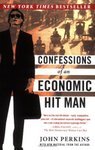
Confessions of an Economic Hit Man by John Perkins

This book probably would have enraged me if I hadn’t already more or less known what it was talking about. As it was, I was resigned and depressed.

The book is a short autobiography of an Economic Hit Man (EHM) who saw the error of his ways. The idea of the EHM, as he describes it, is to manipulate the governments of developing nations to accept huge loans from the IMF and the World Bank based on inflated projections of future income, under the theory that they would experience huge economic gains from the projects – things like electrical grid upgrades, roads, dams and the like. These nations would then become indebted to the United States and forced to give business to US corporations, thereby effectively putting that nation under US control. He calls it the Corporatocracy, and he was a part of it. He traveled around the world to manipulate cash-strapped world leaders into signing their nations over to the control of US corporate interests.

He describes himself as one of the earliest generations of EHM, the ones who knew exactly what they were doing. Perkins describes his entry and rise in the EHM world as a series of decisions inspired by coincidences, at least at first. His childhood was marked by clear class differences, growing up in a small New England town and going to school with the children of the super-rich. His family taught at the school, thus gaining him both entry into classes and a raging feeling of inferiority and anger.

After doing a stint in the Peace Corps, he was approached to work for the NSA. Following the NSA screening, he was tapped to work for MAIN, an engineering company who, in the 60s and 70s, was at the forefront of modernizing developing nations. At their expense, of course.

When Perkins was initiated into this world of money and power, he was explicitly aware of what he was doing: he would vastly overstate the economic potential of, say, a hydroelectric dam project, leading to the leaders of governments such as the Philippines, Columbia and Venezuela taking out massive loans based on expected future returns. When those returns didn’t come in – and they never did – they were forced to make concessions, which always, always benefited the interests of MAIN and other US corporations. By doing so, they became part of the American Economic Empire, without one politician ever laying a finger on it.

It’s considered the softest method of empire-building. Take a country that needs money to help its people, and arrange so that the government has to spend upwards of 50% of its GNP repaying loans. The people get nothing, a few rich leaders become richer, and US corporations spread further out into the world. All forwarding the cause of US economic interests. For Americans, it means cheaper gas, food and raw materials. For the corporations involved, it means higher and higher profits. For the people of the developing countries targeted, it means poverty and disenfranchisement.

The EHMs don’t always succeed, though – remember Panama? We had the canal, and made lots of money off it. Until the leader of Panama, in the 70’s, decided to take it back. Omar Torrijos was that rare breed of third world ruler who honestly wanted to help his people, and he knew that the best way to do that was to re-assert control over the Panama Canal. He knew what the EHMs were up to, and wouldn’t have any part of it. In his recollections of their meetings, Perkins sees him as the kind of leader every country should have, and it was his example that led him towards leaving this world. His example and, of course, his death.

When the EHMs fail, the jackals come in and people start dying in “mysterious” plane crashes. Torrijos was replaced by Manuel Noriega, who was in our pocket, but not quite far enough. He didn’t toe the line that Washington wanted, so we made him up to be the Hitler of South America, invaded Panama without cause (see, Iraq is not a new thing) and took him back to the US. The result? The canal is effectively back under US control, and any advances that Torrijos might have made are gone.

One of the reasons Perkins left the industry and wrote this book is because he’s worried about the future of the EHM. Not that it’s fading, but that it’s getting stronger. With the ever-increasing pace of globalization, governments are jockeying with corporations for power around the world, and the EHMs are coming with them. But the new breed is different. The people following in Perkins’ footsteps honestly believe that they are trying to help these beleagured countries They see themselves as part of a great march towards progress, never really noticing that the progress only really benefits them.

One thing I noticed about this book. While I don’t doubt Perkins’ honesty and intentions in writing this book, I do wonder how much of the “torn between two worlds” persona he adopts is honest. Throughout the book, he talks about his moments of indecision, of inner conflict as he tries to justify the things he’s doing. He talks about meeting dissidents in Iran, going to anti-American puppet shows in Bali, encountering supercilious Canal Zone residents in Panama, all of which serves to make him look like he’s much more thoughtful than the average corporate warrior.

Perhaps he’s representing himself sincerely as a person caught between his moral code and his pride. He did, after all, leave the business – and the vast amount of money and power that it offered him. But I kept thinking, how much of that conflicted feeling was real, and how much was remembered? It’s a small point, but one that kept nagging at me. It doesn’t add to or detract from his argument, however.

This is not a happy book, and it’s pretty likely to piss you off. It’s not about the US government, mind you – it’s about US corporations assisting the government in its imperial ambitions. It’s about the marriage of economics and governance and its dark, dark offspring….

—————————————————–
“Confessing a sin is the beginning of redemption.”
-John Perkins, Confessions of an Economic Hit Man
—————————————————–

Confessions of an Economic Hit Man on Wikipedia
John Perkins on Wikipedia
John Perkins’ website
Confessions of an Economic Hit Man on Amazon.com

Leave a comment

Filed under economics, ethics, history, John Perkins, memoir, nonfiction, politics

Review 18: Swan Song

Swan Song by Robert McCammon

Okay, have you read The Stand? Humanity being wiped out by a short-sighted government, small groups of people struggling to survive in an America laid low? A dramatic escape from New York through a dark and scary tunnel? An evil adversary from an unknown place whose only dream is the end of the world?

Yeah, that’s Swan Song, too. Only with nukes instead of a virus.

It really is an alarmingly similar story, published about ten years after The Stand, but – and this is important – it’s still a really good book. Derivative? Sure. But it’s still good, which is a neat trick.

The story starts in an alternate world, one that seemed all-too-probable in 1987, when this book was published. The US and the Soviet Union are toe-to-toe, fighting proxy wars all over the world. Nuclear exchanges have already happened between smaller nations. The world is inches away from war, and there seems to be no going back.

Domestically, things aren’t much better. In New York City, the city has fallen to crime and decay – drugs, trash and whores are all that can be found, and if any city deserves destruction it’s this one. It’s the worst projections of New York come true, and its eventual destruction is almost like a blessing.

In the western mountains, a group of survivalists have hollowed out a shelter against the possibility of The End, and Earth House is full to bursting. Young Ronald Croninger and his parents are there, but the boy is not impressed by what he sees. Colonel Macklin,the ex-soldier who is the public face of Earth House, seems to have gone to seed, and the shelter itself is falling apart, just like everything else.

The world is going straight to Hell, and it’s all too easy for the US and the Soviets to send it all the way there.

The book has an epic scope and a massive cast, lined up pretty equally on the sides of Good and Evil. As the book progresses, the disparate groups finally come together in a final confrontation that will decide the fate of the world.

In the midst of all that, a certain mystical quality has arisen. There’s a… being, a creature of demonic countenance who can change his face and travel freely throughout the wasted land. His sole desire is to see the end of humanity – he revels in destruction and despair and wants nothing more than to see the end of Our Heroes. On the other hand is the title character, Swan. As a girl, she loved plants and flowers, and had a strange affinity for the natural world. As she grew up, however, her powers matured, and that affinity became a full-on partnership. They each collect a following, through fear and hope respectively, and they each know that there’s only one way this can all end.

There’s an element of mysticism to this as well, though why it should be there is not explained. For example, the burned-out rubble of Tiffany’s on Fifth Avenue creates a shining glass ring, filled with strands of precious metals and valuable stones. This ring becomes the guide for Sister, a woman who was once mad but becomes the sanest one of the survivors. With the ring, she is able to perform miracles. There’s a magic mirror that shows the future, prophetic dreams and other elements of mysticism. It seems that when the world as we know it ends, the world as we don’t know it steps in. And then there’s the Job’s Masks – a mysterious growth that covers a person’s head in an impenetrable shell, only to crack open years later and…. Well, I’ll let you find out.

The appeal of apocalyptic fiction is an interesting one, and easily understandable. Humans have been interested in how the world will end since about the same time we figured out that the world could end. And there are many ways for it to go, whether it’s the nuclear fire of this book, the insidious virus of The Stand, the near-miss religious apocalypse of Good Omens, the various meteor impacts and climatological disasters that Hollywood loves to show us…. The ways in which the world ends are countless, but they all share one distinct feature – when the end comes, you’ll find out who you really are.

It’s tempting, then, to give it some thought and wonder, “Who would I be, when all was gone?”

This book has some excellent role models to choose from – and to avoid. The characters are compelling, and the world is vividly drawn, so as long as you’re not thinking, “But this is just like The Stand!” you should greatly enjoy it. I highly recommend it.

————————————————-
“Once upon a time, we had a love affair with fire.”
– Robert McCammon, Swan Song
————————————————-

Swan Song at Wikipedia
Robert McCammon at Wikipedia
Swan Song at Amazon.com
Robert McCammon on Swan Song
Robert McCammon’s homepage

BONUS! The Boyfriend decided that there needs to be pictures of me recording the podcast. So he took some….

Doing the Podcast

Doing the Podcast
Listening to the playback. I’ve had a haircut since then….

2 Comments

Filed under apocalypse, death, fantasy, good and evil, horror, nuclear war, Robert McCammon, society, survival, totalitarianism, war

Review 16: Watership Down

Watership Down by Richard Adams

This is one of my top five books. Whenever anyone asks me, “What is your favorite book?” this is at or near the top. It was the first adult-length book I read when I was in Elementary school, and I have every intention of getting my hands on a copy for my goddaughter at some point soon. I remember watching the movie when they used to show it annually on CBS, way back in those days beyond recall….

Why should this book, of all the books I’ve ever read in my life, stay so dear to me? I have no idea. Perhaps because, even though its main characters are rabbits, it isn’t a “talking animals” book. Adams didn’t talk down to his readers, and assumed that they were ready to follow Hazel and Fiver wherever they went. And so, unusually for children’s literature, there is violence and loss and true danger in this book. Characters die. Unpleasantly. The rabbits live in fear of mankind and the Thousand, and accomplish great things despite. They do what no rabbit had done before, and find a new world for themselves. And, of course, are forced to fight for it.

Our heroes, you see, are living an idyllic life in a warren in England. They do what rabbits do – eat, sleep, mate, and entertain themselves. But one rabbit, Fiver, can see more clearly than others. He can sense danger, and grasp the shape of the future, and he knows that any rabbit who stays where they are will certainly die. With his brother, Hazel, Fiver and a small group of rabbits leave their home.

They do what rabbits never do – they explore. They go through dense woods and cross streams. They hide among gardens and search for the best place they can find to set up their new warren – a safe place, high in the hills, where they can see all around and the ground is dry. They seek to build a new society, as so many humans have done in our history.

And what’s more, they try to build the best society that they can. The need leadership, yes, but how much? How much freedom should the ordinary rabbit have to live its life? This question becomes more and more important when they meet the cruel General Woundwort, de facto leader of the warren known as Efrafa.

The battle that they have, choosing between personal liberty and the safety of the warren, is emblematic of so many struggles that have gone on in our world, and continue today. Through a tale about rabbits, Adams manages to tell us about ourselves, which is the mark of a great writer.

As cynical as I have become in my years, I still find this story to be honest and true. Adams isn’t trying to make an allegory or grind an axe. He’s trying to tell a good story about hope and perseverance and triumph over adversity, a story with – as Tolkien put it, “applicability” – that we can overlay onto our own lives and experiences. The fact that the main characters are rabbits is incidental.

Well, not really. Another layer to this story is the culture that Adams has created. The stories of Frith and El-ahrairah (which, I’ve just noticed, is misprinted on the first page of the contents in this edition as “El-ahrairah.” Weird) are sometimes deep and meaningful, sometimes fun and silly, but always relevant and rich, in the tradition of oral storytelling. There is a language to the rabbits, which is regularly used throughout the book (and one complete sentence in lapine – Silflay hraka u embleer rah. Memorable….) Adams did a lot of research into the social structure of rabbits and their lifestyles, making it as accurate is it could be….

Anyway, every young person should read this. Hell, older people should read it too. Every time I read the story, it moves me. I can hear the voices of the characters clearly and see what they see. I am inspired by the steadfastness of Hazel, the strength of Bigwig and the resolve of Blackavar. I find qualities in these characters that I would like to possess, and that’s as good a reason as any to love a book.

As a side note, this book is the reason I got into Magic: The Gathering way back in college. For a long time, I thought it was just a stupid card game, with no cultural or imaginative merit. Then I happened across a “Thunder Spirit” card, which had a quote from Watership Down at the bottom:

“It was full of fire and smoke and light and…it drove between us and the Efrafans like a thousand thunderstorms with lightning.”

Still gives me goosebumps.

Anyway, I thought, “Maybe there’s something to this,” and the rest was (very expensive) history….

——————————————-
“All the world will be your enemy, Prince with a Thousand Enemies. And whenever they catch you, they will kill you. But first, they must catch you, digger, listener, runner. Prince with a swift warning. Be cunning and your people will never be destroyed.”
– Frith, Watership Down
——————————————-

Watership Down at Wikipedia
Richard Adams at Wikipedia
Watership Down at Amazon.com

1 Comment

Filed under adventure, England, fantasy, made into movies, rabbits, Richard Adams, survival, totalitarianism, travel, war, young adult

Review 14: V for Vendetta

V for Vendetta by Alan Moore and David Lloyd

There are people who think that comic books are just for kids. They see Superman and Batman and Spider-Man, with their bright costumes and their rather simplistic moral codes and think, “Well, that’s all well and good for children, but as a thinking adult, I need something more.” Some of these folks are lit-snobs, who view any kind of book with pictures as immature. Perhaps they were told that they need to grow up, and have distanced themselves with comics as they have done with their own childhoods. Or perhaps they simply don’t know better….

The point is that while there certainly is a lot of childish dross in comics, there’s also a lot of gold. In the right hands, a great story can be told in any medium, be it print, painting, film, stage, or yes – even comics. In this case, the right hands are those of Alan Moore and David Lloyd.

Moore is considered one of the giants of modern comic books, having penned many a dark and strange tale, ignoring the accepted norms of comic book storytelling in order to tell the weird and off-kilter stories that he wants to tell. In the famous Watchmen, Moore told us about the flaws and imperfections inherent in the heroic ideal. In V for Vendetta, he looks at the flaws and imperfections in our societies and ourselves.

The book is set in an alternate London, a place that Could Have Been. In this world, the worst of our modern nightmares has happened – a nuclear war that ravaged many parts of the world. Europe, Africa, these places were, as the characters put it, “gone.” England survived the turmoil by the skin of its teeth, pulling itself up from chaos and disorder thorough the strength of the new government party, Norsefire.

This government is unapologetically fascist. In the turmoil following the war, they saw the only solution to England’s survival in absolute obedience. And so they built a new England – an England of strict rules and laws, with ears and eyes everywhere. Minorities of all kinds were systematically wiped out from the country. Blacks, Muslims, homosexuals – anyone who didn’t fit into the world view of the new leadership was eliminated, and in many cases just disappeared. The government espouses a doctrine of absolute control over its citizenry, seeing that as the only defense against the horrors that the world had just barely survived.

But, for all that, England prevailed. People were safe in their homes, as long as they followed the rules. They were entertained with radio and television, given plenty of amusements and a healthy dose of fear to keep them in line. The government of England seemed almighty, governed by their fascist ideology and a massive supercomputer, known simply as Fate. Nothing, they thought, could challenge their supremacy.

Until V arrived.

With no name, and no face besides the Guy Fawkes mask he wore, the terrorist known as V began to cut a swathe through the ruling elite. All that is known of him is that he had been a prisoner in one of the concentration camps set up by the government. In that place, terrible experiments were done on the human detritus of society – experiments with truly horrific results. Whether V’s incredible mind and physical ability were because of those experiments or despite them, we will never know. All we do know is that he survived, and with a single-minded determination bordering on madness, he sought revenge.

With public demonstrations of terrorism and pyrotechnics, he took it upon himself to wrest control of the city from those who had locked it down. His goal is freedom for everyone, anarchy in its truest sense, and he will not be stopped.

As the title suggests, this is a vendetta on many levels. It is revenge for what was done to V in the prison camps where they took all the “undesirables,” and for what was done to England by its new rulers. V is a man with nothing to lose, and everything to gain – not just for himself, but for his country.

This is a book about freedom on many levels. It’s about political freedom, which makes it especially relevant today, and it’s no coincidence that the film emerged during the headiest days of the Bush administration. Following the attacks of September 11th, Americans were afraid, and the government – like the government of this book – was all too willing to harness that fear in exchange for control. People were told to watch what they say about the President, the government or the troops. Television pundits and spokespeople demanded that criticism be shut down, and that those who disagreed with what the country was doing were branded traitors.

Fortunately, we got through those frightened times, but even today, those who would stay in power use fear to keep people in line. Fear of death, fear of immigrants, fear of gays – fear of The Other – are the first weapons they use to command obedience from their citizenry.

And most people fall in line very easily. It’s not surprising, really. Most people, when they’re afraid, look to someone to take care of them, to protect them and to tell them what to do. It’s a natural impulse, a natural need of human beings. But V exhorts us to move past that. He reminds us that, in a quote from the film, “People should not be afraid of their governments – governments should be afraid of their people.” While our government never reached the depths of the one in this book, it is something that all citizens of all countries should remember.

The book is also about personal freedom. We are all of us prisoners, really – prisoners of our societies and prisoners of ourselves. We are held down by our preconceptions , our doubts and our illusions; our own minds and our beliefs about what others expect of us are what keep us locked into a prison whose bars we cannot even see. V freed himself from his own literal and spiritual confinement to go from prisoner to a societal force, bursting free in an explosion of flame and destruction. He meets a young woman, Evey Hammond, and brings her into his world – partly to be his accomplice, but also to show her how to be free. Her freedom comes at a cost too, enduring the greatest nightmare of a citizen of a fascist society. But she survives, and finds her freedom in the rain and the dark.

The lesson that V teaches us, whether as individuals or societies, is twofold: we hold ourselves prisoner, and there is no more vicious or cruel jailer than ourselves. And that freedom is frightening – it is wild and uncontrolled, and never comes without a price. But that price is well worth paying.

To be honest, it took me a long time to finally enjoy this book. When it came out originally, I was big into super-hero books, and V struck me as just goofy. Why would someone wear such a dumb mask? I thought. And that hat? The cloak is okay, but…. Of course, I knew nothing of Guy Fawkes at the time, so perhaps my ignorance of British history held me back, but still, I was very impatient with it. Also, the art was much rougher and darker than I was used to. The usual four-color palette and clean inks of super-hero comics are not to be found in this book. Instead there are washes of pale purple and yellow and green, with heavy inks and faces full of sorrow and pain.

In other words, it was not what I expected from a comic, and so I gave it a wide berth. And that was probably for the best, since I think that having a better idea of politics and society makes the story that much more interesting. It’s a complex and multi-leveled tale that deserves a thoughtful read, and asks a lot from its reader, and if you expect to get through it without doing some thinking of your own, then you’ll be sorely disappointed.

That is, however, the mark of a great work – does it make you think? Does it come back to you later, when you’re watching the news or reading the newspaper? When you see a story about the pervasiveness of security cameras and think, “I wish V were here,” then Alan Moore and David Lloyd have truly done their jobs.

V isn’t the hero we expect from comics. He isn’t the hero we’d necessarily want, either. But a person like V is necessary sometimes – someone who values freedom above all else. Let us hope that we never need him.

——————————————-
“Noise is relative to the silence preceding it. The more absolute the hush, the more shocking the thunderclap.
Our masters have not heard the people’s voice for generations, Evey… and it is much, much louder than they care to remember.”
– V, V for Vendetta
——————————————-

V for Vendetta on Wikipedia
V for Vendetta on Wikiquote
V for Vendetta at DC Comics
Alan Moore on Wikipedia
David Lloyd on Wikipedia
V for Vendetta on Amazon.com
Guy Fawkes on Wikipedia

2 Comments

Filed under Alan Moore, anarchy, comic books, David Lloyd, DC Comics, England, made into movies, murder, politics, terrorism, totalitarianism

Review 04: Superman: Red Son


Superman: Red Son by Mark Millar, Dave Johnson, Kilian Plunkett, Andrew Robinson and Walden Wong

Every culture has its icons. Characters or figures that are recognizable by anybody who lives there, figures that are almost impossible not to know. And America is very good at producing those icons and spreading them worldwide. I remember reading somewhere – I don’t remember where at the moment – that the United States’ chief export is dreams, and I think there’s definitely something to that.

Of all the dreams to emerge from the American subconscious over the last century, Superman is one of the most enduring. Show that “S” shield to almost anyone on the planet and they’ll probably know what it is. For most of his lifetime, he has stood for Truth, Justice and the American Way, with the third element to that tag line slowly vanishing as writers with a more global perspective take over the character.

Regardless of his jingoistic past, Superman still remains a popular American figure. He represents what we would like to be, as a country. Powerful and just, upright and honest, but at the same time kind and generous and, at heart, good. Superman has the power to control the world, but he doesn’t – he chooses not to – and we like to believe that it was his small-town, American upbringing that instilled such humility in him.

This book examines how things might have gone.

In the late ’80s, DC Comics introduced their “Elseworlds” imprint, with a pretty simple mandate: take canon DC characters and place them in new situations or environments. This way you could see how Batman might have turned out in an America that had never gained its independence, or what would have happened to the JLA without Superman, or if The Flash had taken the bullet meant for JFK. It opened creative doors, allowing writers to tell new stories about familiar characters without disrupting the regular continuity of the DC Comics line.

Of these, Superman: Red Son is one of the best. Mark Millar poses a simple question with a very complex answer: What if young Kal-L’s rocket had landed in Soviet Ukraine instead of Kansas?

What emerges is a fascinating tale of a Superman brought up under Stalinist philosophy. Still the good man that we know him to be, Superman nonetheless chooses a very different means of interacting with the world. We see from the first few pages that the man cannot stand still – he is constantly in motion trying to save people, not just in the Soviet Union, but anywhere in the world. It is his responsibility, he believes, to keep people safe, much in the manner of Soviet philosophy where the government controls nearly every aspect of its citizens’ lives.

Taken in by Stalin, Superman eventually rises to lead the Soviet Union to nearly world-wide dominance. Under his rule there are no accidents, no wars and no conflicts. Crime is nearly non-existent, and those who do not mesh well in this well ordered world are mentally reprogrammed until they do. There are dissidents, of course, like the mysterious Batman, a singular force of chaos in Superman’s perfectly ordered world, but in the end, even he falls. The only true challenge to Superman’s worldwide reign is the brilliant American scientist Lex Luthor, who has devoted his life to freeing mankind from alien tyranny.

It’s a brilliant take on the myth, with a lot of very familiar characters worked in. The art is gorgeous, with a style and a color palette that evokes thoughts of Soviet-era propaganda posters, yet never fails to be dynamic and fascinating.

More important, however, is the message of the story. The idea that comics can have a message is something that a lot of people seem to ignore, fueling the idea that comics are just for kids. The message in Red Son is very important and very, very timely.

The story was published in 2003, a time when America was in great pain. We had been badly hurt and wanted to set things right. By doing so, however, we caused far more damage to the world than we had ourselves endured. By trying to fix other people’s problems, we created even more, and the harder we pushed, the more the world pushed back. And this was not a new trend – one of the negative labels often affixed to the United States is that of “world policeman.” We have a long, long habit of trying to help everyone, whether that is the right thing to do or not.

In that vein, the Superman of Red Son, despite being a Soviet, is a reflection of ourselves. He is a man of immense power, who decides to help everybody. His intentions are good, but good intentions are not always rewarded with good results. His world is orderly, yes – crime and violence are nearly unheard-of – but it comes at the price of individual freedom. People are no longer in control of their own destinies with Superman in charge, and while that may be a safe life, it is not one that I would like to live.

The political message of this book is subtle, but it’s there. More interestingly, it’s a message that can be enjoyed by a broad spectrum of political views. If you’re a liberal, then it’s taking a stance against imperialism, against the imposition of one country’s values and politics over others’, all in the name of making the world a better place. If you’re a conservative, it’s a call for individual liberty. A government that provides everything for its people is just another form of oppression – without the freedom to make their own choices, for good or for ill, people are not truly free.

In the end it’s a complex tale, with no real good guys and no real bad guys. Except for Brainiac, who will probably never be anything but a bad guy. It’s a story about the choices we make, both as citizens and as societies, and the understanding that we must have the freedom to make those choices. They may sometimes be the wrong ones, but making mistakes is part of the package. In the end, there can be no Superman to save us. We must save ourselves.

————————————————
“I care about everybody.
– Superman, Superman: Red Son
————————————————

DC Comics.com
Mark Millar on Wikipedia
Superman: Red Son on Wikipedia
Superman: Red Son on Amazon.com
Soviet Posters: Revolution by Design

Leave a comment

Filed under Batman, comic books, Dave Johnson, DC Comics, Elseworlds, ethics, fantasy, graphic novel, Mark Millar, morality, peace, super-heroes, Superman, totalitarianism, USSR