Category Archives: fantasy

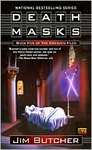
Review 46: Death Masks


Death Masks by Jim Butcher

“Hell’s Bells” count: 16 (plus two editing errors – “break” for “brake” on page 24 and “shield” spelled “shielf” on page 319)

It’s the “Hell’s bells” that started it. I don’t usually make notes on spelling errors in books. I do notice them, of course – they practically jump out at me and dance around – but these are the only ones where I make a note of the page.

Anyway, on to the book. If you’ve been following the series this far, you know that Harry Dresden, Wizard for Hire, has really gotten himself into deep doo-doo. Aside from his usual problem of taking on cases in each book that end in his getting the everlovin’ beat out of him, there’s a larger story arc to take in – in this case, the war between the Vampires of the Red Court and the White Council of Wizards. Which, as much as he tried not to, Harry incited and, by all the ancient laws of not killing one’s host at a party, he is definitely guilty of. To be fair, the host that he killed, Bianca, was trying to get him to do break the Rules of Hospitality so that she could kill him because he made her so angry way back in Storm Front that she drained one of her favorite servants dry.

It’s a complicated world they live in.

So far the book-level arcs and the series-level arc have been pretty distinct, though I suspect that they will become more and more intertwined as the series goes on. Sooner or later they’ll merge, and all hell will break loose. Literally, I have no doubt.

In this book, Harry has two major problems to deal with. The first is a duel – the Red Court really wants him dead, and they’ve sent one of their oldest and most powerful representatives – Don Paolo Ortega – to challenge him to a duel. To, of course, the death. Harry certainly doesn’t want to die, but the consequences of not dying might be even worse. Should Harry try to duck out of the duel, hired mercenaries are spread throughout Chicago, ready to take out everyone who means anything to Harry.

If Harry should win, of course, the city will be declared Neutral Ground, and the Vampire-Wizard war will have to rage on elsewhere. Overseeing all this is The Archive, a seven year-old girl who has the entire history of humanity – every word written, every word spoken – in her head. She is a being of enormous power, and can be reduced to giggles by a cute kitty cat. She and her bodyguard/driver Jared Kincaid are there to see that the duel goes according to the rules, and are ready to exact very harsh and fatal punishment to he who violates them.

Again, the White Council, who by all rights should be standing by one of their own, is secretly hoping that Ortega will take Dresden down. The Wizards are losing the war to the vampires, and any excuse they can find to call a stop to the death and destruction is a welcome one. The trouble is, the Vampires may not want to stop….

In the other corner, Dresden has a paying job, one that is uniquely suited to him – find a certain relic for the Vatican. It’s priceless, of course. A length of linen cloth with a variety of stains and discolorations that may or may not have the imprint of the resurrected Jesus Christ burned into it. Yes, it’s the Shroud of Turin, or as Harry would call it, “The freaking Shroud of Turin.” It is, of course, an immensely powerful artifact, regardless of whether or not it really is the burial shroud of Christ.

Magic, as Harry tells us, is greatly about emotion and belief. If you want to do a spell, you have to really believe in that spell. You have to know down to your bones that it’s going to work, or it won’t work at all. It takes great hatred to make a voodoo doll work, for example, above and beyond the usual magical accoutrements that one needs. Millions of people believe in the divine nature of the Shroud. That gives it power, which can be used for benevolent or, as is the case in this book, malevolent ends.

This is where we meet some of the more dangerous foes in Dresden’s universe: the Denarians.

The Denarians (more formally The Order of the Blackened Denarius) are a group of fallen angels who are far, far nastier than the usual breed. There are thirty of them, each bound to a coin, an ancient Roman denarius, which may or may not have been the silver coins paid to Judas for a kiss. When a human touches the coin, the fallen angel is able to make contact and enlist that human as a mortal carrier. Some of the Denarians seduce their hosts, where others just use brute force to subjugate them. Either way, the Denarians are millennia old, nigh immortal, and evil down to their cores.

The leader of these creatures calls himself Nicodemus, and he wants the Shroud so that he can do terrible, terrible things to the world. Not end it, necessarily, but bring about the kind of chaos, panic and disorder that he and his kind thrive on.

Fortunately, Harry has the Knights of the Cross on his side – Michael (whom we have already met), Sanya and Shiro. The three of them are willing to fight the Denarians, but want Harry out of it. Why? Our old friend the half-understood, vaguely worded prophecy. Which, like so many other prophecies throughout history, should be regarded as highly suspect.

There are a lot of layers to this story. We get a fun new group of baddies to deal with, a better understanding of the war between the Vampires and the Wizards, and even another, more human look at John Marcone, the undisputed head of the Chicago underworld, who is also looking for the Shroud. For slightly less nefarious purposes, however.

Each book builds on the ones that came before it, yet each book lives on its own, which was a very good decision on Butcher’s part. While you will certainly want to jump straight into the next book upon finishing this one, you don’t actually need to. There’s a certain amount of closure, with just enough loose ends to fuel your speculation for the next book. I shouldn’t have to say this by now, but – go get ’em.

—————————————————-
“The Council. Arrogant. As if nothing significant could happen unless a wizard did it.”
– Shiro, Death Masks
—————————————————-

The Dresden Files on Wikipedia
Death Masks on Wikipedia
Death Masks on Amazon.com
Jim Butcher on Wikipedia
Harry Dresden on Wikipedia
Jim Butcher’s homepage

Leave a comment

Filed under detective fiction, Dresden Files, fantasy, Jim Butcher, wizardry

Review 42: Summer Knight

Summer Knight by Jim Butcher

“Hell’s bells” count: 14

In the last book, Harry Dresden saved the day. He fought some of the strongest the Red Court of the Vampires had to offer and came out, well, more or less intact. To do so, he also managed to make himself the target of nearly everything in the Nevernever (the mystical other-world from which all the nasties and scaries ultimately come), lose his girlfriend to a bunch of bloodsucking fiends, and instigate an all-out, world-wide war between the White Council of the Wizards and the Red Court.

So yeah. Mixed blessings and all.

Now he’s practically working himself to death to avoid actually being killed. After all, saving the day is nice, but it doesn’t usually come with a check at the end of it, and there are bills to be paid. When we see Harry again, some months after the disastrous events at Bianca’s nasty little costume party, he’s working himself to the bone. He’s become a recluse, hiding from as many people as he can. He does this for two reasons. First, he’s spending a lot of time looking for an antidote to Susan’s vampirism – or semi vampirism, anyway. She hasn’t drunk from a person yet, you see, and until she does that she’s not really a vampire. It’s a hard job, though, which is why she not only turned down Harry’s proposal of marriage but also left the country with instructions that he not try to follow her.

So the love of his life is incommunicado, and Harry doesn’t know if she’s alive or dead – or worse. What’s more, he believes that it is his fault that she got this way, even if it really isn’t. One of the criticisms that can be laid at the feet of Harry Dresden is his deep-seated male chauvinism. He doesn’t believe that women are inferior or anything quite so barbaric as that. He believes that they’re special, that they should be treated with an extra measure of care and respect. He hates the thought of harming a woman, and will go out of his way to see to it that the women he cares about are kept safe from anything that might hurt them.

Unfortunately for him, Harry tends to hang around with women who don’t want to be taken care of, namely Susan Rodriguez and Karrin Murphy. Both of them are strong-willed women who want to be part of Harry’s life, and neither one of them particularly appreciates being told to sit on the sidelines because they’re girls. In fact, this attempt by Harry to protect them, more often than not, brings them more trouble than if he had trusted them to begin with.

I say this because it was good to see him make a little progress in this book. Following the events of Grave Peril, in which she was psychically tortured – though perhaps “raped” would be the better word – by the spells of a dead sorcerer, Murphy found herself broken. She couldn’t sleep, she couldn’t concentrate. She was afraid of everything, a shell of who she had been. So, in order to bring her back at least part of the way, Harry tells her everything – his dark past, the White Council, all the things he’s not supposed to share. While it was by no means a magic recovery potion, it went a long way towards establishing their equality as fellow hunters of evil.

And all this really has little to do with the plot itself, which is a pretty straightforward murder mystery/supernatural power play. Queen Mab of the Winter Court of the Sidhe, needs Harry to find out who killed a servant of the Summer Court, the Summer Knight. Queen Titania of Summer thinks, and not without reason, that it was Mab who had the knight killed. Harry has to get to the truth, and he has to do it before Midsummer’s Eve, lest the two courts go to war and take our world with them.

For the White Council, this is an excellent opportunity. If Dresden succeeds in helping Mab, she will give the Wizards safe passage through the Nevernever, which will in turn allow the Wizards to better prosecute their war against the vampires. If Dresden fails, the vampires will (in theory) be happy, and the war will end on its own. Either way, there’s a very good chance that the White Council will finally rid itself of Harry Dresden, something they’ve been trying to do for quite some time.

So for a simple murder mystery, it’s really not very simple at all. We get a good look at the expanded universe of Harry Dresden, and it’s a scary place to be. This time he’s going up against some truly heavy hitters, with some very serious stakes, not the least of which is his own life and his own free will. For the first time, we are privy to the workings of the White Council, how they work and how they don’t work, and it’s very easy to understand why they and Harry don’t get along so well.

As with the other books, this gets my full recommendation. It’s fast-paced and interesting, and there’s some damn fine character work. A bit of very good banter between Murphy and Harry caught my eye that makes both of them much more interesting and believable (not that they weren’t before). It’s moments like that throughout the series that show Butcher’s care for the characters and his desire that we see them as real as he does. Also, a very nice Indiana Jones reference, only involving unicorns.

So – and you’re going to get tired of hearing me say this – go get this book. Go get all the Dresden books, and settle in for some good reading.

————————————————-
“As I pulled into the parking lot, I reflected that odds were that not a lot of clandestine meetings involving mystical assassination, theft of arcane power, and the between the realms of the supernatural had taken place in a Wal-Mart Super Center. But then again, maybe they had. Hell, for all I knew, the Mole Men used the changing rooms as a place to discuss plans for world domination with the Psychic Jellyfish from Planet X and the Disembodied Brains-in-a-Jar from the Klaatu Nebula. I know I wouldn’t have looked for them there.”
– Harry Dresden, Summer Knight
————————————————-

The Dresden Files on Wikipedia
Summer Knight on Wikipedia
Summer Knight on Amazon.com
Jim Butcher on Wikipedia
Harry Dresden on Wikipedia
Jim Butcher’s homepage

Leave a comment

Filed under detective fiction, Dresden Files, fairies, fantasy, Jim Butcher, wizardry

Review 40: Lords and Ladies


Lords and Ladies by Terry Pratchett

Elves.

When you think of elves, what do you think of? The tall, fair-skinned beings of Tolkien’s Middle Earth? The ebony warriors from Dungeons & Dragons? Delicious cookies?

Not on Discworld. On Discworld, the Elves are folk of legend, and dark legend at that. People there remember the elves, although not very well. They remember through old wives’ tales, about leaving milk for the fairies and not going near the standing stones. Ask someone in the kingdom of Lancre, and they’ll think of elves as you and I think of elves – pretty, wonderful, magical…

Ask Granny Weatherwax and she’ll tell you the truth – that the Elves are not of this world, and don’t belong here either. She’ll tell you that when the barriers of the worlds grow thin, when the crop circles start to show up, the elves will be waiting, readying themselves to come back. For theirs is a parasite universe, a land of ice, and they desire ours for their… entertainment.

Such is the setup for Lords and Ladies, another one of Pratchett’s darker Discworld books. There is still his customary humor, of course, which would be sorely missed were it absent. But it’s also got a philosophical edge to it, as many of his books of this period do. It’s about faith in stories, and knowing the difference between what is true and what you wish were true.

It’s circle time again, where crop circles are appearing everywhere, and the parallel and parasite universes are coming into closer contact, and Granny Weatherwax knows that she is going to die.

Or is she? She can’t be sure….

Esme Weatherwax is the consummate witch. Tall, thin and bony, she’s the kind of woman who can wear the pointy black hat of a witch and dare you to think she’s anything else. She’s strong of mind, never afraid to speak the truth, the best witch in Lancre and not slow in admitting it. But many years ago, she was a headstrong young girl who was offered power by a mysterious woman in red who stood in the center of a stone circle. The woman promised power and freedom, but could not leave the circle. Rather than take the easy way to witchcraft, Granny worked, learned, and grew old. Which is always for the best.

As is the case with many Pratchett books, there are multiple plots that all center around the Elves and their newest attempt to gain the Discworld as their own world. Magrat Garlick, the third witch (because there must always be three) is going to marry Verence, the king of Lancre and a former Fool. Mustrum Ridcully, the Archchancellor of the Unseen University in Ankh-Morpork, is attending the wedding and at the same time remembering his days in Lancre chasing after the headstrong young girl who grew up to become Esme Weatherwax. And Granny herself is remembering things that happened to all possible Esme Weatherwaxes, and for someone as sure of herself as she is, is having a serious identity problem.

Something needs to be said here about the three witches of Lancre, recurring characters as they are in all of the Witches books of the series. Normally this would be done chronologically, upon reviewing the first book in which they appeared, but I want to do it now. Besides, I haven’t read Equal Rites in a long time, but it’s on my list.

Granny is as I have said – the unofficial chief witch of the region, who has attained the status of being almost mythical in the village of Bad Ass. She is feared and revered, but only because she is always who she is.

Nanny (Gytha) Ogg is Esme’s polar opposite. She has a face like an apple left in the sun too long, her youth is filled with enough tawdry encounters to make a fraternity lose its breath, and her fondness for bawdy tunes (such as the ever-immortal Hedgehog song) has made her a figure of legend. But like any witch, Gytha is not to be underestimated. She can think faster than most anyone, and do so around corners. She’s the grounding influence for Esme when Esme gets too high on herself, and while being fearsome in her own right, she is one of the more approachable witches Lancre has to offer.

And then there is Magrat Garlick, the third witch. She is the soppy one, the romantic one, the one with the collection of occult jewelry and a library in her cottage. She’s the youngest, the least experienced, but not without potential. And while the other two witches may treat her like an ignorant stripling, they only do so because that’s how you become a witch – by learning things, not by being told things.

But now Magrat is going to be Queen, and there are only the two witches. And the elves are coming….

This is, as I have said, a darker book. We get an interesting look into Granny Weatherwax’s psyche – who she is, what she fears – and it’s a little chilling. The reader is used to the utterly unflappable Granny Weatherwax, so to see her, well, flapped is kind of disturbing. At the same time, though, it makes her more human than before, which she needs to be if she is to defeat the elves.

This book also offers a good look into the human need for fantasy. The elves anchor themselves to the Discworld by belief – if enough people want the elves to come, then they will. But the longer they stay away, the more time we get without them, the more they become what we think they are. Stories. Myths. Cute magical critters who are to be watched, but not necessarily feared.

We need our stories to get us through the “iron times.” Yes, we need elves, to help us escape from our lives from time to time, just as we need witches and wizards and gods. But we don’t need them here. Here, in the real world, we have only ourselves to count on, and we need to be strong enough to do that. Stories are good, in their place. But never mistake a story for the real thing.

—————————————————
‘But all them things exist,’ said Nanny Ogg.
‘That’s no call to go around believing in them. It only encourages ’em.’
– from Lords and Ladies
—————————————————

Lords and Ladies at Wikipedia
Terry Pratchett at Wikipedia
Terry Pratchett’s page at HarperCollins
Lords and Ladies at Amazon.com
Discworld at Wikipedia
Lords and Ladies annotations
Lords and Ladies at Wikiquote

1 Comment

Filed under Discworld, elves, fantasy, humor, satire, Terry Pratchett, witches

Review 37: Dresden Files 03 – Grave Peril

Grave Peril by Jim Butcher

“Hell’s Bells” count: 26

If you’re reading this series in sequence (which you absolutely should be, or things will stop making sense very quickly), you’ve got a good handle on how the world of Harry Dresden operates. He’s a lone wolf, so to speak, standing up to the Occult Forces of Chicago with only the support of his contact in the Chicago PD, Lt. Karrin Murphy. There’s also intrepid investigative reporter Susan Rodriguez, for whom Harry’s feelings are slightly more than professional.

There’s also the mysterious White Council of Wizards. While you may think that belonging to a worldwide magical fraternity might be a good thing, Harry Dresden would most certainly disagree. To be fair, he has a history – he did kill his mentor using black magic, which is something so bad that it’s number one on their list of Things a Wizard Must Not Do, which comes with one free beheading. His associates in the White Council barely tolerate him, and make it very clear that he’s worth more to them dead than alive. But more about this in other books….

The point is that Harry so far has been a fairly small-time operator. Yes, he takes down evil sorcerers and vicious werewolves, but mostly on his own. In this book, the camera pulls back a little and we learn more about his world and his connections, and a broader story starts to emerge.

The most interesting of these additions is Michael Carpenter, an associate of Harry’s whose view of the world comes from a very different place. Michael is a religious man, a committed Christian who sees Harry’s use of magic as impure and sullied, but associates with him anyway because they have a shared goal: the elimination of evil. Michael Carpenter is the Fist of God, one of the three Knights of the Cross. As such, he wields a faith powerful enough that even Harry can feel it. Oh, and he also wields a giant sword. With one of the nails from the True Cross worked into it. Amoracchius is a powerful weapon against evil, and a prize that anyone would be glad to have.

In this book (as in all his books), Harry is given more trouble than he can handle. It begins with ghosts, as so many things do. The ghosts of Chicago are being stirred up by something – they’re acting out in ways they would never act, causing an above-average amount of chaos and disorder in the city. And when there’s ghosts around, tearing up the pediatrics ward of your local hospital, who is it you’re going to contact telephonically? That’s right – Harry Dresden.

The ghosts are the least of his worries, however. The force behind them, the malicious entity that is driving the ghosts mad, is of far more concern to him. There’s something out there, a Nightmare, that is out for blood. It’s attacking Harry and his friends, and doing it through their dreams. Not just Harry’s friends who are in good with the supernatural, but some of his Muggle buddies as well. This thing is angry, evil, and can tear a person’s soul apart, leaving an empty husk that does nothing but try to scream.

As if that weren’t enough, the Red Court of Vampires is having a party, and they want Harry to come. Sounds lovely, right? A costume party with the vampires, a promise of protection to all invited guests – how can you have a better night? Myself, I’d start by not hanging around a house full of vampires and their allies. Especially when the hostess, a high-ranking member of the Court, has a serious personal grudge against me. The vampire Bianca wants Harry deader than dead, and she manages to set off a complex series of events to make sure it happens.

This book, as I said, expands the Dresden universe a bit. It assumes that the readers are fairly comfortable with what we know, and gives us a lot more to think about. The world-wide spread of vampires, the hide-bound White Council, and the ramifications of having a Faerie Godmother. In the previous books, we saw Harry come out on top against small-scale foes – now the camera pulls back to show us how he goes up against larger institutions.

In this book, Dresden is almost always out of his league – although I can’t imagine who would be in their league while facing a hoarde of really pissed off vampires while being on the brink of death already. Buffy, probably. Or River Tam. Anyone written by Joss Whedon, I guess. But Dresden makes it through. Not in the “Finding reserves of strength you never knew were there” style found in the Whedon Supergirls, but more in the “This just might be crazy enough to work, unless I kill myself doing it in which case it might not go so well after all” style.

Plus, it has my favorite trope of modern fantasy fiction – even if the hero wins, he doesn’t actually save the day. In fact, things get a whole lot worse. Which is all gravy for Jim Butcher, because it means he has all the more material to work with for the rest of the series.

—————————————–
“There should be some kind of rule against needing to kill anything more than once.”
– Harry Dresden, Grave Peril
—————————————–

The Dresden Files on Wikipedia
Grave Peril on Wikipedia
Grave Peril on Amazon.com
Jim Butcher on Wikipedia
Harry Dresden on Wikipedia
Jim Butcher’s homepage
Leave a comment

Filed under detective fiction, Dresden Files, fantasy, Jim Butcher, vampires, wizardry

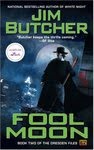
Review 33: Dresden Files 02 – Fool Moon

Fool Moon by Jim Butcher

“Hell’s Bells” count: 9

When a book about werewolves has a joke taken directly from Young Frankenstein (“Werewolf? There! There wolf! There castle!”), you know you’re in very good hands. That’s the kind of joke that a very small percentage of readers is going to get, but it’s guaranteed that those readers who do get it will be very appreciative.

Once again, consulting magician Harry Dresden has gotten himself into trouble. A few months ago, he nearly got himself killed taking down a drug-pushing warlock who wielded disturbingly strong levels of dark magic. Now, he has a different… hairier problem to deal with.

People are being ripped apart in Chicago. Not normal gangland killings, or even comfortable, familiar drug shootings, no. People are being literally torn apart, limb from limb, guts for garters, that sort of thing. The killings are violent and frightening, and both the Chicago police and the FBI would really like to know who’s behind them all. Unfortunately for Harry Dresden, all avenues point towards the supernatural.

If that weren’t bad enough, his talent for being in the wrong place at the wrong time has made Harry an object of suspicion almost any time something weird goes down. He’s used to that, though. What with just being relieved of the Doom of Damocles (a rather pretentious-sounding magical probation), and still being in the bad books of the White Council of Wizards, to say nothing of the powerful mobsters, Harry has more enemies than he can really keep up with. He doesn’t need any more, and he most certainly doesn’t need enemies that are red in tooth and claw.

For that matter, it would probably be simpler if it were just one werewolf. But it isn’t. Of even if it were just one kind of werewolf. Which it isn’t. Or even if all the werewolves in question were relentless, evil killing machines. Which, of course, they aren’t. Not all of them.

So now Harry has to throw himself into the fray again – to the wolves, as it were – and risk life and limb for people who don’t quite appreciate all the hard work he does. At least, not until a ravaging loup-garou nearly kills them all. But that would help anyone through a crisis of faith, I think.

As with the first volume in this series, I really enjoyed this book. Jim Butcher has an excellent sense of humor, and it really shines through in Harry’s narration. Dresden often breaks the fourth wall in his narrative, acknowledging to both himself and the reader that he’s about to do something that most people would consider to be insane.

One of the things I really enjoy about reading these books is the multi-sensory experience of reading them. Butcher knows that we have many senses, and also knows that a great number of writers only engage a couple of them. So he throws as much sensory information as he can at us, engaging our senses of touch and taste and smell to make the scene that much more convincing. What’s more, he has a gift for an economy of description – what’s the most important sensory input for each scene? He knows it, and focuses our attention on that.

Plus, he’s put together a very well-ordered magical universe. The rules are clear and binding, letting us know exactly what Harry can and cannot do in order to get out of his troubles. The work that Butcher has done in preparing the world of Harry Dresden shows up very clearly.

Of course, werewolves are fun monsters to play with, mainly because of their symbolic significance. Man and beast in one body, a loss of control and a joy in doing so – the werewolf is the beast we all fear to become. And this is important to Harry as well – as he tells us in this book and most of the others, he has a dark side to him. He knows what it’s like to reach into the bleak recesses of his soul and to use magic towards evil ends. He’s done it before, and the understanding that he could do it again is a shadow that constantly follows him. When he sees the various werewolves that are terrorizing the city, he sees himself in them. He sees the monster he could become, and he rejects it. Or at least holds it at bay for as long as he can.

It’s great to watch Harry, because he’s such an underdog. He gets beaten up, outsmarted, outclassed again and again, but he keeps coming back. He keeps finding that one little way through his problems that allows him to come through victorious. As far as he’s able to, anyway.

And in the end, isn’t that true for all of us?

—————————————–
“Well, we’ll just have to hope that this wasn’t a loup-garou, I guess.”
“If it was a louper, you’d know. In the middle of this town, you’d have a dozen people dead every time the full moon came around. What’s going on?”
“A dozen people are dying every time the full moon comes around.”
– Harry Dresden and Bob, Fool Moon
——————————————

The Dresden Files on Wikipedia
Fool Moon on Wikipedia
Fool Moon on Amazon.com
Jim Butcher on Wikipedia
Harry Dresden on Wikipedia
Jim Butcher’s homepage
Leave a comment

Filed under detective fiction, Dresden Files, fantasy, Jim Butcher, mystery, werewolves, wizardry

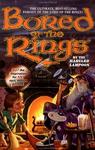
Review 32: Bored of the Rings


Bored of the Rings by Harvard Lampoon

In a small corner of the world, tucked away from the great nations, there lives an isolated community full of colorful, down-to-earth people. One of those, considered a hero by some and an oddball by others, is getting ready to face the greatest challenge of his life – delivering a Ring of Power into the fires that made it, thereby saving not only his soul, but the world along with it.

Yes, you know the story. Just not like this.

The young Frito Bugger, a Boggie of the Sty and nephew to the famed Dildo Bugger, has been tapped by Goodgulf the Magician to return the Ring of Power to the Zazu Pits in the center of the deadly kingdom of Fordor. It is only then that Sorhed, maker of the Ring and the greatest threat to Lower Middle Earth, can be defeated.

The first time I read this book, I nearly soiled myself laughing. And I wasn’t even a real fan of the originals at this point, either. I knew enough, though, to see how well the venerable trilogy was being skewered, and I loved every minute of it. Since then, I’ve read this book more times than I’ve read Lord of the Rings. Partly because it’s much funnier, but mostly because this volume only clocks in at 150 pages.

As with all comedy, repetition kind of diminishes the effect, but there are still laughs to be had. Just from the beginning, when Dildo Bugger throws a party for the gluttonous freeloaders of the Sty, and then foists his Magic Ring off on his hapless nephew Frito, you know things can only go wacky.

Much like in the original, this Fellowship travels across a land fraught with peril, and despite the funny names, their journey is recognizable to anyone who knows the story. The folks at Harvard Lampoon did a brilliant job here, warping the characters of the original story (with the utmost love and respect, of course, for the money they’re making from sales of the book) into funhouse mirror-images.

Thus brave Aragorn, son of Arathorn becomes Arrowroot, son of Arrowshirt, wielder of Krona, Conqueror of Dozens, whose foolproof strategy for dealing with overwhelming odds is to play dead. Or wise and resourceful Gandalf becomes Goodgulf, the shifty con artist and 32nd degree Mason who is all too willing to let the Shadow win if it means he can escape with his hide and the majority of someone else’s gold. Legolas and Gimli become Legolam and Gimlet, sniping at each other with the kind of accuracy we could have only wished for in the films, and Merry and Pippin twist into Moxie and Pepsi, the blundering brothers who wish they were dead. And so does everybody else.

What really differentiates this book from a lot of other parody books is that the Harvard Lampoon writers have allowed these warped characters to evolve in their own right. Instead of forcing them along the path of the original story, the writers have broadened the guidelines a bit. We see new relationships evolve, and old ones twist into new shapes. Some parts of the story vanish entirely, while others take on whole new significance.

In other words, if you’re looking for a one-to-one event correlation with the original books, you’ll be disappointed. But the major events and characters are all there. A lot of the themes have been inverted, of course, for comic effect. The great friendship and loyalty that defined the original Fellowship are sorely lacking in this volume, but they were never meant to be there in the first place. Probably the reason I found it so funny was that the twisted versions of these characters resemble a lot of my attitude towards them when I first read Lord of the Rings – Merry and Pippin as an obnoxious pair of bumblers, Gandalf as a manipulative old coot, Boromir as utterly disposable and, of course, Tom Bombadil as, well, himself.

I never could stand Bombadil in the original books, but Tom Benzedrino? Him I could read over and over again without hesitation….

As I think about this, I wonder how many people read this and actually got offended. People talk about LotR and J.R.R. Tolkien as though they are perfect in every form, untouchable and Not To Be Criticized. I remember watching the DVD special features, and the son of Tolkein’s editor said, “You simply did not edit Tolkien.” That kind of reverence must certainly feel good for a writer, but it doesn’t produce good writing. Every writer, whether it’s Tolkien or Rowling or King or anyone else who’s really made it big, needs people willing to take them down a peg.

Look at the Harry Potter books for example. When they were relatively unknown, they were slim, tight little volumes that moved at a good pace and could be devoured on a long bus ride. As soon as Rowling made it big, however, they became massive tomes that required ten minutes of warm-up time just to pick up, and an occasional shot of caffeine to get through. Don’t get me wrong – I like Harry Potter. I like it more than I like Lord of the Rings, in fact. I just don’t think that fame or literary pretensions should make an author exempt from vicious editing. Or vicious parody.

A book like Bored of the Rings is not a criticism of the story, or of the dream that Tolkien had – it’s a vindication of it. It’s a testament to the book’s strength that it can be ripped apart with such wild abandon, yet still maintain its popularity. Every author should be so lucky as to have a book like this written in their honor.

So just sit back and enjoy it. Whether you’ve read the books or just seen the movies, as long as you’re not one of those who worship at the altar of the Unassailable Tolkien, you should be able to get a lot of good laughs out of this.

————————————————
“Observing this near impossible escape from certain death, Frito wondered how much longer the authors were going to get away with such tripe. He wasn’t the only one.”
– from Bored of the Rings
————————————————

Bored of the Rings on Wikipedia
Harvard Lampoon on Wikipedia
Bored of the Rings on Amazon.com

2 Comments

Filed under fantasy, Harvard Lampoon, humor, Lord of the Rings, parody

Review 29: Dresden Files 01 – Storm Front

Storm Front by Jim Butcher

“Hell’s Bells” count: 3

Back in 2006, I made a trip to the States for a wedding. It was good fun, and I figured that while I was there, I’d go and see some other friends and family up and down the East Coast. While in the Albany Area of New York, I was taken to a fantasy/science fiction bookstore so that I could fill up on books – a precious commodity, given their expense and rarity here.

What I found when I walked in was shocking – I had no idea what to buy. I was so far out of the loop of SF/F news that I didn’t know who was good, who was terrible, which mammoth mega-series were worth investing in and which were better off avoided. So I did the perfectly rational thing – I asked my friend for advice.

With very little delay, he picked this book out for me and said, “You need to read this. But,” he warned, “you’ll want to read them all.” I hemmed and hawed a bit, did some mental calculations of suitcase volume and density, and purchased the first three books of the Dresden Files series.

My friend was right. I plowed through those books like nobody’s business and then fumed that I couldn’t go right into the next one. Any series that makes you practically itch for the next book has definitely got something going for it, and it all starts right here.

Harry Dresden is a wizard for hire in Chicago. He is, as far as he knows, the only wizard for hire, and this is both good and bad. Good in that he gets all the weird cases that only a wizard can really handle, plus the bonus of being a standing consultant for the Chicago police department. Bad in that he’s pretty much on his own, wizard-wise, in a city that is just aching to go supernaturally crazy.

As this book opens, Dresden is trying to scrape enough together for the rent, and he’s hit with two cases at once – a woman looking for her missing husband and the police looking to find out who made two people’s hearts burst from their chests. Chasing either lead means danger, but he can’t afford not to take either one. He needs the money, and he needs to keep a good relationship with the police….

Someone, somewhere is breaking the most sacred laws of magic. Binding, killing, coercion and destruction, all uses of magic that are utterly forbidden by the White Council, the mysterious council who oversees the world’s wizarding community.

In the best traditions of gritty detective fiction, the two seemingly unrelated cases eventually merge into one very dangerous investigation, one which challenges Harry and his allies to do more than they’d ever done before.

Butcher has done some fantastic work here for a debut novel, and set the stage for a long and fruitful series. He sets up his world in an efficient fashion, giving us everything we need to know in order to get the story he’s about to tell, and dropping little hints of what’s to come. I really have no complaints.

Well, maybe one. But it’s small, all things considered.

As Dresden tells us in his narration, the world he lives in is one that has seen magic pushed back for the better part of a century in favor of Science. “The largest religion of the twentieth century,” he calls it, and that kind of set off a little red flag in my head.

I’ve heard the old “Science is just another religion” canard before, and I know that it’s nonsense – science doesn’t require faith, it doesn’t require any kind of leaps or hope or suspension of disbelief. Religion certainly does – no one prays with absolute certainty that their prayer will be answered – there’s always a chance (and often a good one) that nothing will come of it. But hold a stone a few feet off the ground and drop it, and that stone will damn well fall to the ground. Moreover, it’ll fall at the same speed when dropped from the same height, no matter who drops it. Every time. No praying, no intercession. Just science.

What makes Dresden’s comment even more interesting is how scientific he is in his working of magic. He has a work space in his basement that he refers to as a lab, and explains to the reader the way that magic works. The principles of Circles, and the necessary elements that constitute a potion. When Harry talks about the power of True Names, he tells us about a known effect of using someone’s name for spellcraft, one that will work for any wizard, so long as he knows how to say the person’s name the right way.

As an interesting aside to that, Harry gives us his full name – Harry Blackstone Copperfield Dresden – right at the beginning of the book, on page two. This would imply an interesting level of trust between the narrator and the reader, as the character knows full well the dangers of letting one’s full name get out of your hands.

He talks about rules and laws, cause and effect, as things that he’s studied and remembered because they work. If magic were truly non-scientific, there would be no way for Harry (or any other practitioner) to predict what would happen when a spell was cast. But when he draws a circle and gives it a bit of a charge, Harry knows exactly what will happen. This alternate world may have sources of energy that ours doesn’t, and certain physical laws that vary from ours, but science is no less present in Harry’s magic than anywhere else.

So, that one little nitpick aside, I found this to be a very enjoyable book. What’s more, it was an excellent introduction into what has turned out to be a fantastic series. I can’t wait to see how it all turns out in the end….

—————————————-
“There is no truer gauge of a man’s character than the way in which he employs his strength, his power.”
Harry Dresden, Storm Front
—————————————-

The Dresden Files on Wikipedia
Storm Front on Wikipedia
Jim Butcher on Wikipedia
Harry Dresden on Wikipedia
Storm Front on Amazon.com
Jim Butcher’s homepage

Leave a comment

Filed under detective fiction, Dresden Files, fantasy, Jim Butcher, murder, mystery, wizardry

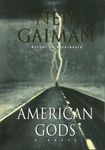
Review 23: American Gods


American Gods by Neil Gaiman

I remember waiting a long time for this book. Neil documented the process of writing it on his blog, so every few days I would get a little glimpse at what he was doing – and it drove me nuts. Living in Japan, I can never be sure when my favorite entertainment will make it over here. Movies and books can take months to get from the US to Japan, and while I’m waiting not-so-patiently, all my friends at home have just devoured it and are in the process of raving about how awesome it is. Oh, sure, the hyper-sellers like Harry Potter might have a worldwide release, but Neil wasn’t exactly a mainstream superstar when this was written.

So yes, one of my main memories associated with this book is frustration. Fortunately, when I picked up the book during a trip home back in 2001, my frustration was erased and replaced with profound satisfaction.

American Gods was one of Gaiman’s first full-length novels, though I may be wrong about that. It was not, of course, his debut – he had made his name a household word in fantasy-reading households by penning the epic comic book series Sandman, in which he proved that he was able to marry huge metaphysical themes to personal narrative. He could make the dissolution of worlds pale beside a broken heart and make you believe that even the simplest of life had vast meaning.

In other words, this man has some serious writing chops.

As the title implies, in this book Gaiman takes on the gods, and asks a very interesting – and important – question: what happened to the gods that came to America? I’m talking about the Old Gods, the gods that had been living in the hearts and minds of people for thousands of years. Leprechauns and dryads, three-in-one forces of fate and representations of the seasons. Easter and Odin, Bast and Anubis, gods of once-great nations and unknown villages. As their people came to America over the millennia, they brought their gods with them.

But as the people stayed in America, they changed. They grew. And the gods discovered that America is not a good place for them.

Now the old gods are small and unworshipped, save by a few tiny, dwindling pockets of their old culture. What’s more, new gods are rising, gods of media and internet, highway and television and government. And, as has been said in countless westerns and cowboy movies, there isn’t room for all of them. There will be a reckoning, and a man named Shadow is in the middle of it.

Shadow is a convict, nearly at the end of his time in prison. He wants nothing more than to get out of prison and rejoin his wife. He gets one of those wishes when he is released early. Unfortunately, he is released early to attend his wife’s funeral.

Without friends or family, Shadow is aimless and alone. It is in this condition that he meets the enigmatic Wednesday, a man who seems to know Shadow and his situation, far better than any stranger should. He offers Shadow a job – to assist Wednesday when he needs it, protect him if he has to, and sit a vigil for him if he dies. With nothing to lose, Shadow accepts the deal. In so doing, he finds himself facing a war of gods that he never knew existed.

It’s a great story, on many levels. In one sense, it’s a love letter to America. Shadow’s journey takes him through small towns that have yet to be subsumed into the ever-devouring maw of the modern American monoculture – from roadside attractions to tiny motels to strange lakeside communities, the unacknowledged weirdness of America is put on display here for all to see. As is its history, in the form of flashbacks to the journeys that people made from their homelands to this land, voluntary or not. The book reminds us that there is a complexity to not only American history, but also to American culture, which gets lost in the ubiquity of McDonald’s and Starbucks.

The metaphysical angle of this book is also something to give you pause. It asks the questions about what gods are, how they’re born and how they die. Most importantly – how they flourish or wither, and why. It is said over and over again that America is a bad place for gods, although it’s not clearly explained why. Perhaps something to do with its geography – a vast, variable landscape that’s too big for small tribal gods to get a hold of. Perhaps it’s the people, brought from all over the world, who can’t help but wonder what other cultures can offer them. Perhaps it’s just the nature of its people – always moving, independently-minded. The old gods, who were gods of small nations and regions, simply didn’t have the power or flexibility to stay on.

Which really makes us wonder, how did capital-g God manage to get a foothold? As one of the characters notes, Jesus has done really well over here. Perhaps because the God of Abraham can be all things to all people – a god of vengeance and justice, a god of mercy and love, a creator, a destroyer, a personal friend or a distant observer. There is something to be said for non-specialization, I suppose….

This book is a journey, and it’s a long and complicated one at that. But it’s enjoyable and personal. Gaiman writes with great empathy, so that the reader may even understand the gods themselves, as reduced and attenuated as they may have become. Though Shadow is not exactly the protagonist of the story – he spends most of the book doing what he is told to do, only taking initiative on his own towards the end, he is observant. Through his eyes, we learn more about America. Its triumphs, its flaws and its potential all become a little bit clearer, and upon finishing the book, those of us from that strange, turbulent land can perhaps appreciate it a bit more.

———————————————-
“This is the only country in the world that worries about what it is.”
– Wednesday, American Gods
———————————————-

Neil Gaiman on Wikipedia
Neil Gaiman’s homepage
American Gods on Wikipedia
American Gods on Amazon.com
Neil Gaiman on Twitter

2 Comments

Filed under death, fantasy, gods, murder, Neil Gaiman, religion, The United States

Review 21: The Thief of Always


The Thief of Always by Clive Barker

This book has one of the best opening lines I have ever read:

“The great, gray beast February had eaten Harvey Swick alive.”

Having grown up in New England, where February is the punishment that God metes out for all sinners, I have decided that you can’t beat that.

Harvey Swick is ten years old, and like so many ten year-old boys, he is bored with his life. The interminable grayness of February, the drudgery of life – going to school, coming home, going to school again – and believes that, if his life became the tiniest bit more boring, he would most certainly perish.

Then he met a strange, smiling man named Rictus, who told Harvey of a wonderful place where boredom could not enter, and there was nothing to be had but fun and adventure. There is no better place for children, Rictus said, than Mister Hood’s Holiday House.

Thinking about it, given that Harvey was willing to follow a strange man to a mysterious house without much consideration for his safety, suggests either that Harvey is not very bright, or Rictus is extremely persuasive. Given the rest of the book, I’d bet on the latter.

The Holiday House is truly a place of miracles. The food is better than you’ve ever eaten and there are enough toys and games and costumes and masks to keep any child happy for the rest of their lives. And in every day there are four seasons – a perfect green spring in the morning, a blazing wonderful summer in the afternoon, an evening full of woodsmoke, pumpkins and fallen leaves, and every night is a white Christmas with a present for each boy and girl.

It is the best place Harvey has ever been, and it takes him about a month to realize that something is not… quite right. Why would the mysterious Mister Hood do this for children? And what happened to the children who had come before? And what’s the deal with that cold, deep pond full of big, creepy fish?

It’s a coming-of-age book, the kind that chronicles the transition from childhood to young adulthood. Ten isn’t exactly young adult territory, but it is a time when kids start maturing in the way they think about themselves and the world. Not for nothing that so many young adult novels feature a protagonist that is somewhere between ten and twelve years old – they’re still young enough to have an air of innocence (which inevitably gets torn away) but old enough to think for themselves when there are no adults around to think for them.

There is no end to this kind of book – Neil Gaiman’s Coraline, Stephen King and Richard Bachman’s Peter Straub’s The Talisman, John Gilstrap’s Nathan’s Run, and just about anything written by William Sleator are among my favorites in this genre. They represent a growing-up that we feel we ought to have had, but are happy to have missed. They deal with the concepts that kids have to deal with as they age, and do so in a manner that young people can understand – analogy.

The Thief of Always is a book about getting what you want. Anyone who’s spent time around children knows that they’re greedy little beggars. They are dominated by their id and don’t understand that there are concerns out there that might supersede their own. Harvey Swick is just such a boy. He is concerned with his own excitement, his own happiness, and, having a child’s limited view of time, believes that the boredom he feels in the grip of February is permanent. He wants adventure. He wants change and variety, a life that never slows down and never gets old.

As the old saying suggests, however, one must be careful what one wishes for.

In the end, Harvey learns a Valuable Lesson ™ – to let the future happen in its own time, and appreciate what you have now. Because once time is gone, you can never – or at least very, very rarely – get it back again.

It’s a very quick read, but a very good book. I pull it out every February, if only for that opening line. For those who think of Clive Barker as being a master of the gory, pin-headed horror genre, this book may come as a pleasant surprise for you. And if you have kids around Harvey’s age, leave this one lying around for them to find. I’m sure they’ll appreciate it….

————————————-
“I only took the days you didn’t want,” Hood protested. “The rainy days. The gray days. The days you wished away. Where’s the crime in that?”
“I didn’t know what I was losing,” Harvey protested.
“Ah,” said Hood softly, “but isn’t that always the way of it?”
– from The Thief of Always
————————————-

Clive Barker at Wikipedia
The Thief of Always at Wikipedia
“The Beautiful Moment” – a Clive Barker website for all ages
The Thief of Always at Amazon.com

3 Comments

Filed under children, Clive Barker, fantasy, time travel, world-crossing, young adult

Review 18: Swan Song

Swan Song by Robert McCammon

Okay, have you read The Stand? Humanity being wiped out by a short-sighted government, small groups of people struggling to survive in an America laid low? A dramatic escape from New York through a dark and scary tunnel? An evil adversary from an unknown place whose only dream is the end of the world?

Yeah, that’s Swan Song, too. Only with nukes instead of a virus.

It really is an alarmingly similar story, published about ten years after The Stand, but – and this is important – it’s still a really good book. Derivative? Sure. But it’s still good, which is a neat trick.

The story starts in an alternate world, one that seemed all-too-probable in 1987, when this book was published. The US and the Soviet Union are toe-to-toe, fighting proxy wars all over the world. Nuclear exchanges have already happened between smaller nations. The world is inches away from war, and there seems to be no going back.

Domestically, things aren’t much better. In New York City, the city has fallen to crime and decay – drugs, trash and whores are all that can be found, and if any city deserves destruction it’s this one. It’s the worst projections of New York come true, and its eventual destruction is almost like a blessing.

In the western mountains, a group of survivalists have hollowed out a shelter against the possibility of The End, and Earth House is full to bursting. Young Ronald Croninger and his parents are there, but the boy is not impressed by what he sees. Colonel Macklin,the ex-soldier who is the public face of Earth House, seems to have gone to seed, and the shelter itself is falling apart, just like everything else.

The world is going straight to Hell, and it’s all too easy for the US and the Soviets to send it all the way there.

The book has an epic scope and a massive cast, lined up pretty equally on the sides of Good and Evil. As the book progresses, the disparate groups finally come together in a final confrontation that will decide the fate of the world.

In the midst of all that, a certain mystical quality has arisen. There’s a… being, a creature of demonic countenance who can change his face and travel freely throughout the wasted land. His sole desire is to see the end of humanity – he revels in destruction and despair and wants nothing more than to see the end of Our Heroes. On the other hand is the title character, Swan. As a girl, she loved plants and flowers, and had a strange affinity for the natural world. As she grew up, however, her powers matured, and that affinity became a full-on partnership. They each collect a following, through fear and hope respectively, and they each know that there’s only one way this can all end.

There’s an element of mysticism to this as well, though why it should be there is not explained. For example, the burned-out rubble of Tiffany’s on Fifth Avenue creates a shining glass ring, filled with strands of precious metals and valuable stones. This ring becomes the guide for Sister, a woman who was once mad but becomes the sanest one of the survivors. With the ring, she is able to perform miracles. There’s a magic mirror that shows the future, prophetic dreams and other elements of mysticism. It seems that when the world as we know it ends, the world as we don’t know it steps in. And then there’s the Job’s Masks – a mysterious growth that covers a person’s head in an impenetrable shell, only to crack open years later and…. Well, I’ll let you find out.

The appeal of apocalyptic fiction is an interesting one, and easily understandable. Humans have been interested in how the world will end since about the same time we figured out that the world could end. And there are many ways for it to go, whether it’s the nuclear fire of this book, the insidious virus of The Stand, the near-miss religious apocalypse of Good Omens, the various meteor impacts and climatological disasters that Hollywood loves to show us…. The ways in which the world ends are countless, but they all share one distinct feature – when the end comes, you’ll find out who you really are.

It’s tempting, then, to give it some thought and wonder, “Who would I be, when all was gone?”

This book has some excellent role models to choose from – and to avoid. The characters are compelling, and the world is vividly drawn, so as long as you’re not thinking, “But this is just like The Stand!” you should greatly enjoy it. I highly recommend it.

————————————————-
“Once upon a time, we had a love affair with fire.”
– Robert McCammon, Swan Song
————————————————-

Swan Song at Wikipedia
Robert McCammon at Wikipedia
Swan Song at Amazon.com
Robert McCammon on Swan Song
Robert McCammon’s homepage

BONUS! The Boyfriend decided that there needs to be pictures of me recording the podcast. So he took some….

Doing the Podcast

Doing the Podcast
Listening to the playback. I’ve had a haircut since then….

2 Comments

Filed under apocalypse, death, fantasy, good and evil, horror, nuclear war, Robert McCammon, society, survival, totalitarianism, war