Monthly Archives: May 2011

Lost in the Stacks 5: Art versus Artist

Scott Adams says some really dickish things, but the Pointy-Haired Boss is still funny to laugh at.

Mel Gibson shows his anti-Semitic side, but Lethal Weapon is still one of the best buddy cop movies of all time.

Dave Sim writes a compelling political drama in his comic book series Cerebus, but then shows himself to be a homophobic misogynist of the highest order.

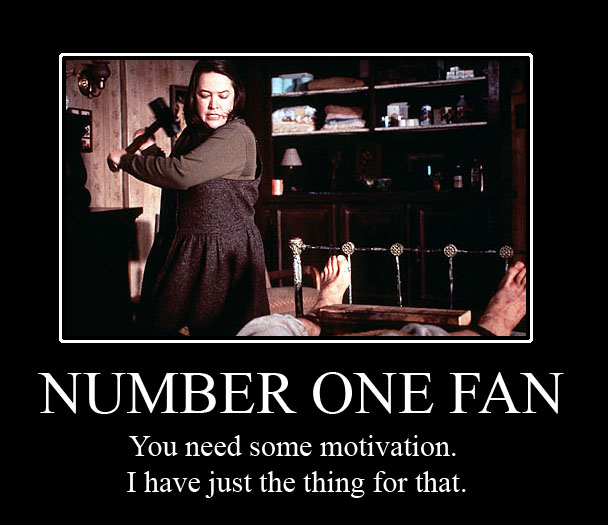
Once you’ve learned something about your favorite writer or artist, it may poison your view of the art you used to love. How can you reconcile these feelings and still be able to look at yourself in the mirror? The answer [1] is in this month’s edition of Lost in the Stacks: Art versus the Artist! We look at whether art can be considered separately from the person who made it, and what it means to deal with a moral problem that has plagued us since art began. Take a listen and join in the conversation in the comments!

————————————-

[1] Disclaimer: answer may not actually be an “answer”

Leave a comment

Filed under art, criticism, ethics, fans, fiction, Lost in the Stacks, morality, reading

Review 124: The Night Watch

The Night Watch by Sergei Lukyanenko

This review has been approved for distribution as conducive to the cause of the Light. – The Night Watch

This review has been approved for distribution as conducive to the cause of the Dark. – The Day Watch

Imagine a world where magic is real. A place where people known as Others are born with powers they don’t understand. Their destinies are unwritten until that fateful day when they first become an Other – when they discover the strange, shadowy and powerful world known as the Twilight – and have to make a choice: will they stand with the Light or with the Dark. Will they dedicate their lives to Good or Evil?

Maybe it ain't what it used to be, but it's still dramatic.... (art by mirerror on DeviantArt)

It’s not an easy decision to make, by any means. Joining either side has its limitations and its rules, for the battle between Good and Evil isn’t what it used to be.

Long ago, it was simple – Good fought Evil, Dark fought Light, and blood was shed on both sides. It was a vicious, unending war that threatened to decimate the world. Finally, the two sides reached an agreement. A Treaty, well deserving of the capital letter. There would be a truce between the two sides, a balance that would be maintained at all costs. Any act of evil would be balanced by an act of goodness, and vice versa. Neither side is to have an advantage.

Part of the Day Watch Auxiliary Brigade

Making sure the peace is kept is the job of the Watches – the Night Watch, staffed by elites of the Light to guard against advances by the Dark, and a Day Watch, staffed by the elites of the Dark to guard against excesses of the Light. We begin our look at the Others of Moscow with a young adept named Anton Sergeeivich Gorodetsky, a wielder of magic and an analyst forced into the more exciting realm of field work. His job is to find out who a pair of vampires are illegally attempting to seduce and stop them. In the process of doing that, and saving the soul of a young Other named Egor, he stumbles upon something that threatens the entire city of Moscow, if not all of Russia. A young woman has a curse upon her head, so horrible and so powerful that the forces of the Light may have no chance to disperse it. If she dies, the city will die with her. If she lives, even worse may befall the world.

There are three stories in this book, somewhat independent but entirely connected. The first details the discovery of Egor and the cursed Svetlana. In the second, an Other of the Light, a maverick who doesn’t know about the rest of the Others, or the Treaty between Light and Dark, is murdering Dark adepts. Somewhat alarmingly, Anton is being framed for the murders. In the third book, Moscow is gripped in a heat wave. In the midst of this, the leaders of the Light are attempting to change the world. Whether it ends up being for the better or the worse, no one can know. But Anton is convinced that it must not come to pass….

Team ANTON!!!!!

It’s a gripping fantasy, in a very complex world. It’s compared to Rowling’s work, and justly so (although I don’t think there’s much of a case to be made for an attempt to ride on Rowling’s coattails – Night Watch was originally published in 1998, only a year after the release of Harry Potter and the Sorcerer’s Stone). There are substantial differences, of course, making Night Watch a much more adult book than the Potter series. There are very few children, and the few that are there are not in very substantial roles. There’s far more drinking, smoking and sex in this, of course. But the world that Lukyanenko has created is every bit as deep and complex as the one Rowling has made. There are any number of roles that could be played, and an almost infinite number of situations that could be built on the fairly simple rules that are set up by the Light-Dark Treaty.

The biggest difference, of course, is in the complexity of the world. Rowling’s world is fairly definitive in its divisions between good and evil – there is good, there is evil, and there is no question of which is which. The evil characters are definitively evil, and the good characters are definitively good, and the reader doesn’t have to worry too much about who’s on which side, Snape notwithstanding.

The Others of Moscow, however, are not nearly so clear-cut. Yes, the Light is trying to do the work of the Good, to make the world a better place. But their machinations and their plots don’t always go as planned. See the Russian Revolution and World War II for examples why. They ignore the Law of Unintended Consequences and the horrors it can unleash. By trying to do Good, they unleash great evil upon the world.

He's just a big softie, really....

And how about the Dark? Yes, they’re populated by werewolves, witches and vampires, but they are advocates of utter and total freedom. They do not destroy for the sheer joy of destruction, but because they want to increase the personal freedom of the world. They’re not interested in making humanity “better,” or making a better world. They simply want to live in the world as it is, free from restraints – both internal and external.

While it may be pretty clear who is on the Light and Dark side, it’s not entirely clear who is doing Good or Evil at any given time. And, more importantly, it is almost impossible to know who is actually right.

It’s a great read – full of anguish and self-doubt and torture, like any good Russian novel should be. Anton knows that the Light doesn’t live up to the standards that it preaches, but he knows that he needs to be on the right side. He picks apart the intricate, decades-long plot of the Night Watch and very nearly figures out how to foil it. But even in revealing the truth, he does not manage to save the world from the doom of the Light.

Or does he?

We’ll have to read the next book and find out….

————————————————
“You accuse us of cruelty, and not entirely without reason, but what’s one child killed in a black mass compared with any fascist children’s concentration camp?”
– Zabulon, of the Day Watch, The Night Watch
————————————————

The Night Watch on Wikipedia
Sergei Lukyanenko on Wikipedia
Sergei Lukyanenko’s website (in English)
The Night Watch at Amazon.com

2 Comments

Filed under ethics, fantasy, good and evil, horror, identity, made into movies, morality, philosophy, politics, Russia, Sergei Lukyanenko, short stories, society, USSR, vampires, werewolves, witches, wizardry

Review 123: Nineteen Eighty-Four

Nineteen Eighty-four by George Orwell

Gods, where do I even start with this?

As with To Kill a Mockingbird, I read this during Banned Books Week for two reasons. First, it’s on the ALA’s list of top banned or challenged books, and second because it’s really, really good.

As with all the books I read, there’s always a little part of me thinking about what I’m going to say about the book once I finally decide to write about it. Sometimes I start composing in my mind, coming up with the pithy words and phrases that have made me into the international book reviewing superstar that I am.

This time, however, I could barely concentrate for the cacophony in my head. There’s just so much going on in this novel that doing it any sort of justice would probably require writing a book that was longer than the book that it was analyzing. And as much as I love you guys, I’m not about to write a whole book about this. Probably because I reckon better minds than mine already have.

Art by Party9999999 on DeviantArt

Regardless, it’s hard to choose where exactly to go on this one. There are so many political, sociological, psychological and philosophical threads to pick up here that no matter what I write about, I’m pretty sure I’ll get responses about how I didn’t mention the solipistic nature of Ingsoc and its relationship to the philosophy behind modern cable news network reporting strategies. Don’t worry, guys – I got that one.

I suppose two big things came to mind while I was reading it this time, and the first of them was inspired by the previous book I read, To Kill a Mockingbird. In that book, Atticus Finch talks a lot about bravery. To teach his son about what it truly means to be brave, he gets him to take part in an old woman’s struggle to free herself of a morphine addiction before she dies – an excruciating process that is more likely to fail than to succeed. But she does it anyway. Atticus says to his son about bravery, “It’s when you’re licked before you begin but you begin anyway and you see it through no matter what. You rarely win, but sometimes you do.”

The question in my mind, then, was “Is Winston Smith brave?”
I really want to put this on a t-shirt....

It’s a hard question to answer, really. By Atticus’ definition, you could say that he is. A member of the Outer Party that rules the superstate of Oceania, Winston Smith is a part of a greater machine. He works in the records department of the Ministry of Truth, diligently altering and “rectifying” the data of the past to bring it into alignment with what the Party wants to be true. His is a world where there is no such thing as objective truth – the truth is what the Party says it is.

A good member of the Party sublimates his will to that of the Party. What Big Brother wants, she wants. She has no love but love for the Party and no dreams but to do what the Party wants of her. A good Party member doesn’t have plans or hopes or dreams. He doesn’t ask questions or idly wonder if things could be different from what they are. A good Party member doesn’t think. He is born, lives, consumes, and dies.

Winston, however, cannot be a good Party member. He wonders why the world is the way it is, and begins down a road to assert his own identity as a human being. He knows full well that he will fail, that in the end he and the woman he loves will be delivered into the hands of the Thought Police, and he is appropriately terrified. But he goes through with it anyway. He keeps a diary of his thoughts and actively tries to join an underground movement that is determined to overthrow the Party and Big Brother. He declares himself willing to undertake acts of heinous treason, all in the name of resistance against the Party.

The new faces of the Party. DOUBLEPLUSGOOD!!

And in the end, he fails, just as he knew he would. So does this make Winston, a man who is so far in character from Atticus Finch, a brave person? Well, yes and no.

He does meet Atticus’ definition of bravery – persisting in what you believe to be right, even in the knowledge that you will probably fail. Winston puts his own life on the line multiple times, committing Thoughtcrime of the highest order. But is he doing it for some higher ideal, or is he doing it for more selfish reasons? Flashbacks to his younger days suggest that Winston Smith was an unrepentantly selfish child, who was willing to disregard the dire straits of his own mother and baby sister in order to get what he wanted. Could we not say that the adult Winston does the same? That he is more interested in freedom for himself than for others? Is his rebellion against Big Brother political or personal? He claims that he wants to see the world changed and freedom brought to all people, but how far can we trust a mind that’s been well-trained in Doublethink?

This, of course, gets right back to the Big Question of why people do the right thing, when it might be so much easier and profitable to do otherwise. Atticus Finch could have let Tom Robinson swing, thus saving himself and his family a whole lot of trouble, just as Winston could have just given up and emulated his neighbor, Parsons, becoming as good a Party member as possible. Neither man could do that, though, because is was not in their nature to do so. It was impossible for Winston to continue to live the way the Party wanted to and, given time, he may have been able to reach beyond meeting his own personal needs and seen to the needs of his greater community.

Unfortunately, we never get the chance to find out, as the Thought Police eventually get tired of watching him and take him in. To his credit, he does hold out to the last extreme before he betrays Julia in his heart, so perhaps he is brave after all.

How adorable....

The other thing that came to mind while I read was the modern use of the word “Orwellian,” and how it falls vastly short of what is depicted in this book. It gets thrown about any time a city puts up a few CCTV cameras downtown, or a business decides to put surveillance cameras in their store. It comes up when we put RFID chips in passports and credit cards, or when we think about how much data Google can hold about us. The word brings to mind a sense of constant surveillance, never being able to move or act without some government or corporation knowing what we’re doing.

While the concept of the two-way telescreens in this book certainly are a logical extension of surveillance culture, to call a customer database or red light cameras “Orwellian” is like calling a Bronze-age chariot a Ferrari. It betrays an incredible lack of understanding of what exactly is going on in the world that Orwell has built. We may be watched by these people, but in comparison to the average citizen of Oceanea – prole or Party member – we are still remarkably free.
Freedoms available to us. Not these people.

There are still freedoms available to us that people like Winston never had, and couldn’t understand even if they were offered. We can protest, we can voice our disagreements, we can channel our energies into whatever pursuit we choose, or not channel them at all. We have the freedom to decide who we want to be and how we want to live, at least within the limits of a well-ordered society. We do not live in daily terror that we might be abducted from our beds, our lives ended and our very existence erased from record and memory. Honestly, I think a few security cameras pale in comparison to the horror that is Oceanea and the world of Big Brother.

There is so much more to talk about with this book. I find Newspeak fascinating, and its foundations both amazing and terrifying. The idea that a concept can only truly exist if there’s a word for it brings to mind those “untranslatable” words you find in every language. For example, there’s no equivalent to the English “miss” in Japanese, as in “I miss my mother.” Does that mean that people in Japan are incapable of missing people? Of course not, but the underlying theory of Newspeak suggests otherwise. Once the party reduces the English language to a series of simple words with no nuance or subtlety of meaning, the idea goes, Thoughtcrime will be literally impossible. After all, how can one wish for freedom if the concept itself is impossible to articulate?

Then there’s the idea of the mutability of the past. The way the Party exerts its unbreakable control over the population is by virtue of the fact that they control all media – newspapers, radio, television, publishing of all sorts. If the Party wants to, say, claim that Big Brother invented the airplane, all they have to do is revise all relevant media to reflect their desired past, and then replace and destroy anything that disagrees with them. With no evidence that Big Brother didn’t invent the airplane, all that’s left is fallible human memory, and those who do think they remember the “right” version of the past will eventually die anyway. Whoever controls the present, the Party says, controls the future. And whoever controls the past controls the present. By remaking the past, the Party guarantees that they can never be gainsaid or proven to have erred in any way.

Even Big Brother would crumble before 4chan....

Fortunately for us, Big Brother never had the internet to contend with. As anyone who’s been online for a while knows, nothing on the internet ever goes away. Ever. The words of any leader or influential person are all there, in multiple copies, all of which can themselves be copied and distributed in mere seconds. While it is possible to fake a photograph, the awareness of that possibility, as well as the technology to suss out the fakes, are just as available to anyone who wants them. Even in cases where there are disputes about the past, or re-interpretations of past events, it is impossible for one version to systematically replace all others. While this sometimes results in competing versions of the past, the one with the most evidence tends to prevail.

Continuing in that vein, the understanding that the Party controls all information about itself leads to a very interesting question that’s not addressed in the book – is anything that is not directly witnessed by Winston Smith true? We are led to believe, for example, that there are three world powers – Oceanea, Eastasia and Eurasia – which are locked in a state of perpetual war. The nature of this war and how it serves the interests of these three nations is laid out in Goldstein’s Book, which is the text of the Revolution that Winston and Julia want to join. But here’s the thing – Goldstein’s Book is an admitted fiction, written by the Party as a kind of honeypot to bring suspects through the last stages of their Thoughtcrime. So we have no proof that the world of Nineteen Eighty-four actually is laid out the way it appears.
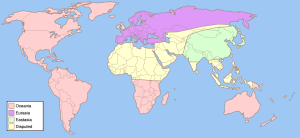
Is this the real world? GO TO ROOM 101, CITIZEN!

The Party could in fact dominate the world, using the pretext of war to keep the world’s citizens terrified, needy and compliant. On the other extreme, Oceanea could just be Britain, turned in on itself like some super-accelerated North Korea, its borders sealed and its citizens kept in utter ignorance of the world outside. We don’t know. We have no way of knowing, and neither do any of the characters in the book. Even the Inner Party members might not know the truth of their world, and wouldn’t care if they did.

One more thing, and I’ll keep this one short – Doublethink. The ability to hold two contradictory ideas in your mind, believing in both of them simultaneously and yet being unaware that there’s any conflict at all. Knowing, for example, that last week chocolate rations were at thirty grams, and at the same time knowing that this week they had been raised to twenty. All I can say here is to look at the health care debate in the United States. Here’s a fun game: see how often someone says, “We have the best health care in the world,” and then see how long it takes before they tell us that health care in the United States is irrevocably broken. Your average politician and pundit does this kind of thing all the time and, in accordance with the basic principles of Doublethink (also known as Reality Control), they immediately forget that they had done it.

No! Not Obamacare! Do it to Julia! DO IT TO JULIA!!! (Art by Scott Sullivan on Flickr)

This game is much easier if you watch Glenn Beck for half an hour. You’ll be missed, Glenn.

There is just so much to be gleaned from this book. Probably the most important is this – the world depicted in Nineteen Eighty-four is certainly not an impossible one, but it is unlikely. The people of that world allowed the Party to take over for them in a time of crisis, and in that sense this book is a warning to us all. It is a warning to keep the power that we have, and to resist the temptation to let a government decide who we should be.

——————————————-
“I understand HOW: I do not understand WHY.
Winston Smith, Nineteen Eighty-four

George Orwell on Wikipedia
Nineteen Eighty-Four on Wikipedia
Online comic adaptation
Nineteen Eighty-Four on Amazon.com

2 Comments

Filed under classics, dystopia, ethics, existentialism, fiction, futurism, George Orwell, language, made into movies, morality, philosophy, politics, psychology, totalitarianism, truth

Review 122: Anansi Boys

Anansi Boys by Neil Gaiman

When I started in on this book, I knew there were certain things I could expect from Neil Gaiman – insight, clever twists on literary assumptions, a good perspective on the nature of our reality. And, I must say, he delivered in full. This story draws from some of the most ancient of human tales and reflects on the most ancient of human needs – the need to have a story of one’s own. It’s a book about purpose and destiny, and other very deep subjects.

Yes - this man is hilarious.

What I didn’t expect was to spend most of the book laughing out loud and disturbing the people around me.

Seriously, there were some times when the other teachers in the staff room would stop whatever conversation they were having because they’d been interrupted by my cackling. Or the staff would come over and ask what was so funny, and I’d try to explain – which doesn’t really work when you’re trying to cross languages and literary traditions. People in Japan don’t really laugh out loud at their books, and can’t quite understand why I do. But I laugh. I snicker, I giggle, I cackle, and I never expected that from Neil Gaiman.

The book was, needless to say, wonderful. While by no means a sequel to Gaiman’s previous bestseller American Gods, it inhabits the same universe. This is a world where the gods exist – they’ve been called into existence by us and, in turn, shape our lives.

The book follows the unfortunately nicknamed Fat Charlie, whose life has been ruined by his father’s death across the Atlantic. This wasn’t the first time his father had ruined his life – it had happened many times before in many terrible ways. For Fat Charlie, however, dying in the middle of a karaoke hall just seems to be a final slap in Fat Charlie’s face.

Fat Charlie isn’t his real name, of course – his real name is Charlie Nancy, which isn’t much better. Fat Charlie is only a nickname given to him by his father. He tried to shake it in his life, asking people to call him Charlie or Charles or Chaz, and he wasn’t even fat – just a little soft around the edges. But his father gave names that stuck like gum to the underside of a school desk, and no matter where he went, Charlie Nancy inevitably became Fat Charlie.

You would think this would raise eyebrows in the delivery room....

The reason for this phenomenon, of course, is that Fat Charlie’s father is a god. He is Anansi, the Spider, a trickster god who managed to steal all the stories from Tiger back when humanity was young, and who managed to trick, deceive, swindle and humiliate nearly every other god and spirit there ever was. He was good at it, and there was nothing he wanted that he couldn’t get.

Fat Charlie was, in very many ways, a disappointment. Where his father was debonair, Fat Charlie was a klutz. Where his father could command the respect of men and women, Fat Charlie was a doormat. Where his father was the embodiment of confidence, Fat Charlie was a crumbly mess. I suppose it’s normal, really, being the child of a god, and not really his fault, even if he didn’t know it until his father was dead.

He didn’t know about his brother, either. His brother is Spider, a young man who is so cool that he can convince an entire L.A. party that they can walk on water. He can do real magic, step in and out of the world with ease, and carries his own bedroom with him. When Spider comes into the picture, everything goes horribly, horribly wrong. Think The Odd Couple, except that Oscar Madison has divine powers and absolutely no sense of consequence.

The story is a lot more than two brothers who don’t know how to get along. It’s a story – about stories. In the stories of Anansi and Tiger that are laced throughout the book, we learn that once, long ago, all stories were Tiger’s stories, and they were stories of fear and blood and hunger. When Anansi took them, the stories became about cleverness and trickery and resourcefulness. So in a way, the victory of Anansi over Tiger is the story of humankind’s emergence from barbarism.

Speaking of someone whose story has been re-written over and over. Anansi would like Spidey, though....

It’s about personal stories as well, and that’s a theme that’s far more important to us as individuals. We are the stories we tell about ourselves. Fat Charlie didn’t need to be the tightly-wrapped ball of embarrassment that he was. But that’s who he told himself he was, and, so, that’s who he became. Once he starts to accept his heritage and his responsibility to his family, once he starts to re-tell his own story, he changes himself. The same is true for Spider – he’s written his own story as a rake and a charmer, but he finds that that story is lacking. It’s a story that needs some editing, and he’s better off for it.

This is a funny, funny book that reminds me in places of Dave Barry, though that might be a side effect of the Florida settings. There’s also a few footnote jokes, so I suspect that Neil has been hanging out with Terry Pratchett recently. Despite the laugh-out-loud general tone of the book, there’s a lot of Meaning to be found as well – the meaning of story and song, of family, and why you should always be nice to spiders. And birds. Definitely be nice to birds.

The ultimate message of the book, though, is that you can always re-write your story. The weak little spider can become a conquering hero, and the fearsome tiger can be a timid coward. No story is set forever. So if you don’t like the way your story is turning out, get out your red pen and start editing. Anansi would approve.

————————————————
“People respond to the stories. They tell them themselves. The stories spread, and as people tell them, the stories change the tellers.”
Anansi, Anansi Boys

Neil Gaiman on Wikipedia
Anansi Boys on Wikipedia
Anansi Boys on Amazon.com
Neil Gaiman’s homepage

2 Comments

Filed under brothers, childhood, coming of age, death, family, fantasy, fathers, gods, humor, identity, Neil Gaiman, quest, sons, spiders, story

Review 121: Shatnerquake

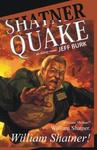
Shatnerquake by Jeff Burk

In the introduction to this book, the author states that he truly admires William Shatner – he states that Shatner is a man who has made a career out of caricaturing himself, remaking himself over and over again with no looking back, no shame and – as far as we know – no regrets. He finishes by kindly asking William Shatner not to sue him.

I don’t think he has too much to worry about, really. This book is a quick, fun read that, while not necessarily painting William Shatner in the best of lights, certainly pays homage to his long and varied career.

Shatner

The story goes as follows: William Shatner is on his way to the very first ShatnerCon, a convention celebrating his life and works. It is a convention mobbed with fans, devotees who are there to see their idol, whether he caught their hearts as T.J. Hooker, Captain Kirk, or the host of Rescue 911. In the new Cathode-La convention center, tribute can be paid in full to William Shatner, a man who has changed so many lives.

But there are those who do not adore Shatner. They don’t like him or even tolerate him. They are the Campbellians, known by the bloody stumps where their right hands used to be and each known only as Bruce. They hate William Shatner with a passion that borders on madness, and seeing him dead is not nearly enough for them – they want his entire body of work to never have existed. Their weapon is a Fiction Bomb, a metaphysical WMD that can erase stories from existence. No one remembers them, no one knows they ever existed. Should the Fiction Bomb succeed, William Shatner’s entire body of work would cease to be. And so, in short order, would he.

Shatner!

But what if a Fiction Bomb should go wrong? What if that interface between fiction and reality should be breached, spilling its contents into what we commonly call the Real World? In that case, dozens of William Shatners – every character the man had played – would emerge in our world, with only one thought on their minds: Destroy the real William Shatner!

This book is a very quick read – only eighty-three pages – but it certainly packs in a lot of action, and as works of fan-fiction go, it isn’t too bad. Because that is most assuredly what this book is – fanfic. Burk has a very basic concept here – get all of Shatner’s characters out to kill him. Simple. Add lots of blood and gore and guts, because that’s always fun, and you have some entertaining reading. This is the very best kind of fanfic, really – you know it’s just a send-up, never intended to be a serious work of literature. Sit back and enjoy the ride.

It suffers from some serious editing problems, though, and Mr. Burk would have done well to have hired a good proofreader. There are some very basic grammatical mistakes, dropped plurals and a few sentences that just don’t make sense. To a regular reader, it might not be important, but to someone whose bread and butter is the proper use of English, it’s kind of glaring. But then my expectations weren’t all that high – I went into this expecting a rollicking adventure and that’s what I got. Complaining about the grammar in a book like this is like complaining about the quality of the vegetables in your Big Mac.

SHATNEERRRRR!!!!

Still, there are some redeeming points to it, above and beyond the weirdness of the whole thing. The beginning of the book does a very good job at setting up a real dreamlike atmosphere – a building that covers a hundred city blocks and has a parking lot that stretches out as far as the eye can see. Upon reaching the convention center, Shatner finds out that he is already late, and is led through a maze of hallways that result in almost instant disorientation. He has to sign hundreds of photographs for hours on end, and ultimately faces off with his own doppelgangers. Burk has reached into the bag of common nightmares and put together a scenario that is both familiar and disarming, which propels you through the rest of the book. After all, if you’re struggling to keep up with events, think about how Shatner must be feeling?

And of course, one can’t help but wonder if this is a commentary on the very nature of the actor/fan dynamic. Who is William Shatner, after all? Depending on who’s looking at him, he could be Kirk or T.J. Hooker, Denny Crane or Buck Murdock, the guy who saw gremlins on his plane or the guy trying to sell you cheap airplane tickets. On top of that, Shatner has another character to maintain – Shatner as a public figure, the guy who goes to conventions and book signings and does guest spots on TV shows.

Shatners?

Who is the real William Shatner? Who are any of us, really? In this age of online presences, there could be electronic doppelgangers of ourselves all over the internet. The person that your Twitter followers believe is you is not necessarily the same person that the people on your Mad Men slash fic forum know. You present a different face to your Facebook friends than the people you know in your World of Warcraft game, and like Shatner in this story, you ultimately have no control over the different renditions of you that other people see.

The good news, of course, is that those different Yous are unlikely to rise up and try to kill you.

Ultimately, this book has no over-arching message about the nature of identity in a world where different versions walk around without our knowledge or consent. I don’t think that it was ever Burk’s purpose to write a treatise on the modern concept of identity, but rather to write a quick, bloody thriller about William Shatner. So, it has no real lessons to teach us other than that if you see a deranged Captain Kirk approaching with a lightsaber (and how that got in there, I’ll never know – a little artistic license for the sake of awesomeness) you run away. Very fast.

————————————————–
“I’m a… professional. I can deal… with anything.”
– William Shatner, Shatnerquake

Jeff Burk on Wikipedia
Jeff Burk’s website
Shatnerquake on Amazon.com

1 Comment

Filed under adventure, doppelgangers, fans, horror, humor, identity, Jeff Burk, science fiction, William Shatner

Lost in the Stacks 4: Writers and Readers

With the debut of HBO’s “A Game of Thrones” miniseries and a new article in The New Yorker, the strange story of George R. R. Martin and his fans has been on my mind. So, in this episode of Lost in the Stacks, we examine the weird, often dangerously codependent relationship between the Writer and the Readers.

What does the writer owe to his or her readers, if anything? What can the readers honestly expect of their writer? What promises, implicit or explicit, have been made, and what happens when they’re broken?

Join me for an interesting conversation, and let me know what you think!

George R. R. Martin’s homepage
Finish the Book, George
Is Winter Coming?

2 Comments

Filed under analysis, criticism, ethics, fans, fiction, George R. R. Martin, Lost in the Stacks, morality, reading, writing