Monthly Archives: July 2010

Review 81: A Treasury of Great American Scandals


A Treasury of Great American Scandals by Michael Farquhar

There are many good reasons to study history. There is the desire not to be doomed to repeat it, for one, which I find to be an excellent motivator. I remember watching the run-up to the invasion of Iraq and hearing the spectral voice of William Randolph Hearst screaming “Remember the Maine!” in my head. And of all the reasons to study history, that is perhaps the most important, though not necessarily the most fun.

You might also study history to just enjoy the stories. I used to hate history, especially in high school. Like so many of you out there, I had a boring high school history teacher, who did his very best to make sure that none of his youthful charges ever gave a damn about history once finals were over. If I were a more conspiratorially-minded person, I would say it was so that he could contribute to a generation of Sheeple that would do as they were told by their corporate and governmental masters, but that would be giving him too much credit. More likely it was a lack of proper continuing education for teachers combined with the inevitable erosion of the soul that must come from anyone who has to deal with high school students all day.

In any case, I came to enjoy history once I started looking at it as a series of stories. Not just names and dates and events, but actual people. And once I understood that these stiff, bearded men and those stiff, corseted women were really human beings – with lives as rich and as interesting as any other human being (moreso, in fact, since we remember their names after a century or two) – I found more reasons to care both about them and the times in which they lived.

Take, for example, Aaron Burr. Killer of Alexander Hamilton. The two of them despised each other, seeming to even resent the fact that the other man existed, and years of animosity culminated in a fateful duel in 1804. The two men met on the dueling ground, as was the manner of the day, and shot. Both men were injured, Hamilton fatally, and Burr fled, as what he had done was technically murder. But that wasn’t all for good old Aaron Burr – he moved West, and engaged in activities that appeared to be either an invasion of Mexico or an attempt to split the Union in two along the Appalachian Mountains. Or both.

Or neither- no one was really sure what Burr what up to, other than no good. But the man was slippery in a way that would make Dick Cheney go green. While everyone knew he had murdered Hamilton, and everyone knew he was trying to set himself up as possibly the Emperor of Western America, he never went to trial for the first crime and was acquitted of treason in his second. He died a free, but reviled, man. Hell of a guy.

Not all the stories are as grand in scope – some are feuds and revenge stories that burn with jealous rage. Such was the case of Senator William Sharon’s fling with Althea Hill, which led to death, betrayal, madness, and two Supreme Court decisions. Sharon and Hill began a highly suspect love affair in 1880. It was hot, it was passionate, and it ended very, very badly, Sharon dead, Hill in an insane asylum, and Hill’s second husband (her defense attorney) shot dead by the bodyguard of the Supreme Court justice who was to rule on whether or not Hill and Sharon had been legally married in the first place.

That doesn’t hold a candle, in my opinion, to the story of Rep. Daniel Sickles, his wife Teresa, and her lover (and Sickles’ friend), Philip Barton Key, which ended in vengeful murder and an intervention by the President of the United States. Key was stepping out with Teresa on a regular and not-very-subtle basis, and everyone knew it. Everyone but Daniel Sickles, of course. Lies have a way of making themselves known, however, and eventually he found out and confronted his wife. Key, however, had no idea the affair had been exposed, and showed up in Lafayette Park, his usual meeting place with Teresa, giving The Signal that he wanted a little extra-marital nookie. What he got was a furious husband and a bullet in the chest. Sickles, for his part, was acquitted on what may have been the first “temporary insanity” defense in the nation’s history.

Parts of this book are especially fun to read in an election year, as there’s an entire section devoted to underhanded, dishonest or otherwise dirty campaigning. If you thought that Swift Boat Veterans for Truth were bad, or the Tea Parties were poisoning the discourse, you’re forgetting that in the Presidential campaign of 1828, John Adams’ people accused Andrew Jackson’s mother of being a prostitute, his wife of being a bigamist, and Jackson himself of being a homicidal maniac. During the campaign of 1800 (Jefferson versus Adams), the Connecticut Courant warned that, should Jefferson be elected, “Murder, robbery, rape, adultery and incest will be openly taught and proclaimed. The air will be rent with the cries of the distressed, the soil will be soaked with blood and the nation black with crimes.”

Lincoln, who has become known as one of the greatest presidents this country has ever had, was called “a joke” by the New York Herald, and an “ignorant, boorish, third-rate backwoods lawyer” by the New York World. Grover Cleveland was assaulted with the chant, “Ma! Ma! Where’s my pa!” after it was discovered that he had fathered a child out of wedlock. This led to accusations of further debaucheries and unnamed sins against good Christian womanhood and morals the likes of which would make Bill Clinton’s head spin.

A nice coda to that story, though – Cleveland openly admitted to fathering the child (and providing support to the mother afterwards), believing that the truth was the best defense against smears. It also helped that his opponent had not only despoiled a girl in his youth, but was forced to marry her at shotgun-point – hardly one who should be criticizing a man for his youthful indiscretions. When Cleveland won re-election, his followers took up the Republicans’ taunting chant with a retort laced with schadenfreude – “Gone to the White House. Ha! Ha! Ha!”

Which brings me to the third reason why it’s valuable to study history – it helps you gain perspective. The United States is going through some trying times right now, and if you pay attention to the blogs and the cable news networks, you might believe that these are indeed the worst of times. That having a sitting governor traipse down to Argentina for a little Latin loving is the nadir of morality. That having a news organization foment protest rallies and marches is the height of unethical behavior. That accusing your white opponent of having fathered a black child, or spending some private time with a White House intern, or making IM passes at teenage boys are all signs that America is on a one-way trip to hell, even if we can’t afford the handbasket.

History is the antidote to the common belief that the times in which we live must be special. Every generation thinks it – that I am here, therefore the events of my times must be the most important events to have ever happened. It’s egocentric and very, very human, but – and this is important – it’s not true. There is nothing special or different about the times in which we live, because human nature hasn’t changed. For every scandal we see today that frightens or enrages or disgusts us, you can look to history to see that it’s already been done, and done worse. History provides perspective, and it offers hope. The country has seen a lot of bad things in its time, but it has survived. It has seen abuse of civil rights that were far more egregious than anything that happened after 9/11 and it has survived. It has seen civil unrest that makes the Tea Partiers or the G20 protesters look like sulky children – and it has survived.

So turn off the TV, step away from the computer and pick up a good history book – like this one – and let your worries settle down to a much more manageable size. You’ll thank yourself for it.

——————————————-
“I don’t know what to do about this taxation matter. Somewhere there must be a book that tells all about it, where I could go to straighten it out in my mind. But I don’t know where the book is, and maybe I couldn’t read it if I found it! My God, this is a hell of a place for a man like me to be!”
– Warren G. Harding
——————————————-

A Treasury of Great American Scandals on Amazon.com
Michael Farquhar at Penguin.com
Leave a comment

Filed under american history, history, Michael Farquhar, presidential history

Review 80: Common Sense


Common Sense by Thomas Paine

This being an election year, there are a lot of people telling us what we should think about our country and its purpose in the world. Newspapers, magazines and books are churned out at a dizzying pace, each one designed to bend our wills to the writers’ opinions. It’s easy to be overwhelmed by them, honestly, especially the hardback tomes that – more often than not – turn out to be 300 pages of poorly disguised propaganda and party talking points.

From out vantage point, with a myriad of news sources at our fingertips – print, internet, and, of course, the insatiable maw that is 24-hour TV news – it’s difficult to truly appreciate the impact that Common Sense had when it was released as an anonymously penned pamphlet back in 1776.

No matter what your history teachers told you, the American colonists back then were not unanimously crying out for independence and liberation. Tensions were high between the Colonies and Britain, what with the various tax schemes and the conflicts in Boston, Lexington and Concord, but for everyone calling for independence, there were just as many who were looking for reconciliation between the Colonies and the Crown. They were British subjects, after all, and the thought of breaking from their God-given sovereign caused them great distress.

“We are his subjects,” the argument ran. “Who are we to disagree with his decisions? This may not be so great right now, but surely if we acquiesce, if we bow our heads, then we’ll receive all the benefits due his loyal subjects.”

Thomas Paine thought that this line of thinking was, in modern terms, bullshit, and he set out to explain precisely why.

Common Sense was written as a call for independence, aimed at convincing those hoping for reconciliation that their hopes were in vain. He believed that there could be no benefit to reconciling with the Crown, and that the only hope for Americans to have a decent future lay in the severing of bonds with Britain.

Without resorting to personal attacks, without naming names or pointing fingers, Paine systematically lays out a logical and clear rationale for independence. He begins by arguing against the legitimacy of Kings in general, and the King of England specifically, and puts forth the benefits that could only arise from representative government. He puts forth the practical economic and political reasons for independence in a calm and clear manner, and he does so in a way that makes it all sound like, well, common sense. It’s easy to imagine him standing there, saying, “Come on people! It’s friggin’ obvious!”

Political writers in the 21st century don’t really appreciate the things that they can get away with these days. If Ann Coulter wants to write a book about how Barack Obama is the vanguard of a Liberal Muslim Homosexual Revolution, she can. If Michael Moore wants to do a movie claiming that George W. Bush is the demon love child of Margaret Thatcher and Adolph Hitler, he can. The worst that’ll happen to them is a libel suit and a humbling public apology.

The worst that could have happened to Thomas Paine was a public hanging – if he was lucky.

Common Sense is such a pivotal document in American history – its influence cannot be overstated. It was so widely read, so acclaimed, that it is reasonable to say that the United States as we know it might not have come into being without it. It’s writing that I wish we could see these days. Not a call for independence per se, but rather clear, level-headed writing that treats its readers with respect. I’ve read a lot of political books in the last few years, and none of them were as straightforward and to the point as this book was.

What’s more, reading it is a reminder of the hopes and dreams that the founders of this country had for it. When they finally risked their lives and signed the Declaration of Independence in July of 1776, when they fought and suffered and died in the years following, when they argued and compromised to create a Constitution, they did so in the hopes that the country they were forging would be a good one. They did so in the knowledge that they would never see the era of the United States’ true greatness, but in the hopes that it would one day come.

It is the responsibility of all Americans to live up to those hopes.

—————————————————
“I offer nothing more than simple facts, plain arguments, and common sense . . .”
-Thomas Paine, Common Sense
—————————————————

Thomas Paine on Wikipedia
Common Sense on Wikipedia
Common Sense on Wikisource
Common Sense on Amazon.com
Cracked.com – 8 Historic Symbols That Mean The Opposite of What You Think

Leave a comment

Filed under american history, politics, Thomas Paine

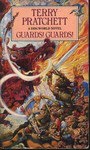
Review 79: Guards! Guards!


Guards! Guards! by Terry Pratchett

One of the dangers of reading Discworld books, of course, is that you may never stop. Much like potato chips, it’s hard to just have one and then move on to something else, especially – and this may strike some of you as a bit odd – when you’ve already read them.

There are people who never re-read books, and don’t see the point in doing so. “You already know the ending,” they might say, “and you know how the story goes. What’s the point in reading it again?” I never, ever understood that. I mean, if you have a good story, well-told, why wouldn’t you want to read it again? If it had meaning for you and struck a chord deep within whatever it is you might call a “soul,” then reading it again is almost mandatory.

I can certainly see our Straw Man’s point if the book is bad, or even just mediocre. There are plenty of books that I’ve read that I’ll probably never pick up again. But the Discworld series doesn’t contain any of them.

This one is the first in the Guards track – one of four major story tracks within the series – and it quickly made the adventures of the Ankh-Morpork city guard some of my favorite stories.

The book opens in darkness and mystery, a kind of film noir feeling that permeates the whole story (although I am challenged to think of any noir film that featured a dragon as the main antagonist – but more on that later). Captain Samuel Vimes of the Night Watch is about as low as he can go. He’s drunk, it’s raining, and he has finally seen himself for what he’s always believed himself to be. A wreck. A bum. A loose end in the city, respected by no one and nothing, with the exception of the two other poor souls in the Watch with him. If we were to cast Vimes in the movie, we’d have to cast Bogart at his drunkest.

Vimes is a mirror of his city, really. Ankh-Morpork is the biggest city on the Disc, and it embodies all the worst elements of cities everywhere. It’s crowded and dirty, a place where people would sell their own mothers for a chance to get ahead. It’s ruled by a system of guilds and merchants, an ever-fluctuating oligarchy all directed by a Patrician who wields his power with pinpoint precision. Crime not only flourishes in Ankh-Morpork, it positively thrives, regulated and controlled by its own guild.

In short, there’s no place in the city for the Watch, and no place in it for Vimes. Maybe long ago he harbored thoughts of saving his city from itself, but no longer. Now all he wants is his next drink.

He’s not the only one thinking of a better city, though. In the dark recesses of Ankh-Morpork, a secret society meets. They are a shadowy group of bretheren who believe that the only thing keeping their city from being a good place to live is the lack of a king. Ankh-Morpork had kings once, and is so often the case, the dimly-remembered past looks a lot better than the immediately visible future. And so the Unique and Supreme Lodge of the Elucidated Bretheren gather with a singular goal in mind – to create a king.

It’s not that easy, though. You can’t just pull some schmoe out of a crowd and say, “Here – start kinging.” There needs to be no doubt in people’s minds that this person has been tapped by destiny to become their king. Like if he, say, slew a dragon or something….

Into all of this strides Carrot Ironfoundersson, a young dwarf-by-adoption who has been sent by his foster father to learn how to be a human being. And what better way to do that, they suppose, then to volunteer for the Ankh-Morpork Night Watch? Within moments of his arrival he begins to upend the very structure of the city itself. Carrot is everything that Vimes – or anyone else – wishes they could be: honest, forthright, idealistic, the kind of man who would arrest the head of the Thieves’ Guild for stealing. He knows the law and believes in it, which makes him just the wrong person for the Watch. Or, as things turn out, just the right one.

What begins as a magical conspiracy ends up being a murder-mystery, with a giant, fire-breathing dragon as the main murder weapon. Faced with this threat to both himself and his city, Vimes and Carrot, Nobby and Sergeant Colon are the only people who are willing to put themselves between the city and the dragon. Not, all things considered, the place they most want to be, but they’re all there is.

It’s a really good book, and an excellent introduction to the Guards track of the Discworld series. It is, of course, very funny – that goes without saying in this series – but also very meaningful. It has a lot to do with dreams and ideals, and the manner in which we are willing to achieve those dreams. Some by trickery and subterfuge, like the dragon-summoners, others by sheer honesty and idealism, like Carrot. And even those who have given up on their dreams, like Captain Vimes, can be persuaded to pick them up again, dust them off and give them another go.

It’s a story of redemption, not only for Vimes, but for the city of Ankh-Morpork. Much like Vimes, the city looks hopelessly lost at the beginning of the book – all rain and darkness and death – but by the end we have a glimmer of hope that it can become a better place. A place where the law can win out over corruption and decay, and where good people, standing up against million-to-one odds, can sometimes come out on top.

And if that’s not a story that deserves to be re-read, then I don’t know what is.

—————————————————
You have the effrontery to be squeamish. But we were dragons. We were supposed to be cruel, cunning, heartless, and terrible. But this much I can tell you, you ape – we never burned and tortured and ripped one another apart and called it morality.
– The Dragon, Guards! Guards!
—————————————————

Terry Pratchett on Wikipedia
Guards! Guards! on Wikipedia
Discworld on Wikipedia
Guards! Guards! at Amazon.com
Guards! Guards! on Wikiquote
Terry Pratchett’s website

Leave a comment

Filed under Discworld, dragons, fantasy, humor, police, Terry Pratchett

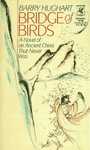
Review 78: Bridge of Birds


Bridge of Birds by Barry Hughart

It’s not often that you read a book and it immediately jumps up into your “Best Books Ever” list. Usually it takes some time and reflection, careful thought about the book’s characters, themes and message. Perhaps a re-read would be in order, and then, after some consideration, you might say, “Yeah. I think this is a really, really good book that I want everyone else to read.”

I think I hit that somewhere around page 182.

This is, as the cover tells us, a novel of “An ancient China that never was.” It’s set in the long-ago, indeterminate past (of which China has so very much), and starts off in a small village with an unusual history. The village of Ku-Fu, the story goes, was home to a section of the Great Wall, commissioned by the Emperor of China many centuries ago. This would not in itself be notable, except that it was built 122 miles south of the rest of the wall, thus serving no real purpose whatsoever. The general in charge was, he maintains, given the orders by the Emperor of Heaven himself, a story which held no sway with the more earthly Emperor who was ready to execute him. A more believable story was produced – that a great dragon had rested itself on that part of the wall, thus moving it, and it shouldn’t be tampered with.

And so the village of Ku-Fu became home to what was known as The Dragon’s Pillow, a place that would one day loom large in the history of not only the village, but all of China.

It is a peaceful village with the usual colorful characters that you get in such a place, such as the terrible partners Pawnbroker Fang and Ma the Grub, two greedy and unscrupulous men who hold the economic life of the village in their hands. When their misdeeds go too far, resulting in the horrible poisoning of many of the village’s children, the story’s narrator, Number Ten Ox (whose given name is Lu Yu, but he would not want to be confused with the famous author of The Classic of Tea) is tasked to bring a wise man from the city to diagnose the problem and find a solution. Out of the many wise men, Ox finds Li Kao, a cynical, world-weary curmudgeon with, as he so often tells us, a slight flaw in his character.

Together, Ox and Li Kao must travel the length and breadth of China to find the Great Root – a ginseng root that was kept by the mythical Princess of Birds, and whose healing properties are all that stand between the children of Ku-Fu and certain death. Along the way, they must travel terrible labyrinths, fight unimaginable monsters, battle against an immortal evil, bring peace to restless ghosts and solve the greatest mystery in the history of China – what happened to the Princess of Birds, beloved of the Star Shepherd, Prince of Heaven.

There is just so much to recommend this book, I don’t even know where to start. For one, it’s a lot of fun to read. The person who recommended it to me did so on the reasonable assumption that, since I like Terry Pratchett so much, I would probably like this book as well. And that was a very good assumption – there is a certain similarity between the two. Hughart uses humor very deftly, keeping the characters alive and interesting through even the most dangerous of times. Where Pratchett’s humor often feels like literary slapstick, however, Hughart’s is a bit more subtle. The characters are funny, yes, but the book was not written to make you laugh. It was written so that the reader would have a good time reading a story well-told.

And what a story it was. It begins with a fairly straightforward quest – a search for the Great Ginseng Root to cure the children of Ku-Fu – and turns into something so much larger than that. As the evil Duke of Ch’in says, they’re on the right quest, but for all the wrong reasons, a cryptic statement that takes a while to make sense. The scope of the story gets bigger and bigger as it goes on, and you realize that the pieces for this quest were put into place hundreds, if not thousands of years before the story actually started.

The history of China is on display here, if somewhat distorted for the purposes of entertainment. Hughart spent time living in the Far East and gained a healthy respect for its long and often unbelievable history and culture. The book includes elements of China’s history of inventiveness and ingenuity, as well as cultural myths that extend beyond its borders.

The characters themselves are wonderful, too. Number Ten Ox is an earnest, strong, well-meaning young man who has one goal in mind- save the children of his village. Li Kao is a devious old man who tends to use his wisdom and quick thinking for more nefarious purposes – thus the slight flaw in his character. There are a lot of notable minor characters as well, including Pawnbroker Fang and Ma the Grub, who somehow manage to turn up all through the story, always being chased by the people they’ve cheated. The Duke of Ch’in is a terrifying figure, Henpecked Ho is comically dark, and Miser Shen starts off utterly unlikable, but if there’s one character in the story that forces you to put down the book for a few minutes and gather your thoughts, it is he.

It’s a moving tale of hope and perseverance and the power of myth. It’s a story about the need for humanity to temper desire and what happens when we let our lives be governed by fear and greed. It’s about love and justice, revenge and history. It’s a book that almost immediately earned my respect and admiration, and that’s pretty hard to do.

So go get it. Block out some time when you can sit and fall into the story and really get absorbed in it, because let me promise you – it will be well worth it.

————————————————–
“Take a large bowl. Fill it with equal measures of fact, fantasy, history, mythology, science, superstition, logic, and lunacy. Darken the mixture with bitter tears, brighten it with howls of laughter, toss in three thousand years of civilization, bellow kan pei – which means ‘dry cup’ – and drink to the dregs.”
“And I will be wise?”
“Better. You will be Chinese.”
– Li Kao to Procipius, on attaining wisdom, Bridge of Birds
————————————————–

Barry Hughart
Bridge of Birds on Wikipedia
Bridge of Birds at Amazon.com
BarryHughart.com

Qixi Festival on Wikipedia

1 Comment

Filed under Barry Hughart, China, fantasy, humor, quest