Tag Archives: podcast

Review 171: Blood Meridian

Blood Meridian or the Evening Redness in the West by Cormac McCarthy

As I was reading this book, a student saw me reading it and asked what it was about, I had to think for a few moments before answering.

“It’s about terrible people in a terrible place, doing terrible things to each other,” I said. And that really does just about sum it up.

The story that McCarthy tells is a complete destruction of the mythology of the Old West that Americans had come to know and love over the years. Some of the more modern Western films had begun to explore this territory when the book was published in 1985 – many of Clint Eastwood’s films spring to mind – creating a West where the “hero” is just the least bad person in the film. Even then, though, there are still undercurrents of the nobility of the cowboy, out to tame a savage land for the good of a civilization that will no longer need him when it’s done.

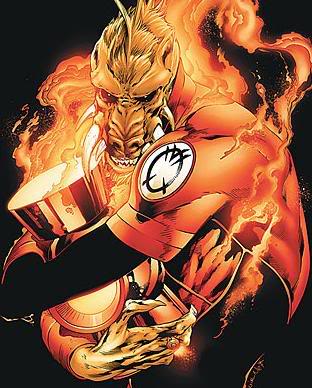
Next to these bounty hunters, Boba Fett is practically Gandhi.

This book features characters who are violent and vicious, thieves and murderers who will stop at nothing to get what they want. It starts with the nameless Kid, a young man who joins a group of bounty hunters riding the US-Mexico border in the years before the Civil War. They’re ostensibly looking for Apaches, bringing back scalps for gold, but they’re not especially picky. Any black head of hair ripped from the head of its owner will do, and if that means ravaging some small Mexican villages, then so be it.

The bounty hunters are led by Judge Holden, a man who gladly takes his place as the antithesis of everything that was supposed to be right and good about the old west. In both form and philosophy, Holden is barely human, and he only becomes less human as the book goes on. Insofar as the book has an antagonist, it is he.

He contrasts greatly to our ostensible protagonist, The Kid, in many ways. For one, the Judge has a name. For another, the Kid routinely disappears from the story for pages at a time, only to reappear to get to the next stage of the story. It’s actually very easy to forget that the Kid is in the book, until you see him again and think, “Oh yeah. Him.”

The Judge, on the other hand, is impossible to miss. He holds court out in the wilderness and expounds upon his philosophy of the world. He is huge and pale and clean, standing out amongst the filthy and starving band of killers that he’s assembled. Whenever he’s off-stage, you find yourself wondering when he’s going to show up again, and how much worse things will get when he does.

Kind of like this, only worse. Much, much worse.

Another image that McCarthy decides to destroy is that of the Native Americans as being honorable heroes, out to save their land from white invaders. Just as the cowboys of old were not all knights on horseback, the natives of old were not all noble savages who resorted to violence only as a last resort. The Apaches – and other native Americans in this book – are just as violent and bloodthirsty as their American and Mexican counterparts. Everyone, regardless of background, ultimately resorts to violence and savagery, throwing aside all morality in the name of either profit or survival, or simply the demonic glee of seeing things destroyed. No one comes out of this book looking good or ultimately redeemed. All are villains.

All of this made it something of a tough read for me. Not because of the scenes of horrifying violence – I can deal just fine with those – but because there was no one I wanted to like. I mean, I was fascinated by The Judge, but with that same kind of fascination that made me watch tsunami videos or that made people visit Ground Zero in New York City. It’s horror on a scale that we hope never to experience in our own lives, but we can’t look away.

Without someone to like, it was hard to care, and when it’s hard to care about a book, I find reasons not to read it. The writing was amazing, don’t get me wrong. McCarthy’s use of language was a joy to read, even if his refusal to use quotation marks got me a little annoyed from time to time, and I sometimes found myself reading passages out loud in the voice of Sam Elliott. In describing the landscapes of the West, McCarthy turns nature itself into a character, one that is every bit as violent, dangerous and hateful as the humans traversing it.

In addition, he does a very good job with the pacing of the book. The narration tends to grow as the book goes on, with sentences becoming longer and more elaborate as they unspool across the page, some taking a page or two to themselves, only to be stopped short by a single line or a rapid exchange. It’s hypnotic in places, and something I wish I knew how to do half as well.

All that aside, though, the only thing that really kept me going – other than the writing – was morbid curiosity. That, and the hope that I would figure out what McCarthy was trying to say in the book. What it all means.

So true, so true...

And that, friends and neighbors, is one of the pitfalls of being an English teacher. Always looking for meaning in things, for the bigger picture, the author’s Big Message to his readers. And as far as I can tell, McCarthy’s message is that man is a savage, terrifying animal, capable of cruelties that the average book-buying person cannot even begin to contemplate. The horrors that are depicted here are so brutally displayed and so viscerally described that we eventually become numb to them – which is a new horror by itself. There are things depicted in this story which should evoke nothing less than absolute moral condemnation, a rejection that such things should be possible to contemplate, much less carry out.

So when you find yourself glossing over these horrors as though they were mundane, it’s jarring. As you read, you want to keep a distance from the monsters populating the book, but isn’t ignoring their evils a kind of acceptance? And do you really want to be the kind of person who accepts these things? At the same time you’re trying to convince yourself that real people shouldn’t be capable of the acts you’re reading about, you end up accepting them.

Maybe that was what McCarthy wanted all along – for the readers to look at how we view violence and what our understanding of it really is. To force us to re-assess the limits of what we will tolerate and why. To make us look again at our heroes and villains and try to figure out exactly what the differences are, and whether we are really that far removed from them.

Or maybe McCarthy just really likes writing this kind of thing.

Either way, it’s a fascinating read, one that will linger with you long after you’ve finished the book.

————————–
“In the days to come the frail black rebuses of blood in those sands would crack and break and drift away so that in the circuit of a few suns all trace of the destruction of these people would be erased. The desert wind would salt their ruins and there would be nothing, neither ghost nor scribe, to tell any pilgrim in his passing how it was that people had lived in this place and in this place died.”

Cormac McCarthy on Wikipedia
Blood Meridian on Wikipedia
The Cormac McCarthy Society
Blood Meridian on Amazon.com

1 Comment

Filed under Cormac McCarthy, death, dystopia, fiction, good and evil, morality, murder, survival

Review 170: Naked Pictures of Famous People

Naked Pictures of Famous People by Jon Stewart

If that doesn’t drive visitors to this site, nothing will.

Jon Stewart is, as of this writing, one of the most well-known TV personalities in the country. In the last decade, he seems to have become an authority to an entire generation of people who distrust the media and the government, shining the bright light of comedy on the dark, unholy crevasses of our society. He’s interviewed heads of state, famous actors and actresses, and been a constant – if somewhat reluctant – model for people who haven’t yet drunk the Kool-Aid.

It’s hard to believe, then, that just over ten years ago he was a stand-up comic whose only foray into television had been a quickly-canceled MTV program. Our little Jonny has grown up so fast…. *sniff*

But really, do any of us look as young as we did fourteen years ago? I think not...

This book comes on the cusp of those two times in Stewart’s life – back in 1998, a year before he took over the hosting duties on The Daily Show. It’s a different style of humor for what we’re used to watching his show. It’s less self-effacing, more surreal and, in my honest opinion, not as funny.

It pains me to say, yes, but I didn’t laugh out loud a whole lot reading this book. Some authors can do it – Terry Pratchett, of course, and Dave Barry seem to be able to poke their fingers right into my funny fuse. I’ve had John Scalzi do it, Neil Gaiman from time to time, Sarah Vowell and Connie Willis are able to pull it off. But Jon Stewart? Not so much.

Don’t get me wrong – I think Stewart is a blindingly funny man. I can listen to his stand-up album, “Unleavened,” over and over again and laugh every time. And I’m surprised that I haven’t gotten any angry messages from my neighbors about my resonant cackling when I watch The Daily Show. When he talks, I laugh. He’s fantastic with inflection and timing, which unfortunately doesn’t translate so well onto the page.

Still and all, there are some chuckles to be had in this collection of short stories and mini essays. They’re certainly weird and interesting, and I think that many of them could make the transition to stage or screen with little difficulty. If I had more friends and resources, I could do some mean copyright infringement on YouTube. Let’s take a look at a few of the gems in this collection….

So if Gates worked with the Devil, then logically... Hey, has anyone checked Jobs' tomb recently?

“The Devil and William Gates” is a chilling tale of what we all suspected to be true about the rise of Bill Gates – a deal with the devil, and the kind of lawyerly acumen that would make Gates into the richest man in the world. It’s a tale of desperation and deception – exactly what you might expect of Microsoft, right?

In “The Cult,” Jon takes a look at what might befall him if he should form a cult around his savior, Cap’n Crunch. It’s plain that he’s formed this cult for the same reason most cults get formed – for the power, the prestige and, of course, the limitless sex with your followers. I mean, I can’t say I’ve never thought of it…. The problem, of course, lies in keeping your followers under your thrall. At some point, you’re going to have to produce a savior, or there’s going to be problems. As Jon soon finds out….

“Adolph Hitler: The Larry King Interview” is good fun, and one that I’d love to see made into a video. Adolph Hitler – yes, the Adolph Hitler – reveals that he’s been alive all this time, doing some thinking and getting his priorities in order. And now he’s ready to come back to the world, with a book to push. Who better to help him publicly atone than Larry King?

In “The New Judaism,” Jon outlines a more modern approach for the more modern Jew. Why pray to a distant and unresponsive God when you can pray to a far more genial Uncle Pete? With a new God, a new mascot and greatly simplified rules (“Ass, gas or grass, nobody rides for free; and Be cool.”), the New Judaism is what the world has been waiting for. At least the Jewish world. A very small, extremely non-traditional part of it, anyway.

Finally, there’s “Revenge is a Dish Best Served Cold,” the secret dream of every kid who was ever picked on, put down and pushed around in high school. Imagine a lifetime of bitterness, anger and Evil Scientist urges coming to bear on those who had been such a bane to your existence! Imagine what havok you could wreak with a horrible, unimaginably awful Creature at your beck and call. Yes, you would get your revenge and those who taunted you would pay – PAY!!

Just don’t count out the competition.

It’s an amusing book, and good in short bites. It makes me wish that Stewart were a funnier writer than he is. I suppose I’ll just have to be happy with loving him on television.

————————————————–
The history of the Jewish people has been described in many scholarly manuscripts as, “The shit end of the stick.”
-Jon Stewart, “The New Judaism,” Naked Pictures of Famous People
—————————————————

Jon Stewart on Wikipedia
Naked Pictures of Famous People on Wikipedia
Naked Pictures of Famous People on Amazon.com

Leave a comment

Filed under essays, humor, Jon Stewart, satire

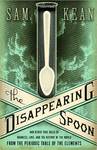
Review 169: The Disappearing Spoon

The Disappearing Spoon by Sam Kean

One of the prettiest books I have on my shelves right now is Theodore Gray’s The Elements, a visual collection of all the elements that make up the physical universe. “Everything you can drop on your foot,” as he says. In it, he provides wonderful pictures and descriptions of the elements that we know, arranged as they would be in the periodic table. It’s a gorgeous book, one that everyone should have – especially if you have children. If you want your kids to become interested in science and investigating the world around them, you could do far worse than to have this book on your shelves.

Eventually, though, they’ll be old enough and canny enough to ask, “Well, how do we know all this? Where did we find these things, and how? And why are they in this order?” That’s the point where you hand them The Disappearing Spoon, sit back, and let Sam Kean take over.

Ytterby. By all accounts, a lovely place. Photo by Bertil Nelson on Flickr.

The story of the elements, and our understanding of them, is governed just as much by personality as by p-shells, as much by competition as by charge, as much by ego as by electrons. While the elements themselves don’t pay any attention to human affairs, the quest to understand the building blocks of matter have sent us to the hearts of stars, the depths of the earth and, for various reasons, Ytterby, Sweden. [1]

Kean starts with how he got into the elements, with a story that would horrify modern-day parents: mercury. When he was a kid, his mother would collect the mercury from broken thermometers and keep it in a little bottle on a high shelf. If they were lucky, she would let her children play with it for a while, swirling it around and watching while this shiny liquid metal split apart and fused back together perfectly, never leaving a bit of itself behind. It was a metal that flowed like water, and it was fascinating. If he had known at that age that ancient alchemists thought there were spirits living in mercury, he would not have been surprised.

Oh, mercury, How can anything so pretty be so dangerous? Photo by Len Gatey on Flickr.

Keeping an eye out for mercury, he learned that modern scientists are able to follow the expedition of Lewis and Clark using mercury. The explorers carried with them a good quantity of Dr. Benjamin Rush’s Bilious Pills, a “cure” for any illness that mainly contained mercury chloride. It was vile stuff, poisoning everyone who took it, but without an FDA around to stop this kind of nonsense, Rush made plenty of money. It probably didn’t hurt his credibility that he was one of the signers of the Declaration of Independence. In any case, he gave samples to the Lewis and Clark expedition, and their latrine sites can still be found today by the unusually high levels of mercury that were deposited there as the men’s bodies tried to get rid of the heavy metal as quickly as possible.

Mercury also taught Kean about mythology – the Roman god of communication, modeled on the Greek message-bearer. It taught him etymology – the chemical symbol for mercury is Hg, which is derived from the Latin hydragyrum, which means “silver water.” It informed him on literature, especially the Mad Hatter of Alice in Wonderland, who was based on the poor crazies who used to breathe in the fumes of mercury while setting felt for their hats.

This one weird, eerie element was a door into so many other topics that he figured there must be others. And so he started work on this book, a collection of histories and tales, gossip and hearsay, all centered around the 118 physical elements that make up our universe. “As we know,” he writes, “90 percent of particles in the universe are hydrogen, and the other 10 percent are helium. Everything else, including six million billion billion kilos of earth, is a cosmic rounding error.” Within that rounding error, though, some amazing things have been found.

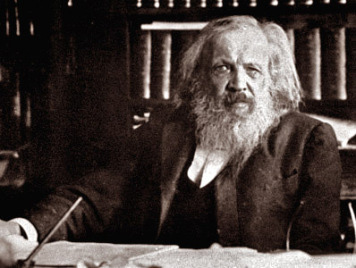
One look from this bearded madman and the elements fell into place right quick.

In the 19th century, the Russian Dimitri Mendeleev examined the common properties of different elements and was able to sort the elements in such a way that took advantage of their similarities. The violent alkalies along the far left, which will explode if given half a chance, and their cousins, the halogens on the far right, some of the most reactive elements in nature. Separating them are the noble gasses, which don’t react with anything unless pushed to extremes. Without knowing about electron shells and the weird quantum things that happen on the atomic level, Mendeleev managed to put together a table so good that he was able to leave gaps in it that corresponded to elements that hadn’t yet been found. And by telling the world that these gaps existed, the race to isolate and discover the elements was on.

Kean’s book is a great look at the way science works on a human level. How the search for high-quality porcelain led to the discovery of an entire class of elements, how Marie Curie would get into trouble by dragging her (male) colleagues into dark closets to show them how radium glowed, how nitrogen kills with kindness and lithium quiets an unsettled mind. The competition to not only find these elements but to name them and find uses for them has driven science forward in all fields, from geology to neurology, for the last two hundred years. Those 118 squares on the periodic table have driven men to travel the world, to create economic and political empires, to love, to hate, and to murder.

If this kind of thing were taught in high school chemistry class, there would probably be a lot more kids interested in science as a career.

A quantum jump is exactly like this, except in that it's nothing like this. Not even remotely. But otherwise, yes.

The book is very readable, even if it does drift from time to time into more technical areas. One of my colleagues, who doesn’t have an extensive background in science, said she was a little slowed down by talk of electron shells and quantum jumps, which I guess were not aided by Kean’s elevator similes. But it did get her asking the right questions – how do we know atoms exist if we can’t see them? How can we be sure that what is in this book is true?

Those are the questions that Kean tries to answer in the book, but it’s also the kind of book that may bring up more questions. It’s “gateway science,” one of those books that pulls away the cold, rational veneer of the scientist and his or her endeavors, and shows what an exciting, weird, messy and dramatic place science can be. What’s more, it shows how science is deeply ingrained not only into our technology, but our language, history and politics. An understanding of science, even at an amateur level, is a wonderful way to open your eyes to the great, complex and bizarre world in which we live.

———————————————————–
“We eat and breathe the periodic table; people bet and lose huge sums on it; philosophers use it to probe the meaning of science; it poisons people; it spawns wars. Between hydrogen at the top left and the man-made impossibilities lurking along the bottom, you can find bubbles, bombs, money, alchemy, petty politics, history, poison, crime, and love. Even some science.”
– Sam Kean, The Disappearing Spoon
————————————————————

[1] The town has the distinct honor of having four elements named after it: yttrium (Y), ytterbium (Yb), terbium (Tb), and erbium (Er). What has your hometown got?

Leave a comment

Filed under chemistry, history, nonfiction, Sam Kean, science, technology

Review 168: Eye of the World (Wheel of Time 01)

Wheel of Time 01: The Eye of the World by Robert Jordan

Epic fantasy isn’t for everyone.

This kind of literature demands a lot from a reader, time and money foremost among them. More than that, though, it demands a great deal of trust, patience and tolerance for what is a very chancy genre to get into. Get into a new series and you run the risk of great disappointment. The characters you loved in the first book become stale and boring by the third. The world that was so interesting on a small scale doesn’t hold together on a large one. The cliches begin to grate on you – the Chosen One, the Monsters Too Horrible to Behold, the prophecies and Adversaries and lost treasures that may just save us all. And the plot holes are sometimes big enough to drive a whole fist of Trollocs through.

All this being said, there were never any midnight release lines for WoT. At least none that I knew about...

I’ve stuck with Wheel of Timesince the beginning because I think it’s a really good story. I like the world that Robert Jordan created, and the characters he gave to us, and for that reason I have spent the last twenty years of my reading life following this epic. It hasn’t all been roses, no – there were the slow parts, the bits that could have been cut out, and the characters I just wanted to throttle within an inch of their lives, but on balance it’s a world that I want to revisit, and look forward to revisiting every time a new volume comes out.

Having said that, if you start reading this series and decide that it isn’t for you, I understand – I’ve known many people who thought the same way, and while I do feel sad that they’re not going to Fantasy Heaven when they die, I hope their eternal torment in the afterlife isn’t too bad. I just hope you’ll trust me that I think you’ll enjoy it.

Our tale begins in a small, isolated village, where the people are generally kind and honest and have no need of the rest of the world.

Well, no, not really. Our tale really begins three millennia ago, in a time of terrible upheaval and destruction. The very earth itself was being rent apart by madmen who wielded the fundamental driving force of creation.

Actually, the story begins even before that, in an age of wonders and legends, where no one wanted for anything and there was nothing people could not do. It was an age of miracles that people thought would last forever.

As it is written at the outset of each book, there are neither beginnings nor endings to the turning of the Wheel of Time. But it is a beginning.

I suppose "idyllic and peaceful" is better than "hiding a horrifying secret" or "about to be torn down and made into a Wal-Mart."

In this little village there lives a young man, Rand al’Thor. He’s lived his whole life in Emond’s Field, with no real ambition but to follow in the footsteps of his shepherd father. He has friends, of course – Mat and Perrin – and a girl, Egwene, who he figures he’ll probably marry someday. It’s idyllic and peaceful, a little predictable and dull, but its all he ever wanted.

The night before the spring festival of Bel Tine, the peace of the village is shattered. Monsters from legend – Trollocs and Myrddraal – leap out of the darkness to hunt Rand and his friends. It is only through the intervention of the Aes Sedai named Moiraine and the power she wields that the village survived. She knows that there are dark forces hunting Rand, Mat and Perrin, and vows to take them to the great city of Tar Valon, where they might find safety.

Of course, safety is not theirs to have. They are assaulted from all sides as they journey – split up, brought back together. They meet new friends and old, familiar horrors and things unimaginable, all on their way to their destiny at the enigmatic Eye of the World. What they’re fighting for is nothing less than the salvation of the world from the horrors of an unnameable Dark One. For thousands of years he and his most powerful acolytes, the Forsaken, been imprisoned. But now that prison is weakening and the Dark One’s touch can be felt on the world once again. Should Rand and his friends fail, the world will fall into the Shadow forever.

Moiraine would whip Gandalf in a runway battle. Of that much I am sure. (art by Westling on DeviantArt)

The book starts very familiarly – in fact, Jordan said that he specifically modeled the opening of the book on Lord of the Rings so as to give new readers a recognizable place to start before he threw his entire world at us, which was probably a very good idea. And it is very LotR-ish at the outset: a small group of naive young people who discover that the fate of the world is in their hands whether they want it or not. They’re led by a mysterious magic-user, whose true motivations are unclear, and a world-hardened warrior who just happens to be an uncrowned king of a far-off land. There are horrible monsters who think of nothing but killing and death, and mysterious riders in black who are frightening just to behold.

There are some loaded names, too, both of places and people – the Mountains of Dhoom and the true name of the Dark One, Shai’tan, are both pretty obvious choices. Just once I’d like to see an ultimate villain named Ricky who lives in the Land of Glimmering Sunshine and who rides a beautifully groomed pony named Horsefeathers.

Anyway, all that similarity is just enough to get you comfortable in the story. As the book progresses, you get the inescapable feeling that we’re balanced on top of a vast and complex world, much more so than the one Tolkien built. This place has diverse cultural, political and philosophical forces at work, some of which we can only glimpse the barest edges of right now. But we know they’re there, and we know that they’ll be very important in the volumes to come.

What’s more, this book sets a very different mood from the world of Tolkien. This world is old, and it’s barren, and you get the feeling of centuries of change just waiting to be discovered. We hear about the Age of Legends and the Trolloc Wars, the reign of Artur Hawkwing and the tremendous Breaking of the World. As our heroes travel in a vain attempt to find shelter and help, it’s clear that they live in a place that is overwhelmingly empty of human habitation. But that it wasn’t always so. The characters, like we, know very little of the world and how it works, so by their hard-earned education, we also learn. And yes, there are some exposition-heavy scenes that skirt the edge of ponderousness – Moiraine’s first big speech about the sad fate of Manetheren comes to mind – but the images and the stories are vivid enough that the unreality of the moment isn’t so important.

Spoiler: Rand, Mat, and Perrin become awesome. (art by dem888 on DeviantArt)

As for the characters themselves, I have to admit that they’re painted with a fairly broad brush. Jordan has chosen a certain attribute for each of them, from which they don’t usually stray very far – Rand is the stubborn but noble farm boy, Mat is the Trickster, Perrin is the big-but-thoughtful blacksmith’s apprentice. Nynaeve can barely hold on to her temper, Lan is stony and all business, and Moiraine always knows more than she’s telling. Their actions and interactions are, broadly, variations on those themes throughout this book. That doesn’t make them bad characters by any means, and if you compare, for example, Perrin from this book with Perrin in the most recent, you’ll see a stark difference between them. The moments of character growth aren’t punctuated heavily, and often don’t come to fruition until much later. For right now, though, they are fairly simple to understand.

I remember getting this book from my father, looking at the cover art (which, in my opinion, has never been all that great – not a big Darrell K. Sweet fan and I hope they go with another artist when the inevitable Complete Collection comes out after the close of the series) and thinking, “Well, I’ll give this a try.” Soon I was completely wrapped up in the story, and I looked forward to the next book with both frustration and joy. I even joined a fan club that was so Back In The Day that they actually sent newsletters by mail. You hear that you whippersnappers? No web forums, no listservs – just a Prodigy bulletin board and a lot of patience.

When I read it again, I get a glimmer of what I felt when I was sixteen, and that’s enough to keep me coming back, year after year and book after book. If you can feel that too, then I think you’re really going to like this series. And it’ll be my pleasure to guide you through it.

—————————————————-
“The Dark One and all of the Forsaken are bound in Shayol Ghul, beyond the Great Blight, bound by the Creator at the moment of Creation, bound until the end of time. The hand of the Creator shelters the world, and the Light shines on us all.”
– Catechism of the Light, Wheel of Time: The Eye of the World
—————————————————-

Robert Jordan at Wikipedia
Robert Jordan at Tor.com
Eye of the World at Wikipedia
Wheel of Time at Wikipedia
Eye of the World at Amazon.com

Wheel of Time discussion and resources (spoilers galore):
Theoryland
Dragonmount
The Wheel of Time Re-read at Tor.com
The Wheel of Time FAQ
Wheel of Time at TVTropes.com

7 Comments

Filed under adventure, epic fantasy, fantasy, good and evil, quest, Robert Jordan, Wheel of Time

Review 166: Sex at Dawn

Sex at Dawn by Christopher Ryan and Cacilda Jetha

Hey! Hey, baby, baby, waitwaitwaitwait. Wait. Wait! Baby, don’t… don’t freak out

Okay, okay, I know what this looks like, but I can explain! Quiet, Chad, let me handle this. I can explain! I’m just – please, stop crying and listen – I’m just fulfilling my evolutionary heritage and helping to cement social bonds with… um… the pizza boy, but that’snotthepoint!! That’s not the point! Look, before you do anything, y’know, drastic, you just need to read this book….

Image from wearscience.com - buy their stuff.

Humans are really good at figuring things out. As far as we go, we have a real knack for taking things apart and figuring out how they work. Though determined curiosity and perseverance, we know what’s happening at the center of the sun, we know how the continents slide across the surface of the earth, how plants turn sunlight into potatoes. We can smash atoms and cure disease and peer back to the moment of creation itself. There is almost nothing that humans cannot comprehend if we put our minds to it.

Except ourselves.

Don’t get me wrong – we have made great strides in philosophy and psychology, and come very far in understanding human origins and our spread across the planet. But there is a fundamental problem that we have when we study ourselves, and that is that we cannot do so objectively. Try as we might, it is impossible to completely put aside our own biases, judgments and backgrounds when we study how humans behave and try to understand why they do what they do. They are still there, if you look for them, and nowhere are they more evident than in the search for the origins or foundations of human sexuality.

The standard model, as it’s often called, goes something like this: ancient men and women established a pattern of monogamy based on mutual self-interest. The man would keep to one mate in order to be absolutely sure that he was dedicating his efforts towards raising his own kids and not someone else’s. If a man had multiple partners, he wouldn’t be able to provide for them all, and his genetic investment would die out. So, in terms of efficiency, it is much better for the man to keep himself to one woman, focusing all his attention on the children he knows he has fathered and making sure they live to have children of their own.

Not all women need the protection of a man, however.

As far as women are concerned, they require the resources that the men bring. When pregnant, a woman’s physical capacities are reduced and she is in a vulnerable state, so by staying monogamous, she is essentially purchasing security and resources that would otherwise be unavailable to her in a world that brought quick and merciless death. If she slept around, the man wouldn’t be sure that the child she bore was his, and would therefore have less interest in taking care of the both of them. Thus, monogamy is the best bet to assure the survival of herself and her child.

This is the story that’s been told for a long time, and it’s considered by most to be the truth. Christopher Ryan and Cacilda Jetha, however, disagree. Not only do they think the standard model is wrong, but they think it is nothing more than a relic of our own modern biases and hang-ups. The process, they say, can be referred to as “Flintstonization.”

As you know, the characters in “The Flintstones” were more or less just like us. They went to work, they had houses and appliances and domestic disputes. They had the same issues and amusements as we did, because we overlaid our own society onto a prehistoric setting. Now in cartoons, that’s good entertainment, and in the right hands it can be used as powerful satire and commentary. In science, though, it’s just no good.

Ladies...

Starting with Darwin, people have imagined prehistoric humans to have the same sexual values that we have: a demure, reluctant female who is very choosy in deciding which male she will mate with. A bond forms, and they are faithful to each other until the end of their days. Later researchers, looking at our ape cousins, have plenty of observational research to support the idea that very early humans were monogamous. They look at chimps and gorillas and baboons and confirm what they had always suspected – that our natural sexual state is one of monogamy.

The logical conclusion, then, is that our modern attitude towards sexuality, with the rising rates of divorce and teen sexuality, represents a deviation from the way things “should” be, and must therefore be fixed. A loveless marriage, a man’s roving eye, a woman who cuckolds her husband, serial monogamists, all of these, according to the standard model, result from our attempts to go against our nature.

Or is it the other way around?

Ryan and Jetha have put together a very compelling argument that the standard model of pre-agricultural human sexuality is not only wrong, but dangerously so. By looking at modern foraging tribes and the way they live, as well as doing a comparative analysis of humans against our nearest ape cousins, they have come to this conclusion: our “natural” sexual state is one of promiscuity. Back in the day, communities were small and tightly bonded, and sex was one of the things that held those bonds tight. Rather than one man and one woman struggling to protect their own genetic line, their entire community made sure that children were cared for and raised well. Everyone was everyone else’s responsibility, and in a world of plenty there was no reason to try and enforce any kind of sexual exclusivity.
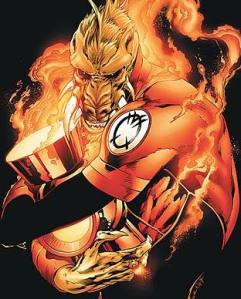
MINE!

It was only with the rise of agriculture that it became important to know what was yours, as opposed to someone else’s, and that quickly extended from fields and livestock to wives and children. Now that people were keeping their own food and making sure to divide their lands from their neighbor’s lands, sharing went out of style. With so much work put into growing crops, that’s where the standard model of economic monogamy settled in, and it’s been with us ever since. The advent of agriculture changed everything, and not everything for the better.

In addition, the very biology of humans, from the way sperm behaves to the shape of the penis, to the anatomy of the clitoris to the noises women make in the throes of orgasm – all of these point to an evolutionary history of sexual promiscuity. The evidence of our bodies tell us that being locked into a lifetime monogamous pair-bond is not what we evolved to do.

Ryan and Jetha know that their view of the fundamental nature of human sexuality will not be popular, mainly because it completely undermines our vision of who we are. So much law, tradition, education, entertainment and just plain common sense relies on humans being naturally monogamous. It’s something that seems so obvious to us that we cannot imagine a society built any other way. Unfortunately, if Ryan and Jetha are right, society is the problem. We have established a cultural norm that goes completely against our biological and evolutionary nature, and which makes people miserable on a daily basis.

I bought this book mainly to stop Dan Savage from nagging me about it. If you listen to Savage’s podcast – and you should – you will soon realize that monogamy is something that a lot of people aren’t good at. We look at other people with lust in our hearts, we cheat, we stay in relationships where we’re sexually miserable just because that’s what we “should” do. For most people, our sexual urges are to be fought against, with everything from self-restraint to social shame to law itself. It seems like staying monogamous is one of the hardest things for many people to do.

This, of course, raises the question: if it were natural, would it really be so hard?
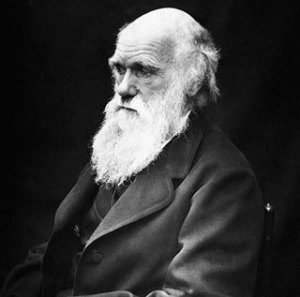
My mother is a SAINT!!

It is a fascinating read, which covers a lot of ground and makes some very compelling arguments. It’s also quite funny in places, which was quite welcome. In discussing the standard model the authors note that this is, fundamentally, prostitution, wherein the woman uses sex for material resources. This sexual barter system has been assumed to be true for years, leading the authors to write, “Darwin says your mother’s a whore. Simple as that.” They also put in some special notes for adventurous grad students in the field of sexual research (especially genital to genital rubbing, something popular in bonobo apes, but which is rarely studied in humans) and re-titling the extremely popular song “When A Man Loves a Woman” as “When a Man Becomes Pathologically Obsessed and Sacrifices All Self-Respect and Dignity by Making a Complete Ass of Himself (and Losing the Woman Anyway Because Really, Who Wants a Boyfriend Who Sleeps Out in the Rain Because Someone Told Him To?)”

I don’t really know what can be made of the serious information proposed in this book. No matter how it may seem, the authors are not proposing a dissolution of marriage or compulsory orgies or anything like that, nor is this book a “Get Out of Cheating Free” card. We’ve spent thousands of years putting these restraints on human sexuality, and they’re not going to come off anytime soon. The best we can do right now is to be aware of where our ideas about relationships come from, and stop to think about the difference between what is true and what we wish were true. This understanding might help to save relationships that would otherwise fail. People cheat not because they’re scum or whores, but because they’re human. Being monogamous is really hard not because we’re weak or flawed, but because it’s not what our bodies want for us.

The search for a better understanding of human nature should lead us to being better humans, and nothing should be left out. Not even our most sacred beliefs. Not even sex.

————————————————
“Asking whether our species is naturally peaceful or warlike, generous or possessive, free-loving or jealous, is like asking whether H2O is naturally a solid, liquid or gas. The only meaningful answer to such a question is: It depends.”
– Christopher Ryan and Cacilda Jetha, Sex at Dawn
————————————————

Okay? Okay, baby? So you see, I wasn’t really cheating – okay, I was, but you can see why, right? I was just acting in accordance with my fundamental humanity, following the biological impulses as determined by millions of years of evolution when we… Hey, where are you going? Where are you? Oh, hell, he’s going for the shotgun. Run, Chad, leave your pants, you don’t have time, run!

Sex at Dawn on Wikipedia
sexatdawn.com
Sex at Dawn on Amazon.com

Leave a comment

Filed under anthropology, biology, Cacilda Jetha, Christopher Ryan, evolution, history, nonfiction, science, sexuality, society

Review 160: The Day After and Other Stories

The Day After and Other Stories by Wil Wheaton

If you had asked me, back in 1988 or so, – when I was a Trek fan who hadn’t quite figured out the real reason I liked seeing Wesley Crusher on screen – what Wil Wheaton was doing at any given time, it would have sounded like a completely irrational question. How should I know? He’s probably doing whatever it is actors do in their free time, which my mind generally rendered as some sort of eternal cocktail party where all the famous people knew each other and none of them would be caught dead with a prole such as myself.

And this isn’t just Wheaton – the idea that I could know what any of my favorite creative people were up to at any given moment was just impossible back then. It was just a fact of life. I am over here, and they are over there, and the chances of our two spheres of reality intersecting were precisely nil. They were members of America’s elect, and I was, well, me.

Absolutely true. (image from Zazzle.com)

Now it’s the future, and we have connected our lives online to an extent that would have been almost unfathomable twenty years ago. Wheaton has greatly expanded his creative repertoire, and I am an Internationally Famous Podcaster and Book Reviewer. [1] For those who have access to it, the internet has democratized creativity in many ways. People who otherwise might have gone unnoticed in the world now have a chance to shine, and the daily workings of the famous are laid bare to everyone with a Twitter account.

Suddenly we can see that these people aren’t as special as we thought they were – they’re not living the eternal cocktail party of the gods. They’re working and juggling their careers and their families. They’re getting upset about politics and worrying about paying the bills. They’re having great ideas that never quite work out and massaging small ideas until they bloom. The creative process is now open to everyone, and the potential for your work to be noticed is that much greater.

Of course, the caveat is that your creative work has to be that much better. If you’re a short fiction writer, for example, you no longer have to shop around for agents and wait for the big publishing companies to take on your book. You can publish it by yourself and see what happens. But if that’s the route you’ve chosen to take, then you’d better be damn good. There are a whole lot of fish in that pond, and you’re only going to end up on the internet’s dinner table if you are big, juicy and succulent.

And then this fish is me... (photo by Corey Johnson)

Okay, I don’t know where that particular metaphor came from. Nothing to see here. Move along.

Wil Wheaton is definitely one of those big, succulent fish. He’s got his years of work in film and TV to support him, and he has become one of the stars of the 21st-century internet. As of this writing, he has over 1.9 million Twitter followers and runs a very successful blog. He’s a darling of the summer convention season and probably the TV guest star that I most look forward to seeing. He makes a living writing and blogging and acting, has a gorgeous wife and two sons that have turned out to be fine young men.

So, with all that, why should he be scared to publish this book, his first collection of short fiction? After all, it’s a limited print run, and if it fails then so what? It’s not like this will be the end of the Vast Wheaton Empire, right? Why should this be so important to him?

There are also things he wishes the world never saw, but that clown left the clown car years ago...

It’s because he understands the new dynamic between the creator and the consumer. He understands that his creative work must live or die on its own merits, and not just because it’s Wil Wheaton putting his name on the cover. He knows that he’s no better than anyone else who loves his craft and puts it out for the world to see.

The Day After and Other Stories is a very short collection of four stories that Wheaton has written – his first published collection of fiction. The title story takes its name from the movie of the same title, and is an exploration into what it might be like to be a survivor of the end of the world. Tim, a young man just out of high school, is living among the dead. The walking dead, that is. Zombies have taken over everything, and he and a few people from his town are holed up in a high school gym in the hopes that things might someday get better soon. Of course, they won’t. Tim knows that, the girl he loves, Erica, knows that – everybody knows that. But they have to try and hold on anyway, because there’s nothing else they can do.

“Room 302” is a bit of flash fiction, inspired by a photograph. Most of it is a pretty straightforward analysis of a mediocre photo, and an explanation of why it can’t be used in a news paper. Fine, a nice scene and some good dialogue – with a creepy twist at the end that, much like “The Day After,” makes me wish there was more story to read.

Wheaton tells us that “The Language Barrier” was inspired by a real event – overhearing a couple of ladies having a heated conversation in a mixture of Russian and English. In the story, the conversation is exactly that, but the eavesdropper, Mike, does what we wish we all might be able to do – he steps in and says what most needs to be said. It’s one of those moments where l’esprit d’escalier is beaten to the punch.

It turns out that Wil is actually the monkey's lucky charm.

Finally, “Poor Places” rose from Wheaton’s love of poker. I never was able to get into poker, probably because I am really risk-averse when it comes to money, but there was a time in the mid-Aughts where poker was the trendiest game to be had. In this story, a couple of players in their local Hollywood bar proceed to fleece some tourists in a back-room poker parlor. It’s probably the weakest of the four stories, but I grant that not knowing poker lingo really doesn’t help.

All in all, they’re four good stories. Wheaton has a good ear for dialogue and a way of making characters sound believable, even if the plot structure is a little weak in points, or the narration tries to carry more weight than it can bear.

Probably because it is the longest of the stories, “The Day After” is the most guilty of this – Tim is described by other characters as “kind of an asshole,” but his actions don’t really match that so much. He complains a lot, sure, but who wouldn’t be a bit bitchy after human civilization has gone to the zombies? When he’s told it’s his time to fill the generator, he goes. When the girl he’s crushing on offers a bit of apocalypse-sex, he considers turning it down, the way he did when they were in high school to protect her reputation. We don’t see the guy that the other characters do, which makes me wonder what else we’re not seeing. Internal conflict is a great hook upon which to hang a story, but the conflict between others’ view of him and his view of himself isn’t developed nearly as well as it should be.

In addition, his internal narrative tells us things that would be better shown, and overall the whole thing could stand to be tightened up. I also have some questions regarding the gas can (a full one left next to the generator? Who would have left that there?) and their discovery of Alvin (the guy camped out only about twenty feet from the school gym and never noticed that there were survivors living in there?) While interesting, adding a mini-quest to the story – get gas, then fill the generator – would have been fun, and the dead guy just served to heighten the sense of loneliness that was already there. A sense that was about to be mitigated once they got back into the gym with the other survivors. It’s nitpicking, but sometimes that just has to be done….

Maybe the lives of the Famous really are different after all...

All that said, it looks like the beginning of a much longer story, albeit a bleak one, which I hope he works on more. [2]

If you haven’t bought this, you’re probably out of luck – the print run lasted for a very brief window of time, but I reckon an electronic version of it will be up at some point. If it is, scrape a few bucks together and pick it up. It’s a quick read, and I feel like it’ll be something to hold on to if Wheaton decides to pursue more fiction. If he does, I’m sure he will approach it with the same honesty and humility that he had when he released this book, which means that I’ll certainly be willing to pick it up.

—————————————————————
“I’m terrified that nobody’s going to like it, but the goal isn’t to be perfect; the goal is to be creative. I’m going to keep saying that until I don’t feel like I’m going to throw up.”
– Wil Wheaton, from his blog
—————————————————————

[1] Source: Me

[2] When I was in college, my creative writing teacher told me exactly that – the short story I had written was actually the beginning of a novel. The whole thing immediately dried up under my fingers and turned to dust, and the novel he thought I was writing never came to be. I hope Mr. Wheaton is made of sterner stuff than I was.

Wil Wheaton on Wikipedia
The Day After on Amazon.com (Kindle only)
Wil Wheaton’s blog
Wil Wheaton on Twitter

Leave a comment

Filed under anthology, fiction, short stories, Wil Wheaton, zombies