Tag Archives: murder

Review 08: Watchmen

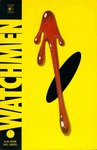
Watchmen by Alan Moore and Dave Gibbons

What with the movie on its way, I thought it’d be time to go through the book again. And, as always, it was a great pleasure to read.

This is a graphic novel that has an immense impact on comics history. It’s considered to be one of the most important works in the genre in, well, ever. Read any analysis of Watchmen and you’ll read that it revolutionized comics. It changed everything, they say.

They’re right.

Before I get to the actual story – and it’s a formidable story – I want to address the immense technical achievement that is evident in this book. Look at any panel, any page and you can spend a long time just admiring the artistry that has emerged from the Moore-Gibbons partnership. The words and the images fit together like the finest puzzle pieces, each one reinforcing and supporting the others. There are no unnecessary words, and there are no unnecessary pictures.

Goddamn it’s good. It’s a fantastic piece of work.

Just as much as the technical aspects of the book are a marvel, so is the story. It was written in – and set in – the mid-80s. It took the core genre of the comics industry, superheroes, and bent them to reality’s will. These were not the iconic, ageless figures of Batman and Superman, people whose hearts and intentions were pure and who never aged. The superheroes – or “costumed adventurers,” more appropriately – were very, very human. Not only did they age, but they made mistakes. They lied, they failed, they gave up. They were, with one notable exception, human, and their reasons for doing what they did were also very human.

It’s tempting to say, “These characters are us,” because they’re not, but they’re still a lot closer to us than traditional superheroes are. And this was especially true in the mid-80s. The Darkening of comics hadn’t begun yet, and it was probably Watchmen that kicked it off. Suddenly, after decades of two-dimensional storytelling and Manichean moral codes, the idea of heroes with ethical failings, personality problems and a faulty moral compass flooded the market. Unfortunately, they were inferior copies of an exceptional original.

Anyway, the story. The world in 1985 is a different place. The rise of the costumed adventurer had a big impact on the social fabric of the United States, and the Cold War has reached levels of tension that nearly break the world in two. America owns a superweapon in the person of Jonathan Osterman, also known as the nearly godlike Doctor Manhattan, but even he can’t stop the political super-powers from the intractable mess they have created. Everyone can feel it, the great burning and the end of the world. Everyone knows it’s coming.

And then someone kills The Comedian.

The death of this adventurer-turned-mercenary sets off a chain reaction that leads to the discovery of a horrific plan to save the world. People who believe themselves to be heroes have to decide what it means to do good when there are no good choices left to make.

It starts off as a murder mystery with hints of conspiracy and ends with a bang, as well as a deep moral quandary – do the ends justify the means, and if so, how far can we take that argument?

There are points to criticize the book, if you want to. One that my friend Joe mentioned is that, for all that the main characters are supposed to be heroes, they’re utterly un-heroic. They’re the antithesis of what a comic-book hero is supposed to be: morally sure and above reproach. Any mistakes that they make, even the ones that result in tragic consequences, should make them more heroic in the end. That’s what makes characters like Spider-Man and Superman such a pleasure to read. We know that, even if they screw up, they’ll ultimately do the right thing.

The same can’t be said for the people in this book. Rorschach is a homicidal existentialist, Ozymandias is a megalomaniac, Doctor Manhattan is a detached nihilist, sort of, and Nite Owl is a pudgy guy in an owl costume. These people are not, by and large, people that you can cheer for. They’re not people you can look up to, mainly because they’re just like us. They’re flawed, very deeply flawed, and we expect our heroes to be better than that.

So, it is possible that you will dislike each and every character in the book, and I can’t blame you for that. Still, it’s worth your time to read, even if it’s just to admire the technical ability of Moore and Gibbons. As for the movie, I can only pray that they do it right. I have a high tolerance for adaptation – and I know there’s no way the entire comic can be fit into a movie – so I will give the filmmakers some leeway. But I pray that they do it right….

—————————————–
“Somebody has to do it, don’t you see? Somebody has to save the world…”
– Captain Metropolis, Watchmen
—————————————–

Watchmen at Wikipedia
Watchmen at Wikiquote
Watchmen annotations
Watchmen movie website
Watchmen at Amazon.com

1 Comment

Filed under Alan Moore, apocalypse, comic books, Dave Gibbons, DC Comics, ethics, graphic novel, made into movies, morality, murder, mystery, super-heroes, terrorism

Review 02: A Series of Unfortunate Events 1 – The Bad Beginning


A Series of Unfortunate Events 1: The Bad Beginning by Lemony Snicket

I am not a violent man. In my lifetime, I have never been in a fight. I’ve never seriously threatened anyone with violence, never made anyone feel afraid by my physical presence, never even really seriously considered doing violence to another person.

Having said that, the feelings this book evoked in me were… violent.

Not because Lemony Snicket has written a book where terribly unfortunate things happen to small children – I have no problems with that and in fact encourage it; it builds character. I want to do violence towards Lemony Snicket because he’s a terrible writer who should never have been allowed to have his words put to paper. His pens should be broken, his notes burned, his hard drive wiped and, if possible, his writings should banned by an Act of Congress. The First Amendment can only go so far.

You may be wondering what has roused this level of bibliorage in me. By all accounts, this series is extremely popular, loved by many. On various book review websites, this book routinely gets at least four stars and high praise. It was even made into a movie starring Jim Carry, and if that’s not the Seal of Public Approval then I don’t know what is. It would seem that one of two things is true: Either I’m seriously overreacting to a tiny aspect of Snicket’s (AKA Daniel Handler’s) writing style or the rest of the world is full of blind ignoramuses who wouldn’t know decent writing if they woke up in bed with it after a bender in Vegas.

As a reviewer, I, of course, choose to believe the latter.

Snicket has taken what should be an entertaining story, filled with untimely death, physical violence, extortion, deception, and pedophilic overtones, and corrupted it by treating its audience like a bunch of drooling idiots.

I am, of course, referring to his habit of defining “difficult” words within the text, with no regard for the flow of the story or the necessity of the definition. For example:

Page 2: “…occasionally their parents gave them permission to take a rickety trolley – the word ‘rickety,’ you probably know, here means ‘unsteady’ or ‘likely to collapse’ – alone to the seashore….”

Page 13: “…over a dull dinner of boiled chicken, boiled potatoes and blanched – the word ‘blanched’ here means ‘boiled’ – string beans.”

Page 18: “‘Please get out of bed and get dressed,’ he said briskly. The word ‘briskly’ here means ‘quickly, so as to get the Baudelaire children to leave the house.'”

Page 44: “…the kitchen grew cozy as the sauce simmered, a culinary term which means ‘cooked over a low heat.'”

And so on.

There are a few occasions where a word is defined well, in context and occasionally in character, and I don’t mind those. But the constant shoehorning in of definitions made me want to take a sharpened number two pencil and work it under Mr. Snicket’s fingernails until he apologized sufficiently for being a hack.

I’ve gotten feedback from people who like this style, especially parents, who say that it saves them from having to put down the book and explain to the child what “blanched” means. Full disclosure: I am not a parent, nor am I likely to ever be one, but I think that teaching a child to figure things out for him or herself – or, god forbid, learn to use a dictionary – is part of what will make her or him grow up to be an inquisitive, intelligent adult. In my real job, teaching English as a foreign language, I find that my students are more likely to remember a word if I make them work for it, rather than if I just tell them what it means.

Let’s face it – if this book is written for adults, then the author should treat his readers like adults. If the book is written for children, which this ostensibly is, then the author has to choose whether to talk up or down to them. In a book where the main characters’ parents die before the first page and where the eldest daughter nearly becomes a child bride to her blood uncle, one would think the author has judged his audience mature enough to deal with these themes. If that’s so, then overtly defining “difficult” words is an insult to his readers, and that is unacceptable to me.

I am reminded of a passage in Terry Pratchett’s book, Wee Free Men, where the main character, a nine year old girl named Tiffany, asks an itinerant teacher about zoology:

“Zoology, eh? That’s a big word, isn’t it.”

“No, actually it isn’t,” said Tiffany. “Patronizing is a big word. Zoology is really quite short.”

I think Mr. Pratchett may have read Mr. Snicket’s book as well.

———————————————————-
“If you enjoy books with happy endings than you are better off reading some other book.”
– Lemony Snicket
———————————————————-

Lemony Snicket homepage
Lemony Snicket on Wikipedia
The Bad Beginning on Amazon.com

4 Comments

Filed under bad, children, death, fantasy, Lemony Snicket, made into movies, murder