Tag Archives: humor

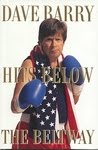
Review 82 – Dave Barry Hits Below the Beltway


Dave Barry Hits Below the Beltway by Dave Barry

When an election year comes around, I try really hard to stay above the fray. I know that there will be rumors and speeches and policies that get everyone really riled up, and I like to think that I can remain emotionally detached and not allow things to get under my skin.

I usually last until about the Conventions, at which point the slumbering poli-sci major in my brain wakes up and grabs the controls. At that point, I start to take things WAY too seriously. I write long, link-filled diatribes about why certain candidates (who shall remain nameless, in case I ever want to recycle this review during another election year) are completely wrong, utterly bereft of any kind of legitimacy or moral standing and how the American people obviously have the intellectual capacity of zucchini if they vote for them.

It’s easy to get caught up, because that’s what they want. Logical, well-reasoned approaches don’t go over well with the public, so they rely on the emotional heartstrings, and sometimes they get me. I turn really serious and absolutely devoted to the idea that I Am Right.

The only antidote to this is humor. It’s why I love watching The Daily Show – the more seriously you take things, the more self-assured you become in the absolute rightness of your position, the more you need to be taken down a peg. You need to take a breath, take a step back and allow yourself to laugh at the process. If you don’t, you end up risking becoming one of those humorless, fanatic talking heads that just drive everyone crazy.

So, if you need some laughs, and we all know we do, you could do worse than to pick up this book.

This is an original book, rather than a collection of Barry’s columns, and he promises right from the outset that he would do absolutely no research whatsoever. “To do an even halfway decent book on a subject as complex as the United States government,” he says, “you have to spend a lot of time in Washington, D.C. So the first thing I decided, when I was getting ready to write this book, was that it would not be even halfway decent.”

He is, of course, wrong. The book is at least three-quarters decent.

The government is a great source of humor, probably going back to the very first government when a particularly strong hunter-gatherer decided that he was the one best suited to tell the tribe what to do. Barry looks at the evolution of government, back from those early caveman days up to the early days of the twenty-first century. These days, instead of a large, heftable rock to beat possible opponents over the head with, they use commercials. Otherwise, the methods haven’t changed.

Barry’s sense of humor relies on him being The Common Man, someone who’s not really interested in the intricacies of how the government works, but is perfectly happy just sitting back and making fun of it. He has a great time re-writing the Constitution (“Article IV, section 1: There shall be a bunch of States.”) and illustrating the continual growth of the U.S. Government with the use of handy free clip-art pictures.

One of the best things he does is point out the fact that no politician ever, ever actually reduces the size of government, no matter what they promise. Government gets bigger, departments get more and more complex all the time, and there’s really nothing that we can do about it but try and get a laugh. So whether it’s the futility of trying to call prunes “dried plums” or trying to get Congress not to buy things that the military neither wants nor needs, the people in Washington that we trust to run the country are, obviously, insane. Why we keep sending them back is beyond me.

There is, of course, a section on the 2000 election – this book was written in 2001, so there was no escaping that – and a look at it from the unique perspective of those people who screwed it up for everyone. South Florida. The book gets kind of tangential at this point, going from making fun of the US government to making fun of Miami, but he does give us some warning. And in his defense, it is both funny and, in its own way, relevant. It has been argued that Florida is the reason why we had eight years of George W. Bush, so perhaps if we understand it better we may avoid such… unpleasantness in the future.

But I doubt it.

So, if you’re looking for a good laugh and something to remind you that you can’t take all this too seriously, pick up the book. It won’t solve your problems, and it won’t stop you from wanting to strangle everyone on the internet who disagrees with you, but at least a moment’s respite is worth it.

——————————————–
“What the Founding Fathers were saying, basically, was: ‘Why should we let people over in England saddle us with an unresponsive government and stupid laws? We can create our own!'”
-Dave Barry, Dave Barry Hits Below the Beltway
——————————————–

Dave Barry on Wikipedia
Dave Barry Hits Below the Beltway on Amazon.com
Dave Barry’s homepage
Leave a comment

Filed under american history, Dave Barry, humor, politics

Review 78: Bridge of Birds


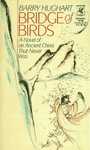
Bridge of Birds by Barry Hughart

It’s not often that you read a book and it immediately jumps up into your “Best Books Ever” list. Usually it takes some time and reflection, careful thought about the book’s characters, themes and message. Perhaps a re-read would be in order, and then, after some consideration, you might say, “Yeah. I think this is a really, really good book that I want everyone else to read.”

I think I hit that somewhere around page 182.

This is, as the cover tells us, a novel of “An ancient China that never was.” It’s set in the long-ago, indeterminate past (of which China has so very much), and starts off in a small village with an unusual history. The village of Ku-Fu, the story goes, was home to a section of the Great Wall, commissioned by the Emperor of China many centuries ago. This would not in itself be notable, except that it was built 122 miles south of the rest of the wall, thus serving no real purpose whatsoever. The general in charge was, he maintains, given the orders by the Emperor of Heaven himself, a story which held no sway with the more earthly Emperor who was ready to execute him. A more believable story was produced – that a great dragon had rested itself on that part of the wall, thus moving it, and it shouldn’t be tampered with.

And so the village of Ku-Fu became home to what was known as The Dragon’s Pillow, a place that would one day loom large in the history of not only the village, but all of China.

It is a peaceful village with the usual colorful characters that you get in such a place, such as the terrible partners Pawnbroker Fang and Ma the Grub, two greedy and unscrupulous men who hold the economic life of the village in their hands. When their misdeeds go too far, resulting in the horrible poisoning of many of the village’s children, the story’s narrator, Number Ten Ox (whose given name is Lu Yu, but he would not want to be confused with the famous author of The Classic of Tea) is tasked to bring a wise man from the city to diagnose the problem and find a solution. Out of the many wise men, Ox finds Li Kao, a cynical, world-weary curmudgeon with, as he so often tells us, a slight flaw in his character.

Together, Ox and Li Kao must travel the length and breadth of China to find the Great Root – a ginseng root that was kept by the mythical Princess of Birds, and whose healing properties are all that stand between the children of Ku-Fu and certain death. Along the way, they must travel terrible labyrinths, fight unimaginable monsters, battle against an immortal evil, bring peace to restless ghosts and solve the greatest mystery in the history of China – what happened to the Princess of Birds, beloved of the Star Shepherd, Prince of Heaven.

There is just so much to recommend this book, I don’t even know where to start. For one, it’s a lot of fun to read. The person who recommended it to me did so on the reasonable assumption that, since I like Terry Pratchett so much, I would probably like this book as well. And that was a very good assumption – there is a certain similarity between the two. Hughart uses humor very deftly, keeping the characters alive and interesting through even the most dangerous of times. Where Pratchett’s humor often feels like literary slapstick, however, Hughart’s is a bit more subtle. The characters are funny, yes, but the book was not written to make you laugh. It was written so that the reader would have a good time reading a story well-told.

And what a story it was. It begins with a fairly straightforward quest – a search for the Great Ginseng Root to cure the children of Ku-Fu – and turns into something so much larger than that. As the evil Duke of Ch’in says, they’re on the right quest, but for all the wrong reasons, a cryptic statement that takes a while to make sense. The scope of the story gets bigger and bigger as it goes on, and you realize that the pieces for this quest were put into place hundreds, if not thousands of years before the story actually started.

The history of China is on display here, if somewhat distorted for the purposes of entertainment. Hughart spent time living in the Far East and gained a healthy respect for its long and often unbelievable history and culture. The book includes elements of China’s history of inventiveness and ingenuity, as well as cultural myths that extend beyond its borders.

The characters themselves are wonderful, too. Number Ten Ox is an earnest, strong, well-meaning young man who has one goal in mind- save the children of his village. Li Kao is a devious old man who tends to use his wisdom and quick thinking for more nefarious purposes – thus the slight flaw in his character. There are a lot of notable minor characters as well, including Pawnbroker Fang and Ma the Grub, who somehow manage to turn up all through the story, always being chased by the people they’ve cheated. The Duke of Ch’in is a terrifying figure, Henpecked Ho is comically dark, and Miser Shen starts off utterly unlikable, but if there’s one character in the story that forces you to put down the book for a few minutes and gather your thoughts, it is he.

It’s a moving tale of hope and perseverance and the power of myth. It’s a story about the need for humanity to temper desire and what happens when we let our lives be governed by fear and greed. It’s about love and justice, revenge and history. It’s a book that almost immediately earned my respect and admiration, and that’s pretty hard to do.

So go get it. Block out some time when you can sit and fall into the story and really get absorbed in it, because let me promise you – it will be well worth it.

————————————————–
“Take a large bowl. Fill it with equal measures of fact, fantasy, history, mythology, science, superstition, logic, and lunacy. Darken the mixture with bitter tears, brighten it with howls of laughter, toss in three thousand years of civilization, bellow kan pei – which means ‘dry cup’ – and drink to the dregs.”
“And I will be wise?”
“Better. You will be Chinese.”
– Li Kao to Procipius, on attaining wisdom, Bridge of Birds
————————————————–

Barry Hughart
Bridge of Birds on Wikipedia
Bridge of Birds at Amazon.com
BarryHughart.com

Qixi Festival on Wikipedia

1 Comment

Filed under Barry Hughart, China, fantasy, humor, quest

Review 65: Mercury Falls


Mercury Falls by Robert Kroese

You all know I love apocalypses, if that is indeed the correct pluralization. There’s just something about the end of the world that really gets me going, and if it can be done with some sense of humor and insight, that’s even better.

Mercury Falls has the distinction of being the first full-length book I’ve read on my Kindle, and let me say that it was a good christening. While I’m not writing a Kindle review, I have to admit that the device works very well. It’s easy to read, easy to make notes and mark interesting passages, and it fits in my bag a lot better than a 352 page paperback would. So, score one for the Kindle.

This being the ADD Age of Twitter, I don’t exactly remember how I first ran across Robert Kroese. He may have been re-tweeted by someone, or popped up on a Facebook update, or implanted into my mind while I slept (thank you, Dreamr.com!) I don’t know. What I do know is that the man is relentless in promoting his work. He keeps up an excellent level of interactivity with his Twitter and Facebook followers and finds ways to increase the word-of-mouth marketing that he needs, since this book was self-published and can use all the marketing help it can get. Under his incessant barrage, I bought the book for the Kindle, and it turned out to be fortuitous. Divinely inspired, perhaps, as though it were part of a larger plan. Hmmm….

One of the central themes of the End of the World, whether it’s the Biblical Apocalypse or any other, is that it has to happen. There’s just no way around it – sooner or later the forces of Good and the forces of Evil will duke it out on the Earth to see who’s the baddest bunch around. When asked why they would bother, the usual answer is that it’s part of God’s Plan, and that’s all we need to know. So we imagine that while we miserable humans must be kept in the dark, there must be someone who knows what’s going on. A prophet, perhaps the angels who are doing the fighting – God, definitely, right?

Not really, Kroese suggests.

He presents the reader with a celestial bureaucracy that makes the U.S. Government look like a small-town McDonald’s on a slow day. There are levels within levels, rank upon rank of angelic bureaucrats and agents and paper-pushers, all working towards what they believe the Divine Plan involves. The problem is that no one is entirely sure what that plan actually is. But like all good bureaucrats everywhere, they don’t care. There are rules, there are regulations, and they must be followed. What happens, however, when the Plan breaks down? Well, that’s when things get messy.

The human woman Christine Temetri, a reporter on the apocalypse beat at a nationally-read newspaper, The Banner, is about to find out just how awry things can go when the Divine Plan gets all cocked up. On an assignment to cover the latest skirmish between Israel and Syria, Christine is entrusted with a Very Important MacGuffin Briefcase, which brings her to the enigmatic cult leader Galileo Mercury.

Only he’s not a cult leader, really. He’s an angel. A fallen one, yes, but an angel nonetheless, and he’s the only angel who plans to sit out the end of the world. He’s happy to do card tricks and play ping-pong, at least until Christine shows up and drags him back into the fray. Together, they have to not only figure out how to stop the apocalypse, but how to make sure they stop the right apocalypse, and see to it that it’s done with as little damage as possible. They don’t really succeed on that last part, but they certainly make a valiant effort.

The entertainment in this book is not so much in the plot, which is in the political thriller mode with twists and turns and reveals a-plenty, to say nothing of shootings, explosions and pillars of fire. There are two major things that make the book entertaining.

First is the cosmology that Kroese has built up. The idea of a Heavenly Bureaucracy is not a new one, but he takes it rather a step further. In one scene, a couple of angels are taking pity on humanity because we pitiful humans are running around, making decisions without knowing for sure whether they’re right or wrong. The angels believe they are superior in that they have a Plan to follow – but they freely admit that they aren’t entirely sure if the Plan they’re following is the right one. “We assume that we’re part of a system that ultimately makes sense to [the Archangel] Michael, or God, or someone. All the little details may not make sense to us, but we go along with it anyway.” In other words, the angels are just like us, except that they can fly, do miracles, and are immortal. The bastards. In a later section, the characters are given a look at how the whole celestial bureaucracy is set up, and discover that even the angels don’t know for sure who’s actually in charge of anything. They just do what the Plan tells them to do and hope for the best.

So what we have here is a bureaucratic cosmology. It works, but no one is entirely sure how it works. And as Christine discovers, the benefit to not knowing the actual plan is that you are then free to do what you think is right. While the book is obviously centered around the Judeo-Christian framework, it’s not a religious book. It doesn’t address whether there is or is not a God, or whether religion is a fundamental necessity to humanity or a primitive hang-up, or neither, or both. What it’s about is the idea of choice, a topic covered pretty explicitly in chapter thirteen. The boiled-down version is that we may or may not have free will, and we can never really know, so it’s best to just pretend that we do. What this means, then, is maintaining a healthy dose of skepticism about what you are told is the right or necessary thing to do.

This does lead to some editorializing at times, which is pretty obvious when you hit it. As soon as you get to a section where two characters are engaged in a Socratic dialogue with each other, you definitely get the feeling that it’s Kroese putting his two cents in. This would be annoying if I disagreed with him, or if it was written with less wit. As it stands, I read it with the kind of patience I reserve for my really funny friends when they hit a topic they actually care about – I’ll listen along, because I know it’ll be good, but at the same time I’ll feel a little uncomfortable that they’ve decided to be serious for once.

Which brings me to the second reason I enjoyed the book – it’s damned funny. It reminded me in various places of Douglas Adams’ Dirk Gently books, as well as the fine work of Christopher Moore. There was plenty of narrative commentary, which was sarcastic and biting, and the characters often matched wits with each other at lightning speed. There were many parts that I re-read because I was sure I had missed something in the exchange, and it turned out I was right – and what I had missed was worth going back for. I put my Kindle’s highlighting function to good use, let me just say that. While I have trained myself to hold in my guffaws, in accordance with social norms here in Japan, there were a few points where I just couldn’t help but draw the stares of my fellow train passengers.

On a tangent: there was a moment in the book that made me think of the infamous LJ RaceFail of ’09, something I had hoped to not have to think of again for a while. When Christine meets Mercury for the first time, we’re introduced to two people. One is a short, dumpy man of Chinese ancestry, and the other is a tall, handsome white guy, and they’re playing ping-pong. When Christine asks for Galileo Mercury, the tall, handsome white guy leads her to believe that his opponent is the one she wants. He then reveals, of course, that he’s just messing with her. “Is there some law,” he says, “that a Chinese dude can’t be named Galileo?” And then, “But you have to admit, it would be pretty funny if Galileo Mercury was a Chinese dude.” He then sends the Chinese dude out to get some sodas.

This made me ask myself, “Well… why not? Why couldn’t Galileo Mercury have been a dumpy Chinese guy?” It’s not really apropos of anything – the presumed ethnicity of the character (who is an angel, after all) is utterly irrelevant to the rest of the story – but I would have been very impressed if Kroese had made his celestial action hero a less obvious action hero. Just a thought. Tangent over.

So, a fine first novel from a clever new author. You really can’t ask for much more than that, in my opinion, and I look forward to seeing more of Kroese’s work in the future. As he improves his craft, he may become a force to be reckoned with in the fantasy/comedy genre, so keep your eyes on him.

——————————————-
“My philosophy is that if you can make one person laugh, you’re already doing better than John Calvin.”
– Mercury, Mercury Falls
——————————————-

Robert Kroese’s homepage
Mercury Falls on Amazon.com
Mattress Police – Robert Kroese’s blog

Leave a comment

Filed under angels, apocalypse, fantasy, humor, Robert Kroese

Review 64: Lamb


Lamb: The Gospel According to Biff, Christ’s Childhood Pal by Christopher Moore

If you’ve been following my reviews over the last few years, I don’t see any reason why I should have to put a caution into this, but here it is: if you’re not interested in speculative fiction, open to the reinterpretation of the life of Jesus, speculation on the gaps in the gospels and the possibility of pan-religious values having been vital to the formation of Christianity, then you should probably not read this book. Nor should you really be using the internet – there’s just too much nasty “Free Thinking” out there. Take your hands off the keyboard and back away slowly.

Okay, that’ll weed out the wusses. Although, as I think about it, perhaps those are exactly the people who should be reading this book. I’m sorry for all the nasty stuff I said – come on back!

Each time I read this, I love it more. For one thing it’s Moore’s best work, without question. Not only is it blindingly funny, which is a hallmark of Moore’s style, but it’s also thoughtful, philosophical, and is supported by obvious research. Because he’s dealing with real places and real people, Moore has made sure that his depiction of first-century Israel is as accurate as he can make it. It’s all there in the details about the lives of the characters, the struggles they go through and the understandings they come to. Without hours of research as its foundation, the book would have failed almost instantly. Moore didn’t have to do it, but it is a great sign of his character as an author that he did.

This is also by far my favorite interpretation of the life of Jesus. It is the Gospel According to Biff, the best friend of Joshua bar Joseph, the man who would one day be called Jesus Christ. Of course, when Biff met him, the young Son of God was occupying himself by resurrecting lizards after his brother smashed their heads in. But they grew to be fast friends, and everywhere that young Joshua went, so went his buddy Biff.

The best way to describe Biff would be Jesus’ Sidekick. He’s a troublemaker, sarcastic, and far too prone to succumb to temptations of the flesh. But he’s clever and resourceful, and mindful of his friend’s mission on this earth. He’s young Joshua’s best friend in every way, so when Josh goes searching for the three Magi who attended his birth, Biff knows he has to go with him. The way to finding Joshua’s destiny will be long and hard, and Biff knows that his friend needs him.

The main part of the book has to do with Biff and Josh’s search for the Magi, to learn from them how Josh can be the Messiah. On their way they face demons, death and certain temptation, but also wisdom and experience from the wisest men in Asia. From Balthazar in the rugged mountains of Afghanistan, Joshua learns of the Tao, contemplating its Three Jewels – compassion, moderation, and humility. He learns about suffering and mercy and kindness and the effects they bring.

Biff, on the other hand, learns about the ways in which eight Chinese concubines can make life a wonderful place, night after night. He learns how to make potions and explosives, how to cast metal and read Chinese. He learns vital skills that the Messiah cannot – or must not – know.

From there they go to China, to a monastery high in the cold mountains to study with Gaspar, a monk of the Zen school. From Gaspar, Josh learns stillness and mindful breath, compassion for all things and, oddly enough, how to turn invisible. He discovers the divine spark that exists in all things, a holiness that no one can claim or take from you. He also learns what it’s like to be the only one of his kind, and foreshadows the tragic end that can bring.

Biff, of course, is learning kung fu and how to break bricks with his head.

Finally, they go to India to seek out Melchior, an ascetic yogi and the last of the wise men. Joshua here learns about sacrifice and blood, and the horrors that are perpetrated in the name of religion. He discovers the injustice of denying the Kingdom of God to anyone, Jew or Gentile, and the futility of trying to teach yoga to an elephant.

Biff, for his part, manages to put together a truly spectacular version of the Kama Sutra.

Don’t get me wrong – while Biff is certainly more earthly than his friend, he is also devoted to both Joshua and his mission. He is Josh’s anchor to the real world, always reminding him of his mission and making sure he doesn’t take himself too seriously. Biff, in this rendition of Jesus’ story, is a necessary element in the ultimate teachings of Christ.

As he admits in his afterward, Moore has tackled a very tough subject here, one that he knows is likely to rile people up. Jesus is one of those characters that is very set in peoples’ minds – he is the tall, beatific figure with a gentle voice and blue eyes who glides around in robes followed by insightful and worshipful men.

He certainly never ate Chinese food on his birthday, nor did he get hopped up on coffee or learn kung-fu. He’s never had a sarcastic best friend who was willing to risk damnation to describe what sex was like to the young Messiah, who was pretty sure that he wasn’t allowed to Know women. We haven’s seen Jesus get frustrated and yell at his disciples because they didn’t get the message he was trying to send, or be torn between what he has to do and what he wants to do. The Jesus in this book is an excellent meld of the human and the divine. He has the miracles and the powers, but his mind is human. He knows that he’s the son of god, but he feels like just a regular guy who’s been tapped to save humanity from itself. It’s a very difficult situation to be in, and Moore does a really good job of getting us to understand that.

More importantly, the life of Jesus hasn’t been this funny before. This is the kind of book that will piss off your family or co-workers, because you’ll want to read out passages from the book every five minutes, but you won’t get it out right because you’ll be laughing too hard. The way the book is set up, Biff has been resurrected by the angel Raziel in order to write a new gospel. Unfortunately, he’s been resurrected in the modern age, about two thousand years too late to help his friend avoid the awful, horrible sacrifice that he knows he has to undergo. So he writes in the modern American vernacular, assuring us that while the words may not be a direct translation of first-century Hebrew, Latin, Aramaic, Chinese or any of the other languages they encounter, the tone is accurate. And the tone is comedy, all the way through.

Of course, the comedy kind of drops off as the book races towards its unpleasant end, which is where my troubles with Moore as a writer usually lie. He tends to write endings that are abrupt and unfulfilling, as though he just wants to finish writing the book so he can, perhaps, get on with the next one. Even though we know how this story ends, it still feels rushed. Biff’s attempts to save his friend from horrible death make sense, but I would like to have seen them drawn out a bit more. I have a feeling that Moore could have added another hundred pages without breaking a sweat – and I wish he had.

The best thing, though, is that Moore treats his characters with the utmost respect. Nothing that Jesus does in the book is out of character for him, insofar as we know his character. And Biff is more than just a goofy friend of the Messiah – he is the reminder and the anchor of Jesus’ humanity. I’m not a Christian – I don’t claim any religion, in fact – but this version of Jesus would be one that I might be willing to give some time to.

It’s a brilliant book, in my top ten….

—————————————————-
“Josh, faking demonic possession is like a mustard seed.”
“How is it like a mustard seed?”
“You don’t know, do you? Doesn’t seem at all like a mustard seed, does it? Now you see how we all feel when you liken things unto a mustard seed? Huh?”
– Biff and Josh, Lamb
—————————————————-

Christopher Moore on Wikipedia
Lamb on Wikipedia
Lamb on Amazon.com
Christopher Moore’s homepage

Leave a comment

Filed under angels, Christianity, Christopher Moore, coming of age, demons, friendship, good and evil, humor, Jesus, quest, religion, travel

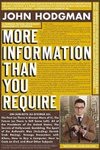
Review 62: More Information Than You Require


More Information Than You Require by John Hodgman

FACT: The Declaration of Independence was not the original creation of Thomas Jefferson, but was instead inspired by the work of Mole-Man declarationists.

FACT: The true sport of kings, and the only one of which a professional gambler will avail himself, is that of hermit crab racing.

FACT: Andrew Jackson was the first president to wear a necklace of human skulls at his inauguration.

FACT: The first moon landing was achieved in 1802, when Napoleon Bonaparte stepped onto the lunar surface with his conquering army. The horse skeletons are remarkably well-preserved.

WERE YOU AWARE OF IT?

Well, now you are.

In his first book, The Areas of my Expertise, John Hodgman claimed that he had provided us with “an almanac of complete world knowledge” that related matters historical, matters literary, matters cryptozoological, and of course, hobo matters, among many others. A read through this book, an almanac of interesting facts that were in no way, shape or form what is commonly known as “true,” was a demonstration of why fiction is inherently better than reality in that it is usually far more interesting. By the time you finished reading the book, he suggested, you truly would know everything you needed to know, regardless of whether it actually happened to be true.

So if the previous book was an almanac of complete world knowledge, why write another book? Surely complete world knowledge can’t be added to? Well, Hodgman addresses that question right away. What it comes down to is very simply that, in the few short years since the publication of The Areas of my Expertisenew things have happened. I know it’s hard to believe, and you may want to sit down and think about that for a moment.

Not the least of these new things is that Hodgman has become a famous minor television personality, which has gained him all the fame, riches and power you might expect. Following the publication of that book, Hodgman became a regular on The Daily Show and, of course, starred in the now-famous Mac/PC ads as the fuddy-duddy PC who puts up with the douchebaggery of the Mac.

Yeah, I really don’t like the Mac guy. But maybe that’s just because I really like Hodgman.

He has come down from the luxury zeppelin he bought from Emo Philips in order to provide us with more world knowledge – this time touching on what he has discovered about the okapi, the secret history of the Mole-Men, and the secret cult that lives in Park Slope, Brooklyn – an exclusive neighborhood that can be accessed only upon having reached the status of famous minor television celebrity. It’s a paradise, so long as you do not antagonize the children, who are allowed to kill you at their whim.

As with the previous book, this is a good piece of entertainment. Its jokes loop back and forth on themselves, referencing passages not only elsewhere in the book, but also on the pages of its predecessor (and for the sake of convenience, the page numbering for this book picks up where that of the previous book left off.) Its facts (or “facts”) are conveniently bolstered with handy charts and striking black and white photography that makes for a fascinating afternoon’s reading.

The intricate creativity that has been poured into building a bizarre alternate history of the United States is one that earns only the most sincere respect from me. Anyone with an imagination fertile enough to come up with things like Your Twelve Month Spleencast (a guide to telling the future using pig spleens (tip: it’s going to be pretty awful)), a Teddy Roosevelt List that puts Chuck Norris’ to shame, and a complete table of Brushes of Fame (with Hodgman as the famous person) deserves every cent I can give him.

One of his great regrets, as he tells us in this book, is that The Areas of my Expertise was never made into a page-a-day desk calendar. Such a mark of true success has only been reached by such luminaries as Gary Larson and the Secret Cabal of Crossword Puzzle Writers who are battling the Jumblemancers for control of the United States. In order that his second book might escape such ignominy, Hodgman has provided an interesting fact for each day of the year on each page. So, if you tear out the pages after reading them, voila! You have a page-a-day calendar. And some of the bits are truly inspired. The listing for September 11th, for example, shows why that day of all days is truly unforgettable.

But that is not all! Not yet, anyway. He is planning to continue his work into a third volume, due out whenever he manages to finish it. I assure you, Mr. Hodgman, I will be waiting eagerly for it.

It’s a strange type of humor, but then Hodgman is a strange type of guy. It’s the sort of thing that only he could pull off, lying in such earnest detail that you wish it were true only because it sounds just so much fun.

———————————————–
“Despite the conspiracy theories you may have read, the mole-men have never interbred with the British royal family or the Bush dynasty with the goal of infiltrating the highest reaches of government so as to harvest the blood of our babies to power the spaceliners that will bring them to the next planet they plan to pillage from within. You are thinking of the Belgians.”
– John Hodgman, More Information Than You Require
———————————————

More Information Than You Require on Wikipedia
John Hodgman on Wikipedia
More Information Than You Require on Amazon.com
TheAreasofmyExpertise.com

Leave a comment

Filed under almanac, humor, John Hodgman, satire

Review 61: Dave Barry Slept Here


Dave Barry Slept Here: A Sort of History of the United States by Dave Barry

Sometimes you just need a palate cleanser. Something to make you smile, that requires a minimum of thought for a maximum of entertainment. This is a dangerous thing to look for; it’s all too easy to find oneself wading through a sea of dross, looking for funny but just finding silly, childish nonsense of a mediocre caliber.

The nice thing about Dave Barry is that he is silly childish nonsense of the highest caliber.

My family has been Barry fans for a long time running. When I was a kid, the new Dave Barry book was an automatic Father’s Day present, and would migrate around the house as one or another of us picked it up for a few laughs. Fortunately for us, the laughs were more than a few – I remember laughing so hard I had to put the book down for a few minutes because just thinking “Hawley-Smoot Tariff” sent me into uncontrollable giggles.

This book is Barry’s tribute to not only American history, but to the whole concept of history books themselves. The fact that he’s covering everything from the initial human migration into North America to the Bush-Quayle administration (the book was published in 1989) in only 175 pages with fairly large font is a sign of his being a true master of history.

For example, he does what most public school textbooks do – he skips the boring parts. Teapot Dome? Who cares! The Federal Banking Crisis of 1837? Yawn…. We all remember high school, right? Pretty much nothing happened between the ratification of the Constitution in 1789 and the Civil War seventy-six years later. Right? He also saves time and space by skipping over those parts of history which are, to use a technical term from historiography, “bummers.” World War 2, for example – nothing fun to talk about there.

What Barry also does to make history easier is he standardizes the dates for us. No more do we have to remember what month and day something occurred (a feat that always kept me off the high score list in high school history class.) Now all the prospective student of history has to remember is October 8. When did the Mayflower arrive in New England? October 8. When was Kennedy assassinated? October 8. When was the very first Fourth of July? October 8.

See how easy it is? Why didn’t they do this when I was in school?

The style of the book is like someone writing about something barely remembered, with only the most cursory amount of research done. And this was in the pre-Wikipedia days, kids, when you had to look stuff up in books. Fortunately, while Barry’s history does indeed parallel our own, it is almost completely devoid of actual facts that you may be required to remember. All you really have to do is follow him along on the ride. Of course, if you actually do know something about American history, the book is even funnier. The fact that the book ends with the election of George Herbert Walker Norris Wainright Armoire Vestibule Pomegranate Bush IV and his vice-President Dan “Potatoe” Quayle does disappoint a bit, but, linear time being what it is, there’s not a whole lot one can do about it. All history books, serious and silly, are obsolete the moment they hit bookstores. The good news is that Barry maintained a prolific career as a columnist until he retired back in 2004, so you can read his thoughts on the large amount of history that did not end in 1989.

I will always have a warm place for Dave Barry in my heart, but I do have to confess something. When I was younger and read Dave Barry, I would laugh. A lot. Those good, hearty, soul-clearing laughs, and part of the best memories I have of Dave Barry is simply remembering laughing. I didn’t laugh very much reading this again. I don’t know if it’s because I knew where all the jokes were, if my head just wasn’t in the right place, or if my sense of humor has changed over the last twenty years.

Twenty years. Good lord.

Anyway, whatever the reason, I had far fewer of those laugh-out-loud moments than I used to. It’s still funny, don’t get me wrong. I just didn’t giggle, guffaw, cackle and try to read bits to my long-suffering co-workers. Whatever it is, I kind of miss it. I think I’ll have to dip into some of his other books to see if I can find it again.

If you haven’t read Barry, I definitely recommend checking him out. This book is a fine place to start….

——————————————-
“But as the old saying goes, “Time heals all wounds,” and in the more than 120 years since the Civil War ended, most of this bitterness gradually gave way to subdued loathing, which is where we stand today.”
– Dave Barry, Dave Barry Slept Here
——————————————-

Dave Barry on Wikipedia
Dave Barry Slept Here on Wikipedia
Dave Barry’s homepage
Dave Barry Slept Here on Amazon.com

Leave a comment

Filed under american history, Dave Barry, history, humor

Review 57: When Will Jesus Bring the Pork Chops?


When Will Jesus Bring the Pork Chops? by George Carlin

This is pretty much what you expect from Carlin – acerbic, abrasive, disrespectful, challenging language that doesn’t give a good goddamn what anyone else thinks. Which means there’ll definitely be something in there that you disagree with, and probably something that pisses you off. Not me, of course. When I watched the South Park movie, at the abortion joke from The Mole, the entire theater was dead silent except for me in the back row, cackling. I have a very broad sense of humor.

Anyway, if you’ve read his previous works, Braindroppings and Napalm and Silly Putty, you pretty much know what’s going to be in here – a lot of essays on current events, social customs and traditions, and the general weak character of Americans today. Plus, there are lots of short bits that are really funny:

“I wanted to be a Boy Scout, but I had all the wrong traits. Apparently, they were looking for kids who were trustworthy, loyal, helpful, friendly, courteous, kind, obedient, cheerful, thrifty, brave, clean and reverent. Unfortunately, at that time I was devious, fickle, obstructive, hostile, rude, mean, defiant, glum, extravagant, cowardly, dirty and sacrilegious. So I waited a few years and joined the army.”

One of Carlin’s hot points is his love of language, as the above points out. He loves language and he loves to watch how people use language to bend the truth of their meaning – in other words, he takes particular notice of euphemism. As an English teacher, and a lover of language myself, I also find this topic fascinating and have cannibalized some of Carlin’s material for use in lessons on the topic. Included in this book is his “Shell Shock to PTSD” speech, chronicling the renaming of the same condition from World War I (“Shell shock. Almost sounds like the guns themselves. Shell shock!”) through to the present day (“…at last, the pain had been completely buried under psycho-jargon. Post-traumatic stress disorder.”).

This is one area in which I have great respect for Carlin. Overall, I prefer his old material – the Hippy Dippy Weatherman, Congolia Breckenridge and all that – to his newer, rougher stuff. But on the subject of language, I find him to be an insightful and clever scholar of communication. Words exist to describe things. At the same time, however, words conceal the true nature of things, and no one word can completely encompass the thing it describes. Knowing that, we use words to change things according to comfort and custom. We soften the things that make us uncomfortable – going from “cripple” to “physically challenged” might make us feel better about it, but it doesn’t change the condition itself. No matter what we call it, Stephen Hawking isn’t going to engage in a round of beach volleyball anytime soon.

Even in simpler, less controversial matters, he rails against the use of language as a means of manipulation (no doubt fully aware of the irony of his profession). He remembers when bathroom tissue was toilet paper, when customer service was the complaint department and when direct marketing was junk mail. He tells us to beware of “systems” and “centers” and “programs,” and longs for the days when things were simpler, while never really believing they were that simple to begin with.

What Carlin believes, and what he explains in this book and his others, is that, given the choice, we should opt for the word that is clearest, simplest and truest over the one that just makes us feel better….

In between the jokes about sex, death and old people, that is.

For anyone who loves language, Carlin is someone to pay attention to.

I was upset when Carlin died, as were a whole lot of other people. I know he denied it, but I think he grew angry in his old age. His comedy, his points of view shifted less from observational humor and word humor to meditations on death and the baser nature of humanity. He would open his show with a reminder to everyone that they were, basically, meat with an expiration date. He talked about how much fun it would be to see plane crashes and train derailments and chaos reign across the world. It never resonated with me as much as his early stuff did, and that’s fine. No artist who works as long as Carlin did can continually please the same people throughout his entire career.

Still, nestled within the anger and chaotic glee was a certain… dare I say it? Love. I think he really expected a lot out of humanity, and knew our potential to do a lot of great things. If he became angry or bitter, perhaps it’s just because we weren’t living up to his expectations.

—————————————————
“A children’s museum sounds like a great idea, but I would imagine it’s not easy to breathe inside those little glass cases.”
– George Carlin, When Will Jesus Bring the Pork Chops?
—————————————————

George Carlin’s home page
George Carlin on Wikipedia
When Will Jesus Bring the Pork Chops? on Wikipedia
When Will Jesus Bring the Pork Chops? on Amazon.com

Leave a comment

Filed under essays, George Carlin, humor, language

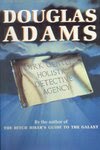
Review 47: Dirk Gently’s Holistic Detective Agency


Dirk Gently’s Holistic Detective Agency by Douglas Adams

I want an electric monk.

As Douglas Adams tells us in this book, every civilization creates mechanical devices designed to save us from our labor. We have dishwashers to wash our tedious dishes for us, VCRs to watch those tedious television programs so we don’t have to, and finally the Electric Monk to believe in those things we can’t be bothered to believe in.

Is that cool, or what?

As strange as it sounds, the Electric Monk is actually integral to the plot. But this plot is complex enough to deserve it. The main character, more or less, is Richard MacDuff, an up-and-coming young computer programmer who has several unique problems. The first problem is that of his couch – it’s stuck in the stairwell and, by all logic as affirmed by the best computer modeling systems, should never have gotten where it was in the first place.

The second problem is that he’s wanted for the murder of his boss. He didn’t do it, of course, but that kind of thing doesn’t really impress the police. And, of course, there’s the problem with the woman he loves, Susan, who just so happens to be the sister of the boss whom Richard is accused of murdering.

Add into all that the titular Dirk Gently, if that is his real name. Dirk is a man who, since college, has unswayingly, constantly denied having any kind of psychic powers whatsoever – which caused him some problems during his university days when he managed to correctly predict, down the the comma, the contents of a major exam.

Now older and weirder, Dirk runs his Holistic Detective Agency. His work rests on one simple principle: the Fundamental Interconnectedness of All Things. Based on a common misunderstanding of quantum theory, Dirk believes that all things are fundamentally connected to all other things, no matter how tenuous those connections might appear to the unaided eye. So during the course of, say, looking for a lost cat, it is entirely possible that he may have to go down to the beach in Bermuda. Because, fundamentally, all things are connected. And billable.

Then there’s the matter of a time machine hidden in Cambridge and the temptation that can arise from having one. With what amounts to a TARDIS, one could go to any point in time and space. You could visit ancient lands, pet extinct animals or, if necessary, fix something that had gone terribly, terribly wrong. It’s tricky, but it can be done. And if you’re the ghost of an alien whose simple mistake – putting his trust in an Electric Monk, for example – consigned it to billions of years of insubstantial solitude, a time machine might be very tempting indeed.

There’s really no good way to summarize this book. As Douglas Adams is fond of doing, there seem to be several plotlines and events which, at first, seem to have no relation to each other. But as you read, you find out that the Electric Monk isn’t as funny as we thought he was, that putting a salt shaker into a piece of pottery can cause more problems than you think, and that you should always be afraid of people with nothing to lose.

As Dirk claims, all things in this book are fundamentally interconnected, even if it’s not obvious at the moment.

Yes, even the couch.

———————
“My mind is my center and everything that happens there is my responsibility. Other people may believe what it pleases them to believe, but I will do nothing without I know the reason why and know it clearly.”
– Dirk Gently, Dirk Gently’s Holistic Detective Agency
———————

Dirk Gently’s Holistic Detective Agency on Wikipedia
Douglas Adams on Wikipedia
Dirk Gently’s Holistic Detective Agency at Amazon.com

Leave a comment

Filed under Douglas Adams, ghosts, humor, made into movies, mystery, time travel

Review 40: Lords and Ladies


Lords and Ladies by Terry Pratchett

Elves.

When you think of elves, what do you think of? The tall, fair-skinned beings of Tolkien’s Middle Earth? The ebony warriors from Dungeons & Dragons? Delicious cookies?

Not on Discworld. On Discworld, the Elves are folk of legend, and dark legend at that. People there remember the elves, although not very well. They remember through old wives’ tales, about leaving milk for the fairies and not going near the standing stones. Ask someone in the kingdom of Lancre, and they’ll think of elves as you and I think of elves – pretty, wonderful, magical…

Ask Granny Weatherwax and she’ll tell you the truth – that the Elves are not of this world, and don’t belong here either. She’ll tell you that when the barriers of the worlds grow thin, when the crop circles start to show up, the elves will be waiting, readying themselves to come back. For theirs is a parasite universe, a land of ice, and they desire ours for their… entertainment.

Such is the setup for Lords and Ladies, another one of Pratchett’s darker Discworld books. There is still his customary humor, of course, which would be sorely missed were it absent. But it’s also got a philosophical edge to it, as many of his books of this period do. It’s about faith in stories, and knowing the difference between what is true and what you wish were true.

It’s circle time again, where crop circles are appearing everywhere, and the parallel and parasite universes are coming into closer contact, and Granny Weatherwax knows that she is going to die.

Or is she? She can’t be sure….

Esme Weatherwax is the consummate witch. Tall, thin and bony, she’s the kind of woman who can wear the pointy black hat of a witch and dare you to think she’s anything else. She’s strong of mind, never afraid to speak the truth, the best witch in Lancre and not slow in admitting it. But many years ago, she was a headstrong young girl who was offered power by a mysterious woman in red who stood in the center of a stone circle. The woman promised power and freedom, but could not leave the circle. Rather than take the easy way to witchcraft, Granny worked, learned, and grew old. Which is always for the best.

As is the case with many Pratchett books, there are multiple plots that all center around the Elves and their newest attempt to gain the Discworld as their own world. Magrat Garlick, the third witch (because there must always be three) is going to marry Verence, the king of Lancre and a former Fool. Mustrum Ridcully, the Archchancellor of the Unseen University in Ankh-Morpork, is attending the wedding and at the same time remembering his days in Lancre chasing after the headstrong young girl who grew up to become Esme Weatherwax. And Granny herself is remembering things that happened to all possible Esme Weatherwaxes, and for someone as sure of herself as she is, is having a serious identity problem.

Something needs to be said here about the three witches of Lancre, recurring characters as they are in all of the Witches books of the series. Normally this would be done chronologically, upon reviewing the first book in which they appeared, but I want to do it now. Besides, I haven’t read Equal Rites in a long time, but it’s on my list.

Granny is as I have said – the unofficial chief witch of the region, who has attained the status of being almost mythical in the village of Bad Ass. She is feared and revered, but only because she is always who she is.

Nanny (Gytha) Ogg is Esme’s polar opposite. She has a face like an apple left in the sun too long, her youth is filled with enough tawdry encounters to make a fraternity lose its breath, and her fondness for bawdy tunes (such as the ever-immortal Hedgehog song) has made her a figure of legend. But like any witch, Gytha is not to be underestimated. She can think faster than most anyone, and do so around corners. She’s the grounding influence for Esme when Esme gets too high on herself, and while being fearsome in her own right, she is one of the more approachable witches Lancre has to offer.

And then there is Magrat Garlick, the third witch. She is the soppy one, the romantic one, the one with the collection of occult jewelry and a library in her cottage. She’s the youngest, the least experienced, but not without potential. And while the other two witches may treat her like an ignorant stripling, they only do so because that’s how you become a witch – by learning things, not by being told things.

But now Magrat is going to be Queen, and there are only the two witches. And the elves are coming….

This is, as I have said, a darker book. We get an interesting look into Granny Weatherwax’s psyche – who she is, what she fears – and it’s a little chilling. The reader is used to the utterly unflappable Granny Weatherwax, so to see her, well, flapped is kind of disturbing. At the same time, though, it makes her more human than before, which she needs to be if she is to defeat the elves.

This book also offers a good look into the human need for fantasy. The elves anchor themselves to the Discworld by belief – if enough people want the elves to come, then they will. But the longer they stay away, the more time we get without them, the more they become what we think they are. Stories. Myths. Cute magical critters who are to be watched, but not necessarily feared.

We need our stories to get us through the “iron times.” Yes, we need elves, to help us escape from our lives from time to time, just as we need witches and wizards and gods. But we don’t need them here. Here, in the real world, we have only ourselves to count on, and we need to be strong enough to do that. Stories are good, in their place. But never mistake a story for the real thing.

—————————————————
‘But all them things exist,’ said Nanny Ogg.
‘That’s no call to go around believing in them. It only encourages ’em.’
– from Lords and Ladies
—————————————————

Lords and Ladies at Wikipedia
Terry Pratchett at Wikipedia
Terry Pratchett’s page at HarperCollins
Lords and Ladies at Amazon.com
Discworld at Wikipedia
Lords and Ladies annotations
Lords and Ladies at Wikiquote

1 Comment

Filed under Discworld, elves, fantasy, humor, satire, Terry Pratchett, witches

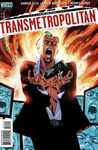
Review 38: Transmetropolitan


Transmetropolitan by Warren Ellis and Darick Robertson

There are times I look around me and think, “I love living in the future.” I mean think about all that we have – even the simplest phones can call anywhere in the world, and the higher end ones are basically backup brains. Surgery that used to require horrible invasion can now be done with a fraction of the time and the pain. We can cure diseases that a century ago would have been thought of as afflictions by God. Our transportation networks have grown to a point where there is practically nowhere on Earth that cannot be reached in twenty-four hours, and advances in communication have provided us with more information than our ancestors could have hoped to see in their (briefer) lifetimes.

We live in an age of wonders, when you really think about it.

Leave it to Warren Ellis and Darick Robertson, then, to show us what living in the future really means.

Transmetropolitan is set in the far, far future – so far ahead that even they don’t know what year it is. It’s set a in future that can do anything – cure any disease, bring people back from the dead, synthesize consumer goods from blocks of inert matter…. You can turn yourself into a dolphin for a day or into a sentient dust cloud for the rest of eternity. It’s a future that defies imagination.

And yet, it is very similar to now. The same problems, the same mistakes and the same short-sightedness that plague us will be around in the future, no matter how good the technology is. Despite being able to have anything you want, there is still greed. Despite being able to reassemble matter on an atomic level, there is still hunger and homelessness. Despite the human form becoming malleable in a thousand different ways, there is still discrimination. This perfect future has a flaw, and like so many perfect things, its flaw is its people.

Our guide to this future is Spider Jerusalem, a celebrated journalist whose love of the truth eclipses his hate of the world he lives in, and he’s determined to set the City straight, even if it kills him. He’s an analogue of Hunter S. Thompson, with a little H.L. Mencken thrown in for balance, and he’s the most awesome character to grace comics in a long time.

Spider is angry because he has to come back to The City, the nameless hypertropolis that both sustains him and drives him mad. He looks around and sees the ugliness under the shiny plastic shell of society and is instantly furious that no one has done anything about it yet. What’s more, it’s time to vote for President again, and this time it looks like it’s a race between an incumbent so horrible that he was nicknamed The Beast and an utterly amoral snake called The Smiler, who wants to be President just because that’s what he wants. Spider Jerusalem, whether he wants it or not, holds the keys to power for both of these men, and even his high moral sense isn’t able to tell him which of the two villains should get it.

Keen observers of 20th century history will see a lot reflected in this series, deliberately and clearly, and Spider is Ellis’ avatar His word is beyond dispute and his decisions are beyond question, which is why Warren Ellis is a kind of internet cult figure these days. He created a character that was a brash loudmouth who could scream the things that we’re all thinking, but someone with whom we feel an almost immediate and unshakable sympathy. He’s enough to make me want to be a journalist.

The future of Transmetropolitan is a place where Ellis was able to tell us everything that had been bugging him, from the hyper-escalation of technology to corrupt government to social apathy. The first few issues, before the real meat of the story kicks in, are “soapbox” issues, where Ellis rails against everything that’s going wrong in our time by making it so much worse in the future. My favorite of these, of course, is the religion issue (#6, God Riding Shotgun) where Spider crashes – and trashes – a convention for new religions. Alien Love Gardeners, the Church of Cobain, and the Church of Release, where trepanation can be practiced as an act of evangelism are excellent examples.

Eventually the story settles down with the arrival of the Presidential Election and Spider’s determination to bring down The Smiler no matter what it costs him.

The writing in this story is fantastic, of course, as we would expect nothing less from Warren Ellis. Spider is utterly, completely foul-mouthed, so don’t let your children read it unless you want them to shock sailors. But there are touching moments and angry tirades and passionate speeches that dig right into your heart, and whether you love Spider or hate him, you know he’s speaking from the core of his soul.

The art, too, is outstanding. It takes great skill to make such ugliness look beautiful, but Darick Robertson certainly has it. The City is a living, breathing place, and it has all of the beauty and horror of a living organism, if you look closely enough. Robertson can render gleaming cityscapes alongside the hollow eyes of child prostitutes with equal care and detail. While you read, be sure to look, because every panel is worth looking at.

Transmetropolitan is a story about truth, really. Or if we want to be specific, The Truth. Spider believes in The Truth, no matter who it hurts, and his mission as a journalist is to discover and promulgate the truth. Whether it’s the truth about the alien-human hybrid prostitutes delivered to the presidential suite or the truth about a level of poverty in the City that would shame a third-world nation, Spider’s aim is to show people what their world looks like and force them to take action. Unfortunately, he’s fighting an uphill battle.

You see, much like in our world, people don’t actually like truth. It’s uncomfortable and unpleasant, especially because there’s a very good chance that the truth could implicate us in some pretty horrible situations. What’s worse, there are countless situations where you can have contradictory situations and explanations, and yet both can be considered “true.” That’s the unfortunate difference between fiction and real life.

Still, I would appreciate Spider Jerusalem today. In this world of instant news, where something that’s an hour old is “old news” and where opinion is put side-by-side with fact as if there were some kind of controversy, we need someone to stand for the truth. Someone who doesn’t care about what people think of him or the consequences of her quest for herself. Someone fearless enough to push as far as he can and then push farther. Someone to stand up and say, “This is what is true.”

We may not listen to this person. In fact, given the way things are going right now, we may even come to hate the one who tells us how we are responsible for the world in which we live. But we need him nonetheless, and if Spider Jerusalem can inspire even a few of us to look at our societies and ourselves with a critical, unblinking, bloodshot eye, then perhaps his spirit lives, even if he doesn’t.

—————————————–
These are the new streets of this city. Where the New Scum try to live. You and me. And here in these streets are the things that we want: sex and birth, votes and traits, money and guilt. Television and teddy bears. But all we’ve actually got is each other. You decide what that means.
– Spider Jerusalem, Transmetropolitan
—————————————–

Transmetropolitan on Wikipedia
Warren Ellis on Wikipedia
Darick Robertson on Wikipedia
Warren Ellis’ homepage
Darick Robertson’s homepage
Transmetropolitan on Wikiquote
Transmetropolitan on Amazon.com

Leave a comment

Filed under Darick Robertson, DC Comics, futurism, graphic novel, humor, media, politics, science fiction, technology, totalitarianism, Warren Ellis