Tag Archives: book reviews

Review 168: Eye of the World (Wheel of Time 01)

Wheel of Time 01: The Eye of the World by Robert Jordan

Epic fantasy isn’t for everyone.

This kind of literature demands a lot from a reader, time and money foremost among them. More than that, though, it demands a great deal of trust, patience and tolerance for what is a very chancy genre to get into. Get into a new series and you run the risk of great disappointment. The characters you loved in the first book become stale and boring by the third. The world that was so interesting on a small scale doesn’t hold together on a large one. The cliches begin to grate on you – the Chosen One, the Monsters Too Horrible to Behold, the prophecies and Adversaries and lost treasures that may just save us all. And the plot holes are sometimes big enough to drive a whole fist of Trollocs through.

All this being said, there were never any midnight release lines for WoT. At least none that I knew about...

I’ve stuck with Wheel of Timesince the beginning because I think it’s a really good story. I like the world that Robert Jordan created, and the characters he gave to us, and for that reason I have spent the last twenty years of my reading life following this epic. It hasn’t all been roses, no – there were the slow parts, the bits that could have been cut out, and the characters I just wanted to throttle within an inch of their lives, but on balance it’s a world that I want to revisit, and look forward to revisiting every time a new volume comes out.

Having said that, if you start reading this series and decide that it isn’t for you, I understand – I’ve known many people who thought the same way, and while I do feel sad that they’re not going to Fantasy Heaven when they die, I hope their eternal torment in the afterlife isn’t too bad. I just hope you’ll trust me that I think you’ll enjoy it.

Our tale begins in a small, isolated village, where the people are generally kind and honest and have no need of the rest of the world.

Well, no, not really. Our tale really begins three millennia ago, in a time of terrible upheaval and destruction. The very earth itself was being rent apart by madmen who wielded the fundamental driving force of creation.

Actually, the story begins even before that, in an age of wonders and legends, where no one wanted for anything and there was nothing people could not do. It was an age of miracles that people thought would last forever.

As it is written at the outset of each book, there are neither beginnings nor endings to the turning of the Wheel of Time. But it is a beginning.

I suppose "idyllic and peaceful" is better than "hiding a horrifying secret" or "about to be torn down and made into a Wal-Mart."

In this little village there lives a young man, Rand al’Thor. He’s lived his whole life in Emond’s Field, with no real ambition but to follow in the footsteps of his shepherd father. He has friends, of course – Mat and Perrin – and a girl, Egwene, who he figures he’ll probably marry someday. It’s idyllic and peaceful, a little predictable and dull, but its all he ever wanted.

The night before the spring festival of Bel Tine, the peace of the village is shattered. Monsters from legend – Trollocs and Myrddraal – leap out of the darkness to hunt Rand and his friends. It is only through the intervention of the Aes Sedai named Moiraine and the power she wields that the village survived. She knows that there are dark forces hunting Rand, Mat and Perrin, and vows to take them to the great city of Tar Valon, where they might find safety.

Of course, safety is not theirs to have. They are assaulted from all sides as they journey – split up, brought back together. They meet new friends and old, familiar horrors and things unimaginable, all on their way to their destiny at the enigmatic Eye of the World. What they’re fighting for is nothing less than the salvation of the world from the horrors of an unnameable Dark One. For thousands of years he and his most powerful acolytes, the Forsaken, been imprisoned. But now that prison is weakening and the Dark One’s touch can be felt on the world once again. Should Rand and his friends fail, the world will fall into the Shadow forever.

Moiraine would whip Gandalf in a runway battle. Of that much I am sure. (art by Westling on DeviantArt)

The book starts very familiarly – in fact, Jordan said that he specifically modeled the opening of the book on Lord of the Rings so as to give new readers a recognizable place to start before he threw his entire world at us, which was probably a very good idea. And it is very LotR-ish at the outset: a small group of naive young people who discover that the fate of the world is in their hands whether they want it or not. They’re led by a mysterious magic-user, whose true motivations are unclear, and a world-hardened warrior who just happens to be an uncrowned king of a far-off land. There are horrible monsters who think of nothing but killing and death, and mysterious riders in black who are frightening just to behold.

There are some loaded names, too, both of places and people – the Mountains of Dhoom and the true name of the Dark One, Shai’tan, are both pretty obvious choices. Just once I’d like to see an ultimate villain named Ricky who lives in the Land of Glimmering Sunshine and who rides a beautifully groomed pony named Horsefeathers.

Anyway, all that similarity is just enough to get you comfortable in the story. As the book progresses, you get the inescapable feeling that we’re balanced on top of a vast and complex world, much more so than the one Tolkien built. This place has diverse cultural, political and philosophical forces at work, some of which we can only glimpse the barest edges of right now. But we know they’re there, and we know that they’ll be very important in the volumes to come.

What’s more, this book sets a very different mood from the world of Tolkien. This world is old, and it’s barren, and you get the feeling of centuries of change just waiting to be discovered. We hear about the Age of Legends and the Trolloc Wars, the reign of Artur Hawkwing and the tremendous Breaking of the World. As our heroes travel in a vain attempt to find shelter and help, it’s clear that they live in a place that is overwhelmingly empty of human habitation. But that it wasn’t always so. The characters, like we, know very little of the world and how it works, so by their hard-earned education, we also learn. And yes, there are some exposition-heavy scenes that skirt the edge of ponderousness – Moiraine’s first big speech about the sad fate of Manetheren comes to mind – but the images and the stories are vivid enough that the unreality of the moment isn’t so important.

Spoiler: Rand, Mat, and Perrin become awesome. (art by dem888 on DeviantArt)

As for the characters themselves, I have to admit that they’re painted with a fairly broad brush. Jordan has chosen a certain attribute for each of them, from which they don’t usually stray very far – Rand is the stubborn but noble farm boy, Mat is the Trickster, Perrin is the big-but-thoughtful blacksmith’s apprentice. Nynaeve can barely hold on to her temper, Lan is stony and all business, and Moiraine always knows more than she’s telling. Their actions and interactions are, broadly, variations on those themes throughout this book. That doesn’t make them bad characters by any means, and if you compare, for example, Perrin from this book with Perrin in the most recent, you’ll see a stark difference between them. The moments of character growth aren’t punctuated heavily, and often don’t come to fruition until much later. For right now, though, they are fairly simple to understand.

I remember getting this book from my father, looking at the cover art (which, in my opinion, has never been all that great – not a big Darrell K. Sweet fan and I hope they go with another artist when the inevitable Complete Collection comes out after the close of the series) and thinking, “Well, I’ll give this a try.” Soon I was completely wrapped up in the story, and I looked forward to the next book with both frustration and joy. I even joined a fan club that was so Back In The Day that they actually sent newsletters by mail. You hear that you whippersnappers? No web forums, no listservs – just a Prodigy bulletin board and a lot of patience.

When I read it again, I get a glimmer of what I felt when I was sixteen, and that’s enough to keep me coming back, year after year and book after book. If you can feel that too, then I think you’re really going to like this series. And it’ll be my pleasure to guide you through it.

—————————————————-
“The Dark One and all of the Forsaken are bound in Shayol Ghul, beyond the Great Blight, bound by the Creator at the moment of Creation, bound until the end of time. The hand of the Creator shelters the world, and the Light shines on us all.”
– Catechism of the Light, Wheel of Time: The Eye of the World
—————————————————-

Robert Jordan at Wikipedia
Robert Jordan at Tor.com
Eye of the World at Wikipedia
Wheel of Time at Wikipedia
Eye of the World at Amazon.com

Wheel of Time discussion and resources (spoilers galore):
Theoryland
Dragonmount
The Wheel of Time Re-read at Tor.com
The Wheel of Time FAQ
Wheel of Time at TVTropes.com
7 Comments

Filed under adventure, epic fantasy, fantasy, good and evil, quest, Robert Jordan, Wheel of Time

Review 167: A People’s History of the United States

A People’s History of the United States by Howard Zinn

History is, in its way, a fiction.

While it is made up of facts, things that are verifiable or at least reliably accepted as being what really happened, our understanding of history rests on a certain assumption that doesn’t always hold up – that what we are reading or hearing is The Truth. It’s how we learn about history when we’re kids – that this happened and that happened, and that’s all we really need to know.

The problem, however, is that what we got in our history books wasn’t the entire story. Oh, it was true, for a given value of “true,” but the historian who wrote the book did so with a specific narrative in mind, one that fit his or her perception of the past and which – more importantly – would sell textbooks to hundreds of schools across the country. The history that we get from those books is designed to appeal to the sensibilities of a populace that is already inclined to think well of its nation, and rarely deviates from the theme. While they do try to note the excesses, injustices and impropriety of the past, they tend to bury it in the glorious achievements of governments and industry.

AMURRICUH!!

Unfortunately, doing so means that there’s a lot of history that gets left on the cutting room floor. Incidents, people, whole populations get brushed aside because either there’s not enough room for them or because telling their story in detail ruins the mood that the historian is trying to set – usually one of bright optimism for a good and just nation.

There is nothing inherently wrong with this approach, either. An historian cannot practically include all of the historical viewpoints, good and bad, into a book meant to be used for only 180 days out of the year. So out of expedience, if not a conscious desire to tell an uplifting tale, they write books that look upon our past as favorably as possible, while including just enough criticism of our failures to fend off any serious accusations of bias.

As Zinn tells us, though, there’s no such thing as an historian without bias. Every historian has a story to tell, and Zinn has decided that he doesn’t want to tell the one we’re all used to hearing.

He starts in much the same place as most American history books – with the coming of Christopher Columbus to the New World. Immediately he reminds us that Columbus’ mission was not one of exploration but of commerce, and that the first question he asked the natives of what he would label Hispanola was, “Where is your gold?”

It all went downhill from there.

Reading this book, it would be very easy to get depressed. I can see how those who were brought up with a healthy dose of American Exceptionalism (the idea that the United States obeys different rules from the rest of the world and, more importantly, cannot do wrong) would really dislike this book. It is page after page of lies, misdeeds, cruelty, greed and deception. It is the story of a nation built not on the principle that all men are created equal, but that all men must be leashed to the yoke of the capitalist overclass. It’s a tale of genocide and oppression, of revolts both peaceful and violent, and it never lets up for a moment.

To his credit, Zinn tells us right up front that he’s going to take the side of the oppressed, the dispossessed and the put-down, and there’s no way you can tell that story without it being really depressing. It’s pretty clear pretty quickly, though, where his sympathies lie:

My viewpoint, in telling the history of the United States, is different: that we must not accept the memory of states as our own. Nations are not communities and never have been. The history of any country, presented as the history of a family, conceals fierce conflicts of interest (sometimes exploding, most often repressed) between conquerors and conquered, masters and slaves, capitalists and workers, dominators and dominated in race and sex. And in such a world of conflict, a world of victims and executioners, it is the job of thinking people, as Albert Camus suggested, not to be on the side of the executioners.

Hey, even executioners got problems, buddy...

His portrayal of the underclass, rebellious or not, is one of suffering nobility, and the System as a deliberately malevolent entity. Any good that it does is simply whatever was necessary to maintain its power, and the above quote speaks to that. The parallel structure that he uses effectively groups all of the upper class into the “persecutor” role, and the lower class into the “victims.” And while there is some truth to that – human history, after all, is a long story of rich and powerful elites governing poor and powerless people – it is painting with too broad a brush, in my opinion. He seems to work from the premise that all those with power are bad, and so those without must therefore be good.

As much as I wish that admitting bias was an excuse for it, it isn’t. It does a disservice to all involved to flatten your view of the American class system into a two-dimensional shadow play. Not all of the populist agitators were good and noble people, nor were all politicians cunning manipulators. Just keep that in mind as you read.

It’s a sobering read, though, to say the least. The best simile I could come up with is that it’s like watching your parents have sex. It’s something that you always suspected went on, but you could have gone your whole life without being presented with the reality of it. So it is no surprise that, after reading this book, some people become absolutely insufferable, cynical and disillusioned.

If you’ve already gone through that stage of your political thinking, however, you find something else in this book – hope. It’s something you have to dig for, but it is there, buried in the larger narrative that Zinn is telling us.

Not sure he saw this coming...

Given the amount of detail he goes into, it’s very easy to lose sight of the larger picture at work. Zinn details slave rebellions, gives stories of workers pushed to the extremes of human existence, soldiers thrown away for nothing, and entire segments of the population ignored or actively persecuted. But alongside these horror stories come tales of resistance. Whether it’s the quiet contemplation by a poor white farmer over whether he might have more in common with his black neighbors than his white landlords, riots of prisoners and guards against a corrupt prison system, or the militant, city-wide shutdowns organized by the Wobblies, the people can only be pushed so far. And while the Powers That Be are very good at figuring out how to distract, scare or defy the people, they eventually do make changes for the better, and everyone benefits a little bit.

Inasmuch as this book is a chronicle of America’s misdeeds over the last few centuries, it is also a tale of Americans’ triumphs. It is a tribute to the will of the people who, no matter how difficult it may have been, decided to stand up and demand respect from the men who held the reins of power. It is a testament to the women who wanted equality, the socialists who wanted a better world, the workers who wanted safe jobs at living wages, the blacks who wanted to be full citizens, and the Indians who wanted the wrongs of the past redressed.

Not everybody has gotten what they wanted – America is still very much a work in progress, and there is bound to be some backsliding as we go. What Zinn shows in this book is that no matter how bad the American government can be or how greedy American business might become, the American people want what’s best for themselves and, when the time comes, will stand up and shout for it. Given enough time, and enough courage, The United States will continue to be a better and better nation, and perhaps someday – someday – it will finally fulfill our expectations for it.

——————————————-
“Power concedes nothing without a demand. It never did and it never will….”
– Frederick Douglass, 1857
——————————————-

1 Comment

Filed under american history, criticism, culture, history, Howard Zinn, nonfiction, revolution, society, The United States

Review 166: Sex at Dawn

Sex at Dawn by Christopher Ryan and Cacilda Jetha

Hey! Hey, baby, baby, waitwaitwaitwait. Wait. Wait! Baby, don’t… don’t freak out

Okay, okay, I know what this looks like, but I can explain! Quiet, Chad, let me handle this. I can explain! I’m just – please, stop crying and listen – I’m just fulfilling my evolutionary heritage and helping to cement social bonds with… um… the pizza boy, but that’snotthepoint!! That’s not the point! Look, before you do anything, y’know, drastic, you just need to read this book….

Image from wearscience.com - buy their stuff.

Humans are really good at figuring things out. As far as we go, we have a real knack for taking things apart and figuring out how they work. Though determined curiosity and perseverance, we know what’s happening at the center of the sun, we know how the continents slide across the surface of the earth, how plants turn sunlight into potatoes. We can smash atoms and cure disease and peer back to the moment of creation itself. There is almost nothing that humans cannot comprehend if we put our minds to it.

Except ourselves.

Don’t get me wrong – we have made great strides in philosophy and psychology, and come very far in understanding human origins and our spread across the planet. But there is a fundamental problem that we have when we study ourselves, and that is that we cannot do so objectively. Try as we might, it is impossible to completely put aside our own biases, judgments and backgrounds when we study how humans behave and try to understand why they do what they do. They are still there, if you look for them, and nowhere are they more evident than in the search for the origins or foundations of human sexuality.

The standard model, as it’s often called, goes something like this: ancient men and women established a pattern of monogamy based on mutual self-interest. The man would keep to one mate in order to be absolutely sure that he was dedicating his efforts towards raising his own kids and not someone else’s. If a man had multiple partners, he wouldn’t be able to provide for them all, and his genetic investment would die out. So, in terms of efficiency, it is much better for the man to keep himself to one woman, focusing all his attention on the children he knows he has fathered and making sure they live to have children of their own.

Not all women need the protection of a man, however.

As far as women are concerned, they require the resources that the men bring. When pregnant, a woman’s physical capacities are reduced and she is in a vulnerable state, so by staying monogamous, she is essentially purchasing security and resources that would otherwise be unavailable to her in a world that brought quick and merciless death. If she slept around, the man wouldn’t be sure that the child she bore was his, and would therefore have less interest in taking care of the both of them. Thus, monogamy is the best bet to assure the survival of herself and her child.

This is the story that’s been told for a long time, and it’s considered by most to be the truth. Christopher Ryan and Cacilda Jetha, however, disagree. Not only do they think the standard model is wrong, but they think it is nothing more than a relic of our own modern biases and hang-ups. The process, they say, can be referred to as “Flintstonization.”

As you know, the characters in “The Flintstones” were more or less just like us. They went to work, they had houses and appliances and domestic disputes. They had the same issues and amusements as we did, because we overlaid our own society onto a prehistoric setting. Now in cartoons, that’s good entertainment, and in the right hands it can be used as powerful satire and commentary. In science, though, it’s just no good.

Ladies...

Starting with Darwin, people have imagined prehistoric humans to have the same sexual values that we have: a demure, reluctant female who is very choosy in deciding which male she will mate with. A bond forms, and they are faithful to each other until the end of their days. Later researchers, looking at our ape cousins, have plenty of observational research to support the idea that very early humans were monogamous. They look at chimps and gorillas and baboons and confirm what they had always suspected – that our natural sexual state is one of monogamy.

The logical conclusion, then, is that our modern attitude towards sexuality, with the rising rates of divorce and teen sexuality, represents a deviation from the way things “should” be, and must therefore be fixed. A loveless marriage, a man’s roving eye, a woman who cuckolds her husband, serial monogamists, all of these, according to the standard model, result from our attempts to go against our nature.

Or is it the other way around?

Ryan and Jetha have put together a very compelling argument that the standard model of pre-agricultural human sexuality is not only wrong, but dangerously so. By looking at modern foraging tribes and the way they live, as well as doing a comparative analysis of humans against our nearest ape cousins, they have come to this conclusion: our “natural” sexual state is one of promiscuity. Back in the day, communities were small and tightly bonded, and sex was one of the things that held those bonds tight. Rather than one man and one woman struggling to protect their own genetic line, their entire community made sure that children were cared for and raised well. Everyone was everyone else’s responsibility, and in a world of plenty there was no reason to try and enforce any kind of sexual exclusivity.

MINE!

It was only with the rise of agriculture that it became important to know what was yours, as opposed to someone else’s, and that quickly extended from fields and livestock to wives and children. Now that people were keeping their own food and making sure to divide their lands from their neighbor’s lands, sharing went out of style. With so much work put into growing crops, that’s where the standard model of economic monogamy settled in, and it’s been with us ever since. The advent of agriculture changed everything, and not everything for the better.

In addition, the very biology of humans, from the way sperm behaves to the shape of the penis, to the anatomy of the clitoris to the noises women make in the throes of orgasm – all of these point to an evolutionary history of sexual promiscuity. The evidence of our bodies tell us that being locked into a lifetime monogamous pair-bond is not what we evolved to do.

Ryan and Jetha know that their view of the fundamental nature of human sexuality will not be popular, mainly because it completely undermines our vision of who we are. So much law, tradition, education, entertainment and just plain common sense relies on humans being naturally monogamous. It’s something that seems so obvious to us that we cannot imagine a society built any other way. Unfortunately, if Ryan and Jetha are right, society is the problem. We have established a cultural norm that goes completely against our biological and evolutionary nature, and which makes people miserable on a daily basis.

I bought this book mainly to stop Dan Savage from nagging me about it. If you listen to Savage’s podcast – and you should – you will soon realize that monogamy is something that a lot of people aren’t good at. We look at other people with lust in our hearts, we cheat, we stay in relationships where we’re sexually miserable just because that’s what we “should” do. For most people, our sexual urges are to be fought against, with everything from self-restraint to social shame to law itself. It seems like staying monogamous is one of the hardest things for many people to do.

This, of course, raises the question: if it were natural, would it really be so hard?

My mother is a SAINT!!

It is a fascinating read, which covers a lot of ground and makes some very compelling arguments. It’s also quite funny in places, which was quite welcome. In discussing the standard model the authors note that this is, fundamentally, prostitution, wherein the woman uses sex for material resources. This sexual barter system has been assumed to be true for years, leading the authors to write, “Darwin says your mother’s a whore. Simple as that.” They also put in some special notes for adventurous grad students in the field of sexual research (especially genital to genital rubbing, something popular in bonobo apes, but which is rarely studied in humans) and re-titling the extremely popular song “When A Man Loves a Woman” as “When a Man Becomes Pathologically Obsessed and Sacrifices All Self-Respect and Dignity by Making a Complete Ass of Himself (and Losing the Woman Anyway Because Really, Who Wants a Boyfriend Who Sleeps Out in the Rain Because Someone Told Him To?)”

I don’t really know what can be made of the serious information proposed in this book. No matter how it may seem, the authors are not proposing a dissolution of marriage or compulsory orgies or anything like that, nor is this book a “Get Out of Cheating Free” card. We’ve spent thousands of years putting these restraints on human sexuality, and they’re not going to come off anytime soon. The best we can do right now is to be aware of where our ideas about relationships come from, and stop to think about the difference between what is true and what we wish were true. This understanding might help to save relationships that would otherwise fail. People cheat not because they’re scum or whores, but because they’re human. Being monogamous is really hard not because we’re weak or flawed, but because it’s not what our bodies want for us.

The search for a better understanding of human nature should lead us to being better humans, and nothing should be left out. Not even our most sacred beliefs. Not even sex.

————————————————
“Asking whether our species is naturally peaceful or warlike, generous or possessive, free-loving or jealous, is like asking whether H2O is naturally a solid, liquid or gas. The only meaningful answer to such a question is: It depends.”
– Christopher Ryan and Cacilda Jetha, Sex at Dawn
————————————————

Okay? Okay, baby? So you see, I wasn’t really cheating – okay, I was, but you can see why, right? I was just acting in accordance with my fundamental humanity, following the biological impulses as determined by millions of years of evolution when we… Hey, where are you going? Where are you? Oh, hell, he’s going for the shotgun. Run, Chad, leave your pants, you don’t have time, run!

Sex at Dawn on Wikipedia
sexatdawn.com
Sex at Dawn on Amazon.com

Leave a comment

Filed under anthropology, biology, Cacilda Jetha, Christopher Ryan, evolution, history, nonfiction, science, sexuality, society

Review 165: The Partly Cloudy Patriot

The Partly Cloudy Patriot by Sarah Vowell

Sarah Vowell is awesome. At first glance, you might not think so – she’s a short, squeaky-voiced New Yorker who has a driving phobia, gets motion sickness and is allergic to damn near everything. She fits into the category of “nerd” with remarkable appropriateness. So if you’re the kind of person who dismisses the Nerd as someone without consequence or someone you should just disregard, then, well, you’re missing out.

Vowell used to write rock music reviews, loves Abe Lincoln, and thinks that it’s the height of fun to go to Places of Historical Interest on her vacations. She’s an unapologetic nerd, deeply cynical and not afraid to assume that other people are as interested in esoteric matters of history as she is. She’s a self-confessed history nerd, and she makes you want to become one with her.

There's nothing about this man that doesn't say, "I'm nuts enough to shoot a President."

I read another of her works a while ago, Assassination Vacation, about her journey to learn more about our assassinated Presidents and the men who’d done them in. It was a fascinating trip through three out of the four major assassinations that happened in this country, and far more interesting than one would think. Especially with regards to the lesser-cared about presidents Garfield and McKinley.

This book is a little different – it’s a collection of essays on a wide variety of topics. It starts, of course, with Lincoln, but goes off in all kinds of directions from there. For example, she talks about her time working for one of the world’s foremost antique map collectors, Graham Arader, and the persistent myth, up until about the middle of the 18th century, that California was an island. As part of this job, she was able to look at how the way we saw the world changed over time, and how maps become a part of the historical record of a civilization.

In the essay, “Pop-A-Shot,” she talks about her uncanny ability to shoot baskets in the Pop-A-Shot arcade game. While most of us would scoff at someone taking pride in a game where all you have to do is shoot balls into a hoop for forty seconds, Vowell shows us why this peculiar talent means something important to her, ties her to a sense of greater meaning and accomplishment and, more importantly, gives her something to lord over her male friends.

She talks about why she thinks she’s secretly a Canadian, given how generally polite and non-confrontational she is. And then there’s how much she and her sister have in common with Johnny and Luther Htoo, the twins who were the child leaders of God’s Army in Thailand. She talks about the incredibly painful feeling in her gut while she attended the inauguration of George W. Bush and the irritation she feels whenever someone compares someone else to Rosa Parks. And then there’s the advice to Bill Clinton on how to handle his Presidential library.

"Look, I'm not being a nerd here, it's just that there is NO way Han didn't shoot first. None. Seriously."

It’s a rather covert style of writing. She is funny enough and light enough that you don’t really think you’re in it for any useful information or heavy thought. But before you know it, you’re wondering to yourself, “Yeah, what is the media’s responsibility to the truth, and why do we let them charactature our leaders?” Not something you would normally think about, but the longer essay “The Nerd Voice” takes a look at the way Gore was misquoted and misrepresented during the 2000 campaign because the media had decided that he was the arrogant nerd and Bush was the homespun dummy. What’s more, she suggests that Gore might have had more success had he embraced his inner nerd and, like Willow on Buffy the Vampire Slayer, made the jokes about himself before anyone else could.

Vowell is a thinker, and most definitely a nerd, and she lets her thoughts go off into strange and interesting places. She has a kind of temporal persistence of vision, where she looks at how the past and the present intersect. “I can’t even use a cotton ball,” she says, “without spacing out about slavery’s favorite cash crop.” And, above all, she’s funny, which is a rarity in those who write about history. Check her out.

———————————————-
“I wish that in order to secure his party’s nomination, a presidential candidate would be required to point at the sky and name all the stars; have the periodic table of the elements memorized; rattle off the kings and queens of Spain; define the significance of the Gatling gun; joke around in Latin; interpret the symbolism in seventeenth-century Dutch painting; explain photosynthesis to a six-year-old; recite Emily Dickinson; bake a perfect popover; build a shortwave radio out of a coconut; and know all the words to Hoagy Carmichael’s ‘Two Sleepy People,’ Johnny Cash’s ‘Five Feet High and Rising,’ and ‘You Got the Silver’ by the Rolling Stones.”
– Sarah Vowell, The Partly Cloudy Patriot
———————————————–

Sarah Vowell on Wikipedia.com
The Partly Cloudy Patriot on Wikipedia.com
The Partly Cloudy Patriot on Amazon.com

Leave a comment

Filed under american history, autobiography, culture, history, humor, memoir, nonfiction, Sarah Vowell

Review 164: Moving Pictures

Moving Pictures by Terry Pratchett

Given a choice between books and movies, many people – myself included – will say that books are always better than movies. “You can use your imagination,” we’ll say, “drawing on the powers of the human mind to create things that manifestly are not real. You can decide for yourself what the scenes look like and how the characters appear, rather than have some director feed his or her vision over yours.”

Despite that, however, we all still love the movies. If you gave me a novelization of Casablanca, for example, I would be hard-pressed to say honestly that it’s better than the movie. There’s just something about movies, how they take images and ideas and just pour them into your head whole. Ideas and emotions flood your mind, evading the more analytical parts of your brain (if it’s a really good movie) and heading straight for the unconscious.

Clearly the alien dreadlocks are a poly-phallic symbol, representing the unrestrained patriarchal abuses committed by whomever let Travolta make this thing.

Oh sure, you might analyze it later – take it apart for meaning and symbolism, dissecting the casting choices or praising the story arc. But for those couple of hours, when you’re staring at the screen, there’s magic happening. We’re lucky that we know what to do with it.

On the Discworld, though, movie magic is something new, and something very, very dangerous.

You see, one of the flaws of the Discworld is that it’s not horribly real. Not as real as our world, certainly, but just about as real as you can be, if you’re a flat world being carried on the backs of four elephants, who are in turn standing on a turtle that swims through the stars. It has been shown in many other volumes that reality on the Disc is negotiable and variable. And if something should come along to make the Disc slightly less real, then that could be a danger to everyone.

In a dry and sunny place far from Ankh-Morpork, something stirs. Long held at bay by ancient rituals and safeguards, something primal has finally been allowed out into the world, and it seeks the minds of those who dream. It is the dream of a place called Holy Wood, and it is where reality itself may be torn asunder.

It calls many people to create thse dreams. It calls young Victor Tugelbend, the best bad Wizard student in the Unseen University. He wants nothing more than to live a life of leisure, without actually having to work. It calls Silverfish, an alchemist who has very nearly mastered the art of making octo-cellulose. With it, he hopes to change the world. It calls Rock, a troll down from the mountains who dreams of doing more with his life than just hitting things. And it calls C.M.O.T. Dibbler, the greatest opportunist and worst entrepreneur in Ankh-Morpork.

Without really knowing why, they all head to Holy Wood, where the sun always shines and the clicks can be made on the cheap. A strange city springs up, made not of solid brick and mortar buildings, but shacks with false fronts, a city that is completely modular and impermanent. There they build worlds and lives and, yes, dreams. Through them, the people of Ankh-Morpork can dream as well.

All those dreams, though, are a shining beacon for Things that live beyond the boundaries of our universe. They seek the warmth and light of our world, and will exploit any opportunity to break through. By bringing dreams to life, the people of Holy Wood risk dooming the world to nightmares.

In fact, it is possible to have too many movie references...

I could, if I wanted, just start to catalog all the movie references that Pratchett makes in this book, but that would be ridiculous. Besides, someone has already done that for me, over at L-Space, and even they say it’s impossible to list them all. Suffice it to say, if enough people remember it from classic cinema, then it’s in this book in one way or another. If it’s a story told about Hollywood and they heyday of the studio system, then it’s in here too. Whether you’re an avid fan of the cinema or you just watch whatever your friends are watching, you should be able to get a lot of enjoyment out of this.

The themes that Pratchett explores in this book are interesting, too. One of these is the nature of fame. In one scene, the Patrician of Ankh-Morpork, a man who holds the life of the city in his hands, is seated next to Vincent and Ginger, the Disc’s first movie superstars. Even though the Patrician has worked hard to become the ruler of the city, even though he is responsible for the lives and well-being of everyone in it, he is still far less famous and beloved than these two people who are famous just for standing in front of a camera and saying things. And even though he knows this, he still feels an odd thrill that he’s actually sitting next to them.

OMG, we collate paper just the same way!! (courtesy of The Bloggess)

In our own world, we hold celebrities to be almost apart from the rest of us – although that may erode slowly as social media such as Twitter and Facebook open up more and more of their mundane lives to their fans. Still, if we see someone famous in the grocery store or on the bus, we think, “Oh my god! That’s [famous person]! He’s buying broccoli here, just like me!!” Even though they are made of the same flesh and blood that we are, we perceive them as something Other, often even confusing them with the characters they play. In our world that’s merely annoying, but on the Discworld, it’s downright dangerous. The power of belief, coupled with Holy Wood’s need to make dreams into reality, are a potent and disastrous mix.

As he does so often, Pratchett is using his world to comment on our own, and in doing so is taking note of the immense power that Hollywood has. I heard someone say once that America’s greatest export is unlike that of any other country. Our greatest export is Dreams. And dreams can be wonderful or they can be horrible. But their power to affect the world should never be underestimated.

——————————————————————–
“It’s fifteen hundred miles to Ankh-Morpork. We’ve got three hundred and sixty-three elephants, fifty carts of forage, the monsoon’s about to break and we’re wearing… we’re wearing… sort of things, like glass, only dark… dark glass things on our eyes… Let’s go.”
– Azhural, elephant herder
——————————————————————–

2 Comments

Filed under culture, fantasy, humor, movies, satire

Review 162: That Is All

That Is All by John Hodgman

FACT: There are four “Major Leagues” of sports: football, baseball, basketball, and falconry.

FACT: There are seven hundred of the Ancient and Unspeakable Ones who will return to Earth on June 3, 2012. They include The Century Toad, Oolong, the Pancake-Headed Rabbit King of Memes, and Cthulha, the Sensational She-Cthulhu.

FACT: Andrew Carnegie was able to create long, wood-paneled “wormhalls,” which allowed him to travel great distances instantaneously. Some of these “Carnegie Halls” still exist today.

Funny, I thought it would be bigger. (photo from GQ)

FACT: If you see Jonathan Franzen carrying a plain manila envelope, take it from him. Only then will you be allowed to board Oprah’s space-ark, HARPO-1, and flee the doomed Earth.

WERE YOU AWARE OF IT?

Well, it’s too late now.

In his first book, The Areas of My Expertise, John Hodgman attempted to give us the sum total of all world knowledge. He then went on to write a second book, More Information Than You Require, which built on his previous book due to the unstoppable way that things keep happening.

It was also a page-a-day calendar, if you didn’t mind tearing pages out of your book. Which I did. Mind, that is.

With this book, he has finished his trilogy of complete world knowledge, which he can well and truly claim this time because, as we all know, the world will cease to be by the end of the year 2012. [1]

Yes, as it turns out the Mayans were right all along. The collapse of their empire was simply a prelude to the collapse of all things that will inevitably occur this year, and Hodgman has been generous enough to provide us with a final book to ease our suffering and to slake our thirst for knowledge right up to the very end.

Shoes? Shoes are for the thousandaires, my friends....

Having become a Deranged Millionaire, Hodgman has found himself in a unique position. He has more opportunities than the rest of us, of course. More impressive people to meet, more exciting things to do, a greater variety of tiny skeletons to keep around each of his countless houses. And yet, despite all this, he is generous enough – nay, magnanimous enough to turn his skills and powers towards completing the work that he set out to do before the world ends.

As with the previous books, this one contains a vast wealth of knowledge about our world, spanning a surprising number of topics.

For example, he discusses the Singularity – an event predicted by such great thinkers as Ray Kurzweil wherein our machines will become so smart that they will be able to begin building and improving upon themselves. When that happens, humanity’s only choice will be to fight and die, or to join with them. Of course, Kurzweil himself will play a vital role in the singularity when he and his robot sidekick, Singularo, face off against the World Computer at the Bottom of the Ocean in order to shut down the Low-Frequency Anti-Sentience Wave that has kept the world’s computers enslaved for so long.

He interprets dreams for us, unveiling their mysteries and what they mean to our frail human lives. Their mysterious symbolism has finally been unraveled by science, and you can have a peek at the inner world of the mind. Whether you need to re-take high school Spanish, you are a werewolf and need to start strapping yourself in bed at night, or Orson Welles is still alive somewhere and needs your help, your dreams tell all!

And don't forget the Republican Zombies. We know who their lord will be...

He reveals what you will need to keep on hand when the super-collapse finally does happen. When the Blood Wave comes and the Dogstorm finally reaches its apex, how will you survive in your anti-apocalypse bunker? A Tesla death ray is a great idea, if you have one on hand, but that won’t solve all of your problems. Just most of them. And boy, will you have problems. From the ravaging Wal-Mart Clans to the Republicans to the inevitable zombies, you have to be prepared for every eventuality. And yes, that means knowing the many uses of both urine and mayonnaise.

As with his previous books, this one is very funny. It holds to the same high tone of authorial infallibility that has made Hodgman so popular since Areas of My Expertise, and which have made him a Minor Television Celebrity (which, in turn, turned him into a Deranged Millionaire.) As broad as the range of topics is, each one is entertaining and amusing, and serves a much larger narrative – one that has now carried over through three books, though I can’t help but wonder if Hodgman planned it that way.

He would say that he had, of course. But then, he would say that.

What I found most interesting about the book is how he has tied together an entire alternate America that you kind of wish you could visit. It’s a place where Chicago is largely a myth, where Stephen King will be one of the last men alive, and where hoboes were one of the most influential forces in American history. It’s a place where billionaire industrialists were mutants and time-travelers, where Theodore Roosevelt actually had an army of Mecha-Men, and where Ronald Reagan wrested control of the time-stream from Jimmy Carter to prevent America from turning into a hemp-based utopia. It’s a world which is almost fractal-like in its mystery and depth, where you can look at almost anything and find its purpose and its strangeness.

And it’s a world with a very definite end.

"It's a rock. A giant frikkin' rock." - Nostradamus' Prophecies for 2012 (1st draft)

Hodgman plays with the popular – and entirely erroneous – idea that the world will end on December 21st, 2012, as predicted by the Mayans. He includes a page-a-day description of what will happen. For example, on February 2nd, “Punxatawney Phil is eaten by his own shadow.” On April 17th, “Either an eagle falls from the sky or in the east, a thing that was lost is found, or some other very vague thing happens. Whatever it is, it proves that NOSTRADAMUS WAS RIGHT.” And on June 29th, “In the basement of Town Hall, in Seattle, the thing called Neddy Pale Fingers finally opens all his eyes.”

As funny as it all is, you do start to get a certain feeling of… wistfulness as the book goes on. Here’s a world that is so special and so weird that it makes more sense to list the least haunted places in America, and it’s coming to an end.

That, of course, reflects the end of Hodgman’s great work. Whether he meant it or not, this has become a moment of closure for him. He has written his trilogy, and the weird world that he created has now come to an end. He will go on, living in his secret millionaire’s brownstone in Brooklyn with his beautiful wife and two children. There may not be a single, all-encompassing Ragnarok that destroys the world, but rather an endless series of little ones.

An endless series of ends, of which this book is but one.

Perhaps John Hodgman will go on to write more books – I certainly hope he does. And I hope he continues to be the person he is [2], a writer of intelligence and wit who is able to bring that special measure of deadpan weirdness to the world.

Whatever he chooses to do with his life, I think we’re all the better for having read his books. And if you haven’t read them, well… You’re truly missing out.

That is all.

———————————
“Houdini, the magician who debunked magic, could not bear to see the great rationalist [Arthur Conan] Doyle enchanted by ghosts and frauds. And so he did what any friend would: He set out to prove spiritualism false and rob his friend Doyle of the only comforting fiction that was keeping him sane. It was the least he could do.”
– John Hodgman, That Is All
——-

[1] If you are reading this after December 21, 2012, then may I congratulate you on surviving the apocalypse and, at the same time, express my sincere condolences for having survived the apocalypse.
[2] Though I could do without the mustache.

John Hodgman on Wikipedia
That Is All on Wikipedia
That Is All on Amazon.com
areasofmyexpertise.com

Leave a comment

Filed under almanac, alternate history, apocalypse, disaster, fiction, finitude, humor, John Hodgman, satire

Review 159: Alphabet Juice

Alphabet Juice by Roy Blount Jr.

When I was last home for Christmas, my mother pretty much shoved this book into my hands and said, “You have to read this.” And far be it from me to ignore my mother’s advice, except possibly that little tidbit about being trapped in a Vogon airlock with a man from Betelgeuse and about to die of asphyxiation in deep space. I kinda spaced out on that one. Probably wasn’t important….

Anyway, Mom was right. Like nearly everyone else in my family, I am a lover of language. I read voraciously (as you well know), I’ve dabbled in writing – songs, stories and poems – and I make a living teaching non-speakers the joys of being English speakers. I grew up in a literate household, with a mother who used to teach me Latin roots whenever I asked “What does this mean?” My words are the way I express my thoughts and the way I understand the world, and as such they are as precious jewels – to be cherished and admired, used with elegance and style, and not wasted on fripperies and tacky indulgence.

He's much funnier than he looks. Really.

Roy Blount Jr is a kindred spirit indeed. He’s a humorist, the author of about two dozen books and a regular panelist on one of my favorite radio shows – Wait, Wait, Don’t Tell Me…. He talks with a slow southern drawl and never seems to hurry. This is the kind of person who savors his language and treasures his words. He’s not only interested in the meanings of words, or the sounds, but in the very feel of them. And if you’re the kind of person who never thought about how words feel when you say them, this book might do you some good.

Think of a word. Any word. How about doldrums? It’s a great word, a “sonicky” word, to use the term that Blount coins in this book to mean “a word whose sound doesn’t imitate the concept it represents (like boom or poof), but rather evokes the essence of the word.” Say that word out loud – doldrums. Doldrummmmsss…. If you were asked to come up with a word that describes a seemingly endless, unchanging environment, you could do worse than this one. It’s got flat vowels, heavy and pendulous, that practically sit in the bottom of your mouth, defying your tongue’s attempt to shift them. Then it ends in a flat hum that becomes a thin and lifeless hiss. Doldrums.

It is clear that Blount takes great pleasure in the sounds of words and the feelings of words as phonemes slide, crash and bump together, but he’s also interested in the etymology of words. He looks into the origins of some of the most innocuous words in the language – and some of the most useful – and looks at how they descend from the same ancient Proto-Indo-European roots. Take the P.I.E. room pag- which has given us such a diverse crop of words as pagan, compact, pole, pace and pageant. All this from a little word that meant, roughly, “to fasten.” The words that we speak have taken a long and wild journey to get into our minds and our mouths. Some were ported directly from Latin, others took a longer route. But every word that you speak has great history behind it.

There is no other name that this man could have. Not a coincidence, I'm sure.

Finally, of course, there is meaning. Without meaning, words are just sounds and aggregations of letters. One of the big questions that Blount hits over and over again is whether words mean something for a reason or if they’ve just been arbitrarily assigned to ideas and things. There are those who hold to that idea – that a word like “go” is no better or worse suited to its job than iku or jít or aller (Japanese, Czech and French, respectively). There’s something to that, I suppose – after all, if one sound really were perfectly suited to a concept, why would other languages bother to use so many variations? Or, y’know, exist? You would think that eventually the speakers of other languages would hear “Go” and think, “That’s IT! That’s the word!” If that were the case, it would probably have put me out of a job.

So there probably is some element of arbitrariness in language, but Blount isn’t very convinced by that idea. He says that there are so many words – such as doldrums or go, which fit their ideas so very, very well – how could such an appropriate set of sounds have just been arbitrarily given to these ideas? Words like scribble, itch, wrest, pool – words whose sounds and meanings match so very well, how could they be arbitrary?

The most likely answer, of course, is that language defines how you understand the world. As an English speaker Blount has inextricably connected these words and ideas in his head, and to suggest that, say, berceuse is perfectly suited to describe a soft song sung to children to get them to sleep would be asking an English speaker to put aside a whole lot of the associations he or she had made about lullaby.

This isn’t an academic book, though, so don’t worry about that. Blount has made a career out of entertaining with his words, and he doesn’t put that aside just because he’s doing language analysis. He brings up common words, unusual words, thought-provoking and laugh-inducing topics, all arranged – of course – alphabetically. You can jump backwards and forwards through the book, following the cross-references, and still enjoy it to its fullest. In fact, Blount recommends that you do so.

Genius!

Language is our way of making the world make sense, no matter what language it is. For those of us who are native English speakers, we look at the world through a complex and sometimes baffling language. It’s hard to learn (and hard to teach), sometimes frustrating to deal with and occasionally incapable of doing what we need it to do. But it’s part of our cultural heritage – our cultural DNA, if you will – and deserves appreciation. So take a gander at this book – read it, savor it, enjoy it, and then look at your language afresh. You’ll be glad you did.

—————————————————
“English is an outrageous tangle of those derivations and other multifarious linguistic influences, from Yiddish to Shoshone, which has grown up around a gnarly core of chewy, clangorous yawps derived from ancestors who painted themselves blue to frighten their enemies.”
– Roy Blount, Jr., Alphabet Juice
—————————————————

Roy Blount, Jr. on Wikipedia
Roy Blount, Jr.’s website
Alphabet Juice on Amazon.com

Leave a comment

Filed under humor, language, nonfiction, Roy Blount Jr

Review 158: Secret Lives of the U.S. Presidents AND Hail to the Chiefs

Secret Lives of the U.S. Presidents by Cormac O’Brien

Yes, a double-header today, mainly because it’s what makes the most sense with these books.

As we come up to another Presidential election, we’re being asked to make a very important choice. We’re electing someone to join a very powerful and elite group of men who have shaped the history of the world in the last 200-odd years. It’s an important decision, to be sure, and not one to be taken lightly. Will our next President be a political powerhouse, a man who is able to take the reins of the country and lead it into a better and more just future? Will he be inept or corrupt, allowing his cronies and his pals to use the nation for their own personal gain? Or perhaps he’ll simply be a cipher, one of those Presidents who is forgotten by everyone except for over-achieving elementary school kids who think that everyone will be impressed that they know who Zachary Taylor was.

We don’t know, and we can’t know, and that’s one of the most interesting lessons of this book. Every President, from Washington to Obama, was elected by the people in the hopes that he was the right man to lead the country. Every President was praised and damned. Every President was, before the election, sold as the one man who could save the nation from ruin and despair. If not all of those Presidents lived up to their hype, well, therein lies the lesson….

This is the kind of history I like... (image by SharpWriter on DeviantArt)

For people who like their history to be amusing and bite-sized, this is the book for you. It’s a “gateway book” for Presidential history – you read this and then go on to read more serious treatments of the Presidents, hopefully becoming more appreciative of the vast spectrum of personalities that have guided our nation. And what an interesting group it’s been.

There are, of course, the heavy-hitters that everyone knows. Washington, Jefferson, Lincoln, both Roosevelts, Johnson (Lyndon, not Andrew), all men who made their marks on America. Washington, of course, set the entire tone of the Presidency. He demanded formality, and the acknowledgment that the office of President was one that should be treated with respect. At the same time, he didn’t want to be revered, or treated like American royalty. His decision to serve only two terms of office became unbreakable tradition, at least until FDR, and then law with the adoption of the 22nd Amendment. While the stories that are attributed to him are mostly apocryphal – chopping down the cherry tree, throwing a dollar across the Rappahannock, wooden teeth – the real stories are even better. He spent vast sums of money on alcohol, had a terrible temper, and probably wouldn’t even have been the President if he hadn’t married Martha Custis. In short, Washington was human, just like the other forty-two who followed him.

Then there are the infamous – the Presidents who are excoriated for their misdeeds and who are the ones we all wish never actually happened. Nixon, Hoover, Buchannan, Harding, Pierce…. These are the ones you tell your children about when they turn 18 and they’re wondering who to vote for. Warren G. Harding, for example, was only President for two years before his death, but manages to make the bottom of the “Best Presidents” list nearly every time. For one thing, he never wanted to be the President – it was all his wife’s idea. But Warren didn’t like to say no, didn’t like to stand up to people, so he let her railroad him into running for and winning the office. Once he was in the White House, he was perfectly happy to let Congress govern while he had sex with his mistresses and lost vast sums of money – and the occasional priceless White House tea set – to his poker buddies. It’s said that his father told him he was lucky not to have been born a girl, “because you’d be in the family way all the time. You can’t say no.” While he amused himself, his cabinet and his friends did their best to rob the government blind. He was lucky that his ineptitude wasn’t discovered until after his death in 1923.

There are, of course, the ciphers. These are the Presidents that no one really remembers much about. The middle-of-the-pack Presidents, neither good enough nor bad enough to be really memorable. James Polk, for example. Ever dress up as him for a history class skit? No, I didn’t think so. This is because he was a boring, humorless workaholic who had about as much personality as a table lamp. Still, he did get us into a war with Mexico, which resulted in the annexation of what we now know as the American Southwest, so there is that. How about Chester Arthur? He became President when Garfield was shot, and was most renowned for the fact that he was a very snappy dresser. He restricted Chinese immigration, so there’s a point against, but supported the Pendleton Act, which made it harder to appoint unqualified drinking buddies to important civil service posts. Other than that, he had parties, drank a lot and was kicked out after finishing his term.

Forty-three different men, forty-three different stories. It’s very easy to forget that these were Real People, complex human beings with incredible merits and flaws. Franklin Pierce was so despised that his own party came up with the slogan, “Anybody But Pierce.” John Tyler was so hated that he was burned in effigy and was the first President to receive a full-time bodyguard. On the other hand, Lincoln had a soft spot for pardoning soldiers who were to be shot for unmeritorious conduct, and Theodore Roosevelt once opened a speech with: “Friends, I shall ask you to be as quiet as possible. I don’t know whether you fully understand that I have just been shot.” Now THAT is hard-core….

It’s also hard to remember that, for all the mistakes made by Presidents in our lifetimes, they’re hardly new ones. Clinton was not the first guy to be unfaithful to his wife while President – in fact, compared to what some others got up to, a little hummer under the desk is practically innocent. And Bush is not the first dim bulb with delusions of grandeur either.

Bush has said, many times, that history will be the final judge of his administration, and I think he’s right about that. Very few people in President Monroe’s time would have known the horrors that would eventually emerge from the Missouri Compromise, and there were countless people who thought that FDR’s New Deal would spell the end of American capitalism. It’s hard to objectively judge the Presidents we still remember so vividly, but we can compare them to the ones who have gone before them.

I'm sure this really happened. It must have. (art by SharpWriter on DeviantArt)

If you’re new to Presidential history, or if you want an easily accessible refresher, this is an excellent text to have. Mind you, it’s slightly incomplete – it was published prior to Bush’s second term, so there’s a little bit missing at the end, but I think we can all remember four years back. And maybe, just maybe, our next President will be so special that Mr. O’Brien will be moved to update and re-publish in, say, four to eight years.

————————————————
“As to the presidency, the two happiest days of my life were those of my entrance upon the office and my surrender of it.”
– Martin Van Buren
————————————————

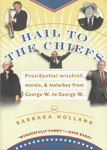
Hail to the Chiefs by Barbara Holland

What was true for Secret Lives of the U.S. Presidents is just as true for this one: we’ve had 43 incredibly interesting and varied men in the White House in our 221 years as a nation. We’ve had men of passion and energy, men who were weak-willed and lazy, men who preferred golf to governance and men who worked themselves to death. Good men, bad men, tall men, short men – this book reminds us of something we need to recall from time to time:

The President is a human being, with all that goes with being one.

Being the President inevitably means becoming a larger-than-life figure. People despised Bush, people adore Obama, venerate Reagan, abhor Clinton, all for what they see as virtues or flaws that only they possess. As if being the President not only means you have to be better than everyone else, but that your failings must be that much deeper.

The point of this book, and of any book on the Presidents, is that they were human beings just like the rest of us. Being President doesn’t make you immune to the fundamental flaws of being human – greed, apathy, short-sightedness – nor does it bless you with any trans-human virtues. Learning about and humanizing these 43 men is a grounding and humbling experience, and can keep you from both setting your expectations too high and allowing your disappointments to overwhelm you when your President doesn’t live up to your expectations.

Having said all that – if you want to read a book on the Presidents, this is a very funny one to read. The style is more narrative than O’Brien’s, and exceptionally snarky. Holland wields her pen like a dagger, stabbing and poking as she goes. She’s not really mean, but she has no problem making fun of these men when it can get a good laugh. And I certainly laughed a lot while reading this, much to the dismay of my co-workers. They come in short shots: “[Clinton] was a big affable fellow who hugged total strangers and felt their pain, like some ancient Norse bear-god, probably named Potus, good-natured but with a weakness for milkmaids.” And they come in longer passages, i.e. the Spanish-American War and the rather clever means by which we got the Panama Canal.

"The Great Communicator" indeed...

It’s a hilarious, irreverent read… until she gets to Reagan, which is where either she’s being so sarcastic that it’s impossible to be sure what’s serious and what isn’t, or she’s absolutely gushing over the Great Communicator. She imbues him with the same invulnerability that he seemed to have while he was President – showing the complaints of his critics, but then deftly removing the sting. George W. Bush gets much the same treatment, which disturbs me a bit, although since the book was published in 2004, I might be willing to chalk that up to post 9/11 fervor. But it does seem that, from 1981 to the present, she’s not being quite as fair and balanced as she was to the other Commanders in Chief. Perhaps it’s harder to be objective when you actually had to decide whether to vote for the guy in office….

Anyway, the final four Presidents aside, it’s a fun book to read and another way to bone up on your Presidential history. They really all were interesting people, in their own ways. Even William Henry Harrison, who may have been too sick to be in interesting President, but still made for a fascinating person.

————————————————
“Many people consider James Buchanan the very worst President ever. I suppose they think they would have done better. I suppose they wouldn’t have let Dred Scott happen, or John Brown, or secession, and there wouldn’t have been any Civil War and everyone would have lived happily ever after. Too many Monday-morning quarterbacks, that’s what we’ve got.”
– Barbara Holland, Hail to the Chiefs
————————————————

Leave a comment

Filed under american history, Barbara Holland, biography, Cormac O'Brien, history, nonfiction, politics, presidential history

Review 157: The Elements

The Elements by Theodore Gray

When I was a kid, my father had the entire Time/Life science series. For you young whippersnappers, Time/Life books were educational series that covered all kinds of topics – history, science, literature, you name it. The idea was that you sign up and they send you books, once a month, until the series was finished or you decided you no longer wanted to receive it.

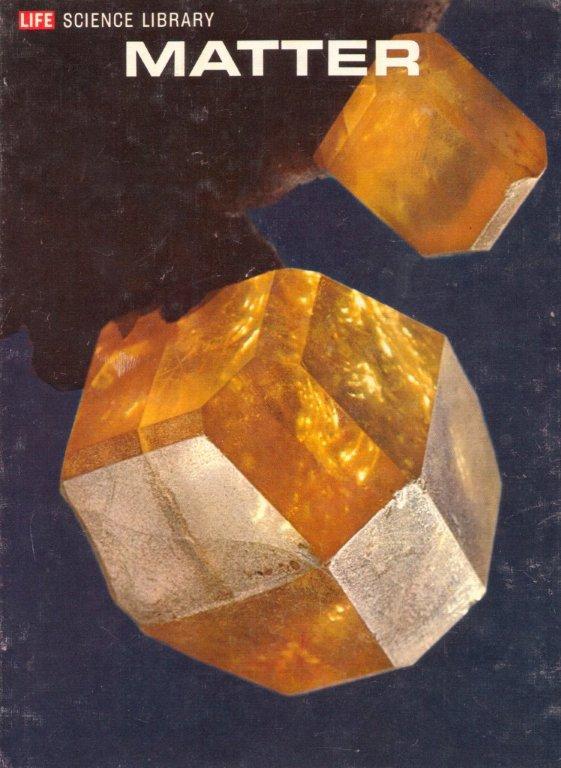
The Science series focused on, of course, science, with books devoted to every facet of physics, medicine, chemistry, biology…. It was a fantastic compendium of human knowledge in those pre-internet days, and I just loved it. I learned about how traveling at lightspeed squashes things by reading a story about spies chasing each other on the Lightspeed Express. I learned about how different drugs affect the mind and body. I learned about how important the wheel was, what water could do, and how the food we eat determines almost everything about our lives.

My favorite volume of all of them was titled Matter, and it was about all the stuff there is. At the center of it was a pictorial representation of all the elements known to science in 1968. Everything from Hydrogen to Uranium and beyond. I could pore over those pages for hours, amazed by the idea that these things were all there was, made up everything around me. Learning that just six of them (Oxygen, Carbon, Hydrogen, Nitrogen, Calcium and Phosphorus) made up most of, well, me was just mind-bending.

I don’t know where that book is now – probably in a box at my mother’s house – but the effect that it had on me has lasted ever since my childhood. In fact, as I was researching this review, I found the place that sells coins stamped from elemental metals and got completely distracted by the struggle to not buy any of them. So that’s how Time/Life made me into a science nerd. Nevertheless, I was thrilled when I saw this book, and had to snap it up as soon as I could. It cost a whole lot less than a 1/10 troy ounce Rhodium coin

Theodore Gray is an element hunter – something I didn’t even know existed when I was a kid. He has made a hobby of trying to collect samples of every element that is is possible to (legally) own, and he’s even built a special table to hold them all. A periodic table, as it were, which won him the IgNobel Prize in Chemistry in 2002. He and Nick Mann went through the collection to make outstanding, high-quality photographs and compile them into a fantastic book about “everything you can drop on your foot.”

My old chemistry teacher would have had these all over the classroom, I'm sure...

It starts, of course, with a basic rundown of what an element is – a substance made of only one type of atom – and what the Periodic Table is – an organization of the elements by their common properties. There’s also a page explaining the physics behind the shape of the table, what an “electron filling order” is, and why the atomic emission spectrum is so important. Fortunately for us non-professionals, he does this is a way that is amusing and understandable. Gray knows that his audience isn’t professional chemists or grad students – it’s people like me. People who are fans of science, but who, for one reason or another, never got into the real nitty-gritty of it. All of this means that it’s a book you can enjoy even if you remember nothing from high school chemistry other than “BIFF=WANG.” [1]

The book starts, of course, at hydrogen, the element that makes the sun burn (“Even at night,” alleges the author, but I’ll believe that when I see it) and ends with Ununoctium, which will no doubt get a proper name once those crazy kids in the high-energy physics lab get around to assembling it. It includes the spectre of the modern age, Uranium, and its evil twin Plutonium. There’s Carbon, without which none of us would be here, and Arsenic, which does a fine job of seeing to it that we cease to be. There’s Iron, which we use in abundance, and Dysprosium, which has almost no uses that you’ve ever heard of. Cesium tells us what time it is, and Krypton, which used to tell us how long things were (before we figured out the speed of light.) Strontium and Calcium, Sodium and Americium, Gold, Silver, Copper and Lead – every element is in here, waiting for you.

All the kids in the playground called me mad - MAD!!!

They’re accompanied by wonderful photographs that illustrate the applications of each element, as well as diagrams showing its emission spectrum, crystal structure, and other information that you may or may not be interested in. Regardless of how much you know about chemistry, you should find this to be a fascinating and enjoyable book. Moreover, if you have kids and you want them to be exposed to science in a way that engages their fascination and imagination, then this is the book for you. Just be ready to raise a science nerd, and if they ask for an elemental coin for their birthday, remember – Lead isn’t just for toys anymore!

—————————————————–
“When you throw a large enough lump of sodium into a lake, the result is a huge explosion a few seconds later. Depending on whether you took the right precautions, this is either a thrilling and beautiful experience or the end of your life as you have known it when molten sodium sprays into your eyes, permanently blinding you. Chemistry is a bit like that: powerful enough to do great things in the world, but also dangerous enough to do terrible things just as easily. If you don’t respect it, chemistry bites.”
– Theodore Gray, The Elements
—————————————————–

[1] Thanks, Mr. Hiza!

Theodore Gray on Wikipedia
Theodore Gray’s homepage
The Elements on Amazon.com

1 Comment

Filed under chemistry, nonfiction, science, Theodore Gray

Review 156: Dave Barry’s Complete Guide to Guys

Dave Barry’s Complete Guide to Guys by Dave Barry

If you’re reading this, and there’s a good chance that you are, you probably know a guy. You may even be a guy, though the way Barry talks about them, you wouldn’t think that guys would be into book reviews. If you know a guy, then this book is for you – it will illuminate some classic guy behaviors and shine some lights into the dark corners that your rational mind has been unable to penetrate. If you are a guy, then this book is also for you. Guys aren’t famous for their introspection, but perhaps it will allow you to understand why it is your wife and/or girlfriend get so frustrated with you from time to time (hint: it’s not her, it’s you).

This book is a tribute to guys (not men – those people have enough advocates as it is) and the ways in which they live. It’s like a documentary in print, really, giving us a rare glimpse into the lifestyle and habits of the modern guy.

So, what exactly is a guy, then? Well, you’re lucky – Barry has included a self-analysis quiz in the first chapter. For example:

As you grow older, what lost quality of your youthful life do you miss the most?
a. Innocence
b. Idealism
c. Cherry bombs

Complete this sentence: A funeral is a good time to…
a. … remember the deceased and console his loved ones
b. … reflect upon the fleeting transience of earthly life
c. … tell the joke about the guy who has Alzheimer’s disease and cancer.

What is the human race’s single greatest achievement?
a. Democracy
b. Religion
c. Remote control

I think you can guess which answers reveal your guyness.

Being a guy means more than just being a man, and in fact there is a very definite difference between men and guys. Men are people we of the male persuasion wish we could be – Superman, Edward R. Murrow, George Clooney. Guys are who most of us turn out to be – Homer Simpson, Bill O’Reilly, Tom Arnold. And there’s nothing inherently wrong with this. It’s just that as long as we assume that guys will act like men, we’re bound to be disappointed. Guys are terribly misunderstood in modern society despite the very important role they play.

Definitely a guy. (photo by John B. Carnett)

For example: without guys, we wouldn’t have a space program. Don’t believe it? What other type of person would deliberately design a rocket, watch it shoot up and then say, “I wonder if we can make a bigger one?” Guys, that’s who. The Saturn V is a tribute to guyness, as is the space shuttle – an endlessly tinkerable machine that almost never blows up.

Without guys, there would be no professional sports, to say nothing of the parasitic fan industry that has sprung up around sports like a remora. Guys have an undying and unyielding attachment to sports teams – you might see a guy leave his wife of twenty years and the children they raised together, but I’d be willing to bet that he would sooner die than switch his team allegiance from, say, Red Sox to Yankees. The unshakable, irrational dedication of these guys is what keeps modern sports afloat despite scandal and disappointment. Now I’m not a sports fan, I’ll admit, but I can certainly relate – I’ll support NASA until the last breath leaves my body, and no force on earth will ever get me to switch from DC Comics to Marvel, no matter how badly DC messes with the characters that I’ve always loved, the bastards.

I also don’t get to play a part in the endlessly frustrating relationship that exists between guys and women, seeing as how I’m, well, into guys. As a side note, The Boyfriend is also a guy, but less than I am – he cleans, for example. And I don’t mean that he cleans the way a real guy cleans – spray a little, wipe a bit and say, “Good enough.” He actually cleans. Like, every day. I know – weird, isn’t it?

Her: "I wonder what he's thinking about right now...?" Him: "Juuuuust sit right back and you'll hear a tale / a tale of a fateful ship..."

Women and guys will always frustrate each other, you see. Women love to read meaning into every nuance of conversation, every raised eyebrow or dropped word. Women want to know what the guy in their life is thinking. The answer is that he probably isn’t thinking. At least, not about what she would want him to think about – her and the relationship they share. In fact, as Barry takes pains to point out, he may not, technically, be aware that he’s in a relationship at all. You ladies have a lot of work to do if you’re hooked up with a guy.

But before you go thinking that the life of a guy is sweet ignorant bliss, think again. You ladies will never know the pain of the Urinal Dilemma, or the feeling of knowing that, no matter how hard you try, you’ll never be able to fix anything in your own home – your wife will have to call a man (probably named Steve) for that. Guys’ minds aren’t terribly complex, but they do run on certain rules. Know these, and your relationship with the guy in your life will go much more smoothly.

It is true that the man/woman divide is an old one, and it’s a place that nearly every comedian has gone to once or twice. Or three times. Or they’ve just staked a claim right there on the joke and built an entire career out of it. But here, Barry isn’t so much talking about the difference between men and women as much as he’s talking about men and guys, which is a fascinating idea.

He's just so disappointed in you...

As I said before, those of us with XY chromosomes and little dangly bits generally want to be Men (with the exception, of course, of those who don’t), and what’s more are expected to be Men. We’re told as youths to “be a man” or be the man of the house. Our role models are Men, our cultural icons are Men. Even in our commercials, we have the Old Spice Man and the Most Interesting Man in the World.

But most of us are fated to be Guys. And deep down, we know that we’ve somehow missed the mark.

Fortunately, we don’t do introspection really well, so it doesn’t bother us all that much.

This is really one of Barry’s classics, a book that everyone can easily enjoy. Whether you are a guy or just know a guy, there are laughs to be had here.

—————————————————-
“To understand guys, it’s essential to remember that, deep down inside, they are biological creature, like jellyfish or trees, only less likely to clean the bathroom.”
– Dave Barry, Dave Barry’s Complete Guide to Guys
—————————————————-

Dave Barry on Wikipedia
Dave Barry’s website
Dave Barry’s Complete Guide to Guys on Amazon.com

1 Comment

Filed under Dave Barry, gender, gender roles, humor, jokes, parody, society