Review 30: Fight Club


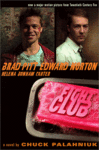
Fight Club by Chuck Palahniuk

Well, now I reckon y’all have seen the movie, so there’s probably not a whole lot that you need to know about this book.

You know Tyler Durden.

He’s the Id, the unchained spirit that wants what he wants and he wants it now. He’s the voice in your head that tells you that everything is worthless, that chaos, death and the end of civilization would be better than anything our so-called “society” could ever create. He’s the one standing over your left shoulder, whispering “Burn it all down. It’ll be fun.” He acts in secret, he has an army of minions, and he has a plan.

Oh yes, you know Tyler Durden.

The narrator of this dark and strange cautionary tale knows Tyler all too well, and tells us of how he and Tyler tried to change the world. It all started very simply – with basement fight clubs where men could let out their rage and frustration on each other. There were very few rules to fight club, but that was okay. Rules were, in fact, the problem. The regimented society in which we live imposes constant rules on us – social rules, cultural rules, corporate rules – that tell us who to be and what to think. The rules of our society have sapped us of our strength and purpose, making us soft. Pliable. Weak.

But Tyler’s plan doesn’t end there – the fight clubs morph into Project Mayhem, a well-oiled anarchist movement, determined to bring down the very fundamentals of our society. With an army at his beck and call, Tyler is sure that his plan will succeed.

It’s a book with a couple of very powerful messages, one overt and incorrect, the other subtle and accurate. The overt message is Tyler’s message – we are a generation with no cause, no purpose. Our lives are governed by what we buy and what we wear, and none of us will die having done anything with our lives. In order to be Real Men, we need to strip away the veneer of civilization – our Ikea furniture, our make-work jobs and our cornflower blue neckties – and rediscover the inner core of ourselves. The brutal, unafraid, unapologetic beast that is Man.

This, to no one’s surprise, appealed to a lot of people when the film came out because it’s a very believable world view. Those of Gen X and beyond are reminded over and over again that the generations before us were the ones who actually did things. The Baby Boomers got herded into the slaughterhouse that was Vietnam, toppled a President, faced down the chaos of the Sixties and fought to change the world. Their parents, of course, were the Greatest Generation – a label that I have come to despise – who fought Hitler and freed Europe. Their parents struggled through the Depression, and their parents fought in the trenches of World War One.

What have we done? Until the beginning of the 21st Century, how had we suffered? What had we sacrificed? Not a whole lot, and I think a lot of us secretly believe that we’re not only not pulling our weight in the world, but that since we have not suffered, we’re not really adult. Our miseries have not been those born of chaos, war and destruction. Ours have been tiny, personal tragedies that are, in their way, insignificant.

I can see where Tyler Durden is coming from on this point – I do sometimes look around me and ask, “Where are our great challenges, our Normandy or our moon landing?” And I fear that without these milestones, my generation will never really be taken seriously.

Unfortunately, this is about where most folks stopped thinking and decided, “Shit, man, he’s right! I wanna start a fight club!” And short-lived fight clubs sprang up all over the country, lasting about as long as it took for people to realize that while Brad Pitt on the movie screen can get beaten within an inch of his life and still look cool, a normal human cannot. They missed the subtle message because it wasn’t one that they really wanted to hear.

The book is not about the triumph of nihilism over a consumer-driven culture. It’s not about being a Real Man. It’s not about being a unique snowflake or a space monkey.

It’s about overcoming both the desire to destroy society and the desire to be completely subsumed by it. It’s about the need for purpose, and the need for connection with other people, and what can happen when one is deprived of those things. Tyler doesn’t show up because the narrator is rootless or bored – Tyler shows up because the narrator has forsaken people for things. He has replaced personal achievement with material gain, and that’s not a very fulfilling way to live.

It is a cautionary tale for our generation – you are not your tragedies. You are not the club you belong to. You are not your scars. You are neither worthless nor undeserving.

You are what you make yourself to be, no matter what Tyler Durden wants.

—————————————————-
“If you could either be God’s worst enemy or nothing, which would you choose?”
– The Narrator, Fight Club
—————————————————-

Fight Club on Wikipedia
Chuck Palahniuk on Wikipedia
Fight Club on Amazon.com
Official Chuck Palahniuk Fan Site

Leave a comment

Filed under anarchy, Chuck Palahniuk, fiction, identity, made into movies, satire, society, terrorism

Review 29: Dresden Files 01 – Storm Front

Storm Front by Jim Butcher

“Hell’s Bells” count: 3

Back in 2006, I made a trip to the States for a wedding. It was good fun, and I figured that while I was there, I’d go and see some other friends and family up and down the East Coast. While in the Albany Area of New York, I was taken to a fantasy/science fiction bookstore so that I could fill up on books – a precious commodity, given their expense and rarity here.

What I found when I walked in was shocking – I had no idea what to buy. I was so far out of the loop of SF/F news that I didn’t know who was good, who was terrible, which mammoth mega-series were worth investing in and which were better off avoided. So I did the perfectly rational thing – I asked my friend for advice.

With very little delay, he picked this book out for me and said, “You need to read this. But,” he warned, “you’ll want to read them all.” I hemmed and hawed a bit, did some mental calculations of suitcase volume and density, and purchased the first three books of the Dresden Files series.

My friend was right. I plowed through those books like nobody’s business and then fumed that I couldn’t go right into the next one. Any series that makes you practically itch for the next book has definitely got something going for it, and it all starts right here.

Harry Dresden is a wizard for hire in Chicago. He is, as far as he knows, the only wizard for hire, and this is both good and bad. Good in that he gets all the weird cases that only a wizard can really handle, plus the bonus of being a standing consultant for the Chicago police department. Bad in that he’s pretty much on his own, wizard-wise, in a city that is just aching to go supernaturally crazy.

As this book opens, Dresden is trying to scrape enough together for the rent, and he’s hit with two cases at once – a woman looking for her missing husband and the police looking to find out who made two people’s hearts burst from their chests. Chasing either lead means danger, but he can’t afford not to take either one. He needs the money, and he needs to keep a good relationship with the police….

Someone, somewhere is breaking the most sacred laws of magic. Binding, killing, coercion and destruction, all uses of magic that are utterly forbidden by the White Council, the mysterious council who oversees the world’s wizarding community.

In the best traditions of gritty detective fiction, the two seemingly unrelated cases eventually merge into one very dangerous investigation, one which challenges Harry and his allies to do more than they’d ever done before.

Butcher has done some fantastic work here for a debut novel, and set the stage for a long and fruitful series. He sets up his world in an efficient fashion, giving us everything we need to know in order to get the story he’s about to tell, and dropping little hints of what’s to come. I really have no complaints.

Well, maybe one. But it’s small, all things considered.

As Dresden tells us in his narration, the world he lives in is one that has seen magic pushed back for the better part of a century in favor of Science. “The largest religion of the twentieth century,” he calls it, and that kind of set off a little red flag in my head.

I’ve heard the old “Science is just another religion” canard before, and I know that it’s nonsense – science doesn’t require faith, it doesn’t require any kind of leaps or hope or suspension of disbelief. Religion certainly does – no one prays with absolute certainty that their prayer will be answered – there’s always a chance (and often a good one) that nothing will come of it. But hold a stone a few feet off the ground and drop it, and that stone will damn well fall to the ground. Moreover, it’ll fall at the same speed when dropped from the same height, no matter who drops it. Every time. No praying, no intercession. Just science.

What makes Dresden’s comment even more interesting is how scientific he is in his working of magic. He has a work space in his basement that he refers to as a lab, and explains to the reader the way that magic works. The principles of Circles, and the necessary elements that constitute a potion. When Harry talks about the power of True Names, he tells us about a known effect of using someone’s name for spellcraft, one that will work for any wizard, so long as he knows how to say the person’s name the right way.

As an interesting aside to that, Harry gives us his full name – Harry Blackstone Copperfield Dresden – right at the beginning of the book, on page two. This would imply an interesting level of trust between the narrator and the reader, as the character knows full well the dangers of letting one’s full name get out of your hands.

He talks about rules and laws, cause and effect, as things that he’s studied and remembered because they work. If magic were truly non-scientific, there would be no way for Harry (or any other practitioner) to predict what would happen when a spell was cast. But when he draws a circle and gives it a bit of a charge, Harry knows exactly what will happen. This alternate world may have sources of energy that ours doesn’t, and certain physical laws that vary from ours, but science is no less present in Harry’s magic than anywhere else.

So, that one little nitpick aside, I found this to be a very enjoyable book. What’s more, it was an excellent introduction into what has turned out to be a fantastic series. I can’t wait to see how it all turns out in the end….

—————————————-
“There is no truer gauge of a man’s character than the way in which he employs his strength, his power.”
Harry Dresden, Storm Front
—————————————-

The Dresden Files on Wikipedia
Storm Front on Wikipedia
Jim Butcher on Wikipedia
Harry Dresden on Wikipedia
Storm Front on Amazon.com
Jim Butcher’s homepage

Leave a comment

Filed under detective fiction, Dresden Files, fantasy, Jim Butcher, murder, mystery, wizardry

Review 28: Confessions of an Economic Hit Man


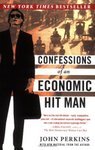
Confessions of an Economic Hit Man by John Perkins

This book probably would have enraged me if I hadn’t already more or less known what it was talking about. As it was, I was resigned and depressed.

The book is a short autobiography of an Economic Hit Man (EHM) who saw the error of his ways. The idea of the EHM, as he describes it, is to manipulate the governments of developing nations to accept huge loans from the IMF and the World Bank based on inflated projections of future income, under the theory that they would experience huge economic gains from the projects – things like electrical grid upgrades, roads, dams and the like. These nations would then become indebted to the United States and forced to give business to US corporations, thereby effectively putting that nation under US control. He calls it the Corporatocracy, and he was a part of it. He traveled around the world to manipulate cash-strapped world leaders into signing their nations over to the control of US corporate interests.

He describes himself as one of the earliest generations of EHM, the ones who knew exactly what they were doing. Perkins describes his entry and rise in the EHM world as a series of decisions inspired by coincidences, at least at first. His childhood was marked by clear class differences, growing up in a small New England town and going to school with the children of the super-rich. His family taught at the school, thus gaining him both entry into classes and a raging feeling of inferiority and anger.

After doing a stint in the Peace Corps, he was approached to work for the NSA. Following the NSA screening, he was tapped to work for MAIN, an engineering company who, in the 60s and 70s, was at the forefront of modernizing developing nations. At their expense, of course.

When Perkins was initiated into this world of money and power, he was explicitly aware of what he was doing: he would vastly overstate the economic potential of, say, a hydroelectric dam project, leading to the leaders of governments such as the Philippines, Columbia and Venezuela taking out massive loans based on expected future returns. When those returns didn’t come in – and they never did – they were forced to make concessions, which always, always benefited the interests of MAIN and other US corporations. By doing so, they became part of the American Economic Empire, without one politician ever laying a finger on it.

It’s considered the softest method of empire-building. Take a country that needs money to help its people, and arrange so that the government has to spend upwards of 50% of its GNP repaying loans. The people get nothing, a few rich leaders become richer, and US corporations spread further out into the world. All forwarding the cause of US economic interests. For Americans, it means cheaper gas, food and raw materials. For the corporations involved, it means higher and higher profits. For the people of the developing countries targeted, it means poverty and disenfranchisement.

The EHMs don’t always succeed, though – remember Panama? We had the canal, and made lots of money off it. Until the leader of Panama, in the 70’s, decided to take it back. Omar Torrijos was that rare breed of third world ruler who honestly wanted to help his people, and he knew that the best way to do that was to re-assert control over the Panama Canal. He knew what the EHMs were up to, and wouldn’t have any part of it. In his recollections of their meetings, Perkins sees him as the kind of leader every country should have, and it was his example that led him towards leaving this world. His example and, of course, his death.

When the EHMs fail, the jackals come in and people start dying in “mysterious” plane crashes. Torrijos was replaced by Manuel Noriega, who was in our pocket, but not quite far enough. He didn’t toe the line that Washington wanted, so we made him up to be the Hitler of South America, invaded Panama without cause (see, Iraq is not a new thing) and took him back to the US. The result? The canal is effectively back under US control, and any advances that Torrijos might have made are gone.

One of the reasons Perkins left the industry and wrote this book is because he’s worried about the future of the EHM. Not that it’s fading, but that it’s getting stronger. With the ever-increasing pace of globalization, governments are jockeying with corporations for power around the world, and the EHMs are coming with them. But the new breed is different. The people following in Perkins’ footsteps honestly believe that they are trying to help these beleagured countries They see themselves as part of a great march towards progress, never really noticing that the progress only really benefits them.

One thing I noticed about this book. While I don’t doubt Perkins’ honesty and intentions in writing this book, I do wonder how much of the “torn between two worlds” persona he adopts is honest. Throughout the book, he talks about his moments of indecision, of inner conflict as he tries to justify the things he’s doing. He talks about meeting dissidents in Iran, going to anti-American puppet shows in Bali, encountering supercilious Canal Zone residents in Panama, all of which serves to make him look like he’s much more thoughtful than the average corporate warrior.

Perhaps he’s representing himself sincerely as a person caught between his moral code and his pride. He did, after all, leave the business – and the vast amount of money and power that it offered him. But I kept thinking, how much of that conflicted feeling was real, and how much was remembered? It’s a small point, but one that kept nagging at me. It doesn’t add to or detract from his argument, however.

This is not a happy book, and it’s pretty likely to piss you off. It’s not about the US government, mind you – it’s about US corporations assisting the government in its imperial ambitions. It’s about the marriage of economics and governance and its dark, dark offspring….

—————————————————–
“Confessing a sin is the beginning of redemption.”
-John Perkins, Confessions of an Economic Hit Man
—————————————————–

Confessions of an Economic Hit Man on Wikipedia
John Perkins on Wikipedia
John Perkins’ website
Confessions of an Economic Hit Man on Amazon.com

Leave a comment

Filed under economics, ethics, history, John Perkins, memoir, nonfiction, politics

Review 27: Three Cups of Tea


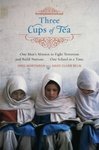
Three Cups of Tea by Greg Mortenson and David Oliver Relin

There are times when people recommend books to me, saying “You need to read this,” or, “I think you’ll enjoy this book,” and I take their recommendation seriously. I’ll put it on my Amazon wish list and then go on with my life. If I see it on the bookshelves, and my mood is right, I might pick it up. I take recommendations seriously, of course, but I know that they’re usually not imperative, in the same way that, say, a doctor recommends quitting smoking because your lungs resemble overcooked corned beef hash.

In this case, however, the recommendation was done by my stepfather, who gave a copy of this book to everyone for Christmas. Seriously, we were opening presents on Christmas morning, and by the time I picked up his present, the whole room chimed in with, “Three Cups of Tea!” Which, indeed, it was. To me, this counts as high praise and an imperative recommendation. I don’t usually buy books for people unless I’m damn sure they’ll like it, and I have never bought multiple copies of the same book to give to everyone I know. Even though this was a book I probably never would have bought for myself, I bumped it up in my reading queue and proceeded to devour it in a few days.

Now I understand.

This is the story of Greg Mortenson, an American man with a passion for climbing, and his story begins with a failure. He wanted to climb K2, the second-highest peak in the world and arguably one of the toughest, as a tribute to his sister who had died some time before. He attempted the climb in 1993 but did not succeed. Indeed, on his way down the mountain, he got lost, and getting lost in that part of the world was close to a death sentence. In the cold and rarefied air, where he couldn’t be certain of living through the night, Mortenson’s life was saved by a tiny village called Korphe in northern Pakistan.

The residents of Korphe took in this starving, half-frozen American man and helped him get well enough to return home. They showed a stranger great compassion, sacrificing resources that they would need for themselves in order to get through the winter. That in itself would make for a great story. But what happened while in Korphe is the trigger for everything that came next.

While the elder of the village, Haji Ali, showed his village to their guest, Mortenson was stunned by their poverty. Women and children died young, from diseases and problems that are unknown to us in the west. They had no electricity and no running water, and lived lives that were unforgivably hard. But what struck him hardest was the children trying to learn. They had no school – the government of Pakistan was extraordinarily cheap when it came to funding education in its more far-flung villages – but the children were still trying to learn. They would sit outside in the cold and the wind, scratching their numbers in the dirt, trying to learn the lessons that their part-time teacher left for them.

Upon seeing that, Mortenson made a promise to Haji Ali and the village of Korphe: he would build them a school.

I imagine that, looking back on that moment, Mortenson himself is probably amazed by how radically those few words – “I will build a school.” – would change not only his life, but the lives of thousands more people around the world.

The book is an account of how Mortenson went about building the school for Korphe, and what resulted from that effort. Just getting that school built was a challenge, financially, personally and spiritually. In addition to the basic fund raising problems that would accompany any such effort, he also had to deal with haggling in a foreign land, keeping other villages from stealing his resources to build schools for themselves, religious fatwas against him, and the discovery that before he could build a school, he would have to study up on bridge-building. Indeed, even once he got all the material into the village, there were cultural divides that put the whole process in jeopardy.

In order to fulfill his promise to Haji Ali and the people who had helped make the school possible, Mortenson had to learn how to work with the people of northern Pakistan, and that’s where the story gets interesting. He did not come to them as a savior. He came to them as a partner. He paid special attention to observing their customs and respecting their ways. Though not a Muslim, Mortenson learned how to pray as a Muslim and how to use the tenets of Islam to ensure that he didn’t sabotage his own efforts. He made it very clear that the school he built – and all the schools that came afterward – were not his schools. They were built by and belonged to the people of those villages, the people of Pakistan and Afghanistan. By helping them help themselves, Mortenson became a figure of hope for many remote and uneducated parts of Central Asia.

His charitable works aside, there is another level to this story, one that the writers take great pains to illustrate.

When 9/11 hit, many people’s first reactions – including mine – were rage. And we thought of our response the way nations throughout history have: a violent one. Planes and guns and bombs, that’s what would show them who’s boss! But as time passed, and the initial rage wore down, it became pretty clear that violent retaliation probably wouldn’t work on the kind of people who were willing to kill themselves in the name of ideology. There was no way that military attacks would eradicate terrorism. They might allow us to reduce their resources and their personnel, and it looks really good on CNN, but the root causes of terrorism would remain: ignorance and hatred.

I remember telling someone that if we want to stop terrorism, we have to eliminate the reasons for terrorism. We have to educate people and raise their hopes for the future. We have to show them an alternative to the mullahs and the radicals and show them that it is better to raise themselves up than to tear other people down.

Naturally, in a post-9/11 world, I was mocked for my bleeding-heart, peacenick ideas and told that I didn’t know anything about anything.

I am gratified to know that I was not the only one thinking that, and even more grateful to know that people like Mortenson and his Central Asia Institute were working with the same goal in mind. By building schools where there were none, by educating women and girls and teaching them to honor their own goals and potential, and by engaging with the vast majority of non-terrorist residents of Central Asia, Mortenson has probably done far more to promote peace in that corner of the world than any military force could. He has not only helped people help themselves, he has shown the compassionate, generous side of America that the proponents of radical Islam ignore. Thousands of students have passed through those schools, which means that there are thousands fewer people who might be willing to die in the name of a warped terrorist ideology.

It’s a great book, which opens a vivid window into a part of the world that most Westerners greatly misunderstand. It illustrates the wide variety of cultures and peoples that live in Central Asia, and the cultural history that has given rise to such a potential for conflict. The writing is very engaging, and there were a few points where I thought that the landscape descriptions were worthy of Tolkien – high praise indeed, I should think.

However, if I do have one problem with the book, it does fall with the writing. Aside from its melodramatic turns from time to time (when Mortenson gives a speech to a nearly empty room, you can practically hear the violins in the background), there’s a bias problem that bothered me. From the very beginning, Mortenson’s co-author, David Relin, admits that he supports Mortenson’s agenda in Central Asia. That would be fine if he weren’t presenting himself as a journalist, but since he is, I spent most of the book wondering how much of the drama was polished up to make for a more compelling story (which would, in turn, lead to more public support for Mortenson).

Indeed, Relin tells in his introduction how Mortenson gave him a list of enemies, saying, “Talk to them, too.” But the only actual criticism of Mortenson came from some CAI colleagues who said, in essence, “He just works too darn hard!” Any other enemies of Mortenson’s were either non-existent or caricatured, like the mullahs who brought their gangs of toughs to try and stop the building of schools. The opposition to his work was used as a set up to remind us how awesome he was. For example: several times, local religious leaders pronounced fatwas against Mortenson and his organization. Mortenson’s supporters in Pakistan then turned to the highest Islamic court in Qom, Iran, for their judgment in the matter. In what was admittedly a very dramatic scene, the court’s decision was revealed: Mortenson’s work was the kind of work that Allah would have any Muslim do, and there was to be no opposition by any Shia against him.

And that was that. As far as we, the readers, know, those angry mullahs just said, “Oh. Okay then, where shall we lay the foundation?”

Other than the somewhat messianic tone of the book towards Mortenson, I found it very compelling and enjoyable. It’s good to know that there are people like him out there, who are so single-minded in the pursuit of doing the right thing that they will overcome any obstacle in their path to see that it is done. It is also a refreshing view of an all-too-often misunderstood part of the world, a place which we really do need to understand if we ever want to bring the age of terror to a close.

So, I recommend this book. I may even put it up on Bookmooch to see that it gets around. But if you’re feeling bleak about the future of the United States’ relationship with the rest of the world, this will make you feel a little better. Go read.

————————————————
“You have to attack the source of your enemy’s strength. In America’s case, that’s not Osama or Saddam or anyone else. The enemy is ignorance. The only way to defeat it is to build relationships with these people, to draw them into the modern world with education and business. Otherwise, the fight will go on forever.”
– Brigadier General Bashir Baz, Three Cups of Tea
————————————————

Greg Mortenson at Wikipedia
Three Cups of Tea at Wikipedia
Central Asia Institute at Wikipedia
Three Cups of Tea homepage
gregmortenson.com
davidoliverrelin.com
Central Asia Institute homepage
Pennies for Peace


The Gion Festival at Wikipedia


Leave a comment

Filed under Afghanistan, David Relin, education, Greg Mortenson, Pakistan, peace

Review 26: Hardcore Zen

Hardcore Zen by Brad Warner

This book is very different from most other Zen books out there.

A lot of books on Zen and Buddhism in general tend to be… how shall I put it… flaky. They tell you that if you eat a certain way or chant certain mantras or take certain drugs, you will attain the state of Nirvana, in which all your suffering will end and life will be an eternity of bliss thereafter. It’s the classic self-help contradiction: happiness is just so easy to find, but you won’t find it unless you read My Book. And also buy the candles, incense, mandala cloths, chanting CDs, windchimes, power crystals…. Despite claiming that they’re not in it for the money, a lot of those purporting to offer enlightenment to the masses have a whole lot of stuff to sell.

Warner, to put it simply, calls this “bullshit.” He doesn’t try to affect the “wise and learned sage” voice in his writing. I imagine him more as a jittery skinny guy, telling you about the time he saw the entire history of the universe unfold around him in a dream. His writing is energetic and colloquial, and he talks to the reader as an equal, if a slightly less informed equal than himself. He tells you right from the beginning that you have no reason to do what he’s done, or even to believe anything he has to say. But he’s going to say it anyway because, as far as he knows, it’s the truth.

He has an unusual background for a Zen Master. If you’re anything like me, when you hear those words you think of a little bald guy in the mountains, calling people “grasshopper” and staring at nothing. Warner is not that. He talks a lot about his experiences as a punk rocker back in the days when being a punk rocker actually meant something, and this is pretty important.

You see, one of the driving forces of Punk, at least when it first emerged, was the idea that doing what society approved of was not being “real.” In an era of power ballads, disco and soft hippie pablum, Punk music went the other way – loud, fast and hard songs full of anger and blasphemy. While everyone else was growing out their hair and trying to make it look like John Travolta’s, punk rockers were wearing mohawks or shaving it all off. The basic message of punk: whatever is acceptable to society is unacceptable to me.

While that spirit of individualism and rebellion only lasted a little while, it did, in that time, share something with Buddhism, and Zen Buddhism in particular: Question everything. Never take anything at face value or accept it just because someone tells you to. Ask questions, criticize, poke, prod and be a general pain in the ass until you’re happy with the answers you’ve got. And even then, keep questioning your own conclusions.

Another thing that Warner brings up again and again is that, with Zen, there is no requirement that you actually do what people tell you. There’s no such thing as a Zen evangelist or Zen missionaries going out to convert the heathens. Buddhism, at least the way Warner sees it, is a path for the individual, not the group. The only person who can find the way is you. There will always be teachers out there who can make suggestions, but what it really comes down to is the individual doing the hard work – meditating, thinking, and questioning every day.

I like this approach. One of the things that turns me off from your standard religions is that they generally frown on independent thought. You’re not supposed to think about what Jesus’ sacrifice on the Cross meant, you’re just supposed to thank Him for it. You’re not supposed to think about why God doesn’t want you to eat pork, or why He wants you to abstain from alcohol, or why He thinks women should cover their heads, you’re just supposed to do it. Religion, in my mind, stifles creativity and tries to absolve people of the responsibility of running their own lives.

And Buddhism is not really that much different, despite Warner’s presentation of it here. It has its scriptures and its prohibitions, its rules and regulations which many people around the world follow without question. Just look at the “Free Tibet” people and you’ll see how even Buddhism isn’t free from the virus of the Argument From Authority. I’d bet that if the Dalai Lama announced tomorrow that eating cats was a sacred and venerable tradition for Tibetan Buddhists, Richard Gere would start eating kitty steaks within a week.

But the idea is sound. The idea is that there is no such thing as Authority. There is no human being, past, present or future, who is more qualified to tell you how to run your life than you are (even if you aren’t all that good at it yourself). All it takes is dedicated thought and concentration to figure out how to live your life well, and the weird thing is that most people who do this tend to come to the same conclusion: the best way to live your life is to do the right thing, right now.

What is the right thing? Only you can figure that out.

Zen interests me, for many reasons, and a lot of them were addressed in this book. The idea that the past is the past and the future doesn’t exist is one that I picked up years ago and has made life a lot less stressful. The focus on personal responsibility is another aspect that is quite attractive. I find that people in this modern age like to dodge their responsibilities to themselves and others, and I find that disturbing. We need to take responsibility for our own actions, and blaming the government or our parents or video games for our suffering really isn’t going to make the world a better place.

The first step to having a better life is taking control of it. But don’t just take my word for it, and don’t take Warner’s. Work it out for yourself.

————————————————
“Question Authority. Question Society. Question Reality. Question Yourself. Question your conclusions, your judgments, your answers. Question this. If you question everything thoroughly enough, the truth will eventually hit you upside the head and you will know. But here’s a warning: It won’t be what you imagined. It won’t be even close. ”
– Brad Warner, Hardcore Zen
————————————————

Hardcore Zen on Wikipedia
Brad Warner on Wikipedia
Hardcore Zen at Amazon.com
Zen Buddhism at Wikipedia
Introduction to Zen from Kodaiji Temple

Leave a comment

Filed under Brad Warner, Buddhism, nonfiction, philosophy, religion, Zen

Review 25: Three Men in a Boat

Three Men in a Boat (To Say Nothing of the Dog) by Jerome K. Jerome

This book puts me in mind of the time my friends and I decided it would be a great idea to go to my mother’s house in the Poconos during spring break.

It was back in the late nineteen-hundreds, and we were a college cadre of Dungeons & Dragons players who had a great campaign going. “Spontaneous Combustion” we called ourselves, because of our habit of blowing things up at any opportunity. Not a weekend would go by that we didn’t burn, destroy, incinerate or otherwise defile something in our imaginary world. But we were exhausted from the rigors of trying to balance our school life with our raping and pillaging. I say “raping” because it really belongs there with “pillaging,” though to my knowledge there was no raping of anyone. Dismemberment, yes, and I believe my character managed to give a lot of people syphilis, but in a rather unconventional way.

The plan was simple: we’d all go down to the house in the mountains for a few days, have marathon D&D sessions, and generally enjoy each others’ company in quiet isolation from the world. The house was an idyllic place – all trees and silence and snow, with the occasional deer or wild turkey. It would be a truly beautiful and serene place for us to rest our wearied bodies and stretch our wild imaginations.

So, much like Jerome K. Jerome and his companions, Harris, George and, of course, Montmorency, who decide in this book that the best tonic for their youthful ennui would be a boating trip up the Thames, we all headed to the mountains of Pennsylvania to soothe our troubled souls and to bond as friends and boon companions.

Also like Jerome, Harris and George (to say nothing of Montmorency), we had no idea what we were really getting ourselves into.

The three men (and the dog) of Jerome K. Jerome’s story are like most travelers throughout time since the idea of traveling for leisure was invented: they have a Plan. The Plan, of course, is to have a good time with one’s friends while avoiding anything resembling work. Unfortunately, the world will often have other plans. In the case of this book, those plans involved angry swans, annoying lovers, unusually busy inns, bad weather and general vehicular mishaps.

Now that I think on it, though, the trouble they had with their boat – and there was trouble – wasn’t quite as bad as the trouble I had with my car on our way to the role-playing retreat. Thanks to a strategically placed pothole, I managed to blow out both passenger side tires on my car. Not all at once, though. The rear one went flat right away, causing the small caravan to stop on the side of a New Scotland road while I panicked and my friend Jon fixed the tire. I would have done it myself, of course, but this was the first Misfortune to befall my beloved car – whose name, for reasons too complicated to go into here, was Phoenix – so it fell to Jon to do it. The rest of our crew were milling about patiently, except for Jim, who was lighting road flares so that anyone who happened to be driving down the sunlit, arrow-straight, bone-dry stretch of road might not kill us all.

The second flat tire occurred in a small town, the name of which I have forgotten. Or blocked out. There had been a slow leak, and I was on my way out of the liquor store (we had to buy liquor, there was no question of that, though whose idea it was to buy the Jeroboam of red wine escapes me) and Jon says, “Don’t get angry.”

“Why would I get angry, Jon?” I replied, doing a passable imitation of HAL from 2001.

It turned out that the other passenger side tire had gone flat while we were shopping. This left us in a small town on the outskirts of Nowhere, at 8 PM on a Friday night in need of a tire. By some miracle, the AAA man we called knew someone who could sell us a tire so we could get on our way. The man, who turned out to bear a remarkable resemblance to Gene Wilder from Young Frankenstein, was happy to sell it to us, though he wouldn’t actually put it on the car. Possibly because he wanted to save us money by not charging us for the labor, or possibly because my car – adorned with a variety of bumper-stickers and interesting rear-view amulets – looked like it belonged to an angry gay druid. Whatever his reasons, we got a new tire on the car and were grateful for his help.

In discussing any trip, of course, one must eventually come to the weather. For Jerome and his friends it was the rain that defied their best efforts to stay dry and forced them to find lodgings in towns where places to sleep were already scarce. For us, it was snow.

Snow is common in the mountains through early spring, but we were prepared for that. Mom had called the plow service and assured us that the driveway would be clear when we got there. When we arrived (having first worked out the Problem of the Mismarked Map), we found that the driveway had not, in fact, been plowed and the snow came up to mid-thigh. We parked on the street, slogged through the snow and went to open the door. When the key wouldn’t turn on the second lock, I pretty much gave up and just wandered around the snow saying, “She only gave me one key,” over and over again until someone managed to get the door open. After about twelve hours of cataclysmic travel, we were There. We had arrived! Our objective was obtained and our journey was done! We could finally unwind and relax.

One of the difficulties that we shared with Jerome and company was with food. They packed well enough, of course, with all kinds of comestibles, but like all people who are not used to preparing and procuring their own food, the comedy that resulted was plentiful. Beef without mustard, infinitely peelable potatoes, strange and unfathomable stews – any traveler who goes on a journey without having some kind of food misadventure has missed half the fun.

For us, it was steak. Get a group of men together and their appetites will turn to meat. Oh sure, there might be a few green, hippie, godless Commie men out there who lean towards tofu, but they’re really thinking of meat, no matter what they say.

We had bought some steaks – the best our college-student budgets could handle. But how to cook them? For in every group of meat-loving men, everyone is a meat expert. It’s a mark of True Masculinity, the ability to cook a steak, and the insinuation that one cannot cook a steak is tantamount to calling the man a queer sissy fairy-boy.

What resulted from this battle of culinary wills was a dinner that consisted, mainly, of shoe leather, with everyone holding grudges against everyone else for Not Doing It Right. This was about the same time I learned firsthand why one should never chug blackberry brandy.

The myriad of problems that people have when traveling are, unfortunately, universal. Poor planning, bad luck, nasty locals, bad weather, pigheadedness and the unfortunate tendency of the world not to live up to our expectations of it – all of these conspire to make travel an endurance trial. What surprised me the most about this book was how similar Jerome K. Jerome’s troubles had been to my own.

As bad as things can be at the time, though, there comes a time, afterward, when you can look back and laugh. Safe at home, Jerome took his eventful, awful trip up the Thames and made it into an incredibly funny classic of English literature. The fact that the book is over a hundred years old doesn’t take away at all from its comedy value because the humor comes from the universal nature of travelers and traveling. We all go on our journeys hoping for a relaxed, congenial time, but we tell stories about the mishaps, misadventures and difficulties. They are, paradoxically, the most fun part of the trip.

So I laughed along with Jerome and his friends, remembering all the while the infighting, bad food, bad moods, burnt countertops, spiked spaghetti sauce and everything else that made that one Spring Break trip so terribly, terribly memorable.

Although, all things being equal, I would have been just as happy if we’d had… y’know, a good time.

—————————————————
“They cursed us – not with a common cursory curse, but with long, carefully thought-out, comprehensive curses, that embraced the whole of our career and went away into the distant future, and included all our relations and covered everything connected with us – good, substantial curses.”
– Jerome K. Jerome, Three Men in a Boat
—————————————————-

Three Men in a Boat at Wikipedia
Jerome K. Jerome at Wikipedia
Three Men in a Boat at Amazon.com
Three Men in a Boat at Wikisource

Leave a comment

Filed under classics, England, friendship, humor, Jerome K. Jerome, memoir, travel

Review 24: Death from the Skies!


Death From The Skies! by Phil Plait

I’ve always found the end of the world fascinating. So many cultures have put together their own ideas of how the world will end, from the Norse Ragnarök to the Christian apocalypse to the Hindu cycle of creation and destruction. We live in a world that was, for a long time, unpredictable to us and on many occasions seemed to be outwardly hostile. Our ancestors faced floods and earthquakes and disease, with no idea of where these things came from, why they happened or how to stop them. And so they made myths and stories to explain the dangerous world in which they lived. From that, they extrapolated – if the world is this dangerous now, how dangerous could it be if it really tried? And so came our myths of a world that not only succeeds in hurting us, but in wiping us out altogether.

Even in the modern age we have our myths. Books, television, and movies all use the end of the world (or end of a world) to tell stories – usually about the resilience of mankind and our ability to pick ourselves up, dust ourselves off, and rebuild human society, hopefully for the better. As good as this is for fiction, there are two problems when we try to apply these myths and stories to the real world: the world will end, one way or another, and no amount of heroics, cleverness or pluck will save us. Not in the long term, anyway.

Science has accomplished what religion and fiction could not – it has seen the future and can make fairly accurate prophecies about how this world, and our civilization upon it, will die. Renowned astronomer Phil Plait is your prophet for this trip into all the ways the world will end….

In this book, Plait looks at nine possibilities for the end of the world as we know it. In order, they are:

Death by Impact
Death from the Sun
Death by Supernova
Death by Gamma Ray Burst
Death by Black Hole
Death by Aliens
Death of the Sun
Death by Galactic Collision
Death of the Universe

In each chapter, Plait outlines the ways in which that specific event could injure or kill us, with as much science as he can comfortably put in. He explains, for example, why we can’t just send Bruce Willis up to hit an incoming meteor with a nuke (it probably won’t work) and why any black holes produced by the LHC won’t do us any harm. He looks at how a supernova happens, what it is about a black hole that turns it into one of the deadliest weapons in the universe, and tries – very, very hard – to make the reader understand exactly how long “forever” is. (Hint: it’s a lot longer than you think. Longer than that, even. Nope, keep going….)

Each chapter outlines the processes by which we could experience the destruction of our civilization or, in a few cases, the planet itself. He looks at the scientific foundations of these events, explaining in detail what it is about the sun, for example, that makes it a cauldron of chaos and torment, or why we really, really don’t want to get even a smallish black hole anywhere near the planet. And I have to say, of all the unlikely ways we could be toasted, gamma ray bursts are my favorite – a deadly beam of energy from thousands of light-years away, cooking the planet all the way down through the crust and utterly devastating the planet’s ecosystem so as to kill off anyone who was lucky enough to be on the other side of the world. I mean, wow. And there’d be no warning, either. By the time we knew what was happening, it’d be too late. So that chapter (with a line paying homage to Douglas Adams, even) is just mind-boggling.

Probably my favorite chapter, though, is the one about supernovas, mainly because his careful, step-by-step description of exactly how a supernova occurs made me think, “What I wouldn’t give to see that in person,” disregarding the fact that a) the best parts would happen way too fast for me to observe and b) it would vaporize me. Still, it’s a beautiful and terrifying chain reaction, which Plait describes in fantastic detail. The other chapter that evoked the same reaction was the one on the end of the universe. Despite timelines for which the word “vast” is terribly inadequate, Plait tells us what science knows about how the universe will end – the ever-increasing expansion of spacetime, the eventual death of the stars, evaporation of galaxies, the reign of the black holes and the slow, careful deaths which even they face. It all ends in darkness, all matter gone into a few stubborn subatomic particles and the eventual collapse of the very fabric of space and time.

And as bleak and miserable is the future looks, I still thought, “I really want to see that.” So if I can figure out how to live one googol years (that’d be a one with one hundred zeros after it [1]) and not have my very atoms decay into nothingness, then I’ll be able to… um… be really, really bored, probably. Since after that, there’s absolutely – literally – nothing to do. Until the universe experiences vacuum collapse, or a brane collision, possibly hitting the reset button on the cosmos and we get to do it all over again….

Most of what’s in the book isn’t new to me, but that’s probably because I grew up reading Cosmos, and I follow countless science TV shows, podcasts and blogs (including Plait’s own Bad Astronomy blog, which is well worth keeping up with, as well as his regular appearances on SETI’s podcast, Are We Alone? and occasional guest appearances on The Skeptics’ Guide to the Universe – both of which make for excellent listening). For people new to astronomy, though, this will be a rather dense learning experience – and reading it will be time well spent.

In addition to its user-friendly style, I really like the way it’s arranged – from small-scale (relatively) to large, with “Things that are absolutely certain to happen” at the beginning and end, and with “things that probably won’t happen” in the middle. And my favorite aspect of this book is that each chapter begins with a short vignette describing that particular end of the world, from the perspective of someone watching it happen. It’s not something you often see in books of this nature, and I’m really glad that Plait decided to put it in there. It makes it a little less academic and abstract and more real.

For all its death and destruction, the book isn’t really a downer. For one thing, while things like asteroid impacts and the death of the sun are inevitable, they don’t have to be fatal, and Plait describes a few ways in which – in theory – we (or our distant, distant descendants) might be able to avert or at least mitigate these catastrophes. It’s not easy, of course, but saving the world never is.

It’s mainly a marvel at the forces that surround us in the universe. It’s easy to forget, looking up at the sky from our brief, limited scale, that the universe isn’t just some pretty lights drifting about in empty blackness. Things are exploding and dying, burning and freezing, moving quickly and slowly – the cosmos is replete with activity and danger. Most of the universe isn’t just uninhabitable, it’s actively hostile to life as we know it. And yet, without the black holes, the supernovas and the galactic collisions, without massive meteor impacts and breakaway comets, solar flares and deadly radiation – without all that, life probably wouldn’t exist at all. So read this book, and take a moment to appreciate how lucky we are to be here at all, all things considered….

————————————————-
“They say that even the brightest star won’t shine forever. But in fact, the brightest star would live the shortest amount of time. Feel free to extract whatever life lesson you want from that.”
– Phil Plait, Death from the Skies!
————————————————-

[1] 10 000 000 000 000 000 000 000 000 000 000 000 000 000 000 000 000 000 000 000 000 000 000 000 000 000 000 000 000 000 000 000 000 000

Phil Plait on Wikipedia
Bad Astronomy blog
Death from the Skies! on Wikipedia
Death from the Skies! on Amazon.com

Leave a comment

Filed under apocalypse, astronomy, astrophysics, death, nonfiction, Phil Plait, science, survival, technology

Review 23: American Gods


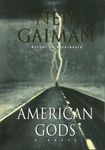
American Gods by Neil Gaiman

I remember waiting a long time for this book. Neil documented the process of writing it on his blog, so every few days I would get a little glimpse at what he was doing – and it drove me nuts. Living in Japan, I can never be sure when my favorite entertainment will make it over here. Movies and books can take months to get from the US to Japan, and while I’m waiting not-so-patiently, all my friends at home have just devoured it and are in the process of raving about how awesome it is. Oh, sure, the hyper-sellers like Harry Potter might have a worldwide release, but Neil wasn’t exactly a mainstream superstar when this was written.

So yes, one of my main memories associated with this book is frustration. Fortunately, when I picked up the book during a trip home back in 2001, my frustration was erased and replaced with profound satisfaction.

American Gods was one of Gaiman’s first full-length novels, though I may be wrong about that. It was not, of course, his debut – he had made his name a household word in fantasy-reading households by penning the epic comic book series Sandman, in which he proved that he was able to marry huge metaphysical themes to personal narrative. He could make the dissolution of worlds pale beside a broken heart and make you believe that even the simplest of life had vast meaning.

In other words, this man has some serious writing chops.

As the title implies, in this book Gaiman takes on the gods, and asks a very interesting – and important – question: what happened to the gods that came to America? I’m talking about the Old Gods, the gods that had been living in the hearts and minds of people for thousands of years. Leprechauns and dryads, three-in-one forces of fate and representations of the seasons. Easter and Odin, Bast and Anubis, gods of once-great nations and unknown villages. As their people came to America over the millennia, they brought their gods with them.

But as the people stayed in America, they changed. They grew. And the gods discovered that America is not a good place for them.

Now the old gods are small and unworshipped, save by a few tiny, dwindling pockets of their old culture. What’s more, new gods are rising, gods of media and internet, highway and television and government. And, as has been said in countless westerns and cowboy movies, there isn’t room for all of them. There will be a reckoning, and a man named Shadow is in the middle of it.

Shadow is a convict, nearly at the end of his time in prison. He wants nothing more than to get out of prison and rejoin his wife. He gets one of those wishes when he is released early. Unfortunately, he is released early to attend his wife’s funeral.

Without friends or family, Shadow is aimless and alone. It is in this condition that he meets the enigmatic Wednesday, a man who seems to know Shadow and his situation, far better than any stranger should. He offers Shadow a job – to assist Wednesday when he needs it, protect him if he has to, and sit a vigil for him if he dies. With nothing to lose, Shadow accepts the deal. In so doing, he finds himself facing a war of gods that he never knew existed.

It’s a great story, on many levels. In one sense, it’s a love letter to America. Shadow’s journey takes him through small towns that have yet to be subsumed into the ever-devouring maw of the modern American monoculture – from roadside attractions to tiny motels to strange lakeside communities, the unacknowledged weirdness of America is put on display here for all to see. As is its history, in the form of flashbacks to the journeys that people made from their homelands to this land, voluntary or not. The book reminds us that there is a complexity to not only American history, but also to American culture, which gets lost in the ubiquity of McDonald’s and Starbucks.

The metaphysical angle of this book is also something to give you pause. It asks the questions about what gods are, how they’re born and how they die. Most importantly – how they flourish or wither, and why. It is said over and over again that America is a bad place for gods, although it’s not clearly explained why. Perhaps something to do with its geography – a vast, variable landscape that’s too big for small tribal gods to get a hold of. Perhaps it’s the people, brought from all over the world, who can’t help but wonder what other cultures can offer them. Perhaps it’s just the nature of its people – always moving, independently-minded. The old gods, who were gods of small nations and regions, simply didn’t have the power or flexibility to stay on.

Which really makes us wonder, how did capital-g God manage to get a foothold? As one of the characters notes, Jesus has done really well over here. Perhaps because the God of Abraham can be all things to all people – a god of vengeance and justice, a god of mercy and love, a creator, a destroyer, a personal friend or a distant observer. There is something to be said for non-specialization, I suppose….

This book is a journey, and it’s a long and complicated one at that. But it’s enjoyable and personal. Gaiman writes with great empathy, so that the reader may even understand the gods themselves, as reduced and attenuated as they may have become. Though Shadow is not exactly the protagonist of the story – he spends most of the book doing what he is told to do, only taking initiative on his own towards the end, he is observant. Through his eyes, we learn more about America. Its triumphs, its flaws and its potential all become a little bit clearer, and upon finishing the book, those of us from that strange, turbulent land can perhaps appreciate it a bit more.

———————————————-
“This is the only country in the world that worries about what it is.”
– Wednesday, American Gods
———————————————-

Neil Gaiman on Wikipedia
Neil Gaiman’s homepage
American Gods on Wikipedia
American Gods on Amazon.com
Neil Gaiman on Twitter

2 Comments

Filed under death, fantasy, gods, murder, Neil Gaiman, religion, The United States

Review 22: House of Stairs


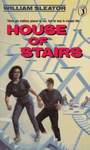
House of Stairs by William Sleator

Young adult fiction must be a really tough genre to wrap your head around, for a writer. You have a story that you want to tell, and you have to tell it in such a way that it is simple enough for your target audience to read, yet engaging enough to keep them reading. The themes have to be familiar enough for them to understand and relate to, yet unusual enough to be interesting for them. Go too far in the wrong direction and you have a failure. So how does a YA writer do it, balancing all those issues, while still writing a good book?

Damned if I know. I’ve never managed to write a decent book for adults, much less young ones.

Fortunately, there are plenty of talented writers who can write for young people, and one of those is William Sleator.

A YA writer who specializes in science fiction, Sleator has written his fair share of strange, fantastic and sometimes disturbing books. Of all the ones I’ve read, this book is probably the one that creeped me out the most.

The setup for this story is simple. Five sixteen year-old orphans – two boys, three girls – are put into a giant room, with no visible walls, ceiling or floor. The only structures in this room are stairs and landings. Nothing else except for a small machine with flashing lights and odd sounds that dispenses food.

That’s it.

The five characters are very different and very interesting. First we have Peter, a scared boy, uncertain of his surroundings in the best of times, and utterly overwhelmed by being dropped into this bizarre place. He’s afraid of everything and everybody, and finds solace only his the strange trances he drops into, in which he is with an old orphanage roommate, Jasper, feeling safe and protected. As an interesting aside, it wasn’t until I was much older that I figured out Peter’s sexuality. It wasn’t that thinly veiled, either. I really don’t handle subtlety well, I think….

Lola is not a showgirl. Sorry, had to put that in. Lola is a tough, street-smart girl who has no tolerance for stupidity or cruelty. She’s had to learn a lot in her time, and doesn’t look to others to decide what she should or should not do.

Blossom is a fat little girl who is the first to figure out how to use the food dispenser (in a rage at it, she sticks out her tongue, and out pops a food pellet – but more on this later). She is cunning and devious, much sharper than people would give her credit for being. If anyone is truly dangerous in this crowd, it is her.

Abagail is a mousy girl, pretty in her own way, but with very little in the way of self-confidence. She tends to latch on to other people and question her own thoughts and actions. She does have compassion, however, though not the means to make her compassion a reality.

Finally, Oliver is the other boy of the group, and he is all that Peter is not. He is strong and confident and good-looking. For a while, Peter thinks that Oliver is his old friend, Jasper, and subsequently Peter is devoted to Oliver. A certain power structure evolves when it is discovered that of all the people, only Oliver can bring Peter out of his trances. Oliver has power, and he is not afraid to use it.

These five kids are trapped in this house of stairs. None of them know why they’re there, they only know that they are. They soon discover that the food-dispensing machine will only give them food under certain conditions. In the beginning , they are forced to repeat a series of actions and movements, that evolve into a kind of dance, hoping to get food from the machine.

From there it gets only worse. They soon discover that the dance isn’t enough. The infighting that comes naturally becomes essential to their survival, for only when they are cruel or greedy will the machine start flashing its lights and entice them to dance. The question then becomes whether or not the kids will do as the machine wishes, and how long they can hold out against it. Or if they will.

This book is disturbing to say the least. It levels some pretty harsh accusations about human nature, not just regarding the kids in the house of stairs, but also regarding the people who put them there. The kids are there for a reason, and not a good one. The whole setup (which is thoroughly, if somewhat clunkily, explained at the end) is about conditioning, and changing people’s personality through stimuli and reinforcement to make them behave as desired. Because it demonstrates people, young people in particular, behaving in a manner that displays the truth of their nature, this book has often been compared to Lord of the Flies, and rightly so.

In its way, it’s even more disturbing than Lord of the Flies – at least the kids in that book had been left to their own devices, as terrible as they were. In this book, the horrors that these five teens go through are part of a deliberate state-sanctioned experiment in human conditioning – a kind of horrible, Pavlovian Breakfast Club. Such is the nature of that experiment that the two children who resisted the conditioning were actually regarded as failures. Upon reflection, the people pulling the strings are far more frightening and disturbing than these poor, manipulated children.

If nothing else, the lesson to be learned from this story is simple – be a human being. There are some things that are too important to sacrifice for something as simple and petty as food and acceptance. We must never allow ourselves to be beasts. We have to be human. This has relevance today, when we are debating the ethics of torture – is it a necessary evil that we must tolerate if our society is to survive, or is it an offense against our humanity? If we allow ourselves to be fooled into thinking that an evil act is somehow the right thing to do, then we have lost a very important part of ourselves.

Of course, it’s also about science, but the message here is less dire – we must not allow science to lose its humanity. In this book, a strange future with a monolithic state government, science is entirely utilitarian, with no moral qualms about putting minors through psychological torture. The good news is that, at least as of this writing, science errs on the side of ethics. Modern science certainly has its moral gray areas, but the majority of scientists out there would never consent to run an experiment such as this. I hope.

The last line in the book is one of the more frightening ones in literature, right up there with the last line in 1984. It’s a blunt reminder of everything that has happened in the book, and a pointed summation of everything that Sleator has been trying to say – that humans have a base nature, that we can be manipulated, and we will, given the right circumstances, allow others to shape who we are. His message to his readers – teenagers like the ones in this book – is to refuse to submit to such control. Good advice for them, and for us.

—————————————-
“You… you’re not going to… to go along with it, are you?”
– Peter, House of Stairs
—————————————-

William Sleator at Wikipedia
House of Stairs at Wikipedia
House of Stairs at Amazon.com
Operant conditioning at Wikipedia

Leave a comment

Filed under behavioral conditioning, children, morality, science fiction, survival, teenagers, William Sleator, young adult

Review 21: The Thief of Always


The Thief of Always by Clive Barker

This book has one of the best opening lines I have ever read:

“The great, gray beast February had eaten Harvey Swick alive.”

Having grown up in New England, where February is the punishment that God metes out for all sinners, I have decided that you can’t beat that.

Harvey Swick is ten years old, and like so many ten year-old boys, he is bored with his life. The interminable grayness of February, the drudgery of life – going to school, coming home, going to school again – and believes that, if his life became the tiniest bit more boring, he would most certainly perish.

Then he met a strange, smiling man named Rictus, who told Harvey of a wonderful place where boredom could not enter, and there was nothing to be had but fun and adventure. There is no better place for children, Rictus said, than Mister Hood’s Holiday House.

Thinking about it, given that Harvey was willing to follow a strange man to a mysterious house without much consideration for his safety, suggests either that Harvey is not very bright, or Rictus is extremely persuasive. Given the rest of the book, I’d bet on the latter.

The Holiday House is truly a place of miracles. The food is better than you’ve ever eaten and there are enough toys and games and costumes and masks to keep any child happy for the rest of their lives. And in every day there are four seasons – a perfect green spring in the morning, a blazing wonderful summer in the afternoon, an evening full of woodsmoke, pumpkins and fallen leaves, and every night is a white Christmas with a present for each boy and girl.

It is the best place Harvey has ever been, and it takes him about a month to realize that something is not… quite right. Why would the mysterious Mister Hood do this for children? And what happened to the children who had come before? And what’s the deal with that cold, deep pond full of big, creepy fish?

It’s a coming-of-age book, the kind that chronicles the transition from childhood to young adulthood. Ten isn’t exactly young adult territory, but it is a time when kids start maturing in the way they think about themselves and the world. Not for nothing that so many young adult novels feature a protagonist that is somewhere between ten and twelve years old – they’re still young enough to have an air of innocence (which inevitably gets torn away) but old enough to think for themselves when there are no adults around to think for them.

There is no end to this kind of book – Neil Gaiman’s Coraline, Stephen King and Richard Bachman’s Peter Straub’s The Talisman, John Gilstrap’s Nathan’s Run, and just about anything written by William Sleator are among my favorites in this genre. They represent a growing-up that we feel we ought to have had, but are happy to have missed. They deal with the concepts that kids have to deal with as they age, and do so in a manner that young people can understand – analogy.

The Thief of Always is a book about getting what you want. Anyone who’s spent time around children knows that they’re greedy little beggars. They are dominated by their id and don’t understand that there are concerns out there that might supersede their own. Harvey Swick is just such a boy. He is concerned with his own excitement, his own happiness, and, having a child’s limited view of time, believes that the boredom he feels in the grip of February is permanent. He wants adventure. He wants change and variety, a life that never slows down and never gets old.

As the old saying suggests, however, one must be careful what one wishes for.

In the end, Harvey learns a Valuable Lesson ™ – to let the future happen in its own time, and appreciate what you have now. Because once time is gone, you can never – or at least very, very rarely – get it back again.

It’s a very quick read, but a very good book. I pull it out every February, if only for that opening line. For those who think of Clive Barker as being a master of the gory, pin-headed horror genre, this book may come as a pleasant surprise for you. And if you have kids around Harvey’s age, leave this one lying around for them to find. I’m sure they’ll appreciate it….

————————————-
“I only took the days you didn’t want,” Hood protested. “The rainy days. The gray days. The days you wished away. Where’s the crime in that?”
“I didn’t know what I was losing,” Harvey protested.
“Ah,” said Hood softly, “but isn’t that always the way of it?”
– from The Thief of Always
————————————-

Clive Barker at Wikipedia
The Thief of Always at Wikipedia
“The Beautiful Moment” – a Clive Barker website for all ages
The Thief of Always at Amazon.com

3 Comments

Filed under children, Clive Barker, fantasy, time travel, world-crossing, young adult