Monthly Archives: July 2011

Lost in the Stacks 7: Paper vs Electronic – THE SHOWDOWN!

Welcome to the 21st century, all. Electronic books, whether you love them or hate them, are here to stay, and as with any change in medium this drastic, we have to figure out which one is better. In the immortal words of… an immortal, “THERE CAN BE ONLY ONE!

This inconsistency in format bothers me more than you will ever know....

Well, no, not really. But readers still have to figure out what our relationship is with these newfangled electronic things. What are their benefits? What are their drawbacks? How can I relate to them? What do they tell the world about me, and what do they tell me about myself? There’s a lot more involved in this discussion than simple cost-benefit analysis. There are feelings and memories and senses, which can cause us to make decisions about the medium that aren’t necessarily rational.

Today we’re going to pick it apart, look at the two sides and come to a conclusion. Or my conclusion, at least. Your mileage may vary.

How do you feel about the issue? Are you a dead-tree traditionalist, or are you a post-modern experimenter? How do you make your decisions on which format to buy? Leave your opinion in the comments, and let’s continue the discussion!

Leave a comment

Filed under Lost in the Stacks, media, reading, technology

Review 133: The Twilight Watch

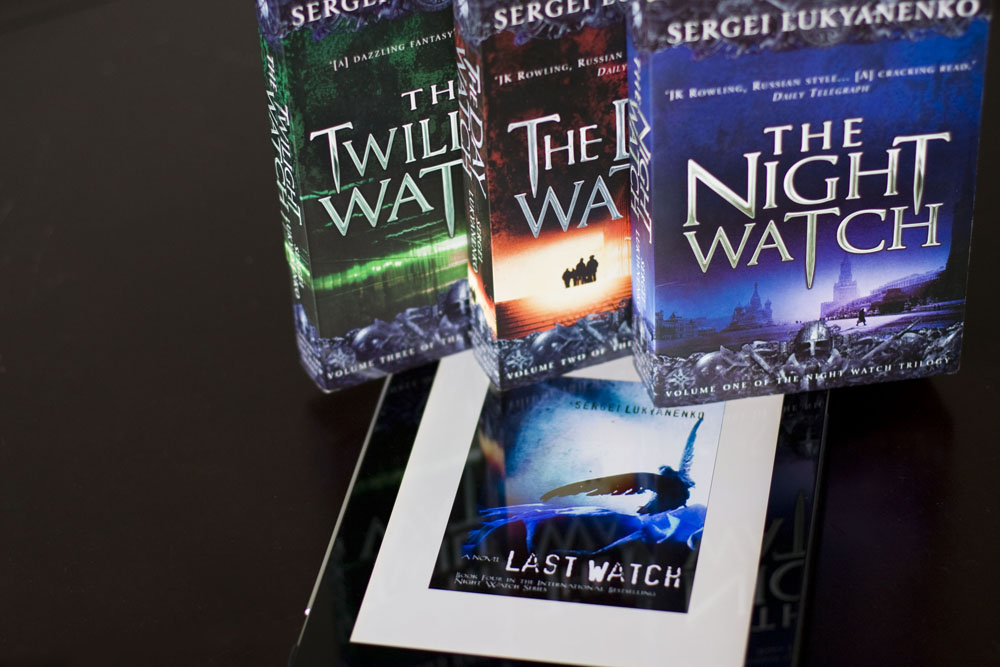
The Twilight Watch by Sergei Lukyanenko

This review is of no relevance to the cause of the Light. – The Night Watch

This review is of no relevance to the cause of the Dark. – The Day Watch

This world is one that is riddled with possibilities. Even though Lukyanenko has been pretty single-minded in his themes throughout the trilogy, there’s a lot to work with here. We have two distinct groups of Others, the Light and the Dark, with different character classes, powers, abilities, levels and ambitions. If anyone wanted to write fan fiction or even a role-playing game based on the world of the Night Watch series, they would be able to let their imaginations roam free. It’s an open-ended universe, rife with possibility.

So why isn’t it is popular worldwide as, say, Harry Potter? Probably because it’s more grown-up than the Potter series, and is therefore less attractive.

Sure, Draco turned out to be faintly ambiguous, but Crabbe and Goyle? They're just bad apples.

Don’t get me wrong – I liked Harry Potter. But for all its merits, it deals with human-level issues: friendship, family, duty, loyalty. And those are all well and good, and many a great story has been told from those elements. The Night Watch series, on the other hand, deals with harder, less everyday topics, such as the nature of freedom, and the fundamental differences between Good and Evil, if there is any difference at all. The themes in these books are headier, and it’s not as easy to look at a Light Other like Anton Gorodetsky and say, “I want to be like him.” It’s also hard to look at a Dark Other like the vampire Kostya and say, “Oooh, I hate him.”

This is because these characters are, more or less, human. The problem with humans is that their motives aren’t always clear, and Lukyanenko doesn’t tell us everything we need to know to judge them properly. With the exception of Anton, who is a first-person narrator, we don’t get into their heads, and so can’t completely understand why they do what they do.

In this volume we are introduced to some new players, some grand plots and some terrible secrets. There is an Other out there who has knowledge that everyone thought was merely a myth: how to turn an ordinary human into an Other. The ramifications of such power are immense – there are few Others in the world as it is, and they hardly get along. To create new Others at will would mean chaos, death and destruction. All the Others’ forces are sent out to find this mysterious person. The Night Watch, the Day Watch and the Inquisition are in search of the impossible.

Anton Gorodetsky, of course, is on the front lines of this, searching for leads in a Moscow apartment complex. What he finds there isn’t quite the secret he thought it was, but it is something he never expected.

How about some free-market capitalism, Scarecrow?

In the second story of the volume, he meets an ancient witch, Arina, who may have single-handedly destroyed the Soviet Union’s potential for greatness. In his search to defeat her, he learns the true nature of the Others, what gives them their power and how they truly interact with the world around them.

And in the third story, the Fuaran has been found – the mythological text with the spell to convert humans to Others – and it will be used in a truly novel manner. But the Other behind the plan that could tip the world into supernatural anarchy is the last person Anton would have ever expected….

As with the other volumes, this one blurs the line between good and evil. It tells us what we already know, but don’t really want to admit: that good people can do evil things – start a bloody revolution, for example, or try to brainwash thousands of people – and that evil people can do good – save children from wolves, or avert a chaotic and terrible future. People do things for reasons that are sometimes known only to themselves, not out of a higher allegiance to the abstract concepts of “good” and “evil,” but for reasons that are intensely personal.

There are, however, times when labels work just fine.

It is something to be remembered. We have a habit of idolizing and demonizing people in this world, elevating them to paragons of virtue or sin, and ascribing motives to them that we think they acted by. But that doesn’t work. Even to the end, Anton believes he knows why the holder of the Fuaran wants to convert people into Others – to raise an army and control the world – but he’s so very, very wrong. The true reason is much more personal and, oddly, much more human than that.

That is probably the best lesson to be taken from these books. “Good” and “Evil” are tags that we affix to people because it saves us the effort of thinking about them. Behind every act, however, is a personal reason that defies such simplistic labeling. Every saint, every monster, is only human. Just like us. I don’t know if knowing that makes the world better or worse, but it at least makes it a little more familiar.

————————————————-
“We weren’t meant to fly.
All we can do is try not to fall.”
– from The Twilight Watch

The Twilight Watch on Wikipedia
Sergei Lukyanenko on Wikipedia
Sergei Lukyanenko’s website (in English)
The Twilight Watch on Amazon.com

Leave a comment

Filed under apocalypse, detective fiction, disaster, fantasy, morality, mystery, Russia, Sergei Lukyanenko, vampires, war, werewolves, witches, wizardry

Review 132: Cosmos

Cosmos by Carl Sagan

If you’ve known me for more than a little while, you know that one of my great loves in this world is science. Even though I tend to get stymied by the math, and I probably couldn’t call up all the right data from my head at the right time, it is the idea of science and the stories of science that truly interest me. Just the fact that we live in a universe where it is possible to know how things work, where we can devise a way to look at the whole of creation, from things so large that they defy imagination to things so small that they can barely be said to exist at all. Science is imagination put into practice against the universe, and as much fun as stories and myths are, as hope and prayers may be, science is the best, most reliable way for us to come to grips with the Cosmos.

It is to Carl Sagan that I owe this love of what humans have done with ourselves.

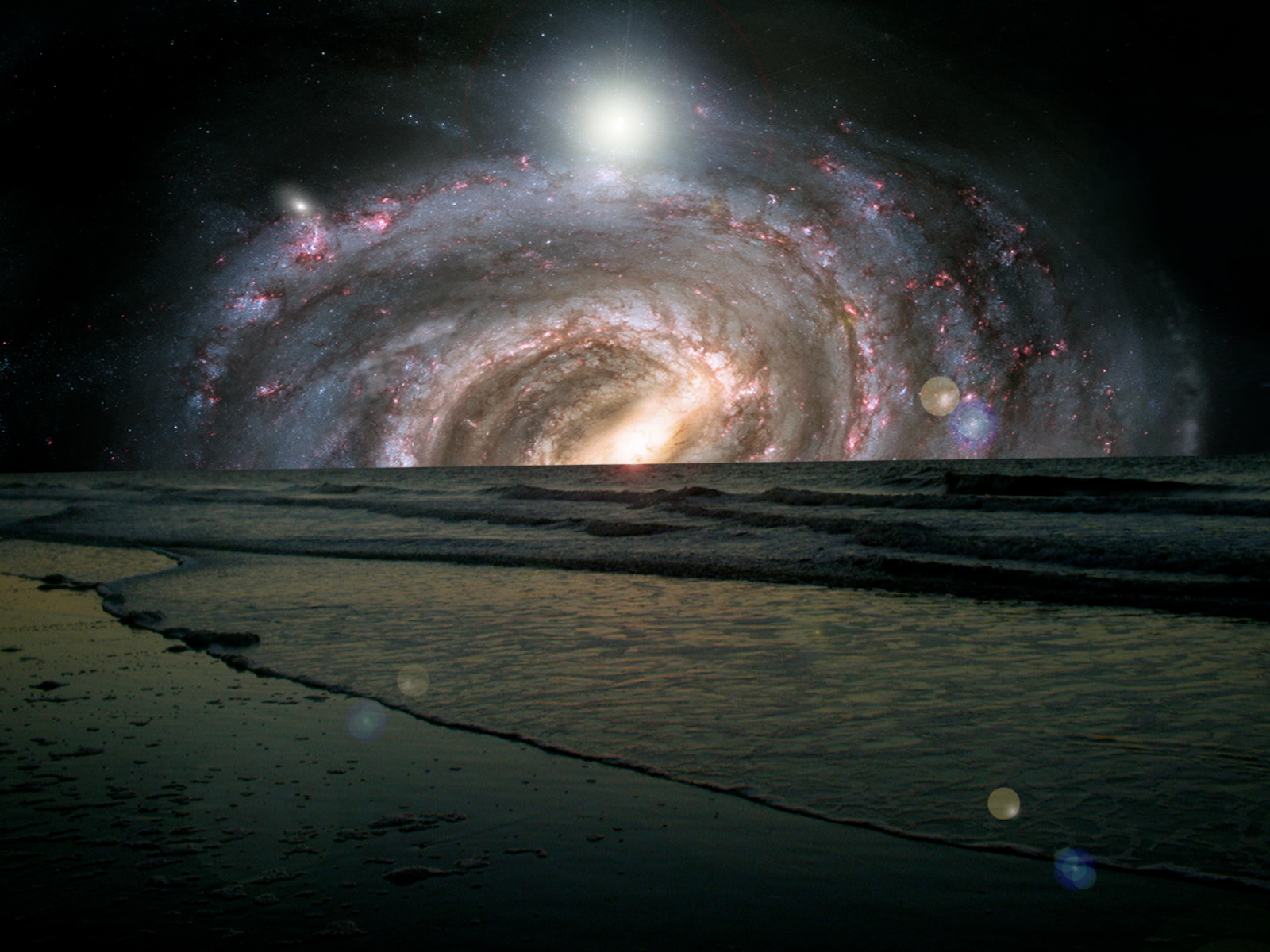
Go ahead. Stare at this for a while.

When I was a kid, my father had a copy of Cosmos, and, since I was but a child, I never really read it. I tended more to flip through it for the interesting pictures – the speculative Jovian life forms on pages 42 and 43, the Viking photos of Mars in chapter 5, the gorgeous paintings of the views from other worlds around other stars, the photos of nebulae and galaxies, all of these things fascinated me, and if I had been a bit more patient I would have found out about them. But I was a kid, so that can be excused. What the book did for me was to open my mind to a universe of possibilities that were all within our reach, or at least would be someday.

As I got older, I saw the TV miniseries of the same name on PBS. Now the pictures that I had lingered over in the book were right before me, accompanied by Sagan’s soothing baritone. His ship of the imagination somehow managed to take us unfathomable distances from our home and bring us back again. He talked to his viewers like we were intelligent adults, fully capable of understanding and appreciating the vast scope of scientific discovery rather than a bunch of attention-deficit teenagers who couldn’t be trusted to keep watching without a jump-cut every ten seconds. Carl Sagan believed, despite the occasional evidence to the contrary, that human beings were capable of overcoming our barbaric pasts and forging a bright new future together in the stars.

The purpose of Cosmos, both the book and the TV show, was to educate. It was, as Sagan put it, “to engage the heart as well as the mind,” perhaps to help shed the image of science as a cold and passionless pursuit. He wanted to show how science became what is is, from the ancient scientist/philosophers in Ionia and Alexandria all the way up to the engineers and astronauts working at NASA. It’s all part of a long chain of knowledge that ties human history together and which engages one of our deepest desires: to know how the universe works.

Go ahead, do this one yourself. We'll wait.

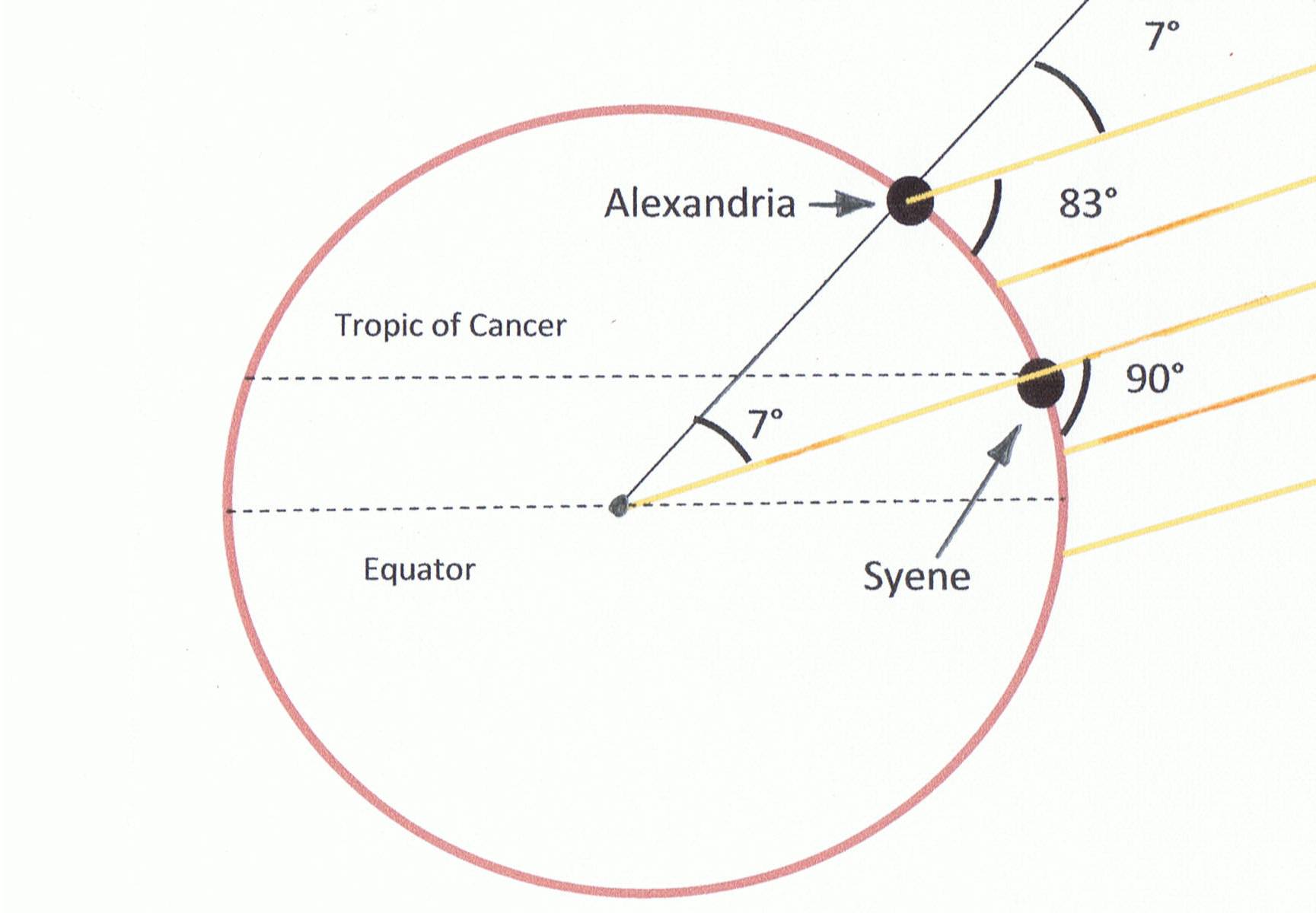
Each chapter focuses on a different theme of knowledge – from the way the planets form and what they’re like to the nature of the furthest reaches of space. He starts with how Eratosthenes measured the world with just a shadow and some math, and how the ancient thinkers of Alexandria were asking the same questions about the nature of the Earth that we ask today. He follows the tortured path of Johannes Kepler in his quest to understand how the planets move, the arrogant brilliance of Newton as he completely redefined the clockwork of the cosmos, and the casual miracle that Einstein pulled off when he told us that not only are we not the center of the universe but that there is no center. Each great mind led to another.

Unfortunately, each setback cost us what may be valuable time. For all his wonderment, Sagan understood how petty and ignorant human beings could be. From the beginning, and at various points in the book, he reminds us of the millennium we lost with the destruction and corruption of the ancient thinkers of the Mediterranean. As far as we can tell, the men and women who made their home in Alexandria were investigating questions and scientific problems that would have changed the way we understand the world. If the library hadn’t been burned down, if religious terror hadn’t murdered scientific insight, who knows where we would be today? It’s impossible to know, but it’s tempting to think that we might have been well on our way to the stars by now.

My brother gave me this poster. He knows me so well...

The latter chapters underscore that theme pretty heavily, reminding us over and over again that we have one world, and only one world. Not only does Sagan fear that we could obliterate ourselves with the nuclear weapons we love and fear so much, but he also fears that self-annihilation may be a natural outcome to any intelligent civilization. Our search for intelligent life on other worlds may be fruitless, because they might be just as self-destructive as we are.

But we don’t know. We can’t know, at least not yet. Our understanding of the universe is still not clear enough, our technology is still not good enough, and perhaps it never will be. But for all our stumbles and failures, Sagan wants us to remember and understand just how much humanity is capable of, and how good we could be if we really put our minds to it. And in that sense, there is a lot of value to reading it now, thirty years after it was published.

A glorious dawn indeed....

While we have not eliminated nuclear weapons, we have made great strides towards controlling them and reducing their numbers. The hopes that Sagan had for future space exploration – Mars rovers, a probe to Titan, contact with comets – have all been made real, and with outstanding results. We know that the dinosaurs were wiped out by a meteor impact – something that Sagan is clearly unsure of at the time of writing. We have mapped the human genome and developed personal computers that have revolutionized the way we explore space. With the internet, any person on earth can catalog galaxies or explore the moon, there have been advances in nanotechnology and materials and bioengineering and evolution that would have made even Sagan’s eyes pop.

Despite all our flaws, we continue to advance. We continue to build knowledge upon knowledge and to further our understanding of how the universe works. Maybe we will one day leave this planet ourselves, perhaps just for a visit or perhaps to start a new world. Maybe if we persist in our quest to comprehend the world we live in, to shut out the howling and screaming of the voices of unreason, we can make the world a better place for generations to come.

Maybe we should all just have some pie. How much time do you have? (photo by Nicole)

In the great argument that is raging these days between the rationalists and the believers, the faithful and the atheists, it has become fashionable to try and shout the other side down. To adopt a position that excludes compromise and promises only defeat for one side or another. Sagan never would have wanted that, and I think he hit upon a solution that needs to be revisited.

Rather than try to turn people to science through cold logic or heated words, through derision and coercion and fear, do as Sagan did: win them over with wonder. The cosmos is too big, and there is too much to know to waste our time with petty arguments and pointless feuds. If you want people to appreciate science, turn to people like Sagan, or Neil deGrasse Tyson, Phil Plait, Mary Roach, Michio Kaku, Ann Druyan, Bill Nye, Adam Savage, or Dava Sobel – people whose enthusiasm and love of science will instill people with wonder, one person at a time. And it is in that way that we will go furthest towards ensuring humanity’s place among the stars.

—————————————————-
“Every one of us is precious in the cosmic perspective. If a human disagrees with you, let him live. In a hundred billion galaxies, you will not find another.”
– Carl Sagan, Cosmos

Carl Sagan on Wikipedia
Cosmos on Wikipedia
The Carl Sagan Portal (music plays when you open it, just FYI….)
Cosmos on Amazon.com

Leave a comment

Filed under astronomy, astrophysics, Carl Sagan, evolution, made into movies, nonfiction, science

Review 131: The Earth

The Earth: An Intimate History by Richard Fortey

Is it possible for a book to be utterly fascinating and yet, at the same time, a perfect cure for insomnia? I never would have thought so, until I read this one.

That does sound horribly contradictory, and yet it is true. Reading this book, I found myself drawn in by the power of Fortey’s words and this obvious enthusiasm for the subject. He’s a paleontologist by trade, but his era of expertise goes so far back that it’s practically geology anyway. And geology is what this book is all about.

There are those who believe that there are forces beyond our ken that shape our lives. Some believe that the universe itself is alive, filled to the brim with some kind of formless substance that wants us to have what we want. Others attribute great influence to the motion of non-terrestrial planets – just recently I saw a warning the Mercury was in retrograde, and that such apparent motion would spell disaster in communications-related endeavors. Other people believe there are gods, or ghosts, or fairies whose wishes and whims have decided who we are and who we will be. But Fortey knows what’s really going on.

Not this guy, no. But close. (photo by Jenn and Tony Bot on Flickr)

Fortey knows it’s the rocks.

Not just the garden-variety ones you pick up in your garden, no – the real rocks. The gneiss and the schist and the granite, the great, lumbering tectonic plates, relentless in their motion across the face of the Earth, carrying the continents on their backs. The churning, unknowable mantle that holds it all up, revealing only the tiniest glimpses of itself through the effluvium of volcanoes. The Earth tells us who we are and who we will be, for it is the motions of the Earth that made our world what it is. It gave shape to the continents, it has raised and lowered mountains, created and unmade deserts a hundred times over. The rich and fertile fields in which we grow our crops, the barren wastelands that we avoid because we know that they are places where we do not belong – all of those were created by the engine of plate tectonics. Billions of years of relentless motion, of continents smashing into each other, coming apart and then colliding again, have conspired to create the thin, almost evanescent period of time in which we live. And it will continue, long after we are gone, without ever having bothered to notice that we are here.

If these boulders could talk... Man, I'd be really freaked out.

This book is humbling, to say the least. When you think that the Appalachians used to be mountains that rivaled the Alps and the Himalayas, that they were the product of not the most recent supercontinent, Gondwana, nor the one before that, Laurasia. The gentle, rolling hills of the Appalachians, along which thousands of summer and weekend hikers travel, were born three hundred million years ago in the creation of Pangaea. Time, wind and rain wore them down to what they are today, but they stand as evidence of Earth’s deep history. Though not quite as old as the Grenville rocks of Central Park, remnants of mountains formed a billion years ago, before life was more than a thin film of algae on a hypoxic sea.

Fortey writes well. It’s hard to overstate how important that is when considering a book meant for the general audience. Not only can you tell that he obviously loves his subject, but you can see that he is a good and devoted writer, who spent a great deal of time thinking of ways to communicate the literally unthinkable amount of time necessary for the motions of the Earth to have put things where they are today. Geologic events are slow and hard to picture in our minds eyes, but he tries. He tries to get into your head the vast temperatures and pressures that operate just a few miles below where we sit right now, and the utterly alien environment they create. He brings to life the arguments and battles that went on between geologists who tried their best over centuries to untangle the folded and twisted stories of the rocks and figure out how they came to be the way they were. The story that Fortey is telling is four and a half billion years in the making, a timespan that we simple humans cannot truly grasp.

I got your mystical geology right here.... (photo by mtsrs on Flickr)

And he does have an excellent way of phrasing his points. In talking about the hot springs of Italy in which the ancient Romans lounged, he says, “These springs were the exhalations of the magmatic unconscious.” In reminding us that the movements of the Earth determine where we can live, what animals we can raise and what crops we can grow, he says, “The geological Unconscious cannot be denied, for it still guides the way we use the land, and rules the plough. We are all in thrall to the underworld.” Finally, in a phrase that evoked Sagan in my mind’s ear, he says, “In this way, the depths intercede in our superficial lives: there are unseen and unbidden forces, as indifferent to the fate of the sentient organisms living above them as the distant stars.” The man has a way with words, that much is for sure.

For all that this is the story of our world and, therefore, ourselves, it is a hard book to keep up with. Indeed, I found myself nodding off more than once, no matter that I wanted to keep reading about the manner in which the Colorado River cut through the ever-rising plateau through which it coursed. The book, I believe, skirts the edge of Popular Science and Specialist Science. Fortey doesn’t skimp on the technical language, and seems to be talking to an audience that already has a pretty good grasp on the terminology and concepts of geology. The readers that he’s after in this book are the ones who used to be called “rock hounds” when they were kids, and who know a gneiss from a granite. Which I, technically speaking, do not.

This was not me as a kid. (photo by woodleywonderworks on Flickr)

While I do love science, and find the whole history of plate tectonics fascinating, I never got into geology as deeply as I did other sciences. And that’s not to say that I never will – if anything, this book made me look more closely at the rocks I see around me and wonder at their provenance. The granite facing of buildings all the way to the simple sand of a baseball field – they’re all ancient in different ways and have fascinating stories. When I read the book, though, I was lacking in a certain entry-level understanding of the science, and that was probably what made it such a tough book to get through.

So if you’re a rock hound, or know someone who is, pick up a copy of this book. If you like to break your brain thinking about the vast expanses of time required to make a planet on which Homo sapiens can be the species it always wanted to be, this is the book for you. If you are having trouble getting to sleep and you aren’t fond of using medication to send you off to slumberland, well… This book probably wouldn’t hurt.

——————————————–
“If you have just missed your train, you can at least lean on a bar that is 1500 million years old and reflect that perhaps half an hour is not that serious a delay.”
– Richard Fortey, speaking of a bar countertop in Paddington Station, The Earth: An Intimate History
——————————————–

Leave a comment

Filed under geology, nonfiction, Richard Fortey, science

Review 130: The Wave

The Wave by Susan Casey

Okay, I want you to do something for me. Close your eyes.

Wait. No, that won’t work. Open your eyes again.

Eyes open? Good. Now imagine you’ve closed your eyes, but don’t actually close them because that will rather impair your ability to read this review.

So, you’re imagining that your eyes are closed. Now imagine you’re on a cruise ship. It’s a lovely place – blue water, blue skies, the faint scent of salt in the air, the waves lapping up against the hull of the boat in a soothing rhythm. It’s a perfect way to spend a vacation.

You get a daiquiri and lean on the railing, looking out towards the horizon. This is nice, you think. Just what I –

Wait. What is that?

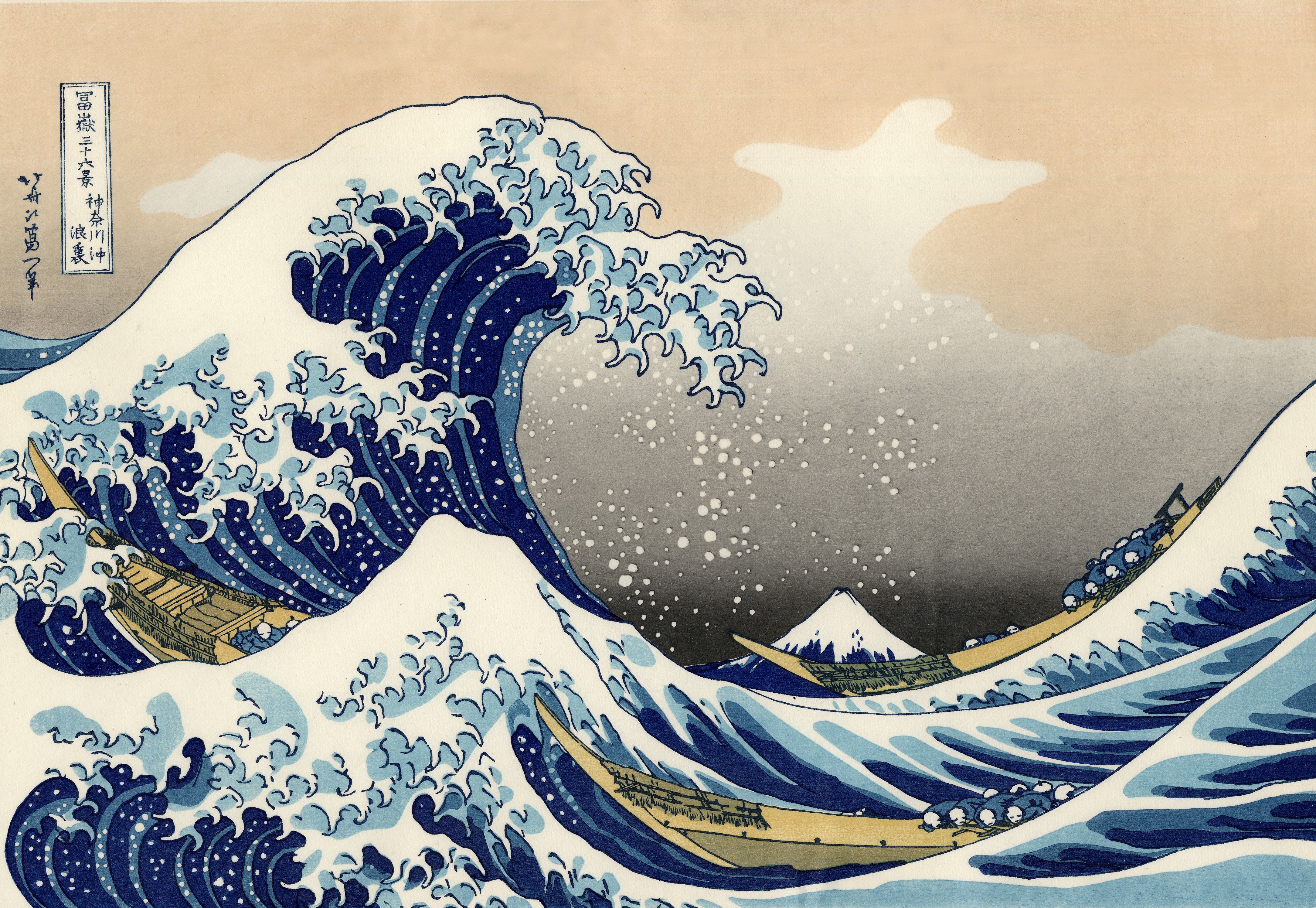
You shield your eyes from the sun to get a better look and see what looks for all the world like a shadow on the horizon, stretching long and with flecks of light shimmering off its top. As it gets closer, it gets bigger, and you can feel the boat drop under your feet. The water gets higher and higher, and you know this can’t possibly be happening because for the wave to be that high, it would have to be at least sixty or seventy feet. In thirty-five foot waters.

Hokusai wasn't kidding around....

A shadow is cast over the boat as the wave crests above you, and the last thing you think before the top comes down, shattering the cruise ship like it was made of so much balsa wood, is, “I wonder what it would be like to surf that….”

It has often been said that we know more about the surface of the moon than we know about our own oceans. I have no idea who first said it, or in what form it was said, but reading this book drives home that it is absolutely correct. What’s more, that ignorance may well kill us. The oceans are full of relentless mysteries and hypnotic beauty, but also terrors and dangers the likes of which we shorebound humans have trouble understanding. The sea has always been a dangerous place, really. We know that. What we don’t know is what all of those dangers are.

Tales of giant waves have been around since antiquity, but until recently, people didn’t really believe them. It defied everything that was known about the ocean – to say nothing of common sense – to have waves appear out of nowhere, rise to heights of up to a hundred feet or more, wreak havoc on oceangoing vessels, and then vanish. These were the tales of sailors, whom everyone knew could not be trusted to tell the truth about their journeys.
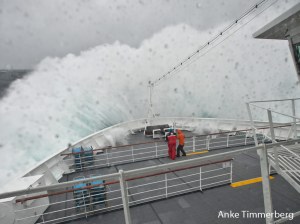
"First Mate! Fetch me my brown pants!" (photo by MyFram Expedition blog)

Perhaps that is why Casey chooses to open with a scene from a research vessel in the North Atlantic. The RRS Discovery was on a routine mission to gather data about the sea between the British Isles and Iceland when it found itself under attack by the ocean itself. The ship was hit over and over again by waves reaching up to sixty feet, then dropped down into the void between waves and lifted up again, over and over for five days. Things that weren’t bolted down flew in mad directions all over the ship, and many things that were bolted down – like lifeboats – were ripped off their moorings. It was so terrifying that the scientists on board, after they had gotten home, wrote one of the very few research papers that included a note at the end thanking the captain for bringing them back alive. Only great skill and good luck saved that ship from oblivion in waters that seemed to have risen up for the sole purpose of destroying it.

No one – no weather forecaster or meteorologist, oceanographer or climatologist – no one thought that waves of that size could exist under those conditions. And yet there they were, and the Discovery’s instruments captured it all.

Scientists who study the oceans are just beginning to understand how waves work on the ocean, but the almost infinite number of variables that contribute to making waves is so overwhelming that it’s hard to conclusively predict where and when these rogue waves will appear. Other people who work with the sea – salvage operators, ship captains, insurers – know that this kind of thing is possible, and that the sea carries risks with it that no other form of transportation faces. Every year, dozens of ships are lost, and with them go many lives and countless dollars worth of merchandise. Some of these losses come from human error, but others come because the ocean is an inherently dangerous place for us to be. It is vital for our safety and our economy that we know how the ocean works, but we are nowhere near being able to do that.

What’s worse, the onset of climate change could make current models obsolete as the seas become higher, rougher, and more unpredictable. We are racing against the clock – and losing.

But for all the scientists who are trying to map the behavior of waves, there is a community of people who seek them out. People who know the waves intimately, even if they can’t write an equation to tell you what it is they know, exactly. These people are the surfers, and if there was ever a group of people more attached and attuned to the sea, they’d have to be mermen.

To find this picture, just Google "Laird Hamilton" and "Oh my god"

Casey spends a lot of time with surfer Laird Hamilton. I wanted to say “the famous Laird Hamilton,” but I didn’t know the man existed until I read this book, which makes him one of those people who is very famous, but only to the kind of people who would find him famous. Now that I know more about him and his community, though, I can certainly understand why he has the prestige that he does. Among big-wave surfers, he is a legend. And that takes some doing.

To ride a regular wave, you see, you get out there with your board, get behind the point where the waves start to break, and paddle to catch up. With the big waves, though, they’re moving much too fast for a paddler to get into position, so the big-wave riders have someone on a jet ski to pull them along. Once in position, the jet ski goes down the back of the wave while the surfer heads down the front where, hopefully, he won’t be killed. If he falls off, his partner has to come in, find him, and get them both out before the next giant wave – and where there’s one wave there are always more – comes in to crush them both. Regular surfing has its share of dangers, but the perils of big-wave surfing are orders of magnitude worse.

There is a whole community of surfers looking to ride these great waves. They travel across the world on the mere possibility of great surfing, heading to places with names like Jaws, Mavericks, or Egypt, all in the hope of catching the biggest waves. Injuries are common, and sometimes terrible. Death is always an option. But they come anyway, just for that moment of zenlike awareness of the Eternal Now that you can only truly achieve when you’re riding down the face of a wave and trying not to die.

Bronze surfers are surprisingly successful. Just not at surfing. (photo by atomicity on Flickr)

I don’t like the ocean, myself. I find it too big, too impersonal. It’s a place that could swallow you whole and leave no trace you were ever there. It’s a place that cares nothing for us puny humans and will, on a whim, try to destroy us. I certainly appreciate the ocean and what it does for us, and it’s nice to look at. But I certainly don’t trust it, and this book really didn’t help in that regard. From tales of ships crushed by rogue waves south of Africa to waves so large and so powerful they could strip the bark off the trees they uprooted, it was a testament to the fact that the moment we underestimate the ocean is the moment it kills us.

What’s more, with climate change being what it is, our problems with the ocean are going to turn into new and different ones. The models we have now – good though they are – are incomplete, and the changes that are coming in the future will keep scientists on their toes for years to come. As Casey notes, wave science is a very young discipline, but it is one that needs attention if we’re going to safeguard our coastal cities and global commerce.

This book is an exciting read about a topic you’ve probably never given much thought to. You fear for both the surfers and the scientists, and in the end realize just how much there is about the ocean that we still don’t know. I don’t know about you, but it kind of freaks me out….

————————————————————–
“If you can look at one of these waves and you don’t believe that there’s something greater than we are, then you’ve got some serious analyzing to do and you should go sit under a tree for a very long time.”
– Laird Hamilton
————————————————————–

Susan Casey’s homepage
Laird Hamilton on Wikipedia
The Wave on Amazon.com

Leave a comment

Filed under climate change, disaster, environment, nonfiction, oceanography, oceans, surfing, survival, Susan Casey