Tag Archives: reading

Review 229: The Murder of Roger Ackroyd

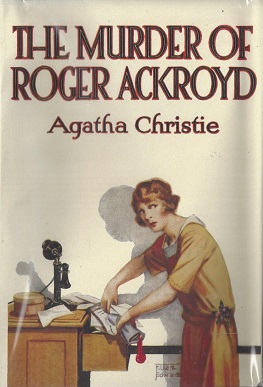
The Murder of Roger Ackroyd by Agatha Christie

I started reading this because of a student. This is not uncommon, of course – I’m an English teacher, so a lot of what I read these days is because of my students. But this time, rather than trying to find a book to teach, I was actually looking for a book to enjoy.

This student came to me asking if I had any book recommendations, which is an awfully broad question. So I asked her what she liked, and she said “Mystery.”

Mystery, unfortunately, is a genre in which I have little real experience. I read some Raymond Chandler a long time ago, but that’s about it, so I had no recommendations for her. Another English teacher, though, recommended this book and in doing so, planted the tiniest suggestion that led me to figure out who the killer was before Poirot go there.

That in no way took away from the fun of the story, of course. The whole point of reading one of these mysteries is not just to find out who did the terrible deed, but to see how the detective – the famous Hercule Poirot – works out all the details for himself.

This woman knows everything.

And that is what Christie accomplished. The Very British Village of King’s Abbot has seen its share of tragedy. The wealthy widow Mrs Ferrars has died, most likely by her own hand, following the death of her terrible husband. And while the town is reeling from this news, another unnatural death visits them. The titular Roger Ackroyd, a widower himself and a confidante of Mrs. Ferrars has been murdered with a knife to the neck!

The suspects are, of course, various. Was it the butler, looking for some scheme to blackmail money out of him? Was it Ackroyd’s stepson, looking to inherit his stepfather’s well-guarded wealth? Was it his niece, hoping to marry the stepson against Ackroyd’s wishes?

The cast is large, and the story is told through the eyes of the village’s doctor, James Sheppard. With his gossip-hungry sister Caroline prodding him along, he accompanies Poirot through his investigations, looking to find out who was in the summer house, what color the stepson’s boots were, who moved a chair a few inches, so as to discover the true identity of the murderer.

There’s not a whole lot more to say about the plot or some of the narrative choices by Christie without spoiling the ending, so I won’t. What I can say is that Christie’s reputation as one of the great British mystery writers is certainly well-deserved, and there’s a reason why she is one of the best choices for a beach read or a long airplane trip.

The book is fast-paced and very readable, and if the plot does get somewhat convoluted at times, she makes sure to have Poirot (or someone similiar) re-familiarize us with the details of what is known and what is yet unknown, so that we may follow along in the same way that Dr. Sheppard does.

That doesn’t mean we can deduce things the way Poirot does – there are plenty of details that we would consider insignificant that only carry true weight once all has been revealed in a classic Drawing Room, “One of you is the murderer” scene at the end.

What’s more, Christie has carefully built the story to be re-readable. Once you know everything at the end of the book, you can go back and see characters and events in a whole new light. No detail, however insignificant, is wasted. While I think this is often the case for a murder mystery, it is done especially well here.
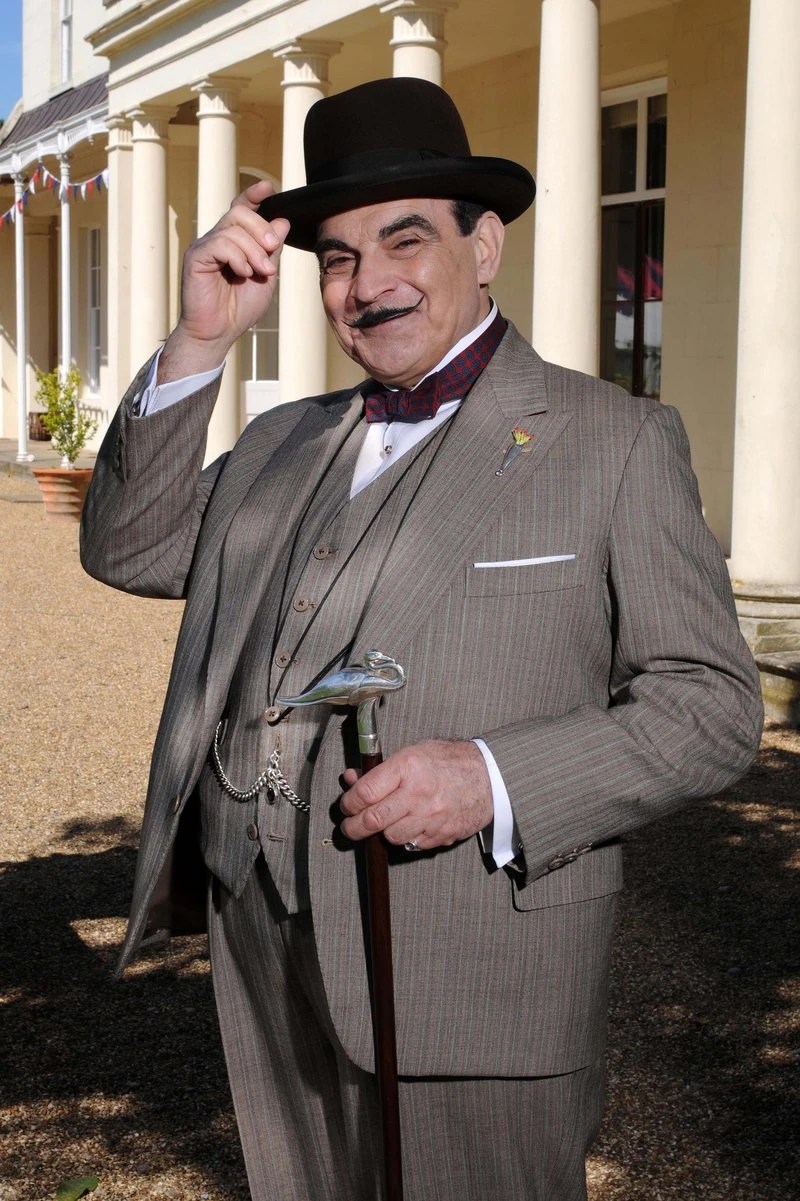
This guy doesn’t know half as much as Christie does.

This book has been in publication so long that I think it’s actually in the public domain now, so you don’t really need me to recommend it. At one point there was a whole literary society dedicated to discussing Christie’s work – my praise of the book isn’t going to move too many needles.

If you want an entertaining mystery with lots of suspects, twists, turns, and surprises, though, you can’t go wrong with this one. It’s a mystery that respects the reader, rewards close attention to detail, and is still surprising readers.

For those of us who are not regular visitors to the Mystery genre, this is a great place to begin. Christie’s careful and methodical storytelling have kept generations of readers enthralled, and will no doubt make her one of your favorites as well.

Leave a comment

Filed under Agatha Christie, classics, mystery

Review 228: The Rise and Fall of the Galactic Empire

The Rise and Fall of the Galactic Empire by Chris Kempshall

The best fictional worlds invite you to lose yourself in them. They get into your head, makes you wonder what else is there, between the words on the page and beyond the beginning and the end.

Star Wars, of course, is exactly that kind of fiction. What started with a fairly simple space adventure nearly fifty years ago has blossomed into an expansive, living universe, where every new story carries within it the seeds for another story and another one after that. Through the media of film and television, animation and comic books, novels and short stories, Star Wars has built up a world and a history that you could spend your entire life exploring.

Kempshall reflects in the afterward that, for the time he was working on it, it became his whole life. And I certainly can’t blame him for it.

The Rise and Fall of the Galactic Empire is a thorough, insightful history of the Empire from inside the Star Wars universe. Written by historian Beaumont Kin soon after the fall of the New Republic, the Battle of Exegol, and the (probably) final death of Emperor Palpatine, this book attempts to understand how the Empire arose, what its means and methods were, and why, even after the Battle of Endor, its ideology persisted and became the First Order.

It begins with an examination of Sheeve Palpatine and how he rose to power. With the advantage of time, and the testimony of people like Luke Skywalker and Leia Organa, Kin is able to see the Senator from Naboo for who he really was – a master of the Dark Side of the Force, apprentice to a terrible Sith lord, who had decided from his early years that he wanted only one thing: complete mastery of the Galaxy. It follows his career through the Clone Wars, a conflict in which Palpatine, acting as both the Supreme Chancellor and the malicious Darth Sidious, was controlling both sides.

With his power assured, the history then goes on to explore how the Empire functioned, how it expanded, and how it devoured everything in its way. An Empire which rewarded cruelty, blind loyalty, and rampant consumption was everything that Palpatine wanted, and its apotheosis was the Death Star.

Nevertheless, there was resistance, and the history explores that as well. How even with an Empire so comfortable with conflict and aggression might still miss the signs of organized rebellion and even encourage it with its unrepentant use of force and terror.

From there, the book chronicles the assumptions and errors that the Empire made in dealing with the Rebellion, how the loss of figures like Grand Moff Tarkin crippled the Empire’s efforts, and how even though battles like those at Hoth looked like Imperial victories, they did more damage to the Empire than to the Rebellion.

This book is a well-written, detailed, and satisfying look at the history of the stories that we know so well. It draws from not only the films, but also comics, books, and television – any source available that explains the events surrounding the rise of the Empire, the Galactic Civil War, and the Empire’s fall and rebirth.

What makes this book believable is not only that it was written with the full help of the lorekeepers and writers of the Star Wars universe, but that it was written by an actual historian. Kempshall has been writing on war, especially World War One, and found himself in the very enviable position of being able to write a history of one of the most popular fictional universes of our time.

One aspect of this book that is truly fascinating is to see the places where the narrator, Beaumont Kin, lacks information that we, fans of the stories, absolutely have. For example, we all saw the fateful meeting at the beginning of A New Hope where Vader nearly force-chokes Admiral Motti to death. Kin, however, relies only on Motti’s own paperwork, referring to “an almost entirely redacted incident report within the Imperial Archives submitted by Admiral Motti immediately after that summit took place, presumably about something that happened to him during it.”

There are plenty of other places and references that Kempshall includes where he knows that fans of Star Wars will be able o fill in the gaps, having read the books and watched the cartoons, movies, and TV shows. Even more interesting is what he leaves out. There is no mention, for example, of Obi-Wan Kenobi and his role in the rescue of Vader’s children, or Yoda’s training of Luke. Ahsoka Tano, despite her role as the mysterious Fulcrum, is barely mentioned. Dr. Aphra, despite her strange and constant relationship with Darth Vader, only shows up a couple of times, usually in footnotes.

If there is one point of irritation that I have with this book, it’s the way that citations are handled.

It is great that this book is heavily cited – a proper history book should reveal its sources, allowing a reader to go and investigate for themselves, should they want to. The problem is, all of these are in-universe citations. So you might be directed to “New Republic Archives, Section: Adelphi Base, File: Requisition Form #1837p—Subcontract for fulfillment of refuse collection” if you want to know more about how New Republic officers used bounty hunters to go after Imperial remnants.

Now I appreciate kayfabe as much as the next guy, but a lot of these footnotes seemed like they should be pointing at specific literary sources – a show or a comic or something like that – and I really wanted to know what those were. I was hoping that, at the end of the book, there might be a listing of all the sources that Kempshall went to, but alas, there is none. This is a great, but missed opportunity.

The most striking thing, though, was not so much how well it recontextualized the Star Wars universe (and brought more sense to the Sequel Trilogy), but how relevant it was to our world. The rise of fascism, cruelty disguised as order, the seduction of ideology are all familiar to us. The book’s exploration of power and its misuse is painfully on-point, from the terrors of Fascist Europe all the way to the present day. It holds up the grand, sweeping tale of Star Wars as not only an allegory for past conflicts, but as a mirror to our own lives, our own willingness, perhaps, to allow wickedness to be done in our names.

Where the fictional historian narrator becomes angry or sad or frustrated with the terrible works that the Empire performed, you can easily understand how perhaps Kempshall is feeling the same way about our world.

We may not have a Sith Lord running things out here, but we do have petty, power-hungry tyrants; we have people willing to do terrible things because they were told to do them; we have leaders willing to ignore tragedy after tragedy because doing something about it is inconvenient.

This book would be an excellent addition to the collection of any Star Wars fan, and is the perfect answer to those people online who wish, against all available evidence, that Star Wars hadn’t suddenly gotten “all political.” It hasn’t gotten political – it always has been.


“The role of a historian—my role as a historian—is to try to tell you not just how but why these things happened. To try to make you understand the importance of these past events and what they mean for us today and tomorrow.”

Chris Kempshall at Penguin Random House
The Rise and Fall of the Galactic Empire on Goodreads

Leave a comment

Filed under Chris Kempshall, history, politics, science fiction, Star Wars

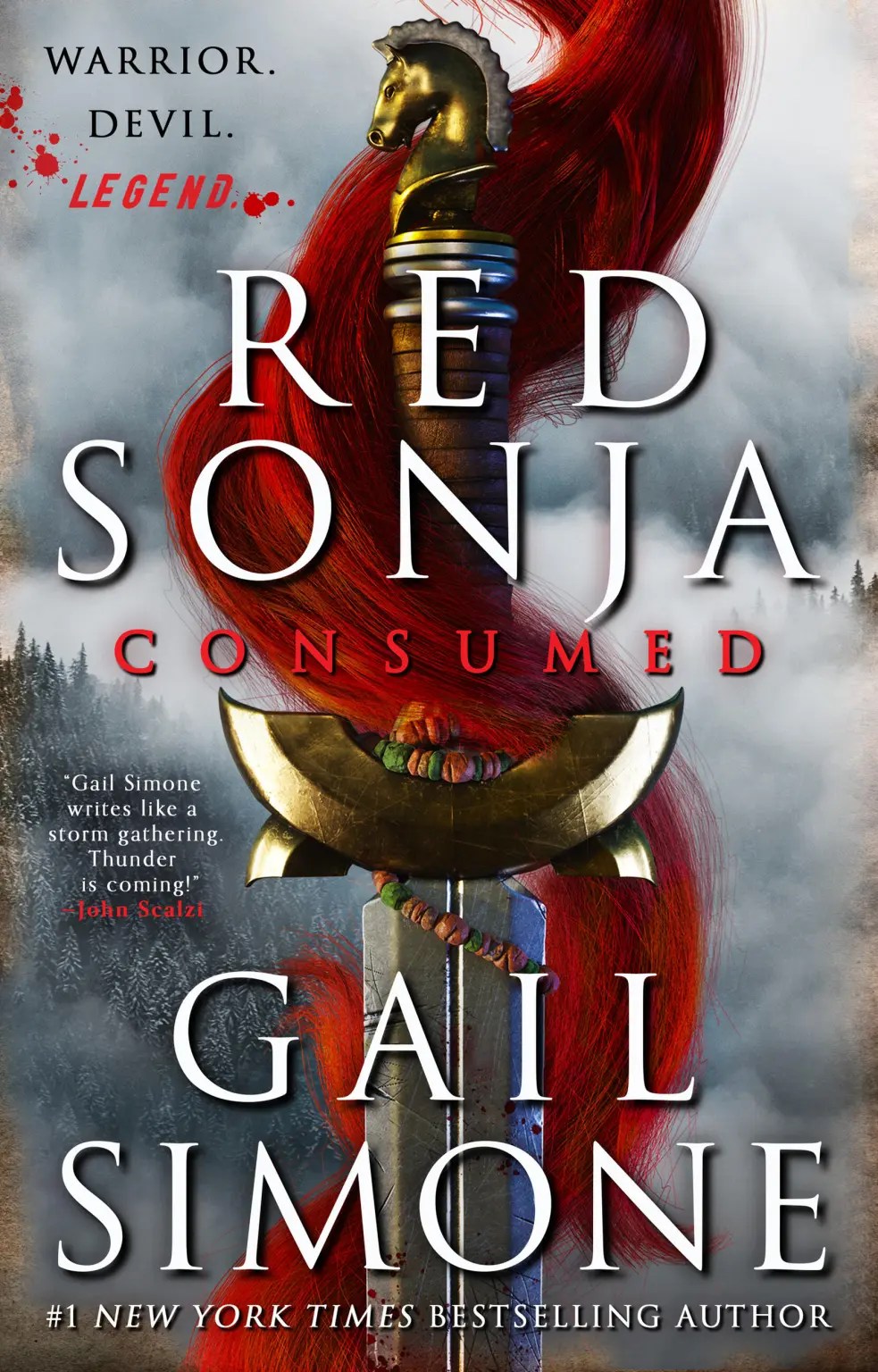
Review 227: Red Sonja – Consumed

Red Sonja: Consumed by Gail Simone

It must be tough to write about a legend. Both within her own world and ours, Red Sonja is a name to be reckoned with, and Gail Simone more than does her justice in her debut novel.

The She-Devil with a Sword, Sonja is one of the greatest heroes of her age, a woman who goes toe-to-toe with any enemy, no matter how terrible or undefeatable. And when her victory comes, she is the first to quaff some ale and take to bed the prettiest people she can find. There is a reason she is known as the She-Devil, amongst other, more terrifying epithets that run before her, allowing the wiser people in her path to know that they would do well not to trifle with her. Do not try to contain Red Sonja, and do not attempt to bar her way.

This story follows Sonja as she enjoys her life as a thief, aiming to steal a precious gold armband known as the Asp from the beautiful queen that she has taken to her bed, and possibly to love. She finds herself pursued by her spurned lover, hunted by a hired assassin, and an unwelcome visitor in lands who despise her own people, the Hyrkanians. With only her loyal steed, Sunder, she takes charge of her own life, lives by her own rules, and takes who and what she wants. No one has a hold over Red Sonja, and that’s the way she likes it.

However, not even Sonja can escape her past, no matter how far she may go. Her homeland is under attack by terrible creatures that travel through the earth, bursting forth when you least expect it, and pulling you down to join their ranks of undead horrors. For reasons of their own, these terrible beings wish nothing but complete destruction of the Hyrkanians, and fully expect that there is nothing the Hyrkanians can possibly do to stop them.

And they would be right, of course, if Sonja was not compelled by necessity and honor to step in and shut them down.

Of the various genres of fantasy that I read, I don’t often step into the world of Swords and Sandals. Historically, Red Sonja occupies the literary landscape opened up by Conan the Barbarian, traveling through a world that is magical, but in a way that is more or less beyond our hero. Magic is subtle and terrible, used by people who have pushed past the veil of what should be known, and it is usually up to people like Sonja to stop whatever unnatural horrors have been unleashed.

Red Sonja in this book is human in a way that so many fantasy heroes are not – she drinks a lot, takes both men and women to bed when she wants to, fights dirty and fights to win, gets hurt, regrets, and dreads becoming the legend that she already is. She is not a Chosen One or a Fate-Touched or whatever other thing you might expect from Fantasy. She’s a woman who Gets Things Done.

Gail Simone

This humanity clearly comes from Simone’s love of the character. She’s been writing Sonja in the comics for a long time, and talks about her with great joy and love when discussions come up online, and knows the forces that push and pull at the character, creating conflict that can be explored in countless ways.

Sonja’s backstory is certainly tragic. Having lost her family and her village when she was a child, she was forced to survive on her own and use the skills she had been taught in order to just not die. She grew up without a people to rely on, and, like anyone in that situation, found herself doing her best not to be in situations where she had to rely on people.

However, as so many stories have told us, relying on people is the way to get things done, and that’s just as true here. Sonja has to make peace with enemies, allow friends to help and, most importantly, allow herself to do what must be done in order to stop the horrifying entities that are threatening her people. And this is where her humanity shines. She struggles greatly with letting others get close to her, convinced both that she doesn’t need them, and even if she did need them, they’d just get hurt. Simone does a great job of illustrating this conflict within Sonja and giving her the room to really figure out how she’s going to relate to other people.

It might be tempting not to explore what this book is about, thematically, because it’s not the kind of book that usually gets explored that way. Stories about fantastic warriors, strange zombie mole-people, cursed jewelry usually doesn’t get the kind of close literary attention that other, more “serious” books do. But to ignore the meaning in a book like this is to do it a grave disservice.

Among her many great qualities as a writer, Gail Simone is fantastic at finding the emotional core of a character. Just as she has done with characters like Wonder Woman and Batgirl and yes, even Deadpool, Simone knows the emotional core of Red Sonja.

For all of her bravery and bravado, and despite a reputation that runs before her like a shadow at sunset, Red Sonja feels unworthy of love and connection. She knows the danger that her life brings and has made the decision that she can’t involve others in that, and I suppose that makes a kind of pragmatic sense.

Red Sonja absolutely has her priorities.

But for all that, Sonja loves. She loves her people and her ideals and her home despite herself, and for all that it doesn’t make pragmatic sense she can’t stop loving people.

And now we know Sonja’s tragedy. For all her fantastic setting and tragic backstory, it’s that push and pull of relationships and closeness that brings her to life and speaks to all of us. For while very few readers of Red Sonja have commanded their warhorse to put its hooves through a man’s skull while the invincible armies of undead vengeance wreak havoc in their city, we have all been pulled and torn between the twin forces of wanting to be loved and not wanting to be hurt.

That is what allows Gail Simone to bring Red Sonja fully to life, and what makes this story such a good read.


“The great truth of Red Sonja, in her own hidden heart, was that leaving the people she loved was the best gift she could give them, she was certain.”

Gail Simone on Wikipedia
Red Sonja on Wikipedia
Red Sonja: Consumed on Goodreads

Leave a comment

Filed under adventure, fantasy, Gail Simone, Sword and sorcery

Lost in the Stacks 12: The Year In Review

A very small sample from this year...

Well, 2011 was an interesting year. I got an iPad, with all that that implies, I started writing again, I completed NaNoWriMo, work got a bit more difficult and challenging, and DC Comics rebooted their universe again. All of that had an impact on how I read and what I read, and not all of it was good.

In this year in review podcast, I’ll talk about what went well in 2011 and what could have gone better. What I enjoyed and what I struggled with, just like everyone else in the world. On balance, I think 2011 went well for me – I hope it did well for you too. And if it didn’t, well… there’s always 2012.

At least, assuming the Mayans were wrong.

Happy New Year!

(Technorati claim – T3BBTZPCZ37P )

2 Comments

Filed under analysis, comic books, Lost in the Stacks, reading

Lost in the Stacks 10: The Ends of the Worlds

A lot of the books I really love have something to do with the end of the world. Whether it’s the great plague of The Stand or nuclear holocaust in Swan Song, zombies like in World War Z or flesh-eating plants like in Day of the Triffids, or even irreverent humor like in Good Omens, I love to see the world come to an end, if only to see what comes next.

But what is it about these books that makes them so interesting? And not just books, either – there have been plenty of movies and TV shows that use the end of the world as a plot point, and they’re hugely popular.

What does the End of the World tell us about ourselves and our society? What is it about the end of the world that we find so appealing?

Maybe they have something to say about our relationship with the Eternal and out faith in a God that may one day decide He’s had enough. Perhaps it’s a desire to just start over from scratch and make a new world without making the mistakes of the old. Maybe we feel special, like the rules don’t apply to us. Or maybe we just want to see the world burn.

Whatever the reason, these stories will remain popular for a good long time. Let me know what you think!

Leave a comment

Filed under apocalypse, culture, death, disaster, Lost in the Stacks

Lost in the Stacks 09: Banned Books Week

Harry Potter
The adventures of Huckleberry Finn
A Diary of a Young Girl
Fahrenheit 451
To Kill a Mockingbird
Catcher in the Rye
The Jungle
Lord of the Rings

These are just a few books that the American Library Association has reported as being banned or challenged in American libraries, and the list grows longer every year. Sometimes it’s because it offends someone’s religious sensibilities – like Harry Potter – and other times because it offends their moral sensibilities – And Tango Makes Three for example. And then there are those that make you think banning books isn’t so bad after all – Twilight is on the list – before you shake it off and think about how it does no good for anyone.

Ban a book and its sales will surely rise in the resulting media firestorm. Tell kids that a certain book is forbidden, and the first thing they’ll do is go get it. And even if you somehow manage to keep them cloistered from all the Bad Books out there, sooner or later they’ll find out what you were trying to hold back from them. When that happens, they will not think fondly of you.

Last week was Banned Books Week – but really it should be every week. Give the episode a listen and come join the conversation!

The American Library Association’s Banned Books Week page

1 Comment

Filed under censorship, culture, Lost in the Stacks, reading, society

Lost in the Stacks 8: Guilty Pleasures

Everybody has a guilty pleasure book. It might be one author or a specific series or even a whole genre – that book you don’t want to be seen reading. The book you know your high school English teacher would scold you for wasting your time with. The book you feel stupid talking about at parties because you know they’re going to say, “Really? That’s an interesting choice. I enjoy reading James Joyce in my free time and have first editions of the collected works of Gabriel Garcia-Marquez in every room of my home,” after which they all laugh at you until you run out of the party in shame and swear never to read another word of anything fun as long as you live. For example.

You didn't know about Twain's little-known short story, "A Connecticut Yankee in a 30th Century Court?" It's fascinating, really....

But should it really be that way? Why do we let the bestseller lists and “Best Books of ALL TIME” lists or some knucklehead with a podcast tell us what we should read and what we should like? In this edition of Lost in the Stacks, we explore the idea of Guilty Pleasure Reading and whether or not the concept should even exist. Share your guilty pleasures with us and stand up for your tastes in reading!

Obama’s Book Club
NPR’s Top 100 Science Fiction and Fantasy
The Guardian’s Best Books
Time Magazine’s Top 100 Novels
The Telegraph: Top 100 Books
New York Times Bestseller List
The Comics Code Authority on Wikipedia

1 Comment

Filed under classics, comic books, criticism, culture, fantasy, fiction, Lost in the Stacks, reading, reviewing, science fiction, society

Lost in the Stacks 7: Paper vs Electronic – THE SHOWDOWN!

Welcome to the 21st century, all. Electronic books, whether you love them or hate them, are here to stay, and as with any change in medium this drastic, we have to figure out which one is better. In the immortal words of… an immortal, “THERE CAN BE ONLY ONE!

This inconsistency in format bothers me more than you will ever know....

Well, no, not really. But readers still have to figure out what our relationship is with these newfangled electronic things. What are their benefits? What are their drawbacks? How can I relate to them? What do they tell the world about me, and what do they tell me about myself? There’s a lot more involved in this discussion than simple cost-benefit analysis. There are feelings and memories and senses, which can cause us to make decisions about the medium that aren’t necessarily rational.

Today we’re going to pick it apart, look at the two sides and come to a conclusion. Or my conclusion, at least. Your mileage may vary.

How do you feel about the issue? Are you a dead-tree traditionalist, or are you a post-modern experimenter? How do you make your decisions on which format to buy? Leave your opinion in the comments, and let’s continue the discussion!

Leave a comment

Filed under Lost in the Stacks, media, reading, technology

Lost in the Stacks 2: Young at Heart

Marissa, a listener in the U.S., asks: “Is young adult fic something that adults should be reading too?”

An excellent question, Marissa, and thank you for giving me a topic for this month’s episode of “Lost in the Stacks.” The is the kind of listener interaction that keeps me going….

Just a few from my collection....

Young adult fiction is big business for writers and publishers these days – kids are reading more than ever, and a lot of them have money just itching to be spent. This is one way to not only get young people interested in reading, but to challenge their minds and opinions on the issues that they face in their lives – divorce, abuse, loneliness, the search for meaning, love and friendship. There are so many topics that apply to young readers that the value of young adult literature for teenagers is almost a given.

But what about adults? Why are there communities of adults who enjoy YA literature, and should they be enjoying it? What does this kind of writing bring to the adult reader that more “grown-up” literature can’t?

For my take on it, take a listen to this month’s episode. If you have thoughts on the topic, I would love to hear them – that’s what the comments section is for, after all!

Enjoy!

References:

Leave a comment

Filed under Lost in the Stacks, reading, teenagers, young adult

Lost in the Stacks 1: Reading Evangelism

Let me tell you about a good book I read. How much time do you have?

Here’s something new for you all – Lost in the Stacks, a companion podcast to the Labyrinth Library.

A few people in the listener survey said that they would like to hear more on general book and reading topics, and this is something that had been sitting in my head for a while, so here it is! The plan is to do this monthly, in the last weekend of the month, and hit topics that cover reading in general rather than focusing on one book.

To listen to the podcast, you can either download it directly by clicking the link, or subscribe in iTunes, in which case it will be delivered right to you.

To start us off, we’ll be talking about “Reading Evangelism,” or how to get other people to share what you love. How can you do it without coming off like a snob or a pedant or, *shudder* a high school English teacher? What I think it comes down to is the right mix of passion and understanding.

You love what you love, and there should never be any shame in that. Whether you love gardening or reading or collecting antebellum mustache combs, you should own your passions and be willing to share them with others. At the same time, you need to understand that no matter how hard you try, you won’t be able to convert everyone to your side. More’s the pity.

In this episode, I talk about my experience as a teacher of high school English and what I learned about trying to encourage others to read. I hope you’ll join in the conversation and we can all learn a little bit more about how to convince people to join us in our madness.

Leave a comment

Filed under Lost in the Stacks, reading, teaching