Tag Archives: history

Review 97: The Civil War


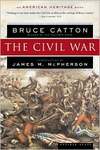
The Civil War by Bruce Catton

When I was a kid, my grandparents thought they would do something that every grandparent should do – share what they love with the next generation. They bought me a subscription to the Time-Life series on The Civil War. Now for those of you too young to remember, Time-Life used to publish these monthly book series on various topics. The idea was that you would receive the books once a month, each book on a different topic in the series. My father had the Science Series, which I absolutely adored, and my grandparents thought that I would fall similarly in love with the Civil War series.

After all, they both were interested in this most unfortunate periods in U.S. history. It spanned five years, cost hundreds of thousands of lives, and permanently altered the face of our nation. What’s not to love?

Predictably, I found them kind of boring.

The pictures were all in black and white, static in composition and full of dead guys with beards. There were lots of dates that I couldn’t comprehend, talking about places I’d never been and full of names I’d never heard of. I got them, flipped through them and was just not interested.

Looking back, I know that I was a bad grandson and I feel bad that I can’t tell my grandparents that.

Now that I’m older, and I know some things about my country and its history, I can really appreciate the enormous change that the Civil War brought upon the United States. As horrible as it was – and it was horrible – without that war our nation would be a pale shadow of what it is today. If it were a nation at all….

We all know the facts: in 1860, following the election of Abraham Lincoln and years of arguing about slavery and its place in a modern nation, eleven states seceded from the United States and formed their own Confederate States of America. In response, Lincoln raised an army from the remaining states in the Union and launched it at the Rebels. After five years of relentless fighting, the war was won in favor of the Union. The rebel states were accepted back into the Union, and the nation has been putting itself back together ever since then.

That’s the big picture, and that’s basically what this book does. In less than 300 pages, Catton gives an interesting and dynamic overview of the War, from its origins in such decisions as Dred Scott and the Missouri Compromise up through the assassination of Lincoln and the failures of the Reconstruction. It follows the major battles of the war, listing the strikes and feints of each army and introducing all the major players. Between these, he talks about the political and social effects of the war – how the economies of the two states fared, how the international community viewed the conflict, and what the ultimate fate of the slaves was.

The pace of the book is very good, even if the blow-by-blow descriptions of the battles get a little soft in the middle. Catton acts as a narrator for the war, telling it as one might tell a story. He works up to climactic moments, then leaves us there to consider for a while before moving on to the next event. What’s more, he’s fair. It’s very easy for people to be unfair to the South – they were rebels, after all. Traitors, some might say. But Catton wants us to understand that the South was doing what it thought was in its best interests, as with the North. What’s more, he wants us to know that the South fought harder than any army has since, sacrificing countless men and an entire culture to a war that they really could not win. He does not demonize the South, nor does he praise the North. He is simply a storyteller, who knows from the beginning the tragic tale that he has in store for us.

So yes, I think this book is an excellent read, especially if you’re just getting into the Civil War. My one real complaint about it is that the book lacks adequate maps which would otherwise help a reader visualize what kind of maneuvers the armies of the North and the South are making. There are maps at the back of the book, but I wouldn’t call them “adequate.” They’re black and white where they really should be color – having both the Union and the Confederate advances marked with black arrows isn’t really helpful. Given the intricate interactions between armies, some kind of clear visual aid might have been useful.

If you have access to the internet, of course, you can get a slightly clearer view of what happened, where and when. Mind you, even the better maps that you can find on line still take some interpretation. Still, it would have been nice to have the book more accessible to those of us who don’t carry the maps in our heads.

The reason why this is important is that even though this book is kind of an index tour of the Civil War, it still gets into a lot of detail – which general moved which army across which river is vital to understanding how the war progressed. The reason the book can go into such detail is that this is one of the most extensively studied conflicts in our history. Every battle, the movement of every army has been studied and documented over the last century and a half, and there’s no sign of it slowing down. The Civil War is fundamental to how our nation became what it is, and as such it is an obsession for the United States.

That’s what this book really tries to understand – why, of all the wars that we have fought, are we so obsessed with this one? You don’t see people doing a lot of World War 2 re-enactments or dressing up to fight mock battles of our cute little war with Spain. I’m pretty sure there won’t be any kind of Afghan War Re-enactment Society a hundred and fifty years from now.

It was a horrible war. It took more lives in a single battle than we’ve seen in our current Middle East conflict so far. It was fought by untrained, inexperienced men who had no idea what they were in for when they signed up. It was a war fought not only for territory but for ideals – for the South’s ability to maintain its agrarian slave culture and for the North’s ability to keep the Union whole. It was a war that could have gone a thousand different ways, each more horrible than the last, and the fact that it ended as well as it did is completely due to the strength of character possessed by all the men involved in sealing that bloody peace. It was a war that was, perhaps, inevitable.

That was something I took away from this book. The Civil War had to happen. In order for our country to progress, it had to do away with the things that was holding it back, slavery being one of those things. It was a test to see if the union could balance its ideals of liberty and order, and to see if it was worthy of forging ahead. It was a war that settled who we are as a nation, at least for a little while, and put paid to the question of whether we were a bunch of congenial states or a true nation, ready to take its place in the world.

The Civil War is one of those topics that people spend their lives studying, and rightly so. Its effects can be felt even today, and the echoes from the shots fired at Fort Sumpter and Gettysburg and Shiloh won’t fade as long as this nation survives. For Americans, to know the Civil War is to know how grateful we should be that we have the country we do. It is often said that soldiers die to keep us free, but I would say than no army of the United States since then has done so more literally than the army of this conflict.

For those of you who aren’t American, this might give you a little insight into our character. Most nations wouldn’t survive such a conflict, with such immense losses of life and the utter destruction of an economy. But we did, somehow. The wounds from that war aren’t entirely healed – there are still scars. But we have stayed together since then, and I reckon that nothing is going to tear us apart again.

So Grandmom, Grandpop, I’m sorry. I really should have appreciated what you tried to teach me. But now I do, and I can pass it on to others….

————————————————
“A singular fact about modern war is that it takes charge. Once begun it has to be carried to its conclusion, and carrying it there sets in motion events that may be beyond men’s control. Doing what has to be done to win, men perform acts that alter the very soil in which society’s roots are nourished. They bring about infinite change, not because anyone especially wants it, but because all-out warfare destroys so much that things can never again be as they used to be.”
Bruce Catton, The Civil War
————————————————
Bruce Catton on Wikipedia
The Civil War on Amazon.com
The American Civil War on Wikipedia

1 Comment

Filed under american history, Bruce Catton, Civil War, history, war

Review 87: A Short History of Nearly Everything


A Short History of Nearly Everything by Bill Bryson

This book absolutely lives up to its title, except possibly the “short” part. The hardcover clocks in at 544 pages, including notes and index, which makes it quite luggable. I suppose, however, when compared to the geologic ages that preceded our brief existence on this earth, the book and the years it took to write it are indeed quite short. In those 544 pages, however, we explore everything, from the dawn of time up until the dawn of human history, from the infinitely tiny hearts of quarks to the infinitely huge scale of the universe. Biology, chemistry, physics, astronomy, geology, paleontology – whatever your science of choice is, it’s in this book. And even if you’re thinking, “Science really isn’t my thing,” I have good news for you – it will be when you’re finished.

One of the things that makes Bryson an excellent writer is simply his ability to make you enjoy reading his work, no matter what the topic is. He’s most well known for his travel books, such as Notes from a Big Country and A Walk in the Woods, as well as his books on the English language, such as Mother Tongue. When I first read him, he struck me as a more literate version of Dave Barry – a very intelligent guy with a fantastic sense of humor. No matter what he writes, you can’t help but enjoy it.

This book, then, must have been a massive challenge for him. He admits right in the beginning that, before he started this book, he pretty much had no idea what he was going to find out. He wasn’t a scientist or a naturalist, and had no idea how it was that we knew, for example, that the Earth had an iron core, or how we knew that the universe was expanding or why uranium was so easy to split up. How do we know that the continents drift across the face of the globe, or that we really are cousins to chimpanzees? He started from a state of ignorance, and spent three years removing himself from that state.

That, in and of itself, is admirable. There seems to be an unfortunate trend in thinking that science is too hard for the normal person to understand. In some cases people believe that if it is indeed too hard for the normal person to understand then, why, it must be impossible to understand. This is the “argument from ignorance” fallacy, and it’s something that’s easy to fall prey to. After all, no one likes to admit that they don’t know things, and if your pride is bigger than your conscience it might be all too easy to assume that if you can’t understand it then no one can. Thus the whole Intelligent Designer nonsense and the continuing battles…. in the TWENTY-FIRST GODSDAMNED CENTURY…. over whether or not evolution is the process by which we can explain the fantastic diversity of life on this planet.

Sorry about that. The neurochemical processes that allowed my distant ancestors to fight off predators (AKA the famous “fight or flight reflex”) tends to manifest itself these days as blasphemy and shouting. I’ll try and keep it down from now on.

If you’re like me, and you’ve been a dabbler in science for a long time, you’ll still learn something new. Not the least of what you will learn is what the Greatest Scientific Minds of our Time were like as people. Bryson does his best to bring out the humanity of people like Newton, Lowell, Einstein, Kelvin and everyone else. There’s a whole lot of fighting, lying, deceiving and backstabbing that brought us to where we are today, and if they had taught me that in science class when I was a kid, I probably would have gotten better grades.

In fact, one of the most interesting things about this book is that it’s not so much a book about science as it’s a book about scientists. By looking at the people who figured out how the universe works, we learned about why science works the way it does – and sometimes doesn’t – and get a real sense of how human understanding progresses. There are flashes of insight and stubborn refusals to see what is plainly true. There are lost geniuses and shameless opportunists, missed chances and serendipitous discoveries. Science, in short, is a human endeavor, with all the glamor and tarnish that comes with it. By emphasizing the humanity of the men and women who have driven science forward, Bryson is able to let us see our own place in the process.

What’s more, Bryson takes great care to point out the areas where we have failed, or at least not yet succeeded. Cells, for example, are baffling organic machines that outperform human-made devices by an outlandish margin. We don’t know as much as we think about pre-history – our fossil record is far more spotty than the Natural History Museum would have you believe, mainly because fossilization requires very specific conditions, not the least of which is a bit of good luck. There could be entire branches of the tree of life that we don’t know because they had the misfortune to occupy an environment that didn’t promote fossilization. We don’t even know how many species of life are on Earth right now – or how many we’ve lost.

The history of humanity is twisted and confusing, with no clear answers as to where we came from, how we arose and how we spread across the globe. There are so many mysteries to be solved, and so few people available to solve them.

If you’re not a science nerd, you’ll still enjoy the book. Remember – up until he wrote it, Bryson was one of you. His style is very readable, and he guides you very deftly from one topic to the next, illustrating a very important point: all science is connected. There is no discrete boundary between, say, chemistry and biology (no matter what the chemists and biologists might tell you), just a fuzzy blur where we pass from one to the other. The greatest advances in our knowledge of how the universe works have come from the most unlikely places, and sometimes knowing why atoms behave the way they do can help understand why the universe behaves the way it does.

Yes, learning is hard. But when you’re done, you are rewarded with a new sense of understanding and awe about how the universe works. And that wins over ignorance any day.

———————————————–
“We live on a planet that has a more or less infinite capacity to surprise. What reasoning person could possibly want it any other way?”
– Bill Bryson, A Short History of Nearly Everything
———————————————–

Bill Bryson on Wikipedia
A Short History of Nearly Everything on Wikipedia
A Short History of Nearly Everything on Amazon.com
Bill Bryson’s website

3 Comments

Filed under Bill Bryson, history, science

Review 82 – Dave Barry Hits Below the Beltway


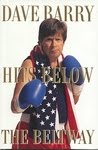
Dave Barry Hits Below the Beltway by Dave Barry

When an election year comes around, I try really hard to stay above the fray. I know that there will be rumors and speeches and policies that get everyone really riled up, and I like to think that I can remain emotionally detached and not allow things to get under my skin.

I usually last until about the Conventions, at which point the slumbering poli-sci major in my brain wakes up and grabs the controls. At that point, I start to take things WAY too seriously. I write long, link-filled diatribes about why certain candidates (who shall remain nameless, in case I ever want to recycle this review during another election year) are completely wrong, utterly bereft of any kind of legitimacy or moral standing and how the American people obviously have the intellectual capacity of zucchini if they vote for them.

It’s easy to get caught up, because that’s what they want. Logical, well-reasoned approaches don’t go over well with the public, so they rely on the emotional heartstrings, and sometimes they get me. I turn really serious and absolutely devoted to the idea that I Am Right.

The only antidote to this is humor. It’s why I love watching The Daily Show – the more seriously you take things, the more self-assured you become in the absolute rightness of your position, the more you need to be taken down a peg. You need to take a breath, take a step back and allow yourself to laugh at the process. If you don’t, you end up risking becoming one of those humorless, fanatic talking heads that just drive everyone crazy.

So, if you need some laughs, and we all know we do, you could do worse than to pick up this book.

This is an original book, rather than a collection of Barry’s columns, and he promises right from the outset that he would do absolutely no research whatsoever. “To do an even halfway decent book on a subject as complex as the United States government,” he says, “you have to spend a lot of time in Washington, D.C. So the first thing I decided, when I was getting ready to write this book, was that it would not be even halfway decent.”

He is, of course, wrong. The book is at least three-quarters decent.

The government is a great source of humor, probably going back to the very first government when a particularly strong hunter-gatherer decided that he was the one best suited to tell the tribe what to do. Barry looks at the evolution of government, back from those early caveman days up to the early days of the twenty-first century. These days, instead of a large, heftable rock to beat possible opponents over the head with, they use commercials. Otherwise, the methods haven’t changed.

Barry’s sense of humor relies on him being The Common Man, someone who’s not really interested in the intricacies of how the government works, but is perfectly happy just sitting back and making fun of it. He has a great time re-writing the Constitution (“Article IV, section 1: There shall be a bunch of States.”) and illustrating the continual growth of the U.S. Government with the use of handy free clip-art pictures.

One of the best things he does is point out the fact that no politician ever, ever actually reduces the size of government, no matter what they promise. Government gets bigger, departments get more and more complex all the time, and there’s really nothing that we can do about it but try and get a laugh. So whether it’s the futility of trying to call prunes “dried plums” or trying to get Congress not to buy things that the military neither wants nor needs, the people in Washington that we trust to run the country are, obviously, insane. Why we keep sending them back is beyond me.

There is, of course, a section on the 2000 election – this book was written in 2001, so there was no escaping that – and a look at it from the unique perspective of those people who screwed it up for everyone. South Florida. The book gets kind of tangential at this point, going from making fun of the US government to making fun of Miami, but he does give us some warning. And in his defense, it is both funny and, in its own way, relevant. It has been argued that Florida is the reason why we had eight years of George W. Bush, so perhaps if we understand it better we may avoid such… unpleasantness in the future.

But I doubt it.

So, if you’re looking for a good laugh and something to remind you that you can’t take all this too seriously, pick up the book. It won’t solve your problems, and it won’t stop you from wanting to strangle everyone on the internet who disagrees with you, but at least a moment’s respite is worth it.

——————————————–
“What the Founding Fathers were saying, basically, was: ‘Why should we let people over in England saddle us with an unresponsive government and stupid laws? We can create our own!'”
-Dave Barry, Dave Barry Hits Below the Beltway
——————————————–

Dave Barry on Wikipedia
Dave Barry Hits Below the Beltway on Amazon.com
Dave Barry’s homepage

Leave a comment

Filed under american history, Dave Barry, humor, politics

Review 81: A Treasury of Great American Scandals


A Treasury of Great American Scandals by Michael Farquhar

There are many good reasons to study history. There is the desire not to be doomed to repeat it, for one, which I find to be an excellent motivator. I remember watching the run-up to the invasion of Iraq and hearing the spectral voice of William Randolph Hearst screaming “Remember the Maine!” in my head. And of all the reasons to study history, that is perhaps the most important, though not necessarily the most fun.

You might also study history to just enjoy the stories. I used to hate history, especially in high school. Like so many of you out there, I had a boring high school history teacher, who did his very best to make sure that none of his youthful charges ever gave a damn about history once finals were over. If I were a more conspiratorially-minded person, I would say it was so that he could contribute to a generation of Sheeple that would do as they were told by their corporate and governmental masters, but that would be giving him too much credit. More likely it was a lack of proper continuing education for teachers combined with the inevitable erosion of the soul that must come from anyone who has to deal with high school students all day.

In any case, I came to enjoy history once I started looking at it as a series of stories. Not just names and dates and events, but actual people. And once I understood that these stiff, bearded men and those stiff, corseted women were really human beings – with lives as rich and as interesting as any other human being (moreso, in fact, since we remember their names after a century or two) – I found more reasons to care both about them and the times in which they lived.

Take, for example, Aaron Burr. Killer of Alexander Hamilton. The two of them despised each other, seeming to even resent the fact that the other man existed, and years of animosity culminated in a fateful duel in 1804. The two men met on the dueling ground, as was the manner of the day, and shot. Both men were injured, Hamilton fatally, and Burr fled, as what he had done was technically murder. But that wasn’t all for good old Aaron Burr – he moved West, and engaged in activities that appeared to be either an invasion of Mexico or an attempt to split the Union in two along the Appalachian Mountains. Or both.

Or neither- no one was really sure what Burr what up to, other than no good. But the man was slippery in a way that would make Dick Cheney go green. While everyone knew he had murdered Hamilton, and everyone knew he was trying to set himself up as possibly the Emperor of Western America, he never went to trial for the first crime and was acquitted of treason in his second. He died a free, but reviled, man. Hell of a guy.

Not all the stories are as grand in scope – some are feuds and revenge stories that burn with jealous rage. Such was the case of Senator William Sharon’s fling with Althea Hill, which led to death, betrayal, madness, and two Supreme Court decisions. Sharon and Hill began a highly suspect love affair in 1880. It was hot, it was passionate, and it ended very, very badly, Sharon dead, Hill in an insane asylum, and Hill’s second husband (her defense attorney) shot dead by the bodyguard of the Supreme Court justice who was to rule on whether or not Hill and Sharon had been legally married in the first place.

That doesn’t hold a candle, in my opinion, to the story of Rep. Daniel Sickles, his wife Teresa, and her lover (and Sickles’ friend), Philip Barton Key, which ended in vengeful murder and an intervention by the President of the United States. Key was stepping out with Teresa on a regular and not-very-subtle basis, and everyone knew it. Everyone but Daniel Sickles, of course. Lies have a way of making themselves known, however, and eventually he found out and confronted his wife. Key, however, had no idea the affair had been exposed, and showed up in Lafayette Park, his usual meeting place with Teresa, giving The Signal that he wanted a little extra-marital nookie. What he got was a furious husband and a bullet in the chest. Sickles, for his part, was acquitted on what may have been the first “temporary insanity” defense in the nation’s history.

Parts of this book are especially fun to read in an election year, as there’s an entire section devoted to underhanded, dishonest or otherwise dirty campaigning. If you thought that Swift Boat Veterans for Truth were bad, or the Tea Parties were poisoning the discourse, you’re forgetting that in the Presidential campaign of 1828, John Adams’ people accused Andrew Jackson’s mother of being a prostitute, his wife of being a bigamist, and Jackson himself of being a homicidal maniac. During the campaign of 1800 (Jefferson versus Adams), the Connecticut Courant warned that, should Jefferson be elected, “Murder, robbery, rape, adultery and incest will be openly taught and proclaimed. The air will be rent with the cries of the distressed, the soil will be soaked with blood and the nation black with crimes.”

Lincoln, who has become known as one of the greatest presidents this country has ever had, was called “a joke” by the New York Herald, and an “ignorant, boorish, third-rate backwoods lawyer” by the New York World. Grover Cleveland was assaulted with the chant, “Ma! Ma! Where’s my pa!” after it was discovered that he had fathered a child out of wedlock. This led to accusations of further debaucheries and unnamed sins against good Christian womanhood and morals the likes of which would make Bill Clinton’s head spin.

A nice coda to that story, though – Cleveland openly admitted to fathering the child (and providing support to the mother afterwards), believing that the truth was the best defense against smears. It also helped that his opponent had not only despoiled a girl in his youth, but was forced to marry her at shotgun-point – hardly one who should be criticizing a man for his youthful indiscretions. When Cleveland won re-election, his followers took up the Republicans’ taunting chant with a retort laced with schadenfreude – “Gone to the White House. Ha! Ha! Ha!”

Which brings me to the third reason why it’s valuable to study history – it helps you gain perspective. The United States is going through some trying times right now, and if you pay attention to the blogs and the cable news networks, you might believe that these are indeed the worst of times. That having a sitting governor traipse down to Argentina for a little Latin loving is the nadir of morality. That having a news organization foment protest rallies and marches is the height of unethical behavior. That accusing your white opponent of having fathered a black child, or spending some private time with a White House intern, or making IM passes at teenage boys are all signs that America is on a one-way trip to hell, even if we can’t afford the handbasket.

History is the antidote to the common belief that the times in which we live must be special. Every generation thinks it – that I am here, therefore the events of my times must be the most important events to have ever happened. It’s egocentric and very, very human, but – and this is important – it’s not true. There is nothing special or different about the times in which we live, because human nature hasn’t changed. For every scandal we see today that frightens or enrages or disgusts us, you can look to history to see that it’s already been done, and done worse. History provides perspective, and it offers hope. The country has seen a lot of bad things in its time, but it has survived. It has seen abuse of civil rights that were far more egregious than anything that happened after 9/11 and it has survived. It has seen civil unrest that makes the Tea Partiers or the G20 protesters look like sulky children – and it has survived.

So turn off the TV, step away from the computer and pick up a good history book – like this one – and let your worries settle down to a much more manageable size. You’ll thank yourself for it.

——————————————-
“I don’t know what to do about this taxation matter. Somewhere there must be a book that tells all about it, where I could go to straighten it out in my mind. But I don’t know where the book is, and maybe I couldn’t read it if I found it! My God, this is a hell of a place for a man like me to be!”
– Warren G. Harding
——————————————-

A Treasury of Great American Scandals on Amazon.com
Michael Farquhar at Penguin.com

Leave a comment

Filed under american history, history, Michael Farquhar, presidential history

Review 71: The Pluto Files


The Pluto Files by Neil deGrasse Tyson

What was the biggest story of 2006? The arrest of the shampoo bombers in England? Small fries. The first World Baseball Classic? YAWN! The death of Don Knotts? Nothin’.

No, as interesting as they were, none of these generated nearly as much public interest and argument as the much ballyhooed “demotion” of Pluto by the International Astronomical Union in August of 2006. Poor little Pluto, hanging out there on the edge of the solar system, got bumped down to “Dwarf Planet,” rousing much ire from people all across the United States. And, in a way, Neil deGrasse Tyson bears some responsibility for it.

To be fair, stripping Pluto of its designation as a planet was never on his agenda. No matter what angry elementary school students may have thought, Tyson had no beef against Pluto. It was just that Pluto had the bad fortune to be an oddball planet, and Tyson was working on the redesign of the Rose Center for Earth and Space in the American Museum of Natural History in New York. Whether he wanted to or not – and I’m pretty sure he didn’t – he became the public face of this issue, one which gripped the country.

That in itself is weird. Americans are not the most scientifically literate of people. Sure, we like to use the fruits of science, but most people don’t really pay attention to things like astronomy unless it’s a shuttle launch or a pretty Hubble picture. What’s more, the public in general has never really gotten involved in matters of taxonomy. If you went up to someone and said, “Hey, the scientific community is thinking about revising the nomenclature regarding the classification of anaerobic bacteria,” they’d probably just walk away swiftly, looking back a few times to make sure the crazy person isn’t following them. But tell them that the IAU is planning to demote Pluto, and what you have is a firestorm.

This book is not so much about Pluto itself, but our relationship with that weird little ball of ice and rock. Tyson takes us through our history with Pluto, from its discovery back in 1930 to its demotion in 2006, and tries to figure out just what it is that has endeared it so to the American public.

One possibility, of course, is the fact that Pluto was an American discovery. Percival Lowell was the one to start the hunt, and Clyde Tombaugh finally found it. While the name was suggested by a teenage British girl, everything else about the discovery of Pluto was American, and that was a point of pride. There were only three non-Classical planets in the heavens, and we had claim to one of them. So even if the average American doesn’t know the history of Pluto’s discovery, we still have a certain love for it.

Despite its diminutive size, Pluto has loomed large in the American imagination. Perhaps there’s something of the underdog love in there, too. Americans love to see the little guy win, and if you look at a lot of the pro-Pluto artwork from 2006, the theme of big planets ganging up on a little one was very popular. As odd as this perception might seem from a scientific standpoint, I think a lot of Americans were supporting Pluto because it was being pushed down by The Man, as it were.

And so the country went a little nuts. Newspapers, blogs, websites – even sports reporting got in their digs on the Pluto controversy. There was something for everyone in this story, and everyone who could manage a Pluto reference did so with gusto. It was a mixed blessing, to be sure – the American public was finally excited about astronomy, but it was the excitement of a bar fight, rather than the highbrow intellectualism that many astronomers might have preferred.

What was also interesting about this book was the look at the professional arguments that went on as well. Dispelling the dispassionate image of the astronomer, professionals got really worked up about this, on both sides of the issue. Grown men and women, many of whom were well-versed in many aspects of astronomy, spoke passionately about Pluto. Some called on our sense of tradition and cultural memory, acknowledging that while Pluto may be an oddball, he’s our oddball. Others were more than happy to throw Pluto into the Kuiper Belt with the other icy mudballs.

So often, Science is assumed to be some monolithic entity that describes the world with a unanimity of voice. It is supposed to be dispassionate and rational, and we don’t really think about the reality of scientific progress. To use the analogy often given to marriage, science is like a duck – stately and sure on the surface, but with a whole lot of work going on down below. The history of science is full of more passion, debate and anger than you might suspect. In order to decide the issue, symposia were convened, meetings were held, and finally the International Astronomical Union was forced to do something that had never occurred to anyone before: precisely define what is and is not a planet.

In case you’re wondering, the definition is quite simple: It has to orbit the sun, be big enough to have attained a spherical shape, and it has to have cleared out its orbit. Pluto fulfills the first two requirements, but badly fails the third. Therefore, it is not a planet. They created a new designation: dwarf planet, including Ceres in the asteroid belt and Haumea, Makemake and Eris out past Pluto. The public may not like it, but that’s how it is.

Tyson points out that this is not the first time we have done such a reclassification. With the discovery in the mid-19th century of objects orbiting between Mars and Jupiter, a new class had to be invented in order to keep the number of planets from rocketing into the thousands – and so asteroids were born. The Pluto case is quite similar. Long after Pluto was discovered, more objects, similar in nature, were discovered nearby – some even bigger than Pluto was. The region of rock and ice was named the Kupier Belt, and if Pluto were discovered today, it would most certainly be named as part of it. As much as it pains me to say it, the decision to reclassify Pluto was the right one. At least Tyson and I have revised the Planet Mnemonic the same way: My Very Educated Mother Just Sent Us Nachos.

The rise and fall of Pluto is an interesting story, and a lesson for science educators. No matter how bad it may seem for science in the United States, people can still be surprisingly passionate about scientific topics. It’s also a warning against resistance to change. With all that we are learning about the Solar System, to just rattle off a list of planets and be done with it is insufficient. There are so many other ways to look at it now, so many ways to group the hundreds of bodies out there, that perhaps Pluto is more comfortable out with the other Trans-Neptunian objects. With its own kind, as it were, instead of being shoehorned in with eight other guys that it doesn’t really have anything in common with.

Ultimately, of course, Pluto doesn’t care what we call it. That point was often made on both sides of the argument, and they’re right. We could call it Lord Snuggypants the Fourth and it would keep doing what it does out there in the cold and the dark. But it’s important for us, and not just because science needs things to be organized so we know what we’re talking about. Being able to reclassify Pluto is an indication of the breadth of our knowledge – had we not made such progress, Pluto’s classification would never have been in doubt.

The “demotion” of Pluto is a sign of our amazing achievements over the last eighty years. We have not lost a planet – we have gained understanding. So in the end, the Great Pluto Debate is one that we should look back upon fondly.

—————————————————–
“It’s always a little scary when the person who hired you calls you up and asks, “What have you done?!”
– Neil deGrasse Tyson, The Pluto Files
—————————————————–

Neil deGrasse Tyson at Wikipedia
The Pluto Files at Wikipedia
Pluto on Wikipedia
The Pluto Files on Amazon.com
Neil deGrasse Tyson’s homepage

Laurel’s Pluto Blog

1 Comment

Filed under astronomy, history, Neil deGrasse Tyson, Pluto, science

Review 64: Lamb


Lamb: The Gospel According to Biff, Christ’s Childhood Pal by Christopher Moore

If you’ve been following my reviews over the last few years, I don’t see any reason why I should have to put a caution into this, but here it is: if you’re not interested in speculative fiction, open to the reinterpretation of the life of Jesus, speculation on the gaps in the gospels and the possibility of pan-religious values having been vital to the formation of Christianity, then you should probably not read this book. Nor should you really be using the internet – there’s just too much nasty “Free Thinking” out there. Take your hands off the keyboard and back away slowly.

Okay, that’ll weed out the wusses. Although, as I think about it, perhaps those are exactly the people who should be reading this book. I’m sorry for all the nasty stuff I said – come on back!

Each time I read this, I love it more. For one thing it’s Moore’s best work, without question. Not only is it blindingly funny, which is a hallmark of Moore’s style, but it’s also thoughtful, philosophical, and is supported by obvious research. Because he’s dealing with real places and real people, Moore has made sure that his depiction of first-century Israel is as accurate as he can make it. It’s all there in the details about the lives of the characters, the struggles they go through and the understandings they come to. Without hours of research as its foundation, the book would have failed almost instantly. Moore didn’t have to do it, but it is a great sign of his character as an author that he did.

This is also by far my favorite interpretation of the life of Jesus. It is the Gospel According to Biff, the best friend of Joshua bar Joseph, the man who would one day be called Jesus Christ. Of course, when Biff met him, the young Son of God was occupying himself by resurrecting lizards after his brother smashed their heads in. But they grew to be fast friends, and everywhere that young Joshua went, so went his buddy Biff.

The best way to describe Biff would be Jesus’ Sidekick. He’s a troublemaker, sarcastic, and far too prone to succumb to temptations of the flesh. But he’s clever and resourceful, and mindful of his friend’s mission on this earth. He’s young Joshua’s best friend in every way, so when Josh goes searching for the three Magi who attended his birth, Biff knows he has to go with him. The way to finding Joshua’s destiny will be long and hard, and Biff knows that his friend needs him.

The main part of the book has to do with Biff and Josh’s search for the Magi, to learn from them how Josh can be the Messiah. On their way they face demons, death and certain temptation, but also wisdom and experience from the wisest men in Asia. From Balthazar in the rugged mountains of Afghanistan, Joshua learns of the Tao, contemplating its Three Jewels – compassion, moderation, and humility. He learns about suffering and mercy and kindness and the effects they bring.

Biff, on the other hand, learns about the ways in which eight Chinese concubines can make life a wonderful place, night after night. He learns how to make potions and explosives, how to cast metal and read Chinese. He learns vital skills that the Messiah cannot – or must not – know.

From there they go to China, to a monastery high in the cold mountains to study with Gaspar, a monk of the Zen school. From Gaspar, Josh learns stillness and mindful breath, compassion for all things and, oddly enough, how to turn invisible. He discovers the divine spark that exists in all things, a holiness that no one can claim or take from you. He also learns what it’s like to be the only one of his kind, and foreshadows the tragic end that can bring.

Biff, of course, is learning kung fu and how to break bricks with his head.

Finally, they go to India to seek out Melchior, an ascetic yogi and the last of the wise men. Joshua here learns about sacrifice and blood, and the horrors that are perpetrated in the name of religion. He discovers the injustice of denying the Kingdom of God to anyone, Jew or Gentile, and the futility of trying to teach yoga to an elephant.

Biff, for his part, manages to put together a truly spectacular version of the Kama Sutra.

Don’t get me wrong – while Biff is certainly more earthly than his friend, he is also devoted to both Joshua and his mission. He is Josh’s anchor to the real world, always reminding him of his mission and making sure he doesn’t take himself too seriously. Biff, in this rendition of Jesus’ story, is a necessary element in the ultimate teachings of Christ.

As he admits in his afterward, Moore has tackled a very tough subject here, one that he knows is likely to rile people up. Jesus is one of those characters that is very set in peoples’ minds – he is the tall, beatific figure with a gentle voice and blue eyes who glides around in robes followed by insightful and worshipful men.

He certainly never ate Chinese food on his birthday, nor did he get hopped up on coffee or learn kung-fu. He’s never had a sarcastic best friend who was willing to risk damnation to describe what sex was like to the young Messiah, who was pretty sure that he wasn’t allowed to Know women. We haven’s seen Jesus get frustrated and yell at his disciples because they didn’t get the message he was trying to send, or be torn between what he has to do and what he wants to do. The Jesus in this book is an excellent meld of the human and the divine. He has the miracles and the powers, but his mind is human. He knows that he’s the son of god, but he feels like just a regular guy who’s been tapped to save humanity from itself. It’s a very difficult situation to be in, and Moore does a really good job of getting us to understand that.

More importantly, the life of Jesus hasn’t been this funny before. This is the kind of book that will piss off your family or co-workers, because you’ll want to read out passages from the book every five minutes, but you won’t get it out right because you’ll be laughing too hard. The way the book is set up, Biff has been resurrected by the angel Raziel in order to write a new gospel. Unfortunately, he’s been resurrected in the modern age, about two thousand years too late to help his friend avoid the awful, horrible sacrifice that he knows he has to undergo. So he writes in the modern American vernacular, assuring us that while the words may not be a direct translation of first-century Hebrew, Latin, Aramaic, Chinese or any of the other languages they encounter, the tone is accurate. And the tone is comedy, all the way through.

Of course, the comedy kind of drops off as the book races towards its unpleasant end, which is where my troubles with Moore as a writer usually lie. He tends to write endings that are abrupt and unfulfilling, as though he just wants to finish writing the book so he can, perhaps, get on with the next one. Even though we know how this story ends, it still feels rushed. Biff’s attempts to save his friend from horrible death make sense, but I would like to have seen them drawn out a bit more. I have a feeling that Moore could have added another hundred pages without breaking a sweat – and I wish he had.

The best thing, though, is that Moore treats his characters with the utmost respect. Nothing that Jesus does in the book is out of character for him, insofar as we know his character. And Biff is more than just a goofy friend of the Messiah – he is the reminder and the anchor of Jesus’ humanity. I’m not a Christian – I don’t claim any religion, in fact – but this version of Jesus would be one that I might be willing to give some time to.

It’s a brilliant book, in my top ten….

—————————————————-
“Josh, faking demonic possession is like a mustard seed.”
“How is it like a mustard seed?”
“You don’t know, do you? Doesn’t seem at all like a mustard seed, does it? Now you see how we all feel when you liken things unto a mustard seed? Huh?”
– Biff and Josh, Lamb
—————————————————-

Christopher Moore on Wikipedia
Lamb on Wikipedia
Lamb on Amazon.com
Christopher Moore’s homepage

Leave a comment

Filed under angels, Christianity, Christopher Moore, coming of age, demons, friendship, good and evil, humor, Jesus, quest, religion, travel

Review 61: Dave Barry Slept Here


Dave Barry Slept Here: A Sort of History of the United States by Dave Barry

Sometimes you just need a palate cleanser. Something to make you smile, that requires a minimum of thought for a maximum of entertainment. This is a dangerous thing to look for; it’s all too easy to find oneself wading through a sea of dross, looking for funny but just finding silly, childish nonsense of a mediocre caliber.

The nice thing about Dave Barry is that he is silly childish nonsense of the highest caliber.

My family has been Barry fans for a long time running. When I was a kid, the new Dave Barry book was an automatic Father’s Day present, and would migrate around the house as one or another of us picked it up for a few laughs. Fortunately for us, the laughs were more than a few – I remember laughing so hard I had to put the book down for a few minutes because just thinking “Hawley-Smoot Tariff” sent me into uncontrollable giggles.

This book is Barry’s tribute to not only American history, but to the whole concept of history books themselves. The fact that he’s covering everything from the initial human migration into North America to the Bush-Quayle administration (the book was published in 1989) in only 175 pages with fairly large font is a sign of his being a true master of history.

For example, he does what most public school textbooks do – he skips the boring parts. Teapot Dome? Who cares! The Federal Banking Crisis of 1837? Yawn…. We all remember high school, right? Pretty much nothing happened between the ratification of the Constitution in 1789 and the Civil War seventy-six years later. Right? He also saves time and space by skipping over those parts of history which are, to use a technical term from historiography, “bummers.” World War 2, for example – nothing fun to talk about there.

What Barry also does to make history easier is he standardizes the dates for us. No more do we have to remember what month and day something occurred (a feat that always kept me off the high score list in high school history class.) Now all the prospective student of history has to remember is October 8. When did the Mayflower arrive in New England? October 8. When was Kennedy assassinated? October 8. When was the very first Fourth of July? October 8.

See how easy it is? Why didn’t they do this when I was in school?

The style of the book is like someone writing about something barely remembered, with only the most cursory amount of research done. And this was in the pre-Wikipedia days, kids, when you had to look stuff up in books. Fortunately, while Barry’s history does indeed parallel our own, it is almost completely devoid of actual facts that you may be required to remember. All you really have to do is follow him along on the ride. Of course, if you actually do know something about American history, the book is even funnier. The fact that the book ends with the election of George Herbert Walker Norris Wainright Armoire Vestibule Pomegranate Bush IV and his vice-President Dan “Potatoe” Quayle does disappoint a bit, but, linear time being what it is, there’s not a whole lot one can do about it. All history books, serious and silly, are obsolete the moment they hit bookstores. The good news is that Barry maintained a prolific career as a columnist until he retired back in 2004, so you can read his thoughts on the large amount of history that did not end in 1989.

I will always have a warm place for Dave Barry in my heart, but I do have to confess something. When I was younger and read Dave Barry, I would laugh. A lot. Those good, hearty, soul-clearing laughs, and part of the best memories I have of Dave Barry is simply remembering laughing. I didn’t laugh very much reading this again. I don’t know if it’s because I knew where all the jokes were, if my head just wasn’t in the right place, or if my sense of humor has changed over the last twenty years.

Twenty years. Good lord.

Anyway, whatever the reason, I had far fewer of those laugh-out-loud moments than I used to. It’s still funny, don’t get me wrong. I just didn’t giggle, guffaw, cackle and try to read bits to my long-suffering co-workers. Whatever it is, I kind of miss it. I think I’ll have to dip into some of his other books to see if I can find it again.

If you haven’t read Barry, I definitely recommend checking him out. This book is a fine place to start….

——————————————-
“But as the old saying goes, “Time heals all wounds,” and in the more than 120 years since the Civil War ended, most of this bitterness gradually gave way to subdued loathing, which is where we stand today.”
– Dave Barry, Dave Barry Slept Here
——————————————-

Dave Barry on Wikipedia
Dave Barry Slept Here on Wikipedia
Dave Barry’s homepage
Dave Barry Slept Here on Amazon.com

Leave a comment

Filed under american history, Dave Barry, history, humor

Review 60: Assassination Vacation


Assassination Vacation by Sarah Vowell

I first saw Sarah Vowell on The Daily Show and I was intrigued by her. This slight, dry, kind of sleepy-looking woman was not who you might expect when you run the words “presidential historian” through your mind (in my mind, “presidential historian” is usually an older man of leisure who’s managed to be lucky enough to turn a passion into a job), but there she was. The fact that she was also really funny impressed me even further. And so, since I have a long-running fascination with presidential history myself, I set out to Mooch this book. And it was well worth it.

Being interested in Presidents means a lot of things. For some, it’s the semi-regular top/bottom ten Presidents lists, or comparing one to another in terms of their accomplishments and scandals. Some people develop a fascination with the more obscure Presidents, hoping to rescue their names and deeds from the dustbin of history. Others look to see what kind of social or cultural changes they made in their times. In short, if you want to learn about the Presidents, there are a lot of ways you can go about it.

Ms. Vowell here explores the more morbid side of Presidential history, especially the inevitable morbidness of being in history-love with Abraham Lincoln. In the special features section of The Incredibles DVD (she played Violet), you can see that she compares Lincoln to a superhero, and has multiple instances of Lincoln idolatry around her home. She admires Lincoln’s steadfastness and resolve, his determination to hold the Union together, and the humanity that connected him to the rest of the common people. Lincoln, in life, has a great deal to appreciate.

Study Lincoln long enough, however, and you eventually get to the sad part – his assassination by John Wilkes Booth in 1865.

Sitting in Ford’s Theatre in Washington DC, she was struck by the same thought many people have when they go there – “Wow. This was the place.” She sat in the Chinese restaurant that was built on the site of the boarding house where Booth and his co-conspirators made their plans and thought the same thing. And before she knew it, she was on a pilgrimage, a holy quest to visit all the places involved in the death of Abraham Lincoln. And there are a lot of places to visit, in New York, Illinois, and even off the Florida Keys, to say nothing of the area immediately around DC. Lincoln’s assassination echoed from that box seat in Ford’s Theatre and shook the nation.

Of the four Presidents that have been assassinated, most people only really know about two: Lincoln and Kennedy. But there were two others brought down by the assassin’s gun – Garfield and McKinley. So Vowell expanded her pilgrimage to include them as well, giving them the same treatment and respect that she gives to her hero, Mr. Lincoln. Why she decided not to do Kennedy is not explained. Perhaps because it hasn’t been long enough since the event, or because there’s so much controversy surrounding it already….

The book is a nice tour through the lives of one President we all know, and two that we don’t. And it’s all fun to read, which is usually hard to do with history, much less the history of James Garfield. She reveals that each assassination came about by a complex series of events, and was triggered by many things – frustration, anger, despair, madness – and that each one was a tragedy, even if we don’t appreciate them all that much.

Along the way, we get a refresher on American history, and a little contemporary comparison as well. For example, the Spanish-American war, over which McKinley presided, bears a shocking resemblance to the current war in Iraq. Both were wars of choice, fought for material gain, and initiated by dubious claims of aggression, just for starters. “Then, as now,” she says, “optional wars are fought because there are people in the government who really, really want to fight them.”

One of Vowell’s great talents in this field is being able to link things together, so that the decision made by, say, John Wilkes Booth has effects that can be traced to Emma Goldman, and then to Leon Czolgosz. Or how the utopian free love community of Oneida, New York accidentally spawned the bizarre madman Charles Guiteau, and then went on to make rather nice teapots.

This is a technique that history teachers need to learn if they’re going to give the world more people like Sarah Vowell – an understanding that history is not a series of isolated events, where you can look at a name, a place and a date and say, “Well, that’s that.” History is an ongoing process, with cause and effect coming one after another, often in strange and unexpected ways. Perhaps if people could see how a single event in the past directly influences the way they live in the present, they’d take more interest.

It’s a fun read. If you weren’t interested in history before you read this book, you’ll at least be a little warmer to it afterwards. Also, she won my heart right in the beginning by saying that part of the impetus to write this book was watching Stephen Sondheim’s musical Assassins, which I know nearly by heart even now, so many years after it was put on stage back at Siena. Every now and then she’d sprinkle a bit from the musical into the book – Charles Guiteau was a hoot – and I’d smile knowingly. Must listen to that again….

—————————————–
“There are people who look forward to spending their sunset years in the sunshine; it is my own retirement dream to await my death indoors, dragging strangers up dusty staircases while coughing up one of the most thrilling phrases in the English language: ‘It was on this spot…'”
– Sarah Vowell, Assassination Vacation
—————————————–

Sarah Vowell on Wikipedia
Assassination Vacation on Wikipedia
Assassination Vacation on Amazon.com
Sarah Vowell at the Barclay Agency

Leave a comment

Filed under Abraham Lincoln, assassinations, history, James Garfield, presidential history, Sarah Vowell, travel, William McKinley

Review 43: Underground

Underground – The Tokyo Gas Attack & the Japanese Psyche by Haruki Murakami

On March 20, 1995, in the middle of the morning rush hour, the Aum Shinrikyo cult unleashed a terrorist attack on the subways of Tokyo. Five men on five different trains unleashed sarin gas in the subway system, which shut down most of the city, injured at least 5,000 people, and left 12 dead. It was the single worst attack on Japan since the end of World War Two, and it gripped the nation.

I remember hearing about this, but I don’t remember giving it too much attention – I mean, when was I ever going to have to know much about Japan, right? In the light of our own terrorist woes in the US, I wish I had.

Haruki Murakami is best known for being a fiction writer. I’ve read a few of his books, and they’re all really interesting. He has a very strange mind, and he’s a good enough writer that he can often successfully avoid giving his characters names, something that still surprises me. This time, however, he decided to turn his hand to non-fiction, chronicling the events of what was a shocking blow to his home country.

In his introduction to this book, he explains why he decided to write it. Like many people, he heard about the attacks while he was living abroad, and thought, “Oh, that’s terrible.” And then he tried to put it out of his mind. But it wouldn’t stay there. A woman had written a letter to a magazine about her husband. He had been on the subway that morning, and had been injured by the sarin. His injuries had impaired him to the point where he had been forced to quit his job. Not only because of the physical effects of being gassed, but also because he had become an outcast at work. People would look at him and whisper about the “weirdo” who had been on the subway that day. He was, probably, a reminder of what people wanted to forget. He had, by no will of his own, become an outsider, and that pressure led him to quit his job – what Murakami calls a “double violence.” First by the sarin, then by Japan.

From that point, Murakami took to wondering what really happened to people that morning. Not what the newspapers and TV said, but the stories of the people who had actually been on the trains.

So he began taking interviews. Of the hundreds he contacted, he got a total of 60 people to agree to talk to him. This is definitely a huge difference between Japanese and Americans. After September 11th, I’m sure people were falling all over themselves to tell their stories, or to talk about their dead friends and relatives.

In Japan, people were eager to forget. They didn’t want this nosy journalist stirring things up again. It’s easier to put things in the past, to say, “It can’t be helped” and go on with one’s life.

Fortunately for us, Murakami got some people to talk, and for that we have this book.

He divides the stories into subway lines and stations, and it’s interesting to see how peoples’ stories are slightly different at times, where one interviewee and another interacted. He gives the histories of people, and provides a narrative of what was happening to people on that morning – where they were going, what they were doing and thinking, and how they felt. Some people thought they were sick, others thought that some kind of cleaning fluid had splashed. A few guessed that it was an attack.

Some of the best stories come from the station personnel. So far, my experience with the guys in the uniforms who run the stations is that they all say “Arigatou gozaimas” whenever you put your ticket through the gate. These guys, though, had to take charge of a subway system that was under attack by an odorless, invisible weapon, without knowing who had done it or why. Unlike firemen or policemen, these guys had to deal with a situation for which they had likely never been trained.

The civilian stories are also fascinating, as they tell how they tried to help, and they vented their frustration with the lack of help. They talked about what they were thinking as the symptoms set in – dimming of vision, nausea, lack of coordination…. One interesting commonality is how many people kept trying to go to work. They put down their symptoms to any number of garden-variety maladies – anemia, lack of a proper breakfast, general stress. Half-blind, unable to walk straight, many of them still made it to their workplaces, not knowing the danger they were in until they heard about sarin on the news.

Sarin is a nerve gas, originally designed by Nazis, it is one of the most powerful gasses out there. Iraq used it to great effect against Iran in the 80s, and could well still have some floating around. According to the translator’s notes, a drop of sarin the size of a pinhead is enough to kill a person.

The cult members who set this thing off had liters of the stuff. Fortunately, they cut it with another liquid (and even pure sarin doesn’t evaporate well) which cut its lethality. Somewhat.

Perhaps the tiny number of fatalities – 12 – were due to the lower potency of the gas. It certainly wasn’t because the Tokyo or Japanese governments were any good at dealing with disasters. Interviews with doctors at local hospitals talked about the utter confusion that ensued after the attacks. None of them were briefed on the situation, they didn’t know what kind of gas had been used, and therefore couldn’t treat it properly. Worse yet, in some cases, they didn’t even know it was a gas. In some hospitals, sarin victims were admitted to the emergency rooms, where the sarin in their clothes began affecting the ER nurses and doctors.

They figured it was probably cyanide. One doctor, who had happened to have been at a seminar on a previous sarin attack in Japan, recognized the symptoms of sarin poisoning and faxed the information around the city’s hospitals, apparently a very unusual act by a doctor in Japan. Like many organizations in Japan, hospitals are loathe to share information without going through the proper channels, even in an event such as this. But this fits into the Japanese mind-set as well: to take such initiative is to invite criticism. Should the decision be the wrong one, it would bring shame down on everyone involved. Thankfully there were some people whose minds were more concerned with saving lives than saving face. Not enough, though. The Tokyo Bureau of Health didn’t chime in until 5:00 PM, nearly eight hours after the attack.

One doctor claims that the only reason so few people died was because of the efforts of individual doctors and paramedics. The official organizations were more or less useless, much like they were after the Kobe earthquake in 1992.

However it happened, the death toll was kept low, but the effects lingered on. Sarin has long-lasting physical effects, weakening the victim for years to come. Even more, there were the psychological effects that come with any event of mass terrorism.

I saw an article in an Australian magazine which interviewed some people who had been photographed during the burning and destruction of the World Trade Center. None of them were happy, none of them were leading good lives. Months later, the attack still lingered in their minds and their lives, effectively continued on. The same was, and probably is, true in Japan after the Tokyo subway attack.

After the publication of the first edition, Murkami decided that he had a few more interviews to do. It’s one thing to know what happened to the victims, but one also has to wonder: Why would anyone do such a thing?

So he went to interview current and former members of the Aum cult, and find out why they joined, what attraction the cult held for them, and what they knew of the cult’s plans. After the attacks, most of the Japanese media were treating Aum simply as “The Enemy,” a faceless group whose members were, in the grand Japanese tradition, not individuals but simply facets of the whole.

Aum, under its leader, Asahara, worked like most cults do: They recruited people with doubts, misgivings and unreconciled views of the world. Many of the people Murakami interviewed were highly intelligent people who felt, from childhood, that the world they lived in made no sense to them. Others were lost, confused, who felt unhinged and disconnected. Such people are classic candidates for cults, and Aum took them in.

In Aum, they tell Murakami, there was no fear of responsibility, no worries about their choices for the future, because their future was preordained. If anything bad happened, it was just bad karma falling away. For some, Aum was just a new way to look at life, a new way to go through life that offered less uncertainty and pain than conventional life.

For others, though, it was a political movement. It was a group whose goals could be achieved by murder, both individual and mass. The interviews are interesting, because you can understand why the lifestyle of Aum might be attractive to people, if not very practical.

Murakami wanted to point out, by interviewing the Aum members, that this cult didn’t appear out of nowhere. It arose in Japan, made up of Japanese men and women. It was a reaction to Japanese society, a signal of the illnesses that permeate it. It was not, and should never have been treated as, something separate.

There’s not a lot of judgment in this book, as that was not Murakami’s goal. He did what he set out to do – tell the stories of people who had been there, who had experienced the terrors of the sarin attack. It’s always interesting to hear real stories, and always good.

One has to wonder, though…. Terrorism is not all bombs and airplanes and Arabs. These terrorists – and they do fit the bill – were people who looked like everyone else, men in suits, carrying briefcases and a newspaper-wrapped bundle each. No one would have given them a second thought.

Could this happen in America? Probably. We still haven’t found whoever was mailing the anthrax around, at least not at the writing of this review. It would be very possible for a group of men to board the subways in New York at rush hour, gather their resolve, and unleash an attack at least as destructive as the World Trade Center attack was. And the answer isn’t “More Security” – that’s closing the barn doors after the horses have not only left, but they’ve started their own fertilizer reprocessing plant and planned to blow up the Kentucky Derby. The interviews in this book suggest that terrorism is a societal issue, not a security one. If we want to stop people from doing violence to us, we need to find out what drives them to do so. Remember: the majority of terrorist acts carried out in the United States were not done by al-Qaeda. They were done by Americans, just as the Tokyo attacks were done by Japanese.

No matter what our politicians and police tell us, we’re never completely safe. Japan learned that in ’95. We need to learn it as well.

——————————————-
“We need to realize that most of the people who join cults are not abnormal; they’re not disadvantaged; they’re not eccentrics. They are the people who live average lives (and maybe, from the outside, more than average lives) who live in my neighborhood. And in yours.

“Maybe they think about things a little too seriously. Perhaps there’s some pain they’re carrying around inside. They’re not good at making their feelings known to others and are somewhat troubled. They can’t find a suitable means to express themselves, and bounce back and forth between feelings of pride and inadequacy. That might very well be me. It might be you.”
– Haruki Murakami, Underground
——————————————-

Haruki Murakami at Wikipedia
Underground at Wikipedia
Tokyo sarin gas attack on Wikipedia
Aum Shinrikyo on Wikipedia
Haruki Murakami’s website
Underground at Amazon.com

Leave a comment

Filed under cults, Haruki Murakami, history, Japan, nonfiction, society, terrorism, Tokyo

Review 31: The Iliad

The Iliad by Homer, translated by Robert Fagles

Sing to me, O Muse, of a long damn poem,
which saddled the backs of many a Freshman English Major before me
and brought the mist of term papers down around our eyes

Can you tell me, O Muse, of the deeds done in this book
in less time than it takes to fight the actual war
in which the blood of many a legendary, some say mythical, figure
was spilt and lost, fed into the hungry earth of Troy?
Sing to me of feasting and fighting and the filching of treasure
of Dawn and her Rosy Fingers as they greet the tenth year
of the War of the Acheans (which are also known as Greeks,
but only by the terribly uneducated)
against the great city-state of Troy.
Tell me of ten years’ warfare, the great hollow ships
ranged against the shining walls of Ilium!

Of all the Acheans, only one could be the Hero of this war
a man spawned of a Goddess, a son of the oceans and a scourge
on all who oppose him, who would flee and crap their singlets
at the very sight of his blazing armor.
As a three year-old child sits in his room and sulks
upon not receiving a bicycle for his birthday,
ignoring all the treasure heaped upon him by otherwise doting parents,
crying to the walls and his toys in the closet
and raging against the injustices of those older than he,
so does Achilles, the greatest of Egos in the Achean army
sit in his tent and whine about Briseis,
the woman he won in warfare, only to have her taken by Agamemnon.

“Help me Mother, goddess of the ocean’s foam,” he cried.
“Agamemnon’s pissing me off and I want him to suffer for it!”
And so did his doting mother appeal to Zeus,
he of the Thunderbolt Libido with a Thing For The Ladies
and the King of Gods did make it so,
giving the troops of Troy and their leader, Hector, advantage
only to crush them in the end so as to increase
the glory of Achilles.

Who can sing the insanity of this plan, this war?
Should I live a thousand lifetimes, I would wither of age
before I could recount the acts of treachery and pettiness
brought about by gods and men on the blood-soaked plains of Troy.
Would that I had the time to list the dead and dying
the blood and the viciousness of unholy war,
balanced by rare acts of humanity and kindness.
If only I possessed that rarest of gifts, the patience
to list the atrocities of the Gods wrought upon men.
Such was the gift of Homer, to do so long ago
what we cannot, weak as men are now.

Great Agamemnon, whose pride and stubbornness rival Father Zeus
Himself. Achilles, the mighty, the hero who becomes human
only when all that he truly loves is taken from him.
Hector, breaker of horses, the father and defender of a city
doomed from the outset.
Priam, Aged King of Troy, watching his sons die one by one.
The libidinous Paris, whose inability to think
with the right head started all of this,
and Helen, would that she drowned before reaching Troy,
watching the terrible battle from her rooms.
And her rightful husband, the red-haired Menelaus
whose rage brought a thousand ships across the wine-dark seas.
Patrolcus, incapable of following one simple little instruction.
Godlike Telamonian Ajax, clever Odysseus, and aged Nestor
always with a long-winded, vaguely relevant story at hand.
These are the heroes of this play, O Muse.

And there are certainly villains –
those immortal Gods whose every whim costs the lives
of noble mortal men.

White-armed Hera, scheming against her husband
Zeus, who grants the ascendancy of Achilles at the cost
of uncountable Trojan and Achean lives.
Aphrodite and Ares, fighting for Troy,
grey-eyed Athena and Poseidon with his blue hair, urging on the Argives.
All playing their games, and in the end, the same as they began.
For, being deathless Gods, they cannot change
and what cannot change cannot learn.
And so the Gods, whose machinations set this tragedy in motion
escape unscathed during the passage of many a mortal soul
into the dark arms of Hades.
And the mortals, playing parts in Zeus’ puppet show
dying to bring greater glory to Achilles.

Would that I had the time to underscore the glory of this tale
and how centuries of the written word have been built upon it.
Give me the strength, O Gods, to tell of this cornerstone!
As a single oak tree, growing tall and splendid towards the sky,
reaching for the sun and spreading its roots into Demeter’s
fertile earth, put forth leaves whose numbers are unknown to man
so has this epic poem inspired more works than can be counted
by a writer as simple and humble as myself.
So reach out, dear Reader, reach out and find this tale,
and as a vast tank holds enough rainwater to replenish
fields and fields of fecund earth, bringing forth
crops to feed people by the thousands,
so will you become a repository of literature and history
and be able to show the world just how utterly
utterly
cool you really are.

Come with me, O Muse. I need a drink.

———————————————-
“And now as the armies clashed at one strategic point,
they slammed their shields together, pike scraped pike
with the grappling strength of fighters armed in bronze
and their round shields’ bosses pounded hide-to-hide
and the thunder of struggle roared and rocked the earth.
Screams of men and cries of triumph breaking in one breath,
fighters killing, fighters killed, and the ground streamed blood.”
Homer, The Iliad (8:71-77)
———————————————-

Homer on Wikipedia
The Iliad on Wikipedia
The Trojan War on Wikipedia
The Iliad on Amazon.com

1 Comment

Filed under classics, history, Homer, made into movies, poetry, war