Tag Archives: fiction

Review 226: The Road

The Road by Cormac McCarthy

There should be a name, I think, for the type of book that you’ve absolutely heard of, that pretty much everyone has read, but that you have, somehow, managed to miss.

Well, now I have no choice but to read it, since I’ve decided to teach it this year. I know – a bold move to choose to teach a book that I haven’t actually read to impressionable youngsters. I’m a risk-taker, as the IB would have it.

As you recall from your encyclopedic knowledge of this blog and my many reviews, I have a soft spot in my heart for end-of-the-world fiction. I grew up reading The Stand by Stephen King, I’ve read Swan Song multiple times, and even enjoyed tongue-in-cheek apocalypses like Good Omens. Before going into this book, I would have considered myself an authority on all the various ends of the world.

You see, most apocalypse stories share basic qualities. They have secrets and prophecies, they have good guys and bad guys and hope for a better world after they’re over. We can easily look at the problems of our own times and extrapolate them, see how they could be so much worse, and we need to be able to hope that goodness and civilization will win out against even the most terrible of times.

Cormac McCarthy has decided not to do any of this.

In this story there is a man and a boy. They’re traveling through the ruined, ash-strewn ruins of America, looking for a place that is safe. They freeze and starve and hide from the cannibals and slavers that rove the land. They travel through ruined cities and desolate forests, never sure if the next day will bring them a respite from their misery or the finality of death.

They are moving south, down the titular road. They have a busted shopping cart and some knapsacks full of whatever they’ve managed to scrounge, some rags and remnants of clothes, and that’s about it.

Oh, and a gun. With – briefly – two bullets in it. The Man might need it to kill The Boy and himself with it. Or The Boy can use it on himself, if worse comes to worse. Dying of hunger or hypothermia is bad, sure, but there are so many things worse than dying, a final bullet doesn’t even break the top ten.

The Man, The Boy, the Cart and the Gun.

That’s pretty much all McCarthy gives us, at least as far as the plot goes. We don’t know how the world ended, or why. There is no one in charge of this post-apocalyptic hellscape. The man and the boy are not special in any real way – there is no prophecy of greatness or some hidden store of old world knowledge that can be used to bring back the golden years from before the world ended. The Man and The Boy are not trying to accomplish anything other than not dying, even though that seems to be what their entire world really wants them to do.

So if this book isn’t about un-ending the world, like so many other apocalypse stories are about, what is McCarthy doing here?

The essence of the book is the greatest existential question there is: why should we choose to live when we could choose to die instead?

In our world, of course, there are plenty of reasons to continue to live. We have cats and sunsets and taco trucks and at least another season of Wheel of Time to look forward to. We have music and dancing, true love and juicy gossip and good books and friends and family.

The Man and The Boy have absolutely none of this. They have the opposite of all this.

They have a gun. And two bullets.

When you step back and look at it, they’re in an objectively horrible situation and yet they continue to move forward. They continue to survive – to “carry the fire” as they put it – in the hope that maybe somewhere in this blasted land there will be good people that they can finally survive with. Even that hope is thin and tenuous, though, as there is very little indication that such good people exist anymore.

What’s keeping The Man going is The Boy. He’s the last thing The Man can hold on to that keeps him human, reminds him of what good can look like in the world. His purpose is to protect The Boy, and he carries out that purpose like a holy oath. Without it, he has nothing.

What’s keeping The Boy going is The Man. The Man is, of course, stronger, more knowledgeable and more capable, able to do the tasks that need doing in order to survive. The Man is his protector in a world that can be very, very unkind to little boys. And, more importantly, The Boy knows how much The Man needs him. He knows what The Man would become without him, and he can’t bear to see that happen.

The book isn’t about the world or how it ended. The book is about the two of them, and that’s it. It’s about how they survive for each other, carry each other’s fire through a cold and indifferent land.

It’s about love.

The reason to live is simply to live. To endure in the world even when things go bad. Life itself should be appreciated and protected, and that’s all the reason you need to keep going.

For all the grimness, it’s a surprisingly comforting message from the man that brought us Blood Meridian, of all things, and should lead us to ask ourselves if we truly understand the value and preciousness of the lives we lead. Life itself has value, simply by existing, and we’ll miss it when it’s gone.

Especially the cats.


“Once there were brook trouts in the streams in the mountains. You could see them standing in the amber current where the white edges of their fins wimpled softly in the flow. They smelled of moss in your hand. Polished and muscular and torsional. On their backs were vermiculate patterns that were maps of the world in its becoming. Maps and mazes. Of a thing which could not be put back. Not be made right again. In the deep glens where they lived all things were older than man and they hummed of mystery.”

Cormac McCarthy on Wikipedia
The Road on Wikipedia
The Cormac McCarthy Society

Leave a comment

Filed under apocalypse, fathers, fiction, sons

Review 135: Jennifer Government

Jennifer Government by Max Barry

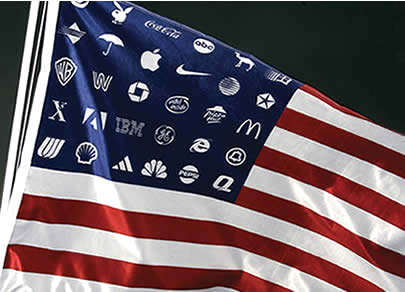
Look around your house. Sneakers, computers, movies, household items. How many of those things are made by massive, multinational corporations? Probably all of them. And how many of these companies are from America? Lots, I’ll bet.

In her book No Logo, Naomi Klein takes a trip through the history of branding – the association of a particular company with a particular product. Given that most products with similar function – sneakers, for example – are fairly similar in their makeup and function, the companies that make them use brand marketing to distinguish themselves from their competitors.

The Nike people are a wee bit intense...

Thus, Nike, Reebok and Adidas, whose sneakers are, by and large, as good as each other, use brand marketing to make you believe that, if you buy their product, you are somehow superior to those who buy the product of the other guy. If you buy Nike, you’re part the the Nike family – the uber-atheletes, the people who Just Do It and don’t go in for all the fripperies of life. If you buy Reebok, you’re more down to earth, more involved in the gestalt of life, and not quite as intense as the Nike people. If you have Adidas, you’re probably more fun, a little irreverent, and you dream about sex all day. Or something like that.

We use brands to define ourselves. When my father worked for GE, we only had GE appliances in the house, even if that meant paying a little more for the new washer. I had a student who wore nothing but Jean-Paul Gaultier clothes. Hell, Generation X has been divided into the Pepsi Generation and the Coke kids, a terrible schism that may never be repaired in my lifetime, unless the Mountain Dew Freedom Fighters intervene. And we won’t even start in with the Windows-Mac Civil War.

Brand loyalty is more important to some of us than others....

I don’t pretend to be immune, either. I drink Diet Coke and used to smoke Marlboros, and would never have chosen another brand if those were available. Of course, this probably has something to do with scary chemical additives than anything else, but the point is the same. I was loyal to my brands, one way or another, without even thinking about why.

Like it or not, our brands define us, and we allow them to do so. Mainly because they use their commercials to terrify us – buy Preparation H or lose that valuable sale, wash your husband’s clothes in Wisk, or all the other wives will laugh at you, that sort of thing. And the moment you start to wonder if perhaps there isn’t any real difference between cars made by Honda and those made by Toyota, they hit you with a barrage of special offers, incentives and tie-ins to remind you that they love you. Really, they do.

Max Barry takes this kind of brand identification one step further.

This is a world where, economically speaking, most of the world is the United States. All of the Western Hemisphere (except Cuba), the UK, Southeast Asia and Australia, Russia, India and South Africa belong to the US, for all intents and purposes. The US government operates in all those places, if you have the money for it. Europe, Africa, China and the Middle East stand alone against the US economic juggernaut.

I pledge allegiance...

Corporations are king here. There are no taxes, as the US Government is simply another corporate organization, responsible for enforcing such laws as they have the budget to enforce. Every service – police, medical, fire – has been privatized. And while the concept of the political nation has pretty much vanished, there are economic nations emerging – the US Alliance and Team Advantage, both economic alliances that have their roots in airline mileage campaigns. Each of these groups controls dozens of markets, and cross-promotes all their goods. So if you wear Nike shoes, then you had better not eat at Burger King – that’s Team Advantage territory. And if you work for McDonald’s, then you’ll want the NRA to protect you, rather than the Police, because you get a membership discount. Schools are run by “kid-friendly” companies such as McDonald’s and Mattel, and are basically corporate propaganda mills. Not like now, of course. As if all that wasn’t bad enough, your surname is the name of whatever company you work for.

Thus, a young man named Hack Nike is given a pivotal role in the marketing of a new Nike sneaker, the Mercury. As part of their marketing strategy, they’ll limit production and distribution to five pairs per store. As Beanie Babies, among other products, have shown, the more limited the availability, the higher the demand, and the higher the price. Thus, charging $2,000 for a pair of shoes that an Indonesian laborer made for $0.85 is perfectly reasonable.

The second part of their marketing strategy is to increase the public’s awareness of the sneakers, as well as to give them some street credibility. That’s where Hack Nike comes in. His new marketing job is to shoot and kill ten purchasers of Nike Mercury sneakers.

Can Nike get away with this? They seem to think so, and they probably could have, were it not for Hack’s distaste for murder. Suffice to say, the plot becomes complicated, and the Government’s best and most dedicated officer, Jennifer, is on the case.

The "E" stands for "Egregious corporate malfeasance that makes a mockery out of our democracy!" Yay!

The story is a lot of fun, and well written. The world that Barry has created is a logical extension of our own, if hopefully improbable, and his characters are pretty easy to identify with, with only a few who don’t shine as brightly as the others. Being a native of Melbourne, Barry also takes a few nice stabs at Americans, but they’re good-natured and accurate, so I didn’t mind. It was a tale of massive corporate malfeasance based on the solid marketing and corporate ethics of today. And since 2003, when the book was published, we’ve seen plenty of examples of how much large corporations are able to get away with and how unethical they’re willing to be in order to make a quick buck.

Barry’s book is, fundamentally, about the problems that arise when you allow the free market absolute control. The adage about the corruptive influences of power does not only apply to individual people, it most definitely applies to corporate entities as well. The excesses of the early 2000s showed that not even the law – to say nothing of basic ethics – could make some of the biggest corporations in the world behave honestly. The recent housing/financial services collapse is another example – when pursuing the almighty dollar, considerations for what is right and wrong fall by the wayside, and the law might only be a temporary stumbling block.

Read this book. It’s a lot of fun, and then watch the papers and see how true it really could be….

—————————————————–
“There was no place for irony in marketing: it made people want to look for deeper meaning. There was no place in marketing for that, either.”
Max Barry, Jennifer Government
—————————————————–

1 Comment

Filed under consumerism, corporations, fiction, humor, Max Barry, politics, science fiction, society

Lost in the Stacks 6: You Keep Jesus, I’ll Take Hal Jordan

You know who else sacrificed himself saving the world? And then rose again?

Everyone needs role models growing up, and in a time of crisis everyone needs to turn to someone who is better than themselves. Some folks turn to religion, others turn to fiction. [1] As much as we use the real people in our lives – our parents, teachers, community leaders, I’ve found that fictional characters have imparted great lessons to me which have shaped the kind of person I’ve become.

How do fictional characters shape us, and why? What makes them so different from real people in terms of being a role model? Listen along with me and find out!

And of course, I’d be interested to hear from you – what fictional characters have made you who you are? What lessons did you learn from books, from TV or movies that have helped you become the person you want to be? Leave your story in the comments and join the conversation.

[1] Assuming, of course, that there’s a difference.

Leave a comment

Filed under comic books, DC Comics, Green Lantern, identity, Lost in the Stacks, personality, role models