Monthly Archives: December 2012

Review 207: Crossroads of Twilight (Wheel of Time 10)

LL 207 - WoT 10 - Crossroads of TwilightWheel of Time 10: Crossroads of Twilight by Robert Jordan

Once again – certain things may be spoiled here. Consider yourself warned.

This is where the series finally starts to get its legs back under it, and I think I figured out why: Jordan went about writing it the wrong way.

Let me explain: Following book six, Lord of Chaos, the series separated into five major storylines, which have thus far stayed pretty independent of each other. They’ve progressed at different rates, with different narrative structures, and have occupied different amounts of page space, and overall they synced up pretty poorly. The five major stories that I’ve spotted are these:

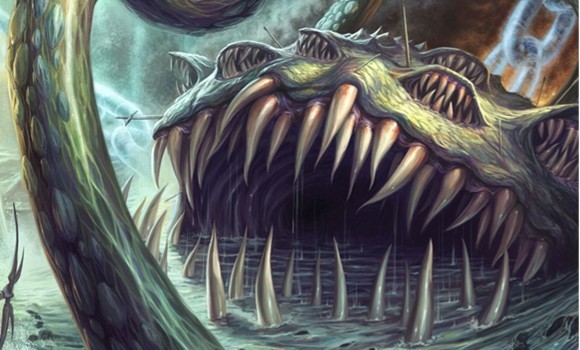
The plot diagram for Wheel of Time is only slightly more complicated. No need to worry.

The plot diagram for Wheel of Time is only slightly more complicated. No need to worry.

Leading the rebel Aes Sedai, Ewene al’Vere, the Amyrlin-in-Exile, has deftly manipulated her people into a war against the White Tower and Elaida, the woman who usurped the office of Amyrlin and drove a wedge between the sisters. Originally intended to be a puppet Amyrlin, Egwene has proven herself very good at managing people who are highly resistant to being managed. Her goal is nothing less than the deposing of Elaida and the reunification of the White Tower, no matter what the cost. It’s a story of politics, scheming and manipulation, all leading up to what must be terrible war.

Elayne Trakand is fighting her own political war as she attempts to become the Queen of Andor. Under normal circumstances, this would be no problem. Her mother, the former Queen, is presumed dead, which would pretty much make Elayne a shoo-in. Unfortunately, Morgase ended her reign rather badly (she was under the control of one of the Forsaken at the time, but no one in Andor knows that), so half the Great Houses in Andor who should be supporting Elayne are very reluctant to do so. She’s in a political battle which will not only decide the throne of Andor, but will also affect the world.

In another part of the world, Perrin Aybara is hunting for the people who kidnapped his wife. The Shaido, a renegade clan of Aiel who refuse to acknowledge Rand as their Chief of Chiefs, are spread out across the land, and they bring terror, blood and death with them. Faile Aybara has been taken prisoner by them, and only quick thinking and some unexpected allies are keeping her alive. Perrin is determined to find her, whatever the cost to his body or soul.

Outside of Ebou Dar, Mat Cauthon has single-handedly committed enough crimes against the Seanchan Empire to earn himself a painful death many times over. He has not only allowed three Aes Sedai to escape their clutches, not only spirited out three sul’dam, who know a secret that could break the Empire, but he has kidnapped the Daughter of the Nine Moons, High Lady Tuon – the daughter of the Seanchan Empress. His ragtag group of refugees have only one goal in mind – to get away from the Seanchan. But Mat knows there are stranger fates in store for him, not the least of which is his fated marriage to Tuon.

Finally, we have the central character in this whole saga – Rand al’Thor. When last we saw him, he was cleansing saidin – the half of the One Power that is used by men – of the poisonous taint laid upon it by the Dark One thousands of years ago. This was yet another step in preparing for the Last Battle that he, as the Dragon Reborn, must one day fight. He has armies at his command, Aes Sedai sworn to serve him, three women who love him, and a madman inside his own head. His only goal is to stay sane and live long enough to save the world. Even that is looking like it might not happen….
Another Wheel of Time book? Sure, I have space for that...

Another Wheel of Time book? Sure, I have space for that…

Now any one of those storylines might make for a really good book by itself, and therein lies the solution to the sagginess of this part of the series. They’re all interesting stories, but they all move at different paces, climax at different points, and have vastly different themes and atmospheres. In order to jam them all together into the Wheel of Time books, Jordan had to play fast and loose with chronologies, often backtracking in one story so that he could catch up in another. What’s more, moving from one storyline to another was jarring and unpleasant, making it a chore to actually read the books.

What he could have done was to create five mini-series following Lord of Chaos, perhaps of two or three books each. Each series could flow at its own pace, and stay focused on one of the five major characters, with no break or interruption in the story’s flow. Each story would have been allowed to develop freely, and then they would all come back together to re-integrate into the main series, which would once again present a more unified narrative that brings us to the end.

Or even – and this is something I’m pretty sure has never been done – let the five storylines play out without ever re-integrating them. That would mean the Wheel of Time series becoming more of a Shared World group of books, rather than finishing as the series that started way back in Eye of the World. This would never work, though – it’s only in real life that people start off together, drift apart and never reconnect again, and if there’s anything I’m reading this series for, it is not its resemblance to the real world.

Temporarily splitting into five sub-series might have solved a whole lot of problems though. The reader would have been able to decide which stories interested him the most. Devoted followers, of course, would have bought them all and read them all, but if you’re not interested in watching Perrin anguish over Faile, or you rightly think that Mat’s storyline is pretty rudderless and won’t mean anything until he reconnects with Rand, you’d be able to skip that mini-series. Some clever writing would be necessary once they all integrate, but it would be possible to enjoy the Wheel of Time without necessarily jumping around five storylines every ten chapters or so.
"Don't let it overwhelm you, Artax! Only four more books to go!"

“Don’t let it overwhelm you, Artax! Only four more books to go!”

My point is that the middle of this series has turned out to be muddled and clunky, and if there’s any point where readers might just give up, it would be here. The good news is that in this book, the five storylines finally catch up to each other; the first 357 pages are describing what’s happening in the other storylines while Rand and Nynaeve were cleansing saidin back in Winter’s Heart. Once that event has passed in all five stories, the narrative flow seems to smooth out a lot, and the reading gets easier. I can’t say how long that will last, or how long it’ll take before they all re-integrate, but I know they will sooner or later.

This volume, meanwhile, has some great character moments in it – Egwene cementing herself as the true Amyrlin Seat and doing what must be done to secure her victory; Perrin discovering just how hard he can be and what lengths he will go to to find his wife; Mat’s intricate dance with Tuon, in which neither of them really knows the steps. And on the dark side, Alviarin discovers that even the great and powerful Chosen are not guaranteed victory, and Black Ajah sisters everywhere lay in wait to serve their dark master. And there’s an interesting essay to be written on the psychological position that Jordan takes in these books – Behavior molds personality, and punishment molds behavior. Something I have to mull over as I read, but when I have it set in my head, I’ll let you know.

The story progresses. Fitfully, and in five different directions, but it progresses. Stay with me, folks, and we’ll get there…..

—————————————————–
Sometimes, there were lessons in stories, if you looked for them.
– Elayne Trakand, Crossroads of Twilight
—————————————————–

Robert Jordan at Wikipedia
Robert Jordan at Tor.com
Crossroads of Twilight at Wikipedia
Wheel of Time at Wikipedia
Crossroads of Twilight at Amazon.com

Wheel of Time discussion and resources (spoilers galore):
Theoryland
Dragonmount
The Wheel of Time Re-read at Tor.com
The Wheel of Time FAQ
Wheel of Time at TVTropes.com

Leave a comment

Filed under adventure, epic fantasy, fantasy, Robert Jordan, war, Wheel of Time, wizardry

Review 206: Cold Days

LL 206 - Dresden 14 - Cold DaysCold Days by Jim Butcher

Hells Bells count: 35

Be Warned: This is a new volume, so if you’re not up to date then you might want to save this one for later!

Sometimes I wonder how much Jim Butcher had planned in advance. I mean, this is book number fourteen of a series that’s been going for twelve years. Whether he’s got a giant, intricate plot map pinned up along the walls of his writing office or he’s making things up as they go along, I’m impressed. As we get further into the exciting life and times of Harry Dresden, one thing that is clear is that the series has always been moving in a very clear direction, and that the things that came before are what inform the things that come later. Jim Butcher is not a wasteful author, and that gives him the ability to do a lot of really impressive things.

As we open this story, Harry Dresden is no longer dead. He was, sort of, and had all kinds of grand fun as a ghost, but now he’s alive and it’s time for him to start paying off the debts that he incurred in the process of dying. The first of these debts is to Mab, the great and terrible queen of the Winter Faerie.

Not this kind of Winter Knight, but it'll do.

Not this kind of Winter Knight, but it’ll do.

Many, many books ago, Mab offered Harry the position of the Winter Knight – a mortal who would be the strong arm of the queen. He would be her sword, to strike where she pointed. Harry refused until he could refuse no longer, taking on that mantle in exchange for the power that would allow him to rid the world of the Red Court of vampires. And as much fun as vampire genocide is, that’s not really his job anymore. Now that he’s alive again and under no other obligations, Mab has a purpose for him. At its face, it is a terrible purpose, one that makes no sense and yet which Harry is obligated to fulfill.

On the other hand, there is Demonreach. Mab’s partner in keeping Harry Dresden’s body… let’s say viable while he was away as a ghost, Demonreach is the spirit of an island in the middle of Lake Michigan. This island isn’t on any maps, and it’s devilishly hard to find, but it represents a huge well of magical and spiritual power. This island needs Harry Dresden in order to do its duty. Demonreach is not just an obscure Brigadoon that enjoys hiding from the eyes of the unworthy – it is a guardian against powers that would ravage the world. If it is going to maintain its control and keep the peace, it needs Harry Dresden.

While all this is going on, we learn of a new force that is at play in the world. This is rather in keeping with the way the Dresden Files books have worked thus far. Every so often, our point of view is changed, and our field of vision is expanded. Way back in Storm Front, Harry Dresden was a small-time wizard investigator, not well-loved in the wizarding community but good at what he did, and that was pretty much all we saw. As the series progressed, we discovered more about the White Council of Wizards, the three Courts of Vampires, about the ever-feuding faerie realms of Winter and Summer. We went on to discover angels and demons and things that walked between them, ghosts and goblins and creatures that were just barely understandable by our mortal minds.

"KNOCK KNOCK"

“KNOCK KNOCK”

Now we take another step back, out beyond the borders of our reality as we know it. Outside our universe, there are… things. And those things want in. Why they want in is not really understood. Maybe this universe is more hospitable, maybe they’re just bored. All we know is that to let them in is to let reality as we know it die. That’s bad enough, but what is worse is the knowledge that some of them are already here. They’ve snuck under the walls, so to speak, and are carefully and busily undermining our defenses. In a game that is so intricate and dangerous, these things use great powers as pawns – including Harry Dresden – and look forward to their inevitable victory.

As with so many of the other Dresden Files books, this is a solid read, and you’ll fly right through it. Despite being vast in scope, encompassing the fate of the world as we know it, the book is still very personal, letting us follow Harry along the strange, winding path he has to walk whether he likes it or not. Harry has always been a dangerous guy to know, but now that he’s the Winter Knight, that danger is even greater. There are forces arrayed against him that he wouldn’t be able to understand even if he knew what they were, and simply being the Winter Knight is a challenge unto itself. Taking up that position doesn’t just come with awesome new powers and a direct line to some of the most powerful creatures in creation – not without a price. There are obligations as well. Rules and requirements. And, of course, dangers.

When he’s done, he’ll have more answers, and he’ll have more problems. Whatever comes next, we can be sure it will be even bigger and scarier than what has come before, and it’ll be a treat to see how he manages to beat it.

——
“I kept a straight face while my inner Neanderthal spluttered and then went on a mental rampage through a hypothetical produce section, knocking over shelves and spattering fruit everywhere in sheer frustration, screaming, ‘JUST TELL ME WHOSE SKULL TO CRACK WITH MY CLUB, DAMMIT!'”
– Harry Dresden

The Dresden Files on Wikipedia
Cold Days on Wikipedia
Cold Days on Amazon.com
Jim Butcher on Wikipedia
Harry Dresden on Wikipedia
Jim Butcher’s homepage

Leave a comment

Filed under Dresden Files, fairies, fantasy, Jim Butcher, magical realism, murder, wizardry

Review 205: Year Zero

LL 205 - Year ZeroYear Zero by Rob Reid

I’ll bet you never thought you would see an intergalactic alien thriller that all centered on the intricacies of copyright law, did you? Well, if that’s what you’ve been waiting for, then this is the book you want to read.

The universe, as it turns out, is well-populated with other civilizations. Some of them are nearly human in appearance, others are so radically unlike us that they’re hard to imagine, much less talk to. Giant snails, two-dimensional beings, foul-mouthed parrots and bio-machine intelligences – all of these and more make up the Refined League, the greatest political entity in the universe. In order to become part of the League, your civilization has to first prove that it can overcome the violent urges that lead so many intelligent cultures to self-extinction. Once it has done that, the League provides it with technology so advanced that it may as well be magic, allowing the new members to completely solve their technological problems and instead focus their energies on creative and cultural works.

Even their reality shows make ours look, well, childish.

Even their reality shows make ours look, well, childish.

And that is where the League shines brightly. Their artistic sense is so far beyond ours that were we to see it in its full flower our brains would likely shut down from the beauty. Their art and architecture, cinema and drama, fashion, food – hell, their calligraphy and paper-making are works of art that make our great masters look like toddlers drawing stick figures in the mud. In nearly all respects, the Refined League outclasses humanity.

Except, as it turns out, for music.

Thanks to some twist in our evolution, we are the only civilization capable of creating truly great music. Indeed, the first music heard by an alien culture – the closing credits song to “Welcome Back, Kotter” – was so amazing and so powerful that countless individuals died from ecstasy overload. As the universe turned its ears towards Earth, they discovered what they had been missing all along, and were soon tapping into our radio and TV broadcasts to get copies of the greatest music ever made. The discovery of Earth’s music was so pivotal to the cultural history of the universe, that the League reset their calendars to reflect it, thus making October 13, 1977 the beginning of Year Zero.

For decades, Earth music was recorded and copied and passed along. And while it did still occasionally kill people with its beauty and glory, those who survived cherished the gift we were unknowingly giving to them. While we were not yet prepared to join the League, we were the center of the universe.

Until the law got involved.

The central governing principle of the League is that indigenous laws must be respected, no matter what. It wasn’t until our songs had been copied over hundreds of millions of times that the League discovered the incredibly draconian and torturous copyright laws that govern music on our planet, and the heavy fines that are imposed for piracy. Under U.S. copyright law alone, it turns out, the universe owes us money.

This doesn't even come close...

This doesn’t even come close…

All the money.

Two of the universe’s biggest stars break through the barrier that’s supposed to protect our planet and approach Nick Carter – not a Backstreet Boy, but a young attorney specializing in copyright law – to try and find a way to fix this little problem. But they’re not the only ones looking to find a way out of the mess the League has gotten itself into. Members of an entertainer’s union – now pretty much defunct since Earth music took everything over – would rather see us gone entirely, so they’re prepared to make sure we find a way to destroy ourselves before any kind of arrangement can be reached. Nick, along with the universally-admired celebrities Carly and Frampton, are in a race against a violent alien parrot and an angry vacuum cleaner to save the Earth and the Refined League both, along with keeping the music coming.

It’s a very fast read – I went through it in a day – and is built on a very entertaining premise, one which undermines a lot of what we’ve come to expect from first contact stories. The author’s experience in the online music industry no doubt gave him a lot of material to work from, and he made it into a fun race against the clock. Part of the reason I bought the book was its premise – we’re all so used to seeing stories about how wonderful aliens are compared to ourselves, and it’s nice to see it subverted in a clever and interesting way.

WHO'S a good Senator? Yes you ARE! Yes you ARE!

WHO’S a good Senator? Yes you ARE! Yes you ARE!

It was also a clear and repeated stab at the way we handle creative property rights in the United States – indeed in most countries around the world. The law firm for which Carter works is so entrenched in the business of protecting copyright that they practically wrote some of the most egregious laws against piracy. They even have their own pet Senator, a thinly-veiled version of Orrin Hatch who is nicknamed “Fido,” who does their bidding in Washington. They’re not concerned with making sure the artists are compensated, or that their music is treated fairly. They’re interested in getting as much money as possible from as many people as possible, and have no qualms about doing what’s necessary. What’s more, most of the legal plot points settle around real U.S. law – the Copyright Damages Improvement Act of 1999, which mandates fines of up to $150,000 per song.

As a comparison, in the state of Connecticut, for example, the fine for a class A felony (murder) is up to $20,000. So if you were thinking of downloading that new Bieber single, you may as well just kill seven people and pocket the extra ten grand. Admittedly, the CDIA doesn’t allow for prison sentences (I think), but a person effectively bankrupted by legal action will probably end up in prison one way or another.

In its way, though, the book does suffer from a common problem that I’ve been seeing a lot recently: the cardboard villain. In this book, the pro-copyright forces are just plain Wrong, and will clearly not win the day. Now I have no problem vilifying law firms and giant corporations – hell, that’s practically a hobby of mine – but I would like to have seen a bit more humanity from them, rather than a giant monolithic force of legal evil. Even the main human avatar of that monolith, Carter’s boss, pretty much abandons her position as soon as she realizes the threat that the Earth is under. We know that these laws are wrong, but how they got so wrong is something that could have added to the story.

Of course, that itself could be a book of great and ponderous length, so I can understand why Reid might have glossed over it.

By Grabthar's Hammer...

By Grabthar’s Hammer…

The other criticism that I have of this book is that it will one day be horribly, terribly dated. There are pop culture references everywhere in the story. Some are subtle, some are not, and it was kind of fun being able to pick them out. Everything from GalaxyQuest to Monty Python to Breaking Bad – if you’ve been paying attention to popular culture for the last twenty years or so, you’ll find these little nuggets buried in the story. And they’re great, as long as you’re reading the book in proximity to those cultural references. I don’t know how well it will hold up for a reader twenty or thirty years down the road, but that may not have been Reid’s intention.

This is a book written for a specific time and reason, in an intellectual climate that the author understands far too well. Perhaps he just wanted to write a book for this moment, and never meant it to last much longer. Whatever his motivations, I hope he continues to explore this kind of writing, and gives us bigger and better in the future.

——————————–
“Our legal scholars have researched [the Copyright Damages Improvement Act] thoroughly. And they unanimously agree that it is the most cynical, predatory, lopsided, and shamelessly money-grubbing copyright law written by any society, anywhere in the universe since the dawn of time itself.”
– Carly

Rob Reid on Wikipedia
Year Zero on Amazon.com

Leave a comment

Filed under aliens, copyright, corporations, first contact, humor, Rob Reid, science fiction

Review 204: Blackout & All Clear

LL 204 - Blackout-All Clear 1LL 204 - Blackout-All Clear 2Blackout and All Clear by Connie Willis

Reading one of Connie Willis’ time travel novels is like watching a master paper-folder perform a particularly difficult feat of origami. It seems simple at first, but then there are a few folds and twists, edges are forced together and bent apart, there’s a few points where you can’t even see exactly what her hands are doing, but when she’s finished, you have the pleasure of seeing something intricate and beautiful come into being right before your eyes.

The basic premise of her time travel works is pretty simple: in the future, we have time travel (but not cell phones, as you may recall from The Doomsday Book). The exact means by which it works is not revealed to us, which makes sense – the books aren’t about the mechanics of time travel but rather the results. On the other hand, the rules of time travel are vividly clear:

  1. You can only go to the past.
  2. You can’t bring back any souvenirs.
  3. You can’t change anything.

You just can't keep a good cathedral down...

No, you can’t bring back cathedrals either.

That last part is really important, and it is held as gospel by the historians who use the mechanism to go visit various eras in history. The space-time continuum will do its damnedest to keep a traveler from altering the natural flow of events. For example, in order to even get the machine to work, you have to be able to blend in – that means proper clothes and appearance, no hidden wristwatches or things like that. If you’re carrying a disease that the locals might not be prepared for, if you don’t know the language – hell, maybe if you’re just the wrong skin color, the system won’t open up and let you through.

Once you’re ready to go and fit in, there’s still the matter of being able to change events. Now it is true that simply by existing you have already changed things. You move air molecules that were moved differently before. You’re pouring heat into the environment that wasn’t there before. You’re making contact with the surfaces around you, shedding skin cells, making noises – and that’s before you even meet anyone. Once you’re out on the street (or country lane or agora or whatever), you’re interacting with people no matter what you do. They see you, you register in their consciousness to one degree or another – you’re changing things just by your very existence.

The continuum, it seems, is only concerned about big changes. You can’t get anywhere near Hitler, for example, or Kennedy on the day of his assassination. No matter how hard you try or how precisely you set the controls, you will end up displaced either in time or in space or both, unable to do a damned thing. The continuum protects itself, and historians can be assured that their actions in the past have no real consequence.

Or do they?

Dangerous? Nonsense. Now out of my way, I've milk to deliver.

Dangerous? Nonsense. Now out of my way, I’ve milk to deliver.

Three British historians have gone back in time to one of the most dramatic and dangerous eras in recent history – the Blitz of World War 2. This was a period of about eight months between 1940 and 1941 when German bombers tried to reduce England to a smoking pile of rubble. They dropped a hundred tons of bombs, cause immeasurable property damage, and killed thousands of people. Life in this time was dangerous, terrifying, and uncertain, and anyone who lived through it was aware that they could die on any one of the raids.

Despite this, the English showed a solidarity and a steadfastness that won the respect of the world (or at least the parts of the world that weren’t trying to bomb it). Everyone – soldiers and civilians – were encouraged to do their part during the war, and every action you took had to be considered in the greater scheme of keeping people safe and keeping London alive. A popular sentiment about the time is that there really were no civilians. Everyone played a hand in getting England through the Blitz, from the Prime Minister to the milkman. If you were an historian looking to see how ordinary people coped in extraordinary times, the Blitz would be the perfect scenario to observe.

Polly Sebastian is in the thick of it. She has traveled to London, September 1940, with the intention of getting a job in a department store in the middle of town. She arrives during a bombing raid and is ushered into a shelter full of people who will change her life.

Mike Davis wanted to see some true citizen-heroes, so he posed as an American reporter in order to witness the Dunkirk Rescue in May of 1940. He ends up far from Dunkirk, however, and his efforts to get there end up in him becoming part of the action.

"Oy dinn't do nuffin'"

“Oy dinn’t do nuffin'”

Eileen O’Reilly has gone to witness the children’s evacuation of 1939-1940. She poses as a maid in a manor house in the country, there to watch over children who had been sent from London to keep them safe from the war. Eileen has to not only contend with dozens of city children, an outbreak of the measles, and learning to drive an ancient Bentley, but she also has two of the most terrible children in England under her care – Alf and Binnie Hodbin.

All of these assignments would be a major task for any historian, but these three soon discover that they are not in an ordinary situation. It becomes clear to them that their actions are having consequences – Mike saves a soldier who in turn helps hundreds more. Polly says a few words that changes a young woman’s life. Eileen gives medicine to a young girl that no one living at that time would have given, thus keeping her alive. The unbreakable rule about historians not being able to affect the continuum seems to be bending.

What’s worse, none of them are able to access their “drop points” to return to 2060. They’re stuck in a strange and dangerous time, and are now just as at risk as any contemporary person is.

This was originally meant to be only one book – All Clear – but it kept growing and expanding so much that Willis split it into two volumes. This allowed her to not only show off what must have been an immeasurable amount of research over the eight years it took to write the novels, but gave us more time to become immersed and invested in a story that is both funny and heart-wrenching in turns. Our time-travelers are in very real danger, of more than one sort, and you really do feel their desperation and hope for their success.

There, there now. Train tracks are much safer than what's going on up there.

There, there now. Train tracks are much safer than what’s going on up there.

It would be so hard to sum up this book, except to say that it reminds us that everything – and everyone – is significant. The fate of the future rests on the backs of not only generals and prime ministers, but on shopkeepers and children. Words can change the world just as much as bombs, and every action you take contributes to the vast, infinitely complex unfolding of history. As our characters learn, there is no such thing as a passive observer. We are all part of the history, the society, and the world around us, whether we like it or not.

We may not know how it’s all going to unfold in the end, for good or ill, and that’s unfortunate. So all we can do when faced with an uncertain future is what the British did when oblivion came flying over the Channel to their shores. Stand firm and do your bit, and let history take care of itself.

—————————————-
“TO ALL THE
ambulance drivers
firewatchers
air-raid wardens
nurses
canteen workers
airplane spotters
rescue workers
mathematicians
vicars
vergers
shopgirls
chorus girls
librarians
debutantes
spinsters
fishermen
retired sailors
servants
evacuees
Shakespearean actors
and mystery novelists
WHO WON THE WAR.”
― Connie Willis, All Clear – dedication

Connie Willis on Wikipedia
Blackout and All Clear on Wikipedia
Blackout and All Clear on Amazon.com
The Connie Willis Blog

1 Comment

Filed under Connie Willis, England, history, science fiction, time travel, war