Category Archives: nonfiction

Review 34: Death by Black Hole


Death by Black Hole by Neil deGrasse Tyson

I have often lamented the passing of my favorite popular scientist, Carl Sagan, by talking about how necessary he is right now. We are at a point in our history where scientific illiteracy is growing, where people are not only ignorant of how science works, but are proud of their ignorance. What we need is someone who can reach the majority of Americans who are not especially scientifically literate – the people whose automatic reaction to science is to think, “That’s just too hard for me to deal with.”

Enter Neil deGrasse Tyson, an astrophysicist and the director of the Hayden Planetarium at the American Museum of Natural History in New York City. He’s appeared on countless television programs, including The Daily Show and The Colbert Report, to talk about the current state of astronomy and astrophysics. He’s an engaging and entertaining man, who claims that Pluto was “asking for” its demotion, who seems to take perverse pleasure in describing all the terrible ways the universe could take us out. He knows that we’re in a precarious position, here on Earth, and he revels in it rather than worrying about it.

Whereas Sagan seemed to come from the point of view that the universe was a place of infinite wonder, where one could look anywhere and be awed and humbled, Tyson’s attitude is more of the universe as an infinite theme park – a place where you could see your electrons stripped from your body, watch gas clouds larger than our own solar system collide and ignite, or see planets crumple under cosmic bombardment. Tyson’s universe is an adventure, as big as it gets.

This book is a collection of essays that Tyson wrote for Natural History magazine over a ten year period, on a variety of subjects related to science and scientific inquiry. In many ways, it’s similar to every other pop science book out there – and there are so very many of them – but it is his perspective and his voice that makes this one stand out from the crowd.

He’s grouped his essays into seven sections, on topics ranging from the difficulties inherent in actually knowing anything about the universe to the understanding of how life went from little mindless bacteria to we clever Homo sapiens to the intersection of science and religion. Most of it is accessible to the average non-scientist, though he does get a little technical at points. But he understands that, and he tries to compensate for for the fact that, by and large, the public is intimidated by “real science.” In the essay entitled, “Over the Rainbow,” he discusses this particular challenge by using spectroscopy as an example.

In spectroscopy, astrophysicists look at the spectrum of a star, hunting for telltale dark lines that indicate the physical properties of stars. It’s like looking at a rainbow with bits blackened out of it, as though the CIA had somehow gotten to it first. Those black lines contain all the vital information about the star’s composition and, more importantly, speed. Very little can be gleaned by just looking at the star, as it turns out. He notes five levels of abstraction, starting from the star itself:

Level 0: A star
Level 1: Picture of a star
Level 2: Light from the picture of a star
Level 3: Spectrum from the light from the picture of a star.
Level 4: Patterns of lines lacing the spectrum from the light from the picture of a star.
Level 5: Shifts in the patterns of lines in the spectrum from the light from the picture of a star.

These descending levels of abstraction can apply to any branch of science, not just astrophysics. The challenge, as he notes, is getting people past level 1, which is easy to understand but is not the level at which true science is done. It is up to educators, he says, to help make people comfortable with looking at real science, and not just pretty pictures.

Indeed, there are several sections of the book dedicated to the intersection between science and the public. He talks about how easily we are baffled by numbers (why are below-ground floors not labeled -1, -2, -3 etc?) and how casually we disregard actual scientific facts. He brings up some of his favorite moments in bad movie science, and how he single-handedly saved Titanic from ignominious astronomical shame. At least, on its DVD re-release. He addresses the historically shifting centers of science in human history, how things like NASA are truly a global endeavor. Without the discoveries made through history by people all over the planet – from England to Greece to Baghdad – there would be no NASA, nor any science that we recognize. And to assume that the United States will always be the center of scientific discovery is to willfully ignore history.

And, of course, there’s a section dedicated to the conflict between religion and science, a never-ending battle that has existed since science began. Tyson believes that there can be no common ground between the two – science relies on facts, religion relies on faith. This is not to say that one is better than the other, any more than, say, a hammer is better than a screwdriver. It’s just that you can’t use them interchangeably. And he points out that becoming a scientist doesn’t require you to give up your faith. There have been, and still are, countless scientists who are believers in the Divine. It’s just that most of them know enough not to confuse science and spirituality.

The place where they meet, historically, is on the boundary of ignorance. Isaac Newton, having figured out gravity, couldn’t quite work out how you could have a multiple-body system like our solar system without the whole thing falling into chaos. His conclusion – God must, from time to time, step in to keep things on the right path. Having done that, Newton went on to do other things, and it wasn’t until the next century that Pierre-Simon laPlace decided that he wasn’t satisfied with Newton’s “Insert God Here” argument, and did the math for himself.

In other words, God is a marker on the boundaries of ignorance, and the best of us are tempted to let Him answer the questions that we can’t. To do so, however, impedes the path of science and stops progress in its tracks. What if Newton had said, “No, I’m going to figure this damn thing out.” Would we be a century ahead in our technology by now? Maybe, maybe not. What if the Catholic Church had listened when Galileo said, “The Bible tells you how to go to heaven, not how the heavens go.” Might more progress have been made? So many great thinkers have come up to the boundaries of their knowledge and, humbled by what they do not know, chose to allow The God of the Gaps reassure them.

But that’s the whole point of science, and it’s what this book, and others like it, are trying to instill in people. The unknown is not horrible, it is not terrifying, and it’s not a place to just stop. It’s a place of awe and wonder and bafflement and opportunity. To say, “I don’t understand it – it must be God” is short-changing ourselves and our heirs out of even greater knowledge of the universe.

—————————————————-
“Scientists cannot claim to be on the research frontier unless something baffles them. Bafflement drives discovery.”
– Neil deGrasse Tyson, Death by Black Hole
—————————————————-

Neil deGrasse Tyson on Wikipedia
Death by Black Hole on Wikipedia
Death by Black Hole on Amazon.com
The Hayden Planetarium
Leave a comment

Filed under astronomy, astrophysics, Neil deGrasse Tyson, nonfiction, science

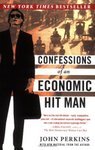
Review 28: Confessions of an Economic Hit Man


Confessions of an Economic Hit Man by John Perkins

This book probably would have enraged me if I hadn’t already more or less known what it was talking about. As it was, I was resigned and depressed.

The book is a short autobiography of an Economic Hit Man (EHM) who saw the error of his ways. The idea of the EHM, as he describes it, is to manipulate the governments of developing nations to accept huge loans from the IMF and the World Bank based on inflated projections of future income, under the theory that they would experience huge economic gains from the projects – things like electrical grid upgrades, roads, dams and the like. These nations would then become indebted to the United States and forced to give business to US corporations, thereby effectively putting that nation under US control. He calls it the Corporatocracy, and he was a part of it. He traveled around the world to manipulate cash-strapped world leaders into signing their nations over to the control of US corporate interests.

He describes himself as one of the earliest generations of EHM, the ones who knew exactly what they were doing. Perkins describes his entry and rise in the EHM world as a series of decisions inspired by coincidences, at least at first. His childhood was marked by clear class differences, growing up in a small New England town and going to school with the children of the super-rich. His family taught at the school, thus gaining him both entry into classes and a raging feeling of inferiority and anger.

After doing a stint in the Peace Corps, he was approached to work for the NSA. Following the NSA screening, he was tapped to work for MAIN, an engineering company who, in the 60s and 70s, was at the forefront of modernizing developing nations. At their expense, of course.

When Perkins was initiated into this world of money and power, he was explicitly aware of what he was doing: he would vastly overstate the economic potential of, say, a hydroelectric dam project, leading to the leaders of governments such as the Philippines, Columbia and Venezuela taking out massive loans based on expected future returns. When those returns didn’t come in – and they never did – they were forced to make concessions, which always, always benefited the interests of MAIN and other US corporations. By doing so, they became part of the American Economic Empire, without one politician ever laying a finger on it.

It’s considered the softest method of empire-building. Take a country that needs money to help its people, and arrange so that the government has to spend upwards of 50% of its GNP repaying loans. The people get nothing, a few rich leaders become richer, and US corporations spread further out into the world. All forwarding the cause of US economic interests. For Americans, it means cheaper gas, food and raw materials. For the corporations involved, it means higher and higher profits. For the people of the developing countries targeted, it means poverty and disenfranchisement.

The EHMs don’t always succeed, though – remember Panama? We had the canal, and made lots of money off it. Until the leader of Panama, in the 70’s, decided to take it back. Omar Torrijos was that rare breed of third world ruler who honestly wanted to help his people, and he knew that the best way to do that was to re-assert control over the Panama Canal. He knew what the EHMs were up to, and wouldn’t have any part of it. In his recollections of their meetings, Perkins sees him as the kind of leader every country should have, and it was his example that led him towards leaving this world. His example and, of course, his death.

When the EHMs fail, the jackals come in and people start dying in “mysterious” plane crashes. Torrijos was replaced by Manuel Noriega, who was in our pocket, but not quite far enough. He didn’t toe the line that Washington wanted, so we made him up to be the Hitler of South America, invaded Panama without cause (see, Iraq is not a new thing) and took him back to the US. The result? The canal is effectively back under US control, and any advances that Torrijos might have made are gone.

One of the reasons Perkins left the industry and wrote this book is because he’s worried about the future of the EHM. Not that it’s fading, but that it’s getting stronger. With the ever-increasing pace of globalization, governments are jockeying with corporations for power around the world, and the EHMs are coming with them. But the new breed is different. The people following in Perkins’ footsteps honestly believe that they are trying to help these beleagured countries They see themselves as part of a great march towards progress, never really noticing that the progress only really benefits them.

One thing I noticed about this book. While I don’t doubt Perkins’ honesty and intentions in writing this book, I do wonder how much of the “torn between two worlds” persona he adopts is honest. Throughout the book, he talks about his moments of indecision, of inner conflict as he tries to justify the things he’s doing. He talks about meeting dissidents in Iran, going to anti-American puppet shows in Bali, encountering supercilious Canal Zone residents in Panama, all of which serves to make him look like he’s much more thoughtful than the average corporate warrior.

Perhaps he’s representing himself sincerely as a person caught between his moral code and his pride. He did, after all, leave the business – and the vast amount of money and power that it offered him. But I kept thinking, how much of that conflicted feeling was real, and how much was remembered? It’s a small point, but one that kept nagging at me. It doesn’t add to or detract from his argument, however.

This is not a happy book, and it’s pretty likely to piss you off. It’s not about the US government, mind you – it’s about US corporations assisting the government in its imperial ambitions. It’s about the marriage of economics and governance and its dark, dark offspring….

—————————————————–
“Confessing a sin is the beginning of redemption.”
-John Perkins, Confessions of an Economic Hit Man
—————————————————–

Confessions of an Economic Hit Man on Wikipedia
John Perkins on Wikipedia
John Perkins’ website
Confessions of an Economic Hit Man on Amazon.com

Leave a comment

Filed under economics, ethics, history, John Perkins, memoir, nonfiction, politics

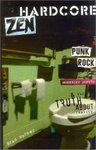
Review 26: Hardcore Zen

Hardcore Zen by Brad Warner

This book is very different from most other Zen books out there.

A lot of books on Zen and Buddhism in general tend to be… how shall I put it… flaky. They tell you that if you eat a certain way or chant certain mantras or take certain drugs, you will attain the state of Nirvana, in which all your suffering will end and life will be an eternity of bliss thereafter. It’s the classic self-help contradiction: happiness is just so easy to find, but you won’t find it unless you read My Book. And also buy the candles, incense, mandala cloths, chanting CDs, windchimes, power crystals…. Despite claiming that they’re not in it for the money, a lot of those purporting to offer enlightenment to the masses have a whole lot of stuff to sell.

Warner, to put it simply, calls this “bullshit.” He doesn’t try to affect the “wise and learned sage” voice in his writing. I imagine him more as a jittery skinny guy, telling you about the time he saw the entire history of the universe unfold around him in a dream. His writing is energetic and colloquial, and he talks to the reader as an equal, if a slightly less informed equal than himself. He tells you right from the beginning that you have no reason to do what he’s done, or even to believe anything he has to say. But he’s going to say it anyway because, as far as he knows, it’s the truth.

He has an unusual background for a Zen Master. If you’re anything like me, when you hear those words you think of a little bald guy in the mountains, calling people “grasshopper” and staring at nothing. Warner is not that. He talks a lot about his experiences as a punk rocker back in the days when being a punk rocker actually meant something, and this is pretty important.

You see, one of the driving forces of Punk, at least when it first emerged, was the idea that doing what society approved of was not being “real.” In an era of power ballads, disco and soft hippie pablum, Punk music went the other way – loud, fast and hard songs full of anger and blasphemy. While everyone else was growing out their hair and trying to make it look like John Travolta’s, punk rockers were wearing mohawks or shaving it all off. The basic message of punk: whatever is acceptable to society is unacceptable to me.

While that spirit of individualism and rebellion only lasted a little while, it did, in that time, share something with Buddhism, and Zen Buddhism in particular: Question everything. Never take anything at face value or accept it just because someone tells you to. Ask questions, criticize, poke, prod and be a general pain in the ass until you’re happy with the answers you’ve got. And even then, keep questioning your own conclusions.

Another thing that Warner brings up again and again is that, with Zen, there is no requirement that you actually do what people tell you. There’s no such thing as a Zen evangelist or Zen missionaries going out to convert the heathens. Buddhism, at least the way Warner sees it, is a path for the individual, not the group. The only person who can find the way is you. There will always be teachers out there who can make suggestions, but what it really comes down to is the individual doing the hard work – meditating, thinking, and questioning every day.

I like this approach. One of the things that turns me off from your standard religions is that they generally frown on independent thought. You’re not supposed to think about what Jesus’ sacrifice on the Cross meant, you’re just supposed to thank Him for it. You’re not supposed to think about why God doesn’t want you to eat pork, or why He wants you to abstain from alcohol, or why He thinks women should cover their heads, you’re just supposed to do it. Religion, in my mind, stifles creativity and tries to absolve people of the responsibility of running their own lives.

And Buddhism is not really that much different, despite Warner’s presentation of it here. It has its scriptures and its prohibitions, its rules and regulations which many people around the world follow without question. Just look at the “Free Tibet” people and you’ll see how even Buddhism isn’t free from the virus of the Argument From Authority. I’d bet that if the Dalai Lama announced tomorrow that eating cats was a sacred and venerable tradition for Tibetan Buddhists, Richard Gere would start eating kitty steaks within a week.

But the idea is sound. The idea is that there is no such thing as Authority. There is no human being, past, present or future, who is more qualified to tell you how to run your life than you are (even if you aren’t all that good at it yourself). All it takes is dedicated thought and concentration to figure out how to live your life well, and the weird thing is that most people who do this tend to come to the same conclusion: the best way to live your life is to do the right thing, right now.

What is the right thing? Only you can figure that out.

Zen interests me, for many reasons, and a lot of them were addressed in this book. The idea that the past is the past and the future doesn’t exist is one that I picked up years ago and has made life a lot less stressful. The focus on personal responsibility is another aspect that is quite attractive. I find that people in this modern age like to dodge their responsibilities to themselves and others, and I find that disturbing. We need to take responsibility for our own actions, and blaming the government or our parents or video games for our suffering really isn’t going to make the world a better place.

The first step to having a better life is taking control of it. But don’t just take my word for it, and don’t take Warner’s. Work it out for yourself.

————————————————
“Question Authority. Question Society. Question Reality. Question Yourself. Question your conclusions, your judgments, your answers. Question this. If you question everything thoroughly enough, the truth will eventually hit you upside the head and you will know. But here’s a warning: It won’t be what you imagined. It won’t be even close. ”
– Brad Warner, Hardcore Zen
————————————————

Hardcore Zen on Wikipedia
Brad Warner on Wikipedia
Hardcore Zen at Amazon.com
Zen Buddhism at Wikipedia
Introduction to Zen from Kodaiji Temple

Leave a comment

Filed under Brad Warner, Buddhism, nonfiction, philosophy, religion, Zen

Review 24: Death from the Skies!


Death From The Skies! by Phil Plait

I’ve always found the end of the world fascinating. So many cultures have put together their own ideas of how the world will end, from the Norse Ragnarök to the Christian apocalypse to the Hindu cycle of creation and destruction. We live in a world that was, for a long time, unpredictable to us and on many occasions seemed to be outwardly hostile. Our ancestors faced floods and earthquakes and disease, with no idea of where these things came from, why they happened or how to stop them. And so they made myths and stories to explain the dangerous world in which they lived. From that, they extrapolated – if the world is this dangerous now, how dangerous could it be if it really tried? And so came our myths of a world that not only succeeds in hurting us, but in wiping us out altogether.

Even in the modern age we have our myths. Books, television, and movies all use the end of the world (or end of a world) to tell stories – usually about the resilience of mankind and our ability to pick ourselves up, dust ourselves off, and rebuild human society, hopefully for the better. As good as this is for fiction, there are two problems when we try to apply these myths and stories to the real world: the world will end, one way or another, and no amount of heroics, cleverness or pluck will save us. Not in the long term, anyway.

Science has accomplished what religion and fiction could not – it has seen the future and can make fairly accurate prophecies about how this world, and our civilization upon it, will die. Renowned astronomer Phil Plait is your prophet for this trip into all the ways the world will end….

In this book, Plait looks at nine possibilities for the end of the world as we know it. In order, they are:

Death by Impact
Death from the Sun
Death by Supernova
Death by Gamma Ray Burst
Death by Black Hole
Death by Aliens
Death of the Sun
Death by Galactic Collision
Death of the Universe

In each chapter, Plait outlines the ways in which that specific event could injure or kill us, with as much science as he can comfortably put in. He explains, for example, why we can’t just send Bruce Willis up to hit an incoming meteor with a nuke (it probably won’t work) and why any black holes produced by the LHC won’t do us any harm. He looks at how a supernova happens, what it is about a black hole that turns it into one of the deadliest weapons in the universe, and tries – very, very hard – to make the reader understand exactly how long “forever” is. (Hint: it’s a lot longer than you think. Longer than that, even. Nope, keep going….)

Each chapter outlines the processes by which we could experience the destruction of our civilization or, in a few cases, the planet itself. He looks at the scientific foundations of these events, explaining in detail what it is about the sun, for example, that makes it a cauldron of chaos and torment, or why we really, really don’t want to get even a smallish black hole anywhere near the planet. And I have to say, of all the unlikely ways we could be toasted, gamma ray bursts are my favorite – a deadly beam of energy from thousands of light-years away, cooking the planet all the way down through the crust and utterly devastating the planet’s ecosystem so as to kill off anyone who was lucky enough to be on the other side of the world. I mean, wow. And there’d be no warning, either. By the time we knew what was happening, it’d be too late. So that chapter (with a line paying homage to Douglas Adams, even) is just mind-boggling.

Probably my favorite chapter, though, is the one about supernovas, mainly because his careful, step-by-step description of exactly how a supernova occurs made me think, “What I wouldn’t give to see that in person,” disregarding the fact that a) the best parts would happen way too fast for me to observe and b) it would vaporize me. Still, it’s a beautiful and terrifying chain reaction, which Plait describes in fantastic detail. The other chapter that evoked the same reaction was the one on the end of the universe. Despite timelines for which the word “vast” is terribly inadequate, Plait tells us what science knows about how the universe will end – the ever-increasing expansion of spacetime, the eventual death of the stars, evaporation of galaxies, the reign of the black holes and the slow, careful deaths which even they face. It all ends in darkness, all matter gone into a few stubborn subatomic particles and the eventual collapse of the very fabric of space and time.

And as bleak and miserable is the future looks, I still thought, “I really want to see that.” So if I can figure out how to live one googol years (that’d be a one with one hundred zeros after it [1]) and not have my very atoms decay into nothingness, then I’ll be able to… um… be really, really bored, probably. Since after that, there’s absolutely – literally – nothing to do. Until the universe experiences vacuum collapse, or a brane collision, possibly hitting the reset button on the cosmos and we get to do it all over again….

Most of what’s in the book isn’t new to me, but that’s probably because I grew up reading Cosmos, and I follow countless science TV shows, podcasts and blogs (including Plait’s own Bad Astronomy blog, which is well worth keeping up with, as well as his regular appearances on SETI’s podcast, Are We Alone? and occasional guest appearances on The Skeptics’ Guide to the Universe – both of which make for excellent listening). For people new to astronomy, though, this will be a rather dense learning experience – and reading it will be time well spent.

In addition to its user-friendly style, I really like the way it’s arranged – from small-scale (relatively) to large, with “Things that are absolutely certain to happen” at the beginning and end, and with “things that probably won’t happen” in the middle. And my favorite aspect of this book is that each chapter begins with a short vignette describing that particular end of the world, from the perspective of someone watching it happen. It’s not something you often see in books of this nature, and I’m really glad that Plait decided to put it in there. It makes it a little less academic and abstract and more real.

For all its death and destruction, the book isn’t really a downer. For one thing, while things like asteroid impacts and the death of the sun are inevitable, they don’t have to be fatal, and Plait describes a few ways in which – in theory – we (or our distant, distant descendants) might be able to avert or at least mitigate these catastrophes. It’s not easy, of course, but saving the world never is.

It’s mainly a marvel at the forces that surround us in the universe. It’s easy to forget, looking up at the sky from our brief, limited scale, that the universe isn’t just some pretty lights drifting about in empty blackness. Things are exploding and dying, burning and freezing, moving quickly and slowly – the cosmos is replete with activity and danger. Most of the universe isn’t just uninhabitable, it’s actively hostile to life as we know it. And yet, without the black holes, the supernovas and the galactic collisions, without massive meteor impacts and breakaway comets, solar flares and deadly radiation – without all that, life probably wouldn’t exist at all. So read this book, and take a moment to appreciate how lucky we are to be here at all, all things considered….

————————————————-
“They say that even the brightest star won’t shine forever. But in fact, the brightest star would live the shortest amount of time. Feel free to extract whatever life lesson you want from that.”
– Phil Plait, Death from the Skies!
————————————————-

[1] 10 000 000 000 000 000 000 000 000 000 000 000 000 000 000 000 000 000 000 000 000 000 000 000 000 000 000 000 000 000 000 000 000 000

Phil Plait on Wikipedia
Bad Astronomy blog
Death from the Skies! on Wikipedia
Death from the Skies! on Amazon.com

Leave a comment

Filed under apocalypse, astronomy, astrophysics, death, nonfiction, Phil Plait, science, survival, technology

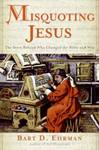
Review 13: Misquoting Jesus


Misquoting Jesus by Bart D. Ehrman

I saw this guy on The Daily Show a few years ago, and his book sounded like a really interesting idea – study the ways in which, over the last two thousand years, the text of the Bible has been altered. Sometimes it has been altered by mistake and sometimes on purpose, but it has been altered nonetheless.

Now this is a claim that angers a certain section of Christianity – often known as the Biblical Literalists – who believe that every word of the Bible is true, the revealed Word of God. Unfortunately for them, once the text is analyzed, once source texts and translations are looked at carefully, there are too many discrepancies for that to be true.

What makes this book interesting is the author’s background, which he explains in detail in the introduction. Bart Ehrman is not an angry atheist, looking to tear down the New Testament. Quite the contrary – in his teens, Ehrman became Born Again, filling the void in his life with 100% Jesus. He threw his heart and soul into Bible study, convinced that the book was the inerrant, incontrovertible Word Of God. It was only when he began really studying the Bible that he started to get the feeling that something wasn’t quite right.

And when I say “studying the Bible,” I don’t mean just reading a few passages before he went to bed at night. Ehrman is the kind of person who learned Latin and ancient Greek and Aramaic so that he could read the oldest known manuscripts for the Gospels and the Epistles. He immersed himself in Biblical history, arming himself with every tool he would need for textual criticism and a better understanding of the text that meant so much to him.

An explanation of textual criticism takes up a great deal of the book, since it’s a branch of academia that most people aren’t all that familiar with. Textual criticism is the analyses of ancient manuscripts in an attempt to determine what the original text was. This is done by comparing manuscripts. It attempts to determine what changes were made and when. It’s very difficult, even worse so the older the work is, but it’s a task that has absorbed Biblical scholars for centuries. This brings up two questions: why is that difficult to do, and why is it important?

As to the first, it’s difficult because these manuscripts were, before the printing press got into full swing, copied by hand. By humans, to be specific and if you’re a human – and there’s a very good chance that you are – you know how hard it is for us to do things without making errors. A pen might slip, your eye might skip a line, or you just might be tired and misread a word. That error then gets around, and someone else copies it, probably adding their own errors as well. Many of the original copyists of the New Testament weren’t professional scribes, and even some of the pros were barely capable of actually reading the text they were copying.

What’s worse, there’s no guarantee that the “correct” text is the one that gets the most exposure. You might have fifty copies of, say, the Gospel of Luke that say one thing and five that say something else, but those fifty copies might all be wrong. It’s kind of counter-intuitive, but there you go. And age isn’t always reliable either. You might think that an 8th century text is more “correct” than one from the 10th century, but not if that 10th century text had been copied from a 4th century manuscript. You can see how problems emerge.

Ehrman lays out, as simply as he can, the criteria by which textual critics judge a manuscript. It can’t be called scientific, as there are a lot of judgment calls to be made, but within the field there are a lot of very good guidelines, and the peer review process is relentless.

The bigger question, then – why is it important? Well, the biggest reason is because there are over a billion people on the planet who live their lives, to one degree or another, by the words of the New Testament. They look at the Gospels and see the stories of Jesus and his miracles, they read the letters of John and his instructions to the newly-birthed churches of the first century to try and find out what Jesus would have wanted. And because Jesus himself never left us any notes, the words in the New Testament are all they have to go on. Isn’t it vital, therefore, to know what the writers originally wrote? If you’re basing your faith off of inaccurate writings, does that mean your faith is flawed? If you’re living your life based on ideas that were not inspired by Jesus, but by a third-century scribe who, for example, had certain ideas about a woman’s place in the church, does that mean you’re living wrong?

And if you are one of those who believe that God transmitted His words to the writers of the New Testament, what does the fact that we no longer have those original words mean to your faith?

That’s the big thing here – we don’t have Paul’s original letters to the early churches. We don’t have the notes that Matthew, Mark, Luke and John used when they were writing their Gospels. We don’t even have copies of copies of those notes. What we do have, and what Ehrman demonstrates in detail, are many manuscripts over many centuries that have thousands of points of divergence. Sometimes those differences are minor, but some of them affect the very foundations upon which Christianity is built.

Like the famous story of the adulteress, where Jesus gave his “Let he who is without sin” speech. It doesn’t show up in the earliest and best texts, but gets wedged in a few centuries later. Or the bit in Luke where Jesus sweats blood? That, too, appears to have been a later addition to an otherwise well-constructed section of that Gospel. Even the famous King James Bible is not immune – it was based off a Greek New Testament that was written earlier, parts of which were constructed by a man named Erasmus, who did it not by using original Greek writings, but by translating later Latin translations back into Greek. Why? Because those original Greek writings were lost, but they had to have something….

Ehrman tries to look at the possible motivations for these changes, and they are necessarily speculative. The early Church was a turbulent and unstable entity, with many different groups pushing their rendition of who Jesus was and what he wanted of his followers.

Was Jesus an emotionally turbulent rabblerouser or was he a calm and serene figure of peace? Was he the begotten son of God or just adopted? Did he die with quiet dignity, willingly surrendering his spirit up to God, or did he die in torment, forsaken? Was he entirely human, entirely divine, both or neither? Christians of the early Church knew these to be vital questions – with a variety of answers. The New Testament we have today is the result of who had the most power to enforce their interpretations of Jesus’ life, times and teachings.

This book covers a whole lot of ground in 218 pages – Biblical history, Christian history, textual criticism, politics, sociology…. The history of how the New Testament came to be the way it is today is a complicated and fascinating one, and Ehrman casts it in an interesting light.

You see, rather than spend 200 pages noting the history of alterations in the book, he doesn’t say, “And that’s why we should just throw it the hell out!” Rather, he encourages readers to look at the New Testament as an ornate human creation, a text (or, more accurately, a collection of texts) that has survived the millennia by being complex enough to survive interpretation after interpretation. The inerrant Word Of God? Sorry, but no. But it is still key to understanding human history in the last two thousand years, and is therefore worthy of study.

—————————————–
“What if God didn’t say it? What if the book you take as giving you God’s words instead contains human words? What if the Bible doesn’t give a foolproof answer to the questions of the modern age – abortion, women’s rights, gay rights, religious supremacy, Western-style democracy and the like? What if we have to figure out how to live and what to believe on our own, without setting up the Bible as a false idol – or an oracle that gives us a direct line of communication with the Almighty?”
– Brad Ehrman, Misquoting Jesus
———————————————

Misquoting Jesus at Wikipedia
Bart Ehrman at Wikipedia
Bart Ehrman’s homepage
Textual criticism at Wikipedia

1 Comment

Filed under Bart Ehrman, Bible, Christianity, criticism, history, Jesus, nonfiction, religion, textual criticism, theology